There was no deployment to the grid’s main SLS channel on Tuesday, September 15th, 2020, leaving the simulators running on release 547626.
On Wednesday, September 16th some – or all – of the simulator on the RCs channel should be updated to simulator maintenance release 548903, containing updates related to the cloud uplift work which contain no user-visible updates.
SL Viewer
There have been no viewer updates to mark the start of week #38. This leaves the current pipelines as follows:
Current release viewer version 6.4.7.546539, dated August 11, promoted August 17, formerly the Arrack Maintenance RC viewer – No Change.
Release channel cohorts:
Bormotukha Maintenance RC viewer, version 6.4.8.548394, issued September 8.
Mesh uploader RC viewer, version 6.4.8.548061, September 8.
Love Me Render RC viewer, version 6.4.8.547427,August 21.
Project viewers:
Project Jelly project viewer (Jellydoll updates), version 6.4.8.547487, issued August 26.
Custom Key Mappings project viewer, version 6.4.5.544079, June 30.
Copy / Paste viewer, version 6.3.5.533365, December 9, 2019.
Project Muscadine (Animesh follow-on) project viewer, version 6.4.0.532999, November 22, 2019.
Legacy Profiles viewer, version 6.3.2.530836, September 17, 2019. Covers the re-integration of Viewer Profiles.
360 Snapshot project viewer, version 6.2.4.529111, July 16, 2019.
Cloud Uplift
Region Testing
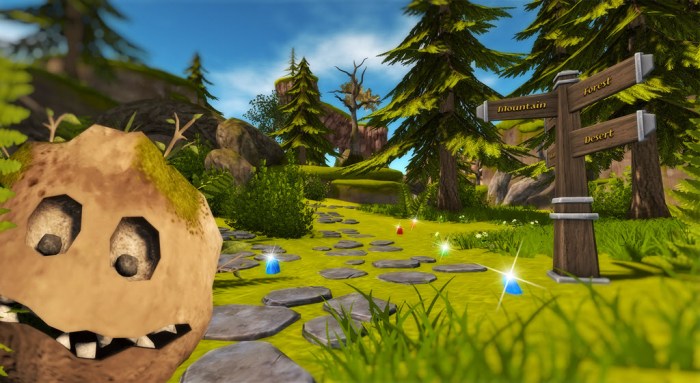
As the Lab has announced, and I’ve reported – see Play Linden Realms in the cloud and help the Lab –, the Linden Realms have been cloned to Aditi and are running on AWS servers. Interested users are asked to help in testing the regions by logging-in to Aditi and spending time playing the game. Follow the links above to find out more.
LSL HTTP Changes
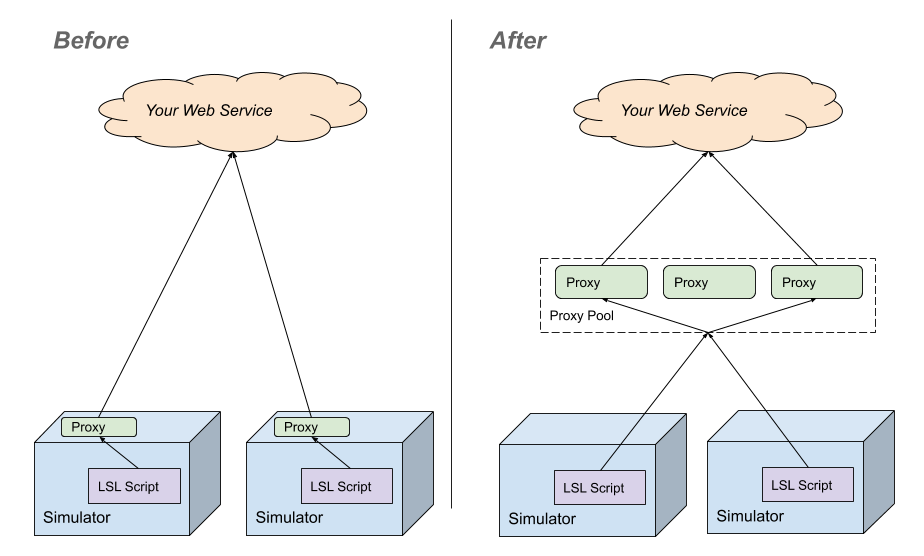
As a part of the move to AWS services, there will be changes to the use of HTTP once cloud-hosted simulator come into use. It is Linden Lab’s hope that these changes will not cause significant issues, however, in order to provide scripters with as much information as possible, Oz Linden posted a forum update providing an outline of the areas of impact: llHTTPRequest – Outbound HTTP and lRequestURL or llRequestSecureURL.
A number of regions on Aditi have been set-up to allow for testing, comprising:
Morris
Cloud Sandbox 1
Cloud Sandbox 2
Cloud Sandbox 3
Cloud Sandbox 4
Further information and the continuing discussion can be found within the forum thread.
People continue to experience issues with group chat disconnecting / failing following a transition to a different region via vehicle or teleport (see BUG-229219). As per last week’s update, there is a potential fix for this issue in the works, but whether or not it solves all of the issues currently being experienced or not is an unknown until it is actually deployed.
For her latest region design at Binemust, Biné Rodenberger offers visitors a most unusual taste of Sweden’s Gotland.
The largest of Sweden’s islands, and also a province, county, and municipality in its own right, Gotland is a fascination place, rich in culture and opportunities for exploration and discovery, offering many unique experiences (ever had a fish cooked using molten glass? If not, Gotland’s Restaurant Rot is the place to go).
Bungenäs, the inspiration for Biné’s design, lies at the opposite end of Gotland to Restaurant Rot, and is perhaps one of the island’s most unusual attractions. During the 20th century, the peninsula was home to a limestone quarry marked by a pair of unique kilns, and a large Swedish Army training zone, complete with bunkers, barracks, and open and wooded training areas. The quarry enjoyed a 50-year run from 1910 to 1960, while the rest of the 160-hectare site was used by the army through until 1963, when it was also abandoned.
The Bungenäs peninsula showing the former army training grounds in the foreground and and the limestone quarry, centre left. Credit: Gunnar Britse
For the 40 years that followed, the peninsula was closed to the public, until moves were made to re-open it as a park / tourist destination in the early 2000s. However, entrepreneur Joachim Kuylenstierna – whose father had served in the army and trained at Bungenäs – was concerned about such a move would do to the unique aspects of the location: the ageing bunkers, the run-down buildings and deserted quarry facilities, and so on, if the peninsula was turned into some sort of tourist resort with all the modern trappings – an up-to-date hotel, a golf course and so on.
To ensure this did not happen, Kuylenstierna purchased the land himself and turned it into a most unusual development: a new community location without roads or houses. Instead much of the existing infrastructure of bunkers and buildings would be be converted into unique homes, with the bicycle the primary mode of transport. He employed a specialist architecture firm to convert the bunkers and other buildings into homes and community facilities, and to zone the remaining landscape into plots and parcels that clients could purchase and have homes built to their own specification and fully in keeping with the existing structures and integrated into the natural environments found across the peninsula, and also carefully redeveloped by the architects in keeping with Kuylenstierna’s broad vision.
We don’t design and build buildings – we work with the landscape and the existing constructions to create structures that are formed after their surroundings. We’re not the least interested in creating “boxes” on the ground. Each plot of land is specifically laid-out and, in turn, has its very own zoning plan. The peninsula was also divided into different regions with their own defined type of nature, which required different types of structures.
Within Binemust, Biné offers her own take on this unique setting, centred on the the old limestone quarry, its kilns and outbuildings. These sit within a low-lying part of the region, the quarry itself flooded, the kilns and outbuildings rising above its rocky ring. Cold sands border the east and south sides of these lowlands, merging with grasslands cut by a fast flowing stream. As the sands curve around to the south, so the land rises to form a bluff between sea and inland quarry, a number of aged bunker-like shells among the sand a grass, hinting at the old military preserve that once existed at Bungenäs.
To the west, a ribbon of sand continues along the coast, marked on one side by old piers that may have once served the lime factory, and a line of old beds that offer a most unusual sun loungers, Biné suggesting they might have been pulled from the old barracks, as is the case at the physical Bungenäs in Gotland.
Bungenäs, Binemust, September 2020
The north side of the region is marked by a highland plateau, rich in fir trees and crossed by tracks and paths, representing the more natural aspects of the Bungenäs peninsula and, perhaps, the 3 km tour trail that winds through the region – as noted, road vehicles are generally banned from the region to help preserve its natural state. These highlands are also split by the stream, which drops by way of a single waterfall to continue its way the the sea across the lowlands.
There are differences between Biné’s vision of Bungenäs as the real thing: houses at Binemust are represented more by modern structures than converted bunkers; there is a camp site at Binemust, although as Bine notes, there doesn’t appear to be anything like it within Bungenäs. She’s also added horses to roam alongside the sheep (which are a feature of Bungenäs).
Bungenäs, Binemust, September 2020
However, she’s also replicated some of the original’s cosier features: the mess hall at Bungenäs, for example has been converted into a café with a small suite of hotel rooms above it that visitors can book for short stays. Bine offers the same through a small bed-and-breakfast house tucked away in the region. She also includes bicycles, which for the common mode of transport within the community. Finally, and in a touch of her own, she’s included a small selection from her personal art collection from SL, located in the limestone warehouse, which doubles as the region’s café.
All of which makes for an engaging and educational visit – be sure to look up Bungenäs on the interwebz for yourself when visiting.
It is now the next major element of Second Life (after the core Blake Sea regions) to be cloned to Aditi, the beta grid, and uploaded to the cloud – and Linden Lab are asking users to give it a go, so they can further test region / simulator operations under load when running on AWS services.
The request for assistance came via a blog post on Monday, September 15th, which reads in full:
As you may know, we are in the process of moving Second Life to the cloud! Our first ever cloud simulators, on the beta grid, have been uplifted, and we can use your assistance. Here’s your opportunity to be among the first Residents to test the performance of uplift.
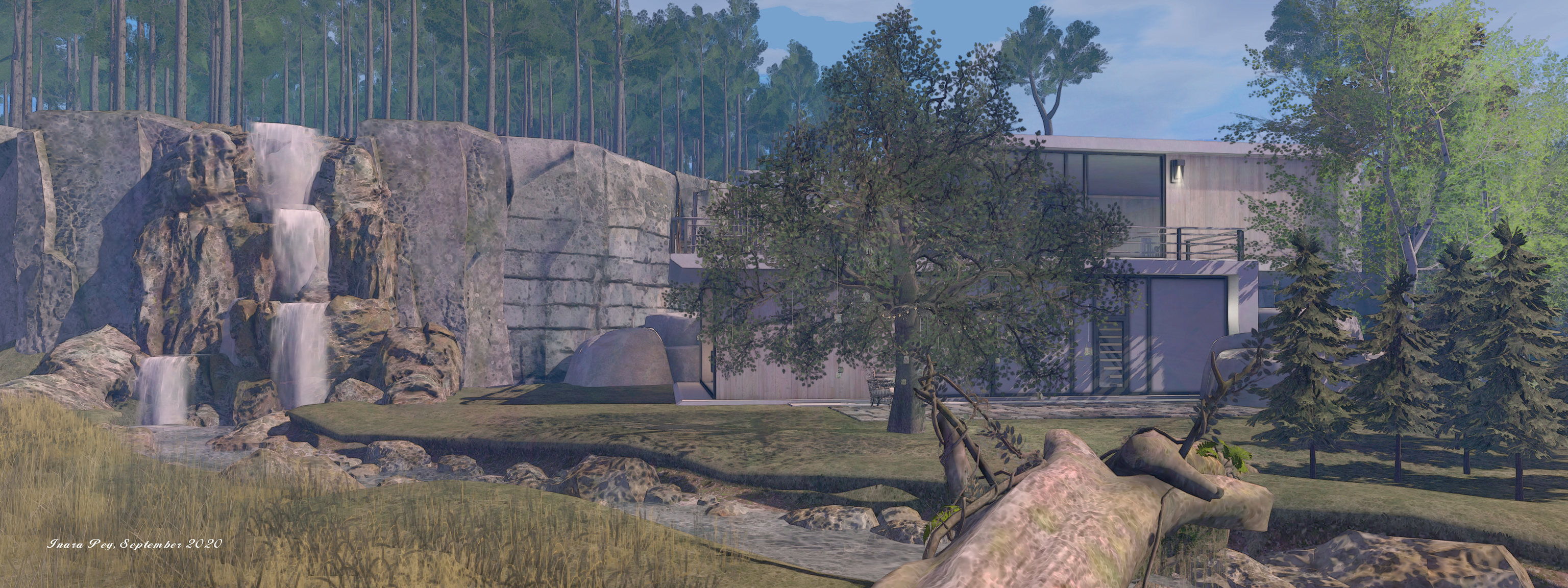
Log in to the beta grid (click here for instructions) and start at the Aditi Portal Park to try out Linden Realms in the cloud. Bring your friends and spend some time engaging in the virtual experience produced and provided by Linden Lab. You may even run into the often unseen technical Lindens working away. Don’t forget to ask them for their Linden bear, and beware of the rock monster!
If you find any issues with Linden Realms on the beta grid, please file a BUG jira at https://jira.secondlife.com, and make sure to include the time, date, region you were in when you found the issue, and a description of what happened, as well as what you would expect to happen in a similar situation on the Main Grid today.
So, if you want to help speed the cloud uplift process, why not follow the instructions contained in the links in the Lab’s blog post, log-in to Aditi and hop over to the beta grid and spending a little time playing Linden Realms – even if you don’t find anything to report, issue-wise, your time playing the game is still helping the Lab gather data on region and simulator performance.
It’s time to highlight another week of storytelling in Voice by the staff and volunteers at the Seanchai Library. As always, all times SLT, and events are held at the Library’s home in Nowhereville, unless otherwise indicated. Note that the schedule below may be subject to change during the week, please refer to the Seanchai Library website for the latest information through the week.
Monday, September 14th: Anything You Can Do
Gyro Muggins reads Randall Garrett’s (writing as “Darrell T. Langart”, one of his many pen-names) story of an alien encounter first published in serial form in 1962.
What do you do when you finally make contact with E.T. after it crash lands on Earth and you find that, unlike Hollywood, it’s not here for reasons of conquest- but that, despite its clear intelligence, it just doesn’t care about the destruction and death it wreaks across a city, because its norms of behaviour are so thoroughly – well, alien – compared to ours, and its sheer power means very little can actually harm it?
Well, you obviously take a man and rebuild him – but not with bionics; rather you do so purely biologically- so that he can match anything the alien can do. But then, when you’ve done so, is your creation still human?
Tuesday, September 15th:
12:00 Noon: Russell Eponym, Live in the Glen
Music, poetry, and stories in a popular weekly session at Ceiluradh Glen.
19:00: Young Jack Sparrow: the Pirate Chase
Shandon Loring presents another chapter from Captain Jack Sparrow saga.
Jack and company are hot on the trail of the notorious pirate Left Foot Louis, who they believe has the Sword of Cortes, but Arabella, the first mate, has a personal score to settle with Louis that could jeopardise the entire mission.
Wednesday, September 16th, 19:00: R is for “Random”
More 100-word stories with R. Dismantled.
Thursday, September 17th, 19:00:Pirates!
Seanchai staff and friends gather in anticipation of International Talk Like a Pirate Day (September 19th), to share stories of salty sea dogs and high seas hi-jinks.
Logos representative only and should not be seen as an endorsement / preference / recommendation
Updates for the week ending Sunday, September 13th
This summary is generally published every Monday, and is a list of SL viewer / client releases (official and TPV) made during the previous week. When reading it, please note:
It is based on my Current Viewer Releases Page, a list of all Second Life viewers and clients that are in popular use (and of which I am aware), and which are recognised as adhering to the TPV Policy. This page includes comprehensive links to download pages, blog notes, release notes, etc., as well as links to any / all reviews of specific viewers / clients made within this blog.
By its nature, this summary presented here will always be in arrears, please refer to the Current Viewer Release Page for more up-to-date information.
Note that for purposes of length, TPV test viewers, preview / beta viewers / nightly builds are generally not recorded in these summaries.
Official LL Viewers
Current release viewer version 6.4.7.546539, dated August 11, promoted August 17, formerly the Arrack Maintenance RC viewer – No Change.
Release channel cohorts:
The Bormotukha Maintenance RC viewer, version 6.4.8.548394, issued on September 8th.
Mesh uploader RC viewer updated to version 6.4.8.548061 on September 8th.
Courtesy of the Ivan Allen College of Liberal Arts, Georgia Tech
The Moon and Mars are very different places, but for the last 40 years, the idea of sending humans to Mars has been tied very closely to the idea of a return to the Moon. However, whether this point of view has helped or hindered either a return to the Moon with a human presence or the goal of sending humans to Mars is highly debatable.
In 1989, for example, NASA was challenged to develop a plan to get humans back to the Moon and then on to Mars. Much was made of the idea that the former was necessary because it would ultimately make the means to reach the latter easier and cheaper; however, the blueprint NASA eventually proposed for achieving both a return to the Moon and the onwards exploration of Mars – called the Space Exploration Initiative – required a 30-year time frame to complete and a bill of US $450 billion – or more in comparable terms, than the United States spent on World War 2. Result: any idea of going to the Moon or Mars was quietly pushed aside in favour of just building the International Space Station.
Much of this plan cited the idea that the Moon could be used to form a “cheaper” launch venue for reaching Mars and elsewhere in the solar system, with materials gathered from the surface of the Moon making it “cheaper” to build and test the required hardware needed to reach Mars, whilst the lunar environment could offer the means of testing technologies needed in the attempt to reach Mars such as landing systems, use of local resources. Similar claims were made in the early 2000s with NASA’s Vision for Space Exploration, which similarly ended up pushed to one side on the grounds and time frame.
In actual fact, when things like the amount of energy required to launch humans to the Moon and to launch them to Mars, there is actually very little difference – in fact, when you take into consideration the energy needed to slow a mission into lunar orbit, the energy needed to land it on the Moon, and the energy to re-launch from the Moon to reach Mars, and going to Mars via the Moon actually becomes more expensive in terms of your energy budget – particularly when you consider that regardless of whether they go directly to Mars or via the Moon, all crews will commence their mission directly from Earth. And when you add in all the costs and complexities involved in developing a lunar launch capability – fabrication facilities for vehicle production, development of fuel depots and so on – then the bill for going to Mars via the Moon starts to outstrip the bill for going to Mars directly from Earth.
This point was pretty much demonstrated in the 1990s by aerospace engineers Robert Zubrin and David Baker. Following that US $450 billion bill, they looked at how humans to realistically and cost-effectively be taken to Mars and back safely. Their work resulted in the Mars Direct mission proposal which, in 1996, would have cost around US $10 billion for the first mission and then $1 billion per mission thereafter, with two launches taking place every 2 years.
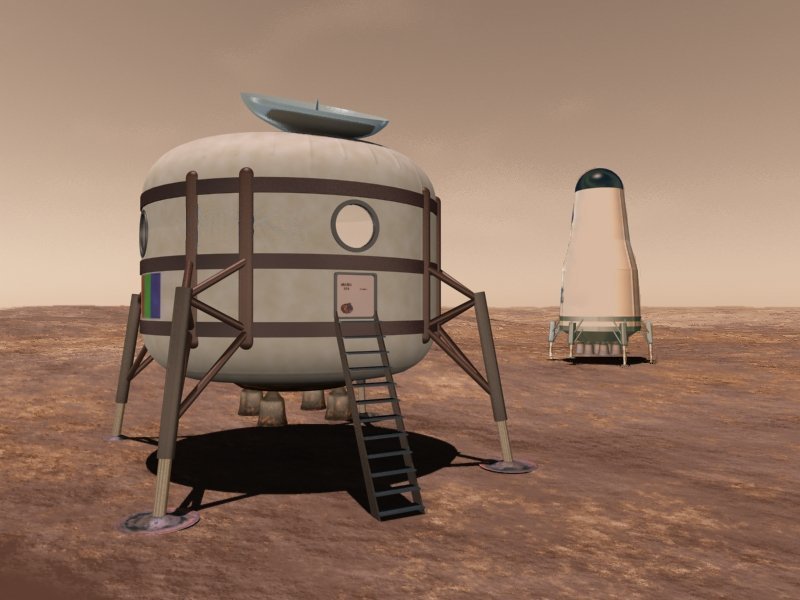
One of the unique aspects of Mars Direct was the idea of sending the Earth Return Vehicle (ERV) to Mars 2 years ahead of the crew, with the crew following in the “hab” – a combined spacecraft and home. Credit: Mars Society UK
While there were issues with the Mars Direct proposal (for example: the small number of crew – just 4 people – in the original profile, and a certain cavalier attitude towards cosmic radiation exposure), it offered a “lifeboat” option for getting a crew back to Earth, and it held up to scrutiny as a practical means to reaching Mars within a 10-12 year development cycle. So much so, in fact, that it became the basis for a generation of NASA Mars mission proposals (the Design Reference Missions), and former NASA Administrator Michael Griffin pushed the agency into starting work on the development of the Ares launch vehicles identified as being required for the Mars Direct proposal, under what became known as the Constellation programme (although ultimately, Constellation was cancelled after just one flight of an Ares 1 booster to make way for the Space Launch System).
In terms of technology development, the Moon is also of questionable benefit in terms of missions to Mars. Much has been made of testing landing systems for use on Mars through missions to the Moon, but the fact is, such tests are of limited value: the Moon has little practical atmosphere, ergo, there’s no means to test atmospheric entry systems. A lunar landing also requires an entirely propulsive means of slowing a vehicle and bringing it to a safe landing. However, the tenuous Martian atmosphere allows for aerobraking as both the demands of atmospheric entry and immediately afterwards. It also allows the use of a certain degree of aerodynamic flight capabilities and – potentially and depending on the mass of the landing vehicle – the use of parachute braking systems in addition to propulsive means of slowing and landing.
The atmosphere of Mars readily lends itself to ISRU – in-situ resource utilisation, than allows a 19th century process, the Sabatier Reaction, to generate water, methane and oxygen, using just a small amount of hydrogen feedstock carried to Mars by the ERV. Credit: Orange Dot Productions / Inara Pey
Similarly, while there is plenty of scope for in-situ resource utilisation on both the Moon and Mars – the production of fuel stocks, air and water, for example – the fact that Mars has an atmosphere that can be used in the production of these elements, whilst on the Moon they must be obtained through processing the regolith, again means the respective technologies needed for doing so on Mars are very different to those needed on the Moon.
So does this mean the idea of using the Moon as a proving ground for going to Mars is a complete misnomer? Not entirely. There are opportunities for testing technologies and procedures that will be required on Mars through a human presence on the Moon – but they do need to be put into perspective. And this is pretty much the findings that have come out of the annual Humans to Mars summit organised by Explore Mars and held virtually at the start of September 2020.
In particular, the summit noted that currently, we only have two data points for human activities in gravity environments: hear on Earth, and the micro gravity environment of Earth orbit. Therefore, even though the Moon’s gravity is half that of Mars, it would still provide a vital data point on things like muscle atrophy and bone calcification, cardiovascular impact, etc., allowing scientists gain greater information on how the human body adapts to a range of gravity environments over extended periods.
Also, things like basic rover systems for use on Mars could be practically tested on the Moon, because when all is said and down, engineers estimate that the requirements for a pressurised rover vehicle intended for use on Mars are around 70-80% the same as those for a pressurised rover intended for use on the Moon. The Moon also offers the potential for testing automated systems that could play a significant role on Mars: such and guidance systems for landings, self-deploying base stations, etc.
Pressurised rovers designed for use on Mars have much in common with similar vehicles intended for use on the Moon. Therefore, it makes sense for technologies for the former be tested / employed on the latter – something that also helps lower development and operating costs. Image credit: JAXA / Toyota
Crew activities could also benefit from lunar operations – although here, caution should again be exercised. For example, the summit identified the use of the Lunar Orbital Platform-Gateway (LOP-G) as a means of simulating transit flights to / from Mars to study the physical / psychological / practical challenges of 6-7 month transit times – but frankly, work like this could be carried out just as effectively from Earth orbit. However, options for providing greater protection against cosmic and solar radiation could benefit enormously from lunar-based testing.
Overall, the idea of integrating lunar and Mars mission requirements – where there are natural and genuine cross-overs – could ultimately assist humanity’s move from going back to the Moon to moving onwards to Mars than might be the case in viewing them as separate goals. But in order for this to work, how using the Moon to genuinely assist in undertaking human mission to Mars needs to be clearly understood and stated. The report from the Humans to Mars summit, although it does contain one or two questionable assertions, is nevertheless a positive step towards doing so.
NEOs: One Reason Why Amateur Astronomers are Important
There’s been a lot of late about near-Earth objects (NEOs) – asteroid that can come close to Earth in their orbits and so present a risk of striking Earth at some point. For example, on August 31st, I wrote about this over-excitement around 2018 VP₁ despite the fact it can never present a significant threat (see Space Sunday: Venus’ transformation, SLS and an asteroid).
However, on September 10th, 2020, a much larger asteroid crossed Earth’s orbit, and served as a reminder that there are sizeable bodies out there we have yet to find and which could represent a serious threat – and the importance of amateur astronomers in finding them.
2020 QU6, measuring roughly a kilometre across, passed by Earth at a distance of 40 million kilometres. That’s far enough away for it not to be classified as a near miss, although its orbit is still being assessed to see if it might become a future threat. Certainly, given its size, 2020 QU6 is substantial enough to cause a massive level of devastation were it to make contact. However, what is of key interest here is that, just two weeks prior to its passage past the Earth it was entirely unknown.
The negative image in which Leonardo Amaral identified NEO 2020 QU6. Credit: Leonardo Amaral
Despite its size, 2020 QU6 was not stopped until August 27th, 2020, when amateur astronomer Leonardo Amaral, working at the Campo dos Amarais observatory in Brazil, observed it for the first time. A keen asteroid hunter,Leonard identified the asteroid using equipment he had obtained via a 2019 grant from the Planetary Society that allowed him to significantly upgrade his equipment. In this, he is part of a global network of amateur astronomers the Planetary Society support in the work hunting down asteroids that might pose a threat to Earth.
Thus, his discovery of 2020 QU6 both underlines the importance of amateur astronomers in the finding and tracking of NEOs – particularly given that the major space agencies believe they’ve thus far only identified around 90% of large NEOs that pose a very significant threat to Earth should they collide with us. Leonardo’s work also highlights the importance of amateur astronomers operating in the southern hemisphere, where the larger agencies carrying out similar work don’t have such a pronounced presence as they do in the northern hemisphere., so there is a greater reliance on professional and amateur astronomers. This in a particularly valid point to remember, because knowing there could still be several hundred objects of 1 km or larger routinely crossing the orbit of Earth that we’re completely unaware of is a little unsettling.








 Inara Pey: Living in a Modemworld