Lunar Outpost: Still to be Built, but off the “Critical Path” for Lunar Return
NASA has announced that the controversial Lunar Outpost Platform-Gateway (LOP-G), intended to occupy a cislunar halo orbit in support of human missions to the Moon will go ahead, but will no longer form a critical part of plans to initially send humans back to the Moon.

LOP-G has come under considerable criticism, not the least because in real terms, it offers little to the goal of a human return to the Moon. Additionally, as it relies on leading-edge technologies, such as with its power and propulsion systems, it runs a real risk of falling well behind its initial elements being ready for a 2022 launch.
Given this, and the fact that NASA has less than five years to get the actual lunar lander designed and built (by comparison it took over six years to do the same with the Apollo Lunar Module once contracts had been signed – and NASA has yet to even reach that stage with their current plans), opting for a more direct means of returning to the Moon, even if only for the initial missions, makes far more sense.
Removing the LOP-G’s development from the initial lunar landings potentially brings benefits in two areas. Firstly, and subject to any revised plans being finalised, it in theory means NASA should be able to better focus its resources in direct Earth-Moon missions. Secondly, and according to Doug Loverro, NASA associate administrator for human exploration and operations, the LOP-G itself will have a much better development and implementation time-frame, one devoid of having to rush the design and fabrication of the station’s initial elements to meet the 2022 launch date.

Even so, LOP-G is still seen as “essential” for NASA’s longer-term goals of establishing a permanent human presence on the Moon and in future missions to Mars. In the meantime, the first science payloads for the station have been selected. One of these will be provided by NASA – a suite of instruments that will monitor space weather conditions – and the other from the European Space Agency, and which will measure radiation conditions within the environment in which LOP-G will operate.
COVID-19: Impacting Space Plans
Novel-coronavirus disease COVID-19 is causing global concern, and is starting to impact human efforts in space (as noted above with the ExoMars mission). For NASA and the Russian space agency, as the only countries currently operating routine flights to the International Space Station, the virus is causing a re-evaluation of crew quarantine periods ahead of launches.
The current protocol is for ISS bound crews to enter a two-week quarantine period ahead of their launch to both isolate them from the risk of contracting any illness that might affect them or those already aboard the station, and to ensure they haven’t contracted any latent illness during the final days of contact with other prior to entering quarantine. With the next drew due to launch to the space station in early April, both NASA and the Russian space agency, Roscosmos, are discussing extending the quarantine period to three weeks, to cover the incubation period seen with the novel-coronavirus.
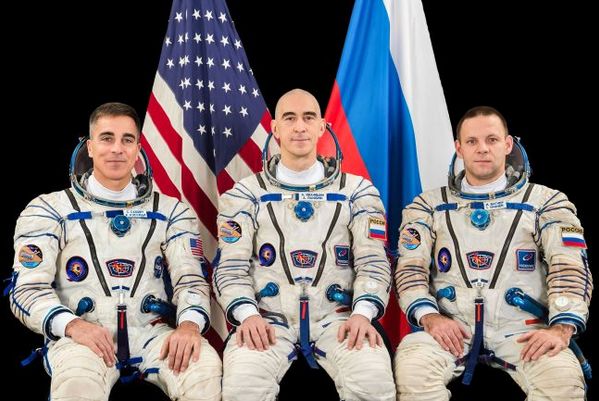
As it is, the April 9th ISS crew launch – Soyuz TM-16 / Expedition 62, featuring US astronaut Chris Cassidy and Russian cosmonauts Anatoly Ivanishin and Ivan Vagner – has been subject to some controversy, following the removal of the original two Russian crew members, Nikolai Tikhonov and Andrei Babkin, on medical grounds. The precise issue reasons for the swap between the four Russians has not been given, but both NASA and Roscomos have stated the swap will not interfere with the planned launch or pose a risk to ISS personnel.
In addition, various NASA centres have revised their working practices. Both the Marshall Space Flight Centre in Alabama and Ames Research Centre in California have moved to “mandatory telework status”, with restricted access to the centres as a result of individuals at both testing positive for the virus. NASA centres elsewhere are closing their visitor facilities as a precautionary measure, and NASA Administrator Jim Bridenstine has stated that moving to a teleworking status at other centres is “highly encouraged”.
This latter point has in turn given rise to concerns over NASA’s ability to achieve targets for key missions. There is a potential for final integration of the Mars 2020 rover, Perseverance to be affected, possibly leading to it missing its launch window. Similarly, those involved in preparing for the first Orion / SLS launch – still due to launch at the end of 2020 – can be ready in time.
We can’t build Orion from home.
– Jules Schneider, Orion director of assembly, test and
launch operations, Lockheed Martin
Outside of space agencies, the European Southern Observatory has cancelled public events at its headquarters in Garching, Germany, and has suspended public visits to La Silla and Paranal, two of its big observatories in Chile.

 Inara Pey: Living in a Modemworld