The serpentine beauty of Lake NumB in Second Life

Lake NumB, February 2020 – click and image for full size

Surrounded by tall green mountains and with fir trees in places lining its shore, Lake NumB sits hidden from the rest of the world, its waters a colour suggestive of great depth. It lies within with the hills uninterrupted save for a single, sinuous island that appears to be swimming through the blue waters from east to west, the narrow stripe of a stream running through it from end-to-end along its green back.

Designed by Num Bing, this homestead setting is stunning in its simplicity and beauty, and offered to visitors because – to use Num’s words:

I wanted to create a little spot… a stream banked with nature… with photo & relaxation spots… so here we are… wander & enjoy…

Lake NumB, February 2020

The landing point is on a wooden bridge spanning the stream towards its western end. To the south of this, a carpet of grass sits between water’s edge and stream to provide a access to two greenhouses. The first, and nearer of these, is a near-pristine structure tucked into a grove of fir trees and offering a quiet retreat – one of several throughout this meandering isle.

The second greenhouse sits further east, where the land rises very slightly between curtains of rock. It is older than the first, its frame now without glass but with net curtains hanging on one side. It offers a large tub of water as an escape for one our two people, the water warmed by copper coils absorbing the heat from a naked fire sitting alongside it. Nearby, grassy steps lead down to a deck sitting over the waters of the north shore, while to the south a second bridge offers way back to the path that runs between it and the landing point.

Lake NumB, February 2020

Beyond this, the island continues east, the land lined with trees, shrubs and flowers and grass paths encourage explorers forward to discover all the hidden delights to be found. And these delights are many: places to sit, decks over the water, little glades, and an out-thrust of land that offers a formal garden with checker board pebbles, trimmed hedgerows and topiary.

Extending out into the lake, the garden looks to have been artificially added to the island, and is home to another frame – for either a greenhouse or shed – that sits unfinished and provides home for an setting ready for afternoon tea complete. Entertainment is waiting to be provided by the most charming clavicytherium that came as a particular delight to me, as I had no idea one was available in SL (so kudos to Jake Vordun, its creator!).

Lake NumB, February 2020

Beautifully designed and presented, Lake NumB does precisely what Num Bing intended of it: presents a natural setting rich in places to relax and opportunities for photography (images can be submitted to the region’s Flickr group, if desired); it’s a place that works under multiple windlight options and encourages visitor to stay a while and that shouldn’t be missed.

Our thanks to Annie Brightstar for the tip.

Lake NumB, February 2020

SLurl Details

Detectives, poems and Celtic writings, in Second Life

Seanchai Library

It’s time to highlight another week of storytelling in Voice by the staff and volunteers at the Seanchai Library. As always, all times SLT, and events are held at the Library’s home unless otherwise indicated. Note that the schedule below may be subject to change during the week, please refer to the Seanchai Library website for the latest information through the week.

Sunday, February 16th 13:30: Tea-Time Special: Death on the Nile

First published in 1937, Death on he Nile is one of Agatha Christie’s most famous and enduring Hercule Poirot murder mysteries. The book has been the subject of multiple theatrical, film and television adaptations, most of which had by necessity condensed elements of this tale of love, jealously, and betrayal to more readily fit the requirements of their format.

Now, Seanchai Library continues to present the opportunity to enjoy the story in full – and within a setting inspired by the novel, as Corwyn Allen, Da5id Abbot, Kayden Oconnell, Gloriana Maertens, and Caledonia Skytower bring Christie’s characters once more to life for us to enjoy.

The Karnak – Death on the Nile

So, why not join Poirot as he cruises aboard the river steamer Karnak in a trip along the Nile – although a tour of the sights is unlikely to be high on his priorities given the state of affairs between socialite Linnet Doyle, her new husband Simon Doyle and his embittered former fiancée (and Linnet’s long-time friend) Jacqueline de Bellefort, together with a host of other interesting travelling companions; particularly when they start to turn up dead.

Monday, February 17th 19:00: Out of the Silent Planet

The first novel in C.S. Lewis’s classic sci-fi trilogy which tells the adventure of Dr Ransom who is kidnapped and transported to Mars.

In the first novel of C.S. Lewis’s classic science fiction trilogy, Dr Ransom, a Cambridge academic, is abducted and taken on a spaceship to the red planet of Malacandra, which he knows as Mars. His captors are plotting to plunder the planet’s treasures and plan to offer Ransom as a sacrifice to the creatures who live there, and his discovers that he is special as he comes from the ‘silent planet’ – Earth – a world whose tragic story is known throughout the universe…

Join Gyro Muggins for more.

Tuesday, February 18th 19:00 At the Gates of Dawn, the Writings of Ella Young

Ella Young, photographed in 1931 by Ansell Adams

Born in Ireland in 1867, Ella Young was educated in Dublin, obtaining a master’s degree in Celtic mythology. She published her first book of poems in 1906, and her first work of Irish folklore, The Coming of Lugh, in 1909, and followed in 1910 by Celtic Wonder-Tales.

She first travelled to the United States in the early 1920s, and in 1924 she was hired by the University of California, Berkeley to replace William Whittingham Lyman Jr., who had vacated his post as “Instructor in Celtic”. Re-entering the United States in 1925, she was allegedly briefly detained at Ellis Island as a probable mental case on the grounds of her apparent belief in the existence of “fairies, elves, and pixies”.

While based in California, held the post of the James D. Phelan Lecturer in Irish Myth and Lore at the University of California, Berkeley for approximately a decade, and spent a portion of her time speaking at various universities around the country.

As a lecturer, Young was known for her colourful and lively persona, often addressing her audiences whilst wearing the purple robes of a Druid and expounding on legendary creatures such as fairies and elves, and praising the benefits of talking to trees.

Her sheer enthusiasm for, and depth of knowledge of, Celtic mythology attracted and influenced many of her friends and won her a wide audience among writers and artists in California, including poet Robinson Jeffers, philosopher Alan Watts, photographer Ansel Adams, and composer Harry Partch, who set several of her poems to music.

Two of her books, The Wonder-Smith and His Son (1928) and The Tangle-Coated Horse and Other Tales (1930) were both nominated for Newbery prizes. She published her autobiography in 1945, prior to succumbing to cancer in 1946.

The Gates of Dawn is an anthology of Young’s work, featuring her poems, prose and mythical storytelling, and will be read by Willow Moonfire.

Wednesday, February 19th, 19:00: Poetry This Year

Caledonia reads from the poems selected for recitation by the students in the program she coordinates in her home state, live on stream.

Thursday, February 20th 19:00 A Pocketful of Crows

The bonny brown girl, lives in the forest, unnamed, untamed. Her people, the “travelling folk”, have no need of towns, or houses, or linens. Nor of each other, save at occasional seasonal gatherings. The Brown Girl lives in the wild, inhabits the wild creatures when she wants to hunt in the forest, or soar through the sky.

Then one spring day, the day before May Day, she meets William, a young royal, and quickly falls in love. Though she denies being in love, and swears to remain wild, William insists on giving her a name, Malmuira, the Dark Lady of the Mountains.

“Thus are you named, my brown girl. Thus do you belong to me.”

Join Shandon Loring as he continues this tale of love, loss and revenge. Following the seasons, A Pocketful of Crows balances youth and age, wisdom and passion and draws on nature and folklore to weave a stunning modern mythology around a nameless wild girl. Also in Kitely – grid.kitely.com:8002:SEANCHAI).

Space Sunday: A pale blue dot, and more on Betelgeuse

A pale blue dot: Earth – the bright dot just right-of-centre – as seen from a distance of 6 billion km (40.5 AU). Credit: NASA / Kevin Gill et al

Thirty years ago, in February 1990, the Voyager 1 space craft had completed its primary mission and was about to shut down its imaging system. However, before it did so, and in response to lobbying from the late Carl Sagan, celebrated astronomer, teacher, broadcaster, writer, futurist and member of the Voyager programme’s imaging team, mission managers order the spacecraft to turn its imaging system back towards Earth to take a final photograph of its former home.

Captured on February 14th, 1990, the image revealed Earth as little more than a tiny blue pixel caught in a  streak of sunlight falling across the camera’s lens. Sagan immediately dubbed the image Pale Blue Dot, and it became his – and Voyager 1’s – Valentine’s Day gift to all of humanity; a last goodbye from the probe taken at a distance of 6 billion km (40.5 AU); 34 minutes later, its camera system was permanently powered down to conserve the vehicle’s power generation system.

From the moment it was published, the image became iconic: a representation of the sum total of humanity, something Sagan recognised at a time when the Cold War still dominated world politics.

Look again at that dot. That’s here. That’s home. That’s us. On it everyone you love, everyone you know, everyone you ever heard of, every human being who ever was, lived out their lives. The aggregate of our joy and suffering, thousands of confident religions, ideologies, and economic doctrines, every hunter and forager, every hero and coward, every creator and destroyer of civilisation, every king and peasant, every young couple in love, every mother and father, hopeful child, inventor and explorer, every teacher of morals, every corrupt politician, every ‘superstar,’ every ‘supreme leader,’ every saint and sinner in the history of our species lived there–on a mote of dust suspended in a sunbeam.

…It has been said that astronomy is a humbling and character-building experience. There is perhaps no better demonstration of the folly of human conceits than this distant image of our tiny world. To me, it underscores our responsibility to deal more kindly with one another, and to preserve and cherish the pale blue dot, the only home we’ve ever known.

– Carl Sagan, Pale Blue Dot, 1994

To mark the 30th anniversary of the original image, NASA issued a newly enhanced version of the image, carefully processed by a team led by software engineer and imagining specialist, Kevin M. Gill, seen at the top of this article. It once again reveals just how small and lonely our world really is. And while the Cold War has long since past, in this age of global warming and climate change, this new image of that tiny, pale blue dot and Sagan’s words remain as powerful a reminder of our fragile place in the Cosmos as they did more than two decades ago.

Betelgeuse: Extent of Dimming Revealed

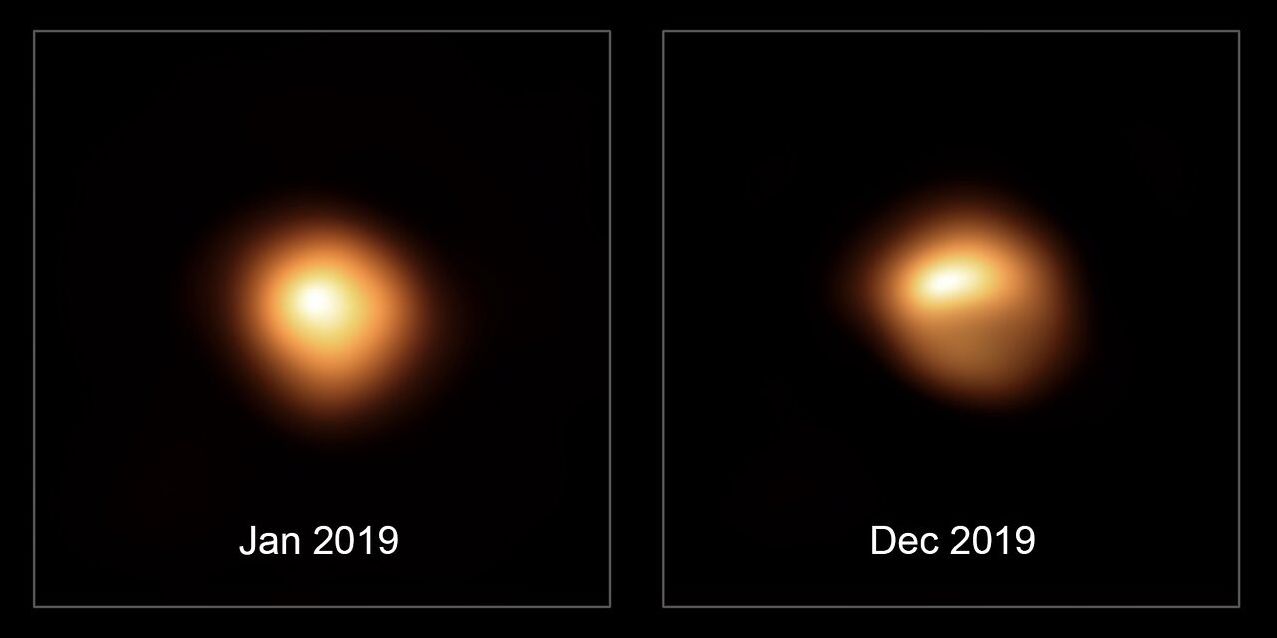
I’ve previously written about the dimming of Betelgeuseas seen from Earth on a couple of occasions over the past few months (see: Space Sunday: a look at Betelgeuse (December 2019) and A farewell to Spitzer, capsules, stars and space planes (January 2020)). Now two images and a video have been released to show just how startling the apparent changes in the star have been over the course of a year.

As an irregular – and massive – variable star, Betelgeuse goes through cycles of dimming and brightening over time. However, what has occurred over the course of the past year is without precedent in the 125-year history of observations marking the star’s behaviour.

Overall, Betelgeuse’s apparently magnitude (brightness as seen from Earth) has fallen by a factor of 2.5 (or roughly 25-30%). This has prompted speculation that the star may have exploded into a supernova – its eventual fate – and we are currently seeing the light, which takes approximately 643 years to reach us, from the run-up to that cataclysmic event. While most astronomers do not believe this to be the case, the two images do present a stunning spectacle of a star in flux.

Side-by-side comparison of Betelgeuse’s dimming, as seen by the SPHERE instrument on ESO’s Very Large Telescope. Credit: ESO/M. Montargès et al.

The images were captured by the Spectro-Polarimetric High-contrast Exoplanet REsearch (SPHERE) instrument attached to the Very Large Telescope (VLT, currently the most advanced visible light telescope in the world) operated by the European Southern Observatory Captured in January and December 2019, they not only show just how much  Betelgeuse has dimmed in that time, but also how it seems to have changed its shape.

Again, such changes of shape aren’t unusual for a pulsating variable star like Betelgeuse. The surface of such a star tends to be made up of giant convective cells that move, shrink and swell. However, while these pulses – referred to as stellar activity – have likely been responsible for past changes in Betelgeuse’s shape observed from Earth, they have never been anywhere as extreme as those indicated by SPHERE – although it has been acknowledged that they could also be exaggerated by a cloud of dust ejected by the star long enough ago to have cooled, and is now partially obscuring our view of Betelgeuse.

Continue reading “Space Sunday: A pale blue dot, and more on Betelgeuse”

2020 Home and Garden Expo in Second Life

via slhomeandgardenexpo.com

The 12th Home and Garden Expo (HGE) in support of Relay for Life of Second Life and the American Cancer Society, has formally kicked-off and will run through until Tuesday, March 3rd, 2020. Taking place across nine regions (Hope 1 through 9), together with two Linden Homes preview regions presenting the range of currently-available Linden Homes, the event offers some of the finest in home, garden, and furnishing designs available across the grid.

With multiple exhibitors taking part, the event offers something for anyone who is looking for a new home, ideas for furnishing and décor, wishing to improve their building (or other) skills, or who just wishes to keep abreast of the latest building / home trends in Second Life.

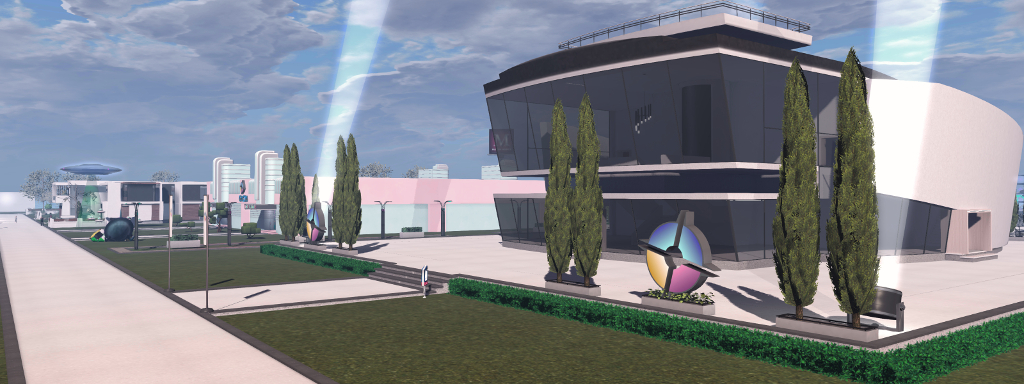
The Home and Garden auditorium and one of the gacha malls

As always, the Expo there will be a range of events and activities, including entertainment and talks, artists, auctions, Gacha stores (one on Hope 3, the other on Hope 7). and more – including, and for the first time at Home and Garden – a special Fashion / wearable creators mall.

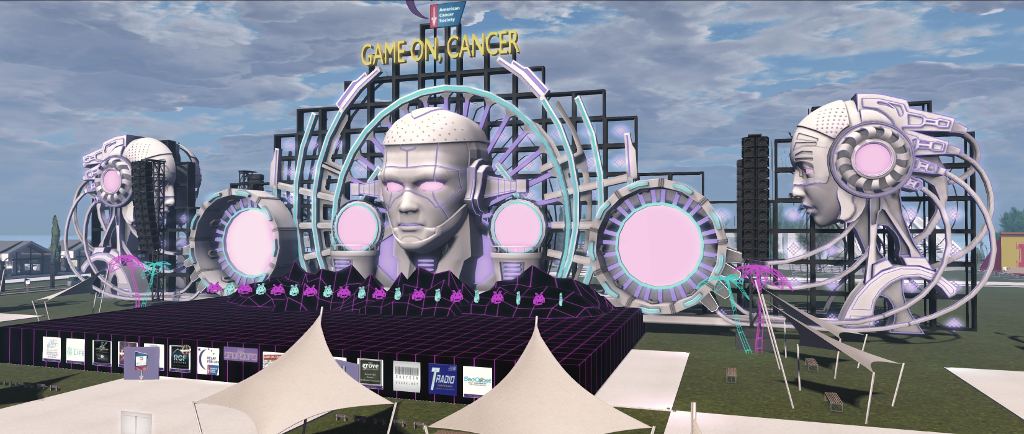
Hope 1 presents the event’s entertainment stage and kiosks for Relay for Life Second Life relay teams, with the auditorium for talks and presentation located in neighbouring Hope 3.

The entertainment stage

So, do be sure to drop in the the Home and Garden Expo, tours the houses, look at the furnishing and enjoy the entertainment – and feel free to drop a donation or two into the RFL kiosks, even if you’re not in the mood to purchase anything, and help support ACS and RFL of SL in their world-wide endeavours.

For further detail and SLurls, please refer to the Home and Garden Expo website.

A journey through CybeleMoon’s Dark Wood

CybeleMoon: Dark Wood and Other Destinations

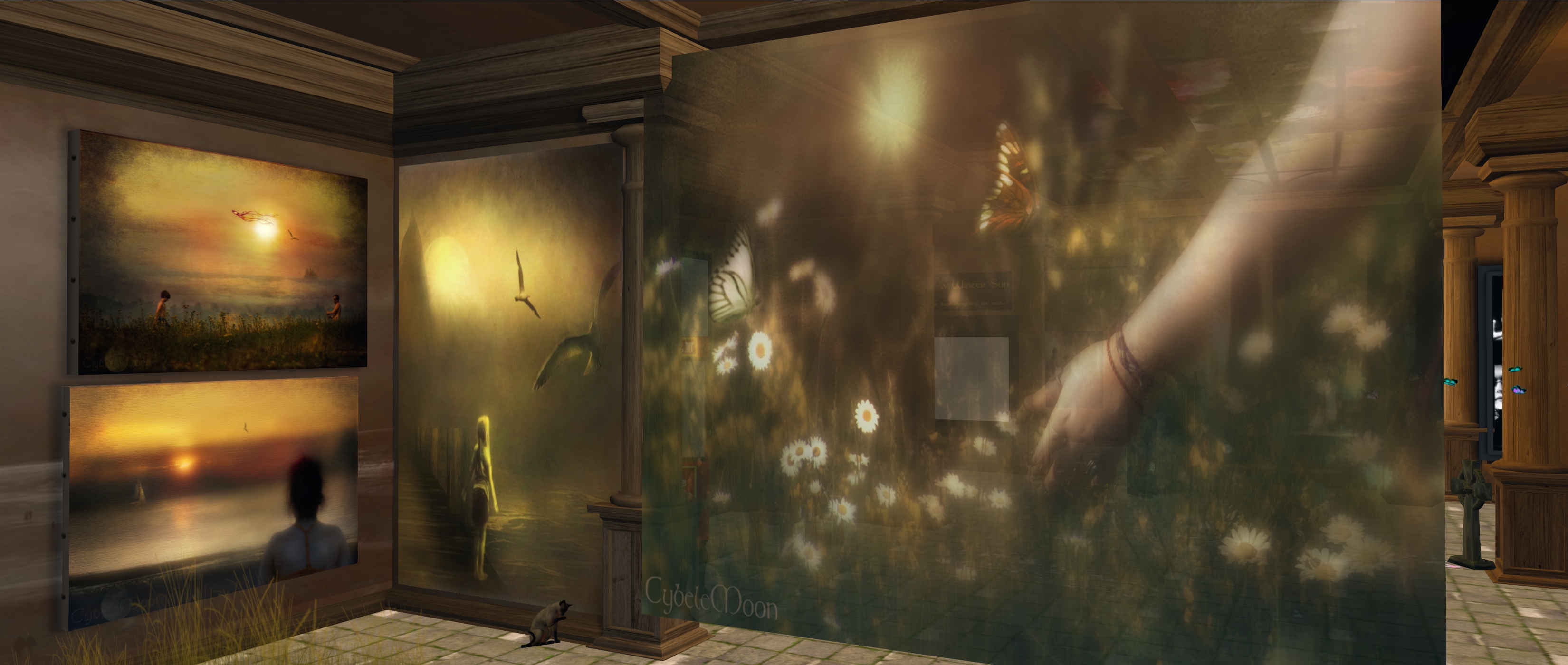
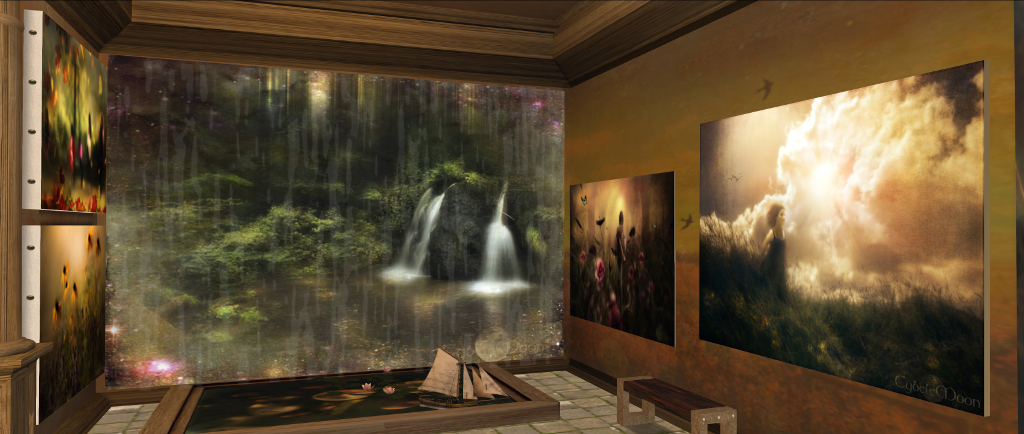
Now open at Savor Serenity is Dark Wood and Other Destinations, an exhibition of CybeleMoon’s always enchanting art. It offers a journey through her world, from woodland to coast, taking us past ethereal settings inhabited by children and creatures.

Cybele’s art ranges from portraits to landscapes, encompassing magical totems, hidden groves, wild glens, fairie circles, haunted woods, lonely shores and gardens of colour, light and shadow. Her palette offers us mixes of digital and real, gently mixed with tales and stories, children at play, picnic teas and enchanted children. All of which are offered within Dark Wood – and more besides.

CybeleMoon: Dark Woods and Other Destinations

Splitting the gallery into three spaces through the considered placement of wall hangings that carry images of their own, Cybele presents us with a gentle tour of her work. Within the centre area we are introduced to her waifs, a wonderful set of largely monochrome portraits of children, together with one of her marvellously layered digital pieces that comes landscape and child’s face to present a haunting story within, and video presentations of her work.

Bordering the central area are images of her woodlands and coastal scenes, her glades and more of her children – the latter often infusing several of her images with a sense of fae magic. For me, one of the attractive aspects of this exhibition is Cybele’s use of 3D elements with two of her pictures; these lead us into the art with which they are placed, making a part of their narrative. In this, it is exceptionally hard not to want to climb the wooden bridge in from of The Winter Path and attempt to follow the trail to see what lies beyond the distant bend that sees it pass behind shadowed trees.

CybeleMoon: Dark Wood and Other Destinations

Similarly, the use of a pool with small boat and lilies sitting upon the water that adjoins The Fairy Glen at Rosemarkie, adds a depth of narrative to the idea of fae folk the art presents, the face below the water suggesting a water nymph at play in the waters spreading outward from the glen and “into” the pool.

Evocative, rich in image, colour, tone and story, Cybele’s art is always a delight, and for those familiar with it or have yet to experience her work, Dark Wood and Other Destinations should not be missed.

SLurl Details

Beaming in to Aoshima in Second Life

Aoshima, February 2020 – click any image for full size

New Eldelyn is a garden world located on the far edge of the Circinus Stream. It is the new homeworld of the Kalimshari, following their exile from their home galaxy to the harrowing horrors of the void.

– from the “WikiDex, the free galactic codex”

This is the informative greeting given (via a holographic sign board) to arrivals at the landing station at Aoshima, a homestead region designed by Rydia Lacombe that is both a private home and a public space in which visitors are welcome to spend time and explore.

Aoshima, February 2020

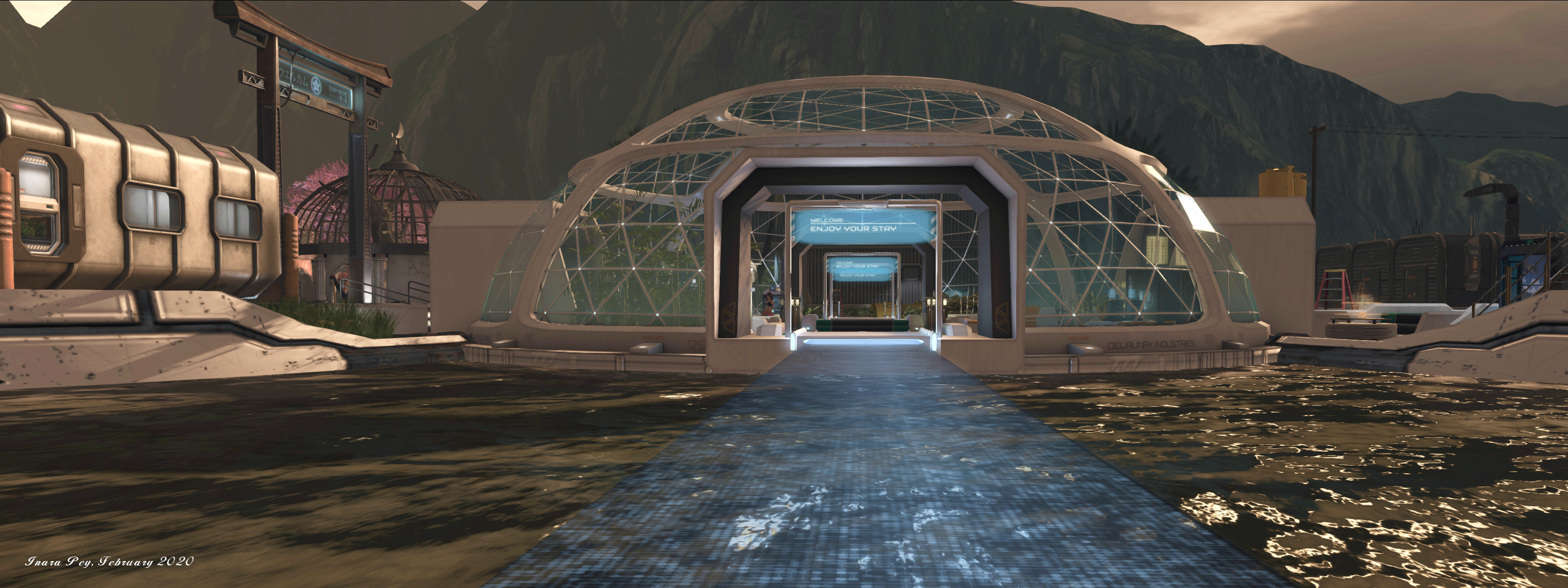
It’s a nicely presented setting, carefully considered and with a flow that makes exploration pleasantly relaxing, starting with the feeling of having just landed after a voyage through space. This is achieved by playing the landing point at the foot of the boarding / cargo ramp of a vehicle modelled after the Star Trek Online Delta Class of shuttle (which in turn was derived from the Delta Flyer from Star Trek Voyager). Around the landing pad are all the signs that this is a busy centre of operations: cargo bins and equipment sit to one side of pad, a storage unit on the other, while small drones periodically arrive to collect or deposit more cargo boxes and carry out repairs.

Beyond the landing pad gateway sits a raised walkway offering access to piers extend over the water, ready to receive water craft  arriving from the seas  that lie beyond the surrounding atoll hills. Beyond the piers, a series of habitat units have been stacked, awaiting occupancy.

Aoshima, February 2020

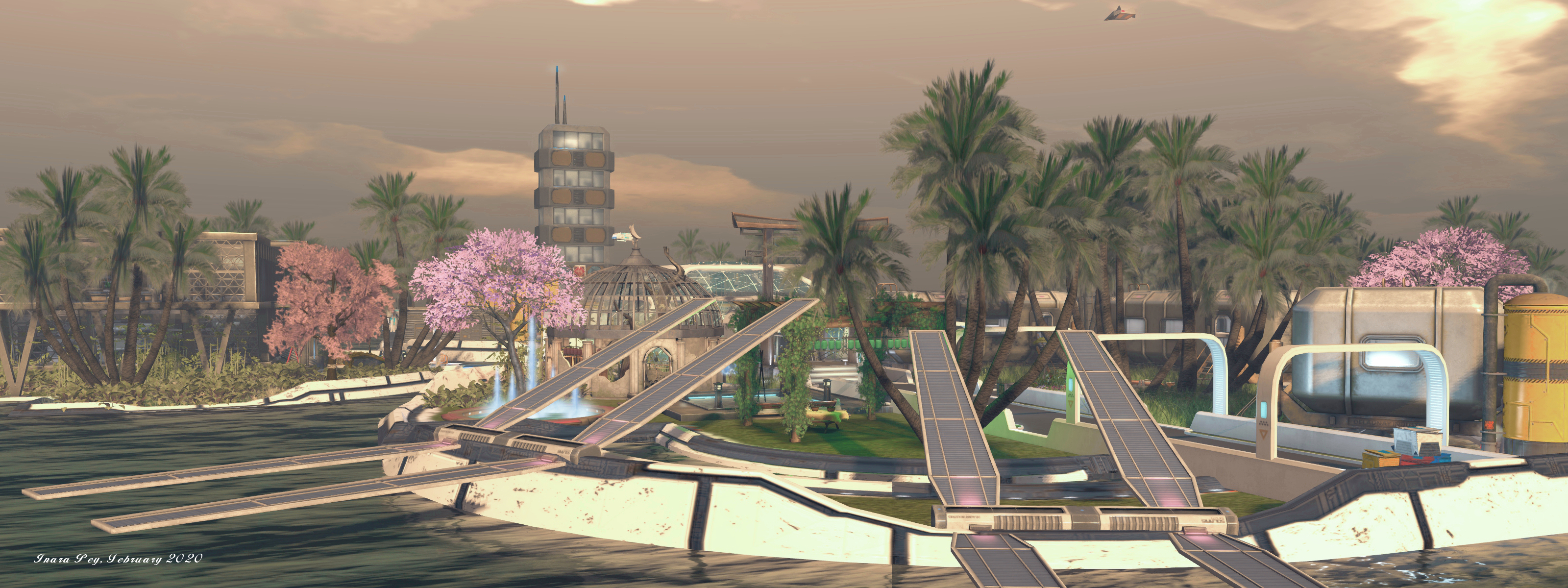
Like the rest of the station, the landing pay and the habitat modules sit on decks raised above the all-encompassing sea, suggesting that while the station sits within a bay formed by surrounding islands, the land is far too rugged to allow any form of homestead to be established on it. Instead, the rest of the facilities sit on five more such pontoons, three of which are directly connected one to another and linked to the landing pad by a low-slung light bridge – note that if this isn’t apparent, touch the blue pad on the lag of the white gate at the water’s edge and facing the central group of structures.

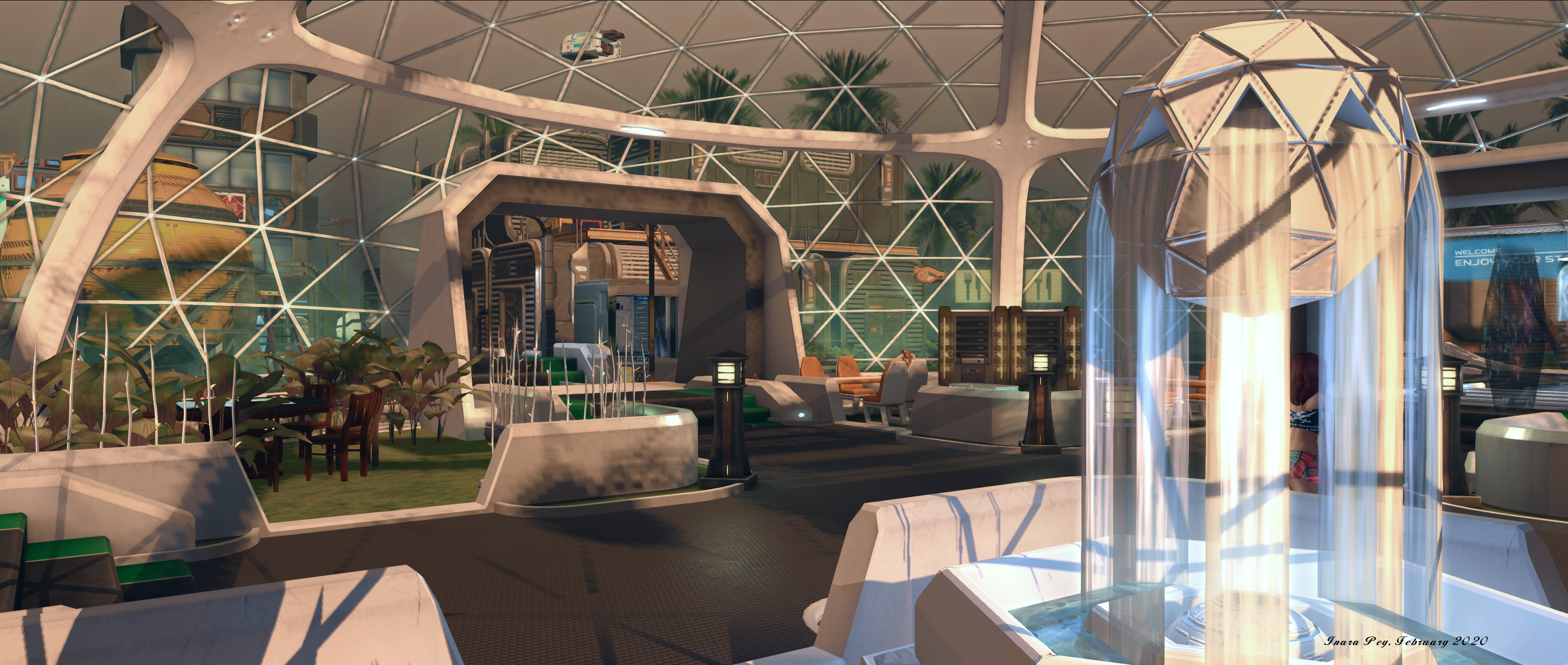
The middle island in this trio appears to be a domed recreational / refreshments centre for the station’s personnel. it is bracketed on one side by a garden area with further habitat modules waiting to be pressed into service, and which forms a home for solar arrays that help provide the station with power. Some of this may well go to the industrial facilities on the other side of the recreational pontoon. Within this workspace are more modules, a greenhouse and silos, all watched over by a  – somewhat ominous – tower block. Lit from within but with frosted as if to hide whatever is going on inside, this sits on its own pontoon adjoining the industrial area, blue laser-like beams menacingly guarding the arched gateway between the two.

Aoshima, February 2020

The final pontoon sits beyond the recreational centre, another light bridge spanning the gap between the two. It presents a private dwelling surrounded by a garden of Earth-like plants combined with what appear to be local flora. Split over two floors, this accommodation is considerably larger than the modules found across the rest of the station, with plenty of space for those living within it.

Life is brought to the setting through the combined use of NPC characters that can be encountered while exploring – one of whom appears to subscribe to the idea that if it looks complicated, it probably needs a bigger hammer, – and by the numerous drones flying around the station, carrying boxes or welding equipment, together with the flyers that periodically pass overhead.

Aoshima, February 2020

Also overhead sits the ICV Kyrona, which appears to be a sublight cargo hauler (at least going by the stasis pods housed within it) that has been converted into something of a space-going home. Reached via a teleport disc within the cargo bay of the ground-level shuttle, the Kyrona is also open to exploration, the teleport disc in the stern compartment returning visitors to the shuttle when they have done so.

Aoshima makes for an engaging visit, with – as noted – plenty to capture the eye and camera. Finished with a suitable sound scape, it does have a smattering of adult items scattered around, but for the most part these are placed so as to be nicely tucked out of the way so as not to be obtrusive, and so should nod interfere with a visit.

Aoshima, February 2020

SLurl Details