The stunning beauty of Ukivok in Second Life

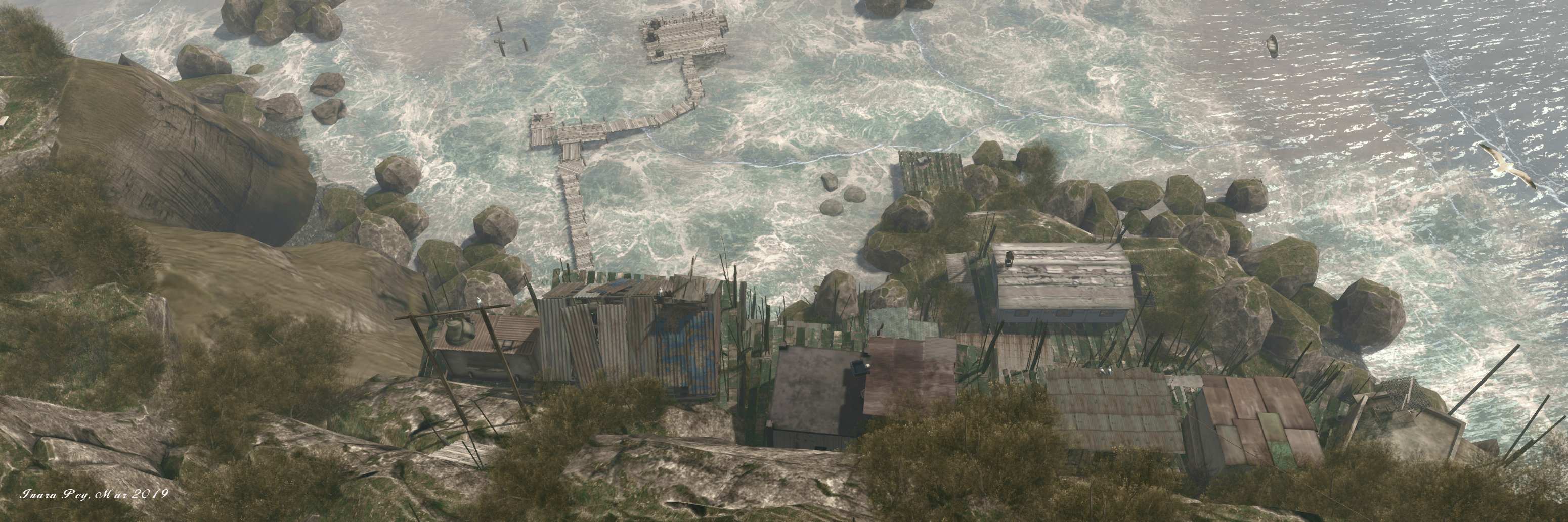
Ukivok; Inara Pey, March 2019, on FlickrUkivok – click any image for full size

Update: in keeping with Serene and Jade’s approach to keeping their region designs open for approximately a month, Ukivok has closed, and SLurls have therefore been removed from this article, as the host region is under private holding. 

As I’ve frequently noted, Serene Footman and Jade Koltai are the creators of what are arguably the most evocative region designs made for Second Life.Each of their creations tends to last for a month, and when available, should not be missed, given they are so beautifully presented and perfectly reflect the physical world locations that form their inspiration.

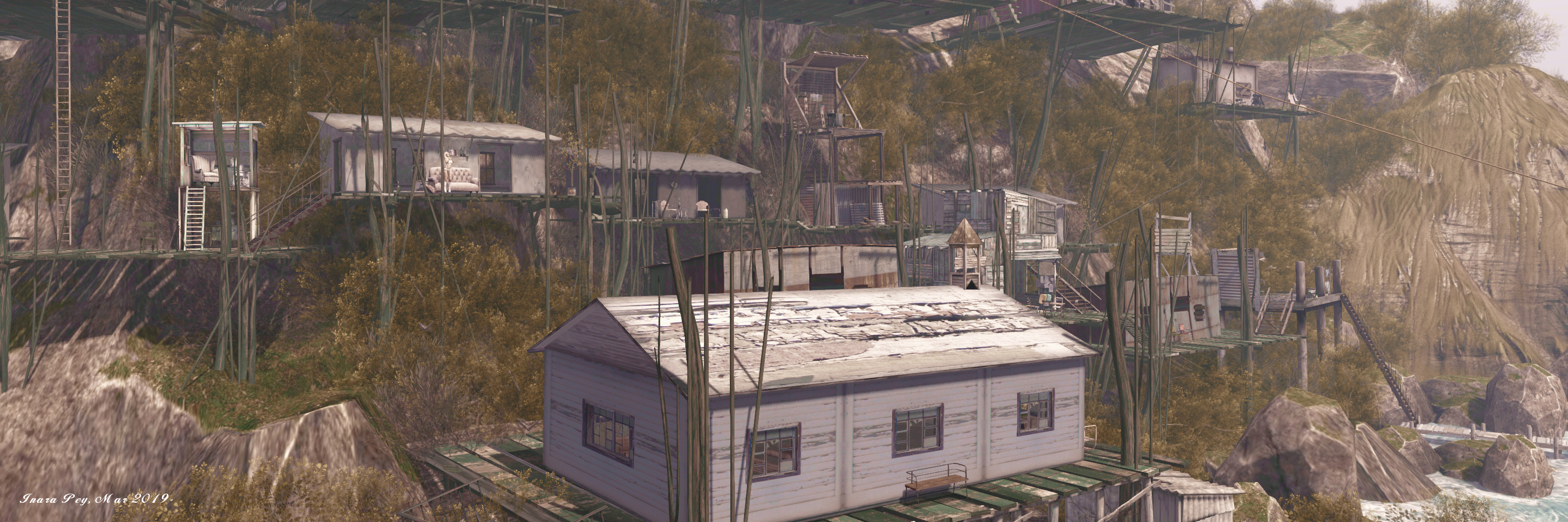
Each and every design – the majority I have written about in this blog – are exquisite, but I confess there is something about their latest design – Ukivok – that is utterly breathtaking; quite the most visually impressive presentation of a rugged, isolated island, one that offers an informative look at a part of the world perhaps unknown to most.
Ukivok; Inara Pey, March 2019, on FlickrUkivok

Our new sim is a recreation of the abandoned Alaskan village of Ukivok … Once home to around 200 Iñupiat, the village is located King Island, which is situated in the Bering Sea, around 64km off the Alaskan coast and 145km from Nome.

– Serene Footman, describing Ukivok

The Iñupiat (or Inupiaq) are native Alaskan people whose traditional territory extends from Norton Sound on the Bering Sea to the Canada–United States border. Those who once lived on Ling Island called themselves Aseuluk, “people of the sea” or Ukivokmiut – a name combining the name of the village and “miut”, meaning “people” (and so might translate as “people of Ukivok”).

Ukivok; Inara Pey, March 2019, on FlickrUkivok

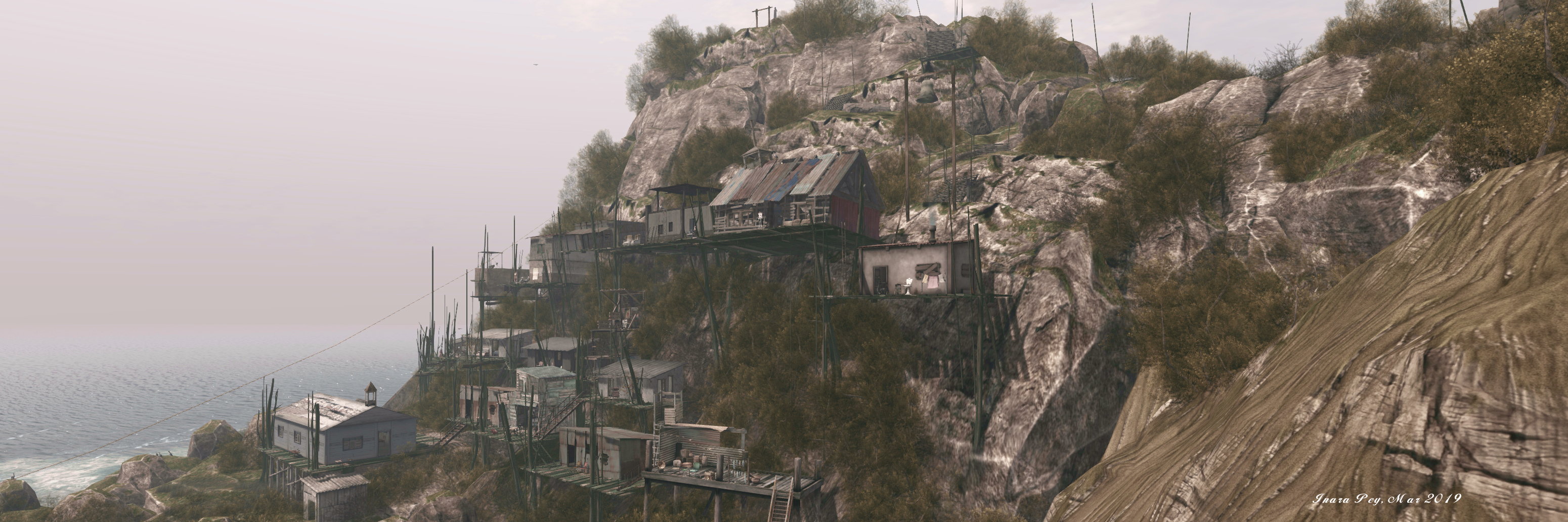
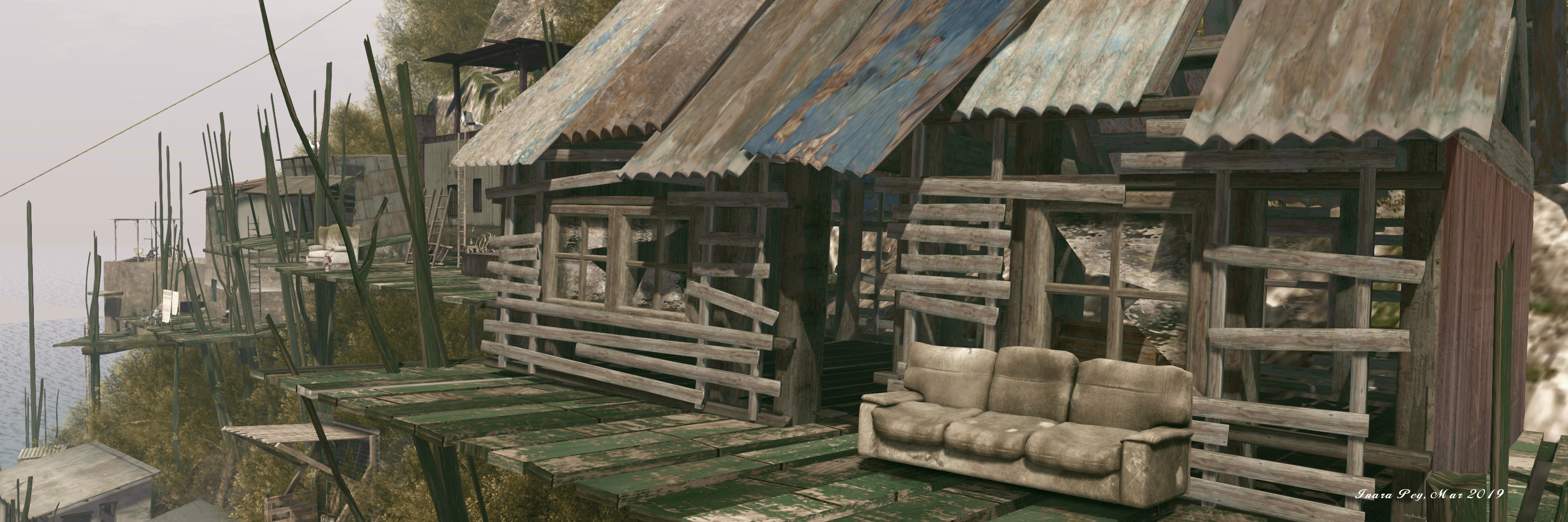
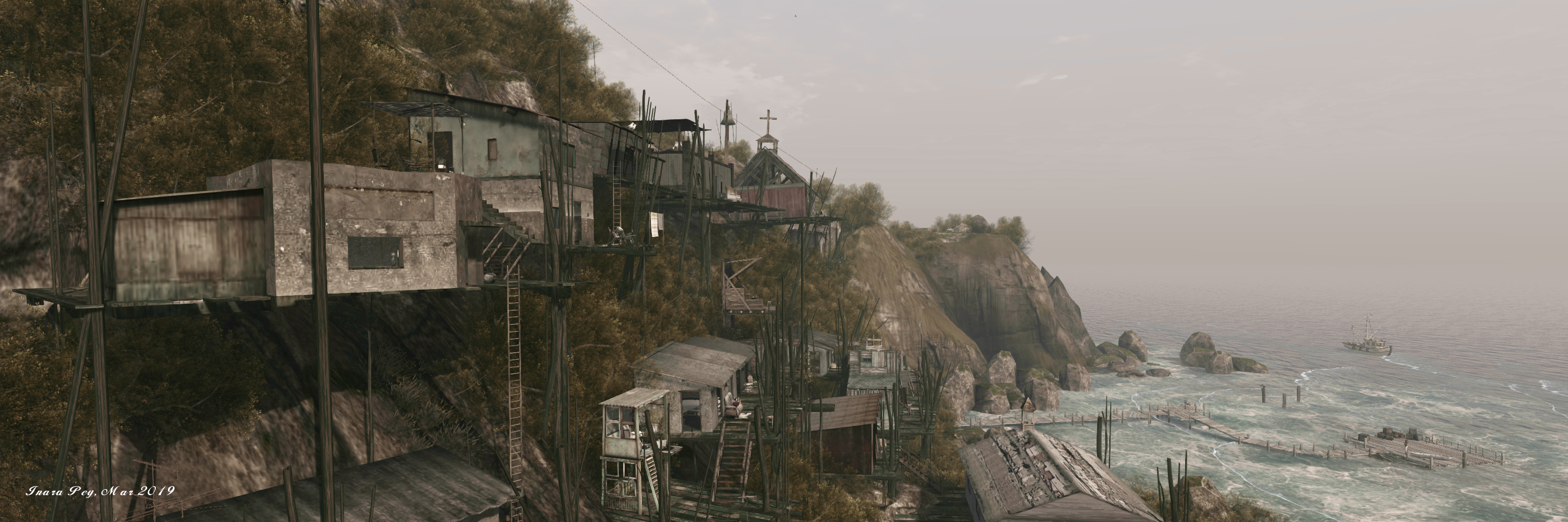
The village itself seems an impossible place; built against a rocky slope of the island’s flank as it rises at a 45-degree angle from the sea. Houses and community buildings sit upon wooden platforms, themselves standing on stilts, with the platforms rising in uneven tiers, connected by rickety looking wooden walkways and steps. Nestled between the frigid sea below and the desolate upper slopes of the island, the most recognisable building in the village is perhaps the 2-storey faded white block of the former Bureau of Indian Affairs school, the closure of which in the latter part of the 20th century marked the beginning of the end of village life on the island.

For their build, Jade and Footman could not recreate all of King Island, which is 1.6 km wide (and, as an aside, was named thus by Captain James Cook in 1778, in recognition of Lieutenant James King, a member of his crew). Instead, they have focused on the bay the village sits above, and the village itself.
Ukivok; Inara Pey, March 2019, on FlickrUkivok

And the reproduction perfectly captures the windswept, elemental look and feel of the now-deserted Ukivok perfectly, including a homage to the school mentioned above. The landing point sits off-shore platform that provides a glorious first look at the island as it rises from the waves, reaching an impressive, and entirely natural 108 metres above the surrounding sea floor.

Even without the village, the island makes for an incredible sight, and it’s clear considerable thought an effort has gone into designing and building it; if you can, make sure you cam all the way around it to fully appreciate the beauty of the design. A board walk links the landing point with the shoreline, where a steep set of steps offer the way up to the first platform – and the start of an adventure up through the village, using steps and ladders (click the latter to ascend / descend them), passing through areas that offer echoes of the lives once lived here, and opportunities to sit and appreciate the island as a whole.
Ukivok; Inara Pey, March 2019, on FlickrUkivok

The Ukivokmiut were subsistence hunters and whalers who had lived on King Island for centuries. Their activities on and around the island included hunting for seals and walruses, crab fishing, and gathering bird eggs and other foods.

– Serene Footman, drawing on notes about the Aseuluk of King Island

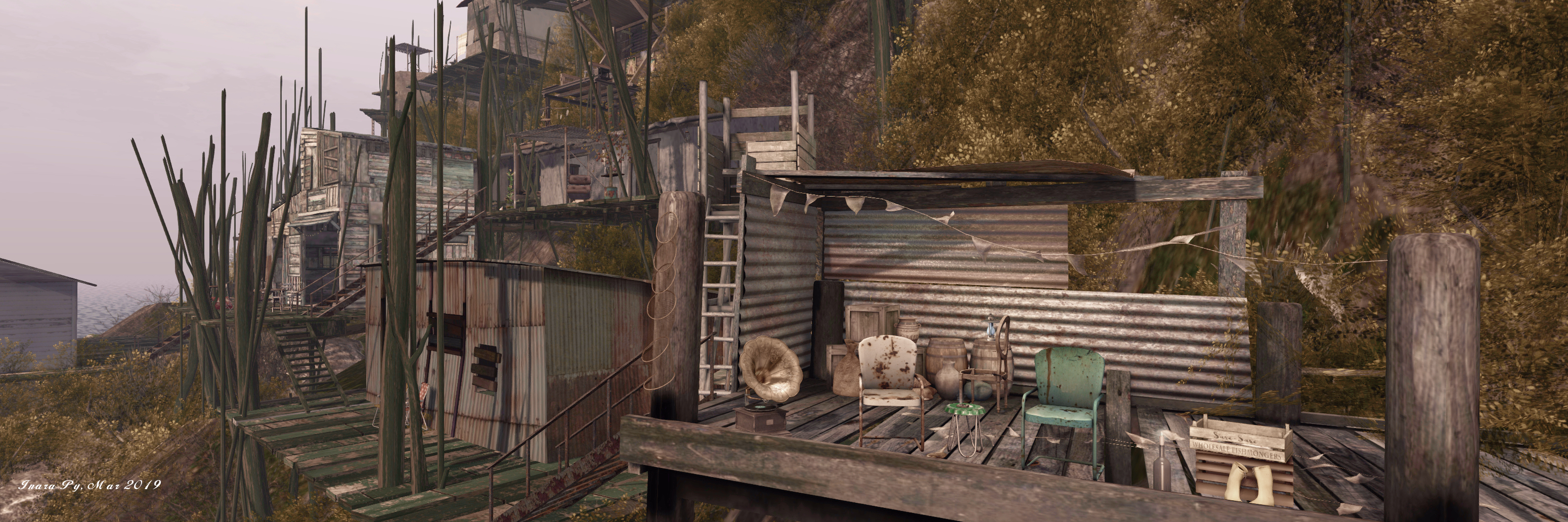
Above the upper levels of the village are more steps, linking shelves of rock one to the next. Some of these steps might be easy to find, others hidden by the scrub hedges that cling to cliff and slope. Follow one group, and you may find your way to the north-eastern headland, which again offers a stunning view back across the rest of the island to the village. This route will also take you past an homage to an entirely natural tor of rocks that crown the physical world King Island.
Ukivok; Inara Pey, March 2019, on FlickrUkivok

The crown of this Jade and Serene’s version is a little different, and lies to the south-east. It is marked by a single statue looking down over the village, and the view gives a further understanding of Ukivok’s seemingly precarious position on the island. Close to the statue is a zip line which descends steeply (and quite rapidly) down to an outcrop of rock and shingle close to the landing point. Should you take the ride, you’ll have to fly back to the landing point or to the island; or you can rest a while on the chairs set out on the rock.

Set under an ideal windlight, surrounded by ocean foam and perfectly placed submerged terrain that is naturally suggestive of rocky shallows close to the island, Ukivok is completed by another superb sound scape. And once having seen it, I think you might find it hard to deny it is one of the natural wonders of Second Life – so many sure you visit it while it is here.
Ukivok; Inara Pey, March 2019, on FlickrUkivok

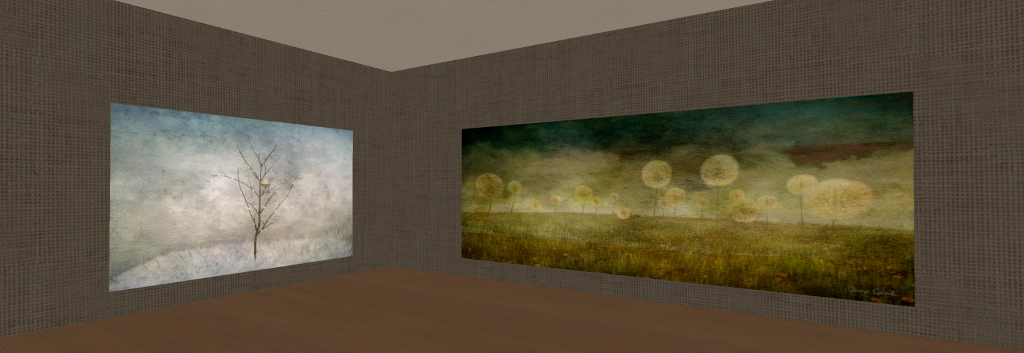
Duna Gant at The Eye in Second Life

The Eye: Duna Gant

I first became aware of Duna Gant‘s art in 2018, during an ensemble exhibition in which she was presenting five avatar studies that quite captivated me. So when the opportunity came to see more of her work at The Eye art gallery, curated by Mona (MonaByte), I had to hop over and take a look.

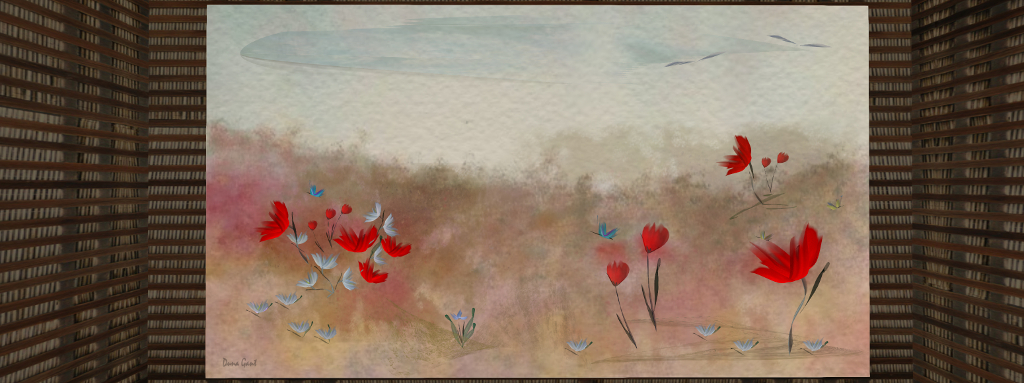
Apparently untitled, this exhibition feature a baker’s dozen of Duna’s art, the focus here being on nature, and some of the pieces are extraordinary studies of flowers that offer an abundance of life within them – just pan your camera over the paintings close to the entrance to the exhibition to see for yourself.

The Eye: Duna Gant

You can see life, emotionally, in black and white, but I prefer to see it and live with it in colours. Colours as synonyms of diversity. Diversity of opinions, of perceptions, of creeds, of cultures, of sensibilities. It is what Nature around us shows us. an example of an infinite palette of colours in perfect harmony.

– Duna Gant, describing her exhibit at The Eye

These pieces are wonderfully delicate, but also rich in subtle colour and texture; the flowers such that you feel you could reach out and cup them gently in your fingers and inhale their scent.

Within the second half of the gallery space, the paintings become broader in scope, some reflecting nature’s seasons as well as her diversity of colour. Aquarelle, for example, suggests summertime on the river, while March and Winter speak for themselves in terms of season and title, but present both without the need for words through their use of colour.

The Eye: Duna Gant

Another engaging exhibition from a talented artist and painter.

SLurl Details

2019 viewer release summaries week #12

Logos representative only and should not be seen as an endorsement / preference / recommendation

Updates for the week ending Sunday, March 24th

This summary is generally published every Monday, and is a list of SL viewer / client releases (official and TPV) made during the previous week. When reading it, please note:

  • It is based on my Current Viewer Releases Page, a list of all Second Life viewers and clients that are in popular use (and of which I am aware), and which are recognised as adhering to the TPV Policy. This page includes comprehensive links to download pages, blog notes, release notes, etc., as well as links to any / all reviews of specific viewers / clients made within this blog.
  • By its nature, this summary presented here will always be in arrears, please refer to the Current Viewer Release Page for more up-to-date information.
  • Note that for purposes of length, TPV test viewers, preview / beta viewers / nightly builds are generally not recorded in these summaries.

Official LL Viewers

  • Current Release version 6.1.0.524670, formerly the BugSplat RC viewer February 13th, promoted February 28th. No Change.
  • Release channel cohorts:
    • EEP RC viewer updated to version 6.2.0.525395 on March 21st.
    • Teranino Maintenance RC viewer version 6.1.1.525401, released on March 20th.
  • Project viewers:
    • No updates.

LL Viewer Resources

Third-party Viewers

V5/V6-style

  • No updates.

V1-style

Mobile / Other Clients

  • No updates.

Additional TPV Resources

Related Links

Space Sunday: meteors and motors

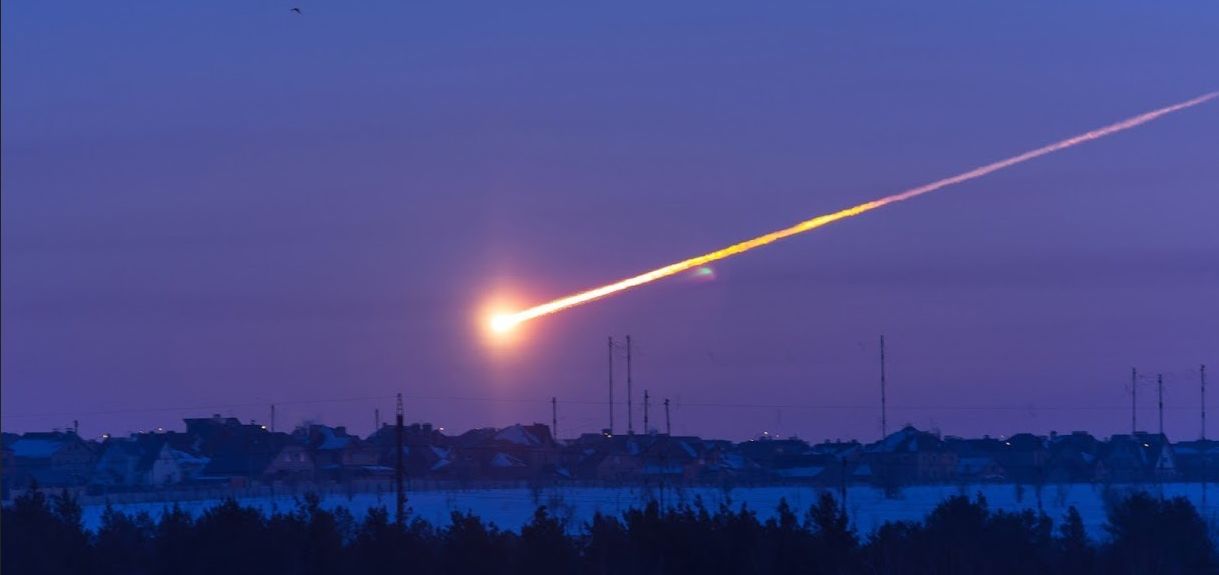
The 2013 Chelyabinsk meteor

A meteor is the fiery phenomenon resulting from an asteroid or other celestial body entering the Earth’s atmosphere. Often called a shooting star, if it does not fully vaporise and a part of it hits the Earth’s surface, it is called a meteorite.

On December 18th, 2018, a meteor roughly the size of a school bus blew apart under the pressures of entry into the Earth’s atmosphere 26 km (16 miles) above the Bering Sea. The explosion released some 173 kilotons of energy – about ten times more that released by the bomb dropped on Hiroshima in 1945. It is the second largest meteor explosion recorded since NASA started officially tracking them 30 years ago, after the 2013 Chelyabinsk explosion in Russia.

And no-one actually saw the meteor until after it had blown itself apart. In fact, no-one was aware of what had happened until three months later.

It was on March 8th, 2019 that the meteor’s arrival was noted by human eyes. Peter Brown, a meteor scientist at the Physics and Astronomy department of the University of Western Ontario, was reviewing data from the system used by the Comprehensive Test Ban Treaty Organization to detect atmospheric explosions caused by nuclear tests. This system is comprised of seismic and acoustic sensors capable of picking up infrasound, inaudible to the human ear, at a distance of tens of thousands of miles.

Brown noticed that many of the system’s sensors detected the sound waves from an explosion originating over the Bering Sea, and he calculated that had anyone been below it, the sound would have been deafening. He reported his findings to the United States Air Force, and a review of logs from their spy satellites revealed the passage of the meteor had been noted. A further check with NASA revealed their database of atmospheric impacts has logged the event, which was then officially announced.

This prompted a race to verify, and Simon Proud, a meteorologist and specialist in satellite data at Oxford University in the UK, decided to check the archive of images collected by a Japanese weather satellite that sends data to his department. He found that the satellite, Himawari, had indeed visually recorded the event. And it was not alone.

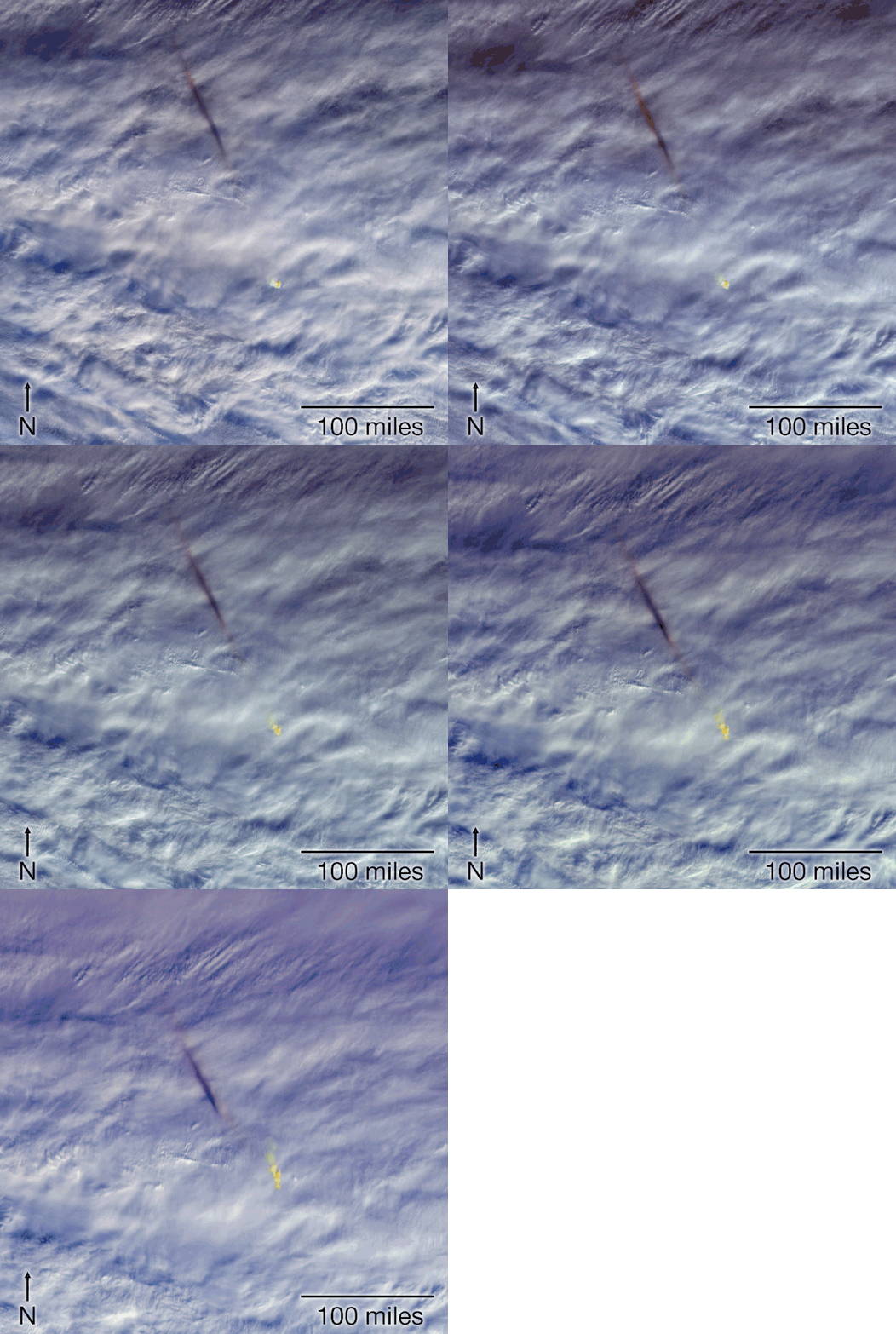
NASA’s Earth-observing Terra satellite also spotted the meteor with two different instruments — the Multi-angle Imaging SpectroRadiometer (MISR) and the Moderate Resolution Imaging SpectroRadiometer (MODIS). MISR team members combined some of their imagery into an animated GIF, which NASA released Friday, March 22nd.

An animated GIF of views from the Multi-angle Imaging SpectroRadiometer instrument on NASA’s Terra satellite, taken a few minutes after a fireball exploded over the Bering Sea on December 18th, 2018. Credit: NASA/GSFC/JPL / MISR Team

It is estimated that the meteor was some 10 metres (33 ft) across, and has a mass of around 1,360 metric tons. It probably entered the denser atmosphere at a speed of 115,200 km/h (71,600 mph). By comparison, the 2013 Chelyabinsk asteroid was about 20 m (65 ft) across, massed about 10,000 tonnes, and generated 440 kilotons of energy when it exploded. Even so, that event is dwarfed by the 1908 Tunguska event, which generated a force of 10-15 megatons (roughly 85 times greater than the December 18th, 2018 explosion), flattening 2,000 square km (800 sq mi) of forest through its air blast.

So why wasn’t the December meteor seen? Well, firstly, because it entered the Earth’s atmosphere above a very remote place in the world; simply put, there weren’t that many people under its path to see it. But more to the point, there is an awful lot of rocky debris in space; as I noted in my previous Space Sunday report, Earth shares its orbit around the Sun with a great cloud of dust and rock, and more is constantly falling in towards the Sun from further out in the solar system. As such, meteors are actually a common event – not that it makes them any the less dangerous.

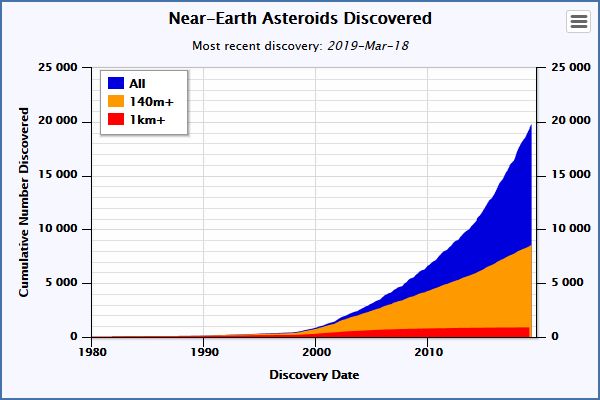
CENOS track of NEOs recorded over the last 30 years

Many of these lumps of rock and ice – as with the December 18th, 2018 rock – are simply too small to be easily located and tracked. Others, like the Chelyabinsk meteor, are occupying orbits that effectively mean they are hidden by the glare of the Sun, and remain unseen until the enter the atmosphere. Nevertheless, over the last 30 years, NASA’s Centre for Near Earth Object Studies CENOS has located and tracks some 20,000 near-Earth objects (NEOs) some of which may at some point come close enough to the Earth to enter the atmosphere, around 50% of them are between 140m and 1 km in size – large enough to pose a serious threat.

While none are as big as the one that struck Chicxulub, Mexico, 65 million years ago and brought about the extinction of the dinosaurs, those at the upper end of the scale could still result in serious loss of life were one to explode over a populated area. So tracking NEOs helps to reduce that risk by producing us with the advance warning needed to evacuate areas – or even to develop a plan to deflect the incoming object – something missions to asteroids like Ryugu and Bennu may also help us to achieve by teaching us more about the nature of asteroids.

Keeping with meteor impacts, roughly 12,800 years ago Earth went through a brief cold snap unrelated to any ice age. Geologists have, for decades, argued for and against the idea it was caused by a meteor airburst or impact, referred to as the Younger Dryas Impact Theory, which also caused the final demise of the Clovis culture in North America.

Now an international team of scientists believe they have found geological evidence in South America that could settle the debate. Led by Chilean palaeontologist Mario Pino, the team has discovered a large, young impact crater in the Osorno province in southern Chile, close to the tip of the continent. Analysis of the impact site suggest it was created around 13,000-12,800 years ago – a time coincident to the Younger Dryas Boundary (YDB), which marks the time of the Younger Dryas Impact Theory, when there were numerous impact events across the northern hemisphere.

However, it is the size of the crater that suggests it may have played a significant role in the climate change that occurred in this period, causing widespread destruction, characterised by enormous biomass burning – around 10% of the Earth’s land surface, megafaunal extinctions and global cooling. Minerals found in the region are consistent with rapid temperature changes, further indicating the impact and the fires that followed it did indeed have a catastrophic impact on the global climate at the time.

Continue reading “Space Sunday: meteors and motors”

Gaining a little A L T I T U D E in Second Life

A L T I T U D E; Inara Pey, March 2019, on FlickrA L T I T U D E – click any image for full size

I jumped over to have a look at A L T I T U D E after catching it in Maddy Gynoid’s Echt Vituell. Sitting on and over a Homestead region, it is one of the most unusual and imaginative settings I’ve seen in Second Life for a while.

Designed by Dan the Hammie (DannChris), A L T I T U D E presents a place to “hang out, play and listen to indie music, alternative music, live performances and voice events.”

A L T I T U D E; Inara Pey, March 2019, on FlickrA L T I T U D E

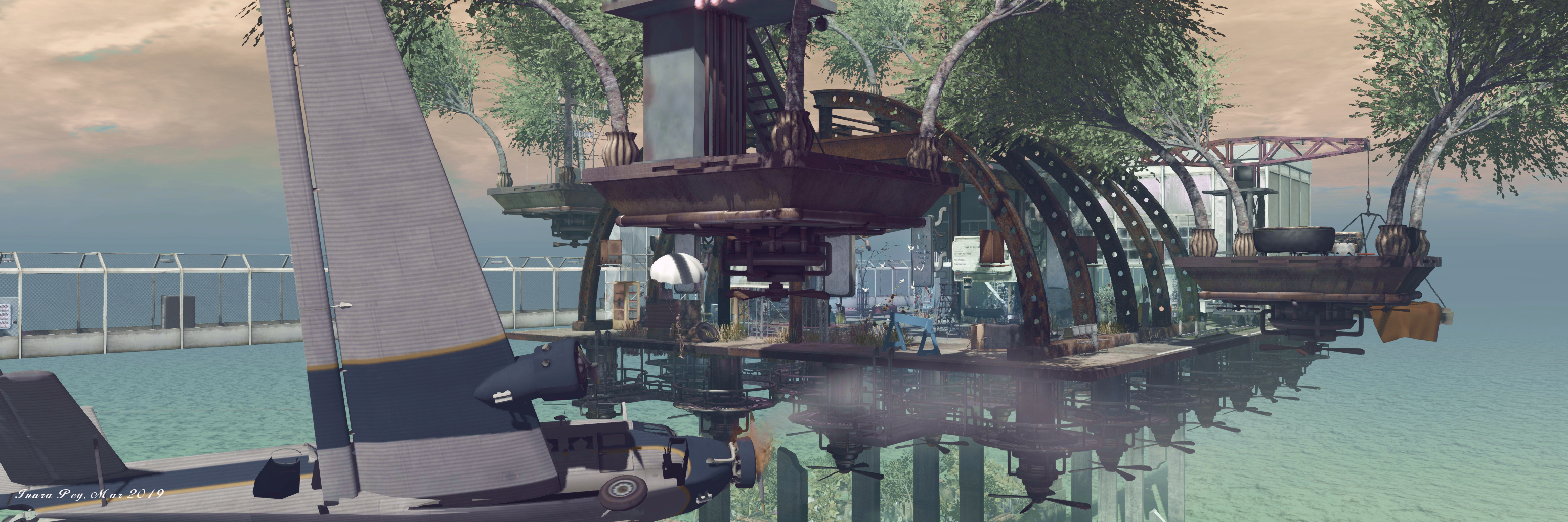
The music venue sits up in the air, “an abandoned hangar on a forgotten island”, held aloft by a combination of cement pillars rising some 60 metres above the water / ground by a mass of propeller engines slung beneath the baseplate on which it sits. Several more platforms float in the sky around it, some offering places to sit, others more functional in nature.

The hanger itself is little more than a rusting metal framework curving over the venue and facing a building that might, at one time, have been a small airport terminal or similar. Despite its industrial appearance, however, the club has a friendly, almost cosy look and feel to it. Events are regularly staged as per the schedule board over one of the stages.

A L T I T U D E; Inara Pey, March 2019, on FlickrA L T I T U D E

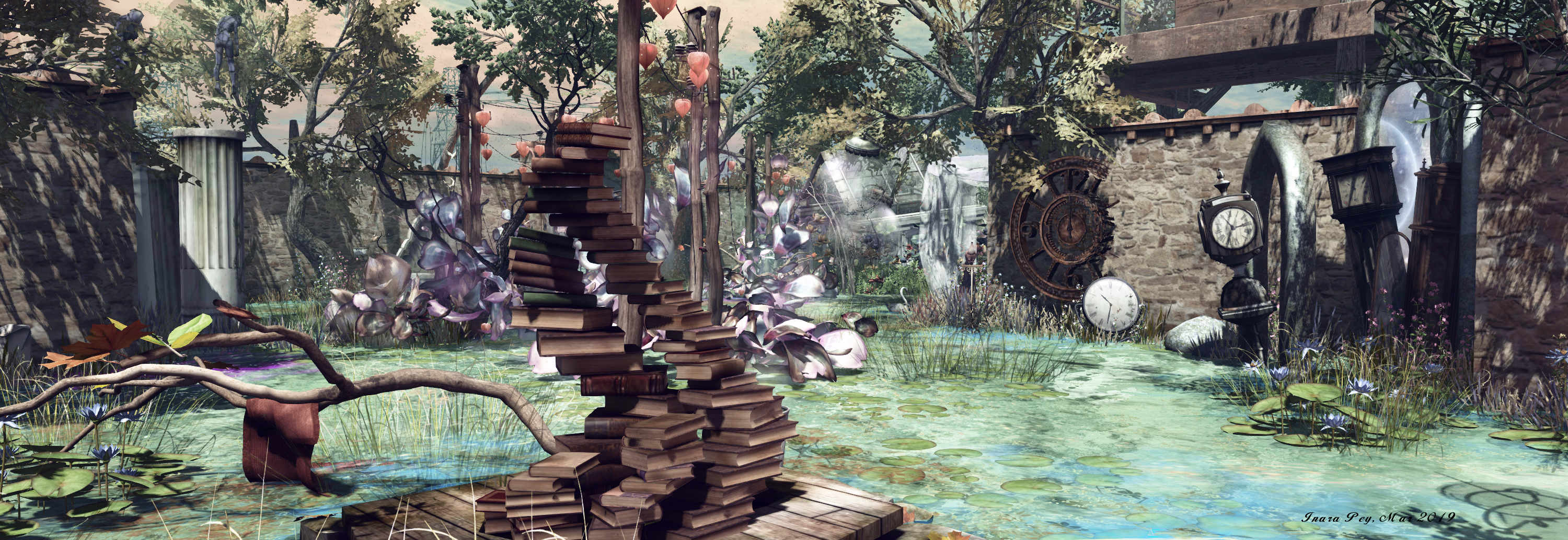
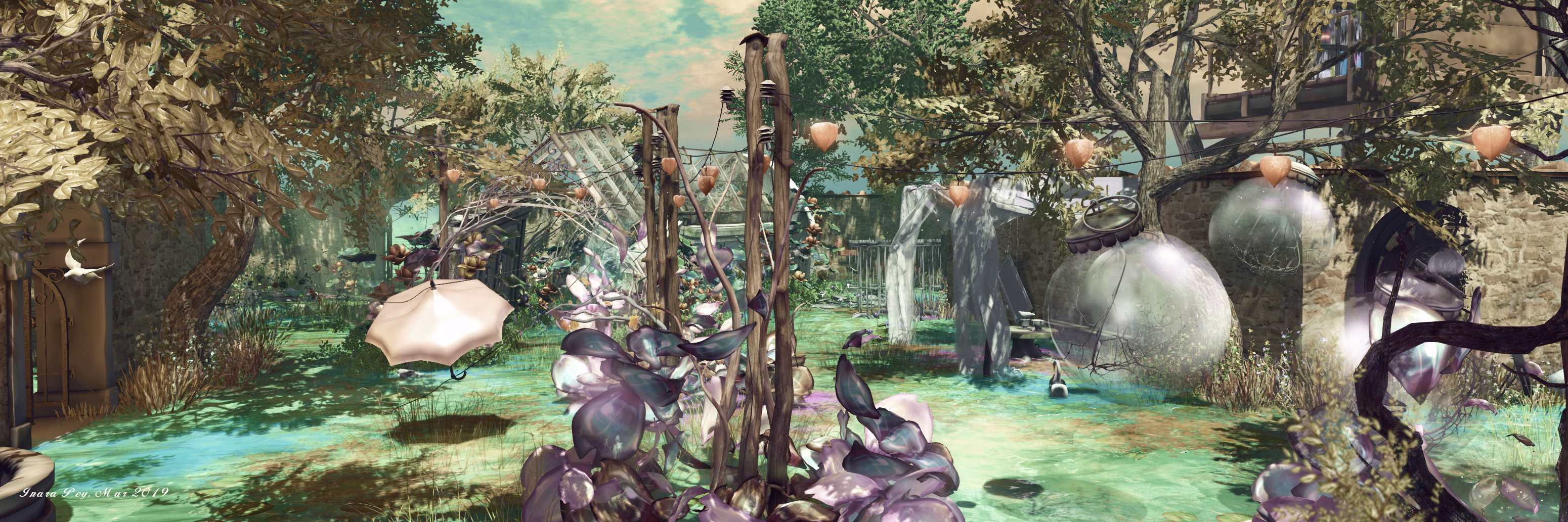
Down below, apparently floating on the water, is a stunning garden spot sitting behind tall stone walls with a decidedly Tuscan look and feel; a reminder of Dann’s previous builds of Natural Falls (see Navigating Natural Falls in Second Life).

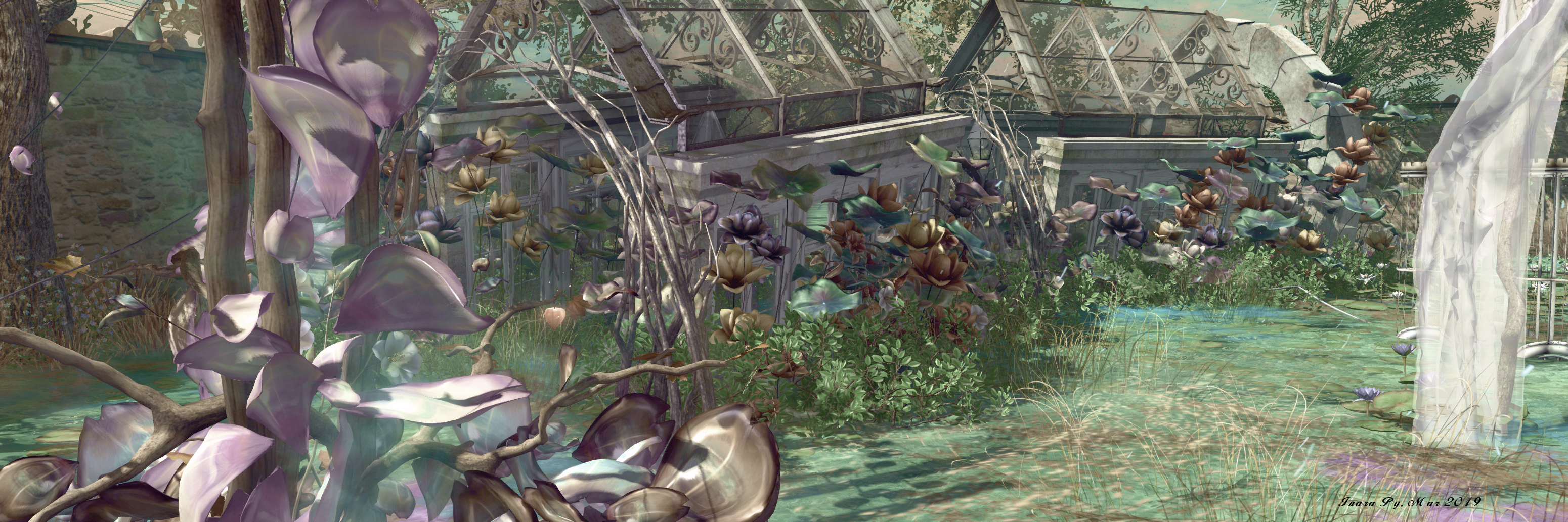
Watched over by leaf-laden trees, this is home to the most exotic of plants, a place where Nature’s chaos prevails in the most marvellous of ways, be it with the free form of plant growth, the broken, lopsided train of a of greenhouse, the slightly tumbledown suggestion of age and ruin, the delightful corner snug, or the myriad other attractions to be found here.

A L T I T U D E; Inara Pey, March 2019, on FlickrA L T I T U D E

Such is the detail and design in the garden, it is easy to lose track of time camming around its enclosed space, seeking out all the little details, while several places to sit and relax offer further enticements to stay and enjoy the setting and watch the butterflies. Art is also to be found here, courtesy of Chirzaka Vlodovic and Mistero Hifeng, while opportunities for photography abound.

With great electrical pylons take a perpendicular march across the water in relation to the high music venue and the long gantry-like walkway that sits besides it, the entire regions sits beneath a forever twilight sky that frames both club and garden perfectly.

A L T I T U D E; Inara Pey, March 2019, on FlickrA L T I T U D E

A sign close to the gantry landing point warns visitors that they are about to enter someone else’s dream. Given the overall design and layout of A L T I T U D E, it is a dream worth taking the time to visit and share in; beautifully conceived and presented.

A L T I T U D E; Inara Pey, March 2019, on FlickrA L T I T U D E

SLurl Details

Eleven years, sci-fi and very British humour

Seanchai Library

It’s time to highlight another week of storytelling in Voice by the staff and volunteers at the Seanchai Library. As always, all times SLT, and events are held at the Library’s home at Holly Kai Park, unless otherwise indicated.

Sunday, March 24th:

12:30 Around the World – A Seanchai Library Celebration

Seanchai Library celebrates its anniversary with an afternoon’s journey of imagination and adventure around the world, in partnership with Radio Riel.

Mixing stories and music and presented at Seanchai’s Story Glen, the event schedule comprises:

  • 12:30 – Stories in Voice: taking place at the Seanchai Library Gle, featuring Seanchai Library Founder Derry McMahon with Bear Silvershade, and Shandon Loring.
  • 13:00 – International Folk Tales with Radio Riel: broadcast on the Seanchai Library’s home stream and on Radio Riel, featuring Da5id Abbot, Faerie Maven-Pralou, and Caledonia Skytower.
  • 14:00-17:00 – Around The World, a DJ Challenge: live from the Glen & Broadcast on Radio Riel, with:
    • 14::00-15:30: Elrik Merlin.
    • 15:00-16:00: Ktadhn Vesuvino.
    • 16::00-17:00: Gabrielle Riel.

This is the third collaboration of this kind between Radio Riel and Seanchai Library. In March 2018, as part of Seanchai Library’s Volume Ten tenth anniversary celebration the two produced The Bagpipe Challenge – Beyond Loud. Then at the end of that year, Radio Riel joined Seanchai Library in marking the end of the 2018 Dickens Project with Reflections on a New Year in the same three-hour format.

Join Seanchai Library at the Story Glen as they celebrate their 11th anniversary in-world and with the support of Radio Riel

18:00 Magicland Storytime: Charlie and the Chocolate Factory

Have you heard? Willie Wonka is releasing five golden tickets in candy bars! Charlie Bucket may have a chance to find one as Caledonia Skytower continues Roald Dahl’s classic, live on stream!

Monday, March 25th 19:00: The World Of Ptavvs

Gyro Muggins returns to Larry Niven’s Known Universe to read the first novel Niven ever set within it  – given it was actually he first full-length novel. Within it, he lays many of the seeds, human and alien that would come to define that universe, its characteristics, traits and races.

A reflective statue is found at the bottom of one of Earth’s oceans, having lain there for 1.5 billion years. Humanity’s experiments with time manipulation lead to the conclusion the “statue” is actually an alien caught within a “time slowing” field.

Larry Greenberg, a telepath with highly developed and honed abilities is asked to participate in an attempt to make contact with the alien. This involves Greenberg and the “statue” being places within a single time slowing field, the effect of which is to nullify the one shrouding the alien.

The the new field in operation, Greenberg finds himself in the company of Kzanol, a member of a race called the Thrint. Powerfully telepathic, the Thrint once rules the galaxy pure through their mental powers and the ability to bend the minds of others to their own will. However, in the time that Kzanol has been trapped the result of a malfunction aboard his ship which forced him to abandon it and fall to Earth protected by the stasis field of his space suit, the Thrint were facing a revolt by all the races they had enslaved.

As a result of this, the Thrint had determined to wipe out every race in the galaxy using a thought amplifier. Now, his own mind mixed with that of Kzanol, Greenberg sets out with the alien with the aim of using the weapon to enslave every mind in the solar system…

Tuesday, March 26th 19:00: The Library is Dark

No stories this evening.

Wednesday, March 27th 19:00: My Word! Frank Muir and Dennis Norden Selected Writings

Frank Muir (l) and Dennis Norden (r) posing for a publicity photo. Credit: Getty Images

Frank Muir CBE (1920-1998) and Dennis Norden CBE (1922-2018) many not be familiar names to many, but they were one of the top comedy writing duos – and successful writers, authors, presenters and entertainers – in the UK working both on radio and television.

Together they wrote BBC Radio‘s Take It From Here for over 10 years, and then appeared on BBC radio quizzes My Word! and My Music for another 35.

Muir was additionally a writer on the 1960s satire programmes That Was The Week That Was, which launched the television career of David Frost (perhaps most internationally recognised for his interview with President Nixon following the latter’s resignation from office), and The Frost Report., again featuring David Frost. Muir went on to become Assistant Head of Light Entertainment at the BBC in the 1960s, and was then London Weekend Television‘s founding Head of Entertainment. However, he is probably most fondly remembered in the UK as a team captain on the  long-running BBC 2 witty comedy quiz series Call My Bluff, and as a voice-over artist in a number of famous UK television commercials.

Norden partnered in writing with Muir for more than 50 years, writing and producing radio and television shows for some of the top entertainers in the UK in those mediums during the 1960s. As a writer in his own right, Norden penned a number of Hollywood film scripts, including Buona Sera, Mrs. Campbell and The Bliss of Mrs. Blossom, and wrote, narrated and starred in A Child’s Guide To Blowing Up A Car – a behind-the-scenes featurette showing how a stunt used in the James Bond movie Thurderball was put together, and which now appears on the 2006 ‘Ultimate Edition’ Thunderball DVD. Norden is perhaps most famously known for It’ll be Alright on the Night, his show featuring out-takes and bloopers from film and television, which ran from 1977 through to 2006, much of the material from which was “borrowed” by NBC in the Unites States for Dick Clarke’s Bloopers.

Join with Corwyn Allen. as he celebrates these two great British writers.

Thursday, March 28th 19:00: Rogue One: A Star Wars Story

With Shandon Loring. (Also in Kitely grid.kitely.com:8002:SEANCHAI).