On Monday, February 11th, the start of 2019’s Valentines Week, Linden Lab announced the launch of a new video mini-series filmed by Draxtor Despres.
People within Second Life often flag their profiles with a comment along the lines of “SL is SL, RL is RL” or warnings that they don’t like to let their virtual lives overlap with their physical lives. And that’s fine; the beauty of Second Life is that no-one has to conform to any specific set of all-encompassing rules (outside of the Terms if Service and Community Standards, of course!).
However, there are many who do allow their physical and virtual lives to overlap and intertwine to varying degrees.
Love Made In SL, the new series, focuses on some of those in this latter category; specifically: those who have found love as a result of meeting in Second Life. Some of these relationships may be confined to Second Life, simply because of circumstance, geography, and so on, but some might more fully cross the boundaries into the physical world, with the love between two people leading to their meeting and even in marrying one another.
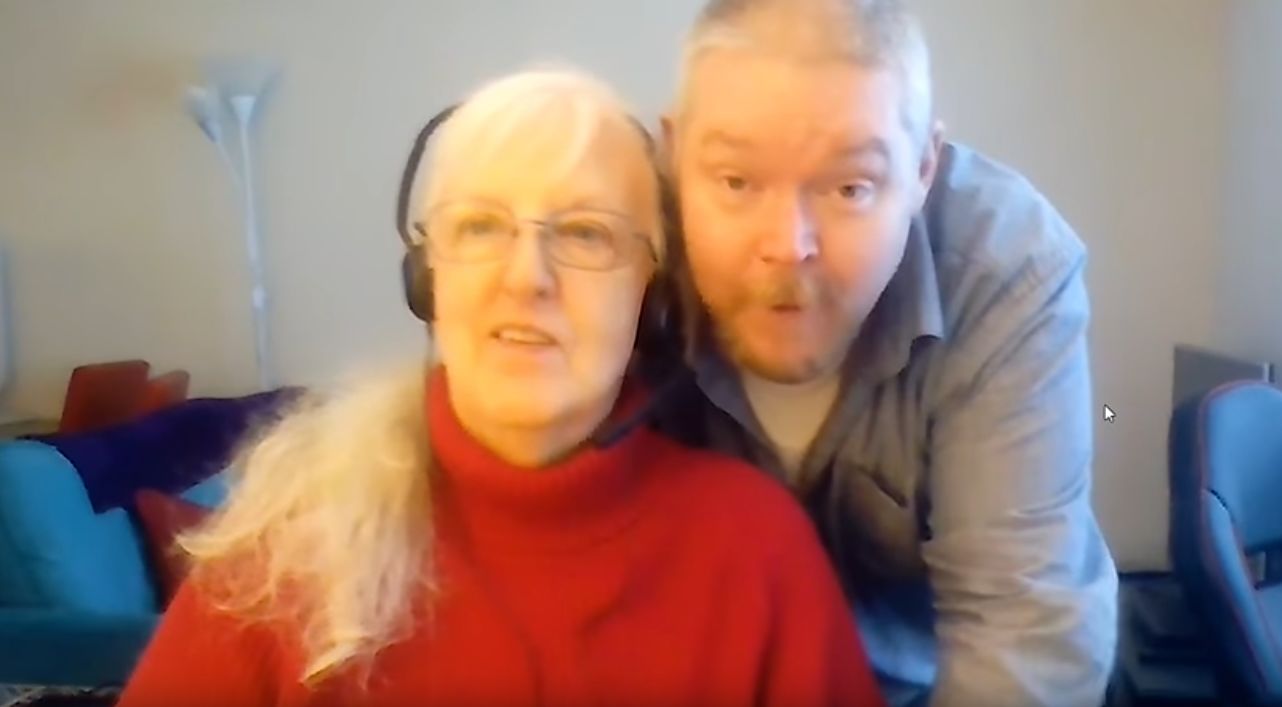
This latter point is the case with RaglanShire community members Teal, from the United States and Wolf, from the United Kingdom. They are the subject of the first couple to be featured in the new series – and fittingly so, given that after and 18-month engagement, they are now together in the UK and due to be married.
Teal and Wolf in the UK via Love Made in SL
When Wolfie and I got together, I was very settled. The thought of changing my life that drastically, just didn’t occur to me … At age 71, I closed my business, sold my house, packed up everything, and shipped myself across the Atlantic.
– Teal Freenote, Love Made in SL
Their story is beautifully told in this short piece – less than a minute-and-a-half long – and in their own words. It needs no added commentary here, other than the images accompanying Teal’s story of travelling to the UK to be with Wolf are wonderfully fitting in the use of Second Life whimsy (where else can you travel an ocean on the back of a whale so you can be with your loved one!).
My only other comment would be to thank Teal and Wolf for sharing their story and to wish them all the best for their upcoming wedding, and for their future together!
As the Lab notes, if you’d like to be considered for a future edition on Love Made in SL, please contact Draxtor Depres in-world.
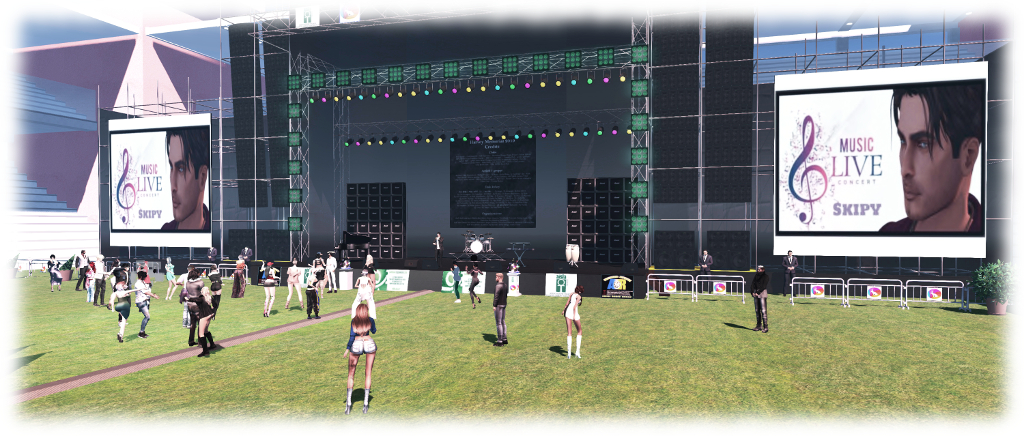
Now open through until Sunday, February 17th is the Harvey Memorial Ensemble ALS Awareness Week, a charity event intended to both raise awareness of ALS and funds for continued research into the disease.
Dedicated to the memory of ALS victim and Second Life resident Harvey22 Albatros, the week focuses on music and art, with both live performers and DJs offering sets throughout the week, and a number of SL artists offering pieces for auction, with all proceeds as well as donations during the week going to AISLA, the Associazone Italiana Sclerosi Laterale Amiotrofica.
Amyotrophic lateral sclerosis (ALS), sometimes also referred to as motor neurone disease (MND) or by the synonyms Lou Gehrig’s disease and Charcot disease, is a specific disorder that involves the death of neurons that control voluntary muscles. For about 90-95% of all diagnosed cases, the precise cause of the disease is unknown; for the remaining 5-10% of diagnosed cases, it is inherited from the sufferer’s parents. There is no known cure, and symptoms generally first become apparent around the age of 60 (or 50 in inherited cases). The average survival from onset to death is three to four years. In Europe and the United States, the disease affects about 2 people per 100,000 per year.
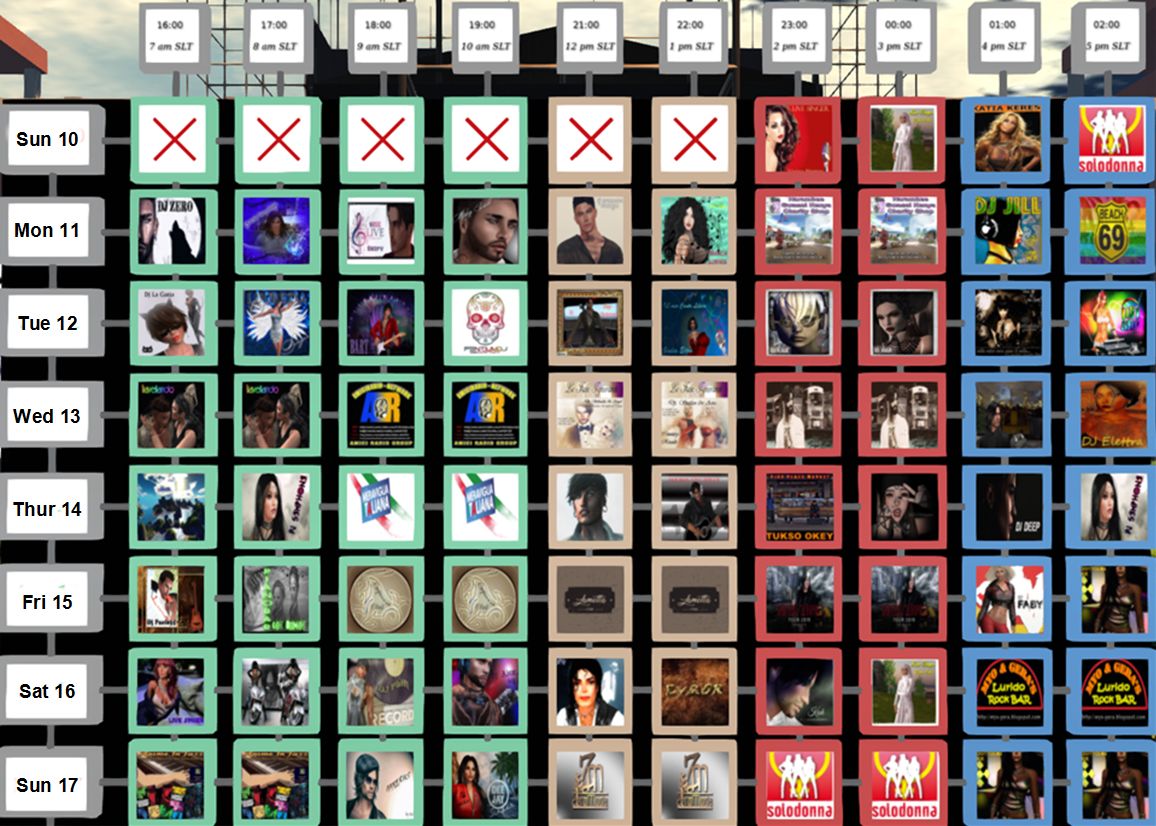
The event, which features a daily schedule of music running from 07:00 SLT through to 18:00 SLT, comprising a mix of live performances and DJ sessions lasting between one and three hours. A schedule board (seen above) is available at the event location.
The latest exhibition at Club LA and Gallery, curated by Fuyuko ‘冬子’ Amano (Wintergeist) opened on Sunday, February 10th, featuring the art of Dodo (DodoAhanu).
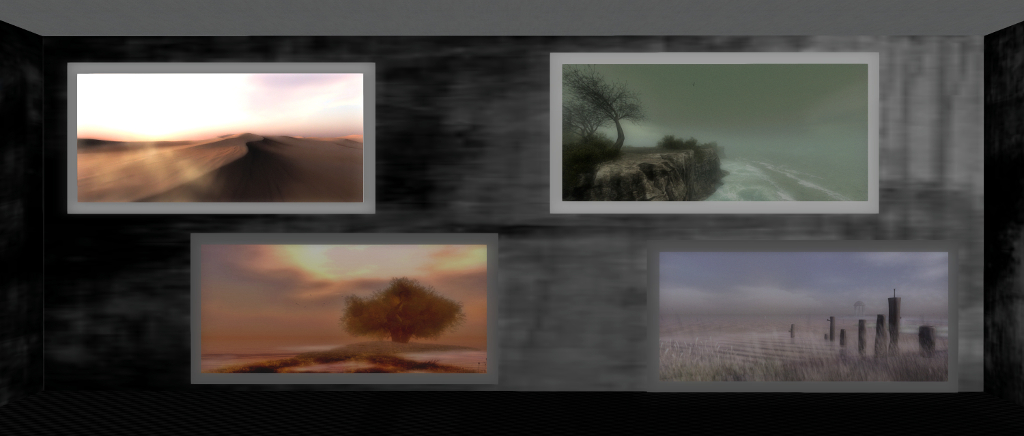
Located on the gallery’s ground floor, the exhibit presents 18 of Dodo’s images that span his photography from 2013 through to 2018, offering a mix of landscape, art and avatar studies, making this exhibition an engaging introduction to Dado’s work and evolving style for those of us previously unfamiliar with his work.
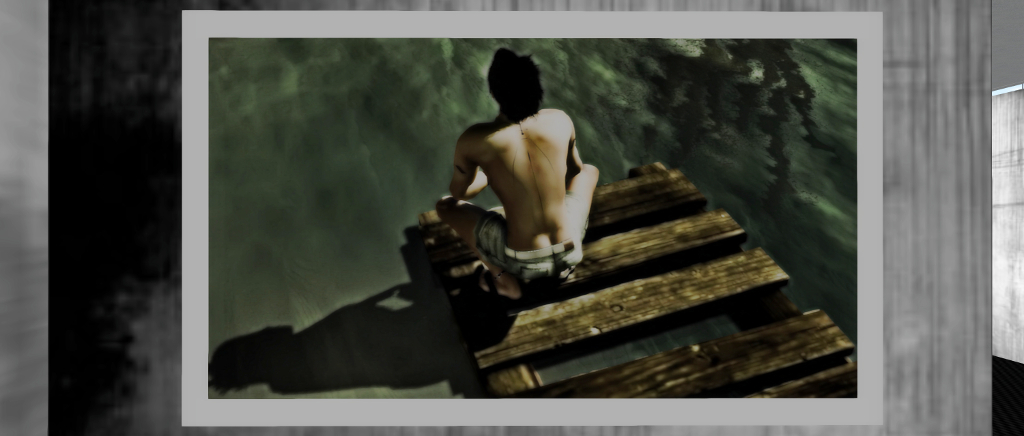
Dodo’s landscapes, particularly those presented in a panoramic format, are sweeping in their extent. There is also a quality about some of them that suggests while they were taken within Second Life, they are somehow a window onto the physical world. Meanwhile, his avatar studies include two self portraits, although it is Silent Moment that particularly caught my eye; it has that richness of narrative I so enjoy finding in images.
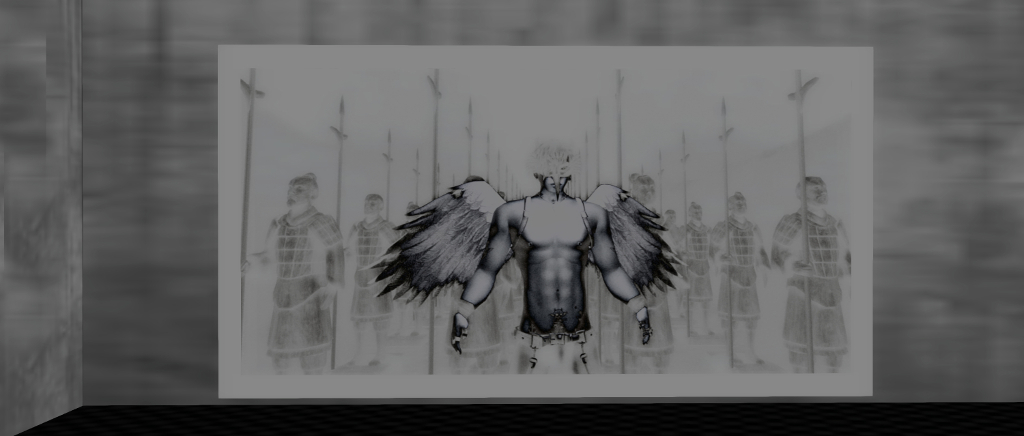
However, it is in two of the “earliest” pieces in the exhibition (“earliest” in that they date back to 2013 and 2014 respectively) that particularly captivated me: PRAVDA dark couture and The Ballet I. Both are very different to one another and to the other pieces presented. The latter demonstrates a wonder use of projected light and shadow to create an image, while the former is simply marvellous in the use of tone, light, and processing to create the impression of a drawing straight from the artist’s hands.
The ExoMars Rover Rosalind Franklin, 2018. Cedit: EADS Astrium UK
It’s been a mission almost 20 years in the making, but it finally has a vehicle name: the European Space Agency’s (ESA) ExoMars rover is now officially called Rosalind Franklin.
In 2001, ESA announced the goal of landing a large rover vehicle on Mars in 2009 as a part of its Aurora programme for the human exploration of the Red Planet. As an optional programme, Aurora allowed ESA member states to determine which elements they would like to support. In 2005, the UK’s EADS Astrium indicated it would undertake the design and construction of the rover, then referred to as ExoMars.
Over the next decade plus, ExoMars as a whole underwent numerous changes in scope and capability. Some of these changes were driven from within ESA. For example, in order to meet initial launch requirements using a Russian rocket, the rover was scaled down to just 180 kg. However, this left it was just 6 kg for the science payload, prompting a move to using a more powerful Ariane launcher, allowing for a larger rover and science payload – but at twice the price of a Russian launch.
Other changes came about through external influences. In 2009, ESA signed an agreement with America’s NASA, which would have seen the a joint ESA / NASA mission, with the US agency taking responsibility for the rover (renamed the Mars Astrobiology Explorer-Cacher, or MAX-C) and ESA producing the lander and an orbiter – the Trace Gas Orbiter. Less than a year later, MAX-C was scrapped in favour (once again) of a large 600 kg European rover.
The ExoMars rover over the years. Top left: 2007 (credit: Jastrow). Bottom left: 2009 (credit: Mike Peel) and 2015 (credit: Cmglee)
Then in 2011 NASA withdrew from the agreement, forcing a further reassessment of the rover and the ExoMars project overall. In 2013, ESA and Russia’s Roscosmos signed an agreement that would see a revised ExoMars mission – the rover and the Trace Gas Orbiter (TGO) – flown atop two uprated Proton rockets in 2016 and 2018, with the first launch featuring the TGO, which arrived in Mars orbit in October 2016. The second would be the rover mission, intended for launch in 2018.
The switch back to using a Russian launch vehicle meant the rover had to go through a further redesign in order to shed 290 kg of mass. By 2016, all of this left the ExoMars project breaking through its budget cap of €1 billion. In order to secure the required €1000 million needed to complete the project’s development and launch costs, the launch would have to be pushed back until 2020. It is currently slated for lift-off on July 25th, 2020 and arrive on Mars on March 19th, 2021.
The rover’s name has been given in honour of Rosalind Elsie Franklin (July 25th, 1920 – April 16th, 1958), an English chemist and X-ray crystallographer who made contributions to the understanding of the molecular structures of DNA (deoxyribonucleic acid), RNA (ribonucleic acid), viruses, coal, and graphite. Although her works on coal and viruses were appreciated in her lifetime, her contributions to the discovery of the structure of DNA were largely recognised posthumously.
Her name was one of 36,000 submissions by citizens from all ESA Member States, following a competition launched by the UK Space Agency in July 2018. It was selected by a panel of experts before being officially announced by UK astronaut Tim Peake on Thursday, February 7th, 2019 at an event in Stevenage UK, where the rover has been built.
Rosalind Franklin is one of science’s most influential women, and her part in the discovery of the structure of DNA was truly ground-breaking. It’s fitting that the robot bearing her name will search for the building blocks of life on Mars, as she did so on Earth through her work on DNA.
– Alice Bunn, international director of the U.K. Space Agency
In a slight tweak on the usual convention – most spacecraft named in honour of a person are referred to by the individual’s last name – the rover is already being referred to simply as “Rosalind” (although in fairness, its prototypes and test units have also been known by first names, such as “Bruno”).
Once on Mars, the rover will be the first of its kind to combine the capability to roam around Mars and to study it at depth. To do this, it is equipped with a drill capable of reaching down two metres (6ft 6in) below the surface, gather samples for analysis using a set of instruments collective called the Pasteur Suite, searching for evidence of past – and perhaps even present – life buried underground, where water is known to be present and where harsh solar radiation cannot penetrate. In addition, the rover has a suite of instruments to study the atmosphere, examine the sub-surface environment with radar to locate areas to drill for samples, identify deposits of water ice, etc. Further, ESA is currently considering including a small “scout” rover, designed to identify areas of soft sand, etc., where Rosalind might get stuck trying to traverse.
Rosalind will be delivered to the surface of Mars by a 1.8 tonne landing platform built by Roscosmos. This will use a combination of parachutes and retro-rockets to achieve a soft landing. The current primary landing site for the rover is Oxia Planum, a large plain in the northern hemisphere of Mars, which contains one of the largest exposures of clay-bearing rocks on the planet which are roughly 3.9 billion years old. These are rich in iron-magnesium, indicating water played a role in their formation. The area comprises numerous valley systems with the exposed rocks exhibiting different compositions, indicating a variety of deposition and wetting environments, making it an ideal subject for exploration.
Hubble Reveals Dynamic Atmospheres of Uranus and Neptune
As well as studying deep space, the Hubble Space Telescope routinely keeps its eye on the planets of the solar system. In doing so, it has uncovered a new mysterious dark storm on Neptune and provided a fresh look at a long-lived storm circling around the north polar region on Uranus.
A Hubble image of Neptune taken in September 2018 showing the latest storm vortex in the northern hemisphere. Credit: NASA, ESA, and M.H. Wong and A. Hsu (University of California, Berkeley)
The latest images of Neptune from Hubble show a large, dark storm in the planet’s northern hemisphere. It is fourth and latest mysterious dark vortex captured by Hubble since 1993. Prior to this, two other storms were spotted by Voyager 2 in 1989 as it flew by the remote planet. A study led by University of California, Berkeley, undergraduate student Andrew Hsu estimates that the storms appear every four to six years at different latitudes and disappear after about two years.
The current storm was spotted by Hubble in September 2018, and is estimated to be 10,880 km (6,800 mi) across. It is accompanied by white companion “clouds”, similar to those seen with previous vortices. Similar to the pancake-shaped clouds that appear when air is pushed up over mountains on Earth, these while formations are thought to be the result of the vortices perturbing the lower reaches of the atmosphere and diverting it upward, causing gases to freeze into methane ice crystals. The long, thin cloud to the left of the dark spot is a transient feature that is not part of the storm system.
Update: in keeping with Serene and Jade’s approach to having their region designs open for approximately a month, Chesapeake Bay has now closed and the host region is under private holding. SLurls have therefore been removed from this article.
Serene Footman and Jade Koltai have opened their February region design – called Chesapeake Bay – and, given it is by two people who always produce the must stunning vistas in Second Life, it is utterly captivating.
Our latest sim is located in the Chesapeake Bay, an estuary in the US states of Maryland and Virginia. The Chesapeake Islands are famous for the simple reason that they disappeared. Built on clay and silt, over the course of a century the islands were gradually submerged as a result of erosion exacerbated by sea level rise. They were the islands that sank.
For the build, Jade and Serene have focused on two islands in particular: Holland Island and Sharps Island, with a particular focus on the former while blending features of both into a unique setting and memorial to both with all of the attention to detail and care in design that make their work among the best to be found in Second Life. As with all of their regions, this design carries within it a story – or rather stories. The first – and primary – story is that of the attempts of a husband and wife team to save Holland Island and the last remaining house standing upon it, all that remained of a place once home to over 400 watermen and farmers, and their families.
Stephen White, a waterman and Methodist Minister, first visited Holland Island when he was a boy. Years later, he was visiting one of the island’s three cemeteries when he saw an inscription on one of them.
The discovery inspired Stephen White to embark on a campaign to stop Holland Island from disappearing into the sea. He purchased the island for $70,000, and set up the Holland Island Preservation Foundation. For fifteen years, Stephen and his wife waged their own battle against the sea. Spending $150,000, they built wooden breakwaters, laid sandbags and carried 23 tons of rocks to the island and dropped them at the shoreline.
– Serene Footman, describing Stephen White’s attempt to save Holland Island
Chesapeake Bay – click any image for full size
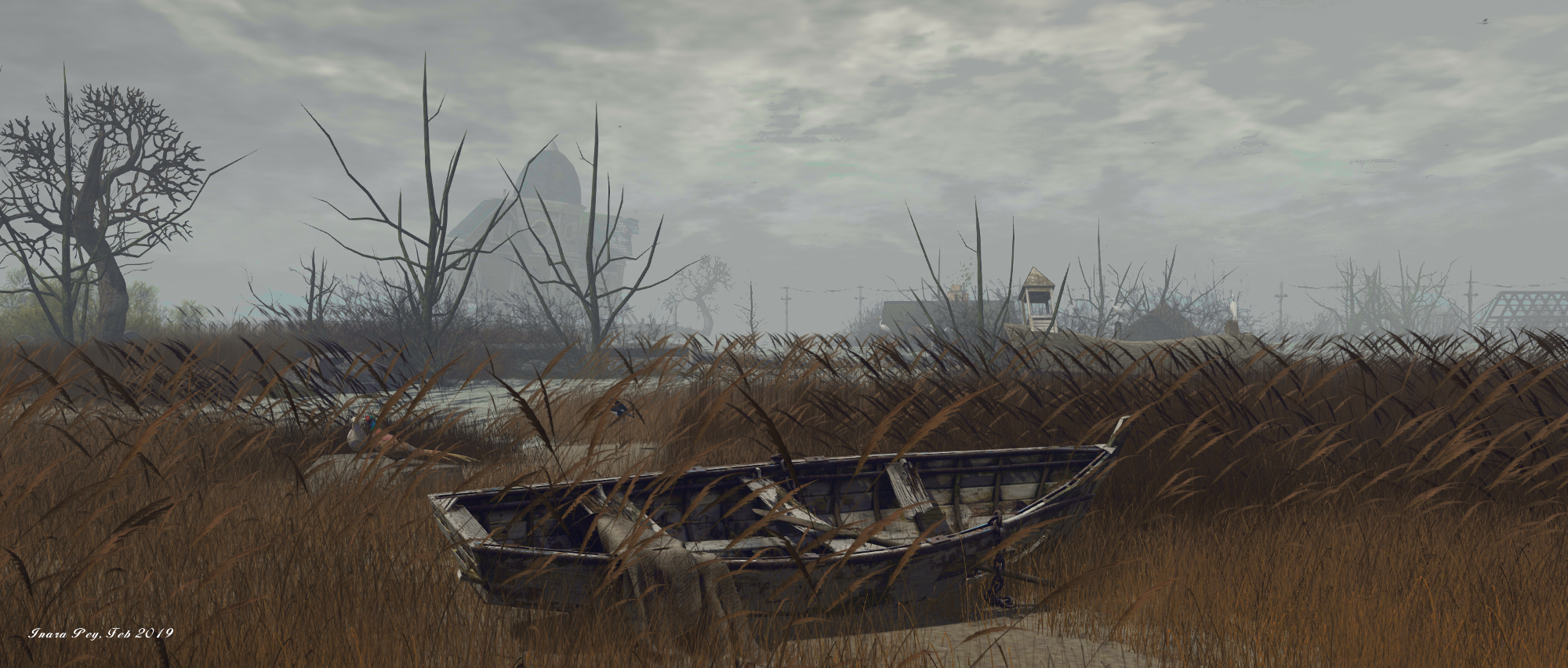
The waters of the Chesapeake were not to be held back, however, and in 2010 that last house, originally built in 1888, collapsed, forcing the Whites to admit defeat and sell the island. The remnants of that last house was completely lost to the waters of the bay in 2012.
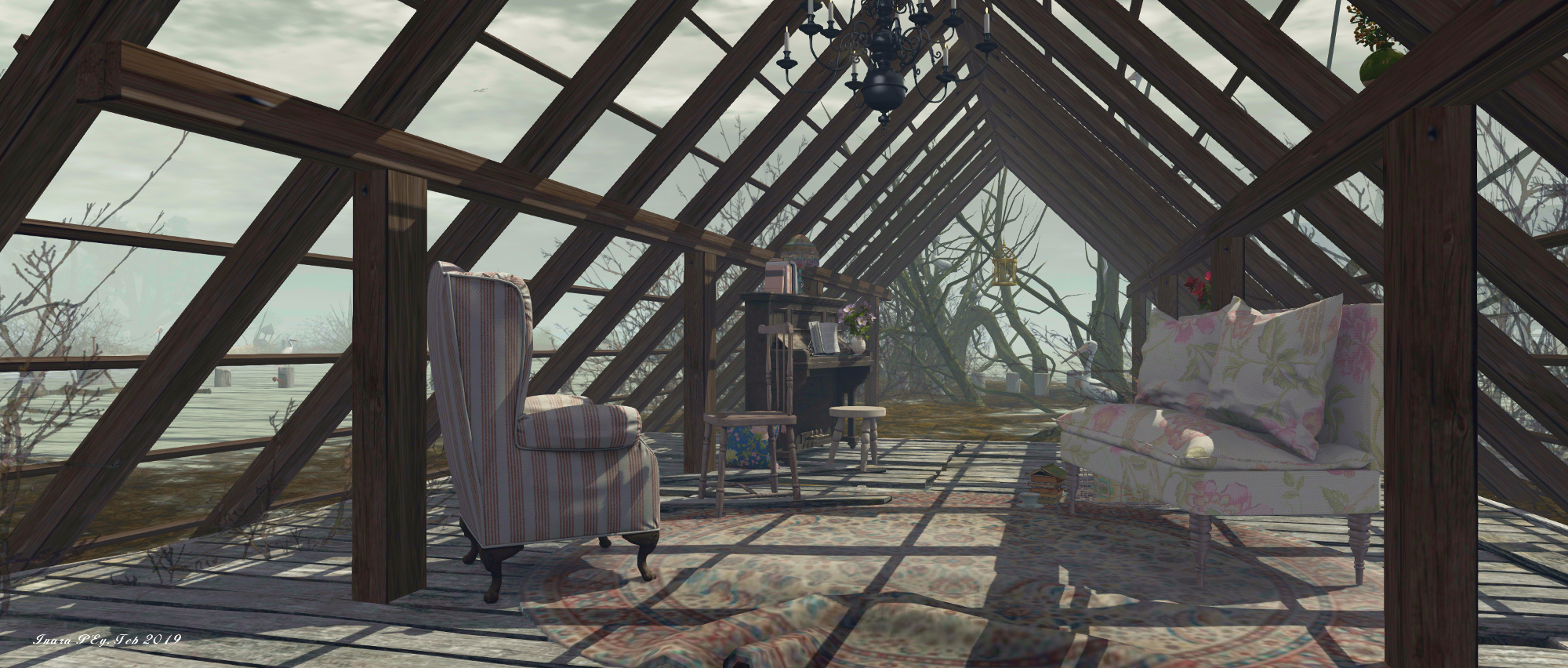
Hoewever, for this incarnation and in recognition of the Whites’ attempts, the house remains, much as it appeared in 2010 after the initial collapse. It sits on the west side of the island, the carcasses of the vehicles used to try to shore up the land around it slowly drowning under the rising waters, watched over by sea birds and waterfowl.
Chesapeake Bay – click any image for full size
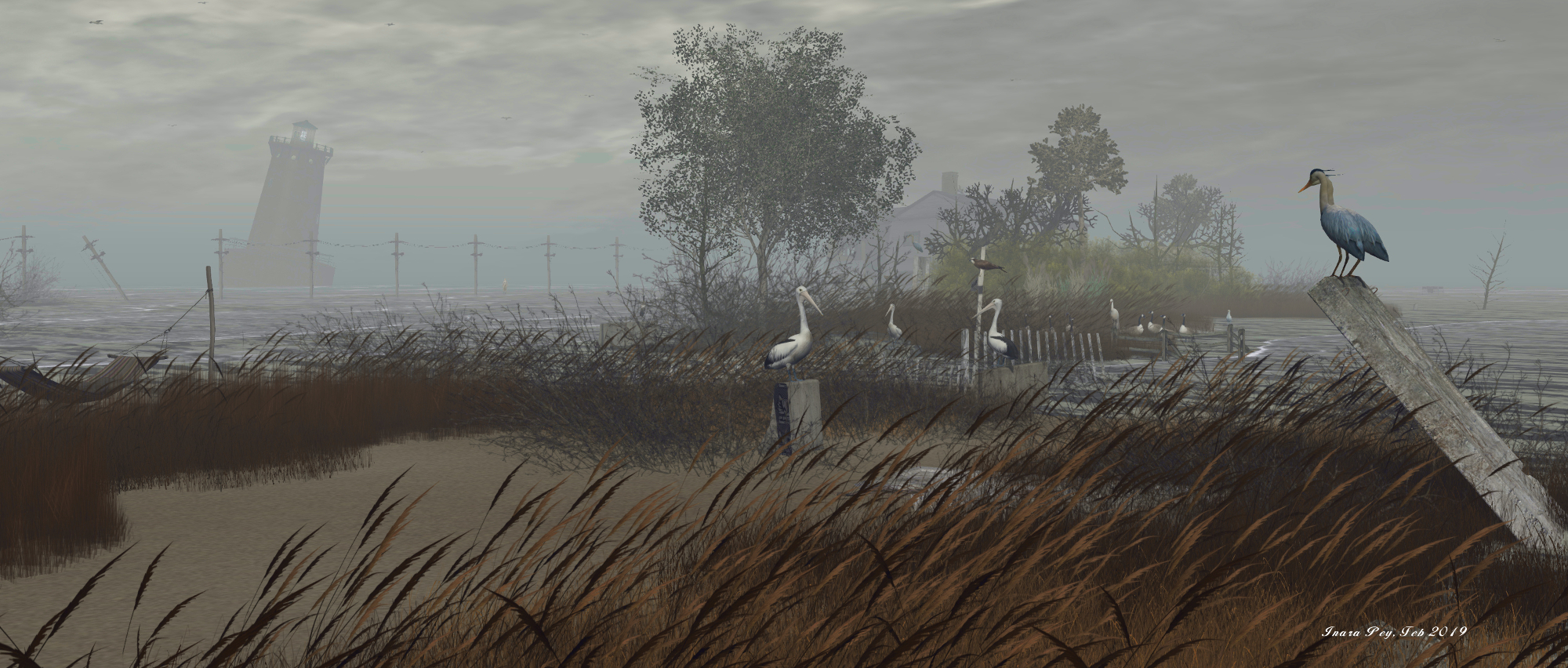
North of the Last House is an automated lighthouse sitting on a platform, marking the second story commemorated by the region: that of lighthouse keeper Ulman Owens. The light sits atop a platform once home to the Holland Island Bar Lighthouse, also built in 1888, and manned through until 1960, when the automated tower replaced it on the platform. In 1931, keeper Owens was found dead in the lighthouse kitchen amidst a scene of apparent violence, including a bloodied butcher’s knife close to the body and bloody stains within the room, although the body itself showed no significant wounds.
Initially, his death was ruled the result of a fit, rather than foul play. But subsequent investigations and an autopsy suggested Owens may have been murdered by local rum runners or that, given he had at least two affairs that caused the women involved to leave their husbands, he might have been set upon by an angry husband. However, as the autopsy revealed Owens had heart disease, the ruling of accidental death was held, and the case closed.
Chesapeake Bay – click any image for full size
Sharps Island, although some distance from Holland Island in the physical world, is represented in the region by a reproduction of the “leaning tower” of the (deactivated) Sharps Island Light, and the ruins of a second large house. The latter represents the popular (if short-lived, due to the island’s continuing erosion) hotel built by Miller R. Creighton in the late nineteenth century. Sharps Island itself finally vanished under the waves in 1960.
Today, Holland Island is marshlands and sandbars, home to a great many varieties of birds and waterfowl, and Serene and Jade have captured this within their design, which is finished with an atmospheric windlight and superb sound scape.
As with all of Jade and Serene’s builds, Chesapeake Bay won’t be around forever, so do make a point of visiting; you won’t be disappointed. Be sure, as well, to read the excellent piece on the region and its inspiration on the Furillen blog.
It’s time to highlight another week of storytelling in Voice by the staff and volunteers at the Seanchai Library. As always, all times SLT, and events are held at the Library’s home at Holly Kai Park, unless otherwise indicated.
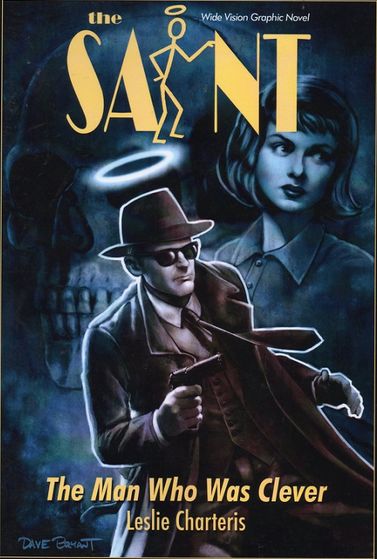
Sunday, February 10th, 13:30: Tea Time with The Saint
Adventure came to him not so much because he sought it as because he brazenly expected it. He believed that life was full of adventure, and he went forward in full blaze and surge of that believe…
So reads The Man Who Was Clever, billed as the first graphic novel about Simon Templar, aka The Saint, aka The Robin Hood of Crime, when describing the man himself. The creation of Leslie Charteris, Templar first arrived in literature in 1928, his career in print spanning almost six decades, with later books and stories being written in collaboration with other writers.
Templar’s career in other media started in 1938 with the release of the motion picture The Saint in New York, and in radio in 1940 – with none other than Vincent Price most famously providing him with a voice from 1947 to 1951, on no fewer than three US radio networks.
However, it is probably as personified by Roger Moore on television between 1962 and 1969 that Simon Templar is familiar to most. This series actually added to the library of The Saint’s literature, with a number of original scripts for the series – with Charteris’ approval – becoming short stories using his name as the author.
The Man Who Was Clever first appeared in 1930 as a part of the first collection of short stories about The Saint published under the title Enter The Saint. In it, Templar, the man who robs from the evil and heartless rich, and gives to the wronged and deserving poor, entered the world of graphic novels thanks to a story adaptation by Mark Ellis with David Bryant serving as illustrator. It marks the start of a new series of Tea Time adventures for Seanchai Library, with David Abbot, Corwyn Allen, Kayden Oconnell, and Caledonia Skytower.
Monday, February 11th 19:00: Hanta Yo: An American Saga
Gyro Muggins reads Ruth Beebe Hill’s extraordinary novel that is either loved or hated – and has certainly proven controversial since its first publication.
Lyrically written, the story is, at its core, a multi-generational saga follows the lives of two Indian families, members of the Mahto band of the Teton Sioux, before and during their first contact with the white man and his “manifest destiny.” Within its sweeping story, Hill attempted to fashion an epic, Native American version of Alex Haley’s Roots.
Allegedly based in part on writings translated from a Lakota Sioux winter account translated by a First Nation Sioux, the story is certainly cohesive and vivid. For those unfamiliar with the lives and rituals of the Plains Indians of North America, it makes for a fascinating and enlightening read.
However, to some in the Lakota, the book is seen as demeaning and misrepresentative – a fact Hill herself finds baffling. Whilst she fully acknowledges the story is a “documented novel” – a fictional story based on actual events – she also notes that she spent some 20 or more years researching Hanta Yo and carrying out hundreds of interviews with representatives of the Sioux, Kiowa, Omaha, Cheyenne, and Navajo tribes, including allowing them access to her manuscript to verify the historical elements from their standpoint.
Event today, in the year of the 40th anniversary since its first publication, Hanta Yo divides opinions. So why not settle down with Gyro to hear the tale first hand?
Tuesday, February 12th 19:00: Love in Music and Poetry
With Ktadhn Vesuvino and Caledonia Skytower, on stream and in voice.
Wednesday, February 13th 19:00: The Jennifer Morgue
Corwyn Allen reads the second volume in the Laundry Files by Charles Stross.
Bob Howard is an IT expert and occasional field agent for the Laundry, the branch of Her Majesty’s Secret Service that deals with occult threats. In this second outing, Bob Howard finds himself dragged into the machinations and conspiracies of megalomaniac multi-billionaire Ellis Billington, The Black Chamber and The Laundry…
Dressed in a tuxedo (what else for a globe-trotting British Secret Agent?) and sent to the Caribbean, Bob must infiltrate Billington’s inner circle via his luxurious yacht. His mission? Prevent the Billington from violating a treaty that will bring down the wrath of an ancient underwater race upon humanity’s head.
Offering a wonderful pastiche on both the world of James Bond and a wonderful mimicking of Ian Fleming’s style of writing, Stross produces a novel that also evokes Lovecraftian overtones that is delightfully entertaining to read. In true Bond style, Bob is (reluctantly) partnered with an American agent – in this case a stunningly beautiful woman who also just happens to be a soul-sucking succubus from another dimension. Which, being the case, marks Bob’s mission somewhat differently to those of Bond: not only must he stop the bad guys and come through this at best shaken, he must totally avoid being stirred towards getting the girl…
Thursday, February 14th:
15:00: Seanchai Library at One Billion Rising
Stories and poems of women in our world – see the Seanchai Blog on the day for the SLurl.
19:00: The midnight Embrace
With Shandon Loring. Also in Kitely grid.kitely.com:8002:SEANCHAI..









 Inara Pey: Living in a Modemworld