A touch of Frost (and more) in Second Life

The Vordun: Frost: Visions of Winter

Wintertime in the northern hemisphere is when thoughts turn to snow and holidays, and within Second Life, this is no exception. Many regions take on a winter look and feel, the ground, trees and buildings caught under white blankets or dusted with snow, even as more often falls from the sky. For many in the physical world, despite the cold, it is a time of joy and for treks through virgin drifts of snow or – in the case of the younger at heart snow fairies, snowmen and sledges and sleighs.

Celebrating this time of year is not new; people have always found enjoyment with winter and the changes it brings to the world, and right now we can witness this for ourselves at a recently opened exhibition of art at The Vordun Museum and Gallery, created and curated by Jake Vordun.

Entitled Frost: Visions of Winter, it offers selected reproductions of classical pieces of art spanning 500 years, celebrating winter in all its glory, as the introductory notes explain:

In this exhibition, you will see twenty painting, drawings, prints and manuscripts depicting different aspects of the season. Be it landscapes, winter costumes or feasts by the fire, these pieces will show you glimpses of winter from the  15th century to the 20th.

The Vordun: Frost: Visions of Winter

The Vordun has a reputation – thoroughly deserved – for bringing high-quality reproductions of physical world art, properly licensed, into Second Life. This exhibition, located in the gallery’s rearmost hall, is no exception. Including paintings and drawings by the likes of Francesc Masriera i Manovens, Jacob van Ruisdael, Sebastiaan Vrancx, Claude MonetJean-Baptiste Pater, Francis Wheatley and Hendrick Avercamp, this might at first be considered a wholly European view of winter – but not so; America is represented via James Abbott McNeill Whistler, as is China through the ink on paper Winter Forest in Flying Snow by Wen Zhengming, with Scandinavian artists also being present among the images.

I really cannot stress the quality of these pieces, which together with the environment in which they are set. As I noted when it first opened in July 2016, The Vordun beautifully recreates the experience of visiting a physical world art gallery – so much so that it one of the those select Second Life experiences that leaves me regretting we cannot have fully immersive virtual reality in Second Life. Certainly, for those building in Sansar, it is perhaps the model of how to plan and build a virtual gallery space.

The Vordun: Frost: Visions of Winter

This is not only because of the look and feel of The Vordun, but in the way Jake has developed a visit as a Second Life experience in the technical sense of the word, presenting visitors with the opportunity to view the works in the main hall exhibition of European Masters: 300 Years of Painting as immersively as possible, via scripted camera control and the use of both voice and text to impart information on each piece on display.

Sadly, this aspect of The Vordun doesn’t extend into Frost: Visions of Winter, but that is not to say the latter is lessened in any way; rather the reverse. Frost stands as a captivating exhibition in its own right, while for those who haven’t visited The Vordun before, the presentation of European Masters: 300 Years of Painting, makes a visit to the gallery doubly worthwhile – and also gives the opportunity to appreciate two other long-running exhibitions there: Pictures of the Floating World and Dutch Proverbs (both of which you can read about here), which are as equally stunning as Frost and European Masters, and sample Postcrossing, a celebration of the website of the same name and the use of postcards to bring half a million people around the world a little closer together.

The Vordun: Frost: Visions of Winter

SLurl Details

November executive town hall: summary and audio

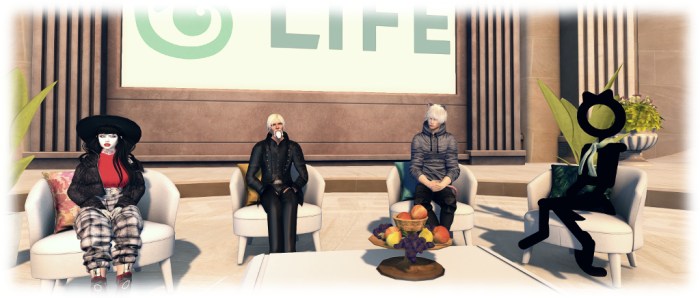
Xiola (l) with Oz, Patch and Grumpity Linden
On Thursday, November 15th, 2018 Linden Lab hosted a further Town Hall meeting at which questions were put to three of the Lab’s senior staff: Oz Linden, Grumpity Linden and Patch Linden.

Those wishing to ask questions were asked to submit them via a Town Hall meeting forum thread (now locked from having further questions added, but remains available for viewing). The following is a summary of the answers to questions asked during the Town Hall session, audio extracts and video time stamps provided as reference. The video is embedded at the end of the article.

Table of Contents

When reading this summary, please note:

  • It is not a full transcript; rather replies to questions have been bullet-pointed for ease of reading.
  • Responses to questions have been grouped by topic, and are not necessarily in the order discussed at the meeting.
  • Some questions were very generic in form and as a result lacked any structured answer (e.g. Q: will Linden Lab be improving Groups? A: what would you like to see improved?). I have not included such questions in this summary, but have focused on those questions that yielded replies that offer insight on Second Life and Linden Lab’s thinking about the platform.
  • Audio extracts are provided. These have been cleaned-up in places to remove repetition or pauses, etc.
  • Both topic and audio extracts may concatenate comments  / responses to topics asked at different points in the meeting.

Specifically because of this last point, I’ve included time links to the points in the official video (also embedded at the end of this article) for those who wish to listen to the questions, comments and replies as they were recorded.

Also note that not all of the questions raised in the forum could be addressed at the meeting, so some may be addressed from within the forum linked to above by Linden Lab in the coming days.

Introducing Oz, Grumpity and Patch

Oz Linden

Oz is the Technical Director for Second Life, having joined in 2010 with initial responsibility managing the viewer open-source project and rebuild what had become a fractious relationship with TPVs, with his role expanding over time to encompass more and more of the engineering side of Second Life.

As work on Sansar started to progress in earnest, he pro-actively campaigned within the Lab for the role of Technical Director of SL, building a team of people around him who specifically wanted to remain solely focused on Second Life and developing it. His team works closely with the product and operations team to ensure SL constantly evolves without (as far as is possible) breaking anything – a process he refers to as rebuilding the railway from a moving train.

Grumpity Linden

Grumpity is the Director of Product for Second Life. She originally came to Linden Lab while working for The Product Engine, a company providing end-to-end consulting and software development services, and which supports viewer development at the Lab. Grumpity was initially involved in the development and viewer 2 (as designed by 80/20 Studio).

She became a “full-time Linden” in 2014. Her current position involves coordinating the various teams involved in bringing features and updates to Second Life (e.g. Engineering and QA), liaising with legal, financial and compliance to ensure features and capabilities meet any specific requirements in those areas, etc. This work can involve looking at specifics within various elements of the overall SL product, such as UI design and layout, etc.

Grumpity jokingly refers to herself, Patch and Oz as the troika, responsible for the development and direction of all aspects of Second Life.

Patch Linden

Patch is the Senior Director of Product Operations at Linden Lab. Originally a Second Life resident, he joined linden Lab in 2007, after being invited to apply to the company as a result of his work as a community leader and mentor from 2004 through until the invitation was extended.

His role is the only one of the three here that also encompasses Sansar, as he manages the respective support teams for both platforms. In this regard, he recently established a support centre in Atlanta, Georgia. For Second Life, his work also involves overseeing the content development teams, the Mainland Land Team, the Linden Department of Public Works – LDPW, aka The Moles, and managing the account support team.

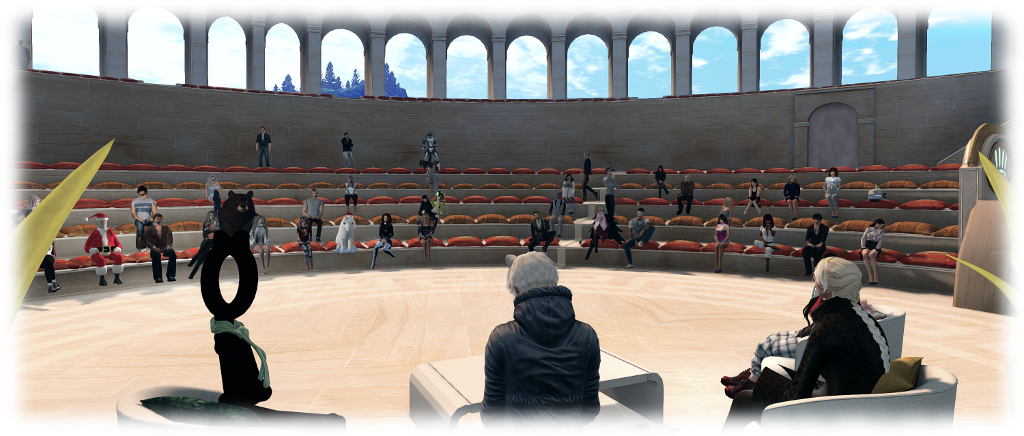
The view from the stage as the audience arrives

Opening Comments: The Fifteen Reasons To Celebrate Blog Post

Elements Already Delivered

Grumpity Linden started with a review of what has been delivered:

  • Mainland costs: as has been stated at previous Town Hall and Meet the Linden events in 2018, Mainland tiers costs were revised in March 2018, together with a doubling of “free” tier size.
    • The Lab continues to be pleased with the response.
    • Mainland ownership is at levels not seen in some time.
    • Response continues to be positive.
  • Animesh: Animesh officially reached release status on November 14th, 2018.
  • Marketplace:
  • Games and Experiences (via Patch):
    • Tyrah and the Curse of the Magical Glytches has been enhanced.
    • A new version of Linden Realms has been deployed.
    • Further updates and ideas are in progress, notably for winter 2018 / 2019.

Video: 4:49-7:40

Back to Top

Elements In Progress

  • Environmental Enhancement Project (EEP):
    • Progressing rapidly, almost on a daily basis.
    • Lab keen to bring EEP out as whole, rather than bit-by-bit.
  • Land Auctions:
    • The updated land auctions were launched in July 2018.
    • There have been issues, which the Lab has been working to address, but this is taking time to fix as the auction system does involve people’s L$.
    • Resident-to-resident auctions are still coming, but probably won’t be deployed until early 2019.
  • Themed Learning Islands:
    • The Lab deployed the first of the themed learning islands in August 2018, and this is an ongoing programme.
    • The results have been “interesting” and provided a lot of ideas on what to provide next.
    • Because the Lab wants to have “clean” results from the work, this is not something that can be openly discussed in-depth.  However, Lab remains committed to improving the on-boarding experience.
  • Bakes On Mesh (via Oz Linden):
    • The last infrastructure updates (Bake Service) have been deployed.
    • Updates to the viewer should be appearing soon.
    • Its anticipated there will be further simulator / server deploys as well as viewer updates.
    • Users are encouraged to test the viewer as it moves forward and to provide feedback (see the Alternate Viewers wiki page).
  • Performance Improvements:
    • There have been a number of projects to improve performance, and more are on the way.
    • The viewer’s texture cache is being overhauled and improved.
    • The rendering system is being improved.
    • Region crossings have been touched, and more work in this area may be forthcoming in the future.
    • Performance is something the Lab is always working on.

Video: 7:45-13:00

Back to Top

Continue reading “November executive town hall: summary and audio”

2018 SL UG updates 46/2: content Creation Summary

Animesh is live!

The following notes are taken from the Content Creation User Group (CCUG) meeting, held on Thursday, November 15th, 2018 at 13:00 SLT. These meetings are chaired by Vir Linden, and agenda notes, meeting SLurl, etc, are usually available on the Content Creation User Group wiki page.

Animesh

Animesh is now officially released. Blog posts:

This means that the Animesh code will now be merged with all current RC and project viewers in the coming days /  weeks. Firestorm support for Animesh will be coming soon, as is the other case for TPVs that have not already started making releases with Animesh support.

Resources

To help people get started with Animesh, there is already a range of available resources, including:

Discussion

  • Concern has been raised about the 2 Animesh attachment option for Premium members impacting performance at major events given the lack of “public” testing of the ability (which had always stated as being one Animesh attachment per avatar across the board).
    • Interestingly, when the one Animesh attachment per avatar was first set, it was seen as too limiting, with some wanting as many as five per avatar.
  • The tri count cap remains unchanged at 100K per Animesh.

Environmental Enhancement Project (EEP)

Project Summary

A set of environmental enhancements allowing the environment (sky, sun, moon, clouds, water settings) to be set region or parcel level, with support for up to 7 days per cycle and sky environments set by altitude. It uses a new set of inventory assets (Sky, Water, Day),  and which include the ability to use custom Sun, Moon and cloud textures. These can be stored in inventory and traded through the Marketplace / exchanged with others, and can additionally be used in experiences.

The project also includes a new set of render shaders to support atmospheric effects such as rainbows, crepuscular rays (“God rays”), better horizon haze and fogging (but will not include rain / snow).

Resources

Current Status

  • There are a couple of blockers that have come up on the next viewer update, and which are currently being worked on, and should hopefully be cleared by the end of the week.
  • The first scripted functionality for EEP is now available: llGetEnvironment. This:
    • Returns a list containing the current environment values for the parcel and region as a list of attributes.
    • Takes a list of attributes to retrieve in parameters and returns them in the order requested.
  • llGetTimeOfDay has also been revised in line with EEP.
  • Graham Linden is continuing to work on the rendering side, including crepuscular rays. He is however, also engaged in other work related to viewer rendering (such as project ARCTan).
    • As a part of Graham’s work, there is a further update to the EEP sky settings that will allow the atmospheric settings to be altered

Bakes On Mesh

Project Summary

Extending the current avatar baking service to allow wearable textures (skins, tattoos, clothing) to be applied directly to mesh bodies as well as system avatars. This involves viewer and server-side changes, including updating the baking service to support 1024×1024 textures, and may in time lead to a reduction in the complexity of mesh avatar bodies and heads.

This work does not include normal or specular map support, as these are not part of the existing Bake Service, nor are they recognised as system wearables. Adding materials support may be considered in the future.

Resources

Current Status

  • The required Bake Service update (which in part allows the support of 1024×1024 textures) was deployed in week #46.
  • Anchor Linden is now working on updates to the viewer, which is considered to be the only blocker to Bakes on Mesh going live.
  • Additional channels have been added to the Bake Service already which include the left arm and left leg. A request following this update was to allow upper and lower body skin textures to these channels – this will not be a part of the initial Bakes on Mesh release.
  • It has yet to be tested, but as Animesh objects do not have the necessary shape support for the Bake Service to use, it is thought BoM will not work (or at least not work as anticipated) with Animesh attachments on an avatar.

Normal and Specular Maps Support Experiment

As noted in the project summary above, Bakes on Mesh will not by default support normal and specular maps when released.

However, in week #45, Cathy Foil suggested it might be possible to allow Bakes on Mesh to indirectly support normal and specular maps using a combination of three additional bake channels within the Bake Service and a scripted “applier” option, similar to current skin and clothing applier mechanisms.

Since that time, she’s been carrying out tests using the existing three Aux Bake Service channels, added to the system as a part of Bakes on Mesh. While the approach appears to work with normal maps, there are a number of questions relating to alpha blending, deriving specularity (normal maps use the alpha channels for specular power in the SL materials setup), etc. These would require more in-depth testing through a suitable viewer, and as such, this isn’t seen as a viable approach at this point in time.

New Projects

No decisions have been made as to what user-visible projects will come next.

  • There is an infrastructure related project for inventory, but this shouldn’t have user-visible impact.
  • Project ARCTan (avatar and object complexity calculation improvements) has been on hold, awaiting resources, which are now becoming available.
  • There are a mix of options in the pot for Animesh and BoM follow-ups, but any follow-on work hasn’t been officially defined.
  • There are a number of other potential projects the Lab isn’t ready to announce as moving forward just yet.

Next Meeting

The next CCUG meeting will be on Thursday, November 29th, 2018.

Enjoying some Snow Falls in Second Life

Snow Falls; Inara Pey, November 2018, on FlickrSnow Falls – click any image for full size

Update February 27th: Hrodas Fen, the region held by Elyjia and once the home of A Way of Life (formerly Snow Falls) is now under new management.

Update: Snow Falls is now known as A Way of Life, see A Way of Life in Second Life for more.

It’s been a while since we’ve visited a region design by Elyjia (Elyjia Baxton) and Brayan Friller (Brayan26 Friller), so when Shakespeare passed me the LM to Snow Falls, we were delighted to hop over and explore.

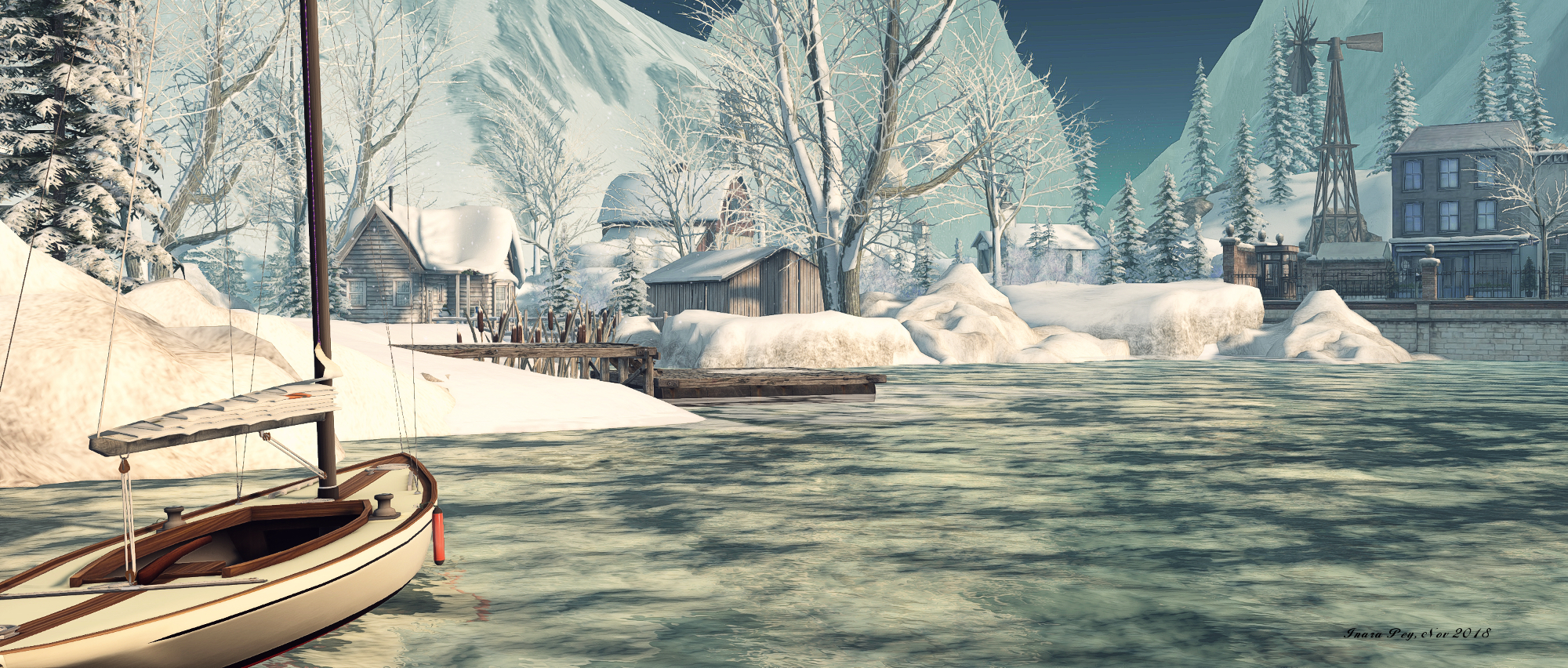
As the name suggests, this is a winter region, a Homestead designed to look like a small island sitting within a bay of icy-looking water. Clouds scud across the sky, as if in a hurry to get somewhere, remaining overhead just long enough to drop snow as they scurry on their way. Or perhaps the falling flakes are actually snow blown free from the surrounding high mountain peaks, then left to find their way down to the ground as the wind set them free.

Snow Falls; Inara Pey, November 2018, on FlickrSnow Falls

A cobbled waterfront sits on the shoulders of neatly lain bricks, the edge guarded by tall railings set between brick pillars to avoid the risk of anyone falling into the frigid waters below. This little lane – it is barely more than that – is  home to a nest of little businesses that have perhaps seen busier times as they look out across the water (these actually offer gacha resales for those interested).

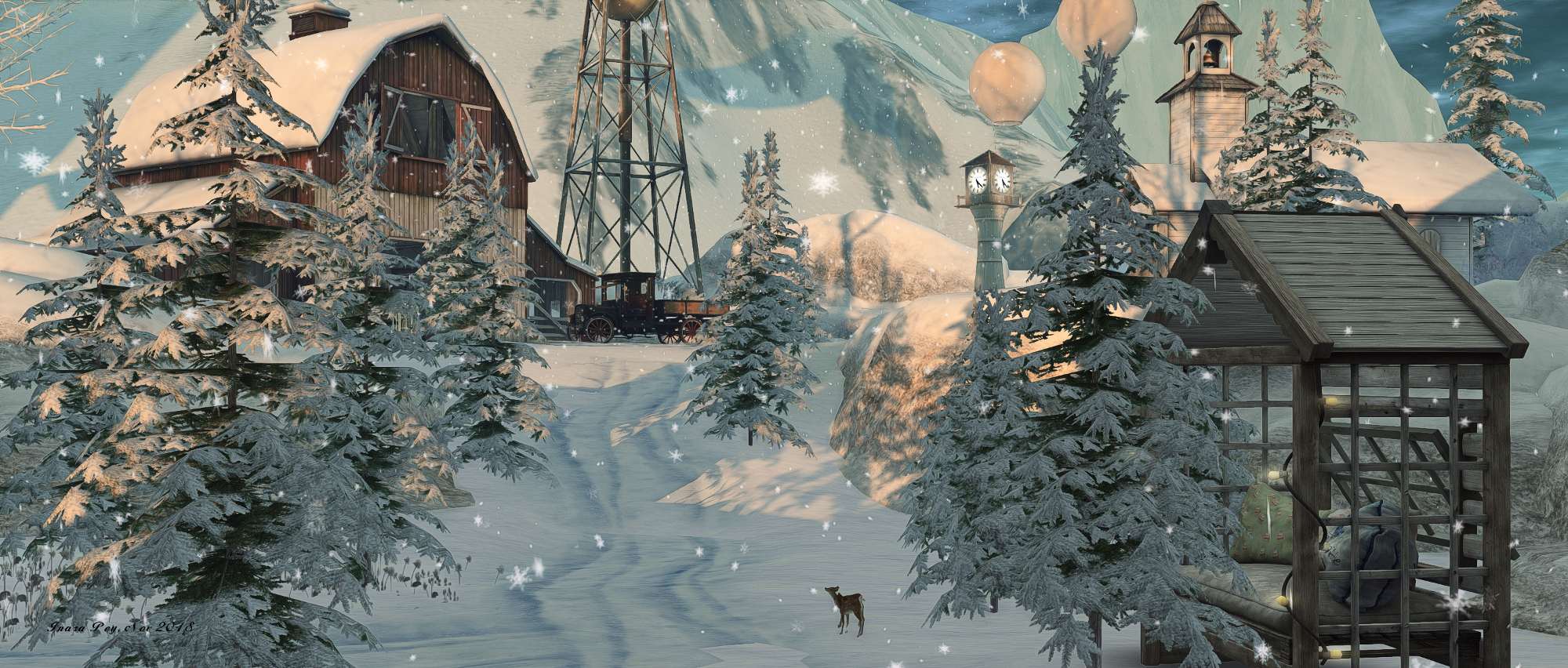
To the north, just beyond one set of gates guarding the shops, the land climbs up to where a barn and chapel occupy the hilltop, a tall water tower rising between them. the blanket of snow is rutted by the tracks left by an old flat-bed truck they appears to have been puttering back and forth – perhaps delivering Santa and his gifts to the barn.

Snow Falls; Inara Pey, November 2018, on FlickrSnow Falls

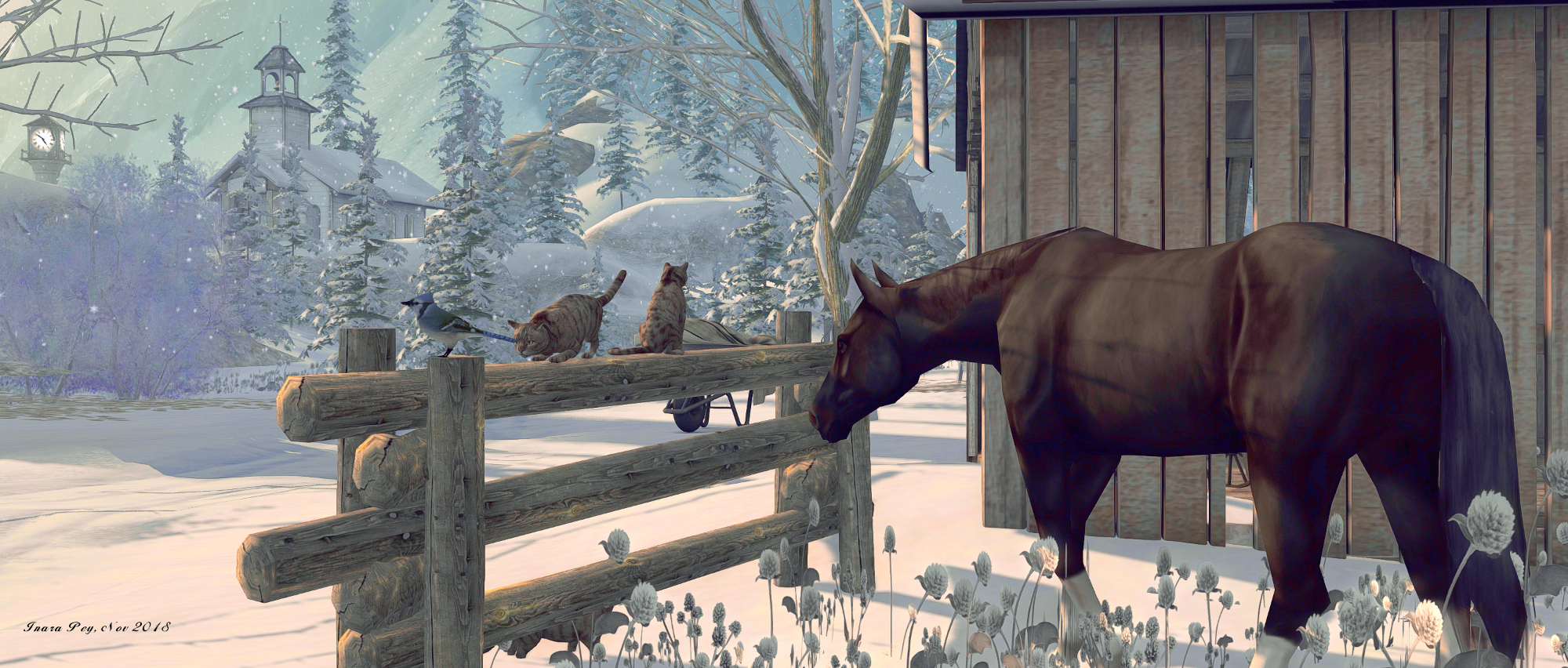
A second set of tracks at the foot the hill lead to what might be the farmhouse associated with the hilltop barn.  Cats are playing close by, outside another barn while a horse looks on.

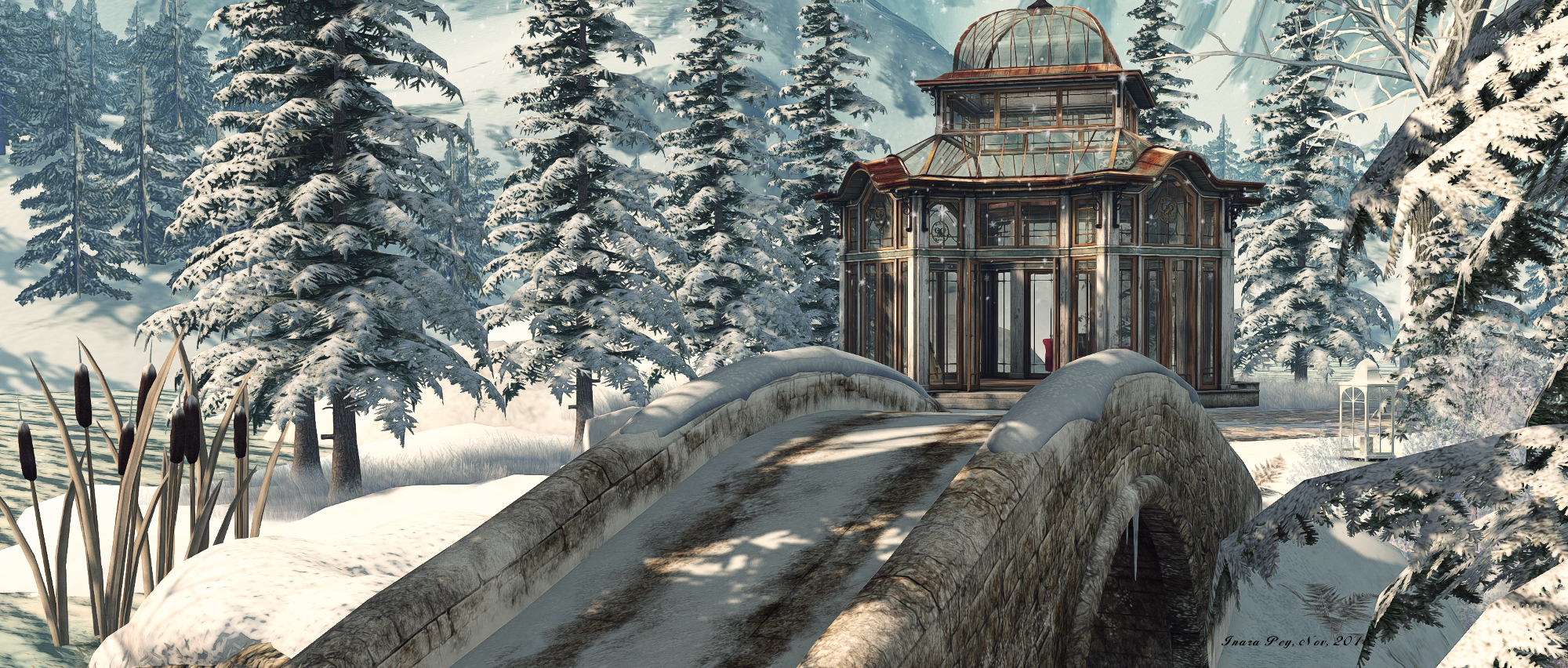
Go south along the shop fronts to the second set of gates and the land again opens up, snow-laden fir trees pointing the way towards a small stone bridge connecting to one of three further islands making up the region. It is home to a pavilion offering a break from the weather, and which is watched over by the lighthouse sitting on the neighbouring small island.

Snow Falls; Inara Pey, November 2018, on FlickrDagger Bay – click any image for full size

This is a flat-topped square of rock rising from frigid waters, the finger of the lighthouse giving fair warning that the waters around the rock can be dangerous – a fact underlined by the wreck of a trawler lying close by, deck canted over, ice forming around it.

The remaining island lies to the north, close to the farm. A single, empty cabin sits on it, a sail boat close by suggesting it might occasionally see use.

Snow Falls; Inara Pey, November 2018, on FlickrSnow Falls

For those seeking places to relax and appreciate the views, there are a number to be found – in the Pavilion, in a couple of arbours, out on the water, courtesy of a rowing boat – and even up on a couple of balloons floating above the farm, as well as on benches to be found on the waterfront outside of the shops and scattered around the region in the snow.

There are one or two small rough edges to the regions – the odd floating tree or snowman – but nothing that really interferes with the overall lay of the land or the opportunity for taking photos. For those who do enjoy photography, the regions a Flick group for sharing pictures.

Snow Falls; Inara Pey, November 2018, on FlickrSnow Falls

All told, another picturesque region by Elyjia and Brayan, and well in keeping with the time of the year in the northern hemisphere.

SLurl Details

Animesh officially released for Second Life

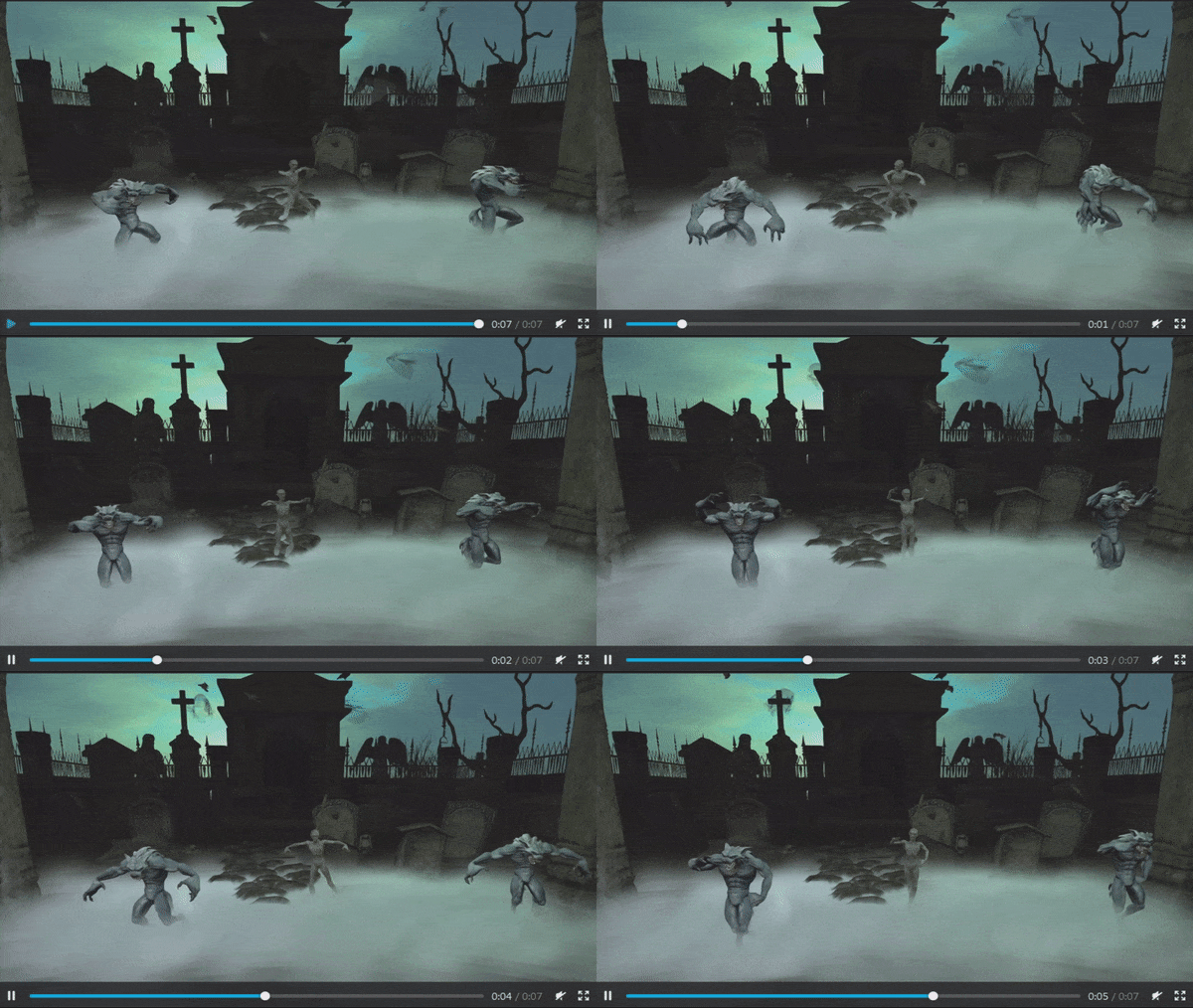
Anmesh Halloween boogie, October 2017, Courtesy of Alexa Linden

On Wednesday, November 14th, Linden Lab announced the official release of Animesh, with the promotion of the Animesh viewer as the de facto release viewer.

Animesh has been in development for about a year, and like Bento, has been a collaborative effort between Linden Lab and Second Life content creators.  Essentially, it allows the avatar skeleton to be applied to any suitable rigged mesh object, and then used to animate the object, much as we see today with mesh avatars. This opens up a whole range of opportunities for content creators and animators to provide things like independently moveable pets / creatures, and animated scenery features.

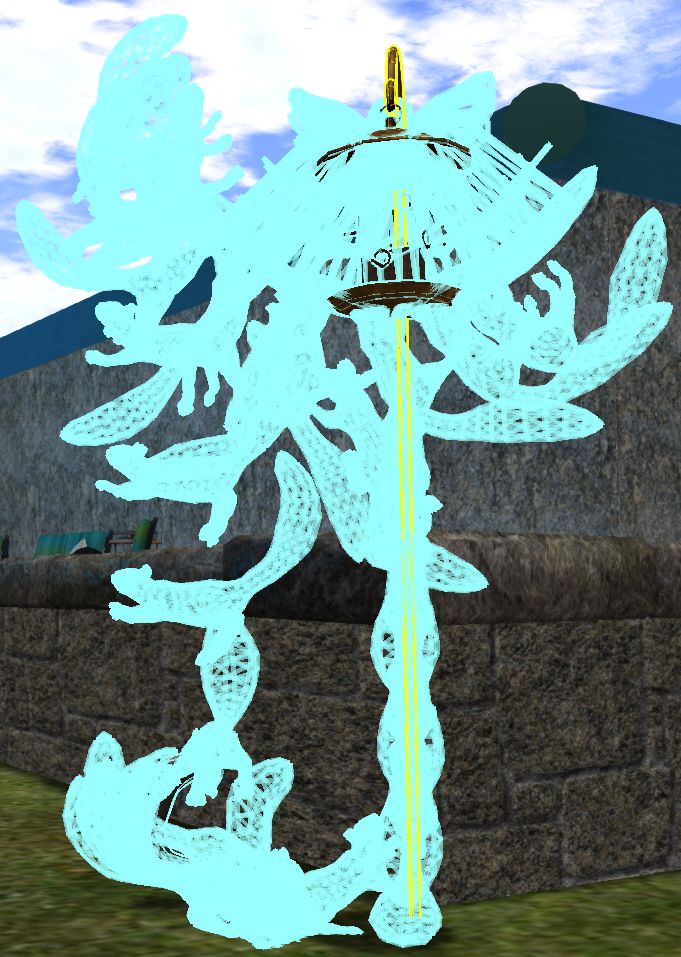
Alpha flipping: use of multiple mesh models to achieve a sense of movement by rapidly cycling through them via script, revealing and then hiding each one in sequence – in this can giving the illusion the squirrel climbs and swings from the bird feeder

One of the potential advantages with Animesh is that it might help eliminate the need to “alpha flipping” across multiple versions of a mesh creature in order to simulate its movement.

To explain: if you right-click and edit animated mesh creatures in SL, you’ll see that they can appear to have multiple parts, most of which are invisible. When they are active, a script renders then sequentially, causing each of the models to be rendered in turn before hiding it again using an alpha mask.

Like a set of flip book drawings, this gives the illusion of movement: be it a sheep or horse or cow raising and lowering its head to appear as if it is grazing, or a rabbit hopping back and forth over the ground, or simply mimic the movement of legs as an animal wanders along a pre-determined path. As long as the script is cycling the motion is repeated.

The problem with alpha-flipping is that is can be render intensive, impacting viewer performance, so the hope is  – and as well as bringing other benefits – Animesh will, over time, hopefully encourage creators to switch away from alpha flipping methods of animation.

Animesh also includes the ability to attach a single object to an avatar (or two, if you are Premium) which can then behave independently of the avatar. Quite how this will be used remains to be seen – but again, one obvious option is more render-efficient pets, or perhaps an animated item of clothing that simulates being blown by the breeze, and so on. Another potential is with things like avatar tails – while Bento also allows for items like these, the use of an Animesh with its own skeleton could avoid potential conflicts when trying to use two Bento items that use the same set of bones in the avatar, and so conflict with one another.

There are some initial limitations with this release of Animesh. As a couple of quick examples: when it comes to pets, for example, because rigged mesh is used, it’s not possible to simply put a pet on the ground after carrying by using Drop so it can run around – you have to go via Detach and inventory. Also, there is no avatar shape associated with Animesh at present, which may limit its adoption for use with NPCs, as there is no real ability to custom body shape and size (the addition of a body shape to Animesh, and the ability to modify it via the sliders is being considered for a future Animesh project).

Animesh Resources

To help people get started with Animesh, there is already a range of available resources, including:

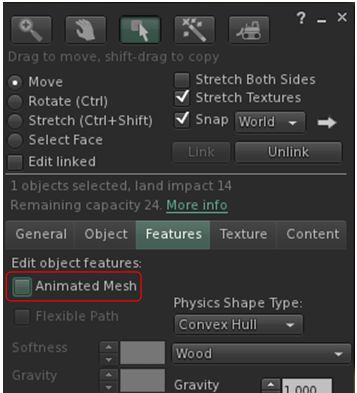
Rigged mesh can be set to be used as Animesh through the Build / Editor floater

In particular, the user guide and test content offer the best way of getting started with Animesh for those who haven’t tried it thus far.

Again, Animesh isn’t just for content creators: it has been designed such that just about any Rigged mesh can be converted to Animesh directly from the Build / Edit floater. Do be aware, however that simply converting an object will not cause it to start animating – you’ll obviously need suitable animations and a script to run them.

Like any other object utilising animation, this is done by adding the animations and scripts via the Edit > Contents tab for your converted object. If you’re not a scripter / animator, you can still use the Animesh test content and have a play around with things.

Quite where Animesh will go will be known in time – even at the Content Creation User Group meetings some fairly imaginative use-cases were being pondered by some (using Animesh in vehicles for animating wheels, for example). To try to help users find Animesh content, the Lab note they’ve created a new Marketplace category – Animated Objects – but going on a brief parse through what’s there already, this may need some form of curation if it is to be for Animesh – several of the items I notes didn’t appear to be Animesh – so be sure to read descriptions carefully and perhaps check in-world as good start to appear.

As with all things, Animesh can be subject to bug and issues, and Whirly Fizzle has created a JIRA filter for Animesh for easy tracking of known issues. If you do hit upon a bug or issue, do be sure to raise a Jira report and label it for [Animesh].

A razzle of raptors? Animesh used to animate rigged mesh raptors from Linden Lab

Additional Links


November SL Town Hall with Oz, Grumpity and Patch – reminder

Just a quick reminder.

The next in the Lab’s in-world Town Hall series, featuring Director of Product, Grumpity Linden, Technical Director Oz Linden, and Senior Director of Product Operations, Patch Linden, will take place on Thursday, November 15th, 2018 at 10:00 SLT (18:00 GMT / 19:00 CET). The event will take place at the Town Hall meeting regions, with the landing point URLs as follows:

Selected questions from the Town Hall meeting forum thread (now closed) will be put to Grumpity, Patch and Oz during the session, and there may be an opportunity to ask questions from the audience, if time permits.

All things being equal, I hope to have a summary of the session up after the event, which will be similar in nature to my summaries of 2018 Town Hall meeting – see here for the September Town Hall with Ebbe, as an example.