Space Sunday: saving Oppy, ISS leaks, and humans to Mars

NASA’s MER rover, Opportunity (MER-B) arrived on Mars in January 2004. It has been in a “sleep” mode since the start of June 2018, as a result of a globe-spanning dust storm on Mars. Credit: NASA/JPL

NASA has announced it will undertake a 45-day campaign to try to re-establish contact with its long-lived Mars Exploration Rover (MER) Opportunity. in the wake of contact being lost was a globe-spanning dust storm started to grip Mars in June 2018.

After running its course for almost three months, the storm is now abating, and whilst not the biggest storm seen on Mars since “Oppy” arrived there it the start of 2004, it is one of the most intense in terms of the amount of dust thrown up into the Martian atmosphere.

Contact with the rover was lost in early June 2018. With sunlight barely able to penetrate the dust in the air, it is thought the rover went into hibernation to conserve battery power – terminating contact with Earth in the process.

The attempt to re-establish communications will commence once the tau in the region where “Oppy” is located has dropped below 1.5. Tau is the term used to measure the opaqueness of the dust in the Martian atmosphere, and it is usually around 0.5. Opportunity requires a tau of below 2.0 to avoid triggering its sleep mode, and by early June the value had reached 10.8 – making this dust storm the densest the rover has ever encountered during its fourteen years on Mars.

As a solar-powered vehicle, there are a number of risks Opportunity faces during a long duration dust storm. The first is that as the batteries cannot be charged, they could run out of sufficient power required to keep the rover’s sensitive electronics warm – although this is partially mitigated by the fact that during a storm like this, the heat normally radiated away by the planet gets trapped in the dusty atmosphere, raising the ambient temperature and thus offsetting the amount of power the rover needs to use to keep itself warm.

How the dust storm progressed. Taken 15 days apart through the same telescope and viewing the same face of Mars. On the left, taken on June 8th and the storm started to rise, features such as Syrtis Major ( the dark India-shaped marking below centre) are visible. On the right, taken on June 23rd, they are almost totally obscured by dust. Note that south is top the top of both images. Credits: Damian Peach (left) / Christopher Go (right)

To other points of concern with the rover are the potential for a clock failure, or what is called an “uploss” recovery being triggered. Opportunity’s on-board clock allows the rover to track when an orbiting satellite – vital for relaying signals from the rover to Earth – is above the local horizon, allowing Opportunity to make contact with Mission Control. If it has failed or now has an incorrect reading as a result of power fluctuations, “Oppy” might not be easily able to establish contact with Earth by itself. An “uploss” recovery is triggered when the rover has failed to establish contact with Earth for an extended period. There is a concern that if the rover didn’t enter its hibernation state correctly, the lack of any communications might have triggered this mode, forcing the rover to continuously re-try different methods to receive a signal from Earth, using up its power reserves.

The 45-day campaign will be a pro-active attempt to re-establish contact with “Oppy” from Earth by sending commands out to it. However, if there is no response from the rover, a grim warning was given in the announcement:

If we do not hear back after 45 days, the team will be forced to conclude that the Sun-blocking dust and the Martian cold have conspired to cause some type of fault from which the rover will more than likely not recover. At that point, our active phase of reaching out to Opportunity will be at an end.

– John Callas, Opportunity project manager, NASA Jet Propulsion Laboratory

This has drawn some sharp criticism from former members of the MER team, particularly those who worked with Opportunity. They point out that when communications were lost with the other MER vehicle, Spirit, in 2010, NASA spent 10 months trying to re-establish contact. In response to the criticism, NASA state that the 45-day period has been dictated by the decreasing amount of sunlight the rover is receiving as winter approaches, requiring the rover to start conserving power once more, but they will continue to listen for any attempts by the rover to re-establish communications after 45 day campaign has come to an end – they just won’t continue to try to make the connection pro-actively.

Even if communications are re-established, it doesn’t necessarily mean “Oppy” is out of danger; there is a chance that the storm has caused the rover to use its batteries for so long without charge, then may not longer have the capacity to charge correctly or to efficiently retaining their charge – either of which could severely impact further operations for the rover, and require careful assessment.

Soyuz Pressure Leak at the ISS

A Soyuz vehicle suffered a minor loss of cabin pressure whilst docked at the International Space Station (ISS), causing a bit of a fuss in some sectors of the media.

At around 19:00 Eastern Standard Time on August 29th, 2018, ground controllers noted a loss of atmospheric pressure in the orbital module of a Soyuz MS-08 docked to the station. While some media outlets reported the ISS crew “scrambled” to locate and patch the source of the pressure loss, the drop was so slight mission controllers decided to allow the 6-man crew to continue their sleep period aboard the station, and did not inform them of the issue until they were woken up at their scheduled time.

A Soyuz vehicle docked with the ISS (a second Soyuz is just visible, top reight of this image). The pressure leak occurred in the spherical orbital module directly attached to the space station. Behind this is the earth return module (and primary compartment for cosmonauts and astronauts when flying Soyuz) with the white section at the rear, with the solar panels, is the vehicle’s propulsion and power module. Credit: NASA / Roscosmos.

The leak was ultimately traced to a 2mm hole through the skin of the Soyuz module. A temporary fix was made using tape while the crew awaited instructions from Earth on how best to affect a more permanent repair. This actually highlighted a difference in approach between American astronauts and engineers and their Russian counterparts in handling situations.

The Americans – including Expedition 56 Commander Drew Feustel – were keen to explore and test options on Earth before determining on a curse of action out of concern that if options were not tested, then a repair could result in additional damage to the Soyuz. Russian engineers, however, proposed just the one approach to making the repair, and ordered the two Russian cosmonauts on the ISS – Oleg Artemyev and Sergei Prokopyev – to make the repair without any Earth-based testing, handling the situation entirely in Russian and using an interpreter to keep NASA personnel appraised of progress.

After completing the work, Artemyev and Prokopyev reported bubbles forming in the patch, but were instructed to leave it in place to harden over 24 hours. At the time of writing, the path appears to be holding, with no further leaks reported. The damaged Soyuz had been scheduled to make a return to Earth in December 2018 (each vehicle generally spending around 6 months berthed at the ISS alongside another Soyuz so they can be used as “lifeboats” by a station crew should they have to abandon the station for any reason), but as a result of the incident, mission controllers are contemplating using the vehicle in October, when three of the current ISS crew are due to return to Earth.

As the leak occurred in the Soyuz orbital module, it does not pose a threat to a crew: the module is only used during the time a Soyuz is en route to the ISS to give the crew a little more space. On a flight back to Earth the module is jettisoned along with the power and propulsion module, leaving the crew to return in the “mid-ships” Earth return capsule.

The cause of the leak is still being investigated, but suggestions are that it may have been a MMOD – a MicroMeteoroid (tiny piece of orbiting rock weighing less than a gramme but travelling at high-speed) or a piece of Orbital Debris (tiny fragment of debris from a space mission). Such strikes have occurred with the ISS in the past, but if this is the cause of the Soyuz leak, it will be the first time such a strike has directly resulted in a loss of atmospheric pressure either aboard the station or a vehicle docked with it, something that will add to concerns as to the amount of natural and human-made debris circling Earth.

Continue reading “Space Sunday: saving Oppy, ISS leaks, and humans to Mars”
Hell hounds, drug elites, wish trees and road trips

Seanchai Library

It’s time to highlight another week of storytelling in Voice by the staff and volunteers at the Seanchai Library. As always, all times SLT, and events are held at the Library’s home at Holly Kai Park, unless otherwise indicated.

Sunday, September 2nd:

13:30: Tea-time at Baker Street

The third full-length novel written about Sherlock Holmes, The Hound of the Baskervilles is likely to be the one Holmesian story which – at least in outline – known to most, whether or not they have actually read any of Holmes’ adventures.

But how many of us know the story as it was originally written? Over the decades it has been adapted for film and television more than 20 times, starting as early as 1914/15 with the 4-part series, Der Hund von Baskerville, and continuing on through to Paul McGuigan’s The Hounds of Baskerville, featured in the BBC’s brilliant Sherlock series.

All of these adaptations have offered their own take on the tale. Some – such as McGuigan’s, have simply taken the title of the story and used it to weave a unique tale of their own; others have stayed true to the basics of the story whilst also adding their own twists and turns quite outside of Conan Doyle’s plot in order to keep their offering fresh and exciting to an audience.

So why not join Cale, David, Corwyn and Kayden as they read from the 1902 original, and discover just how Sir Arthur Conan Doyle unfolded this apparently supernatural tale of giant hounds and murder, and the pivotal role played by John Watson himself?

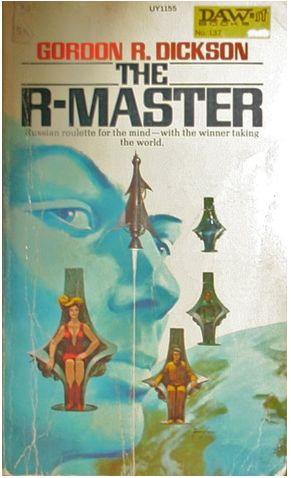
Monday, September 3rd 19:00: The R-Master

In the 21st century utopia has arrived in the form of a repressive but seemingly benevolent, if omnipresent, bureaucracy. Their perfectly ordered world, seemingly run for the benefit of all, is actually ruled with an iron fist. In claiming to have people’s best interest at heart, those in power keep the population occupied and docile with menial tasks and the promise of advancement with the aid of the strictly controlled drug, R-47.

For the vast majority, R-47 actually does nothing.But for a special few, observed and selected by the ruling Council, it can massively enhance their intellect, elevating them to the status of “R-Masters” allowing them to solve problems, see advancements, and help ensure – wittingly or not – the Council’s control over the world, cosseted and pampered well away from the drudgery of ordinary life.

However, there is a darker side to R-47: just as it can elevate the intellect of some of those chosen to receive it, so to can it reduce them to imbeciles – and there is no way of knowing who the outcome might be in advance. Wally Ho is one selected to receive R-47 – and suffers the latter fate.

Determining it will raise his problem-solving abilities and restore his brother, Etter Ho obtains R-47 and takes it. But, once elevated to the privileged ranks of the R-Masters and witness the truth behind the Council’s rule, Etter determines the established status quo cannot allowed to continue, and Big Brother must be brought to heel.

Join Gyro Muggins as he reads Gordon R. Dickson’s 1973 novel about life in what is now our times!

Tuesday, September 4th 28th 19:00: Wishtree

Trees can’t tell jokes, but they can certainly tell stories. . . .

Red is an oak tree who is many rings old. Red is the neighbourhood “wishtree”—people write their wishes on pieces of cloth and tie them to Red’s branches. Along with her crow friend Bongo and other animals who seek refuge in Red’s hollows, this “wishtree” watches over the neighbourhood.

You might say Red has seen it all. Until a new family moves in. Not everyone is welcoming, and Red’s experiences as a wishtree are more important than ever.

A contemporary tale for the times we are witnessing, told with sensitivity and humour. The protagonist (and in may ways the victim of prejudice as unsought as that received by the family in question) may well be a tree, but she has a lesson to teach all of us about tolerance and understanding and a need to heal.

Join Faerie Maven-Pralou as she reads Newbery Award winner Katherine Applegate’s 2017 story.

Wednesday, September 5th, 19:00: The Voyages of Sinbad Part 2

With Caledonia Skytower.

Thursday, September 6th, 19:00: Don’t Make Me Pull Over!

In the days before cheap air travel, families in America didn’t so much take vacations as survive them. Between home and destination lay  hundreds – perhaps thousands of miles of road, and dozens of annoyances.

During his childhood, Richard Ratay experienced all of them; from being crowded into the back seat with noogie-happy older brothers, to picking out a souvenir only to find that a better one might have been had at the next attraction, to dealing with a dad who didn’t believe in bathroom breaks.

Now, decades later, Ratay offers a paean to what was lost, showing how family togetherness in America was eventually sacrificed to electronic distractions and the urge to “get there now.” Through his words he paints large what once made Great American Family Road Trip so great, from twenty-foot “land yachts” to oasis-like Holiday Inn “Holidomes” and Smokey-spotting Fuzzbusters to the thrill of finding a “good buddy” on the CB radio …


Please check with the Seanchai Library’s blog for updates and for additions or changes to the week’s schedule.

The current charity is Feed a Smile.


SL UG updates #35/3: viewer and Marketplace

Grumpity and Alexa Linden host the Web User Group meetings monthly Alexa’s barn.

A brief update, as it was pointed out to me that I missed the Web User Group on August 22nd, and the updates to the Marketplace that were reported in the forums by Grumpity Linden at around the same time.

SL Viewer

A new Maintenance RC viewer was issued on Friday, August 31st. The Rakomelo Maintenance RC, version 5.1.9.519162, offers some 29 fixes and updates, including two for receiving Friend requests and Group notices when off-line via the new HTTP capabilities, and which had not been working correctly following the initial deployment of the capability. These update should match recent server-side updates to the caps, and prevent group notices and Friend requests received whilst off-line failing to be delivered when next logging-in.

There are a number of other useful fixes with this release  – please refer to the release notes / download page linked to above for details.

Marketplace

I didn’t actually make the August 22nd Web User Group meeting, hence the lack of an update in week #34.

However, as has been pointed out to me, Grumpity Linden posted to  the forums concerning a number of Marketplace updates, which I’m simply going to list here for completeness:

  • Gift email was missing if the gift message was blank.  Everyone should get a gift email!
  • Residents with the last name Resident couldn’t leave product reviews.  That was bad, and is fixed.
  • Character count of product description included newlines and so was obviously wrong.  Righted that wrong.
  • Favourites which are no longer available are now marked as such, and can all be removed with a single click
  • Email changes on SL now propagate to the Marketplace.
  • Allow merchants to choose to list multiple “Custom Avatar Brand Names”
  • Retain “Sort By” preferences between pages and sessions.  Makes sense.
  • You can now remove items from the Related Items pop-up.
  • It’s “Land Impact” not “Prim Count”.
  • The Mesh Quiz is a thing of the past.  It will stay in the past, but will surely live on in our memories.

Grumpity also notes that some much-requested updates are “coming soon”: wish lists, favourite sellers, and an auto-complete for brand names.

She also indicated a fix for BUG-225309 “Marketplace: ‘Best selling products’ no longer sorts by best-selling” is in the works, as is a fix for BUG-225307, “Editing Marketplace Listings does not show inactive items to add as related or demo” – although this has apparently been closed as “working as intended”, which is slightly different to providing an actual “fix”! 🙂 .

The next Web User Group meeting (which is open to discussion of all of the Lab’s web properties, not just the Marketplace, is scheduled for Wednesday, September 26th, 2018 at 14:00 SLT. I’ll try to drum this into my head so as not to miss it, as I have done for the last couple!

Eclectica: A New Dawn in Second Life

[Eclectica] A New Dawn; Inara Pey, August 2018, on Flickr[Eclectica] A New Dawn – click any image for full size

Update: [Eclectica] A New Dawn has closed. SLurl details have therefore been removed from this article.

Maddy  (Nibby Riddler) has a eye for region design; she has shown this through at least two iterations of her region designs carrying the name of Eclectica (about which you can read more here and here). So it was with delight we received an invitation from her to visit the latest incarnation of her work: [Eclectica] A New Dawn – and we weren’t disappointed by all that we found.

For this iteration, Eclectica has returned to the ground, the last time we visited, it was a skyborne archipelago. It forms two large islands separated by a narrow ribbon of water splitting the land between east and west. Both islands are richly wooded, the trees giving rise to a lush landscape, within which are hidden Maddy’s trademark skills in presenting an environment that is rooted in both the natural and the fantastical, both intertwined to present a magical environment in which it is easy to relax and lose oneself.

[Eclectica] A New Dawn; Inara Pey, August 2018, on Flickr[Eclectica] A New Dawn

From the landing point on the southern tip of the eastern island, surrounded by the vibrant colours of summer, a grassy path leads forth through iron gates, then branches to the left as well as running northwards.

The former path leads to a waterside gazebo presenting a view out towards a marvellous vignette encompassing Maddy’s love of the fantastical: a giant hand reaching down from the sky, a carousel caught within long fingers, the cups of the ride falling into the waters below, surrounding the legs of a woman forced to dive from the ride as the carousel is swept upwards, as if snatched from the grassy shore. It’s a marvellous scene, unexpected, a scene capturing both fantasy and offering a nod and a wink of humour. It is also one of several vignettes scattered through the trees.

[Eclectica] A New Dawn; Inara Pey, August 2018, on Flickr[Eclectica] A New Dawn

The path north along the edge of the eastern sea is marked by pools of flowers floating mist-like above the grass. It leads the way to a gabled set of gates. Beyond these, a covered bridge reveals this eastern island is not one, but two: its northern “headland” in fact a small isle topped by an elven arched circle, a place to dance amidst the bloom of trees, flowers and vines.

Between the southern landing point and northern isle are numerous points that offer places to sit and enjoy time alone or with a friend / lover. these range from individual seats, hammocks and beds, through a fenced garden with little hints of Asia, a pool and folly, to a conservatory looking north over the waters – and more to be discovered beyond.

[Eclectica] A New Dawn; Inara Pey, August 2018, on Flickr[Eclectica] A New Dawn

The garden, surrounded by a ring of trees and shrubs, feels like it has been lifted from the comfort of a childhood story and set down within the middle of the island to offer a place of peace and sanctuary. This is a place where time can be passed in reflection. Not even the motorbike and side-car parked within it really look out-of-place, but more another echo of a memory.

The conservatory, meanwhile, looking north across the waters of a small bay, flowers clinging to rocks, has a more open, social feel to it. This is a place for sitting and chatting, relaxing and just being in the moment. Chairs and sofas can be found indoors and out, a deck extending out over the water offering a place to watch swans on the water, the little ice cream carriage adding a sense of easy relaxation to the setting.

[Eclectica] A New Dawn; Inara Pey, August 2018, on Flickr[Eclectica] A New Dawn

Beyond the conservatory familiar pools of flowers in the grass point to two paths. The more eastern runs to a little glade-like setting atop a shoulder of rock, a place with further touches of Asia mix with a little soupçon of fantasy in the glass-like flowers and gently floating spheres. The second path leads by way of trees arched as if to form a gate, to a Romany caravan hidden within its own encircling glade. With its gaily coloured tents pitched in the grassy clearing, benches and little beds of flowers, this has all the feeling of being a home, and place of warm safety, familiar in its bric-a-brac, where cares and worries can again be put aside.

To the west, the second island – reached by a single log bridge spanning the channel between them – is very much a place of two halves. More rugged in nature, it is initially a lush, temperate woodland , cut by a single path climbing west to where temperate gives way to tropical, the trunks of great palm trees rising skyward, while the grass gives way to sand, descending to the broad, shallow sweep of a beach.

[Eclectica] A New Dawn; Inara Pey, August 2018, on Flickr[Eclectica] A New Dawn

Dominating the view is a play on classical mythology: a great figure rises from the waters, supporting a great cup on his shoulders, the Moon lying within its bowl. While it may well be the Moon he holds aloft, rather than the celestial sphere, the allusion to the fate of Atlas could not be clearer – or more romantically phrased: just as Atlas was confined to the western extreme of Gaia, so to does this figure, rise from the western extremes of this world. It’s title meanwhile, I Will Bring You The Moon, offers its romantic touch.

It’s a most unusual sight to behold from the beach and yet, within this setting, does not remain in any way incongruous. Rather, it adds a sense of mystery to the beach, one perhaps coupled by the remnants of a submarine caught in the southern rocks. Facing this across the sweep of sand, a board walk points the way around the northern headland to where a beach hut guards the estuary of the region’s stream, perched on the back of a rocky islet: the perfect end-of-day location.

[Eclectica] A New Dawn; Inara Pey, August 2018, on Flickr[Eclectica] A New Dawn

With scrupulous attention to detail, rounded off with a matching sound scape and – for those who like music to accompany their explorations – a gentle audio stream, [Eclectica] A New Dawn is, simply, a delight.

SLurl Details

  • [Eclectica] A New Dawn (Kymor, rated: Moderate)