Colour, whimsy and monochrome in Second Life

DiXmiX Gallery: A DeLauren

DiXmiX Gallery, curated by Dixmix Source is once more hosting three exhibitions by three very different talents – although one of the exhibitions draws to a close during this current week. All three present some very unique art that tends to generate very mixed – in a positive sense – reactions on encountering individual pieces, making all three engrossing as individual displays of art.

Within the Grey Gallery, just inside the gallery’s main entrance, A. DeLauren – (AlessaMendoza) presents Colour Experiments, a display of 12 images split between the lower and mezzanine levels of the hall. As the title indicates, these are pieces where colour, perhaps more than subject, takes centre stage. The various ways in which colour and tone is quite extraordinary, from the violet wash of Rush Heat, suggestive of everything from erotic dancing, through to club lighting to the stunning and subtle use of blue tones  – ocean, teal, cerulean, Arctic, peacock and more – found in Wild Back.

DiXmiX Gallery: A DeLauren

Several of the pieces do draw attention to the central subject – as with Wild Back, and Dots Space; others border on a more surreal approach. Heat Wave 1, Triangles, Blue, and Butterflies Garden, for example, project feelings of motion within them or of looking into 3D anaglyph images without the aid of the required red / blue glasses.  Thus we are offered a most sui generis set of images to appreciate.

“Don’t burn your mind thinking about the meaning of this or that in my works; but if you think there are symbols and hidden messages, feel free to imagine. Go any way the wind blows!” So says Kimeu Korg of hi work, presented at DiXmiX under the title of Osmosis De Un Sueno.

DiXmiX Gallery: Kimeu Korg

This largest of the three exhibitions, occupying the lower floor Black Gallery halls and for me, the most delightful and engrossing of the three. There is something about Kimeu’s art which so often offers us a unique perspective on Second Life, well removed from “the usual”. There is also in some of his work a wonderful blending of physical art with images and settings from Second Life which again gives cause to exercise the word “unique” in its most positive of connotations. Further, there is also – frankly – a depth of whimsy in so many of the pieces, that when viewing them, it’s hard not to feel as if we’re in Kimeu’s company, sharing a nod and a wink with him.

The sheer richness of narrative on offer in these images – be it simple whimsy coupled with a little dark humour, or the melding of physical world art into SL scenes – is extraordinary. The whimsy can be found in the likes of Wind Serenade and Dickens’s The Drunk and, with the dark humour in Curiosity… and  …Killed he Cat, which are a delightful pair of themselves, but in this exhibition sit almost as a triptych with Amanece, que no es poco (Sunrise, Which Is No Small Thing).

DiXmiX Gallery: Kimeu Korg

In contrast, Is This The End Of The World? not only sits as example of how Kimeu combines art from the physical world – in this case part of Michelangelo’s famous fresco The Creation of Adam – with a scene from Second Life to create something which is eye-catching and also rich in motif. Note the ghostly astronaut to the left of the scene, perhaps representing humanity’s pride in technological achievement (and pride, as we know, is said to come before a fall), the presence of an eagle with its Biblical connotations, matched by the presence of a serpent coiled in the lower left corner of the picture.

I could wax lyrical about all of the images in Osomsis De Un Sueno – I’ve not even touched on the sheer evocative power of First Flight or the richness of expression any lover of musical will recognise in Under A Hat Is Always Music. However, suffice it to say that if you miss this exhibition, you are missing an absolute delight. I just wish I could be sure of the provenance of the painting at the centre of the marvellously surreal El Cerco (The Fence); I’m fairly convinced the vessel is HMS Victory (often painted flying the red ensign), but I cannot put my finger on where I’ve seen this particular image before…

DiXmiX Gallery: Kimeu Korg

Rounding out – albeit also coming to an end this week – this trio of exhibitions is Grit by Kato Salyut, which occupies the Mezzanine level White Gallery at DiXmiX.

“I photograph avatars and make them more exciting, more real and very special,” Kato says of his work, and the 14 images presented within Grit certainly offer some unique – surreal, even, in some cases – perspectives on their avatar subjects.

DiXmiX Gallery: Kato Salyut

Presented in monochrome, these images both contract strongly with the colours used in the other two exhibitions above, whilst the tone and approach of several of the pieces offered also complement the surreal and experimental aspects present in some of the works to be found in both Colour Experiments and Osmosis De Un Sueno. They also present a very different perspective on avatar studies often found with other artists.

Due to come to a close on the weekend of the 16th / 17th June, this is another visually powerful exhibition, and one which  – if you haven’t already seen – should be given time to appreciate in-world before it closes.

DiXmiX Gallery: Kato Salyut

SLurl Details

2018 viewer release summaries week #23

Logos representative only and should not be seen as an endorsement / preference / recommendation

Updates for the week ending Sunday, June 10th

This summary is generally published on every Monday, and is a list of SL viewer / client releases (official and TPV) made during the previous week. When reading it, please note:

  • It is based on my Current Viewer Releases Page, a list of all Second Life viewers and clients that are in popular use (and of which I am aware), and which are recognised as adhering to the TPV Policy. This page includes comprehensive links to download pages, blog notes, release notes, etc., as well as links to any / all reviews of specific viewers / clients made within this blog.
  • By its nature, this summary presented here will always be in arrears, please refer to the Current Viewer Release Page for more up-to-date information.
  • Note that test viewers, preview / beta viewers / nightly builds are not recorded in these summaries.

Official LL Viewers

  • Current Release version 5.1.5.515811, dated May 31, promoted June 1 – formerly the Love Me Render Release Candidate – No change.
  • Release channel cohorts (please see my notes on manually installing RC viewer versions if you wish to install any release candidate(s) yourself):
    • The Pálinka Maintenance RC viewer updated to version 5.1.6.515927 on June 7th.
    • The Unloop RC viewer, version 5.1.6.515965, released on June 5th for 32-bit users only – see more here.
  • Project viewers:
    • 360-degree snapshot project viewer updated to version 5.1.6.515934 on  June 6th.

LL Viewer Resources

Third-party Viewers

V5-style

V1-style

Mobile / Other Clients

  • MetaChat updated to version 1.2.700 on June 9th – release notes.

Additional TPV Resources

Related Links

Eclipse: more than a little place in Second Life

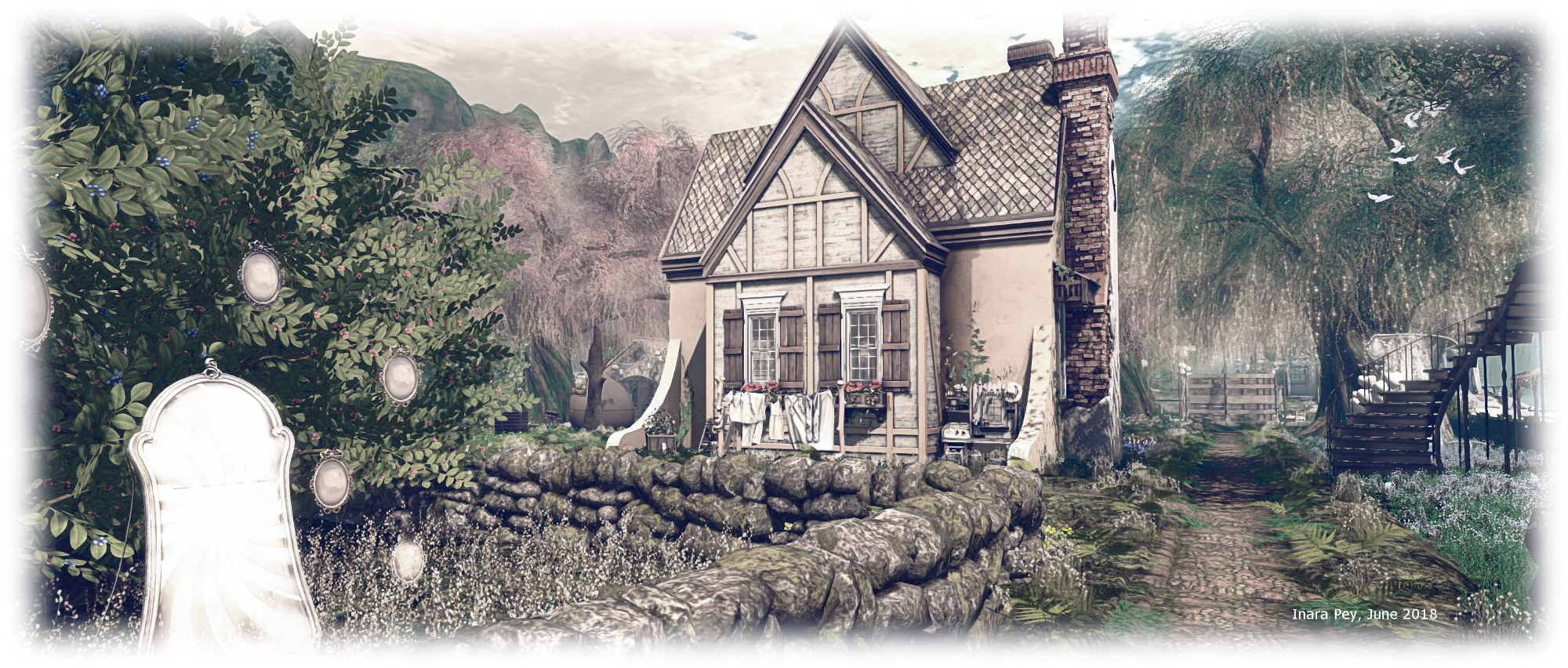
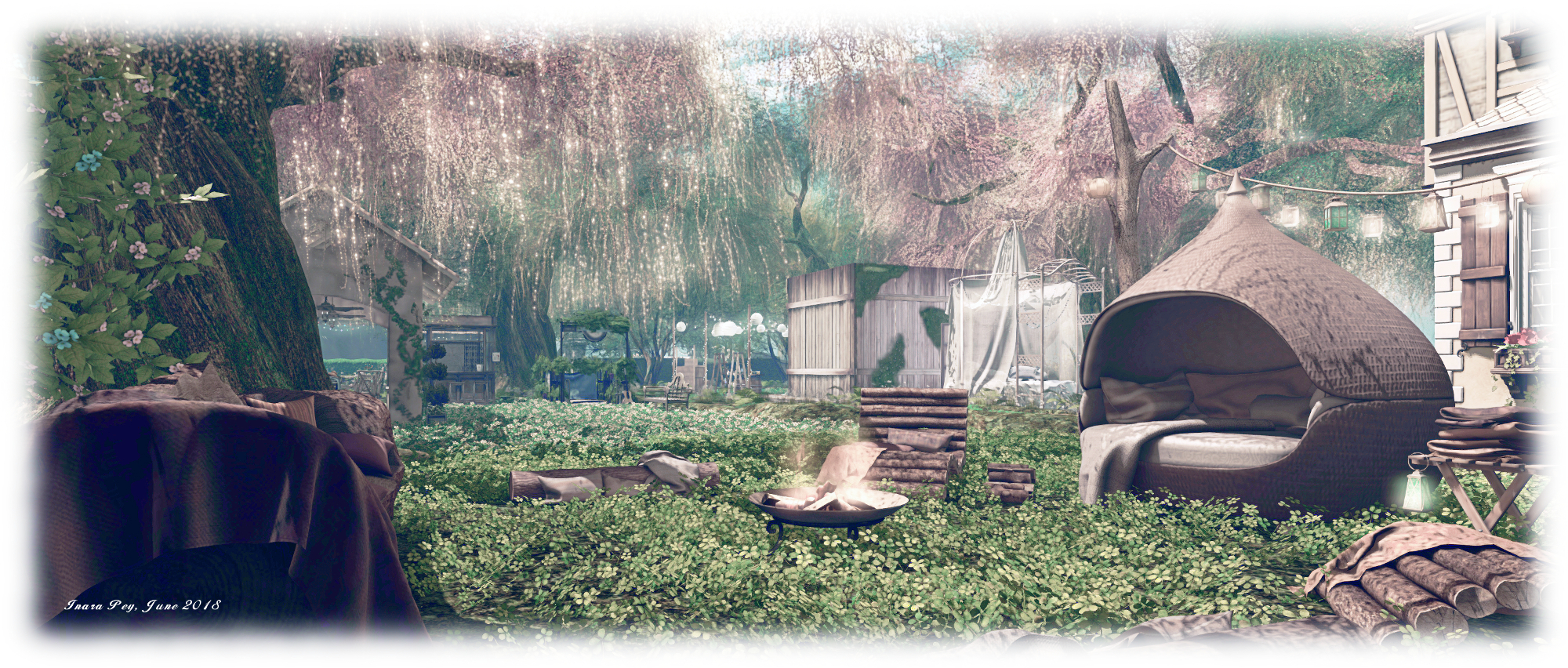
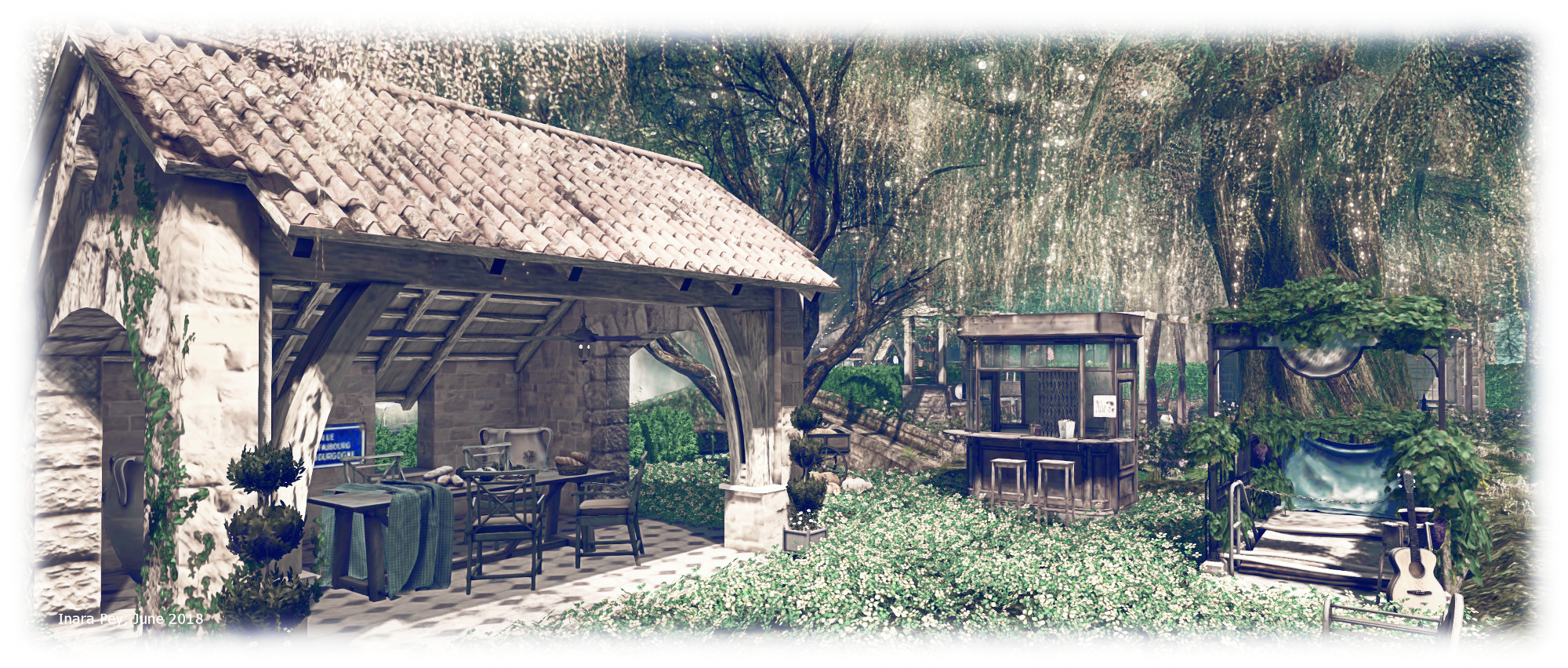
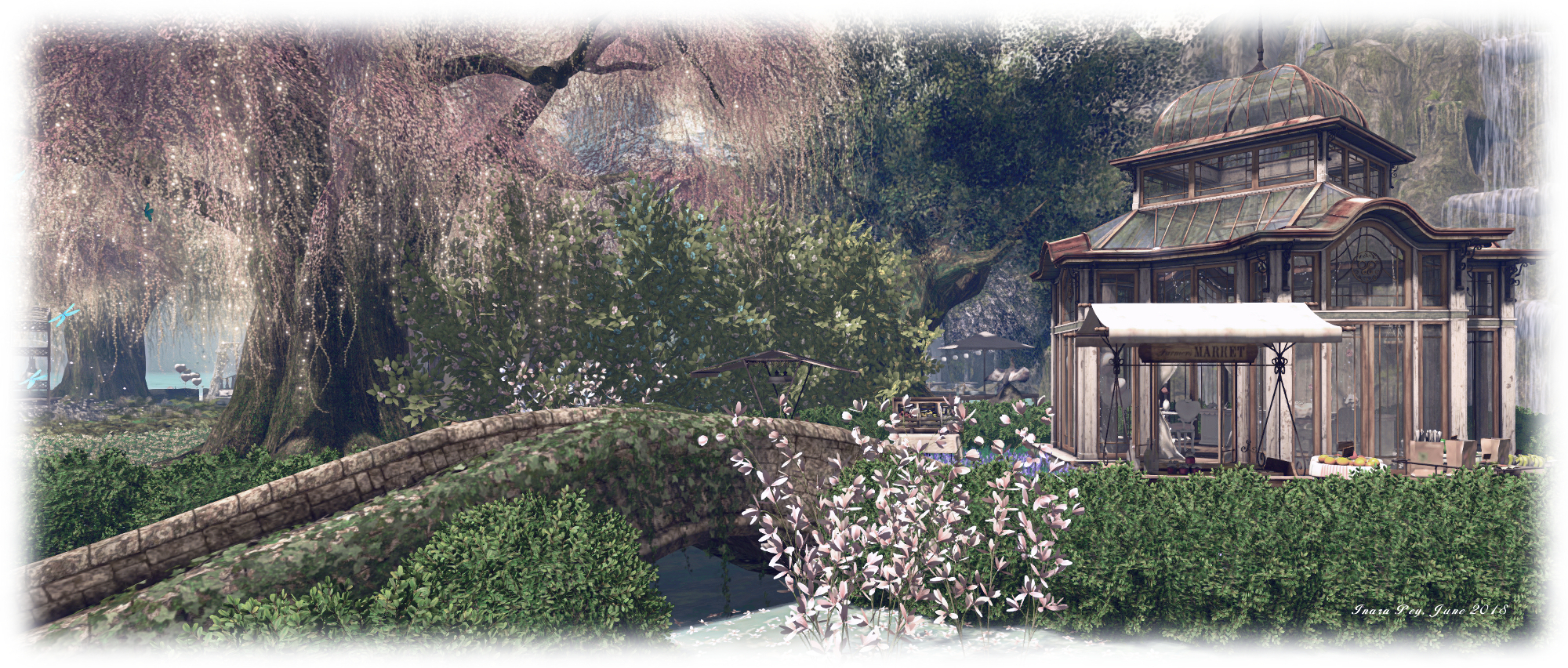
Eclipse Tiny Place; Inara Pey, June 2018, on FlickrEclipse Tiny Place – click any image for full size

Update: Eclipse Tiny Place has closed. SLurls have therefore been removed from this article.

It’s the kind of place brought to mind when visiting Eclipse Tiny Place, a superbly designed 1/6 of a full region offered for public consumption by Lagoa. Despite its size – under 11,000 square metres, this is a parcel that offers almost something of everything for people to enjoy.

Occupying the north-east corner of the region on which it sits, the parcel is open to the sea on two sides, looking over a broad ribbon of sand arcing around the parcel and onto open waters. The remaining two sides of the land are backed by high cliffs which help create the feeling that this is a location isolated from the rest of the world. Water tumbles from the corner meeting-point of these two rocky walls, cascading in steps into a pool of clear blue water, a broad swathe of which runs north to slip under a rocky arc to the sea.

Eclipse Tiny Place; Inara Pey, June 2018, on FlickrEclipse Tiny Place

Two islands sit within this channel, each ringed by hedgerows. One is circular and home to an orangery, the other an oval on which sits a tree house – in the most literal sense of the word, the front door being in the trunk of the tree itself. Bridges link these islands one to another and with the rest of the parcel, providing a means for explorers to reach all parts of the parcel that may interest them.

Set out across the rest of the land are as series of garden areas laid out around a house. Paths segregate the various parts of the gardens and offer routes to a pavilion sitting at the southern end of the parcel, separated from the beach by tiered walls of floors.

Eclipse Tiny Place; Inara Pey, June 2018, on FlickrEclipse Tiny Place

To try to describe this parcel in all its beauty would be an understatement so much has been packed into it – and not just haphazardly; the design and placement of gardens, trees, seating areas, event spaces, buildings, has all been carried out almost flawlessly, making Eclipse Tiny Place the kind of place where visitors genuinely want to spend time. To help with this, throughout the parcel there are many places to sit and enjoy the setting.

Art is also very much in evidence here, from the water-like garden of the tree house to the ruler-straight hedgerows separating the gardens from the sands of the northern beach or the dragons guarding the pavilion mentioned earlier.

Eclipse Tiny Place; Inara Pey, June 2018, on FlickrEclipse Tiny Place

There are one or two little incongruities to be found: there is no direct path to the beach; instead, visitors have to scramble through hedgerows or climb over walls to reach the sand and the places people might as sit scattered along it. The local waterfowl are also perhaps on the large size 🙂 . A little more depth might also be added through the addition of an ambient sound scape. However, these are minor points.

Even without ambient sounds, there is a depth to Eclipse Tiny Place that really is astonishing. It is another tour de force of what can be done within a relatively small space (although admittedly, the full region on which Eclipse Tiny Place sits does make use of the full 30K LI available to private regions). As such, a visit and spending time exploring is highly recommended.

Eclipse Tiny Place; Inara Pey, June 2018, on FlickrEclipse Tiny Place

When visiting, don’t miss the little island floating overhead and the hot air balloon sitting offshore. And should you appreciate your time spent within the parcel, do please consider making a donation towards its upkeep and availability through one of the donation points somewhat cleverly described as food within the gardens and buildings.  And, for those who take photos of their visit, there is also the opportunity to share them via the Eclipse Tiny Place Flickr group.

SLurl Details

  • Eclipse Tiny Place (Lombard Park, rated: Moderate)

Alien truths, revenge, adventure and darkness

Seanchai Library

It’s time to highlight another week of storytelling in Voice by the staff and volunteers at the Seanchai Library. As always, all times SLT, and events are held at the Library’s home at Holly Kai Park, unless otherwise indicated.

Monday, June 11th 19:00: Protector

Phssthpok the Pak had been travelling for most of his thirty-two thousand years. His mission: save, develop, and protect the group of Pak breeders sent out into space some two and a half million years previously.

Brennan was a Belter, the product of a fiercely independent, somewhat anarchic society living in, on, and around an outer asteroid belt. The Belters were rebels, one and all, and Brennan was a smuggler. The Belt worlds had been tracking the Pak ship for days — Brennan figured to meet that ship first…

He was never seen again. At least not by those alive at the time.

Join Gyro Muggins as he reads Larry Niven’s engaging tale of humanity’s past – and future..

Tuesday, June 12th: The Cold Dish (Walt Longmire #1)

Two years ago, four boys were put on trial for raping a Cheyenne girl. Now one of them – Cody Pritchard – is dead, shot and dumped in with a local farmer’s sheep.

For Walt Longmire, it means his hope of finishing out his term as sheriff of Wyoming’s Absaroka county in peace and quiet is at an end; instead, he finds himself in the middle of a murder investigation.

Plenty of people had cause for wanting Cody Prichard dead but who had the guts to do the deed? And are his three compadres next on the hit list? For Longmire, it means facing one of the more volatile and challenging cases in his twenty-four years as sheriff. One in which he means to ensure that revenge, so often regarded as a dish best served cold, is never served at all.

Join Kayden OConnell as he reads the first volume of Craig Johnson’s tales of Sheriff Walt Longmire.

Wednesday, June 13th 19:00: Hello, Universe

In one day, four lives weave together in unexpected ways.

Virgil Salinas is shy and kind-hearted and feels out-of-place in his loud and boisterous family; Valencia Somerset, who is deaf, is smart, brave, and secretly lonely, and loves everything about nature; Kaori Tanaka is a self-proclaimed psychic, whose little sister Gen is always following her around; and Chet Bullens wishes the weird kids would just act normal so that he can concentrate on basketball.

None of them are friends; at least not until Chet pulls a prank that traps Virgil and his pet guinea pig at the bottom of a well.

This leads Kaori, Gen, and Valencia on an epic quest to find the missing Virgil. Through luck, smarts, bravery, and a little help from the universe, a rescue is performed, a bully is put in his place, and friendship blooms.

Join Caledonia Skytower as she reads Erin Entrada Kelly’s 2018 Newbery Medal Award-Winning tale.

Thursday, June 14th:

The Haunter of the Dark

The Shining Trapezohedron was discovered in Egyptian ruins, in a box of alien construction, by Professor Enoch Bowen before he returned to Providence, Rhode Island in 1844.

Members of the Church of Starry Wisdom in Providence would awaken the Haunter of the Dark, an avatar of Nyarlathotep, by gazing into the glowing crystal.

Summoned from the black gulfs of chaos, this being could show other worlds, other galaxies, and the secrets of arcane and paradoxical knowledge; but he demanded monstrous sacrifices, hinted at by disfigured skeletons that were later found in the church. The Haunter of the Dark was banished by light and could not cross a lighted area.

Join Shandon Loring as he delves into a classic tale by H.P. Lovecraft. Also presented in Kitely (hop://grid.kitely.com:8002/Seanchai/144/129/29).

19:00 Seanchai Late Night

Contemporary Sci-Fi with Finn Zeddmore.


Please check with the Seanchai Library’s blog for updates and for additions or changes to the week’s schedule.

The current charity is Feed a Smile.

Space Sunday: of molecules, meteorites and missions

In 1996, amidst a huge fanfare which included a statement by then US President Bill Clinton, a team of researchers announced they had discovered evidence of past Martian microbial life within a meteorite called ALH84001, discovered in the Allen Hills of Antarctica in 1984.

The claim lead to a high degree controversy, with many scientists disputing the findings of the original team. While that discovery has never been conclusively disproved, it has never been verified, either. However, it has – alongside the controversial results from two of the Viking Lander experiments in the 1970s – encouraged teams researching the potential for microbial life on Mars to be cautious in their work.

So it was with a sense of excitement that on Thursday, June 7th, 2018, NASA announced that the Mars Science Laboratory (MSL) Curiosity rover has once again found potential evidence of both organic molecules and methane on Mars. The news came via two papers Organic matter preserved in 3-billion-year-old mudstones at Gale crater, Mars and Background levels of methane in Mars’ atmosphere show strong seasonal variations.

In the first paper, the authors indicate how Curiosity’s Sample Analysis at Mars (SAM) suite detected traces of methane in drill samples it took from Martian rocks in 2016. Once these rocks were heated, they released an array of organics and volatiles similar to how organic-rich sedimentary rocks do on Earth – where similar deposits are indications of fossilised organic life.

What is particularly exciting is the first paper indicates that the material discovered on Mars is similar to terrestrial kerogen, a solid organic matter found in sedimentary rocks. Comprising an estimated 1016 tons of carbon, Kerogen on Earth exceeds the organic content of all living matter on Earth by a factor of 10,000.

NASA’s Curiosity rover has discovered ancient organic molecules on Mars, embedded within sedimentary rocks that are billions of years old. Credit: NASA Goddard Space Flight Centre

Essentially, want happens on Earth is that organic material gets laid down within the sedimentary layers, then over the aeons, fluid flowing thought the rock initiates chemical reactions to break down the organic deposits until only the insoluble  kerogen is left. It has already been established that Gale Crater was once the home of several liquid water lakes, and also that perchlorate salt – particularly good at breaking down organics – is present on Mars. Hence why the discovery of the kerogen-like material on Mars is a cause for excitement – it could be a similar process to that seen on Earth is present.

While the team responsible for the styudy point out the material SAM has found is similar to an insoluble material discovered in tiny meteorites known to fall on Mars, that it might have formed naturally on the planet is somewhat strengthened by the fact Curiosity has previously confirmed Gale Crater contains the chemical building blocks and energy sources that are necessary for life. However, the legacy of ALH84001 urge caution when dealing with these findings from the rover, as one of the authors of the first paper explained.

Curiosity has not determined the source of the organic molecules. Whether it holds a record of ancient life, was food for life, or has existed in the absence of life, organic matter in materials holds chemical clues to planetary conditions and processes… The Martian surface is exposed to radiation from space. Both radiation and harsh chemicals break down organic matter. Finding ancient organic molecules in the top five centimetres of rock that was deposited when Mars may have been habitable, bodes well for us to learn the story of organic molecules on Mars with future missions that will drill deeper.

Jennifer Eigenbrode, co-author, Organic matter preserved in 3-billion-year-old mudstones at Gale crater, Mars

In the second paper, scientists describe the discovery of seasonal variations in methane in the Martian atmosphere over the course of nearly three Mars years, which is almost six Earth years. This variation was also detected by Curiosity’s SAM instrument suite over the 3-year period.

This image illustrates possible ways methane might get into Mars’ atmosphere and also be removed from it. Credit: NASA Goddard Space Flight Centre / University of Michigan

Water-rock chemistry might have generated the methane, but scientists cannot rule out the possibility of biological origins. Methane previously had been detected in Mars’ atmosphere in large, unpredictable plumes. This new result shows that low levels of methane within Gale Crater repeatedly peak in warm, summer months and drop in the winter every year.

This is the first time we’ve seen something repeatable in the methane story, so it offers us a handle in understanding it. This is all possible because of Curiosity’s longevity. The long duration has allowed us to see the patterns in this seasonal ‘breathing.’

Chris Webster, co-author, Background levels of methane in Mars’ atmosphere show strong seasonal variations

In 2013, SAM detected organic molecules in rocks at the deepest point in the crater. These more recently findings, gathered further up the slopes of “Mount Sharp” add to the inventory of molecules detected in the ancient lake sediments. Thus, finding methane in the atmosphere and ancient carbon preserved on the surface gives scientists confidence that NASA’s Mars 2020 rover and ESA’s ExoMars rover will find even more organics, both on the surface and in the shallow subsurface.

NASA Successfully Transfers Sample

Following my last two Space Sunday updates concerning attempts to resume the collection of rock samples using Curiosity’s drilling mechanism, the US space agency has indicated a successful transfer of material gathered within the rover’s hollow drill bit into the rover’s on-board science suite (which includes the SAM instrument referred to above).

The new drilling capability is referred to as Feed Extended Drilling (FED), designed to bypass a formerly critical, but at risk of failure, piece of the rover’s drill system called the drill feed mechanism. This mechanism also used to form a part of the means by which samples used to be transferred from Curiosity’s arm-mounted turret to the on-board science suite. As it can no longer be used, engineers instead determined the sample could potentially be transferred to the science suite by positioning the drill bit directly over the sample intake ports and then running the drill in reverse, causing the gathered sample to (hopefully) trickle backwards and into one of the hoppers.

Referred to as Feed Extended Sample Transfer, the approach was tested on May 31st, 2018, and successfully saw the transfer of part of a sample obtained on May 19th into the hopper serving the rover’s Chemistry and Mineralogy (CheMin) unit.

Curiosity’s drill bit (upper right) positioned over one of the sample inlets on the rover’s deck leading to the on-board science suite. This image was captured on May 31st, 2018 (Sol 2068) by the rover’s Mast Camera (Mastcam). Credit: NASA / MSSS

The approach had already been successfully tested on Earth, but there were concerns the thin, dry atmosphere of Mars might not produce the same results. There’s also a matter of balance. Previously, any sample gathered by the drill would pass through the rover’s CHIMRA sieving system, which helps ensure the right amount is transferred to the on-board instruments. Without this, transfers become a matter of judgement, as engineer John Moorokian explained following the transfer:

On Mars we have to try to estimate visually whether this is working, just by looking at images of how much powder falls out. We’re talking about as little as half a baby aspirin worth of sample.

John Moorokian, lead developer of the FEST delivery method

The problem here is, were too little materials transferred, and CheMin and SAM would not be able to provide accurate analyses, but transfer too much of the unsorted material, and it could either clog instruments or remaining unused, potentially contaminating measurement of future samples. So far, it appears the first attempt has succeeded, although it will still be a while before the outcome of any analysis is known.
Continue reading “Space Sunday: of molecules, meteorites and missions”

Cica’s Sunny Day in Second Life

Cica Ghost: Sunny Day

“It is the artist’s business to create sunshine when the sun fails.” So wrote Romain Rolland in La Foire sur la place (1908), the fifth book in his 10-volume novel Jean-Christophe (written between 1904 and 1912). It is the story of the life of a great German musician forced by circumstance to live in exile and it’s also the quote Cica Ghost has selected to place with her installation Sunny Day, which opened on June 9th, 2018.

“I liked the quote,” Cica says of Rolland’s words – and indeed they suit the installation admirably. This is a place that is bound to bring the sunshine of a smile to visitor’s lips and have them warmed by its whimsy and delight. But the quote also – by chance it would seem – might also reflect the broader of the theme of Jean-Christophe.

Cica Ghost: Sunny Day

From the landing point, visitors are invited along a series of offshore blocks and over a wooden walkway – beware of the great fish that seem ready to gobble the unwary should they stand on the walkway too long. On the landward side, a gateway bordered either side by flowers bids visitors to enter a little town of a most unusual kind.

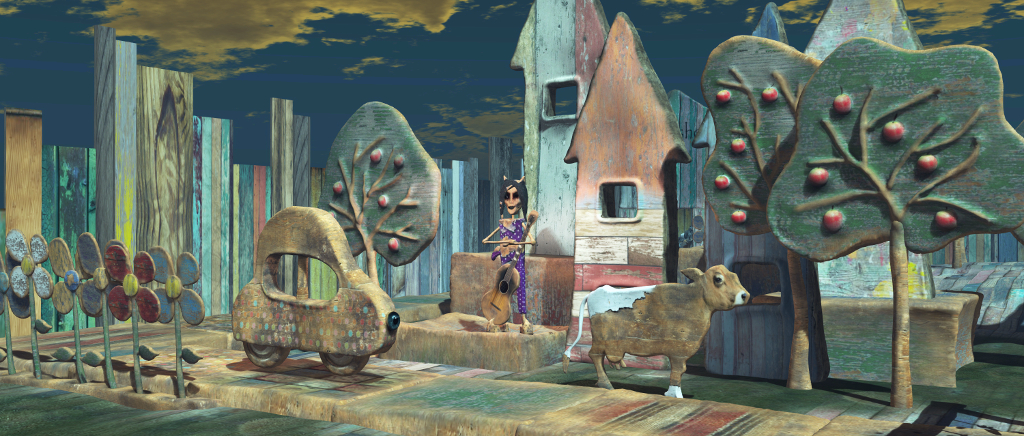
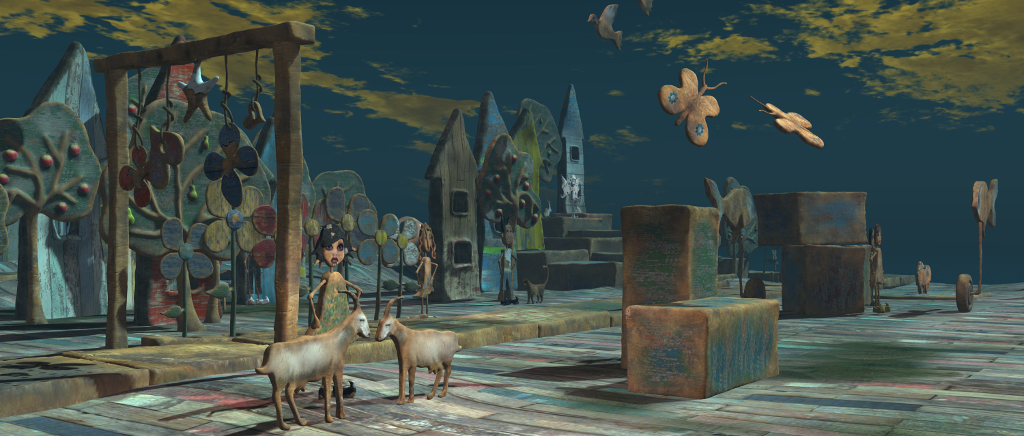
This is a place where finger-like houses rise alongside lollypop trees, and the locals add their own splashes of colour as they stand outside homes or carry out duties such as tending goats, picking flowers or simply having fun. A pancake car, its shape reminiscent of a Volkswagen Beetle rolls around the single road surrounding the town while fish atop unicycle like poles rolls back and forth on large tyres. It is, in a word, a fanciful place.

Cica Ghost: Sunny Day

The whimsy continues up in the sky, where two suns pulsate with happy smiles on their faces, while towards the back of the town a giraffe awaits those who would ride upon its back, and a sea monster keeps an eye on all who come and go from the waters to the south-east.

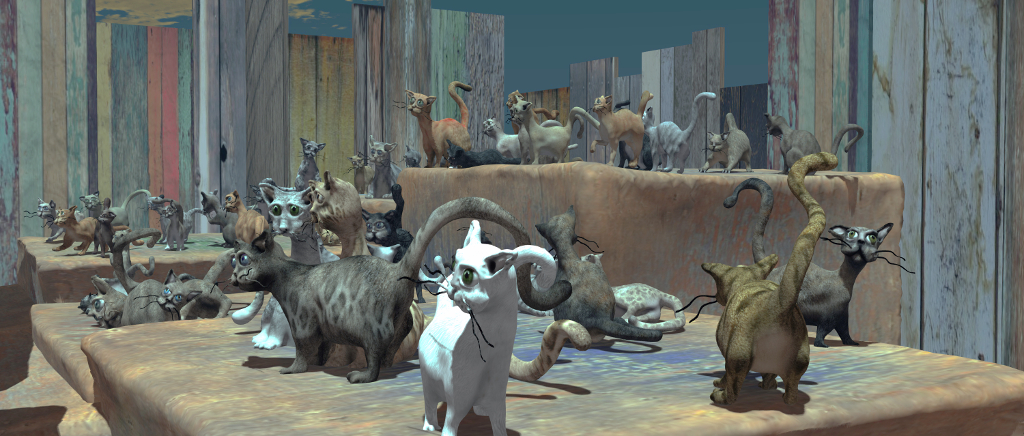
While Cica might not always be present in person, what might be her double – albeit without her usual black dress – can be found outside the Cat Shop to the north-east. With a basset hound on a leash beside her, she invites people into the open-sided store, where Cica’s delightful cats (introduced with 50 Cats – see here for more) can be found and purchased.

Cica Ghost: Sunny Day

As noted, this is a setting that reflects the literal meaning of the Rolland quote: it is nigh-on impossible to pass through Sunny Day without feeling warmed by its light and sense of fun. As with all of Cica’s builds, be sure to mouse around, as there are several ways in which you can become a part of the setting. But how might it also reflect themes from Jean-Christophe, however accidentally?

Well, simply this: look closely at the characters scattered around the setting. There is a character with pointed ears, another is a neko. others are quite “ordinary” looking, while a white angel is easy to spot. All of them might be thought of as reflecting we, the denizens of Second Life.  And Second Life is a country  – of sorts – in which circumstance encourages us to spend time, just as circumstance (albeit it of a different flavour) forced Rolland’s protagonist, Jean-Christophe Krafft, to live his life in countries other than his own.

Cica Ghost: Sunny Day

A tenuous reflection? Perhaps – and I leave it to you to determine whether you find it valid (I’m of course overlooking Rolland’s re-examination of Beethoven’s life through Jean-Christophe) – but if you do nothing else, do make sure you visit Sunny Day and enjoy the its warmth and light.

SLurl Details