2018 SL UG updates #1/2: Content Creation User Group

A rally of (Animesh) raptors on Aditi

The following notes are primarily taken from the Content Creation User Group meeting, held on  Thursday, January 4th, 2018 at 13:00 SLT. For the purposes of Animesh testing, the meetings have relocated to the Animesh4 region on Aditi, the beta grid – look for the seating area towards the middle of the region. The meeting is chaired by Vir Linden, and agenda notes, etc, are usually available on the Content Creation User Group wiki page.

Medhue Simoni live streamed the meeting, and his video is embedded at the end of this article – thanks to Medhue, as always, for the recording. Where the video is referenced, time stamps to the specific point of the video are provided in the text – click on them to open the video in a separate browser tab at that point.

Animesh (Animated Mesh)

“I like the name ‘animated objects’ because I think it’s unambiguous, but it takes a long time to type!” – Vir Linden joking about the name “Animesh”.

Project Summary

The goal of this project is to provide a means of animating rigged mesh objects using the avatar skeleton, in whole or in part, to provide things like independently moveable pets / creatures, and animated scenery features via scripted animation. It involves both viewer and server-side changes.

In short, an Animesh object:

  • Can be any object (generally rigged / skinned mesh) which and contains the necessary animations and controlling scripts in its own inventory  (Contents tab of the Build floater) required for it to animate itself.
  • Can be a single mesh object or a linkset of objects (link them first, then set them to Animated Mesh via the Build floater > Features).
  • Has been flagged as and Animesh object in the project viewer, and so has an avatar skeleton associated with it.
  • Can use many existing animations.

However Animated objects will not (initially):

  • Have an avatar shape associated with them
  • Make use of an avatar-like inventory (although individual parts can contain their own inventory such as animations and scripts)
  • Make use of the server-side locomotion graph for walking, etc., and so will not use an AO
  • Use the avatar baking service
  • Will not support its own attachments in the initial release.

These are considered options for follow-on work, possibly starting with the notion of a body shape (to help with more fully-formed NPCs).

Resources

General Project Status and “Must Dos” List

[33:24-34:10] There are around 14 “must do” items remaining on the list of work to be completed for Animesh before it can really move towards release. Some of these are fairly major – such as performance profiling (tri, count, LI, etc., limits evaluation, and so forth). There are also a number of bugs to be fixed or determined to be trivial enough so as not to prevent Animesh from moving to release / require work outside of Animesh.

Bug Stomping

[1:12-1:54] Animation Playback issues: as highlighted at the December 14th meeting, animations already running on an Animesh object don’t necessarily play for those entering the region where they are running, or update correctly when camming to them for the first time. It now appears this is a race condition issue, with the viewer receiving information on the animation before it has rendered the object being animated, resulting in the animation being ignored. Vir is confident that now the cause has been found, the issue can be fixed.

Shadow Rendering Issue

Animesh could exacerbate an issue with rendering shadows for faces of rigged / static mesh using transparencies

[3:33-13:52] There has been a long-standing issue with rigged / static meshes using transparencies (blended or masked), which causes shadows cast by the latter to render incorrectly (shadow rendering conforms only to the geometry silhouette). Animesh can exacerbate this issue on some objects (note the image of the tree on the right, and how the shadows of the leaves (faces using transparencies) are render.

As this appears to be a rendering pipe issue, rather than a specific problem with Animesh, it may require investigation and resolution by those handling viewer rendering pipe issues, If so, this could take time to complete, and so is currently being viewed as outside of the current Animesh project, and not a blocker to any initial deployment of this phase of the Animesh work.

“Dropping” Animesh / Mesh

[43:12-47:25] As previously noted in these updates, worn mesh cannot be simply “dropped” in-world. It has to be detached to inventory and then rezzed in-world from there. This makes the ability for people to pick up Animesh pets, carry them, then put them down in-world awkward.

The Lab’s view is that as dropping mesh directly in-world was never considered, the code-path for achieving this is not clear, touching as it would on a variety of elements: land impact calculations, physics updates, etc; there’s also a risk of forcing users to re-log should a No Copy pet be dropped and fail to rez in-world, in order for it to correctly register in their inventory again.

However, pets are seen a major use for Animesh, so not having a means by which they can easily be put back down in-world after being carried is seen as a potential limitation in the adoption of Animesh by pet creators; as it is, many have kept to using (render-intensive) sculpties with their pets, simply so they can retain the ability to pick them up and then put them back down in-world, rather than having to force users to detach and re-rez the pet after holding it.

The issue is again being that back to the Lab for further discussion.

In Brief

  • [14:49-17:12] Global scaling and resizing: not something that is going to be implemented for Animesh with this initial work, but may be added later. It is possible to get the effect of global scaling on a rigged object by scaling in joint in the hierarchy individually, but this may not give consistent, expected behaviour.
  • [17:32-20:29] Setting position and rotation of rigged meshes: slight confused discussion on whether rigged mesh attachments can be re-positioned / rotated. Generally, rigged meshes cannot be re-positioned / rotated as their the vertices are recorded to set distances from the avatar bone. However, Animesh attachments (which have their own skeleton) should be capable of position / rotation changes releative to their attachment points.
  • [20:44-24:40] Slider support for Animesh: avatar shape sliders are not supported in the initial Animesh work, as these require a shape to be associated with an object which, as per the summary notes for the project (above), is considered a possible Animesh follow-on project. For this phase of the work, shape changes can only be defined by setting joint positions / using animations. The reason why shapes, sliders, etc., are seen as a potential follow-on project is that they will require an extensive overhaul of the baking service (which manages appearance information), so that it recognises Animesh objects and can handle them.

Continue reading “2018 SL UG updates #1/2: Content Creation User Group”
Winter at La Vie in Second Life

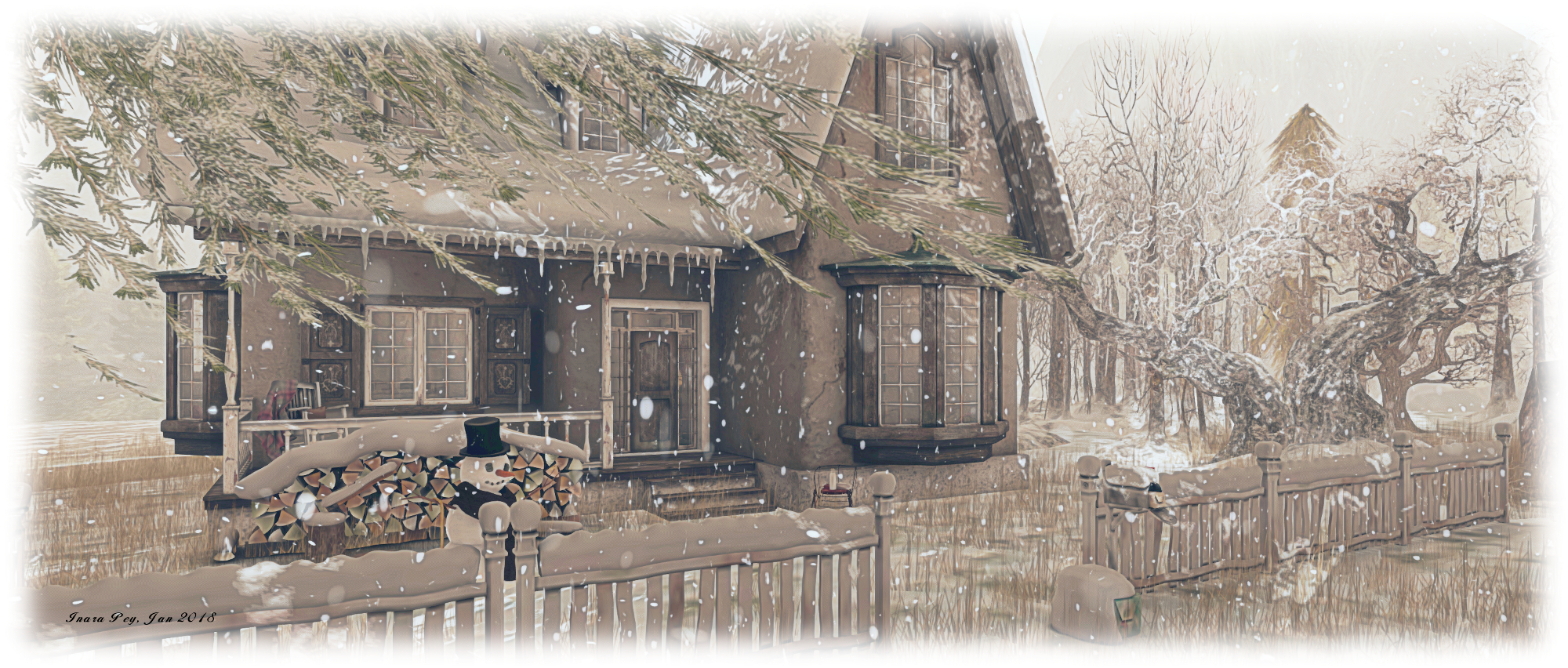
La Vie; Inara Pey, January 2018, on FlickrLa Vie – click on any image for full size

Reader and fellow grid traveller Diomita Maurer (her blog is here) dropped me a line about the winter look at La Vie, the homestead by Krys Vita and Arol Lightfoot we’ve visited twice before (see here and here for more), suggesting Caitlyn and I  pay it a further visit before the snow melts. So, we headed over for a look.

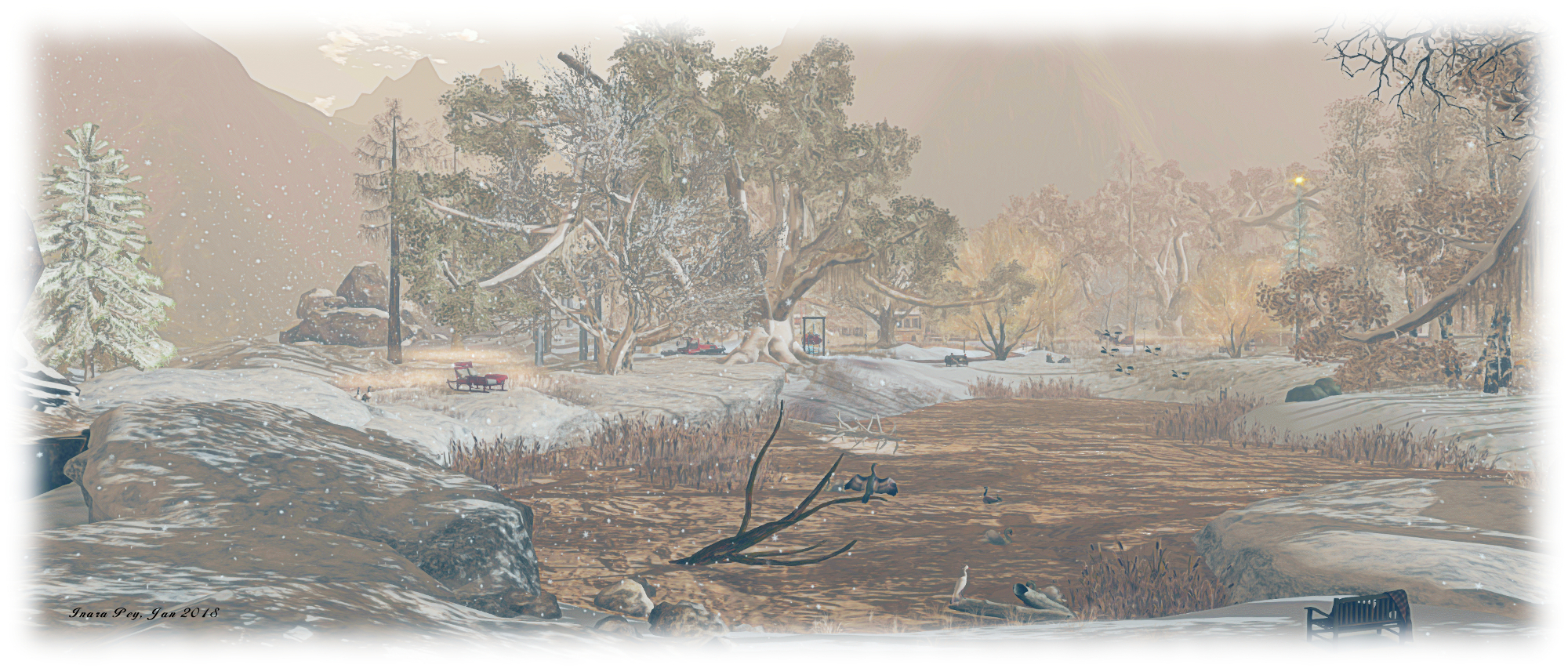
As with the autumn build, which we visited in October, the winter design is built around a central body of water. However, almost everything else within the region has been completely redesigned and covered in a soft blanket of snow – with more falling from the sky – although it does retain the same use of muted colours and soft tones.

La Vie; Inara Pey, January 2018, on FlickrLa Vie

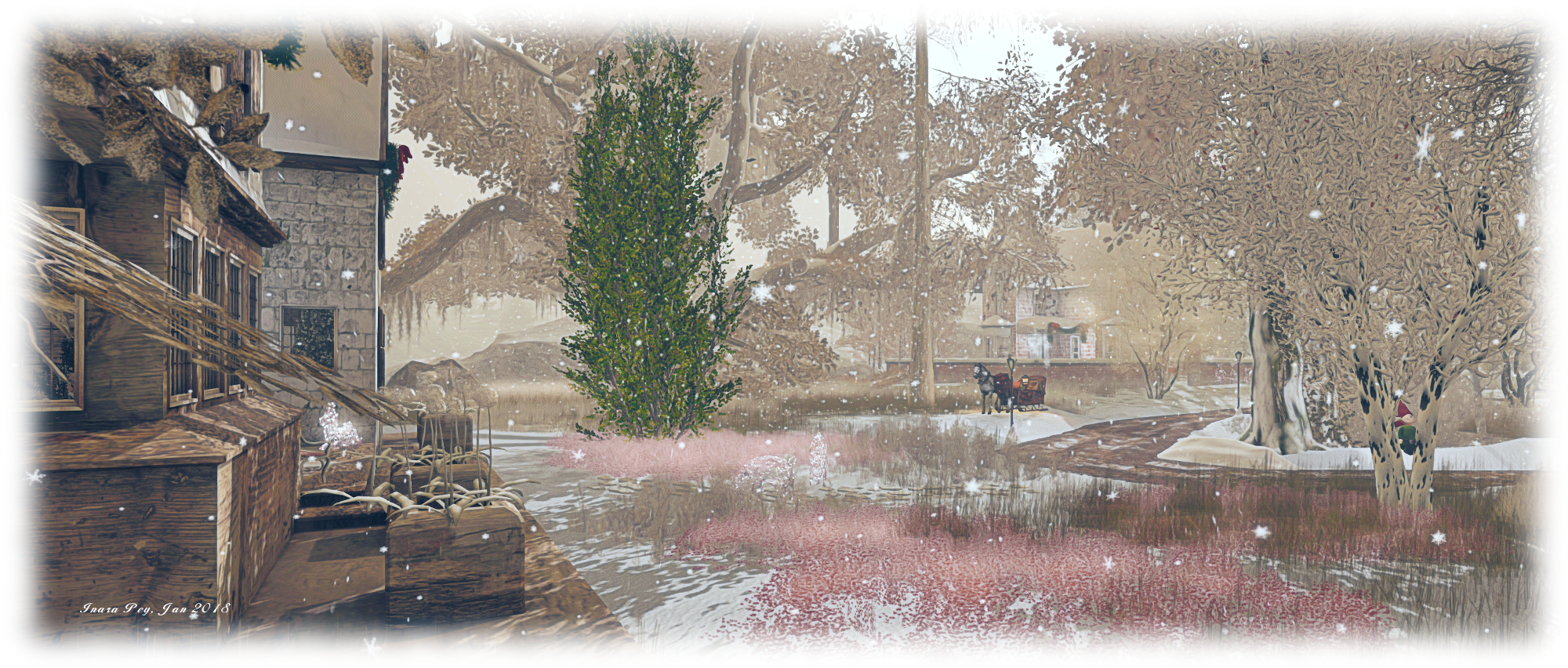
Visitors arrive on a track running along the bank of this water, the snow finding it hard to gain a purchase on the rutted earth. Set back from this track sits a large house, aged both inside and out, warmly furnished and decorated for Christmas. In the ground behind the house sits a raised deck with a small gazebo and swing, a hot tub sitting out under the falling snow, its heat countering the colder air. The deck offers a view out over the frigid waters surround the land, a view which likely makes the water in the hot tub all that more inviting as a means of avoiding the cold.

The reason the snow is having a hard time finding purchase on the track is revealed further around the central pond: a tracked snow plough is paused mid-way through its work of clearing the worst of the snow. It sits parked near the towers of an old ski lift, a rezzing point for sledges at the best of one of the towers. Nor is this the only rezzer in the region:  a closer look at the pond will reveal signboards offering skates for those who ice a little dancing on ice.

La Vie; Inara Pey, January 2018, on FlickrLa Vie

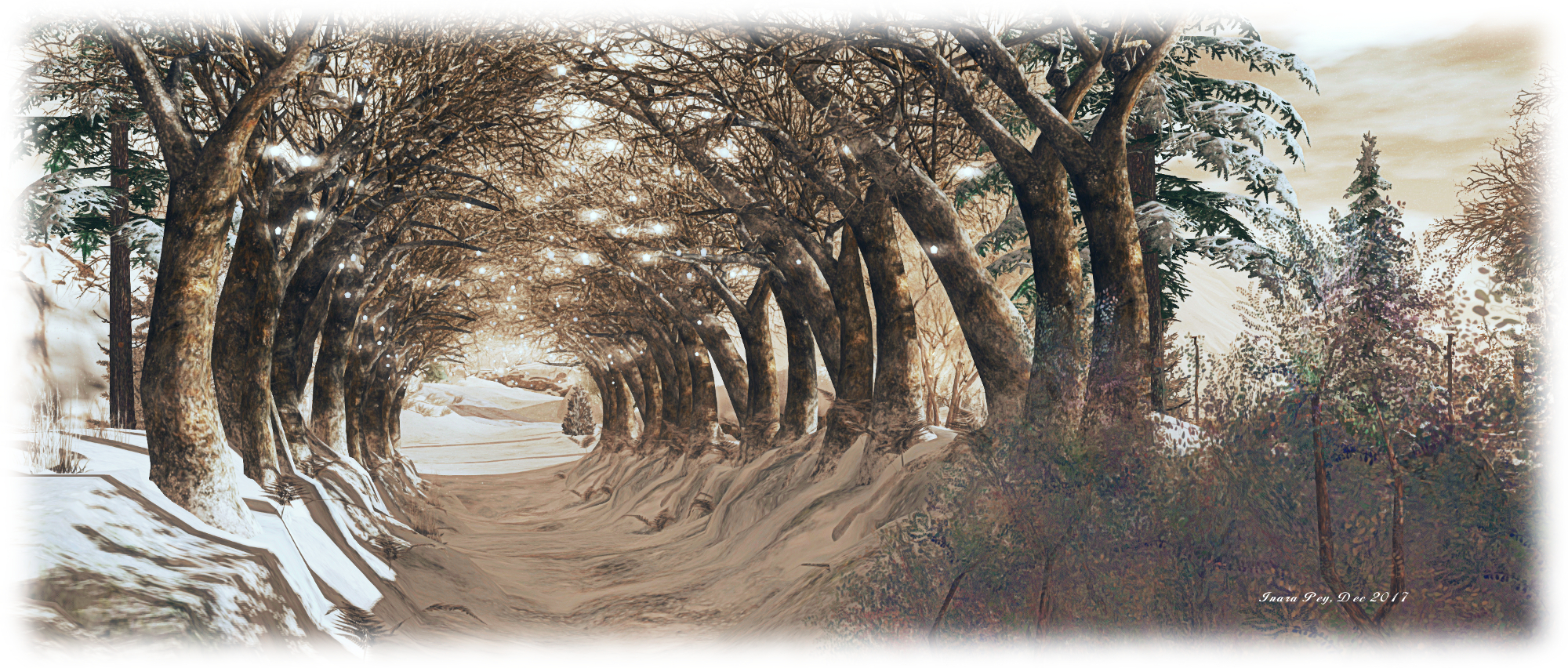
Follow the track in the opposite direction to the snow plough, and it will loop you around the pond to another house, a small shack selling fir trees beside it. The track ends just beyond this, but travellers can continue across the rough terrain, to where a fence marks the boundary of another house, sitting in the south-west corner of the land. A rugged, curve ridge rises westward of this house, climbing in steps to a flat table of rock topped by an old church – although there doesn’t appear to be a way to easily climb the rocks and reach it.

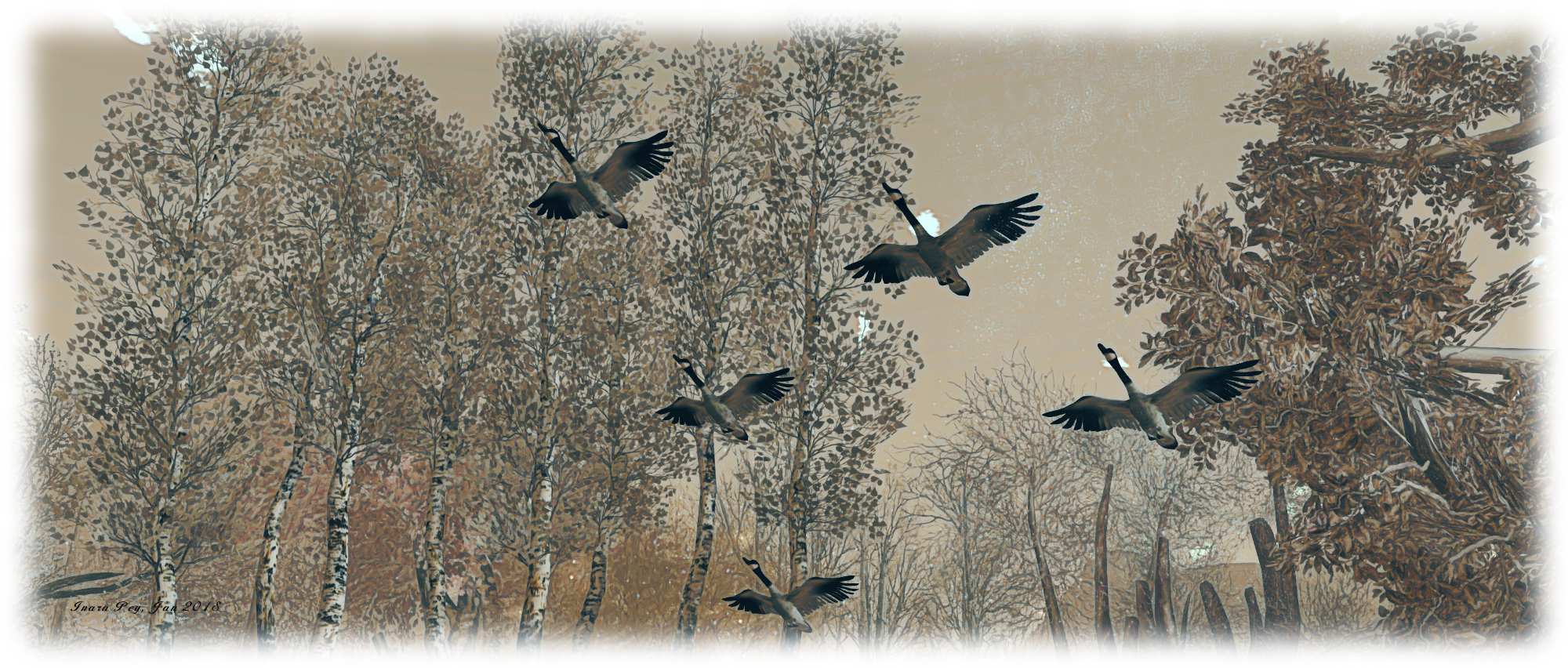
Across this landscape sit cars and tucks with fir trees strapped to roofs, in the flat beds or poking out of the sunroof. There are also numerous places to sit – from sleighs pulled by a horse or reindeer to park benches to swings – as well as in the houses. These  combine to make La Vie’s winter setting very pleasing to see and photograph and in which to spend time sitting, talking and just passing the time.

La Vie; Inara Pey, January 2018, on FlickrLa Vie

We once again enjoyed our time visiting, and will doubtless return to see further seasonal changes at La Vie.

SLurl Details

  • La Vie (La Vie, rated; Moderate)

Celebrating music, films and dance in Second Life

The Listening Room

Second Life offers plenty of opportunities to enjoy music, films, dancing and dance troupes in Second Life; however, R. Crap Mariner and Marx Dudek bring all of these together deep inside the bowels of Mount Edloe, on Crap’s home region of Edloe.

It is here, either reached via the road winding up the mountain from the lands beneath, or via direct teleport, visitors can find three interconnected venues: The Listening Room, The Screening Room and the Bad Luck Steak Gallery.

“The Listening Room (or TLR for short),” Marx explains, “Began as a private place for me to lure friends out of my IM box and into a common space where I could chat with them all at once – with the promise of music. I try to play a set every Wednesday night from 6-8pm SLT. Feel free to stop by!”

Bad Luck Streak Gallery

TLR is the largest space (by volume) in the mountain, offering something of an industrial chic environment of high brick walls, shipping containers, pipes and metal catwalks and stairs. The shipping containers form the backdrop to a DJ’s booth, with pallets and trolleys topped with mattresses, bolsters and cushions offering a cosy sitting area close by, alongside an impressive collection of vinyl records. Billy Bragg, Bowie, the Goons and more look down from posters on the walls, while HMV is celebrated via graffiti on one wall.

Opening off of The Listening Room, but connected to it over all four levels, the Bad Luck Streak Gallery is curated by Crap and is a showcase of dance troupes from across SL, (and also of Crap’s own photography). Each level of the gallery space has a number of framed slide shows on display – each representing the work of a specific dance troupe in Second Life. Click an image on any frame for a dialogue box of options, including paging back / forward through the slides and receiving a copy of any individual images you like. Push pins in front of each of the frames provide a landmark to the specific dance troupe’s theatre / home region, and may also offer a note card of information.

Bad Luck Streak Gallery

Crap notes of the gallery, “There are a lot more dance troupes out there in Second Life. My friend Sho Kyong got me into Dance Performance in Second Life. She kept inviting me to Guerilla Burlesque performances, and I finally made the time to see for myself. Now, I roam from performance to performance, trying to capture a moment of motion and emotion. I did my best to display as many groups as possible here, but I only have so much wall space and prims to work with. And I don’t know about every dance group in Second Life.” Personally, I think this is a superb resource for anyone wishing to discover, with almost 40 troupes represented, and Crap unsells the emotions caught in the images.

Connected to The Listening Room via the stars climbing the various catwalks (and a passage in the mountain) or via the ornate Maxivator elevator, The Screening Room sits atop both The Listening Room and the Bad Luck Streak Gallery (and so in the first venue to be reached as visitors enter the mountain’s tunnel after climb the road up from the rest of the region. With a foyer area offering an eclectic mix of movie posters and where refreshments might be had, a red carpet lead the way to the screening room proper.

The Screening Room

“A long time SL dream of mine realised,” Marx says of it. “I finally have a movie theatre! I will be showing films every Wednesday, and other nights as well. Foreign films, classic films, B-movies, documentaries, music movies, and more!” At the time of my visit, the film on offer was 2007’s Fears of the Dark, scheduled for a Thursday – although I confess, I’m not sure which Thursday.

Hidden within Edloe mountain, all three offer a great set of venues, although both The Listening Room and The Screening Room are best suited to smaller numbers. Those wishing to be kept appraised of events at both can join The Listening Room group via the group joining in TLR.

Slurl Details

Sansar Top 5: Linden Lab’s monthly video look at Sansar

Sansar: Anu by AnuAmun, one of the destinations in the January edition of Sansar’s Top 5

Sansar Top 5 is a new monthly live stream event put together by the Lab to help highlight experiences within Sansar the Lab feel are worthy of note. The first episode took place on December 21st, 2017 – which I completely missed – and the second is due to be streamed via the Lab’s Sansar YouTube channel from 5:00pm PST (SLT) on Thursday, January 4th.

There is already a weekly Sansar-focused live stream event, hosted by Strawberry Singh and Draxtor Despres, which can be seen on their respectively YouTube channels – here for Berry, and here for Drax, which include an archive of past travels as well). Currently, the Lab’s events don’t appear to be archived.

Sam Distaso, Manager, Strategic Business Development and a Sansar’s Top 5 co-host

Sansar Top 5 is hosted by Boden Linden, a member of Sansar’s Product Team, and Sam Linden, otherwise known as Sam Distaso, who joined the Lab in September 2017 from AltspaceVR, where he worked as the Virtual Reality Business Manager. His function at the Lab is that of Manager, Strategic Business Development for Sansar.

If I’m honest, I find Sam’s role somewhat more interesting than the live stream event, as it seems to point towards the Lab following through on their aim of directly engaging with businesses and organisations that have a use for VR, and who may wish to leverage Sansar, something I hope to follow-up on at some point in the near future. Sam is also no stranger to VR media events and shows, having co-hosted the VR Sports Show for AltspaceVR and is also known as TheGuyInVR with IG.

For the Thursday, January 4th Sansar Top 5, Boden and Sam will be visiting Alex Bader’s Skye Naturae Virtualis, which you can also read about here; AnuAmun’s Anu, which you can read about here; M2D Magic Night, by Mario2 Helstein; Pantone’s Psychedelic Phenomenon; and Honeybadger Inn, by David Hall.

Sansar users are invited to join Boden and Sam on their journey, with the initial meet-up taking place at Skye Naturae Virtualis. Those who cannot make it into Sansar, or are curious about seeing Sansar and don’t have an account, can follow the live stream via the Sansar YouTube channel, as noted above.

Skye Naturae Virtualis by Alex Bader, launch point for the January edition of Sansar’s Top 5


Looking at the Second Life 2017 year-end Grid Survey report

La virevolte; Inara Pey, December 2017, on FlickrLa virevolteblog post

On December 31st, 2017, Tyche Shepherd issued her year-end summary on the general size and state of the Second Life main grid.

In terms of a percentage loss, 2017 saw private region losses return to the 2014/2015 levels, with a 4% decrease through the year, somewhat lower than seen in 2016. In all, 677 private regions of all classes were removed from the grid in 2017, compared to 992 in 2016. At the same time, the number of Mainland  / Linden held regions increased very slightly from 6,744 to 6,806 (up by 62), leaving an overall net loss of 605 regions across the grid as a whole.

Taking the year-on-year figures from 2010 onwards (that being the last year the grid exhibited a growth in the number of regions), we get the following breakdown for private regions:

2010 2011 2012 2013
24,483 23,857 20,994 19,273
Increase
%age
Loss %age
Loss
%age
Loss
%age
810 3% 626 2.56% 2863 12% 1719 8.2%
2014
2015 2016 2017
18,600 17,775 16,783 16,106
Loss
%age
Loss
%age
Loss
%age
Loss
%age
673 3.5% 825 4.4% 992 5.6% 677 4.0%

Working on the basis of Tyche’s Full Private Region surveys I have to hand, a breakdown of approximate recent monthly revenues from private regions over the most recent four-year period might be given as:

  • November 2013: US $3,857,000 (+/- US $52,000)
  • March 2016: US $3,385,000 ( +/- US $43,000)
  • December 2016: US $3,162,000 (+/- US $39,000)
  • December 2017: US$ 2,970,000 (+/- US $36,500)

This represents around a 23% drop in monthly tier revenues over a four-year period. Of course, there are other revenue routes associated with Second Life – notably Premium memberships (which the Lab has in the past indicated account for around 20% of revenues). More directly, the end of 2016 / start of 2017 saw the Lab generate an estimated US $80,000, which doubtless help offset the decline in tier revenues to some extent. So, taking these factors into consideration, I would suggest that overall, the Lab might still be generating around US $48-49 million in revenue, or roughly the same as my estimate from my 2016 end-of-year article.

In 2016 there was some speculation that any opening of Sansar might have an impact on SL’s landmass. In my 2016 piece, I expressed the opinion this would not be the case, noting:

Some have raised concerns over how much of an impact Sansar will have on SL’s landmass in 2017. I actually don’t think it will. While I anticipate the decline in land will continue (but hopefully at a slower rate than 2016), I simply don’t think Sansar will have any immediate impact on Second Life one way or the other. Not in its first year, at least.

Unsurprisingly, this has proven to be the case: region losses for the second half of 2017, following the opening of Sansar’s public Creator Beta, remained pretty much on a weekly par with the months prior to the Creator Beat opening. I expect this will continue to be the case through much – if not all – of 2018.

Private estate numbers downs and ups in 2017 – click for full size

For me, the question remains as to how the Lab might respond to the slow tier revenue decline. As unpalatable though it may be to some, the answer still isn’t any tier cut, for the same reasons I gave back in 2013.  Simply put, from the Lab’s perspective  – and contrary to popular misconceptions on the matter – what users might consider  a “reasonable” tier reduction could actually be more immediately damaging to LL’s bottom line revenue generation, and bring with it no actual guarantee it would be overcome through any sustained demand for private land.

A better way – again from the Lab’s perspective – to relieve any pressure causing by reductions in revenue would be to reduce the costs involved in running ad maintaining Second Life. Doing so may not yield direct benefits to users in terms of tier reductions – but given the Lab’s sensitivity to the subject, they could over time provide the means for the Lab to reduce the tier paid by users. In the meantime, reducing costs allows the Lab to better leverage revenue into bankable profits. This is true, as well, for the work to move Second Life to the cloud – although hopefully, as the Lab has indicated, this might also eventually result in new land products / more flexible pricing. We just perhaps shouldn’t anticipate this happening in the near future.

Might we see Horizons expanded or a re-run of the buy-down offer in 2018? Possibly; although if either were to be tried, I suspect were there to be a move towards one or the other, it would likely be more to s further run of the buy-down offer, rather than an expansion of Horizons. That said, I actually anticipate that 2018 will see a further drop in region numbers, albeit one hopefully / most likely slower as then year unfolds than that of 2017. I doubt there will be any significant reversal unless something happens to cause a sustained growth in the overall numbers of users actively engaged in Second Life.

Related Links

Peter Gray to depart Linden Lab

Courtesy of Linden Lab

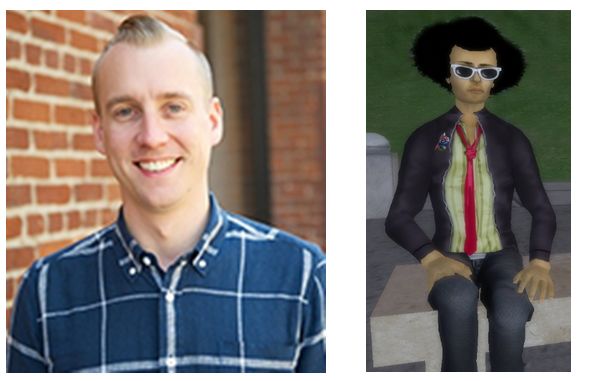
Peter Gray, Linden Lab’s Senior Director of Global Communications is departing the company after nine  years.

Peter broke the news to me via e-mail on Tuesday, January 2nd, 2018 prior to e-mailing a number of other people. He first joined Linden Lab in 2009 from Lewis PR, a technology-focused company, where he gained his first exposure to both Linden Lab and Second Life. This means his experience with the company extends back more than a decade.

It’s been a privilege to represent Linden Lab, our innovative products, and their incredible users as a Linden for the past nine years. I wish our user communities and my Linden colleagues all the best for the future, and I’ll be rooting for their continued success.

– Peter Gray, Senior Director of Communications, Linden Lab

Throughout his time at the Lab, Peter has been one of the public faces of the company, rising from PR Specialist to his current position of Senior Director of Global Communications, gathering a wealth of knowledge about the Lab’s products along the way. In-world, his Classic avatar has often been visible at events such as the SL Birthday celebrations, taking questions at Meet the Lindens events, VWBPE conferences and more. More recently, Peter’s role has extended beyond Second Life to encompass Blocksworld and Sansar, and he has never failed to deal with the myriad question I and a lot of other bloggers have forwarded to the Lab over the years, as and where he has been able to do so.

In departing Linden Lab, Peter is moving on to  a new role with the communications team at Facebook AI Research  – and I wish him well in the new role, although I can honestly say he will be sorely missed.

Peter Gray and his Linden alter-ego

On a personal level, I would like to take this opportunity to publicly thank Peter for all of his help over the years; I’ve deeply appreciated our working relationship, and can say with hand on heart that his support, assistance and insight is one of the major reasons I’ve kept on blogging about SL for so long; his support – and what of the Lab as a whole – has, I believe allowed me to present news and information through these pages objectively, and in the knowledge it is as accurate as I could possibly make it.

Throughout all our time in correspondence and conversation, Pete has never been anything less than open, supportive and friendly. I’d like to further thank him for the personal invite to pop into the Lab and pay him a visit if ever I managed to get back to California and make my way up to San Francisco; I’m genuinely sad I never got to take him up on the offer.

Many thanks again, Peter, and wishing you all the best for 2018 and the future!