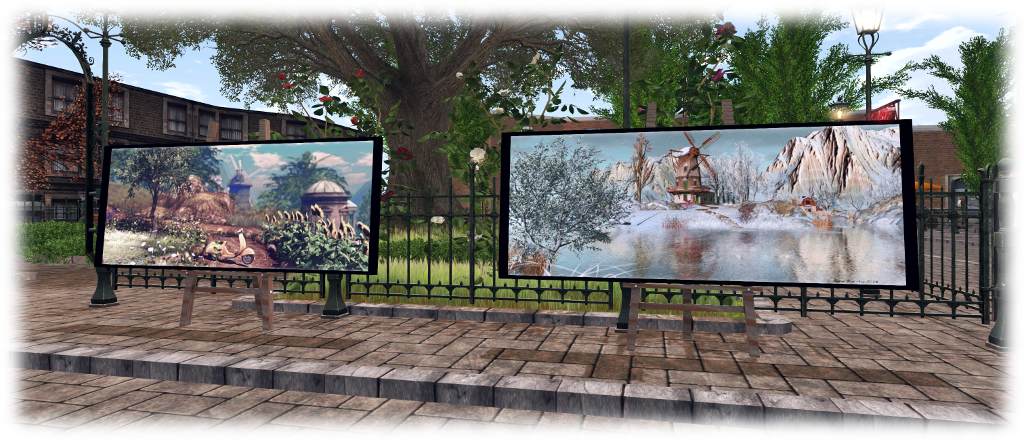
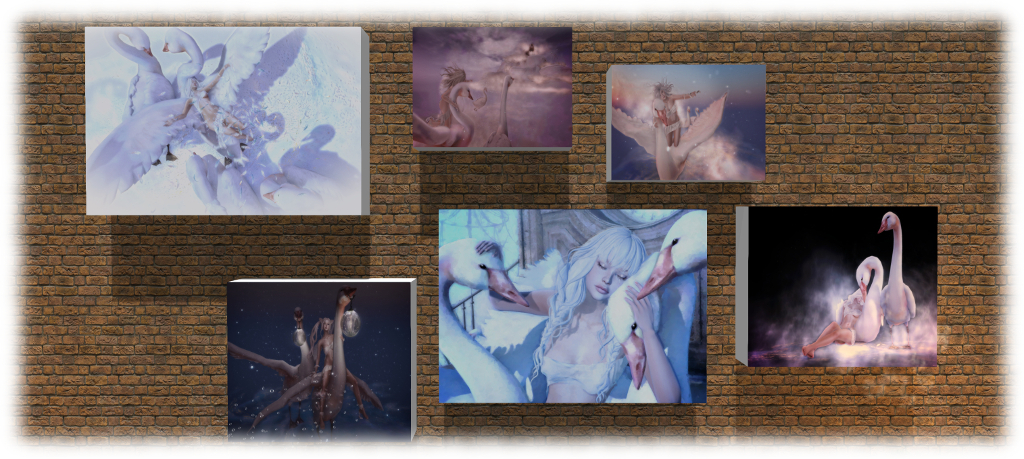
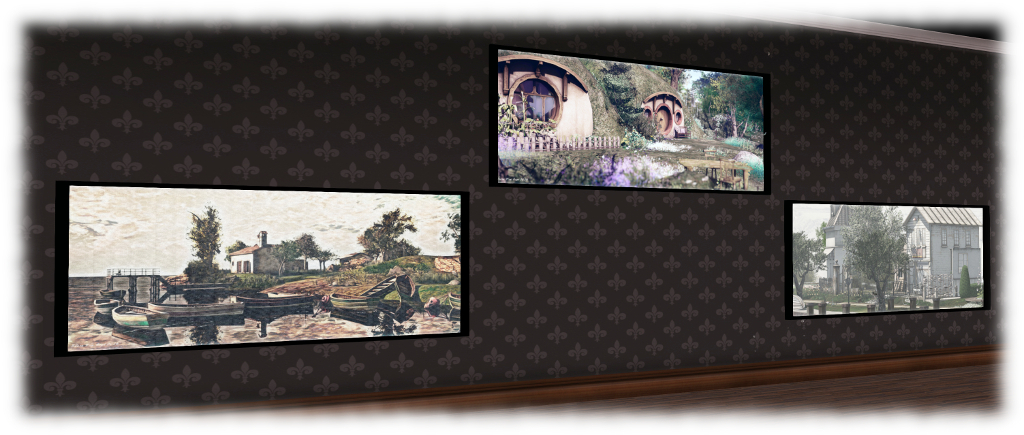
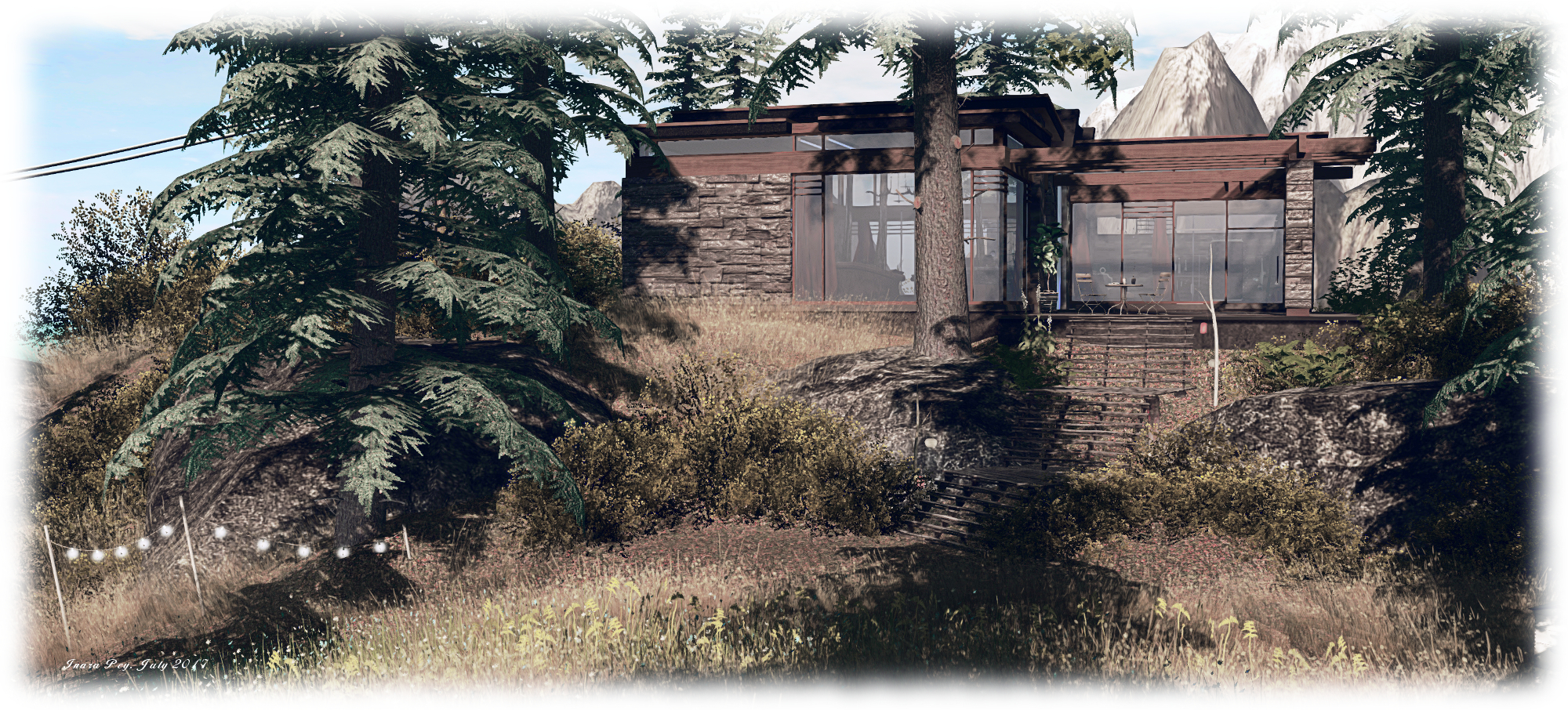
Opening on Wednesday, July 19th, 2017 at 1:00pm SLT is a new exhibition at Solo Arte entitled Not Only … But Also. It features the art and images of Boudicca Amat and myself.
Receiving an invitation to display my images always comes as a mixture of thrill and nervousness. Thrill, because I don’t regard myself as any kind of Second Life photographic artist – my images are primarily concerned with illustrating the posts I write about the places I visit. Nervousness, simply because my work, as illustrative, tends to be a little “plain Jane” when compared with the true masters of the SL landscape.
I mention this not out of modesty, but because I’ve previously written about exhibitions at Solo Arte, and the idea of filling the space there with only my work actually filled me with a feeling akin to panic. Hence the suggestion to Solo Arte’s curators, Terrygold and Melania, that a second person is invited to share the available space. And to me, this second person could only be Boudicca Amat.
Boudicca’s work is, in a word, exquisite. Beautifully composed and executed, the artistry encompasses not only the image itself, but the vision and creativity poured into the entire process of producing such richly evocative moments in time, including, often, are care pouring over poses and sets. As such, I’m genuinely delighted to be sharing the Solo Arte space with her. Her avatar studies also – I hope – form a counterpoint focus for my landscape images.
As Solo Arte is a mixed indoor / outdoor venue, offering pleasant walks along a canal, a little bar and outdoor events area, Bou and I have split the space up between us in with the aim of making a visit more of a mix for people. On the landing point side of the art space, my own images can be found outside around the garden area, while further along the canal, Bou has a display inside one of the two exhibition halls. Across the canal bridge, the positions are reversed: I’ve used the second of the exhibition halls, and more of Bou’s would can be found in the courtyard behind the hall, which opens off of the events courtyard. We’ve add exhibition posters to help point the way to the different locations.
When visiting, do note that Solo Arte is presenting two exhibitions: not Only … But Also, and Riflessi Sul Nero (which you can read about here). As such, you may be directed to Riflessi Sul Nero when teleporting. If this is the case, please use the teleport disc alongside the landing point to reach the main Solo Arte exhibition area to find us.
Please refer to the deployment notice for the week for latest updates and news.
On Tuesday, July 18th, the Main (SLS) channel received a new server maintenance package, #17.07.11.327548, comprising the new server operating system update, which had been on test on the Magnum and Cake RC over the last couple of months. This update should include an update to allow DJ boards to work, however, any scripts which have not been updated to meet the new requirements may not work
On Wednesday, July 19th the RC channels should be updated as follows:
BlueSteel and LeTigre received a new server maintenance package (#17.07.17.327657) containing internal fixes
Magnum should also received a new server maintenance package (#17.07.13.327620), also comprising internal fixes.
SL Viewer
The Maintenance RC viewer updated on Monday, July 17th to version 5.0.7.327587. All other viewer in the LL pipelines remain as per the end of week #28:
Current Release version 5.0.6.326593, released May 26th, promoted June 20th – formerly the AssetHTTP RC viewer – overview
Release channel cohorts:
Project Alex Ivy 64-bit viewer version 5.1.0.507006 dated on June 30th
Voice RC viewer, version 5.0.7.327253 dated June 23rd.
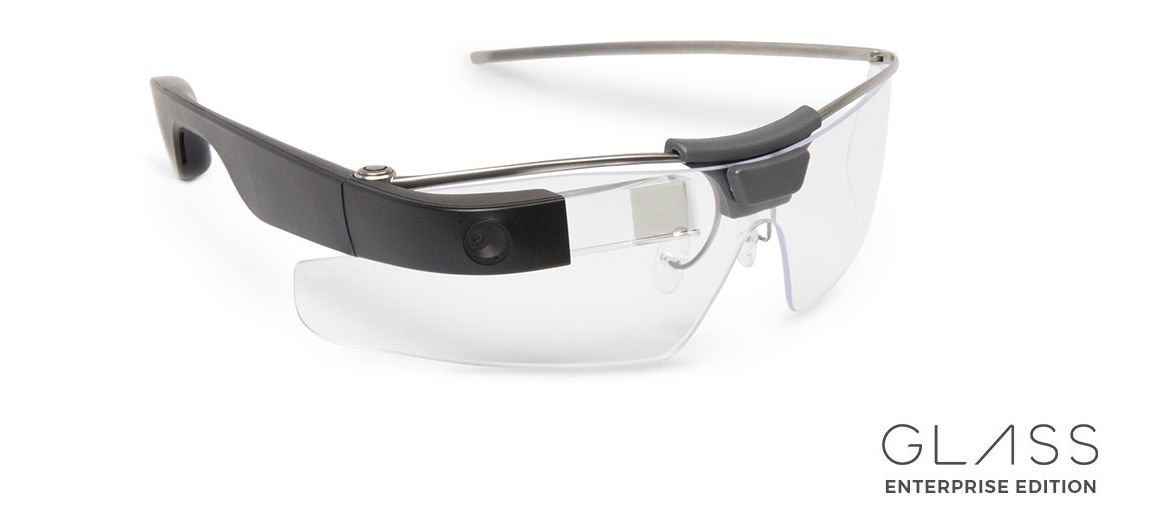
Glass Enterprise Edition: targeting the manufacturing and service sectors – and beyond? Credit: Alphabet X Company
Five years ago, Google Glass leapt (literally – the product launch included a team of skydiving Glass wearers) into the public consciousness. At the time it went through a pretty rapid-fire hype cycle: from the kit everybody would want (with no clear understanding of what it was really for), to the reality of a buggy, poorly implemented system to over-hyped fears of privacy invasion and a slew of resultant bannings of the hardware from all manner of places.
So rapid was the rise and fall of Google’s premature launch into the world of augmented reality (from arrival to apparent death in three years) that many in the media wrote it off as the butt of jokes and pointed to it as a reason why AR and VR could well be fads.
Only, as Google revealed on Tuesday, July 18th, and as superbly reported on in depth by Steven Levy for Wired’s, Backchannel, Google Glass never actually died. Google just did the sensible thing – admitted they’d got their original vision for the product wrong, quietly turned the page on Glass as a consumer product and focused on developing the technology into something people actually wanted, and were themselves working to create using Glass.
These “people” were companies in the manufacturing and service sectors who had seen the potential for the headset system and had started buying units and developing software to use with them. Companies like General Electric, GE Aviation, Volkswagen, Boeing, DHL, agricultural equipment manufacturer AECO (featured in the Wired piece) and healthcare system provider Augmedix all got involved with Google Glass. What’s more, Google noticed, and started re-aligning the headset’s development. Hence why in January 2015, the consumer version of the headset was brought to an end with the comment posted the Glass website: “Thanks for exploring with us”— The journey doesn’t end here.”
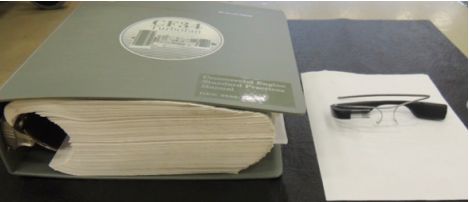
GE Aviation uses Glass EE to take maintenance manuals which are the heart and soul of an airline mechanic’s world, constantly referred to and checked during aircraft servicing, and delivers all of the information – text, diagrammatic overlays, videos – directly to the mechanic whenever the information is required, right at the point at which it is required. Credit: Alphabet X Company
Alphabet X, the R&D arm of Google’s parent company, Alphabet, took over the development of Glass, working closely with the companies putting it to work. Although based on the 2013 Google Glass Explorer Edition chassis, the new Glass Enterprise Edition (“Google” has been entirely dropped from the name) is an almost new headset, featuring:
Improved electronics – camera (complete with a red recording light to let others know when the camera in being used), wifi, processor.
Improved battery life and recharging.
A removable”Glass Pod” containing all the system’s electronics, which can be mounted on safety glasses, allowing Glass to be used in environments where eye protection is required, or used with prescription glasses.
In his piece, Steven Levy dives into some of the areas where Glass is already being used to great effect by several of the organisations mentioned above, and the list of blue-collar and service environments where Glass is being used is interesting and diverse, offering a glimpse of the potential for AR.
Augmedix, for example has been pioneering the use of Glass with a number of healthcare organisations to help improve doctor / patient interactions. The headset is use to access medical data and help keep the doctor away from a computer screen, allowing them to decrease the amount of time per consultation they are spending working on a computer whilst increasing the amount of face-to-face direct interaction with patients. Further, thanks to the use of an unseen “scribe” – a medical student or trained medical transcriber – who might be down the hall, in another state or even in another country, the doctor can dictate updates to the patient’s records, provide information on prescriptions, etc., removing the 2-3 hours a day they otherwise need to spend managing the records on their own – again allowing more time to be spent with those in their care.
The other point to note here is that this is not the announcement of some beta programme; it’s the launch of an actual product by Alphabet. “This isn’t an experiment,” Jay Kothari, Glass Project Lead, said. “It was an experiment three years ago. Now we are in full-on production with our customers and with our partners.” Not bad for a product written off as dead just 24 months ago.
The announcement also means that the companies that have helped developed the software etc., to run alongside of Glass – as with Augmedix – are now free to roll Glass out as they need, and to start marketing their products developed to work alongside Glass. Google also have plans of their own to further extend Glass’ reach as an enterprise tool – although they remain silent as to whether the consumer product will be resurrected.
The announcement about Glass points to 2017 as possibly being the year in which AR / MR starts on its rise to practical prominence. It joins Microsoft’s HoloLens as an enterprise tool, while Windows 10 offers a platform for MR development (and Microsoft are working with hardware manufacturers to provide consumer focused headsets). Elsewhere, Qualcomm – as I recently reported – is leading the charge with Android-based enterprise and consumer AR / MR headsets. It’ll be interesting to see where all the leads, both in the work place and – in time – at home.
Update: July 28th: Zoe Connolly produced a video of Welcome to Somewhere, which say says was inspired by this blog post. It’s a delight to watch, and I’m embedding it at the end of the post with thanks to her. I’ll hopefully be back to making my own videos at some point in the not too distant future!
It’s a catchy name for a place: Welcome to Somewhere, the Full region designed by DarkDesire (Stefan Salmson) and Petra Teatime (Petra Hienke) – and it is certainly appropriate. This is an enigmatic location; on the one hand strange and new, on the other, containing just enough familiarity about it to suggest is it somewhere you may have been to or seen before. Caught in an eternal twilight which adds to the general atmosphere when exploring (although I admittedly opted for daytime pictures in the hope of showing a slightly different face to the region), Welcome to Somewhere is a place of charm and mystery, where hints of dark secrets lay without ever their true nature being overtly revealed.
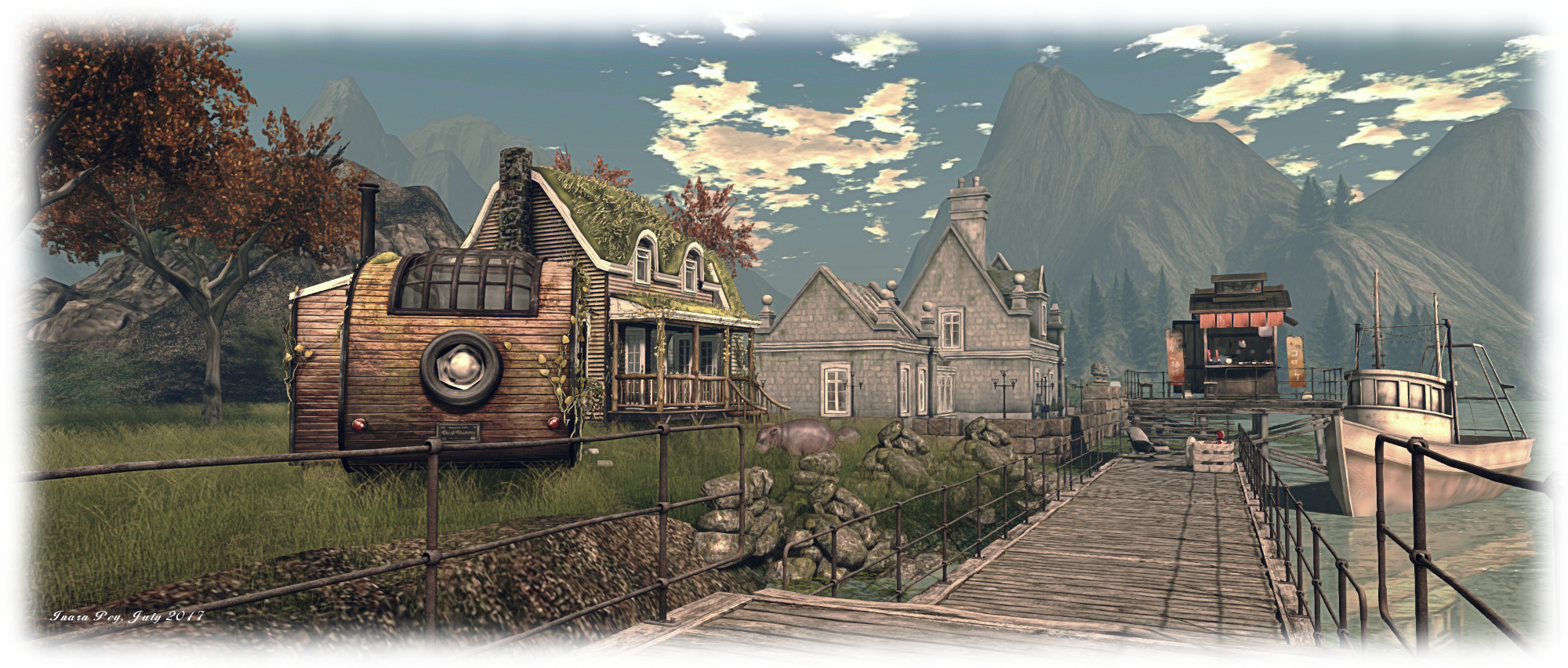
If you follow the given SLurl, your visit will start on the north side of the land, marked by houses, cottages, a house boat and a warehouse place of work. Everything is a little run-down, suggesting this is a place that’s seen better days – there’s even the sad hulk of a sunken trawler partially blocking access to the quayside for other vessels.
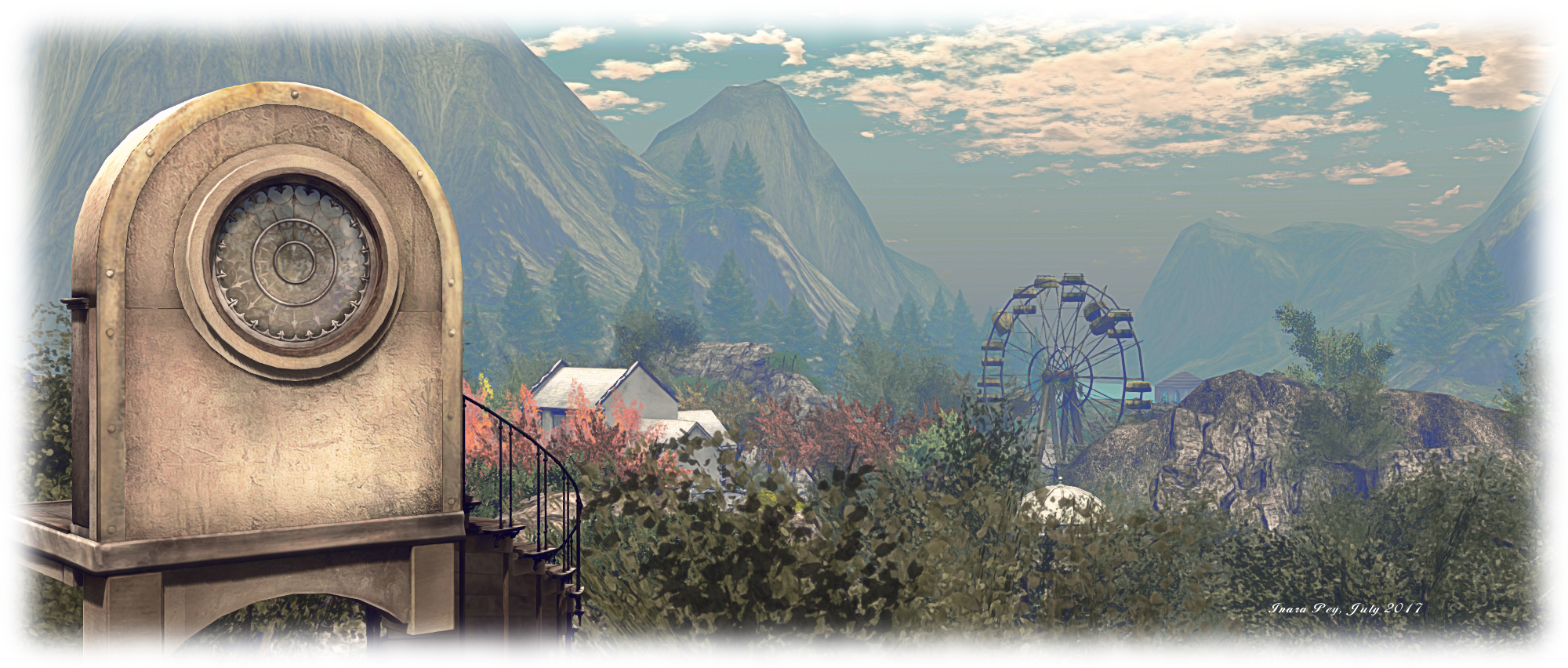
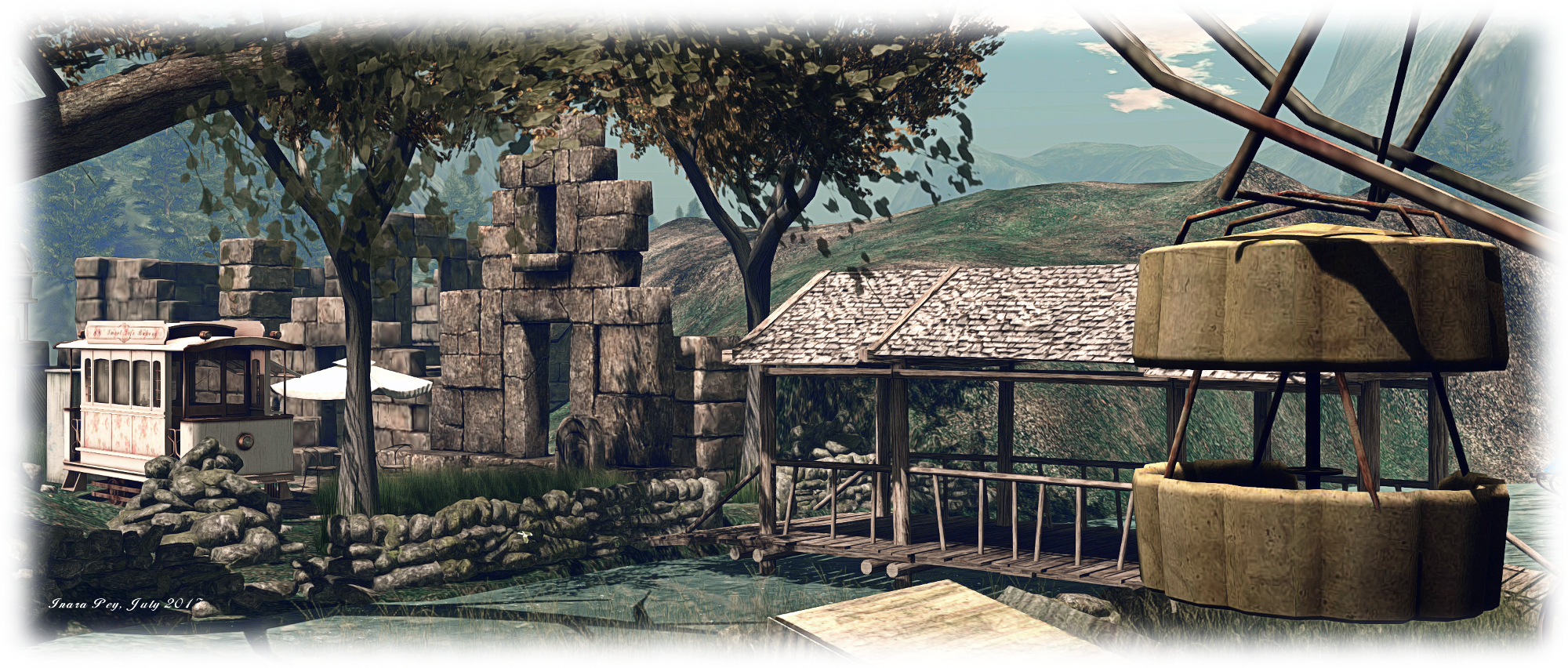
Find your way ashore, and a dirt track points west from the back of the wooden warehouse-come-store / place of work, directing you along the coastline before turning south and delivering you to what remains of a fun fair. Overgrown, the rides broken and decaying, the fair has the edge real edge to it: the clown’s fang-filled smile at the gate not entirely a promise of jollity within. A Ferris wheel, long broken and rusted, stands sentinel over two foot bridges. One faces east, towards some old stone ruins where sits a little tram-car converted for use as a tea shop, its innocence standing in contrast to the darker hints of the fun fair. Deeper within the ruins is forgotten outdoor stage, resuming the air of foreboding about this place.
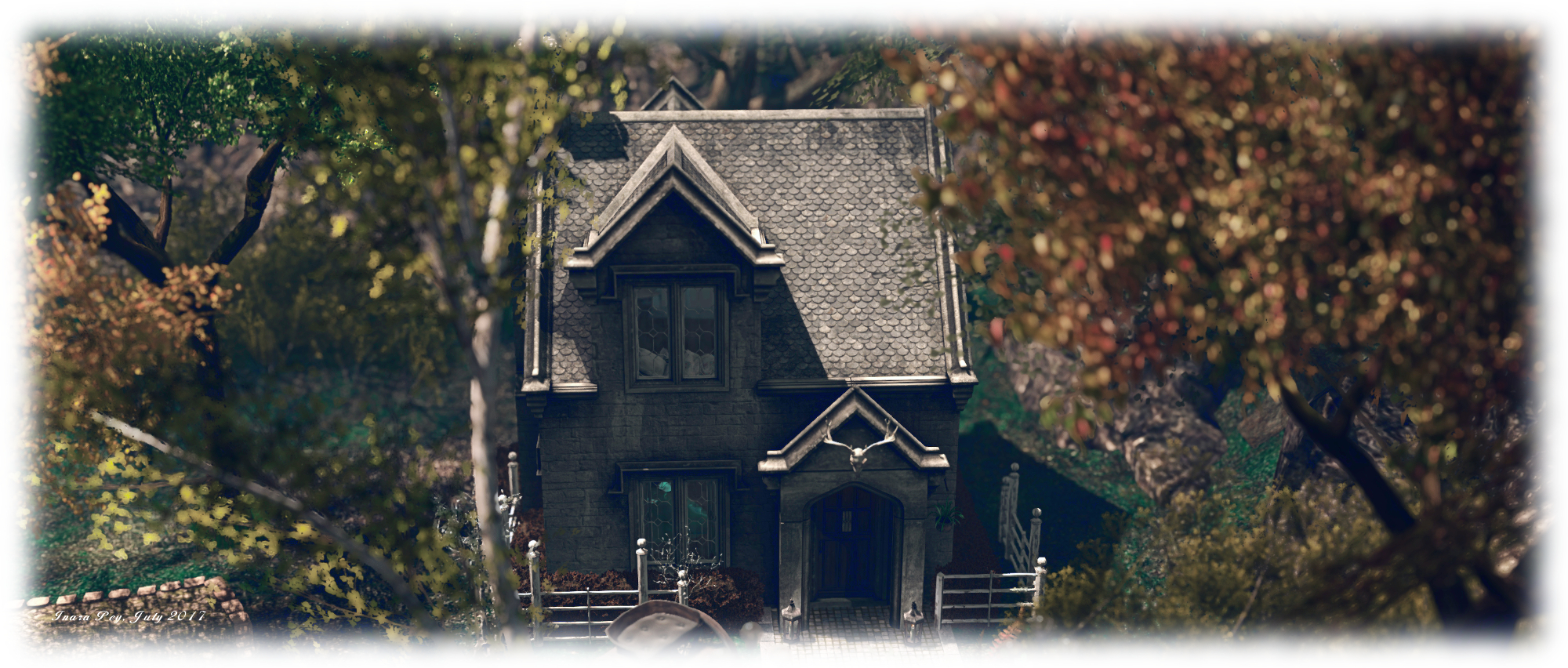
The second, smaller foot bridge leads to two imposing houses facing one another across paved and ordered gardens, complete with an orangery housing a harpsichord, a little outside café alongside it. Sitting between low shoulders of rock, these distinguished houses and their gardens give a sense of money and order, their status perhaps once the dominant feature in this landscape.
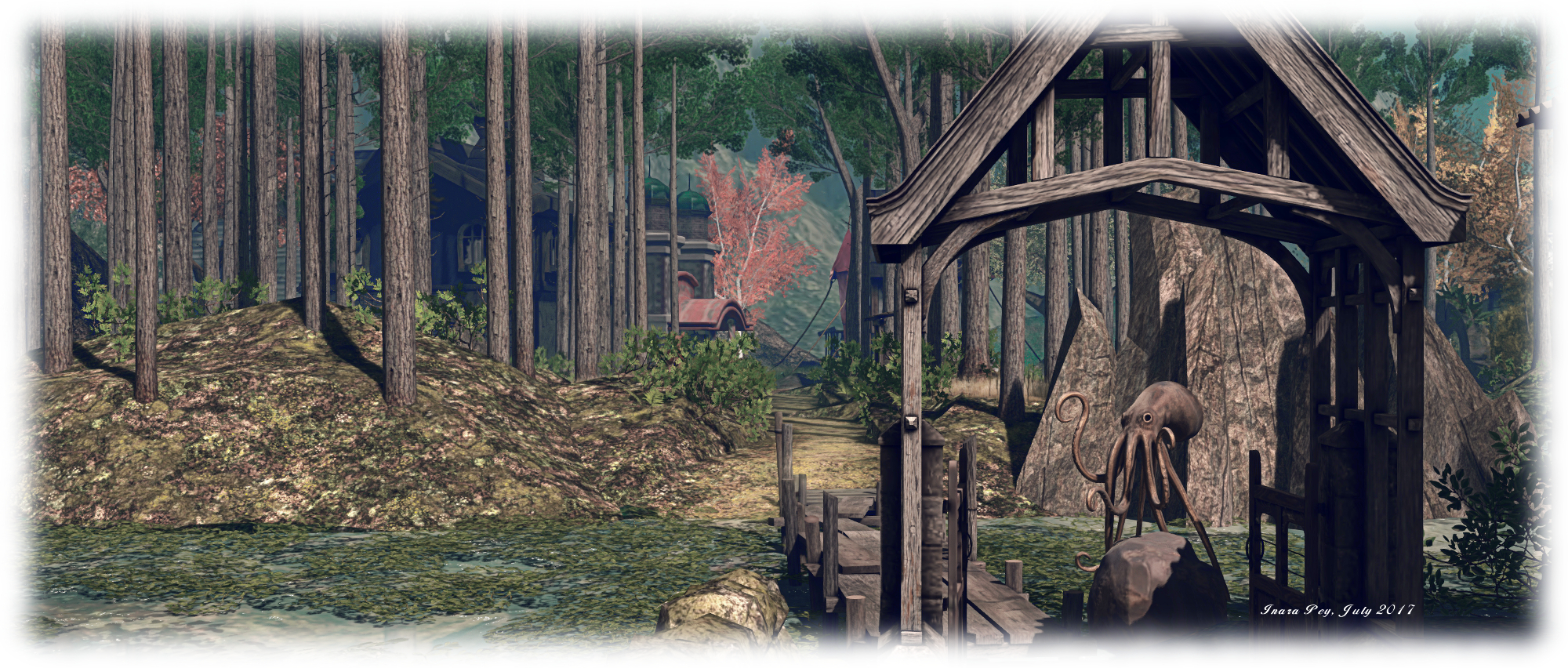
Another track winds its way east from here, skirting the edge of the large lake occupying a far portion of the land before passing a slightly dilapidated farmhouse and over another foot bridge to where tall Scotts pines grow, the path gently undulating between them. At the end of this path sit more buildings, exuding an air of menace – something greatly increased by the puppet theatre parked at the water’s edge. There is something disturbing about this; it appears neither friendly nor welcoming – one could almost imagine the Child Catcher from Chitty Chitty Bang Bang waiting to usher unsuspecting souls inside, before dropping the bars across the entrance and trapping them.
It is this air of menace – or at least the feeling this place has a darker side to it – which adds greatly to the overall feel to the region when exploring it under the low light of dusk. It sharply contrasts with the beautifully picturesque nature of the landscape (best appreciated in daylight). The latter presents calm waters, shaded walks, gentle hill climbs to follies and a little hilltop function room (perhaps once the scene of happy Sunday afternoon dances), but as one travels, so the delight the the landscape become tinged with that frisson of discomfort, the urge to look over your shoulder when walking the path to the odd little puppet theatre.
Just where is everyone? Some of the region feels as find it has been run-down a left to decay for a long time – notably the fun fair. Other parts feel as if they’ve recently fallen on hard times. But so too is there a feeling that the locals have only fled, leaving only the wildlife – and the dolls. These are to be found scattered around, indoors and out. do they mean anything? That’s for you to decide. And what of the strangeness of the little hamlet where explorations of the region begin? Why is it that it has a roadside auto shop where no road has seemingly ever run?
Whether you seek to answer these questions, and any other which might occur to you as you explore Welcome to Somewhere is entirely down to you. One thing is undeniable about this place, however. It is an enigmatic delight to visit, offering numerous opportunities for photography and lots of room for meandering discovery of all it has to offer.
Cinder Roxley continues with her promise to maintain and improve the Radegast lightweight client for Second Life and OpenSim, and on July 15th she released version 2.24, which sees a range of improvements, both visible and under-the-hood.
In terms of user-visible changes, Radegast2.24 allows:
Triggering gestures directly from nearby chat, just as you would from any viewer (e.g. by whatever trigger is set for the gesture – such as “/hey”).
The wearing of multiple system layers (multiple pants, shirt, jacket, tattoo, layers), again as has been the case with the viewer for the last several years.
An audible “pop” sound when blue notifications open, to assist the visually impaired when notifications are received.
Under the hood are even more changes, with Cinder continuing to refactor and improve the code – notable focusing on the plug-ins manager, and a new tarball for Linux installation. In the case of the latter, Cinder notes you need to have a recent (4.6.x or later) version of mono installed, together with the latest patch set.
The tarball could potentially be used with Mac OSX, although Cinder also states, “it will run if you put a lot of effort into configuring Mono and Xquartz to properly handle WinForms … but WinForms is poorly supported on MacOS.” She goes on to say she’s still working on getting the client more readily installable on Mac OSX.
The Linux installation has not be thoroughly tested, so if you are a Linux user and would like to help Cinder, please download and install 2.24, and record any issues you encounter on the new Radegast issue tracker.
If you are a coder / developer, and would like to assist in maintaining Radegast, please contact Cinder Roxley.
Logos representative only and should not be seen as an endorsement / preference / recommendation
Updates for the week ending Sunday, July 16th
This summary is published every Monday, and is a list of SL viewer / client releases (official and TPV) made during the previous week. When reading it, please note:
It is based on my Current Viewer Releases Page, a list of all Second Life viewers and clients that are in popular use (and of which I am aware), and which are recognised as adhering to the TPV Policy. This page includes comprehensive links to download pages, blog notes, release notes, etc., as well as links to any / all reviews of specific viewers / clients made within this blog
By its nature, this summary presented here will always be in arrears, please refer to the Current Viewer Release Page for more up-to-date information.
Official LL Viewers
Current Release version 5.0.6.326593, released on May 26th, promoted June 20th – formerly the AssetHTTP RC viewer – overview – download and release notes – No change


 Inara Pey: Living in a Modemworld