This summary is published every Monday, and is a list of SL viewer / client releases (official and TPV) made during the previous week. When reading it, please note:
It is based on my Current Viewer Releases Page, a list of all Second Life viewers and clients that are in popular use (and of which I am aware), and which are recognised as adhering to the TPV Policy. This page includes comprehensive links to download pages, blog notes, release notes, etc., as well as links to any / all reviews of specific viewers / clients made within this blog
By its nature, this summary presented here will always be in arrears, please refer to the Current Viewer Release Page for more up-to-date information.
Official LL Viewers
Current Release version: 5.0.3.324435, dated March 13th – hotfix for snapshots to e-mail issue download page, release notes
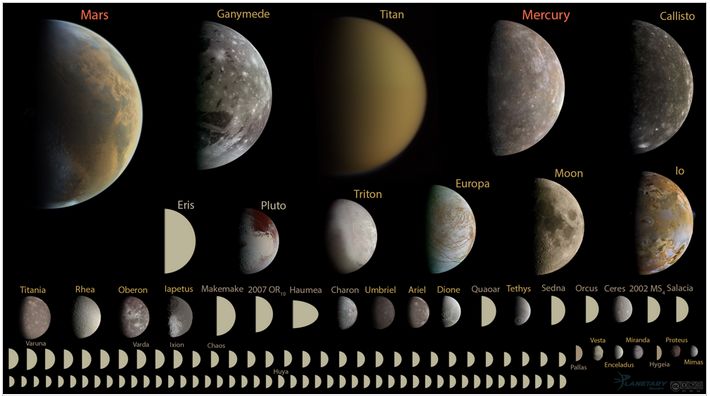
A chart showing the to-scale sizes of two planets, 19 moons, 2 asteroids, and 87 trans-Neptunian objects, all of which could technically be considered planets orbiting our Sun. Credit: Emily Lakdawalla. Data from NASA / JPL, JHUAPL/SwRI, SSI, and UCLA / MPS / DLR / IDA, processed by Gordan Ugarkovic, Ted Stryk, Bjorn Jonsson, Roman Tkachenko, and Emily Lakdawalla
When is a planet not a planet – or more precisely, when should what is not regarded as a planet be a planet?
Right now, according to the International Astronomical Union (IAU), our solar system comprises eight formally recognised planets: Mercury, Venus, Earth, Mars, Jupiter, Saturn, Uranus and Neptune. That’s been the case since 2006, when the IAU opted to classify bodies orbiting the Sun in three ways:
As planets – defined as a) celestial bodies that (a) are in orbit around the sun; b) have sufficient mass for their self-gravity to overcome rigid body forces so they assume a hydrostatic equilibrium (nearly round) shape; c) have cleared the neighbourhood around their orbit of other objects
As Dwarf planets – defined as celestial bodies which a) orbit the sun; b) have sufficient mass for their self-gravity to overcome rigid body forces to assume hydrostatic equilibrium (aka “is nearly round” in shape); c) have not cleared the neighbourhood around their orbit; and d) is not a natural satellite
As Small Solar System bodies: all other objects except satellites orbiting the Sun.
A composite image showing Pluto and Charon to scale to one another (but not at a scale separate from one another) using images returned by the New Horizons mission. Credit: NASA / John Hopkins University APL / SwRI
Thus, since 2006, Pluto has been a dwarf planet. However, moves are afoot to get things changed – and not just for Pluto.
In a paper authored by planetary scientists involved in the New Horizons mission which zipped through the Pluto system in July 2015, there is a call for the term “planet” to be redefined; if not by the IAU then at least in popular use. Should it happen, it could see the number of planets in the solar system leap from 8 to over 100.
The scientists argue that the IAU definition of “planet” focuses only on the intrinsic qualities of the body itself, rather than external factors such as its orbit or other objects around it. In fact, under the IAU’s definition, Earth, Mars, Jupiter and Neptune don’t actually qualify as “planets” as none meet the third criteria (c) – Earth, for example, has regular “close encounters” with asteroids which cross its orbit. Instead, the team offer a simpler definition:
A planet is a sub-stellar mass body that has never undergone nuclear fusion and that has enough gravitation to be round due to hydrostatic equilibrium regardless of its orbital parameters.
Such a definition would mean that Pluto could regain its planetary status – as would the proto-planet (or small solar system body) Ceres, the dwarf planets of 136199 Eris (discovered in 2005, and the trigger-point for Pluto’s “downgrading”) , 136472 Makemake, and 136108 Haumea, together with (possibly) 50000 Quaoar, 90377 Sedna, 90482 Orcus and a host of trans-Neptunian objects tumbling around the Sun. Nor is that all; the new definition would also mean that the likes of Jupiter’s Galilean moons, Saturn’s Titan and Enceladus, Neptune’s Triton and many other bodies we regard as “moons” would be lifted to planetary status – including our own Moon.
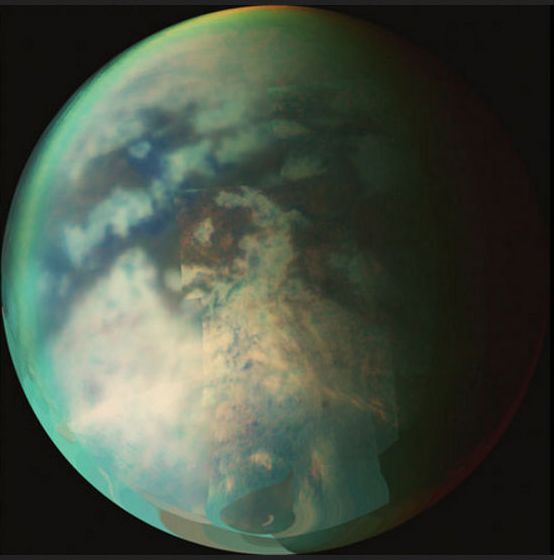
A composite image using data gathered by the radar imager aboard NASA’s Cassini mission to Saturn to look through the normally opaque haze of Titan’s dense atmosphere to reveal its planet-like surface. Credit: NASA/JPL / University of Arizona
The paper proposing the change will be presented at the Lunar and Planetary Science Conference on March 20th to 24th, 2017 in Texas. And it has already come in for some criticism.
Mike Brown is the scientist largely behind Pluto’s demotion. Currently engaged in the search for the elusive “Planet Nine”, he (somewhat harshly) sees the efforts of the New Horizons team to get Pluto reclassified as being about them wanting the prestige of having run a planetary mission, more than anything else.
However, there are valid reasons for seeking some kind of change, even if it is only informal. One is as basic as gaining more public interest in efforts to explore and understand the many environments found on planets and moons alike within our solar system.
“Every time I talk about this [the science and data gathered about Pluto by New Horizons] to the general public, the very next thing people say is ‘Pluto is not a planet any more’,” said Kirby Runyon, the lead author of the paper. “People’s interest in a body and exploring it seems tied to whether or not it has the name ‘planet’ labelled on it.”
How Pluto compares with other large Trans-Neptunian Objects, some of which also have their own moons. Earth and our moon can be seen at the bottom of the picture. Credit: Lexicon / Wikipedia, using NASA / Hubble Space Telescope data
There are scientific reasons for the definition to be broadened as well. Places like Pluto, Ceres, Europa, Io, Ganyemede, Callisto and Triton all evidence geophysical, hydrothermal, atmospheric and other characteristics very much in keeping with bodies such as Earth, Mars, and Venus. They are thus of exceptional interest to planetary scientists the world over. In fact, many of them (like Pluto) are completely re-writing our understanding of “planetary bodies”.
Ultimately, the team behind the paper aren’t going to put their proposal before the IAU for a change in the “official” definition of “planet”. “As a geophysical definition, this does not fall under the domain of the IAU, Runyon notes, “[It] is an alternate and parallel definition that can be used by different scientists. It is “official” without IAU approval, partly via usage.”
Journey of Life is the title of a new exhibition of art by Satus Voltz (satus9), which opened at the Paris METRO Art Gallery on Saturday, March 18th. In terms of broad theme, it in some ways continues and extends the examination of life seen in the previous exhibition at the gallery, Life Is A Journey by Elin Egoyan (which you can read about here). However, where Elin considered our physical lives in her exhibition, Satus here considers time and travels through Second Life.
Twenty-three pieces of art are offered for display. They offer both an intriguing presentation of evocative individual pieces and a finely balanced collection when taken as whole, bringing together a number of subtle pairings, from the balance between monochrome and colour in the landscapes, through the use of either anticipation or pensiveness as an emotional driver in the avatar studies or the subtle mixing of purely 2D images with those with a 3D aspect; all the way through to the mix of landscapes and avatar-focused images. In short, this is a richly diverse collection of pieces which are not only encapsulated within the overall theme, they beautifully demonstrate Satus’ artistry and expression.
The use of 3D elements with a 2D art display perhaps isn’t new. Several artists – notably Molly Brown – have incorporated 2D and 3D art into a single whole in the past; and on entering the gallery to encounter Shattered (in the foreground of the banner image at the top of this piece), I was immediately put in mind of her work. However, the sheer dynamism and narrative in Shattered is breathtaking. Elsewhere, the use of a 3D element is more subtle but no less emotive and effective; from starlight filtering through the fan of branches of distant trees, to the fall of rain or the use of dandelion seeds and dust motes drifting through the air.
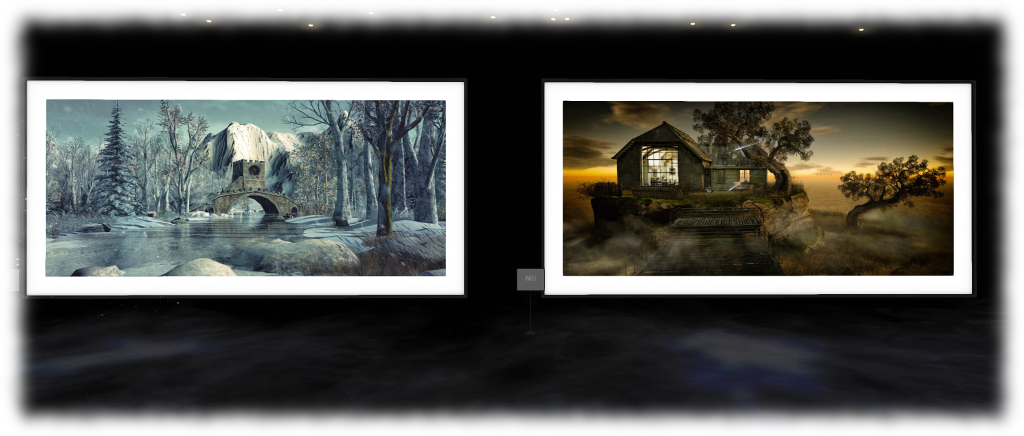
Then there is balance between monochrome and colour in the landscape pieces, which brings a certain harmonic tension to them. We are at once drawn towards the three black-and-white images sitting among their more numerous colour companions, but at the same time, they encourage is to consider the use of colour as well as light and shade within the colour pieces. A similar tension can be found within the more avatar focused studies. Within these, the pensiveness within pieces like Departure, Burning House (both of which are shown below), and I Don’t Wanna Live Forever, is countered by the depth of anticipation evidenced in Silent Awakening, Polar Express and Confetti of The Sky, with both emotions perfectly brought together in Can’t Take You With Me.
Evocative, emotive, beautifully (and naturally) composed, the images in this exhibition are utterly entrancing and perfectly set within an environment accented by Satus. Absolutely not to be missed.
It’s time to kick-off another week of storytelling in Voice by the staff and volunteers at the Seanchai Library. As always, all times SLT, and events are held at the Library’s Second Life home at Bradley University, unless otherwise indicated.
Sunday, March 19th 13:30: Tea Time Mysteries!
Seanchai Library launches a Tea Time series, featuring everything non-Holmesian from Christie to Hamett, classic sleuthing to hard-boiled detectives of the noir-ish hue.
This week: more Agatha Christie with Caledonia, Kayden, Corwyn and John.
Monday, March 20th 19:00: Enemy Mine
Gyro Muggins continues reading Barry B. Longyear’s novella which first appeared in a 1979 issue of Isaac Asimov’s Science Fiction Magazine, before becoming the basis of the of the 20th Century Fox film of the same name, starring Dennis Quaid and Louis Gossett, Jr. This led to Longyear producing an expanded version of the story, written with David Gerrold.
In the midst of an interstellar war between humans and Dracs (a race of humanoid reptilians), Willis Davidge, a human fighter pilot, crashes on a hostile planet after a dogfight with a Drac – who is also forced down on the same planet.
The two initially continue their hostilities towards one another. But the planet proves so hostile that Davidge and the Drac, Jeriba Shigan (whom Davidge nicknames “Jerry”), are forced to join forces in order to ensure their survival. Then Davidge learns Jeriba is pregnant – Drac being entirely asexual …
Tuesday, March 21st 19:00: Of Mice and Magic
Faerie Maven-Pralou reads the forst in the Ravenspell series by David Farland
More than anything, Benjamin Ravenspell wants a pet. But when he buys a mouse named Amber, he gets more than he bargained for. No sooner does Ben take her home, than Amber turns him into a mouse too.
You see, Amber has magical abilities, and it so happens that Ben is a familiar, a creature that stores magical energy. Together they each form half of a powerful wizard. Alone, they’re just vermin.
Soon Ben and Amber find themselves pitted in an epic battle against a magical enemy who is as crazed as he is evil, and the fate of the world will rest on them learning to work together.
Wednesday, March 22nd 19:00: Poems Aloud
With Caledonia.
Thursday, March 23rd
19:00: From The Hearth
Celtic Darkness, Tales from the otherworld with Shandon Loring (also presented in Kitely, and InWorldz).
21:00 Seanchai Late Night
With Finn Zeddmore.
Sunday March 26th: Volume IX
Senchai Library’s anniversary celebrations, licking-off at 13:00 SLT. More details in my preview next week!
Please check with the Seanchai Library’s blog for updates and for additions or changes to the week’s schedule.
The featured charity for March April is Project Children, building peace in Ireland one child at a time.
The Heart of the Sea is a marvellous homestead region design by Elyjia (Elyjia Baxton) and Brayan Friller (Brayan26 Friller) that Caitlyn and I were (once again!) pointed towards by Shakespeare (SkinnyNilla) as a result of one of our regular exchanges of landmarks with one another. For those wishing to spend it in idyllic, natural surroundings rich is a sense of peace and tranquillity, I thoroughly recommend a visit.
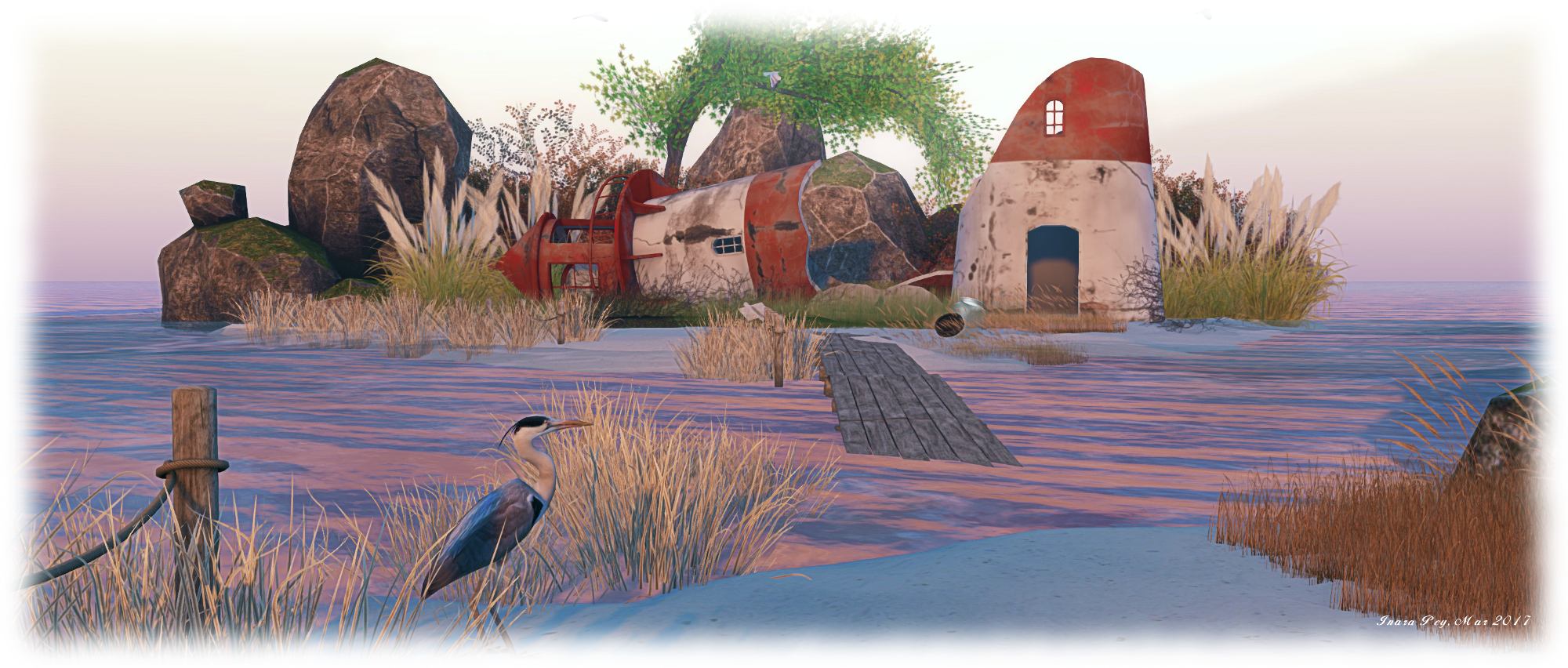
As you might expect from the name, water features strongly in the design, the region comprising the gentle sweep of a rocky island sitting within shallow waters, accompanied four rocky islets, together with a smaller island which forms the landing point. On this sandy hump, lying across the wild grass holding the sand in place, lies the broken finger of a candy-striped lighthouse; once it may have warned passing vessels about the rocks laying on the eastward side of the isle, but no more.
The two main islands are connected – by way of one of the smaller rocky outcrops – by an old board walk – almost. But while at one time it may well have linked the three sandy beaches it passes between, now it lays broken and sagging into the shallow waters in two places. However, in the lee of the middle islet sits a rowing boat draped with a cuddle blanket, while the sand of its beach has a message written upon it; the first indications that romance is welcome here.
Rising from a ribbon of sand that almost entirely encompasses it, the main island comprises three low, flat-topped tables of rock. Two of these are home to a small farm. On one, horses and sleep graze on a rich thatch of grass, a nearby barn offering some shelter should the elements turn. On the other sits what might be the farmhouse, reached by crossing a natural stone bridge spanning a narrow channel of sand below.
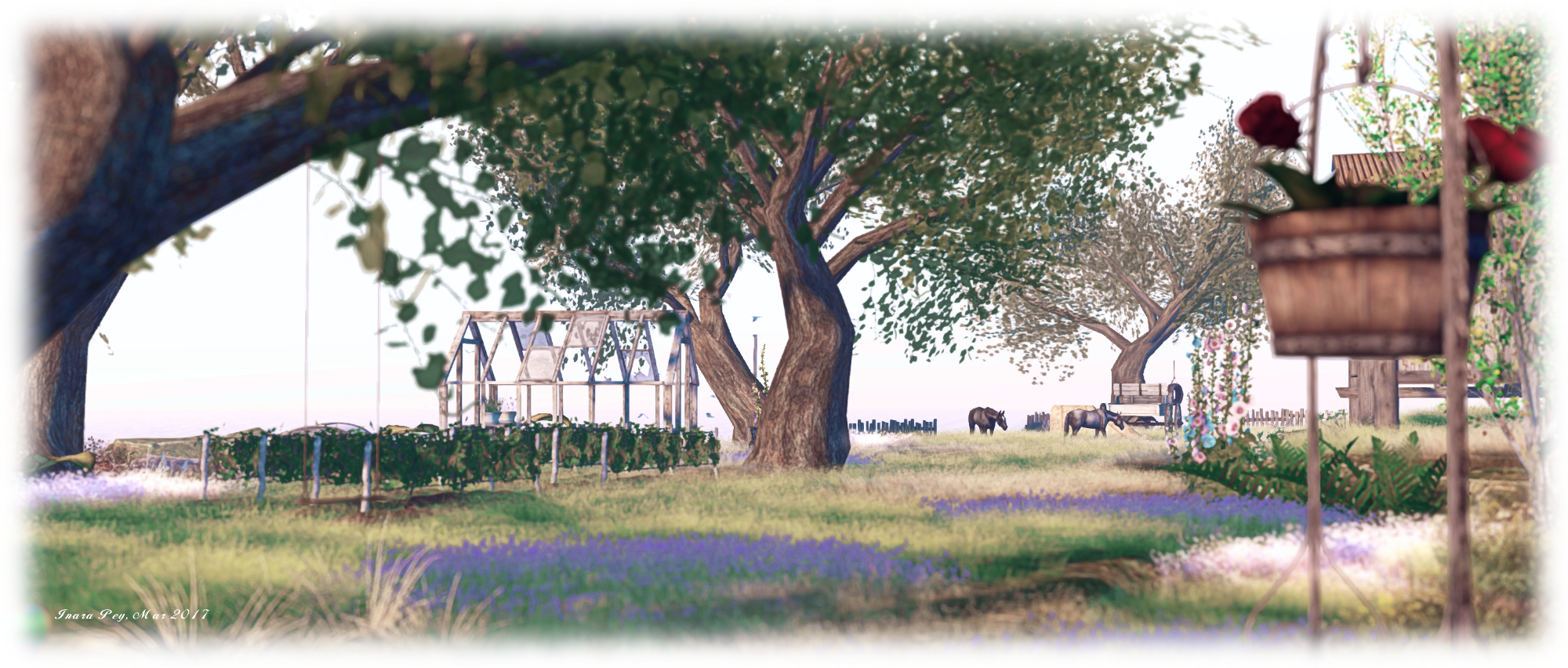
More horses graze near the house, while the broken frame of a greenhouse looks out over the sea. A well stands close by, and flowers, though wild, appear to subject to care even as grapes ripen on the vines strung to one side of the old greenhouse. Even so the house sits deserted, bereft of all furnishings save for a single porch swing.
The last of the island’s three low-slung plateaus is home to another lighthouse, possibly a replacement for the one broken near the landing point. Tall and white, as if newly painted, it rises from a broad, square concrete plinth, also home to a little keeper’s cottage. This lighthouse stand, sentinel-like over the westward curve of the island, overlooking three little beach houses offer for rent, each sitting within its own parcel.
A short walk across another board walk from these and snuggled by the rocks of another of the islets, sits a Romany caravan, a little camp fire and rug set out on the sand offering a place for sitting and / or cuddling. It is one of several such places awaiting discovery around the island, both on the beaches, on wooden decks and rocking rowing boats. Keep an eye out, as well, for the dance machine tucked under the shade of a tree.
Set against an early morning’s light – the Sun just tipping over the eastward horizon, an old boat shack offering the ideal point from which to observe it – Heart of the Sea feels like a place caught in a moment of time. Tranquil, softly lit, enriched by a gentle soundscape, it is perfect for gentle meandering, and unhurried exploration. Should you enjoy your visit as much as we did, please consider making a donation towards its upkeep via the jar at the landing point.
In February 2017 I wrote about The Photo Game, an intimate exhibition of art hosted at Boudicca Amat’s An Uncertain Destiny (which you can read about here). It formed the in-world continuation of an idea Boudicca and fellow artist Ricco Saenz started on Flickr in the latter part of 2016, where they would each choose two on one another’s compositions and comment on them.
In-world, The Photo Game has expanded to three images apiece for each pair of invited artists, and for the inaugural February event, Bou and Ricco took to the stage. For March / April, the spotlight has shifted to two more artist / photographers, one of whom has the last name of “Pey” …
To be honest I was thrilled, surprised and apprehensive about things when the invitation arrived – and apprehension turned to a feeling akin to panic when Bou revealed I have been paired with Proph (burningprophets); a man with a talent for weaving a tale with his images, and an eye for composition and framing which far surpasses my own.
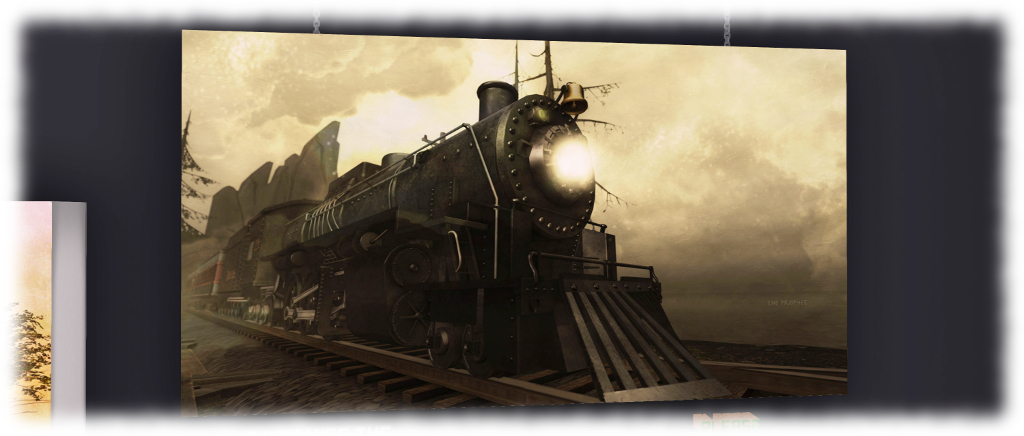
I was instantly drawn to the three pieces I’ve selected from Proph’s portfolio both because I was instantly attracted to them and because they all encapsulate his skills so beautifully. The three are: Never Hide Your Heart, Wasn’t Tomorrow Wonderful and If You Miss the Train I’m On. I’m not going to comment further on them here, as I have already written a fair essay on each, but all three are genuinely remarkable pieces, and well worth contemplating – so I do encourage you to go along as see them for yourself.
The Photo Game: “If You Miss the Train I’m On” by Proph – a brooding, dynamic, piece expressing an entire novella in a single image
Speaking as someone still finding my way with images, photographs and illustrations – I see my work far more as illustrations for this blog than as being in any way “art” – I’d like to thank Proph for his feedback on the pieces he chose; hearing another frame one’s own work in words and reflect the few nuances within a piece that were intentional, was reassuring and a boost to confidence that I’m actually starting to understand the medium I’m dabbling in.
My thank, as well to Bou and Ricco for the invitation to participate so early on in the Game, I loom forward to reading thoughts and feeling from other on all six of the pieces on display at An Uncertain Destiny.
SLurl Details
The Photo Game (An Uncertain Destiny, rated: Adult – run as PG)









 Inara Pey: Living in a Modemworld