The University of Western Australia looks likely to cease most of its presence in Second Life at the end of July 2017. However, before then the long-time patron of arts and artistic expression in Second Life is running one more major art exhibition, and recently put out a call for entries.
“Our final show is to be titled “Transformations” and is about beginnings, endings, transitions, change,” UWA’s art curator FreeWee Ling stated in the announcement. “The theme is deliberately vague in order to allow for the broadest possible interpretation. It is intended to highlight the technologies of SL as a medium for creative expression. We especially want work that reflects on the past in SL and/or imagines the future of virtual art.”
Those wishing to apply to be a part of the exhibition are invited to subject one piece in any or all of the following categories: 2D art, 3D art and / or machinima (so entrants can subject up to 3 pieces, one in each category). The closing data for entries is 23:59 SLT, on Sunday April 30th, 2017.
It is important to note that this event is an exhibition and not a UWA challenge / competition. There is no judging panel and there will be no prizes offered. However, official exhibition catalogue will be published on-line as part of the UWA Studies in Virtual Arts (UWA SiVA) journal series.
General guidelines for entries are:
As noted above, artists may submit up to one entry each in 3D, 2D, and/or machinima (up to 3 entries in total). Collaborations are encouraged, so if you participate as a named collaborator on any entry, you may also submit a separate entry as an individual.
Land Impact limit for 3D work is 300. Sound and light emitting objects should be carefully crafted in consideration of other nearby entries. Objects that might impact other nearby entries may have to be placed on a platform to isolate it. In such cases a poster and TP device will be placed in the gallery. Any entry with excessive script lag may be refused or returned for revision.
2D entries should reflect the theme and must be images substantially created in SL. Post-processing (e.g., Photoshop effects) should be kept to a minimum.
Machinima entries can be of any length or subject matter as long a they are substantially produced using SL as the primary medium and conform to other criteria listed here. A poster and/or screen shot will be placed in the gallery and in the exhibition catalogue along with a link to the machinima.
For the full entry guidelines, including how to submit your entry, please refer to the call for entries blog post. All enquiries, concerns, etc., about entering the exhibition should be addressed directly to FreeWee Ling, who has final say on any issue.
This summary is published every Monday, and is a list of SL viewer / client releases (official and TPV) made during the previous week. When reading it, please note:
It is based on my Current Viewer Releases Page, a list of all Second Life viewers and clients that are in popular use (and of which I am aware), and which are recognised as adhering to the TPV Policy. This page includes comprehensive links to download pages, blog notes, release notes, etc., as well as links to any / all reviews of specific viewers / clients made within this blog
By its nature, this summary presented here will always be in arrears, please refer to the Current Viewer Release Page for more up-to-date information.
Official LL Viewers
Current Release version: 5.0.1.323027, dated January 25th, promoted February 3rd – formerly a Maintenance RC viewer download page, release notes – no change
I received two invitations almost simultaneously recently. The first came from Krys Vita and the second from my region finder extraordinaire, Shakespeare (SkinnyNilla), and both were pointing to Arol Lightfoot’s recently opened Shot of Tequila.
Those who have been around Second Life for a while may remember Arol’s Just Another Tequila Sunrise (which you can read about here). Shot of Tequila occupies the same region, Isle of Love, although Arol now shares the region, with Shot of Tequila occupying the northern half.
Shot of Tequila sits under an overcast sky (set by default by Firestorm, or use Annan Adored Dusty to get the effect Arol intends with the windlight), and presents a scene which carries some of the essence of Just Another Tequila Sunrise, although the environment is clearly very different.
Visitors arrive on a lush, largely open and flat space, where the grass grows long and trees scattered around the periphery. A large house sits to the north, backing on to a steep fall down to the water. To the west, the grass descends more gently down to a beach, overlooked by a stone terrace and wooden deck build to one side of the house.
Facing the front of the house and close to the shade of tall trees, sits a converted greenhouse, with an old caravan and pick-up truck close by. Eastwards, the land also dips slightly, this time to a small body of fresh water, before rising to more rugged scenery, topped by a flat plateau, home to a little summer-house.
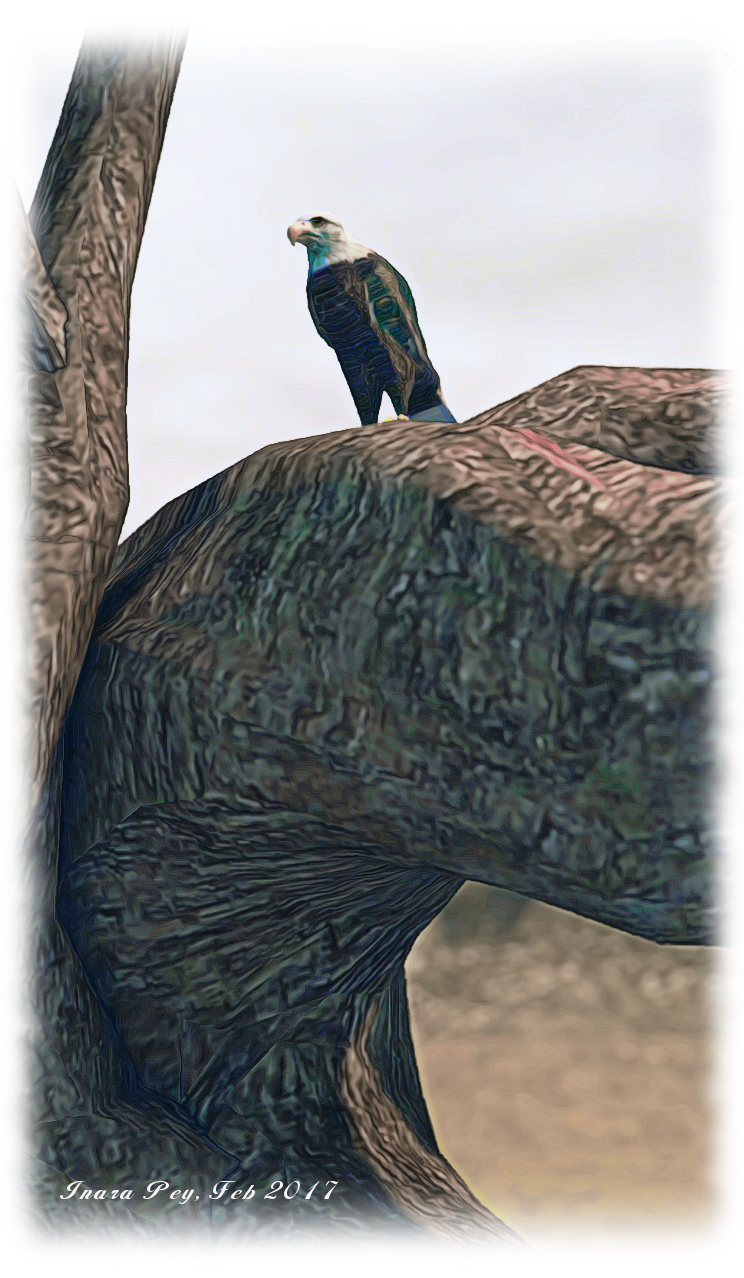
It’s a simple, elegant setting marked by the presence of wildlife: bears wander the edge or the watering hole, possibly vying for fish with the cormorants that are cautiously watching them. Goats and deer graze on the uplands, observed by an eagle perched in a tree and looking quite regal. Closer to the house, stoats and raccoons play, while birds wheel overhead or sit on branches, their song filling the air.
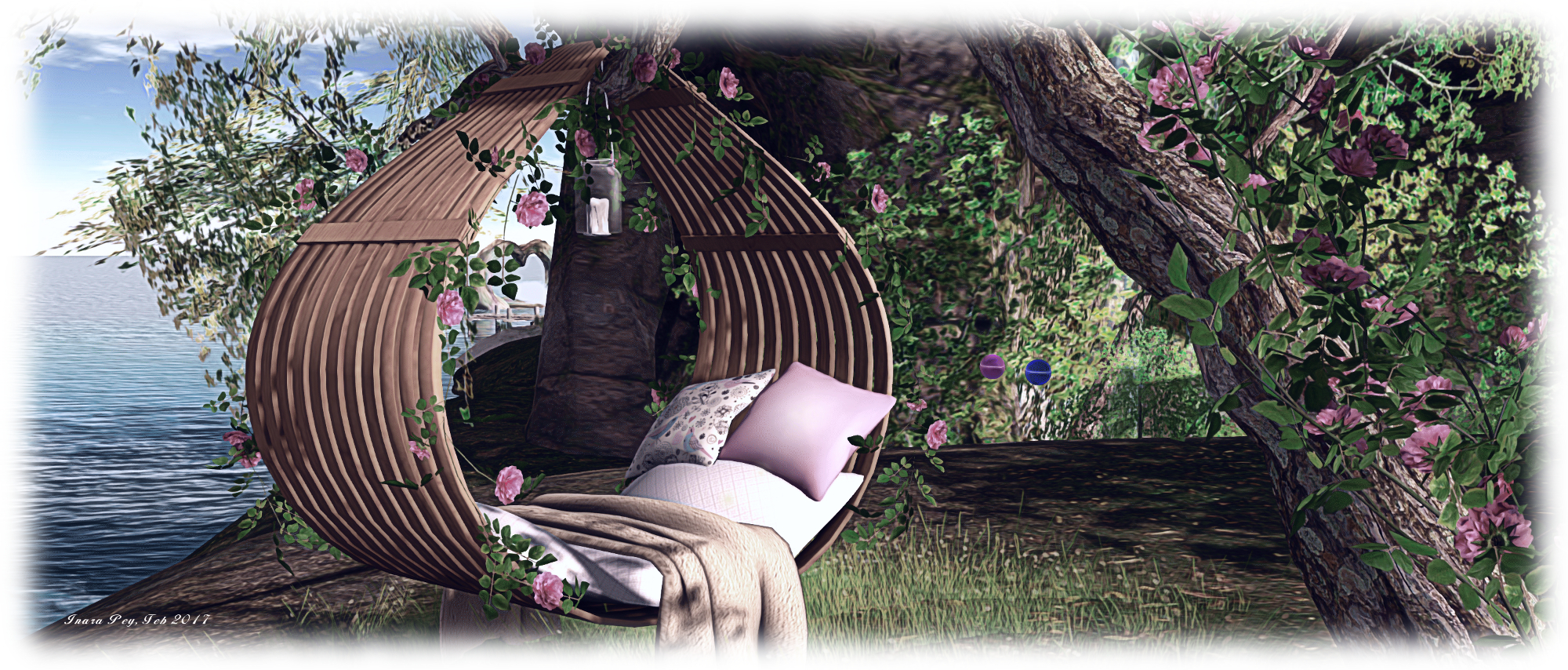
Throughout all of the landscape are little touches which may take time to spot, and visitors have plenty of opportunities to sit and relax or cuddle, be it in the summer houses, in the back of the pick-up truck or at many of the hang chairs and beds or benches scattered across the land.
Sitting on the southern side of the curtain of cliffs which split the region east-to-west, is Love Story, designed by Lauren (Daisy Kwon) and lit by the springtime skies of the region’s default windlight setting. Also open to the public, it again presents a decidedly rural environment, but this one with a touch of the Mediterranean.
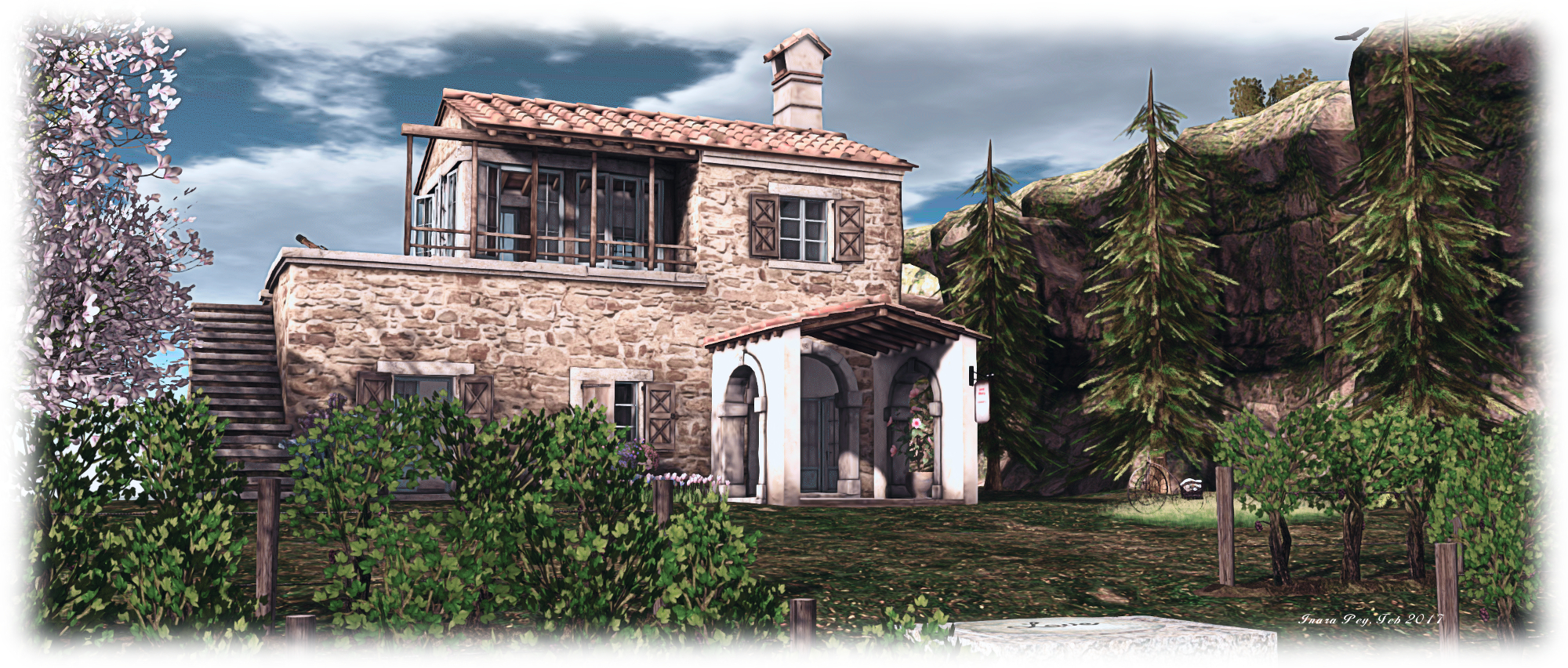
To the west, and overlooking another beach (which is not connected to the one at Shot of Tequila), sits a Tuscan villa, which also overlooks tidy ranks of vines as they descend a gentle slope towards the stream which cuts diagonally through the landscape. This is feed at one end by a fall tumbling from more cliffs, while at the other it joins a long ribbon of water nestled under the dividing cliffs, also fed by a waterfall.
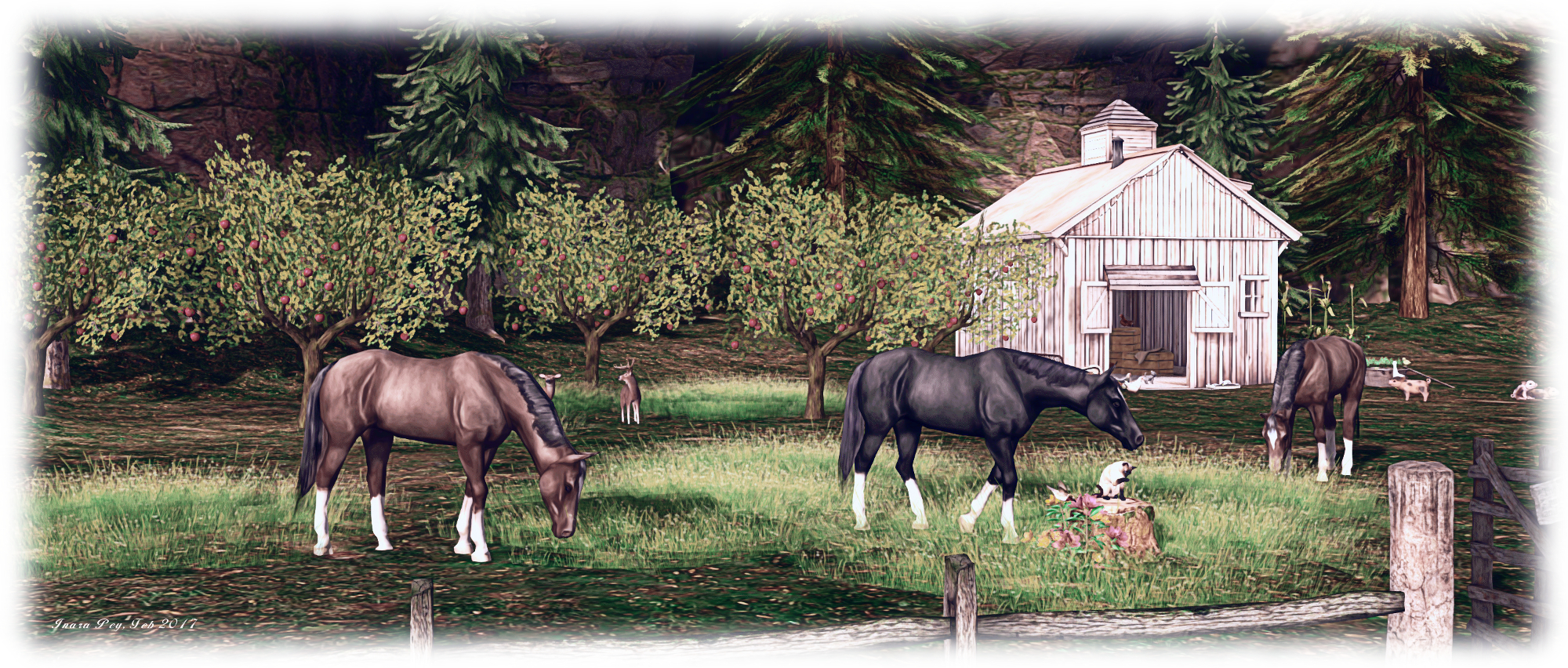
Bright with colour from plants and trees in full bloom, this is another place where animals both domesticated and wild, abound. Horses, sheep and pigs graze in a paddock, watched over by cats and an enthusiastic puppy – as well as a nearby young fox. Ducks waddle along one of the two tracks and swim on the water. And this is just the start.
Follow one of the tracks up into the copse of fir trees, and more wildlife awaits, including several endearing bear cubs, one of whom seems to be playing peek-a-boo while another goes all Baloo Bear as he enjoys a back scratch. Hares, foxes and raccoons can also be found here, as can be one of the romantic cuddle spots. Climb the hill to the west of the copse and another such spot can be found, watched over by a red squirrel, while a blanket is spread nearby on the banks of another pool of water.
Both Shot of Tequila and Love Story make for an engaging join visit, although you will need to teleport between them, as there is no obvious path connecting them. Both require a keen eye to spot everything that’s going on, indoors and out (keep an eye out for the raccoon playing hide-and-seek), and together they make for an enjoyable visit.
Hi, I’m Molly. I’d like to invite you to my very first gallery exhibition. I am new to the world of SL photography and through a strange and unexpected series of events, I find myself with a warehouse gallery space for a month, and the need to fill it with (hopefully) beautiful things. I hope you can come for a visit!
So reads the invitation I received from Molly Mirassou concerning her first exhibition in Second Life. As I’m always keen to see work by artists who may not have (yet) had the exposure others have gained through their time in SL, I was only too happy to hop across and take a look.
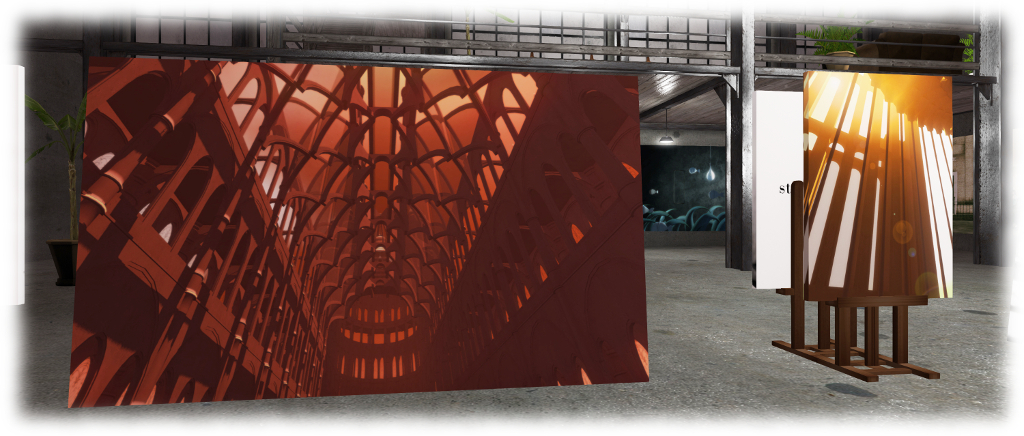
As the invitation notes, Molly’s exhibition, simply entitled Studio M, can be found inside a large warehouse building rather than the more usual gallery space. Seven large format pieces are displayed against the walls, with the floorspace and a raised wooden area occupied by easel-mounted pieces.
The pieces on display is a broad mix, from avatar studies (self portraits, I believe), through architectural and art studies (notably Mistero Hifeng’s sculptures, which Molly has photographed to great effect) to landscapes. Most of the pieces appear to have minimal or no post-processing and simply utilise windlight settings. As such, they are refreshingly clean in style, crisply capturing their subjects.
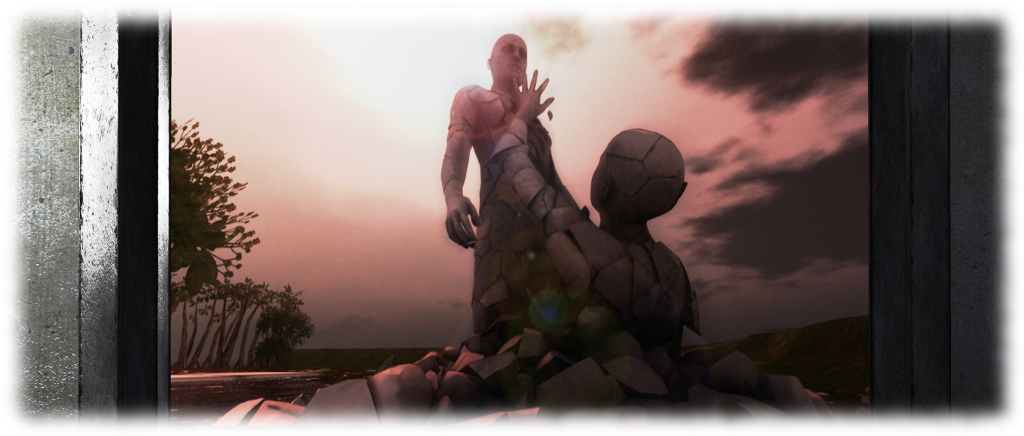
She may be new to SL photography, but Molly clearly has an eye for subject and angle – something which can clearly be seen in the likes of Burning Cathedral (which I believe is a capture of the cathedral at Chouchou), the untitled Studio m alongside it, and, facing them, the powerfully evocative Enough, which can be seen at the top of this article.
Exhibiting your SL photography can be a daunting proposition – we all harbour doubts and uncertainties about our abilities. Molly, however, shows a definite ability to capture mood and emotion. As such, I’m certain that while this may be her first exhibition, it will not be her last; I’m certainly looking forward to seeing more of her work, and witnessing how her technique develops and the directions in which it might take her. The current exhibition will remain open through until Thursday, March 16th.
This stunning enhanced colour images of Jupiter’s south polar region was captured by the JunoCam instrument aboard the Juno spacecraft on February 2nd, 2017. It reveals a complex series of interactions occurring in the fast-spinning atmosphere. Credit: NASA/JPL / SwRI
Following its latest close flyby of Jupiter – passing just 4,200 km (2,600 mi) above the gas giant’s cloud tops on February 2nd, 2017, NASA’s Juno mission spacecraft is now heading away from the planet once more and the next of its 53.5 day orbits. As I’ve previously reported in these Space Sunday columns, the original plan had been to use one of these close passes over the planet (October 2016), in conjunction with a sustained burn of the spacecraft’s British-built rocket motor, to move it into a short, 14-day period orbit around Jupiter.
However, a potential fault detected within the engine system meant the October burn was cancelled, and since then, engineers had been trying to assess if the issue – a set of faulty valves – could be overcome, and the consequences of attempting an additional engine burn if not. No definitive answer has been found and so, following the February 2nd flyby, the decision was taken to cancel all plans for the engine burn and leave the spacecraft in its current 53.5 day orbit around Jupiter.
Doing so doesn’t compromise the overall mission objectives, but it does reduce the number of close passes over Jupiter the vehicle can make. If the reduced orbital period had been possible, the spacecraft would have made some 30 close flybys over Jupiter’s cloud tops during the primary mission period, set to end in July 2018. Remaining in the 53.5 day orbit means it will only make around 12 such close flybys in the same period.
The Juno spacecraft was supposed to complete two 53.5-day orbits around Jupiter in July and August 2016 (shown in green), before using its main engine to brake itself into a 14-primary science orbit (shown in blue). Due to continued concerns about the vehicle’s engine unit, the decisions has now been made to leave it in the 53.5 day orbit. Credit: NASA / JPL
A positive point with the spacecraft remaining in its more extended orbit is that it will spend less time within the harsher regions of Jupiter’s radiation belts, and could thus remain active for longer than the primary mission period – and mission planners are already considering applying for further funding to allow the mission to extend beyond July 2018. It also means that the spacecraft will be able to engage in additional science activities.
The close encounters with Jupiter have already allowed the spacecraft to probe deep within the planet’s cloud belts and discover they extend far deeper into the planet’s atmosphere than had been imagined, and that Jupiter’s magnetic field and auroras are more powerful than previously thought.
“Juno is providing spectacular results, and we are rewriting our ideas of how giant planets work,” Juno principal investigator Scott Bolton, of the South-west Research Institute in San Antonio, Texas, said of the decision to leave the spacecraft in its current orbit. “The science will be just as spectacular as with our original plan.”
NASA Considering Crewed Option for Orion / SLS First Launch
NASA is considering making the first launch of its new Space Launch System (SLS) rocket, currently slated for September 2018, a crewed mission.
Under the agency’s existing plans, the first launch of the new rocket, topped by an Orion Multi-Purpose Crew Vehicle and dubbed Exploration Mission 1 (EM-1), would have seen SLS send an uncrewed Orion vehicle to the Moon and back, with around 6 days spent in lunar orbit. A crewed flight of the SLS / Orion combination would not take place until at least 2021, when crew would use Orion to rendezvous to a small asteroid previously captured via robotic means and moved to an extended orbit around the Moon – an idea which has garnered a certain amount of criticism from politicians.
An artist’s impression of a Space Launch System / Orion combination lifting off from Kennedy Space Centre’s Pad 39B. Credit: NASA
If approved, the new proposal – put forward by NASA’s Acting Administrator, Robert Lightfoot – would see the planned EM-1 mission pushed back to 2019 (allowing the Orion vehicle to be outfitted with the crew lift support and flight systems) and flown with a crew of two. While this would mean a delay in the initial launch of SLS / Orion, it could ultimately accelerate NASA’s plans, allowing the agency to present a wider choice of crewed missions in the 2020s, and respond to criticism that it is not doing enough to demonstrate how it plans to achieve a return to the Moon and / or missions to Mars.
Enceladus: Cradle for Life?
On February 17th, 2005 NASA’s Cassini space probe, part of the Cassini / Huygens mission, made its first flyby of Saturn’s moon Enceladus.
Scientists were naturally curious about the 500 km (360 mi) diameter moon, which is the most reflective object in the solar system, but assumed it was essentially a dead, airless world. However, Cassini immediately found this was not the case.
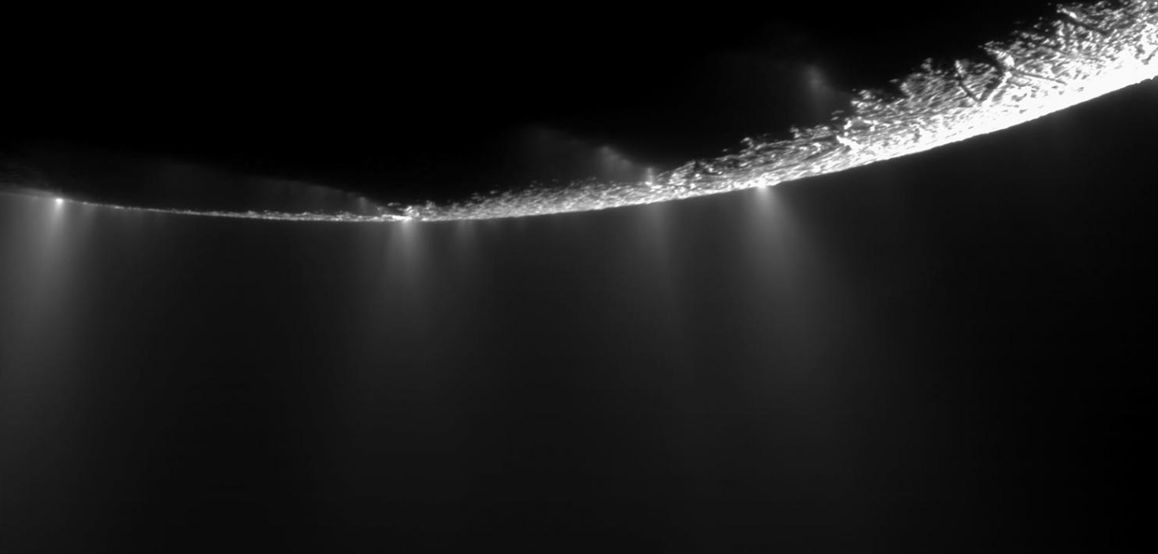
A dramatic plume sprays water ice and vapour from the south polar region of Saturn’s moon Enceladus. Cassini’s first hint of this plume came during the spacecraft’s first close flyby of the icy moon on February 17, 2005. Credit: NASA/JPL / Space Science Institute
The first thing that happened was the magnetometer on the spacecraft revealed that Saturn’s magnetic field, which envelops Enceladus, was perturbed above the moon’s south pole in a way that didn’t make sense for an inactive world – it was as if there was some interaction with an atmosphere.
In the second flyby, a month later, Cassini found the interaction seemed to suggest a plume of water vapour was rising from the moon. Then, in the third flyby, in July 2005, the probe imaged geysers of water vapour erupting from the moon’s south polar region, and thus Enceladus became the target of intense study. So much so, that while only those initial 3 flybys of the moon had been a part of the primary Cassini /Huygens mission profile, the mission was updated to allow 20 more flyby of the moon.
Today, we know that beneath the mantle of ice enclosing Enceladus there is an ocean of liquid water – the geysers are the results of that water breaking through this ice and jetting into space, giving rise to Saturn’s E-ring in the process. This ocean is likely to be warmed and kept liquid by hydrothermal vents on the sea floor, and these in turn – just like the vents theorised to be on the ocean floor of Jupiter’s Europa – might provide all the ingredients for basic life to arise.
To celebrate the 12th anniversary of Cassini’s discoveries with Enceladus, NASA has released a video documenting those initial findings from 2005.
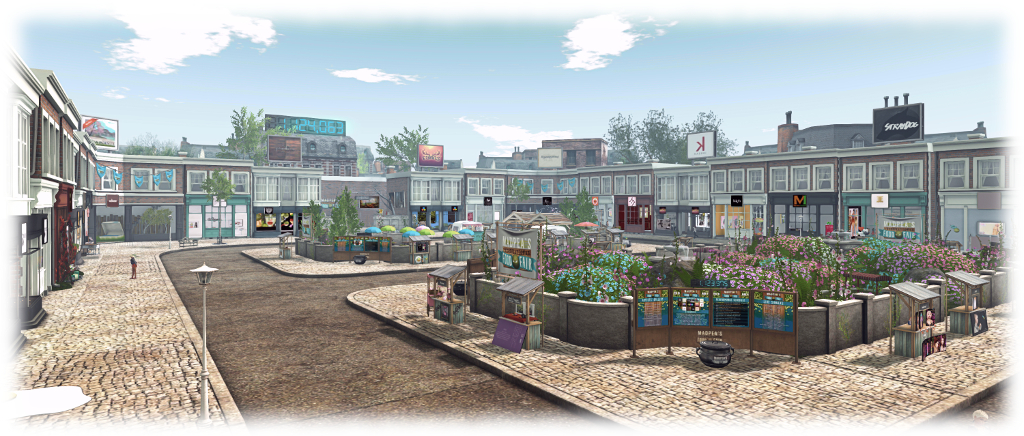
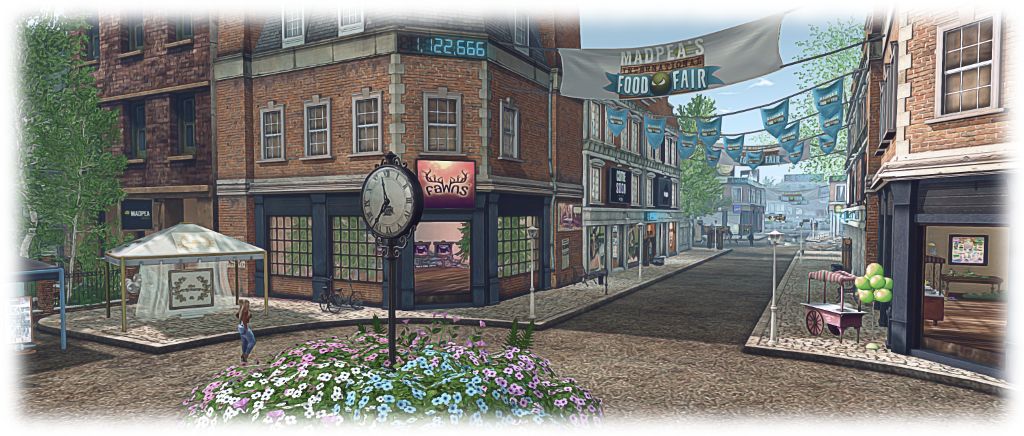
Now open through until Saturday, March 4th, 2017 is the MadPea International Food Fair, in aid of Live and Learn Kenya (LLK) / Feed a Smile. Featuring shopping, music via live performances and DJ and an art exhibition, the Food Fair has a very worthwhile cause in mind: to raise L$9,879,000 (US $37,000) to fund the construction of a kitchen for impoverished school children in the Rhonda Slums of Nakuru, Kenya.
Creators and designers participating in the event include The Cube Republic, Little Llama, Vagabond, Riot, Plastik, Supernatural, Speakeasy Tattoo, Velvet Whip, Refuge, Serenity Style, Razor, RandoMatter, PFC, Nox, Nomad, NOeditON, Ninety, Minimal Jewellery, Mesh India, Lushish Poses, Kargo, Imeka, ITI, Lucas Lameth, Goose, Junk Food, Mello, Merak, Studio, Fiasco, Krescendo, Fetch, La Baguette, Entice, Duvet Day, Eve, Cutie Cakes, Etnia, Cwitch, Disorderly, Cubic Cherry, Chez Moi, Cheeky Pea, Black Bantam, Big Bully, Balaclava, Apple Fall, Atooly-Rockaroo-Gossip, Bellequipe Design, Identity, Adored, Drot, Senses, 1313 Mockingbird Lane and Vengeful threads.
Each designer has made an exclusive item for the Food Fair (single item or a whole gacha set) There will be decor to clothing, poses to accessories and plenty of food! The sky is the limit but everything is for the same amazing cause.
You can see the entertainment line-up on the MadPea International Food Fair web page, together with a running total of funds raised (also shown in-world at the event).
If you would prefer to give money directly to Live And Learn Kenya / Feed A Smile, yo can do so via the following links:
For many children living in slums their future is desolate with illiteracy, AIDS, child prostitution, child brides, starvation and worse awaiting them. But you can help change that. Feed a Smile is part of the Live and Learn in Kenya charity that aim to break the cycle of poverty that plagues the slums by giving a brighter future for the children that live there. Not only do they provide education, but the clothing and supplies needed to learn, healthcare, food and just as important, safety.
Live and Learn in Kenya (LLK) are able to make a difference thanks to the donations that fund-raising can bring them, especially through Second Life. Our virtual world can make a big difference to the real world of these children and their families too. Did you know, for example, that over a third of the money raised by Live and Learn Kenya to provide daily nutritious warm lunches for over 400 children comes from donations received through Feed a Smile in Second Life?
Recently, Live and Learn’s temporary, out-door kitchen was wrecked by bad weather and is no longer fit for purpose. The new kitchen will provide the means for LLK to continue to prepare nutritious meals in a hygienic in-door environment, safe from the rigours of the weather and complete with proper food storage facilities. It’s a vital part of LLK’s continuing commitment to helping the children they support.






 Inara Pey: Living in a Modemworld