Things are still warming up after the holiday period, so not a lot of fresh news.
Server Deployments
The Main (SLS) channel was restarted on Tuesday, 17th January, although there was no associated deployment. This is in keeping with the Lab’s new policy of restarting the server channels every 2 weeks, whether or not there is an associated code deployment (the RC channels were restarted in week #2).
A new server maintenance package will be deployed to the RC channels on Wednesday, January 18th. This includes a partial fix for (non-public) BUG-3286, “Can’t move object” fail notifications (fixes for regions/objects with longer names are pending), together with enhanced server logging and minor internal server enhancements.
SL Viewer
The viewer pipelines at this point remain unchanged from week #2:
Current Release version 5.0.0.321958, dated December 1st, promoted December 5th, 2016 – formerly the Project Bento RC viewer
Maintenance RC viewer version 5.0.1.322791, dated January 12th – some 42 fixes and improvements
Project viewers:
Project Alex Ivy (LXIV), 64-bit project viewer, version 5.1.0.501863 for Windows and Mac, dated January 10th
360-degree snapshot viewer, version 4.1.3.321712, date November 23, 2016 – ability to take 360-degree panoramic images
Obsolete platform viewer version 3.7.28.300847, dated May 8, 2015 – provided for users on Windows XP and OS X versions below 10.7.
In September 2016, the team of Spoonful Of Sugar (SOS) held their inaugural event aimed at raising money for Médecins Sans Frontières (MSF). Also known as Doctors Without Borders, MSF is an international, independent, medical humanitarian organisation delivering emergency aid to people affected by armed conflict, epidemics, natural disasters, and exclusion from healthcare. They provide assistance and medical care to people based on need, irrespective of race, religion, gender or political affiliation.
That SOS event raised over L$3 million (US $11,118) for MSF, an incredible total for a first event, and the organising team are hoping to beat that total in 2017. Work is already progressing on the Spring 2017 Spoonful Of Sugar festival, which will take place between Saturday, March 18th, 2017 and Saturday, April 1st, 2017 inclusive.
The 2016 Spoonful of Sugar event hub
Through the two weeks of the event, there will be live performances and DJ sets, dance troupes and tribute acts. And there will be designers and creators from the worlds of fashion, home and garden, and breedables on hand, all of whom will be both sponsoring the event and offering a range of items specifically to help raise money for SOS and MSF.
Right now, sponsorship spots for creators and designers are available in all three categories – fashion, home and garden, and breedables – but slots are filling up. If you are a creator / designer in any of these categories, and you would like to support SOS / MSF, please visit the SOS sponsorship page to find out more about the various levels of sponsorship currently available, and how to apply.
The 2016 Spoonful Of Sugar Breedables fair
SOS are also looking for bloggers to cover the event. If you are a blogger, and would be interested in doing so, please see the SOS blogger application page.
To keep up to date with Spoonful Of Sugar, make sure you visit and bookmark the festival website, where you can also learn more about the work of MSF.
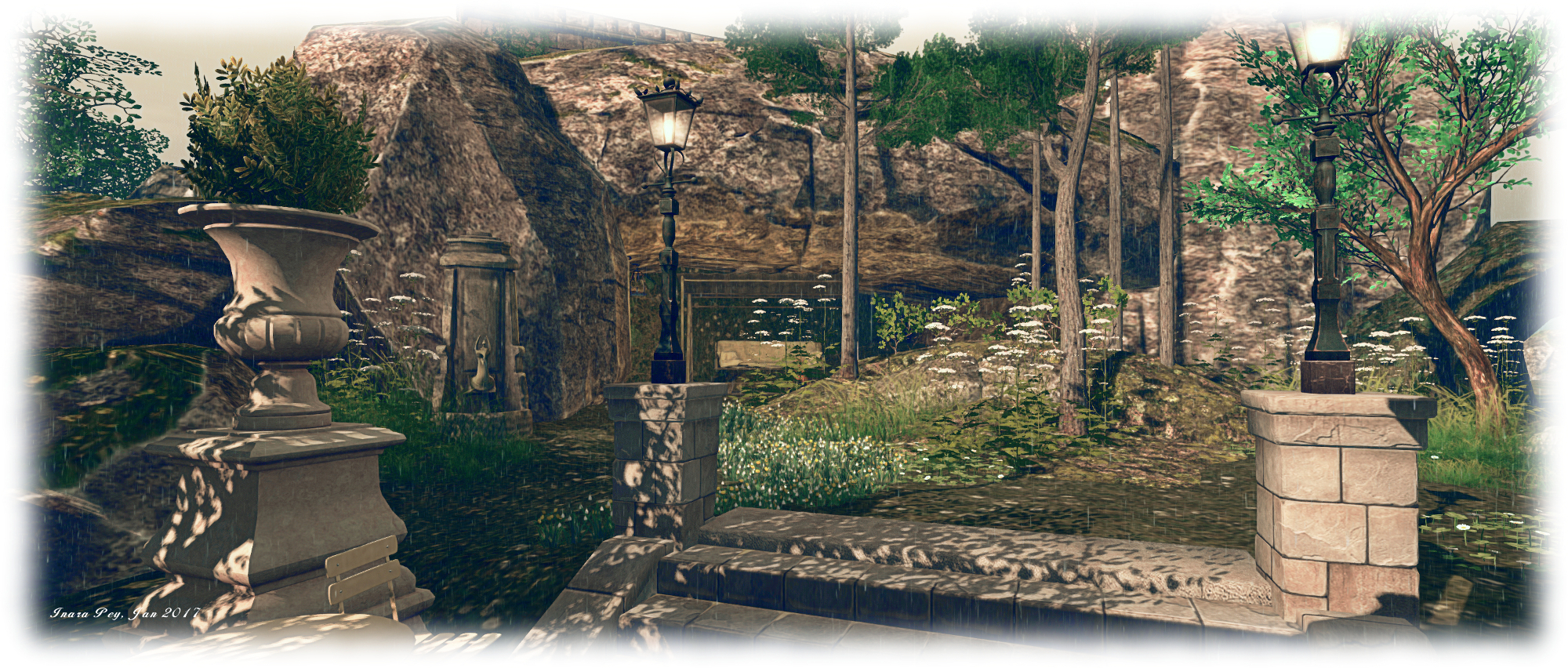
Caitlyn and I recently had the opportunity to drop in on Mystic, the Full region on which friends Boudicca Amat and Anthony Westburn have their home. The occasion of our visit was to mark the completion of Bou’s work in redesigning their land, which covers a little under 1/4 of the region and which is now once again open to public visits.
Once called Hestium – which you can read about here and here – the parcel is now called An Uncertain Destiny, and once again it is a tour de force of Boudicca’s creative talent, bringing together several elements into a cohesive whole whilst also demonstrating you don’t actually need an entire region – Full or Homestead – to create something memorable (particularly with the increases in Land Impact allowances).
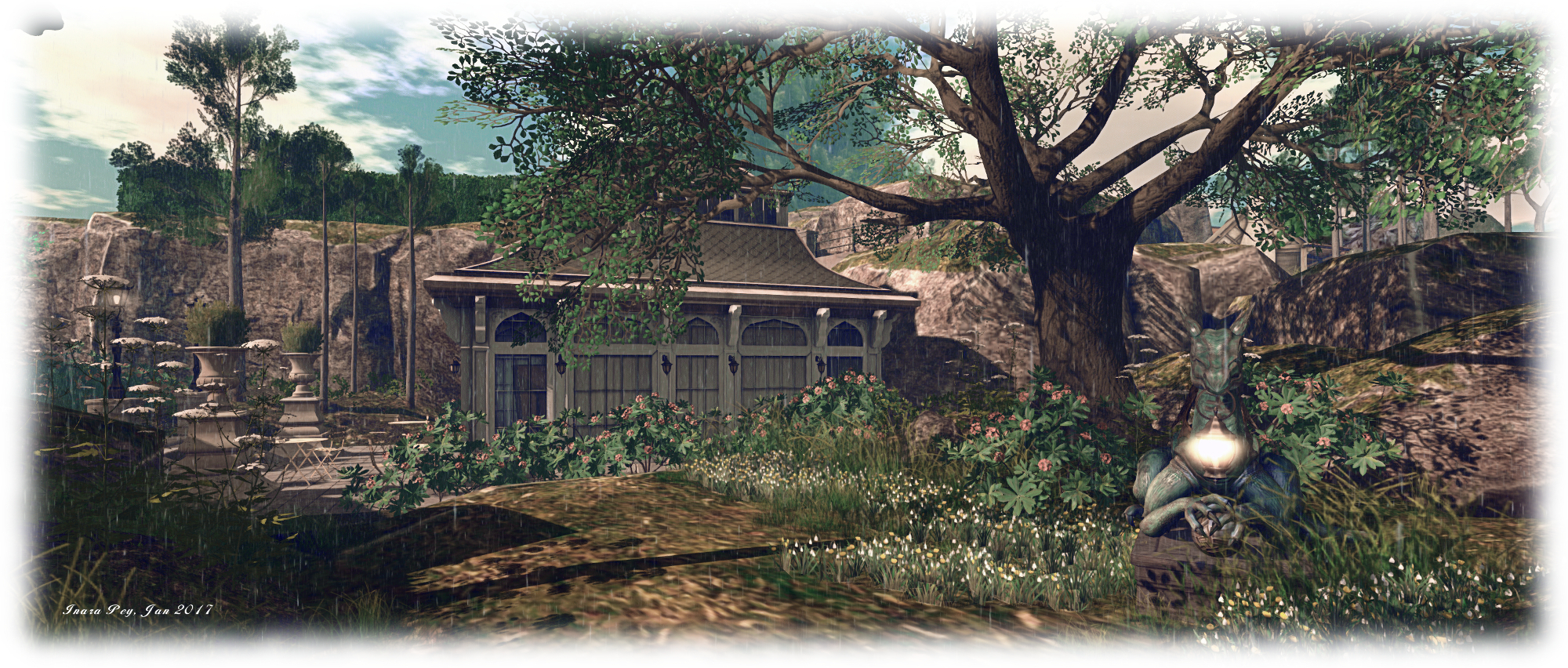
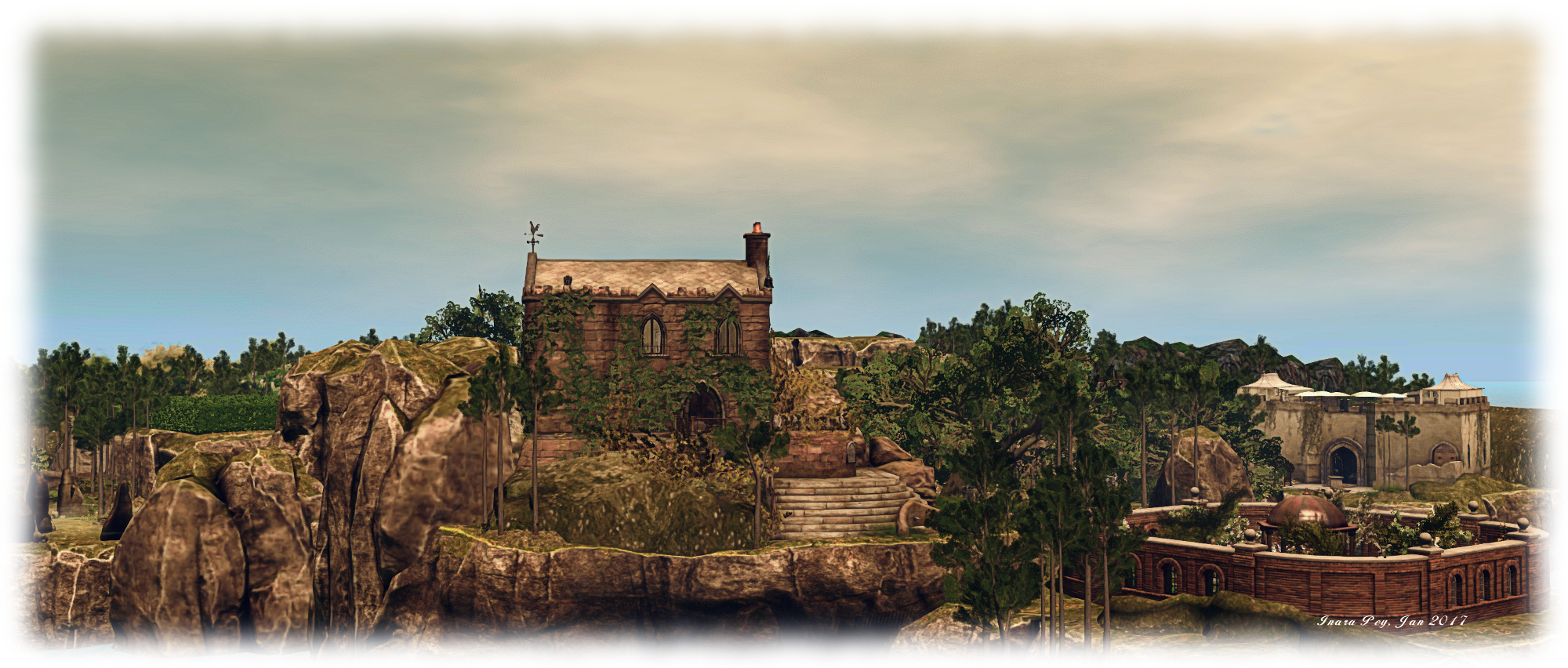
On arrival, visitors find themselves on a small sand and shingle beach surrounded on three sides by a tiered, rocky landscape. The table-topped cliffs and plateaus offer a lush covering of grass, flowers and trees enjoying the summer rain. These various rocky tiers are connected by stairways and paths, offering a number of potential routes for exploration.
Where you go after your arrival is up to you: simply climb the steps up from the beach and let your feet carry you where they will. To the west sits an old castle keep, now converted into a cosy pub on one side and a little library-come-reading room on the other. A staircase from the pub directs people up to a rooftop café where Bou reads from some of some of her favourite books every Tuesday and Thursday between 15:15 and 16:00 SLT.
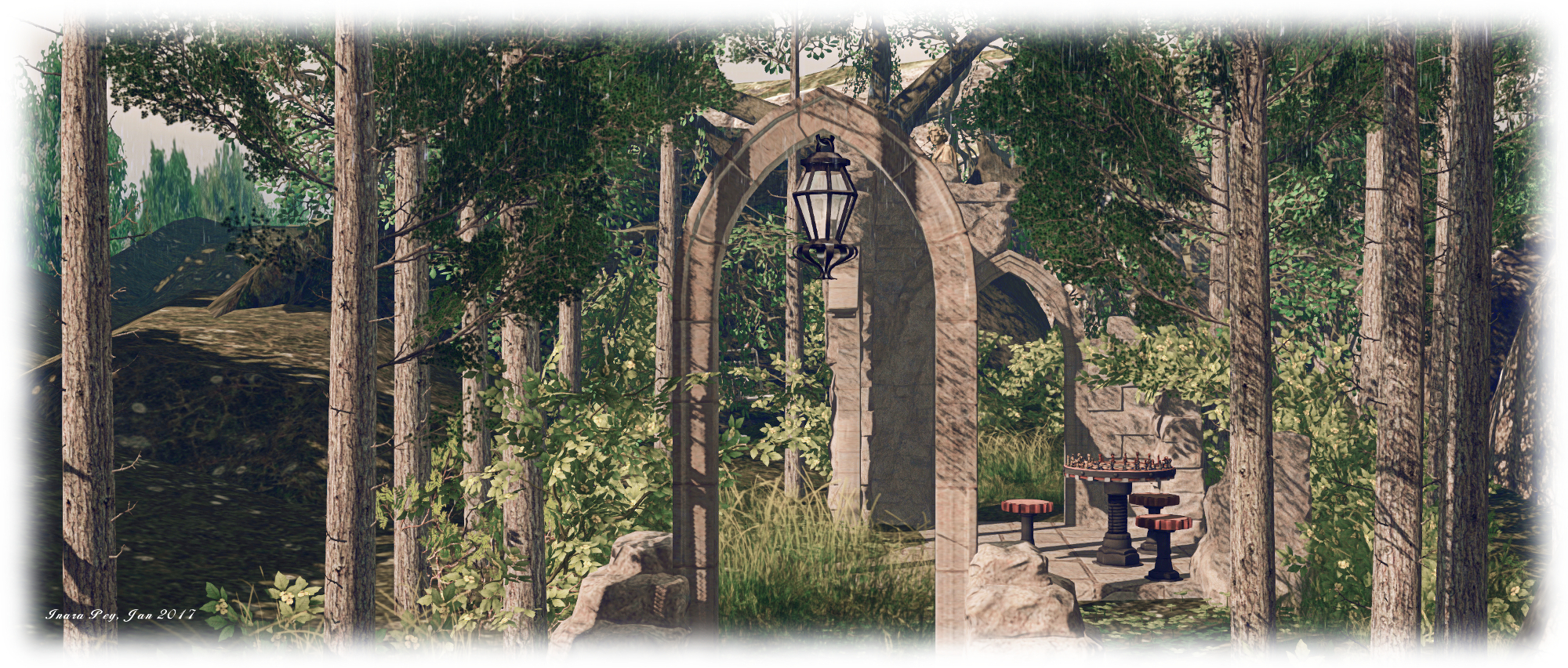
Beyond this, a path winds up between trees and up more steps, promising the way to the land of Far, Far, Away. No Shrek or Fiona to be found here, however. Instead, there is a cosy Scandinavian stuga sit with its back to another cliff, some mystical ruins nearby.
The mystical feel can also be found on the east side of the parcel, beneath the cliffs of Bou and Anthony’s private home – the only part of the parcel not open to public access. Here sits an ancient stone circle reached via a gabled gate. Close by, and occupying the tops of another plateau, sit a formal garden and a hedge maze. I’ll leave you to discover how to reach them – there is more than one route 🙂 .
All of this is brought together by a central garden of wild flowers and shrubs, in which a graceful conservatory sits, the little terrace outside its door open to the gently falling rain. For those preferring to sit in the dry, a s swing bench can be found nestled under a rock shelf close by, warmed by a little fire. Couples might also find a place to sit in the gazebo of the walled garden a slightly longer walk away and overlooking the beach.
Bou has always had an eye for colour, line, composition and detail, and rain – or as we sometimes call it in England, “liquid sunshine” due to its frequency – notwithstanding, an Uncertain Destiny once again proves this in spades. Not only is it a gorgeous design, wonderfully photogenic and delightfully relaxing, it is filled with wonderful little touches which bring it perfectly to life.
In ‘Sansar’ Will Open to All in First Half of 2017 with a New Approach to Virtual Worlds (January 15th, 2017), Ben Lang of Road to VR becomes the latest tech journalist to sit down with Linden Lab to try out and discuss Sansar. While he covers a lot of what has come to the for in other, similar recent articles, he also provides some further confirmatory / interesting tidbits, some of which allow for a little speculative thinking.
The biggest piece of information is perhaps right up there in the title: Sansar will open in the first half of 2017 (my emphasis). This actually comes as no surprise, as Sansar is a new project, and time frames for new projects of any description tend to slip a little as the work progress. Further, and as I noted in discussing Dean Takahashi’s recent look at Sansar, a degree of slippage appeared to be on the cards when he referred to Sansar opening to the public in “early” 2017, rather than the “Q1 2017” the Lab had previously indicated might be the case.
At the top of the article, Lang touches on the aspect of Sansar being focused on “creators” rather than “consumers”. Again, as I’ve previously mentioned, defining “creator” here is perhaps important.
By and large, “creator” in SL tends to be used in reference to those who design and make the goods we use to dress our avatars and furnish our land. Outside of lip service, it’s perhaps not a term closely linked with those who obtain land in SL and create environments using the goods they have purchased, rather than building and scripting everything themselves. With Sansar, however, it is pretty clear “creator” is intended to encompass both, and thus perhaps encompasses a broader cross-section of users than might be seen as the case with Second Life.
The focus on “creators” shouldn’t be taken to mean Sansar is “only” for “creatives”. Spaces hosted on the platform will obviously require an audience, be it the public at large or drawn from specific, more niche audiences. It simply means that from a technical standpoint (and most likely outside of the UI), Sansar’s focus is tipped towards those wishing to build environments within it. As an aside to this whole “creator” thing, it’s also worthwhile noting that where previous articles had pointed to around 600 creators being involved in Sansar’s Creator Preview, Lang mentions the number might be around 1,000.
Further into the article, Lang references moving between Sansar spaces, specifically noting “hopping” from one to another via web pages. This is unlikely to be music to the ears of many in SL; however, it’s important to note that this approach is not necessarily the only means to move between experiences.
In the past, Ebbe Altberg has mentioned the potential for “portals” between environments which might be see as “linked” (although it is by no means certain this idea is still be pursued). More particularly, in June 2016, when talking to Mark Piszczor of Occipital about Sansar, he referenced the idea of “teleporting” between Sansar spaces, and more recently we’ve had a glimpse of a Destination Guide style capability in Sansar (apparently called “Atlas”) for moving between different spaces. So the web page approach might simply be one of several means to get from space to space in Sanar. Time will tell on that.
When referencing creators being able to monetise their creations, Lang touches on the previously noted ideas of selling virtual goods and creations (up to and including entire experiences) through the Sansar marketplace, and the potential for creators to charge people an entry fee to their experience if they wish. However, beyond this, Lang indicates some of the broader brainstorming going on at the Lab – such as the ability for consumers to pay money to a virtual object which would hold the money and pay it out to its owner at regular intervals.
As Lang points out, this opens the doors to a whole range of potential items – pay-to-play pool tables, vending machines (think broader than the gacha machines we see in SL), rides, etc. So – and slipping into the realm of pure speculation for a moment – might this allow experiences creators to “rent out” their experiences – say an events venue – to others, and receive a fee each time it is used / instanced anywhere in Sansar, rather than simply selling them for a one-off fee on each copy purchased? The could be an intriguing route to take, if at all possible.
Might Sansar offer the means for experience creators to “rent out” their spaces as a means to monetise them? Credit: The O2 Arena
But to come back to Lang’s Road to VR article. He notes that in terms of capabilities, Sansar’s graphics are “actually quite good”, although the physics are lacking. The former is perhaps something of a step down from verdicts passed by other journos, while the latter is promised to be improved in a forthcoming update. He also underlines the “style agnostic” approach to Sansar, which again is a potential differentiator to SL in that creators of experiences in Sansar are likely to have far greater freedom in how they visualise the spaces then build than can be achieved in Second Life.
Overall, ‘Sansar’ Will Open to All in First Half of 2017 with a New Approach to Virtual Worlds, makes for a further interesting read on Sansar, offering some apparent insights that help build the picture of what the world at large might expect once allowed in the platform. Definitely worth a read – as are the comments which follow it.
This summary is published every Monday, and is a list of SL viewer / client releases (official and TPV) made during the previous week. When reading it, please note:
It is based on my Current Viewer Releases Page, a list of all Second Life viewers and clients that are in popular use (and of which I am aware), and which are recognised as adhering to the TPV Policy. This page includes comprehensive links to download pages, blog notes, release notes, etc., as well as links to any / all reviews of specific viewers / clients made within this blog
By its nature, this summary presented here will always be in arrears, please refer to the Current Viewer Release Page for more up-to-date information.
Official LL Viewers
Current Release version: 5.0.0.321958, dated December 1, promoted December 5 (no change) – formerly the Project Bento RC viewer download page, release notes.
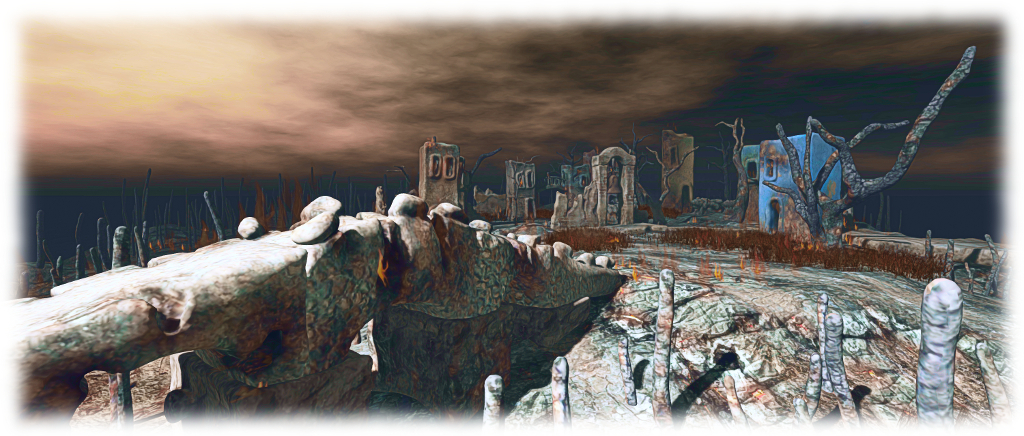
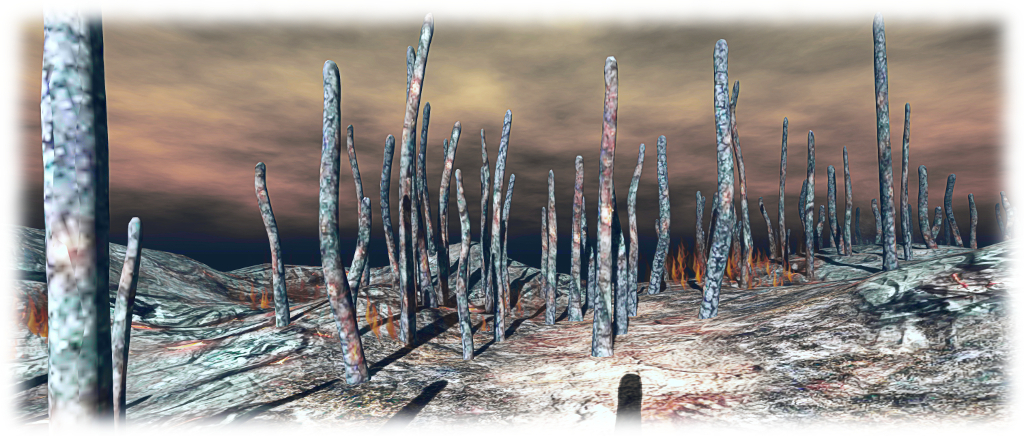
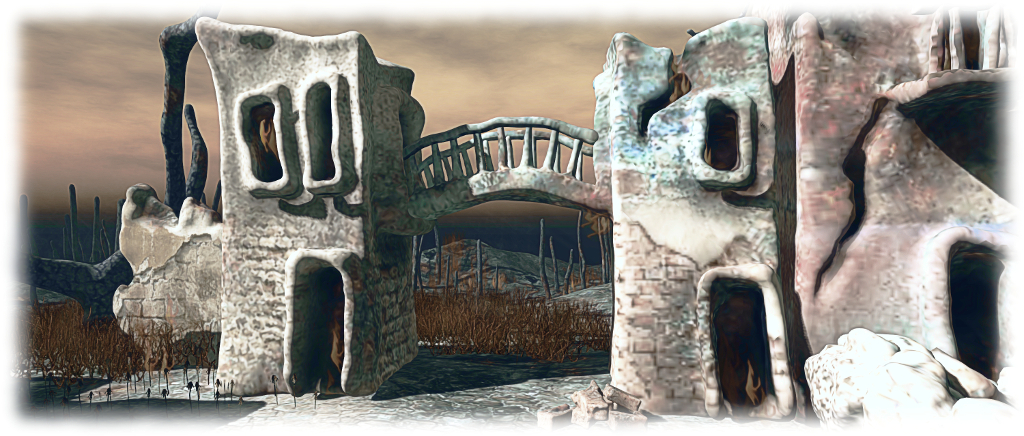
Burning is the title of Cica Ghost’s latest region-wide build, which opened on Sunday, January 15th. It is a piece which stands in contrast to several of her recent builds in that it is of a darker tone and style. Under a lowering, cloud-heavy sky, lit by a distant sunset, a town burns. The land around it is scorched and aflame, ashen tree trunks, bereft of branches and leaves, point to the heavy sky like gnarled, accusative fingers.
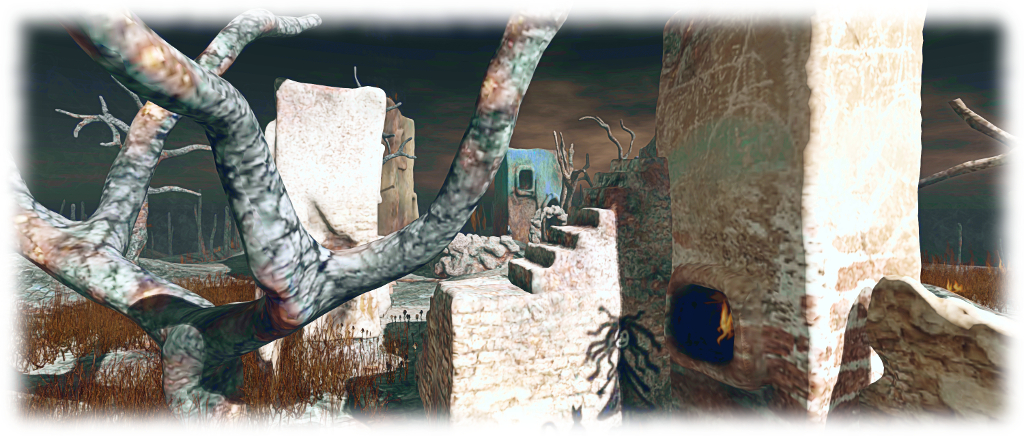
Within the town, the tall buildings are charred, their pain blistered and blackened as flames lick doorways and windows. Some walls carry some of Cica’s usually light and happy stick figures, which here are cast in a new role as poignant reminders that this was once a happier place. A single bridge spans what might be the parched bed of a vanished body of water, offering a way into – or perhaps an escape route out of – the conflagration.
The who, what, how and why of the fire’s origin are not revealed. The burning landscape and buildings are an open page on which we can write our own view of what has occurred. However, with all that is going on in the physical world, coupled with the general presentation of Burning, it tends to cause the name Aleppo to spring to mind. So is Burning perhaps a political commentary?
Possibly. But before we decide or judge, Cica provides a possible clue to interpreting the work. It comes in the form of a quote: time is the fire in which we burn. It’s part of a line from a 1938 poem by Delmore Schwartz entitled, Calmly We Walk Through This April’s Day (also sometimes called For Rhoda), which is by coincidence, a poem I know quite well. In it, Schwartz records how we go about our daily lives largely unaware of the uncontrollable passage of time and the fact that, with every moment, we are closer to our own deaths and the deaths of those we love. From childhood through adulthood, we are so often caught within the minutiae of our lives that we lose track of all that is really important – or should be; only in our closing years do we realise what has happened – by which time all may lie burnt by time.
So is Cica presenting us with a philosophical piece with Burning? “I didn’t know about the poem,” she told me, “But I came across the line while searching for quotes about fire, and it fitted what I wanted to say.”
The quote in question attributed the line as coming from a character in the movie Star Trek Generations, hence why Cica didn’t make the connection. However, she has perfectly captured the tone and meaning of Schwartz’s poem as a whole, from the melancholy through to the way in which we do hurry through our lives – as exemplified by the visitors Caitlyn and I sat and watched from one of several perches in the installation (hover your mouse around to find them) as they hurried back and forth through the buildings and trees before vanishing.
That Cica has captured all of the nuance within Calmly We Walk…. may have been serendipitous, spinning outward from that one line from the poem, but that doesn’t matter. Serendipity is often the cousin to artistic expression, and the pairing of the installation with the entire poem broadens our understanding and appreciation of Burning. It also perhaps sits with that image of Aleppo which pops into the mind when first arriving. Schwartz wrote his poem shortly before the outbreak of World War 2, a time when towns and cities burned and lives – and generations – were shattered; thus another layer of poignancy is added to the installation.
 The Hell’s Heaven 2.0 – blog post




 Inara Pey: Living in a Modemworld