Cica’s Them in Second Life

Cica's Them; Inara Pey, August 2016, on Flickr Cica Ghost: Them – click any image for full size

Now open is Cica Ghost’s latest full region installation: Them, and it is perhaps one of her most intriguing, and oddly endearing installations, yet

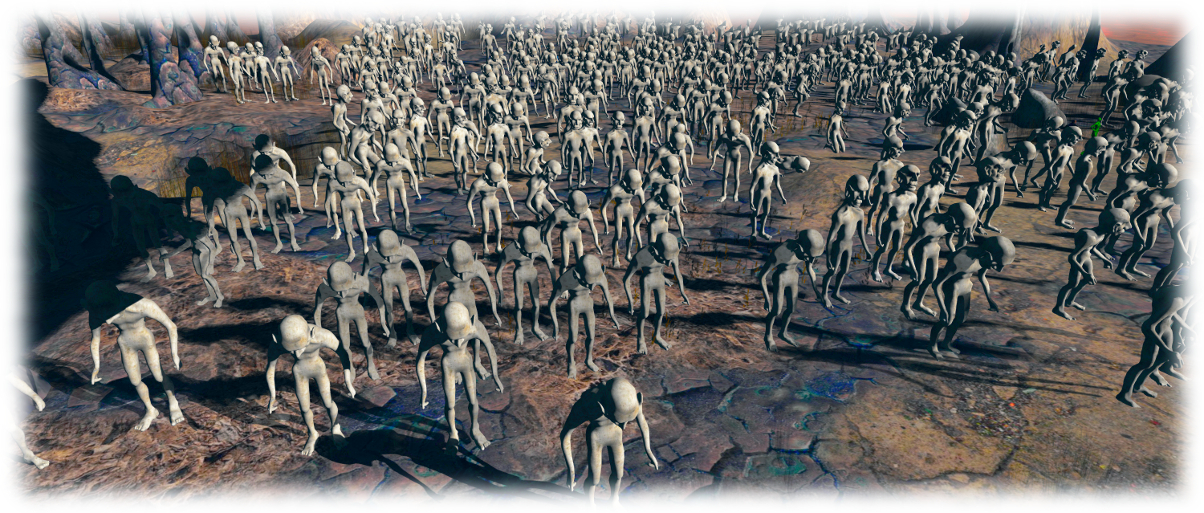
Beneath a blue / ochre sky, across which clouds periodically scud, lies as barren, undulating landscape of rock and rounded peaks. Strange tentacle-like forms rise into the air at various points, their dimpled sides suggesting they might be hollow, while their tampering, slightly twisted forms suggest tree trunks denuded of branch and leaf.
Cica's Them; Inara Pey, August 2016, on Flickr Cica Ghost: Them

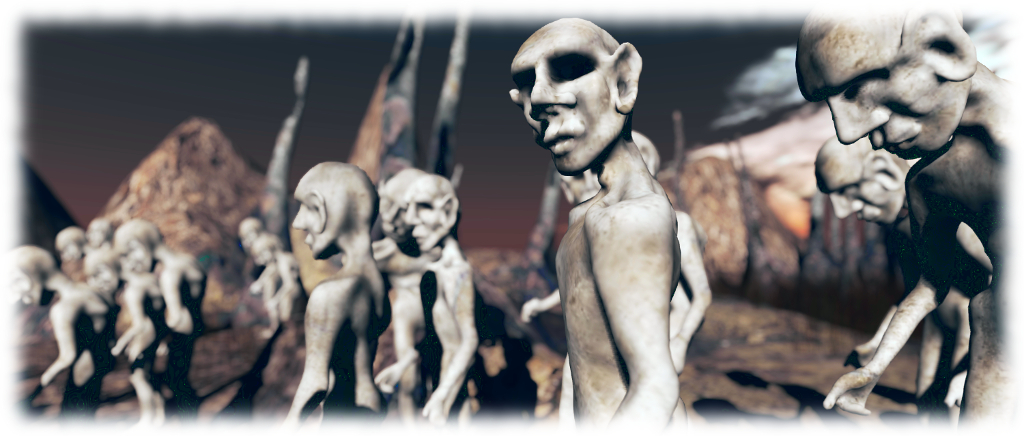
Across this landscape, a horde of naked figures can be seen. Almost all of them have heads bowed, backs slightly bent, arms held limply, as in supplication, while one or two are in their knees and one is prostrated on the ground. They all appear humanoid in form, although their bodies are proportioned differently to ours, slightly emaciated in build with skin a pale grey tone. Among the horde, small groups of three or four, along with the occasional individual, have their heads turned towards the sky.

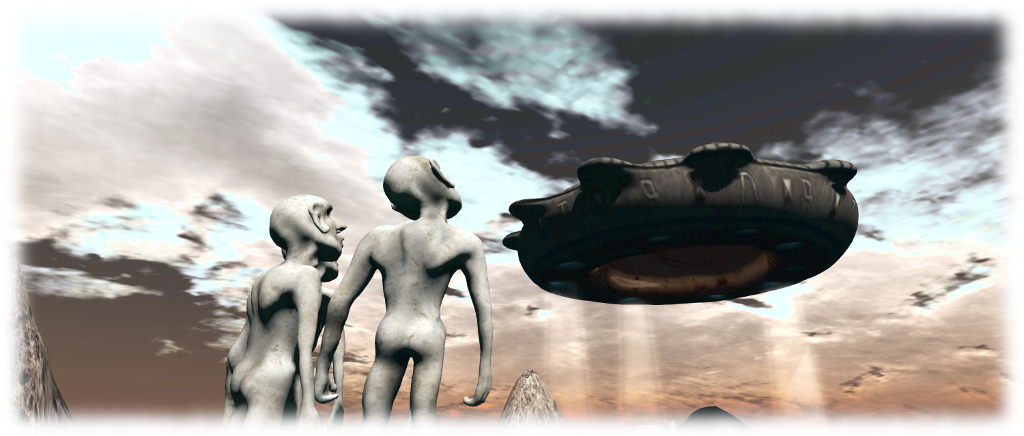
That so few are looking upwards seems odd, because floating or hovering in the sky is a circular craft, a quintessential disc of an unidentified flying object, or UFO. It rotates silently, slowly, beams of light from some of the dimples on its underside sweeping over some of those below, sunlight sparkling occasionally off of its upper surface while illuminating the strange glyphs on its side.
Cica's Them; Inara Pey, August 2016, on Flickr Cica Ghost: Them

The presence of the craft suggests the vast majority of the crowd are paying obeisance to it; their heads bowed, bent forward attitude suggestive of subservience. Only those looking up appear to be the least bit inquisitive, heads cocked as their faces are turned towards the sky.

But look again; there is more going on here than might appear to be the case. The eyes of those on the ground appear to be deep-set, lost in shadow beneath heavy brows – or are they? Could their blackened eye sockets indicate they are sightless, or almost so?  Is this why their ears are disproportionately large, and why even those looking up seem to be looking towards the ship in the sky, rather than at it – as if they can hear its presence, rather than see it, and so have heads cocked to better detect the sounds it might make, so they might better understand what it might be?
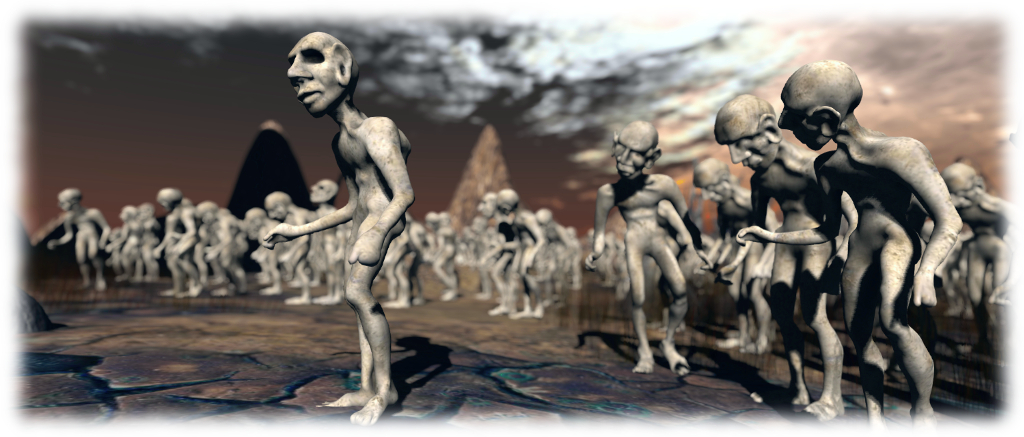
Cica's Them; Inara Pey, August 2016, on Flickr Cica Ghost: Them

Then there is the ship. It is here to observe, or do the beams of light indicate something else – the classic teleporting beams beloved of close encounters stories? And if so, is the ship here to gather, or simply to ferry, being little more than an intergalactic bus service,  picking up another batch of passengers along its route?

Is there, perhaps, a metaphor here, awaiting our interpretation? And who are the “Them” of the title? Whoever might be aboard the ship, or those on the ground? The layers of possible riddle and interpretation are wonderfully stacked together.
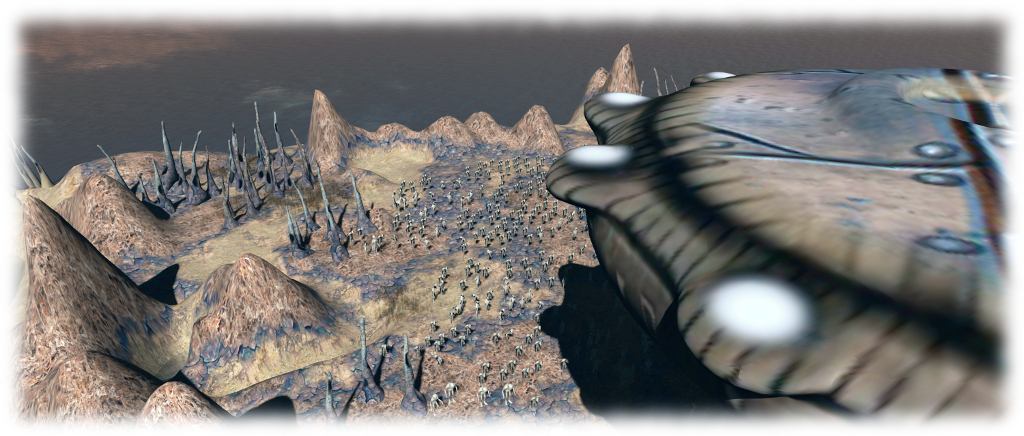
Cica's Them; Inara Pey, August 2016, on Flickr Cica Ghost: Them

“There is no U in UFO,” Cica tells us through the About Land description, and you can sense the twinkle in her eyes in writing those words. They hint at the idea of mystery revealed – things are only unidentified until we can make sense of them in our own way. Is this the meaning behind the piece, and are the apparently sightless folk on the ground a metaphor for this obvious-yet-complex truth? Or is the entire piece toying with us: a riddle demanding we apply our imaginations to identify the narrative within it which most appeals to us at the time?

This is the real delight of Them, we can peel back the layers within it – real or supposed – in many different ways, making it an intriguing installation worthy of repeat visits.

SLurl Details

  • Them (Rated:  Moderate)

Gaming Islands: introducing users to Skill Games in Second Life

The new Gaming Islands - designed to introduce Second life users to Skill Gaming
The new Gaming Islands – designed to introduce Second life users to Skill Gaming

In a blog post on August 2nd, 2016, the Lab introduced their new Gaming Islands: regions designed to help Second Life users – particularly (but not exclusively), I would assume, new users – understand Skill Games in the platform, how they can play them (and why they may not be able to play them), together with a means to find them.

I’m not sure when these regions  – there appear to be two at present – opened, so whether the blog post has been timed to coincide with their launch or whether, like much that is in the blog post, they’ve been around a while but simply not promoted, is hard to tell. However, on reading about them, I jumped over to take a look – but before I get into the details, a quick bit of background.

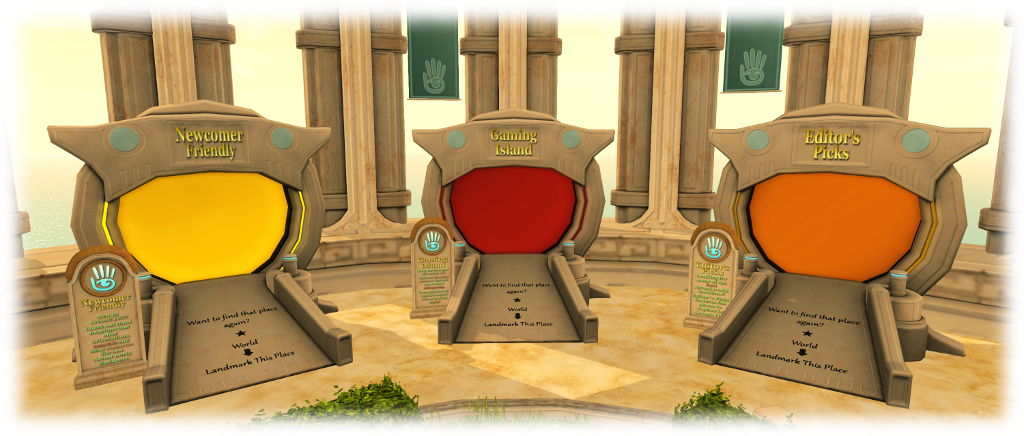
Incoming new users can find their way to the Gaming Islands via a dedicated teleport portal on the Social Islands
The Social Islands provide a dedicated teleport portal  to the Gaming Islands for new users; established users can reach them via the Portal Parks

Gambling laws in the USA and around the world can be complicated beasts. What some might consider to be gambling to others might be viewed a game of skill, and vice-versa. This makes determining what is and isn’t allowed and by whom a difficult practice, particularly where the Internet is concerned.

Because of all this complexity, the Lab banned gambling in Second Life, whilst allowing games of skill to remain. Then, in 2014, the Lab sought to further refine the kinds of skill games involving money and payouts which are permissible in SL through a complete overhaul of their Skill Gaming Policy, together with the introduction of new Skill Gaming regions where such games can be played.

The new Gaming Islands are designed to help SL residents understand what Skill Games are, where they can be played, the kinds of games they might encounter, how they can get to play them – and why, in some instances, they may not be allowed to access the regions where they can be played, and finally to offer a means to reach Skill Gaming regions.

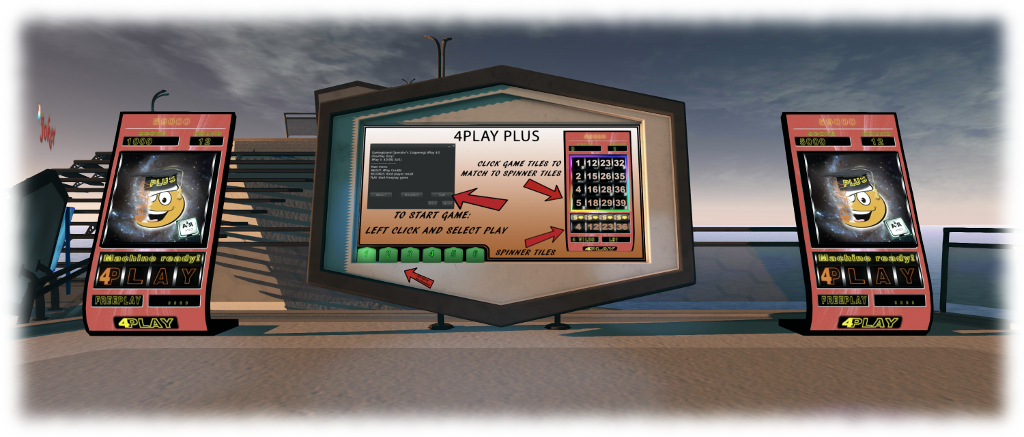
One of the example games in the Gaming Islands
Gaming Islands: one of the example games

To achieve this, the new Gaming Islands are split into four areas: the arrival point, a game play area; a Learn area which explains more about Skill Games in SL and how to access Skill Gaming Regions; and an Explore area which provides direct teleport portals to Skill Gaming regions provided by various in-world Skill Gaming Operators.

The game play area offers what appear to be “skill-based slot machine” games (yes, there are  such beasts in the physical world) with L$ pay-outs – although I have to admit, even after reading the instructions, I was unable to determine where the “skill” factor came into effect over and above the “chance” element (the requirement for Skill Games in SL is that their outcome “is determined by skill and is not contingent, in whole or in material part, upon chance”).

This is not to say that I think the games are not skill-based, but simply that – as a non-gambler / player of skill games, I simply didn’t get where skill enters into them, even after reading the instruction tabs. Perhaps this might indicate more practical explanations are required, or maybe it just indicates I just don’t get Skill Games. I’m also a little mystified as to why, more than an hour after I left one of the islands, the GamingIsland Operator made a small payment to my account – but hey-ho (addendum: apparently pay-outs are made at regular periods after play).

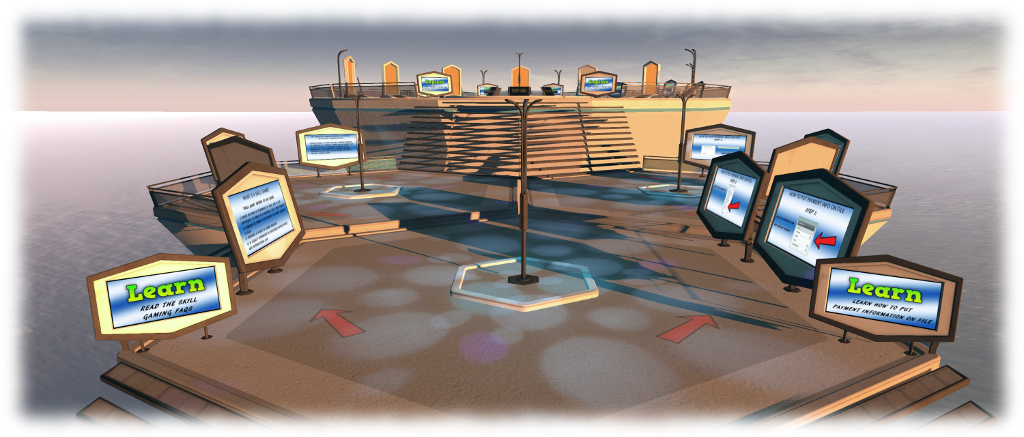
Gaming Islands Learn area - discover more about Skill Gaming and how to access Skill Gaming regions in SL
Gaming Islands: Learn area – discover more about Skill Gaming and how to access Skill Gaming regions in SL

The Learn area, designed to get people up-to-speed with Skill Gaming in SL, how they can ensure they are eligible to access Skill Gaming regions and why, even if they meet the SL criteria, they may still be unable to do so, is a little more straightforward.

To one side of the are a series of information boards designed to help people ensure they can access Skill Gaming region; on the other are explanations of what Lab’s define a Skill Game (lifted from the Second Life Skill Gaming FAQ), together with information on why, legally, some SL users may not be able to access Skill Gaming regions even if they meet the SL criteria for doing so. The split path perhaps isn’t the best approach here, given it might encourage some to simply go around one side and then up the stairs to the final section, but the use of teleport boards in the final section makes this a minor quibble.

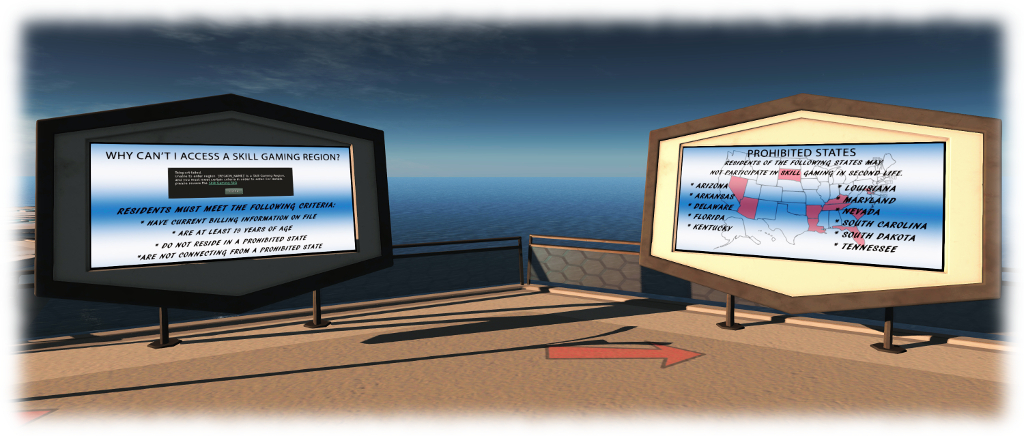
The Learn section of the Gaming Islands provide information on what is required to enter Skill Gaming regions (together with step-by-step instructions on ensuring the criteria is correct), and why, even if the SL criteria are met, some users may still not be allowed to access the regions
Gaming Islands: a more detailed look at a couple of the Learn area info boards, which explain what is required to enter Skill Gaming regions (step-by-step instructions to meet the requirements are provided on the other side of the  area), and why, even if the SL criteria are met, some users may still not be allowed to access the regions

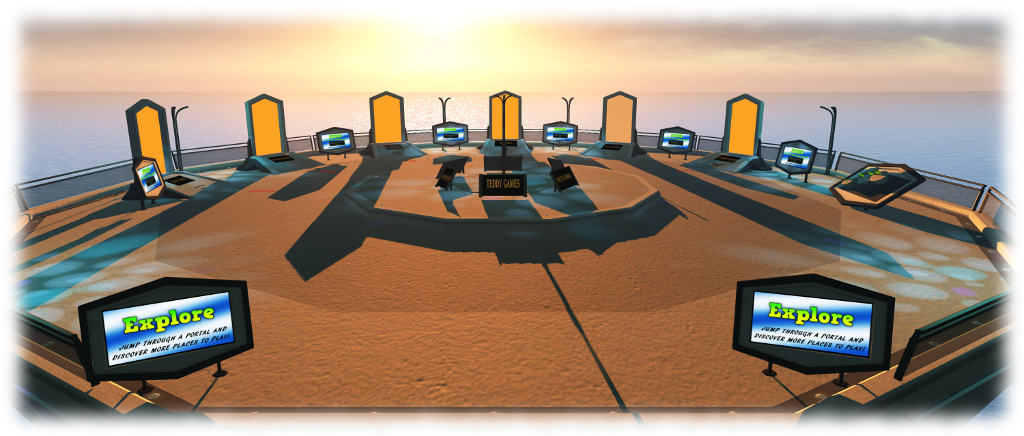
This final section, entitled Explore, offers teleport portal directly to a number of Skill Gaming regions provided by different Skill Gaming Operators. Should anyone find they cannot use the teleport portal, boards between the portals will teleport them to the Learn section of the island where they can double-check they meet the SL / legal (in the case of US residents) requirements for accessing Skill Gaming regions.

The Explore section of the Gaming Islands, with teleport portals
Gaming Islands: the Explore section with teleport portals

Skill Gaming isn’t to everyone’s interest, to be sure. However, providing information on what it is and how to find it is, I would suggest, a good idea, as is joining the dots for new users to be able to find their way to such regions, which give the opportunity to play for Linden Dollars. As it is, Skill Gaming operators pay a premium for their regions, and so providing a means by which they can obtain traffic on the same footing as other types of activity in SL is only fair.

In terms of the Gaming Islands layout, and my own problems in “getting” the games aside, the design is straightforward and does pretty much exactly what it says on the tin. Which is all one can ask, really.

Lab blogs on recent Second Life updates

On Tuesday, August 2nd, the Lab blogged about recent and forthcoming updates to Second Life. It’s a curious post, offering a potpourri of news, some of which is liable to be familiar to many, some of which might be new / surprising / interesting, even for those of us covering Second Life to the best of our abilities.

First up on the post is Project Bento – the project to greatly enhance the avatar skeleton for use with mesh bodies and bits (human and non-human). I have, and am, covering this project through my Bento updates, so please excuse me if I refer you to those reports for specifics, if you’re unfamiliar with the project and want to know more. If you’re completely new to Bento, you might want to start your reading here.

Bento is still very much a beta project – the viewer-side code has yet to make it to Release Candidate status, with the project viewer still being worked on by the Lab. However, Bento is an interesting project, not only because of what it can bring to mesh-based avatars, but also because of the way in which it has been very much a collaborative project between the Lab and content creators and animators.

Aki Shichiroji demonstrates a wearable wyvern utilising Bento bones for animation. Inset: the model under development at a Bento meeting.

The Visual Outfits Browser (VOB) is next to get a mention. Again, this has a way to go to make it into a release viewer, but was issued as a Release Candidate on August 1st (version 4.0.7.318263). Simply put, this viewer allows you to use the Appearance floater to capture / upload / select images of your outfits and save them against the outfits in a new Outfit Gallery tab within the floater.

Also getting a mention is the QuickTime for Windows replacement viewer, also known as the VLC plug-in viewer, which sees the QuickTime media plugin for the Windows viewer replaced with a plug-in based on LibVLC. At some point in the future, LibVLC will also be used to replace QuickTime in the Mac version of the official viewer. I’ve previously covered both the VOB and VLC viewers in these pages., so feel free to follow the link to read more.

The Visual Outfits Browser viewer is another of the forthcoming updates mentioned in the official blog post, and you can read my overview as well
The Visual Outfits Browser (VOB) viewer is another of the forthcoming updates mentioned in the official blog post, and you can read my overview of the project viewer version of VOB

Other updates which are mentioned comprise the use of Experience Keys in the new user Social Islands, which I blogged about in April; the recent TLS 1.2 update, which affects using the viewer’s built-in web browsers for web cashier interaction – see my post here on the subject; the improvements to group bans to eliminate the problem of people banned / removed from a group still being able to use an active chat session; of the ongoing work with Marketplace search, the recent core HTTP updates, viewer and server bug-fixes and the ongoing work to improve server robustness.

The new Social Island, which I covered in April, also get a mention in the official blog post
The new Social Islands, which I covered in April, also get a mention in the official blog post

However, the two items most likely to be of interest are the new e-mail verification (all new users must new verify their e-mail address with the Lab in order to receive updates, etc), and the new Gaming Islands.

The latter are designed to introduce users to Skill Gaming in Second Life by providing demonstration games to play, information on Skill Gaming – what it is, who can play, who cannot play and why, how to get your account set to play Skill Games – and finally, a set of portal providing access to regions providing Skill Games in SL, which will be the subject of an upcoming article.

The new Gaming Islands - designed to introduce Second life users to Skill Gaming
The new Gaming Islands – designed to introduce Second life users to Skill Gaming

Hide and Seek in Second Life

Hide & Seek; Inara Pey, August 2016, on Flickr Hide & Seek – click any image for full size

It affects us all at one time or another, that feeling of wanting to get away from things for a bit and find somewhere serene where we can wander with our thoughts. Somewhere away from the bricks and mortar, where tracks allow our feet to make decisions for us, and where there are opportunities to just sit or lie down and watch the clouds drift by overhead or the waves wash over soft sands, either on our own or in the company of someone close.

Hide and Seek offers us the chance to do just that in Second Life. This homestead region, the work of Seth Theodore Delwood-Reign (SethCohen Nirvana), is open to the public “for a limited time”, and offers a tranquil simplicity which invites exploration.

Hide & Seek; Inara Pey, August 2016, on Flickr Hide & Seek

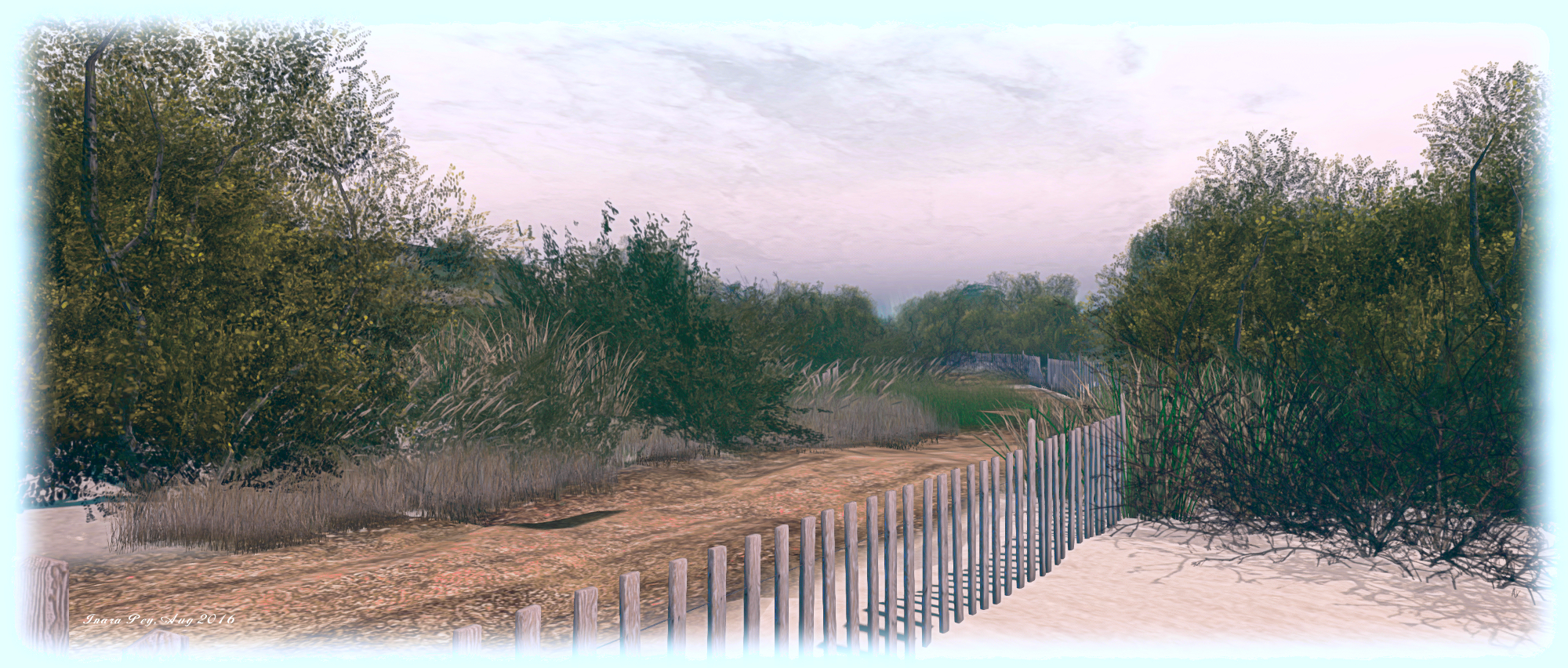
From the landing point in the north-west corner of the region, visitors have a choice of a walk around the beaches to the west and south, or to head directly south-east through the island’s woodlands.

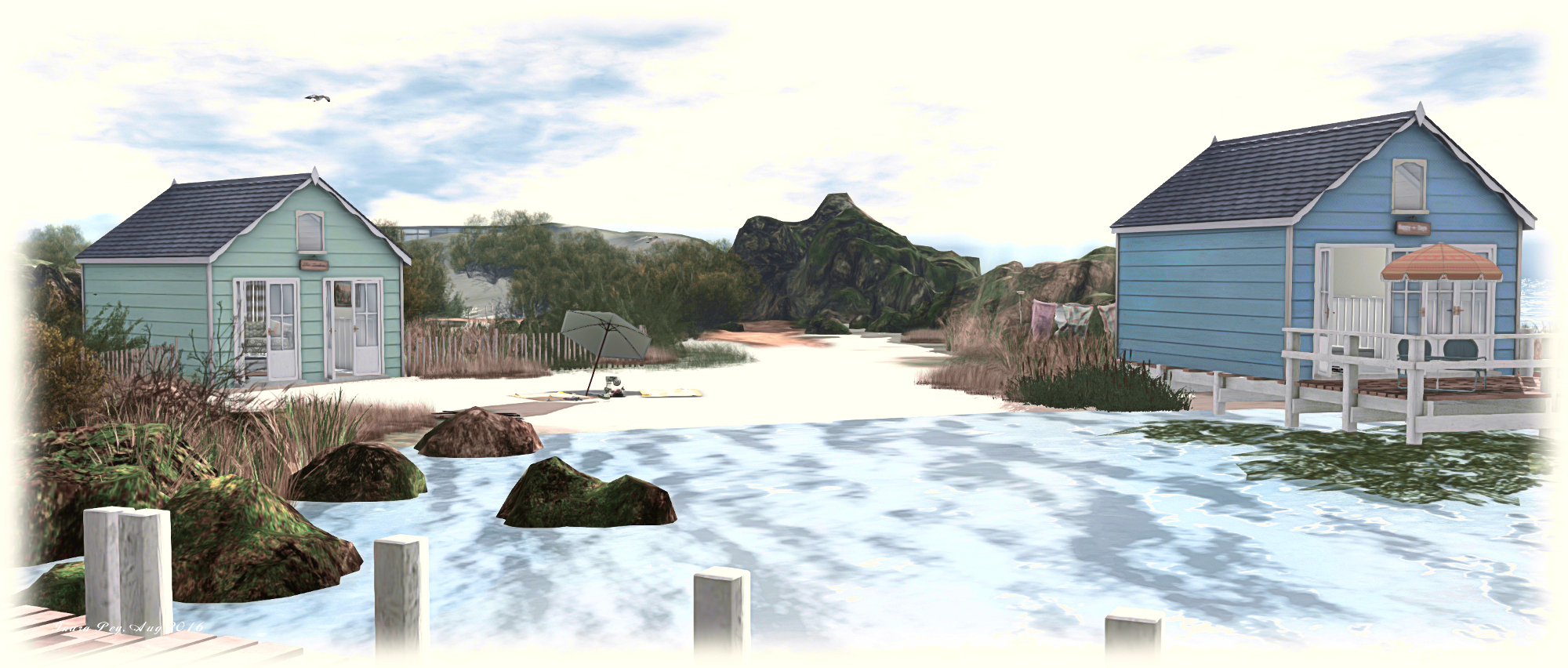
The beaches, separated one from another by grassy dunes, offer plenty of opportunities to sit and relax, either indoors or outside, under the sun or in the shade of broad parasols. Wooden beach houses vie with a little motel for visitors’ attention. The former offer seaside holiday charm, the latter the promise of air-conditioned rooms, cable TV and wi-fi, together with sitting cuddle poses. Nearby sits a partially completed building possibly destined to become a doughnut concession, a dirt track meandering by on its way to the grassy plateau occupying the south-east corner of the region.

Hide & Seek; Inara Pey, August 2016, on Flickr Hide & Seek

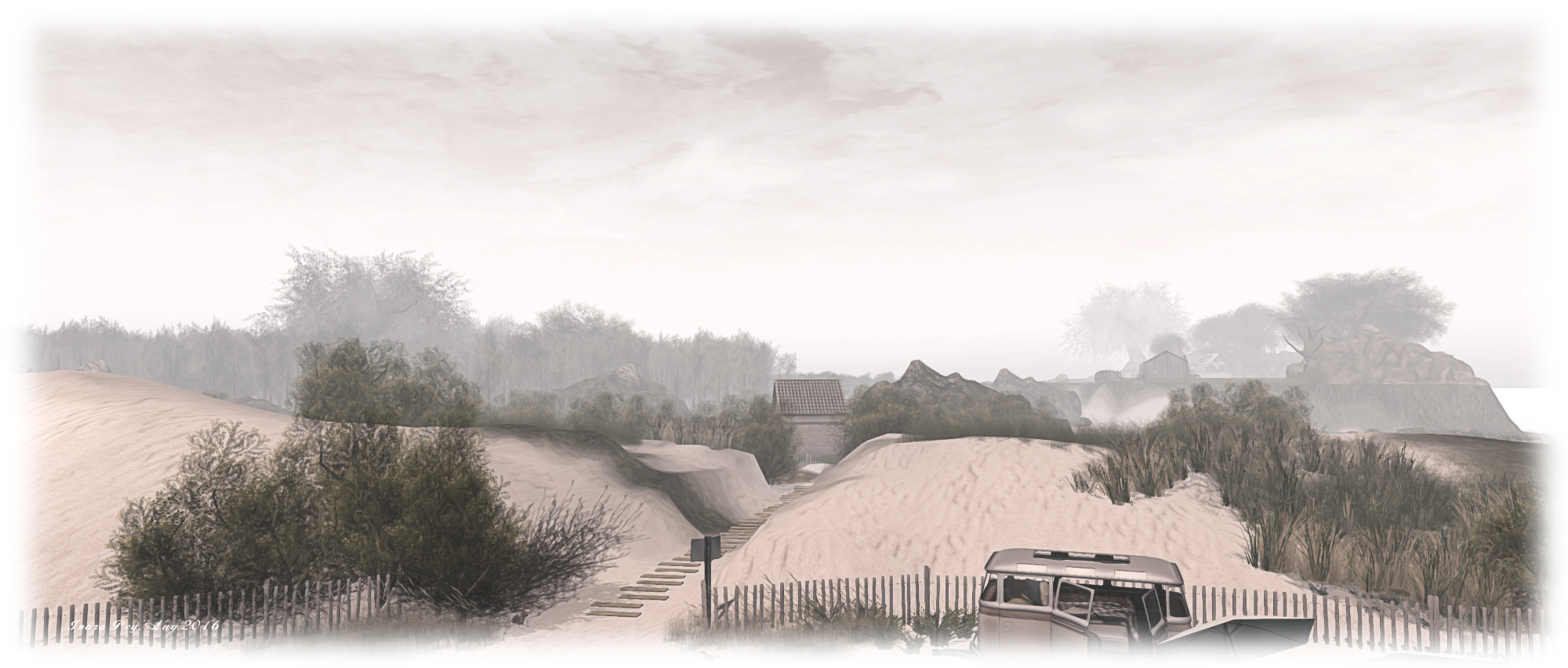
This plateau is the home of a small holding – but whether it still operates as a farm or is now a holiday home is perhaps open to debate. While there is an run-down barn outside with a tractor parked beside it, the presence of a barbecue and the general decor of the house suggest it is perhaps used more for vacations than anything else.

A track rolls down the side of this little massif, winding its way into the woods below to become the same path as leads the way under the trees from the landing point. Follow this, and you’ll find other tracks branching left and right: one leading back to the beach, another offering a short walk to a little camp site in the shade of the trees, and still another providing access to a cosy drive-in style movie theatre, again with opportunities to sit and / or cuddle. Elsewhere, hanging chairs sit below tree boughs and clearings beckon wanderers. There’s even a chalkboard on the southern side of the woods, hidden from the rest of the beachy sands by bushes, where folk can write and draw to their heart’s content.

Hide & Seek; Inara Pey, August 2016, on Flickr Hide & Seek

All-in-all, Hide & Seek offers the opportunity for a relaxing visit, complete with a gentle ambient sound scape, and an ideal destination for that getaway wander. Or if you prefer, you can grab a bicycle from the landing point and pedal your way over the tracks and sand. Should you visit, do keep in mind the house sitting on the small island in the north-est corner of the region is a private home; otherwise the island is free to roam.

SLurl Details

2016 viewer release summaries: week 30

Updates for the week ending Sunday, July 31st

This summary is published every Monday, and is a list of SL viewer / client releases (official and TPV) made during the previous week. When reading it, please note:

  • It is based on my Current Viewer Releases Page, a list of all Second Life viewers and clients that are in popular use (and of which I am aware), and which are recognised as adhering to the TPV Policy. This page includes comprehensive links to download pages, blog notes, release notes, etc., as well as links to any / all reviews of specific viewers / clients made within this blog
  • By its nature, this summary presented here will always be in arrears, please refer to the Current Viewer Release Page for more up-to-date information.

Official LL Viewers

  • Current Release version: 4.0.6.315555 (dated May 23), promoted July 5th – formerly the Inventory Message RC viewer download page, release notes
  • Release channel cohorts (See my notes on manually installing RC viewer versions if you wish to install any release candidate(s) yourself):
    • VLC Media Plugin Viewer RC version 4.1.1.318152, released on July 28th – replaces the QuickTime media plugin for the Windows version of the viewer with one based on LibVLC (download and release notes)
    • Maintenance RC viewer updated to version 4.0.7.318189 on July 28th – fixes and updates  (download and release notes)
  • Project viewers:
    • No updates.

LL Viewer Resources

Third-party Viewers

V4-style

V1-style

  • Cool VL viewer Stable branch updated to version 1.26.18.17 and the Experimental branch updated to version 1.26.19.19, both on July 30th (release notes)

Mobile / Other Clients

Additional TPV Resources

Related Links

Windlight rebrands: welcome to Kultivate in Second Life

Kultivate-logoIn June 2015, I helped to spread the word about Windlight Magazine a (then) new arts-focused magazine for Second Life.

For its launch, Windlight sought to innovate, with programmes such as the Windlight Fellowship Programme and gallery, and over the last 12 months that desire to innovate has continued, with the title branching into areas beyond such as e-publication, music, literature, fund-raising, sponsorship, hunts, and fashion.

Because of this broadening of focus, on July 31st, 2016, Windlight founder John Brianna (Johannes1977 resident) officially announced the re-branding of the title to Kultivate Magazine, which will encompass all of the brand’s existing titles and activities, including the on-line magazine, the in-world Windlight Art and Windlight Bailywick galleries, The Edge (fashion) and The Edge Gallery, The Rift, and e-publications like the Quill and Pen. Kultivate will continue to support fund-raising activities, such as the work of Team Diabetes of Second Life, and run competitions, hunts, and events such as the 30/31 Event.

The new name came about for a variety of reasons, one of which is John’s own sister, Kandis. “In establishing Windlight, I wanted to honour my late sister,” he said. “Before her passing two years ago, her love of photography student took her to Paris where she experienced growth in so many ways, including taking her abilities to new heights as she perfected her photographic craft.

“Over the last year, we’ve seen Windlight grow in many areas, and we’ve growth in so many ways to cover the broad spectrum of art in Second Life. ‘Kultivate’ was selected as our new name to both reflect our broader aim of cultivating artistic expression, and to further honour Kandis’ memory through the use of the initial K.”

He continued, “Our strong commitment to the arts will never change. We will continue to have our art shows, our galleries, and our many artistic events to bring you the resources you have grown to love and utilize. If anything we will simply expand and bring you additional resources to help you to cultivate your craft.”

For the last 12 months it has been an absolute pleasure to work with John, Eles and the team, both as a contributing writer and as a quiet advisor. During that time I’ve witnessed not only the brand grow, but also those putting in all the hard work on moving it forward grow as a team committed to the coverage of art in its broadest sense within Second Life. I’ve little doubt that this rebranding will allow further expansion and great coverage of virtual arts across the platform.