 New Horizons is still less than half way through transmitting the data gathered during its fly-past of the Pluto-Charon system in July 2015, but the wealth of information received thus far has already revealed much about Pluto and its “twin”.
Geological evidence has been found for widespread past and present glacial activity, including the formation of networks of eroded valleys, some of which are “hanging valleys,” much like those in Yellowstone National Park, Wyoming. A major part of this activity is occurring in and around “Sputnik Planum”, the left half of Pluto’s “heart”, a 1,000 km (620 mile) wide basin, which is seen as key to understanding much of the current geological activity on Pluto.
Images and data gathered for this region has given rise to new numerical models of thermal convection with “Sputnik Planum”, which is formed by a deep layer of solid nitrogen and other volatile ices. These not only explain the numerous polygonal ice features seen on Sputnik Planum’s surface, but suggest the layer is likely to be a few kilometres in depth.
Evaporation of this nitrogen, together with condensation on higher surrounding terrain is believed causing a glacial flow from the higher lands back down into the basin, where the ice already there is pushed, reshaping the landscape over time.

More data and images have also been received regarding Pluto’s atmosphere, allowing scientists start to probe precisely what processes are at work in generating and renewing the atmosphere, the upper limits of which are subject to erosion by the solar wind, which strike Pluto at some 1.4 million kilometres per hour (900,000 mph).
As well as understanding the processes which are at work renewing the atmosphere, and thus preventing it from being completely blasted away by the solar wind, science teams are hoping to better further why the haze of Pluto’s atmosphere forms a complicated set of layers – some of which are the result of the formation and descent of tholins through the atmosphere – and why it varies spatially around the planet.
The Mars Silica Mystery
In July I covered some of the work going into investigating the mystery of silica on Mars. This is a mineral of particular interest to scientists because high levels of it within rocks could indicate conditions on Mars which may have been conducive to life, or which might preserve any ancient organic material which might be present. In addition.
As I reported back in July, scientists have been particularly interested in the fact that as Curiosity has ascended “Mount Sharp”, so have the amounts of silica present in rocks increased: in some rocks it accounts for nine-tenths of their composition. Trying to work out why this should be, and identifying the nature of some of the silica deposits has given rise to a new set of mysteries.
The first mystery is trying to understand how the silica was deposited – something which could be crucial in understanding how conducive the environment on “Mount Sharp” might have been for life. Water tends to contribute to silica being deposited in rocks in one of two ways. If it is acidic in nature, it tends to leach away other minerals, leaving the silica behind. If it is more neutral or alkaline in nature, then it tends to deposit silica as it filters through rooks.

If the water which once flowed down / through “Mount Sharp” was acidic in nature, it would likely mean that the wet environments found on the flanks of the mound were hostile to life having ever arisen there or may have removed any evidence for life having once been present. If evidence that the water was acidic in nature, then it would also possibly point to conditions on “Mount Sharp” may have been somewhat different to those found on the crater floor, where evidence of environments formed with more alkaline water and with all the right building blocks for life to have started, have already been discovered.
The second mystery with the silica is the kind of silica which has been discovered in at least one rock. Tridymite is a polymorph of silica which on Earth is associated with high temperatures in igneous or metamorphic rocks and volcanic activity. Until Curiosity discovered significantly high concentrations of silica in the “Marias Pass area of “Mount Sharp” some seven months ago – something which led to a four month investigation of the area – tridymite had never been found on Mars.

“Marias Pass” and the region directly above it, called the “Stimson Unit” show some of the strongest examples of silica deposition on “Mount Sharp”, and it was in one of the first rocks, dubbed “Buckskin”, exhibiting evidence of silica deposits in which the tridymite was found.
The question now is: how did it get there? All the evidence for the formation of “Mount Sharp” points to it being sedimentary in nature, rather than volcanic. While Mars was very volcanic early on in its history, the presence of the tridymite on “Mount Sharp” might point to volcanic / magmatic evolution on Mars continuing for longer than might have been thought, with the mineral being deposited on the slopes of the mound as a result of wind action. Or alternatively, it might point to something else occurring on Mars.
“We hope to solve this by determining whether tridymite in the sediment comes from a volcanic source or has another origin,” said Liz Rampe, of Aerodyne Industries at NASA’s Johnson Space Centre, Houston. “A lot of us are in our labs trying to see if there’s a way to make tridymite without such a high temperature.”
Taken together, the questions arising from the silica deposits, including the tridymite, are giving a lot of scientists the opportunity to scratch their heads, as Curiosity’s Project Scientist Ashwin Vasavada noted, “What we’re seeing on Mount Sharp is dramatically different from what we saw in the first two years of the mission. There’s so much variability within relatively short distances. The silica is one indicator of how the chemistry changed. It’s such a multifaceted and curious discovery, we’re going to take a while figuring it out.”
Ground Control to Major Tim

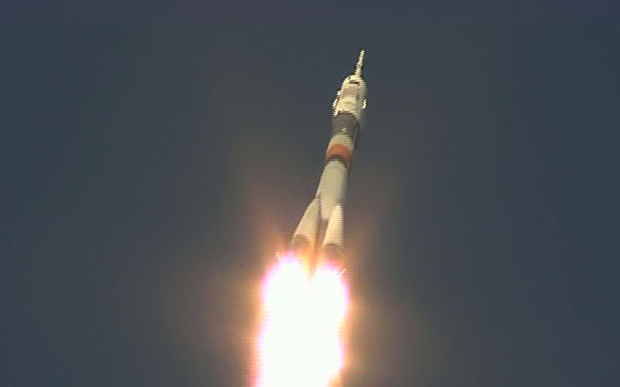
On Tuesday, December 15th, 2015. British astronaut Tim Peake and colleagues American astronaut Tim Kopra and Russian cosmonaut Yuri Malenchenko, lifted-off from the Baikonur Cosmodrome in Kazakhstan in their Soyuz vehicle, en route to the International Space Station.
Taking just nine minutes to reach its initial orbit following a launch at 11:03 GMT, the Soyuz vehicle, commanded by Malenchenko, then commenced a “chase” to gradually increase its altitude and maintain an interception course which would see it arrive in the same orbit as the ISS, but a few hundred kilometres from it, allowing the vehicle to gradually close with the station in order to undertake an automated docking. Only it didn’t work out that way.

As the Soyuz craft apporached the ISS under automated control, Yuri Malenchenko became increasingly concerned at the angle of approach and, with mission control’s agreement, took over manual control of the vehicle, first backing it slowly away from the space station and correcting its line of approach before bringing it into a safe docking at 17:23 GMT. It was later confirmed the automated system had suffered a glitch.
Manual dockings are something Soyuz crews are trained for, and are not entirely uncommon; however, it added extra spice to Peake’s arrival at the station, which he finally boarded at 19:25 GMT on Tuesday, December 15th, after the Soyuz had been safely powered-down and all post-flight checks had been completed.

It marked the start of 6-month mission for Peake, who will carry out over 250 experiments on the ISS, including exploring how the body adapts to space, how advanced materials form in weightless conditions, and trialling new technologies, including remote control systems for operating rovers on planetary surfaces.
One of the more unusual feats he hopes to undertake is to run the 2016 London marathon on Sunday, April 24th, 2016, whilst still in orbit. This isn’t actually as easy as it sounds: “running” in space requires a treadmill and a harness equipped with the series of bungee cords to ensure the astronaut remains in contact with the treadmill – and the harness can be chaffing to wear for long periods.
He’ll be running the marathon as a digital participant, accessing virtual views of the real race from an iPad. While no stranger to marathon running – he’s competed in the London marathon in the past – he’s not out to break any personal records, aiming to complete the run in around 4 hours, which will see him orbit the earth over 2.5 times.
Before that, however, he’ll be serving as back-up during an “emergency” space walk, possibly on Monday, December 21st, which will see US astronauts Tim Kopra and Scott Kelly “go EVA” to try to fix the space station’s “mobile transporter”. This is used to shuttle equipment along the length of the outside of the space station and to move its robotic arm. However, a “railcar” on the transporter ceased working on Wednesday, December 16th, and needs to be fixed. Peake himself might get to undertake a space walk planned for later in the mission.
SpaceX Launch Delayed
The hoped-for return to flight for the SpaceX Falcon 9 booster, which has been the subject of intense scrutiny, had been due to take place on Saturday, December 19th. The vehicle was grounded after the last launch, in June 2015, came to an abrupt end when a fuel tank suffered a structural failure, and the vehicle exploded.
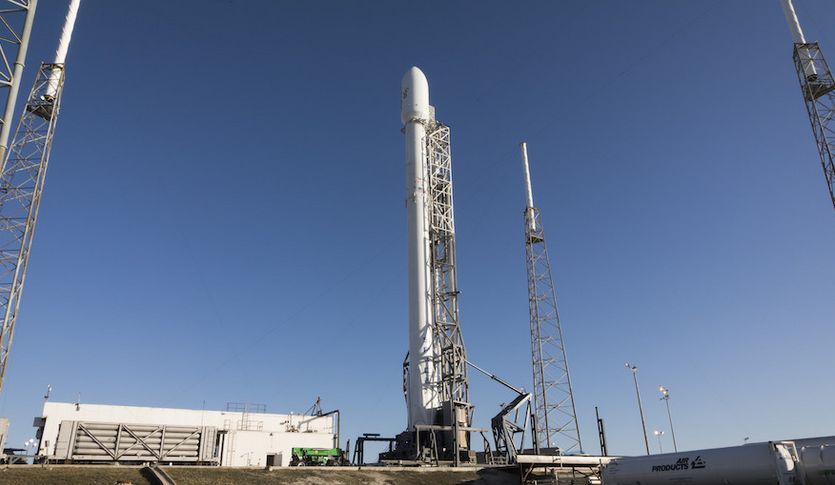
However, prior to the launch, SpaceX planned to run a static fire test on the booster’s engine – firing them up, but not actually launching. This had been scheduled for Thursday, December 17th. However, technical problems with the use of supercooled liquid oxygen propellant, one of a number of changes SpaceX has made to the upgraded Falcon 9, meant this had to be postponed until December 19th. As a result, the launch was initially pushed back to Sunday December 20th,
This also didn’t go as planned when weather forecasts for the period after launch, when SpaceX would be attempting to steer the first stage of the booster back to Earth in a controller, powered descent, and landing it at a specially equipped “landing zone” at the former Launch complex 13 at Cape Canaveral, indicated conditions would be less than ideal for the landing attempt. The decision was therefore taken to delay the launch until 20:39 EST on Monday, December 21st.
Tracking Santa
Slooh is a global network of robotic observatories which offer the public the opportunity to witness astronomical events via their web browser, through the Slooh website. I’ve used the service extensively myself, and have witnessed things like the transit of Venus, as reported in my space updates.
This year, Christmas Eve is marked by a full moon – and this has given astronomers the world over a unique opportunity to catch a glimpse of a rare, but annual event: the transit of Santa across the night sky.
This phenomena, side to rise out of the North Pole before travelling across the night skies as the Earth turns, has always been hard to image, but the folk at Slooh are confident that in 2015, they’ll be able to do just that, and have established the Santascope to present live coverage of the movements of Santa as his criss-crosses the night sky across the world, and are offering people the chance to log-in and witness the event with them!

 Inara Pey: Living in a Modemworld