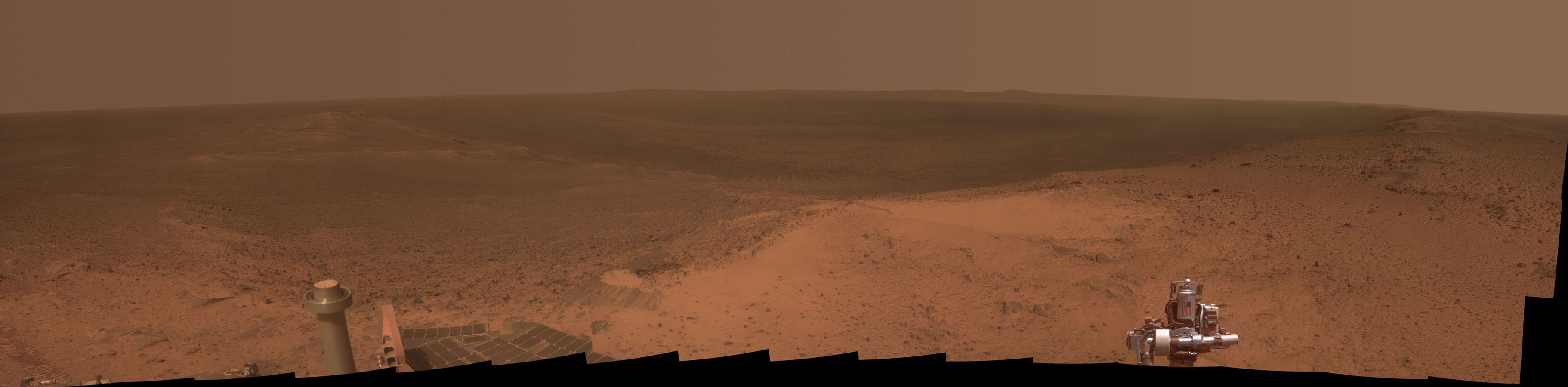
 April 16th, 2015 saw NASA’s Mars Science Laboratory rover Curiosity clock-up 10 kilometres (6.25 miles) on its odometer since it arrived on Mars 30 months ago, as it continues its trek up the slopes of “Mount Sharp”, the mountain-size mound at the centre of Gale Crater.
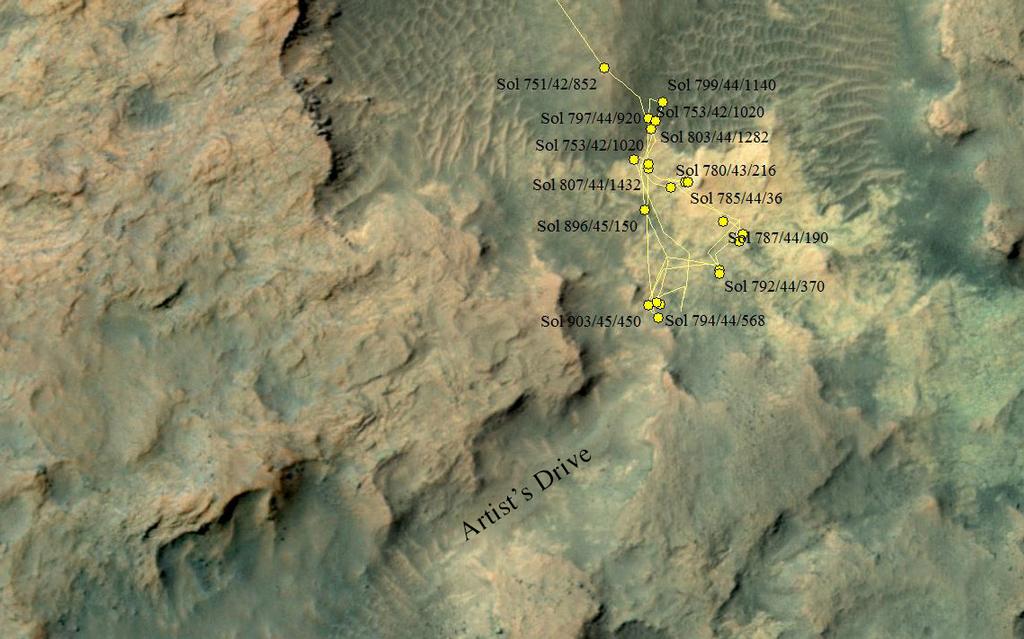
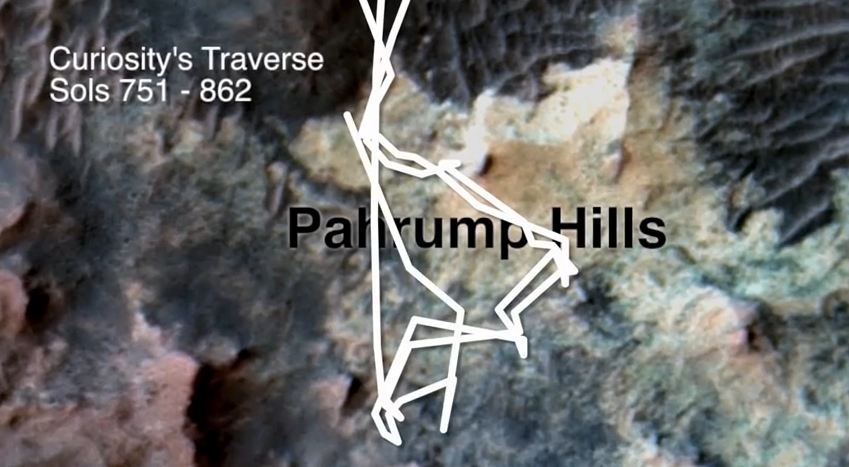
The rover is currently making its way through a series of connected shallow “valleys” on the slops of the mound – which is more correct names Aeolis Mons – as it continues upwards and away from the “Pahrump Hills” area it spent 6 months investigating, and towards its next major science target, an area the science team have dubbed “Logan Pass”, which is still some 200 metres away from the rover at the time of writing.
While only a distance of around 550 metres separates “Logan Pass” from the upper limits of “Pahrump Hills”, the rover’s gentle progress has been the result of several stops along the way in order to further characterise the different rock types Curiosity has been encountering, and to make important observations of its surroundings as the science team try to understand the processes by which the region’s ancient environment evolved from lakes and rivers into much drier conditions.
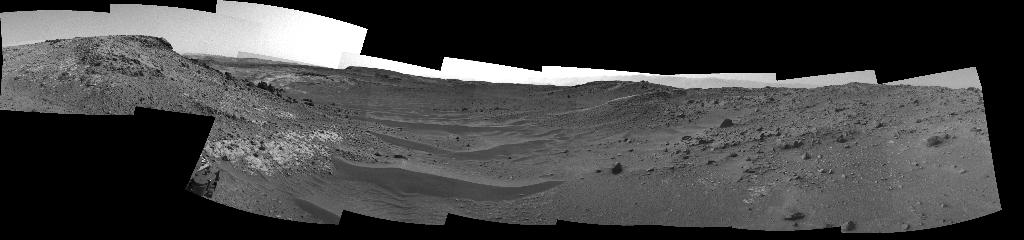
The rover’s progress up “Mount Sharp” has so far been through the lower reaches of the transitional layers which mark the separation points between the materials deposited over the aeons to create the gigantic mound and the material considered to be common to the crater floor. These transitional layers have been dubbed the “Murray Formation”, in honour of the late co-founder of The Planetary Society, Bruce Murray, and comprise a number of different land formations, “Pahrump Hills” being one of the lowermost. Logan Pass marks the start of another, dubbed the “Washboard unit”, and which comprises a series of high-standing buttes.

As several of the MSL reports in these pages have shown, Curiosity has already found considerable evidence that Gale Crater may once have been home to environments sufficiently benign to allow for the existence of microbial life. Whether or not those microbes survived down the millennia such that they are still present in the planet’s soil today, is not something the rover is equipped to determine; however, a recent report from one of Curiosity’s science teams suggests that subsurface conditions are unfavourable to the support of microbial life.
The evidence for this comes in the form of perchlorate salts, and the effect they can have on their environment. Perchlorate was first detected in soil samples gathered by NASA’s Phoenix Mars Lander mission in 2008, while Curiosity found trace evidence for perchlorate in samples gathered early in its own mission.
What makes perchlorate interesting is that in cold temperatures, it is able to “pull” water vapour from the atmosphere and bind with it, lowering its temperature, potentially allowing it to form sub-surface brines which would be very destructive to microbial life.
It had been thought that the environmental conditions by which this might occur were limited to the near-polar regions of the planet. However, data gathered by Curiosity’s on-board weather station, called REMS (for Rover Environmental Monitoring Station) over the course of its mission suggests the night-time conditions in Gale Crater, are right for the formation of sub-surface brines throughout the year.
Continue reading “Space Sunday: hill climbing, the impact of salt, and landing a rocket (take 2)”




 Inara Pey: Living in a Modemworld