Space Sunday: metal rain and glass on Mars, HoloLens into orbit

Comet Siding Spring's passage through the solar system 2013-2014
Comet Siding Spring’s passage through the solar system 2014

In October 2014, I wrote about comet Sliding Spring and it’s close approach to Mars as it swung through the solar system.

The comet had been identified as coming from the Oort cloud (or the Öpik–Oort cloud, to give proper recognition both astronomers who initially and independently postulated its existence), a spherical cloud of debris left-over from the creation of the solar system, occupying a huge area starting some 2,000-5,000 AU (2,000 to 5,000 times the distance from the Earth to the Sun) and extending out to around 50-100,000 AU – or about one light year away.

There is nothing odd about comets from the Oort cloud per se, but Sliding Spring appeared to be making its very first journey into the inner solar system, and so astronomers were keen to try to study it as best they could. Given the close pass at Mars, the vehicles on and orbiting that planet stood to have something of a grandstand view of things – providing certain precautions were taken, as I noted at the time.

An artist's impression of MAVEN in orbit around Mars (NASA / JPL)
An artist’s impression of MAVEN in orbit around Mars

Now data released by NASA shows that the comet’s flight past Mars did result in something very unusual: the comet’s tail, which brushed the Martian atmosphere, resulted in a “rain of metal” over the planet.

The data was obtained by NASA’s Mars Atmosphere and Volatile EvolutioN Mission (MAVEN), which at the time of the comet’s passage was so recent an arrival at Mars, that all its instruments hadn’t been fully commissioned. Hence, in part, the delay in releasing the data – NASA wanted to be sure MAVEN was recording things accurately.

According to MAVEN, the direct detection of sodium, magnesium, aluminium, chromium, nickel, copper, zinc, iron and other metals high in the Martian atmosphere can be linked directly to material sloughing off of the comet as it passed.

“This must have been a mind-blowing meteor shower,” said Nick Schneider of the Laboratory of Atmospheric and Space Physics at the University of Colorado, commenting on the data returned by the orbiter. Such is the strength of the signal of magnesium and iron measurements, the hourly meteor rate overhead on Mars must have been tens of thousands of “shooting stars” per hour over a period of many hours.

An artist's impression of meteors resulting from comet Siding Spring in the sky over NASA's MSL Curiosity rover
An artist’s impression of meteors resulting from comet Siding Spring in the sky over NASA’s MSL Curiosity rover

“I’m not sure anyone alive has ever seen that,” Schneider added, “and the closest thing in human history might the the 1833 Leonids shower.” The metal ions were the remains of pebbles and other pieces shed from the comet that burned up, or “ablated” into individual atoms as they struck the Martian atmosphere at 56 kilometres per second (125,000 miles per hour).

What is particularly important about the event is that as scientists know the source of the dust particles, it’s speed, and key information about Mars’ upper atmosphere, it is possible to learn more about Mars’ ionosphere, the comet’s composition, and even the workings of Earth’s ionosphere when it is hit by comet or asteroid debris.

Impact Glass

There is glass on Mars, and it might just be the ideal place in which to find any evidence of past microbial life.

The type of glass in question is referred to as “impact glass”, and is formed as a result of the heat generated by the impact of a meteorite melts the surrounding rock into glass. when a meteorite strikes the surface of a planet or moon, melting the surrounding rock into glass, preserving and organic matter that existed on or in the rock prior to the meteorite impact occurring.

In 2014, a research team examining impact glass formed millions of years ago as a result of meteorite strikes in Antarctica form found organic molecules and plant matter within the glass. Their work spurred a group of planetary science graduates at Brown University, Rhode Island, to simulate the spectral composition of possible Martian impact glass by using chemicals, compounds and powders matching those known to compose the surface material on Mars, and then melting the mix at high temperatures to form glass, which they then subjected to spectrographic analysis.

The team then compared the results of their analysis with spectral analyses of the surface of Mars carried out by the Imaging Spectrometer aboard NASA’s Mars Reconnaissance Orbiter (MRO) – and found a very similar spectral signature in areas where such impact glass would be expected to form, such as around the central peaks of craters caused by meteorite impacts.

A spectrographic image of the central peak of the Alga Crater impact zone, taken by MRO. The green colours indicate the presence of impact glass

Continue reading “Space Sunday: metal rain and glass on Mars, HoloLens into orbit”

Space Sunday: Philae, Titan and Pluto, oh my!

November 12th, 2015: Philae departs Rosetta en route for the surface of comet 67P/C-G
November 12th, 2015: Philae departs Rosetta en route for the surface of comet 67P/C-G  (image courtesy of ESA)

ESA’s Philae lander, which as I reported a week ago, resumed contact with Earth via its “Parent”, Rosetta, after seven months in hibernation, continues to return data to Earth from comet 67P/Churyumov–Gerasimenko (67P/C-G) as it continues towards the Sun.

Friday, June 19th, marked the latest transmission from Philae, which is about the size of a domestic washing machine, bringing the total of communications with mission control in Germany to 3 since the lander managed to re-establish its link with Rosetta.

Communications are sporadic because it is still not entirely clear where Philae is sitting on the comet, having bounced across the surface following its initial touch-down in November 2014. This, and Rosetta’s science-focused orbit around the comet means that there can be extended periods of several days between the times when both spacecraft and lander are suitably aligned to allow communications to take place.

The Friday communication lasted 19 minutes, and allowed the lander to return a further 185 packets of data to Earth. The data gave additional confirmation that Philae is in good health and in an environment which means it should be quite comfortable for a good while – thus increasing the chances of it resuming its science activities.

“Among other things, we have received updated status information,” Michael Maibaum, a systems engineer at the DLR Lander Control Centre in Cologne, reported following the Friday contact. “At present, the lander is operating at a temperature of zero degrees Celsius, which means that the battery is now warm enough to store energy. This means that Philae will also be able to work during the comet’s night, regardless of solar illumination.”

The three communications so far received mean that the mission team now have sufficient data to be able to more accurately position Rosetta so that it can continue with its primary science mission while being better placed to improve radio visibility between it and the lander’s estimated location. The first set of commands for the spacecraft to start adjusting its orbit were uploaded on Wednesday, June 17th, and and further set of instructions were uploaded on Saturday, June 20th. The aim is to close the distance between Rosetta and the comet to 177 kilometres within an orbit that will allow the orbiter to be above Philae’s horizon more regularly than is currently the case.

Pluto’s Gentle Fade In

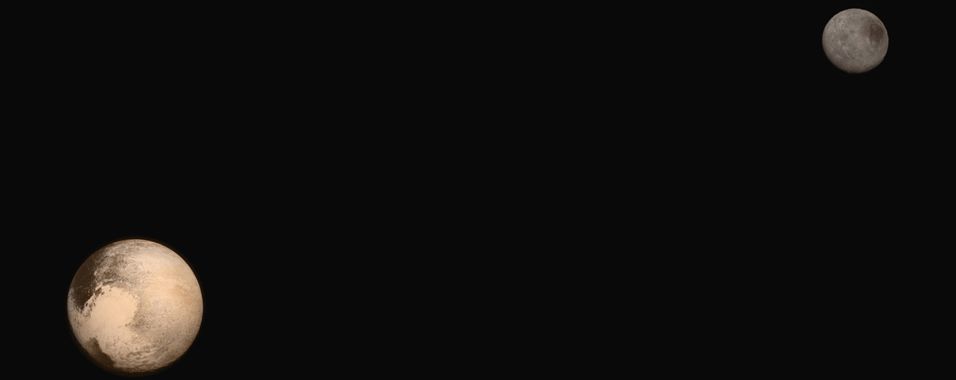
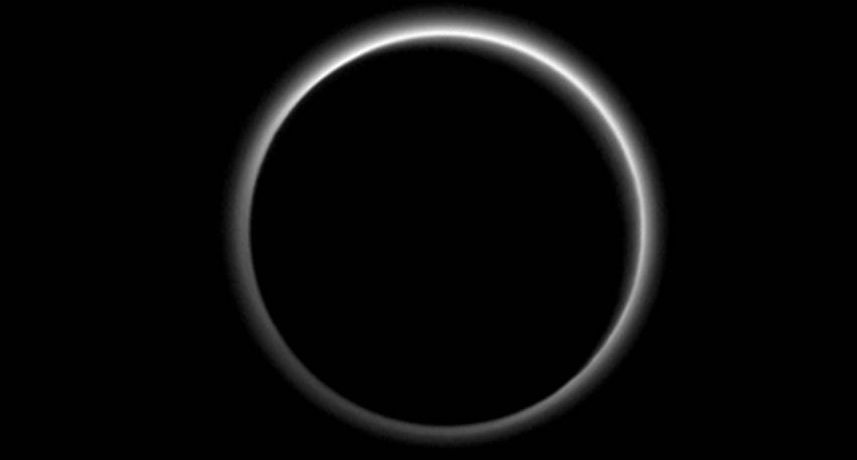
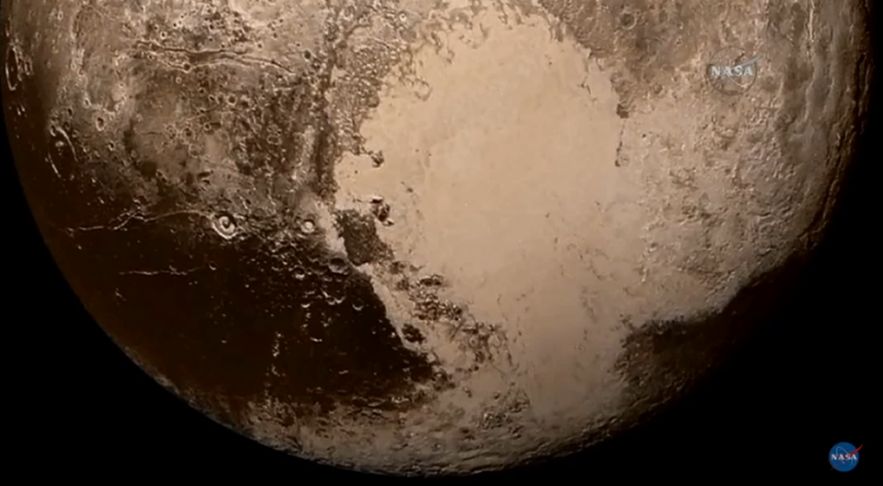
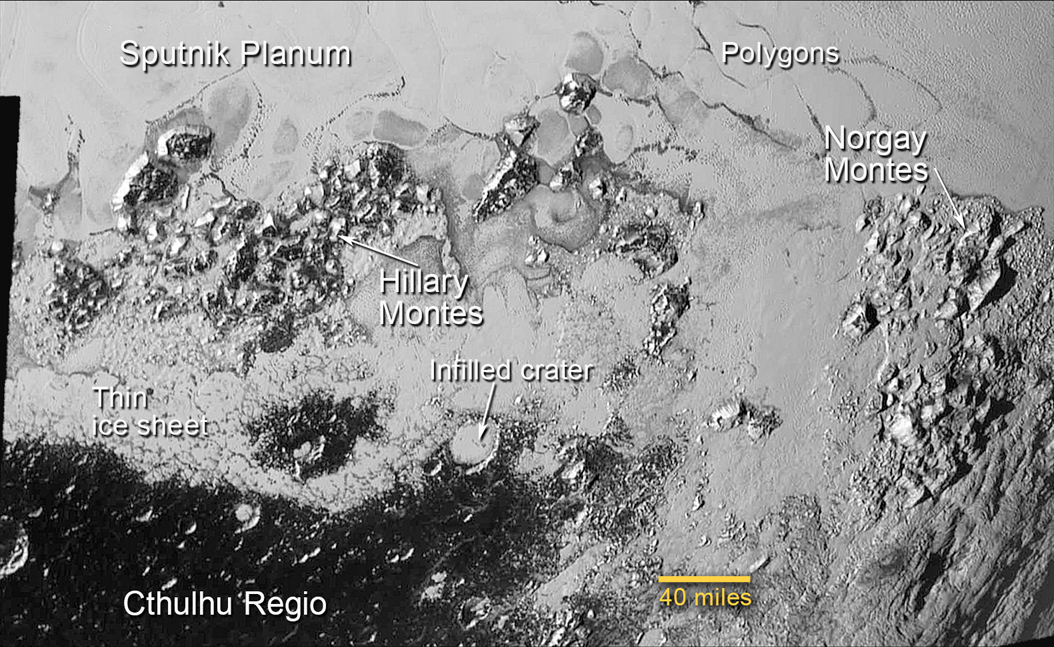
NASA’s New Horizons mission to the Pluto-Charon system is now less than a month from its point of closest approach, which will occur on July 14th, 2015. As the fast-moving spacecraft closes on the two planetoids, the images it is returning to Earth of Pluto are starting to show tantalising splotches of dark across the planetoid’s surface, the first hints of landforms.

Pluto slowly starts to unmask itself as New horizons approaches
Pluto slowly starts to unmask itself as New horizons approaches (image: NASA / APL)

The pictures are still nowhere near being as clear as they should be in the days immediately prior to and following the point of closest approach, but they are still nevertheless interesting; in April 2015, New Horizons images what appears to be a polar ice cap on Pluto, so scientists are curious to what else might be revealed.

At the time of closest approach, New Horizons should be within 10,000 kilometres (6,200 miles) of Pluto and around 27,000 kilometres (17,000 miles) of Charon. The fly-by of Pluto should allow the main telescope camera system on the vehicle to take selected high-resolution images of Pluto at a scale of 50 metres / pixel. It is hoped that the average resolution of daylight images captured of Pluto will be around 1.6 km (1 mile) resolution, and will allow the composition of 4-colour maps of the surface.

From around 3.2 days before closest approach, long-range imaging will be used to map both worlds to a resolution of around 40 kilometres (25 miles).  New Horizons will also attempt to gather data on the nature of any atmosphere present on Pluto and seek evidence of any cryovolcanism which might be occurring or surface feature changes which might be attributable to snowfall or similar.

Titan: Even More In Common

An infographic released by NASA in June 2014 to mark Cassni's ten years in operation around Saturn
An infographic released by NASA in June 2014 to mark Cassni’s ten years in operation around Saturn – click for full size (NASA)

There are only two places in our solar system known of have rainfall, rivers and oceans, as well as a thick atmosphere, rocky ground and plate tectonics. They are Earth and Saturn’s huge moon, Titan. Now the joint ESA / NASA Cassini mission has revealed Titan shares something else with Earth: polar “winds” that suck gasses out of its atmosphere and into space.

Titan’s atmosphere has around a 50% higher surface pressure than Earth’s, and is comprised mainly of nitrogen and methane, and is rich in hydrocarbons, which also exist in lakes, reivers and seas on the surface of the planet.

Several years ago Cassini, which has been orbiting in orbit around Saturn for over a decade, revealed that around seven tonnes of hydrocarbons and nitriles were being lost every day from the upper layers of Titan’s atmosphere, but the mechanism causing the loss remained unknown until CAPS, the instrument which first recorded the loss recorded the “wind” in action.

Essentially, sunlight striking the upper layers of Titan’s atmosphere ejects negatively charged electrons out of the hydrocarbon and nitrile molecules resting there. These electrons are then drawn away along Saturn’s magnetic field, generating their own electrical field strong enough to “pull” the positively charged particles left behind by the formation of the original electrons out of the atmosphere along with them.

On Earth, this process charges particles in the atmosphere and draws them up along the planet’s magnetic field, where they can escape at the poles, and the same thing is happening on Titan. The discovery has lead to speculation that similar processes might be at work on Mars and Venus.

In this false-colour image, lakes and
In this false-colour image, lakes and “sea” of hydrocarbons can be seen scattered across the north polar region of Titan (the white areas indicate parts of the moon’s surface which had not been imaged at the time this mosaic was constructed (image: NASA)

Continue reading “Space Sunday: Philae, Titan and Pluto, oh my!”

Space Sunday extra: Philae, the little lander that could, wakes up!

Rosetta (r),Philae and, behind them, comet 67P/Churyumov–Gerasimenko seen in an artist’s impression of the mission

On Wednesday, November 12th, after 10 years in space, travelling aboard its parent vehicle, Rosetta, the lander Philae touched down on the surface of comet 67P/Churyumov–Gerasimenko (67P/C-G). It was the climax of an amazing space mission spanning two decades – and yet was to be just the beginning. Packed with instruments, it was hoped that Philae would immediately commence around 60 hours of intense scientific investigation, prior to its batteries discharging, causing it to switch to a solar-powered battery system.

Unfortunately, things didn’t quite work out that way. As I’ve previously reported, the is very little in the way of gravity on the comet, so in order for Philae to avoid bouncing off of it when landing, several things had to happen the moment it touched the comet’s surface. As it turned out, two of these things didn’t happen, with the result that the lander did bounce – twice.

Philae shortly after departing Rosetta, with the landing legs deployed, the solar panel
Philae shortly after departing Rosetta, on Wednesday November 12th, 2014 with the landing legs deployed, the solar panel “walls” on the sides of the lander clearly visible.

The first time it rose to around 1 kilometre above the comet before descending once more in a bounce lasting and hour and fifty minutes, the second time it bounced for just seven minutes. Even so, both of these bounces meant the lander eventually came to rest about a kilometre away from its intended landing zone. What’s worse, rather than touching down in an area where it would received around 6-7 hours of sunlight a “day” as the comet tumbles through space, it arrived in an area where it was only receiving around 80-90 minutes of sunlight – meaning that it would be almost impossible to charge the solar-powered battery system.

Even so, the lander commenced science operations as planned, and despite having only limited power within its batteries, and insufficient means to fully recharge them, Philae returned almost all of its anticipated science data. However, in the morning of Saturday, November 15th (UK / European time), being unable to charge its solar batteries, the lander “safed” itself and entered a state of hibernation, leaving scientists hoping that as the comet continues towards the Sun, sufficient sunlight would fall across the lander in order for it to successfully recharge its batteries.

It happened. On Sunday, June 14th, ESA operations announced that communications with Philae had been re-established.

ESA Operations announced contact re-established with the comet-landing Philae

So far, some 300 packets of data have been returned to Earth via Philae’s parent craft, Rosetta, as it orbits the comet since communications were re-established at 23:28 GMT on Saturday, June 13th. This data revealed that Philae appears to have been awake for a while, the comet’s “fall” towards the Sun having done the trick, but the Sunday, June 14th contact marked the first time Philae had managed to reach Rosetta.

The initial 85-second communication is still being analysed, but has indicated there are around 8,000 additional packets of data to be returned by the lander, the initial information being largely concerned with information on Philae’s overall condition.

As well as tweeting directly on the resumption of contact, ESA also issued a Tweet “from” Philae announcing the news.

Philae's
Philae’s “Tweet” on the resumption of contact

That there is still some 8,000 packets of data still within Philae’s memory, which is likely to be science data the lander has gathered over the last few days as it has come out of its seven month hibernation. As the comet becomes more active as it continues inward towards the sun-ward, Philae is in a prime position to discover more about these remnants of the earliest history of the solar system.

During its initial 60 hours of operations prior to going into hibernation, The lander discovered organic molecules on the comet, results of which were sent back from Philae’s Cosac instrument (one of the ten science instruments on the lander), thus fulfilling one of its primary mission objectives.

While Philae may have been in hibernation for the last seven months, its parent vehicle, which bears the same name as the mission, has not and has continued to orbit the comet and gather data as the comet gradually sweeps through the solar system towards the sun – it is currently some 205 million kilometres (127 million miles) distant, and will reach its nearest point in August before heading back in to the far reaches of the solar system.

The first image from the surface of a comet, returned to Earth by the Rosetta lander Philae, November 13th, 2014. image: ESA/Rosetta/Philae/CIVA
The first image from the surface of a comet, returned to Earth by Philae, November 13th, 2014. image: ESA/Rosetta/Philae/CIVA

Continue reading “Space Sunday extra: Philae, the little lander that could, wakes up!”

Space Sunday: imaging tiny worlds, flying saucers, and a matter of size

Dawn mission patch (NASA / JPL)

The joint ESA / NASA Dawn mission to study two of the solar system’s three “protoplanets” located in the asteroid belt between the orbits of Mars and Jupiter, continues to intrigue scientists.

Launched in September 2007, and costing US $446 million, Dawn is part of a broader effort to better understand the origins of the solar system and how the planets actually formed; all of which might give us greater understanding of how life arose here on Earth.

The mission has been relatively low-key when compared to the likes of NASA’s MSL rover on Mars or Europe’s Rosetta mission to comet 67P/C-G and NASA’s other mission to tiny world. New Horizons, but the Dawn spacecraft and mission are quite remarkable. The little spacecraft is use ion propulsion to enter orbit around a planetary body and is the first to orbit a dwarf planet and, since its arrival in orbit around Ceres, the first spacecraft from Earth to visit that tiny dwarf planet and the first mission to orbit two separate extraterrestrial bodies.

Dawn arrived at Ceres in March 2015, after a 2.5 year transit flight from Vesta, its first destination, where it spent 14 months in orbit following its arrival there in July 2011. Because of their relative size – Ceres accounts for around one-third of the total mass of the asteroid belt –  both of these airless, rocky bodies are regarded as dwarf planets, rather than “simple” asteroids.  However, they are both very different bodies to one another.

Dawn mission (NASA / JPL) - click for full size
Dawn mission (NASA / JPL) – click for full size

With a diameter of 525 kilometres (326 miles), Vesta is the smaller of these two worldlets, and is technically regarded as water-poor achondritic asteroid comprising a tenth of the mass of the asteroid belt. Its density is lower than the four inner planets of the solar system but higher than most of the moons and asteroids.

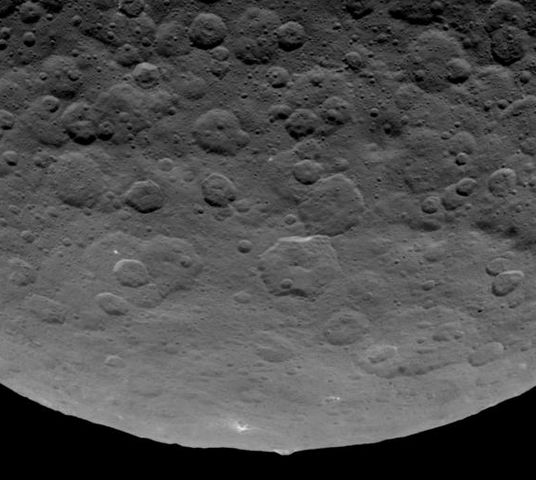
A June 6th image of the bright spots within a crater on Ceres, captured by Dawn on June 6th, 2015, from a distance of
A June 6th image of the bright spots within a crater on Ceres, captured by Dawn on June 6th, 2015, from a distance of 4,400 kilometres / 2,700 miles (NASA / JPL) – click for full size

Ceres, with a diameter of 950 kilometres (590 miles), is just 2.5 times smaller than distant Pluto, the target of the New Horizons mission. Its spectral characteristics suggest a composition similar to that of a water-rich carbonaceous chondrite. Like most of the material within the asteroid belt, it formed very early in the history of the Solar System, thereby retaining a record of events and processes from the time of the formation of the terrestrial planets.

Since arriving in orbit around Ceres, Dawn has returned some intriguing images of apparent bright spots within a crater. These were first seen in late 2014, as Dawn made its initial approach to Ceres, and have since been imaged on numerous occasions, and have been tracked as Ceres rotates, eliminating them as being imaging artefacts. Studies of much lower resolution images of Ceres taken by the Hubble Space Telescope also reveal these bright spots – although such is the distance of Ceres from Hubble that where they do appear in HST pictures, they are little more than a single bright blob.

The thinking on the bright areas are that they are water ice  or possibly frozen salt deposits – although they could be something more exotic. Over the last two months, Dawn has been able to image the bright areas, which lie in a crater some 92 kilometres (57 miles) across, situation some 19 degrees above Ceres’ equator. On June 6th, 2015, Dawn returned the best images yet of the bright spots, and these have been added to an animation made up of multiple images of Ceres, showing it rotating about its axis.

At the end of June, Dawn will commence a series of manoeuvres which will gently lower its orbit over the period of 6 weeks, allowing it to get much more detailed images of the surface of Ceres and these strange spots. As the images will also be captured from multiple angles, scientists hope they’ll provide sufficient information for the composition of the bright spots to be understood.

Continue reading “Space Sunday: imaging tiny worlds, flying saucers, and a matter of size”

Space Sunday: conjunctions, volcanoes and space stations

Solar conjunction: when Earth (r) is on the opposite side of the Sun or another solar system body - in this case, Mars (l)
Solar conjunction: when Earth (r) is on the opposite side of the Sun or another solar system body – in this case, Mars (l)

Solar Conjunction

June sees Mars an Earth move into a period of solar conjunction, when they are one opposite sides of the Sun relative to one another. These periods of conjunction occur roughly every 26 months (the last having been April 2013), can see communications between Earth and vehicles operating on and around Mars severely disrupted due to interference from the Sun.

To prevent spacecraft at Mars from receiving garbled commands that could be misinterpreted or even harmful, the operators of Mars orbiters and rovers temporarily stop sending any commands. At the same time, communications from the craft to Earth are also stepped down, and science operations scaled back. Nasa started to do this on Sunday, June 7th, and both ESA and the Indian Space Research Organisation will be doing the same. For the two Mars rovers, Opportunity and Curiosity, it means parking up and no driving until after full communications are restored. General science observation will, however, continue.

One slight difference in all this will be with NASA’s newest orbiter at Mars: MAVEN (Mars Atmosphere and Volatile Evolution). This arrived over Mars in September 2014,  with the primary mission of determining the history of the loss of atmospheric gases to space and gain insight into Martian climate evolution. As such, MAVEN will continue monitoring the solar wind reaching Mars and making other measurements. The reading will be stored within the orbiter’s memory system and transmitted back to Earth once normal communications have been restored.

MOM Studies Mars’ Volcanoes

Mars: The north polar ice cap, the three massive craters of the Tharsis volcanoes forming a diagonal line in the centre, the mighty "boil" of Olympus mons to their left and the 5,000 km long Vallis Marineris to their right
Mars: The north polar ice cap, the three massive craters of the Tharsis volcanoes forming a near-vertical line in the centre, the mighty “boil” of Olympus Mons to their left and the 5,000 km long Vallis Marineris to their right (image courtesy of ISRO)

Another mission that hasn’t gained much attention since also arriving in orbit around Mars is India’s Mangalyaan (“Mars-craft”) vehicle, which reached Mars on September 24th, 2014. Referred to simply as the Mars Oribiter Mission (MOM) by most, the vehicle reached Mars just 2 days after NASA’s MAVEN orbiter, and like that craft, a part of its mission is focused on studying the Martian atmosphere.

MOM also carries a high-resolution surface imaging camera, and this has been busy returning some magnificent picture of Mars, including the brilliant picture of the planet reproduced above, which shows the north polar ice cap, the almost vertical line of the three massive Tharsis Bulge volcanoes of Ascraeus Mons, Pavonis Mons and Arsia Mons in the centre, the massive rise of Olympus Mons, the largest volcano in the solar system to their left, and the 5,000 kilometre scar of the massive Vallis Marineris to their right.

MOM’s camera is also capable of producing 3D images, and an example of this capability was released by ISRO on June 5th in the form of a dazzling image of Arsia Mons, the southernmost of the equator spanning Tharsis volcanoes. The image was actually captured on April 1st, 2015, and has a spatial resolution of 556 metres, and the camera some 10,707 kilometres from the surface of Mars when the picture was taken.

The mighty Arsia Mons on Mars, largest of the three Tharsis Bulge volcanoes. The image shows a deliberate vertical exaggeration to the volcano's slope
The mighty Arsia Mons on Mars, largest of the three Tharsis Bulge volcanoes. The image shows a deliberate vertical exaggeration to the volcano’s slope (image courtesy of ISRO)

To give some idea of the scale of this massive shield volcano, it is 435 kilometres (270 mi) in diameter at its base, rises some 20 kilometres (12 miles) in height compared to the mean surface elevation of the planet, and is some 9 kilometres (5.6 miles) higher than the plains on which it sits. The caldera crater at its summit is 110 km (72 miles) across.

Continue reading “Space Sunday: conjunctions, volcanoes and space stations”

Space Sunday: probing inside other worlds

CuriosityIn December 2014, I wrote about the Curiosity science team reporting they had detected odd “spikes” in methane levels in the Martian atmosphere as a result of analyses undertaken by the SAM (Sample Analysis at Mars) mini laboratory within the Mars rover.

Methane had first been definitively detected on Mars by the 2008 Phoenix Lander, although its presence had long been suspected and indicated. However, Curiosity’s discovery of two sudden sharp increases in the normal levels of traceable methane to some 7 part per billion – a ten time increase of the expected levels – suggested it had perhaps happened across some localised methane-producing source, possibly of organic nature (notes that “organic” in this case doesn’t actually mean “living things”).

However, the results have recently had some doubt cast upon them, and from within NASA itself. Kevin Zahnle, a scientist at NASA’s Ames Research Centre in California has been studying the data and suggested that the methane spikes could have come from a very localised source – a leaf of Earthly air previously trapped somewhere in the rover’s insides.

Could a small pocket of air carried from Earth have leaked into one of the spectrometers aboard Curiosity's SAM instrument and caused spurious  methane counts?
Could a small pocket of air carried from Earth have leaked into one of the spectrometers aboard Curiosity’s SAM instrument and caused spurious methane counts? Image: NASA / JPL

Depsite rigorous decontamination processes prior to launch, is is possible for air and gas pockets to get trapped inside a robot vehicle. This is actually what happened at the start of Curiosity’s sojourn on Mars: during its initial analysis of the atmosphere around it, the rover also detected abnormally high levels of methane, only for it to be tracked back to tiny amount of air carried aboard the rover leaking into the spectrometer carrying out the methane measurements. Zahnle suggests that a similar leak cannot yet be ruled-out as the cause of the 2013 and 2014 spikes.

Members of the Curiosity science team argue that as a result of the initial leak, they have taken every caution to prevent being misled again, and are confident that only the most exceptional of circumstances could result in SAM’s findings being the result of methane “trapped” somewhere inside the rover only get released well over a year after its arrival on Mars. However, they also admit that the potential for such a situation cannot be entirely ruled-out.

One of the arguments for the spikes being the result of contamination from within the rover is that similar readings haven’t since been recorded. A counter argument to this is that the levels SAM recorded could be the result of a yet-to-be-understood seasonal phenomena. To this end, the rover is going to be sniffing the air around it very carefully during late 2015 / early 2016 to see if it can detect any similar spikes.

Insight (in) to Mars

An artist's impression of InSight on Mars
An artist’s impression of InSight on Mars.  Image: NASA / JPL

NASA’s next mission to Mars is scheduled to launch a March 2016. In keeping with the agency’s (roughly) alternating approach to surface mission to the planet, which switch between landers craft and rovers, the InSight (Interior Exploration using Seismic Investigations, Geodesy and Heat Transport) mission is a lander mission.

As the full version of its name suggests, InSight is intended to probe the deep interior of Mars. In doing so, it is hoped the mission will not only add to our understanding of Mars, but also our understanding of the processes that shaped the rocky planets of the inner solar system (including Earth) more than four billion years ago.

Following its launch, InSight will cruise to Mars in a flight of roughly 6 months, landing on the surface in September of that year. After a check-out and calibration period, the science mission will commence in October 2016, with the overall surface mission expected to last 700 Sols (roughly 720 Earth days).

The solar arrays on NASA's InSight lander are deployed in this test inside a clean room at Lockheed Martin Space Systems, Denver. This configuration is how the spacecraft will look on the surface of Mars.Image Credit: NASA/JPL-Caltech/Lockheed Martin
The solar arrays on NASA’s InSight lander are deployed in this test inside a clean room at Lockheed Martin Space Systems, Denver. This configuration is how the spacecraft will look on the surface of Mars.Image: NASA / JPL / Lockheed Martin

The reason Mars is being used in this way, rather than scientists simply studying the Earth to better understand the processes involved in shaping the rocky worlds of the solar system is that Mars are far less geologically active than Earth, it retains a more complete record of its history in its own basic planetary building blocks: its core, mantle and crust than does Earth.

The Lander for the mission is based on the successful design of the 2008 Phoenix mission, and will include technology and instruments that will be deployed onto the surface of Mars, including the HP3 “mole” which will burrow its way deep below the surface (see the artist’s impression under the headline to this piece) in an attempt to more accurately measure the amount of heat flowing outwards from the planet’s core.

Continue reading “Space Sunday: probing inside other worlds”