Space Sunday: remembrance and the future

Credit: NASA

The end of January / beginning of February is a time of pause and reflection for the American space programme and NASA. A span of five days, spread across a 36-year period, mark the three greatest tragedies of US human space flight, and so this period is always marked as a time of remembrance.

I’ve marked these three events – the Apollo 1 fire of January 27th, 1967, the Challenger disaster of January 28th, 1986 and the loss of the Columbia on February 1st, 2003 – in past Space Sunday updates. However, January 27th, 2017 marked the 50th anniversary of the Apollo 1 fire, which claimed the lives of Command Pilot Virgil I. “Gus” Grissom, Senior Pilot Edward H. White II, and Pilot Roger B. Chaffee in just 16 seconds. To mark it, and the start of NASA’s period of remembrance, the US space agency unveiled a new Apollo 1 tribute in its visitor complex at the Apollo/Saturn V Centre.

The Apollo 1 astronauts remembered at the Space Mirror Memorial, Kennedy SPace Centre's visitor centre
The Apollo 1 astronauts remembered at the Space Mirror Memorial, Kennedy Space Centre’s visitor centre. Credit: NASA

Grissom, White (the first American to walk in space during the Gemini 4 mission in 1965), and rookie Chaffee were participating in a “plugs out” test of the Apollo Command module intended to determine whether the vehicle was fit to fly at a time when many in NASA – Grissom included – felt it was not (Grissom had once famously hung a lemon in the Command Module simulator during training to signify his dissatisfaction with the state of the vehicle’s development).

It should have been a routine launch pad test of the vehicle the crew were due to fly in the first crewed test of Apollo in the run-up to a lunar landing. Instead, a spark from faulty wiring combusted the oxygen-rich atmosphere, causing a flash fire. This, aided by the many flammable materials used in the construction of the vehicle caused the air pressure inside the vehicle to rapidly rise, sealing the cabin’s inward opening hatch so that the crew could not open it themselves.

The deaths of these three men ultimately made Apollo – and the US space programme itself – far safer for those going into orbit. Flammable materials were all but eliminated from designs wherever possible; the atmosphere used within vehicles was altered so as not to be oxygen-rich, reducing the risk of fires rapidly building up and spreading; exit hatches were all changed so they would open outward, and the mechanisms for opening them either from within or without a vehicles were designed to be as simple and direct as possible.

To mark the 50th anniversary of the fire, NASA has placed the most significant part of the Apollo 1 vehicle – the hatch – on public display, with the full blessings of the surviving members of the astronaut’s families. It is a belated addition to similar exhibits of both the Challenger and Columbia accidents were placed on public display over 18 months ago in order to more fully commemorate those incidents.

All three disasters are commemorated at the Space Mirror Memorial  at the Kennedy Space Centre. However, while both Challenger and Columbia are also marked by memorials at America’s Arlington National Cemetery, no similar memorial currently exists for Apollo 1 (although Grissom and Caffee are interred there – White is interred at the West Point Cemetery). So, as a further mark of the 50th anniversary of the fire, Representative Eddie Bernice Johnson (D-Texas) has re-introduced a bill to Congress to have an Apollo 1 memorial established at Arlington.

The Challenger and Columbia memorials, Arlington National Cemetery
The Challenger and Columbia memorials, Arlington National Cemetery. Credit: Arlington National Cemetery

Apollo 1, Challenger and Columbia, together with a loss of life which occurred during the Soviet manned space programme, serve as a reminder to all of us that space exploration is still a dangerous undertaking, despite all of the “shit sleeve” images we see of people working aboard the International Space Station. But then, all acts of expanding the human frontier carry with them inherent risks and the potential for loss of life.

This doesn’t mean we should shirk such activities or retreat from them; the rewards are simply too great, not only in terms of our potential to learn and grow and ensure our continuance as a species, but also to out ability to mature as a species and reach beyond the petty nationalisms and narrow-minded thinking which plague so much of what happens in the world today.

Remembering; Apollo 1 (top): Virgil "Gus" Grissom, Edward H. White II, and Roger B. Chaffee; STS-51l (Challenger - left): Sharon Christa McAuliffe, Gregory Jarvis, Judith Resnik, Francis "Dick" Scobee, Ronald McNair, Michael J. Smith and Ellison Onizuka; STS-107 (Columbia, right): David M. Brown, Rick Husband, Lauren Blair Salton Clark, Kalpana Chawla, Michael Anderson, William McCool, and Ilan Ramon. All images credit: NASA
Remembering; Apollo 1 (top): Virgil “Gus” Grissom, Edward H. White II, and Roger B. Chaffee; STS-51l (Challenger – left): Sharon Christa McAuliffe, Gregory Jarvis, Judith Resnik, Francis “Dick” Scobee, Ronald McNair, Michael J. Smith and Ellison Onizuka; STS-107 (Columbia, right): David M. Brown, Rick Husband, Laurel Blair Salton Clark, Kalpana Chawla, Michael P. Anderson, William C. McCool, and Ilan Ramon. All images credit: NASA – click for full size

NASA’s official Day of Remembrance will be held on Tuesday, January 31st, 2017. With it comes the opportunity to not only look back to the sad events of January 27th, 2967, January 28th, 1986 and February 1st, 2003, but also to look forward to what might yet be achieved for all of human kind. Which is why I’m once again quoting Francis “Dick” Scobee, Commander of Challenger mission STS-51L, lost on that cold January morning in 1986.

Words: Francis Scobee via June Rodgers (formerly June Scobee). image: NASA

Continue reading “Space Sunday: remembrance and the future”

Space Sunday: the last man on the Moon

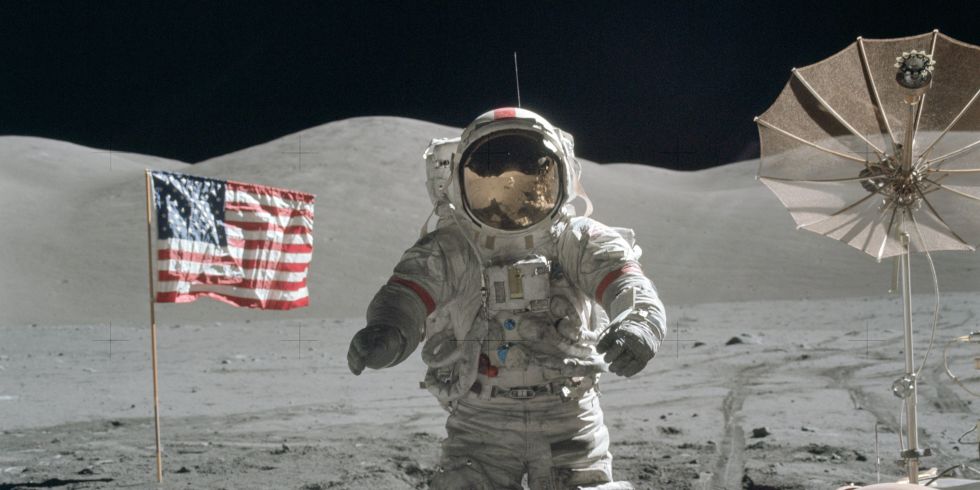
Eugene Andrew "Gene" Cernan, Commander, Apollo 17, in the Taurus-Littrow valley, December 1972
Eugene Andrew “Gene” Cernan, Commander, Apollo 17, in the Taurus-Littrow valley, December 1972. Credit: Harrison Schmitt / NASA via Getty / AFP

Eugene Andrew “Gene” Cernan, Captain, United States Navy (retired) and former NASA astronaut, passed away on Monday, January 16th 2017 at the age of 82. The commander of Apollo 17, he was – and currently remains – the last man to walk on the surface of the Moon, in what was arguably the most significant of the Apollo lunar missions.

Born in Chicago, Illinois in March, 1934, he attended Purdue University, Indiana, where he gained a Bachelor of Science degree in Electrical Engineering in 1956. While at the university. he took a commission as an Ensign in the U.S. Naval Reserve Officers Training Corps. Following his graduation, he attended U.S. Naval Flight Training, qualifying as an attack pilot, and went on to log more than 4,000 flying hours in jet aircraft and completed over 200 aircraft carrier landings.

In 1963, Cernan completed his education under the auspices of the US Navy, obtaining a Master of Science degree in Aeronautical Engineering from the  U.S. Naval Postgraduate School. Later that same year, he was selected by NASA as a part of their third intake of Astronaut Candidates, and participated in both the Gemini and Apollo programmes.

His first flight into space, aboard Gemini 9A started with a tragedy. The original Gemini 9 flight had been scheduled for Elliot See and Charlie Bassett. However, when they were unfortunately killed when their NASA aircraft crashed at the end of February 1966, the mission was re-rostered as Gemini 9A, and Cernan and his flight partner, Thomas Stafford, were promoted from back-up to prime crew.

Gemini 9A was to prove a mission plagued with misfortune. The first attempt to launch the mission, in May 1966 had to be scrubbed when the uncrewed Agena Target Vehicle Gemini 9A would rendezvous and dock with once in orbit  was lost not long after launch. This required a delay while a second Agena was prepared for flight, being launched on June 1st, 1966. However, once in orbit, telemetry from the vehicle suggested a launch shroud had not been correctly jettisoned.

On approaching the Agena following their launch on June 3rd, Stafford and Cernan confirmed the sections of the shroud, although open, had failed to detach, leaving the vehicle looking – in Stafford’s words – “Like an angry alligator out here rotating around”. He and Cernan indicated they were willing to carefully approach the Agena and try to nudge the shroud elements clear of the docking adapter, but mission control nixed the idea, fearing the Gemini vehicle might be damaged in the process. Instead, the crew rehearsed docking runs with the target vehicle and tested rendezvous abort procedures.

The "angry alligator" of the Agena target vehicle with launch shroud elements still attached, as seen from Gemini 9A on June 3rd, 1996. The nose of the Gemini vehicle can be seen at the top of the image, and the craft were some 20.3 metres (66ft) apart
The “angry alligator” of the Agena target vehicle with launch shroud elements still attached, as seen from Gemini 9A on June 3rd, 1996. The nose of the Gemini vehicle can be seen at the top of the image, and the craft were some 20.3 metres (66ft) apart. Credit: NASA

On the third day of the flight, Cernan became the third man (and America’s second) to walk in space. However, this part of the mission also proved troublesome. The Gemini spacesuits were not water-cooled, and had to be “inflated” prior to egressing the vehicle. Cernan found the latter made the suit almost completely inflexible and a serious impediment to his movement. This meant he had to exert himself a lot more, and because the suit had no proper cooling, he face the genuine risk of suffering heat prostration.

Nor was this all; the build-up of heat meant his helmet faceplate fogged to the point where he could barely see, and there were serious concerns about him getting back into the Gemini. His EVA was  curtailed without all goals being met, and after 128 minutes in space, Cernan eventually made it back inside the spacecraft. As a result of this experience, the Apollo spacesuits were redesigned to incorporate an undergarment using a water circulation system to cool the wearer – and approach still used in modern space suits.

Cernan next flew in space in May 1969 as part of the final Apollo dress-rehearsal mission for an actual landing on the Moon. Apollo 10, which saw Cernan and Stafford again fly together, and joined by John Young, became the second crewed mission to orbit the Moon (the first being Apollo 8, in December 1968), and the fourth crewed flight of Apollo overall. The focus of the mission was for Stafford and Cernan to pilot the Lunar Module to just 15.6 km (8.4 mi) above the lunar surface, gathering critical data which would allow the powered descent systems aboard future Lunar Modules to be correctly calibrated for their missions.

Gene Cernan in 1969, ahead of the Apollo 10 flight during a NASA press conference. A Snoopy toy sits next to him, indicative of the Apollo 10 lunar module call sign
Gene Cernan in 1969, ahead of the Apollo 10 flight during a NASA press conference. A Snoopy toy sits next to him, indicative of the Apollo 10 Lunar Module’s call sign. The Command Module was called Charlie Brown. Credit: NASA

In most respects, the Apollo 10 Lunar Module was fully capable of flying a mission to the surface of the Moon – it just lacked sufficient propellent in its ascent engine fuel tanks to make a successful flight back to rendezvous with the Command Module.  This later prompted Cernan to joke, “A lot of people thought about the kind of people we were: ‘Don’t give those guys an opportunity to land, ’cause they might!’ So the ascent module, the part we lifted off the lunar surface with, was short-fuelled. The fuel tanks weren’t full. So had we literally tried to land on the Moon, we couldn’t have gotten off.”

Apollo 10 reached lunar orbit on May 21st, 1969, three days after launch, and remained there for a further three days, completing the Lunar Module tests in the process, before returning to Earth. It was a mission which set both records and firsts. It was the first (and only) Apollo Saturn V mission to launch from Pad 39B at Kennedy Space Centre; it was the first (of only two, the other being Apollo 11) Apollo missions to comprise veterans of previous missions into space.

Continue reading “Space Sunday: the last man on the Moon”

Space Sunday: looking back on Earth and landing rockets and probes

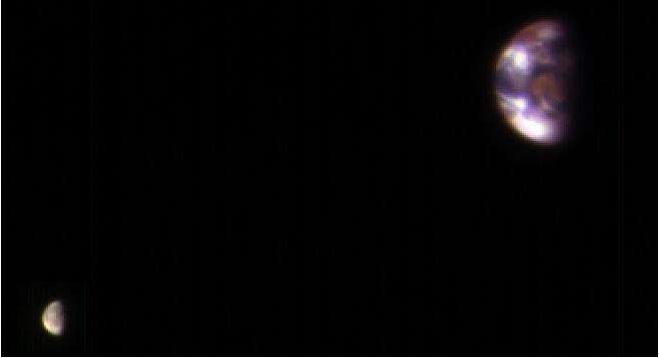
The Earth and Moon, as seen from orbit over Mars, November 20th 2016

Two marbles sit on a midnight background, one a swirl of blue, white, brown and green, the other tinted in shades of grey. Together they are the Earth and her Moon as seen by the most powerful imagining system currently orbiting the planet Mars.

It is, in fact a composite image, although Earth and the Moon are the correct sizes and the correct position / distance relative to one another. The images were captured by the High Resolution Imaging Science Experiment (HiRISE) camera on NASA’s Mars Reconnaissance Orbiter (MRO) on November 26th, 2016.

The images were taken to calibrate HiRISE data, since the reflectance of the moon’s Earth-facing side is well-known. As such, this is not the first image of our home planet and its natural satellite captured from Martian orbit, but it is one of the most striking. Whilst a composite image, only the Moon’s brightness has been altered to enhance its visibility; were it to be shown at the same brightness scale as Earth, it would barely be visible. That it appears to be unnaturally close to Earth is in fact an illusion of perspective: at the time the pictures were taken, the Moon was on the far side of Earth relative to Mars, and about to pass behind it.

The image of Earth shows Australia prominent in the central area of the image, its shape just discernible in this high-resolution image, taken when Mars and the MRO were 205 million kilometres (147 million miles) from Earth.

For me, this is another picture demonstrating just how small, fragile and unique our home world actually is.

 Falcon 9 Makes Triumphant Return to Flight

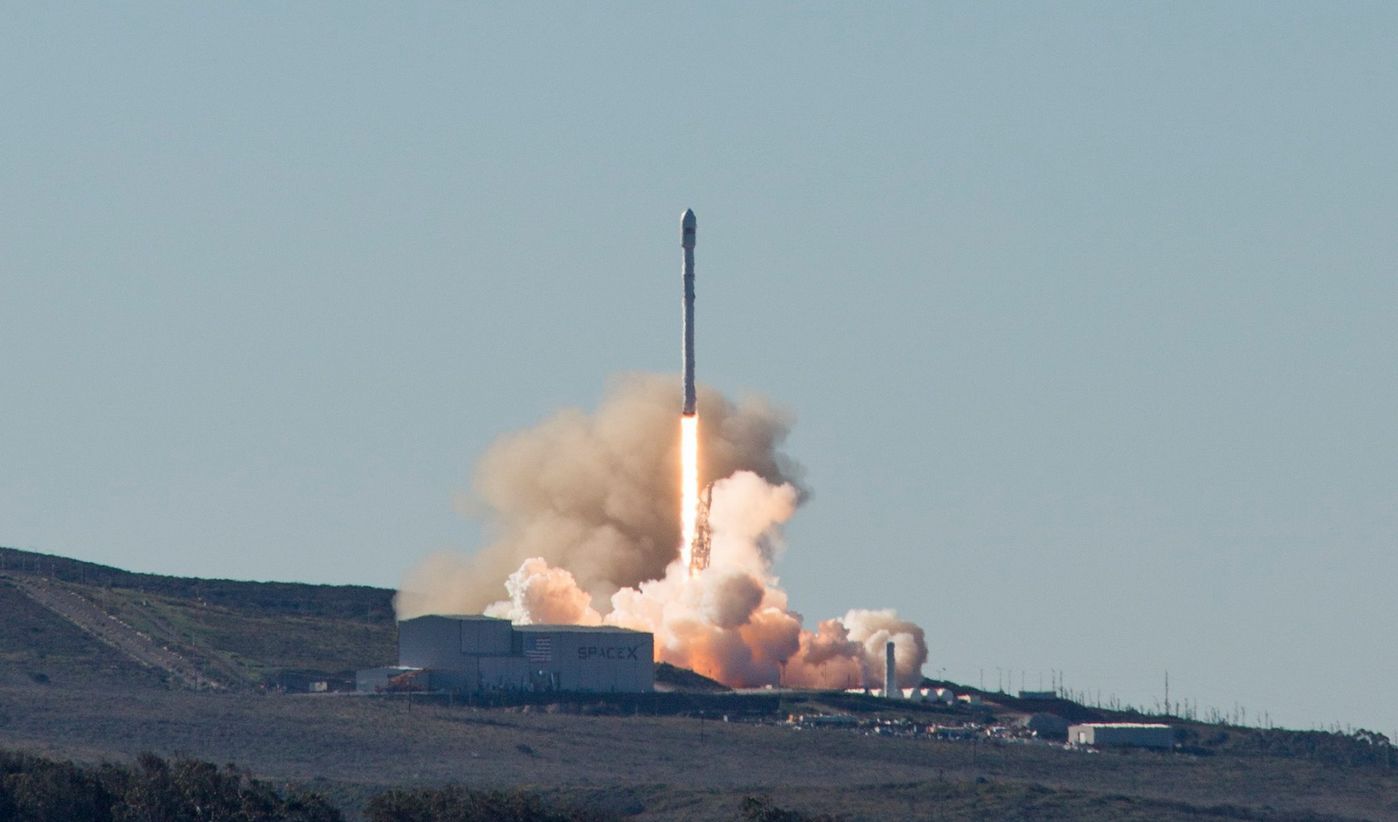
With Federal Aviation Authority (FAA) approval given, SpaceX, the private space company founded by Elon Musk, made a triumphant return to flight status with its Falcon 9 launch system on Saturday, January 14th.

January 14th, 2017: the SpaceX Falcon 9, carry 10 advanced Iridium Next communications satellites in its bulbous paylod fairing, lifts-off from Space Launch Complex 4E, Vandenberg Air Force Base, California Credit: SpaceX
January 14th, 2017: the SpaceX Falcon 9, carry 10 advanced Iridium NEXT communications satellites in its bulbous payload fairing, lifts-off from Space Launch Complex 4E, Vandenberg Air Force Base, California Credit: SpaceX

SpaceX launches had been suspended in September 2016, after a Falcon 9 and its US $200 million payload were loss in an explosion during what should have been a routine test just two days ahead of the planned launch (see here for more). Towards the end of 2016, and following extensive joint investigations involving NASA and the US Air Force (The Falcon 9 was located at Launch Complex 40 at the Canaveral Air Force Station when the explosion occurred), SpaceX were confident they had traced the root cause for the loss to a failure of process, rather than a structural or other failure within the vehicle itself. However, they had to wait until the FAA had reviewed the investigation findings and approved the Falcon 9’s return to flight readiness before they could resume operations.

The January 14th launch came via the SpaceX West Coast facilities, again leased from the US Air Force, and saw a Falcon 9 booster lift-off from Space Launch Complex 4E at Vandenberg Air Force Base in California. The rocket was carrying the first ten out of at least 70 advanced Iridium NEXT mobile voice and data relay satellites SpaceX will launch over the coming months, as Iridium Communications place a “constellation” of 81 of the satellites in orbit around the Earth in a US $3 billion project.

All ten satellites were successfully lifted to orbit and deployed following a pitch-perfect launch, which had to take place at precisely 9:54:34 local time (17:54:34 UT) in order for all ten satellites to be correctly deployed to reach their assigned orbits. However, all eyes were on the Falcon 9’s first stage, which was set to make a return to Earth for an at-sea landing aboard one of the company’s two autonomous drone landing barges, Just Follow The Instructions.

Down and safe: the Falcon 9 first stage, seen via a camera aboard the autonomous drone barge Just Follow The Instructions, shortly after touch-down on January 14th, 2017. Credit: SpaceX

Operating the Falcon 9 on a basis of reusability is core to SpaceX’s future plans to reduce the overall cost of space launches. While the company has previously made six successful returns and landings with the Falcon 9 first stage, this being the first attempt since September 2016’s loss added further pressure on the attempt. but in the event, it went flawlessly.

After separation from the upper stage carrying the payload to orbit, the first stage of the Falcon 9 completed what are called “burn back” manoeuvres designed to drop it back into the denser atmosphere. Vanes on the rocket’s side were deployed to provide it with stability so that it dropped vertically back down to Earth, using its engines as a braking system and deploying landing legs shortly before touchdown – and the entire journey was captured on video, courtesy of camera built-into the rocket’s fuselage.

Continue reading “Space Sunday: looking back on Earth and landing rockets and probes”

Space Sunday: a look at the year ahead

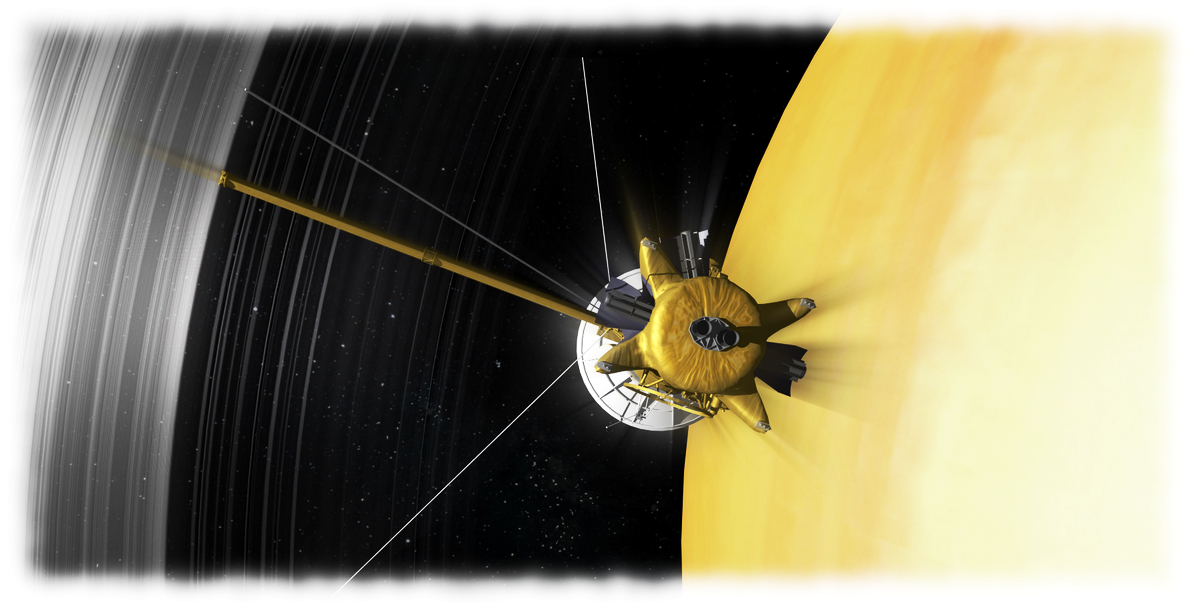
Artist's concept of Cassini's final orbits between the innermost rings and Saturn's cloud tops (see below). Credit: NASA
Artist’s concept of Cassini’s final orbits between the innermost rings and Saturn’s cloud tops (see below). Credit: NASA

As we enter a new year, I thought I’d take a quick dip into some of the astronomical and space events which will occur in 2017.

January / February

  • The Quantids Meteor Shower: reaching a peak on January 3rd / 4th, this should be visible for those in the northern hemisphere graced with clear night skies, as the Earth passes through the debris trail from asteroid 2003 EH1. Just look towards Ursa Major (The Plough / The Big Dipper) and you could see up to 100 “shooting stars” per hour as dust and minute debris from the comet’s tail burn up in the upper atmosphere.
  • SpaceX Return to Flight: while no date has been confirmed, it is expected this will take place in January / February 2017 – see my expanded report below.
  • Catch a Comet: February will see  Comet 45P/Honda-Mrkos-Pajdusakova pass the Earth on its way back out into space, having swung around the Sun in December. A short period comet, orbiting the Sun every 5.5 years, it should be visible just before dawn between the constellations Aquila and Hercules. On the morning of February 11th it will be at its closest to Earth – 12,320,000 km (7,700,000 mi), and should be visible to the naked eyes as a tiny fuzzy ball.
  • Southern Hemisphere Annular Eclipse: Africa and South America get to see an annular eclipse on February 26th. This is when the Sun and Moon are exactly in line with the Earth, but the apparent size of the Moon is smaller than that of the Sun. Hence the Sun appears as a very bright ring, or annulus, surrounding the dark disk of the Moon.

March / April

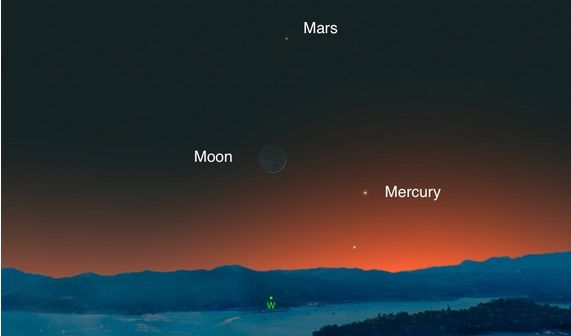
  • The Moon-Mars-Mercury Triangle: looking out toward the crescent moon just after dusk on March 29th should reveal the celestial triangle between the Moon, ruddy Mars (relatively high above the horizon) and tiny Mercury, much closer to the horizon. The latter will actually be at its most distant from the Sun at the time and at the highest above the horizon it ever gets, marking one of the rare occasions it can easily be seen as a naked eye object.
The Moon-Mars-Mercury "triangle". Credit: Andrew Fazekas
The Moon-Mars-Mercury “triangle”. Credit: Andrew Fazekas
  • Jupiter’s Bright Opposition: Jupiter and the Sun will be sitting almost exactly on opposite sides of the Earth relative to one another during March and April (opposition actually occurring on April 7th). This means that Jupiter will be one of the brightest objects in the night sky, and on April 10th will be a brilliant companion for the full Moon, appearing just above and to the right of the Moon’s limb.
  • Cassini’s Final Grand Tour: On April 22nd, NASA’s long running Cassini mission to Saturn will enter its final phase as the spaceraft bearing the mission’s name commences 22 final orbits which will see it passing between the planet and its rings to come within 1,630 km (1,013 mi) of Saturn’s cloud tops.
  • China’s Tianzhou 1 to Fly: while it has yet to be confirmed, April has been earmarked for the maiden flight of China’s automated resupply vehicle, Tianzhou 1, which should rendezvous with the Tiangong-2 orbital laboratory to deliver consumables, fuel and other supplies. The mission is key to China’s longer-term aim of establishing a crewed space station in orbit.

June

  • Saturn’s Opposition and Rings:  Saturn will also be in opposition in June, revealing it as one of the brightest objects in the night sky, sitting within the in the constellation Ophiuchus. Saturn will be angled to show its northern hemisphere at this opposition, so the rings will inclined at an angle of 26° to our line of sight, which is almost the maximum inclination they can have, making them visible to even a modest telescope (30-cm / 6-in).

August / September

  • Perseids Sparkle:  it’s the most prolific meteor shower in the year visible in the northern hemisphere, with 60-110 “shooting stars” visible per hour at peak times, with some visible for up to a second at a time. Peak activity will occur between the 9th and 14th August – just look towards the constellation Perseus. But you’ll have to be out really early to see them – around 2:00am local time where you are. They’re the result of the Earth passing through the debris trail left by 1992’s Comet Swift-Tuttle,
  • The Great American Eclipse: the United States gets the best of this year’s solar eclipses, with a total eclipse occurring on August  21st. Totality (the complete eclipsing of the Sun by the Moon) will be visible in a narrow band stretching across the continental United States – see the video from NASA, below. Check with NASA for the best observing times in your location.

  • Dragon V2’s fiery ascent: although the first crewed flight of the Dragon V2 capsule has been delayed until 2018, SpaceX are targeting August 2017 as the month for the first uncrewed flight of the system, an important step on the way toward full certification to carry astronauts to and from the International Space Station.
  • Farewell to Cassini: it won’t be visible from Earth, but at 11:07 UT on September 15th, 2017, NASA’s Cassini mission to Saturn will come to an end as the vehicle, which has been in space for 20 years, 13 of them in orbit around the planet, plunges into the upper reaches of Saturn’s atmosphere and burns up. It will be a fiery and sad end to a magnificent mission, and I hope to present a Cassini special in these pages later in the year.

Continue reading “Space Sunday: a look at the year ahead”

Space Sunday: loss, glides and the avalanche model

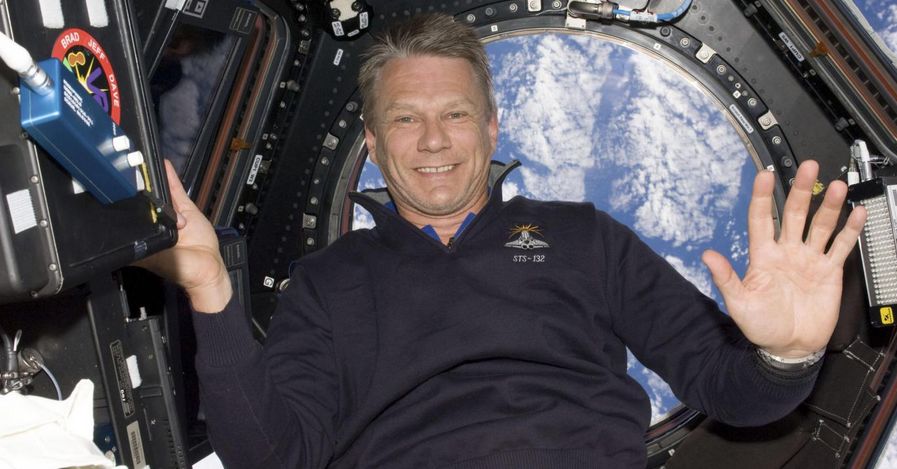
Piers Sellers ( April 11th, 1955 – December 23rd, 2016): climatologist and astronaut
Piers Sellers ( April 11th, 1955 – December 23rd, 2016): climatologist and astronaut. Credit: NASA

On Friday, December 23rd, news broke that astronaut Piers Sellers had passed away at the age of 61. His name might not be familiar to some, but British-born Sellers quietly achieved a lot both in orbit and here on the ground.

Born in 1955 in Crowborough, Sussex, Sellers held a bachelor’s degree ecological science and a doctorate in biometeorology. He was regarded as an expert on climate change, studying the relationship between the living world and the atmosphere for the better part of two decades starting in 1982, shortly after he and his wife (they later divorced) relocated from the UK to the United States. At that time he joined  NASA’s Goddard Space Flight Centre in Greenbelt, Maryland, working on climate change computer modelling. He then moved to leading the US team developing the multi-national Terra research satellite, regarded as the flagship Earth Observing System (EOS).

A qualified pilot, having trained as an RAF cadet while at college, he maintained his flight status throughout his first ten years in the United States, repeatedly applying for a position in the NASA Astronaut Corps. However, it wasn’t until 1991, when he gained US citizenship that he met all of the criteria to be considered for a place in the Corps, and he was selected for training in 1996.

After completing two years of training, Sellers was initially assigned technical duties in the Astronaut Office Computer Support Branch, followed by service in the Astronaut Office Space Station Branch, which saw him based in Moscow for periods of time, working with Russian colleges as a technical liaison for the development of computer software for the International Space Station (ISS).

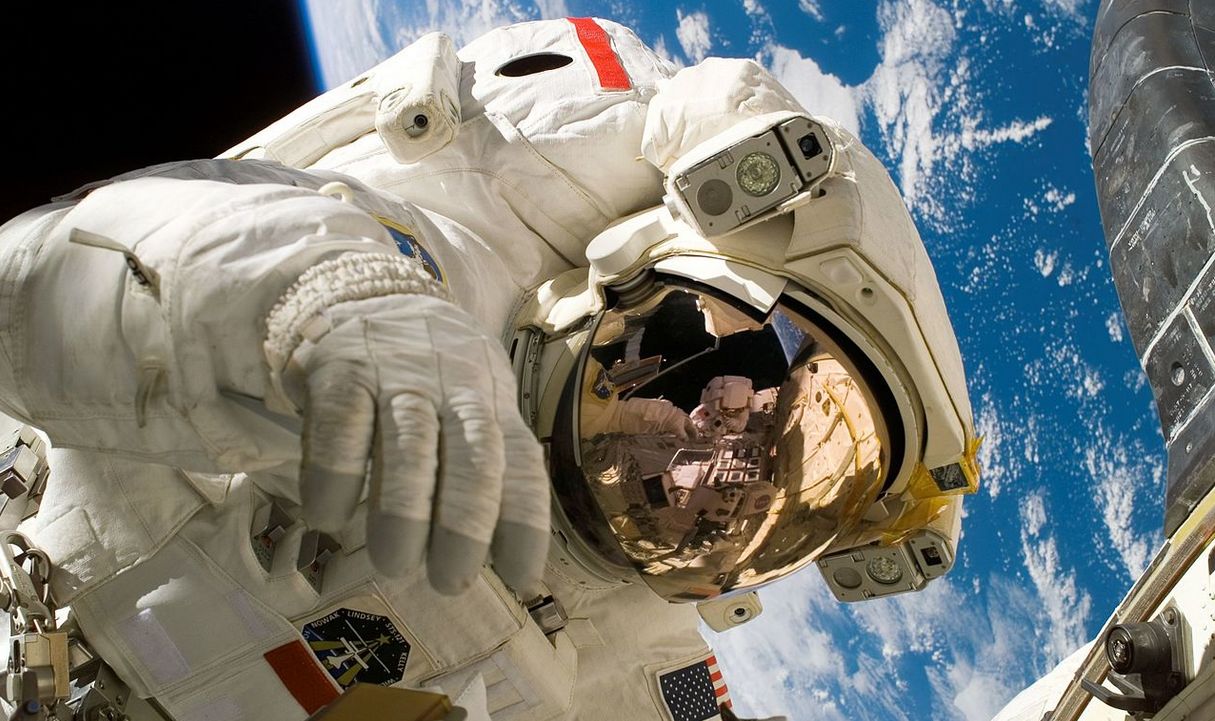
Sellers on EVA during STS-121, his second flight into orbit,
Sellers on EVA during STS-121, his second flight into orbit, July 4th through 17th, 2006. Credit: NASA

In all, Sellers flew in space the times, starting with STS-112 (October 7th – 18th, 2002, Space Shuttle Atlantis), during which he logged a total of 19 hours and 41 minutes of extra vehicular activity (EVA) work, assembling elements of the ISS). In 2006, he flew aboard the Space Shuttle Discovery for the Return To Flight Mission, STS-121, of July 4th through 17th. This mission marked the first flight of the shuttle fleet following the tragic loss of the Columbia and all seven crew on board, on February 1st, 2003. Sellers performed three  further EVAs on that mission, testing the 50-foot robotic arm boom extension as a work platform.

His final flight in space came in 2010 with STS-132, when he once again flew aboard Atlantis in what was to have been its final mission (although it actually flew once more, in July 2011). The mission delivered Russian Rassvet Mini-Research Module along with an Integrated Cargo Carrier-Vertical Light Deployable (ICC-VLD) to the ISS. In total, Sellers logged 35 days, 9 hours and 2 minutes in space, including more than 41 hours on six spacewalks.

In 2011, Sellers resigned from the Astronaut Corps to become Deputy Director of Goddard Space Flight Centre’s Sciences and Exploration Directorate, a position he still held at the time of his death, and later the Acting Director for Earth Sciences at Goddard. He was the author of 70 research papers, and in 2011 he was appointed Officer of the Order of the British Empire (OBE) for services to science. In June 2016 he was bestowed the NASA Distinguished Service Medal, while shortly before his death it was announced he would receive e Gen. James E. Hill Lifetime Space Achievement Award, the highest award the Space Foundation can bestow.

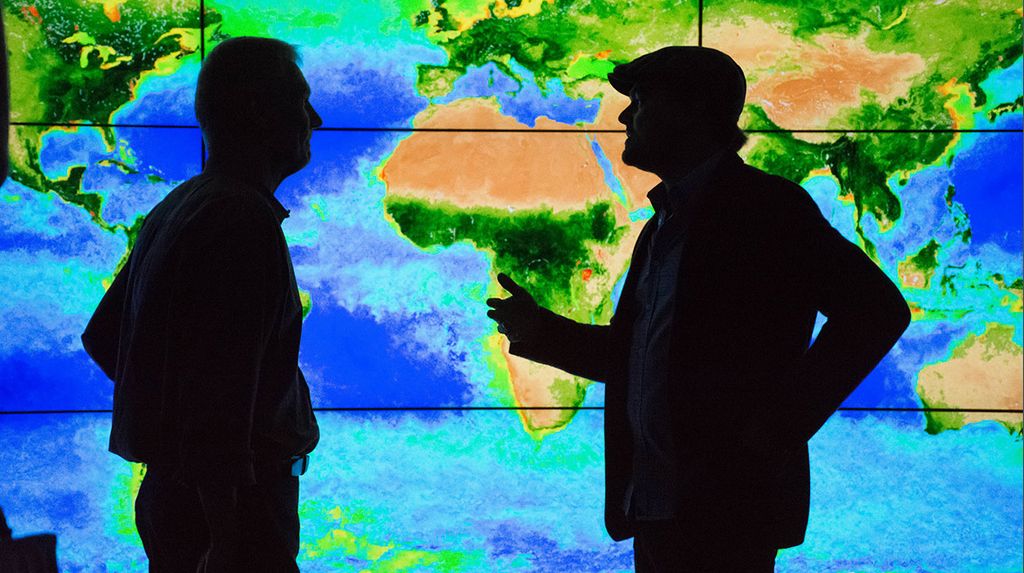
Sellers (l) discusses the realities of climate change with Leonardo DiCaprio in the National Geographic documentary, Before The Flood. Credit: National Geographic

At the start of 2016, Sellers revealed he had been diagnosed with stage 4 pancreatic cancer, and chose to do so by way of an article written for The New York Times entitled Cancer and Climate Change. Commenting on his diagnosis in the piece, he wrote:

I’ve no complaints. I’m very grateful for the experiences I’ve had on this planet. As an astronaut I spacewalked 220 miles above the Earth. Floating alongside the International Space Station, I watched hurricanes cartwheel across oceans, the Amazon snake its way to the sea through a brilliant green carpet of forest, and gigantic night-time thunderstorms flash and flare for hundreds of miles along the Equator. From this God’s-eye-view, I saw how fragile and infinitely precious the Earth is. I’m hopeful for its future.

Despite his diagnosis, Sellers continued his work and research almost right up to his death. In October 2016, he appeared with Leonardo DiCaprio in National Geographic’s documentary Before the Flood. He described climate change plainly and simply:

Here are the facts: The climate is warming, We’ve measured it, from the beginning of the industrial revolution to now. It correlates so well with emissions and theory, we know within almost an absolute certainty that it’s us who are causing the warming and the CO2 [carbon dioxide] emissions.

Commenting on Sellers’ passing, NASA Administrator Charles Bowden, himself a veteran of four flights into space, said:

Piers devoted his life to saving the planet. His legacy will be one not only of urgency that the climate is warming but also of hope that we can yet improve humanity’s stewardship of this planet.

Piers Sellers is survived by his ex-wife, his wife of 36 years, Amanda, their son Thomas and daughter Imogen and a grandson, Jack.

Continue reading “Space Sunday: loss, glides and the avalanche model”

Space Sunday: Curiosity, Dragon, Juno and James Webb

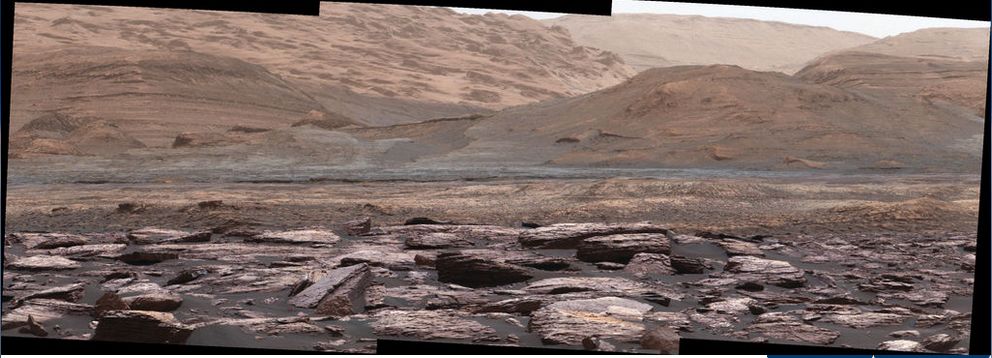
A mosaic of Mastcam images captured by NASA's Curiosity rover on November 10th, 2016 (Sol 1,516), showing the lower slopes of "Mount Sharp". Variations in the rocks colour hint at the diversity of their composition. The purple tone of the foreground rocks has been seen in other rocks where hematite has been detected. Winds and windblown sand help to keep rocks relatively free of dust which would otherwise obscure their colour differentiation. These images have been white balanced, so the scene appears as it would under typical Earth daylight conditions
A mosaic of Mastcam images captured by NASA’s Curiosity rover on November 10th, 2016 (Sol 1,516), showing the lower slopes of “Mount Sharp”. Variations in the rocks colour hint at the diversity of their composition. The purple tone of the foreground rocks has been seen in other rocks where hematite has been detected. Winds and windblown sand help to keep rocks relatively free of dust which would otherwise obscure their colour differentiation. These images have been white balanced, so the scene appears as it would under typical Earth daylight conditions. Credit: NASA/JPL / MSSS

For more than a year now, NASA’s Mars Science Laboratory rover, Curiosity, has been slowly climbing the lower slopes of “Mount Sharp” – more formally called Aeolis Mons, the 5 kilometre (3 mi) high layered deposit extending off of the central peak of Gale Crater. Whilst still on the lower slopes of the mound, the rover has already found minerals absent from lower levels within the crater, and these, together with the ample evidence for water once having existed in the crater, further point to Mars perhaps having once been habitable.

Details of the latest findings from Curiosity were presented at a meeting of the American Geophysical Union (AGU), which commenced on Monday, December 12th, in San Francisco. Making the presentation were members of the current MSL science team and its former principal investigator, John Grotzinger, – the Fletcher Jones Professor of Geology at Caltech.

Mineral veins are an important way to study the movements of water within a location, as they are result of cracks in layered rock being filled with chemicals that are dissolved in water. This alters the chemistry and composition of rock formations, providing vital clues on the prevailing conditions around the time they were deposited.

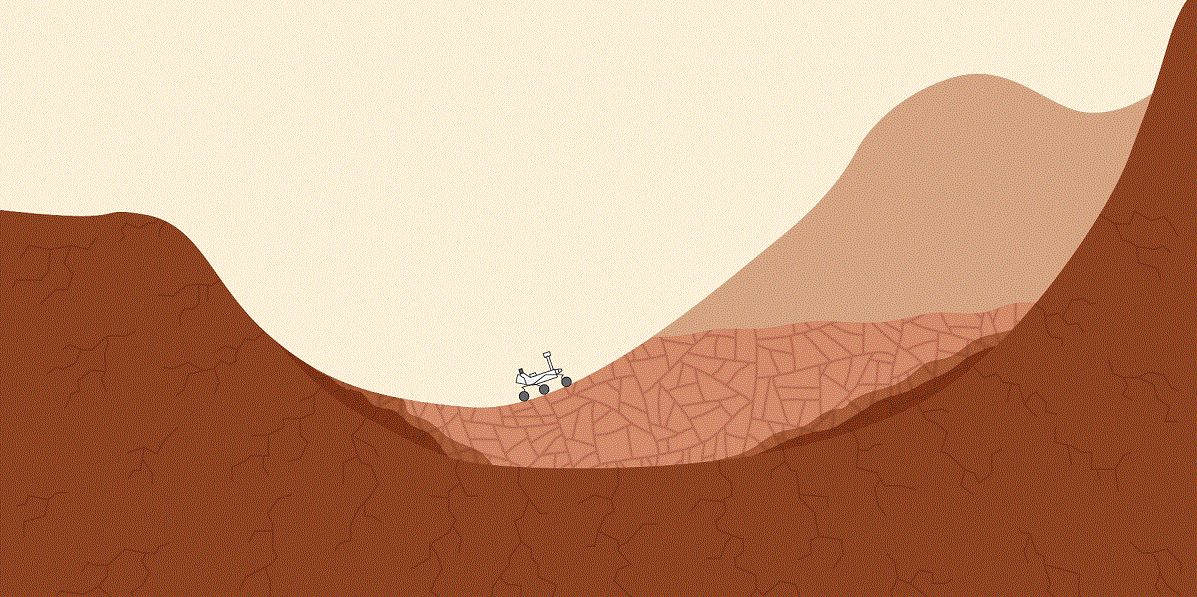
An illustration shown Gale Crater today, with the crater rim (l) and the central impact peak (r), against which "Mount Sharp" rises, which Curiosity climbing its lower slope (obviously not to scale). Credit: NASA/JPL
An illustration shown Gale Crater today, with the crater rim (l) and the central impact peak (r), against which “Mount Sharp” rises, which Curiosity climbing its lower slope (obviously not to scale). Credit: NASA/JPL

In the case of the slopes most recently examined by Curiosity, the science team have found that hematite, clay minerals and boron are more abundant than has been found in the lower, older layers. These point to a complex environment where groundwater interactions led to clay-bearing sediments and diverse minerals being deposited over time, effectively creating a “chemical reactor” which, although no actual evidence for Martian microbes having existed within the minerals has been found, still creates an environment which may have been beneficial life.

“There is so much variability in the composition at different elevations, we’ve hit a jackpot,” Grotzinger said during the presentation. “A sedimentary basin such as this is a chemical reactor. Elements get rearranged. New minerals form and old ones dissolve. Electrons get redistributed. On Earth, these reactions support life.”

As Gale Crater might have looked billions of years ago, showing how the circulation of groundwater led to chemical changes and mineral deposits. Credit: NASA/JPL

The increasing presence of hematite found by the rover as it continues up “Mount Sharp” suggests both warmer conditions and more interaction with the atmosphere at higher levels. In addition, the increasing concentrations of hematite, relative to magnetite at lower levels further suggests that iron oxidisation increased over time, creating the “chemical reactor” Grotzinger referenced: the loss of electrons through the oxidisation process can provide the energy necessary for life to sustain itself.

Another ingredient increasing in recent measurements by Curiosity is the element boron, which the rover’s laser-shooting Chemistry and Camera (ChemCam) instrument has been detecting within calcium sulphate mineral veins. Boron is famously associated with arid sites where much water has evaporated away. However, the amounts found so far are so minor, they make it much harder to determine the environmental implications of their presence.

Currently the team is considering at least two possibilities. In the first, the evaporation of the lake thought to have once existed within Gale Crater formed a boron-containing deposit in an overlying layer, not yet reached by Curiosity, then water later re-dissolved the boron and carried it down through a fracture network into the layers the rover is currently investigating, where it accumulated along with fracture-filling vein minerals. In the second, changes in the chemistry of clay-bearing deposits, such as evidenced by the increased hematite, affected how groundwater picked up and dropped off boron within the local sediments.

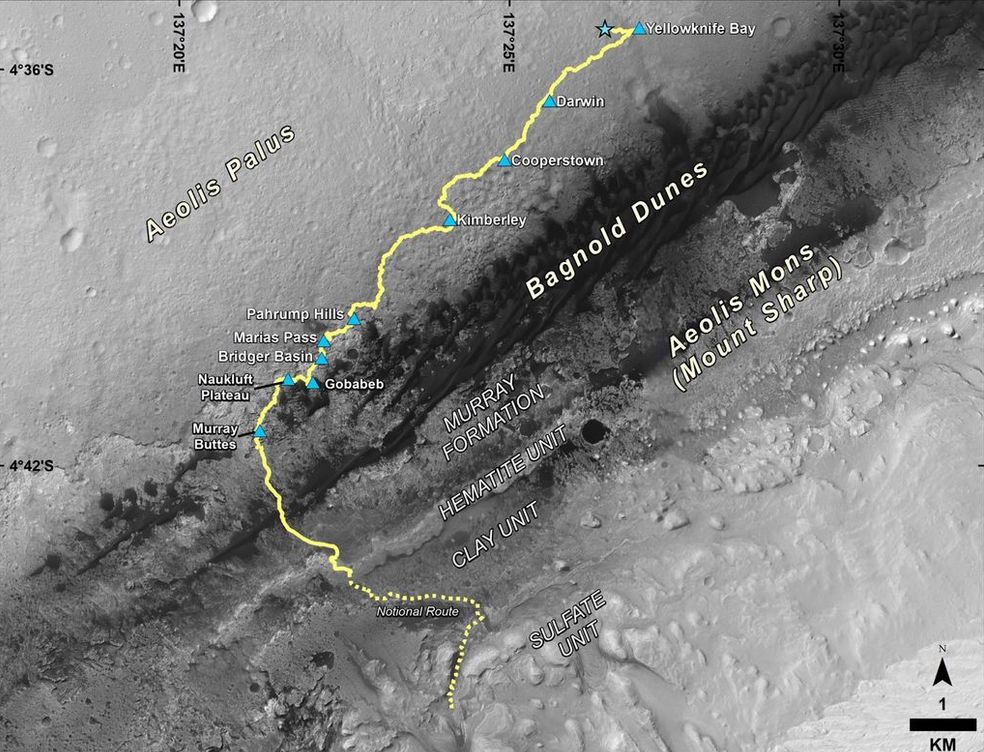
Curiosity's 4-year, 10 kilometre (6.2 mi) Trek from its landing sight (the blue star), through the Yellowknife Ridge area, keep to early findings by the rover, then down along the foothills of "Mount Sharp" to the climb up the mound's lower slopes. The blue triangles denote way-points on the route, where science work was carried out
Curiosity’s 4-year, 10 kilometre (6.2 mi) Trek from its landing site (the blue star), through the Yellowknife Ridge area, key to early findings by the rover, then down along the foothills of “Mount Sharp” to the climb up the mound’s lower slopes. The blue triangles denote way-points on the route, where science work was carried out. The images of Gale Crater and “Mount Sharp” are composed of high-resolution images obtained by the HiRISE camera aboard the Mars Reconnaissance Orbiter. Credit: NASA/JPL / MSSS

Continue reading “Space Sunday: Curiosity, Dragon, Juno and James Webb”