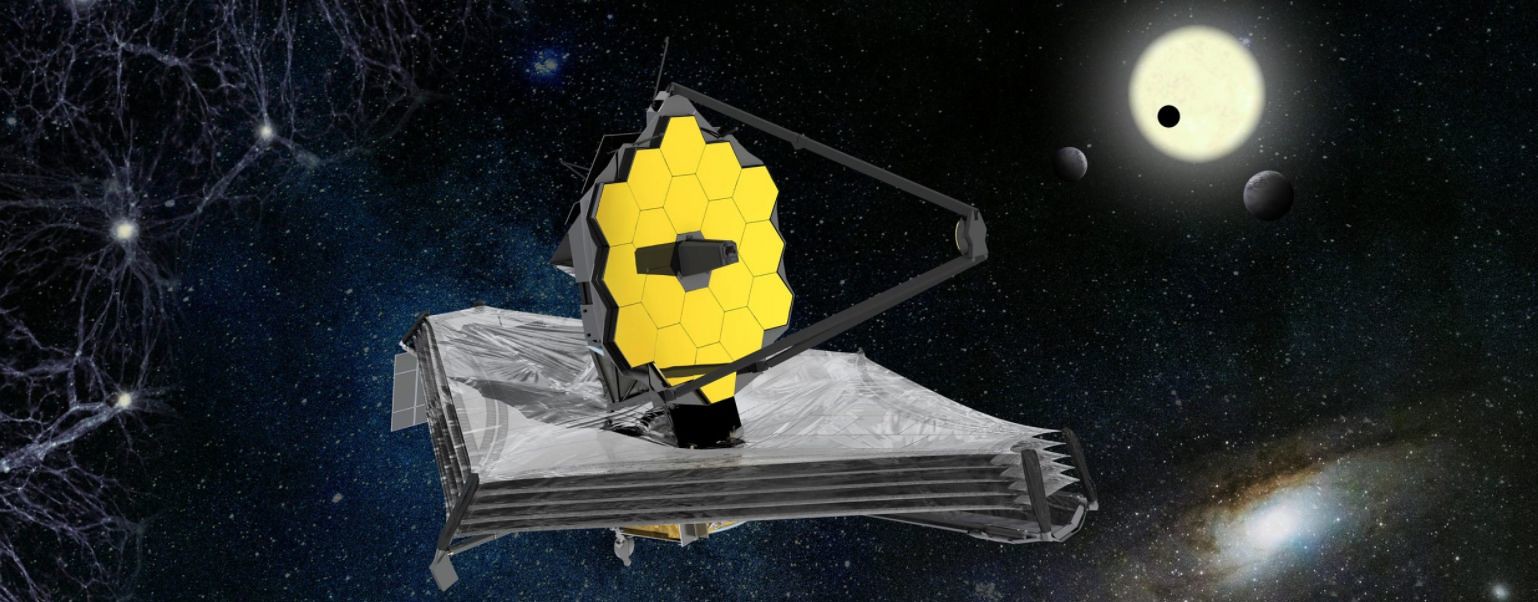
An artist’s impression of the James Webb Space Telescope (JWST) with Earth and the Sun beyond. Credit: ESA/ATG medialabFollowing its launch on December 25th, the James Webb Space Telescope (JWST) has completed several major steps in the deploying its critical hardware as it continues its month-long voyage towards its operational orbit at the Earth-Sun L2 Lagrange point.
Here’s a brief summary of what has happened thus far with deployments.
In the early houses of Wednesday, December 29th (UTC), Earth, JWST unfolded the forward sunshield pallet, lowering it away from its stowed position in front of the central deployable tower supporting the (still folded) primary and secondary mirror assemblies and the telescope’s massive radiator, and containing JWST’s vital electronics and science instruments.
Unfolding the after sunshield pallet. Credit: NASA
The lowering process took 20 minutes to complete, and was followed by the aft sunshield pallet being unfolded from behind the mirror tower in an 18-minute operation. After this, JWST went through several hours of additional operations, including ensuring the pallets were correctly in place and their sub-systems operational, and orienting the observatory with respect to the Sun to provide optimal shielding when the sunshield is deployed and tensioned. Once all this was completed, the command was given for the pallets to lock themselves in their deployed condition.
Later on the 29th, the deployable tower was raised some 1.2 metres from its “stowed” state over a 6-hour period. This moved it away from JWST’s thrusters and provided the room needed for the sunshields to be deployed and tensioned.
A computer generated simulation of one of JWST’s boom being extended, drawing out the sunshield membranes. Credit: NASA
Thursday, December 30th saw the deployment of the sunshield commence. A three-part process, and one vital to the observatory’s operations, this started with the drawing back of the membranes that have protected the delicate sunshield.
On December 31st, the booms that extend the five layers of the sunshield were extended. Operations began at 18:30 UTC, with the five segments of the portside boom extending outwards from the mid-point between the two sunshield pallets. The procedure took just over three hours to complete, and was followed by the extension of the starboard boom, which took a similar amount of time, also drawing out the membranes of the sunshield on that side of the telescope.
A computer generated simulation of one of JWST’s boom being extended, drawing out the sunshield membranes. Credit: NASA
Overall, the deployment of both booms took longer than anticipated, but was successfully completed, with operations then being halted for New Years Day. On January 2nd, operations resumed on the tensioning of the membranes. A 2-day operation, this involves separating each of the 5 membranes from the others and then tensioning it using the side booms and four fore-and-aft boom mechanisms. Once this has been completed, the focus will switch to deploying the telescope’s “eyes” – its secondary and primary mirrors.
The other news on the programme is that such was the accuracy with which the Ariane 5 placed JWST onto its transfer orbit, coupled with the smoothness of the first “mid-course” thruster burns, far less propellants that had been estimated. This now means that the observatory has sufficient reserves to complete at least a 10-year mission (although NASA remains focused on the 5-year primary mission).
Space Highlights for 2022
I generally try to look ahead to key space events at the start of the year, and while this may not be as comprehensive as previous years, but the following is offered as a broad summary of high points.
Launches
Several new launch vehicles will undergo initial launch tests / flight in 2022, including:
Block 1 NASA Space Launch System (USA): maiden flight, February 2022 carrying the Artemis 1 mission hardware and cubesats for ten missions in the CubeSat Launch Initiative (CSLI), and three missions in the Cube Quest Challenge. The payloads will be sent on a trans-lunar injection trajectory.
Artemis 1 mission – click for full size. Credit: NASA
The world’s largest and most powerful space telescope yet built – the James Webb Space Telescope (JWST) – finally made its way into space on Christmas Day, December 25th, 2021, marking the start of a mission almost 30 years in the making.
That mission is multi-part in its scope, encompassing as it does looking back to the origins of the universe and the galaxies around us, together with gaining a greater understanding of the nature and formation of galaxies, stars and planetary systems, and learning more about the nature of worlds beyond our own solar system, as well as seeking signs of the potential origins of life. It is a mission that has been plagued by technical and other issues that have repeatedly delayed its launch – and high winds along its path of ascent to orbit caused one final delay, pushing the launch back from Christmas Eve to Christmas day.
Final countdown commenced several hours ahead of lift-off, with the Ariane 5 launch vehicle igniting its engines as scheduled at 12:20 UTC, rising into the sky over the European Spaceport near Kourou, French Guiana, carrying the US $10 billion telescope on the first leg of a journey to its operational destination that will take it almost a month to complete. Along the way it will go through a series of complex activities along the way, each one vital to its operational success.
The European Ariane 5 launch vehicle carrying JWST (designated flight VA256) lifts-off from the European spaceport, French Guiana, December 25th, 2021. Credit: ArianeSpace / ESA / NASA
The first three of these activities came just half-an-hour after lift-off, with the separation of the telescope from its Ariane upper stage after the latter had boosted it onto the start of its 1.6 million kilometre journey away from Earth. Almost at the same time, JWST deployed the solar array vital for supplying it with electrical power. This was followed two hours later by the deployment of the high gain communications antenna and, 12 hours after launch, JWST completed the first “mid-course” correction to its trajectory, steering itself more closely towards its final destination.
This destination lies close to the Earth- Sun L2 Lagrange point, 1.6 million km further out from the Sun than Earth’s orbit, but which orbits the Sun in the same period of time as Earth. It’s a location selected for JWST’s operations for a number of reasons, including:
It effectively puts the Earth, Moon and Sun “behind” the telescope, affording it uninterrupted views of the solar system and all that lies beyond it.
It is a semi-stable position in space that orbits the Sun at the same time as Earth. This both allows for continuous direct-line communications, and reduces the amount of propellants JWST would otherwise require for basic operations such as station-keeping and orbital corrections.
Even so, operations at the position will not be straightforward. As the L2 position is a point of gravitational equilibrium, JWST will operate in an orbit 800,000 km wide around it. Whilst relatively stable, this orbit will require JWST to make small periodic adjustments every 23 or so days. Given it can only carry a finite amount of propellants (168 kg) for these adjustments, the telescope effectively has an operational “shelf life”: it’s primary mission is set at just 5 years – although it is hoped it has sufficient propellants for at least 10 years worth of controlled observations.
Having been launched in a “packed” form that allowed it to fit inside the payload fairing of its launch vehicle, JWST will spend the next two weeks gradually “unfolding” itself, as per the video below, with a number of firings of its thrusters to fine-tune its flight to its intended orbit.
All of these activities are vital to JWST being able to perform its desired mission, but perhaps the two most important are the deployment of the telescope’s secondary and primary mirrors, and that of its incredible and delicate heat shield.
The optics deployment will see the booms supporting the secondary mirror that reflects light gathered from the primary back to where it can be delivered by a third mirror to the instruments deep inside JWST. The second part comes with the unfolding of the “table flap” elements of the primary mirror, allowing it to reach its full 6.5 metre diameter, almost 2.5 times the diameter of the primary mirror on the Hubble Space Telescope. (HST), and with potentially 100 times its power.
JWST is primarily intended to operate in the infrared, but in order to do so, its instruments and science systems must be kept very cold. If any of them exceed 50ºK (-223.2ºC), the heat they generate will be registered in the infrared; potentially overwhelming the telescope’s ability to capture the infrared light of stellar objects. Given that JWST will be in permanent sunlight, maintaining such an incredibly low temperature this is a considerable challenge – hence the vital role of JWST’s remarkable heat shield.
How the heat shield will keep the operational surfaces of JWST super-cold. Credit: NASA
This comprises 5 layers of Kapton E polymide formed into sheets as thin as a human hair and then covered on both sides with a thin membrane of aluminium, this shield is carried folded within two “pallets” that also need to be unfolded to form the “base” of the telescope.
Once these pallets have unfolded, booms can be extended on either side of JWST, allowing the 5 layers of the heat shield to be unfurled like the sails of a ship, and then tensioned off. This will provide an area of shadow the size of a tennis court within which the instruments and optics of the telescope will sit, while radiators behind the main mirror will circulate the heat absorbed by the shield and radiate it back into the cold shadow without impacting telescope operations.
The NASA spacecraft has spent more than three years winding its way by planets and creeping gradually closer to our star to learn more about the origin of the solar wind, which pushes charged particles across the solar system.
Since solar activity has a large effect on living on Earth, from generating auroras to threatening infrastructure like satellites, scientists want to know more about how the Sun operates to better make predictions about space weather, and gain a better understanding of the mechanisms at work in and around our star. Over the years, we’ve done this with a number of missions – but the most fascinating of all to date is the Parker Solar Probe, a NASA mission that has literally touched the face of the Sun.
The spacecraft – launched in 2018 – is in a complex dance around the Sun that involves skimming closer and closer to our life-giving star, and they sweeping away again, far enough to cross back over the orbit of Venus – indeed, to use Venus as a means to keep itself looping around the Sun in orbits that allow it to gradually get closer and closer, with the aim of actually diving into and out of the Sun’s corona, what we might regard as the Sun’s seething, broiling atmosphere.
In fact, the probe actually first flew through the corona in April 2021; however, it was a few months before the data to confirm this could be returned to Earth, and a few more months to verify it; hence why the news has only just broken about the probe’s success. One of the aims of pushing the probe into the Sun’s corona was to try to locate the a boundary called the Alfvén critical surface. This is the boundary where the solar atmosphere – held in check by the Sun’s gravity – end, and the solar wind – energetic particles streaming outwards from the Sun with sufficient velocity to break free of that gravity – begins, creating the outwards flow of radiation from our star.
Up until Parker’s April 2021 passage into the corona, scientists has only been able to estimate where Alfvén critical surface lay, putting it at somewhere between 6.9 million and 13.8 million km from the gaseous surface of the Sun. As it passed through the corona, Parker found these estimates to be fairly accurate: the data it returned to Earth put the outer “peaks” of the boundary at 13 million km above the Sun’s surface – or photosphere; the data also revealed the boundary is not uniform; there are “spikes and valleys” (as NASA termed them) where the boundary stretches away from the photosphere at some points, and collapses down much close to it in others. While it has yet to be confirmed, it is theorised this unevenness is the result of the Sun’s 11-year active cycle and various interactions of the atmosphere and solar wind.
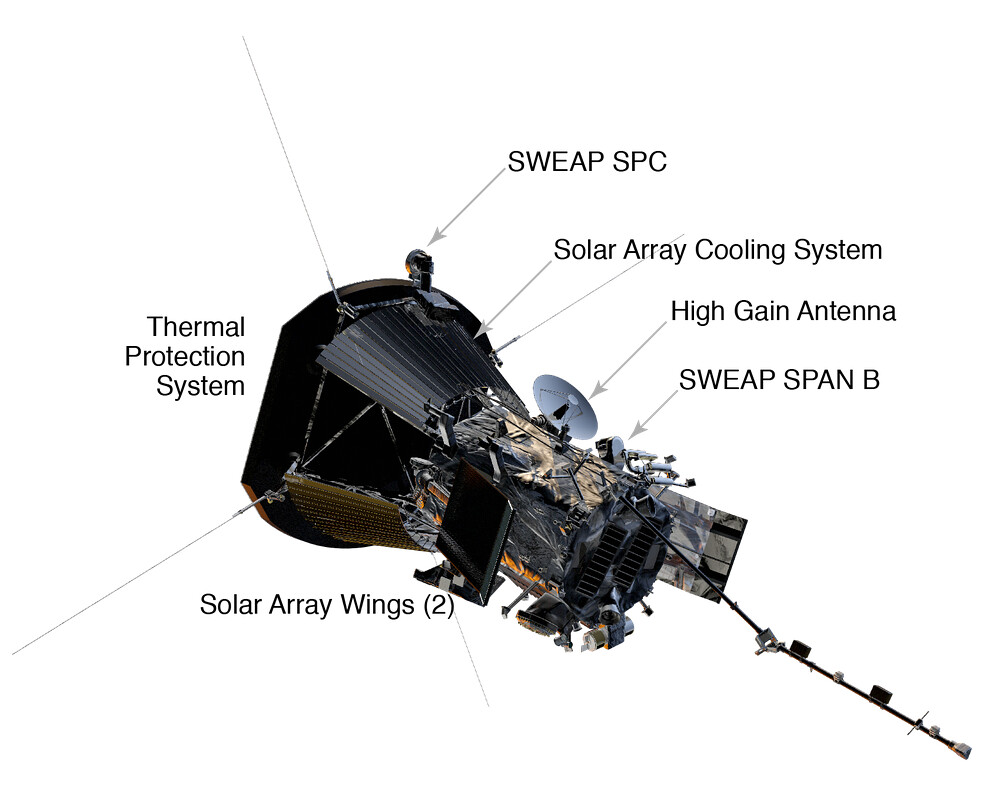
The Parker Solae Probe. Credit: NASA / I. Pey
The April “dip” into the corona lasted for five hours – as the mission goes on, future “dips” will be for longer periods). But give the spacecraft is travelling at 100 kilometres per second, it was able to gather a lot of data as it zipped around the Sun – and even sample the particles within the corona. The probe’s passage revealed that the corona is dustier than expected, the cause of which has yet to be properly determined, as well as revealing more about the magnetic fields within the corona and how they drive the Sun’s “weather”, generating outbursts like solar flares and coronal mass ejections (CREs), both of which can have considerable impact on life here on Earth.
To survive the ordeal of passing through the corona, where temperatures soar to millions of degrees centigrade, far hotter than those found at the Sun’s photosphere. – Parker relied on its solar shadow-shield: a hexagonal unit 2.3 m across made of reinforced carbon–carbon composite 11.4 cm thick with an outer face is covered in a white reflective alumina surface layer. This shield is so efficient in absorbing / reflecting heat, whilst passing through the corona the sunward face is heated to around 1,370ºC, but the vehicle, sitting inside the shadow cast by the shield never experiences temperatures higher than 30ºC.
In addition to mapping the Alfvén critical surface, Parker’s April 2021 trip into the Sun’s corona, the probe also passed through a “pseudostreamer,” one of the huge, bright structures that rise above the Sun’s surface and are visible from Earth during solar eclipses. This was compared to flying into the eye of a storm the probe recorder calmer, quieter conditions within the streamer, with few energetic particles within it. Exactly what this means is again unclear at this time, but it does point to further incredibly complex actions and interactions occurring with the Sun.
Since April, Parker has dipped back into the corona twice more, with the November 2021 passage bringing it to around 9.5 million km of the Sun’s photosphere – although again, the data from that pass has yet to be received and analysed. The next passage in February 2022 will again be at roughly the same distance from the photosphere, with a further five passes to follow at the same distance in 2022/23, before a flyby of Venus allows Parker to fly even deeper in to corona. By December 2025, and the mission’s final orbits, it will be descending through the corona to just 6.9 million km from the photosphere.
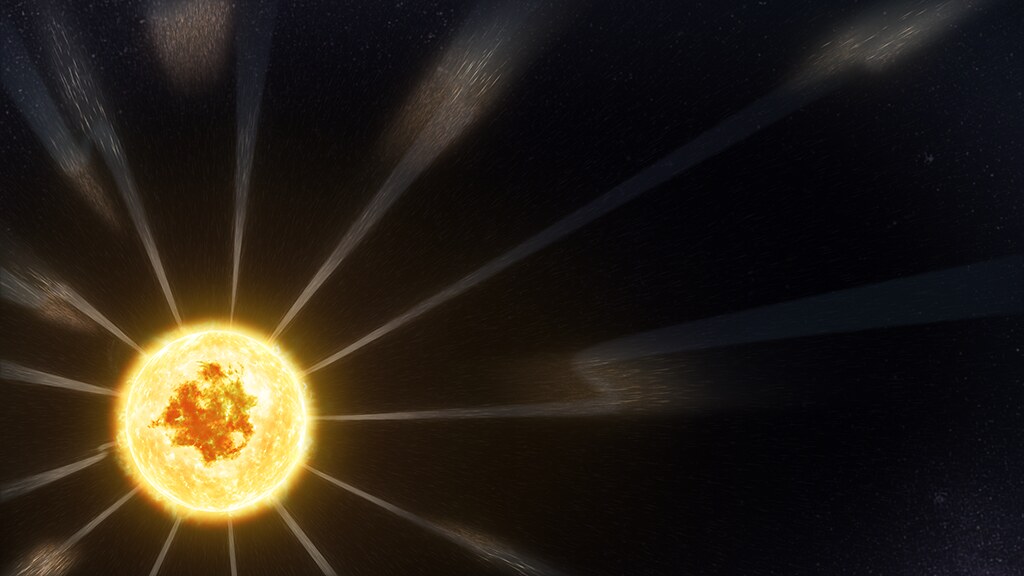
An artist’s depiction of magnetic switchbacks in the solar wind. Credit: NASA Goddard/CIL/Adriana Manrique Gutierrez
But that’s not all. Because Parker is in an elliptical around the Sun, it spends a part of its time much further away. This both allows the craft to dissipate absorbed heat from its shield, and for it to observe the Sun from a distance, giving scientists much broader opportunities to study the Sun, such as allowing them to study the physics of “switchbacks”. These are zig-zag-shaped structures in the solar wind, first witness by the joint ESA-NASA Ulysses mission that occupied a polar orbit around the Sun in the 1990s.
In particular, Parker’s observations suggest that rather then being discrete events, switchbacks occur in patches, and that these “patches” of switchbacks are aligned with magnetic funnels coming from the photosphere called called supergranules. These tunnels are thought to be where fast particles of the solar wind originate; so switchbacks may have something of a role to play in the generation of the solar wind or they may be a by-product of its generation or, given they seem to have a higher percentage of helium than other aspects of the solar wind, may serve a highly specialised role as a part of the solar wind.
Right now, scientists are unclear on what might be the case, or what actually generates switchbacks; but gaining clearer insight into their creation, composition and interaction with other particles in the solar wind, and with the Sun’s magnetic field might provide explanations for a number of solar mechanisms, including just why the corona is so much hotter than the photosphere.
Mars 2020 Mission Update
Scientists with NASA’s Mars 2020 Perseverance rover mission have discovered that the bedrock their six-wheeled explorer has been driving on since landing in February likely formed from red-hot magma. It’s a discovery with implications for our understanding and accurately dating critical events in the history of Jezero Crater – as well as the rest of the planet.
Even before the Mars 2020 mission arrived on Mars, there have been much debate about the formation of the rocks in the crater: whether they might be sedimentary in origin, the result compressed accumulation of mineral particles possibly carried to the location by an ancient river system, or whether they might be they igneous, possibly born in lava flows rising to the surface from a now long-extinct Martian volcano. However, whilst studying exposed bedrock at location dubbed “South Séítah” within Jezero, the science team noted a peculiar rock they dubbed “Brac”, selecting it as a location from which to collect further samples of Martian bedrock using the rover’s drill.
When taking samples of this kind, booth Perseverance and her elder sister, Curiosity, operating in Gale Crater half a world away, are both instructed to scour target rocks clean of surface dust and dirt that otherwise might contaminate samples. This is done by using an abrasion tool (think wire brush) mounted alongside the drilling mechanism. However, in checking the work on “Brac”, the mission team realised the abrasion process had revealed the rock was rich in crystalline formations.
Rather than going ahead and drilling the rock for a sample, scientists ordered the rover to study the formations using the Planetary Instrument for X-Ray Lithochemistry (PIXL) instrument – which is designed to map the elemental composition of rocks. PIXL revealed the formations to be composed of an unusual abundance of large olivine crystals engulfed in pyroxene crystal, indicating the formations grew in slowly cooling magma, offering some confirmation that volcanism has at least be partially involved in Jezero Crater’s history. However, PIXL’s data also suggested the rock, once hardened, has subsequently altered as a result of water action – confirming free-flowing water also had a role to play in the crater’s past..
The crystals within the rock provided the smoking gun … a treasure trove that will allow future scientists to date events in Jezero, better understand the period in which water was more common on its surface, and reveal the early history of the planet. Mars Sample Return is going to have great stuff to choose from.
– Ken Farley, Perseverance Project Scientist
The Sample Return mission has yet to be fully defined, let alone funded, but is being looked at as a mission for the early 2030s, quite possibly with European Space Agency involvement. In the meantime, a question Farley and his colleagues would love to answer is whether the olivine-rich rock formed in a thick lava lake cooling on the surface of Mars, or originated in a subterranean chamber that was later exposed by erosion; knowing the answer to this could determine the early history of Jezero Crater and its surroundings.
This 60-second video pans across an enhanced-color composite image, or mosaic, of the delta at Jezero Crater on Mars. The delta formed billions of years ago from sediment that an ancient river carried to the mouth of the lake that once existed in the crater. Taken by the Mastcam-Z instrument aboard NASA’s Perseverance rover, the video begins looking almost due west of the rover, and sweeps to the right until it faces almost due north.
Also within the latest updates from the Mars 2020 team is the news that Perseverance has found organic compounds within the rocks of Jezero Crater and in the dust that covers them. This discovery was made as a result of a review of findings from the SHERLOC (Scanning Habitable Environments with Raman & Luminescence for Organics & Chemicals) instrument.
This does not mean that the rover has discovered evidence of past microbial life on Mars; these carbon compounds can be created by both organic and inorganic processes. However, the fact that they have been found at a number of locations explored by the rover means that the science team can map their spatial distribution, relate them to minerals found in their locations, and thus both further determine their organic / inorganic origins and trace the distribution of minerals, etc., within the crater.
Further, the fact that compounds like these have been identified by both the Curiosity and Perseverance rovers means that potential biosignatures (signs of life, whether past or present) could be preserved, too. IF so, then assuming they exist, there may come a time when one our other rover might happen upon them.
The Hubble Space Telescope – operations fully restored. Credit: NASANASA has successfully restored the Hubble Space Telescope (HST) to full operations after more than a month with the telescope either being in a “safe” mode, or only able to partially operate its science instruments.
The longest-running space mission in Earth orbit, HST has been subject to a range of issues throughout its career, all of which have been overcome, although this has been only of the more draw-out in getting resolved. It started on October 23rd, when the telescope started sending error codes indicating the loss of a specific synchronisation message that provides timing information used by its instruments use to respond to data requests and commands correctly. Two days later, the same error codes were again issued, prompting Hubble to cease science activities and enter a “safe” mode.
Throughout out the rest of October and early November, mission engineers on Earth worked to diagnose and rectify the issue, and on November 8th, 2021, were able to report a restart of the main computer system and a set of back-ups had allowed science operations to recommence on the telescope’s Advanced Camera for Surveys (ACS). Later in November, operations were restored to the Cosmic Origins Spectrograph (COS) and then the Wide Field Camera 3 (WFC-3), Hubble’s most heavily-used instrument, leaving just one major science instrument out of commission.
That was the Space Telescope Imaging Spectrograph (STIS), which was finally restored to operational status on Monday, December 6th, marking Hubble’s full return to its science programmes.
However, the October glitch, following on as it does from a systems error that caused the telescope to enter a safe mode in July 2021, serves as a reminder that HST is running on software and systems designed and built in the 1980s.
As a result, the mission team has been evaluating and testing ways and means to refine and update the telescopes software on both its operating systems and its science instruments. This means that mid-December should see the COS gain a significant software update, with the remaining science instruments also being updated early in 2022.
Such upgrades are vital to Hubble’s continued career, given there has been no means to physically service it since the space shuttle was retired in 2011 – and NASA / ESA very much hope to keep the observatory running through until at least the end of the 2030s, consumables permitting.
That said, and if all goes according to plan, Hubble will so no longer be the only large-scale, space-based observatory in operation.
As I’ve frequently reported in these pages, the James Webb Space Telescope (JWST) is due to be launched from the European Spaceport, Kourou, French Guiana, on December 22nd, 2021. This is actually 4 days later than planned, the result of unexpected vibrations passing through the telescope after a clamp unexpected released as JWST was being integrated with the Launch Vehicle Adapter (LVA) – the element that physically connects the telescope to the rocket. This required a period of checks to be carried out to confirm the telescope’s instruments and systems had not been damaged by the vibrations.
However, following confirmation that no damage had been caused, two of the four remaining pre-launch operations for the telescope have now been completed and a third is in progress.
On November 23rd, European Space Agency engineers started the delicate operation to fill JWST’s propellant tanks with 168 kg of highly toxic hydrazine gas and 133 kg of equally toxic dinitrogen tetroxide oxidizer, both of which are needed to power the observatory’s thrusters. So harmful are both of these propellants, the loading took a total of 10 days, during which time engineers working in the same space as the telescope had to wear Self-Contained Atmospheric Protective Ensemble (SCAPE) suits – essentially space suits for use on Earth that completely isolated them from their surroundings.
JWST sits within a clean room, folded ready for vehicle integration, and receiving its highly toxic thruster propellants as engineers wear SCAPE suits for their protection. Credit: ESA
With fuelling completed on December 3rd work then commenced on bringing both the telescope, mounted on its LVA, and its Ariane 5 launch vehicle together for the first time, moving both of them into the Final Assembly Building and readying them for mating together. This work was completed on December 7th, 2021, clearing the way for the mating process to commence.
Mating involves lifting JWST and its LVA up to the high bay of the building, and then lowering it on to the top of the Ariane booster. Once this has been done, a final series of tests on telescope, LVA and booster will be carried out and the Ariane payload fairings will be closed around the telescope. After this, a final check-out will take place, and the final pre-launch activity will see booster and payload moved to the launch pad a few days ahead of the launch.
The launch itself will in turn mark the start of the most complex deployment of a space instrument undertaken to date. It will take JWST 16 days to reach its operational halo orbit at the Earth-Sun L2 point, with the entire deployment taking some 29 days, as the video below explains.
The International Space Station, November 8th, 2021. Credit. T. Pesquet / ESA / NASA
The International Space Station (ISS) faced further threats from space debris this past week. One December 1st., a planned EVA spacewalk by NASA astronauts Thomas Marshburn and Kayla Barron was pushed back 24 hours over concerns about an unspecified debris threat that might be related to continuing concerns over the recent Russian ASAT missile test that left a cloud of debris orbiting Earth in an orbit that can pass relatively close to the space station.
Then on December 3rd, the ISS had to take more direct action to avoid any risk of collision with a piece of debris designated 39915, a major part of the upper stage of a Pegasus air-launched rocket that flew in 1994, and broke apart two years later.
Tracking the debris showed it would come within 5.5 km of the station, so the decision was taken to use the motors of a Progress re-supply vehicle to lower the station’s orbit to increase the clearance between it and the debris.
The ISS seen from “above” showing the main truss with 8 of the 12 gold solar arrays, the grey thermal radiators, the “international” modules towards the bottom of the picture and the Russian modules extending back between the thermal radiators. Credit; T. Pesquet / ESA / NASA
The motor firing took place at 08:00 UTC on December 3rd, with the thrusters on the Progress vehicle firing for three minutes. The manoeuvre is not expected to impact the December 8th launch of Soyuz MS-20 on Wednesday, December 8th, classified a “space tourism” flight featuring Japanese billionaire Yusaku Maezawa and his assistant, Yozo Hirano on an 18-day trip to the ISS. This will mark the first tourist flight to the space station since 2009. Maezawa is also the name (and money) behind the proposed Dear Moon cislunar mission using a SpaceX Starship vehicle.
All of this excitement blotted the news that NASA’s Office of Inspector General (OIG) has warned that NASA and its partners will potentially be without any Earth orbiting space station for a number of years if the ISS is to be “retired” as may currently be the case.
While NASA awarded US $415.6 million to three U.S. groups to develop designs for new orbit “destinations” – commercially-run space stations that can take over from the ISS from 2030 onwards – OIG has stated concerns any of these plans can be realised by that year – seen as the year in which ISS operations are expected to draw to a close.
One of the groups awarded a NASA contract is lead by Blue Origin and Sierra Space, who are promoting their Orbital Reef space station. Credit: Blue Origin / Sierra Space
In particular, the OIG report questions the ability for any commercial space station to be ready by the end of the decade, given the commercial market for on-orbit activities sans government financial support has yet to be assessed, as have the overall costs of developing space station facilities – or even the amount of funding NASA can provide to help ease development along.
In our judgment, even if early design maturation is achieved in 2025 — a challenging prospect in itself — a commercial platform is not likely to be ready until well after 2030. We found that commercial partners agree that NASA’s current timeframe to design and build a human-rated destination platform is unrealistic.
– NASA OIG report on commercial space stations
The report suggests that a further extension to ISS operations to eliminate any gap. However, doing so requires clearing some significant hurdles. The first is that of finance. The Untied States covers more than 50% of the ISS operational budget, and feelings about continuing to support the project beyond 2030 within Congress are very mixed.
There is also the fact that several of the older modules – notably the Russian Zvezda service module – are approaching the end of their operational life. Zvezda in particular has been suffering numerous leaks that have affected overall atmospheric pressure within the station, and numerous fatigue cracks have been located within the module’s structure, not all of which can be fully repaired.
Finally, Russia has indicated it is unwilling to support ISS operations beyond 2030, and is considering using the recently-delivered Prichal module on the ISS as an initial element of that station – although the loss of the module would not necessarily impede ISS operations if no agreement on extending operations beyond 2030 were to be reached.
ISS from “beneath”, with the damaged thermal radiator clearly visible. The “international” modules are up and to the right, the Russian modules to the lower left. Also visible is the Cygnus automated re-supply vehicle (with the circular blue/gold solar arrays, a Soyuz vehicle just to the left and below it, and a Progress re-supply vehicle beneath the lower left end of the station. Credit: T. Pesquet / ESA / NASA
As it is, the ISS has, since 2000, been visited by 403 individual crewed flights that have delivered 250 people to the station, and it remains a remarkable piece of space engineering and construction.
Just how remarkable was again shown in November 2021, when the Crew 2 mission departed the ISS aboard SpaceX Crew Dragon Endeavour; because as they did so, they took a ride around the ISS taking photos that were released this week.
Captured by ESA astronaut Thomas Pesquet, these images reveal the station in great detail – including what appears to be damage caused by what may have been a debris strike on one of the radiator panels.
They also reveal the stunning complexity of the station’s design from the long truss “keel” that is home to the station’s thermal radiator, vital for carrying away heat, and massive primary solar arrays, vital for providing power, to the “international” modules slung “under” it and focused around the US Harmony module, and the “tail” of the Russian built modules with their own solar arrays. In addition the Soyuz, Progress and Cygnus vehicles docked with the station can also be seen in some of the images.
SpaceX and Rocket Lab Updates
SpaceX Gear-Up and Problems
SpaceX is gearing-up for Starship / Super Heavy operations, and also to support further crew flights to / from the ISS.
On Friday, December 3rd, the company indicated it is to resume / start work in earnest on new Starship / Super Heavy launch facilities at Kennedy Space Centre. The new facilities will be at Pad 39A, which SpaceX leased from NASA in 2014 in a 20-year agreement, and which has been the home of Falcon 9 and Falcon Heavy vehicles – and will remain so, despite the construction work.
Work on Starship / Super Heavy launch facilities within the Pad 39A launch pad area – home of all but two of the Apollo lunar missions – in 2019, but the work was quickly halted in favour of the work being carried out at the company’s Boca Chica facilities. The plan is to build facilities of a similar nature to those at Boca Chica, but with improvements learned as a result of that work.
Kennedy Space Centre Pad 39A showing the SpaceX Falcon / Falcon Heavy launch facilities and the location of the Starship / Super Heavy launch facilities, where construction work has now resumed. Credit: Spacenews.com
The same day as SpaceX confirmed work on the Kennedy Space Centre launch facilities for Starship was resuming, NASA announced it was awarding a further three contracts to SpaceX for crew missions to / from the International Space Station (ISS) in addition to those already assigned to both SpaceX and Boeing, in part as a hedge against Boeing continuing to having issues with their CST-100 Starliner crew vehicle, which has yet to complete its demonstration crewed flight test, now due for some time in 2022.
Neither NASA nor Boeing have issued any update on the status of Starliner since October after valve corrosion problems caused the planned crew flight test to be scrubbed and the vehicle returned to Boeing’s facilities. As such, it appeared unlikely Boeing would gain any additional contracts for ISS flights when NASA issued a request for information in order to award additional contracts for both entire vehicles for dedicated NASA-ISS flights or individual seats on commercial flights. However, this does not preclude them from further contract extensions once Starliner passes certification.
But it is not all good news for SpaceX. The company is encountering issues in scaling-up production of its Raptor engine – vital for the Starship / Super Heavy vehicles. While it is not clear what the problem(s) is / are, the situation appears dire enough for Musk to issue an e-mail to all SpaceX employs that the company could face bankruptcy if the issue(s) is/are overcome.
How serious his warning is, is not clear – he’s issued similar warnings in the past in order to “motivate” staff – and following the e-mail making headlines, he did start stepping back from some of his comments. However, Raptor production is key to the company’s future: SpaceX is banking on a high cadence of Starship / Super Heavy launches each of which will require a minimum of 35 motors per launch – with periodic swap-outs to be expected, even allowing for their reusability. As it is, Musk has indicated he would like to hit 26 launches by the end of 2022, although it is not clear if this is combined booster / Starship launches (using a mix of 35 or 39 motors) or a mix of booster / Starship orbital attempts and further Starship high-altitude flight tests (the latter only requiring 3 or 6 motors).
Rocket Labs Provide Neutron Update
SpaceX aren’t the only contender in the US reusable launch vehicle Market. The New Zealand-US based Rocket Lab is already working towards partial reusability with their Electron small payload launcher, and CEO and founder Peter Beck recently provide an update on their Neutron medium-lift vehicle, which includes an entire new look to the vehicle.
The updated vehicle will be made of carbon composite materials (with Beck taking a slight dig at the use of stainless steel as adopted by SpaceX and (now) Blue Origin), and will be of a tapered design with a 7-metre diameter base. This shape is designed to reduce heat loads during re-entry into the atmosphere, with the booster standing on a set of fixed legs on landing.
An artist’s rendering of the Neutron rocket, showing the unique petal-like integrated payload fairings opened to allow for the deployment of the upper stage and payload. Credit: Rocket Lab
Nor does it end there. Neutron’s standard payload to low Earth orbit will be 8 tonnes – marking it as an ideal launcher for the smallsat / constellation / rideshare market. However, this can be extended to 15 tonnes – although this is in a non-reusable format for the vehicle. But perhaps the most unique aspect of the vehicle is the manner in which it carries payloads when operating as a reusable launcher.
Traditional rockets carry their upper stages and payloads on top, with “throw away” aerodynamic fairings protecting the payload through the ascent through the atmosphere. Neutron, however, features fairings that are integrated into the rocket. These will open like petals around the payload / upper stage to allow them to be deployed, then close again to allow the vehicle to maintain the integrity of its shape through the re-entry phase of its flight through to landing.
An artist’s rendering of Neutron making a return to its launch site. Credit: Rocket Lab
Overall, the hope is that by using 3D printing, carbon composites, reducing the vehicle mass – which reduces the stress placed on the motor systems – and offering a design with a return to launch site capability that does not require complex infrastructure to enable re-use, Neutron will provide Rocket Lab with a significant launch capability at extremely low, high-competitive pricing.
Assuming the original plans for Neutron remain true, the vehicle’s first flight could come in 2024, most likely utilising the facilities Rocket Lab has been developing at NASA’s Wallops Island, Virginia, launch centre.
NASA’s Double Asteroid Redirection Test (DART) vehicle under thrust as it closes on the asteroid Dimorphos as it orbits Didymos. Credit: NASA
On November 24th, 2021, NASA launched the Double Asteroid Redirection Test (DART) mission, a vehicle aimed at testing a method of planetary defence against near-Earth objects (NEOs) the pose a real risk of impact.
I’ve covered the risk we face from Earth-crossing NEOs – asteroids and cometary’s fragments that routinely zoom across or graze the Earth’s orbit as they follow their own paths around the Sun. We are currently tracking some 8,000 of these objects to assess the risk of one of them colliding with Earth at some point in the future. This is important, because it is estimated a significant impact can occur roughly every 2,000 years, and we currently don’t have any proven methods of mitigating the threat should it be realised. And that is what DART is all about: demonstrating a potential means of diverting an incoming asteroid threat.
Developed as a joint project between NASA and the Johns Hopkins Applied Physics Laboratory (APL), DART is specifically designed to deflect an asteroid purely through its kinetic energy; or to put it another way, by slamming into it, and without breaking it up. Both are important, because by simply slowing an Earth-crossing NEO along its orbit, we give time for Earth to get out of its way; then, by not causing it to break, then we avoid the risk of it becoming a hail of shotgun pellets striking Earth at some point further into the future.
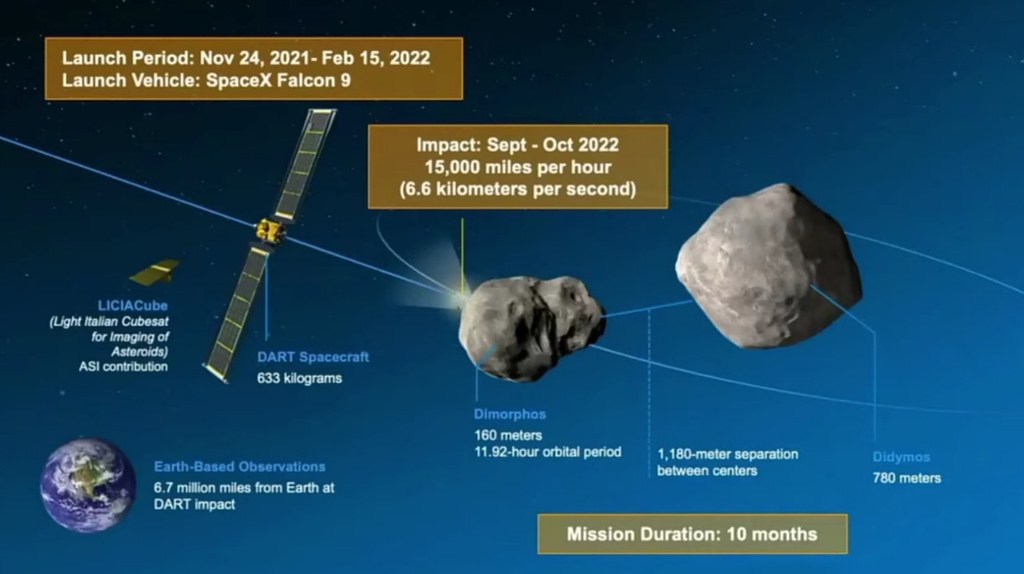
The DART mission. Credit: NASA
The target for the mission is a binary asteroid 65803 Didymos (Greek for “twin”), comprising a primary asteroid approximately 780 metres across, and a smaller companion called Dimorphos (Greek: “two forms”) caught in a retrograde orbit around it, with both orbiting the Sun every 2 years 1 month, periodically passing relatively close to Earths, as well as periodically grazing that of Mars.
Discovered in 1996 by the Spacewatch sky survey the pair has been categorised as being potentially hazardous at some point in the future. At some 160m across, Dimorphos is in the broad category of size for many of the Earth-crossing objects we have so far located and are tracking, making it an ideal target.
DART actually started as a dual mission in cooperation with the European Space Agency (ESA) called AIDA – Asteroid Impact & Deflection Assessment. This would have seen ESA launch a mission called AIM in December 2020 to rendezvous with Didymos and enter orbit around it in order to study its composition and that of Dimorphos, and to also be in position to observe DART’s arrival in September 2022 and its impact with the smaller asteroid.
However, AIM was ultimately cancelled, leaving NASA to go ahead with DART. To reduce costs, NASA initially looked to make it a secondary payload launch on a commercial rocket. But it was ultimately decided to use a dedicated Falcon 9 launch vehicle for the mission, allowing it to make its September 2022 rendezvous with Dimorphos.
An artist’s impression of DART and the LICIACube cubesat, with Dimorphos and Didymos in the background. Credit: NASA
In order to impact the asteroid at a speed sufficient to affect its velocity, DART needs to be under propulsive power. It therefore uses the NEXT ion thruster, a type of solar electric propulsion that will propel it into Dimorphos at a speed of 6.6 km/s – which it is hoped will change the velocity of the asteroid by 0.4 millimetres a second. This may not sound a lot, but in the case of hitting an actual threat whilst it is far enough away from Earth, it is enough to ensure it misses the planet when it crosses our orbit.
This motor is powered by a deployable solar array system first deployed to the International Space Station (ISS). However, what is most interesting about these solar panels is that a portion of them is configured to demonstrate Transformational Solar Array technology that can produce as much as three times more power than current solar array technology and so could be revolutionary should it reach commercial production.
Accompanying DART is Light Italian CubeSat for Imaging of Asteroids (LICIACube), a cubesat developed by the Italian Space Agency, and which will separate from DART 10 days before impact to acquire images of the impact and ejecta as it drifts past the asteroid. To do this, LICIA Cube will use a pair of cameras dubbed LUKE and LEIA.
As the cubesat is unable to orbit Didymos to continue observations, ESA is developing a follow-up mission called Hera, Comprising a primary vehicle bearing the mission’s name, and two cubesats, Milani and Juventas, this mission will launch in 2024, and arrive at the asteroids in 2027, 5 years after DART’s impact, to complete a detailed assessment of the outcome of that mission.
ISS Gets a New Module
On November 26th, 2021, a new Russian module arrived at the International Space Station (ISS).
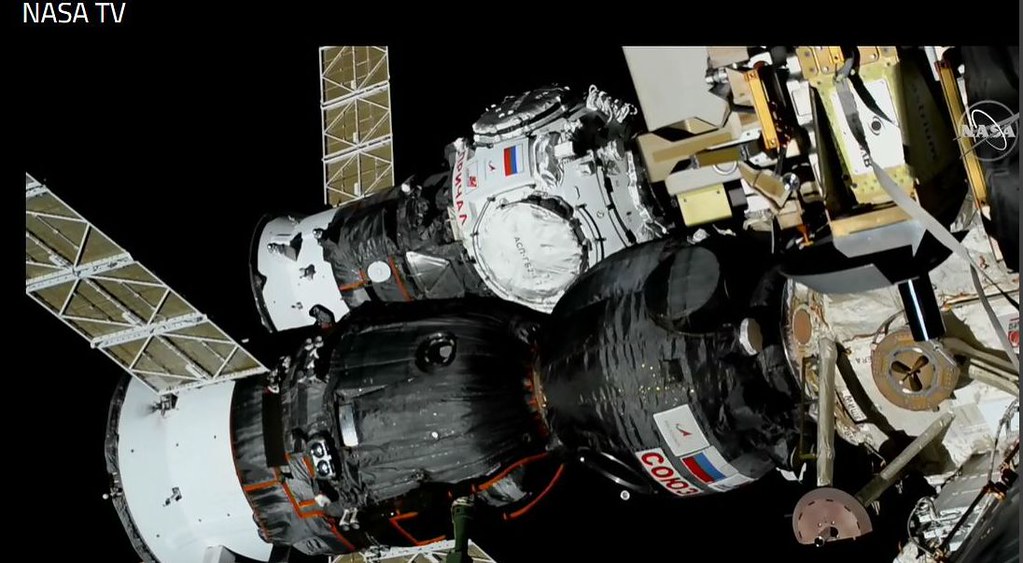
The Prichal, or “Pier,” module had been launched by a Soyuz 2.1b rocket out of the Baikonur Cosmodrome in Kazakhstan two days earlier. Mounted on a modified Progress cargo vehicle, the module was successfully mated with the Nauka module which itself only arrived at the station in July, at 15:19 UTC.
Carried by a Progress vehicle, the Prichal module approaches the ISS. Credit: NASA TV
The four-tonne spherical module has a total of six docking ports, one of which is used to connect it with Nauka, leaving five for other vehicles. However, when first conceived, the module was also intended to be a node for connecting future Russian modules.
But since that time, the Russian space agency, Roscosmos, has abandoned plans to support the ISS with additional modules. Instead, with relations with the west continuing to cool and the ongoing rise in nationalism in Russia, the agency has indicated it plans to orbit its own space station. This being the case, Prichal is viewed as the final element in the Russian segment of ISS, and potentially the first of the new station.
Unlike the arrival of Nauka in July, Prichal managed to dock with the ISS without the additional “excitement” of any thruster mis-firings. Now, the Progress carrier vehicle will remain attached to the module through until December 21st, allowing time for the Russian cosmonauts on the station to carry out a spacewalk to attach Prichal to the station’s power systems. Once it has been detached, the Progress vehicle will be set on a path to burn-up in the Earth’s atmosphere.
Visible over the top of a Progress resupply vehicle, the Prichal module and its Progress carrier can be seen docked with the nadir port of the Nauka module. Credit: NASA TV
As well as expending the docking facilities at the ISS, Prichal delivered some 2.2 tonnes of cargo and supplies to the station. The module will formally commence operations in its primary role in March 2022 with the arrival Soyuz MS-21.






 Inara Pey: Living in a Modemworld