Why I might just might reconsider my “LAQ” of land …

It’s no secret that late last year I quit my last private land holdings in SL and retreated to my Linden Home. While some regard the latter as “lag-laden slums” (and to be honest, some of the Linen Home regions aren’t exactly picturesque), I’m actually happy with my Tahoe home and the region in which it is located, which is neither crowded and benefits from having both a river running through it and from a large expanse of open parkland close to hand.

However, in my wanderings through Second Life, visiting and blogging about regions and activities, I have on occasion, come across a style of house build which has both intrigued and attracted me. These are mesh builds by Winter DiPrima, and sold under the LAQ Decor brand name (LAQ as in the avatar skin brand).
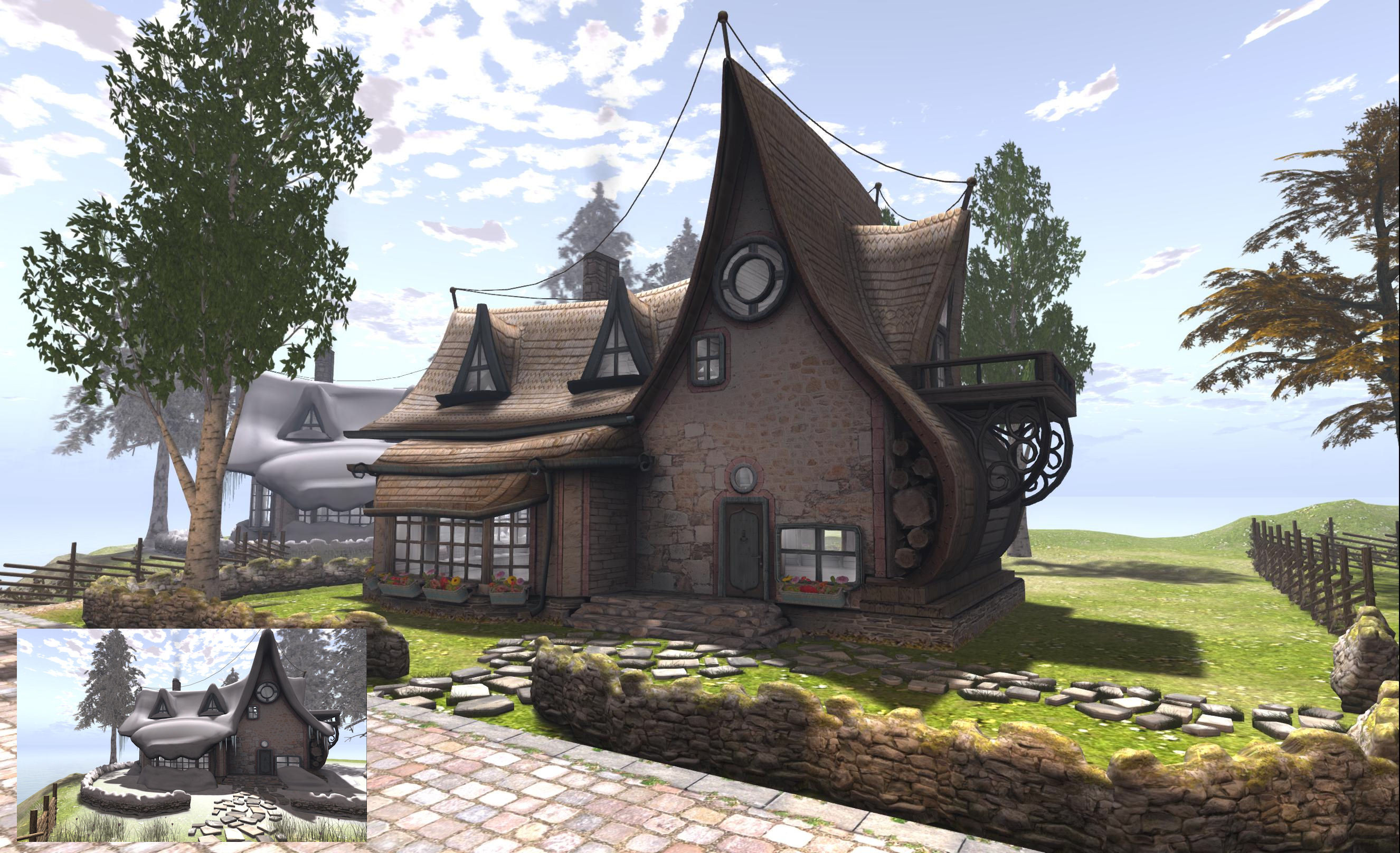
The LAQ Picturesque Cottage (with the optional "snow roof" applied, inset)
The LAQ Decor Picturesque Cottage (with the separately available “snow roof” applied for a suitably wintry look, inset

I first came across these buildings – in the form of the Picturesque Cottage – while exploring Second Norway, and have since seen it in a number of places, including an appearance in Ginger Lorakeet’s Inside Art installation at LEA23. I’ve also found the Quaint Cottage featured at a number of places I’ve visited.

Both cottages are 100% mesh and demonstrate just what can be achieved with mesh and without it having to be hugely expensive in terms of land impact; both total less than 80 prims / LI, and the Picturesque cottage includes a window sofa and a modest kitchen in the count!

The Quaint Cottage and (inset) the interior

Of the two cottages, I confess the Picturesque Cottage is swaying me dangerously back towards taking-up a modest parcel of land, simply so I have an excuse to go purchase the cottage and put it on display. It has a delightfully attractive design which  I find endearing – be it the curve of the roof or the slightly careworn interior walls or the fact that it looks so perfectly natural no matter where in pops-up in-world.

It certainly offers enough in the way of living space, with a large open-plan area downstairs with two rooms, and a galleried bedroom reached by ladder, and which has a lovely little balcony opening off of it, sitting above one of them.
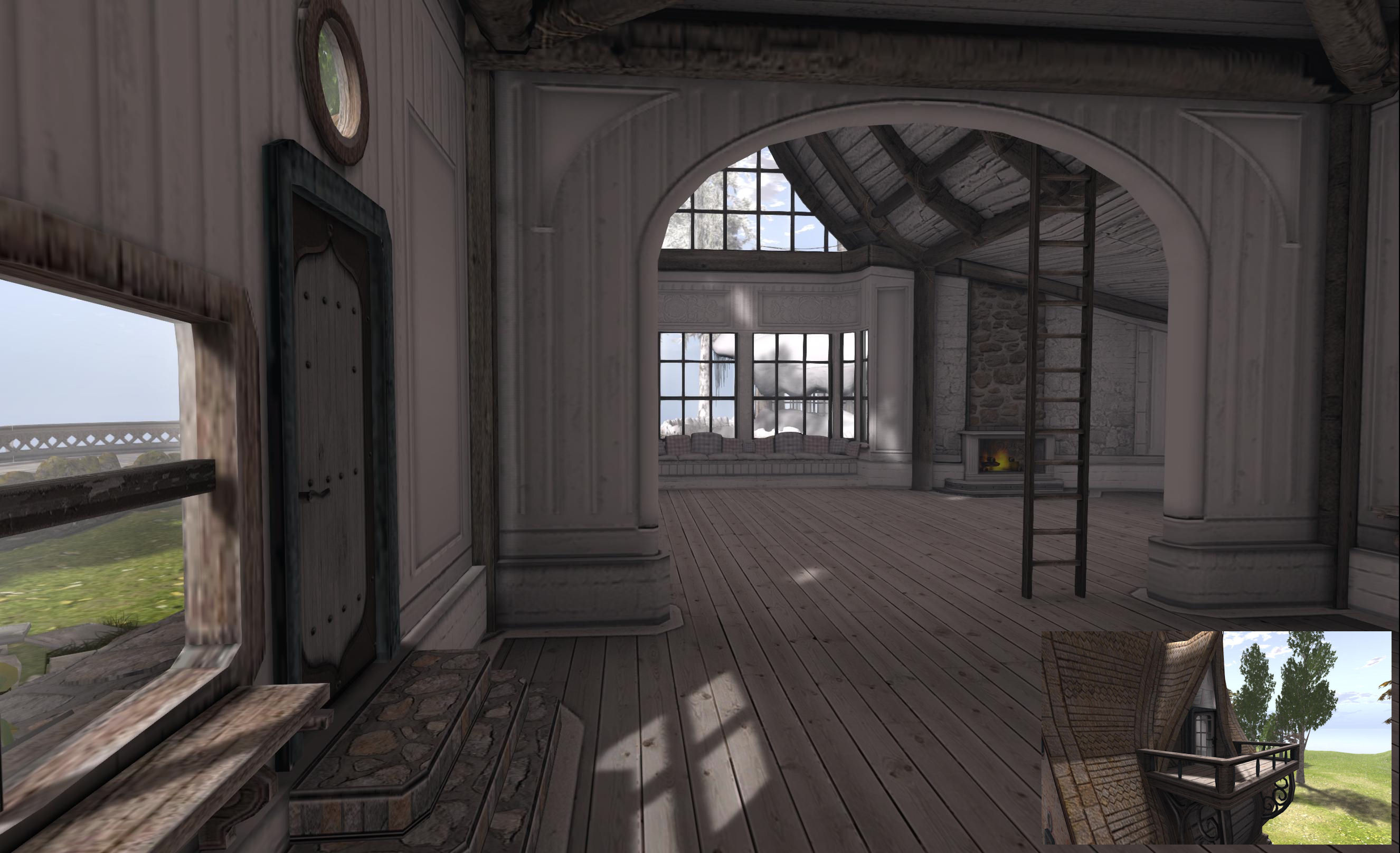
Inside the Picturesque cottage and (inset) the bedroom balcony
Inside the LAQ Decor Picturesque cottage and (inset) the bedroom balcony

For those with modest tastes, the Quaint Cottage offers a single-storey, two-room home which is again charmingly designed and which can offer more than comfortable accommodation – although while it will fit on a 512 sq metre parcel, the prim count / LI of 76 may make it more suitable for at least a 1024 sq m parcel when considering the question of furnishings, etc.

Both cottages include some additional features – window blinds which can be set to CLOSED for visual privacy and a house controller which includes a security system, a radio and options to “light” / “extinguish” the fire.

For those with more expansive tastes, Winter – again via the LAQ Decor brand – also produces mixed mesh / prim houses as well. As the time of writing, these comprise a mansion and a Spanish “castle” villa.

The mesh / prim mansion by LAQ Decor with (inset) the swimming pool

The mansion is the larger of the two, requiring a minimum parcel size of 2240 sq metres. With a prim count / LI of 497, it is also the “heaviest” of the house builds examined here – and also potentially the most unusual, featuring as it does a large swimming pool occupying what might otherwise be considered the grand entrance hall.

The Spanish-style villa offers three floors of accommodation, including a ready-to-be-equipped bathroom off of the main upstairs bedroom and two balconies as well as an outdoor water feature.
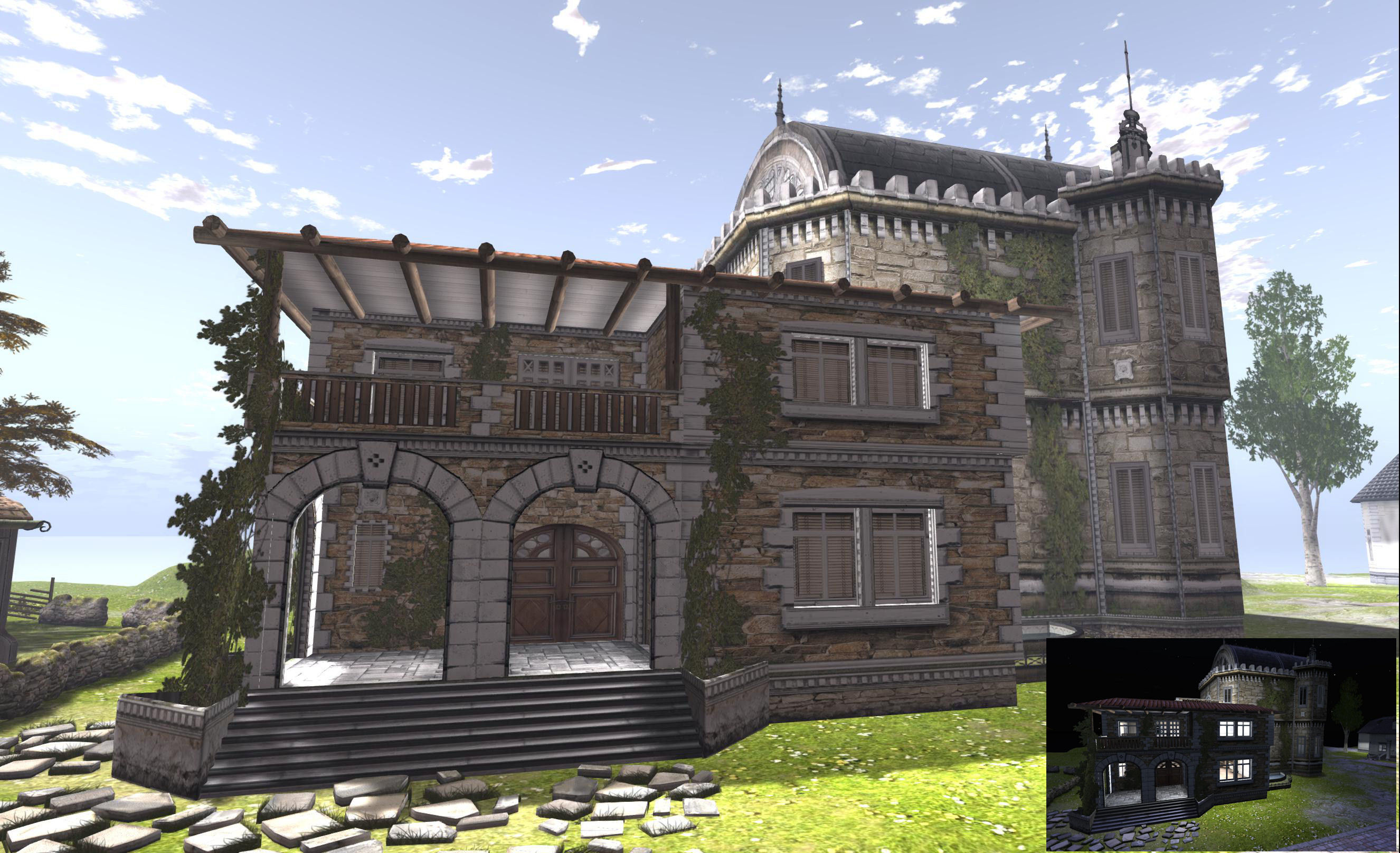
The LAQ Decor Spanish "castle" villa.
The LAQ Decor Spanish “castle” villa and, inset, showing the internal lighting

I have to admit the latter two are a little too big for my tastes – but then I’ve been known to live in a tin can :). However, for those seeking a large property, either may well be worth consideration.

Along with the houses, Winter produces a range of furnishings and outdoor items, some of which (walls / fences) can be seen in the photos here. All of them are, when one considers they are COPY, very reasonably priced.

The LAQ Decor furnishings are certainly worth a look at, and again a solid demonstration as to what can be achieved in mesh with a little care. The bedroom, lounge and dining sets all represent very good value considering the low prim count  / LI of each, the colour options, animations, etc. I particularly like the fact that the furniture is all built more to a decent avatar scale than perhaps some other brands tend to be.
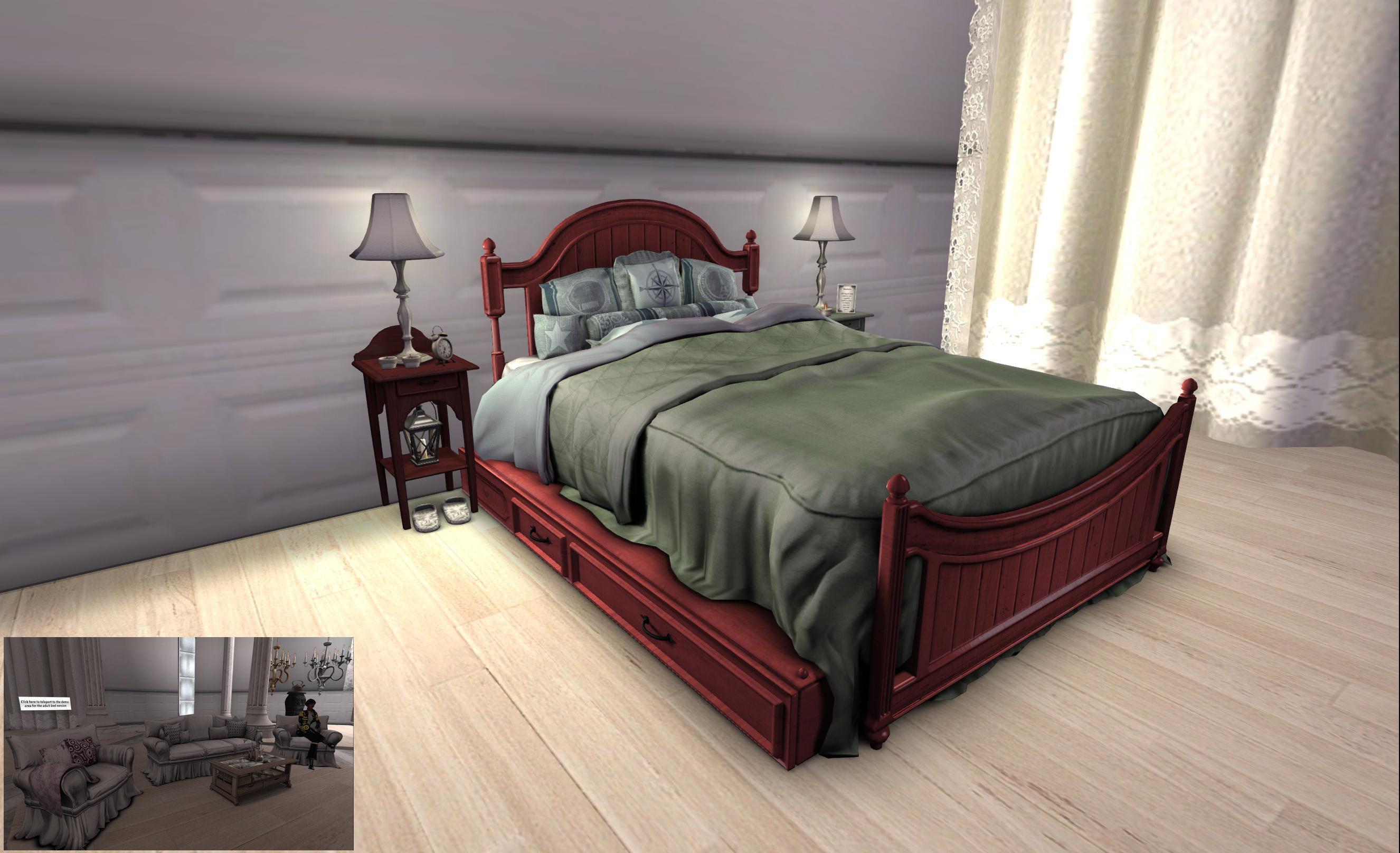
LAQ Decore furnishing represent good value for money - low prim count / LI, colour-changing, multiple poses and options. The bed and beside tables (with working lamps / candles) shown in the main picture and the lounge suite inset.
LAQ Decor furnishing represent good value for money – low prim count / LI, colour-changing, multiple poses and options. The bed and beside tables (with working lamps / candles) shown in the main picture and the lounge suite inset

Whether you’re looking for a house or interior furnishings, LAQ Decor is more than worth a visit, be it via the Marketplace or a trip to the in-world store (and I very much recommend the latter).

For my part, I’m so enamoured of the Picturesque Cottage, I’m going to be hard-pressed not to go out and find a suitable parcel on which to locate it. And then, of course, I’ll need the bed, the lounge suite and the bookcases, and the … 🙂

Related Links

Flying high in SL

Update March 26th: Erick has sent me a copy of the “full” version of the Spitfire’s Hud, which does include a comprehensive set of control switches.

As regular readers know, I was bitten by the flying bug towards the back-end of 2012. I started out humbly enough with a couple of “freebie” aircraft (although the term doesn’t do them justice at all) a Terra Stingray by Steve “Cubey Terra” Cavers and a Pitts S2C by Michie Yokosuka. As noted back then, I’d had some flying vehicles prior to these two, but they marked my “real” entry into the world of flying in SL.

Since then, my aircraft collection has expanded somewhat, with several more from the Cubey Terra range entering my ownership, and even Warbugs getting my attention. If I’m totally honest, the Stingray has remained my out-and-away favourite – it handles beautifully and is equally at home whether in the air or on (and even under!) the water – which is really handy when out on Blake Sea.

However, my collection of aircraft gained a massive boost recently when I unexpectedly came into ownership of an aeroplane I have, like anyone remotely connected to or interested in RL flying, loved from afar: A Supermarine Spitfire. Specifically a Mark IX as made by Erick Gregan.

Just a gal and her Mark IX

The “Spit” came my way while Erick and I were visiting the Magnum Sandbox regions in order to poke sticks at the region crossing bug fix deployed this week by LL in an attempt to cure much of the misery surrounding vehicle region crossings resulting from the recent roll-out of interest list code.

Those who are familiar with Erick’s work know this his aircraft are all exquisitely put together and detailed – and the Spitfire is no exception. A mesh construction, It is perhaps one of the most detailed SL aircraft I’ve seen, and it is clear that he has poured an enormous amount of creative talent into it. I confess that it was love at first sight when he rezzed it in front of us.

Fabulous detail
Fabulous detail

It is also fabulously scripted – the one aircraft having four flight modes:  an “easy fly”, a “realistic fly” (handling pretty much as a “real” aeroplane would, and requiring as much care and respect), and both an “easy combat”, and a “realistic combat” version for those who feel a little more bloodthirsty.

All four variants come in a single Mark IX rezzer which itself is pretty neat. Pull it out of inventory, let it rez and then click to select which variant of the aircraft you’d like. The “flyable” version then replaces the rezzing version, which self-deletes, leaving the flyable version occupying the same space.  Also included in the box is a low-impact (non-flying) “display” version, suitable for parking in a hanger, a full set of instructions and a parachute – just in case.

In the air
In the air

The Spitfire uses the usual flight controls: Page Up / Down for throttle, the arrow keys for climb / descend / banking, together with a huge range of chat commands  – there is no active HUD for flight settings, although you can display an instrument HUD on your screen.

In terms of capabilities and control, Erick has packed a lot in, and sought to make the aircraft as real to fly as possible, particularly in the “realistic” modes. In the latter, a correct start-up process needs to be followed in order to get the big Merlin engine turning over; there’s a battery to turn on, fuel pumps and mixture to set, throttle to open, etc., before attempting start-up. When the engine does start to turn over, you’re treated to unburnt fuel “flaming” in the Merlin’s exhaust pipes as well as getting the life-life sound of the engine coughing and roaring into life. All-in-all an aviation enthusiast’s dream.

"Contact!" The Mark IX's Merlins starts ...
“Contact!” The Mark IX’s Merlins starts …

Once in the air, the Spitfire is a delight to fly, and is very responsive to keyboard inputs, with flap, ailerons and rudder all visibly moving in response to inputs. I can say that aerobatics, are a joy – providing you have a good sense of spatial awareness :). I had a lot of fun barrel-rolling and looping around the sky once I’d got settled.

Care does need to be taken when flying the plane in “realistic” modes, however. Get things out of shape on landing, for example, and you’re liable to tip the nose into the ground … as I found out *cough*cough*. Oh, and don’t forget to refuel between flights :).

There is a HUD to go with the Spitfire, but it is “passive” in the sense that while it records airspeed, altitude, heading, etc., there are no switches or options to click; all commands outside of the flying controls are given via chat. The commands themselves are simple enough, with many abbreviated for ease of use (“cc” to close / open the canopy, “ch” to remove / place the wheel chocks, “br” for brakes, etc).

I’ve not actually tried my hand in combat, as that is not something which particularly draws me (Warbugs notwithstanding!), bot the Spitfire comes with an impressive array of weapon options using the VCE combat system for those who are combat enthusiasts.

As to region crossings? While, these have been an issue of late, as I’ve been covering in my weekly SL project updates. However, and while it has, at the time of writing, yet to be deployed to the entire grid – which should happen in week 13 (commencing Monday 25th March), the fix for BUG-1814 works. Neither Erick nor I encountered any issues crossing between regions in the Magnum Sandbox area. Hopefully this will be the majority finding for everyone who enjoys flying / driving / sailing in SL once the fix has been fully rolled-out.

And the Spitfire? Well, suffice it to say, I’m well and truly flying high.

Spit-7_001

Related Links

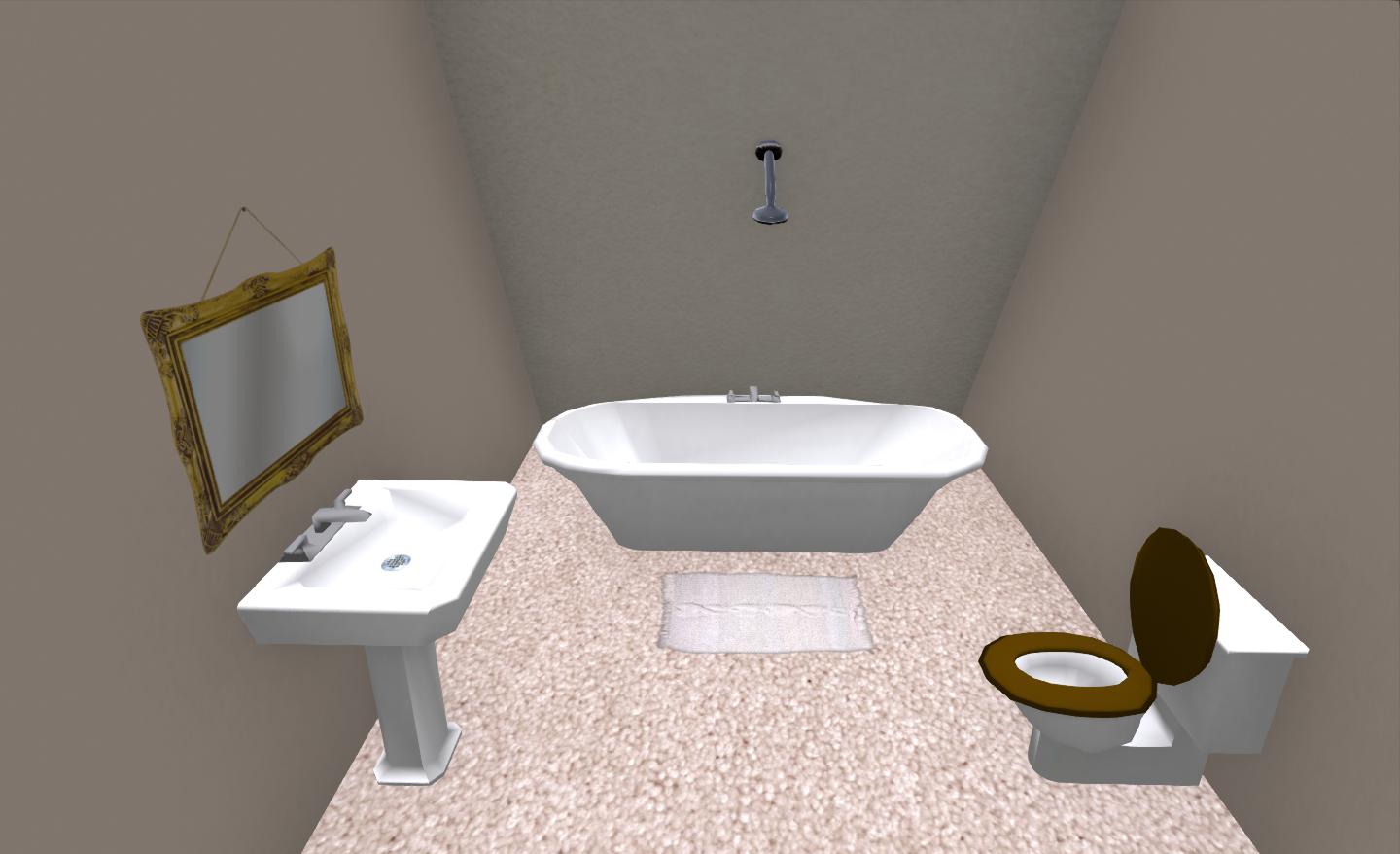
Another PrimPossibility – a bathroom on a prim*

*Update 13th February: Ample has contacted me to inform me he has now released both a single-prim version of the bathroom (which includes the mirror, rug, drains, and toilet water) and a 3-prim version (which allows items to be re-positioned). Both of these feature updated animations and add tremenous flexibility to the bathroom suite. This review has been updated to reflect the new releases.

I’ve been following Ample Clarity’s development of his remarkable PrimPossible range for a good while now. Back in September 2012, I visited his updated showroom and took a peek at some upcoming products.

One of these latter items was Ample’s bathroom suite, which was formally launched in January 2013.

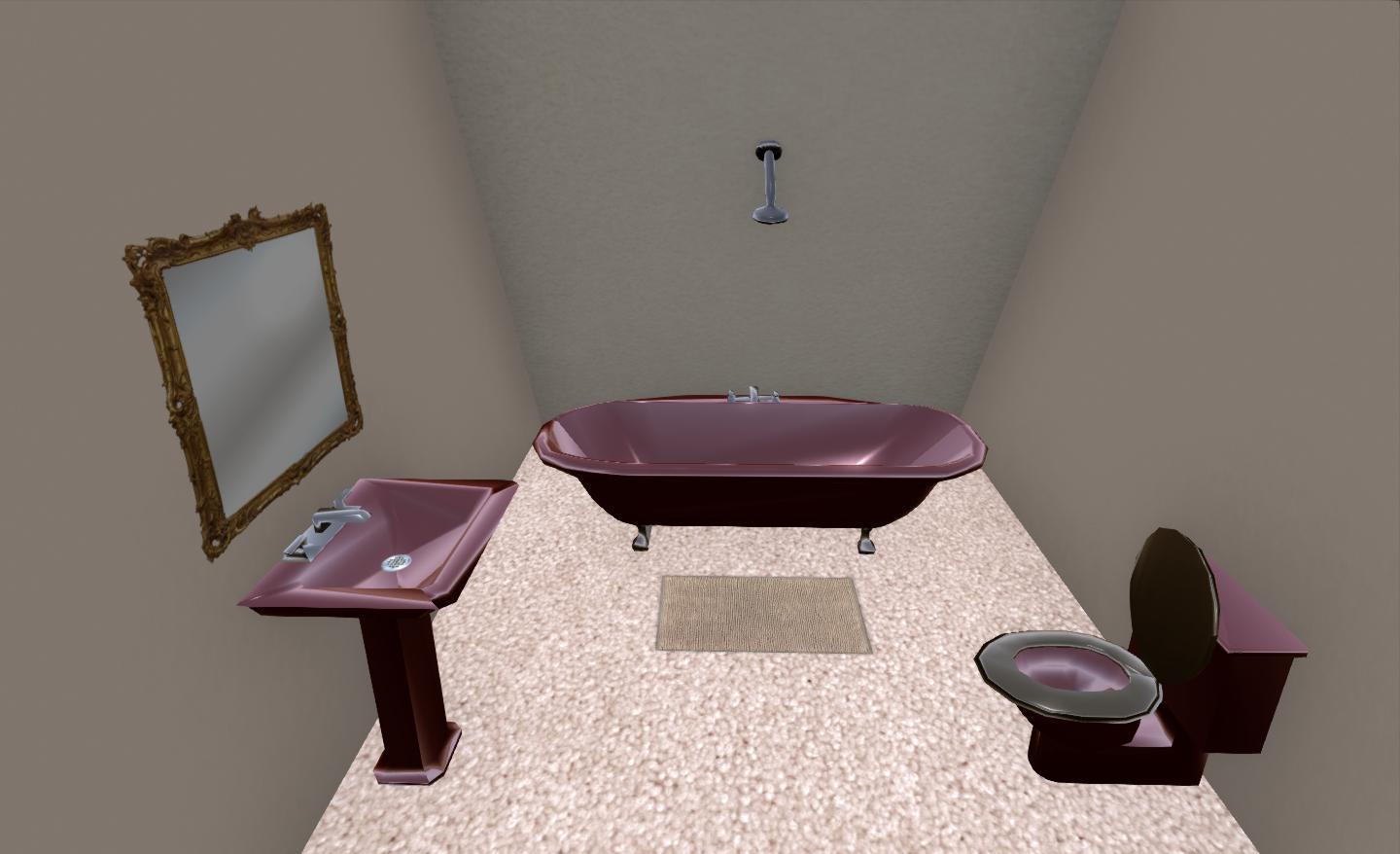
Originally a 2-prim set, the bathroom is now available in either a 1-prim or a 3-prim version (the latter allowing the furnishings to be individually placed). As with all of Ample’s work, the suite uses sculpted prims and packs in a heck of a lot.

The PrimPossible 2-prim bathroom suite

The basic set comprises a prim which rezzes the loo, hand basin and bath, and a second which rezzes into a bath mat, plugs holes for the bath and basin and water for the loo basin. Touching any part of the suite brings up a menu which allows you to change the style of the between one of two options, change the colour scheme and shine applied to the furnishings, and rez other optional items, comprising a shower head (shown above), a hairbrush, toothbrush, loo roll (toilet paper), soap and, for the smokers out there, a cigarette. The toilet paper, toothbrush and hairbrush can be placed in world as required, or the toothbrush and hairbrush can be worn (no default animations with these, but see below).

The menu will also supply a set of instructions, and a special bonus gift of 1-prim curtains / drapes which can be used almost anywhere in a house and which open / close on touching.

The shower head, once rezzed can be placed over the bath and when touched, will deliver water.

The PrimPossible bathroom suite showing the alternate bath style, and alternative mirror style and with colour / shine applied to furnishings

Touching the mirror will similarly bring up a menu allowing the style of the mirror to be switched between one of five options.

Right-clicking the bath and selecting sit opens up a pose menu, offering a range of bath, shower, loo, hand basin and “misc” options – the latter including one for brushing your teeth when wearing the toothbrush, while one of the “misc” option will allow you to brush your hair using the supplied brush. Poses are divided between “singles”, “couples” and “XXX”, with some further split between male and female. The bath poses include options for relaxing and washing, and when in the tub, the water will appear.

This is another nice addition to the PrimPossible range which again brings Ample’s considerable skill to bear on providing feature-rich solutions with a low prim count / land impact. For those working on a prim budget, you really can’t do better than paying a visit to the PrimPossible store, either in-world or on the Marketplace.

Specifications

Related Links

Starship trooping

As regular readers know, I get bitten by the building bug every so often. Until recently, this manifested itself by me routinely taking a proverbial sledgehammer to my home and knocking seven bells out of it before replacing it with something else. usually, when I start banging prims together, I have some idea of what I’m aiming to achieve. Other times I don’t, and it takes several attempts to get things sorted to a point where I’m completely happy.

Things have obviously changed since moving full-time into my Linden Home. While I can tinker around with the insides of this to my heart’s content, I can’t really go knocking it apart and replacing it. However, it doesn’t mean I’m ignoring the old building bug when it comes to call. Which it recently has.

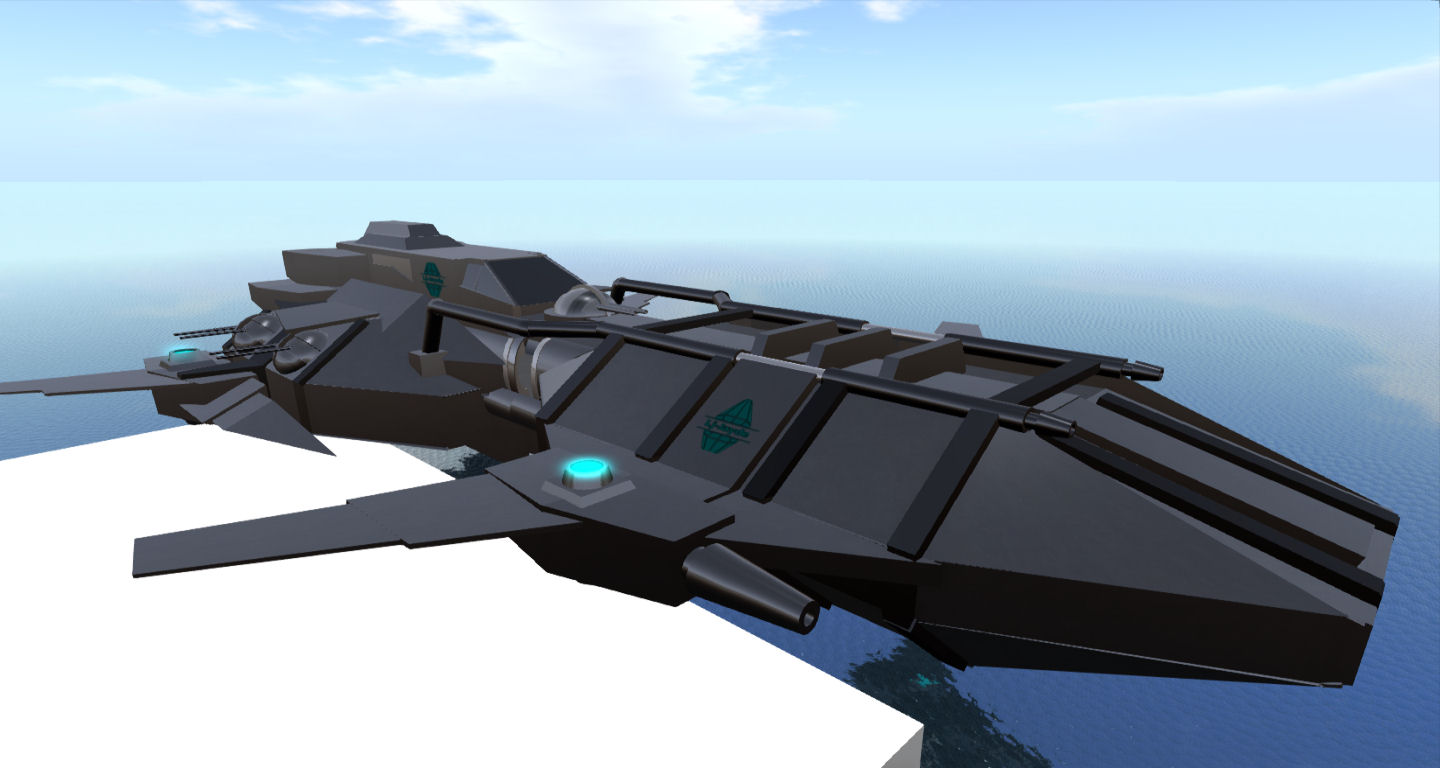
I’ve no idea why, but I’ve had starships on the brain for a while. Maybe it is a hold-over from living in my little “skystation / space station” before jumping over to my Linden Home. Maybe it’s just that I love Bear McCreary’s music for the reimagined Battlestar Galactica television series. Whatever the reason, it eventually drove me to go out and buy a copy of the LJ Jayde starship by Smith Fizz. Call it an impulse buy; at 80 metres long, this is not the kind of behemoth you find hanging from string from an hobbyist’s ceiling…

The original Jayde in "stock" format
The original LJ Jayde in “stock” format

I’ve actually been aware of Smith Fizz’s work for a number of years – when I was involved with someone way back, we looked at a number of his ships with a view to getting one as an SL home. Well; seemed like a good idea at the time, even if we subsequently didn’t. Get one that is.

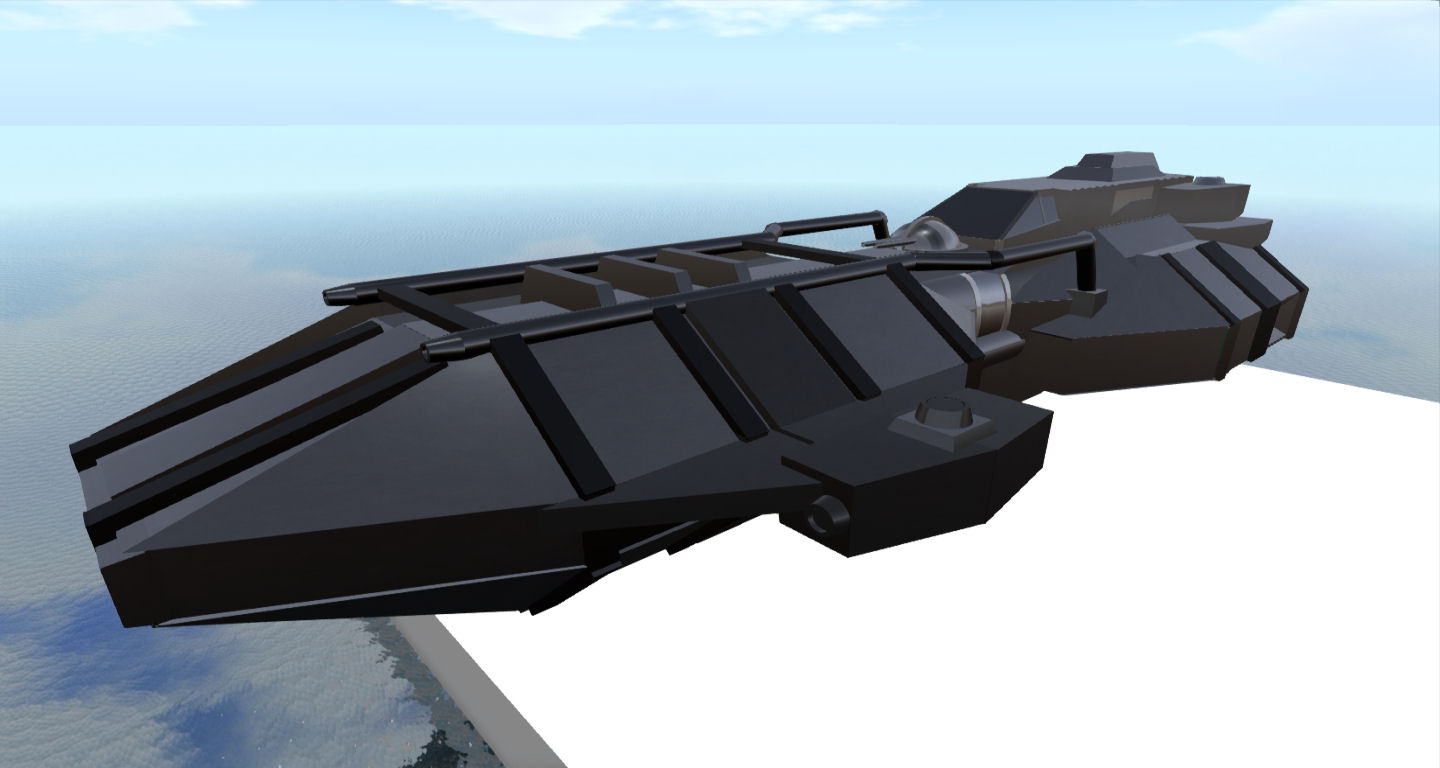
My first task on getting the ship – and with due respect to Mr. Fizz, who did not have the advantage of large prim formats when designing and building the original, was to do a little bit of prims shaving from the basic hull and also removing a few bits and pieces I feel are extraneous – such as the tiny wings. In its “stock” build the ship comprises 871 prims. With the new maximum prim size, and some trimming around the hull, I reduced this by some 211.

My revised Jayde after prim trimming
My revised LJ Jayde after prim trimming. Still might have a further fiddle with the rear end. If you’ll pardon the expression…

Next up came the major issue of the ship’s interior. Part of this is actually very clever. You see, Smith Fizz, working with Thomas Connover, has developed a scene rezzing system (not, I hasten to add, a temp rezzing system). This means that the forward section of the ship can be used to generate a number of interior rooms, which is quite handy and offers plenty of scope for those wanting a sci-fi role-play environment. The problem is that time has not dealt too kindly with some of the offered interiors, which now look more than a little, well, dated.Some of them also, while very clever in how they work and the flexibility they give, also have bits sticking through the sides of the ship. This isn’t something you notice while moving around in the ship, but cam out, and for a self-confessed  obsessive like me, it’s a red rag to a bull…

So, my first act was to grab a new rezzing system from Smith Fizz (wonderful system if you have limited space and want to put it to multiple uses – just make sure everything going into it is at least COPY), and start re-modelling. I’m still working on things, but I’m rather pleased with the results to date.

The original lounge are of the Jayde - the style of furnishings, coupled with visible poseballs mean this has not aged well
The original lounge are of the Jayde – the style of furnishings, coupled with visible poseballs mean this has not aged well

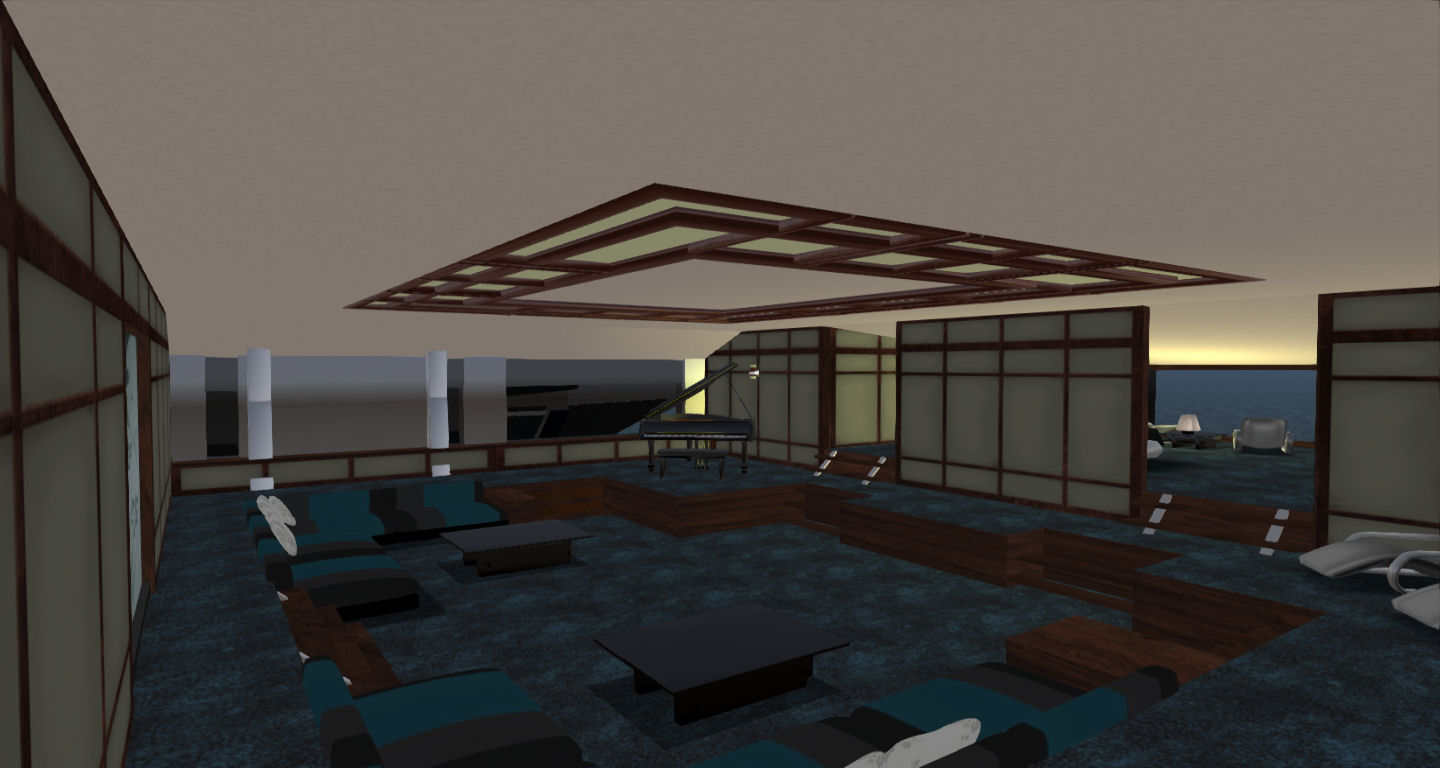
The first room to get the Pey touch was the lounge. I have no real use for kitchens in SL, so the space devoted to this and a dining area in the original design were lost on me. Instead I reduced the overall rezzing space by adding new interior walls (providing a forward “vestibule” area in the process) and then went for a sunken look, with updated sculpted sofas and recliners, with a small bedroom area beyond a partition (I still can’t shake myself of incorporating one into personal builds). A touch of the Orient to the wall textures and an echo of Fallingwater in the ceiling, and I was done – and in less than a third the prims of the original.

The revised lounge, with a bedroom area beyond

Please use the page numbers below to continue reading this article

Making VLMs even easier: the Location Beacon

VLMlogo2Earlier this week I reported on and reviewed a new  Virtual Landmark (VLM) system designed to provide and alternative to traditional landmarks. Created by Darrius Gothly, the Virtual Landmarks for Virtual Worlds system is designed to provide a comprehensive means of ensure landmarks and web links to in-world locations never need to expire.

Now Darrius, has taken the system a step further forward, and make the maintenance and update of VLMs even easier through the use of the VLM Location Beacon.

The VLM Location Beacon logo

The VLM location beacon is a single-prim object which can be linked to a VLM. Once rezzed and configured (using the VLMurl for the required location), the Location Beacon will become invisible and phantom and will continuously monitor for any changes that need to be posted to the VLMVW Database.

This means that if you need to move your store or a teleport location within a store or exhibit, etc., simply move the Location Beacon associated with the location (either physically if moving it within the same region, or by taking it back to your inventory and then re-rezzing it at your new location), and the VLMVW database will be automatically updated with the details of the new location.

Location Beacons which are in use will also periodically check the VLMVW database to ensure their “parent” VLM record is still active. If either the location referred by the Beacon has been removed from the VLM / VLMVW database (remembering that one VLM record can store up to eight in-world locations) ro the VLM itself has been deleted, the Beacon will self-delete, sending you IM to inform you it has done so in the process.

The VLM location Beacon now forms a standard part of all VLM packages offered by DGP4SL through the SL Marketplace. Anyone who has purchased  package should receive an update from DGP4SL which includes the Location Beacon.

Related Links

Virtual Landmarks: offering a solution to the age-old problem

Update: June 2020: following the sad passing of Darrius in late 2019, his VLM product is no longer available. 

Update, February 2013: The number of VLM packages has been reduced to two, an Unlimited Version and a free Business Promo Version (30-day trail period with 5 VLMs. The details of this post have been updated to reflect these changes and the associated pricing restructure.

Update December 9th, 2012: Darrius has now produced an online Quick Reference Guide (QRG) to getting started and using VLMs.

Update December 6th, 2012: In order to make VLM management even easier, Darrius has now introduced the VLM Location Beacon as a part of all VLM packages. You can read more here.
VLMlogo2I first reported on Virtual Landmarks, Toysoldier Thor’s revolutionary idea for bringing the likes of SL landmarks into the 21st century, back in August 2012.  The idea started as a post in Toysoldier Thor’s blog before it moved to a forum thread post he started, and which generated a good deal of discussion, finally moving to a JIRA on the idea – SVC-8082.

The idea initially received favourable feedback from “front-line” LL staff at various User Group meetings, but appears to have been stuck in the “Someday / Maybe” category of things to do on the Lab’s side of the fence. However, things have now started to move elsewhere – but before we get to that, a brief recap.

Virtual Landmarks – What Are They?

The VLM promotional poster by Toysoldier Thor

It’s a problem we’ve all faced one way or another; as a user, we’ve opened inventory and double-clicked on a landmark to a store to find it has moved elsewhere; as a merchant, we’ve moved location only to realise that every landmark in every one of out magic boxes, vendor packs, Direct Delivery folders, recorded in every Marketplace listing now needs to be updated, not to mention every LM we’ve ever given out is now invalid; as a role play group we’ve relocated or revised our regions so that all previous teleport points and their associated landmarks are obsolete… The list goes on.

In his proposal, rather than creating and distributing a landmark, a store-owner (or whomever) would create a user-friendly VLM (e.g. “My Wonderful Store”) which can be associated with one (or more) landmarks people can teleport to. The association(s) between a VLM and the landmark(s) are stored in a dedicated database (Toysoldier called it “VLM Mapping Service”). Copies of the VLM can then be created in-world and distributed exactly as landmarks are currently distributed. When someone uses the VLM, their viewer sends a request to the Mapping Service, which looks-up the physical landmark associated with the VLM and sends the information back to the viewer, enabling the user to be teleported to their desired destination.

The power of VLMs is that should one of the underlying landmarks associated with a VLM subsequently change, all the creator of the VLM has to do update the VLM record stored in the VLM database with the new landmark – and every instance of the VLM in existence will automatically route people to the new location when used. There is no need to pass out new LMs, replace existing LMs or anything else.

Toysoldier also proposed a range of other capabilities as well, and it is worthwhile reading his blog post on the subject; but the above is enough to give you a flavour of the idea’s potential.

Sadly, and as noted, while the idea received initially favourable feedback from LL, there has been little or no movement on the idea. Until now.

Enter VLMs for Virtual Worlds

VLMVW  – VLMs for Virtual Worlds has been developed by Darrius Gothly, the man behind DGP4SL, one of the most respected brands in Second Life, and who has been a strong supporter of the idea since Toysoldier Thor first proposed it.

VLMVW is primarily a subscription-based service designed to provide a powerful and integrated implementation of the VLM concept. Highlights of the service include:

  • The ability to create VLMs which can be linked to up to eight in-world locations
  • The ability to create as many copies of a VLM as desired. Note that:
      • Copies can be distributed in exactly the same ways as “traditional” landmarks
      • Copies of a VLM take the form of an in-world scripted attachment which is worn in order to faciliate teleporting
  • The ability to create “VLMurls” for use in webpages and in SL Marketplace listing. These function in the same way as SLurls, but with the advantage that if the location they refer to within a VLM is updated, all instances of the VLMurl will automatically point to the new location
  • A publicly viewable web Listing page for all VLMs a subscriber has created
  • A private (key-protected) web page  displaying statistics on VLM usage
  • An optional “Store Kiosk” system which can be placed around a store / location and provide visitors with a means to quickly teleport between departments / locations.

The service is provided in two packages:

  • A free Business Promo Version which allows you to create up to 5 VLMs and provides a 30 day trial period. This allows you to test out the VLM system free of charge to see if it works for you. It is also available from the SL Marketplace
  • An Unlimited Version which allows for an unlimited number of VLMs to be created and has no account expiration date. This now sells for L$499 and is available from the SL Marketplace.

Both packages is supplied with comprehensive documentation and an optional info / demonstration pack using the DGP4SL stores.

Please use the page numbers below to continue reading this article