On Sunday, December 1st, 2019, I was one of a number of recipients of the first honorary titles to be awarded by the Virtual Existence Society (VES).
The Amica (Friend) award is a title awarded by VES to individuals in recognition of:
Their contribution to the practice of virtual embodiment and the cause of virtual existentialism through years of excellent journalism.
Those in receipt of the Amica award were invited to attend a special awards ceremony held by the VES on Sunday, December 1st, where they, and the members of the Society who had been nominated for, and accepted, were able to receive their award and title.
Unfortunately, due to the ceremony being held at a time that makes it difficult for me to be in-world on a weekend (and particularly Sundays), I was unable to attend in person.
However, I would like to extend my sincere thanks to VES senior / founder members lucagrabacr and Nodoka Hanamura and to the brothers and sisters of VES for nominating me to be one of the first recipients of the Amica title, and congratulations to my fellow recipients, and to all of the VES members in receipt of the Fidelis title.
The Virtual Existence Society is a non-profit group of like-minded individuals who find value in the practice of virtual embodiment and the philosophy of virtual existentialism, and want to preserve, and promote those things.
The purpose of the Society is to preserve and promote shared belief and values by the means of passively strengthening members’ faith through philosophical formulation and understanding of those values, and actively participating in activities aimed to preserve and promote said belief and values.
In addition, the society also conducts activities aimed to preserve and promote virtual world platforms to which it resides in (e.g. Second Life).
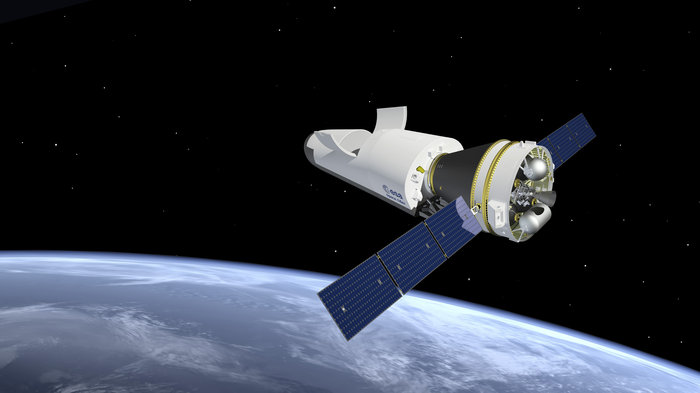
A new ESA budget confirms the space agency’s commitment to the Space RIDER uncrewed space plane Credit: ESA
On Thursday, November 28th, 2019, European Space Agency (ESA) members agreed to a record €14.4 billion, promising to maintain Europe’s place at the top table alongside NASA and China. The four largest contributors to the budget are Germany (€3.3 billion); France (€2.7 billion), Italy (€2.3 billion) and the United Kingdom (€1.7 billion – ESA is not an EU organisation, so the UK’s involvement will remain unchanged when / if Brexit occurs, although EU funding of UK science and technology projects will be impacted).
The funding will allow ESA to move forward on a number of fronts in space exploration and technology development, including:
The Laser Interferometer Space Antenna (LISA) – the first space-based gravitational wave observatory, comprising three spacecraft placed in a triangular formation 2.5 million km apart and following the Earth in its orbit around the Sun. LISA will launch in the early 2030s.
Transitioning ESA to the next generation of launchers: Ariane 6 and Vega-C.
Continued support of the International Space Station, including continued participation in crew missions.
Direct involvement in NASA’s Artemis lunar programme, including technology for the Lunar Orbital Platform-Gateway (LOP-G) and crewed missions.
A joint Mars sample-return mission with NASA.
Development of flexible satellite systems integrated with 5G networks, as well as next-generation optical technology for a fibre-like ‘network in the sky.’
The development of a European reusable space vehicle: Space RIDER.
Space RIDER (Reusable Integrated Demonstrator for Europe Return) is a project I first wrote about in 2015, when ESA flew the European Intermediate eXperimental Vehicle (IXV). An uncrewed vehicle weighing just under 2 tonnes, it had the primary objective to research the re-entry and flight characteristics of a lifting body type of vehicle and test the re-entry shielding technologies for such a vehicle.
The Space RIDER vehicle shown in cutaway, showing the open payload bay, forward parasail deployment system and after avionics. Credit: ESA
IXV paved the way for the initial development for Space RIDER, which will be an uncrewed cargo vehicle designed to be launched by the Vega rocket and capable of carrying up to 800 Kg of payload into orbit. All Space RIDER vehicles will be able to carry out around 5 flights apiece, reducing the overall cost of placing payloads into orbit. Following re-entry into the Earth’s atmosphere, the vehicle will descend to Earth under a parasail, allowing it to glide to a nominated landing zone.
As well as being suitable for launching space payloads into orbit, Space RIDER will itself be a technology development vehicle for possible larger reusable vehicles using similar lifting body technology.
Space RIDER will largely be developed by Italy and the first flight is due to take place in 2022.
Happy Anniversary, InSight
On Monday, November 26th, 2018, NASA’s InSight (Interior Exploration using Seismic Investigations, Geodesy and Heat Transport) lander, built with international cooperation, arrived on the surface of Mars. The focus of the mission is to probe the Red Planet’s interior – its crust, mantle and core in order to answer key questions about the early formation of the rocky planets in our inner solar system – Mercury, Venus, Earth, and Mars – more than 4 billion years ago.
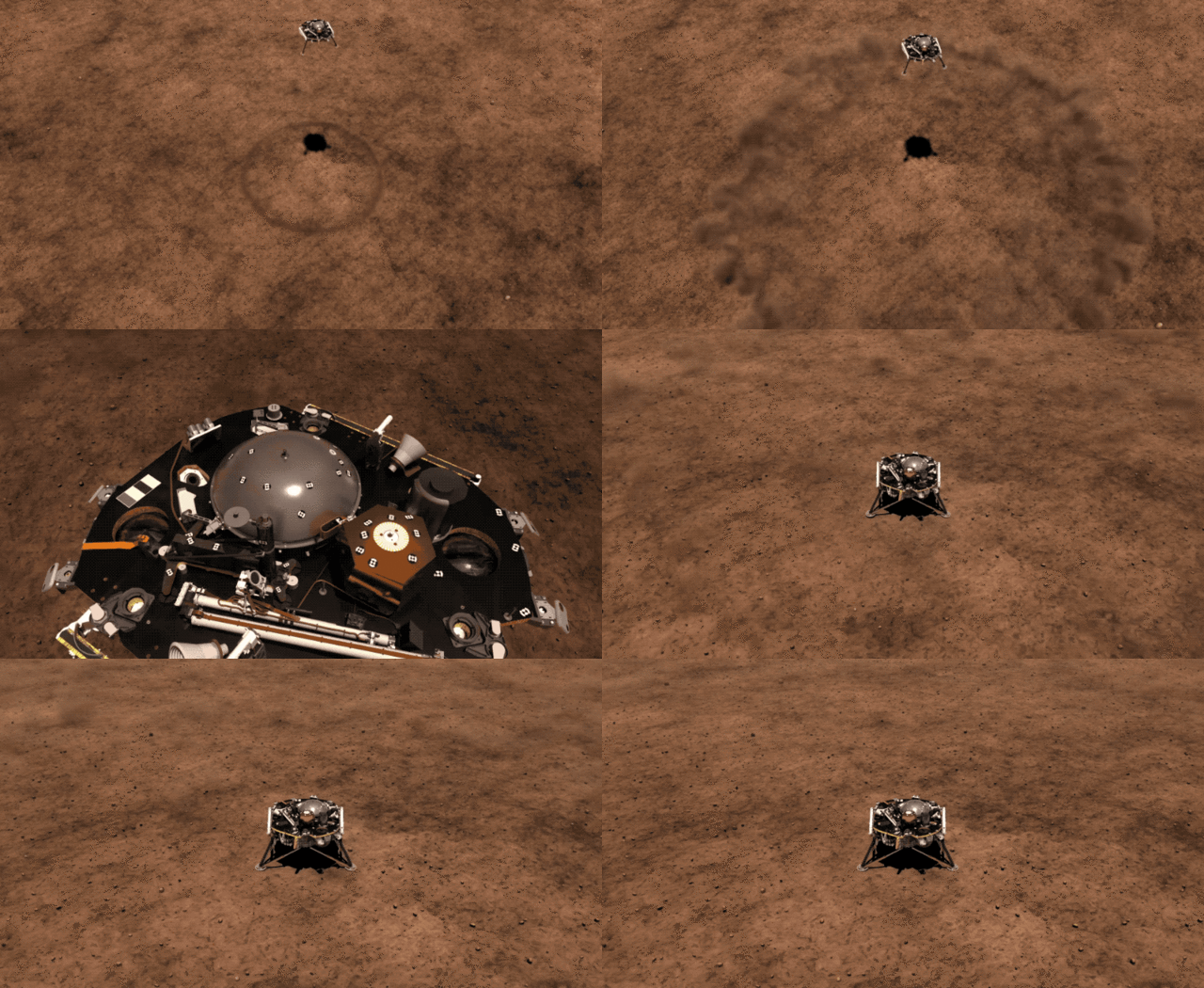
A simulation of InSight touching down on Mars using its 16 rocket motors. Credit: NASA
Since that landing, the year has been an eventful one for InSight, the lander’s super-sensitive seismometer suite has detected more than 150 vibration events to date, about two dozen of which are confirmed marsquakes. However, and I’ve I’ve reported a number of times in these pages, InSight’s other primary science instrument, a burrowing heat probe called the Heat Flow and Physical Properties Package (HP³), has had tougher time.
The self-propelled “mole” probe designed to burrow down into the Martian sub-surface having been stuck for most of the year after only penetrating a few centimetres into the ground. Those operations only resumed in October 2019, and were short-lived after the probe inexplicably “bounced” its way almost completely out of the hole it had burrowed, leaving scientists and engineers still trying to work out what happened.
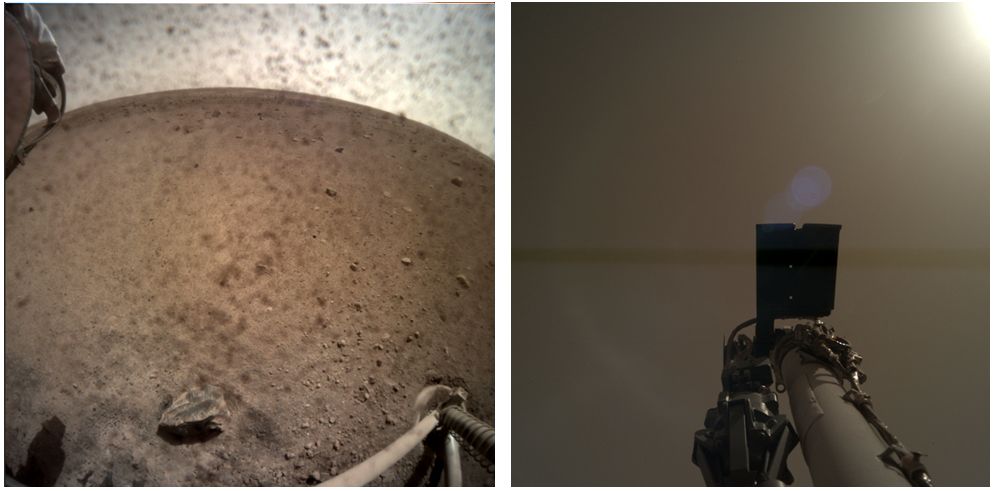
Side-by-side: (l) the first image returned by InSight using the lander-mounted, Instrument Context Camera (ICC), still with its dust cap in place. Note the lander’s leg in the lower right corner. (r) a photo captured by the robot-arm mounted Instrument Deployment Camera (IDC) as the arm is exercised on November 30th, 2018
The solar-powered InSight is scheduled to operate for at least two Earth years.
If you’re feeling ready for your close-up or you’re a film buff, then you’re likely to enjoy the latest region design by Lotus Mastroianni and frecoi (who have been responsible for A Little Havana, The Missing Whale, Kun-Tei-Ner, Hope, and most recently ChatuChak (read here, here, here, here and here for more).
Replacing the last of that list – ChatuChak – is RioSisco Studio Pictures, a homage to the great American film studios complete with nods to a range of films, genres and periods – and with multiple opportunities for photography and to be immersed in the magic of film-making. It is a setting that reproduces all the major elements of a film studio and studio tour, and presents some outstanding opportunities for geeting involved with all that is on offer – as the region’s Flickr stream already reveals.
RioSisco Studio Pictures, December 2019
Set out as a studio lot, the region features everything from prop warehouses to back lot façades to green screen sets and miniatures, all the way through to a studio’s public commissary to offices and a screening room. With it comes some of the bustle of a working studio – a set under construction, visitors touring and eating, and studio execs keeping an eye on things. Even the name of the region carries with it echoes of the silver screen: “RioSisco” offers a suggestion of the Cisco Kid, a film series made in the early decades of motion pictures through until the immediate post-World War 2 period.
The attention to detail poured into the region is astonishing; the nods to films and franchises are both large and small and numerous – and so are the touches of humour. Literally everywhere you look, there is something of a homage to be found. The treats start right next to the landing point, which sits outside sound stage 25. Look inside the building and you’ll see a city backdrop, a short street façade and a marvellous miniature of a street scene in which you can make yourself feel like a latter-day Gulliver visiting a modern-day Lilliput.
RioSisco Studio Pictures, December 2019
However, this is easy to overlook simply because, just down the road from the landing point Godzilla is out for a stroll among the buildings – and tend to capture the attention as a result. He’s passing a rooftop billboard celebrating the Star Trek franchise’s first foray onto the silver screen (Star Trek: The Motion Picture, 1979), and is apparently in pursuit of Ecto-1 (disguised as a MadPea prop). The block of buildings to the right of both Godzilla and Ecto-1 reveals one of the more famous aspects of outdoor film lots: the building façade – the entire block is little more that plywood supported by scaffold – as visitors can see when they step inside or peep through the windows.
The centre of the region is where a new set is under construction, and some of the humour can be found. I’m not entirely sure how much protection a paper hat gives against falling timber, but the chap wearing it seems happy enough!
RioSisco Studio Pictures, December 2019
It is the inclusion of these construction figures and others throughout the region that give life to the region and the feel of it being a living studio that encourages visitors – just step into the commissary on the ground floor of the building across the construction site from Godzilla to see what I mean. And while there, be sure to take-in the various nods to a range of famous films along the back wall. Or you can pop across you Stage 34 and participated in a small stage / green screen shoot.
Take the steps to the upper floor of the building next door to the commissary and more treats await. Here can be found characters from the original Star Wars films, together with concept art and storyboards from a number of films – how many can you recognise?
RioSisco Studio Pictures, December 2019
Nor is this all; echoes of the Jurassic Park franchise abound throughout the location, and have already offered multiple opportunities for photography. Off to the south of the lot sits a homage to another franchise and the Universal Studios ride it gave birth to, while another iconic character from Hollywood’s monster movies pounds his chest from a rooftop.
Be sure, as well, to check out the warehouse in Stage 38, which has a range of props and vehicles, including some that might again be recognised by film fans, with one in particular likely to raise a smile; where else might you come across Chucky piloting a Mech walker from (I think) Avatar?
RioSisco Studio Pictures, December 2019
From an opportunity to stage your own version of Singing in the Rain or a scene from Blade Runner’s wet alleyways to getting chased by zombies or simply kicking back in the viewing room, RioSisco Studio Pictures offers a great visit with plenty to see and appreciate. Definitely one not to miss.
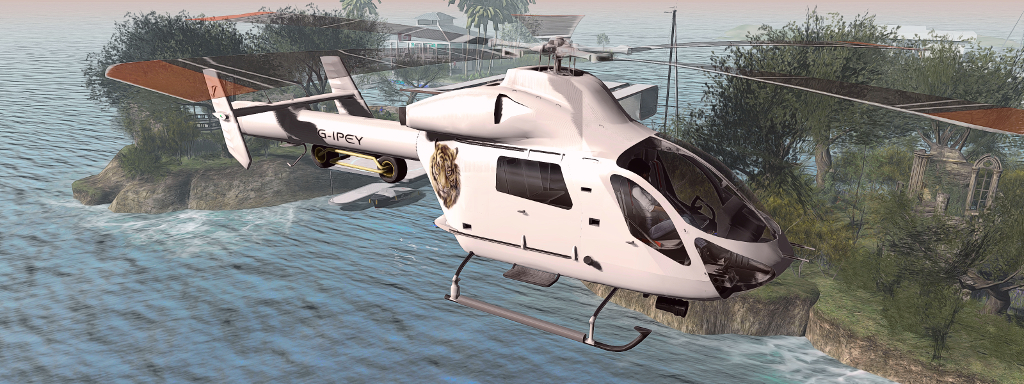
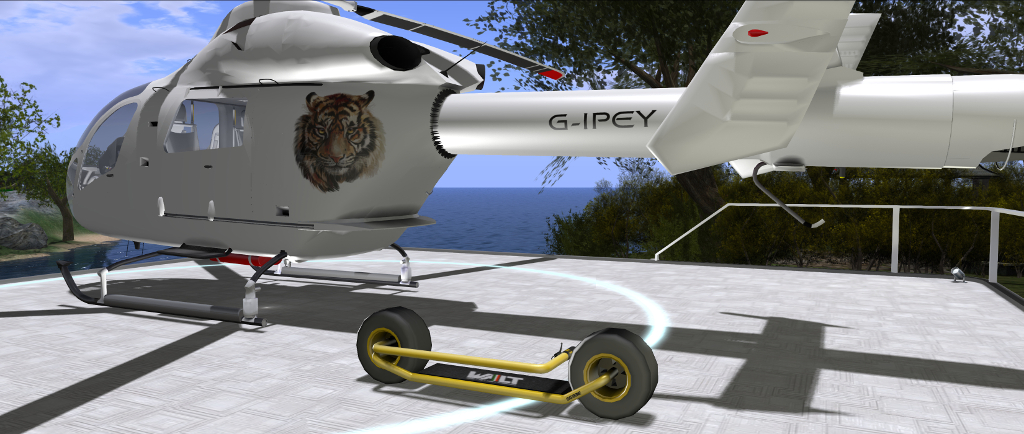
Using the Piaggio Transportation System with my MD-900 helicopter and Piaggio RoadRunner scooter: note the scooter sitting under the helicopter’s tail boom
So you have a luxury yacht with a helipad and been annoyed that you can’t sail it with your favourite helicopter rezzed on the deck? Or you have a landing craft and would like to be able to have a driveable vehicle it can carry and you can drive straight off? Or a cargo plane you’d like to fly around with your favourite car inside ready to drive? Well, Ape Piaggio might have the answer.
While working to complete the SeaRoo aquatic vehicle (formerly the WaveHopper – see: Previewing a little wave hopping in Second Life – and still very much “coming soon” as the final bugs are ironed out), she’s developed a neat little script set called the Vehicle Transportation System that allows two Modify / Copy vehicles to be combined so that one can be carried by the other, so that the “one” can be used when desired / as the local region settings allow.
As usual, I’ve been able to take the system for a test-run and thought I’d offer a piece on it for those who might be interested.
The Piaggio Vehicle Transportation system classifies the vehicle to be carried (in my case, the Piaggio RoadRunner, foreground and shown with handlebars folded) as the “secondary vehicle”, while the carrier (in this case, my MD-900 helicopter) as the “primary vehicle”
The system does require a careful amount of setting-up. In particular, it requires the unlinking and re-linking of one vehicle. This is something that can create issues, because vehicles often use a defined linkset numbering system which, if altered, can stop the vehicle function correctly. For this reason, there are scripted tools available to manage linksets. It’s also why Ape provides two versions of the Vehicle Transportation System:
The Vehicle Transportation System, containing only the scripts needed to allow one vehicle carry another, and suitable for those already have a re-link / unlink tool, or are confident in their own ability to edit linksets.
A Combo pack, offering both the Vehicle Transportation System and Ape’s own Relinker Kit, suitable for those who are not confident in editing linksets or who do not have a suitable script set for linkset editing.
Both kits are available on the Marketplace and will deliver the scripts to your inventory in two different folders.
In addition, the following points should be noted:
Both vehicles must be Copy / Modify.
The system uses a pair of defined terms:
Primary vehicle – refers to the vehicle that will transport another vehicle (e.g. a yacht you want to carry a helicopter or jet ski or something; or an aircraft carrying a car or tank or other vehicle, etc.).
Secondary vehicle – refers to the vehicle that is being transported.
A primary vehicle can only carry one other secondary vehicle.
When in use, the system will only work in regions / parcels where rezzing is enabled.
If you are the only person on your primary vehicle, note that it may be auto-returned if you swap to your secondary vehicle and are away from the primary longer than the local auto-return time.
Setting The System Up
Note: for the purposes of this article, I’m using my Spijkers & Wingtips MD900 Explorer helicopter and Piaggio SG33E RoadRunner scooter as, respectively, my primary and secondary vehicles, ans they happen to be the two of my vehicles that offer a reasonably logical pairing. As noted above, the system can be used with any suitable pair of Copy / Modify vehicles.
Setting the system up comprises three steps:
Preparing a static version of the secondary to be carried by the primary.
Linking that version of the secondary to the primary.
Preparing a version of the secondary that can be rezzed from the primary when it is to be used.
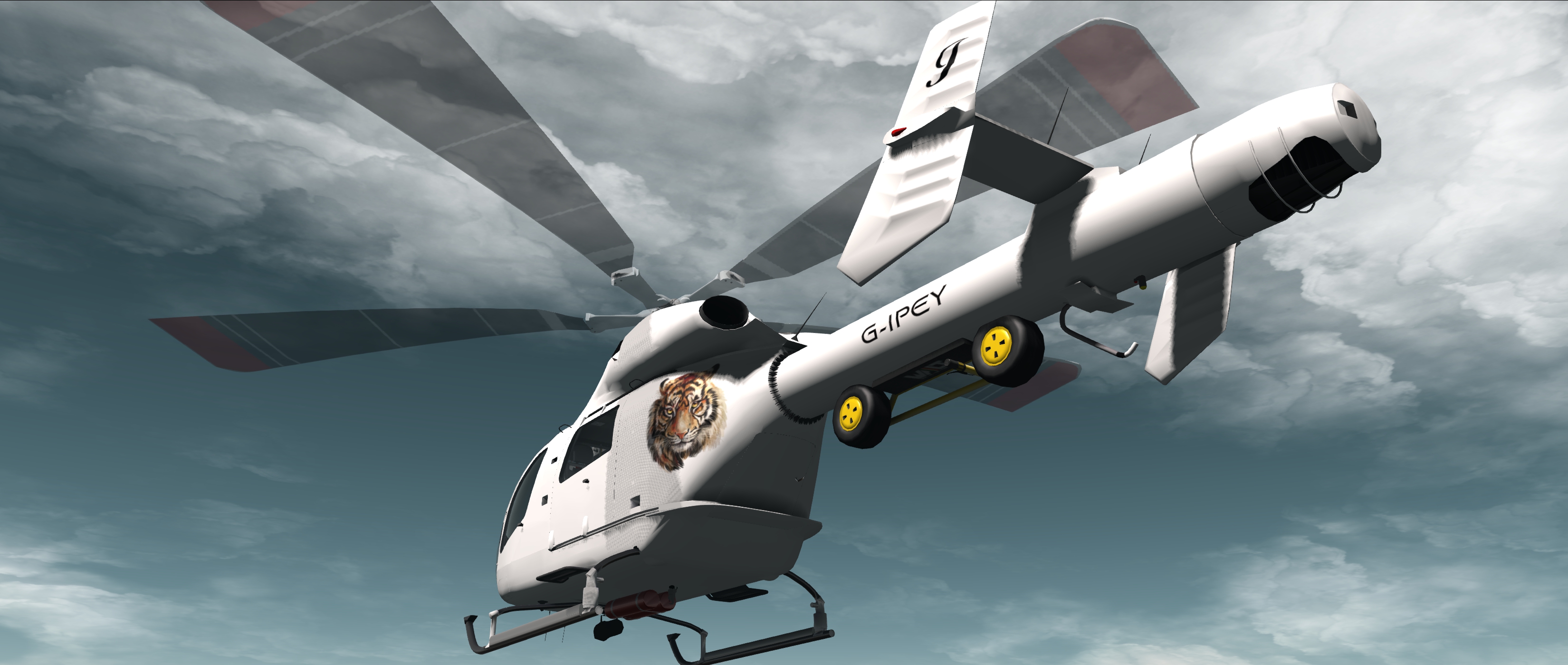
The “static” version of the secondary vehicle ready to be linked to the primary – the idea here being my RoadRunner is “slung” under the helicopter’s tail boom
Preparing a Static Version of the Secondary Vehicle
Rez your primary vehicle.
Rez a copy of your secondary vehicle and place it on your primary where you wish it to be positioned when the primary is in use (e.g. put a helicopter on the helipad of a yacht, or a car in the cargo hold of a plane).
Edit the secondary and open the Contents tab.
From the Vehicle Transportation System folder in your inventory, drag and drop the script called CONVERT INTO STATIC OBJECT into the Contents tab of the secondary vehicle.
WARNING: this script will DELETE all contents from the secondary and render it unuseable, so again, you should only do this if the vehicle is COPY and you retain a working version in your inventory.
Wait for the local chat message –> CONVERSION FINISHED <–.
Leave the converted vehicle in place.
Linking the Static Version of Secondary to the Primary
Note, the following references using the Piaggio Relinker kit; if you are using another scripted means of unlinking / relinking an object, then please refer to the instructions available with that tool.
Edit the static version of the secondary vehicle and open the Contents tab.
From the Piaggio Systems Relinker System folder, drag and drop ONE of the ADD scripts into the Contents tab:
Use ADD (CONVEX) if the root of the secondary is mesh.
Use ADD (PRIM) if the root of the secondary is a prim.
If you are unsure of the root of your secondary vehicle, use ADD (NONE).
Close the Edit floater of the secondary vehicle.
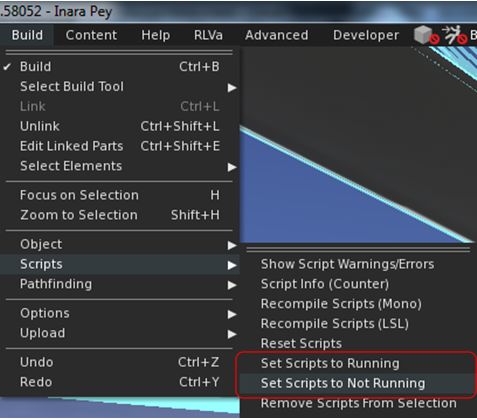
Edit the primary vehicle, and then from the Build menu, select Scripts → Set Scripts to Not Running.
When linking your secondary vehicle to your primary, you must ensure you set the primary’s scripts to Not Running before doing so, and then set them to Running afterwards
From the Piaggio Systems Relinker folder in your inventory, drag and drop the RELINKER – MAIN script into the primary.
A series of dialogues will be displayed, requesting permission to de-link and re-link he primary vehicle.
You must reply YES to each in turn.
When the process has finished, local chat will display the message: DONE: REMOVING SCRIPT.
Edit the primary vehicle again Scripts → Set Scripts to Running.
Preparing a Rezzable Version of the Secondary for use with the Primary
Rez a new copy of the secondary vehicle and edit it.
From the Vehicle Transportation System folder, drag and drop the script SECONDARY VEHICLE SYSTEM into the Contents tab of the secondary vehicle.
From the General tab of the Build / Edit floater, highlight and Copy (CTRL-C) the name of the secondary vehicle.
Take the updated copy of the secondary vehicle back to inventory.
Edit the primary and open the Contents tab, then:
From the Vehicle Transportation System kit folder, drag and drop the script PRIMARY VEHICLE SYSTEM.
Then drag and drop the updated secondary vehicle from inventory into the Contents of the primary.
In chat, type NAME, followed by the name of the secondary vehicle as in appears in the primary’s contents. For example:
name SG33E RoadRunner
Note: you can use Paste (CTRL-V) to paste the vehicle name accurately. Also, note this is only required if the primary has other objects in its contents.
Your vehicles should now be set-up and ready to go. Take a copy of the completed pairing back to inventory so you always have a “master” copy.
Using the Vehicle Transportation System
Notes:
As per the notes above, the system will only work in regions / parcels where rezzing is enabled.
The engine systems of both the primary and the secondary vehicle must be OFF in order for the system to work correctly.
Use the primary vehicle as you usually would. It should perform exactly as it did before you added the secondary vehicle.
Flying my MD-900 with the RoadRunner “slung” under the tail boom
When you reach a point where you want to use the secondary vehicle, stop the primary and make sure the engine script is not running, then in local chat type RELEASE.:
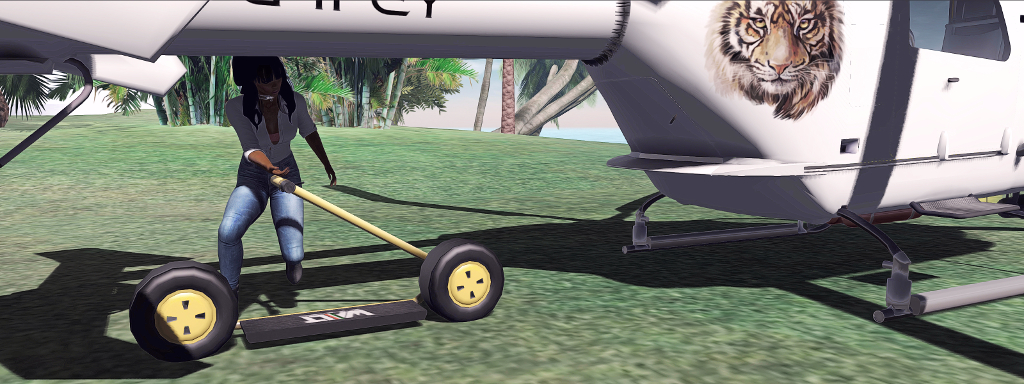
The version of the secondary vehicle will be removed from the primary and a copy of the driveable version contained in the primary vehicles inventory will be rezzed in its place. You can then sit in the secondary and use it as normal.
Preparing the “driveable” version of my Roadrunner secondary after “detaching” it from my helicopter
When you have finished using the secondary, return to the primary and dismount from it. Make sure the engines of both are turned off, then in local chat type CONNECT.
The rezzed version of the secondary will be removed, and the “static” version will reappear connected to the primary.
Note: if the primary has been auto-returned to your Lost and Found folder, you can re-rez it to complete the above operation and continue travelling with the primary. Or you can delete the copy of the secondary and simply pull a fresh version of the primary from inventory the next time you want to use it.
This is an elegant solution for an issue many have found to be annoying. Those interested in trying it for themselves can obtain it as follows:
Piaggio Systems Relinker and Vehicle Transport Script Combo – price L$450. Contains the Vehicle Transportation System AND Relinker system. Use this if you are uncertain about unlinking / re-linking objects or do not have a suitable re-linking script.
The Dickens Project 2019: the Museum of Dickens Projects Past, the Dickens Library and the Listening Room
The 2019 edition of The Dickens Project formally opens its doors on Sunday, December 1st, 2019, ready to offer a month long celebration of the Christmas / holiday season and the life and works of Charles Dickens in Victorian England. Centred upon a series of reading of what is perhaps his most popular novel – and one which still resonates with meaning today – A Christmas Carol, the Dickens Project present a full region of events and immersive activities for visitors to enjoy.
To summarise the Project, one could bullet-point it as including:
Over 60 hours of live music, spoken word, dance events and performances.
Self-selectable interactive elements, including:
The “Urchins in Dickens’ London” role-play/game/experience, and opportunities for both RP and Non-RP guests.
The Story Path: an audio-assisted walk through the Project and A Christmas Carol.
Tours of the region by carriage and balloon.
Free period costumes, so you can explore the region “in character”.
Dozens of performers, presenters, and special guests including Patch Linden himself.
Educational and interpretive content to encourage questions like “What was Tiny Tim suffering from anyway?”
As is traditional with the Project, the region is broadly set out as a set of interconnected area reflecting the various parts of A Christmas Carol: Christmas Past, Christmas Present, Christmas Yet to Come and The End of It All. Each area offers various points of interest and activities, some of which I’ve highlighted below. To help you find your way around, this year’s event includes a map of locations, which I’ve reproduced here.
The Dickens Project Map – click for full size, if required
The Dickens Project Highlights
Region Tours: Take a 20-25 minutes tour of the region via horse and carriage or hot air balloon.
Bay Rum Royal of Canterwell, the stylish horse and carriage tour supplied by Elite Equestrian returns to The Dickens Project for its 3rd year. Offering a 25-minute double loop tour of the region for up to four people at a time, regular stopping points on the route allowing riders to hop on or off as she waits. She may even also offer the occasional gift or give and advice and information about the locations as you pass them.
Tour the region by carriage with Bay Rum Royal of Canterwell
The Hot Air Balloon allows you to explore the region for the air, and includes a special ascent to The Opera House, the region’s skybox events area.
Of course, you can also walk through the streets and alleys of region, or if you prefer you can enjoy a self-guided pony-ride, courtesy of Merrylegs the Shetland Pony. Provided by Elite Equestrian, he can generally be found in their stables in the region, unless someone is riding him. Just sit on him, turn off your avatar’s AO, and use the normal movement keys as if walking. Please return him to the stables at the end of your ride!
The Story Path Voices Audio Tour: collect your free HUD from the kiosk at the landing point and ADD it (it will wear invisibly and operate automatically), then follow the Story Path markers through the region (including into and out of some of the buildings) at normal walking pace to hear over 40 selected voice clips from A Christmas Carol, as well as music and sound effects as you step over the markers.
The Story Path kiosk and one of the route markers (l); a story plinth note card giver (r)
Hearing and Reading A Christmas Carol: drop in at the Dickens Reading Room, sink into a comfortable armchair, turn on the audio stream and hear A Christmas Carol read by the storytellers of Seanchai Library and their friends any time you like. Or if you prefer, look out for the plinths set out within the various parts of the region and touch them to collect parts of the story on note card.
Role-play with the Urchins’ In Dickens London or free-form: Created by Aoife Lorefield, a Dickens Project co-creator Urchins In Dickens’ London will be available throughout The Dickens Project 2019 run. Residents of all ages are welcome to participate. Look for the Urchin Information kiosk and click on the poster offering the game HUD. Inside the package, you’ll find instructions on how to get started. Also check the Urchins in Dickens’ London web page.
Charles Dickens was ever a champion of children, writing stories about those who were poor and unprotected,” says Lorefield, “His child characters are often triumphant, finding ways to build lives of purpose and sometimes even happiness in a difficult time.
– Aoife Lorefield on Urchins In Dickens’ London
The Dickens Project 2019
For those who fancy free-form role-play as a character from Victorian London (you don’t have to be a specific character from A Christmas Carol or any other Dickens novel), then check-out The Dickens Project role-play page and jump over to the region and grab a free period outfit (or just use one of your own!).
The Dickens Resource Centre and Dickens Library, presented by the Community Virtual Library (CVL): the Dickens Resource Centre features research exhibits on Charles Dickens and elements of his historical era created by CVL volunteers, many of whom are professional librarians or information technology specialists. It will also be the site of the San Jose State University VCARA School’s Dickens Read Along, and numerous tours by educational interest groups from across Second life.
The Dickens Library focuses on the canon of Charles Dickens, and connecting guests with the scope of his work: including all 15 novels, five novellas, and connections to sources for the hundreds of short stories and non-fiction articles. The Dickens Library makes the connection to an entire world of literature for guests.
Events and entertainment: throughout the month, The Dickens Project will feature dance, music, and theatre, both on the ground and up in the Opera House overhead. Once again, Idle Rogue Productions and Misfit Dance & Performance Art will be presenting performances, and the Project will again feature contributions from Ce Soir Arts, Radio Riel, and Innsmouth SL. Fantasy Faire Radio also joins in the events for the first time this year, broadcasting music from Dickens Square on December 18th, and presenting an encore performance of its radio drama The Strange Case of Dr. Jekyll & Mr. Hyde (see Jekyll and Hyde in Second Life for more on this production).
The Dickens Project 2019: Inside the Opera House
And, of course, there will be the readings of A Christmas Carol, including the popular “Carol Week”, with a section of Dickens’ novella presented live each day in a tour of the sites on the region inspired by the story. Also, Saturday, December 21st will feature Fezziwig’s Ball, and the Christmas Week culminates in The Big Read on Sunday, December 22nd. starting at noon SLT, this will feature a relay-style reading of A Christmas Carol involving 9-12 voices.
Full details of all events can be found in The Dickens Project calendar, below. All times SLT.
So, get set for another Dickens of a Christmas in Second Life!
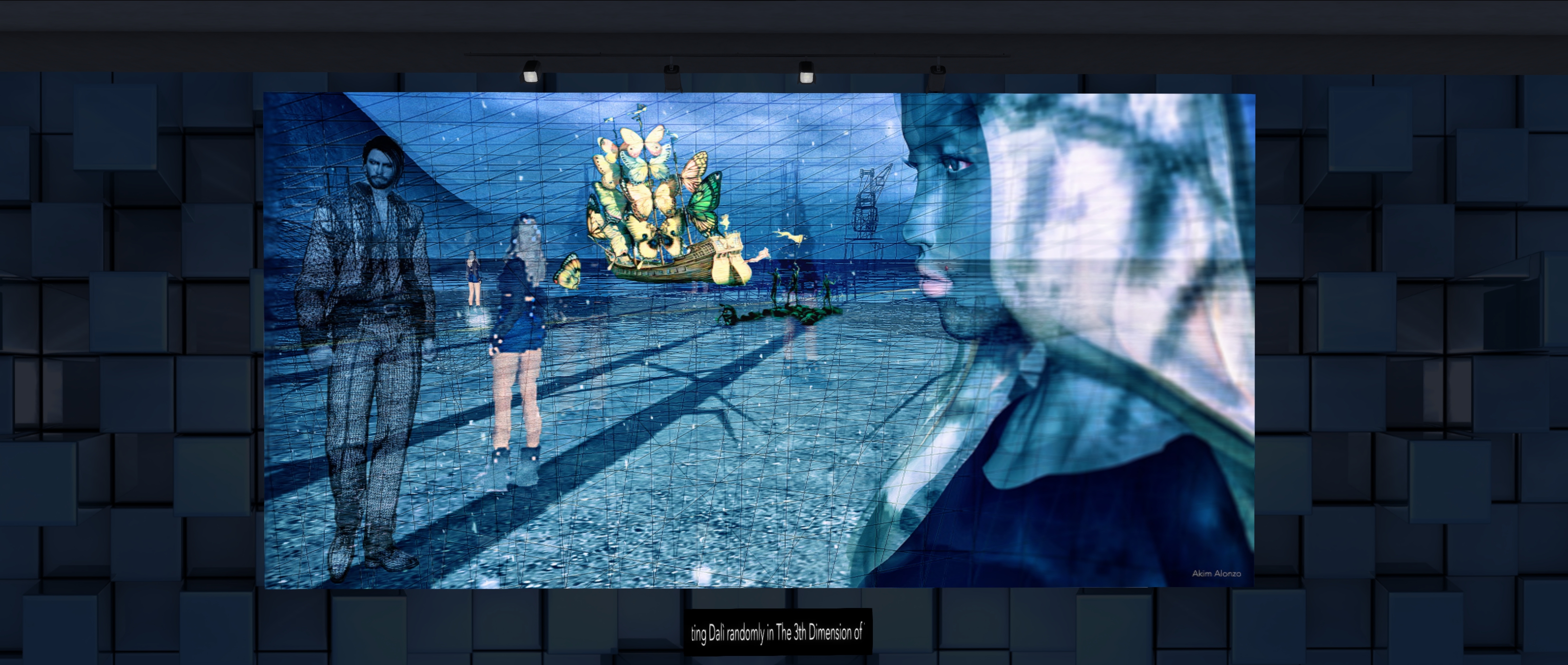
Officially opening on Saturday November 30th, 2019 at the Itakos Project, is A Homage to Surrealism, a dual exhibition by the gallery’s owner and curator, Akim Alonzo and PatrickofIreland.
Hosted in the gallery’s Blue Pavilion, the exhibition is split across two levels, with Patrick’s work on the lower level, and Akim’s on the upper, linked by reproductions of classic surrealist works by the great Salvador Dalí and Renè Magritte.
As a cultural movement, Surrealism encompassed multiple aspects of the arts: literature, music, film, theatre, sculpture, and – perhaps most famously – art itself – whilst also touching on politics. It has its roots in the early 20th century, rising to become a major form of expression in the 1930s – the period when the likes of Dalí and Magritte joined it.
Itakos Project: Homage to Surealism – Akim Alonzo
The movement carried within it its own manifesto, and was created with the aim of resolving “the previously contradictory conditions of dream and reality”. Surrealist work is most often marked by the use of juxtaposition and non-sequitur elements and ideas. Within the visual medium, this can result in the most startling, attractive and thought-provoking pieces of art, and this is very much the case with the pieces presented by PatrickofIreland and Akim.
The eleven pieces PatrickofIreland offers embrace originality, with some almost touching on hints of post-modernism. Each is richly expressive, strong in narrative and engaging to the eye. So much so, that picking out individual pieces would be unfair; all need to be seen and savoured for their depth and appearance.
Itakos Project: Homage to Surealism – PatrickofIreland
With his exhibition, Akim builds on his Matrix series, a selection of his art I’ve covered previously in these pages (see: Water and a Matrix: reflections on life by Akim Alonzo, April 2019). It is a series rich in story and interpretation within it lie questions of reality and identity, and the riddle of worlds within worlds, that allows them to stand as a collection in their own right.
Here, Akim’s work offers a unique perspective of both surrealism mixed with a strong sense of post-modernism and futurism – take the title of the series, for example, drawn as it is from the film series of the same name. This might appear to be a step away from the ideal of surrealism – until you consider that the Matrix franchise both presents a surreal world view and carries a manifesto (and warning) of its own concerning automaton and the superior reality offered by technology – just as surrealism carries its own manifesto drawing on the same themes – albeit one aimed at broadening horizons and opportunities. Thus, Akim’s works present both a visual representation of surrealism and an underlying thesis.
Itakos Project: Homage to Surealism – Akim Alonzo – note the Dalí reference
This is an engaging and provocative exhibition. It is already open to visitors, but those wishing to celebrate it with the artists might like to attend the official opening at 13:30 SLT on Saturday, November 30th, 2019, when the music will be provided by D.J. Ramel Markova.
Akim as also produced a video to introduce the exhibition, which I’ve taken the liberty of embedding below.










 Inara Pey: Living in a Modemworld