LL announces the Trust and Safety User Group

via Linden Lab

On Tuesday, June 9th, 2026, Linden Lab announced the launch of the Trust and Safety User Group, together with a note that there will be an increase in communications on Trust and Safety matters.

The new Trust and Safety User Group will effectively replace the former Governance User Group meetings (Governance effectively having been rolled in Trust and Safety). As such, the new user group will generally take place as follows:

  • The third Tuesday of the month between 11:00-12:00 noon SLT.
    • The first meeting will therefore be on Tuesday, June 16, 2026.
  • The meetings will be held at Linden Estate Services.
  • Meetings will be chaired by Melody Linden and at times feature other members of the Trust and Safety team and Linden guests.

Details on the user group are now available on the User Group Meeting page in the SL Wiki. It is not clear from the blog post as to the format of the meeting – Voice or local chat or a mixture; however, I would suspect the latter would seem to be the most likely.

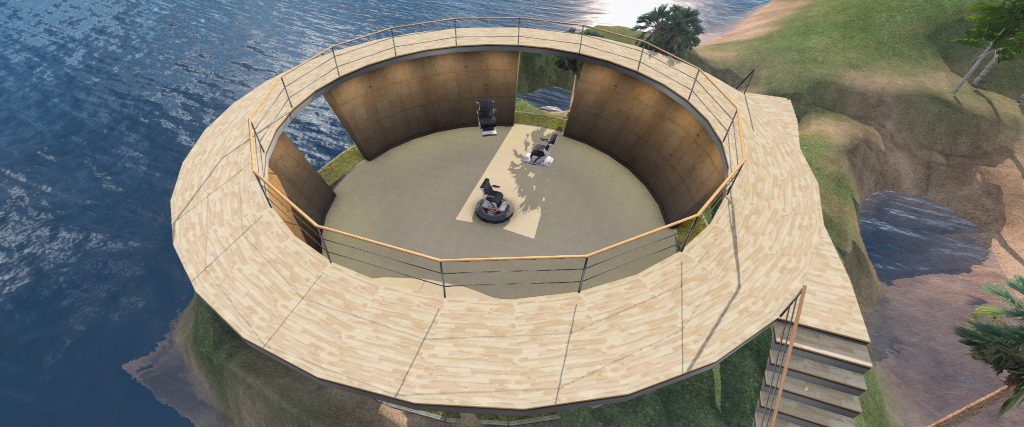
Linden Estate Services: Trust and Safety User Group meeting place

The user group is to provide a forum to discuss topics relating to safety and security in Second Life. However, please note that for matters of privacy and personal safety, the following will not be openly discussed by members of the team:

  • Reports of abuse, together with the outcome of investigations or actions taken in response.
  • Specific account information (including terminations, suspensions, warnings, etc.).
  • DCMA or copyright issues.
  • Internal processes.
  • ToS interpretations.

In addition, topics which are considered sensitive or outside of the scope of Trust and Safety may been declined comment / discussion during meetings.

Trust and Safety Office and Blog Posts

Alongside of the User Group meetings, the Trust and Safety announcement indicates that the Team:

  • Will begin releasing regular Community Blog posts to assist in keeping the community informed and educated on various topics. These blogs will include topics related to maintaining good account security practices, tips and tricks, and helpful how-to guides.
  • Will shortly be opening a new in-world Office Second Life users will be free to visit outside of the User Group meetings. Details on this will be made available once the Office has opened.

For further information, please refer to the official blog post: Trust and Safety Tuesdays.

Grauland’s Spires of Sector 7 in Second Life

Grauland: Spires of Sector 7, June 2026 – click any image for full size

It was time for a return to Jim Garand’s Grauland at the start of June to see what his creativity had brought forth since my last visit back at the start of 2026. I arrived to find that Jim has once more turned his mind to a sci-fi style theme which he’d entitled Spires of Sector 7.

On my arrival, I was immediately struck by the uniformity of the landscape: a rolling surround of hills covered in regolith-like material: lumps of grey rock and stone lying atop a grey covering of dust and dirt. Only the turquoise of the sky prevented me from uttering “Buzz” Aldrin’s words on seeing the surface of our Moon close-up: “Magnificent Desolation”.

Grauland: Spires of Sector 7, June 2026

Within these hills, the region itself offers a far more rugged landscape, flat-topped mesas and plateaux (courtesy of Cube Republic’s Sedimentary Rock Set, here given a new finish) rise from the undulating dusty/rocky ground, braking it up into gully and ravine-like cuts with broad, low-lying open areas.

Two of the larger plateaux have solar arrays standing to attention on their backs, three abreast on one with a third standing ahead of them on another mesa. All with their photovoltaic wings angled to the sky as if on parade. Slightly further away, the round face of a large antenna scans the sky from the top of another outcrop, the turning of its large dish suggesting it might be a radar system rather than a communications array or radio telescope.

Grauland: Spires of Sector 7, June 2026

The group of solar arrays and radar all appear to serve a squat, square blockhouse hunkered down between the rock formations, a long stairway descending one of its sloped sides from the landing pad sitting on its flat top.

The stairs make their way down the side of the structure alongside of a large opening above which an illuminated sign states Sector 7. Whether this is in reference to whatever planet / moon / planetismal on which the blockhouse is sitting as a whole, or simply referencing this region of said body is up to visitors to decide.

Grauland: Spires of Sector 7, June 2026

The massive pressure doors to the building stand open to reveal its interior offers a large garage area, together with modular units which together make up a research facility, a medical bay and living quarters. The fact that none of the modules is equipped with an airlock and the heavy pressure door into the blockhouse is open suggests the atmosphere of this world is breathable by humans.

The blockhouse is not, however the only sign of human habitation to be found here; off to the north-east stands a lone solar array looks to the sky. It sits above a glass-walled prefabricated habitation unit offering a comfortable residence away from the more techno-looking facilities within the blockhouse.

Grauland: Spires of Sector 7, June 2026

However, it’s not the signs of human habitation which give the setting its air of mystery; it is the vegetation and standing stones which occupy much of the landscape.

The former sit nestled between or sitting upon the rocky clusters, their vibrant reds and purples flowing over the grey landscape as if parts of it are on fire. Together with the rocky pools of water, they prove without a doubt that this place is far from arid and dead; that just below the rough, powdery and stone-strewn ground, life may well be abundant. Indeed, the presence of the water holes adds to the feeling that this is a landscape formed by the passage of water in times past, its passage resulting in the gently rounded sides of the mesas and plateaux, and its remnant now trapped in the pools, perhaps added to by rainfall or perhaps from subsurface springs.

The standing stones, meanwhile, speak to life of a different kind; one that most likely came along well after the water had shaped the landscape. They stand in ranks and groups right across the setting, both down on the stony ground and up on the raise tops of the rocky outcrops.

Grauland: Spires of Sector 7, June 2026

Whilst lacking perfectly vertical sides and geometric forms, these stones are far too regular in their shape to be the result of happenstance and erosion; they have more than likely been placed here. This is a view supported by the fact that five of them, clearly cut and shaped, sit atop smoothly rounded columns of rock to form a line resembling stone-cast torii gates or a marching line of henge trilithon.

Exactly who or what shaped and placed these stones is, alongside the study of the plant life, likely the reason for the research being carried out inside the bunker. There are no obvious clues to the creators of the stones – although the presence of hewn stone steps rising between and around some of the larger rock outcrops suggest those responsible for making and placing the stones may have been bipedal.

Grauland: Spires of Sector 7, June 2026

It is these kind of touches which so often make Jim’s regions designs so engaging; they add to the overall design by offering snippets of a back story not fully formed, inviting visitors to fill in the blanks and weave a tale to suit the landscape as they see it.

Surl Details

LL Announces Second Life Fee Changes: Reductions & Increases

via Linden Lab

Updated to cover additional LindeX fee changes.

On Monday, June 8th, Linden Lab announced a number of changes to fees charged for various services which are to start to be introduced from Monday, June 15th. These changes specifically apply to:

  • Changes to the fees applicable to buying Linden Dollars.
  • Reducing the tier charged for selected Private regions types.
  • Increases to the amounts charged for selected  Premium, and Premium Plus subscription payment plans.

The new region tier fees and minimum Linden Dollar order fee will come into effect from June 15th, 2026, and the new subscription fees take effect on applicable new and renewed subscriptions from Wednesday, July 8th, 2026.

LindeX fees for Purchasing Linden Dollars¹

To June 15th, 2026 From June 15th, 2026
Minimum fee for purchasing L$² US $1.49 US $0.49
Maximum fee for purchasing L$ US $14.99 US29.99

Note on the Above:

  1. See this blog post for details.
  2. According to LL, this should apply to smaller Linden Dollar purchases (roughly equivalent to $15 USD or less). The Percentage for fee calculations is increasing from 10% to 11%.

Selected Private Region Tier Reductions

From Monday, June 15th, 2026, monthly tier fees on the following Private region types will change as indicated:

Region Type Monthly Tier to
June 15th, 2026
Monthly Tier
from June 15th, 2026
Full Region with Land Capacity Bonus US $239 US $209
Full Region 20K Land Capacity US $209 US $199
Education (30K Land Capacity) US $129 US $105

There are no changes to Homestead or OpenSpace Private region tier, nor to Mainland fees.

Selected Subscription Fee Increases

From Wednesday, July 8th, 2026, the fee charged for Premium and Premium Plus subscriptions¹ will be changing:

Subscription Plan Currently From July 8th, 2026³
Premium MONTHLY US $11.99 per month US $12.99 per month
Premium QUARTERLY² US $32.97 per quarter US $35.97 per quarter
Premium ANNUAL US $99.00 per annum US $119.88 per annum
Premium Plus ANNUAL US $249.00 per annum US $287.88 per annum

Notes on the Above

  1. Plus and Premium Plus No Stipend subscription fees remain unchanged.
  2. Premium Quarterly is no longer offered for new subscription members, who only have the options of Premium monthly or annual billing.
  3. The new charges take effect from the start of your next billing cycle after this date.

Additional Links

2026 SL viewer release summaries week #23

Logos representative only and should not be seen as an endorsement / preference / recommendation

Updates from the week through to Sunday, June 7th, 2026

This summary is generally published every Monday, and is a list of SL viewer / client releases (official and TPV) made during the previous week. When reading it, please note:

  • It is based on my Current Viewer Releases Page, a list of all Second Life viewers and clients that are in popular use (and of which I am aware), and which are recognised as adhering to the TPV Policy.
  • This page includes comprehensive links to download pages, blog notes, release notes, etc., as well as links to any / all reviews of specific viewers / clients made within this blog.
  • By its nature, this summary presented here will always be in arrears, please refer to the Current Viewer Release Page for more up-to-date information.
  • Outside of the Official viewer, and as a rule, alpha / beta / nightly or release candidate viewer builds are not included; although on occasions, exceptions might be made.

Official LL Viewers

  • Default viewer  – 26.2.0.25386466510, May 19 -“flat” UI and font update – No change.
  • Second Life Lua Editor Alpha viewer 6.1.0.23768336784, April 29 – No change.

LL Viewer Resources

Third-party Viewers

V7-style

V1-style

  • Cool VL viewer Stable: 1.32.4.32; Experimental 1.32.5.2:  June 6 – release notes.

Mobile / Other Clients

  • No updates.

Additional TPV Resources

Related Links

Space Sunday: NASA’s nuclear electric plans, a goodbye to MAVEN and a New Glenn update

A composite image of SR-1 Freedom (rendering) approaching its orbit around Mars. Credit: NASA

Just over a month ago NASA announced plans to test a nuclear propulsion system on  mission to Mars. The news came as a surprise at the time, given it came a year after another nuclear propulsion project involving NASA had joined (along with the US Defense Advanced Research Project Agency (DARPA) had been cancelled.

Called DRACO (Demonstration Rocket for Agile Cislunar Operations), that project was formally initiated in 2021, with the intention of finally evaluating the deep space use of nuclear thermal propulsion (NTP) – that is, the use of a nuclear reactor to heat a propellant mass (usually liquid hydrogen) to generate thrust through the engine nozzles. Targeting a launch date in late 2027, DRACO was always ambitious, and inevitably ran afoul of technical and regulatory challenges starting it on the road to oblivion prior to funding via both DARPA and NASA being halted.

A rendering of the cancelled DRACO DRAPA / NASA nuclear thermal propulsion demonstrator mission. Credit: DARPA

The technological and regulatory problems faced by DRACO primarily concerned two key points. The first being the need for a liquid propellant (requiring substantial propellant mass and the additional mass and complexity of trying to keep the propellant in a liquid state through passive and active means in the full heat of the Sun).

More particularly, DRACO’s nuclear system was to be open cycle, meaning the liquid hydrogen would pass through the reactor system to turn it into the gas needed to propel the vehicle – irradiating it in the process. While people would likely not be too happy about a nuclear reactor spewing radioactive material into the upper atmosphere if it was used whilst in orbit around Earth, the bigger regulatory issue for DRACO was simply how could a system generating radioactive exhaust materials be safely tested on the ground?

Because of this, NASA’s new mission concept – called Space Reactor 1 (SR-1, with the vehicle itself to be called Freedom) instead intends to use nuclear electric propulsion. This is important because it allows the use of a closed cycle nuclear reactor – in this case a closed Brayton cycle fission reactor generating some 50 kW of electrical power. The key point here is that closed cycle reactors can avoid exposing a propellant to radiation, so the exhaust gasses exiting the engine is relatively “clean”. Thus, SR-1 theoretically avoids some of the regulatory issues faced by DRACO.

The “engines” in question for SR-1 are three 12 kW (nominal) Hall-effect thrusters. This in turn is important for a couple of reasons. Firstly, Hall-effect propulsion systems are well understood. Secondly, they utilise a far less volatile propellant than liquid hydrogen  – generally Xenon – which a) doesn’t need to be a liquid form,  and so b) avoids all the complexities of passive and active refrigeration. Both the use of the thrusters and the Xenon fuel therefore cuts out a lot of the technical complexities SR-1 could face when compared to DRACO. Further, SR-1 plans to use a propulsion module that has been in development for some time: the Power and Propulsion Element (PPE) which was to have been used on NASA’s (now cancelled) Lunar Gateway station. This could again help reduce the technical complexities designing SR-1 might otherwise face and it potentially gains political favour in that it offers a means to make good on some of the money already poured into Gateway.

A conceptual image with annotation of the proposed SR-1 Freedom vehicle. Credit: NASA

Nor is SR-1 intended to be a just demonstration of nuclear electric propulsion operating purely in near-Earth  / cislunar space as was the case with DRACO; it is to be a genuine deep-space mission, delivering a payload to Mars in 2029, In doing so it will prove the complete viability of nuclear propulsion in space missions. The payload in question is the Skyfall – and no, it has nothing to do with James Bond!

First revealed as a conceptual study in mid-2025 by NASA’s Jet Propulsion Laboratory (JPL) and AeroVironment, Skyfall is designed to build on the experience gained in flying the Ingenuity helicopter on Mars as a part of the Mars 2020 mission (in which it flew 71 times, often in support of the Mars 2020 rover Perseverance. As initially conceived, Skyfall would utilise six updated versions of the Ingenuity design to carry out a range of scouting flights across Mars. For the purposes of the SR-1 mission, the number of helicopters has been reduced to three – but how they will be delivered into the Martian atmosphere remains dramatic.

When first proposed, Skyfall was to carry six Ingenuity-class helicopter drones to Mars. As a part of the SR-1 mission the number has been scaled back to three. Credit: AeroVironment / NASA

In short, the mission will use a version of the capsule design used to deliver both Perseverance and the Mars Science Laboratory (MSL) rover Curiosity to Mars in 2021 and 2012 respectively. This will protect the three helicopters both on the journey from Earth to Mars and through the heat and buffeting of entry into the Martian atmosphere. After deploying its main parachutes to slow its decent through the atmosphere and jettisoning its heat shield, the capsule will extend a launch platform underneath itself, allowing the three helicopters to power-up their blades and take flight.

Once airborne, the three craft will operate in parallel, carrying out daily low-level flights of Mars, landing to both recharge their batteries and pass the Martian nights. Each will carry a small science package on board, including high-resolution camera to image the terrain they are overflying (to be used in the planning for future missions to Mars) and ground penetrating radar to reveal what lies beneath that terrain, be it rock, permafrost or deposits of water ice.

However, neither Skyfall nor SR-1 are certain to go ahead as planned. Firstly, there is the extremely tight development / test and construction time frame – just 30 months if NASA really is going to achieve a December 2028 / January 2029 launch for the combined mission.

More particularly for SR-1, there are multiple complications still to be overcome. Perhaps the biggest of these is the reactor feedstock: high-assay low-enriched uranium 235 (aka HALEU, with between 5% and 20% enrichment). While this is ideal for use in compact reactors, it requires a dedicated nuclear fuel cycle infrastructure for its production, and this infrastructure is both limited and already at capacity. Whilst the US government is trying to scale HALEU production, this is not going to happen in the short-term. As such, SR-1 could take considerably longer than 30 months to reach a state in which it might reasonably be launched.

Goodnight, MAVEN

On June 3rd, 2026 NASA confirmed their MAVEN (Mars Atmosphere and Volatile EvolutioN) mission had come to an end after a total of 11 years and the orbiter officially classified as lost. The news came some 6 months after all contact with the orbiter was lost and after a long series of attempts to r-establish communications and to understand what might have happened.

Launched in 2013 and commencing its science mission around Mars in 2014, MAVEN was intended to study the Mars atmosphere in an attempt to understand the composition of the upper reaches of that atmosphere and better understand the mechanism at work in stripping away that atmosphere – particularly that of the solar wind. For over 10 years, MAVEN revealed many of Mars’ secrets and the risks human visiting the planet will face (such as solar storms striking the planet quickly doubling surface radiation levels on a temporary basis).

An artist’s impression of NASA MAVEN spacecraft orbiting Mars. Credit: NASA

The first indication that something had gone wrong with MAVEN came on December 4th, 2025, when it failed to resume contact with NASA’s Jet Propulsion Laboratory (JPL) after a routine passage around the far side of Mars. Two days later, JPL received a data fragment from the orbiter, suggesting it was rotating in an unexpected manner and may have deviated from its orbital track. On both December 16th and 20th, 2025, MAVEN passed directly over Gale Crater and the rove Curiosity, but despite the scanning the sky with its high-resolution MastCam along the orbiter’s expected track, there was no sign of MAVEN.

Attempts to regain contact with the orbiter continued at regular intervals throughout early 2026, but by April it was evident that the chances of re-establishing contact were rapidly diminishing. Thus, on By June 3rd, NASA issued a statement terminating the mission while efforts to understand exactly what had gone wrong would continue. Currently, the favoured hypothesis is that MAVEN had an unexpected issue, lost its communications orientation with Earth and was unable to recover. This may have additionally caused the vehicle to drift out of its expected orbit and / or result in its solar arrays being no longer able to generate sufficient power to keep the vehicle’s batteries operating, so it likely ran out of power.

In all, it’s a sad end to a mission that achieved so much, especially given the longevity we’ve come to expect of Mars missions around or on the planet once they have safely entered orbit or landed.

Blue Origin: A Major Malfunction – Update

As per my previous Space Sunday article, on Thursday, May 28th, 2026, a Blue Origin New Glenn booster exploded with tremendous force (estimated to be the equivalent of 1 kiloton of TNT), levelling much of Launch Complex 36 (LC-36) at Canaveral Space Force Base, California, the only facility in the world capable of handling the rocket.

Based on the available images and information available at that time, and as I noted in that article, it seemed that LC-36 would be out of action for at least a year; something that could have major ramifications for Blue Origin and NASA’s Artemis programme. However, June 2nd, 2026, Blue Origin CEO, Dave Limp took to social media with an update on matters which included some surprising news and ended with an even more surprising prediction.

Blue Origin’s launch facilities at LC-36(A) seen in 2025 from the roof of the vehicle and payload integration building, showing a New Glenn rocket atop the transporter-erector vehicle. Credit: Blue Origin

On summary, Limp indicated that:

  • The propellant farm alongside the launch pad weathered the explosion reasonably well and will not require significant rebuilding / replacement (although images have revealed a couple of the tanks do have significant denting).
  • The damage done to the main vehicle and payload integration building appears to far less severe than reports suggested, and the water tower serving the deluge / sound suppression system is largely undamaged.
  • Despite receiving some major damage near its base, the surviving lightning conductor tower can likely be repaired without being demolished – a comment which drew multiple surprised responses given the apparent extent of the damage.
  • Rather than building a new transporter-erector (TE – the 1800-tonne vehicle used to move New Glenn from the vehicle and payload integration building to the launch pad and then act as the rocket’s launch tower), the company will now pivot to a new vertical launch platform / transporter, something they were already planning to do prior to the explosion.

Most surprisingly, however, was Limp’s prediction that Blue Origin will resume New Glenn operations by the end of 2026. Given all that has to be done, both in terms of the rebuilding work at LC-36 (to say nothing as to how long investigations into the vehicle loss will take & what might yet be required to clear New Glenn to resume flights, it is fairly hard to see how this can be achieved. As such, a lot of eyes will be watching Blue Origin and LC-36 very closely over the next 6-7 months.

2026 week #23: SL CCUG meeting summary

Hippotropolis Campsite: venue for CCUG meetings
The following notes were taken from:

  • My chat log and audio recording  of the Content Creation User Group (CCUG) meeting of Thursday, June 4th, 2026.
  • Please note that this is not a full transcript of either meeting but a summary of key topics.
Table of Contents

Meeting Purpose

  • The CCUG meeting is for discussion of work related to content creation in Second Life, including current and upcoming LL projects, and encompasses requests or comments from the community, together with related viewer development work.
    • This meeting is generally held on alternate Thursdays at Hippotropolis and is held in a mix of Voice and text chat.
  • Dates and times of meetings are recorded in the SL Public Calendar.

Official Viewer Status

Viewer Notes

  • Viewer 26.3.0 (performance improvements) remains the priority for issue and later promotion. This viewer will include async inventory loading, which should further help with loading very large inventories; together with new texture streaming updates which should help those on SL minimum specification computers with constrained VRAM.
  • Beyond this, there are on-going discussions within the Lab as to priorities for the viewer train going forward.
    • This might see the Lua Editor and the Linux updates for the viewer get merged into the Develop branch. However, if this does happen, it should not be taken to mean Lua is on the cusp of being formally released; rather it will will mean that the viewer side gets released within a viewer ahead of the back-0end support going grid wide (the latter loosely seen as being in the late summer at the earliest).
    • Setting feature flags within the viewer to gatekeep upcoming features and functionality until such time as it is generally available (as would be with the Lua code mentioned above) is also being discussed.
  • The Graphics Care Package Viewer (GCP) is effectively “on hold” for the present. However, it might see some additions made to it, such as the glTF transmission work (which will depend on the overall performance impact).
  • Maintenance releases are also in development. As has been indicated in past CCUG and Open Source meetings, these will be much smaller updates to the viewer, aimed at offering a more limited number of fixes  (e.g. the top 5 or 10 issues / viewer crashers) than has been the case with past maintenance viewer updates. The first of these is probably going to be viewer 26.3.1 (i.e. following 26.3).

General Discussions

  • Kyle Linden confirmed the Second life Creation portal (/Getting Started with Scripting) has seen a lack of outward communications from LL, but the Lab definitely wants to proceed with building it out and does want to receive contributions. To this end he will be contacting those known to have produced documentation on things like Lua, and this work will be progressing in the near future.
  • It was requested that the upcoming rendering updates within the GCP viewer all have options to disable them if people do not wish to use them.
    • Geenz pointed out that rather than options to disable, all of the items with could impact performance (such as glTF transmission) will have drop-down options within Preferences, allowing their quality, to be lowered, limiting any performance impact. However, some capabilities (e.g. glTF metallic) will remain enabled at all times, as they are viewed as essential to content.
  • A general conversation about possibly reintroducing texture sampling / supporting glTF texture filtering, plus looking beyond OpenGL together with upscaling resolution via the likes of AMD’s FSR, Nvidia’s DLSS, Intel’s XeSS, etc. See here for more), with Geenz noting the with the deprecation of OpenGL, LL is getting increasingly constrained as to what they can do, although FSR is a “maybe”, as there has been some backporting of support to OpenGL.
    • The above being said, LL is currently still looking at API options (e.g. Vulkan / Metal /  WGPU (the latter being seen as  suiting a wider mixed of older hardware can address multiple APIs)), although the focus at the moment is on finding a good inflection point to determine the direction which should be taken (such as Apple finally finally ending their support of OpenGL, rather than deprecating it but still supporting in through Mac Os 14 Sonoma).
  • Conversations not directly related to content creation included Nvidia’s new CPU/GPU ARM chips and how they may affect hardware (and Windows support) in the future; availability of Second Life OpenSpace regions; whether Second Life can have regions larger than 256×256 sq m (not on the horizon).

Next Meeting