2022 SUG meetings week #43 summary

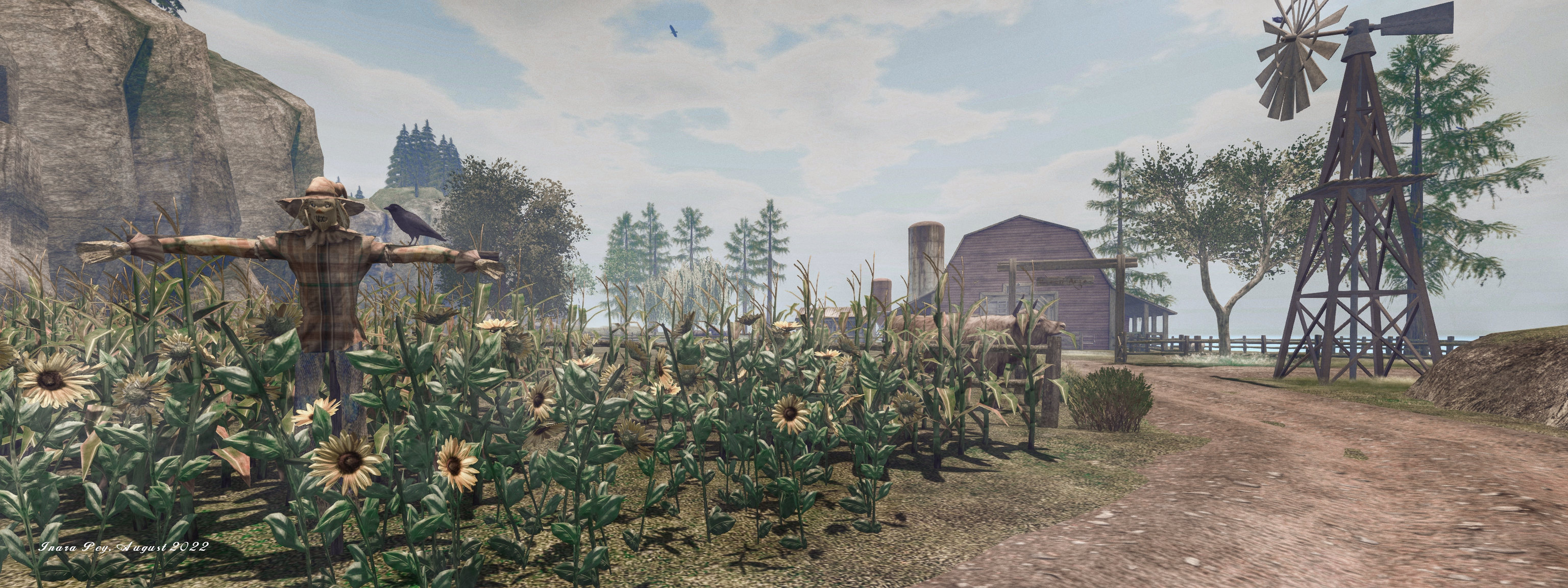
Green Acres, August 2022 – blog post

The following notes were taken from the Tuesday, October 25th, 2022 Simulator User Group (SUG) meeting. They form a summary of the items discussed and is not intended to be a full transcript. A video of the entire meeting is embedded at the end of the article for those wishing to review the meeting in full – my thanks to Pantera for recording it.

Server Deployments

Please see the forum deployment thread for the latest updates.

  • On Tuesday, October 25th, the Main SLS and Events channels were restarted without any simulator update being deployed.
  • On Wednesday, October 26th, the simhosts on the RC channels were to be updated with the new Linkset Data capability.
    • This feature works similarly to Experience Key-Value store, but the data lives with the object that sends and receives the data. Only scripts in the same linkset will be able to read the data written with this feature.
      • Further information can be found in the SL Wiki.
      • The capability can also be discussed in the SL forums.
    • However, a late-breaking issue revealed by the Lab’s QA team means that the deployment mat not take place until week #44 (commencing, Monday, October 31st).
    • If delayed, this potentially allows a further week for additional updates to the capability.
    • I will have a special Guest Article by Neobokrug Elytis explaining this new capability and its significance after the deployment has been made.

Available Official Viewers

On Tuesday, October 25th, Linden Lab release the Maintenance N RC viewer, version 6.6.6.575990. This is an urgent fix for transparency “alpha” blending issues. In cases of many layers of textures that included transparencies, this would cause some of the lower layers to not render at all.

The remaining official viewer pipelines stay as follows:

  • Release viewer: version 6.6.5.575749 – formerly the Maintenance M RC viewer –  promoted October 20.
  • Release channel cohorts :
    • Maintenance P (Preferences, Position and Paste) RC viewer version 6.6.5.575055 September 19.
  • Project viewers:
    • Puppetry project viewer, version 6.6.3.575529,  issued on October 12.
    • Performance Floater / Auto-FPS project viewer, version 6.6.5.575378, October 4.
    • Love Me Render (LMR) 6 graphics improvements project viewer 6.6.2.573263, July 21.

Script Compilers

  • Rider Linden raised the question about removing the LSO bytecode compiler (non-Mono), or forcing all compilers to use Mono.
  • This would not prevent compiled LSO scripts from running using the LSO VM, it would just prevent further scripts being compiled outside of the IL → Mono compiler.
  • The main reason for considering this approach would make it much easier for LL to expand LSL without having to drag the old version along.
  • Currently, this is an idea the Lab is considering – not something being actively pursued; but based n the feedback from the meeting, it may become an active project – if so, the Lab will make clear what is being done in advance through the forums and seek broader feedback from creators / scripters., and proving the LSO runtime remains in place, as noted above.

In Brief

  • BUG-232792 “llLinksetData batch notifications” has been raised and is awaiting formal review by the Lab at the time of writing. This would only be implemented once the upcoming LSD capability has been deployed.
  • There was a general question on the DMCA process, which actually falls outside the scope of the SUG meeting.
    • A  problem here is that with the suspension of the Governance User Group meetings, there is no public forum where issues relating to content theft / the DMCA process can be directly discussed with members of the Governance Team.
  • BUG-232037 “Avatar Online / Offline Status Not Correctly Updating” – LL believe that have a “handle” on the where the issue is originating, but there has been no time to take a deep dive into the actual cause as yet

Linden Lab updates Second Life Terms and Conditions

via Linden Lab

On Tuesday, October 25th, Linden Lab announced changes to the Second Life Terms and Conditions, which will formally come into effect from November 1st, when users will have to accept them in order to access Second Life.

These updates appear to be in the light of the changes to Tilia LCC’s status following Linden Lab’s partnering with JP Morgan Payments (see the official Tillia notice on this here, and my own blog post here).

As noted within the official SL blog post on the update, the changes are specifically related to:

  • A  clarification of certain functions associated with the LindeX as well as the terms applicable to orders placed on the LindeX.
    • These changes can be found in section 3.2 Second Life may offer a Linden Dollar exchange (the “LindeX exchange” or “LindeX”)
  • The addition of a new section to the Terms and Conditions, describing the terms applicable to your use of Stored Value Accounts, including your relationship with Tilia LLC.
    • These  changes can be found in section 4. Stored Value Account, comprising four sub-sections:
      • Section 4.1 – outlining the general relationship between Second Life and Tillia LLC, and the definition of a “Stored Value Account”.
      • Section 4.2 – covering the specific relationship between Tilia LLC and your ability to purchase and hold Linden Dollars on account, as noted in section 3 of the Terms and Conditions.
      • Section 4.3 – which will be of particular note to those who (regularly or otherwise) process credit out of Second Life (aka “cashing out”) Linden Dollar values to fiat money values.
      • Section 4.4 – the overall status of funds held within a Stored Value Account and their relationship with Tilia LLC.

These changes do not appear to make significant changes to how people use Second Life or obtain Linden Dollars. They do, however, better outline the process credit operation, including general time frames involved, although reference should also obviously be made to any documentation offered in respected of the actual process credit operation and within the Tilia Terms of Service relating to same.

Questions on the changes should be addressed to SL Billing Support directly; I cannot respond to questions through these pages, and is unlikely that specific questions posted in the comments below will be seen by members of the SL billing team.

Related Links


A gallery of dreams in Second Life

Dreamd Gallery, October 2022

In a recent Exploring Second Life travel article, I wrote about Elephant Island, the 3-region location designed by Syx Toshi and his SL partner Bryn Toshi (Bryn Bulloch) – see Roaming Elephant Island in Second Life. During that visit, I mentioned Dreamd, the sky gallery home of Bryn’s hybrid art, and promised I offer a piece on the gallery itself- so here it is!

Hybrid art, for those who may not be familiar with the term, is a contemporary art movement which might be defined as, “embracing the convergence of science, technology, and the arts. The term was likely first coined in 2010, although as a movement, hybrid art predates the term by a number of years. Within it, artists work on a trans-disciplinary basis, initially integrating photography, film, radio, television, computers, and the internet into their artistic endeavours.

Dreamd Gallery, October 2022

Over the past decade +, the movement has grown to embrace the natural and physical sciences biology, genetics, particle physics, astronomy, geology, etc.), established and emerging technologies (computer sciences, data processing, robotics, AI, data visualisation, facial recognition, biometrics, etc.), to combine them with traditional art forms – painting, photography, sculpture – to develop art which may contribute to or even critique the fields of research on which it draws, as well as providing unique means for artistic expression. As an art form, it covers both 2D and 3D art. In addition to being regarded as expressive and experimental, it is an internationally recognised genre of art celebrated through festivals and competitions the world over.

For Bryn, Hybrid art is a means of self-expression utilising traditional photography and combining it with AI tools and “traditional” digital processing software such as Photoshop and Procreate to produce digit images that are unique in form and captivating in style. These may not be as bleeding-edge as the more modern forms of hybrid art, but they nevertheless allow Bryn to produce art that moves beyond just digital manipulation to present insight into her imagination.

Dreamd Gallery, October 2022

In all, the gallery comprises four halls. In the first is what might be regarded as the most “hybrid” of Bryn’s work in terms of their imaginative spread, combining nature shots with those of space exploration. In the second hall is a series of pieces celebrating the natural world, again produced through digital means – including the use of algorithms (at least, going by some of the fractal-like patterns evidenced in some of them. While the third hall is currently noted as “WIP”, the forth contains a series of stunning portrait images, with a depth of realism that is genuinely astounding to the eye.

Taken as a whole, each and every image offered within the gallery has a depth and beauty that is genuinely captivating, while the gallery itself occupies a sky platform that sits as a natural extension to the region below. Whether visited in its own right, or as a part of a visit to all three regions. Dreamd gallery makes for a more than worthwhile visit and I do look forward to seeing how Bryn’s work develops and the themes she embraces.

Dreamd Gallery, October 2022

SLurl Details

2022 viewer release summaries week #42

Logos representative only and should not be seen as an endorsement / preference / recommendation

Updates from the week through to Sunday, October 23rd, 2022

This summary is generally published every Monday, and is a list of SL viewer / client releases (official and TPV) made during the previous week. When reading it, please note:

  • It is based on my Current Viewer Releases Page, a list of all Second Life viewers and clients that are in popular use (and of which I am aware), and which are recognised as adhering to the TPV Policy. This page includes comprehensive links to download pages, blog notes, release notes, etc., as well as links to any / all reviews of specific viewers / clients made within this blog.
  • By its nature, this summary presented here will always be in arrears, please refer to the Current Viewer Release Page for more up-to-date information.
  • Note that for purposes of length, TPV test viewers, preview / beta viewers / nightly builds are generally not recorded in these summaries.

Official LL Viewers

  • Release viewer: version 6.6.5.575749 – formerly the Maintenance M RC viewer –  promoted October 20th – NEW.
  • Release channel cohorts::
    • No updates.
  • Project viewers:
    • No updates.

LL Viewer Resources

Third-party Viewers

V6-style

  • No updates.

V1-style

Mobile / Other Clients

  • No updates.

Additional TPV Resources

Related Links

Roaming Elephant Island in Second Life

Elephant Island, October 2022 – click any image for full size

Note: For the month of October, Elephant Island is in places dressed for the Halloween season. As such, parts of the setting may appear slightly differently to some of the images in this article, having a mix of fog, mist, pirates, ghosts, fire and other mysterious elements and items.

It was off on a tropical safari for me recently, when I decided to take a trip to Elephant Island, the latest region build by Syx Toshi and his SL partner Bryn Toshi (Bryn Bulloch).

Elephant Island, October 2022

This is an extensive setting, covering three regions –  a Full region and two Homesteads – all set to present the sense of a coastal setting on a mysterious island marked by a tall mountain range. The latter are formed by off-region surrounds which sit to the north of the three regions, giving them a north-south orientation along their combined length, the southern sides of the regions forming a sweeping arc of sand backed by tropical grassland, tress and high rocky bluffs.

At first glance this appears to suggest that with the broad expanse of water on their south sides, the three regions may be a short, easy exploration – but this is far from the case, as visitors quickly find out once they leave the welcome of the main landing point.

Elephant Island, October 2022

The latter sits on the eastern headland of Elephant Island’s curving bay, a small wharf extending over the waters of the beach from a makeshift fishing shack / welcome area where visitors can find maps of the local area showing trails that can offer a good starting point for explorations – although which route you take is entirely up to you.

What is clear from the outset is that the terrain here is clearly divided into two major parts. To the east the land rises sharply into rocky highlands cut through with a deep gorge. A giant elephant, carved from the living rock stands at the feet of these high bluffs, all four legs plants firmly on a table of rock as it looks out over the river mouth that opens from the gorge to flow past the landing point and its shack, emptying into the bay.

Elephant Island, October 2022

The majority of the paths shown on the maps wind up through these highlands, and one of these routes put me somewhat in mind of the giddying climb up Sigiriya, the magnificent  ancient rock fortress located within the Cultural Triangle of Sri Lanka, and a place I have had the good fortune to visit half-a-dozen times when visiting that country.

In this there is little in the way of direct similarity; but the manner in which the path climbs upwards, albeit it wooden in nature rather than hewn into the rock, clinging to the sides of the rock face and winding around it and passing by natural waterfalls just put me in mind of King Kashyapa’s winter and summer palaces at the bottom and top of the rock respectively.

Elephant Island, October 2022

Unlike Sigiriya, these heights are not topped by the grounds of a former great palace, but instead are given over to more tropical woodland and grasses, home to a number of local destinations, from statues to look-out point s to zip line and bridges spanning the gorge and – for those who find it – the way into secret caverns.

Across the gorge are more climbs and walkways to be found, the hilltops crowned her by a temple devoted to the Hindu god Gnash – one of a number of shrines in his honour, and fully fitting the setting’s elephant theme.

Elephant Island, October 2022

Westward from the landing point, the bay curves through and around the two homestead regions. These are in places backed by high cliffs as the bay curls westwards, before highlands once again take over. These uplands are in part home to a private residence, the path onwards either passing to the north behind the house and its garden, or along the beach before it.

Those wishing to explore further should use the north side path in other to reach the western heights – unless a wade through water isn’t minded – to reach the western heights.  These have further attractions: places to sit, another temple and so on – and its own secrets -look for the magic door. However, I’ll leave you to explore these and instead point to the Dreamd gallery.  Occupying a sky platform, this offers a selection of engaging hybrid art by Byrn – a place I’ll be covering in more depth in an upcoming Art in Second Life piece.

Elephant Island, October 2022

All I’ll say for now is that with its expansive reach, wildlife, locations and general daytime ambience (you may need to set your own EEP whilst the Halloween dressing remains in place); Elephant Island is a richly engaging setting.

SLurl Details

All three of the Elephant Island regions are rated Moderate.

Space Sunday: a rover and some astronomy

After a treacherous journey, NASA’s Curiosity Mars rover has reached an area that is thought to have formed billions of years ago when the Red Planet’s water disappeared.
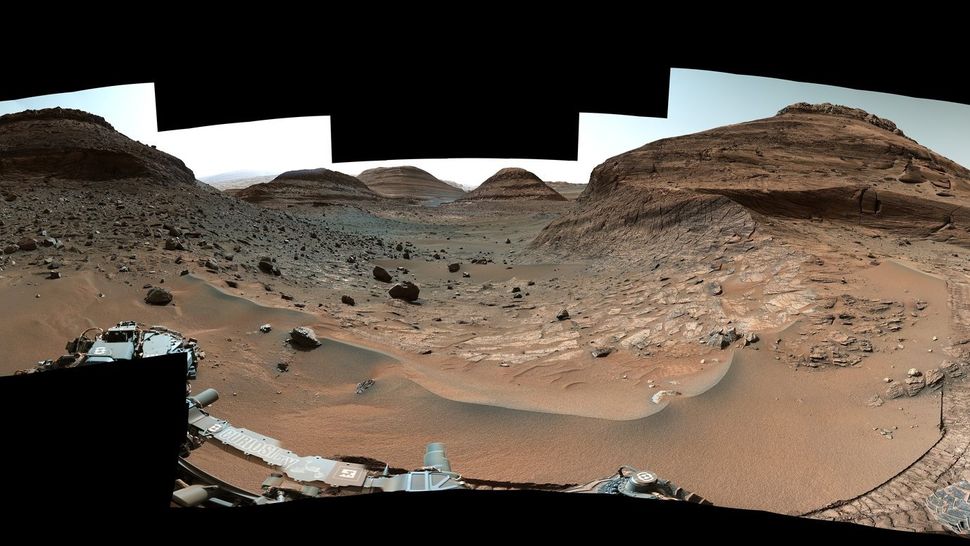
Lying part-way up the slopes of “Mount Sharp”, the mound of material deposited at the centre of Gale Crater (and formally called Aeolis Mons), is rich in salty minerals scientists think were left behind when the streams and ponds on the slopes of the mound finally dried up. As such, this region could hold tantalizing clues about how the Martian climate changed from being similar to Earth’s to the frozen, barren desert we know today.

These salty minerals were first spotted from orbit by NASA’s Mars Reconnaissance Orbiter before Curiosity arrived on Mars in 2012, and that discovery marked the deposits as a prime target for the rover to examine.  However, such is the rich diversity of rocks and minerals making up “Mount Sharp”, all of which have been subject to examination by the rover, it has taken the mission almost a decade to reach this “prime” target.

Even so, before Curiosity could obtain any samples from the site, the rover faced a couple of challenges.

The first lay in the fact that the rover’s position on “Mount Sharp” meant that the mission team had to drive and position the rover to ensure its antenna could remain aligned with the various orbiters it needs to use to communicate with Earth; this made navigating to the deposits a challenge, as has ensuring it can reach rocks that might yield interesting samples.

A view through “Paraitepuy Pass” captured by the MastCam on NASA’s Curiosity rover on August 14th, 2022, the 3,563rd Martian day, or sol, of the mission. Credits: NASA/JPL / MSSS

The second required further tests had to be carried out on the rover’s sample-gathering drill to ensure it would handle the stresses in cutting into the region’s rocks. As designed, the drill was intended to use a percussive action as it drilled into any target- but as I’ve reported in these pages, this hammering action started to affect the drilling mechanism as a whole, so a new algorithm was created and uploaded to the rover to minimise any use of the percussive action.

Because of this, the mission team now approach each sample gathering operation with an additional step: after scouring the surface of a sample rock to remove dust and debris, the team then position the drill bit against the rock and attempt to scratch the surface – any resultant marks would be a good indication the rock is soft enough to be drilled without the need for the hammer option.

In the case of this rock – nicknamed “Canaima” – no marks were left, indicating it might prove a difficult subject. However, a further test with the drill head turning revealed it could cut the rock without the use of the hammer action, so on October 3rd, 2022, Curiosity successfully obtained its 36th sample for on-board analysis.

A MastCam view of the 36th successful sample hole Curiosity has drilled, this one on the sulphate-rich rock dubbed “Canaima.” Inset: the hole as imaged by the Mars Hand Lens Imager (MAHlI) mounted on rover’s robot arm, along with the drill mechanism. These mages were taken on October 3rd, 2022, the mission’s 3,612th Martian day, or sol. Credits: NASA/JPL / MSSS

The route to this sulphate-rich area also required Curiosity pass through a narrow, sand-rich location dubbed “Paraitepuy Pass”, bordered on either side by slopes the rover could not drive over or along. Such is the nature of the sand the rover took over a month to traverse the pass, moving cautiously in order to avoid getting bogged-down. This meant that the rover celebrated its 10th anniversary crossing the pass.

The challenges also haven’t ended; the salty region comprises rocky terrain that is so uneven, it will be difficult for Curiosity to place all six wheels on stable ground. This isn’t a problem when on the move, but it could limit science operations in the area: if all of the rovers wheels are not in firm contact with the ground under them, operators won’t risk unfolding its instruments-loaded robot arm in case it clashes with jagged rocks.

Even so, the rover still has a lot of opportunities for science and discovery as it continues to climb “Mount Sharp”.

JWST Wows, HST, Chandra and IXPE Respond

It is now 100 days since the James Webb Space Telescope commenced operations, and in their most recent updates, NASA released a stunning image the observatory captured of the iconic Pillars of Creation.

The Pillars of Creation as imaged by the James Webb Space Telescope. Credit: NASA / ESA

Located in the Serpens constellation, roughly 6,500-7,000 light-years from Earth, the Pillars are gigantic “elephant trunks” of interstellar gas and dust, a birthplace of new stars,  constantly, if slowly being changed by the very stars born within them. They were imaged by the Hubble Space Telescope (HST) in 1995, the image becoming famous the world-over despite HST imaging them again it 2014. However, the image developed by JWST’s Near Infra-red Camera (NIRCam) eclipses the Hubble image, revealing the pillars and their surroundings in incredible detail.

Newly formed stars lie outside of the column. Seen merely as a few bright red orbs with strong diffraction spikes radiating from them, they are reveal by JWST as in their truer colours – blues, yellows, whites, indicative of their spectral classes, a veritable sea of stars, These are the stars that are causing the pillars to change and collapse as a mix of their gravities and radiative energy influence their form.

The Pillars of Creation as images by the Hubble Space Telescope in visible light (1995 – left) and by the James Webb Space Telescope in the near infra-red (right – 2022). Credit: NASA / ESA

Also visible along the edge of the pillars are wavy forms, the ejections of gas and dust from stars that are still forming. The crimson glow seen within some of these wave-like forms is the result of energetic hydrogen molecules interacting with the supersonic outbursts of the still-forming stars. Within the cloudy forms of the pillar are red points of light – newly-formed stars that are just a few hundred thousand years old, the light just stars to break through the surrounding clouds of dust and material.

Around all of this is a translucent blue glow, a mix of dust and gas known as the interstellar medium, found in the densest part of our galaxy’s disk. It serves to block the view of the deeper universe, bringing the Pillars of Creation to the fore.

This new view of the Pillars will help researchers revamp their models of star formation by identifying far more precise counts of newly formed stars, along with the quantities of gas and dust in the region. Over time, they will begin to build a clearer understanding of how stars form and burst out of these dusty clouds over millions of years.

Continue reading “Space Sunday: a rover and some astronomy”
