Viewer release summary 2013: week 13

This summary is published every Monday and is a list of SL viewer / client releases (official and TPV) made during the previous week. When reading it, please note:

  • It is based on my Viewer Round-up Page, a list of  all Second Life viewers and clients that are in popular use (and of which I am aware) and which are recognised as adhering to the TPV Policy
  • By its nature, this summary will always be in arrears
  • The Viewer Round-up Page is updated as soon as I’m aware of any releases / changes to viewers & clients, and should be referred to for more up-to-date information as the week progresses
  • The Viewer Round-up Page also includes comprehensive links to download pages, blog notes, release notes, etc., as well as links to any / all reviews of specific viewers / clients made within this blog.  

Updates for the week ending: March 31st, 2013

  • SL Viewer updates:
      • Development viewer rolled to 3.5.1.272979 on March 28th
      • Sunshine (server-side baking project) update to 3.4.5.273172 on March 29th
  • Niran’s Viewer updated to  2.1.5 on March 30th – core updates: UI updates, including build floater revisions, HTML-type tagging in text for bold, underlined, coloured text, snapshot floater updates – release notes
  • Cool VL updated on March 29th to:
  • Metabolt updated to version 0.9.66.0 (Beta) on March 31st – core updates: numerous radar updates; teleport updates, preferences updates & enhancements; UI updates – release notes
  • Radegast updated to 2.12 on March 31st – core updates – maintenance update for Server-Side Baking / Appearance – release notes

Discontinued Viewers

  • Phoenix – Development and support officially ended December 31st, 2012
  • Zen – Development and support officially ended January 27th, 2013.

Related Links

Start April with a one-day offer from the Firestorm team!

It’s the start of April, and for ONE DAY only, the Firestorm team have a very special offer for SL users.

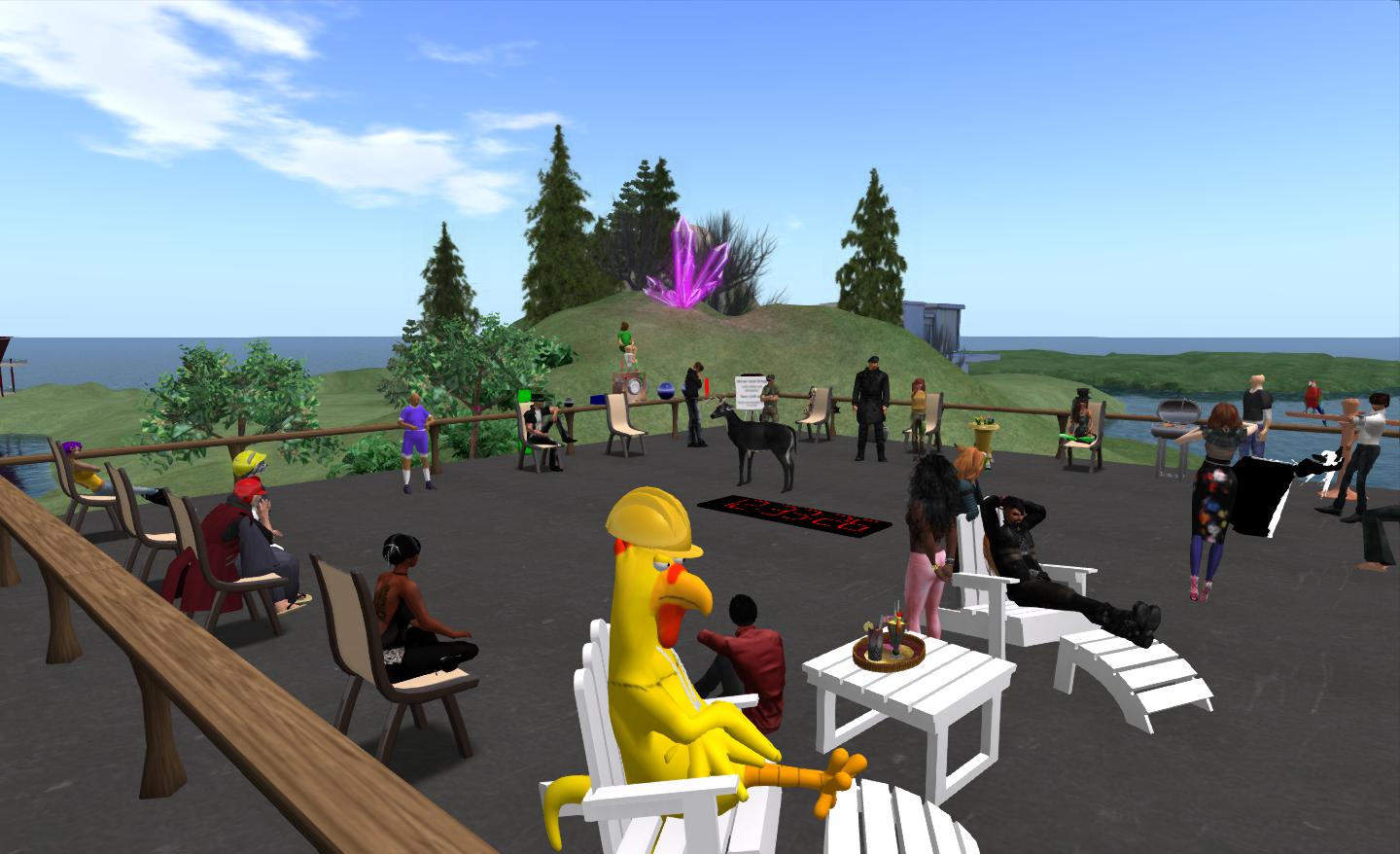
Firestorm Mobile brings the power for Firestorm to any mobile device – even if it doesn’t have graphics!  So don’t delay find out more about this first-of-the-month offer for April in this official Firestorm video!

With thanks to Jessica 🙂

SL projects update week 13 (2): server releases, HTTP, and viewer notes

Server Deployments Update

On Tuesday March 26th, the SLS (Main) channel received the maintenance package previously deployed to BlueSteel and LeTigre in week 12, which includes a fix for a crash mode  – release notes.

On Wednesday March 27th, the RC channels received the following packages:

  • BlueSteel and LeTigre: a new maintenance package, which includes:
  • Magnum: should receive the same update as the Main channel (i.e. the package deployed in week 12 to BlueSteeel and LeTigre), otherwise retaining the updates and fixes deployed to it in week 12 – release notes.

As usual, there is a forum discussion thread for comments / feedback on the deployments.

Some issues have been reported following the Main channel deployment, but nothing which warranted any major action on LL’s part. Some reported noticeable improvements as a result of the pathfinding update.

Week 14 Deployments

While a final decisions has yet to be made on deployments for the week commencing Monday April 1st, Maestro Linden, hosting the  Server Beta group meeting on Thursday March 28th, indicated that the Magnum updates (which are all interest list related and include the vehicle region crossing fix for BUG-1814) is currently his personal favourite to be promoted to the Main channel and BlueSteel / LeTigre in week 14. If this proves to be the case, then he’s liable to have a lot of SL vehicle users very happy with him – myself included!

SL Viewer – CHUI, SSB and More

The SL development viewer moved to release 3.5.1.272979 on Thursday March 28th. As there are no release notes associated with development viewer releases, it is not always easy to determine what a new release contains; however, from tests, it would not appear that the release contains the viewer-side Server-side Baking (SSB) code.

The next major update to the release viewer is slated to be the Communications Hub User Interface (CHUI), which should be arriving “any time now” according the last-known plans from LL.

As previously noted, once CHUI reaches the release viewer, SSB will move to the beta viewer and make an appearance in week 14 – possibly (and coincidentally) on April 1st. Once in the beta viewer, it will remain there for up to four weeks (unless significant bugs are found), and no less than two weeks, prior to it moving to the SL release viewer. It is unlikely that any SSB server-side deployment will commence on the Main grid until after SSB has reached the release viewer – however, this is subject to final planning, and there may be a limited release of the server code while SSB is still in the beta viewer.

Work is still progressing on the materials code, and there is still no date for the release of a project viewer.

HTTP Project

On Wednesday 27th March, Monty Linden sent out an e-mail indicating the current beta testing on Aditi for his new HTTP capabilities will be drawing to a close “shortly”, and that anyone interested in carrying out tests in the three channels should do so sooner rather than later. Precisely when the beta test will close is unclear, but from Monty’s e-mail it would not be unreasonable to assume it will be within a week.

The next stage for this work is for it to progress to a Release Candidate channel – which will seem the “normal” configuration for HTTP services currently on channel DRTSIM-203 on Aditi carried forward to the selected RC channel(s). While there is no date as to when the HTTP work will reach a RC channel, Monty will be looking at the deployment as a more in-depth load test opportunity and seeing how well the new services might scale.

Other Items

Advanced Creation Tools Permissions

July saw the launch of the first phase of the Advanced Creation Tools, also referred to as experience tools. Following problems with an initial deployment of the tools in June, which resulted them being exploited as a means of griefing, the “first phase” of the release saw the tools implemented with existing permissions system in place, with the intention of updating the permissions system to allow the tools to be more fully used “in the future”.

After hearing that the work on the permissions system was again getting attention having been “stalled” for a time, there has been something of a further absence of news on progress. However, speaking at the Server Beta meeting on Thursday March 28th, Maestro was able to confirm the permissions system is currently on internal testing at LL – so it might be showing-up on Aditi (or in an RC deployment) in the not-so-distant future.

Scripted Avatar Rotation

The subject of scripted avatar rotation has come up for discussion at the last couple of server-related meetings. The idea is to use a scripted object to force the avatar to face a specific direction. It is not a new request, having been the subject of several JIRA in the past, most notably SVC-56, which also provides some suggestions as to how it might be achieved. Being able to turn the avatar to face a specific direction has a number of potential benefits – it could, for example, be used to have an avatar face a rock face which could then be “climbed”, or it could make avatar alignment for hugs / kisses a lot more accurate.

RLV already allows such rotation, although it may not be as accurate as required in some of the potential uses. Some objections to the capability have been put forward in the past – such as the potential for “griefing” others; although “griefing” of the kind envisaged perhaps shouldn’t necessarily prevent the development of such a capability, which would preferably be achieved by means of an attached scripted object, which wshould help minimise the risk of malicious use of the capability.

Andrew Linden, in discussing the idea at the Simulator User Group on March 26th commented:

Avatar rotation by script is actually hard to do. The reason it is so hard is a legacy thing… the protocol is basically set up such that the viewer tells the server where the avatar should be facing, and the server tries very hard to get it there. So in order for the server to turn the avatar, it would have to know when to listen to the viewer and when not; remembering such a state isn’t hard, but figuring out when to transition is hard … what would happen if a “turn the avatar” event was triggered and you started mashing on the keyboard to move the avatar elsewhere… what system should win?

Without committing to anything, Andrew concluded the discussion by saying, “I’ll think more about it. Maybe it’s possible. There must be a clever way. I don’t see it yet.”

SL projects update week 13 (1): server, AO capabilities, HTTP, group ban list

Server Deployments – week 13

On Tuesday March 26th, the SLS (Main) channel received the maintenance package previously deployed to BlueSteel and LeTigre in week 12, which includes a fix for a crash mode  – release notes.

Some issues have been reported on following the Main channel deployment. Regions have been slow to come back up, and several which have had issues with groups and display names failing to show, teleport errors, etc. However, at the current moment in time, these issues do not appear to be widespread.

On Wednesday March 27th, the RC channels should receive the following deployment packages:

  • BlueSteel and LeTigre: a new maintenance package, which includes:
  • Magnum: should receive the same update as the Main channel (i.e. the package deployed in week 12 to BlueSteeel and LeTigre), otherwise retaining the updates and fixes deployed to it in week 12 – release notes.

As usual, there is a forum discussion thread for comments / feedback on the deployments.

That the region crossing fix for BUG-1814 is not been deployed to the rest of the grid in week 13 is liable to cause some consternation.

New AO Capabilities

The new AO capabilities, due for deployment on BlueSteel and Magnum. I provided an overview for the new capabilities in week 12, and the Lab have now provided a set of wiki pages on the calls and permissions:

Ban List – and More

As recently reported, Baker Linden has started working on an update to the code for managing groups which will allow group owners / moderators to ban users who create problems (e.g. those who spam groups, people who are persistently abusive in group chat, etc.).

The work is being undertaken in response to JIRA VWR-29337, and is likely to prove very popular once available.Currently, Baker is working on the development documentation and plan for the work, and has been giving further thought on what the capability will be able to do. Speaking at the TPV Developer meeting on March 22nd, he gave a little more insight into how the capability might progress:

  • A possible format for how the Group Ban option might appear in the viewer, as visualised by Alyssalillian McMinnar
    A possible format for how the Group Ban option might appear in the viewer, as visualised by Alyssalillian McMinnar. LL have an internal design for the UI elements, but this is not something Baker is currently focused on

    The initial release will at least allow group owners and moderators to ban people, a will display the names of banned individuals and the date on which they were banned (presumably to owners / moderators only)

  • It may include a capability to specify why a person has been banned, even if this is initially a case of selecting from a pre-defined list of reasons
  • A future option may be to include a time ban option (although this is potentially more useful in banning people from accessing a region / parcel)
  • An initial design for the viewer-side Group floater has been developed internally by LL, but Baker isn’t so concerned with how the options will be presented through the viewer until after he had defined how the code will work
  • Baker is not planning on adding any on the ban capabilities for group to the existing ban capabilities for regions / parcels, nor will any of the new group ban capabilities be shared with region / parcel ban capabilities, due to the complexities involved.

At the same time as working on the group ban list, Baker has also opted to correct other long-standing issues:

  • The ability to search for people using their user name properly (i.e. no period in between first and last names)
  • A fix for the disallowing of leading spaces on display names.

These fixes will also likely roll-out the same time as the first phase of the group ban list function, once Baker is able to start coding and testing the latter.

HTTP Project

On Friday March 22nd, Monty reported that the Aditi testing had been subject to a couple of non-related hiccups (due to inventory issues), but otherwise the regions were stable and whole one significant bug within the code had been found – severe enough to take down some Apache web servers when HTTP-In was being tested, and which has now hopefully been fixed.

Load testing on Aditi has been a little light, but obviously, more practical load testing will occur when the capabilities reach a Release Candidate channel and things start to get fine-tuned.

Mainland Griefing

The subject of Mainland griefing was discussed at the Simulator User Group meeting on the 26th March. There has been a noticeable rise in object griefing and spamming recently, particularly by the so-called “goonsquad”. Several options for better means of combating the problem were raised, including JIRA SCR-19 (“Script function to return objects”) for the return of griefer objects where users do not have access to estate / region tools for return objects, and possible throttling of llDialog (SVC-8080) to try to overcome the use of dialogue spamming prims.

The Lab will obviously not be drawn into discussions on their own plans for combating griefing, but Andrew Linden took a series of notes on problems which are being encountered, while Simon indicated that the Lab is looking at some options which may help with issues.

Related Links

HTTP updates: the what, why, who

Update March 27th: Commenting on the open-source development mailing list, Monty Linden states: “It looks like Beta (Aditi test regions) will be wrapped up shortly. If you’ve wanted to try these out but haven’t yet, now would be a good time to jump in there.” 

Linden Lab is in the process of making a number of improvements to Second Life which should benefit both the platform and users. Once deployed, some of these updates will be clearly visible as they gain widespread use in-world, such as the upcoming materials processing capabilities. Others will be perhaps more noticeable because they require a viewer update – as is the case with server-side baking, rather than being obviously visible in everyday use. Some will have more of a “background” impact, rather than anything which is clearly visible in-world (although they may make their presence felt for the more keen-eyed).

Monty Linden
Monty Linden

Among the latter category of changes are the HTTP updates currently being tested on Aditi and which will soon be popping-up on a Release Candidate channel. This work is being spearheaded by Monty Linden, and has been under development as a part of the Shining Project initiative kicked-off by Linden Lab in 2012.

Several of my SL projects update reports have covered Monty’s work, and will continue to do so in the future. The aim of this article is to bring the various threads together in a single post, in order to provide a  broad overview of what it all means without getting caught-up in the technical minutiae.

Communications between the viewer and the SL servers are subject to many vagaries. Network issues can occur locally (i.e. with a user’s own network), or at the ISP level, for example, long before they actually involve the SL servers. There is little LL – or the support team for whatever viewer is used to connection to SL  – can do in these instances.

However, network issues aside, there is much work that can be done to improve viewer / server communications and make connectivity between the two more robust – and this is the focus of Monty’s work. Some of this has to do with gradually switching aspects of the service away from the older UDP services within SL to HTTP-based services, and some of it has to do with improving the existing HTTP services employed by SL and making them both more robust and (hopefully) a little easier on older models of routers.

Initial Work

As mentioned above, Monty’s work is encapsulated within the Shining Project, and is being carried out in a number of phases. The first phase of this work was actually completed during the second half of 2012, and focused on improving the HTTP texture fetch mechanism both server-side and within the viewer by which textures are obtained for rendering. This work started to go into widespread use around  November 2012, when the viewer code was made available and Linden Lab announced the new capability thus:

A new scheme for performing HTTP operations is introduced with this release. It is intended to reduce crashes and stalls while performing HTTP operations and generally enable performance and reliability improvements in the future. In this release, it is being used by the viewer’s texture retrieval code. Our expectation is that it will provide consistent and predictable downloading of textures.

The initial HTTP updates being driven by Monty Linden started to appear in around November 2012
The initial HTTP updates being driven by Monty Linden started to appear in around November 2012, with improvements to the texture fetching code in both the viewer and on the server end of things

Following the release of the viewer code, many reported they were seeing significant improvements in texture downloads, and a resultant improvement in texture rendering.

As a part of this initial work, Monty also started examining connectivity between the server and the viewer (number of actual connections opened, etc), and found that it can cause significant hardships for older classes of router, many of which incorporate a firmware-controlled “lock-out” which can be triggered when too many connections are opened when using HTTP, and so can cause users issues (hence the recommendation which some support teams give to disable HTTP textures within the viewer if connection issues are being experienced).

Second Phase

At the start of 2013, Monty commenced work on the second phase of the project, which is currently focused on the server-side of things (that is, there are currently no viewer-side code changes). In particular he is looking at further improving texture and mesh asset-fetching from the server and at implementing HTTP persistent / keepalive connections capabilities, which should enhance the overall robustness of such communications (some of which may hopefully see some connectivity improvements for those people using older model routers, as noted above).

Continue reading “HTTP updates: the what, why, who”

Viewer release summary 2013: week 12

This summary is published every Monday and is a list of SL viewer / client releases (official and TPV) made during the previous week. When reading it, please note:

  • It is based on my Viewer Round-up Page, a list of  all Second Life viewers and clients that are in popular use (and of which I am aware) and which are recognised as adhering to the TPV Policy
  • By its nature, this summary will always be in arrears
  • The Viewer Round-up Page is updated as soon as I’m aware of any releases / changes to viewers & clients, and should be referred to for more up-to-date information as the week progresses
  • The Viewer Round-up Page also includes comprehensive links to download pages, blog notes, release notes, etc., as well as links to any / all reviews of specific viewers / clients made within this blog.  

Updates for the week ending: March 24th, 2013

Discontinued Viewers

  • Phoenix officially reached end-of-line for SL on December 31st – read more here
  • Zen viewer was withdrawn from the SL TPV directory and all repositories shutdown on January 27th, 2013.

Related Links