There was no Main (SLS) channel deployment during the week
On Thursday, January 22nd, the RC channels were updated as follows:
LeTigre and Magnum received the same server maintenance package which included a fix for BUG-8223, introduced to all three RC channels in the week #3 deployment
BlueSteel received a server maintenance package which contained the same fix for BUG-8223 and also support for the new Avatar Hover Height capability
SL Viewer – Avatar Hover Height
The Avatar Hover Height project viewer was released on Wednesday, January 21st, however, an issue with the SL wiki means that it currently cannot be reached via the Alternate Viewers wiki page, which is currently showing an out-of-date listing. Those wishing to download the viewer can do so from here.
For details on Avatar Hover Height in general, please refer to my overview.
Other Items
SL Wiki
The ability for users to edit SL wiki pages was re-enabled on Thursday, January 22nd, after an extended period in which they were only editable by Lab personnel. However, whether the two are connected or not, but subsequent to the wiki being opened for editing, a number of pages appeared to revert to earlier versions or became inaccessible (e.g. the Alternate Viewers wiki page reverted to a version from late December 2014, while the pages for the RC channel release notes were replaced by blank pages).
The Lab is obviously aware of the issue, and looking into it.
CDN News
The Lab has been / is testing an additional CDN provider (to Highwinds, whom they currently use). It’s not clear where the testing is going, and when asked about it at the Server Beta User Group (SBUG) meeting on Thursday January 22nd, Simon linden could only say, “it was going to allow a lot more flexibility so we could have different regions on different CDNs … or something similar. It might have been different areas of the world on different CDNs.”
Doubtless, if / when the project moves forward, we’ll get to hear more.
And on a Lighter Note
On Monday, January 19th, people started reporting that an old group logo – Whore Couture – was appearing in place of assorted group’s usual logo, as shown in the image below, taken from BUG-8255, “Whore Couture Logo Appearing on Several Groups”, where the problem was formally reported.
BUG-8255 reported the random appearance of an old SL brand logo – Whore couture – appearing in place of various group’s usual logo
The cause of the problem was later revealed by Soft Linden:
An engineer grabbed a random group’s image as a placeholder and put it in place of an old asset ID that was used as the default image for many groups. It was meant as a temporary measure while he was doing some other texture work. Unfortunately, he didn’t look at the image he selected and I expect he would have chosen plywood instead if he had.
The image has been removed, but it may take some time before that propagates through the CDN and viewer caches.
Don’t worry, we’re not going to let him live this down. In the mean time, we’re building some better process around this.
Nicky Perian and the Kokua team announced the release of version 3.7.24.35047 on Tuesday, January 20th.
This updates primarily focuses on code merges with the more recent Linden Lab code base updates, and changes to the viewer’s RLV support.
The Linden code base updates mean that Kokua is up-to-date with the the following updates from the Lab:
Release 3.7.21 – Snowstorm Fall Contributions – Japanese input; improved rendering of projectors; fixes for object editing bug when rotating and for crash on exit on OS X Yosemite in full screen mode, etc.
Release 3.7.23 – Maintenance release – bugfixes and improvements to many areas of SL and fixes to previously released changes in the way we handle joint offsets in rigged meshes
Release 3.7.24 – HTTP Pipelining enhancements – reduced pipelined texture and mesh fetching timeout so that stalled connections fail quickly allowing earlier retry. Timeout value changed from 150 seconds to 60 seconds
RLVa to RLV Update
This release sees Kokua pivot away from the use of RLVa viewer code for RLV support and to using Marine Kelley’s own RLV support, as presented through her Restrained Love Viewer. Due to unavoidable events, RLV/a has fallen somewhat behind support for the more recent RLV features, and as Marine tracks the Lab’s releases through her own viewer, this switch should make RLV-related maintenance easier for the Kokua team.
As a result of this change, a clean install of Kokua is recommended, the blog post accompanying the release noting:
[The] Recommendation for a clean install is because of the different settings presented by having RLV versus RLVa in the last Kokua release … If you do not clean install you may experience a notification at viewer start about restarting to change RLV mode because the default is set to RLV off and settings in your local setting file is RLV on. You will need select off/on once more in order to sync the on/off selection. This can be avoided with a clean install.
The default behaviour for RLV is that it will not be present (i.e. it must be enabled via the Advanced menu).
Additional Bug Fixes
In addition, the Kokua team have included the fixes for the following issues:
Opensim variable size region mini-map shows the base 256×256 region only Ticket #276
Move view floater does not persist at relog Ticket #286, resolved at Ticket #318
Coming soon: Avatar Hover Height provides a means of adjusting your avatar’s graphical height above the ground / floor / objects, as seen by yourself and others -see below for details
Server Deployments – Week 4
Due to Monday, January 19th being Martin Luther King day in the USA and holiday for many, the scheduled deployments for the week have been put back by one day.
There will be no Main (SLS) channel deployment for the week, as the server maintenance package deployed to the RC channels in week 3 has resulted in the snapshots-to-email functionality in the snapshot floater failing (see BUG-8223).
On Thursday, January 22nd, and as a result of this issue, the LeTigre and Magnum RC channels will receive a further server maintenance package which includes a fix for BUG-8223.
BlueSteel will also receive the same update, but with additional support for the new avatar height adjustment capability, as noted below.
Avatar Hover Height
Prior to the arrival of server-side appearance (SSA), many TPVs included a capability commonly referred to as “z-axis height adjustment”. Simply put, this allowed the height of an avatar to be adjusted up or down, relative to the ground or to an object they were sitting on, which allowed for a wide range of adjustments to be made (such as when sitting or kneeling on the ground, to prevent the appearance of hovering over it or to more finely tune the avatar’s pose on the ground, or to re-adjust an avatar’s height relative to the ground when using things like dancing posballs, etc, and so on).
This capability was lost when SSA was deployed, and as a result SUN-38 was raised, requesting a means by which greater freedom for avatar height adjustment could be given to users. While the Lab did respond to this request through the introduction of the “Hover” slider in the Edit Appearance floater, it only met a very narrow subset of use cases for adjusting an avatar’s height, and even then would only work with Modify shapes.
In June 2014, a formal proposal was put to the Lab more fully explaining why a height offset capability is required, and offering suggestions on how it might be achieved. As a result of this, Vir Linden has been working to provide such a capability, which is now officially called Avatar Hover Height (AHH), preliminary details of which, together with notes on testing it, can be found on the wiki.
This is now available for testing on Aditi using the new AHH project viewer. In addition, and as noted above, the server-side support will undergo initial deployment to the BlueSteel RC of the main grid on Thursday, January 22nd.
Within the viewer, AHH adds a new option called – wait for it – Avatar Hover Height to the right-click Avatar context menu in the viewer. Clicking on this displays the Set Avatar Height slider / spinner which can be used to adjust an avatar’s height by up to +/- 2 metres from the nominal default height.
Note that this is purely a graphical change – there is no associated change the avatar’s height in terms of platform physics. The slider allows for quite rapid adjustments to be made, while the spinner supports finer manual adjustments of up to 3 decimal places.
The slider allows your avatar’s graphical height to be adjusted by +/- 2 metres from its nominal default
Once adjustments have been finalised, they are sent to the simulator, and then back to all viewers connected to the simulator, allowing your adjusted height to be consistently seen by everyone around you (or that will be the case once the capability is fully deployed; during the roll-out, there will be a couple of caveats, as discussed further down in this article).
The slider works regardless of whether you’re using a No Modify shape, and allows adjusts to seated poses as well as standing poses, and works with poseballs (thus allowing couples dances to be correctly adjusted to prevent one or other partner either floating over the dance floor or being buried up to their ankles in it).
Avatar Hover Height will allow you to fine-tune your apparent seated position relative to an object or to the ground when dancing with a partner, allow you to kneel / lie / sit on the ground correctly, and so on – thus meeting the majority of use cases the Hover slider in Edit Appearance fails to address.
As noted above, the capability can be tested on Aditi right now. You’ll need the project viewer (when available), or you can download the latest version of the viewer from the link given above. You’ll also need to be be on regions which have the necessary server-side support for Avatar Hover Height. These are any region on the DRTSIM-274 channel, and nominally Hover1 and Hover2. Please read the notes on testing (again linked-to above).
Note on Initial Deployment
As AHH requires both viewer and server-side support, a couple of things do need to be noted while it is being tested / deployed:
Until such time as server-side support for AHH is fully deployed, any adjustment you make to you avatar’s height using it will only be effective while you are on regions with the necessary server-side support. If you move to a region without the support, your avatar with revert to its nominal default height above the ground / objects, and the AHH options will be greyed-out in your viewer. However, any setting you have made using AHH will be automatically re-applied when you re-enter a region with server-side AHH support
Until such time as the viewer-side code is incorporated into all viewers, any adjustments you make to your avatar’s height using AHH will only be visible to you and other people using viewers with the AHH code. anyone on a region supporting AHH who is using a viewer without the necessary AHH code will continue to see your avatar at its nominal default height.
Do keep in mind that until the AHH code is fully deployed across the grid, it will only work on regions with the server-side support. Similarly, adjustments made using it will only be visible to others using viewers with AHH support; those using viewers that do not support AHH will continue to see your avatar at its nominal default height, as shown in the image on the right, taken with Firestorm which shows my CTA standing on the ground, rather than hovering over it, as seen in the AHH viewer.
From the rapid testing I’m managed to do with AHH, it appears to work for the majority of cases where some fine tuning of avatar height is required, and offers a suitable level of granularity in adjustment through the spinner (although a suspect most people will perhaps finder the slider adequate for their needs. It will therefore be interesting to see how detailed testing progresses.
Assuming no major issues are found, it would seem likely this update will be one targeted for fairly rapid deployment, at least on the server-side, although the viewer code may take longer to filter through and to be picked-up by TPVs, depending upon what else is in the pipeline.
Updates for the week ending: Sunday January 18th, 2015
This summary is published every Monday, and is a list of SL viewer / client releases (official and TPV) made during the previous week. When reading it, please note:
It is based on my Current Viewer Releases Page, a list of all Second Life viewers and clients that are in popular use (and of which I am aware), and which are recognised as adhering to the TPV Policy. This page includes comprehensive links to download pages, blog notes, release notes, etc., as well as links to any / all reviews of specific viewers / clients made within this blog
By its nature, this summary presented here will always be in arrears, please refer to the Current Viewer Release Page for more up-to-date information.
Official LL Viewers
Current Release version: 3.7.24.297623 updated on January 11 – (formerly the HTTP pipelining RC viewer) download page, release notes
Experience Keys RC viewer updated to version 3.8.0.298001 on January 15 – provides support for viewing and managing Experiences and for contributing content for Experiences (download and release notes)
The following notes are taken from the Server Beta User Group (SBUG) meeting held on Thursday, January 15th, 2015, and the TPV Developer meeting held on Friday, January 16th. A video of the latter is included at the end of the article (my thanks as always to North for recording it and providing it for embedding), and any time stamp contained within the following text refer to both it and the TPV Developer meeting.
Server Deployments – Week 3 Recap
There was no Main (SLS) channel deployment on Tuesday, January 13th.
On Wednesday, January 14th, all three RC channels received the same server maintenance package comprising: a fix for BUG-8002 “Experience Tools Allowed & Blocked experiences are lost with parcel subdivision”; crash mode fixes and avatar-related region crossing code clean-up related to “clean-up and polishing” rather than to performance improvements.
SL Viewer
The Experience Tools RC viewer was updated to version 3.8.0.298091 on January 15th, bringing it up to parity with the current release viewer (the HTTP pipelining release).
[00:15] There is a new maintenance release candidate viewer that is being queued-up for the viewer release channel.
[09:52] The Lab now has both Windows and Mac versions of the viewer building successfully using the new tool chain (which among other things, used Visual Studio 2013 for Windows and xcode 6 for Mac), and may be “pretty close” to achieving the same with Linux, although that is still to be determined.
It is anticipated that project viewers using the new build process will start to appear soon, and the process gradually be applied to RC releases and the viewer release itself, but only after full regression testing has been undertaken to try to ensure there are no hidden issues remaining.
This work does potentially make it easier for the Lab to start producing 64-bit versions of the viewer, but there are currently no detailed plans for them to start doing so at this point in time.
Experience Key Tools
[01:20] The initial release of the Experience Tools is still on the horizon, with the release candidate viewer currently the only RC in the pipeline, and which has no further viewer-side changes waiting to be implemented (which doesn’t automatically mean it will be promoted to release status next). However, the Lab is still working on some back-end issues which must be fixed before the key can be turned and the capabilities formally released.
Group Chat
[01:24] The lab is continuing to push out changes intended to make group chat more robust. While happy with the overall improvements that have been made to performance in terms of reducing the noticeable amounts of group chat lag, the problems to the chat servers locking-up every so often and requiring a restart are still being worked on. Additional testing is continuing, and Oz linden indicates that the Lab aren’t about to give up on getting to the bottom of things.
Z-offset Height Adjustment
Vir Linden: working on the z-offset height solution
[02:52] This is intended to provide a means of on-the-fly adjustments to be made to an avatars height above the ground / objects and which can be used whether the avatar is standing or sitting, without the need to use the current Appearance hover slider. It will work in a manner similar to the old z-offset height adjustment found in some TPVs, and will likely comprise a slider access through the avatar right-click context menu. As well as working for individual avatars, it is thought the capability will also work against thinks like couples poseballs for dancing, although this has yet to be tested.
Vir Linden, who has been working on the project reports that the capability is now to be persistent across logins on a per-account basis (so you will be able to set it for each of your accounts, and have the viewer remember the setting for those accounts, rather than having a global setting in the viewer applicable to all accounts using that viewer).
The viewer code is about to go through internal QA testing with the Lab, and the hope is that it will appear as a project viewer during week 4 (week commencing Monday 19th January). This will be available for testing the capability on Aditi (the beta grid), where a number of regions have been set-up on channel DRTSIM-274 (notably regions Hover1 and Hover2). The project viewer will be released with notes on how to use it, and people will be invited to tes it both on these regions with the necessary server-side support and on regions without the server support (and when moving between the two), with a request that any issues found are reported via the JIRA.
Assuming no major issues are found, the server-side changes are already in the queue for release onto Agni (the main grid), and the viewer code will hopefully rapidly progress to RC status as well.
[05:21] A further server-side update which is forthcoming and will assist with this testing is the avatar attribute testing fix, about which I reported in part 1 of this update.
Important note: The SL Go service is to be shut down on April 30th, 2015. For more information, please read this report.
OnLive, the providers of the Second Life streaming service, SL Go, which allows users to run Second Life from a low-end PC or Mac or and Android tablet or iPad (using a TPV based on the official SL viewer) or on a low-end PC or Mac using a version of the Firestorm Viewer, have launched an in-world support group for their users.
The idea for such a group was first discussed at the special Firestorm Q&A meeting held in December 2014 following the release of Firestorm on SL Go (see my review of Firestorm on SL Go here). At the time, Dennis Harper, OnLive’s Product Manager for SL Go. indicated the idea was a good one, which he would follow-up back at the office.
On Friday, January 16th, Dennis contacted me in-world during the Third-Party Developer Meeting to let me know the group is now up and running, and open to anyone to join.
The SL Go Support Group is intended to provide in-world support for users of the service
If you are an SL Go user, and which to join the group, you will find it listed as SL Go by OnLive using the viewer’s search, or you can view the web profile for the group. A number of Firestorm support staff are helping with providing cover within the group, so enquiries on either the SL Go SL Viewer (SLV) and Firestorm for SL Go viewers can be asked through it.
In passing the details to me, Dennis said, “It’s been quite a ride for us since the Firestorm release, and we’re very pleased to be able to offer in-world support to our users as a part of our growing commitment to Second Life.”
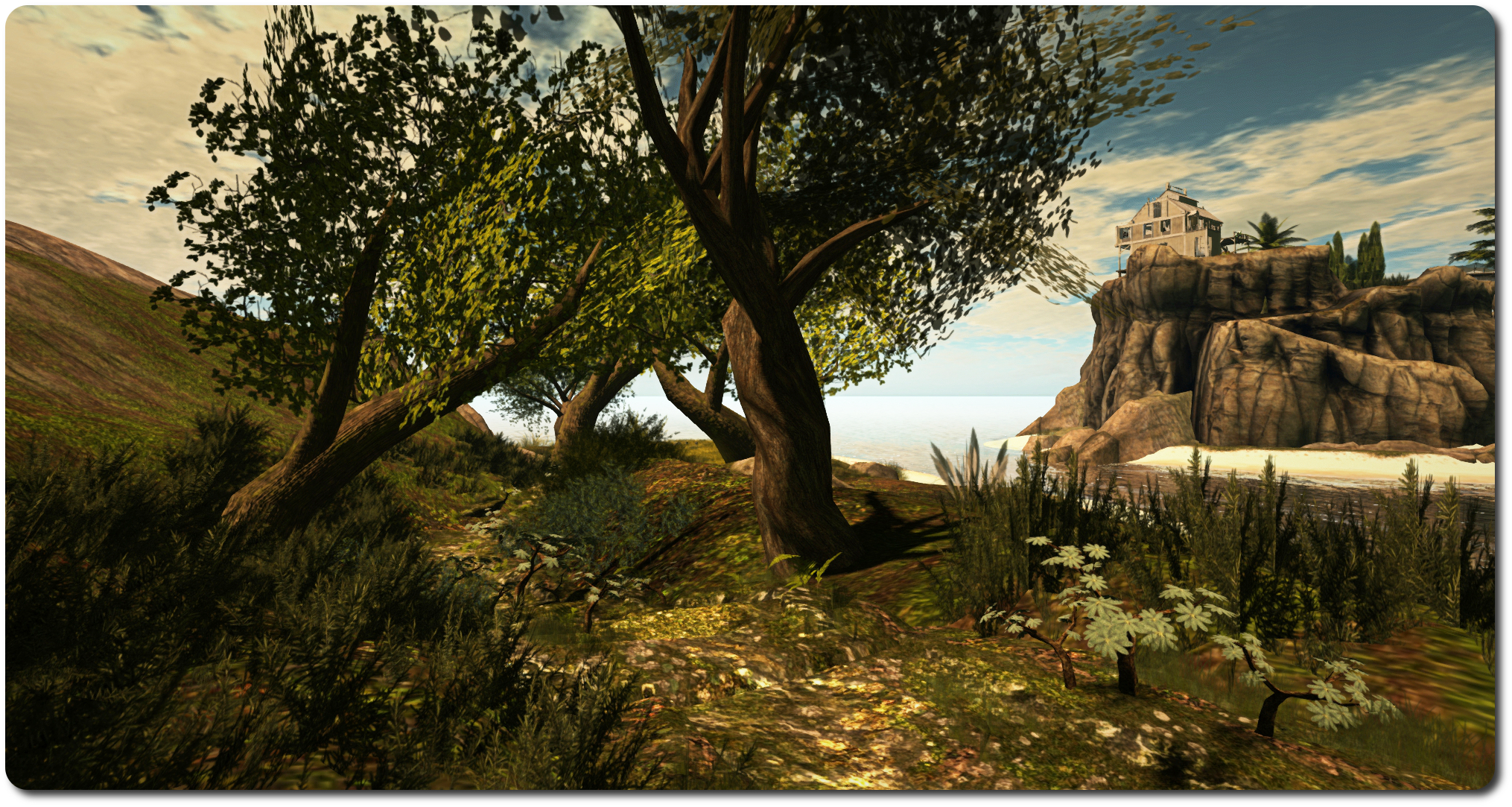 With Love in Her Heart, Sounds of Silence (Flickr) – blog post
 In the mean time, we’re building some better process around this.


 Important note: The SL Go service is to be shut down on April 30th, 2015. For more information, please read

