Bananas, trumpets, trailblazers and cacti

Le Cactus
Le Cactus

Maya Paris is a colourful, inventive and imaginative Second Life artist with a wonderfully wacky wit and knowing glint in her eye – as anyone who has visited the likes of Celebrity Blow Your Own Tits off, or Sauce will know only too well.

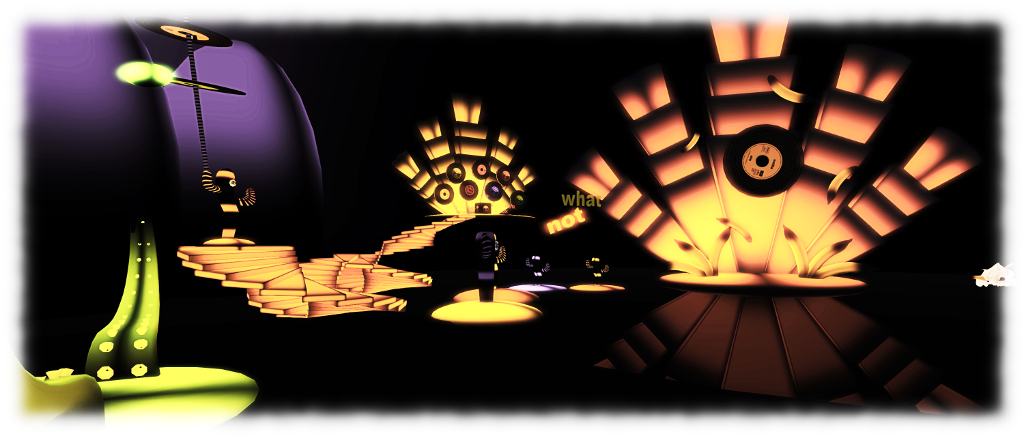
Now, at the invitation of Eupalinos Ugajin, she’s brought back a celebrated favourite creation:  Le Cactus, and it is every bit as wild and as wacky as ever, offering news delights for those who have not previously paid it a visit, while those who do remember it can revisit an old favourite for a fresh dollop of fun presented in a way that only Maya can master.
Le Cactus
Le Cactus

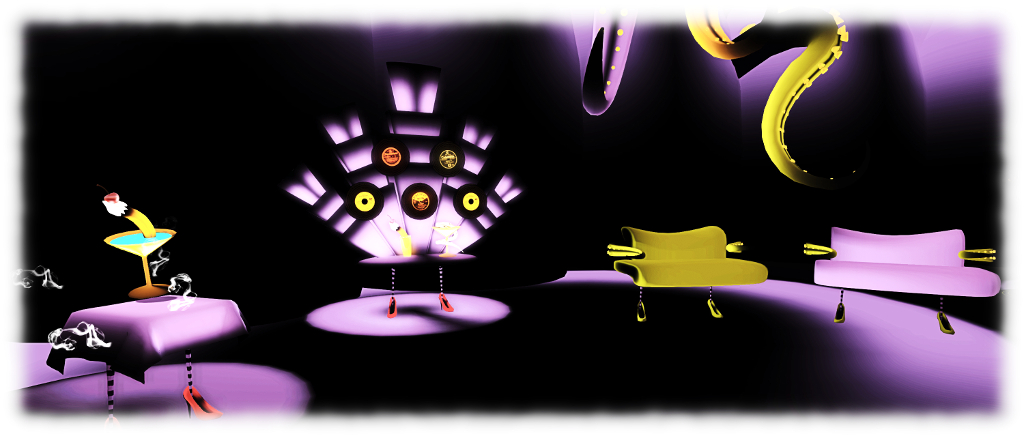
“[It’s] a celebration of the extraordinary talents of cultural trailblazer Josephine Baker, queen of the trumpet Valaida Snow, the lampshade-hatted dancers of the Casino de Paris and the offbeat irony of Jacques Dutronc,” Maya says of the installation, located high above LEA21. “Throw a banana on your head, dance on a cactus and tickle a tentacle. Everything’s interactive, so click away!”

And everything is interactive. At the landing point there are seven vinyl records, each of which will give you a costume to don; beneath them sits a box offering a HUD and the helpfully entitled “Le Cactus: What to do here” note card.

Le Cactus - Josephine!
Le Cactus – Josephine!

The outfits are as imaginative and a colourful as the setting (which has a delightful Art Deco look and feel to it), and you can wear them with your avatar either completely masked, or with body clothed and visible. I went for fully hidden for most of the outfits, but showed myself whilst wearing the Valaida and Josephine outfits (see right, flapping away).

The HUD provides links to YouTube and short films about both women and a playback of Jacques Dutronc singing Les Cactus.

From here it’s off down the stairs to click, dance, spin, swap outfits – all to the early jazz of Radio Dismuke, if you have the audio stream on (and you should). Then, when you’ve had enough, drop into one of the bar-side sofas, or claim your drinks and refresh yourself.

Like any bar, the atmosphere at Le Cactus increases in leaps and bounds the more there are enjoying the place, so grab your friends, mash-up the outfits, stick and banana on your head and have fun.

When you’ve done with your visit to Le Cactus, don’t forget to drop-in at group level, where other things will be going on. Eupa revealed a little of Life on Jupiter to me, which is currently under construction and promises to be every bit as offbeat as le Cactus, and joined me at the bar for a time, suitably attired for dancing, but opting to wear a model of Skylab as floating headgear, rather than the suggested banana.

SLurl Details

A medieval meander in Second Life

St Illuminatus - Morphe Northwinds
St Illuminatus – Morphe Northwinds

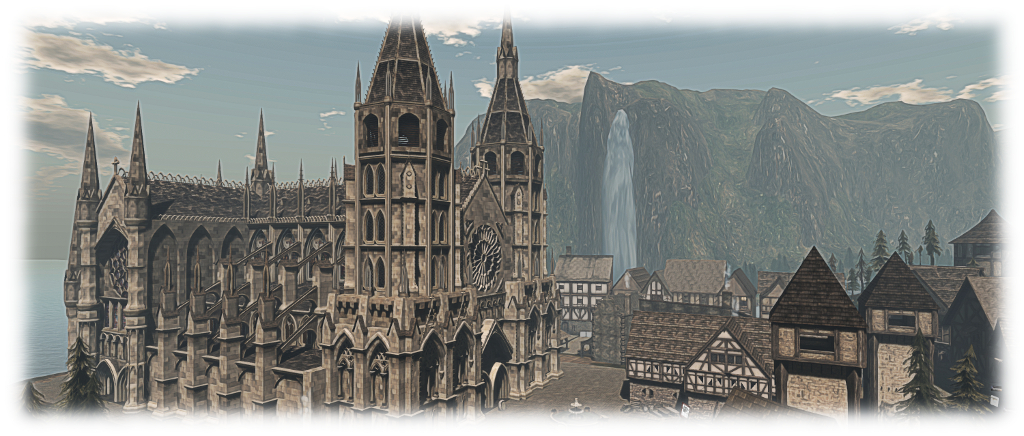
While I’d encountered some of his work during my travels around Second Life, it was my visit to Tahiti Rae’s Love, Henry in July 2015, which particularly drew me to the architecture of Abel Dreamscape.It was at Love Henry that I first encountered the magnificence of Abel’s St Illuminatus cathedral – and it made quite an impression.

ISo when I hopped over to take a look at Timekiller II (see my post about the event) located in one corner of Abel’s Morphe Northwinds region, I decided to extend my stay and explore his work in general depth.

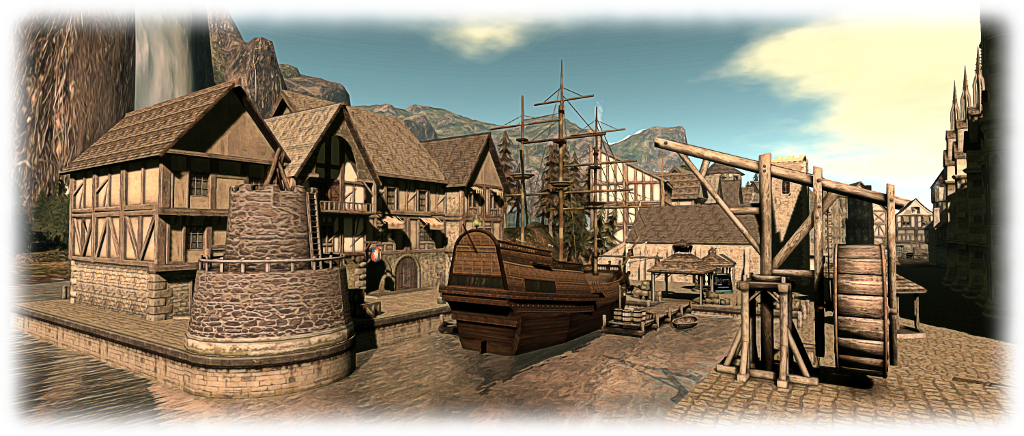
The docks at Morphe Northwids, feature one of Lia woodget's Blackspot ships
The docks at Morphe Northwids, feature one of Lia Woodget’s Blackspot ships

Anyone involved in medieval and  / or fantasy role-play may well be familiar with Abel’s designs. His buildings, while high in terms of LI, are beautifully produced and make excellent centrepieces for any suitable period environment. His range includes everything from huge period castles down to individual landscaping and building kits (the latter full perm), going by way of churches, towers, town houses and buildings, docks and peasant cottages, with expansion kits, cannon and furnishings also available.

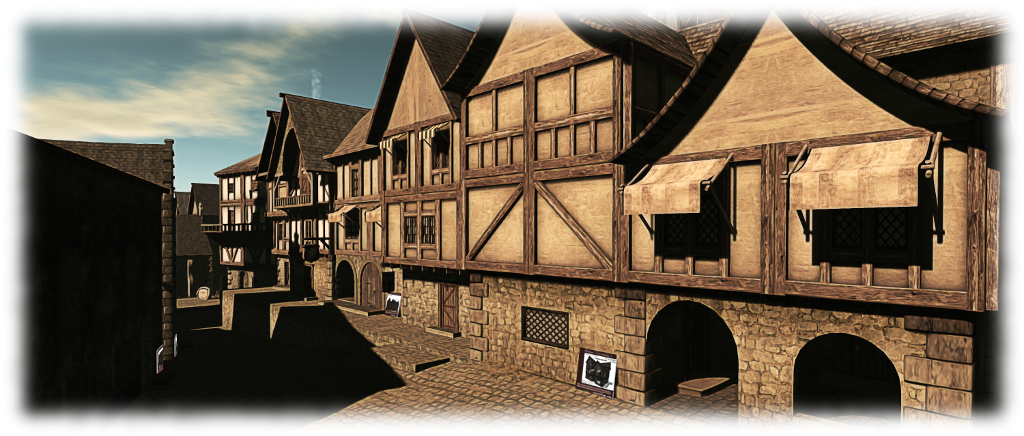
Morphe Northwinds presents many of Abel’s building and kits in a medieval setting (complete with some ambient sounds):  a small town, complete with docks, presided over by the imposing bulk of the cathedral. Here visitors can explore the building at their leisure, examine the vendor signs, enjoy the music stream (suitably period, if not medieval), and discover some of his accessory packs.

Abel's Medieval town buildings complex - Morphe Northwinds
Abel’s Medieval town buildings complex – Morphe Northwinds

Cross the bridge to the south, and you find yourself in Morphe Inc., the main store area, dominated by the huge edifice of Thorean Castle, with is great hall and 12 other rooms, sitting above a series of catacombs built using Abel’s tunnel kits. Across the paved road from the castle sits the full perms mall with builders kits, which is itself alongside a rezzing area where more of Abel’s building can be viewed and examined.

Getting to see any building in-world before you commit to buying it is generally a vital part of the purchasing process. With Morphe Inc., and particularly Morphe Northwinds, Abel has provided a means to not only see his builds up close, but also view them in period environment; one which also offers those interested in medieval buildings an interesting place to visit.

Details on St Illuminatus - Morphe Northwinds
Details on St Illuminatus – Morphe Northwinds

SLurl Details


Recalling a Starry Night in Second Life

Several years ago, I was pointed towards a You Tube video showing the creation of a scene in Second Life. The video was posted by Sharefestival, but was originally produced by Robbie Dingo.

Watch the World, made far back in 2008, poses the question “Ever looked at your favourite painting and wished you could wander inside, to look at it from different perspectives?”, and takes us on a time-lapse journey through the in-world recreation of what is perhaps Vincent van Gogh’s most celebrated work, The Starry Night.

The Starry Night is one of many the artist created depicting the view from the window of his asylum room at Saint-Rémy-de-Provence. It is the only noturne he produced in the series and was painted a little over a year before his death. In it we see the pre-dawn countryside visible from the artist’s bedroom, but with a styled village of Saint-Rémy – which was not visible directly from van Gogh’s room – added in the middle distance. It’s a poignant painting, and one which inspired American singer-songwriter to compose the equally poignant Vincent.

The Starry Night, part of the permanent collection at the Museum of Modern Art, New York City
The Starry Night (889) by Vincent van Gogh, part of the permanent collection at the Museum of Modern Art, New York City

In the video, we are taken on a journey with Robbie as he recreated The Starry Night in Second Life, offering visitors the opportunity to enter van Gogh’s world and visit his village. It’s a wonderful video, hauntingly framed by McLean’s lament, and it is one I’m often drawn back to time and again, so much so, that I had convinced myself I’d already blogged directly about it.

Sadly, the build itself has long since passed from Second Life, but as I’ve not dedicated a post to the video, and again found myself watching it recently, I thought I’d rectify the latter and write about it now. It’s a timeless piece, and a beautiful demonstration of how Second Life can be used to present a new perspective on art.

Robbie also offers a Revisited video on the piece, in which he shows footage not used in the original cut:

A dreamer’s forest in Second Life

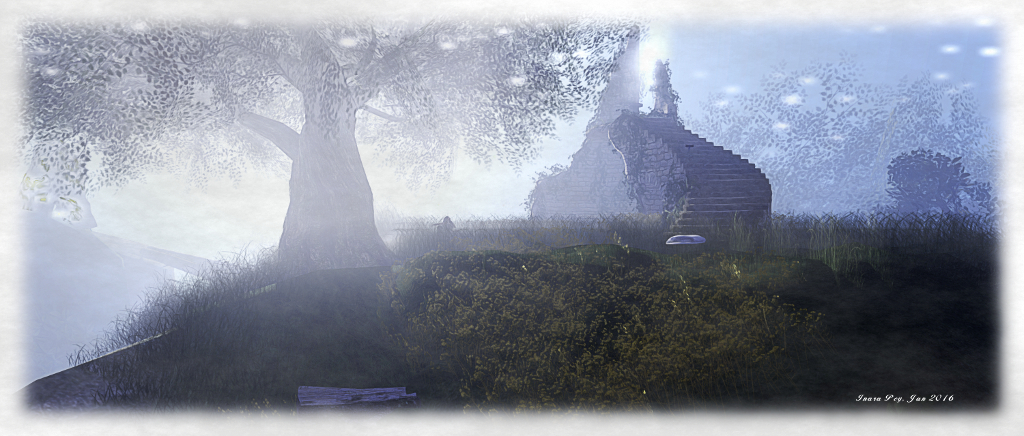
Telrunya - Forest of Dreams; Inara Pey, January 2016, on Flickr Telrunya – Forest of Dreams (Flickr) – click and image for full size

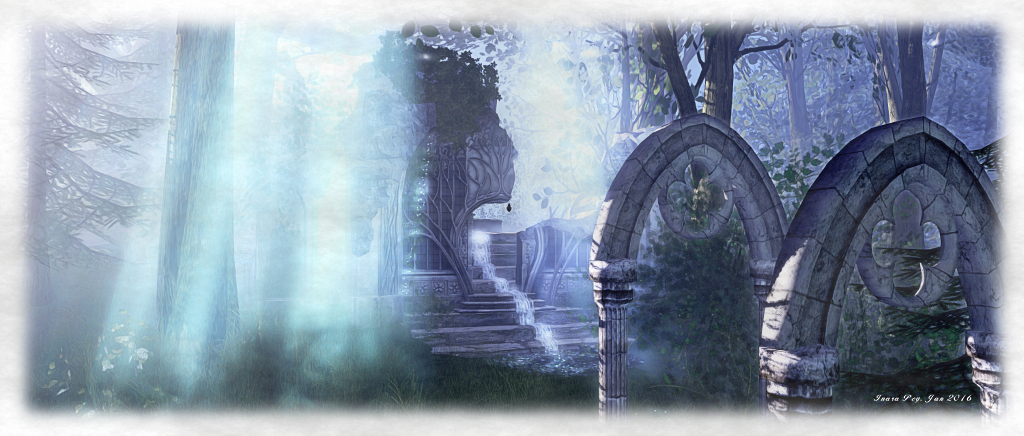
TELRUNYA – Forest of Dreams is a relatively newly opened region in Second Life. Designed by Nessa Zamora (Noralie78) to help demonstrate her landscaping abilities, the region is also an envisioning of her “happy place”,  a place of ethereal beauty in which it is easy to lose oneself.

Entering the Forest of Dreams, it is easy to feel as if you have stepped into a corner of Middle Earth; that you are perhaps on the edges of Lothlórien or another forested elven enclave, sheltered from the rest of the world by the tall, grass-covered hills surrounding the region.

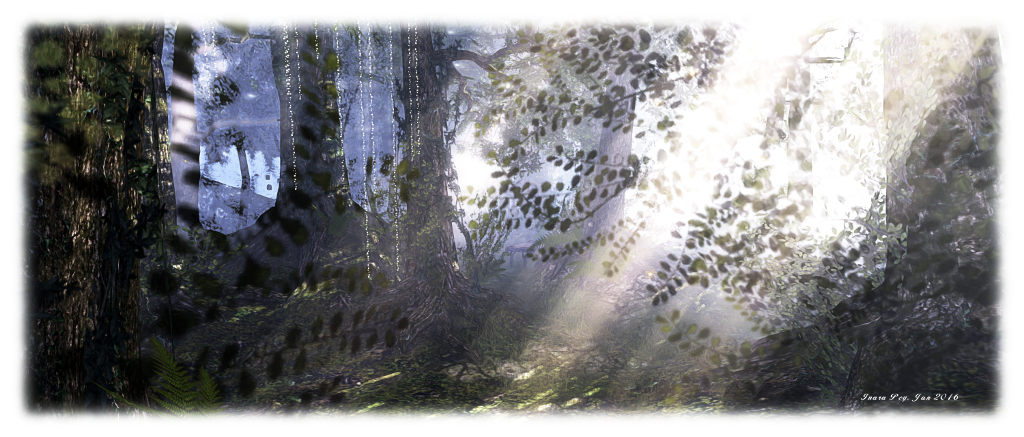
Telrunya - Forest of Dreams; Inara Pey, January 2016, on Flickr Telrunya – Forest of Dreams (Flickr)

This is a place where exploration is very much the key to discovery. The dense forest means that casual camming around isn’t easy and risks you missing a lot; only on foot can you really appreciate all there is to be found here, be it beneath the forest’s canopy, along the banks of the winding waters, at the top of ancient-looking steps cut into the tall hills, or underground.

To help you find points of particular interest, there are teleport points to be found scattered across the region. These are certainly handy for keeping track of places you may have missed, but again, I do urge travelling on foot as much as possible to really appreciated the forest.

Telrunya - Forest of Dreams; Inara Pey, January 2016, on Flickr Telrunya – Forest of Dreams (Flickr)

As might be expected from an elven realm, the Forest of Dreams is in a state of perpetual twilight. However, the region works with many windlight options, although I’d venture to suggest those offering a dusk or twilight offer perhaps the best options for appreciating the region as you explore.

Throughout the forest there are numerous places to sit and ponder, or spend time with a friend or loved one, including a walled garden, a small camp in the midst of standing stones, alongside the river, facing the ruined tower (my personal favourite)  – and elsewhere.

Telrunya - Forest of Dreams; Inara Pey, January 2016, on Flickr Telrunya – Forest of Dreams (Flickr)

The description of Forest of Dreams tells us  it is, “a world straight out of a fairytale where you can find magical creatures around every corner. A haven for  those who look for a tranquil environment, a home for fairies, fauns, elves and those who love to be lost in a dreamworld.” Having spent time exploring on foot, and via row-boat, Caitlyn and I can confirm this is absolutely so!

SLurl Details

The pastel world of Silas Merlin in Second Life

The Portraits of Silas Merlin - Gallery 24
The Portraits of Silas Merlin – Gallery 24

Now open at Gallery 24, curated by Kayly Ilali, is a beautiful exhibition entitled The Portraits of Silas Merlin. And it is, in a word, magnificent.

Silas is better known in the physical world as Jean-François Le Saint, a Maître Pastelliste of the Société des Pastellistes de France. In Portraits he presents a number of his pastel studies from the physical world, all beautifully reproduced for in-world exhibition in a manner which loses none of their context or the power of his chosen medium.

The Portraits of Silas Merlin - Gallery 24
The Portraits of Silas Merlin – Gallery 24

Spread through the two floors of the gallery is a virtual treasure trove of his work, offering a unique and involving insight into Silas’ world as an artist who uses modern and traditional means to produce a portrait, mixing photography – while he does enjoy live sittings, he much prefers capturing his subjects on camera, often taking hundreds of photographs whilst visiting  traditional or medieval festivals in Brittany –  with the great tradition of pastel art.

Through the images, with their layered, textured richness, it is possible to appreciate just why pastels have been a favoured form of portrait art since the Renaissance period. The pale colour tones which are available or can be mixed result in incredibly life-like images which can often transcend the use of paints, capturing the very essence of the subjects in a study.

The Portraits of Silas Merlin - Gallery 24
The Portraits of Silas Merlin – Gallery 24

You might wonder why an artist established in real life might want to bring their work into Second Life, where the ToS is seen as being hostile. In talking to Kayly Iali about his work, Silas offers a more relaxed view on the benefits of exhibiting in-world:

Second Life is warm and cozy, I want to be here. Importing my real life work into Second Life and rezzing it on a virtual wall gives me a new perspective on it. By contrast sticking it on a website or posting on social networks does not add anything or give me new insight to my paintings.

SM-5
Natalya Gousseva: The Portraits of Silas Merlin – Gallery 24

Artwork comes into being in the virtual world, (especially when you don’t use the full bright lighting feature in Second Life), it is affected by the day cycle, local lights that can be coloured, projectors [that] cast shadows…

On a more practical level, Second Life offers him the opportunity to learn about using new mediums. He’s particularly interested in  sculpture, and adapting some of his work into 3D pieces.

The platform also present Silas with the ability to socialise more easily with visitors to his in-world studio, something he notes isn’t easily achieved in the physical world, where he is often lost in the flow of his work.

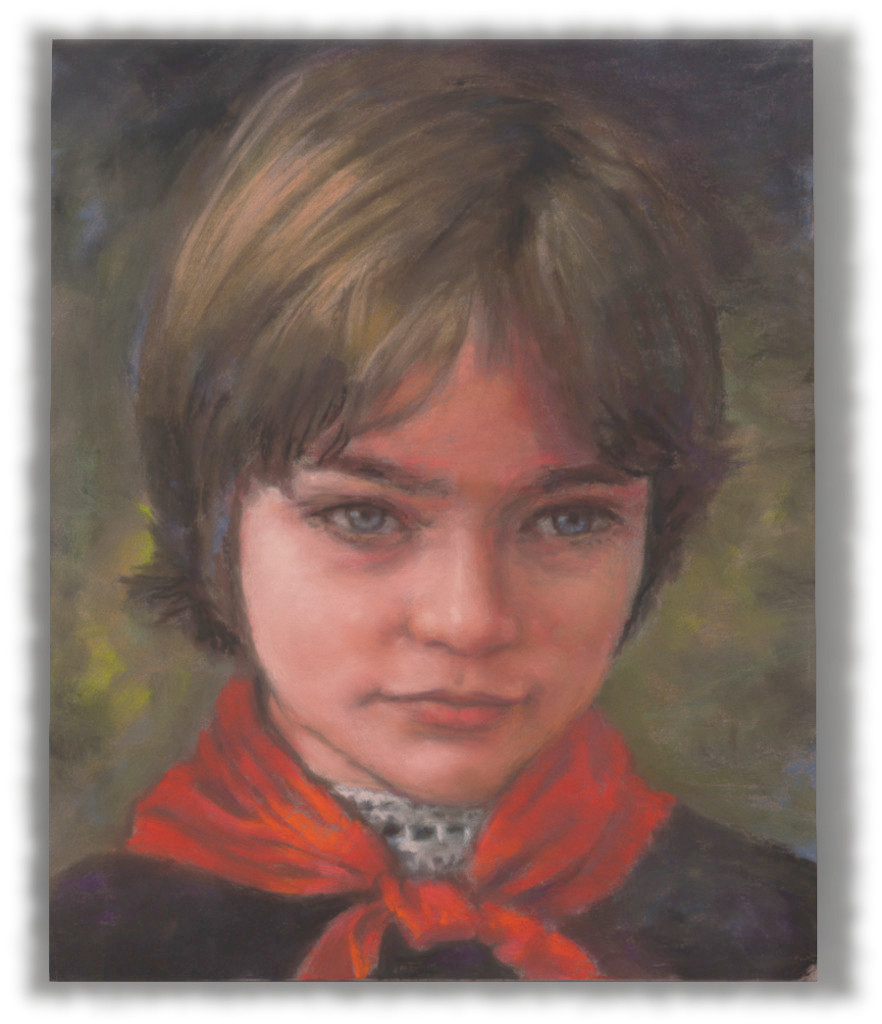
There are many facets to this exhibition which are both fascinating and enticing – the presentation of physical world art; the insight into Silas’ work and talent, the glimpse we get into the lives of his subjects. Speaking entirely personally, all of these aspects for me come together in one particular piece Silas has chosen to display: his portrait of Russian actress Natalya Gousseva, as she appeared as a 12-year-old in the mid-eighties Soviet television mini-series, Guest from the Future.

There is something fabulously intimate and compelling about the portrait, while beneath it, a bright panel offers us a glimpse into its creation: a link to a time-lapse video of the piece being drawn. Taken together, portrait and film offer a wonderful insight into Silas’ world, and I again offer him my thanks for allowing me to embed the video here, hopefully as a further enticement for people to visit the exhibition.

As well as the pastel studies, Portraits includes a number of photographs featuring young subjects Silas sketched during live sittings, presenting a further means of witnessing his work. And for those who might wonder how their avatar might look rendered in pastel art, a trip to the rooftop terrace will reveal a number of avatar portraits, work he still does today on a commissioned basis.

All told, The Portraits of Silas Merlin is a compelling exhibition, one all lovers of art should make time to see. For those who, like me, become enamoured of his work, Silas has a gallery in New Babbage and a second on Escapades Island – do visit them as well.

SLurl Details

Discovering The Keys in Second Life

The Keys; Inara Pey, January 2016, on Flickr The Keys (Flickr)

With Christmas and the New Year behind us, the thoughts of many caught in the grip of winter inevitably turn to warmer locations, sunshine and, perhaps beaches. But with summer still several months away, we might need something else to sate our desire for warmer climes.

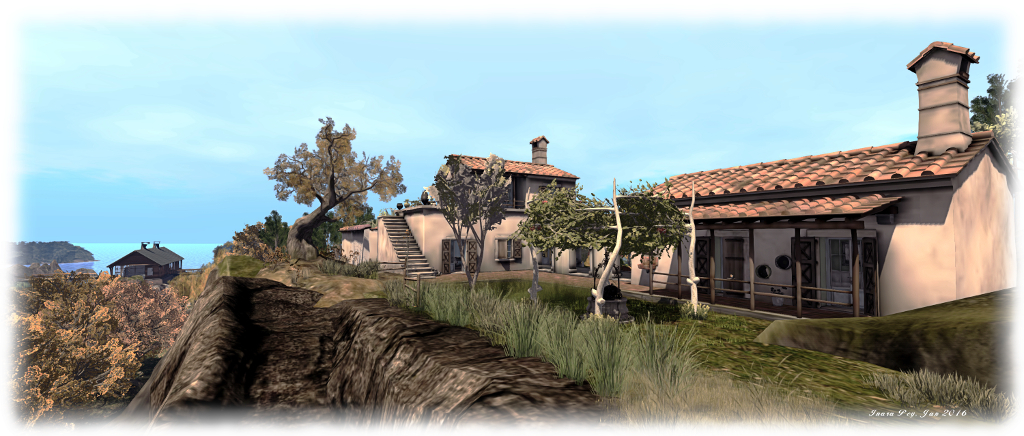
The Keys might well be a way for those of us in Second Life to do so, offering as it does an expansive landscape offering cliffs, gorges, sandy beaches, rolling meadows, secluded glades, all mixed with tree-lined walks, woodlands, coastal paths, and scattered houses beneath a summer blue sky. Such is the genius of the design, it’s at times hard to reconcile it with being confined to a single region.

The Keys; Inara Pey, January 2016, on Flickr The Keys (Flickr)

Featured in the Destination Guide Highlights for Friday, January 8th, 2016, The Keys, while Adult rated, has been created with one thing in mind: photography. But whether you’re into SL photography, or simply enjoy exploring stunning regions, this is a place which should not be missed off any itinerary.

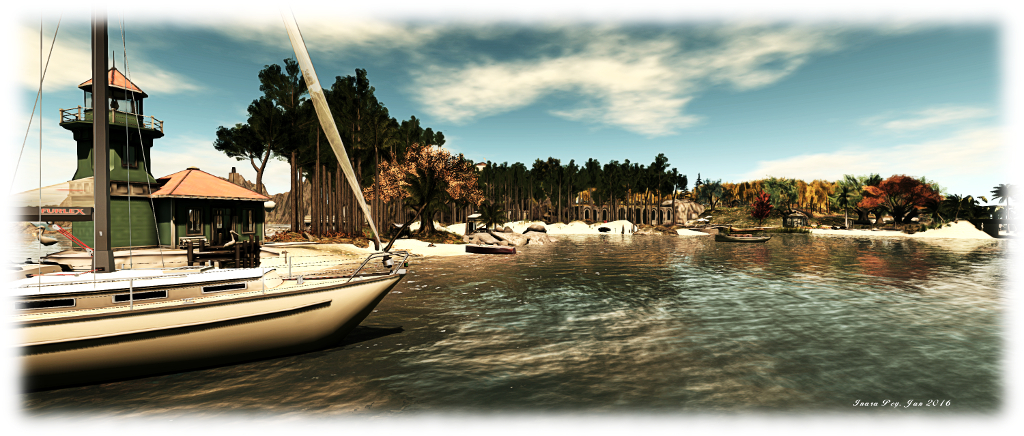
The landmark provided in the Destination guide appears a little off, dropping you neatly into the pool of a Romanesque structure on the west side of the region, so I’m offering a slightly different one here which will hopefully drop you onto the terrace alongside the pool. Just to the north of this structure, beyond a ribbon of tall trees, sits the beach, looking out over a bay which separates The Keys from the more coastal suburban area of neighbouring Anarchist Bay to the west, which can be visited by crossing the bridge linking the two over the water. If you wander the beach, do take care no to disturb the mice as they enjoy their vacation!

The Keys; Inara Pey, January 2016, on Flickr The Keys (Flickr)

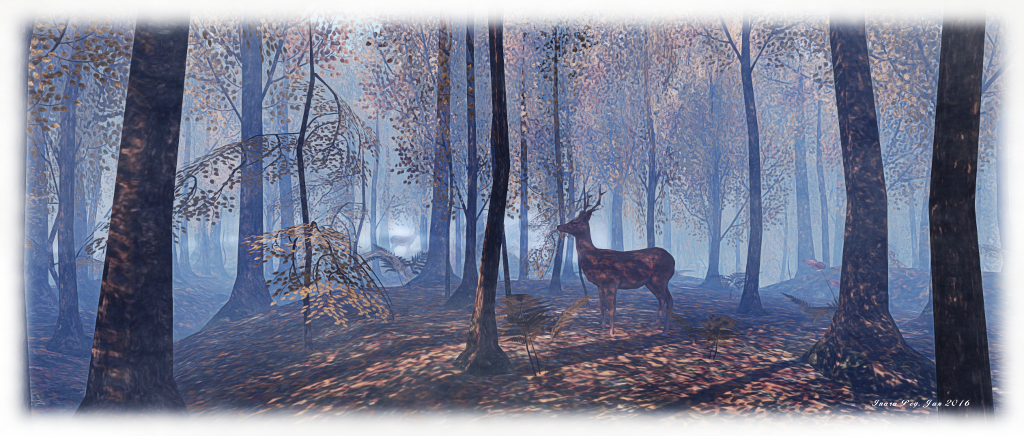
To the south of the landing point, the ground slopes gently up to an expense of trees seemingly caught in autumn’s golden crown, a place where mist drifts between the tree trunks, deer graze peacefully and the wanderer might come across sculptures and a secluded gipsy cabin nestled close to high cliffs overlooking the ocean, together with some of the off-region islands which further add to the visual appeal of The Keys – just don’t try walking out to the terrace on the lone finger of rock!

Eastward from the trees, the gently rolling ground is open to the sky and the grass grows tall, mixing with wild flowers. Horses graze here, while those seeking places to sit  while or simply to rest can find them among the merry-go-round, pavilion and shaded seating areas scattered along the edge of a broad gorge which cuts into the south-east corner of the land, the canopy of golden trees continuing on the far side, reached via a broad wooden rope bridge, or by following the edge of the gorge inland and then back out again.  Even then, the region is not finished with you – beyond the tongue of the gorge, a further bridge spans the void between the land and a small, rugged island on top of which sits a stylish house.

The Keys; Inara Pey, January 2016, on Flickr The Keys (Flickr)

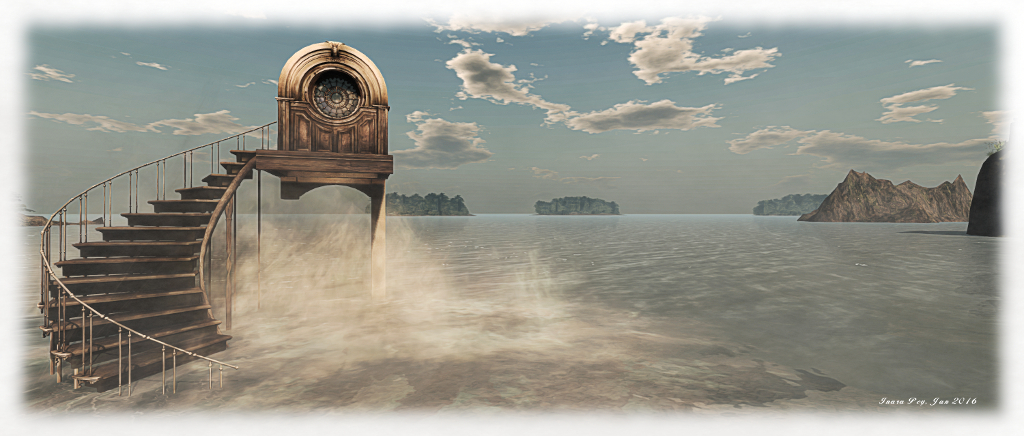
And this is the beauty and power of  the region; just when you think you much have reached the end, there’s more to be discovered, making exploration here a genuine pleasure. There are fishing cabins, the coastal areas, secret ways beneath the ground, and one or two little surprises along the way. It’s also a place of whimsy, as can easily be seen in things like the island floating over the north-east corner of the island, stoutly anchored to the hill below, or the steps curling up from the sea to reach a door to… where…?

The Keys is a place which measures up to its description perfectly, making it an eye-catching visit, with plenty of opportunities for both photography and for simply sitting down and enjoying the visual and aural ambience of the place, and letting the world just take care of itself for a change. Don’t miss the Flickr group, either.

SLurl Details