Gaming Islands: introducing users to Skill Games in Second Life

The new Gaming Islands - designed to introduce Second life users to Skill Gaming
The new Gaming Islands – designed to introduce Second life users to Skill Gaming

In a blog post on August 2nd, 2016, the Lab introduced their new Gaming Islands: regions designed to help Second Life users – particularly (but not exclusively), I would assume, new users – understand Skill Games in the platform, how they can play them (and why they may not be able to play them), together with a means to find them.

I’m not sure when these regions  – there appear to be two at present – opened, so whether the blog post has been timed to coincide with their launch or whether, like much that is in the blog post, they’ve been around a while but simply not promoted, is hard to tell. However, on reading about them, I jumped over to take a look – but before I get into the details, a quick bit of background.
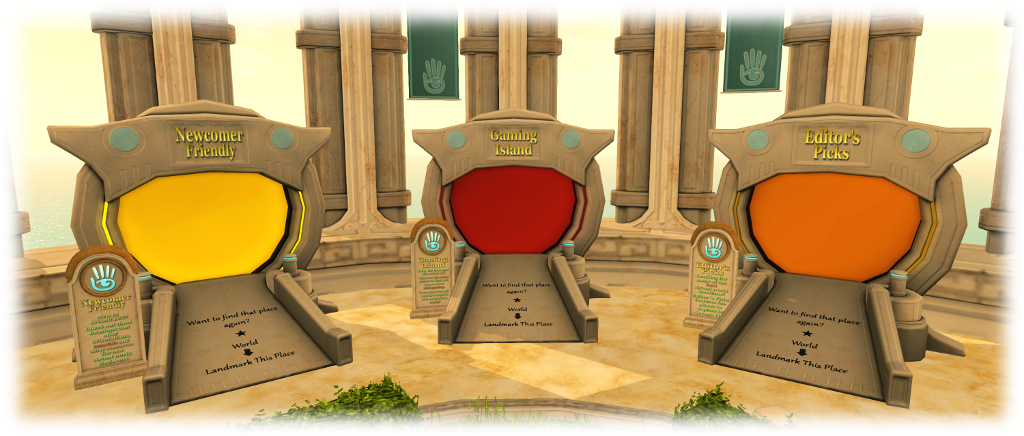
Incoming new users can find their way to the Gaming Islands via a dedicated teleport portal on the Social Islands
The Social Islands provide a dedicated teleport portal  to the Gaming Islands for new users; established users can reach them via the Portal Parks

Gambling laws in the USA and around the world can be complicated beasts. What some might consider to be gambling to others might be viewed a game of skill, and vice-versa. This makes determining what is and isn’t allowed and by whom a difficult practice, particularly where the Internet is concerned.

Because of all this complexity, the Lab banned gambling in Second Life, whilst allowing games of skill to remain. Then, in 2014, the Lab sought to further refine the kinds of skill games involving money and payouts which are permissible in SL through a complete overhaul of their Skill Gaming Policy, together with the introduction of new Skill Gaming regions where such games can be played.

The new Gaming Islands are designed to help SL residents understand what Skill Games are, where they can be played, the kinds of games they might encounter, how they can get to play them – and why, in some instances, they may not be allowed to access the regions where they can be played, and finally to offer a means to reach Skill Gaming regions.
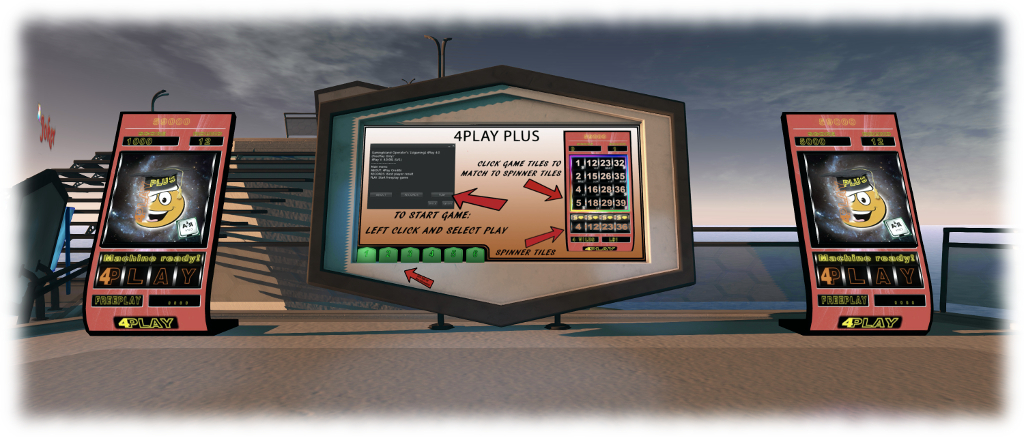
One of the example games in the Gaming Islands
Gaming Islands: one of the example games

To achieve this, the new Gaming Islands are split into four areas: the arrival point, a game play area; a Learn area which explains more about Skill Games in SL and how to access Skill Gaming Regions; and an Explore area which provides direct teleport portals to Skill Gaming regions provided by various in-world Skill Gaming Operators.

The game play area offers what appear to be “skill-based slot machine” games (yes, there are  such beasts in the physical world) with L$ pay-outs – although I have to admit, even after reading the instructions, I was unable to determine where the “skill” factor came into effect over and above the “chance” element (the requirement for Skill Games in SL is that their outcome “is determined by skill and is not contingent, in whole or in material part, upon chance”).

This is not to say that I think the games are not skill-based, but simply that – as a non-gambler / player of skill games, I simply didn’t get where skill enters into them, even after reading the instruction tabs. Perhaps this might indicate more practical explanations are required, or maybe it just indicates I just don’t get Skill Games. I’m also a little mystified as to why, more than an hour after I left one of the islands, the GamingIsland Operator made a small payment to my account – but hey-ho (addendum: apparently pay-outs are made at regular periods after play).
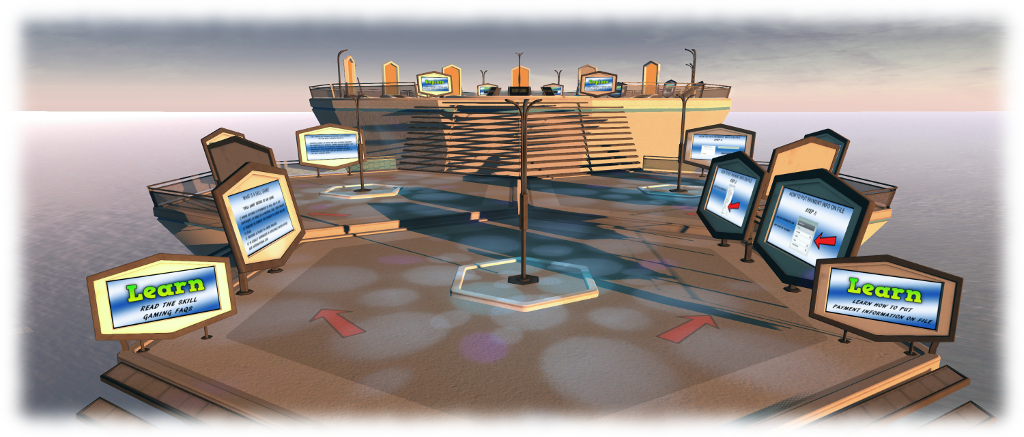
Gaming Islands Learn area - discover more about Skill Gaming and how to access Skill Gaming regions in SL
Gaming Islands: Learn area – discover more about Skill Gaming and how to access Skill Gaming regions in SL

The Learn area, designed to get people up-to-speed with Skill Gaming in SL, how they can ensure they are eligible to access Skill Gaming regions and why, even if they meet the SL criteria, they may still be unable to do so, is a little more straightforward.

To one side of the are a series of information boards designed to help people ensure they can access Skill Gaming region; on the other are explanations of what Lab’s define a Skill Game (lifted from the Second Life Skill Gaming FAQ), together with information on why, legally, some SL users may not be able to access Skill Gaming regions even if they meet the SL criteria for doing so. The split path perhaps isn’t the best approach here, given it might encourage some to simply go around one side and then up the stairs to the final section, but the use of teleport boards in the final section makes this a minor quibble.
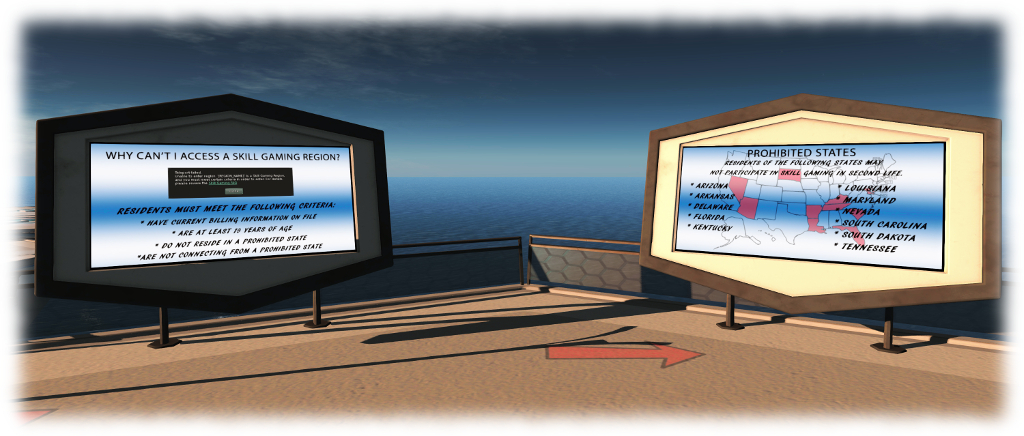
The Learn section of the Gaming Islands provide information on what is required to enter Skill Gaming regions (together with step-by-step instructions on ensuring the criteria is correct), and why, even if the SL criteria are met, some users may still not be allowed to access the regions
Gaming Islands: a more detailed look at a couple of the Learn area info boards, which explain what is required to enter Skill Gaming regions (step-by-step instructions to meet the requirements are provided on the other side of the  area), and why, even if the SL criteria are met, some users may still not be allowed to access the regions

This final section, entitled Explore, offers teleport portal directly to a number of Skill Gaming regions provided by different Skill Gaming Operators. Should anyone find they cannot use the teleport portal, boards between the portals will teleport them to the Learn section of the island where they can double-check they meet the SL / legal (in the case of US residents) requirements for accessing Skill Gaming regions.
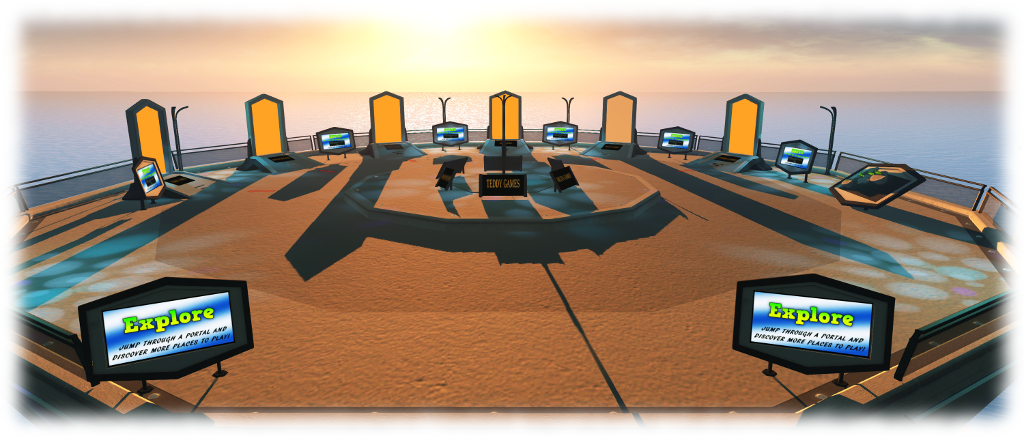
The Explore section of the Gaming Islands, with teleport portals
Gaming Islands: the Explore section with teleport portals

Skill Gaming isn’t to everyone’s interest, to be sure. However, providing information on what it is and how to find it is, I would suggest, a good idea, as is joining the dots for new users to be able to find their way to such regions, which give the opportunity to play for Linden Dollars. As it is, Skill Gaming operators pay a premium for their regions, and so providing a means by which they can obtain traffic on the same footing as other types of activity in SL is only fair.

In terms of the Gaming Islands layout, and my own problems in “getting” the games aside, the design is straightforward and does pretty much exactly what it says on the tin. Which is all one can ask, really.
Hide and Seek in Second Life

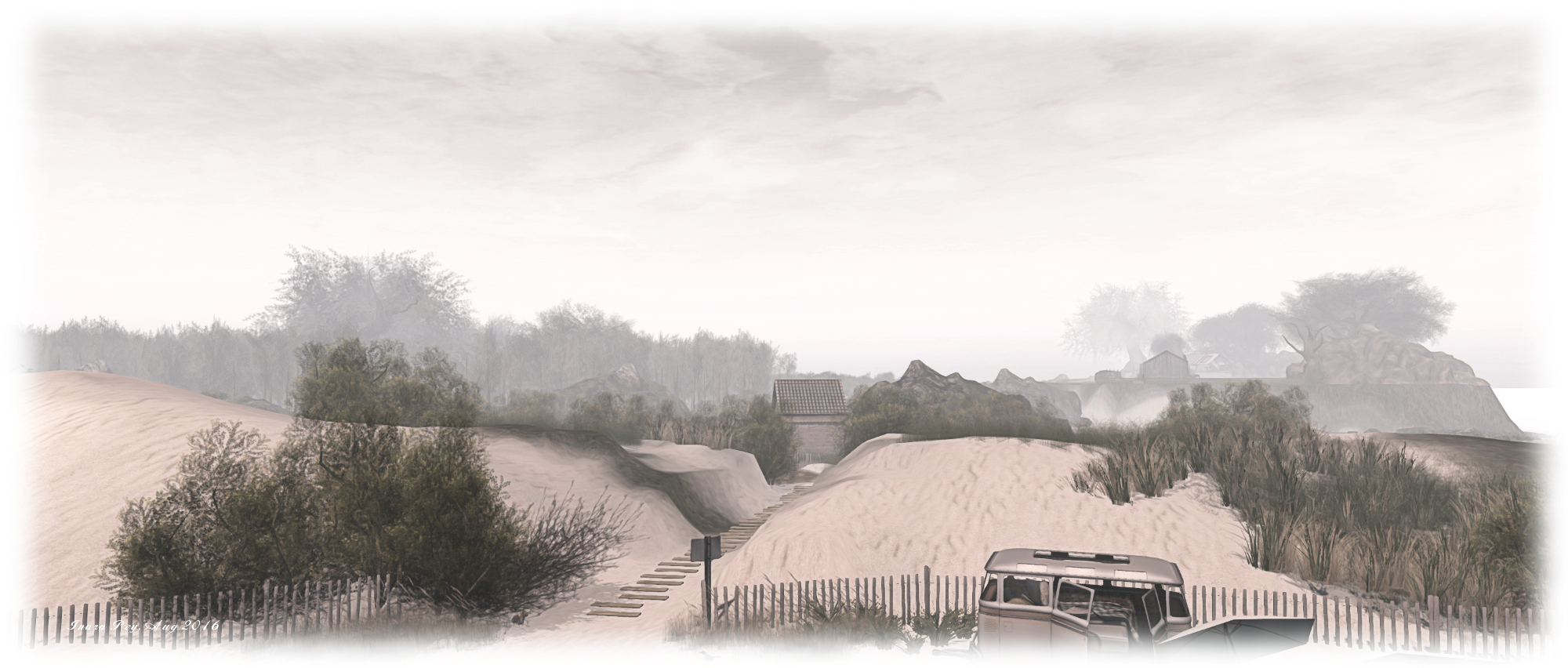
Hide & Seek; Inara Pey, August 2016, on Flickr Hide & Seek – click any image for full size

It affects us all at one time or another, that feeling of wanting to get away from things for a bit and find somewhere serene where we can wander with our thoughts. Somewhere away from the bricks and mortar, where tracks allow our feet to make decisions for us, and where there are opportunities to just sit or lie down and watch the clouds drift by overhead or the waves wash over soft sands, either on our own or in the company of someone close.

Hide and Seek offers us the chance to do just that in Second Life. This homestead region, the work of Seth Theodore Delwood-Reign (SethCohen Nirvana), is open to the public “for a limited time”, and offers a tranquil simplicity which invites exploration.

Hide & Seek; Inara Pey, August 2016, on Flickr Hide & Seek

From the landing point in the north-west corner of the region, visitors have a choice of a walk around the beaches to the west and south, or to head directly south-east through the island’s woodlands.

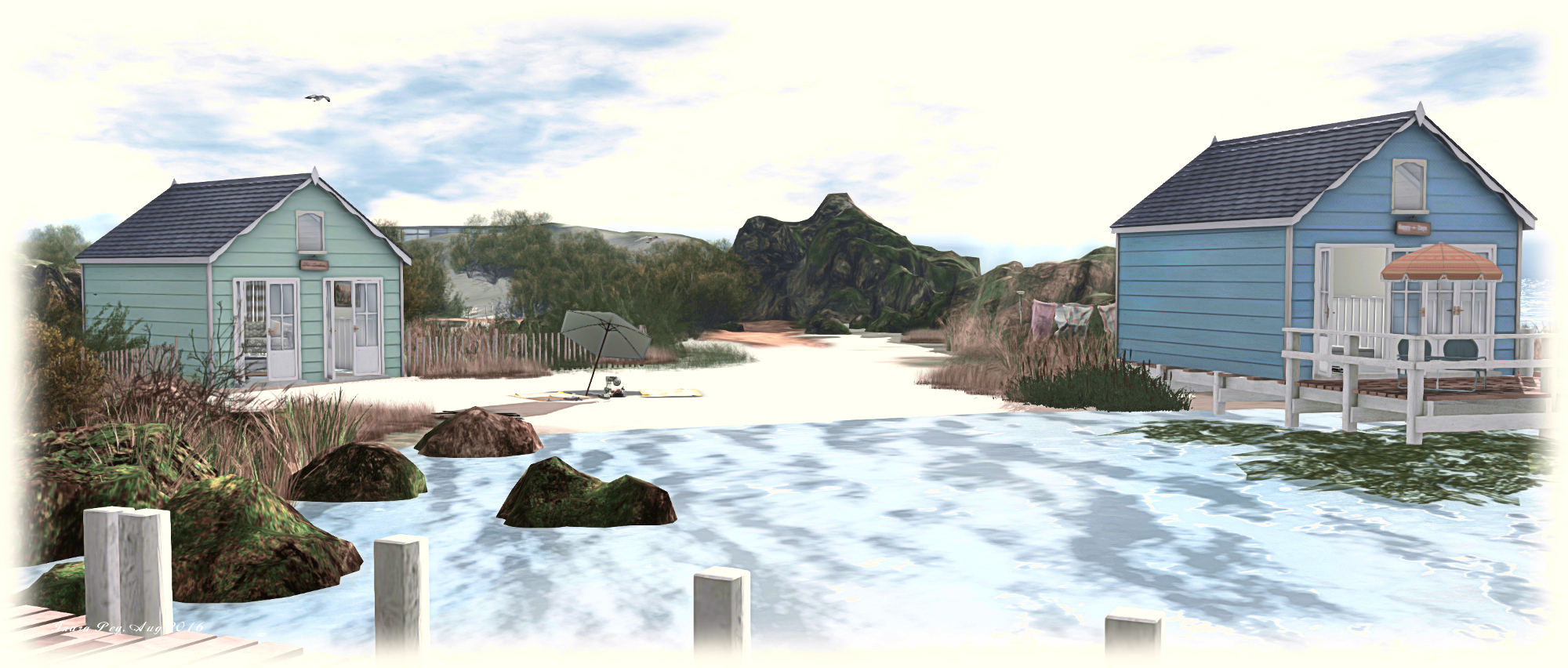
The beaches, separated one from another by grassy dunes, offer plenty of opportunities to sit and relax, either indoors or outside, under the sun or in the shade of broad parasols. Wooden beach houses vie with a little motel for visitors’ attention. The former offer seaside holiday charm, the latter the promise of air-conditioned rooms, cable TV and wi-fi, together with sitting cuddle poses. Nearby sits a partially completed building possibly destined to become a doughnut concession, a dirt track meandering by on its way to the grassy plateau occupying the south-east corner of the region.

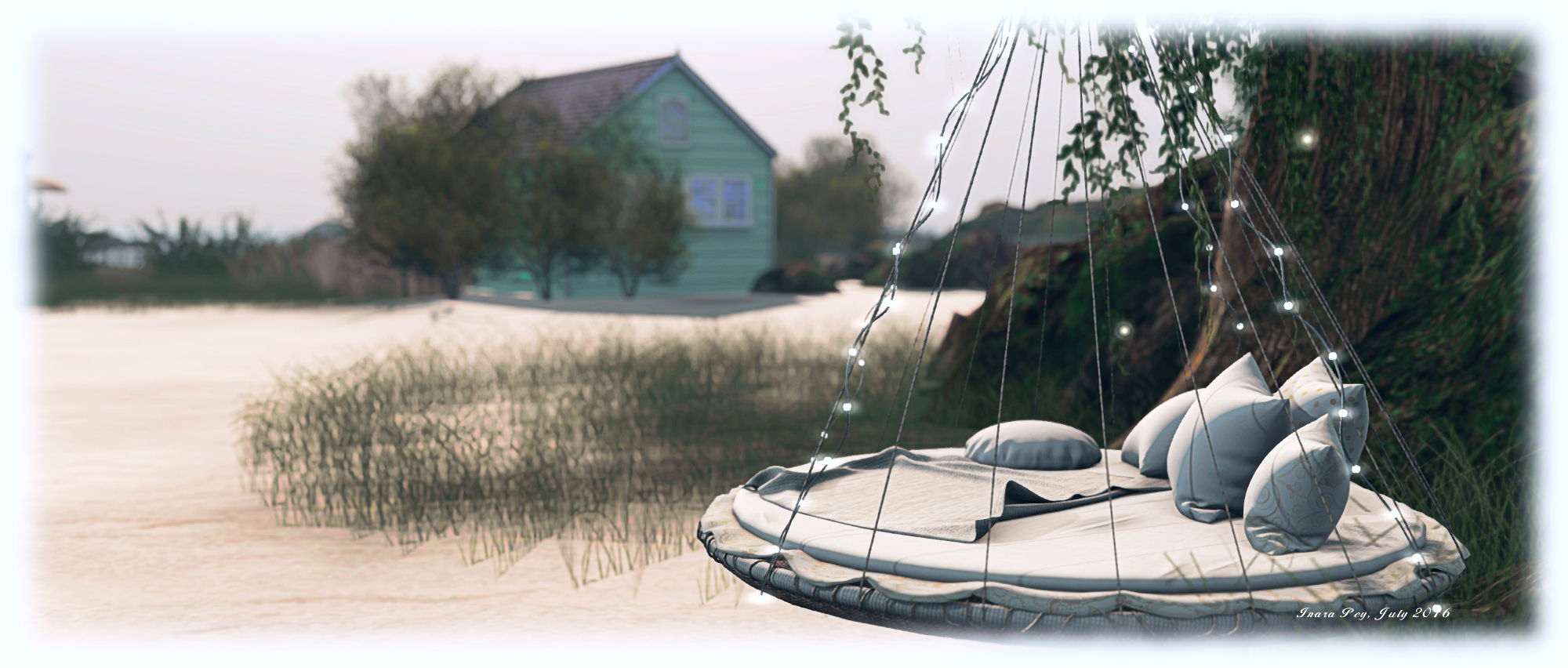
Hide & Seek; Inara Pey, August 2016, on Flickr Hide & Seek

This plateau is the home of a small holding – but whether it still operates as a farm or is now a holiday home is perhaps open to debate. While there is an run-down barn outside with a tractor parked beside it, the presence of a barbecue and the general decor of the house suggest it is perhaps used more for vacations than anything else.

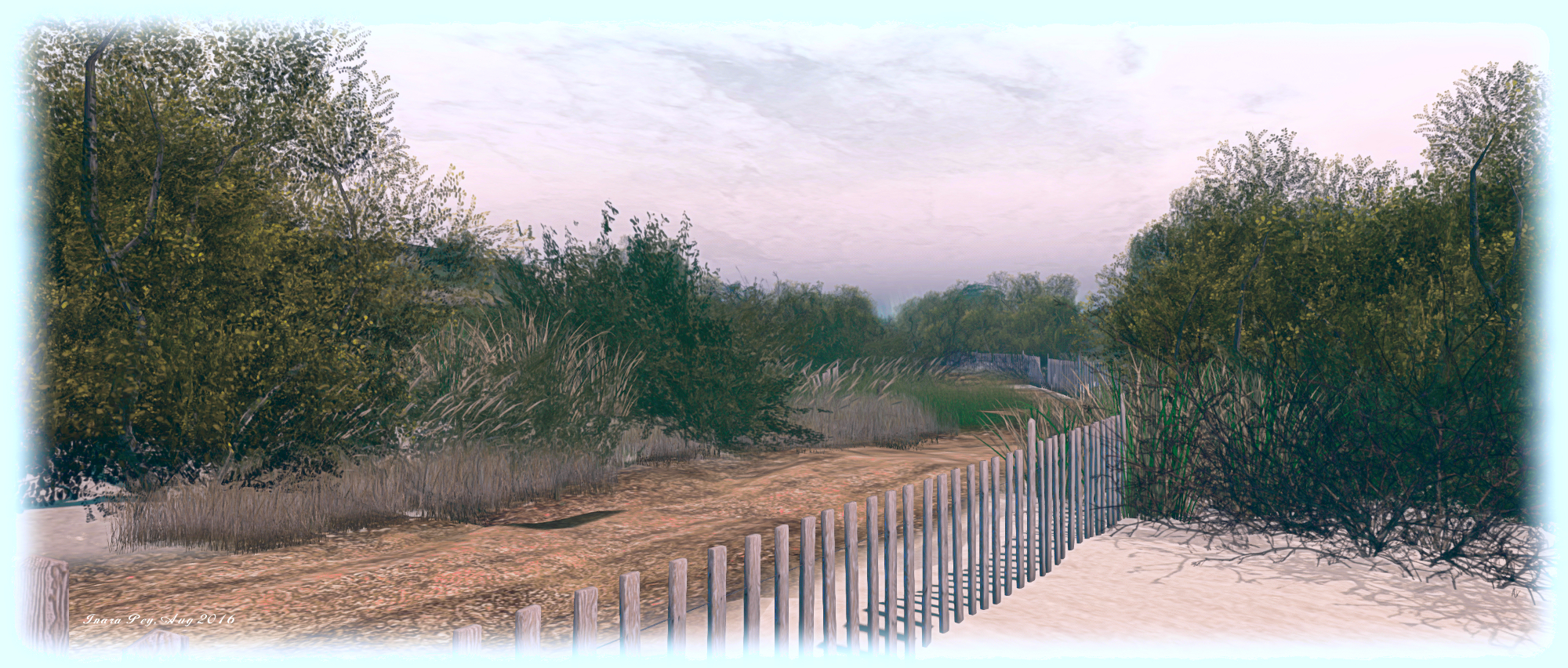
A track rolls down the side of this little massif, winding its way into the woods below to become the same path as leads the way under the trees from the landing point. Follow this, and you’ll find other tracks branching left and right: one leading back to the beach, another offering a short walk to a little camp site in the shade of the trees, and still another providing access to a cosy drive-in style movie theatre, again with opportunities to sit and / or cuddle. Elsewhere, hanging chairs sit below tree boughs and clearings beckon wanderers. There’s even a chalkboard on the southern side of the woods, hidden from the rest of the beachy sands by bushes, where folk can write and draw to their heart’s content.

Hide & Seek; Inara Pey, August 2016, on Flickr Hide & Seek

All-in-all, Hide & Seek offers the opportunity for a relaxing visit, complete with a gentle ambient sound scape, and an ideal destination for that getaway wander. Or if you prefer, you can grab a bicycle from the landing point and pedal your way over the tracks and sand. Should you visit, do keep in mind the house sitting on the small island in the north-est corner of the region is a private home; otherwise the island is free to roam.

SLurl Details

Windlight rebrands: welcome to Kultivate in Second Life

Kultivate-logoIn June 2015, I helped to spread the word about Windlight Magazine a (then) new arts-focused magazine for Second Life.

For its launch, Windlight sought to innovate, with programmes such as the Windlight Fellowship Programme and gallery, and over the last 12 months that desire to innovate has continued, with the title branching into areas beyond such as e-publication, music, literature, fund-raising, sponsorship, hunts, and fashion.

Because of this broadening of focus, on July 31st, 2016, Windlight founder John Brianna (Johannes1977 resident) officially announced the re-branding of the title to Kultivate Magazine, which will encompass all of the brand’s existing titles and activities, including the on-line magazine, the in-world Windlight Art and Windlight Bailywick galleries, The Edge (fashion) and The Edge Gallery, The Rift, and e-publications like the Quill and Pen. Kultivate will continue to support fund-raising activities, such as the work of Team Diabetes of Second Life, and run competitions, hunts, and events such as the 30/31 Event.

The new name came about for a variety of reasons, one of which is John’s own sister, Kandis. “In establishing Windlight, I wanted to honour my late sister,” he said. “Before her passing two years ago, her love of photography student took her to Paris where she experienced growth in so many ways, including taking her abilities to new heights as she perfected her photographic craft.

“Over the last year, we’ve seen Windlight grow in many areas, and we’ve growth in so many ways to cover the broad spectrum of art in Second Life. ‘Kultivate’ was selected as our new name to both reflect our broader aim of cultivating artistic expression, and to further honour Kandis’ memory through the use of the initial K.”

He continued, “Our strong commitment to the arts will never change. We will continue to have our art shows, our galleries, and our many artistic events to bring you the resources you have grown to love and utilize. If anything we will simply expand and bring you additional resources to help you to cultivate your craft.”

For the last 12 months it has been an absolute pleasure to work with John, Eles and the team, both as a contributing writer and as a quiet advisor. During that time I’ve witnessed not only the brand grow, but also those putting in all the hard work on moving it forward grow as a team committed to the coverage of art in its broadest sense within Second Life. I’ve little doubt that this rebranding will allow further expansion and great coverage of virtual arts across the platform.

A Beautiful 4 Seasons in Second Life

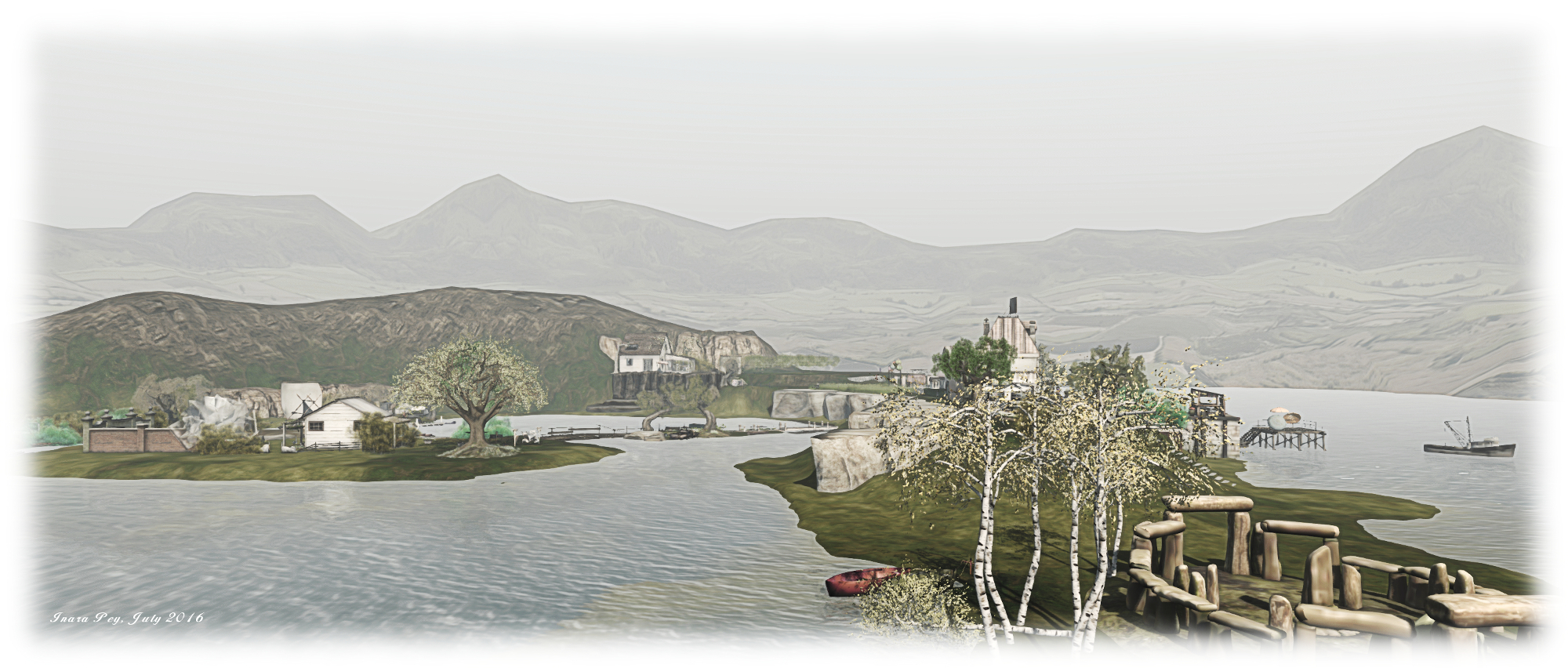
Beautiful 4 Seasons; Inara Pey, July 2016, on Flickr Beautiful 4 Seasons – click any image for full size

“This region is my labour of love :D,” Inkie (inkie Loudwater) tells me as I admire the latest iteration of her Homestead region, Beautiful 4 Seasons. “I change  it every season; it’s an ongoing process, so the more people enjoy it, the better it is!”

Looking around the region it’s hard to imagine it not being a staple part of people’s itineraries when exploring Second Life. It sits as a mostly low-slung island in the centre of a lake. Across the water and completely surrounding it, a patchwork quilt of fields recede towards misty, distant hills and rounded, grassy peaks. it’s not quite England’s Lake District – but it could be.

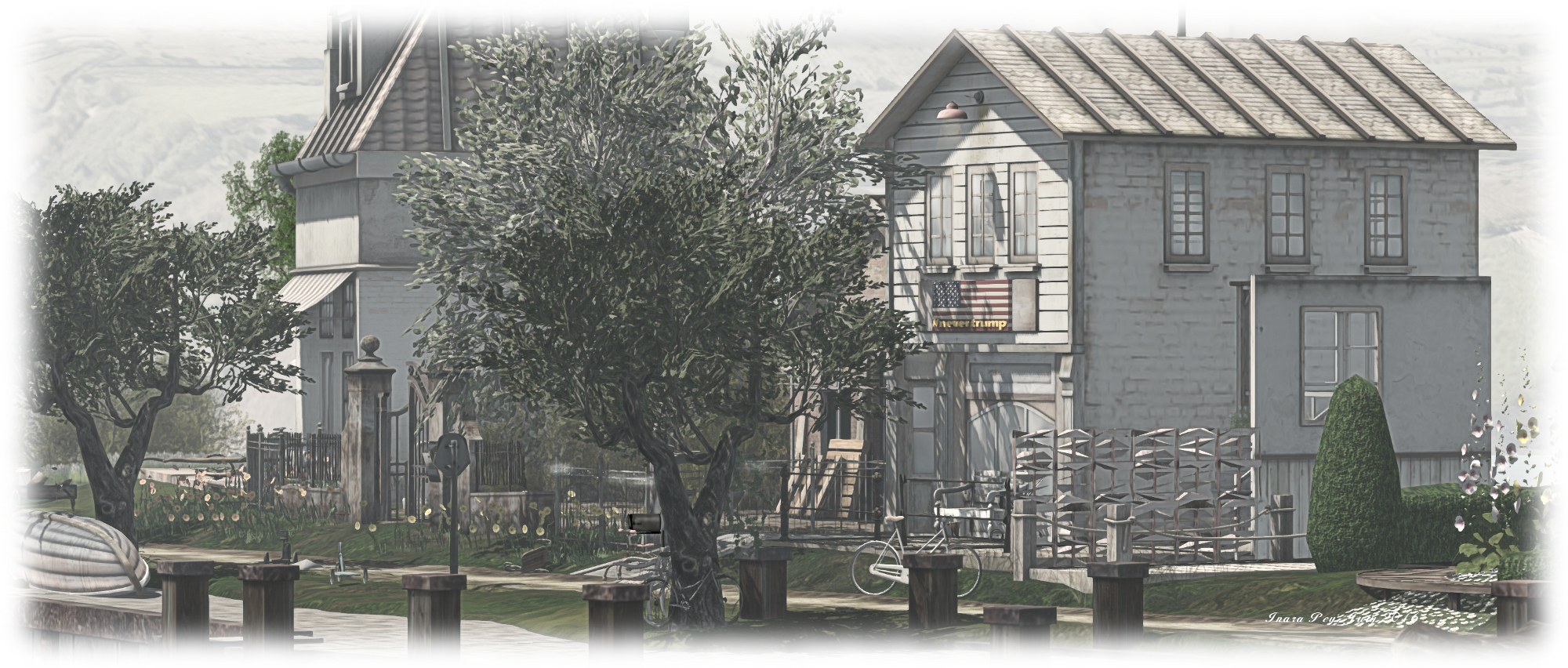
Beautiful 4 Seasons; Inara Pey, July 2016, on Flickr Beautiful 4 Seasons

The island forms a west pointing C, a smaller island nestled within its curving arms. A tiny hamlet sits along one arm of the C, perched on a slender finger of rock facing the waterfront to the south, with rowing boats and small craft drawn in close to the single wooden pier and stone flanks of an old harbour wall. Behind the little row of buildings forming the hamlet, stone stairs offer a way down between the rocks to where wooden bridges hop from the main island over a little nub of land poking above the waters, to the smaller island, occupied by a small summer-house and partially walled garden.

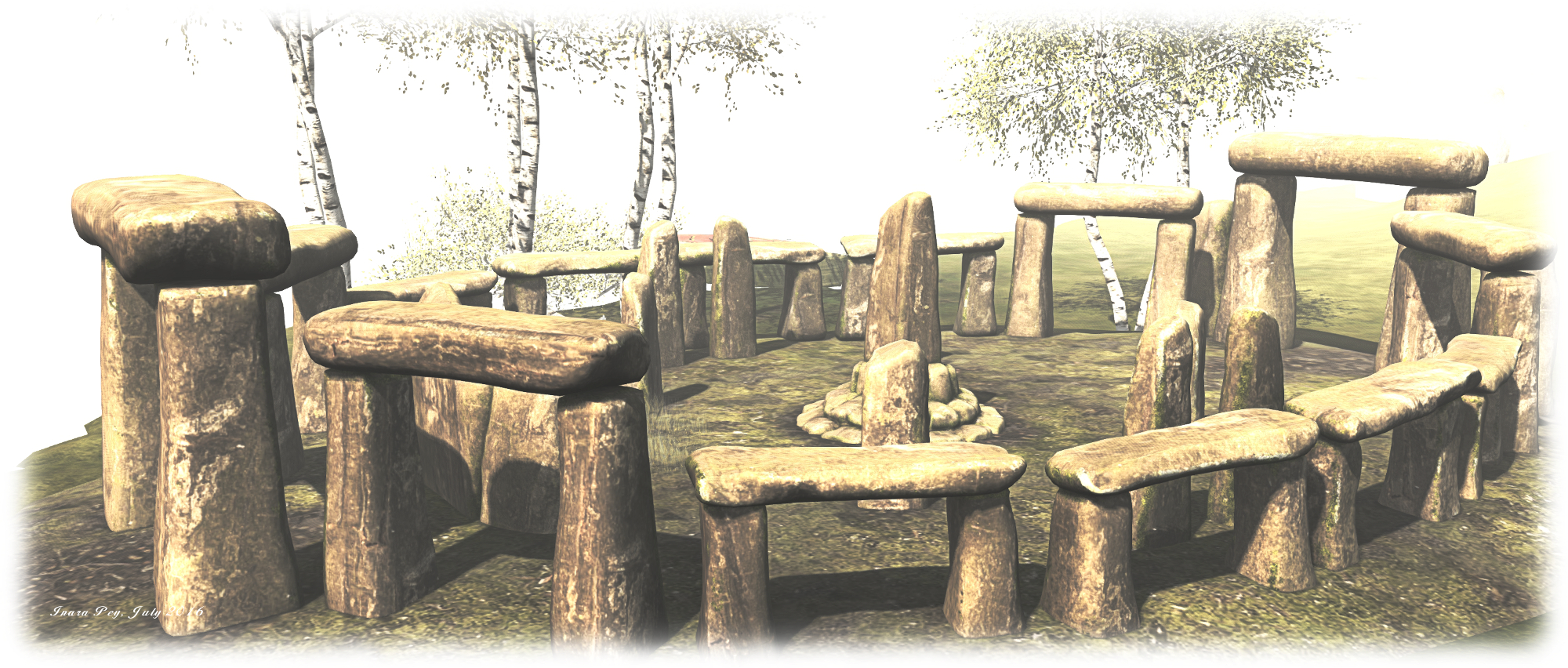
Westward of the hamlet, the land drops away gently to s small circle of standing stones, an elongated henge with lintel stones still in place to connect rough-hewn columns. Eastwards, and the land curves and climbs to its highest point, a rocky shoulder to the north-east. A house shelters in its lee of the hill as the island curls northwards, looking out over the water to the smaller of the two islands.  Below the house, the land slips gently downward and across a grassy tongue lapping at the water’s edge, where sits an intriguing camp site awaiting visitors.

Beautiful 4 Seasons; Inara Pey, July 2016, on Flickr Beautiful 4 Seasons

The entire impression here is of a small, possibly private, holiday island; a place where people can escape the hassle of everyday life, sitting beyond the distant hills, and simply wander and relax. It’s a place where bikes and scooters are popular – but which is best explored on foot. It’s the kind of place where even strangers are on first-name terms within minutes of meeting, and where the entertainment, going by the makeshift outdoor theatre, is as home-made as the bead in the bakery.

There is also subtle mystery of stories awaiting visitors here. The bakery is well-stocked, the summer-house is set for dinner while the deck outside invites people to sit and have a drink; across the water; the camp site shows signs of use, and here and there, washing hangs on the lines. But where are the locals? As busy as the little island seems, the houses sit unfurnished, motor scooters sit deserted, and dogs stand and stare into the distance, as if waiting on someone’s return. Are the locals all off across the water? If so, where might they have gone for the day? Or are we, as a part of our visit, “the locals”? And if so, what might our stories be as a part of this little community?

Beautiful 4 Seasons; Inara Pey, July 2016, on Flickr Beautiful 4 Seasons

Beautiful 4 Seasons is, in a word, charming; the kind of place I could happily holiday within; so much so that I wish I’d seen some of the earlier iterations of the region. It is, however, quite firmly penned-in to my list of regions to revisit in the future. but that’s the join of Second Life, isn’t it? The chance of discovering / hearing about new places to visit, explore and photograph.

SLurl Details

Crossworlds Gallery in Second Life

Crossworlds: famous faces by BryneDarkly Cazalet (can you name them?)
Crossworlds Gallery: famous faces by G.E. JAM (BryneDarkly Cazalet) – (and just for fun: can you name them?)

Crossworlds Gallery, co-owned by Nerd Bert and Fabilene Cortes, is designed as a “bridge between RL and SL art”, presenting – as one might expect – a rich mix of art from both the physical and the virtual / digital.

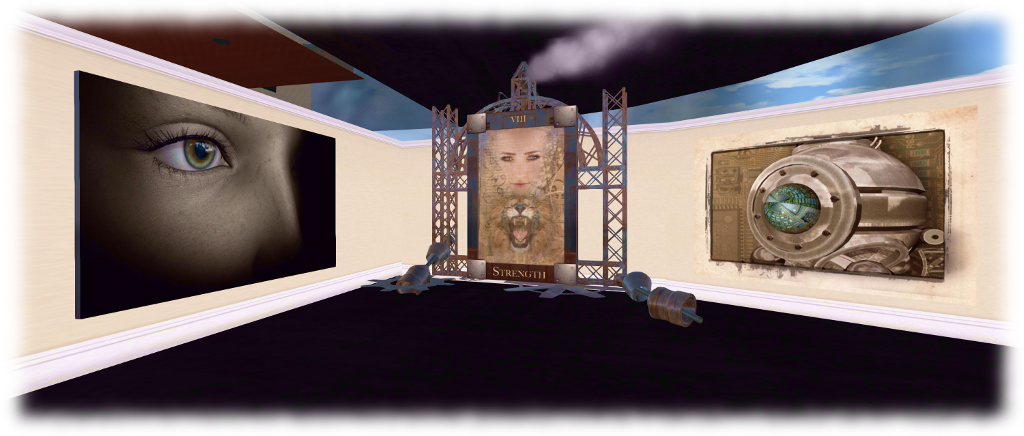
Spread across seven levels (although one was empty at the time of my visit), Crossworlds comprises four main display areas for six of the levels, with the uppermost given over to the Bryn Oh Garden. Movement between the levels is via teleport stations unmistakably placed in the central hallways which dissect the display areas on each.

Crossworlds Gallery: Pixivor Allen
Crossworlds Gallery: Pixi (Pixivor Allen)

At the time of my visit, the first level featured art by Hechos, Pixivor Allen, Feathers Boa, Consuela Caldwell and Scottius Polke; the second art by ByrneDarkly Cazalet, MarieLou DeCuir, Walt Ireton and Sabbian Paine; the third Olimpiadelarte (who came to Second Life specifically to display her art in-world), Sheba Blitz, Sil Brandi and Munroe Snook. The fourth level is devoted in part to Eternal Contemplation, an interactive / spiritual exhibition by BellaLuna Xigalia, with separate displays by Hijinks Blaukempt and Ronin1 Shippe; the fifth floor hold art by June Clavenham and MillyWH.

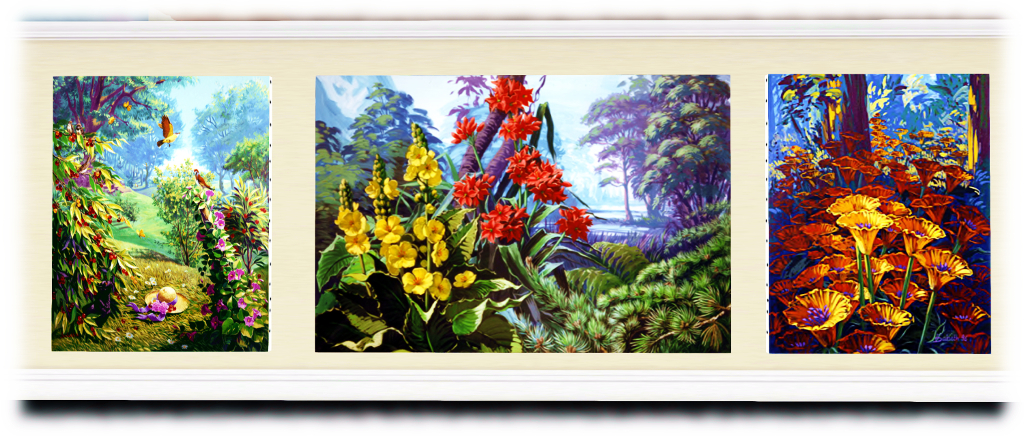
The art on display is amply diverse in style and presentation, ranging from in-world photography through paintings, abstracts, photography, digital art, collages, and drawings, all with an equally diverse range of subject matter. In fact, if there is one thing at all I’d say in general about the art on display, is that in places there is perhaps a little too much; I couldn’t help but feel that some of the display areas might benefit with a little more “wall space” between images so as to allow one to focus more fully on individual works.

Crossworlds Gallery: Feathers Boa

A case is frequently made that art from the physical world displayed within Second Life “doesn’t work” or isn’t as “successful” as art both produced and displayed in-world, and often the argument is made that it is down to the limitations of upload resolutions. I don’t tend to hold with that view, but sway towards the issue being more a case that we are perhaps more open to viewing art which as it origins in-world than that produced out-world, a bias which perhaps extends into the world of blogging about art in Second Life in general.

Certainly, there are many demonstrations that art from the physical world can be effectively presented in the virtual, a far few of which I’ve attempted to cover in these pages. Crossworlds is very much one of these, bringing together a rich pool of talent from both sides of the physical / virtual “divide” offering an equally rich mix of art. While I may have commented on the volume of art on display in some of the sections, this should be seen as a reason to defer a visit: Crossworlds very much makes for a worthwhile and enjoyable visit.

Crossworld Gallery MiraBelle Artist (MarieLou DeCuir)

SLurl Details

Crossworlds Gallery (Rated: General)

The famous faces are singers Joan Jett, Neko Case, Kate Bush and Siouxsie.


Preiddeu Annwn: immersive education in Second Life

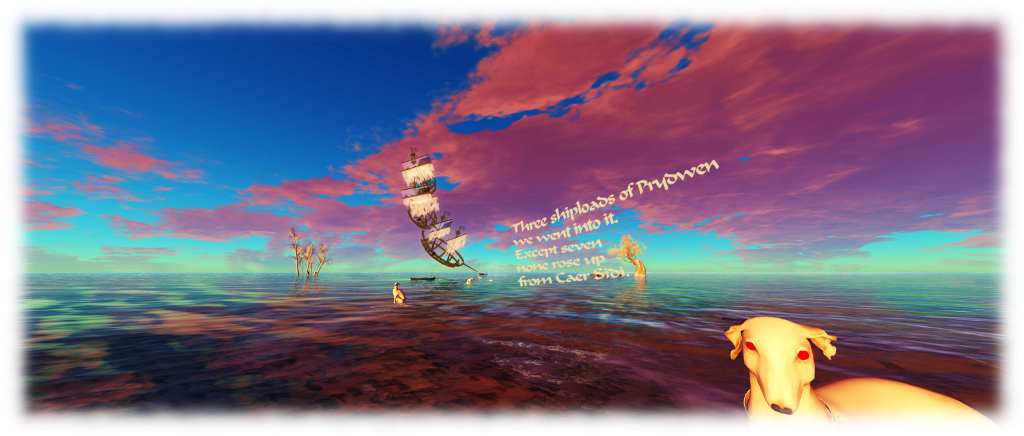
Preiddeu Annwn: “Three fullnesses of Prydwen / we went on the sea.”

Preiddeu Annwn (or Preiddeu Annwfn, “The Spoils of Annwfn“), is one of the most famous gnomic / philosophical poems to be found in the Middle Welsh Book of Taliesin. In just eight irregularly versed stanzas, it records a journey the poet (possibly intended to be the 6th Century poet Taliesin, although the poem itself dates from around the 14th Century), made with King Arthur to the Otherworld (the Annwfn of the title)  – a place of eternal youth and delights, which is common to Welsh mythology (appearing in, for example, the Four Branches of the Mabinogi).

It is also now the subject of an immersive environment itself entitled Preiddeu Annwn, designed by Hypatia Pickens, a professor of English at the University of Rochester,  New York, and her students. Its function is to provide an interactive means by which the poem and its themes can be explored and better understood, both within itself and with regards to broader medieval Welsh mythology and medieval literature. It is also an extraordinary piece of scholarly art.

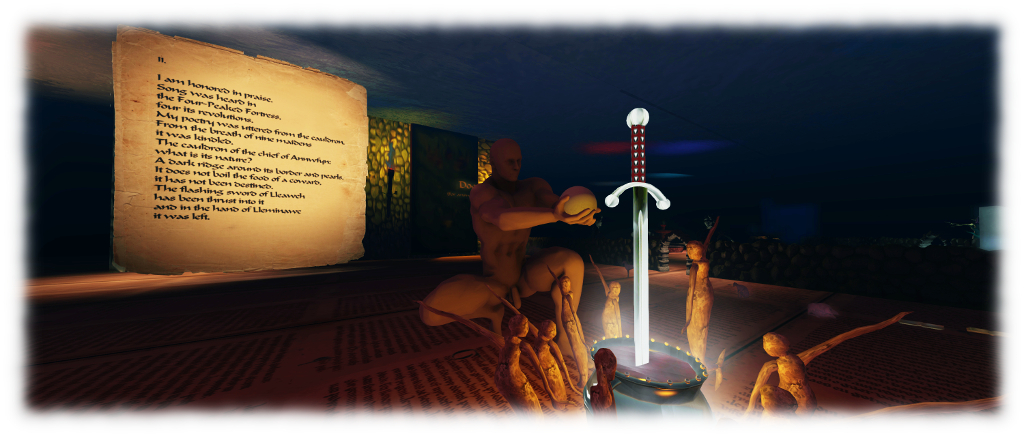
Preiddeu Annwn: “The cauldron of the chief of Annwfyn: / what is its fashion? / A dark ridge around its border / and pearls.

The arrival point offers a series of notes to visitors, including how to best experience the environment. It is more that worth the time to read these in order to make sure you enjoy the installation fully. Once you have done so, keep the instruction “follow the white dogs to where the boats are going [and] sit when you are asked to sit”, and then touch the teleport disc.

This delivers you to ground level, where waters ebb and flow over the eight stanzas of the poem beneath a beautiful sky, representing the start of Arthur’s expedition, and far on the horizon stand his three ships, white dogs pointing the way to them. In turn, the ships stand over the entrance to the Otherworld, on which your are to sit.

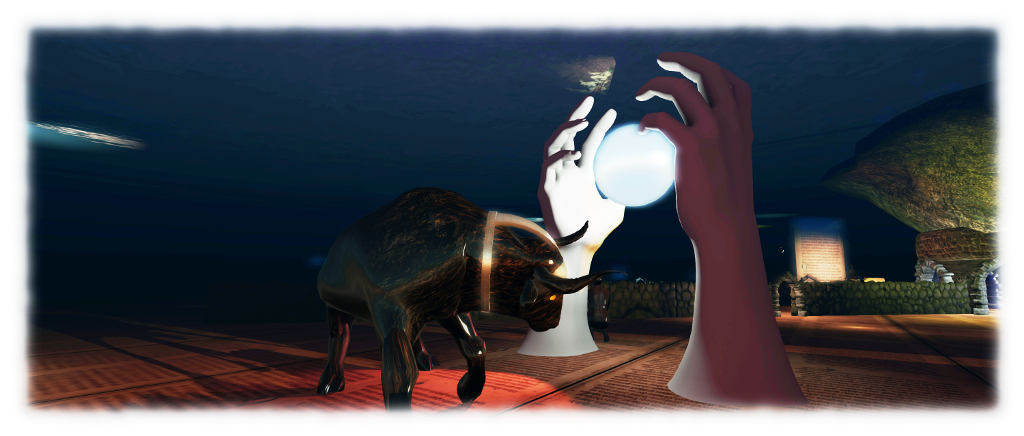
Preiddeu Annwn: They do not know the brindled ox, / thick his headband. / Seven score links / on his collar.

Doing so will deliver you to the Otherworld, in which the stanzas of the poem are presented through words and vignettes as an endless cycle, requiring considered exploration (the order in which you do so is yours to choose). As well as the poem, broader aspects of Welsh mythology are touched upon, such as the aforementioned Mabinogi. Do make sure you have media enabled (again, via the movie camera icon, top right of the viewer) to enjoy a reading of the poem by  Blake Harriman, set to music and vocals by Hypatia herself.

Eventually, however, you must make your way to Yyns Wair (“Gwair’s Island”, referred to in the poem as Cair Sidi – the Glass Fortress / “Fortress of Four-Peaks” encountered by Arthur and his men -, and believed to be modern-day Lundy in the Bristol Channel), in order to free Gwair / Gwier. This involves passing through the Door of Hell to explore the tower of Gwair’s imprisonment. which in turn gives you the opportunity to collect the poem, hear it recited in the original Middle Welsh by Hypathia herself, and read the thoughts of her students about the use of virtual environments in study.

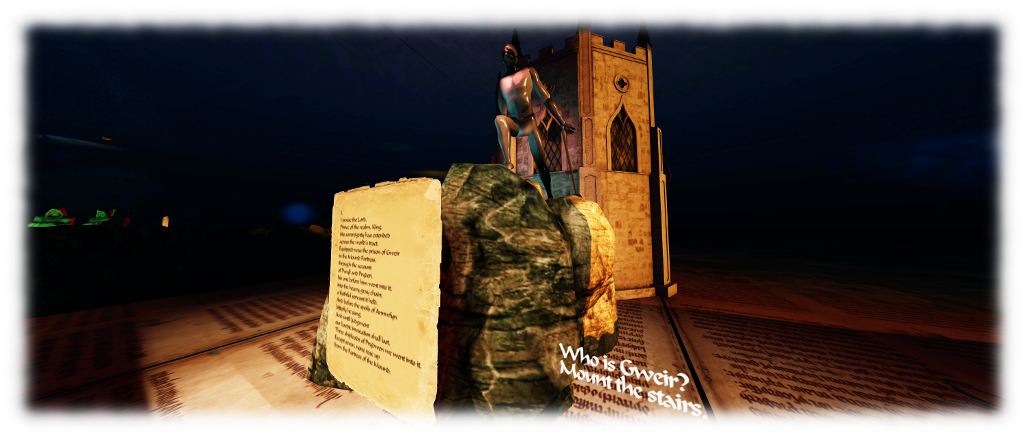
Preiddeu Annwn: “into the heavy blue/gray chain; / a faithful servant it held”

Preiddeu Annwn has been made possible through the support of the Russell Hope Robbins Library at the University of Rochester. A medieval studies library containing holding in all aspects of medieval literature, history, art and theology, the Library is also represented in Second Life, and can be visited directly, or by “following the waves” once you have reached Yyns Wair within the Preiddeu Annwn installation.

All told, this is an extraordinary demonstration of the power of virtual spaces as a tool for education and the exploration of art, history, mythology and language, with the virtual Russell Hope Robbins Library equally so. I spent in excess of four hours in exploration and contemplation of both; anyone with any interest in medieval literature, Arthurian mythology, Middle Welsh or medieval history in general cannot help but be enthralled by both.

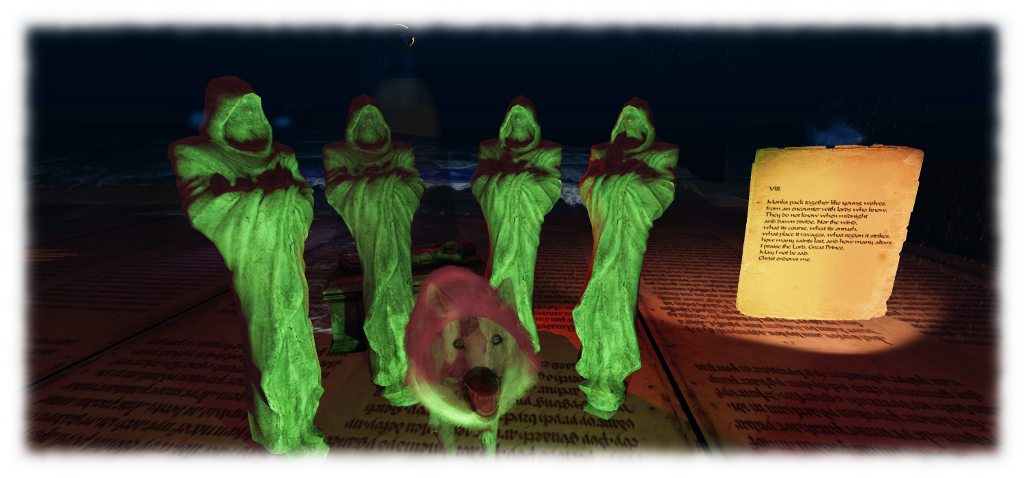
Preiddeu Annwn: “Monks pack together / like young wolves”

Related links