In January, I relayed the news that Bryn Oh was one of 17 recipients of grants from the Ontario Arts Council. At the time she received news of the grant, Bryn indicated that some of it would be used in recreating and filming her outstanding The Singularity of Kumiko (which I wrote about here). On July 24th, and following a premier at Indie Teepee on July 21st, she formally released the finished machinima on YouTube.
In rebuilding the installation for the filming, Bryn has made a few changes, and as she notes in her post on the film (which I’m actually unable to link to directly, due to her post not having a title of its own, so I can only direct you to her home page), she’s also incorporated scenes in the film which are not present in the in-world installation. None of these changes in any way alter the narrative arc of the piece; rather they allow the film to further stand as a valid and independent artistic interpretation of the installation.
This is the third grant Bryn has received from the Ontario Arts Council with respect to her work in Second Life, noting, “I also would like to thank the Ontario Arts Council for their continued support over the years … It is very rewarding and encouraging for me to know that such an establishment sees the virtual space as a powerful and unique tool for creating art.”
The Singularity of Kumiko was, and remains an extraordinary demonstration of immersive art and storytelling in Second Life, and one fully deserving to be preserved within this film. The installation itself remains open on Bryn’s home region of Immersiva. Regardless as to whether you have visited it before, please do take this opportunity to visit it in person whilst it is available.
Cathy Foil is a creator of note. Among her many talents, she was the first to introduce fully sculpted foot in SL and put it in a high heel; she is the creator of the MayaStar mesh rigging plug-in for Maya, and she is, alongside the AvaStar folk, one of the prime movers in the Bento project. She is also a huge fan of The Original Series of Star TrekTM.
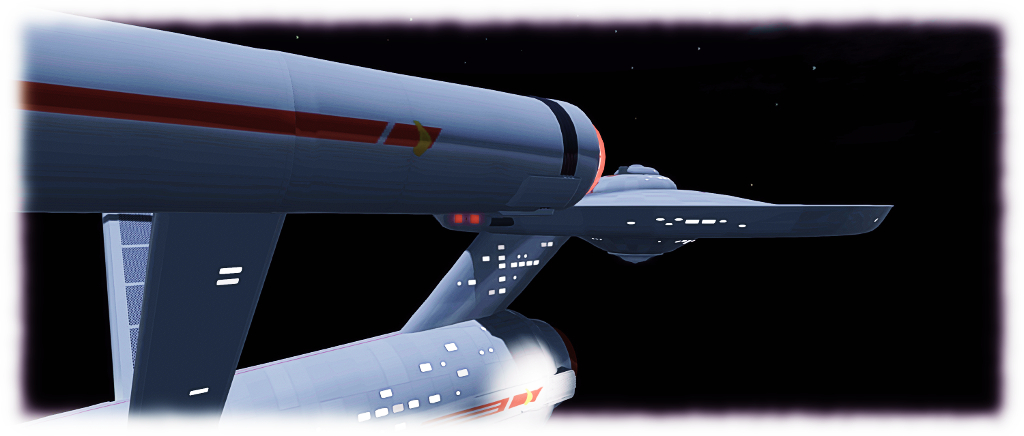
How big a fan, you ask? Well, let me put it to you this way: in 2008, before the birth of mesh in Second Life, she start started building an avatar-sized, scale replica of the Enterprise itself. Almost two regions in length, with interiors from the Bridge to Engineering, it was a huge undertaking – albeit unfinished.
“These are the voyages…”
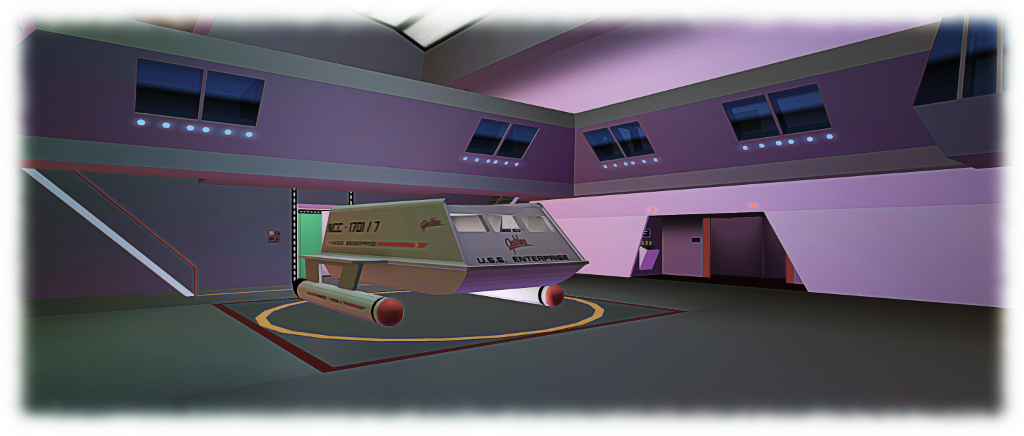
Part of the ship is currently once again rezzed in-world, although unfortunately in a location that is not open for public access. However, given July is being used to mark the 50th anniversary of Star TrekTM with the release of the 3rd film instalment from the “Abramaverse”, I took the opportunity to join Cathy on a tour of the original starship Enterprise NCC-1701.
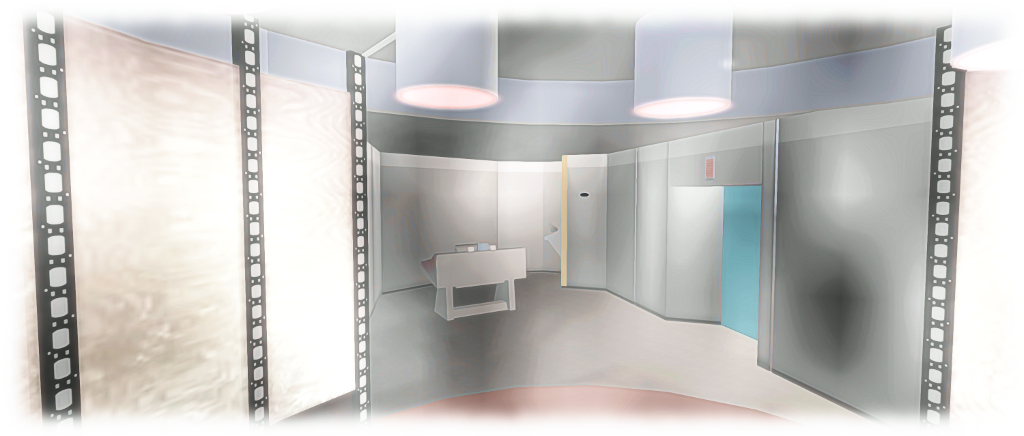
“You best be in Mouselook when we beam up to her,” Cathy informed me as we arrived at two innocent-looking transporter disks lying in the sand. Following her instructions I stood on a pad, brought up the menu and slipped into Mouselook before alt-clicking my destination: Mr. Kylie’s Transporter Room 6. For a second, nothing happened; then a familiar hum filling the air, the beach before me started to sparkle, my universe flickered for a second, then the sparkling and noise faded and the transporter room emerged out of the glow.
Beaming aboard the Enterprise: the transporter room materialises before my eyes
Never have I felt quite so “on” the Enterprise as I did at that moment; stepping off the pad, I expected to see Mr. Kylie himself behind the transporter station and then hear that magical high-pitched hiss of the doors as Kirk and Spock arrived.
“The entire project took about eighteen months to get this far,” Cathy said as I admired the transporter, the control console and monitoring station, all beautifully re-created in prims and sculpts. “Most of the ship is rendered as sculpts with prim walls and floors,” Cathy said, leading me to the door which did give that squeaky hiss of opening at we approached. “That way we could reduce the prim count and make things manageable.” Sculpts they may be, but sculpts designed with care: no waiting for things to pop into existence in my view at all during the tour.
“Captain Kirk to the Bridge!”
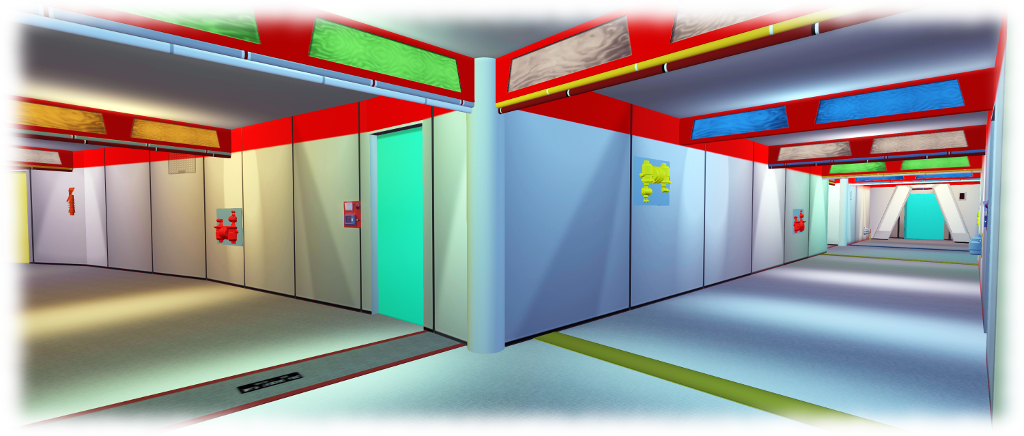
The corridors outside were equally marvels: the familiar bold colours born of 1960s colour television programming, the intercoms at junctions, the gaudy doors (behind which, and depending upon which deck you’re on, sit crew quarters, officers quarters, the sickbay, briefing rooms, offices, and main engineering), doors hissing in greeting or departure as you enter / leave. At the end of many of the corridors sit the familiar triangle archway of a turbolift station.
“These are all a single sculpt,” Cathy told me, as we walked to one of the arches, triggering an automatic call for a turbolift. “It includes the walls that connect the archway to the sides of the corridor so everything blends.” The car arrived and we stepped in. Touching the familiar handles gave a choice of destination. We headed for the Bridge.
The Bridge
“Most of the ship, including the textures, I made,” Cathy said in answer to my question as another spine-tingling sound – that of a turbolift in operation – filled the air. “Lora Chadbourne also contributed the shuttlecraft bay and some of the consoles like the monitoring console in the transporter room, another builder produced the interiors of the warp nacelles.”
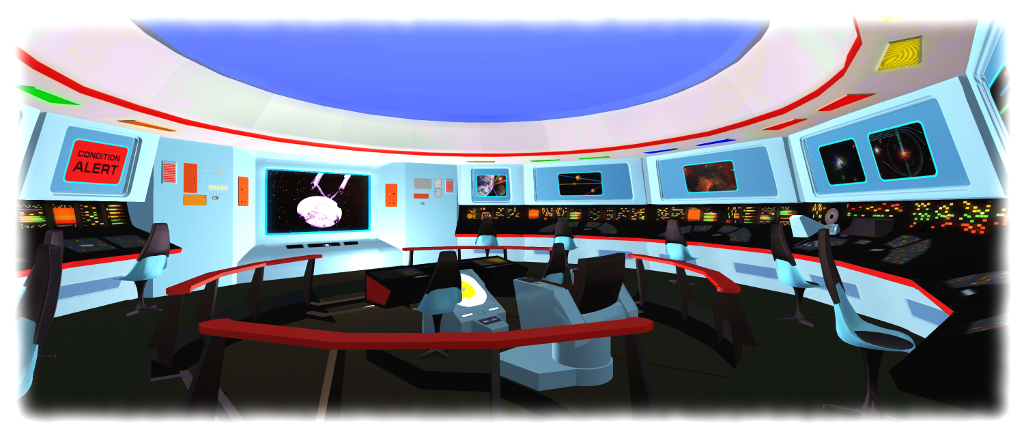
The detail is extraordinary. The bridge stations are all painstakingly reproduced, the centre seat has the expected wood trim, Spock’s science station has the familiar scanner. Elements within the bridge are interactive. Touch the helm console, and up come a range of options – go to warp, fire phasers or photon torpedoes, accelerate to warp 8, etc., while the viewscreen offers a range of images, including that of the destroyed USS Constellation, as seen in the episode The Doomsday Machine and the Romulan Warbird from Balance of Terror. And all around are the familiar background noises.
“Analysis, Mister Spock?” – a close-up of Spock’s library computer station
This level of detail and interaction is present throughout the ship – as are the ambient sounds. Back in the transporter room for example, you can toggle switches and operate the famous transporter activation sliders, while in Engineering, you can examine the ship’s dilithium crystals in their rack. A clever “stacked” use of textures gives an excellent a 3D effect in grilles and grates.
Drop into the briefing room, and you can flick individual rocker switches, call up images on the tri-screen, or use the intercom to call someone elsewhere in the ship. Down the corridor at the ship’s medical facilities you can work out to “Bones” McCoy’s satisfaction or pop into his lab where he has one of the parasites from Operation: Annihilate! under observation – although the little bugger is not averse to getting loose! Against the back wall of the lab sits the decompression chamber from Space Seed nearby. With working food replicators in the mess hall (fortunately tribble-free) and all the ambient sounds from the original, this is s ship that is really alive.
“Ma poor bairns!” Scotty’s Engineering – note the floor plans marking the layout
To ensure accuracy, Cathy used a mix of the Franz Joseph blueprints from the ship, together with plans from the studio in laying out the interior spaces, although as she notes, she had to upscale things a little. “The whole ship is like 115% to scale, she said. “Had to be bigger than 100% because average male avatar in SL is like 7 feet tall, and then there is the camera position on top of that!”
As note above, the ship isn’t a completed model. Circumstance brought the project to a halt in 2009 when the two regions over which the Enterprise was located were let go, ending all Trek role-play there. When touring the ship, signs that it is still a work-in-progress can be found on the floors, some of which are textured with copies of the original Desilu Studio set plans from the show. Rather than detracting from the model, these add a further layer of authenticity and care in its construction.
Update, August 2016: Regrettably, and as a result of illness, Small World Arts Gallery has closed.
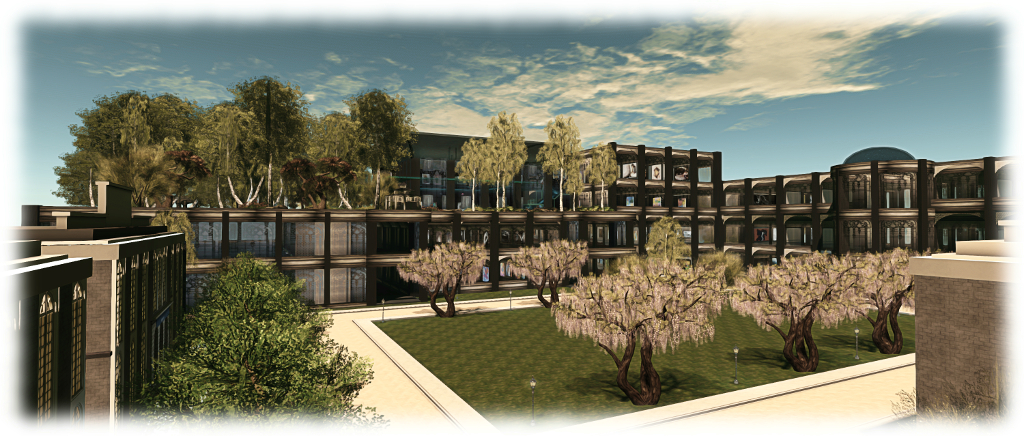
In May I wrote about the Small World Art gallery in Second Life. Operated by Mikey Jefford (mikeythai), Small World Art (SWA) is a region-wide complex featuring two large gallery complexes on both the ground level of the region and also overhead (where there are a number of satellite galleries.
The main galleries are host to displays by many Second Life photographers and artists, including (but not limited to) Silas Merlin, Mistero Hifeng, Giovanna Cerise, Toy Soldier Thor, Nino Vichan, Gem Preiz, ieko Catnap, Kayly Iali, StarZ (StarZ33 McCullough), Gita Aura, Barret Darkfold, Harter Fall, Artée (Artistide Despres), Fafner Hofmann, Maghda – the list goes on.
Such is the extent of the art on display in and around the galleries, that more than one visit is needed to take everything in. However, Mikey Jefford was recently taken ill in the physical world, and is currently unable to log-in to SL to cover the cost of the region tier, thus putting the galleries at risk.
In order to avoid this and ensure that tier continues to be paid, the gallery’s designer, Addi Tachikawa (Adrienne Falconer) and Mikey in-world partner, Mrs candy Jefford (candy68) have put out donation kiosks around the gallery. These record both total donated, and the amounts paid out in tier in respect of keeping the region open.
SWA has a lot to offer anyone with an interest in art, and represents a significant commitment to art is Second Life. I therefore have no hesitation in once again in recommending a visit, and urge all those who do to consider donating towards its continued existence. Even if you are donation box averse, remember a percentage of to price of all art sold in the galleries also goes towards maintaining the region – so even buying copies of the art your particularly like during a visit can help.
Should you like to help with keeping the region open in any other way, please IM Candy or Addie in-world.
Physical world / Second Life artist Ceakay Ballyhoo has a new region-wide exhibition currently open in Second Life. A Watercolour Wander, which will run through until the end of the year, brings together art and storytelling guaranteed to awaken our inner child and bring back memories of childhood imaginings set free whenever a blank sheet of paper and palette of watercolours were place before us, or the unwritten page and sharpened pencil placed in our hands.
“The idea started to form some months ago when I started to paint watercolours,” CK (as she is known to friends) states. “I’d been playing with making my own textures through watercolour paint and watercolour pencils a while before that … The idea of walking into a painting has always been a very attracting and intriguing one. Ever since reading Stephen King’s Rose Madder and later watching Robin Williams in What Dreams May Come, the wish to do something with that concept has been on my mind.”
And thus, A Watercolour Wander is just that – a walk through a landscape rendered as a watercolour. But not just any watercolour; this one forms a part of a story, the text of which is provided as part of the introductory notes offered to new arrivals, and which should be read as an accompaniment to any exploration (you can also read the story on CK’s blog). In it, a little girl, tired from the exertions of the day is slowly drifting to sleep when she realises her bedroom has vanished, to be replaced with a newly painted watercolour landscape, a path on the ground running from her bedside and into the trees, inviting her on an Adventure.
Staring from the from the little girl’s bed, we are invited to follow that path, scenes from her adventure presented to us in both 2D paintings and unfolding across the landscape before us: Mr. Nut, the squirrel, Pinkie Papillon, the gurgling river. Each painting marks a step in a story which – as is the nature of a good children’s story – has by turn its lighter and darker moments before all turns out well in the end.
The story is engaging, and very much as part of the overall experience – but it is the paintings and landscape that capture the attention. Beautifully rendered, the colours slightly washed and the outlines of trees and rocks and buildings perhaps outlined a little heavily, they perfectly embrace the idea that they have been painted by the little girl of the story to illustrate her dreamworld adventure; the reflections of a personal story imagined by a young mind.
The images from the story are all available at the end of the walk, together with a painting of a mermaid. CK has also created a Flickr group for those wishing to post their own wanders through her watercolours.
Whilst perusing the latest Destination Guide Highlights, I was pleasantly surprised to see a new entry for the Elysium City of Templemore. by Luis Lockjaw. In the past, I’d visited the old Hesperia of Templemore, but never managed to blog about it; the closest I’d come was a piece on isle of Mousai, Templemore’s former sister region, also designed by Luis. So the new DG entry spurred me into jumping over and correcting things.
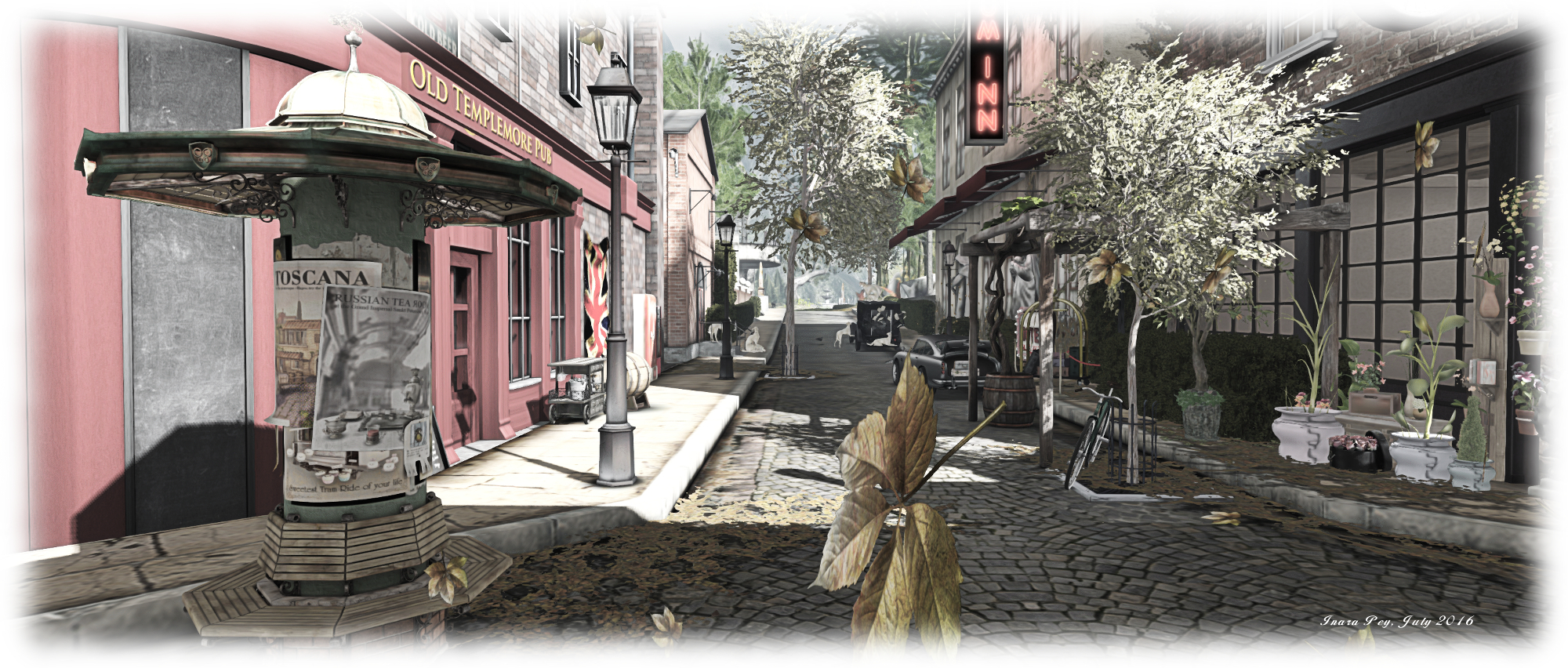
A new design this may be, but the magic of the “old” Templemore is retained. Folded within the within the arms of tall mountains, and reached only by the single channel of water cutting between them, there is a sense that Elysium City lies hidden from the rest of the world. It is a place which invites exploration and which suggests stories lying just around the next corner or behind each door – a place which awakens the imagination and draws the visitor into its tales and whimsy.
From the landing point in the west, bordered by a narrow band of beach curving away to the north and south, you walk across sandy grass to the city gates, standing slightly ajar and silently beckoning. A short walk away, across sandy grass, the city gates beckon, drawing you to them, and the cobble streets beyond. Step through them and you enter a new realm, a place where time both passes with a steady heartbeat whilst everything also seemingly caught within a single moment.
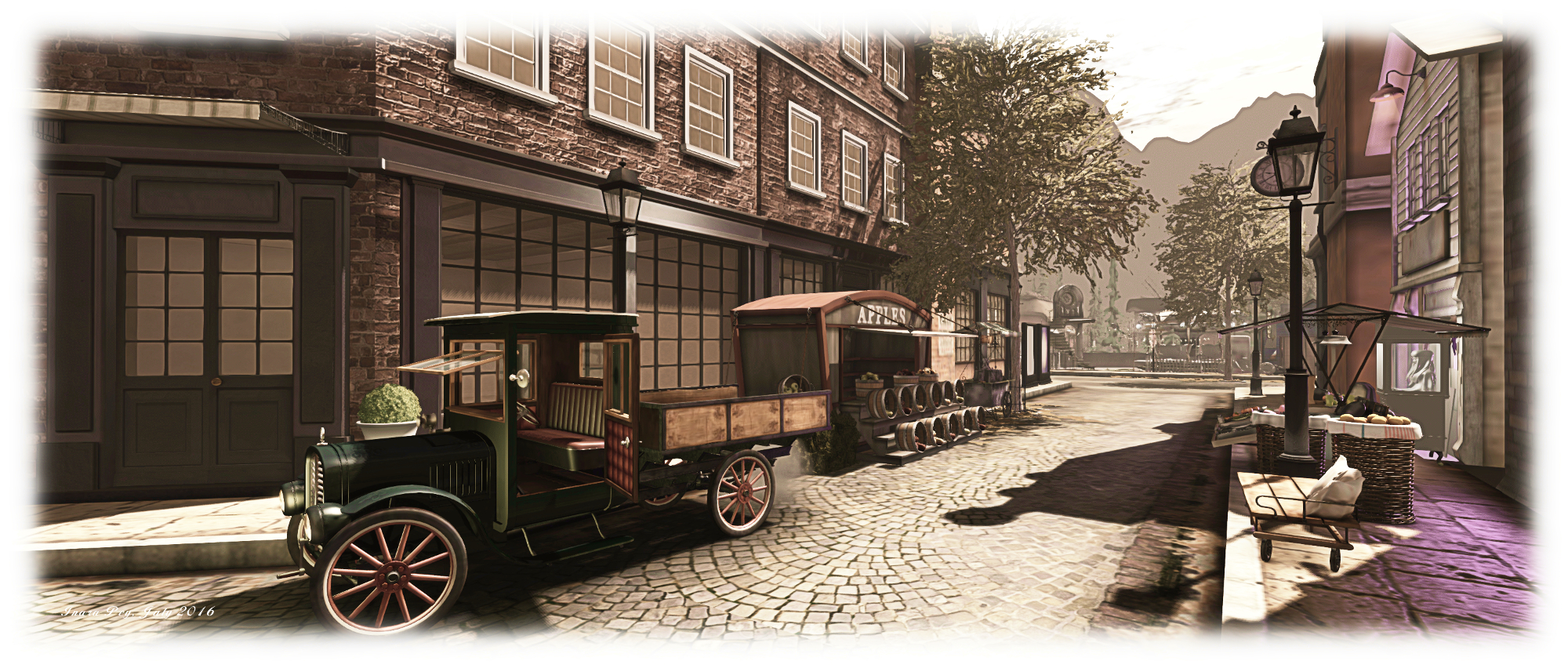
The cobbled streets, mostly bordered by tall brick buildings of a bygone era, appear at first glance to have been lifted from the heart of an English metropolis -but look again. Among them sit Tuscan villas and French street café booths, while a distinctive American wood-framed house sits within an eerie green light, drawing you towards its hidden mystery.
To the north and south sit a tall factory and the Elysium Theatre, their respective bulks standing sentinel-like on either shoulder of the city. Along the streets, clocks hang from walls marking the passage of time, yet pages from a book and leaves freed from their life on boughs, hang motionless in the air, whilst statues watch all who pass before them.
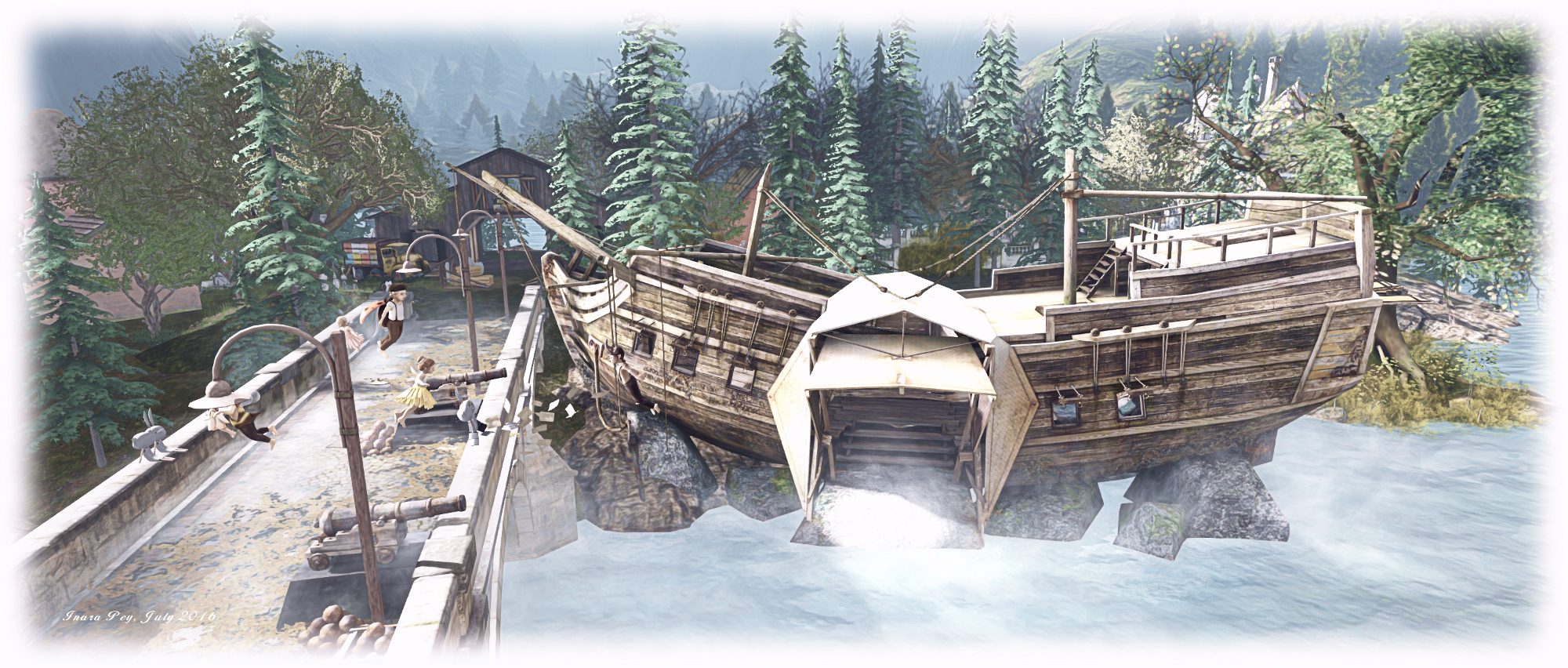
Eastward, across the city, lies a river spanned by a single bridge, its arches shrouded in mist, the wreck of a once proud brig, now broken against the rocks. Winged fairies, like brightly coloured lost Boys and Wendys, hover over bridge and water, and while the ticking of a clock cannot be heard, it’s not hard to look down at the misted waters and imagine the tick of one echoing faintly from under an arched span of the bridge…
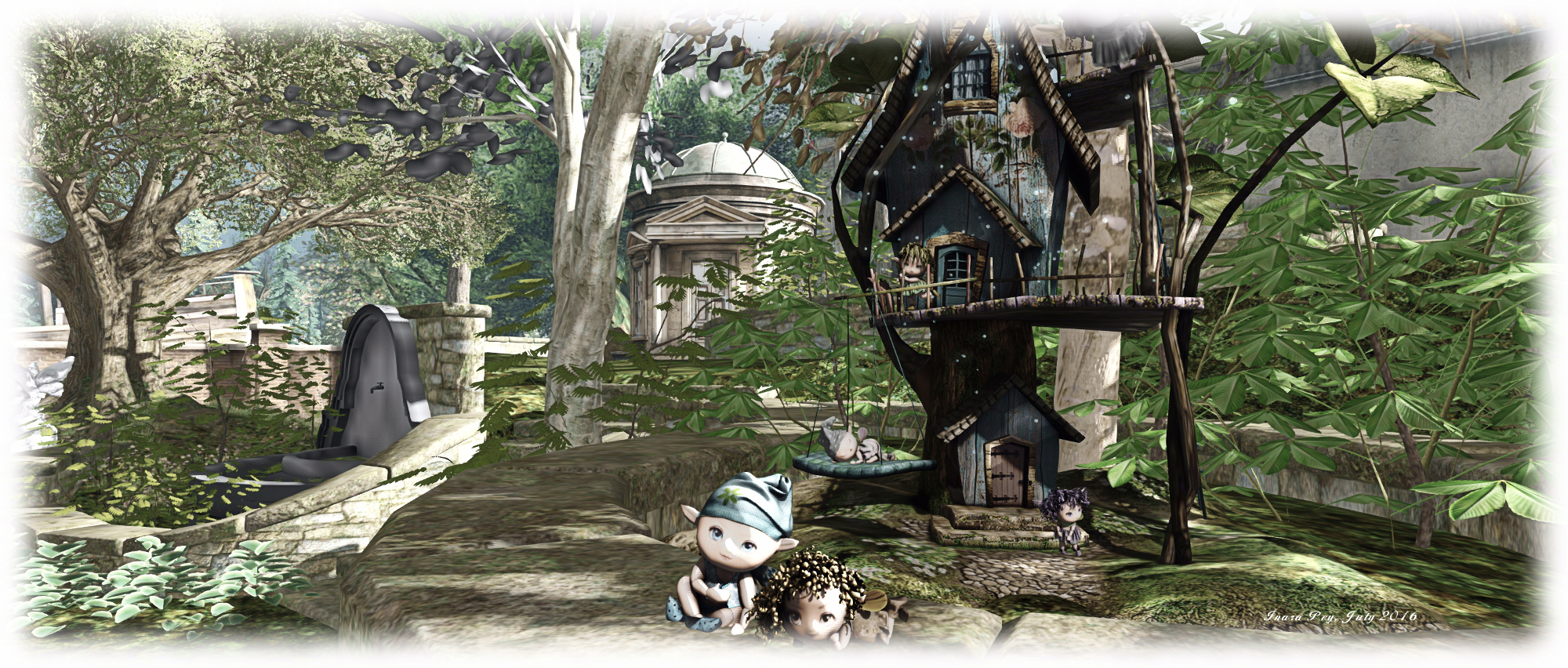
Beyond the river, the city gives way to a rustic setting, wherein sits a little farm, a loose wooden board walk pointing the way to another mansion-house rising above the trees. This area is a place of whimsy and smiles, as can be seen as soon as you reach the end of the bridge.
As noted at the top of this article, music is still at the heart of Templemore, and the landing point gives news on upcoming events (at the time of writing, the next concert was due to be held on Sunday, July 24th from 13;00 SLT).
Elysium of City of Templemore is a joy to visit. While there are welcome echoes of Hesperia for those who remember it, the City offers a richly layered sense of immersion which is entirely its own. The mix of urban and rustic settings is perfect, and needless to say, photo opportunities abound, both under the atmospheric default windlight and in those of your own choosing.
If you’re so minded, your photos are welcome in region’s Flickr group. Should you enjoy your visit, please consider a donation towards the region’s future upkeep.
Now open at LEA 21 is the first part of Giovanna Cerise’s Soul of Colours, an installation which will unfold over the coming months. For this initial instalment, open through until the end of August, Giovanna presents Variations in The Magic Flute, based on the 2-act opera Die Zauberflöte (The Magic Flute, K620) by Wolfgang Amadeus Mozart, an opera which has, in my opinion at least, one of the most rousing and engaging overtures ever written.
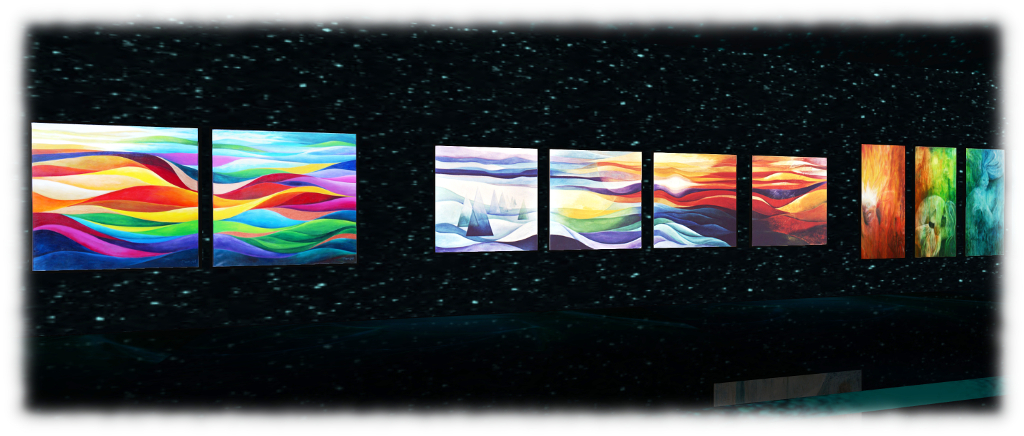
This is an installation which first appeared in-world some four years ago, and which takes the visitor on an interactive, allegorical journey of light, colour and sound through key elements of the opera, complete with extracts of the music from some of the key events in the unfolding story.
Premiered just two months before Mozart died prematurely, on September 30th, 1791, The Magic Flute is, at its heart, a love story, focusing on handsome Prince, Tamino and Pamina, daughter of the Queen of the Night, and involving an additional tale of desire and love between Papageno and Papagena, as well as the aforementioned Queen of the Night and her handmaidens and the enlightened Sarastro and his retinue.
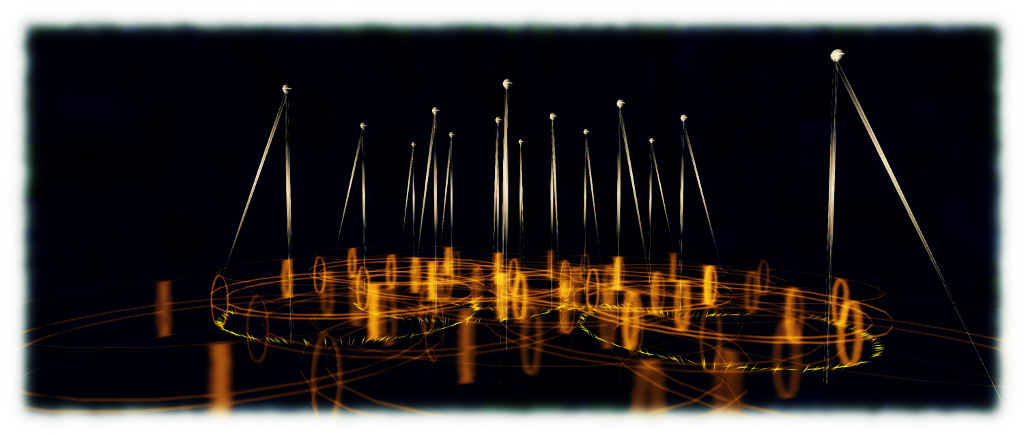
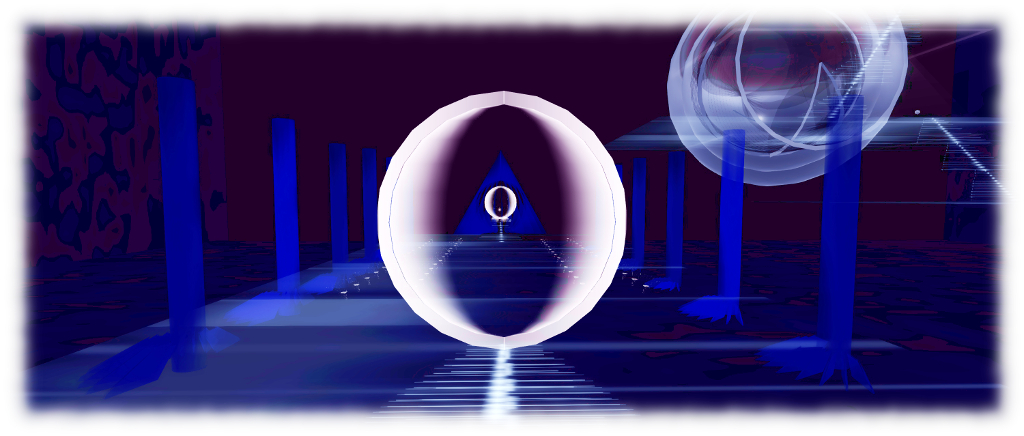
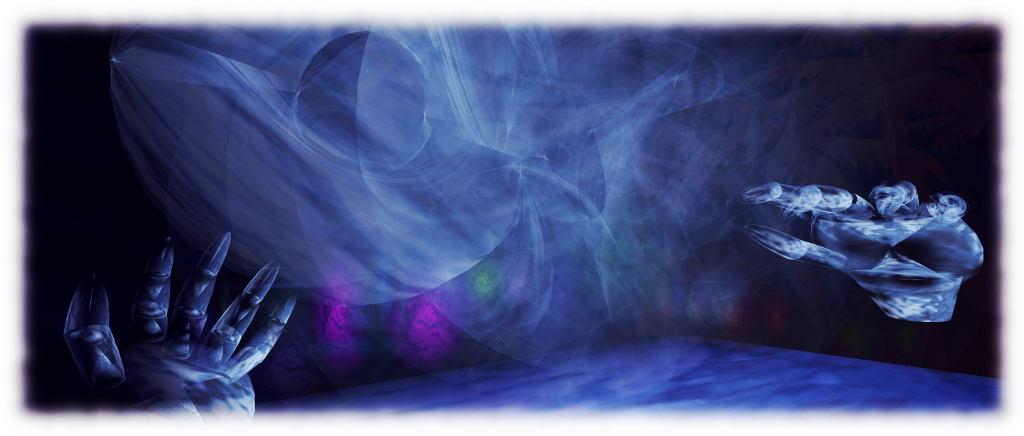
Within Variations in The Magic Flute, Giovanna invites visitors to engage on a journey through key scenes and events from the opera: the grove with its serpent, where Tamino is rescued by The Queen of the Night’s three ladies in the opening scene; an expression of the Queen’s anger from Act 2, Scene 3, Der Hölle Rache kocht in meinem Herzen (“Hell’s vengeance boils in my heart”); allegorical representations of Sarastro’s garden, pyramids and the Temple of the Ordeal / Temple of the Sun (which it is depends on your interpretation of the opera as you come to it).
Passage through these scenes and locations is a matter of ascension – something which is itself an allegorical reflection of the opera’s story, following Tamino’s rise from the Queen’s deception into the enlightenment of Sarastro’s benevolence and also the rising triumph he and Pamina share in overcoming their individual trials and tribulations to finally be united in their love.
Passage between the levels / scenes are via crystal staircases (also triangular in shape, reflecting the pyramids of Sarastro’s domain), although you can fly if you wish. I’d personally recommend the former, as the latter does run the risk of missing things.
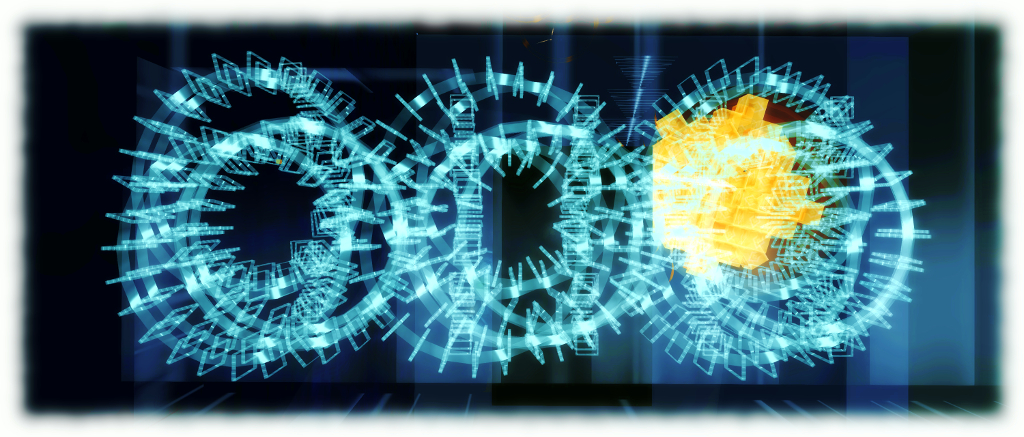
The interactive elements come in the form of music spheres which will play excerpts from the opera,together with locations where you can sit, and animations which will place you within some of the scenes. You can, for example, be tossed around by the vengeance which rocks the Queen’s dark heart.
I have no idea of the direction Soul ofColours will take from the start of September. I will, however, say that as I missed Variations in The Magic Flute when it was first displayed, I’m delighted to be able to visit it this time around; Giovanna and I appear to share something of the same taste for musical inspiration. With this piece, she has captured the essence of the story through a marvellous symbolism, while the use of light perfectly captures the heart of the music.
SLurl Details
Soul of Colour: Variations in the Magic Flute (Rated: Moderate)