Flash Back / Flash Forward in Second Life

Flash Back / Flash Forward – Giovnna Cerise

Open from Monday, May 29th through until Monday, July 31st, 2017 at Split Screen’s temporary home*, is Giovanna Cerise’s newest installation, Flash Back / Flash Forward. This is a complex piece, rooted in both the artist’s own perceptions of creativity and in the notion  – or perhaps that should be the temporal nature – of time as we generally tend to perceive it.

The core of the installation is a large, fractured structure. This seems to rise in multi-faceted tiers into the sky, but contains only a single level, reached via teleport – the large daisy at the base of the structure and a short walk from the landing point.  This level is divided into disparate rooms and corridors to present something of a maze in which none of the spaces are connected to its neighbours but must be reached by passing through the walls themselves. within some of the spaces can be found certain artefacts  –   a suitcase and oversized key, an easel, a hat and rose, images –  which we are left to interpret for ourselves.

Flash Back / Flash Forward – Giovnna Cerise

There is no set root through these spaces, although a list of SLurls those containing objects is supplied in the descriptive note card. Instead, visitors are encouraged to wander. In doing so, moving through the room and along the corridors becomes something of an optical experience. Scenes flicker in and out of our perception, colours flick and change – white, red, white – perspectives shift; self-awareness fluctuates as our avatars flips through different states. sometimes solid, other times an outline reflecting the shapes and images contained within walls, sometimes a shadow.

It’s a slightly confusing, perhaps disconcerting effect, heightened by the longer one walks through the installation, as images and colours and outlines flicker in and out of existence or flip from one to another before our eyes, become discrete moments in time revealed only to us in our passing. And time – as noted, is the core of things here.

Flash Back / Flash Forward – Giovnna Cerise

Flash Back / Flash Forward is an examination of time at both the micro and the macro levels. On the micro, is an attempt to encapsulate the artist’s relationship with her work, from initial concept through development, to its completion, as seen trough the lens of time. The artist can only exist in the present, thus the development of a piece of art becomes an exercise in reflection and projection: the initial idea is reflected in the mirror of construction, which serves to project the work into the future, to its final state. There can be no viewpoint from outside the linear nature of time; no real ability of see the work as a fluid whole, from start to finish.

At the macro level, Flash Back / Flash Forward reminds us that our entire life is spent in “the present” – but “the present” is personal to each of us, an elusive, undefined space through which we each travel, sometimes overlapping with the space occupied by others. It is a space into which the past can intrude via memories which flicker, appear, vanish or even morph from point to point as our present is influenced by mood, desire, understanding, and so on. And always, the shifting nature of our present foreshadows what is yet to be, but never allows us to experience it until “the future” is our “present”.

Flash Back / Flash Forward – Giovnna Cerise

And so everything might be said to be chaotic, hence the form of the build and the random tumble of sights as we move through it. But within the chaos of the present are oases of calm; moments forever caught in time – and thus, the rooms Giovanna presents for us to find: The Dream; The Point of View; The Desire; The Lighteness; The Bird; The Impossible Choice.

This is a fascinating, intriguing installation, one which may require a careful reading of the supplied nots to fully grasp, but which is nevertheless beautifully executed.

SLurl Details

*For more on Split Screen’s situation, please read Split Screen Loses Its Home.
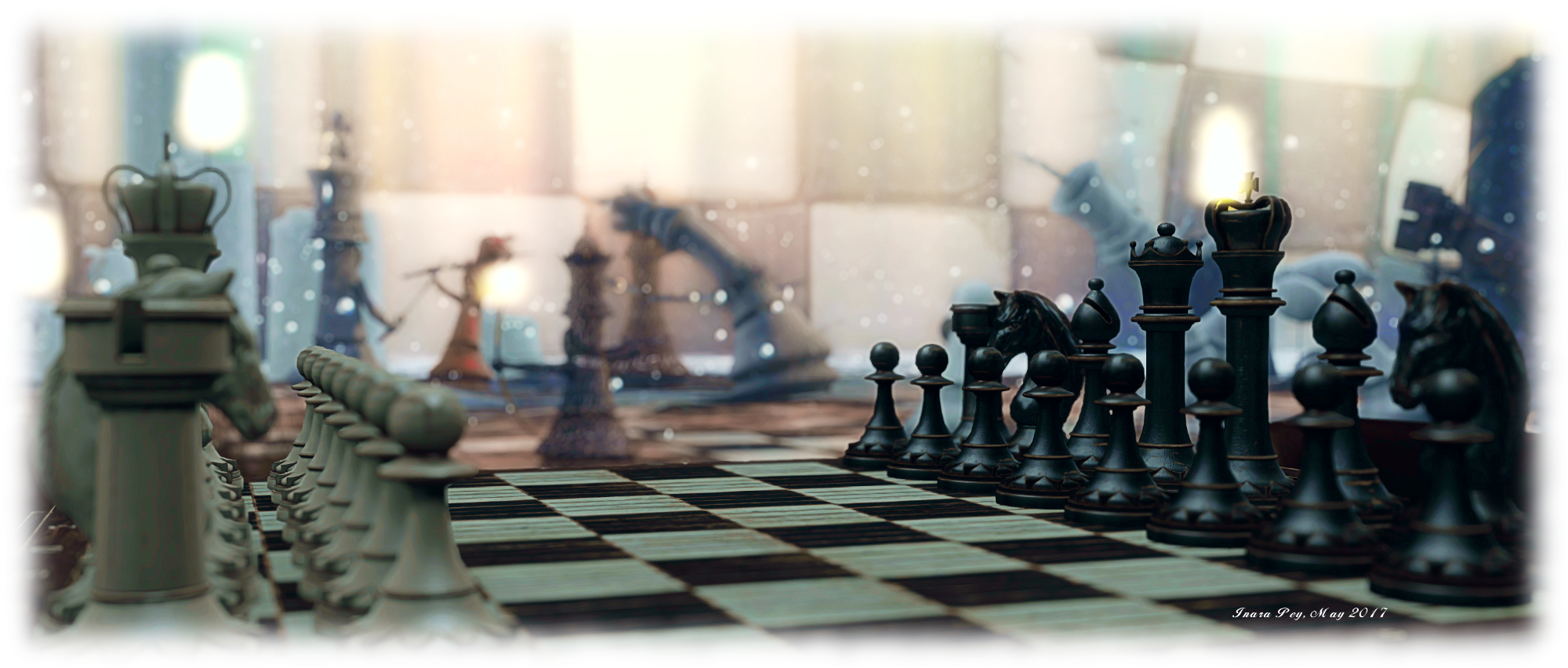
A Chess Wonderland in Second Life

Chess Wonderland, Egypt; Inara Pey, May 2017, on Flickr Chess Wonderland – click any image for full size

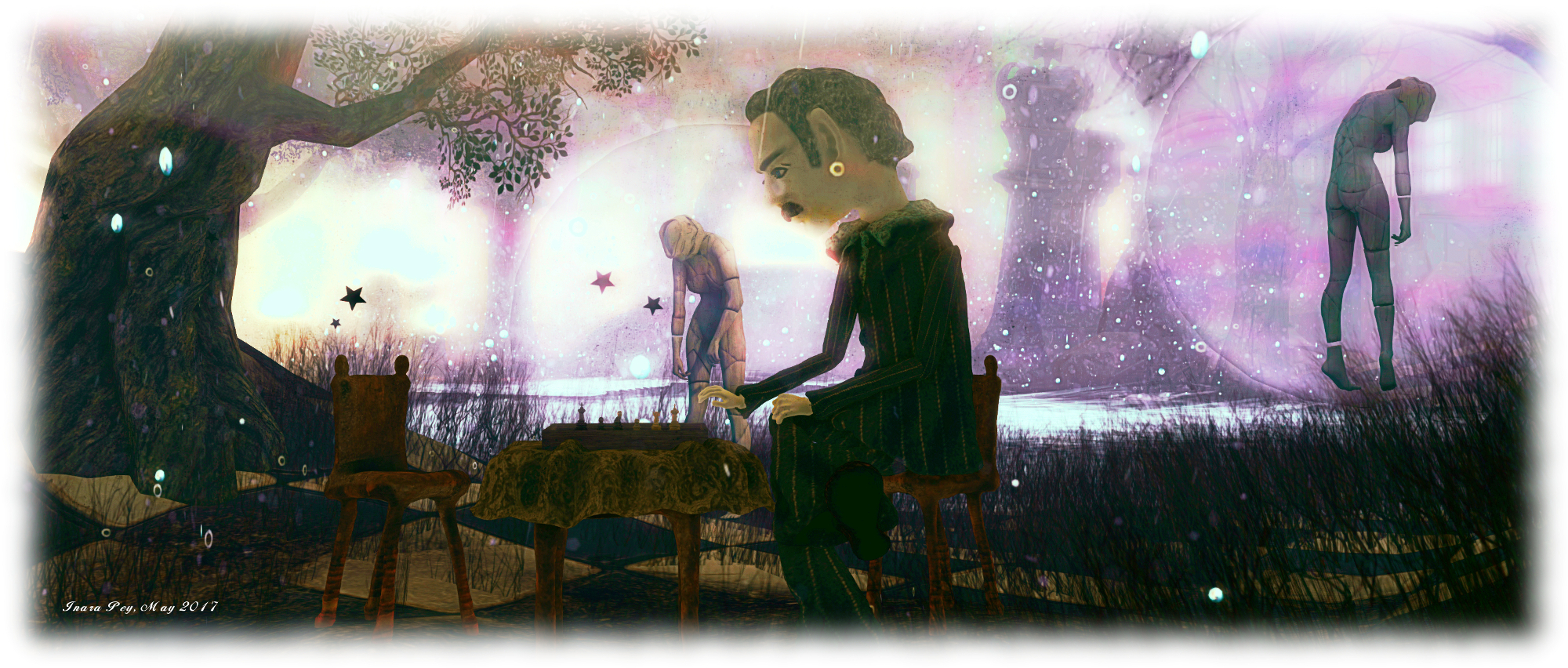
Chess Wonderland, is a fascinating Homestead region which caught my eye a couple of weeks ago after seeing images pop-up on  Twitter and Flickr, marking it as a place to visit as time allowed.  Designed by EgyptRocker, it is a surreal place with the focus – as indicated in the name – on chess, which is seen not so much as a game of strategy but as an eternal melee of close-quarter fighting.

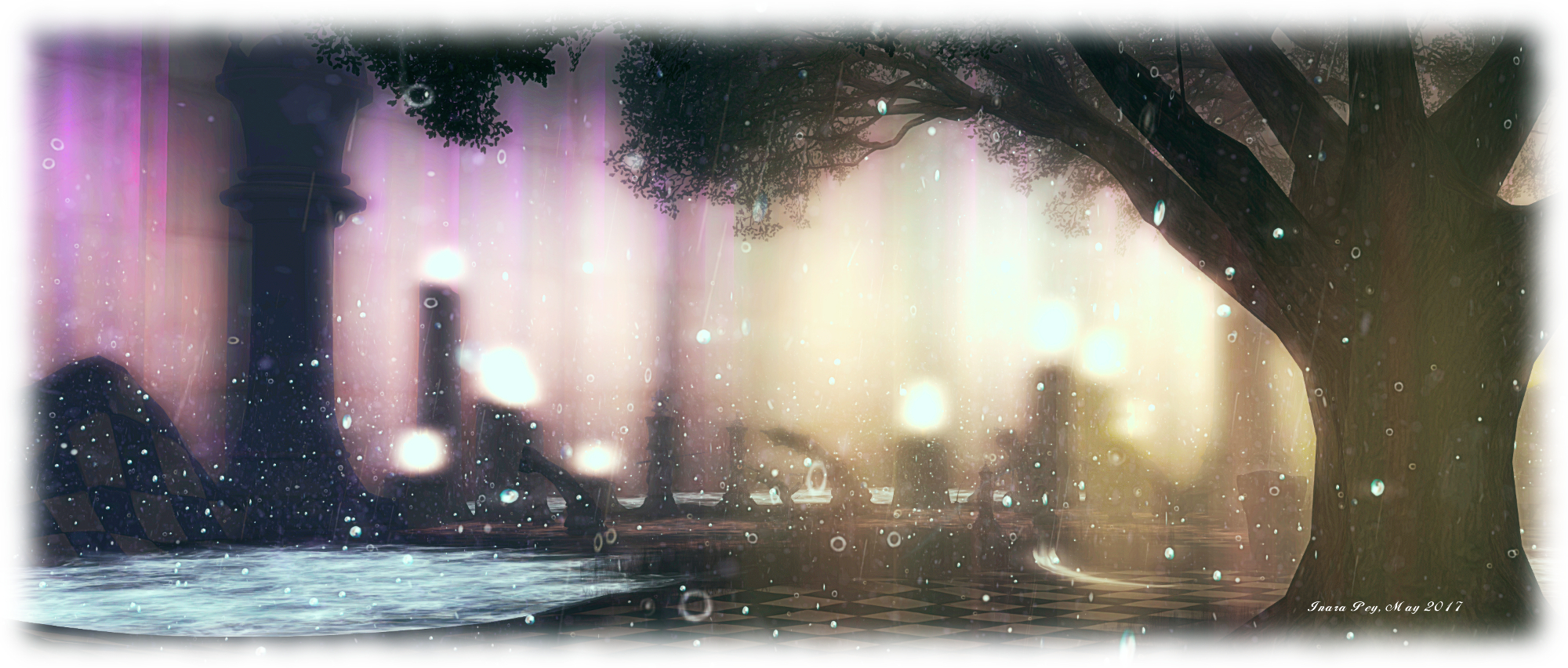
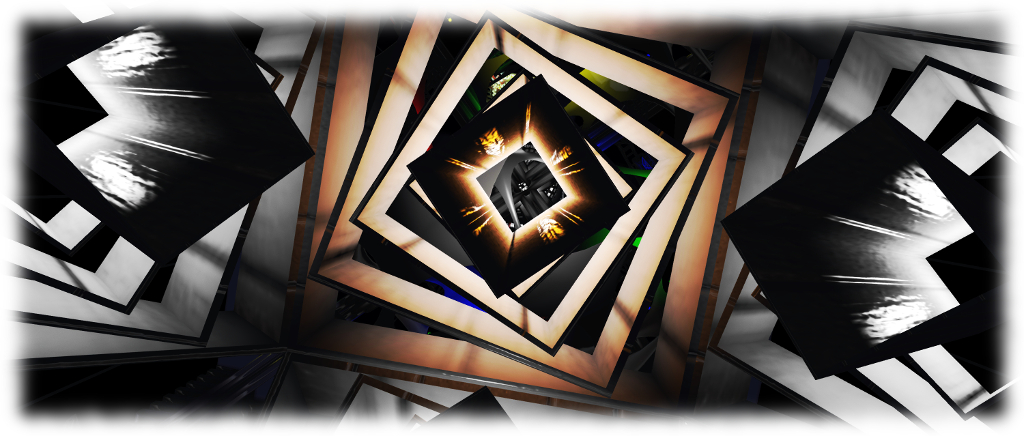
Visitors are presented with an undulating landscape covered in the black and white tiles of a chess board, which rises into chequered monochrome walls surrounding the region. These walls in turn rise into a roof high overhead, giving the region a gigantic, room-like feel, heightened by the great ceiling light suspended from high overhead which casts a glowing aurora over the top of a great tree occupying the centre of the region.

Chess Wonderland, Egypt; Inara Pey, May 2017, on Flickr Chess Wonderland

This aurora is mirrored by softly rippling sheets around the edge of the landscape as misted pools slowly turn between the hills, and sheets of ocean mist drift beneath the boughs of gigantic trees. Unmissable due to their size, the trees are matched in height by massive chess pieces – knights, rooks, bishops and queens – apparently standing guard over the region while candles cast additional ghostly light.

The battle between black and white is located across the region from the landing point, where Mistero’s Hifeng’s chess pieces have been placed on the tiles of the land. Far from presenting a genteel game of carved pieces on a flat board, they are engaged in a vicious a battle involving blade and arrow.

Chess Wonderland, Egypt; Inara Pey, May 2017, on Flickr Chess Wonderland

Close by sits a huge table, braced by two equally huge armchairs. The table holds a traditional chess board and pieces, and the armchairs smaller copies of themselves suitable for avatars to sit in. The chess board is playable, offering those who sit in the smaller armchairs the opportunity to engage in a more traditional match or two.

Further around the region, guarded by a pair of giant chess kings, sits a castle. Possibly the point of contention between the warring pieces, it also appears to be the location for events – on our visit, a fair few people were gathered with its walls.

Chess Wonderland, Egypt; Inara Pey, May 2017, on Flickr Chess Wonderland

Mistero Hifeng isn’t the only artist represented here, both through his chess pieces and several other sculptures. Sitting close to the landing point is Cica Ghost’s chess player from Strings (which you can read about here), while the string quartet and their pianist from the same installation can be found further around the region, playing under the cover of a fold in the land.

Chess Wonderland is a surreal, beautiful region, unusual in form, softened in look through the considered windlight and use of auroral effects (probably best appreciated with Advanced Lighting Model enabled in the viewer). The presentation of the art pieces by Mistero and Cica – two of my favourite 3D artists – is both imaginative and eye-catching, making for a fascinating and rewarding visit.

Chess Wonderland, Egypt; Inara Pey, May 2017, on Flickr Chess Wonderland

SLurl Details

A Meadow Rose in Second Life

Meadow Rose III, Tyme; Inara Pey, May 2017, on Flickr Meadow Rose III – click any image for full size

Note: Meadow Rose has relocated to Forever Neverland – see my more recent review here. SLurl is this article have been removed.

Meadow Rose III, designed by Rye Falmer, is a homestead region open to the public offering a  romantic setting for visitors, with much to see and do – and appreciate. For those reading the region’s descriptions, there’s even an extract of a story they might decide to continue for themselves.

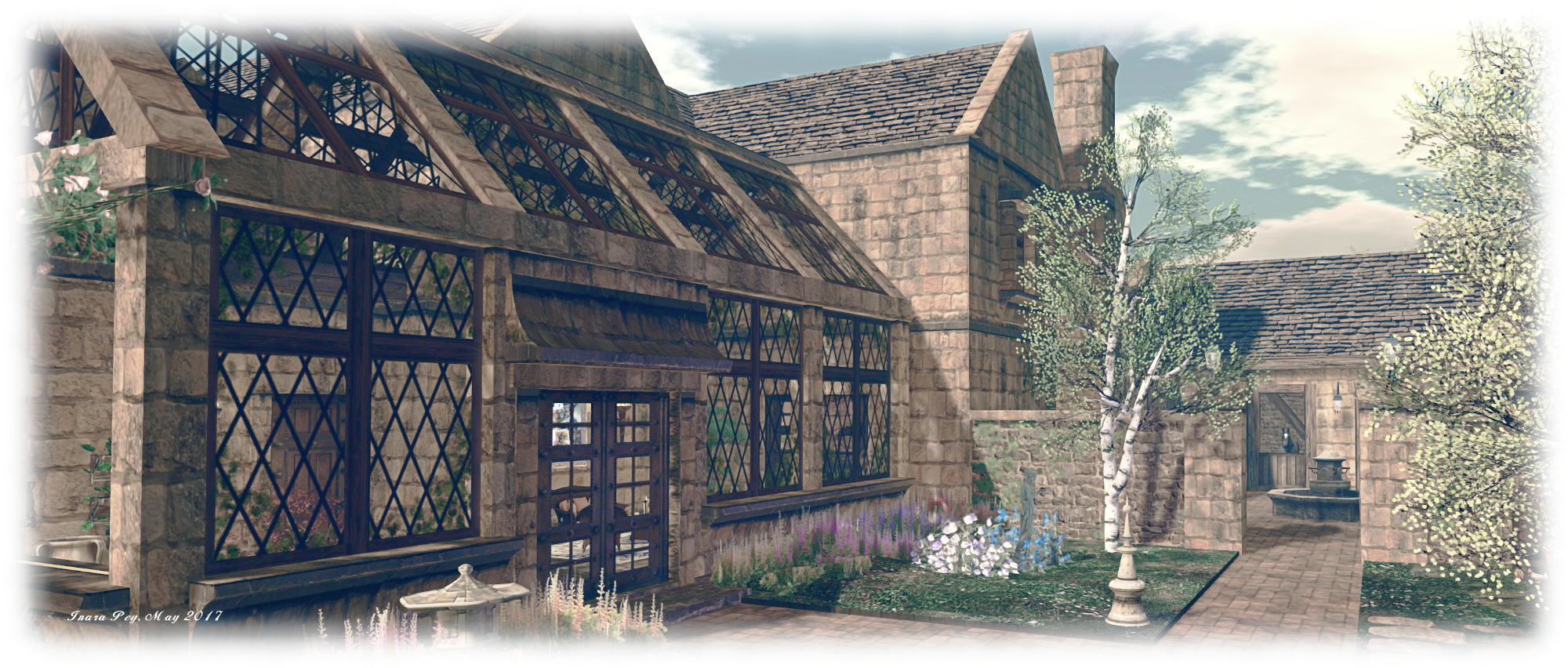
The overall design may initially strike one as a period setting. There is a Tudor look to many of the buildings which can easily lean one in that direction. However, there are more than enough clues to reveal that while the buildings are period, the setting is modern.

Meadow Rose III, Tyme; Inara Pey, May 2017, on Flickr Meadow Rose III

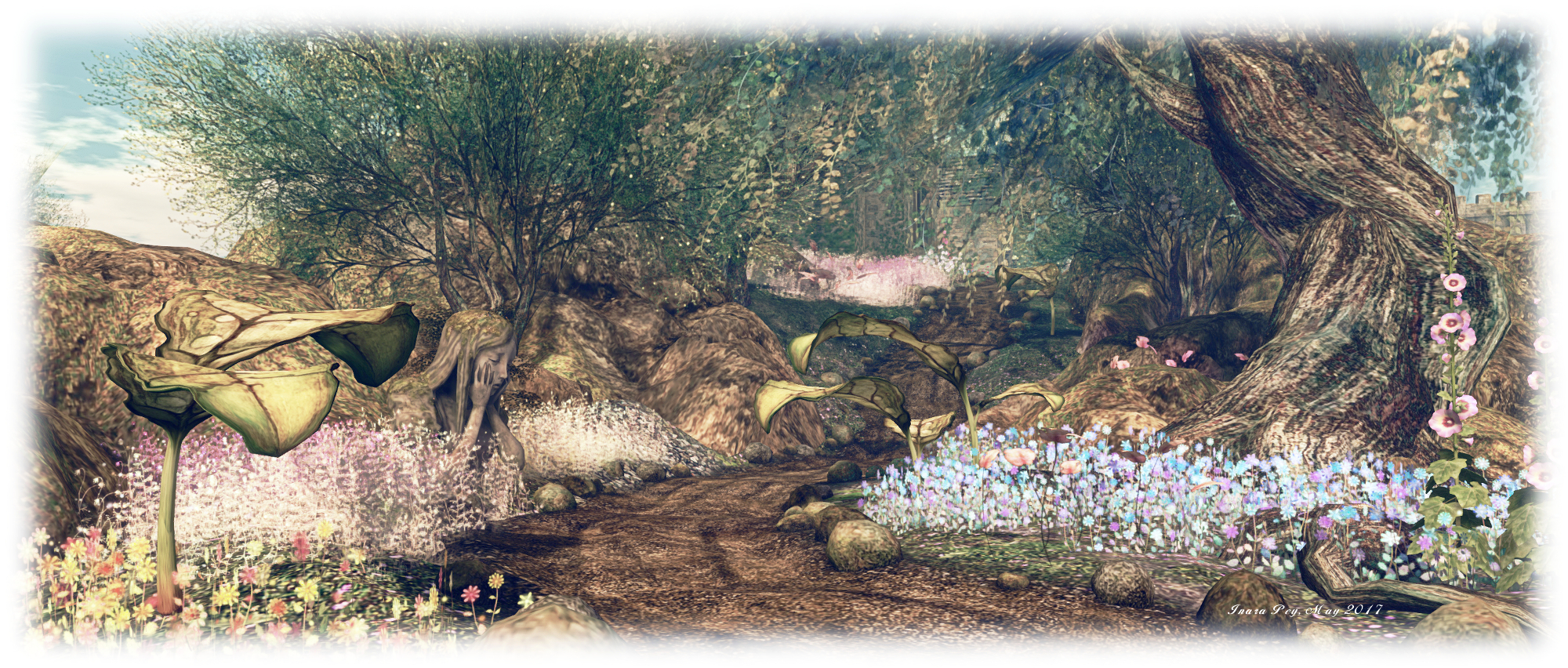
Instead, what we appear to have is a stately home sitting amidst extensive grounds with formal gardens  of the region suggests this is the ground of a stately home, one which may well have been built centuries ago, but which undoubtedly sits in modern times, the grounds around it pointing to even older occupation, containing as they do the ruins of a more fortified former home, the stone from which may well have gone into the building the current house and some of the other buildings to be found here.

For both Caitlyn and I the overall impression of Meadow Rose is akin to that of many of the grand estates managed by the National Trust here in the UK. That is, lands held for generations by a family, bearing all the hallmarks of their long ownership during which the passing of time gave rise to different forms of house – castle to manor, for example – but which are now maintained for the wider appreciation of the general public, their gates and doors open to visitors to enjoy them in their natural splendour.

Meadow Rose III, Tyme; Inara Pey, May 2017, on Flickr Meadow Rose III

The land is broadly arranged in a U-shape around a central channel of water which runs northwards from the middle of the region. The landing point sits on the north-west arm of the U, and the manor house on the north-east, reached via a gated, covered bridge from the landing point. The latter sits between a chapel and a stone-built house, and features an events deck offering live musicians and DJ sessions on a regular basis.

The manor house – open to exploration – sits within formal walled and hedged gardens offering opportunities for walks amidst flowers and hedgerows. It is backed by stables where horses can be obtained should people like to take a ride through the landscape. The glass roof of one wing of the house and the greenhouse alongside the stables, with its scattering of modern gardening implements, are two of the hints that this isn’t a period setting.

Meadow Rose III, Tyme; Inara Pey, May 2017, on Flickr Meadow Rose III

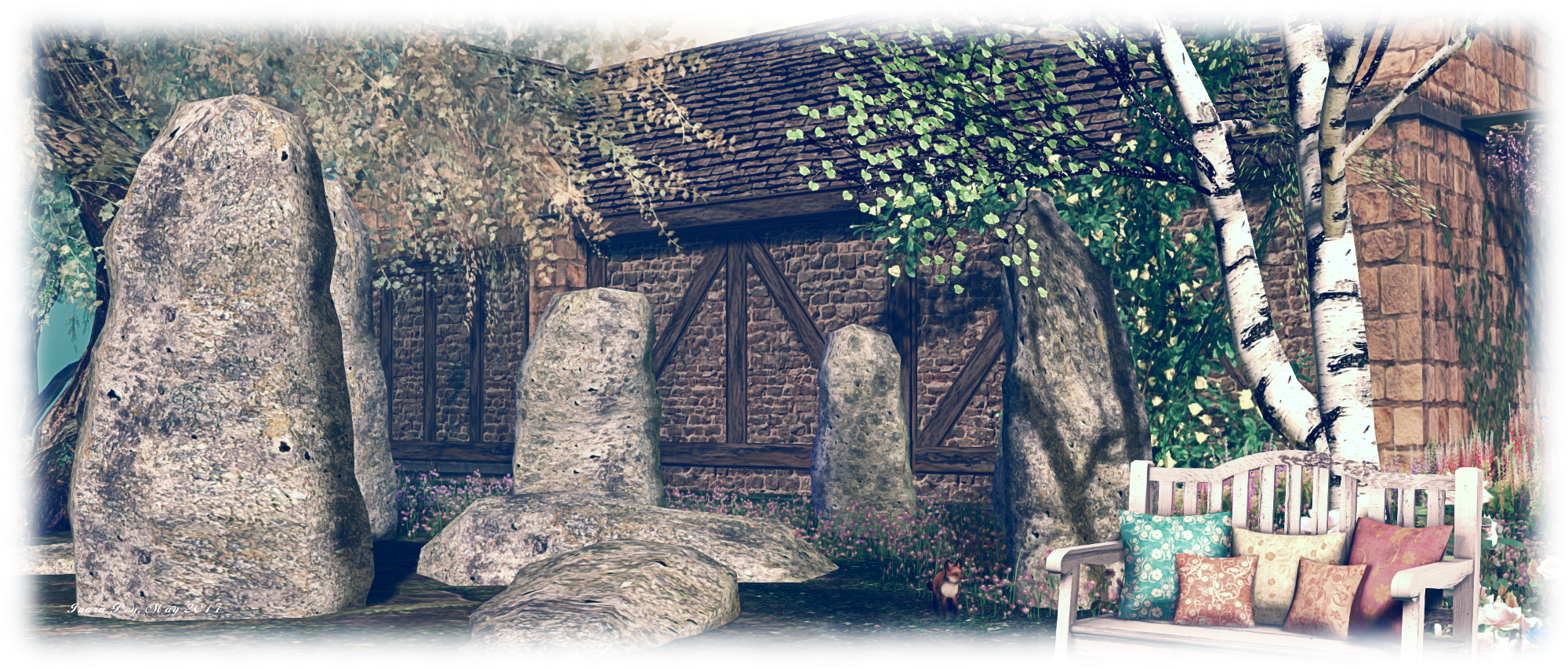
To the north side of the manor house is  a small group of standing stones, again suggesting this place has long been a place of human habitation. To the south and east, beyond the more formal gardens and reached via path and stair, is a pavilion sitting out over the water overlooking the neighbouring regions.

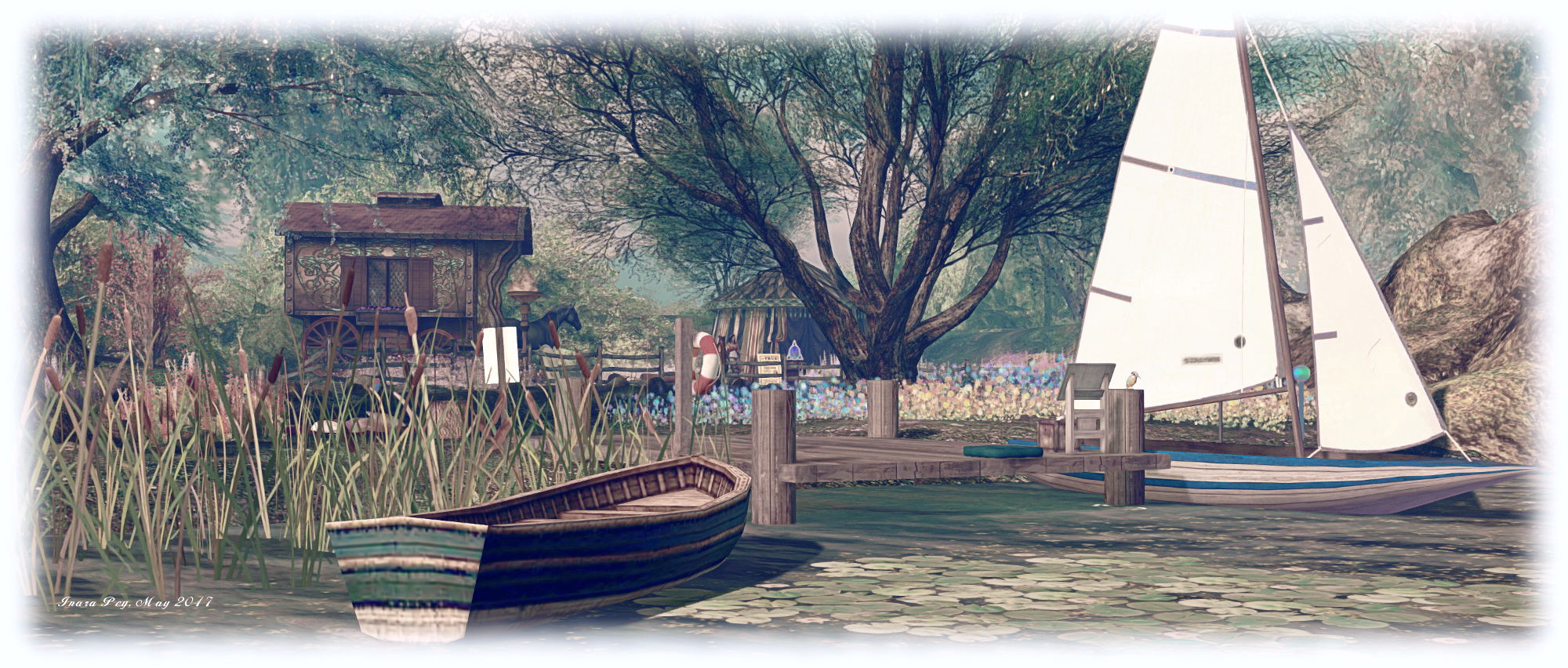
Paths and trails wind through the region, leading the way to the points of interest – such as the aforementioned ruins of a castle, or to a Romany camp, where fortunes might be read, before returning to manor house or landing point (depending upon the initial route taken). Throughout it all, there are places to sit and enjoy the views or to snuggle, enjoy a romantic dance, go fishing – or even have a swim. Those seeking a more active pursuit can enjoy a round of bumper boats on the water of the little lake.

Meadow Rose III, Tyme; Inara Pey, May 2017, on Flickr Meadow Rose III

Meadow Rose III is a charming, romantic setting; ideal for quiet exploration, photography, and idling the time away. By day the region is softly lit by a late summer sun; by night torches and braziers light the paths and mark doorways, again offering an air of romance beneath a glittering aurora. To the south and east, the region connects to the other in the estate – although these might not all be open for the public to freely explore. However, a teleport board at the landing point offers access to those areas within the estate open to public visits, for those interested in exploring further afield.

This is truly a delightful region to visit, and if you have not already done so, we can very heartily recommended.

Another World in Second Life

Another World

Another World is the title of a full region installation by Solkide Auer. It is described (literally) as, “a flight in a pure geometric ambience where shapes and colours try to give a momentary lapse of relaxation. Nothing else than be at peace with yourself” – although I’m pretty sure “lapse” should actually read “period”, and I blame Google translate for the error, not Solkide.

Open through until the end of June, this is an intriguing piece – region windlight (or midnight) is recommended, and you will be to have Advanced Lighting Model (ALM) enabled in your viewer (Preferences > Graphics) to appreciate the build. Projected lights are used extensively throughout the build, so if you leave ALM off, all you’re going to see is a lot of grey.  Shadows are not required to see projected lights, so you don’t have to enable them (reducing any performance hit); however, if you can, the nature of some of the shapes in the build means than the play of light across them gain added depth.

Another World

As the description states, this is a world of geometric shapes – spheres, hexagrams, hollowed spheres, squares, circles, straight lines, sine curves – all brought together in a landscape which takes on many different forms as you travel through it. Parts of the lower section resemble a gigantic roller coaster, the sine curves twisting and rolling through and around the other shapes as coloured light play across them. Elsewhere, it might be taken to be a giant’s building set, the larger shapes such as the hexagrams apparently made up of girder-like sections somehow locked together; in other places it has the look of a great machine, with elements coruscating and / or pulsing with colour.

There are a number of ways to appreciate the installation, and I recommend that you try as many and yo can. First and foremost, there is the aircar ride, available from the landing point. I suggest riding this in Mouselook if you can. There is also a series of teleport doors available, which will deliver you to different points and levels in the build, presenting the chance to see it from different aspects.

Another World

Camming also offers the opportunity to see this build and the lighting from angles neither of the other two options can offer, so if you’re practiced with ALT-camming, I recommend you have a go. Better yet, if you have a gamepad, joystick or Space Navigator, flycamming is highly recommended.

Whichever you opt for, in whatever order – make sure you have the music stream enabled. The occasional advert can be a little jarring, but the music really does set the mood for this installation.

Another World

SLurl Details

Ani and Haya at Serena Imagine in Second Life

Serena Imagine Art Centre: Anibrm Jung

Now on display through to the end of the month at the Serena Imagine Arts Centre are exhibitions by Anibrm Jung and Hayael Bracula, two artists I’ve previously featured in these pages, and who between them have two unique perspectives on the worlds around us.

Anibrm Jung specialises in physical world photography, focusing on nature. Many of her images captured from her own garden, and all of them recorded using only her Nikon D60 camera and natural light. Everything is framed directly through the viewfinder, and no cropping nor image manipulation is used after the fact. In this way, we are able to see each picture exactly as she did when taking it, allowing us to share her own sense of closeness with her subjects.

Serena Imagine Art Centre: Anibrm Jung

The result is stunning images, rich is substance and detail; vibrant demonstrations of the art of working with nature, often at the macro level, skilfully utilising depth of field or soft focus to marvellous effect to produce truly stunning images.

In the north-west corner of Serena Arts, Ani is exhibiting over 20 of her images ranging from fabulous shots of the coast, through beautiful captures of nature, to the aforementioned pictures from her garden, many of which feature studies of cats and her macro lens work – which really is extraordinary. These are images which would grace any home, either in Second Life or the physical world, and all are available to buy. I challenge anyone not to be captivated by her work, particularly when it comes to the likes of aKELEI or Over the Moon! – the latter of which beautifully captures a Blood Moon.

Serena Imagine Art Centre: Anibrm Jung

Sitting between Ani’s exhibition and the region’s landing point is Heaven, a substantial exhibition of work by Hayael Bracula, which feature more than 40 pieces of work.

Haya focuses on images captured within Second Life, with a particular  – but by no means exclusive – slant towards avatar studies. Using a range of approaches to her work, coupled with a skilled application of post-processing, Haya’s work always draws the eye into it. There is a deep well of detail to be found in her studies, revealing much about mood, thoughts and emotions, both with her subjects and ourselves. These are, in many cases, pieces which are more about encompassing a statement than offering a narrative, and they do so extremely powerfully.

Serena Imagine Art Centre: Hayael Bracula

Scattered among the avatar studies is the occasional landscape or scene (one of which is actually repeated in the exhibition). These again reflect Haya’s approach to her work, setting a tone and style that is unique to each so that – in contrast to the more numerous avatar studies – do perhaps suggest a narrative to us.

Both Ani and Haya will be on display at Serena Imagine Arts Centre through until the end of May, 2017, and if you haven’t already done so, a visit is recommended.

Serena Imagine Art Centre: Hayael Bracula

SLurl Details

Costa Blanco in Second Life

Costa Blanco, Costa Blanco; Inara Pey, May 2017, on Flickr Costa Blanco – click any image for full size

Update, December 2017: As per the comment from AJ, below, Costa Blanco appears to be under new ownership; the build has described here no longer exists.

Caitlyn and I first visited Costa Blanco in January 2017, but I didn’t get to blog about it at the time, so a re-visit seemed in order.

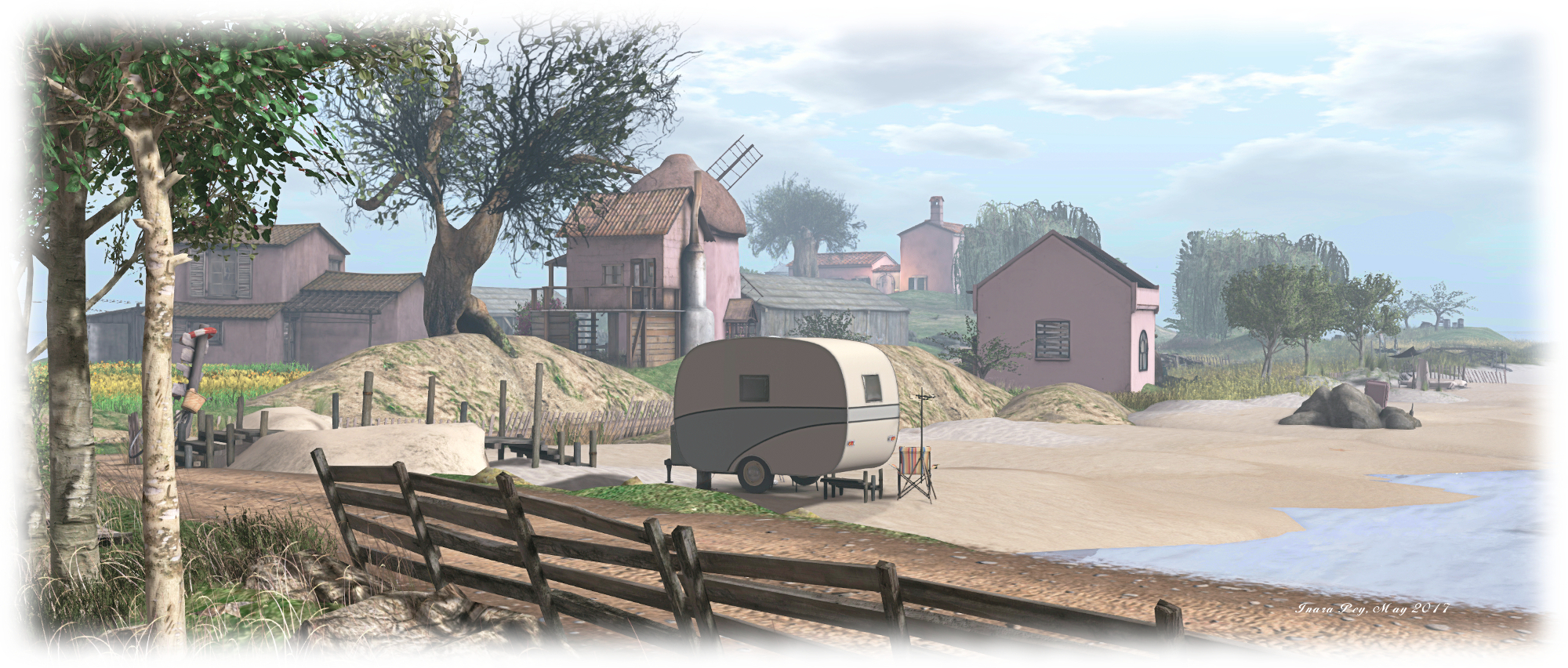
Designed by Gabrian Lascelles (Gothicgaylord), the region is described as “situated in the southernmost province of Sweden, and is connected by weather and theme with Bretagne in France.” It’s an interesting description, and the general environment for the region has much of a feel of being suited to either southern Sweden or Bretagne (or even here in the UK!). However, the design of the region throws in multiple elements – a Mediterranean style villa by the landing point, for example – such that Costa Blanco has an eclectic feel to it which makes exploring interesting and offers many opportunities for photography.

Costa Blanco, Costa Blanco; Inara Pey, May 2017, on Flickr Costa Blanco

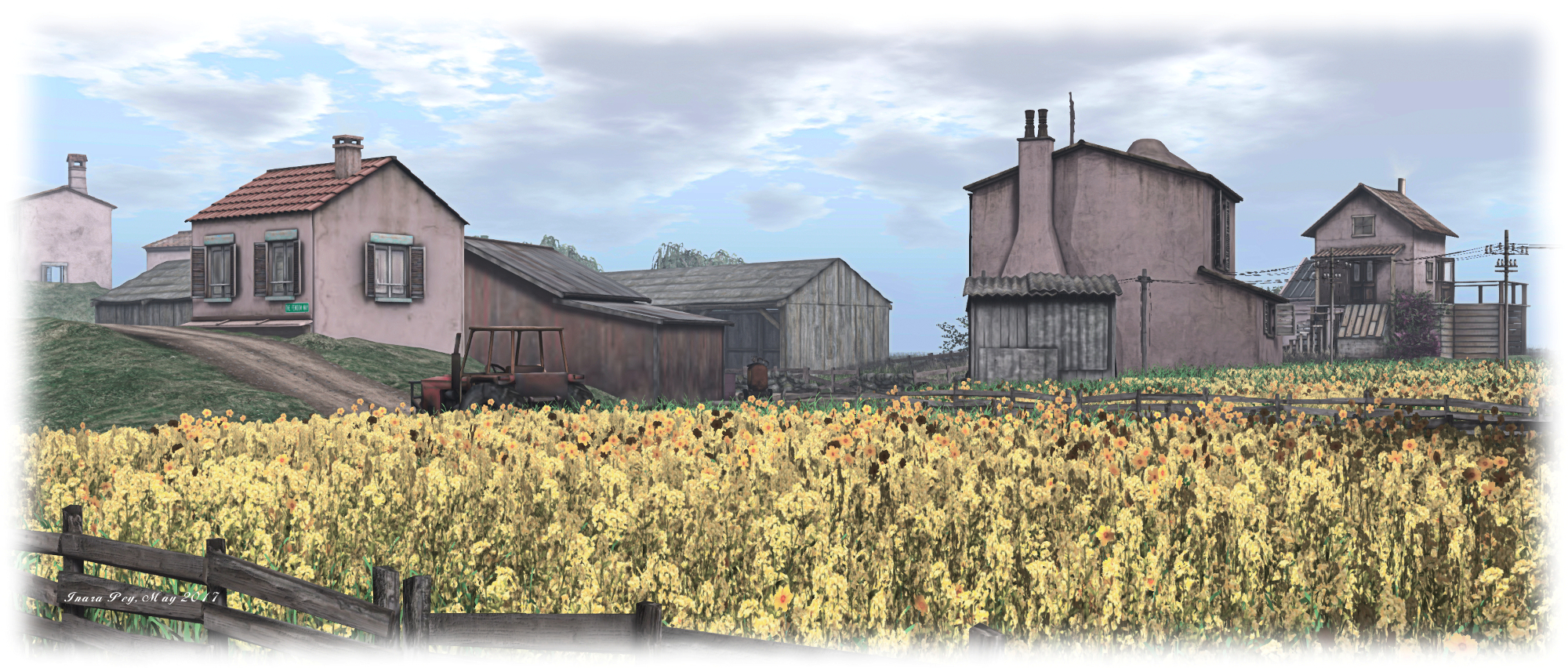
The aforementioned landing point is in the north-west part of the region, directly outside of the villa. Grapes are growing on the vine here, as a cobbled drive leads down the slope of a low hill to where a scattering of farm outhouses and barns sit. Some of these have clearly seen better days, as their boarded windows and doorways can attest, while the tractors sitting in and around them also speak of age and hard-working lives. Given the way the hay is baled, it would seem this is still a working farm, but the overall impression is that the focus is now more on providing stables for horses, than working the land.

Costa Blanco, Costa Blanco; Inara Pey, May 2017, on Flickr Costa Blanco

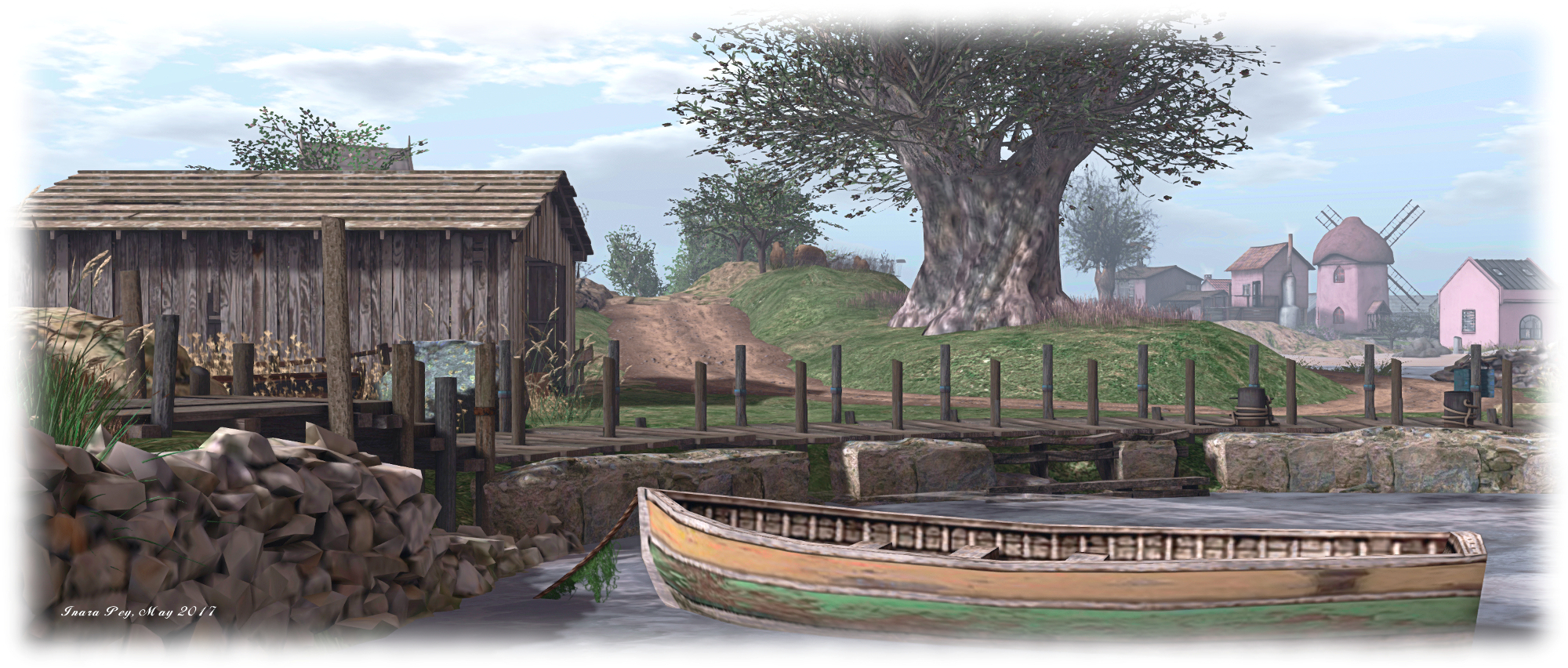
Dirt tracks run around and through the farm, offering multiple choices for wandering. To the south, a single track runs along a finger of land pointing eastwards. At the end of this sits another old outhouse in which sits a little display of photographs captured in the physical world. This tumbledown galley shares the headland with an old barn and a cosy little cove, around which places to sit and snuggle can be found, some of many to be found throughout the region.

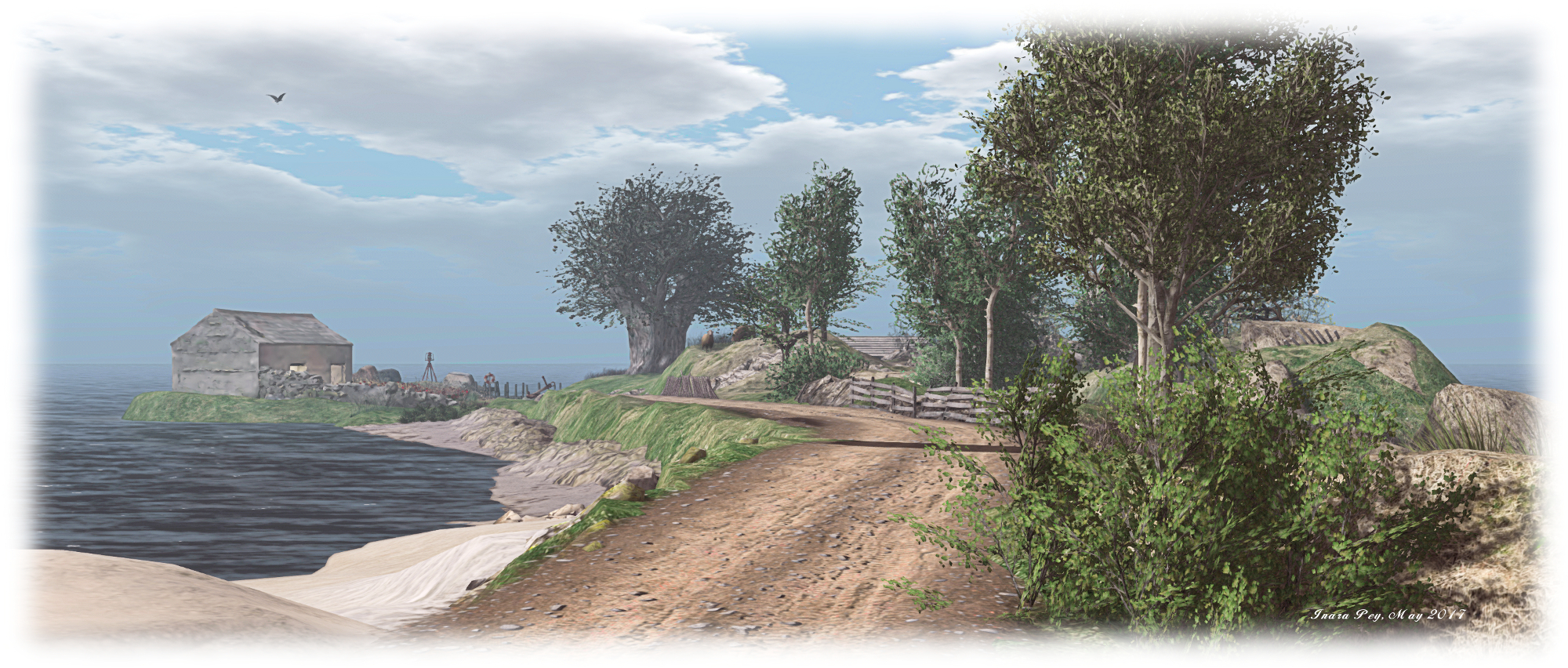
A sandy beach sweeps  down the eastern shoreline of the land from the north, and out onto the slender headland, giving the impression that this is a stretch of coastline facing east, looking out to where a smaller island sits. Reached via a little motor boat available from a beach-side pier, this rocky island offers a little retreat, complete with summer-house,  and a look-out point in the form of the disintegrating wreck of a boat made fast against the rocks. As the motor boat poofs when you leave it, getting back the mainland appears to be a case of flying or of teleporting back to the landing point.

Costa Blanco, Costa Blanco; Inara Pey, May 2017, on Flickr Costa Blanco

Given the number of cuddle spots here – we particularly enjoyed the secluded hot spa – Costa Blanco is ideal for romantics. Those seeking more active pursuits can ride the region’s horses while photographers can have a field day with the setting as a whole. There is something about the air of age and general shabbiness present in the buildings, coupled with the natural unkempt nature of the trees, grass and bushes which make Costa Blanco an eye-catching visit.

Costa Blanco, Costa Blanco; Inara Pey, May 2017, on Flickr Costa Blanco

SLurl Details