Entering The Vault in Second Life

The Vault – dare you enter?
There must be twenty ways to kill your avatar, twenty ways to kill your avatar.
Just slip off the bar, Lars, get hit by a ball, Paul.
Step on the grill, Jill, and crisp yourself dry.
Jump for the gems, Jen, just watch where you might land.
Then drop off the ledge, Reg, and get yourself dead.

(with apologies to Paul Simon)

This little ditty kept running through my mind as I took part in The Vault, the absorbingly frustrating and fun free-to-play challenge game offered by Crowley Corporation.

Located on Crowley Corporation’s home region, I was alerted to The Vault by Whirly Fizzle, who also supplied a video link demonstrating the game (just make sure you don’t have the volume set to high when playing the video!). It is reached via a teleport portal located at the region’s main landing point. Once you have done so, follow the yellow floor markings to an elevator that takes you down to the entrance The Vault’s entrance.

There are twenty rooms with obstacles. Just try to get through them without dying. For the more experienced, there are gems to be collected as well.

– CrowleyCorp, the designer of The Vault, describing the aim of the game

The Vault

As noted in the quote above, the aim of the game is to stay alive (and if the mood takes you, collect the gems which may be on offer in some of the chambers within The Vault). while this is a free-to-play game, to help cover the costs of the game and the region in which it resides, CrowleyCorp offers a flash-light and hard hat for modest amounts, which can be worn while making your way through The Vault’s 20 chambers although they are not essential to game play.

To get started, make your way to the first of the vault doors – large, almost daunting things in themselves, and then throw the lever to the right of the doors to open them. Each chamber in The Vault is presaged by similar doors, which may open directly onto the next chamber or form an airlock between two chambers, or provide access to a passageway that must be followed to reach the next chamber.

The Vault … “oh… balls…!”

The obstacles within each chamber vary in nature and specific skills are required to negotiate them – notably an ability to walk (or run!) in a reasonably straight line, the ability to jump accurately, together with a sense of timing and have a degree of patience in places, rather than just rushing at things.

The obstacles themselves come in a variety of forms, some individually, some combined, depending on the chamber you’re in. They include jumping between floating islands, walking along narrow beams, avoiding moving objects (rolling ball bearings, spinning and moving saw blades, etc), laser beams. Getting struck by any of these will kill you, or knock you into the bottomless pit or the lava, etc., over which the obstacles are built, also killing you. Death will result in you re-spawning at the start of the chamber you are attempting to cross.

THE VAULT: shouts: :::::::: Inara Pey fell to their doom! ::::::::

The Vault keeps you informed of any mishaps 🙂

The further into The Vault you get, the more challenging the obstacles become. Also, in some chambers time can be of the essence – stand too long in one place, for example, and you might find it falling out from under you.

The Vault: mind the blades

One point to note, if you leave The Vault before completing all 20 rooms, on your return, you’ll have to start over; thus it is advisable to try to complete all 20 – time permitting – on a single visit. However, if you have to log-out for any reason and have the viewer set to log you into the last SL location you visited, you can can log directly out from The Vault and then return to your last location within it when logging back into SL – but do note that if you are away from the game longer than about an hour, your scores (times killed and gems obtained) will be lost.

I am currently working on an expansion of perhaps a dozen more rooms, and should be completed within a month

CrowleyCorp on future expansion within The Vault to keep things fresh

And should you wish to relax after getting dropped, fried, boiled or zapped, you can teleport down to the ground level and partake of a round of golf. CrowleyCorp is the maker of the CC Elite golf system – which is my personal favourite when golfing in Second Life.

You can also enjoy golf while visiting the Crowley Corporation region

I confess to not having completed all 20 rooms in The Vault – the realities of life prevented me spending the amount of time needed to do so. However, I can say I found the game to be a fun, engaging and addictive (in the more positive meaning of the word), and I definitely want to find the time to go back and try the game again – and maybe even get to the end.

SLurl Details

  • The Vault (Isle of Innovation, rated: Adult)

Barbara Borromeo at Serena Arts

Serena Imagine Arts Centre: Barbara Borromeo

I admit that until I received I received an invitation to visit her exhibition at Serena Imagine Arts Centre, I was unfamiliar with the art of Barbara Borromeo. As such, visiting the exhibition – called simply Barbara – produced to be a delightful revelation: Barbara Borromeo is an exceptionally talented artist, who produces art that is stunning in its depth.

Reached via the teleport disk near to the art centre’s landing point, Barbara’s work is presented in an overhead gallery space, offering a total of twelve pieces of her work (13 if you count the furniture laden carpet, which is also of her design). These present the visitor with scenes that are by turn, beautiful, strange, haunting, nuanced, and rich in potential narrative.

Serena Imagine Arts Centre: Barbara Borromeo

Such is the diversity of styles on offer, it is clear that Barbara is not someone defined by one or two stylistic approaches; rather, she immerses herself in whatever genre best suits the story she wishes to convey. Thus is that some of the pieces here sit in what might be regarded as the genre of fantasy, others are perhaps based on and more abstracted approach to their subject matter; others are rooted in a form of avatar expressionism, while some embrace the use of a broad colour palette, while others are confined to more primary shades.

To offer interpretations on these pieces would in a sense be wasted; while each clearly stands apart from its neighbour, so too they are united in the depth of narrative each contains – although it is up to each of us to interpret the individual stories, whether it is relative “simplicity” of Vintage Car, or falling into the haunting depths of Prison or Dark and Gold or the captivating beauty of Princess.

Serena Imagine Arts Centre: Barbara Borromeo

That said, I found myself particularly drawn to Princess and Avatar (both seen above). These both contrast with one another, and yet are joined through their construction. Within Princess, there is a wonderful fusion of images from Second Life and the physical world, caught within an almost surreal fantasy montage that is simply captivating in its use of darker monochrome tones. Similarly, Avatar offers a somewhat fanciful, surreal image, but one that in a reverse of Princess, using white and grey, rather than darker tones, together with a delicacy contained in the pencil-like strokes of the background image, to form that strong but complimentary contrast to Princess, making them ideal partners in this exhibition.

It is this layering of ideas within the offered works that is perhaps most captivating: when looking at some of them, the subtle construction may not be immediately apparent, but reveals itself slowly. Take Boudoir as an example. The eye tends to be immediately dawn through the “hole” in the wall and to the woman dressing herself, and the ghostly face observing us. Through these were are perhaps drawn into the role of voyeur caught in the act. Both figures can easily dominate the focus of attention, and it is only after re-appraising the image as a whole that the true nature of the darker elements of the “wall” might become apparent, adding a shift in the narrative the image contains.

Serena Imagine Arts Centre: Barbara Borromeo

A captivating, entrancing display of art, Barbara remain open through until July 22nd, 2018.

SLurl Details

A return to La Clef des Champs

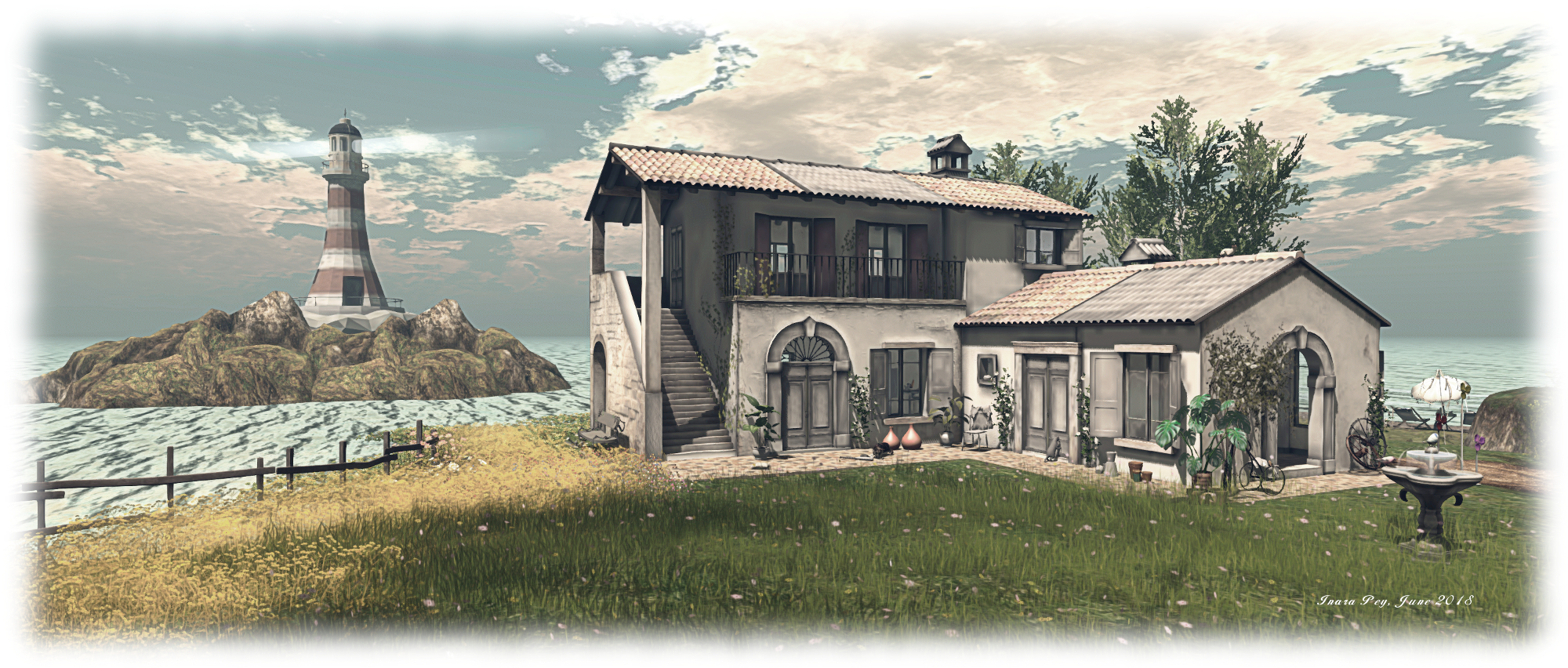
La Clef des Champs; Inara Pey, June 2018, on FlickrLa Clef des Champs – click any image for full size

Update April 2025: Chef des Champs has closed. SLurls have therefore been removed from this article.

It is a little over a month since I wrote about La Clef des Champs (literally, “the key fields”), a setting which at that time took up a homestead region, which had opened in April 2018 (see here for more).

Since then, there has been something of a change for La Clef des Champs, as Miro Collas  pointed out to me via Twitter recently, it having been moved and downsized to a quarter region parcel within a Full region (and given the changes between my two recent visits, it may still be in the process of being built-out). So, has anything been lost with the move? Overall, I’d say “no”.

La Clef des Champs; Inara Pey, June 2018, on FlickrLa Clef des Champs

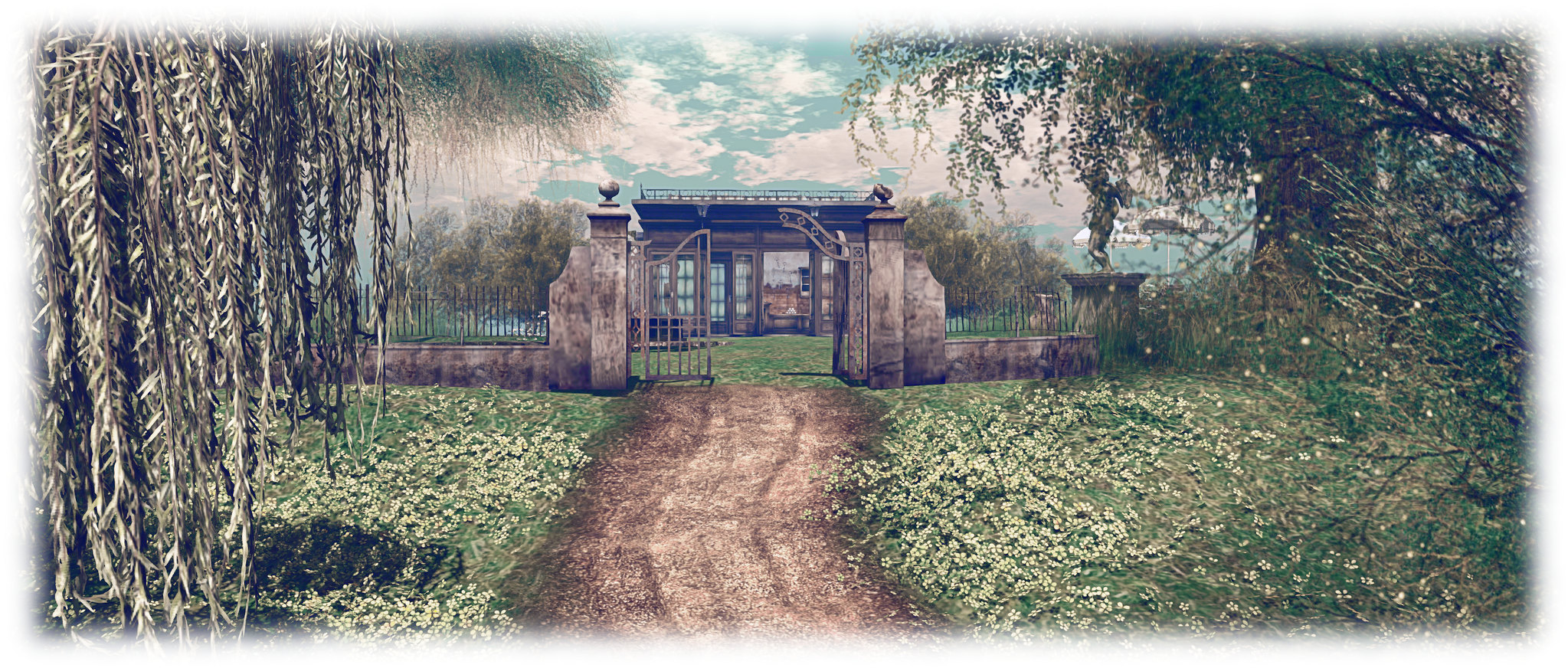
As with the original, a visit starts up on a hill overlooking open waters on two sides, and which is topped by a modest café with indoor and outdoor seating. From here, across the grass, a gated track leads the way down the hillside and inland. This runs past a small field and barn to where a fork points the way towards a new feature for the landscape: a large greenhouse sitting on a rugged shoulder of land occupying the inland corner of the parcel. Offering a second commanding view over the parcel, the greenhouse is presented as a summer-house style hideaway with music available from a grand piano and a gramophone, and space to sit or work as one desires.

Beyond the fork for the greenhouse, the track turns back seaward and curves past a brick-built barn to arrive at the Tuscan style house that was also present in the Homestead build. This looks out over the water to the east where the windmill still sits just offshore –  albeit on a slightly smaller island -,  and to the north, where a second small island sits, home to a lighthouse.

La Clef des Champs; Inara Pey, June 2018, on FlickrLa Clef des Champs

An old warehouse completes the set of buildings to be found here. This is the place where  – again as with the original design – more adult pursuits can be shared, if desired.

The use of just a quarter region parcel means that this iteration of La Clef des Champs does, for those who visited the original, feel smaller. However, I would suggest it has, lost little of the ambience it enjoyed when occupying a full-sized region space. for those who have not previously visited La Clef des Champs will still find this smaller version a pleasing excursion, with plenty of opportunities still for photography.

La Clef des Champs; Inara Pey, June 2018, on FlickrLa Clef des Champs


A touch of Live and Let Die in Second Life

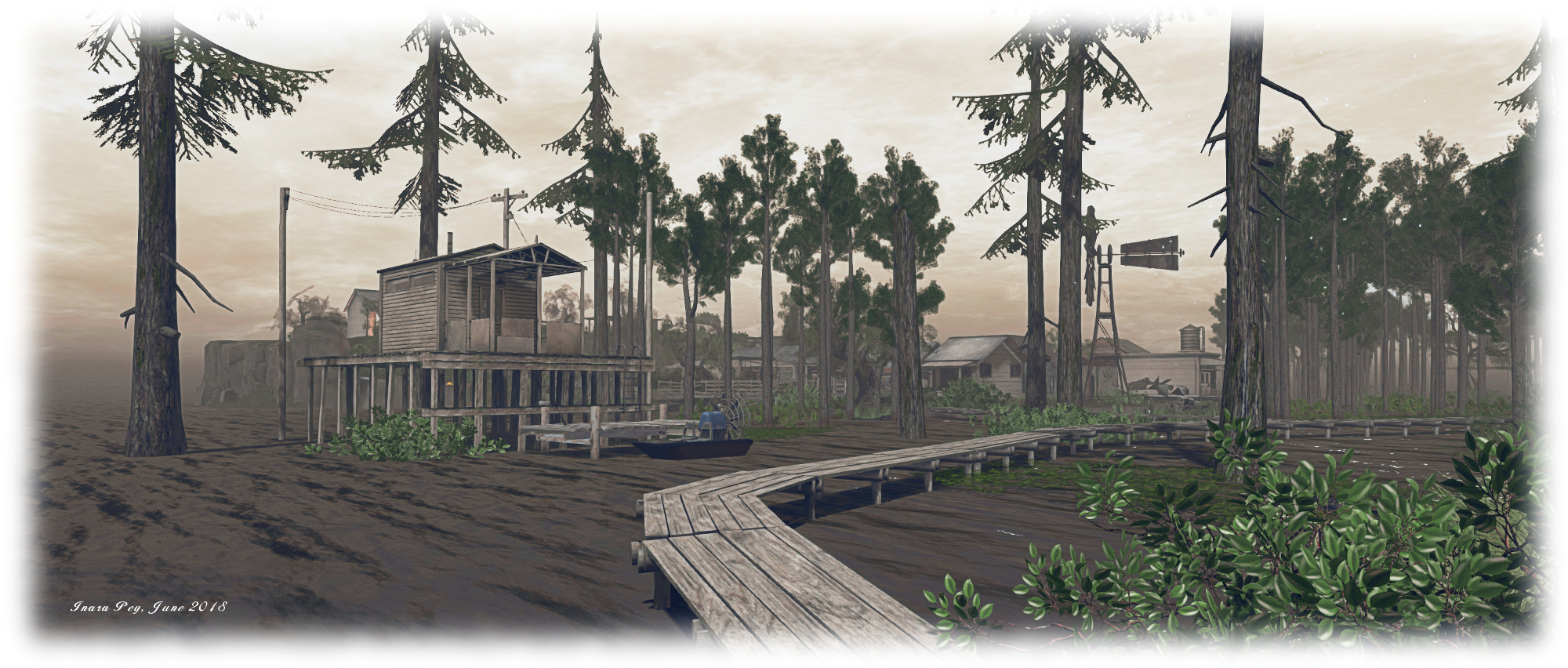
San Monique; Inara Pey, June 2018, on FlickrSan Monique – click any image for full size

Update: San Monique has closed. SLurls have therefore been removed from this article.

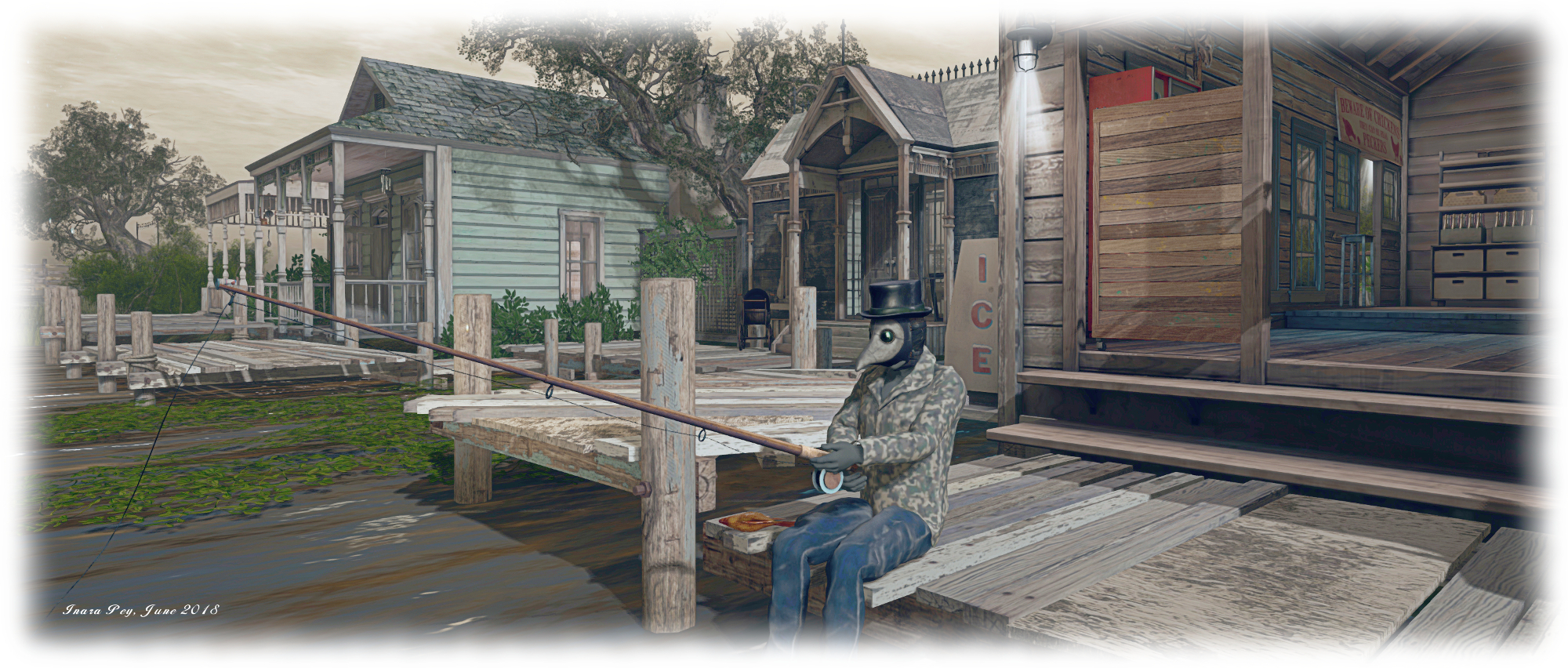
“I’m not really a big Bond fan, just that film and the locations in it,” Zakk Lusch informed me ahead of the official opening of San Monique, his latest region design, developed with They Wray DoneAway (They Ellisson). The region takes as its inspiration the first Roger Moore film in the Bond franchise, Live And Let Die (1973), to which Zakk alludes in his comment. He continues, “I just thought I would be fun to try a create something like this, as Bayou type region can be a challenge to find stuff to use. There are loads of little fun things as you look around.”

These little things include Zakk and They themselves who, for the opening, had adopted looks taken from the film – think Baron Samedi and you’ll get the picture – but there are more to be found when exploring this homestead region. However, it would be a mistake to consider it a representation of any single aspect of the film. As noted, the region is very much inspired by Live and Let Die, and thus is an amalgam of interpretations of settings, themes and ideas from the film.

San Monique; Inara Pey, June 2018, on FlickrSan Monique

An example of this is the region’s name and look. While the name may come from the fictional the Caribbean island-nation of the film, the overall look is very much that of the bayou region of Louisiana, – and the Bayou Des Allemands featured in a boat chase during the film.

Visits begin in the south, where one of only two upland area rise from the waters of the region. A flat-topped table of rock, this is home to the welcome area and landing point, a paved footpath and steps leading down to the lowlands of the region. It is along this path the another motif for the film can be found in the form of the fortune teller’s booth, echoing Solitaire’s harnessing of the Obeah to discern the future.

The second upland area is a small knuckle of a hill on which is perched a small wooden chapel. Within and around this are further echoes of the film – notably the coffin and the snakes and the Samedi-like skull and top hat sitting on a grave.

San Monique; Inara Pey, June 2018, on FlickrSan Monique

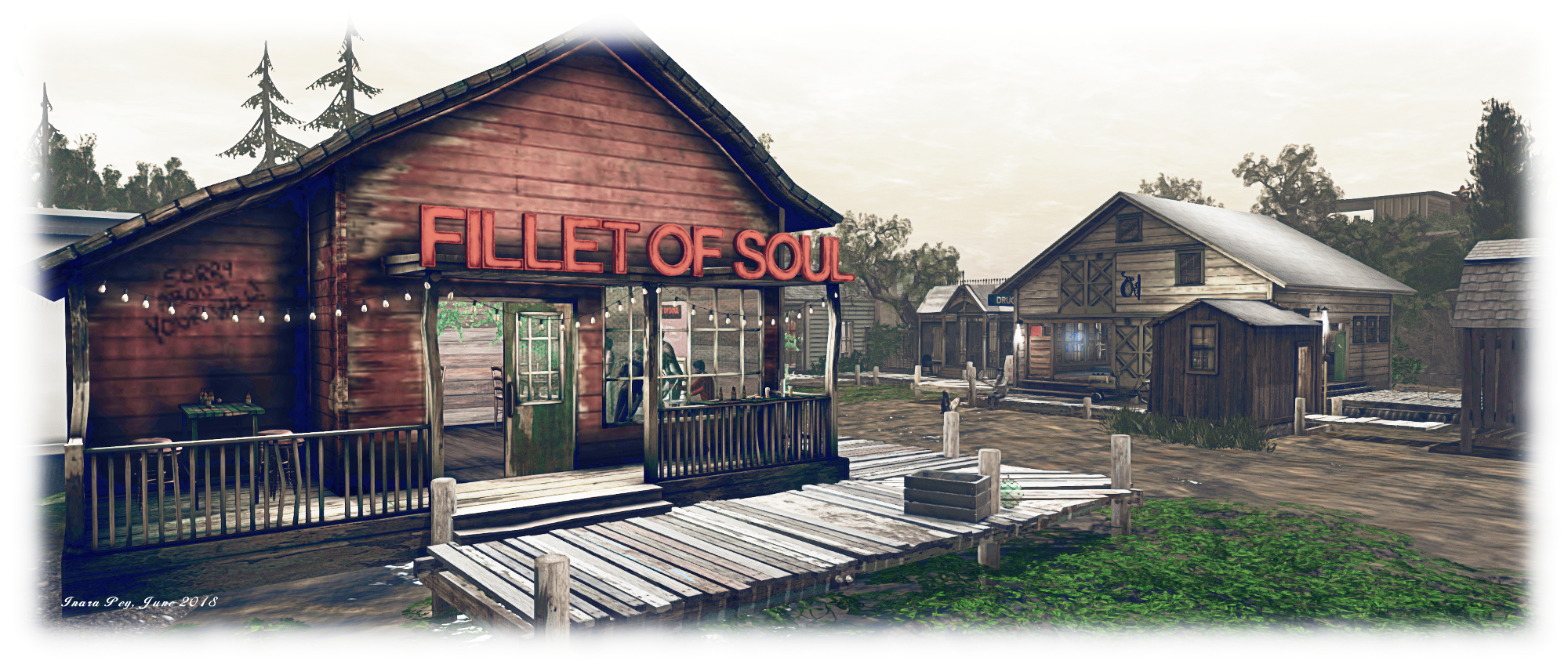
The rest of the region is given over to a bayou-style hamlet: wooden buildings fronted by board walks built out over the water. Here again are more references to the film – a tarot reader’s sign, the mask worn by the chap fishing off of one of the board walks, and – if you walk out and around the buildings – a small club taking its name from Mr. Big’s chain of eateries – the Fillet of Soul.

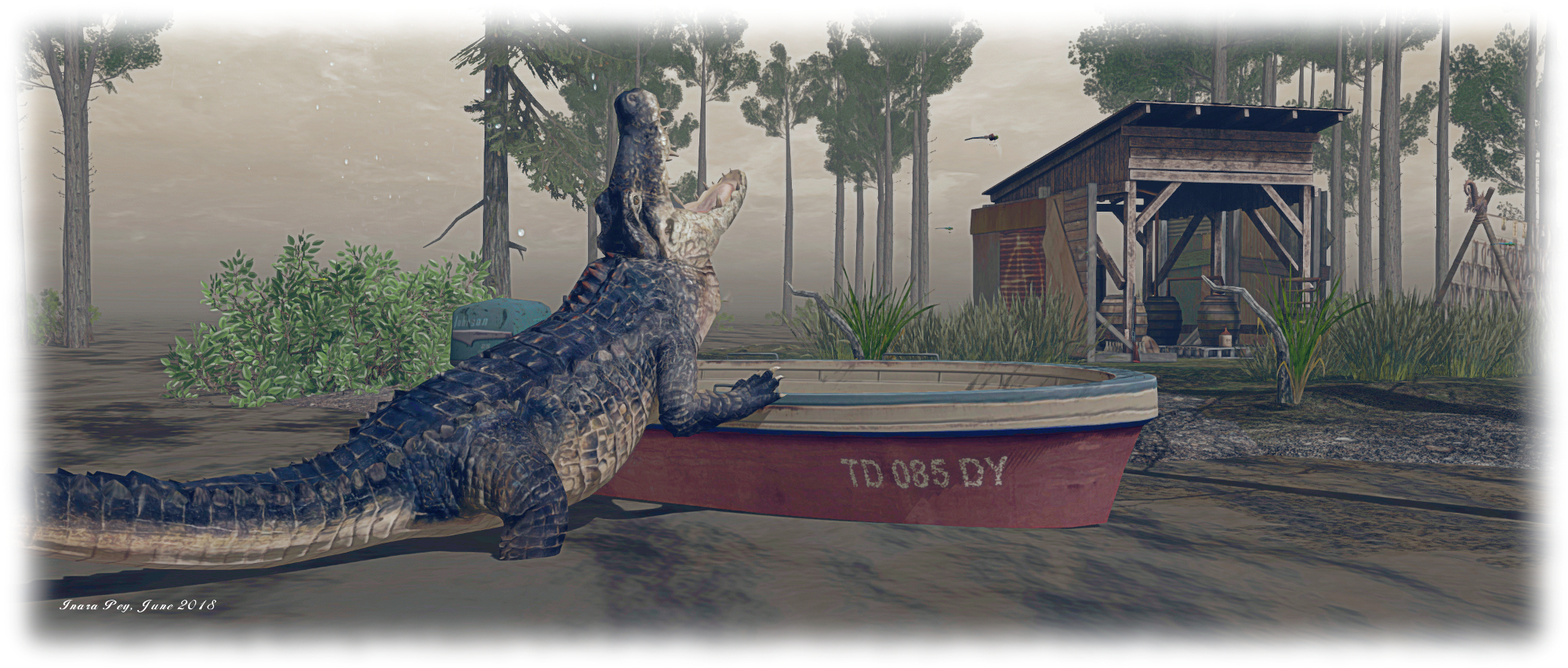
Given this is a bayou setting, the presence of crocodiles shouldn’t be that surprising. But even these echo the film – remember the crocodile farm on the island of San Monique? Thus even the reptiles offer a cinematic link to Bond’s 1973 adventures.

San Monique; Inara Pey, June 2018, on FlickrSan Monique

That said, there are some motifs from Live And Let Die that might be considered “missing” – no poppy fields, for example. But again, this is a Bayou setting, and not a reproduction of San Monique. So instead, it offers more a bayou look and feel: broad walks wind over the shallow waters, crocodiles lurk, an airboat awaits its owner – there’s even an illicit still hidden in a shed out on an island shoal among the bayou’s trees.

All of this makes San Monique a visit of a different kind; those who enjoy Roger Moore’s first outing as the eponymous British secret agent will likely enjoy discovering all the little nods to the film. Those who enjoy visiting, exploring and photographing regions in Second Life will find San Monique an engaging visit – and photos taken in the region can be submitted to its associated Flickr group.

San Monique; Inara Pey, June 2018, on FlickrSan Monique

As always, should you enjoy a visit, please consider making a donation at the landing point to help with the region’s continued presence. I’d like to extend thanks from Caitlyn and I to Zakk and They for the invitation to visit San Monique.

SLurl Details

  • San Monique (Tumbleweed, rated: Moderate)

Salt: an immersive arts degustation in Second Life

Salt

Salt is an immersive arts degustation. I’ve quite deliberately misappropriated the term ‘degustation’ [the careful, appreciative tasting of various foods, generally taken in good company] as this imparted itself as an ideal transition, because each segment-course is a unique work of its own volition.

Eliza Weirwight, discussing Salt

Salt is the title of the immersive installation by Eliza Weirwight, which formally opened over the weekend of June 16th and 17th, 2018. In terms of her non-commercial work, Eliza is perhaps best known for developing installations that reflect issues that concern her. This was certainly the case when I first encountered her work through her 2013 piece 35 Elephants, which you can read about in my article here.

This embodiment of matters that concern and / or have influenced Eliza are very much at the heart of Salt which, as Eliza notes in her introduction (quoted above), stands not as a single installation per se, but as a collection of scenes or elements or vignettes – call them what you will – which stand as pieces in and of themselves, but which all are drawn together via subtle threads of thought and outlook.

I will say from the top that this is not an easy installation to interpret. There is a deep layering of themes, whether they are in support of LGBTQ rights or statements speaking out against violence or inequality. In particular, there is a strong commentary on matter such as the objectification of women, gender-based violence, sexual predation, discrimination, hatred and on the state of “western” society as a whole which some may well find discomfiting. But so too is the installation richly emotive and evocative.

Salt

To define Salt, it is necessary to provide a little background information: while it is itself a new installation in and of itself, Salt has been a work gestating in thought and ideas for some time, as Eliza explains:

I was asked to produce a piece for One Billion Rising [Fourth Position]. It was eight little segments addressing things that were concerning to me … Some of the topics had such gravity, I refused to see them as disposable, and I had this idea bouncing around my head for a few years that I want to do this big thing, so I’ve woven a lot of that original work into Salt, because just about everything in this work matters to me. Some of it is my stories, and some of it is other people’s stories

Eliza Weirwight, discussing the origins of Salt

The “other people’s” stories Eliza references encompasses all those who have faced prejudice and / or hatred of any kind, be it based on gender, race, colour, sexual orientation or sexual predation. Within some of these issues she has drawn directly on the lives of others – notably Marilyn Monroe and  Phan Thi Kim Phuc; within others, she has drawn upon the work of artist of all genres – painters, writers, poets, musicians, to add flavour (depth) to the framing of the subjects represented by them. These influencers include – but are not limited to – David Bowie, Andy Warhol, M.C. Escher, Edgar Degas, William Blake, Maya Angelou, Pablo Neruda, and Norman Rockwell.

Salt: A take on Jane Elliott’s Blue Eyes–Brown Eyes. Sit on the chairs, and also note the comment on the wall from Jane Elliott in relation to the exhibit

The way these influencers are used is both intricate and subtle. For example, the very design of the structure housing Salt is mathematically precise in it use of shapes, whilst also offering something a challenge to the eye. Thus through it, we catch a glimpse of Eliza’s own appreciation for Escher’s work and the way in which it has captivated her thinking over the years. Elsewhere within the installation, Blake’s masterpiece The Tyger sits with a section related to violence, and thus its complex questioning on the nature of the creative force behind a creature as deadly as tiger becomes transformed into troubling questions on the subject of violence and those who would so willingly visit it upon others, becoming a further provocative motif within the section in which it sits.

Some of these references are delicately nuanced. The row of soup tins in Campbell’s Soup brand colours might initially appear to be “just” a homage to Andy Warhol. However the labels on these cans offer a statement on the ease with which bigotry and vitriol can be espoused on the basis of other people’s sexuality. Given Warhol’s own sexual orientation and attitudes prevalent in “respectable” society towards male homosexuality throughout most of his life, there is a deeper poignancy contained within this piece than might first be apparent.

Salt: Marilyn Monroe – objectification and self-harm

While the vignettes and scenes within Salt do, as noted, stand individually, so too can they complement each other, adding a further richness of narrative to taste and consider. Take, as another example, the exceptionally poignant section on Marilyn Monroe. Framed around an excerpt of six-page letter she wrote to the psychiatrist who would find her dead a year later, it cannot fail to evoke sympathy at the depth of personal suffering individuals can experience as we reflect of Monroe’s own life and suffering and the price that can be paid as a result of societal expectations.

But there is also a broader narrative here as well. Within the section, there are two images – Monroe examining a small sculpture of Petite Danseuse de Quatorze Ans by Edgar Degas – a man famous for his paintings of ballet dancers, and second of Monroe practising ballet. Both images offer a visual link back to the preceding section (in which a representation of Petite Danseuse de Quatorze can be found), although there is more at work thematically between the two sections.

As the quotes from likes of Vanity Fair and The Guardian accompanying the representation of Petite Danseuse de Quatorze Ans note, the manner in which Degas presented ballet dancers can often contain an almost misogynistic delight in portraying the pain and suffering inherent in their craft, somewhat objectifying them. Elsewhere in his art there can be a sense of male sexual predation. Thus, given that a lot of Monroe’s own suffering was a direct result of the objectification she faced, together sexual predation, the placing these two elements together within Salt intertwines the two, presenting visitors with a much more intense sense of narrative shared by both.

Continue reading “Salt: an immersive arts degustation in Second Life” →

Appreciating the great outdoors in Second Life

Zion National Park; Inara Pey, June 2018, on FlickrZion National Park – click any image for full size

Update: Zion National Park has closed. SLurls have therefore been removed from this article.

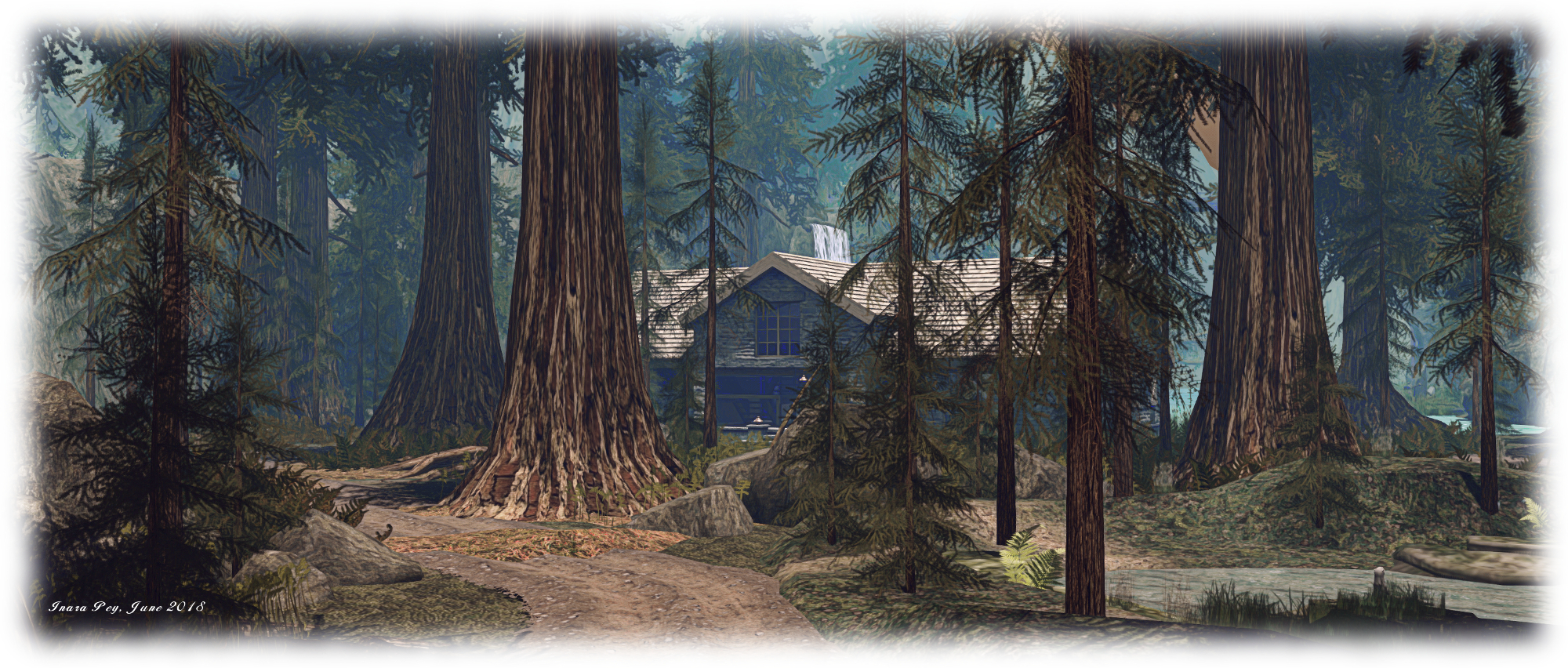
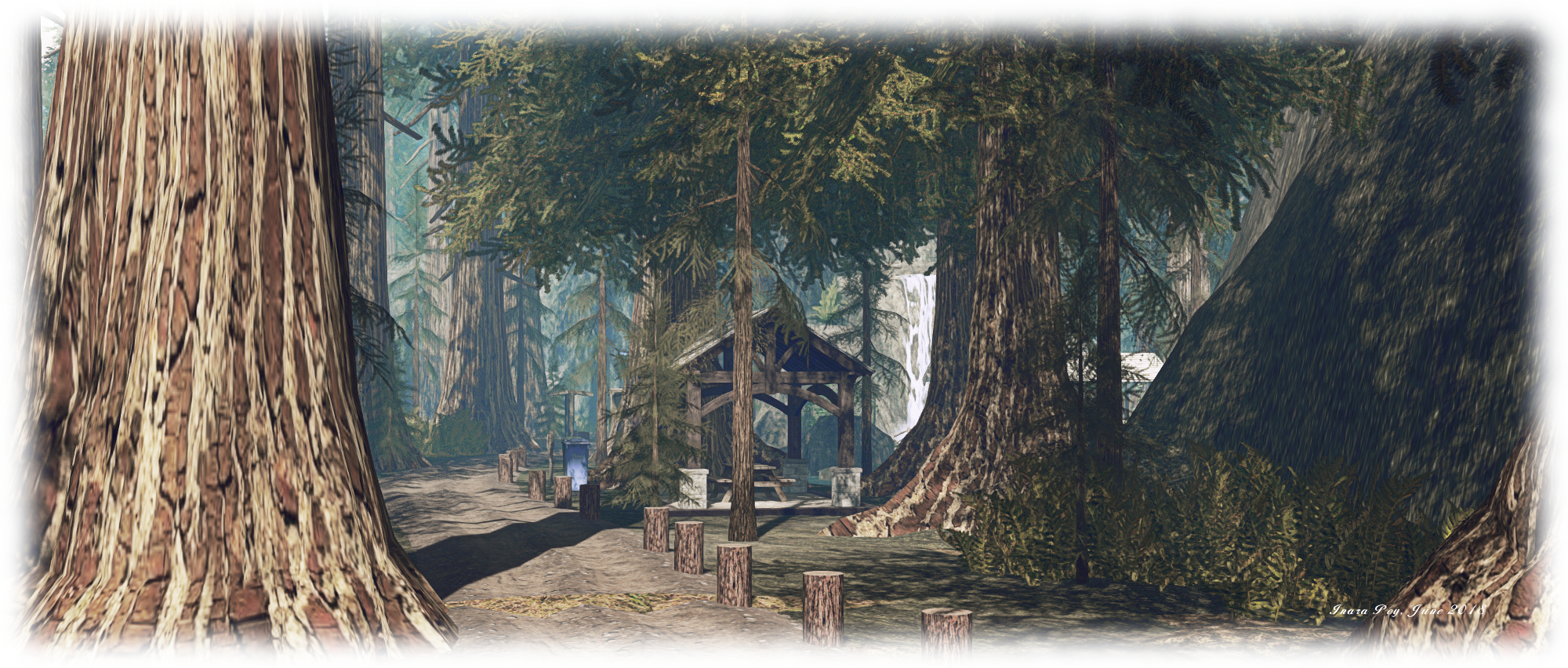
Zion National Park is an ambitious, two-region stretch of parkland designed by Judge Firecaster. It offers a look and feel of some of the great national parks of north America – most notably Yosemite, given the reproduction of the Mariposa Grove – and presents a lot to see and explore.

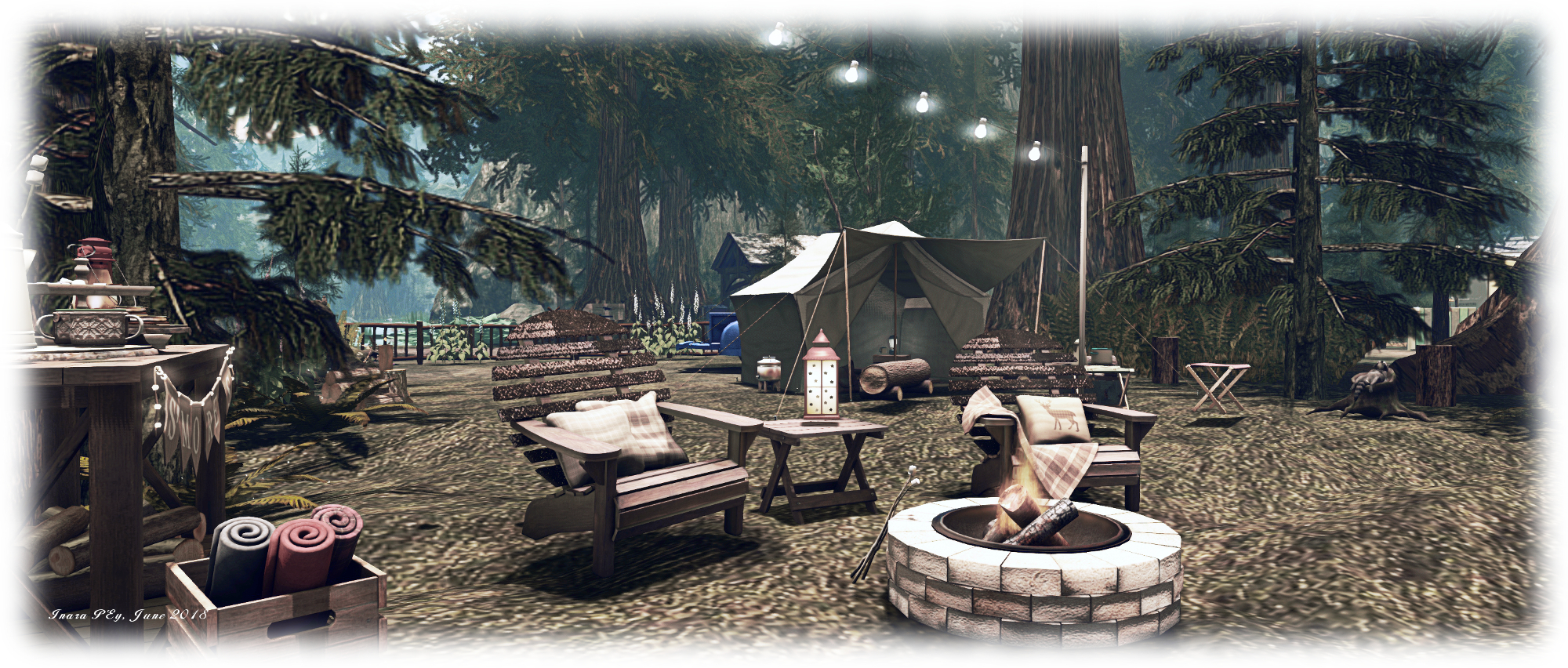
A visit starts on the north side of one of the two regions making up the park. This features a park lodge and a camping ground (parcels available for rent), looking to the north over open water and a distant range of mountains. A dirt track runs between the lodge and camp site, pointing west towards a narrow cleft between high shoulders of rock, and east to run almost parallel to the water’s edge and between the massive trunks of huge Sequoia-like conifers.

Zion National Park; Inara Pey, June 2018, on FlickrZion National Park

Which route you take is entirely up to you – but if you have a wearable horse, you might want to add that and take to riding while exploring (a riding horse rezzing system would be a nice addition to the park). The route west will take you through the rocky cleft to where another body of water await, overlooked on both sides by a rugged landscape that, to the south, climbs towards distant green peaks.

Here the track swings by a small lodge were visitors can take a log ride around the lake – just wait for a boat to automatically rez ready to depart as one returns and de-rezzes. The ride will take you east along the lake, under the tall trestles of a cliff-top bridge spanning the water, and back around to the west before returning you to the little lodge. Or, if you prefer, you can follow the track to where it climbs up into the hills, switching back on itself as it does so, to arrive at a high café abuts the steeper slopes of the (off-sim) mountains).

Zion National Park; Inara Pey, June 2018, on FlickrZion National Park

If you opt to go east from the landing point, the track will take you by twist and turn, passing the single permanent private residence to be found here, to where it again climbs up into the rocks and hills of the park. This leads the way past cliff-edge seating areas overlooking waterfalls, paths to hidden tunnels, and a climb up to a peak where a hang glider can be rezzed and you can take to the air to appreciate the park from overhead.

The high paths rise and fall, twist and turn, cross canyons and water by way of bridges, descend to the edge of bubbling streams  and pass through mine-like tunnels to link up with one another, allowing visitors to fully circumnavigate the park, often just a few short steps from where the regions end and the off-sim mountains begin – a relatively seamless join that gives Zion Park a huge amount of additional depth, vastly increasing its national park like feel.

Zion National Park; Inara Pey, June 2018, on FlickrZion National Park

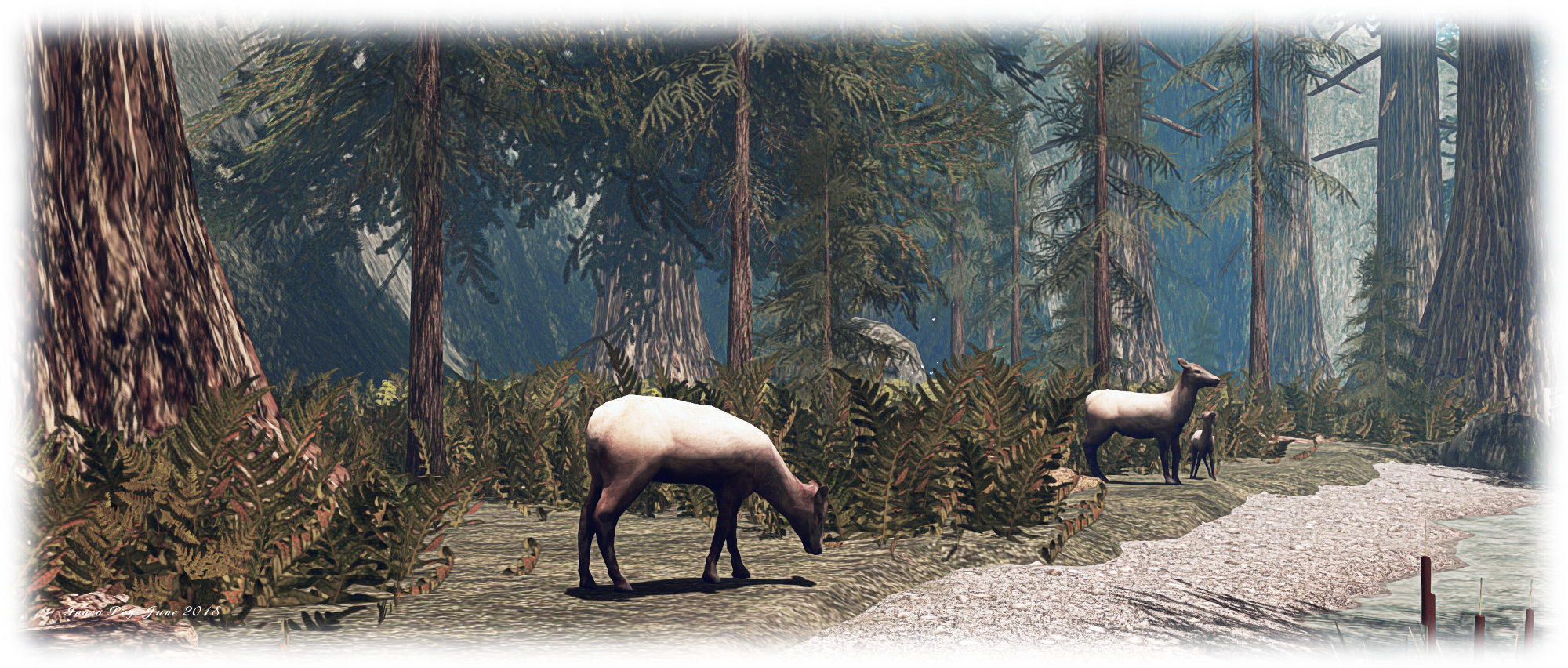
Wild life is to be found here in abundance – the trees are rich in bird song, bears grumble and roam,raccoons raid litter bins and get up to other mischief, wolves bask in the sunlight and elk graze or drink cautiously from the banks of streams. Going by the chap out on the waters of the lake and the cormorants on the shoreline, fish are in abundance in the waters here as well. There could perhaps be a few more places to sit and enjoy more of the many views to be found within the regions, but this is a minor point; as noted, if you do have a wearable horse to ride, this is a place where you can put it to good use and appreciate the views.

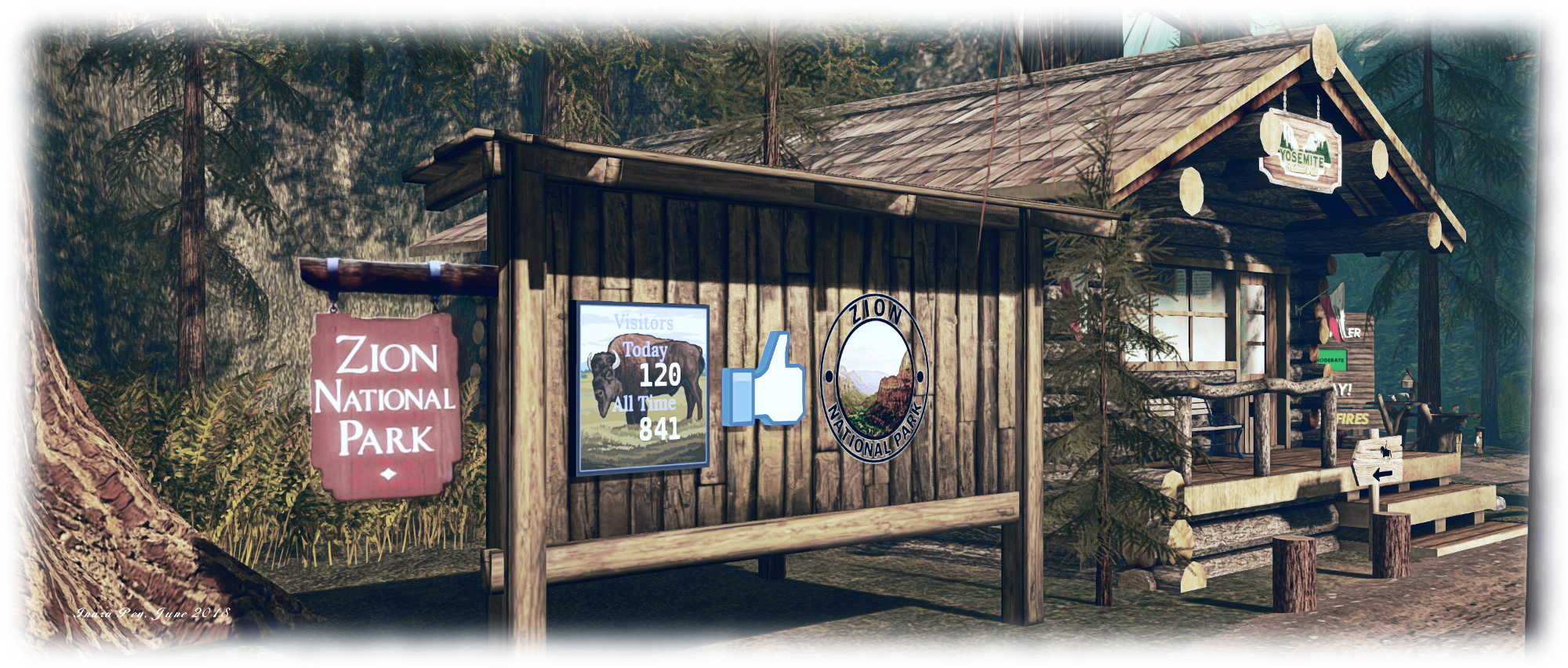
All-in all, Zion Park is a rich environment which demonstrates just how much can be done when working with Homestead regions. The default Windlight settings perhaps don’t do the landscaping full justice – I’d certainly recommend playing around with any you have installed on your viewer to find something more suitable and warm. When exploring, keep an eye out for the information boards, and the way down to the subterranean lake. The former are a worthwhile read for those unfamiliar with American national park heritage, and the latter takes a little finding – but a visit cannot be said to be complete until you do 😉 .

Zion National Park; Inara Pey, June 2018, on FlickrZion National Park

Should you enjoy your visit to Zion National Park, please consider a donation at the lodge alongside the landing point to help ensure the regions remain for future visitors to enjoy – and for additional visits of your own as the mood takes you!

SLurl Details

  • Zion National Park (Fhloston and Zion, both rated: Moderate)