Boarding the USS Sleipnir in Second Life

USS Sleipnir and Planet Freya, November 2021 – click any image for full size
Personal log Stardate: 2551.11.10.
After an enforced break at Jasper Point on Idun, and the loss of Resilient Station and its host asteroid a major source of speculation and rumour, it was a relief to receive Commander Constantine’s invitation to take an intra-system jump ship to from the Point to the resource-rich Freya, and the orbit of the coalition’s newest jewel, the USS Sheipnir. Not only had the rumour mill started to get to me, I was keen to see what would be our new home and an opportunity to broaden our exploration of the galaxy, even though the Commander had made it clear elements of the ship were still under construction.

OK, so I’m not actually a part of the Blushock role-play group, but their adventures have been something I’ve been documenting (in part) in these pages, so when the group founder and leader, Fazzy Constantine (Faisel Constantine), invited me to visit the latest chapter in the group’s expanding story and universe, it seems only fitting I should offer some form of in-character notes!

USS Sleipnir and Planet Freya, November 2021

Offering a rich and ever-evolving role-play environment built out from Mass Effect™ Legendary Edition, the Blushock team has a rich history of activity in Second Life dating back over a decade – which in itself pretty impressive. However, rather than re-tread this history here, I invite those interested to find our more by visiting the group’s informative website, to discover more about the group and the Vanaheim system (where most of their adventures have thus far taken place.

When I last visited, the team had just set up a new base of operations – Resilient Station – within a carbonaceous asteroid orbiting Vanaheim in a 19 terrestrial year orbit that periodically carried it close to the lush world of Idun, and the team’s planetary base of Jasper Point (see: Docking at Resilient Station in Second Life). Functioning as a base of operations, an R&R and trading facility and containing research capabilites, the asteroid – Baldur – was mysteriously lost following an experiment involving the artificial creation of black holes.

As a result, Blushock embarked on the development of a new base-of-operations, this time opting to build a massive starship capable of both sub-light and supra-light velocities. In this, the ship uses alien technology able to “fold” space (and time) recovered from pre-existing caverns found deep within Baldur prior to its loss, and which Chief Engineer Noah Constantine (NoahLion) was able to reverse engineer to work with existing Blushock tech.

USS Sleipnir, November 2021 – command deck

The result is the USS Sleipnir, a “Dreadnought” class of vessel that is a truly impressive starship. Named for the mythical eight-legged horse ridden by the Norse god Odin (thus further maintaining the Norse mythology theme that runs through the Blushock RP). The name is fitting both for the fact that the mythical horse could carry Odin great distances, and for Sleipnir’s ability to “mediate between earth [in this case planets] and sky [in this case, space].

A multi-level vessel that clearly utilises a form of artificial gravity, USS Sleipnir is designed to perform a variety of roles: her drive systems means she is capable of visiting multiple worlds within any given star system and uses her space-folding abilities to move between different systems – and even different points in time. As a home, she is fully equipped with the essentials of comfortable living, from living quarters to extensive recreational facilities modelled after those found at Resilient Station – a communal swimming pool, a gymnasium, public social spaces and more.

She is also capable of launching, retrieving and maintaining a range of smaller craft – essential of planetary surface operations and also (potentially) for self-defence – as would be the case with the gunship Mjolnir, named for Thor’s hammer, occupying a dedicated docking hanger under the ship’s stern portions.

USS Sleipnir and Planet Freya, November 2021

Not all of the facilities of the ship are open to casual visitors – although guest quarters are available to those wishing to make an extended visit; joining the Blushock community as an active member can result in access being given to those parts of the ship that are otherwise not readily accessible. However, a part of the ship that can be accessed by all is the most impressive: the massive multi-deck atrium that rises from over the engineering spaces along the ship’s keel to her very top and which sits roughly two-thirds of the way back from her bow and directly between crew and guest quarters and the ship’s primary operating spaces.

This huge space is genuinely stunning – and I really urge visitors to approach it on foot rather then camming out and spying on it. Dominated by two huge hemispheres extending outwards from the main hull, it offers unparalleled views of space – or, when in orbit, of a nearby planet. Extending out into each of these great domes are holographic display platforms, one of which at the time of my visit offered a view of our Milky Way galaxy.

USS Sleipnir – briefing room with the gunship Mjolnir visible through the windows

Between them, and centrally placed beneath the huge, transparent roof of this gigantic atrium is a stellar illumination sphere that casts a natural level of daylight that both gives light and helps to nourish the plants and trees growing throughout the lower garden levels and on the tiers of rock – yes, rock –  down which fresh water falls to be recycled and purified for re-use in the recreation area’s pool, located on Sleipnir’s uppermost deck.

The public and social heart of the sip, the atrium is home to birds as well as people, and features places to sit, play games, eat and / or meet friends and crewmates, with companionways and elevators connecting decks and providing access to crew and guest accommodation in the forward part of the ship, or – for those with access – the various offices, labs and other spaces towards the rear of the ship.

USS Sleipnir – personnel quarters

Framed against Planet Freya, named for Odin’s wife and thus a fitting location for the ship’s construction, USS Sleipnir and Planet Freya presents an ideal visit for anyone who enjoys science-fiction. Further setting (representative of Planet Freya, I believe) are to come; while for those looking for a suitable sci-fi environment for photography (RP allowing), the ship makes a great backdrop. And for those who enjoy RP far removed from the likes of Trek or Star Wars, the Blushock team is an ideal group to join and share adventures. The ship’s stargate (not part of the RP) also makes for an ideal means to visit other sci-fi realms in SL.

SLurl Details

Terrygold’s mountain winter in Second Life

Eccapaiari Mountains , November 2021 – click any image for full-size

We’re getting to the time of year when Second Life tends to be awash with winter / Christmas / end-of-year themed regions, all rich with snow and winter wonderland settings to tromp through and enjoy.

One such place that recently opened as a winter’s setting is that of Eccapaiari Mountains, a charming quarter-region design by Terrygold, located on the ground level of the Solo Arte parcel, where it replaces her earlier Osta Nimosa setting (see: Resting in Osta Nimosa in Second life). As with that setting, this snowy design is easy on the eye, but offers plenty to see whilst forming an ideal backdrop for photography.

Eccapaiari Mountains , November 2021

From the landing point, a cart track winds its way around the edge of the parcel, high cliffs to one side, rough lowland to the other spotted by trees, shrubs and bird houses, all of them – cliffs, rocks, bare ground, flora and bird houses  – brushed over with snow, which also frosts the shrubs and plants bordering the track.  As the this track curves to follow the base of the cliffs, so the land to its right opens out to reveal a broad lake, its water frozen into stillness.

As the land opens, so too do buildings come into view: a small chapel and outhouses for a farm, the track splitting before reaching them, one arm following the edge of the lake, the other curling back on itself to pass by the outhouses and reach the low-slung farmhouse, its roof heavy in an insulating blanket of snow. A small summer house sits across the trail from the farmhouse, its interior heated by a wood-burning stove, with both farmhouse and summerhouse thus offering cosy retreats from the snow for those who seek them.

Eccapaiari Mountains , November 2021

The lake offers the opportunity for skating – there is a skate giver sign on the edge of the ice as the track loops around a rocky outcrop to bring its two arms back together into a single path. Here, sitting outdoors, visitors can enjoy a hot glass of mulled wine  or, if skates aren’t to their linking, rez a sled from a second sign and scoot their way around the ice.

Beyond the little hut serving the hot drinks, steps climb up to a small viewing point looking out over the off-region elements of the setting. Those who are so minded might find the dance system as well, sitting in the lee of the tree that also helps shade the little hut, while across the ice a love seat sits within a little wooden shelter where couples might cosy up together.

Eccapaiari Mountains , November 2021

Rounded out by an outdoor fire pit with chairs awaiting those who wish to use them, and the a large sled that also offers single sits and couples cuddles, Eccapaiari Mountains is hardly going to tax anyone’s viewer and is nicely finished with a suitable soundscape. For photographers, the local EEP setting are fine, although for the images here, I opted to use one of my personal settings, which I hope gives a sense

My thanks to Terrygold for the invite to visit!

Eccapaiari Mountains , November 2021

SLurl Details


A silent city in Second Life

Omerta, November 2021 – click any image for full size

Poking my nose into the Destination Guide recently caused me to spot an entry for Omerta City (actually now featured in the DG Highlights at the time of writing), a Full region design by Lux Voxel that leverages the additional private island Land Impact bonus.

An urban environment, this is a place packed with detail – although I’ll say up-front that this comes at a price; unless you’re running on a fairly robust system, you might find it heavy going if you tend to run the viewer with the likes of shadows enabled and / or a high Draw Distance, so be prepared to make some adjustments to your viewer!

Omerta, November 2021

Omertà is a Southern Italian code of silence and code of honour and conduct that is often associated with the Mafia, and I’d venture to suggest the selection of the name for this setting is no accident given it is sponsored through Lux’s own brand Mesh Mafia. Not that it is particularly mindful of Southern Italy or Sicily, being far more leaning towards being somewhere in the United States. However, it does have the feel for a corner of a city where one could well imagine organised crime keeping an eye – and hand – on things; and enforcing their particular brands of honour codes.

This is a location of multiple faces, with waterfront areas, low-lying and aging business areas overlooked by places of business topped by apartments occupying superior, elevated positions. Within all of this are a range of settings that make exploring the city something of an adventure. Many of the shops are outfitted with interiors that invite visitors into them; clubs and pubs present similar places to spend time within, at least one also containing the kind of racket one might associate with criminal activities as NPC exotic dancers seek to entertain those stepping through the doors.

Omerta, November 2021

Caught under a night-time sky by default, Omerta also has a sense of mystery to it: tucked away here and there are shops specialising in voodoo and magic, for example, whilst the bones of an old and long-deserted and ruined fun fair rises from and overgrown lot. There’s also a sense of life throughout: a corner that may have once been a shop topped by living spaces has been converted into a place for children to use their skateboards, as such corners so often get turned into places for childhood recreation where no formal parks or other spaces exist.

Elsewhere can be found roadworks and the suggestions that parts of the city may be about to undergo redevelopment. There’s also a feeling that the age of the city has lead to something of an unfortunate accident: the subway station sits with its platforms barred to public access, they and the tracks they serve being flooded.

Omerta, November 2021

As noted, Omerta can be heavy-going at times: there is both a lot of mesh  and an impressive number of textures which can take time to load and render, particularly if you are prone to keep shadows running at all times (I actually had some issues with texture loading with shadows disabled); as such, it can be a frustrating visit at times (possibly not helped by the region surround / dome).

However, it is more than worthwhile persevering, as the city is also filled with photographic opportunities throughout – and not just under the default EEP settings; as the banner image here hopefully shows, Omerta lends itself to other EEP settings as well.

Omerta, November 2021

SLurl Details

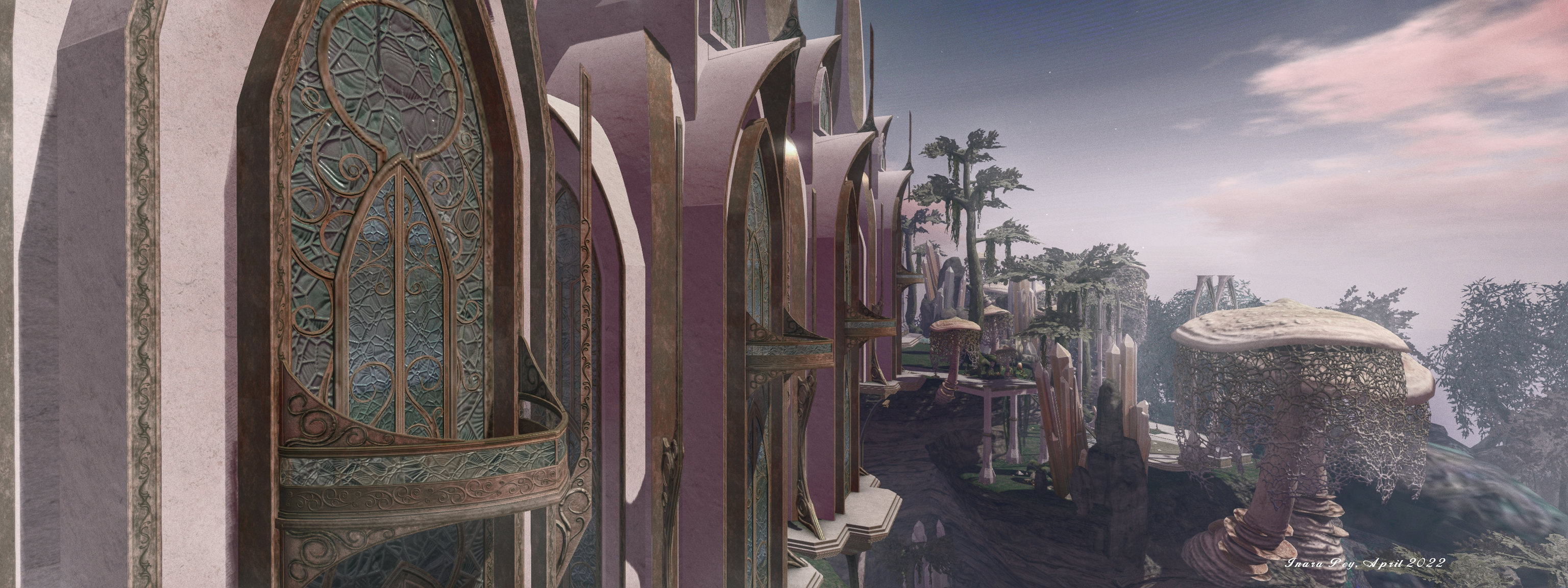
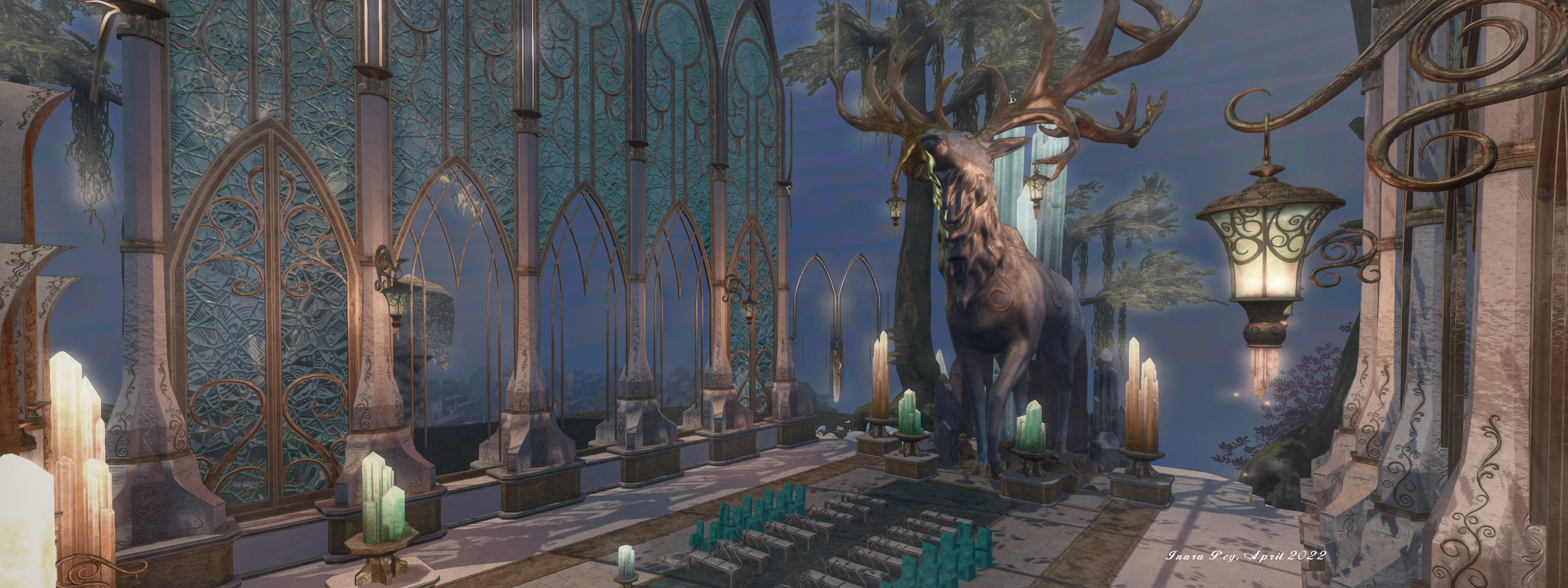
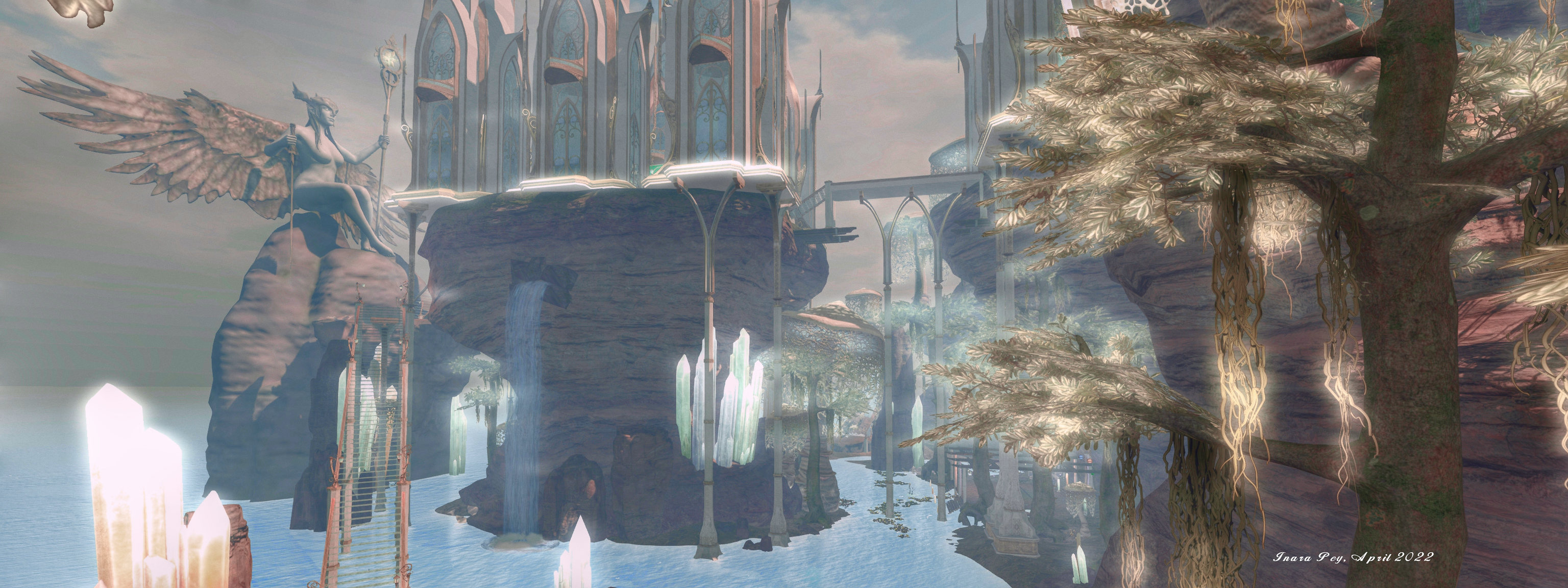
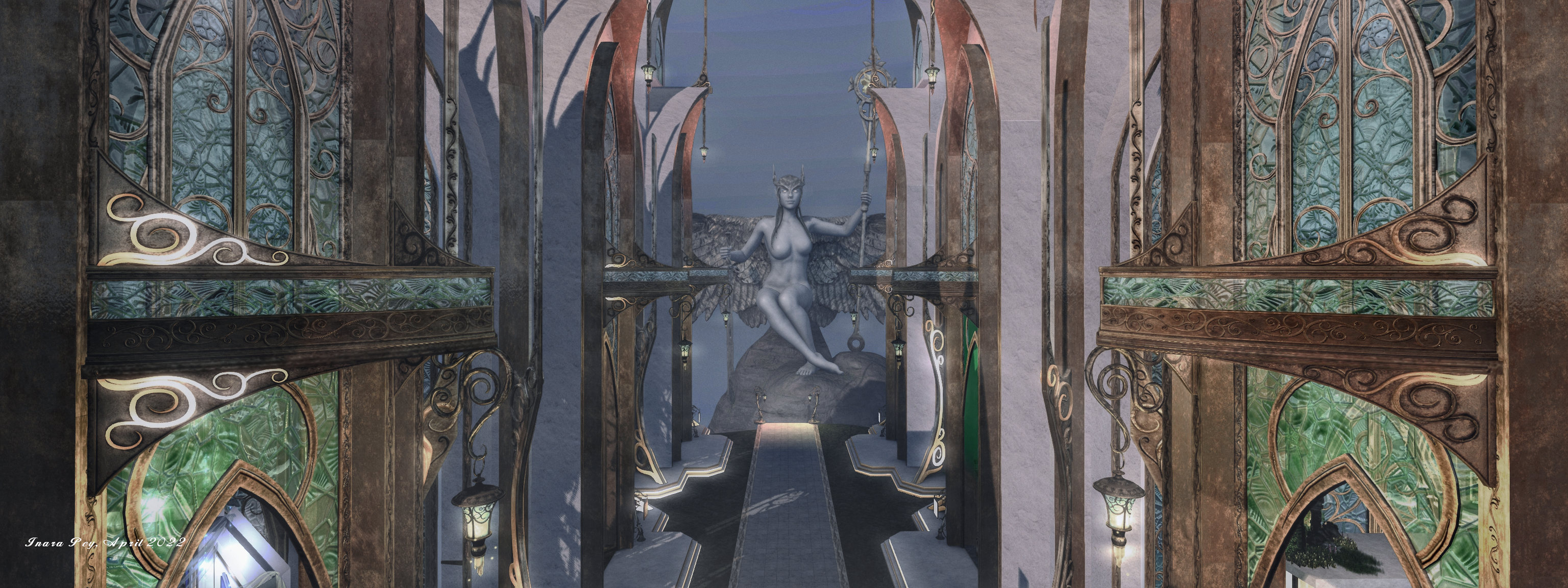
The elven realm of Firith Galad in Second Life

Firith Galad, November 2021 – click any image for full size

It has been a while since I’ve dropped in to a region designed by Camila Runo – the last was her take on the bayou lands of Louisiana back in May 2021 (see: A trip to the Bayou in Second Life), although my first encounter with her work came back in 2020 with the original Jambo! (A voyage to Africa in Second Life). Quite what caused the break in my visits I’ve no idea; but seeing Firith Galad a Forgotten Elven Realm listed in the Editor’s Picks of the Destination Guide immediately had me scurrying to pay a visit.

As anyone with an abiding love of Tolkien’s mythology (like me!) will know, Firith Galad is Sindarin (Grey Elven) in origin, and can be literally translated as “Fading Light” (Firith also being the last quarter of the Sindarin / elven year, and so give the time at which this build is available, that name also fits quite nicely).  indeed, in respect of “fading”, a further layer of meaning might be found within the region’s name, as quick look at the About Land description reveals:

Surrounded by high mountains and cataracts lies Firith Galad, an ancient elven realm fallen into oblivion. The light is fading, winter is near …
Firith Galad, November 2021

Again, as those familiar with Tolkien’s mythology, the War of the Ring brought to an end the time of Elves, and the start of the Fourth Age, and the ascendancy of Man. At this time, many of the elves of Middle Earth departed into the West, and those left behind recognised they were doomed to fade with the passage of time. While no actual time-frame (before / after the War) is given, the title of the setting nicely fits with this idea of an elven enclave tucked away, perhaps high in Ered Luin (the Blue Mountains) of Lindon, the last remnant of their beloved Beleriand, and a place where they could escape the passing of time in the world around then, content to remain in isolation.

This is an ethereal setting caught in a ghostly light that, with the surrounding walls of rock, serves to separate the realm from the rest of the world, isolating it in a unique fashion whilst bathing it in a cool light mindful of winter, and in which the enclave is gently revealed as one approaches it. Set within a deep mountain valley, the setting is reached far  path that clings to one side of the valley walls. It emerges from a tunnel – a hidden passage leading from the world beyond and into the valley. This tunnel is guarded by two gates bearing symbols of the gold and silver Trees of Valinor, Telperion and Laurelin, the first indication that in offering this build, Camila has perhaps cast her net of inspiration wider than Tolkien’s Lord of the Rings, (and certainly Peter Jackson’s interpretation of Tolkien’s world).

Firith Galad, November 2021

The path clings to the valley side as it runs from tunnel opening to a single stone bridge that gracefully spans the deep chasm of the valley to reach the enclave as it in turn hugs the far side of the valley’s steep walls. Here, beyond the banners bearing what might be an image of Telperion,, the enclave offers a tiered build, making use of shoulder and island of rock extending outward from the high peaks, with the core buildings reached via stair or bridge (or both), all sounds drowned by the thunder of the great falls that tumble to the valley floor far below.

Dominating the realm is a great house, placed at the top of a broad stairway and occupying a large stone-flagged square. Climbing the stairs towards it, visitors are greeted by the sound of harp music, the house itself a place of meeting, feasting, music, and seeing – a basin of water mindful of the one that once belonged to Galadriel sits within it, light glittering above its slowly shimmering water as it appears to wait its time to reveal the future to those who look into it.

More steps rise upwards from one side of the house, climbing to where a great stone edifice rises, curtains of water falling from some of its buttresses in time to the falls behind it. A single span of stone reaches across the pool that collects this water to reach the centre of the structure. This is home to a tall carven figure, undoubtedly Varda Elentári, known to the Sindarin as Elbereth Gilthoniel, as she holds aloft the vessels holding the light silver and gold light of the corrupted Two Trees of Valinor in vessels fashioned by Manwe and Aulë, that they might become the Sun and Moon of Middle Earth.

Firith Galad, November 2021

Elsewhere within the setting, one might find a meeting place, its horseshoe table doubtless the place of many councils and meetings of fellowships, while across a bridge from the arrival point and its gazebo stands a smaller hall, given over a place of learning / research / study, albeit one with furnishing that are perhaps of distinctly “Mannish” origins in difference to the furniture to be found elsewhere. Then, between this library and the main house there can be found a stone pavilion in which water drops from the high roof to enter a rectangular pool at the pavilion’s centre, what appears to the face of Ulmo, Lord of Waters, and second to Manwe and Elbereth in leadership of the Valar.

With a richness of trees and greenery as befitting the Sindar, who also settled in the forests of Middle Earth during the Second Age, Firith Galad is one of the well-executed settings drawn from Tolkien’s mythology. The attention to detail in referencing The Silmarillion far more than The Lord of the Rings, gives this setting a uniqueness that is hard to deny, and which is a delight to visit and spend time within for any Tolkienite. And even if your interest doesn’t run so deep, Firith Galad is nevertheless captivating in its presentation and sheer photogenic nature.

Firith Galad, November 2021

My utter respect to Camila for her work with this 80-days build.

SLuel Details

A Daydream Believer in Second Life

Daydream Believer, November 2021

With Halloween now behind us, many in Second Life will be looking towards US Thanksgiving as it sits waiting at the end November 2021. However, being from Europe, Janna Reed (Janna Blackwood) has understandably decided to skip over that particular event and jump straight into an end-of-year winter setting within her Homestead region.

Daydreamer Believer is an easy-going and understated setting where winter has draped a blanket of snow over the landscape as it sits cupped in the protective hands of surrounding peaks. With broad lowlands that are marked by scattered trees, a small cottage, and cut through by a frozen inlet, the island is marked by two tall hills towards its centre, each neatly sliced into a flat top. Each is also topped by a single structure – an old wooden lighthouse on one, and an almost fairy tale-like tower where Christmas presents are piled within the lower halls and a cosy bed awaits on the upper.

Daydream Believer, November 2021 – click any image for full size

The two hilltops are connected via a bridge that offers its own sense of fantasy, being held aloft by balloons. Whilst it crosses the gap from one hilltop to the other, and sits just outside the door to the tower, the bridge doesn’t provide direct access to the lighthouse on its far side. This sits elevated above bridge and path on a heel of almost completely vertical rock. However, the path from the bridge does provide access to a high cavern and a possible escape from the snow – although it is not without its own surprise.

Running from west to east, the inlet that cuts deeply into the island in a small band of land that prevents it from entirely cutting the land in two. This humpbacked band forms the backdrop for the region’s landing point as it sits on the frozen water. Close by is the first clue to this being something of an interactive environment: a skating stand for couples awaits those who wish to use it. Those visiting on their own can also join the fun via a skate giver located close by, between frozen inlet and a small staking rink. Group membership is required for the skates, but also gives rez rights; however, if you have your own, you can of course wear them.

Daydream Believer, November 2021

A short walk south and west from the landing point and rink, the land rises slightly in the lee of the central hills. Here, two snow forts face one another across the snowy ground, each complete with a snowball-firing canon, allowing for fun and games to be had. Both could do with sitting a little better on the ground, but can be used by sitting on them and then following the the instructions in local chat. As well is these forts and the skating, the region also offers opportunities for riding either via horse (there is a rezzer at the cottage) or polar bear, a number of which can be found around the region.

Given this is a winter setting, Daydream Believer would not be complete without some form of winter sports, and those exploring the region can find a couple of options available to them. The first is a snowboard rezzer waiting at the far end of the ski lifts that connects two low-lying hills tucked into the north-east corner of the region, whilst the second – a sledge rezzer – sits on the snowy plain separating the ski lift’s hills from their much higher brethren. Finally, for those who fancy an airborne look at the region, a bubble rezzer can be found close to the one for snowboards.

Daydream Believer, November 2021

Also awaiting discovery are numerous places to sit, both indoors (the cottage and hilltop tower are open to the public) and out, most with singles and couples options.  Those seeking respite from the slowly falling snow are best heading for the cottage or the open-sided pavilion, each of which has a roaring fire  that allows toes suffering from walking the snows to be comfortably toasted back to warmth.  Even so, the snow might not be entirely left behind as flurries are close enough to the cottage they cab slightly slide inside as their mesh element turns. Said snow can also interfere with sitting in places, so be sure to cam carefully.

With deer, foxes, and penguins waiting to be found, the region offers plenty of wildlife to see, broadening opportunities for photography. As noted, those joining the local group also get rezzing rights for props etc., – but (as always) a gentle reminder to make sure you pick bits up when done!

Daydream Believer, November 2021

Gentle, relaxing and with a taste of winter that is not Christmas-heavy, Daydream Believer makes for an easy-going visit. With thanks to Shawn Shakespeare for the LM.

SLurl Details

Visiting ancient Greece in Second Life

Delos, November 2021

In October, I visited ancient Alexandria, a two-region build by Kleopatra T. Philopator (Kleopatra Alpha) and Elio Donat, and which offers an historical / role-play environment set in the reign of Cleopatra VII Philopator (69 BC – 10 August 30 BC) – see Cleopatra’s Alexandria in Second Life. However, adjoining the two regions representing Alexandria is a third, offering settings from ancient Greece within the same period (centred on around 43-42 BCE). At the time I covered Alexandria, I had intended to include the settings from ancient Greece; however, in talking to their creator (and holder of the region where they sit), Ellen of Sparta (ellenharriet) it became apparent they should be covered separately – hence this article.

As their joint name suggest, Sparta and Delos offer setting representative of the famous Greek city-state and of the the island said to be one of the most important mythological, historical, and archaeological sites in Greece. In addition, the region also offers the opportunity to visit ancient Crete. All three locations stand separately on their own sky platforms, but are interlinked via a teleport system. In addition, both Sparta and Delos can be reached from the “Library” landing point above Alexandria.

Sparta is today probably best known for its connection with the mythology of Helen of Troy and the Trojan War, and its military might, most notably enshrined in the reign of Leonidas I and the Battle of Thermopylae (480 BCE) during the second Persian invasion of Greece, led by Xerxes I. However, the city-state’s entire history is rooted in legend and mythology, which states it was founded by Lacedaemon, son of the god Zeus (by way of the nymph Taygete), and later became the seat of descendants of Heracles.

Sparta, November 2021

Regarded as less sophisticated than the likes of Athens, Sparta rose to become the dominant land-based power in Ancient Greece, largely due to the system of education imposed by the laws of semi-mythical legislator Lycurgus (c.820 BCE). And whilst seen as “less sophisticated”, it wasn’t in any way backward. For example, Sparta was very much ahead of the rest of ancient Greece in terms of gender equality – women, (at least those classed as citizens of the city) enjoyed a status, power, and respect that was unknown in the rest of the classical world, being seen from birth as near-equals to male offspring and offered the same freedoms, up to and including education and competing in sports. As such, many women played significant roles in the city-state’s history, such as Queen Gorgo, heiress to the throne and the wife of Leonidas I.

As represented by Ellen, Sparta in Second Life sits at a time well past its heyday as an independent city-state (that having been lost in 192 BCE, when Alexander the Great forced it to join the League of Corinth), but when it was nevertheless enjoying a curious renaissance. Whilst subject to the rule of Rome, it was seen as a Free City, allowing at least some of the institutions of Lycurgus to be restored – a fact that lent it to becoming a “tourist attraction” for wealthy Roman citizens wishing to learn about it culture and ways. Hence why, within Ellen’s setting, we find a Romanesque colosseum rising up on one side of the city.

The core of Ellen’s build is laid out along Afetais Avenue, regarded as the major thoroughfare of Sparta. Here can be found a number of buildings that help represent something of Sparta’s long history and its roots in mythology. First among these, just beyond the training arena for those wishing to participate in combat RP and the tournaments that regularly take place at the  colosseum, is a temple dedicated to he mythical Helen of Sparta, daughter of Zeus and wife of King Menelaus of Sparta (and perhaps better known as Helen of Troy), as well as temples to the Muses and Heracles, the legendary hero of ancient Greece. He was said to have conquered Sparta two centuries after the Trojan war, causing the rules lines of the Agiad and Eurypontid kings claiming to be his descendants. Red plinths outside of these temples and the other buildings lining the avenue will provide brief note cards on the buildings and the roles of those they honour in the history of Sparta.

Sparta, November 2021

At its northern end, Afetais Avenue opens out into a broad square sitting before a representation of the main courtyard from the massive Mycenaean palace discovered at Aghios Vassilios Hill close to Sparta, a structure thought to have once covered some 35 acres. Here the palace courtyard looks towards the Sparta Acropolis, home to a reproduction of the Sanctuary of Athena Chalkioikos, and the city’s civic amphitheatre.

Delos, meanwhile, transports us to the historic island of the same name. Located near the centre of the Cyclades archipelago, it is home to some of the most extensive archaeological excavations in the Mediterranean. These show the island has been inhabited since around the 3rd millennium BCE, with Thucydides claiming the original inhabitants were driven from the island by King Minos of Crete (he of the Minotaur infamy). By the time of Homer, the island was reputedly the birthplace of the twin gods Apollo and Artemis (although Ortygia is also given as the birthplace of the latter), a legend that led to the island undergoing several “purifications” by  Athens in an attempt to render it fit for the proper worship of the gods.

By around 42 BCE, the importance of Delos had waned. Under Roman rule, the island has rises to the heights of being the premier trading centre of Greece after the Romans has soundly stomped on Corinth, but the Mithridatic Wars brought an end to this, such that by the 1st Century BCE, Delos as a centre of trade and culture. Even so, it did remain a centre of population through until the 1st Century CE (after which things get spotty), so Delos as seen here is perhaps representative of the island as it sat during Roman rule, and when its sanctuaries and temples  were sill very much maintained.

Delos, the Temple of Apollo, November 2021

Dominating the island is a temple celebrating Apollo, sitting on a hill overlooking the rest of the island, a tall statue of Hebe situated on one shoulder of the hill. Also to be found here is a sanctuary to Dionysus  – Delos was the centre of a cult that revered both him and Leto, mother of Athena and Apollo, and an Erechtheion dedicated to Athena. The later stands to one side and slightly below the temple of Apollo in a manner that is mindful of the way the Erechtheion in Athens sits to one side of the Parthenon. Also to be found within the setting is a further grand temple and the palace of Queen Ellen, together with a small wharf, open fields, a marketplace a landowner’s villas, and assorted points of interest, all of which offer a more relaxed environment for potential role-play when compared to the possibly more combat-centric Sparta.

Sitting within its own sky platform, Crete is the work of Ellen with the help of Delia Kleopatra (Naburita), and appears to take us to the Minoan era. It centres on a great palace, seemingly inspires by the Knossos, and within which can be found a tripartite shrine of the kind discovered during excavations at Knossos, and reproductions of frescoes of the kind that may have once decorated the walls of buildings at Knossos.

And role-play (and combat) environments, these settings (notably Delos and Sparta) are home to a wide range of events, which are detailed at the landing points. Dress code for visitors is not strictly enforced, but those wishing to blend into the settings can join the local group and obtain free outfits from the vendors at the Delos and Sparta landing points. When exploring Sparta and Crete in particular, do not that there are private residences to one side of each setting, some of which are available for rent by interested parties – contact Ellen of Sparta (ellenharriet) for information.

Delos, November 2021

Taken on their own, collective and or / with Alexandria, Sparta, Delos, Crete make for an engaging and historically rich visit.

SLurl Details

Note Starr is rated Adult.