Enjoying the tranquility of the Back 40

The Back 40, Richfield; Inara Pey, November 2014, on FlickrThe Back 40, Richfield (Flickr)

The Back 40 has closed, SLurls have therefore been removed from this article.

I’ve often remarked that you don’t require an entire region – full or homestead – to create something very special, and I’ve blogged about a number of places in Second Life that prove that very point, such as Melinda Palianta’s beautiful Crystal Oak Falls, where she presents the wonderful gardens around her house for visitors to enjoy. Or perhaps the Moonlight Teahouse, the work of SL entertainer Myron Byron, or Kusanagi by Framboise Werribee.

I recently came across another such treasure which, like the Moonlight Teahouse and Kusanagi, sits in a mainland region. Called The Back 40, it is the work of “Dicky” Dick Spad, and it’s an absolute must for anyone with a love of nature.

The Back 40, Richfield; Inara Pey, November 2014, on FlickrThe Back 40, Richfield (Flickr)

Sitting just off Route 8A on the continent of Satori, and so reachable by road for those who fancy a drive, The Back 40 covers a mere 3568 square metres. But within that space, it presents visitors with a delightful woodland setting, complete with local wildlife, opportunities for wandering, places to sit, and of course the chance to take pictures – something Dick welcomes in the About Land description for the land, where he also invites people to come and relax.

The parcel really doesn’t require that much of a description, as it speaks well enough for itself. Extensive use is made of Alex Bader’s terrain scenery, which presumably allows the woodlands to change colour with the seasons, if desired. Right now they are rich with the golds, reds, oranges and greens of autumn. Mist rolls between tree trunks and over the long grass, offering a photogenic opportunity for those who love misty morning  / evening scenes. Care has also been taken to blend the woodlands into the surrounding area, so they appear quite natural, with a couple of screens have been used to good effect on two sides of the land to add a further sense of depth.

The Back 40, Richfield; Inara Pey, November 2014, on FlickrThe Back 40, Richfield (Flickr)

There’s a considerable amount of detail packed into the scene, some of it obvious, some of it perhaps easily missed if time isn’t taken in exploring, and there is plenty of wildlife to be found. It’s also worth having local sounds enabled, as Dick has taken care in blending bird song and deer calls into the scene, again adding to the immersive feel.

All told, a lovely corner of Second Life, well worth a visit.

The Back 40, Richfield; Inara Pey, November 2014, on FlickrThe Back 40, Richfield (Flickr)

From a Little Village a Little Town does grow…

Little Town
Little Town

In March through April 2014, Cica Ghost has a charming installation on the region of Caramel. Called Little Village, it was a marvellous collection of whimsical little houses with wobbly chimneys, huddled together in groups or standing alone, some on level ground, others precariously straddling little hills, and about which I blogged at the time it was open.

Little Village may have gone from the virtual world at large, but on Thursday, October 30th, Cica opened Little Town, which might be regarded as Little Village all grown-up. And it is another absolute delight of the quirky and the fun.

Little Town
Little Town

The buildings here are “life-sized” (in avatar terms) when compared to Little Village, but they all display the same higgledy-piggledy charm. Most are gathered around a town square atop a large flat hill in the centre of the region, although several are scattered more widely afield.

Here you will find tall finger-like houses, their once-bright paint a little faded and warn, sharing space with other structures of unknown intent. Pipes and tubes and horns twist and run between buildings or point skywards while trees and bright patches of flowers add further colour to the scene, as bright balloons drift about the place. There’s even a building that looks peculiarly like a gigantic coffee pot, a pipe-like handle on one side, and the spout formed by a another pipe as it twists it way to connecting with conical neighbouring structure.

Little Town
Little Town

While the inhabitants may be conspicuous by their absence, this is a town that is very much alive in its own way; there is motion everywhere as windmills turn in the breeze, cogs and wheels rotate, horns stretch and contract from rooftops, strange spherical objects push their way through pipes; even the odd rooftop rises and falls as if breathing slowly, all of it serving to add a depth and further charm to the whimsy on display.

Getting around is easy: wide steel roads, heavy with rivets, offer various routes around the town and its outlying areas, while steps down from the hill provide access to those places off the main roads, and of course, visitors are free to wander where they like. For those not into walking, there are cars available from a rezzer near the cinema cafe, while a gift giver near the landing point will present you with Cica’s Flying Ventilator, if you fancy getting a bird’s-eye view of the town. And speaking of the cinema – do be aware that some of the buildings can be entered as well – there’s even a cage where you can do Airkix-style “skydiving / flying” :).

Little Town
Little Town

Should all the exploring tire you out, Cica has provide a trio of floating beds in the south-west corner of the region, where the weary can rest a while. The field over which the beds floats is also home to Cica’s little flower shop, where you can purchase sets of the flowers which can be seen around the town and region, as can copies of the two mechanical birds sitting under a nearby parasol – proceeds from sales doubtless help towards keeping the sim open.

Given Little Town involves so much motion, something no always captured in a simply snapshot, I’ll leave you with a video of the town in the hope it’ll encourage you to pay a visit and share in Cica’s whimsy!

Related Links


Kite flying in Second Life

Black Kite
Black Kite

Nigh on two years ago I blogged about Black Kite, the home of Black Cloud (Theblackcloud Oh), and a region open to visitors to enjoy. In the intervening time I’ve been back there on a number of occasions, drawn in part by the fact that it is a water-themed region. As regular reader know, I have something of a soft spot for such places.

Truth be told, not a lot has changed with the region in that time – and that shouldn’t be taken as a critique in any way, because that’s certainly not how it is intended. That Black Kite continues in look and feel as the months go by, so does the feeling of comfort and familiarity one gains with each subsequent visit. When so much can be subject to chop and change within Second Life, it is sometimes nice to have anchor points which can be returned to and enjoyed without the uncertain surprise of change; hence another reason for my visits.

Black Kite
Black Kite

For my part, I love how Black Kite mixes the natural and surreal, presenting an environment which is at once familiar and yet faintly alien. A place where wooden board walks and telegraph poles sit alongside the twisted, ball-topped forms of snake trees, and water droplets rise by the dozen from around armchairs sitting in the water while fish swim through the air indoors.

In my original post about Black Kite, I commented that it is very a much a place where one can get away and simply *be”. It still is; here are places – such as the aforementioned chairs – where one can sit and / or share with a friend or two. Nor are you restricted to ground (or water!) level: ladders provide access to the rooftops of several of the wooden buildings scattered across the region,  where additional chairs and benches might be found.

One of the delights of the region is that almost everything is carefully spaced across the region that conversations and the scenery can be enjoyed without the feeling of being overheard or sitting within earshot  / view of someone else’s privacy.

Black Kite
Black Kite

For those of a photographic bent, the default windlight presents Black Kite beautifully – but it is also a place where twiddling with settings can yield some quite unexpected and delightful results. A Flickr group is available for those you like to share their shots.

Visitors are free to wander where they will when visiting Black Kite, but if you’ve never dropped-in before, do be aware that Black Cloud has her private house in the north-east corner of the region, so do please respect her privacy.

I couldn’t resist a further attempt at doing a little video recording while visiting the region, so I’ll leave you with that – and a reminder of the Black Kite SLurl.

Related Links

A visit to a kitten’s garden

Petit Chat Gallery
Petit Chat Gallery

Petit Chat-Moumou’s Square is the home of Trinity Yazimoto’s store and art gallery, both are located within the grounds of a garden currently rich in the colours of autumn, and where visitors are invited to spend time relaxing.

Trinity’s store, Petit Chat, occupies an old mill partially surrounded by water features fed by the falls that tumble from the high cliffs that border the garden on three sides. The water actually divides the land into several distinct areas, all linked one to another by stone bridges. There is the store itself, with its own garden nestled behind it, complete with Romany caravan and lamp-lit lily pond, a bridge providing access to a cuddle area across the pond. In front of the store, and reached via another bridge, is a further garden area, complete with swings and a roundabout, rocking horses, and a pergola offering shade and a place to sit and enjoy a cake or two.

Petit Chat store
Petit Chat store

A further bridge offers a crossing to the rest of the garden, where stone steps lead up a grassy slope to where a cobblestone terrace, complete with fountain, can be found, offering further shaded seating for visitors. Beyond the terrace sits the ruins of an old tower, the curved steps of which lead the way to a artist’s workspace, while hidden behind its walls lies a picnic area.

But it is what lies under the tower and terrace that will be of interest to lovers of art and SL photography. Here, in a vaulted, crypt-like space, is Trinity’s art gallery, a ladder held within the curve of the old tower’s walls providing access – simply touch the ladder to climb down to it.

Petit Chat Gallery
Petit Chat Gallery

I first became familiar with Trinity’s work during the Terms of Service upset in late 2013, and then through seeing her work on the SL feeds and on Flickr, where her landscape work has always been incredibly eye-catching for me. Within the gallery, her landscape work is mixed with more personal pieces, all displayed in a manner that is well suited to lower lighting conditions that match the look and feel of the gallery space.

A nice touch with the items on display is that Trinity provides a note card with many of them (right-click on a piece, and select “Info” from the menu). This provides information on the inspiration for the picture and details of the location where it was shot – handy if you feel like paying it a visit.

Petit Chat gardens
Petit Chat gardens

Trinity openly admits she works extensively within Photoshop to produce her images; where her landscape work is concerned, some might say that the result doesn’t really represent the region in which it was taken.  I’d beg to differ with such views – as Trinity states in some of her note cards, these are her interpretations of the places she visits.

Besides, it’s not as if we don’t have tools within the viewer which can help us enhance / alter the look and feel of the regions we visit and photograph, whether it is simply by altering the windlight settings or using the likes of the SL Share filters or a tool set like Phototools or even doing it the hard way and digging through debug settings.

Petit Chat Gallery
Petit Chat Gallery

As such, whether or not Trinity uses Photoshop is incidental to the quality of her work; her landscapes are beautifully presented, and her still life work, often featuring herself as the model, is creativity composed and frequently conveys a strong message which draws the observer into it.

all told, Petit Chat-Moumou’s Square makes for a delightful visit, offering a charming garden in which to relax, excellent art to view and purchase, and an opportunity for the fashion hungry to do a little shopping. And for those who would like to combine art with fashion, check-out the top for of the shop 😉 .

Related Links

Trinity’s gallery also featured on the SL Destination Guide highlights for October 24th.

Taking an early winter’s walk

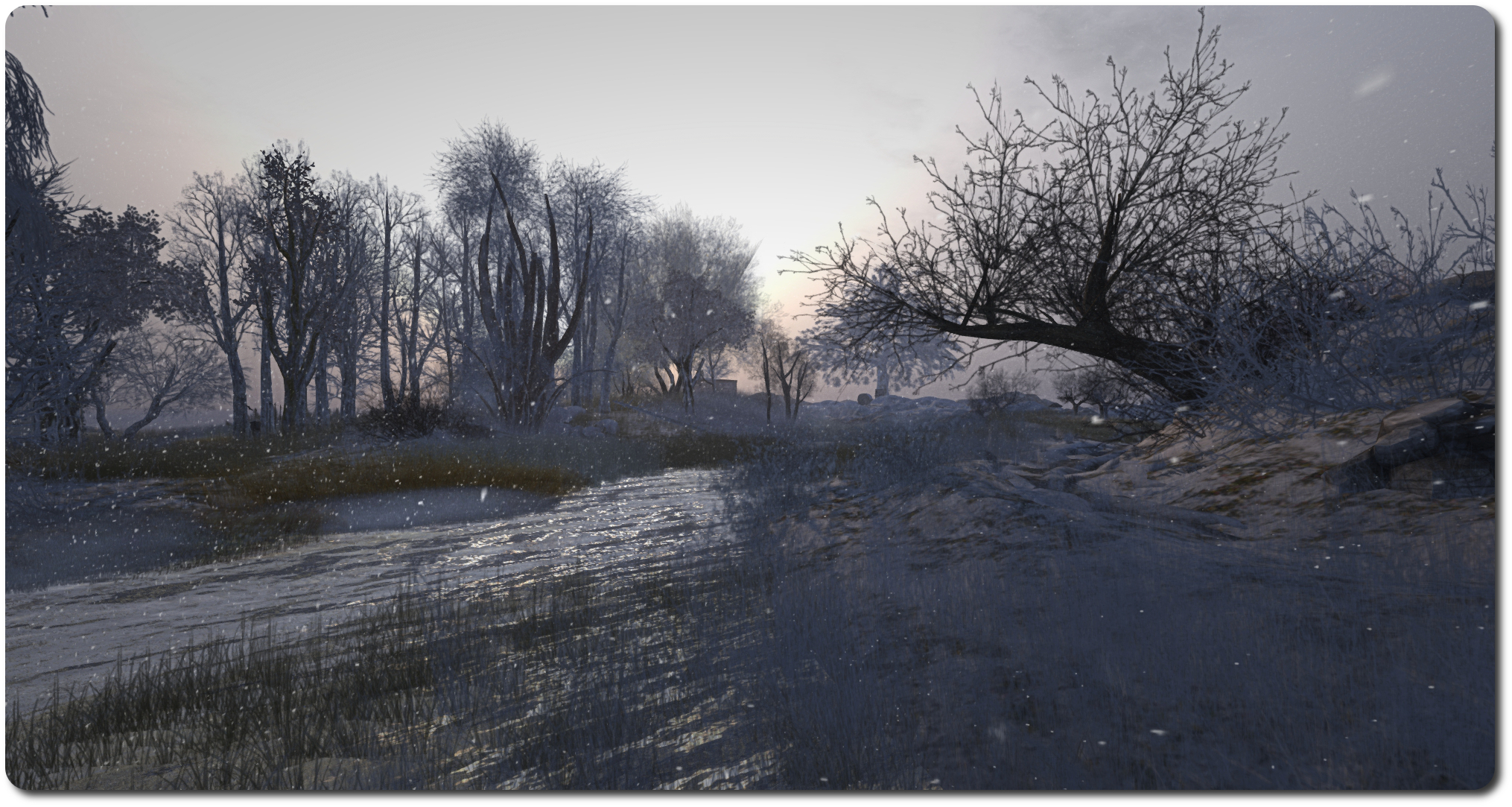
The Pines at Jacob's Pond, Jacob; Inara Pey, October 2014, on FlickrThe Pines at Jacob’s Pond, Jacob (Flickr)

I last visited The Pines at Jacob’s Pond in February 2014, when an early spring was in the air. Now, with many regions embracing an autumnal feel in keeping with the turning of the seasons in the northern hemisphere in the physical world, The Pines has embraced a wintry scene.

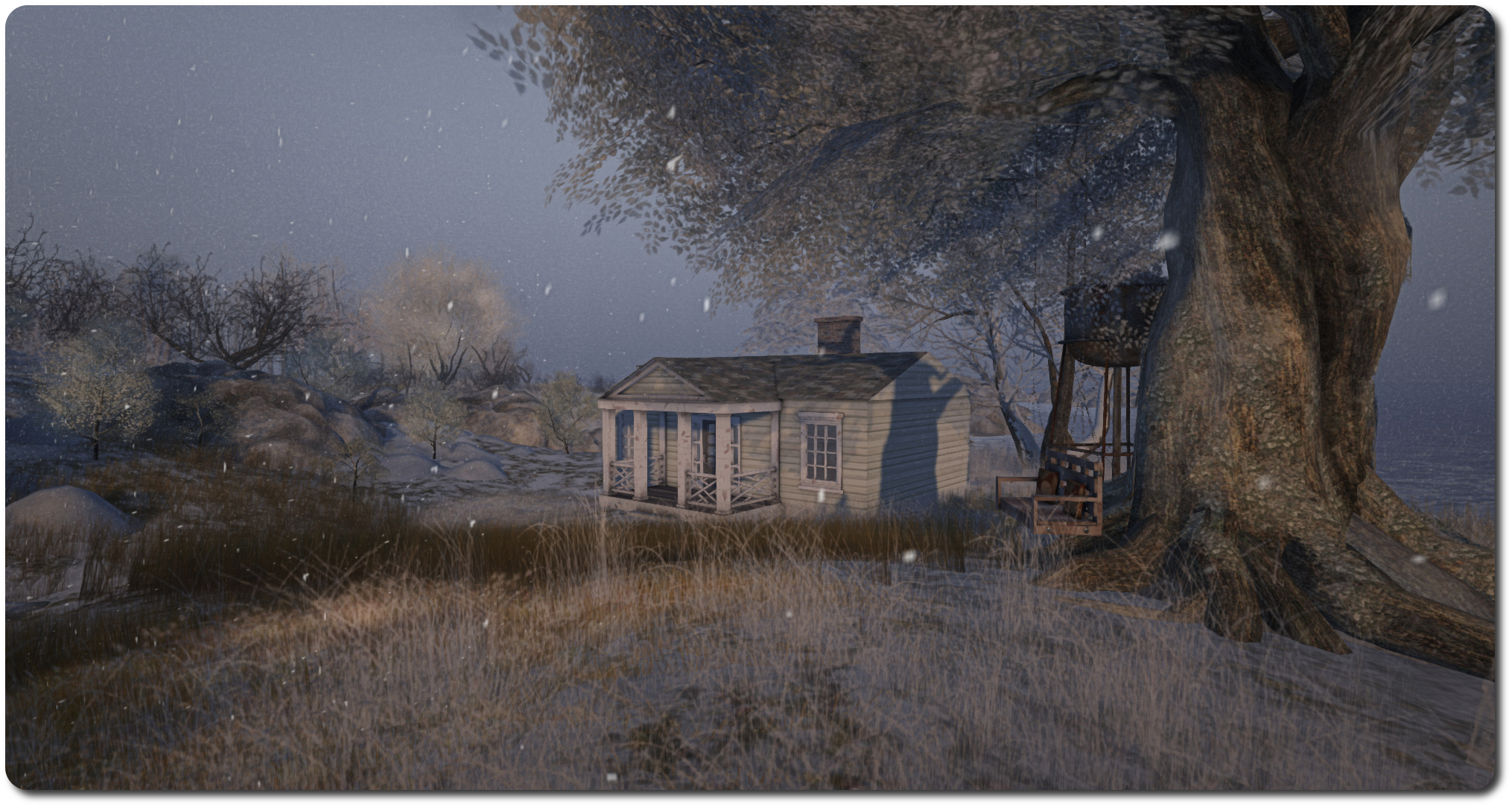
The Pines at Jacob's Pond, Jacob; Inara Pey, October 2014, on FlickrThe Pines at Jacob’s Pond, Jacob (Flickr)

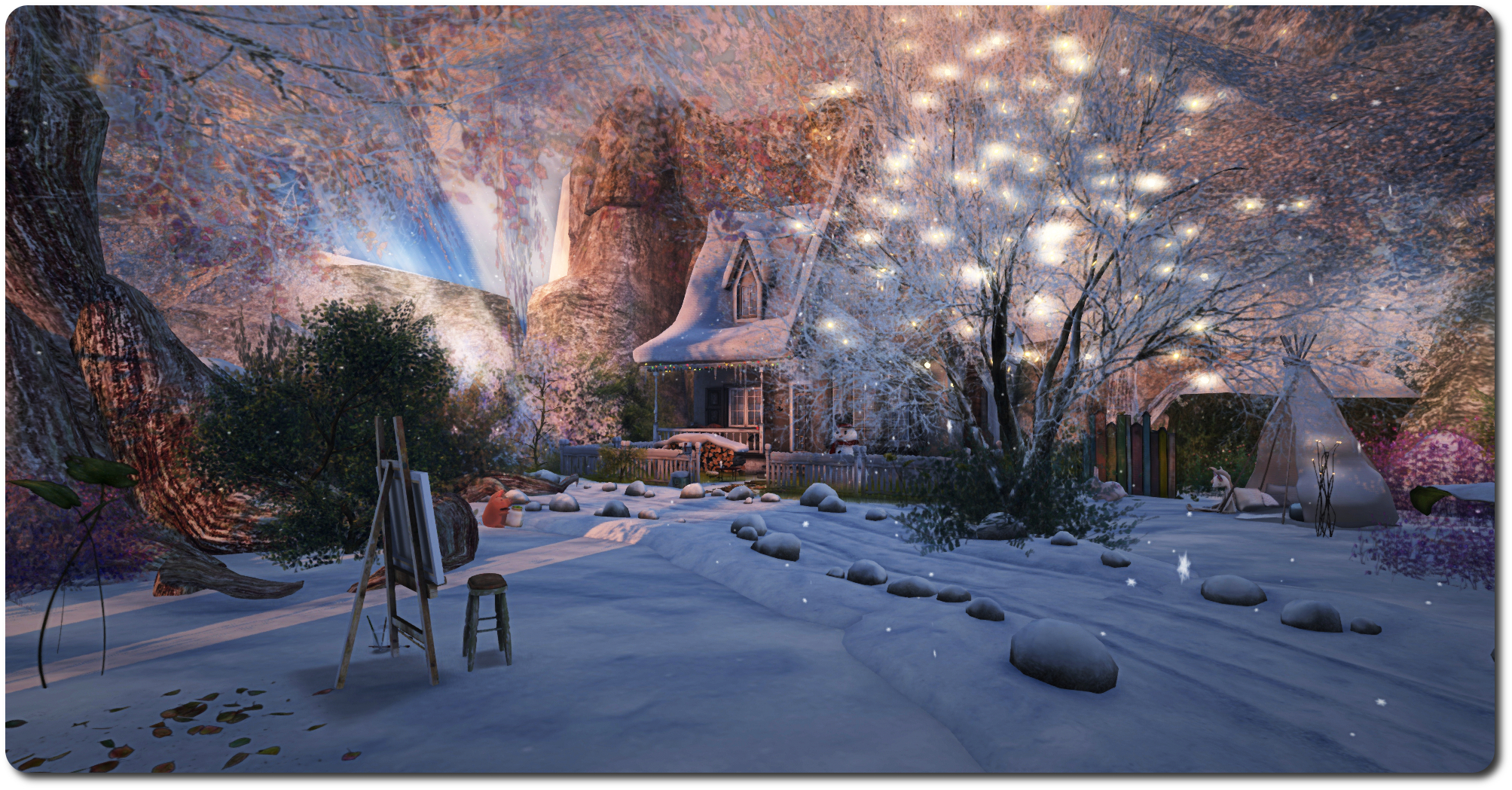
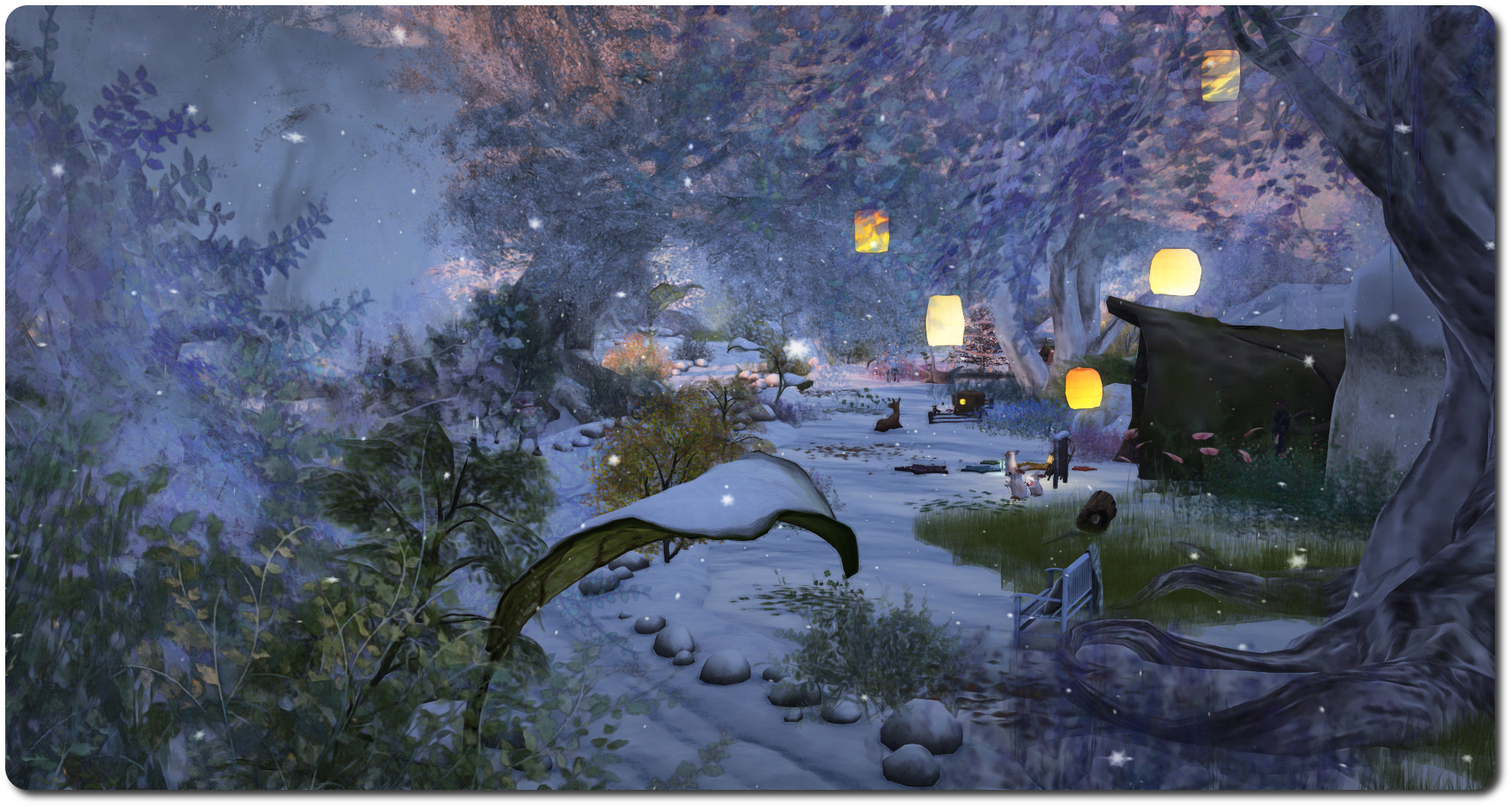
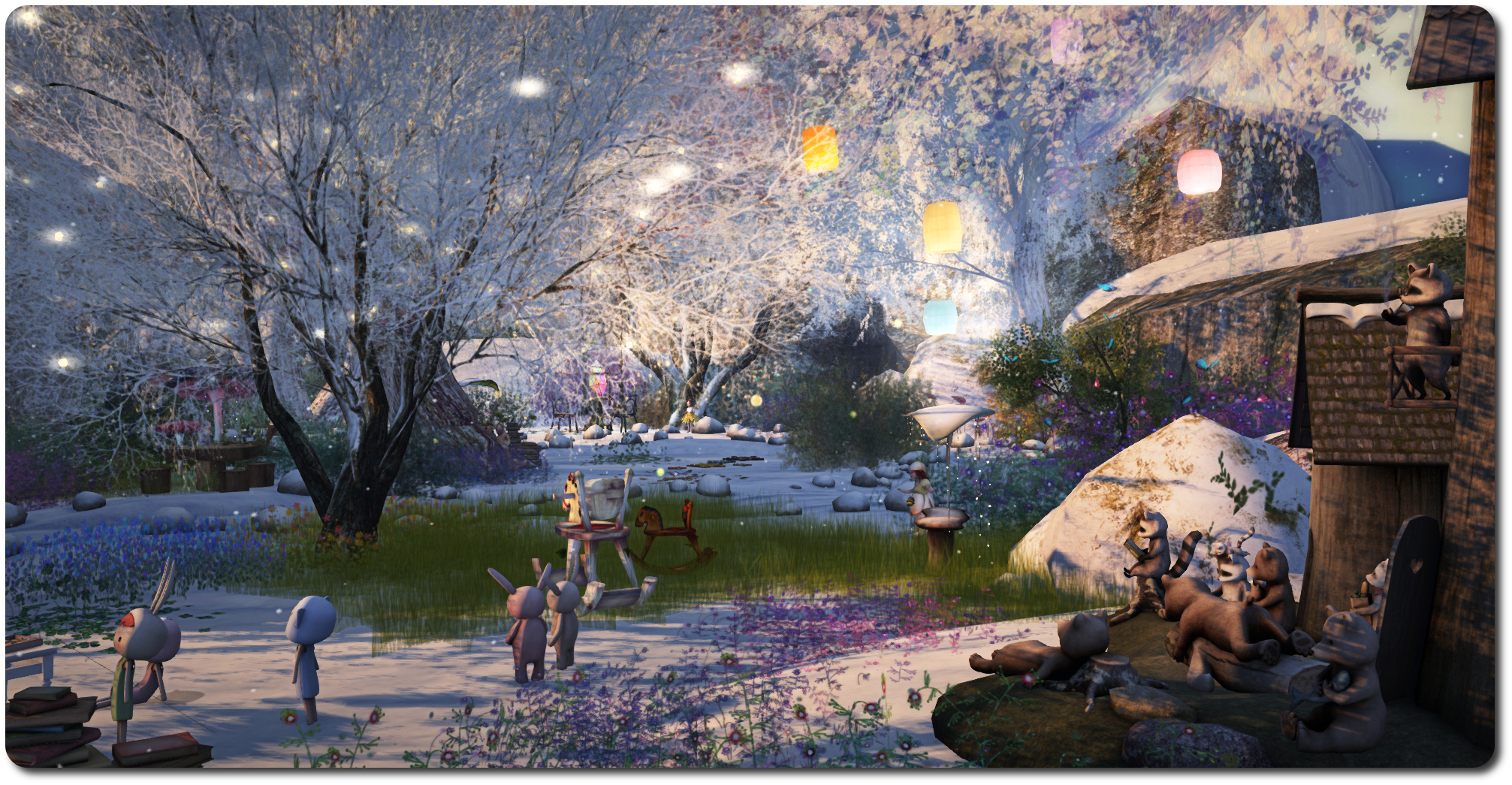
The new scene brings with it a new design for the region. The lake is frozen, snow lies heavy on the surrounding farmlands and in the boughs of the trees; deer forage for grass and horses exhale colds of warm breath into the cold morning light.

The Pines at Jacob's Pond, Jacob; Inara Pey, October 2014, on FlickrThe Pines at Jacob’s Pond, Jacob (Flickr)

Dacotah Longfall, who designs Jacob’s Pond, offers a warm welcome to visitors arriving in the small cabin on the south side of the region, inviting them to enjoy her backyard – and noting that clothing is optional. With the snow on the ground and the misty look to the air, I’m not sure this is advisable!

The Pines at Jacob's Pond, Jacob; Inara Pey, October 2014, on FlickrThe Pines at Jacob’s Pond, Jacob (Flickr)

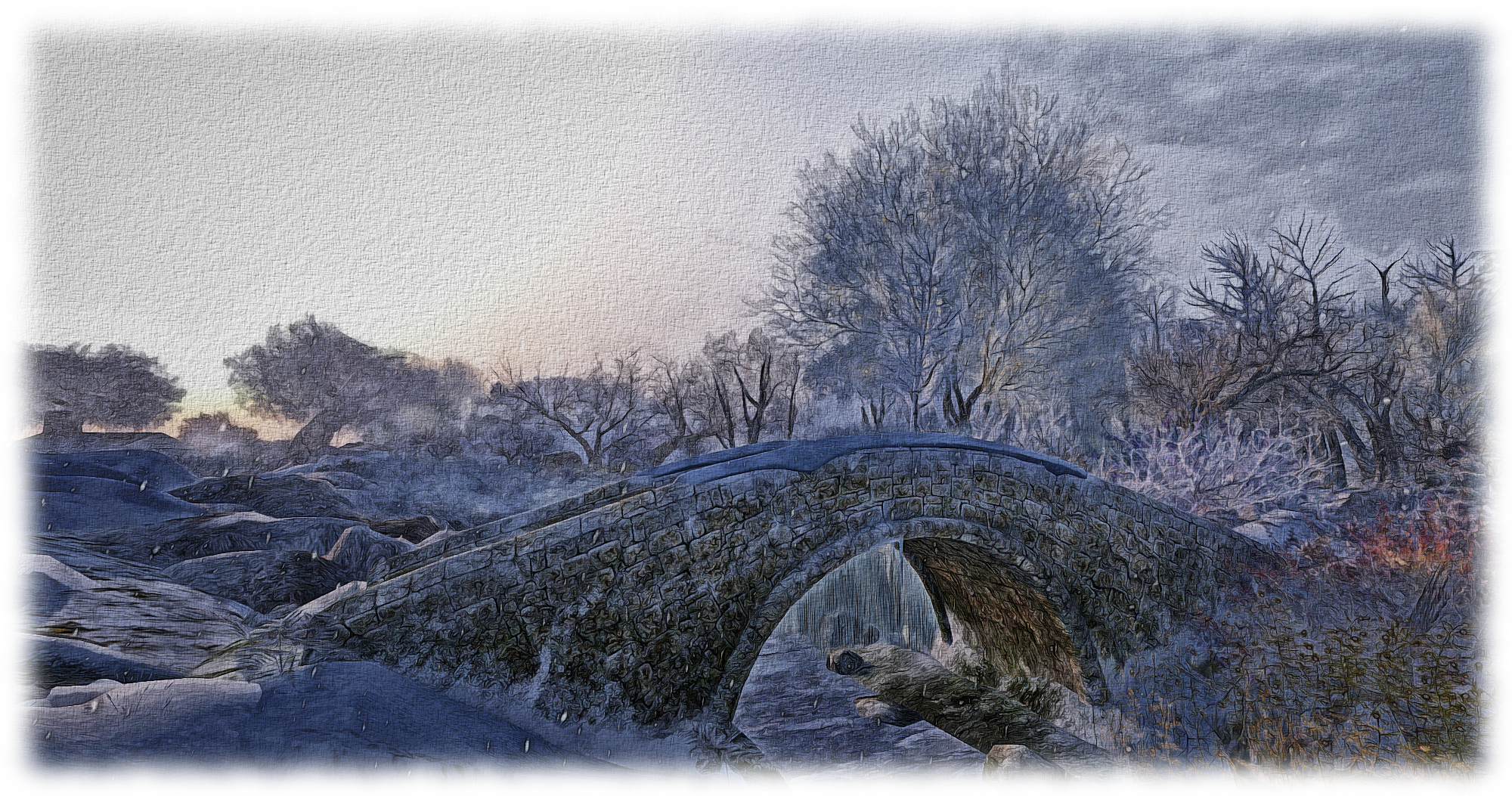
Snowy paths wind across the region, with lamplit bridges helping to guide the way over the frozen streams, guiding the way around the lake and to the barn, and to farmhouse up on the hill to the north. These don’t have to be followed, visitors can wander as they please, and – as ever – there are plenty of opportunities for photography.

All told this is a another delightful redressing of a region which never fails to please. It might seem a tad early for thinking about the depths of winter, but The Pines at Jacob’s Pond presents the perfect image of snow and crisp skies we probably all love.

The Pines at Jacob's Pond, Jacob; Inara Pey, October 2014, on FlickrThe Pines at Jacob’s Pond, Jacob (Flickr)

The Pines at Jacob’s Pond forms a part of the End of Time group of regions, if you’ve not visited the estate, I can only recommend that once you’ve explored The Pines, you pop across to Nu Haven, Tide, Eotia, Wabe, Crow, and Gyre. All make for wonderful exploration.

Related Links

More than Just Another Tequila Sunrise

Just Another Tequilla Sunrise, Isle of Love; Inara Pey, October 2014, on FlickrJust Another Tequila Sunrise, Isle of Love (Flickr)

I was led to Just Another Tequilla Sunrise by Kate Bergdorf, who mentioned it in her blog recently. A homestead region, it is currently painted in rich autumnal colours which make it an absolute delight to visit on these (for those of us in the UK at least), damp and dreary days.

The work of SL photographer Arol Lightfoot, the region’s name is a perfect reflection of its look and feel under the default windlight (although I admittedly used others when taking my own snaps).  Photographers are warmly invited to explore and take pictures, and Arol has created a Flickr group where images can be shared, if people wish.

Just Another Tequilla Sunrise, Isle of Love; Inara Pey, October 2014, on FlickrJust Another Tequila Sunrise, Isle of Love (Flickr)

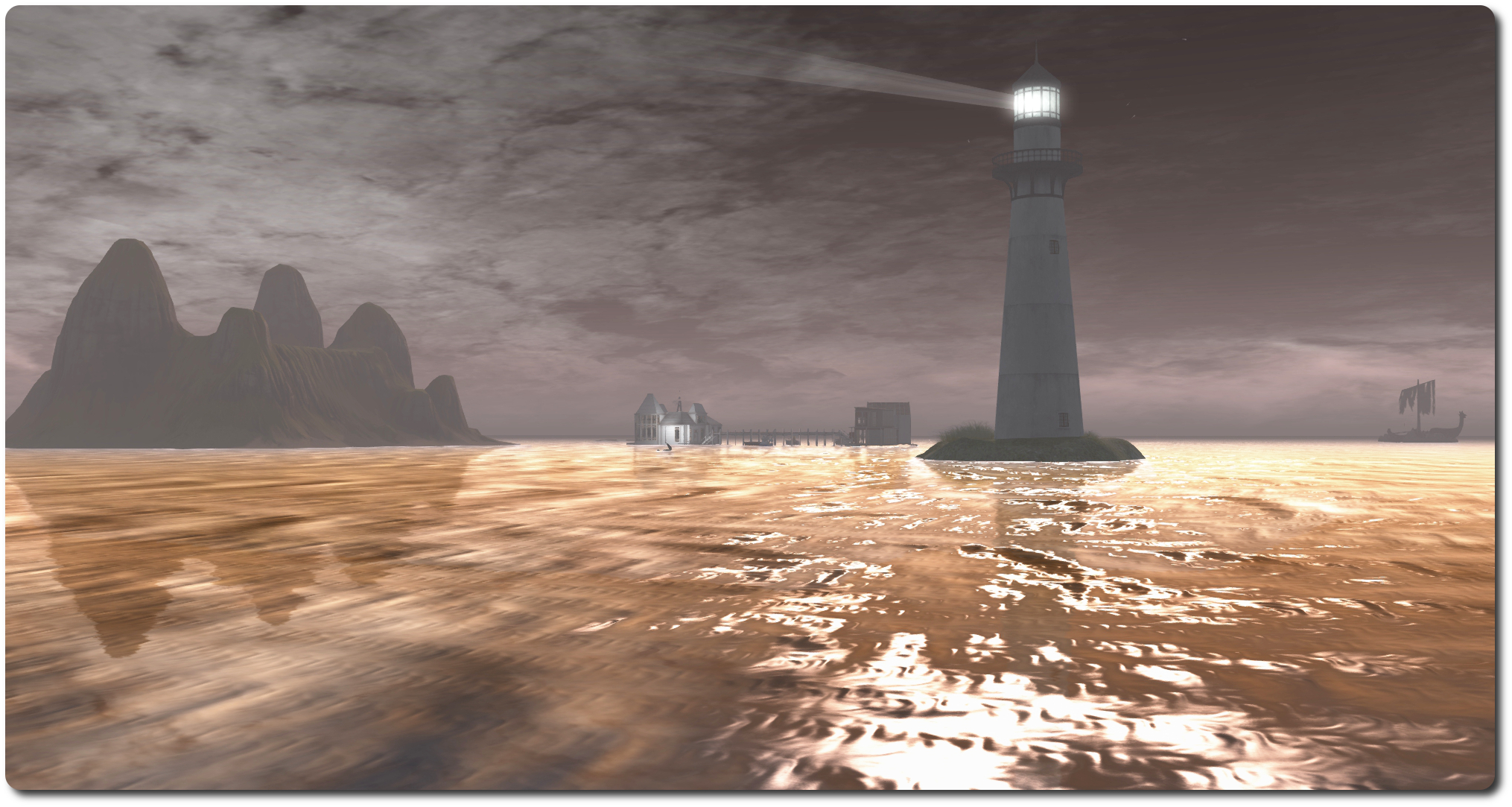
For those who explore SL a lot, there are a number of familiar motifs here – the offshore lighthouse, the craggy upthrust of a rocky plateau, the low-laying lands broken by bodies of water, the sweeping white curve of a beach… Which is not to say that Just Another Tequila Sunrise is in any way derivative; quite the reverse in fact. In a world where people are limited in how they can take an island 256 metres on a side and blend it into the surrounding sea, it is inevitable that regions come to share familiar elements while still retaining their own individuality from one another.

More than this, however, is the fact that such familiar elements within individual region designs help to give a feeling of continuity as one travels through SL. When encountered, they can help make individual islands feel as if they are different elements of the same country or coastline, rather than being individual places, more-or-less standing on their own.

Just Another Tequilla Sunrise, Isle of Love; Inara Pey, October 2014, on FlickrJust Another Tequila Sunrise, Isle of Love (Flickr)

Two areas of habitation mark the island. On the west sits a small farm, the ribbon of a lake reaching almost to the front door of the house. To the east, and built out over one of the two beaches, sits a wooden pier topped by a sun-bleached house. Between them the low-lying grasslands offer plenty of space to wander, with places for individuals, couples and groups to sit and enjoy the surroundings. Bridges, both stone and wooden, allow easy passage over the water, and a path cut into the rock guides those so minded to the top of the southern plateau.

With the sounds of nature throughout and birds wheeling overhead, Just Another Tequila Sunrise is, as noted above, an absolute delight to visit, and guaranteed to brighten the dreariest of days. Highly recommended.

Just Another Tequilla Sunrise, Isle of Love; Inara Pey, October 2014, on FlickrJust Another Tequila Sunrise, Isle of Love (Flickr)

Related Links