Standing On The Other Side in Second Life

On the Other Side; Inara Pey, October 2018, on FlickrOn the Other Side – click any image for full size

Shakespeare recently forwarded a landmark for On the Other Side, a homestead region designed by Michelle (xxMichelle20xx) and Indriel (Indrielx) – and once again we’re in his and Max’s debt for alerting us to another fabulous region design.

The home of {JAS} main store, reached by teleport from the landing point, the region is beautifully landscaped as a small rural island, one of a number that appear to be sitting just off the coast of a larger  landmass. It’s a magnificently eclectic mix of elements which come together to present a photogenic and engaging setting.
On the Other Side; Inara Pey, October 2018, on FlickrOn the Other Side

The landing point is a tall stone watch tower, looking as if it might have been transported here from the Great Wall of China, and which sits on a sheer-sided table of rock that dominates the island. Three ways off of the rock are offered: the aforementioned teleport up to {JAS}, a zip line that crosses land and water to arrive at a canopied pavilion floating in the air; and a ladder down through the tower, and then via path down the rock face.

Of the two going down, I would suggest taking the ladder and leaving the zip line for when explorations are complete. Doing so will introduce to some of the region’s curios, such as the Star Wars stormtrooper endlessly dancing on behalf of the region (and who will take donations for its continued upkeep).
On the Other Side; Inara Pey, October 2018, on FlickrOn the Other Side

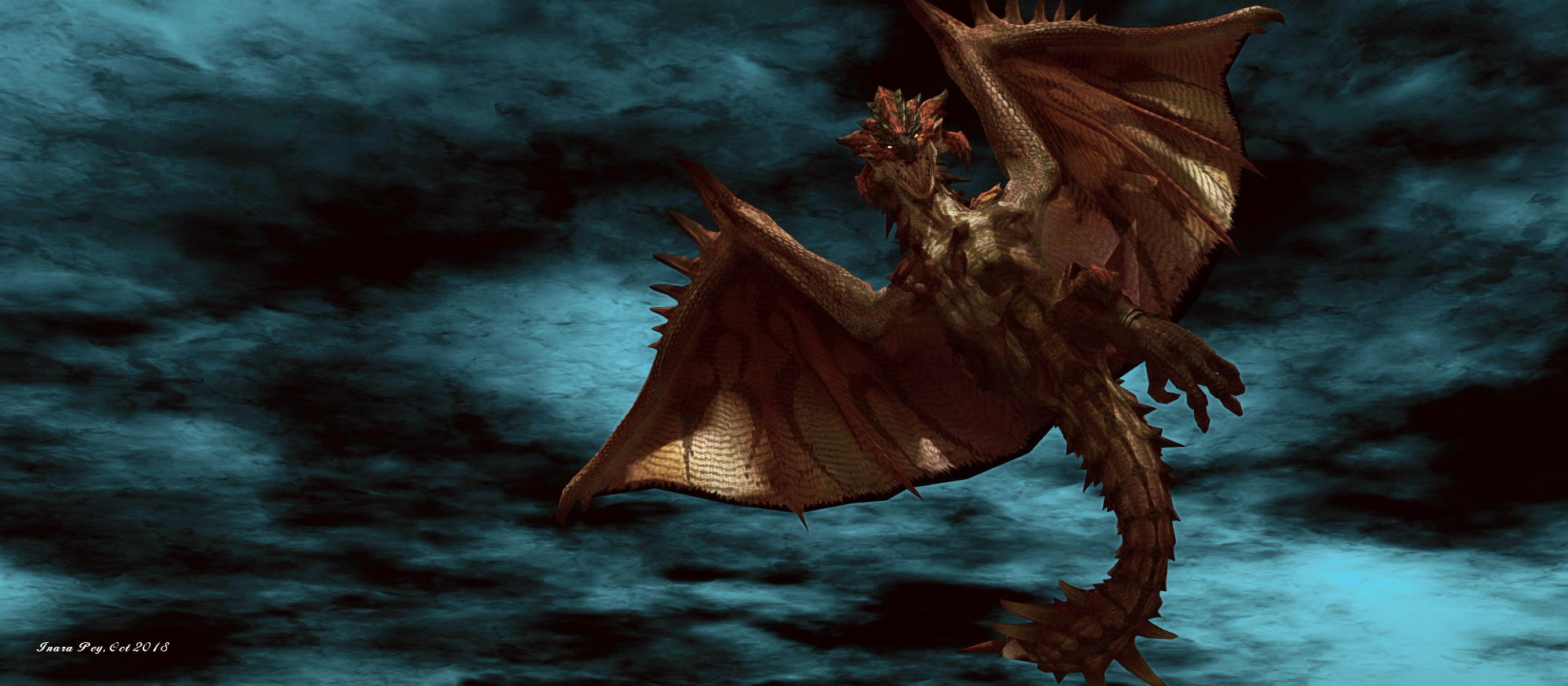
Nor is he alone, as overhead the region introduces a fantasy element into the mix with a dragon caught with hind legs poised either in readiness to make a landing – or ready to grab potential prey. The sci-fi  / fantasy elements continue further out in the sky as well, where what might appear to be Mars slowly tracks around the region. Stay long enough and you’ll see it transform itself into Earth, or you can click on it to change it to one of several solar system bodies.

Northwards from the path leading down from the plateau sits a farm-like setting. Horses graze on the grass, a traditional windmill stands with sails turning slowly. However, it is no longer producing flour from grain; the millstone has been moved down to the ground floor and converted for use as a coffee table, the room now a cosy lounge and kitchen, with the upper floors similarly converted for residential use. However, when walking around the outside walls, do be aware that some of the leaves drifting in the breeze aren’t phantom.

On the Other Side; Inara Pey, October 2018, on FlickrOn the Other Side

The windmill is one of several small residences on the region that add to its stirring of ideas, moving thoughts away from fantasy and sci-fi, and towards more a feeling that the island could simply be a holiday retreat. Like the windmill, the house boat and converted lighthouse are both open to public viewing, but please keep in mind the large house occupying a low-lying isle in the south-west corner of the region is a private home, and avoid the temptation to cross the stone walkway leading to it

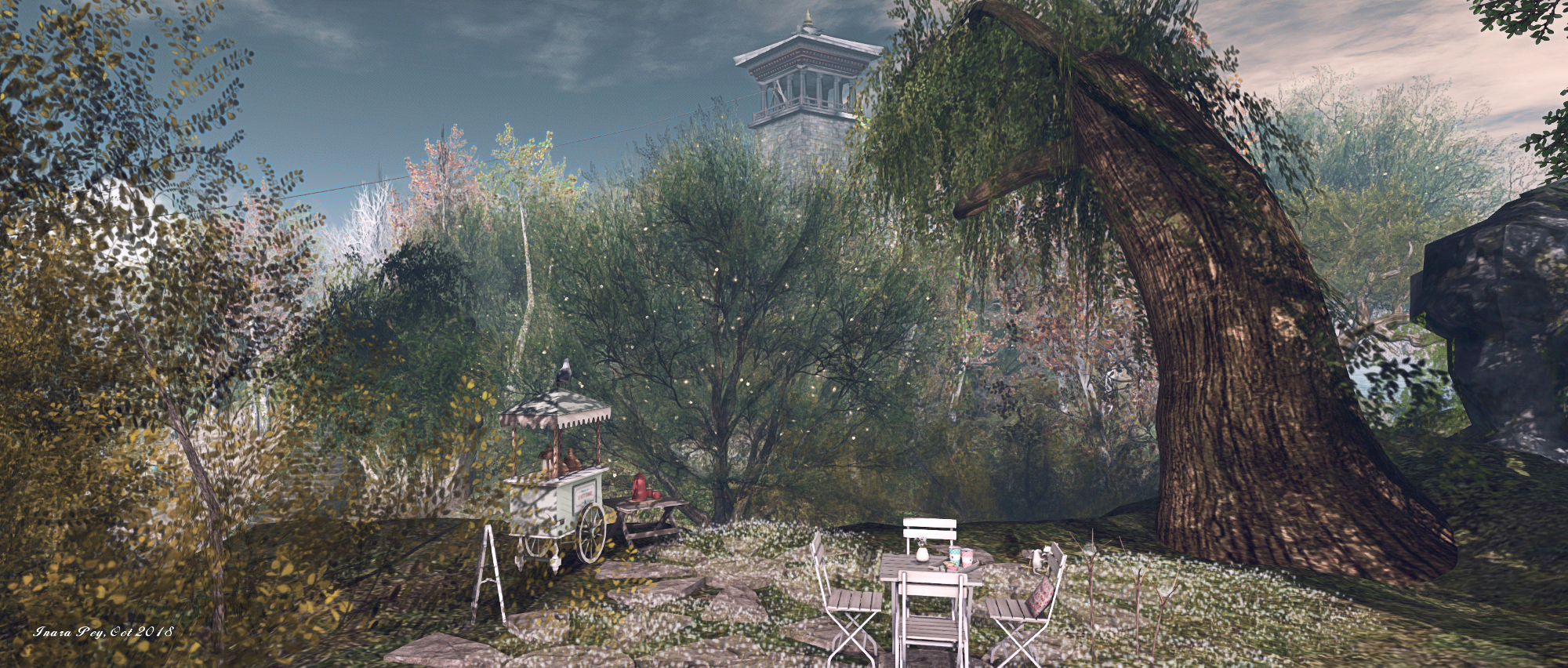
Not far from the windmill is a large pond, the home to ducks and swans. It shares the hilltop it is on with a little outdoor refreshments area looking out over the artificial run-off linking the pond with the bay below. Fronted by a narrow curve of beach, the bay offers surfing for the adventurous (the very adventurous, given the great white shark lurking under the waves, perhaps sizing-up his next snack…), or a cosy beach house for those content to sit and watch and / or cuddle.
On the Other Side; Inara Pey, October 2018, on FlickrOn the Other Side

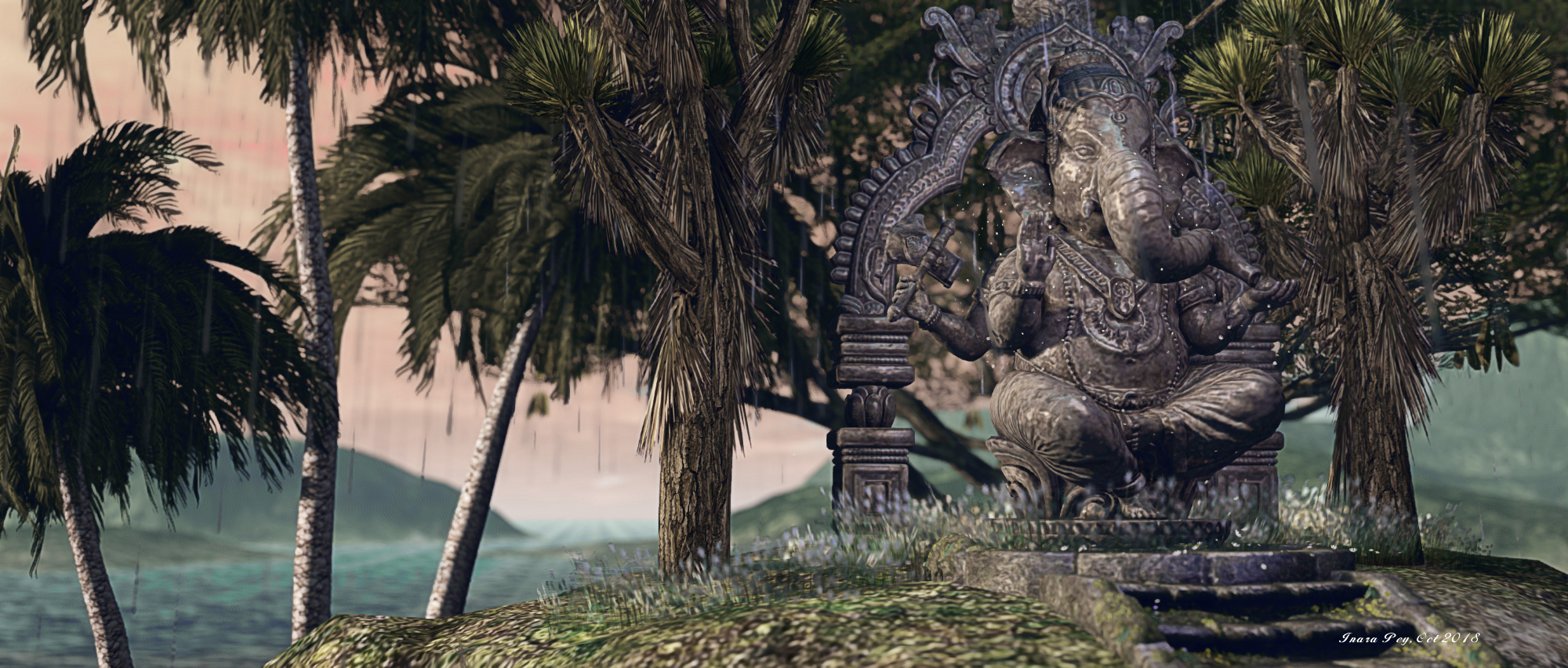
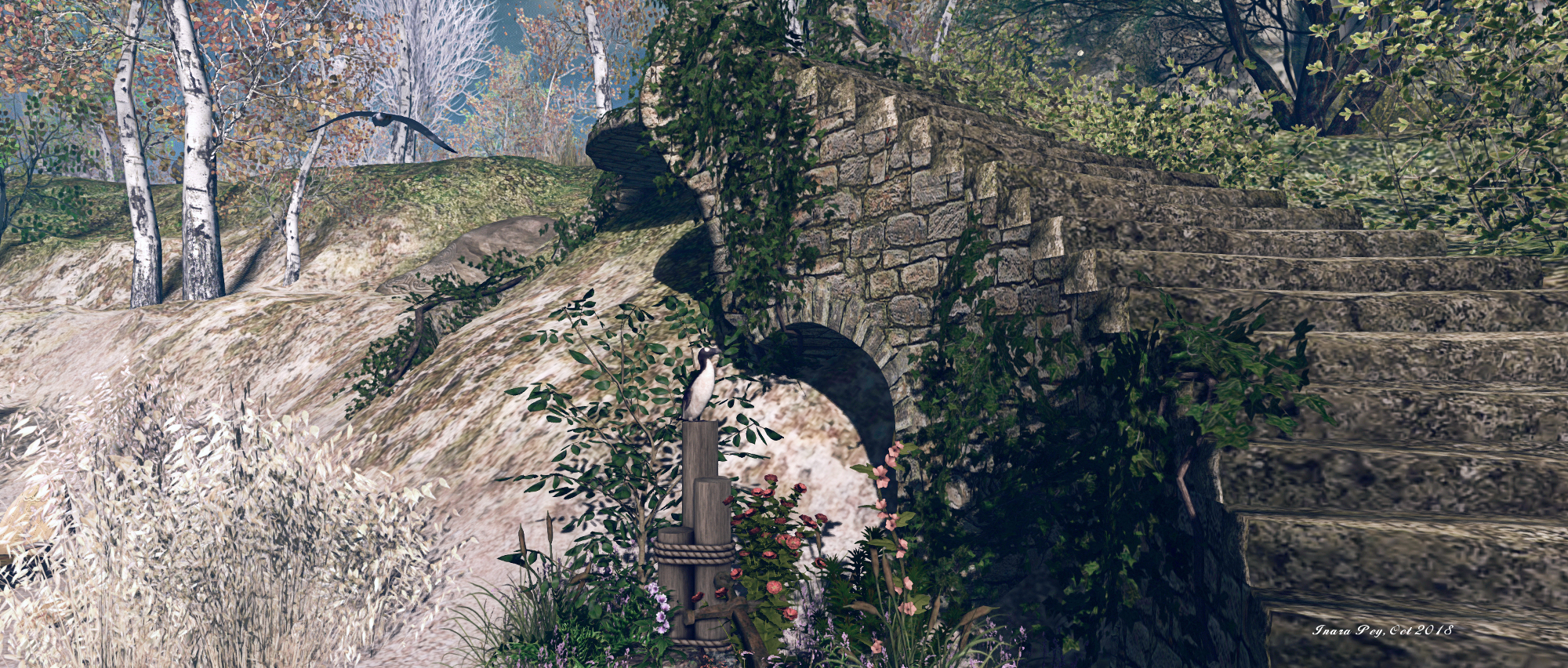
More of the eclectic mix of the region can be found to the south-east and across a stone bridge reached across a narrow channel to a small isle. This is home to Ganesh, sitting at peace on the single hill-top, surrounded by Joshua and palm trees, while down at the foot of the hill African elephants stand on the shore and in the surf. The elephants aren’t alone in being unexpected occupants of the island alongside horses, goats and sheep; there’s also an embarrassment of pandas waiting to be discovered.

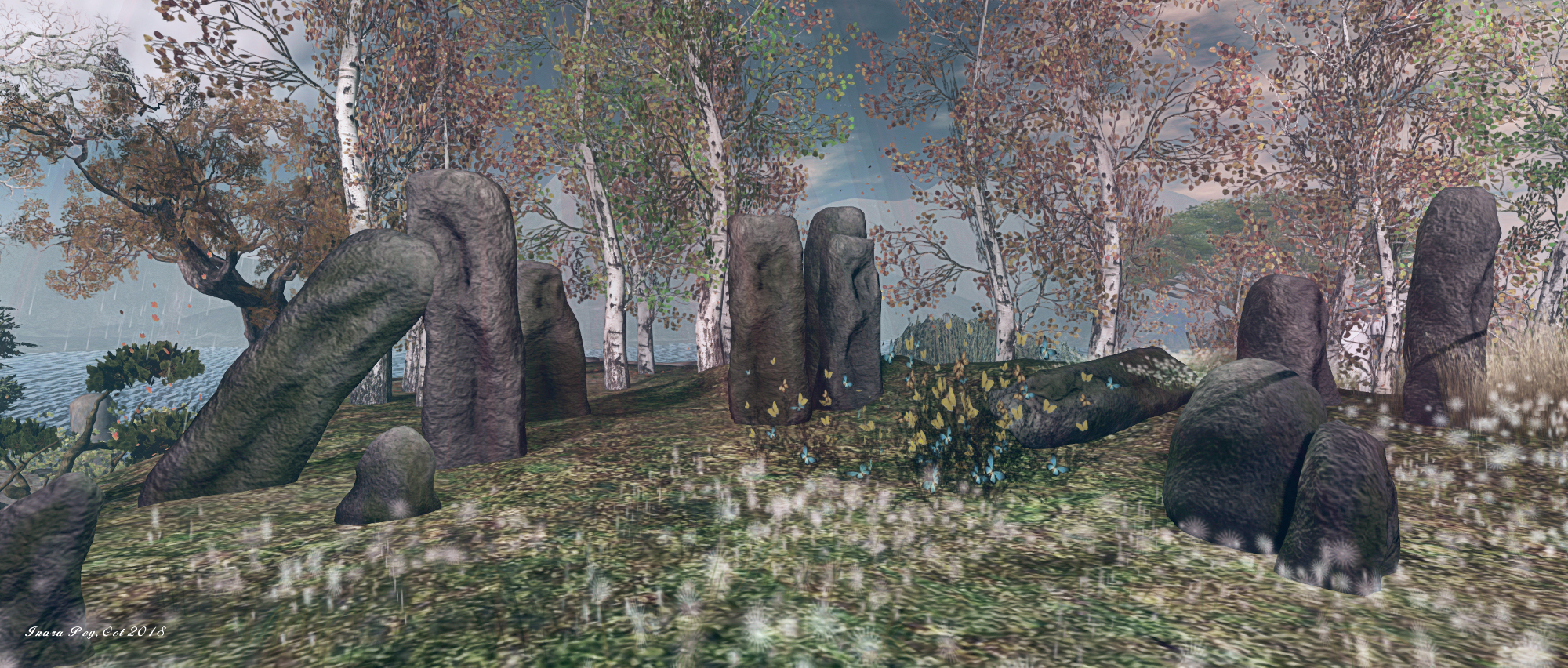
There’s also ancient mystique to be found here in the form of an ancient stone circle on a low hill. A place of atmospheric mystery which, given the time of year at the time of writing, holds the suggestion of mystical goings-on.
On the Other Side; Inara Pey, October 2018, on FlickrOn the Other Side

Naturally landscaped and rich in detail, On the other Side has a lot to keep the visitor occupied. There are places to sit and spend time in the region to be found throughout, and those who wish to use props to take photos can do so, as auto return is set to 30 minutes – but do please pick-up props after use. However, do note that access is restricted to avatars of at least 60 days of age.

SLurl Details

Emerging from a Tokyo Street Subway Entrance

Tokyo Street Subway Entrance; Inara Pey, October 2018, on FlickrTokyo Street Subway Entrance – click any image for full size

Update: Dox, the region on which these builds were hosted appears to have been closed or renamed / relocated. SLurls in this article have therefore been removed.

At the start of September 2018 we visited Tokyo Street Subway Entrance, created by Paradox Ivory under her Dox brand (you can read about a past region design of hers here). It’s taken a little while to get around to writing about it, simply because immediately after our visit, I didn’t have the opportunity to hop back for photos – so apologies to Paradox for the delay in blogging.

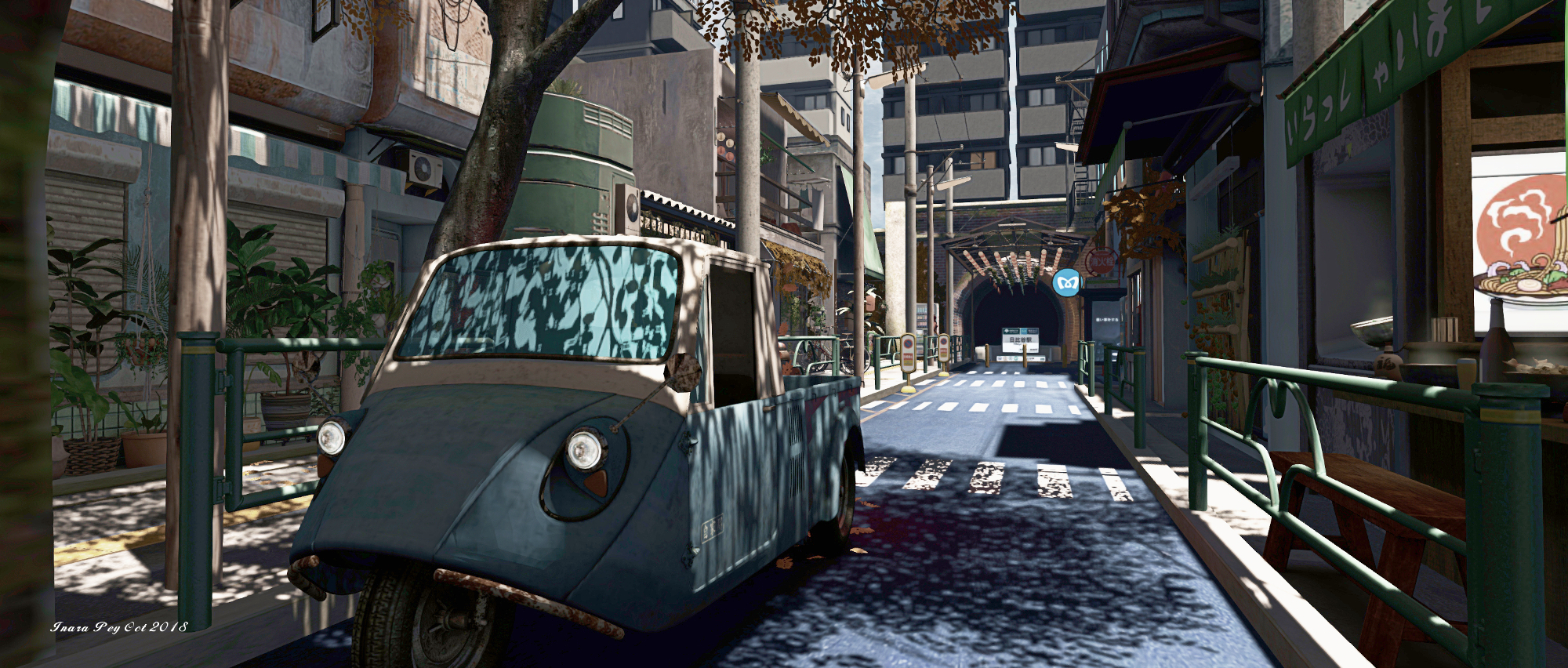
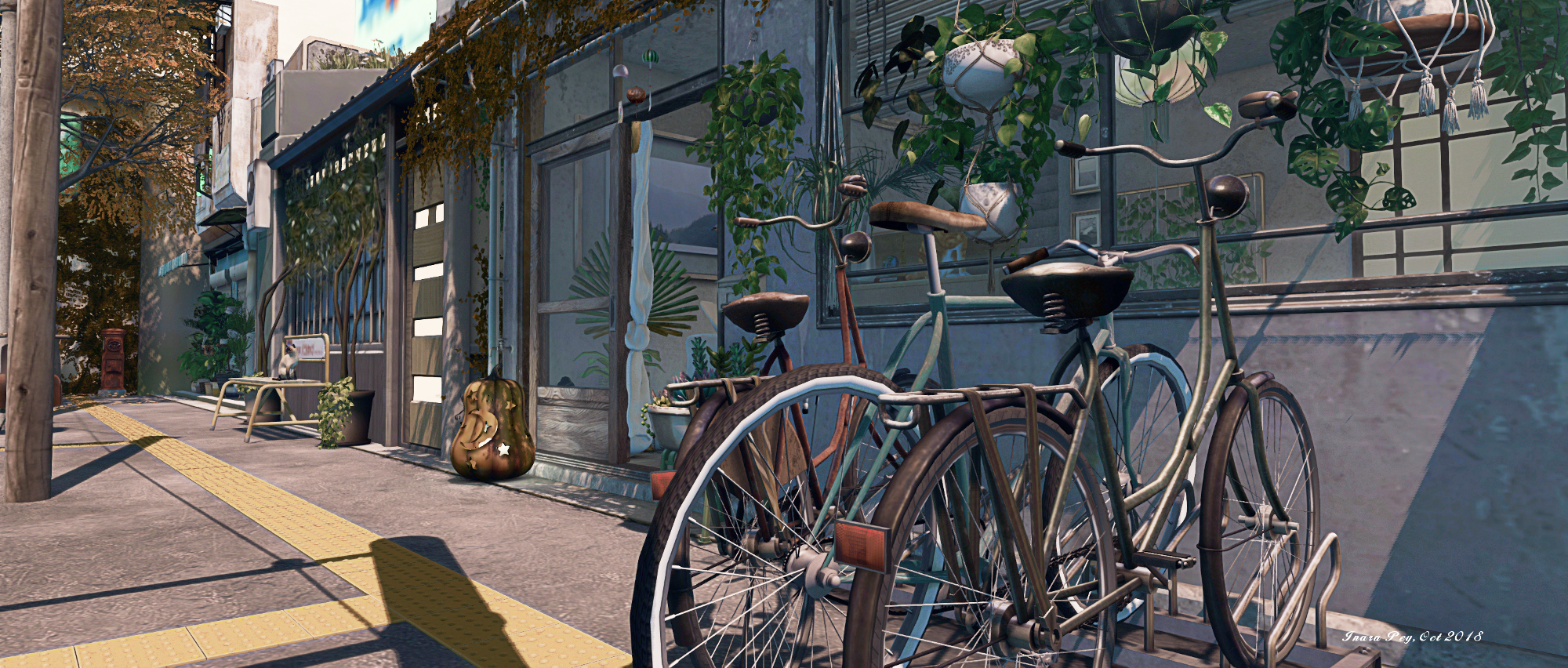
As the name suggests, the scene is built around a street in Tokyo – one in which the old and the modern combine in what is very much an aural as well as visually immersive setting – one that absolutely must be visited with local sounds enabled (and perhaps played through headphones – just don’t have the volume set too high!).

Tokyo Street Subway Entrance; Inara Pey, October 2018, on FlickrTokyo Street Subway Entrance

Visits commence in a busy subway entrance. PA music pays in advance of trains arriving somewhere further within the station, echoing down tiled halls, the voice of an announcer chasing after the ping-pong tones, even as the rumbling hum of the electric  trains adds a basso chorus to the cacophony filling the air. Anyone who has ever commuted on the subway of any major city during rush hour will instantly recognise the noises.

Turnstiles and a sign point the way up to ground level, where a surprise awaits. Rather than exiting onto the hustle and bustle of a busy city thoroughfare, the steps lead up to a narrow side street, more of a service road than anything, that terminates at the subway entrance. The  majority of the building are between one and three storeys in height, surrounded further out by low-rise apartments, all of which suggests an older part of town. However, the sound of passing traffic weighs heavily in the air, suggesting a busier road is not too great a distance away – perhaps located on the other side of the tunnel at the far end of the street.

Tokyo Street Subway Entrance; Inara Pey, October 2018, on FlickrTokyo Street Subway Entrance

This isn’t the only street here, however. Running parallel with it are two more, each narrow enough to almost be classified alleyways. These are connected to the main street by covered and open walkways,   which combine with them to offer multiple paths of exploration.

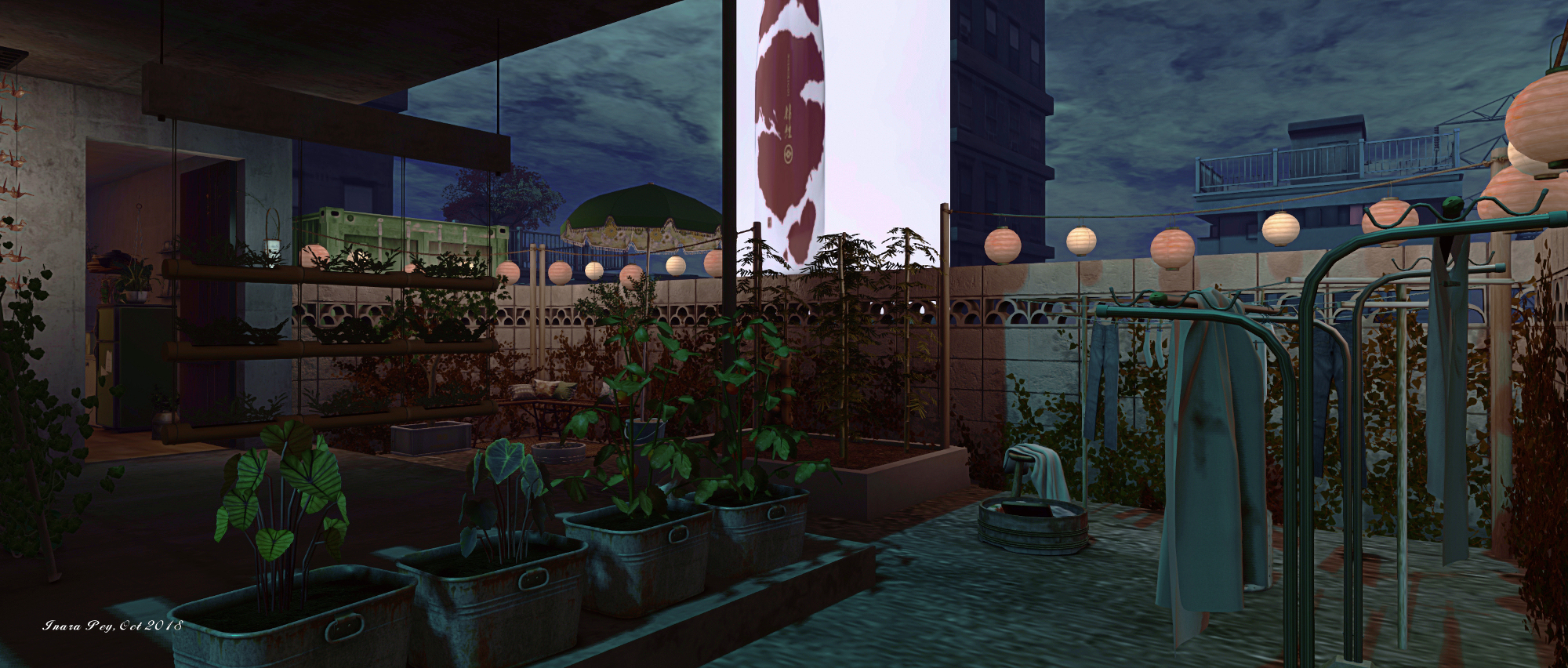
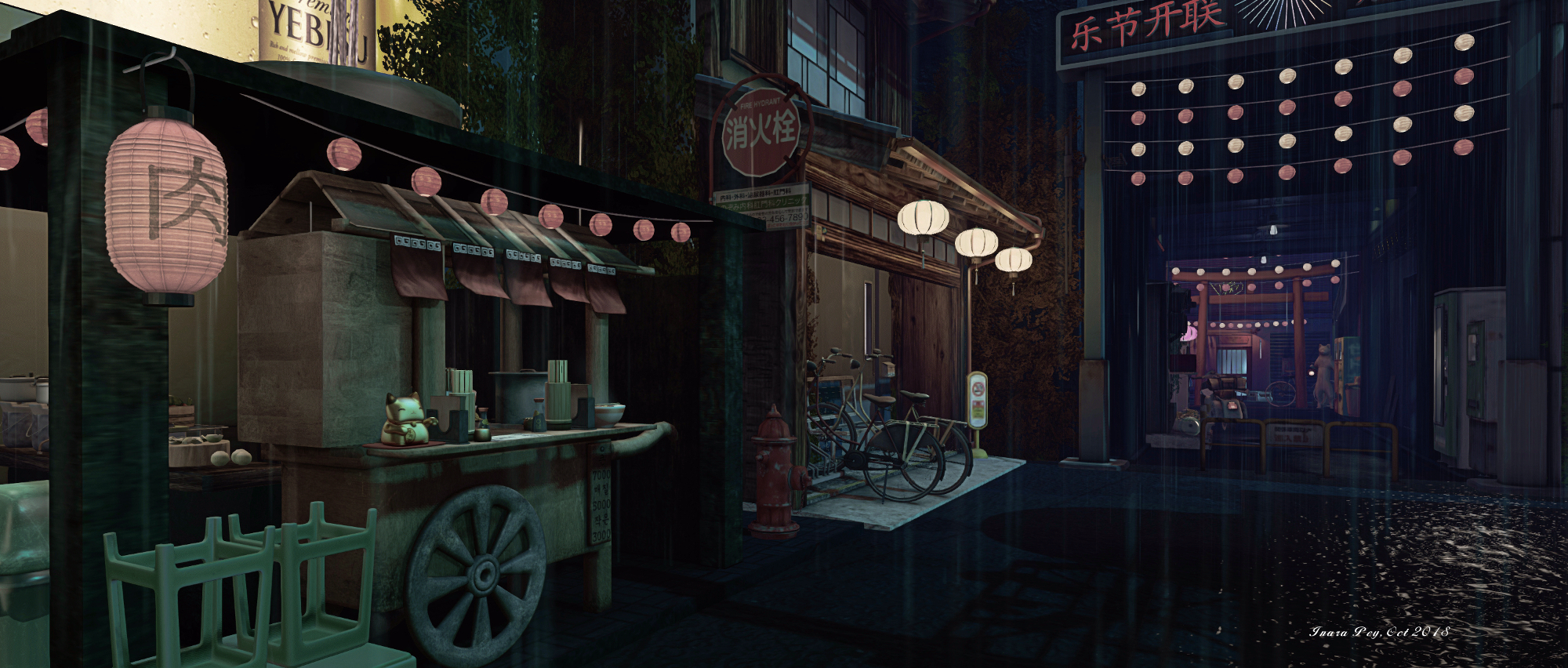
When walking them, care is strongly recommended; not because of anything untoward lurking, but because there is far more to see indoors and out, on the “ground” level and up assorted steps, than might appear to be the case. From cafés and snack shops to a little cinema and a roof-top baseball practice area, these streets and alleys present a lot to keep the local residents active and entertained. The detail poured into the scene is stunning; from the street signs to the little gardens and the wandering cats; the ambient sounds, the details tucked away inside some of the buildings…

Tokyo Street Subway Entrance; Inara Pey, October 2018, on FlickrTokyo Street Subway Entrance

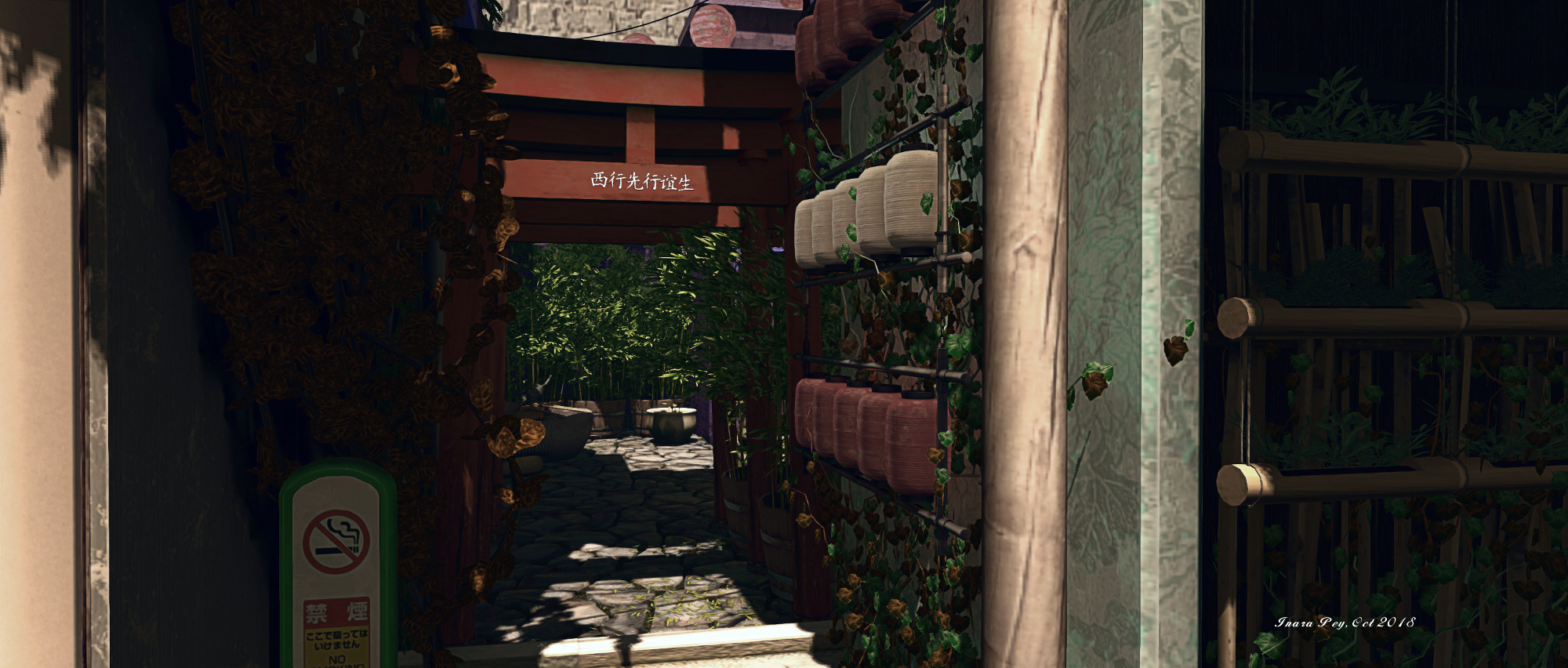
Wander far enough, and you’ll find your way to a little shrine, passing typical aspects from a modern Japanese setting along the way. Further depth to the scene is added by entrances and stairways which, although they might not ultimately go anywhere, still give an extra feel that this is very much a place where people live and work. Travel far enough along the narrower roads and alleys, and you might find tennis courts Surrounded by little 2-storey apartment blocks that look as if they might have drawn their inspiration from American roadside motels.

By default, the scene is set under a night-time windlight, something that enhances the distant, haunting hooting of train horns, the scene also works under daylight and evening environment setting particularly well – as I hope some of the images here demonstrate.

Tokyo Street Subway Entrance; Inara Pey, October 2018, on FlickrTokyo Street Subway Entrance

“Vibrant” is a word that can frequently be used to describe a region, parcel or scene within Second Life; but usually when employed, it is to define the overall visual effect that has been achieved. With Tokyo Street Subway Entrance, however, the word takes on its fullest meaning: the setting is alive with the pulse of life wherever you go, sight and sounds working together to present something almost tangible while walking the street, alleys and passages.

Engaging, detailed, beautifully modelled and presented Tokyo Street Subway Entrance packs a huge amount into itself, making a visit – for those who take the time to look down alleys, peek behind doors (not all of them are façades!) and avoid rushing things, it makes for a rewarding visit.

Tokyo Street Subway Entrance; Inara Pey, October 2018, on FlickrTokyo Street Subway Entrance

Time on a Black Bayou Lake in Second Life

Black Bayou Lake; Inara Pey, October 2018, on FlickrBlack Bayou Lake – click any image for full size

Update: Black Bayou Lake has closed. The SLurls have therefore been removed from this article.

Jade Koltai and Serene Footman have a reputation for designing stunning regions (see my reviews of FurillenKhodovarikha, La Digue du Braek and Isle of May to give you an idea, if you’re unfamiliar with their past work). Their designs are  generally inspired by locations to be found in the physical world, and are always a stunning and photogenic mix of beauty, presentation and personal interpretation that are a must-see.

Such is the case with their latest offering, Black Bayou Lake, which recently opened in October. We were alerted to it by friend and photographer AJ (AnyaJurelle). “It’s beautiful!” AJ informed me via IM. “Really well put together!”  And she’s not at all wrong.

Black Bayou Lake; Inara Pey, October 2018, on FlickrBlack Bayou Lake

As is always the way with Serene and Jade, they not only design a region – they provide extensive background information on their inspiration and thoughts on the design through the Furillen website. Doing so adds considerable depth to their designs, and makes visiting any of their regions both visually informative and stimulating in the way they can reveal far off places to us. This is once again the case with this region.

Black Bayou Lake  is located in Ouachita Parish, Louisiana. The lake is part of an 800 acre nature reserve which seethes with wildlife: there are many species of bird, insect, reptile and fish, along with a variety of trees such as cherrybark oak, cedar elm, ash, hickories, willow oak, shortleaf pine, loblolly pine, mockernut hickory and post oak. It’s a stunning place, which attracted us because we had not yet tried designing a sim that consists mainly of water.

– Serene Footman describing the inspiration behind Black Bayou Lake in Second Life

Black Bayou Lake; Inara Pey, October 2018, on FlickrBlack Bayou Lake

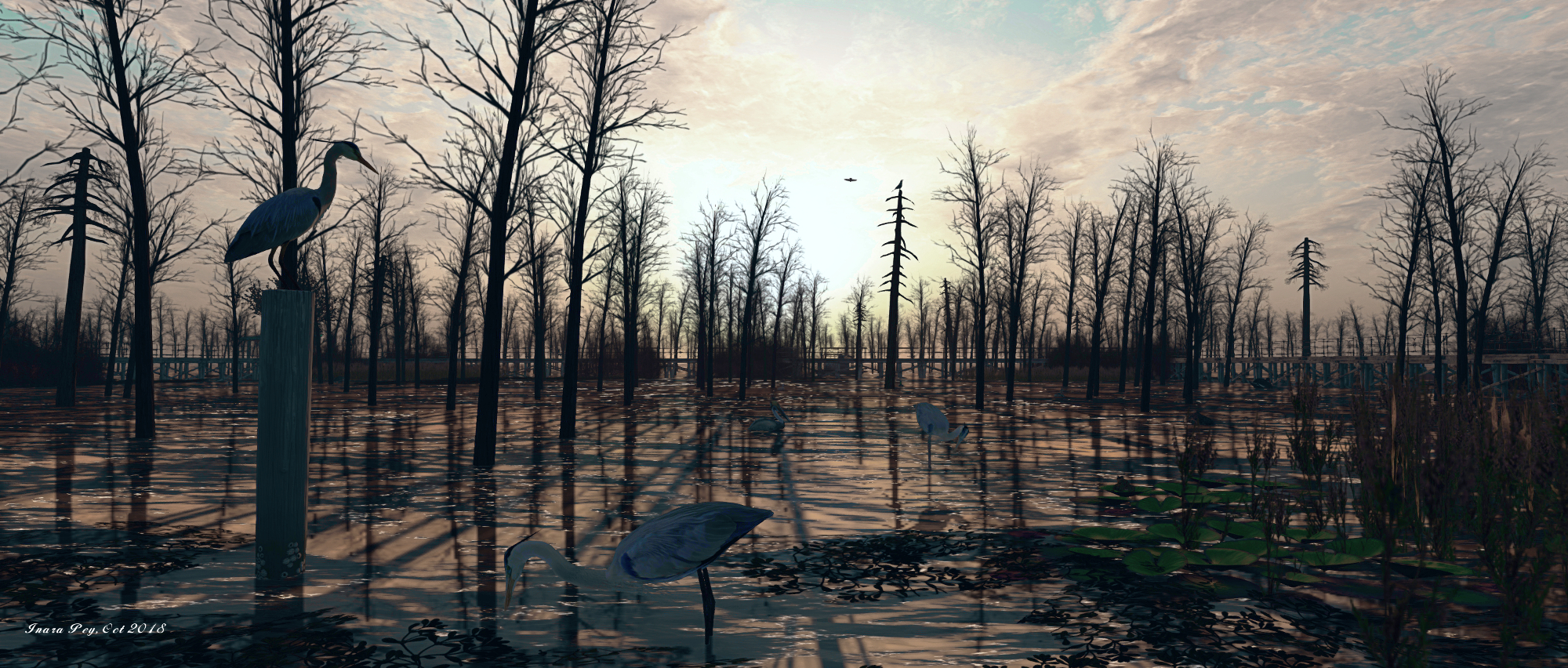
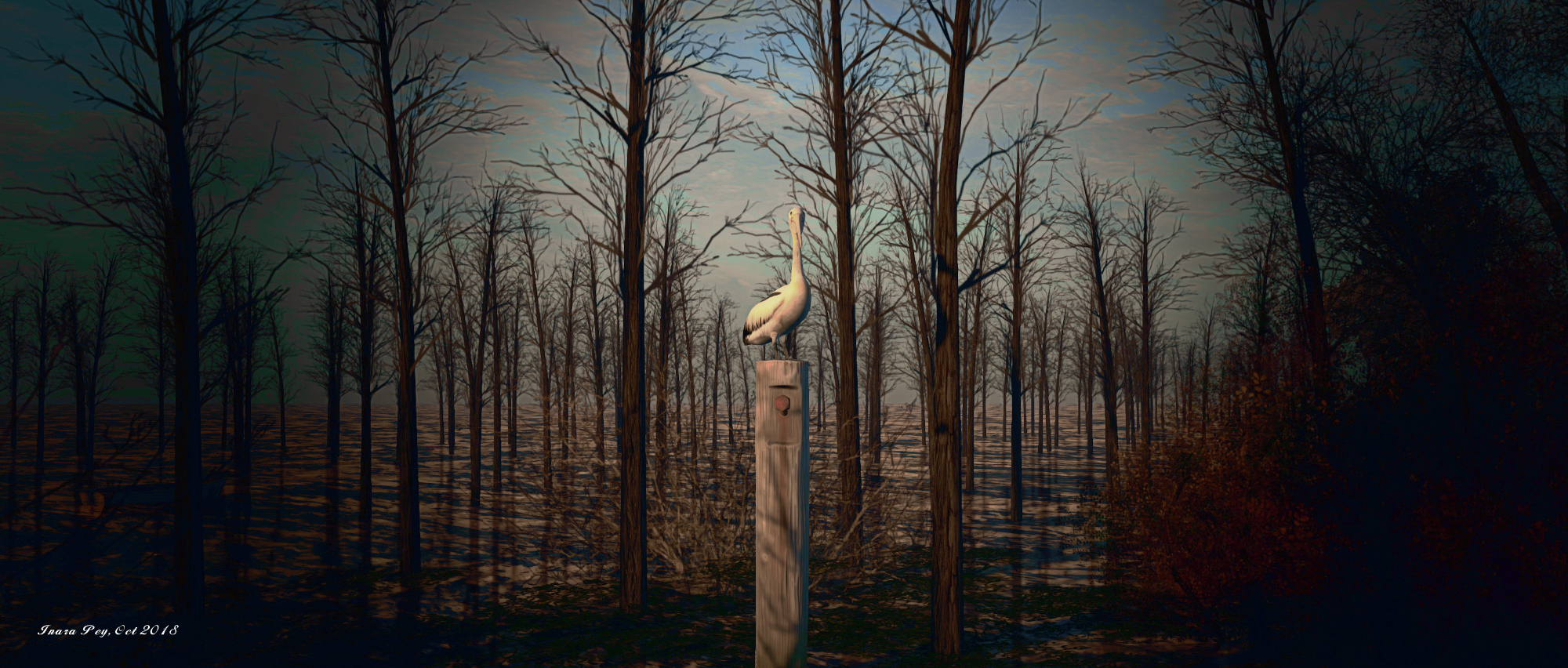
Serene notes that not only is the lake alive with wildlife and flora, it can also – thanks to the may denuded trees found in its waters – be a somewhat creepy place. All of this is perfectly captured in the region design, which casts the lake under a darkening, cloud-laden sky, just as the mist is rising through the tall grass and reeds. It’s a perfect look and feel for the time of year, but such is the design of the region it is perfect for photographing under a broad range of environment settings, and I opted to go with a little more daylight with the images here.

To try to describe this raw beauty of this location would be pointless; it has to be seen to be appreciated, such is the love and care with which it has been designed and everything within it has been curated to present a genuinely immersive setting that carries the visitor into the heart of the Louisiana swamplands, revealing both their natural and man-made beauty whilst incorporating many touches we all tend to associate with bayou life, courtesy of natural history programmes and fictional films.

Black Bayou Lake; Inara Pey, October 2018, on FlickrBlack Bayou Lake

The natural beauty is fully evident in the mix of and water in this wetland. Trees and mangroves rise from the water and cling to the more solid grassland areas, the tall grass mixing with reeds along the water’s edge to make is difficult in places to discern where dry ends and wet begins. Birds and water fowl can be seen and heard throughout (it’s absolutely essential a visit has local sounds enabled!), while alligators patrol the waters as a warning to would-be waders.

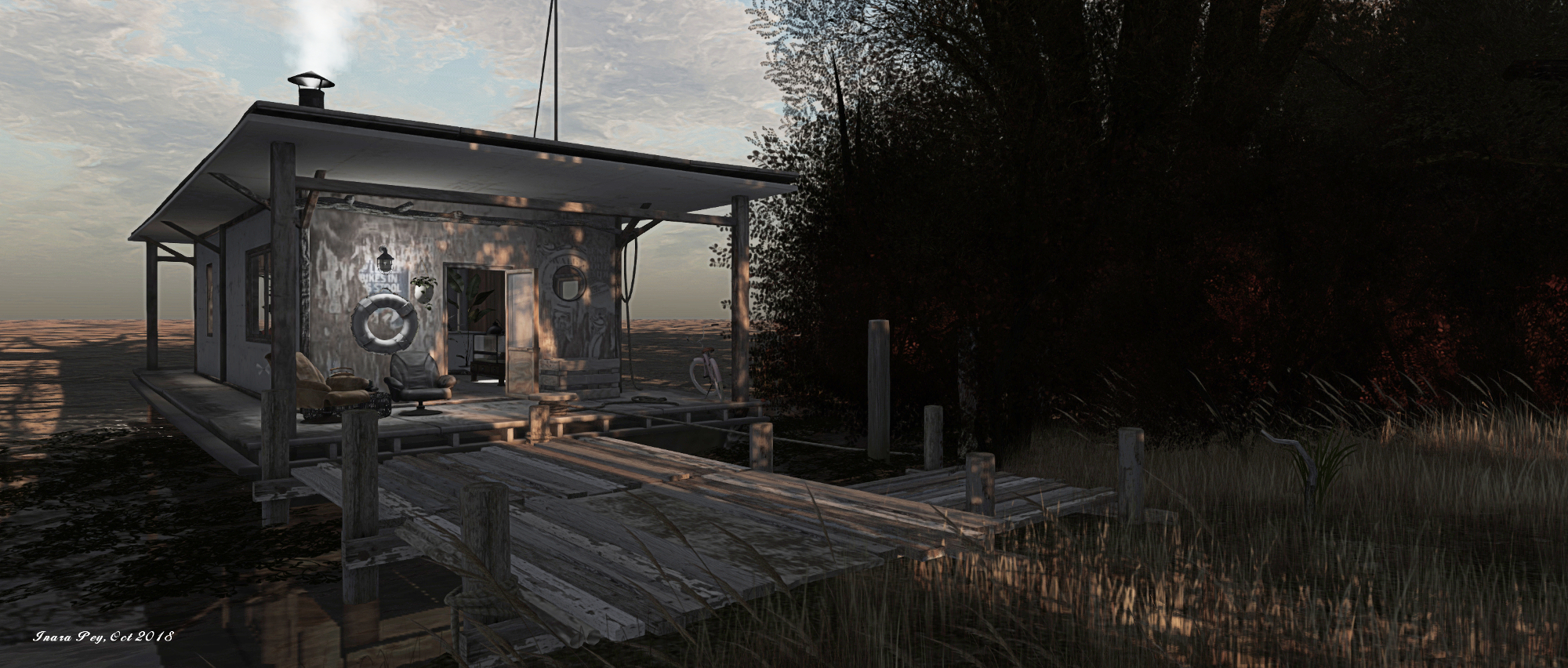
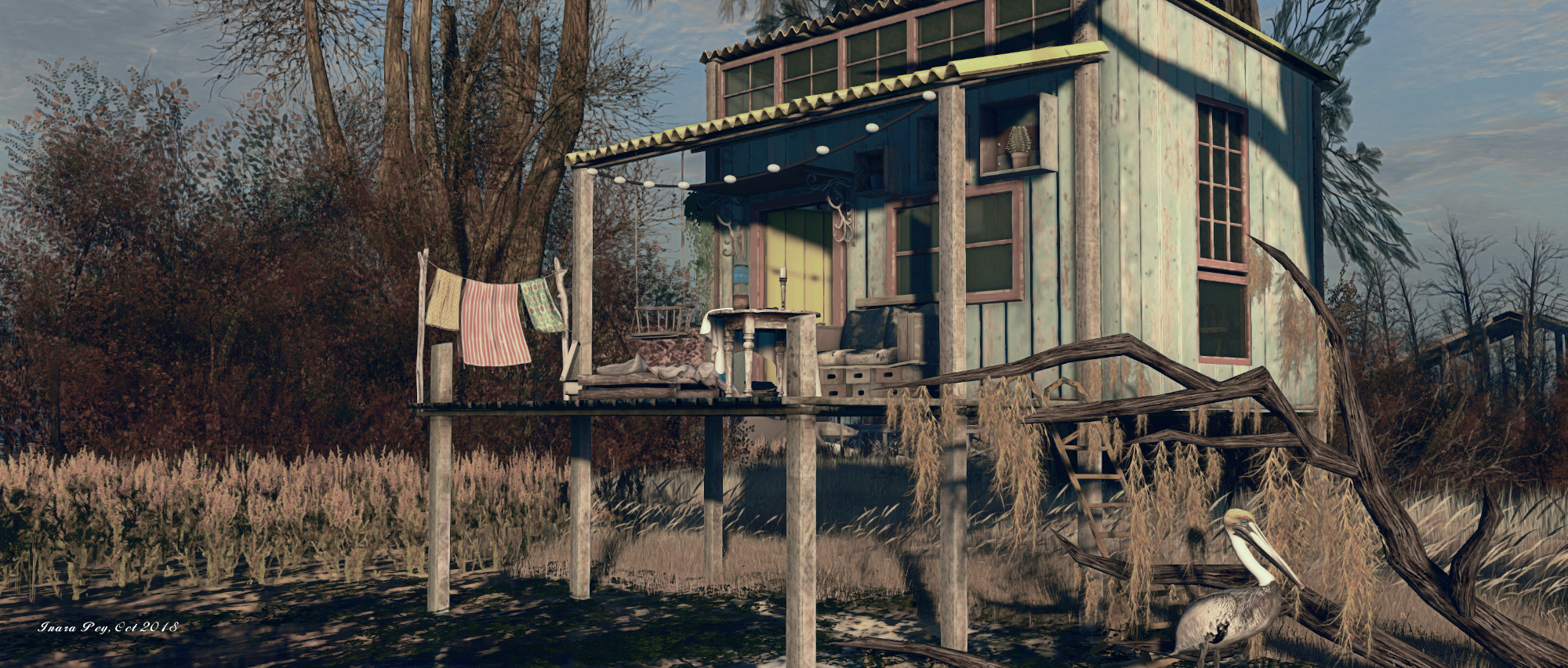
The man-made beauty comes in the ramshackle nature of the buildings to be found scattered across the land. Run-down, some with once-bright paint now dried and fading with the passage of time, they are both a reminder of the poverty that can be found within the bayou and the pride those living there can take in their lifestyle and ways: airboats, also looking a little aged, sit with engines in pristine working order and fish dry outdoors  in a sign of independent living.

Black Bayou Lake; Inara Pey, October 2018, on FlickrBlack Bayou Lake

One of the cabins also encompasses the mystique of the bayou so beloved of fiction. Within its walls are the paraphernalia of the occult: a pentagram marked on the floor, voodoo dolls suspended from the sealed, tarot cards on (or dancing over) a table where  crystal ball sits… It’s a place hidden behind shrubs among the gnarled fingers of tress pointing to the sky, hiding but nevertheless waiting to be found.

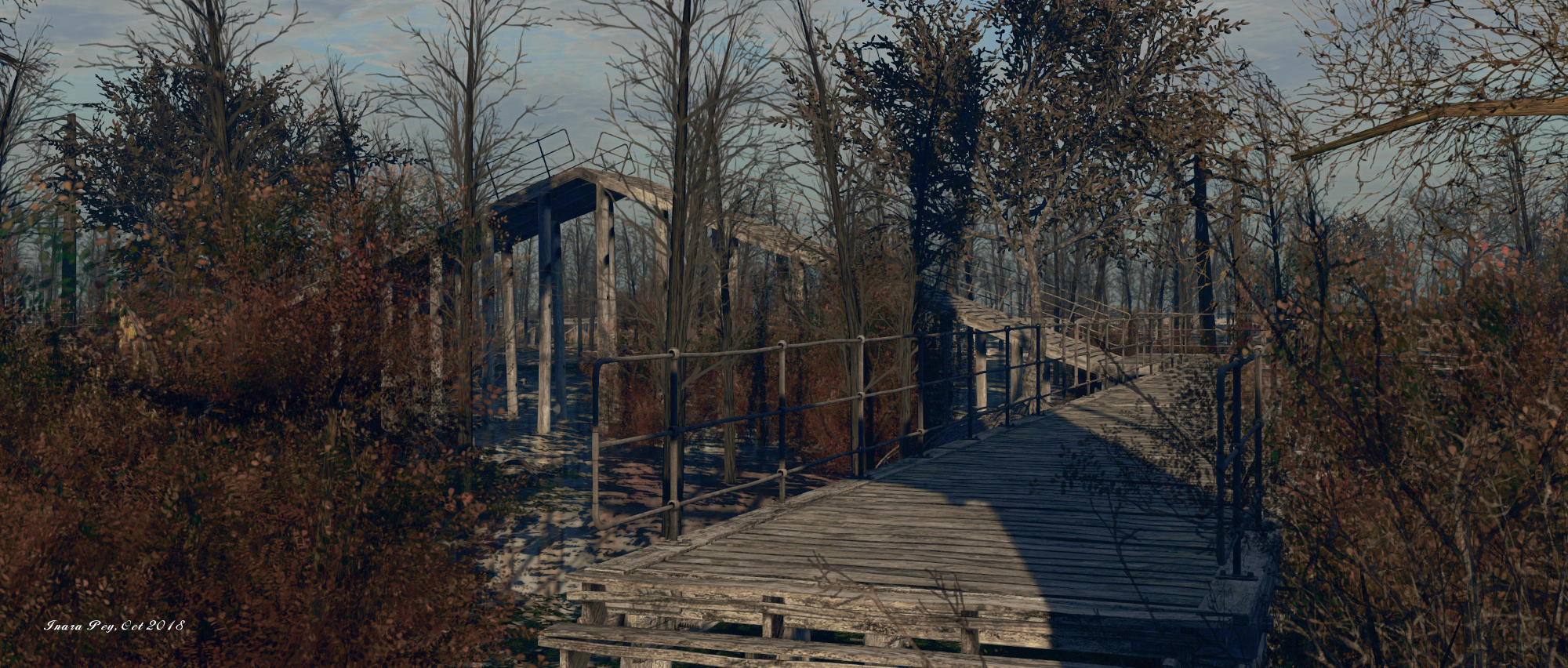
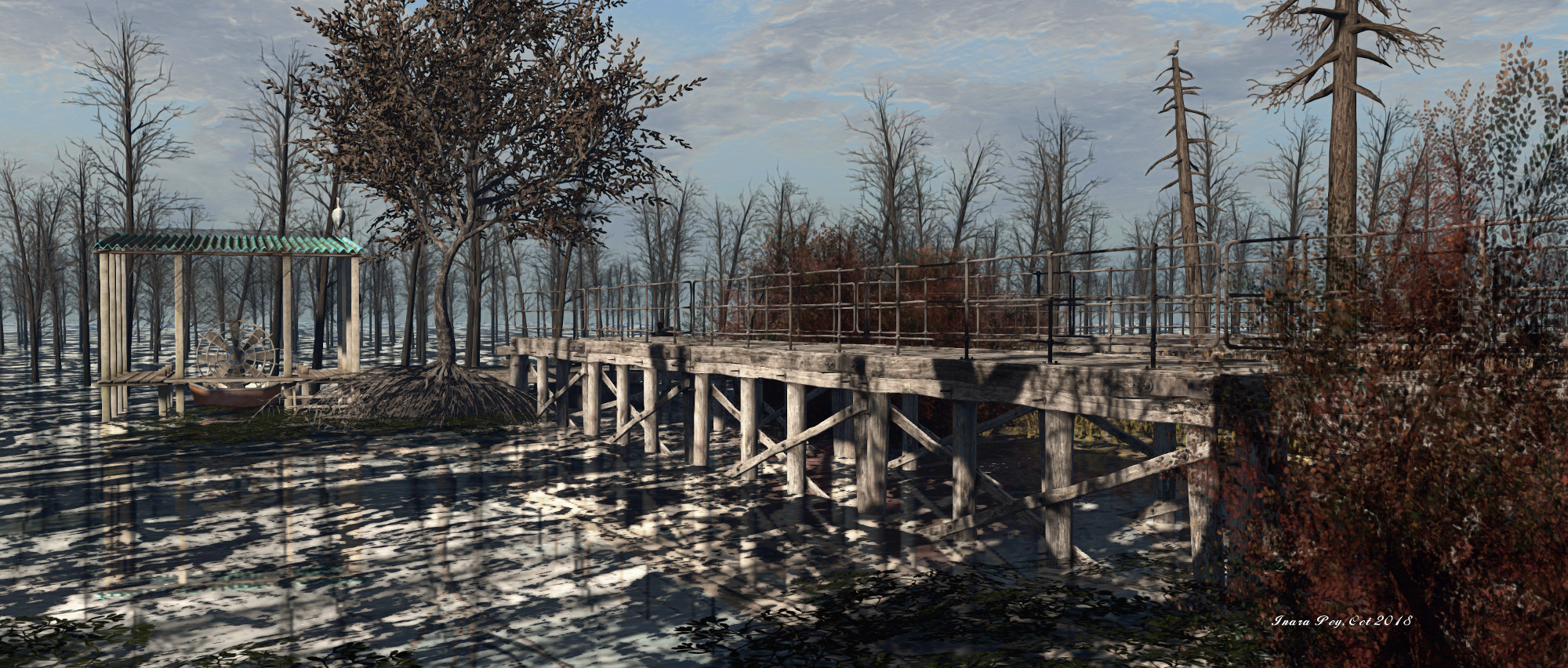
A major feature within the physical Black Bayou Lake, as Serene notes in his blog post, is a raised walkway that allows people to venture out over the lake. This has a distinctive inverted V section rising above the surroundings, and Jade and Serene have included their own version of the board walk, complete with its unusual V section as a part of this design.

Black Bayou Lake; Inara Pey, October 2018, on FlickrBlack Bayou Lake

Wonderfully atmospheric, with careful attention to detail and plenty to discover and photograph, Black Bayou Lake is another visual feast from Serene and Jade. It will, however only be around for a short time – so if you are planning an excursion, do not leave it too long before going.


When you’re Nowhere Else in Second Life

Nowhere Else; Inara Pey, October 2018, on FlickrNowhere Else – click any image for full size

Nowhere Else caught my attention through its apparently contradictory labelling: the region name refers to it being “under construction”, while the About Land description define it as a “fully landscaped sim to explore, take photos or just hang out.”

“So, it’s not finished,” Suzy Lekira (Suzy Brandi) says in reference to this apparent contradiction, before continuing, “It never will be. A special place. Drop in, if you like. Having visited the region with Caitlyn, I can confirm that “dropping in” is highly recommended.

Nowhere Else; Inara Pey, October 2018, on FlickrNowhere Else

Currently sporting a rural setting that – to me at least – suggests somewhere in the north of England, Nowhere Else suggests a place on the edge of a lake surrounded by the peaks of the Pennines (albeit slightly tall peaks!), this is a place for hiking boots and a camera.  No set landing point is offered – or at least, one wasn’t being enforced at the time of our visit – so the SLurl given here is entirely arbitrary.

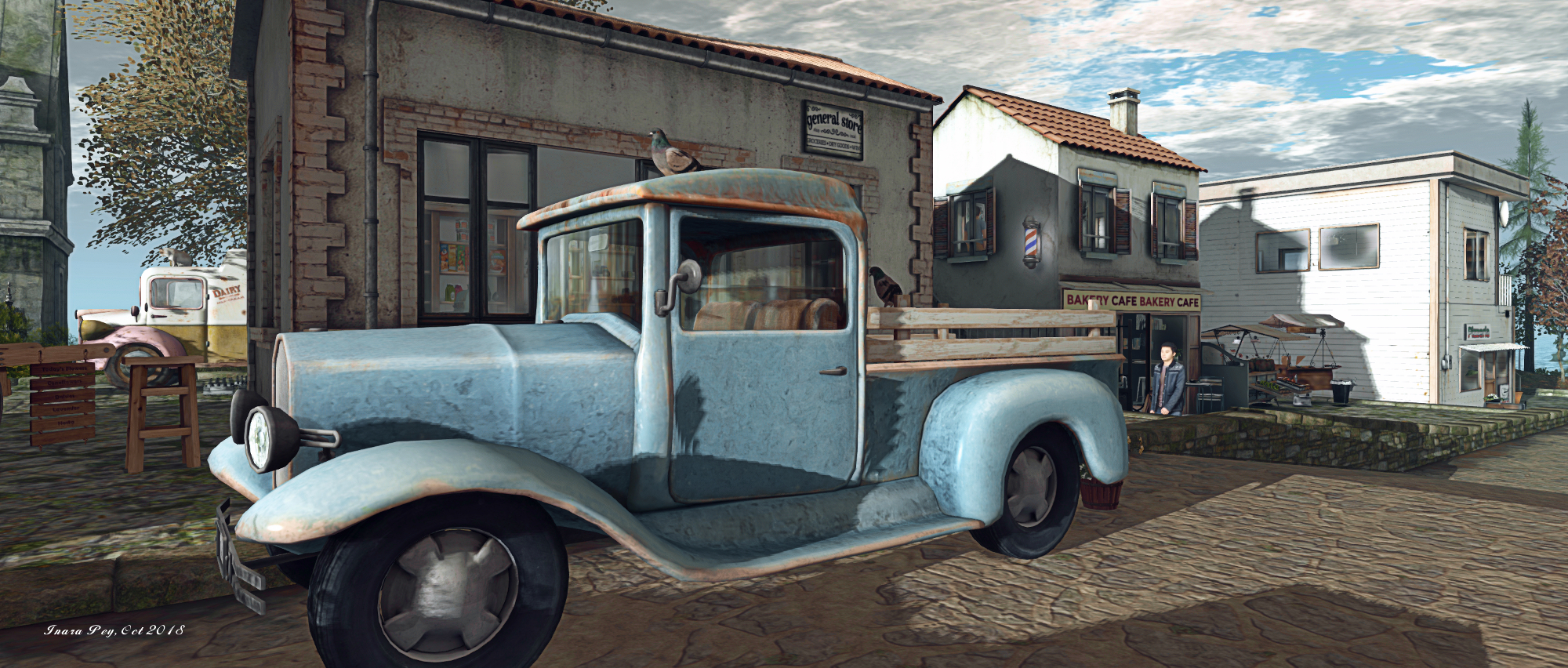
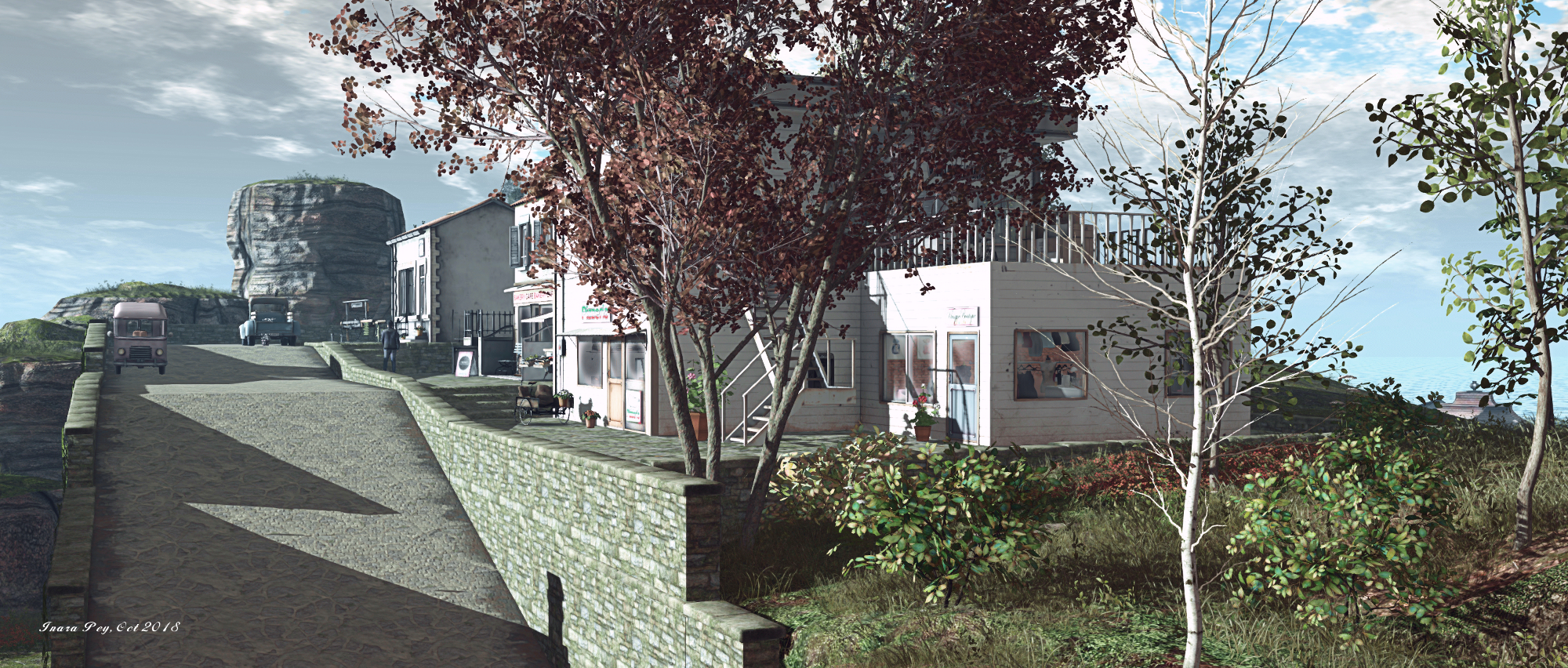
Located on the flat top of one of the higher points of the region, set well to the east, the location I selected has the advantage of offering views across the landscape whilst also presenting an ideal start to exploration: a small hamlet. It’s the kind of place hikers might start out from for a day on the moors. A broad cobbled road winds down from the chapel, running by the local shops and along which assorted vehicles are parked; vehicles which cast the setting perhaps in a more European direction, as do some of the buildings.

Nowhere Else; Inara Pey, October 2018, on FlickrNowhere Else

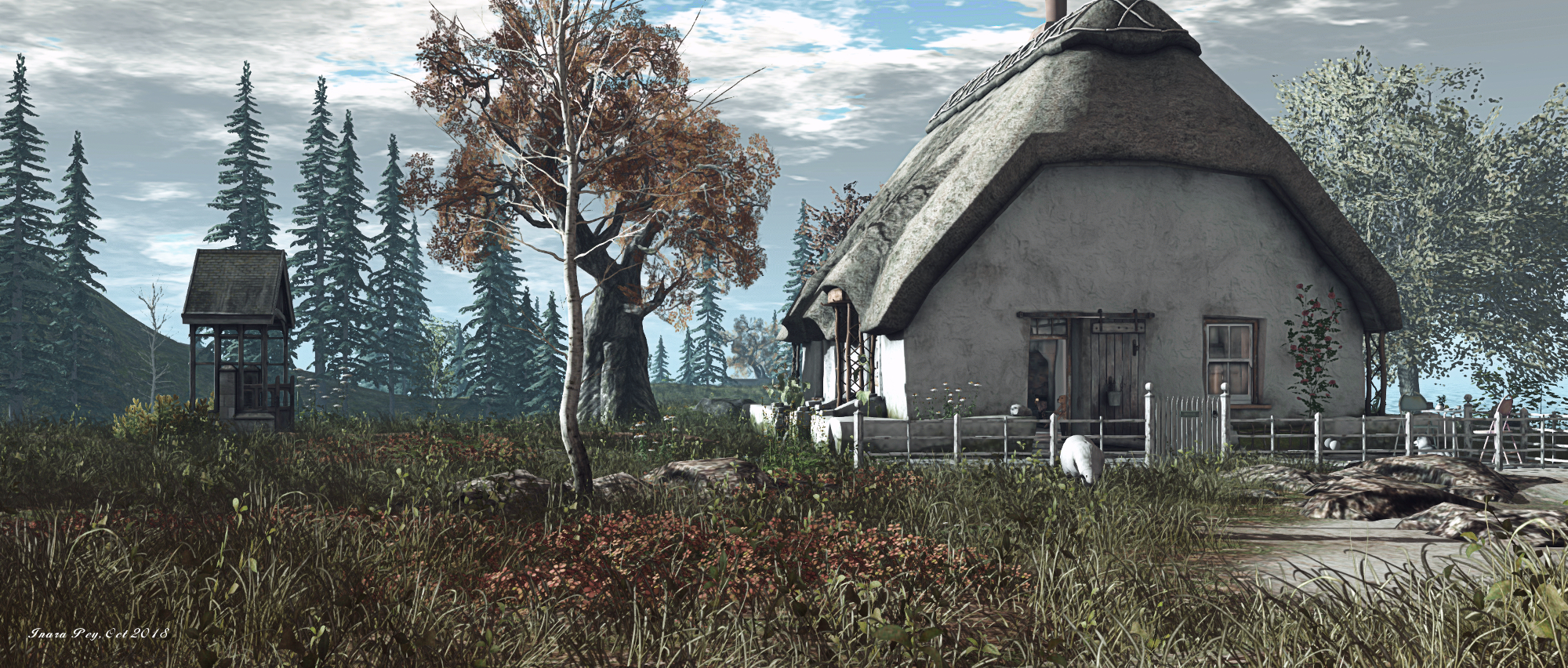
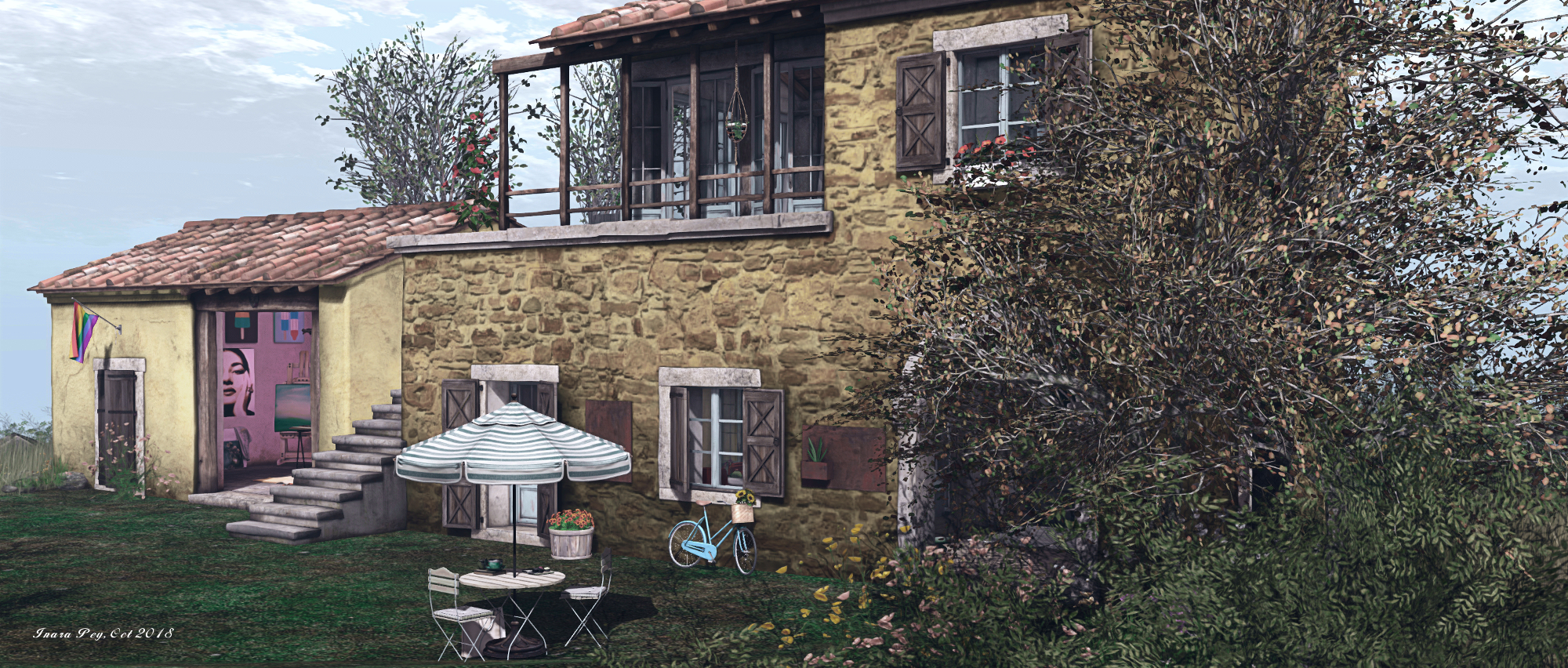
From here, it is possible to strike out across the rough grassland to a thatched cottage, the garden overlooking the northern waters surrounding the region. The cottage, with its terraces, moorings for a rowing boat and outlook is the kind of place it is easy to imagine retiring to; a quite place, close enough to little shops for comfort whilst also offering numerous opportunities for walks without the bother of a lot of traffic.

It’s also, quite frankly, exceptionally picturesque in its setting.

Nowhere Else; Inara Pey, October 2018, on FlickrNowhere Else

The cottage is just one of a number of houses scattered across the region outside of the village, although the other like across the body of water that cuts an “L” through the region. One of these is a country farm, sitting to the south-west. Again offering plenty of scope for photographs, the farm is linked to a camp site to the north with tents and opportunities for swimming.

One of the attractions of the region is the minimal use of trees, something that gives portions of it the feel of a moorland or high fell. This is further enhanced by the use of Cube Republic’s very excellent sedimentary layered rock forms across parts of the landscape, some of which rise tor-like from the grasslands.  These touches add an air of familiarity as well as realism to the setting that enhances its photogenic appeal, while the considered use of static figures in the village help to bring a greater depth of life to the setting.

Nowhere Else; Inara Pey, October 2018, on FlickrNowhere Else

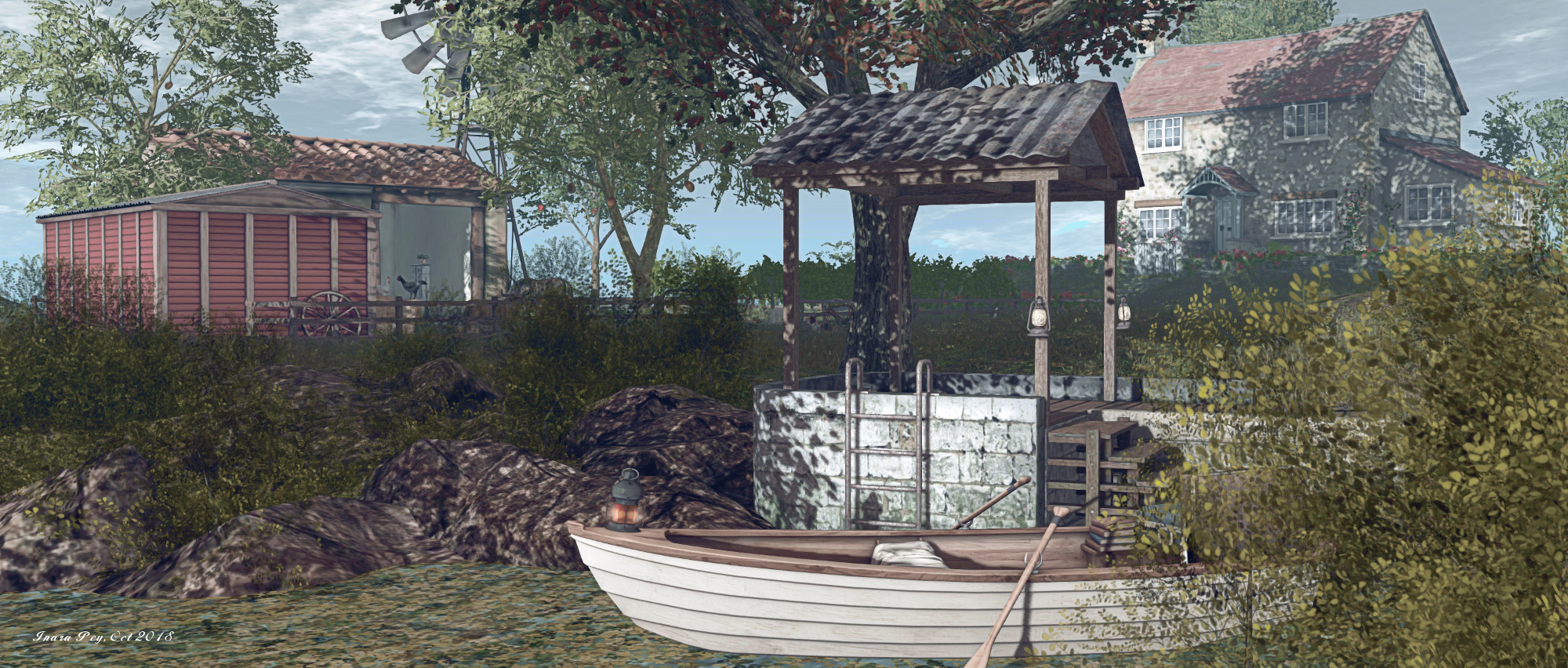
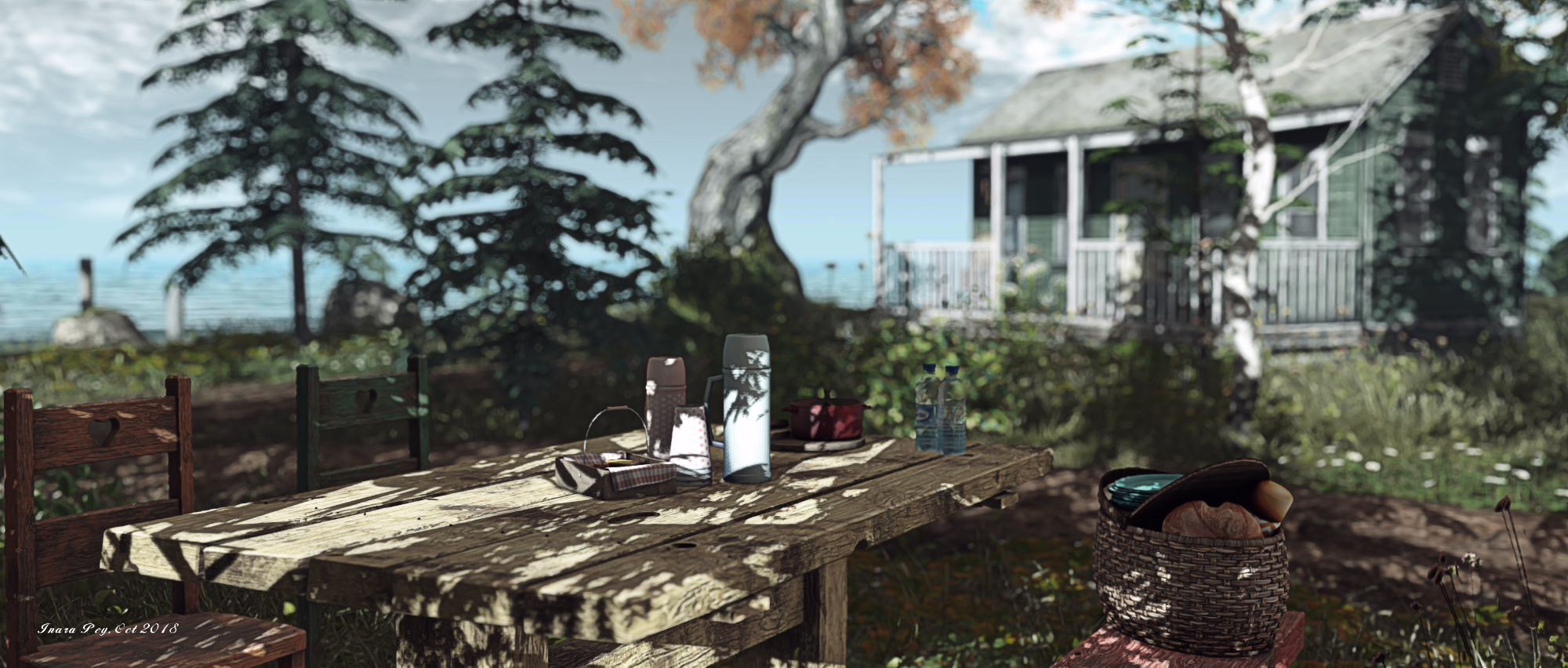
While travelling, keep an eye out for the little places where hikers might take a rest: the little deck built out over the river, complete with a barbecue; the Land Rover and its camp site, the rowing boat (and its suitcases!). Throughout the region, the attention to detail is a joy to see.

Simple in design, elegant in execution, Nowhere Else is a visual delight, a place well worth visiting and spending time within. So if you don’t go anywhere else, be sure to visit Nowhere Else.

Nowhere Else; Inara Pey, October 2018, on FlickrNowhere Else

SLurl Details

The ghostly echoes of Pendle Hill in Second Life

Pendle Hill; Inara Pey, October 2018, on FlickrPendle Hill – click any image for full size

Pendle Hill, the latest Homestead region design by Lauren Bentham, takes its name – as the introductory note card offered to visitors on arrival states – the hill of the same name located in east Lancashire, England.

England’s Pendle Hill is steeped in history. Standing just 557m (1,827 ft) above sea-level, it is somewhat isolated when compared to the Pennines as a whole. In the 17th century George Fox climbed it and had a vision that resulted in him founding the Religious Society of Friends – and to this day, the name “Pendle” has strong connotations for Quakers. The hill is also the site of a Bronze Age burial ground; while again in the 17th century (and perhaps most famously), it was the location for the  trials of the Pendle witches. Because of this event, it is still regarded as one of the “most haunted places in Britain” in some circles.

Pendle Hill; Inara Pey, October 2018, on FlickrPendle Hill

It is in reference to Pendle Hill’s notoriety as a haunted place that Lauren – who is also responsible for the another haunting region in the shape of Arranmore (which you can read about here) – has created Pendle Hill in Second Life. She’s actually done so quite cleverly as well, touching as it does her love of the north of England (as seen through her marvellous Netherwood – which you can also read about here, whilst also offering echoes of the physical world Pendle Hill.

As a ghostly / haunted region, Pendle Hill has opened in time for Halloween, but isn’t intended to be purely for the Halloween season; like Arranmore, it will hopefully remain available the year round for people to visit and enjoy. And I have to say that like Arranmore, it is exquisitely atmospheric in its haunted presentation and feel – do make sure you have local sounds enabled when visiting.

Pendle Hill; Inara Pey, October 2018, on FlickrPendle Hill

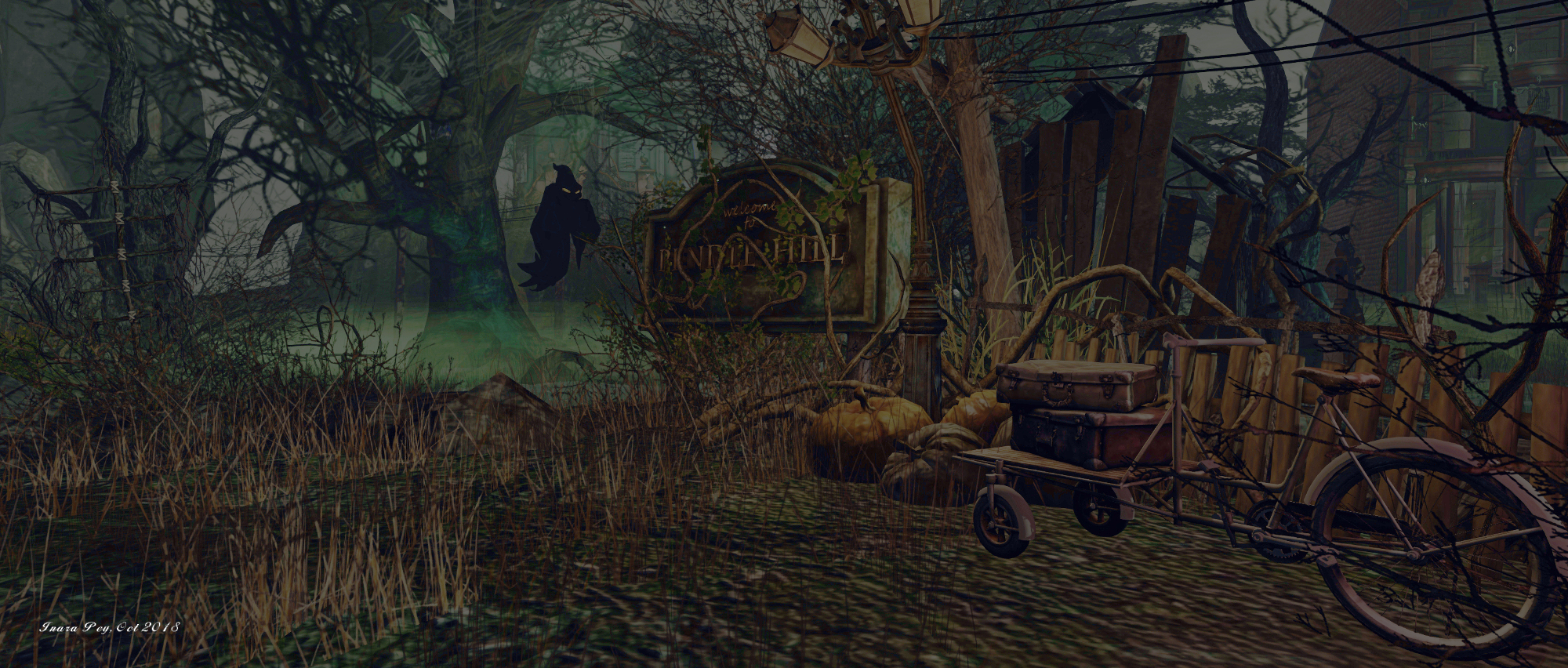
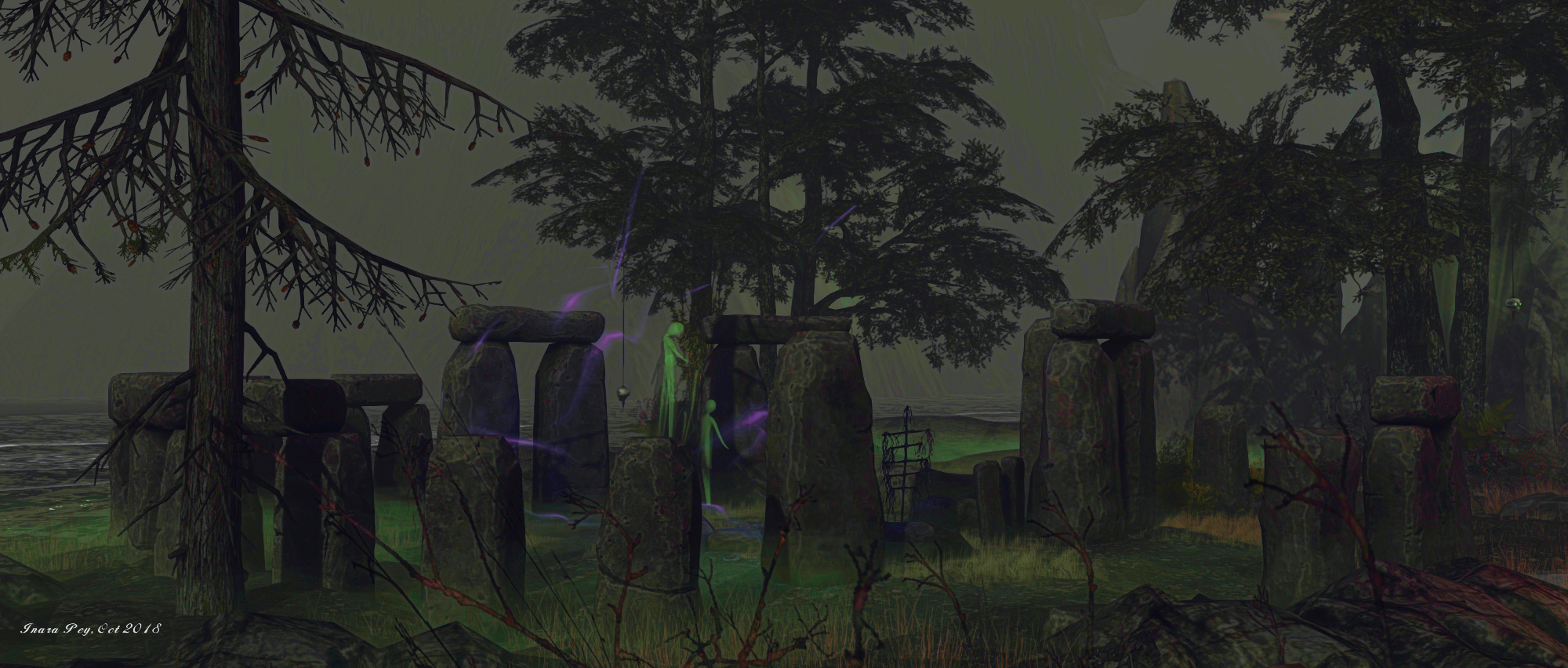
The echoes of the physical Pendle Hill can be seen in the way the region is surrounded on three sides by high peaks while remaining apart from them – just as Pendle Hill stands apart from the Pennines. Within the region, black figures hover among the wizened, weathered trees, a possible allusion to the spirits of the Pendle Hill  witches of Pendle Hill, while to the north-west of the region a stone henge can be found, possibly echoing the bronze age history of the hill.

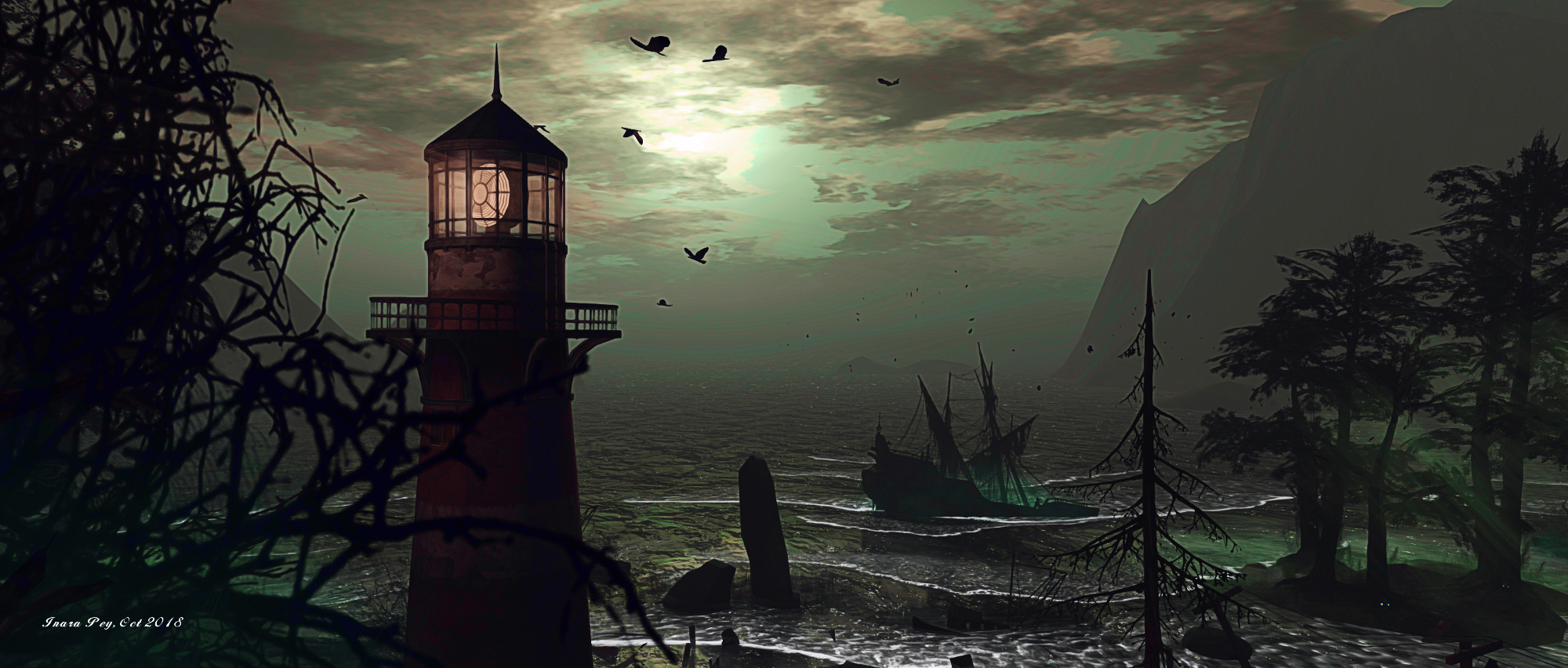
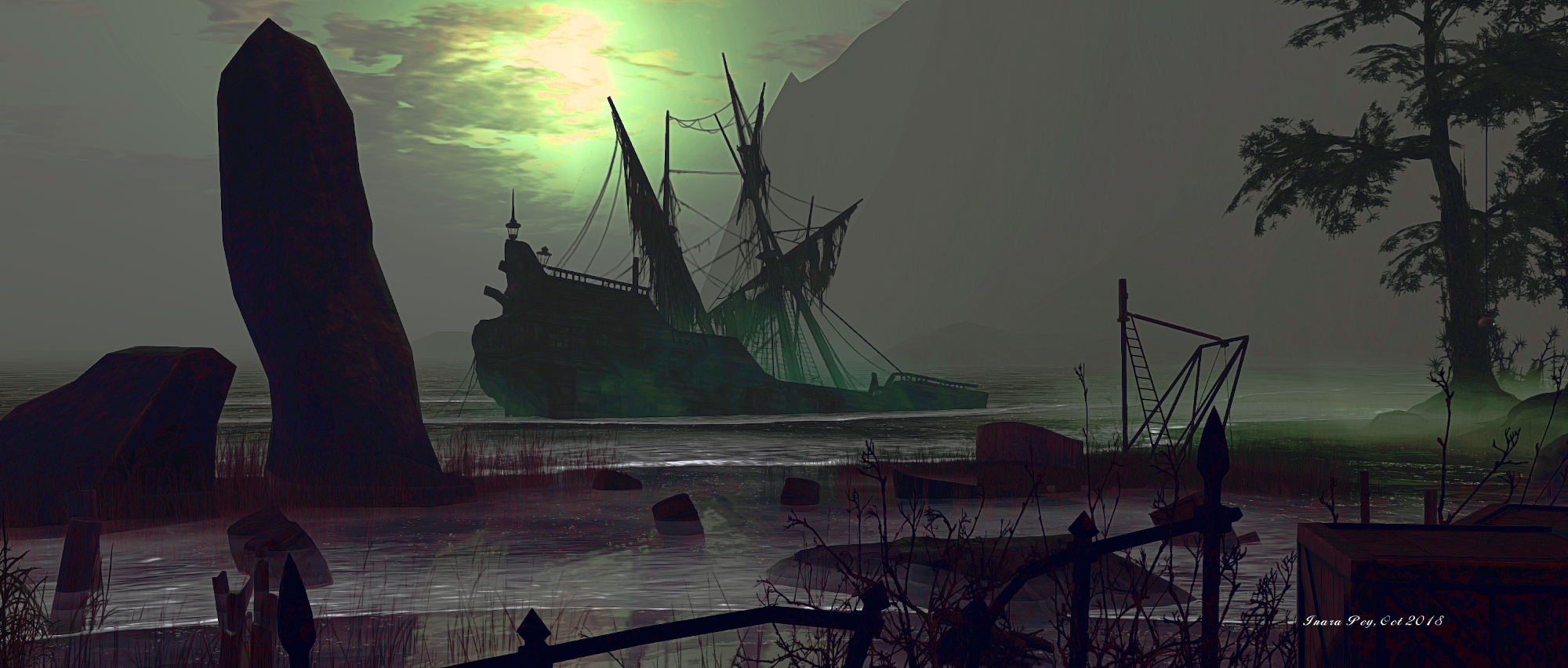
But this is not a place designed to emulate its namesake; nor is it intended to stand in a single moment of time. It has its own unique character, one that spans centuries, from the ancient stones of the henge, through to the wreck of the man-o’-war lying in the shallows off the coast, then forward to more recent times, as evidenced by the sunken and abandoned trawler sitting on the water close by and the tower of a lighthouse with its single, almost baleful eye surveying by turns land and sea. On the land is further evidence of this mixing of times as bent  Victorian gaslights looking like crooked old men are accompanied by the poles of electrical power lines.

Pendle Hill; Inara Pey, October 2018, on FlickrPendle Hill

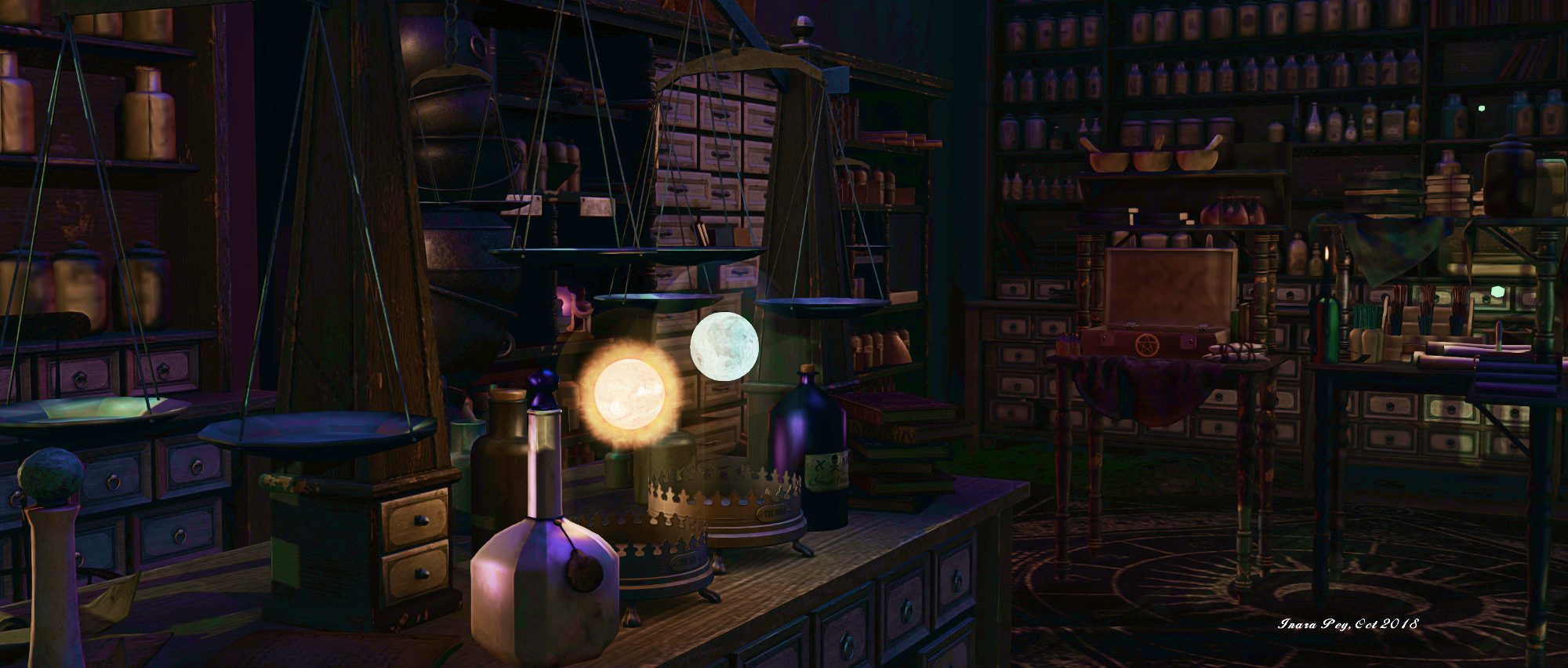
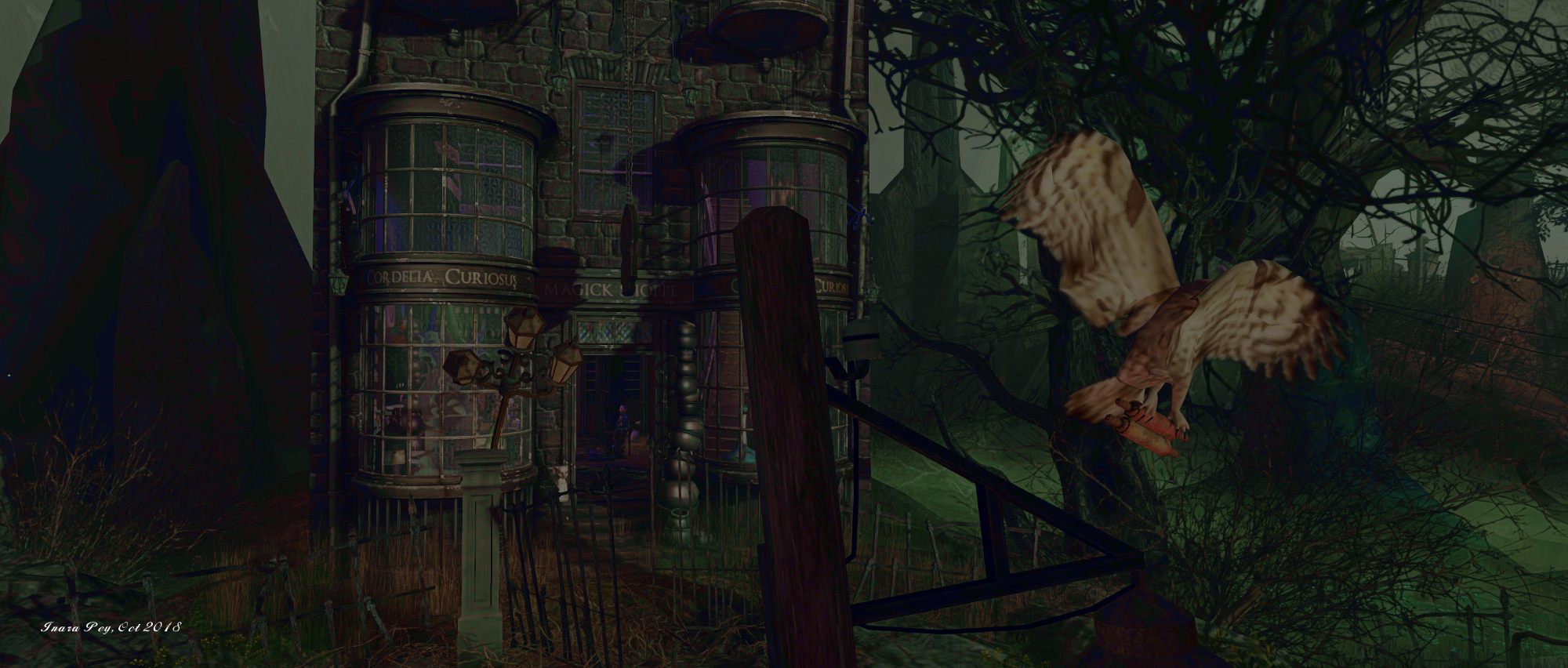
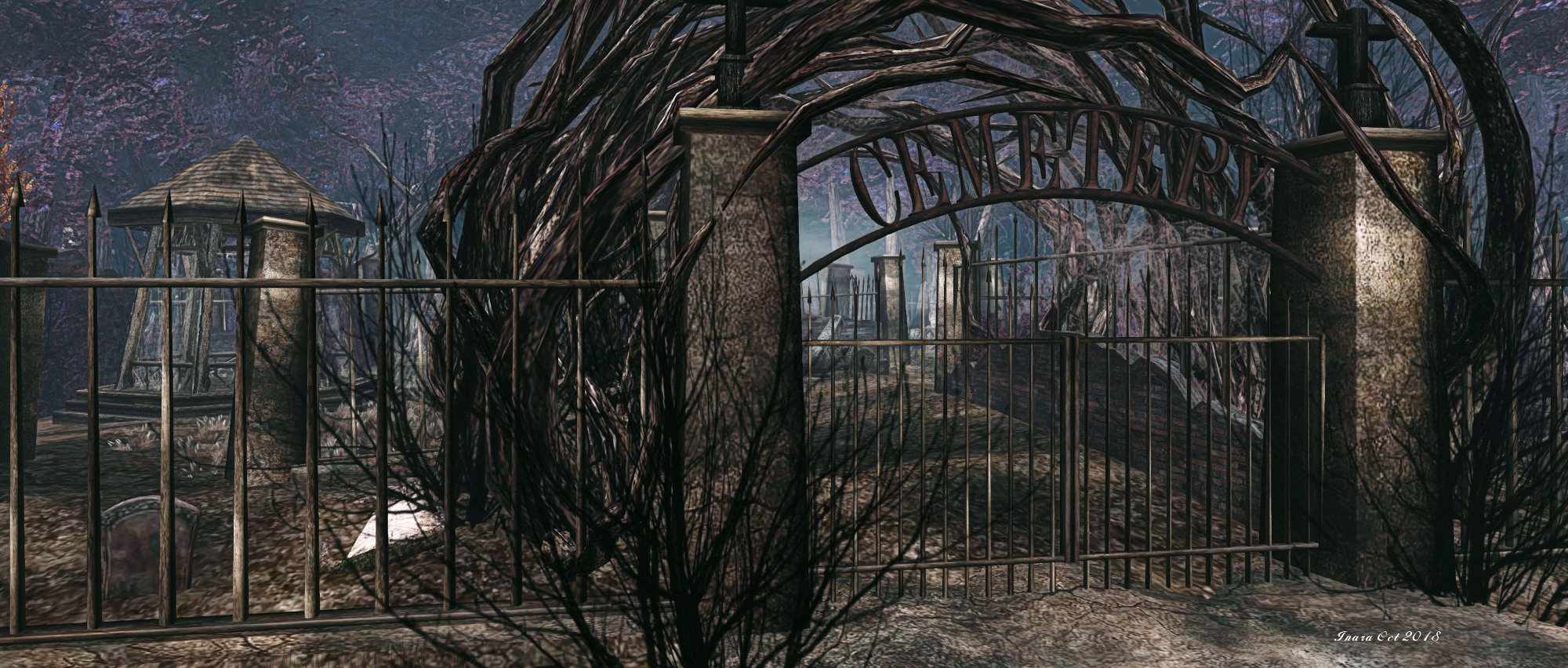
There are several routes from the landing point, offering by turns routes to the ancient henge, the lighthouse, an apothecary / magic shop and a hunted house. There is the inevitable cemetery, while skulls hang from branches of trees or even make up their trunks, malevolent green eyes that glow through the mists and darkness staring outwards in menace whilst also drawing visitors to travel beyond the haunted house and the lighthouse and out to a headland. Nor are these green eyes the only ones watching: owls and vultures are in the air or perched where they can, the latter looking as if they might be hoping one or two visitors receive a shock severe enough to keel over … and provide a meal.

As with all of Lauren’s builds there is wonderful attention to detail throughout. Catch the monkey from Stephen King’s The Monkey for example. Other hints / reminders of horror flicks can be found as well; even Hogwarts (which can be a spooky place after all) gets some visual references.

Pendle Hill; Inara Pey, October 2018, on FlickrPendle Hill

Lauren’s region designs always make for an engaging visit, and Pendle Hill is no exception – although I strongly recommend that for best results you have Advanced Lighting Model (ALM) enabled in your viewer (Preferences > Graphics > enable ALM), particularly if you’re going to use the supplied torch, as it uses projected light. If you can also manage the region with shadows enabled, so much the better – but this is not an essential requirement for enjoyment of the region.

Photographers can join to local group for a single payment of L$175 and gain rezzing rights to rez props (do please remove them after use!), and a Flickr group is available to those wishing to share their pictures with other visitors to the region. Should you appreciate Pendle Hill, please consider making a donation at the landing point towards its continued presence in Second Life.

Pendle Hill; Inara Pey, October 2018, on FlickrPendle Hill

SLurl Details

Exploring Malaika Park in Second Life

Malaika Park; Inara Pey, October 2018, on FlickrMalaika Park – click any image for full size

Malaika Park is, according to region holder Leroy Voorhees, “A happy place, and home to a very few people . The ground area and the mystical waters underneath are for exploring, photos and fun.” He goes on to note that changes may occur at time in décor, but visitors are invited to embrace and enjoy the setting.

I can vouch for the fact things change at Malaika Park; we’ve visited this full region numerous times over the past few months – although it has actually been around since 2014 – and each time there have been changes both large and small in the current design: a building moved from one side of the bay to the other here, the addition of a piece of art there, the arrival of a car… and so on. All if which have piqued curiosity and encouraged return trips.

Malaika Park; Inara Pey, October 2018, on FlickrMalaika Park

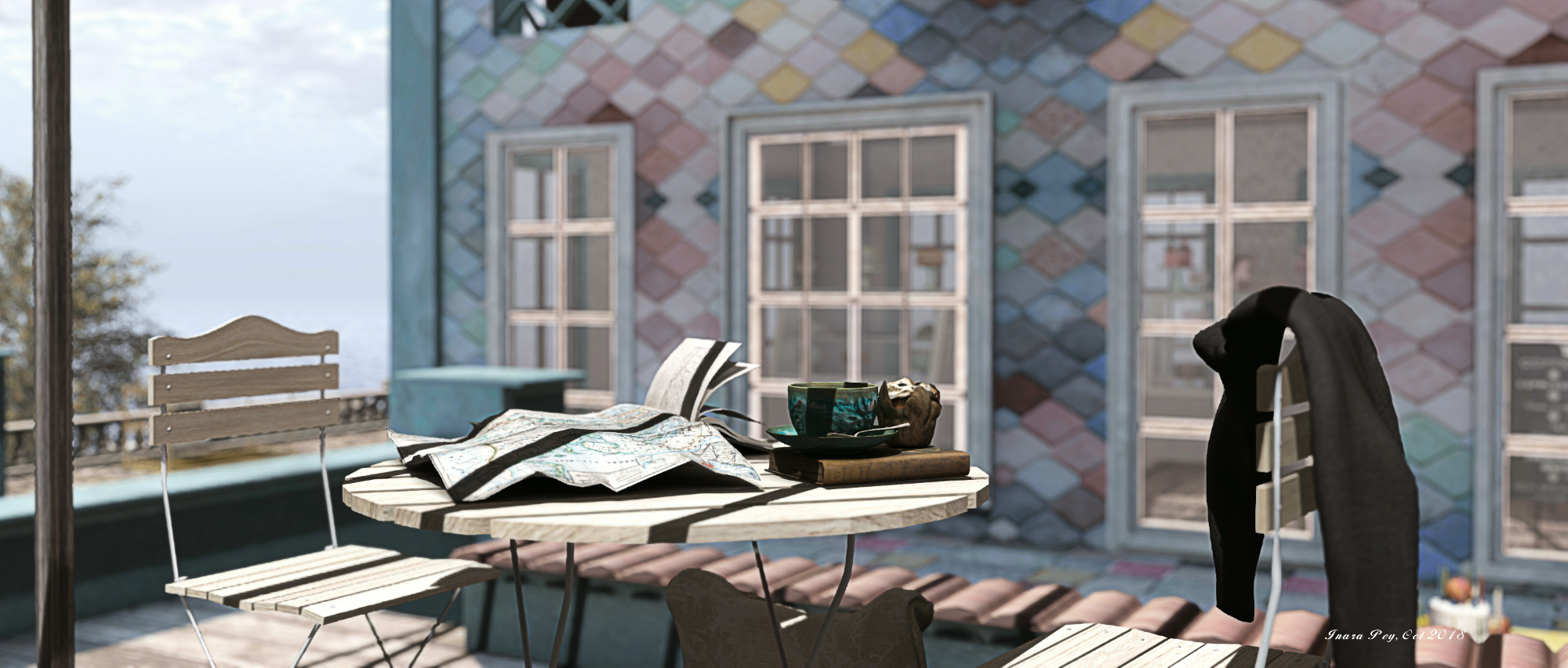
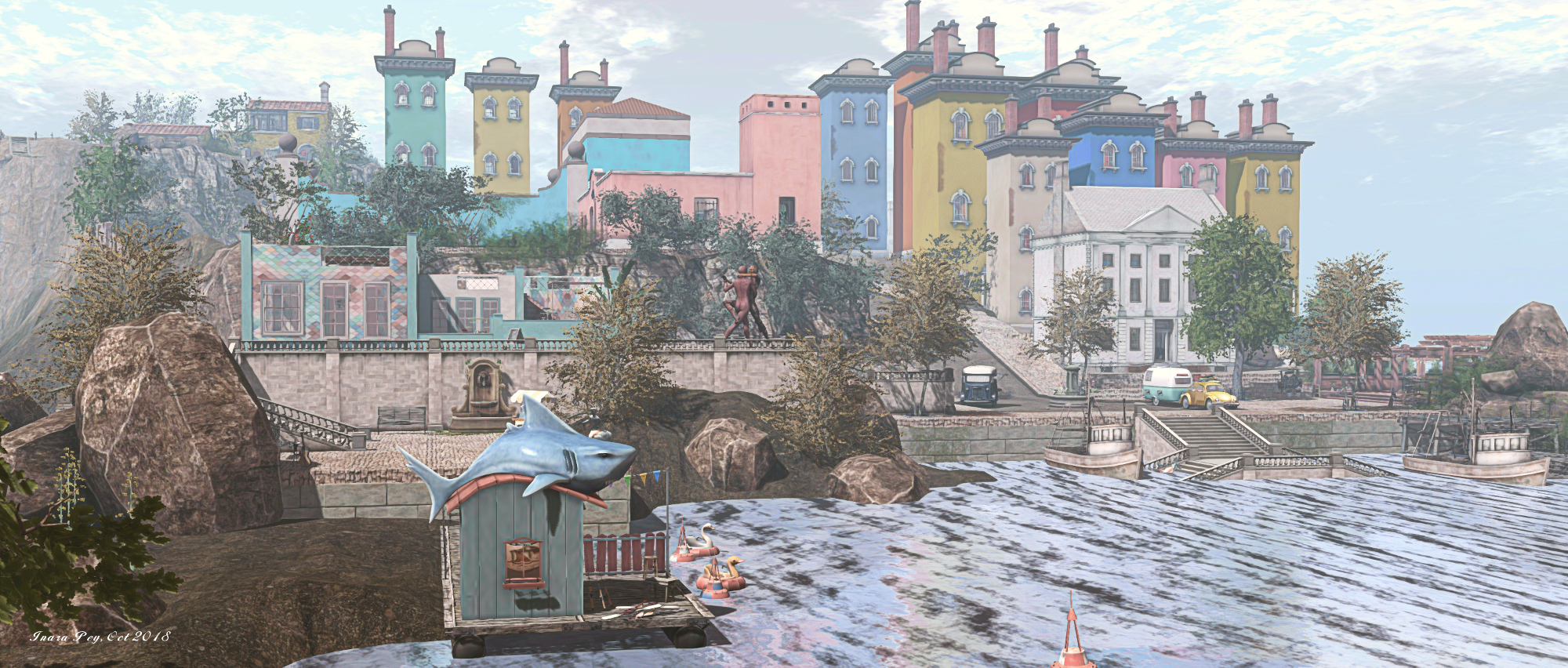
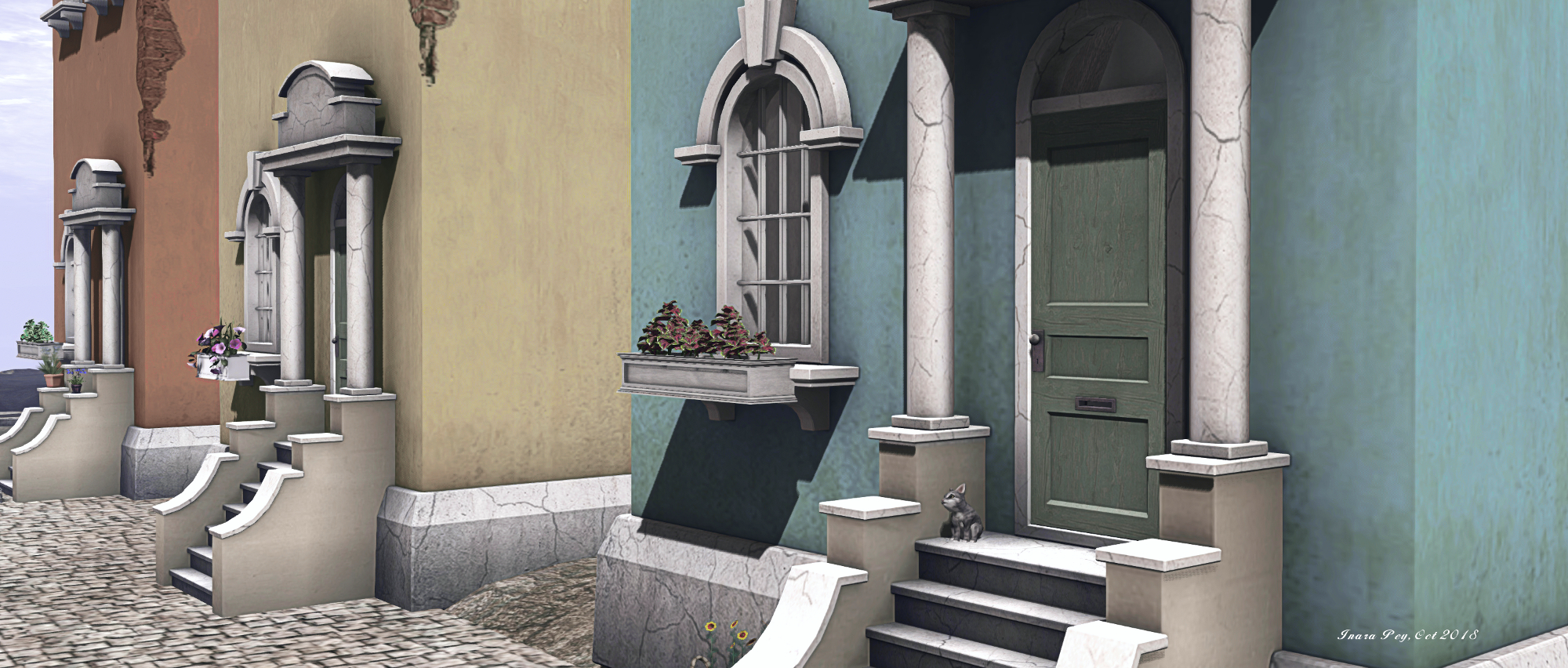
There is a certain eccentric look and feel to the region, marking it as a delightful curio among Second Life regions. Oriented north-to-south, it presents a island with a somewhat Mediterranean feel to it due in part due to some the architecture used, but which also feels a little as if it has been lifted from a storybook with its tall, slender houses rising like multi-hued bristles from the back of a hedgehog as they climb the island’s rocky hump.

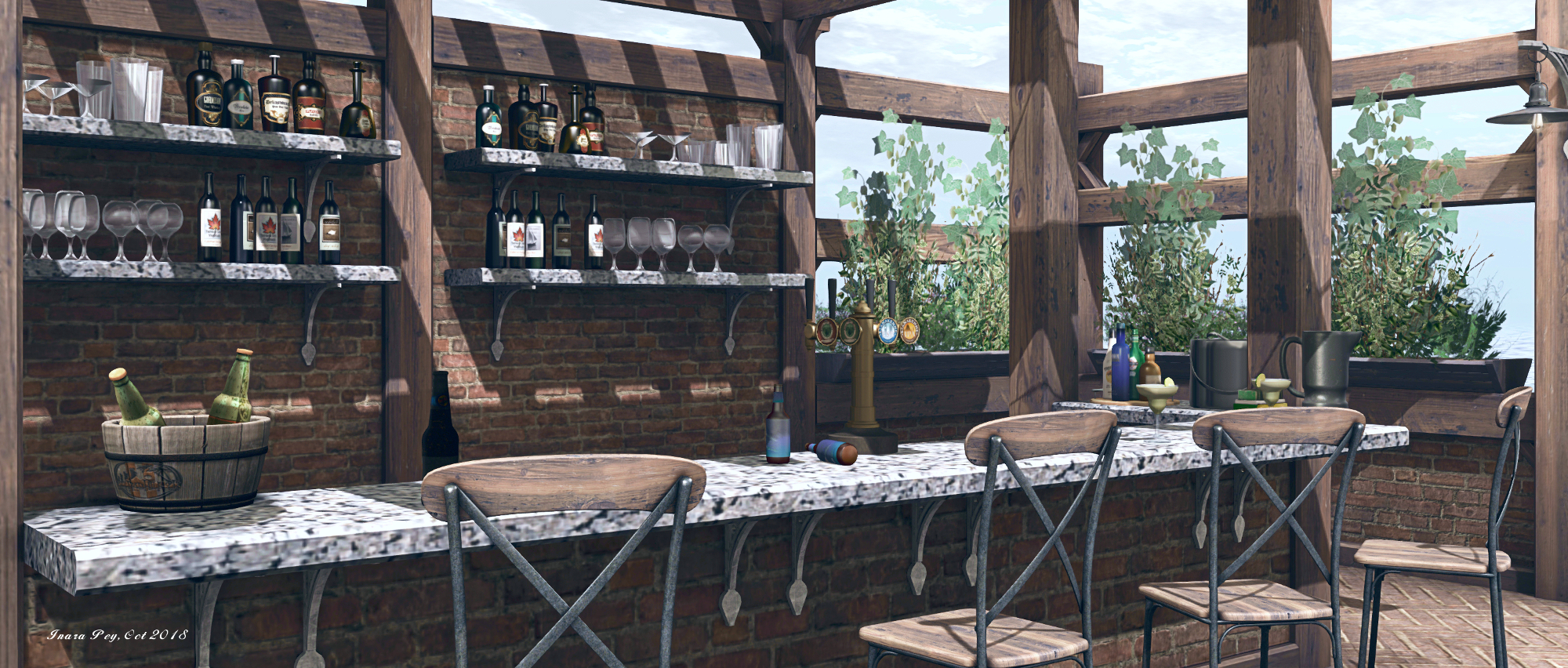
The southern end of the region forms a small bay marked by an outstretched rocky promontory on one side and the long arm of wooden decks on the other as they stretch forth from the rocky coast, offering mooring for boats and yachts. A café and an open-air bar face one another across the inner face of the bay, where stone stairs step their way down to the water’s edge – and then under it, as if daring visitors to follow them below – although it wasn’t an invitation to be accepted at the time of our visits; the steps only led to the sensation of getting wet 🙂 .

Malaika Park; Inara Pey, October 2018, on FlickrMalaika Park

Instead, it is better to climb the hump of the island, either by taking the steps up the the terraced café and its rooftop pool or, for a longer walk, up the broad road leading uphill between the talk ranks of the island’s houses and they stand to attention behind what might be a gentleman’s club close to the waterfront.

None of the brightly coloured town houses are actually furnished, but this doesn’t mean there is nothing to appreciate within the town. Follow the road to the top of the hill, and an ageing, pavilion-like house awaits, the path down to a beach off to one side while just behind it, the north side of the island falls away to the sea. This isn’t, however, the highest point on the island.

Malaika Park; Inara Pey, October 2018, on FlickrMalaika Park

This is reserved for a high table of rock rising to the north-west of the island, the location for a studio and workplace set out by Gabriel2009, who along with Leroy, Sangi Phaeton, JJ Goodman, and WayneNZ (responsible for the former Toru homestead region – see here and here for more, and a curator of the former Holtwaye ArtSpace gallery), form the team responsible for the look of the region.

Below this, between it and the café by the bay are a couple of Mediterranean style buildings. One offers itself as a spa with swimming pool and the other a place of table-top and other games, a playable chess set sits on the cobble path outside the walled courtyard setting. Art can also be found at various points across the island, in the studio building up on the north-western plateau, and via sculptures by Mistero Hifeng and Lucas Lameth which sit both on land and in the water.

Malaika Park; Inara Pey, October 2018, on FlickrMalaika Park

And talking of water whilst also returning to our starting point: those who fancy a little on-the-water fun might try the bumper boats available from the deck on the west side of the island’s bay.

Malaika Park makes for a slightly different visit for those who enjoy exploring Second Life; there is no central theme, but enough hints in building styles to give it a certain air of familiarity. The setting is photogenic, and can make an ideal backdrop for photography (join the local group to obtain rezzing rights for props, but do please clean-up behind you.

Malaika Park; Inara Pey, October 2018, on FlickrMalaika Park

Stop Press

Malaika Park will be hosting a special Halloween setting, opening on Wednesday, October 10th, 2018 in the sky over the region.

It will be an adventure style thing, an explore and enjoy, thing, all of that plus a hunt with some fun toys and Halloween goodies!

Malaika Park co-designer Sangi Phaeton

So, if you fancy a few Halloween scares as well as a visit to a delightfully quirky and eye-watching region, make a note to visit Malaika Park this October!

Malaika Park; Inara Pey, October 2018, on FlickrMalaika Park

SLurl Details