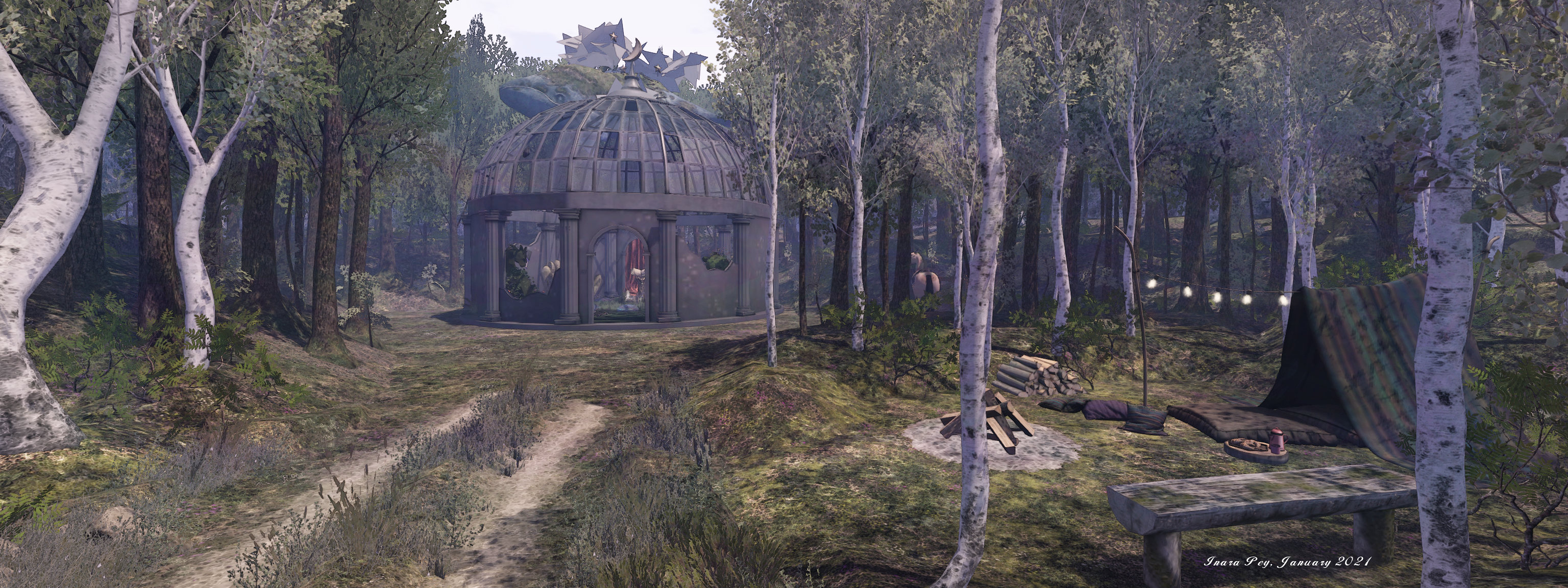
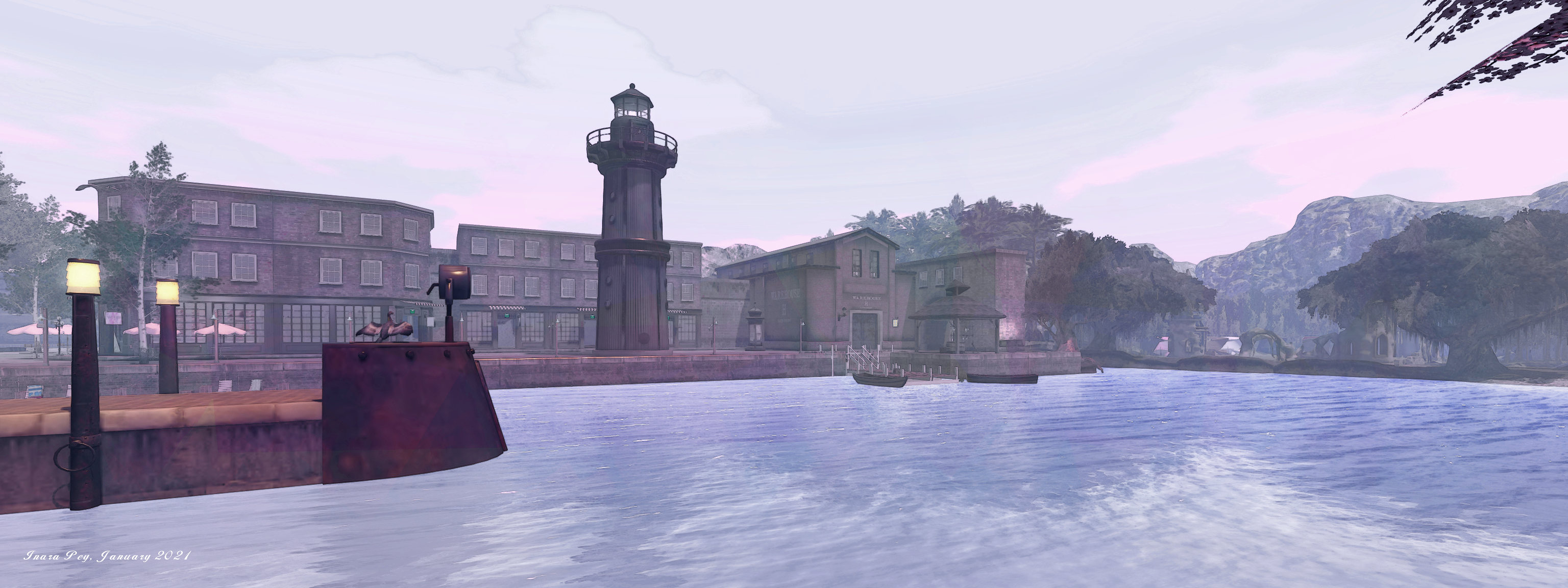
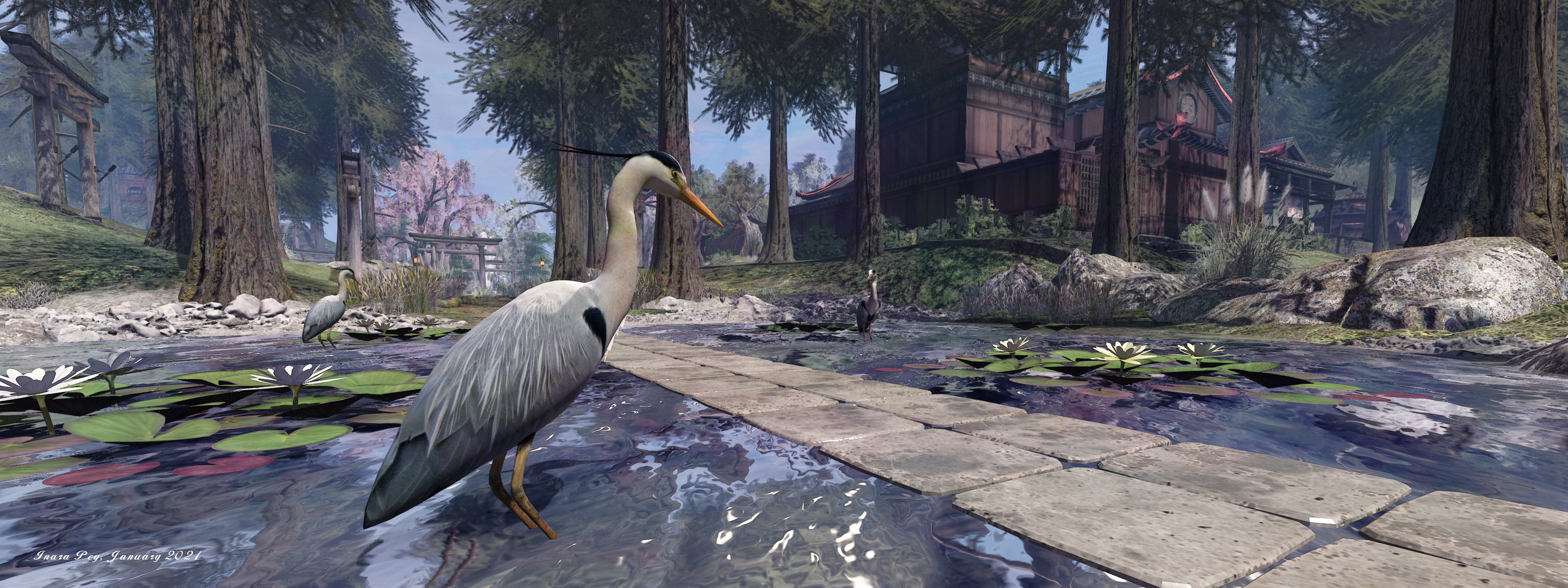
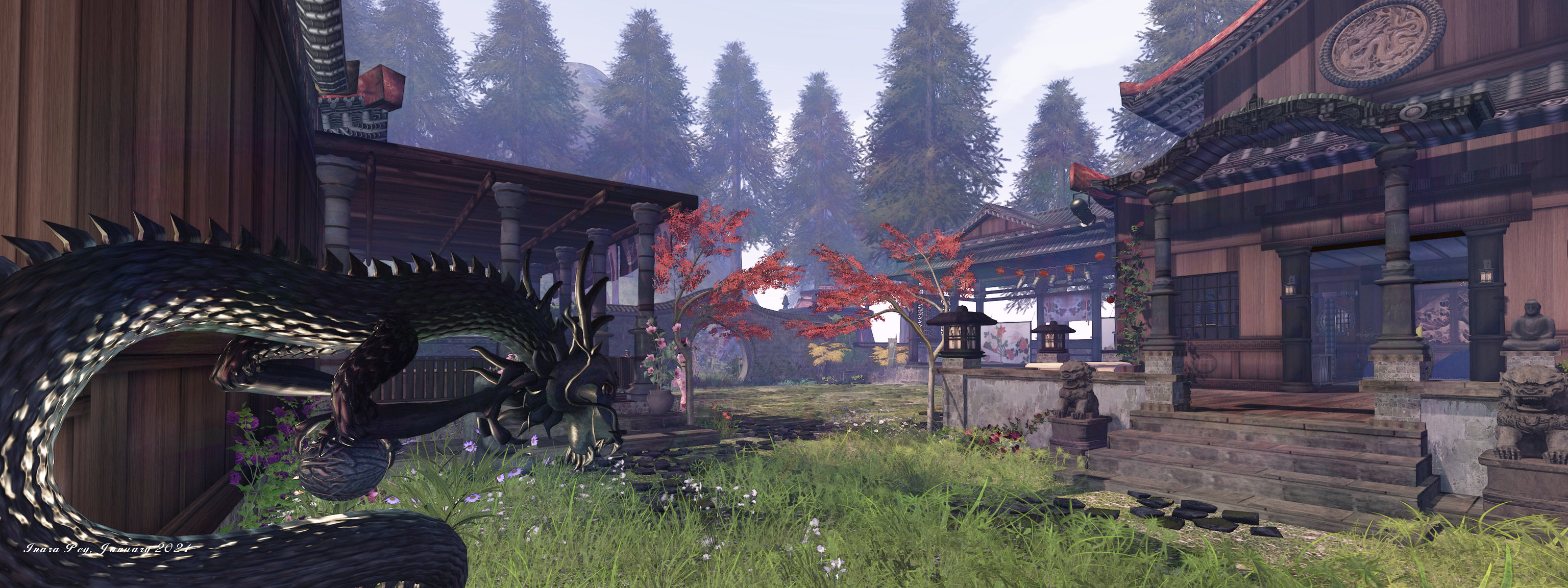
Resting in Osta Nimosa in Second Life

Osta Nimosa – January 2021

For those who feel they’d like to escape all the continuing stresses of the physical world, but who don’t particularly want to spent time exploring and wandering, preferring instead to sit and chat or cuddle (or both), then artist Terrygold might have the answer.

Osta Nimosa is a quarter-region parcel sitting within a Full region utilising the private island LI bonus. Best known for her work as an artist – one whose work I’ve appreciated and long enjoyed writing about, here she presents a landscaped environment. Set out as an artificial archipelago sitting over sandy waters, it is bordered on two sides by open water, while the other two are denoted by a shallow ribbon of grass and sand that sits between the shallows and high cliffs.

Osta Nimosa – January 2021

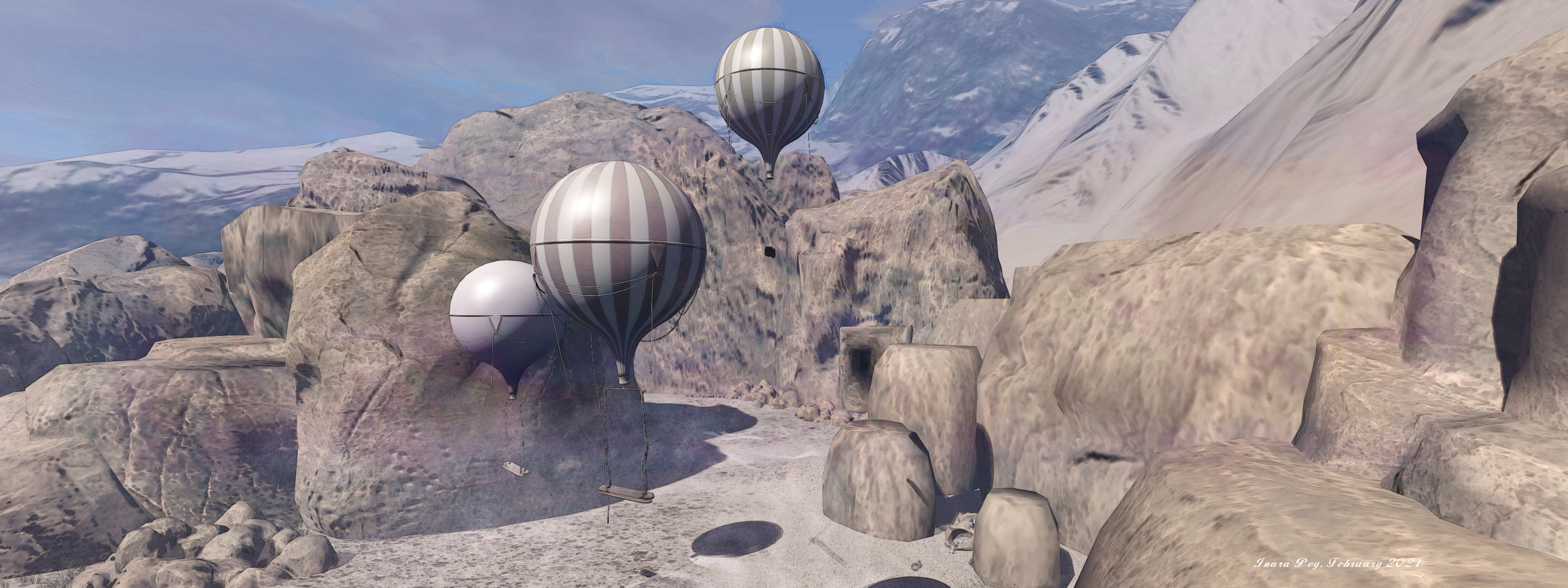
Presented under the Solo Arte banner, the setting extends out over the water in a checker board of little square and rectangular islands, with more to be found in the sky overhead, including the Solo Arte Castle, sitting within a snowy setting at the time of my visit and which includes a table games room for those who fancy a little challenge.

The main landing point for the setting can be found on the ribbon of beach and grass, sitting alongside information boards and the teleport signs that link to all of the locations within the parcel.

Osta Nimosa – January 2021

The islands are reached can be reached in one of two ways: by taking the a canoe from the pier on the waterside of the landing point or by wading through the water and with the wooden steps that are provided with each island (flight is deactivated in the parcel, so I’m excluding this as an option).

Whilst regular in shape, these islands are anything but identical. Some are set as garden spaces, others as little corners in which to sit – such as having you own little bench where you can watch the Moon in a most unique way. Others are home to buildings of some description, each of which also has its unique characteristics.

Osta Nimosa – January 2021

For example, there is the Mr. Wolf bar – also one of the teleport destinations – which may not quite offer what you might expect from a bar; whilst the houses themselves offer the most unusual – and delightful settings within them. Furnished homes they most certainly are not, but they are charming / romantic (depending on which you access). There’s also a camp site watched over by cormorants, and another island offering a musical haven whilst one gives people the chance for a quite picnic.

Osta Nimosa – January 2021

There’s a lot of detail to be found here  – as may have already been guessed from my comments above. There’s the cats that bring a little life to the outdoor café, the boats that offer further places to sit and cuddle a board walk garden and a little coastal camp site, all waiting to be found.

All of this adds up to a charming location for a visit and in which to spend time, one that works under a range of spring / summer environment settings, and which shouldn’t be missed by anyone who – at the risk of repeating myself- wants to escape the stresses of the physical world, or who wishes to have a little quiet time with their loved one(s) or friends.

Osta Nimosa – January 2021

SLurl Details

Re-visiting David Rumsey in Second Life

David Rumsey Maps

A January 12th, 2021 Destination Guide blog post by Linden Lab reminded me that it has been seven-and-a-half years since my first – and up until now, only – visit to the remarkable David Rumsey Maps in Second Life (see: If maps are your thing, Rumsey’s the king!). A length of time that marks a return visit as long overdue, so I decided to jump over and renew my own acquaintance with the four-region facility.

As both the Linden blog post and my own post from 2013 note, David Rumsey Maps in Second Life is a direct annexe to the David Rumsey Map Collection. This an on-line collection of more than 150,000 maps with a focus on rare 16th through 21st century maps of North and South America, but which includes maps of Asia, Africa, Europe  and Oceania. The collection stretches back over 30 years, with a programme to digitise them all commencing in 1996.

The collection’s website is powered by LUNA, one of the world’s leading digital asset management tools, one that is used world-wide around educational, research and science institutions. In particular, the software allows visitors to the website to view multiple maps from different time periods side-by-side and also to create and curate their own collections of maps from the library, according to their interest / requirements.

David Rumsey amid items of his map, atlas and globe collection, circa 1996. Credit: David Rumsey Collection

This ability to interact with the collection was expanded in 2008, when the Rumsey collection realised Second Life could be a unique environment by which people could visit and interacts with elements of their collection in a unique manner, and their presence in Second Life has been periodically updated since then.

The core of the facility comprises a visitor centre and a 4-region terrain elevation map of Yosemite Park dating from the 1880s, and which visitors are free to fly over / down town and walk across (to see it all, you should set your draw distance to at least 512m). Around the outer edges of the four regions – which are arranged in a square – is a series of panels – up to 50 on a side – displaying individual maps that can be studied by taking a walk around the boundaries, together with a 3D view across the Grand Canyon amidst the panels on one side.

David Rumsey Maps

Within the visitor centre are more maps – forty of which are available to collect at no charge – and several of what should be interactive elements – map viewers, a media recording of a presentation by David Rumsey himself, etc. Unfortunately, on my return visit, none of these would respond to being touched, nor would the large world map directly outside of the visitor centre, which is designed to allow you to rez a pin on your physical world location and place it on the map with a message of up to 140 characters.

Two skywalks extend from this map platform, each one displaying a ribbon map that can be walked. The first – and longer of these – is featured in the Second Life blog post. It is a reproduction of a map of the Tōkaidō road (“”eastern sea route”), the most important of the five great trade routes linking Edo (as Tokyo was then known) to other major Japanese centres of commerce – in this case, Kyoto on the east coast of Honshū. The second ribbon map,on the shorter skywalk  (which connects to the outer map walk) is a reproduction of a map from the late 1800s showing steamboat routes on the Mississippi.

We built the 4 {regions} in 2008 and have continued to update them since then. One of the things that fascinated me early on was the potential to “walk” on the historic maps and fly around them in SL. The Yosemite map which forms the floor of the site was built with a full elevation model so that it is accurate and in scale. The map is the first truly accurate map of the Yosemite Valley made by U.S. Army topographers in 1883.

– David Rumsey, via Linden Lab

David Rumsey Maps

While flying is not required to see all the maps, it is needed to see the two large globes floating over the Yosemite map. Eash is a reproduction of globes created by Giovanni Maria Cassini (not to be confused with the astronomer, Giovanni Domenico Cassini) – one of the earth and the other of the heavens surrounding it. Both can be flown in, where information boards can be found describing each of them, set over two orreys modelled on the time of Cassini – each fails to record Neptune and Uranus, as those planets had yet to be discovered.

Despite some of the interactive elements not appearing to work, David Rumsey Maps remains an engaging and educational visit.

Related Links


A return to Mount Campion National Forest in Second Life

Mount Campion National Forest: Roscommon Ridge

In July 2020, we made our first visit to Mount Campion National Forest, the marvellous setting created by Marz (Mar Scarmon) around the highest peak on Second Life’s mainland continent of Heterocera (see: The climbs and caves of Mount Campion in Second Life).

Rising towards the peak of the mountain and encompassing the razor back ridge that runs down from it, the forest is a stunning place of beauty, both above ground and underneath it – for within the granite cliffs and high steps of rock runs a network of tunnels and caverns that is so natural in look and feel, it is possible to imagine them having been formed in ages past by the passage of water through the rocks.

Mount Campion National Forest: Roscommon Ridge

Fast forward six months, and a lot has changed for the forest.  It has expanded mightily, actually tripling in size to just shy of (at the time of writing) 100,000 square metres – that almost 25 acres, for those who prefer to work in “old money”. It runs through three region of Heterocera to offer Second Life users both the opportunity for extensive out-door exploration and the opportunity to actually rent a property within it and fully appreciate its splendour.

I know this because Marz recently invited Caitlyn and I back to the forest for a further visit – and truth be told, I’m writing this article between our bouts of wandering the paths and trails above ground and exploring the further caves and tunnels that lie beneath them.

Mount Campion National Forest: Roscommon Ridge

We started our return visit  – on Marz’s recommendation – at  the high plateau of Roscommon Ridge to the north-west of Mount Campion. Here can be found numerous paths and trails – the main ones of which lead the way past some of the rental properties to be enjoyed here, so if visiting, do avoid trespassing and invading people’s privacy.

The plateau is also home to small lakes among the trees, together with fast-flowing streams – perhaps fed by the thaw (a small corner of the plateau still exhibits snow) as much as by the lakes. A short walk from the landing point is an entrance to the cave system under the plateau, one that includes a neatly tucked away rentals vendor providing details on the houses available for rent within the forest.

Mount Campion National Forest: Roscommon Ridge

Through the considered use of many of the same landscaping elements found within the “original” Mount Campion setting: flora, tracks, landscaping elements,  etc., Marz has layered the entire forest, from Camion through the south-western corner of Highflyer and then through Spinach, with a sense of continuity of featuring and setting that is both natural and which encourages explorers to continue their wanderings.

Those who do keep a an eye out for the unusual when exploring may come across one or two little surprises along the way, such as a Sasquatch enjoying a stroll along the banks of a stream or the outhouse that have been placed for the … convenience … of visitors, and more, both above and underground (I’m not going to give all that we found away!).

Mount Campion National Forest: Roscommon Ridge

As well as the Roscommon Ridge additions, I believe I’m correct in saying the cave complex in Campion has been extended, with a series of tunnels and caverns that are partially flooded (if these were around in July 2020, then silly me for missing them on our fist visit!). Find the right way into these, and it is possible to take an air mattress from a rezzer and paddle through the waterways – just mind the waterfall that marks one of the routes out!

The goal of the National Forest is to have a public place of scenic beauty that encourages exploration. A secondary goal is to renew interest in mainland SL. The National Forest has the highest mountain in SL (Mount Campion), miles of scenic trails, forests, canyons, and of course the largest connected cave system in SL. I hope you will visit us again, I am giving you the location for one of our newer areas, but again the areas are all adjacent and connected by trails and caves so I hope you will roam around. Thanks and I look forward to seeing you there.

– Marz (Mar Scarmon)

Mount Campion National Forest: Roscommon Ridge

A captivating beauty spot since Marz took it on, Mount Campion Natural Forest was always a worthwhile visit, and this expansion has increased its attractiveness, offering multiple reasons for a visit. As noted above, at the time this piece was written, Caitlyn and I hadn’t completed our own explorations – so maybe we’ll see you there!

SLurl Details

A magical Wildwood Gardens in Second Life

Wildwood Gardens, January 2021 – click any image for full size

With the end of an old year and the start of a new one, thoughts inevitably change from those of winter and snow to the arrival of spring and the rebirth of nature’s colours. Given this, I decided to hop over to Legallyblondmod Demonista’s setting of Wildwood Gardens.

Occupying a little over half a Full region, this is a richly detailed environment that is rich in colour; one that attracted me through the promise of a timeless setting within its description, and I was far from disappointed.

Wildwood Gardens, January 2021
Enjoy lakeside deep forest and exotic caves gardens among the ruins of old. Where hints of ancient magic still linger. Relax and take time to explore.

– Wildwood Gardens About Land description

The lake in question lies on the east side of the setting, at the far end of the woods and their gardens relative to the western landing point. This sits on a small headland that looks out over a narrow channel of water sitting between Wildwood Gardens and an off-region ribbon of an island  and overlooking a west side beach.

Wildwood Garden, January 2021

With its flower-bordered track running south along the back of the beach and lit by iron street lamps, together with the offer of a Teagle horse rezzer for those who might want to ride, and a folly-style rotunda sitting on the grassland on the far end of the beach, this initially has the feel of a simple garden, but there is fall more awaiting discovery, as the About Land description hints.

Proof of this comes by following the track as it passes along the back of the beach before turning inland to arrive at a junction. One arm of this points towards the rotunda on the coast, the other turns east, passing along the foot of a large elven hall that brings a slight flavour of Tolkien to the region.

Wildwood Gardens, January 2021

Elven in style the hall maybe, it has a  distinctly contemporary feel to its furnishings. There’s nothing wrong it this; the two styles compliment one another perfectly, offering a unique look to the hall. A further element of this magic can be found along the branch of the track pointing towards the rotunda near the beach. Following it will reveal it passes by the rotunda to arrive at the entrance to a network of tunnels and caverns.

The network is surprisingly extensive, winding its way under the highlands that form the southern side of the setting, and it is worth both following the suggestion of the sign at the entrance and set your viewer to Midnight and in  taking time to explore underground; the caverns offer hidden waterfalls and pools of water, exotic flowers and crystals and a choice of routes back to the surface.

Wildwood Gardens, January 2021

One of these offers a way back to the main track which, after passing over a stone bridge near the elven hall, passes through the denser trees, side paths branching off to reach places to sit – a camp ground here, a swing seat there, or a parasoled banket – look carefully and you’ll find them.

The remaining route through the cliffs leads to the southern bank of the lake and a hidden tree house that awaits discovery and enjoyment. It is overlooked by a cliff-edge stone pavilion that offers another Middle Earth feel, even though it is not intentionally designed as such. It stands as a hint of another secret to the setting: the cliff-top gardens that also await discovery.

Wildwood Gardens, January 2021

These offer multiple points of interest – a pond with cosy summer house, a walled garden that further combines hints of fable with a contemporary design, a wooden gazebo  – but how do you get up to it is the question. All I’ll say is, find the ruins watched over by unicorns that lies below the cliffs  – you’ll find them further along the track from the main hall, and the entrance to a tunnel and steps that lead up to the plateau are not far away. Should you miss it, you can still carry on along the track to where a bridge spans a gorge linking the lake with open water and another table of grass-topped rock that offers another wild garden with its own attractions,  and when finished there, find the tunnel stairs on your way back.

And all of this just scratches the surface of the beauty and magic of Wildwood Gardens, which is genuinely a place in which to lose oneself. There are multiple places to sit and share, a profusion of colours that naturally blend through flowers and plants, that captivating mix fable and contemporary that gives the setting a truly magical depth and sense of timelessness, all of which is rounded out by a perfect sound scape.

Wildwood Gardens, January 2021

An altogether enchanting design.

SLurl Details

An Ambient Hideaway in Second Life

Ambient Hideaway, January 2021

Shawn Shakespeare got us off to our 2021 visits around Second Life with a suggestion we drop into Ambient Hideaway, a Homestead region that is a joint design by Yoyo Collas with the assistance of Mirias and Silly Snook.

A rugged setting currently caught beneath the cloak of winter, the region comprises a large island with a north-to south orientation with a smaller shelf of rock to the south-east, reached via a wooden bridge.

Ambient Hideaway, January 2021

Visits commence in the northern highlands of the main island, a plateau sitting atop cliffs rising from an icy sea.It is home to a cosy restaurant bar delightfully called The End in contrast to it actually being the start of a journey through the region. With seating space both indoors or out under the low-lying (mesh) clouds, the bar shares the plateau with a small hall where visitors can find out about the region’s photography contest which still had a few days to run at the time of our visit, the closing date being January 6th, 2021.

There are three routes down from this plateau, each of which offers its own opportunities for discovery. To the west, wooden steps and a board walk lead down to first a lower shoulder of the plateau and then to a finger of rock pointing west as a slender promontory. Deer wander here, and a wooden cabin lends the warmth of a fire within and that of a brazier to the rear, where the snowy slopes drop down over frosted rocks to the ice and cold waters of the sea below.

Ambient Hideaway, January 2021

Further steps  lead down to a deep bay that faces south-west, sitting between the western promontory and the southern lowlands of the main island. The bay holds within its arms a frozen beach and an old pier and deck extending into the waters, what might have once been a warehouse located on the deck now converted into a cosy snug.

Stone steps climb gently from the east side of the snow-covered beach to link with the second route down from the plateau with its bar and restaurant. Watched over by a Canadian goose and an impressive statue of a stag-headed female figure (“Hern the huntress”, perhaps?), this second path down from the landing point offers the way to a long, thin sand bar that points south and east to where a great circular tent stands in a suggestion of Genghis Khan, the horses walking the sandy finger perhaps adding the feeling one is travelling time to the Mongol times as one follows it to the tent.

Ambient Hideaway, January 2021

Also reached from the path is an open-sided gazebo with a hint of the Christmas just passed standing alongside it, as both stand over the bridge leading to the smaller island. A beach house awaits discovery on this small shelf of rock, and while it lacks a fire inside, a brazier on the deck outside offers an invitation for visitors to go in and a spend a little time away from the cold.

The third route down from the high plateau is by way of wooden steps and platforms to a low-lying out-thrust of flat rock with a shale beach on its north side. An old shipping create, perhaps washed ashore years ago, resides here, but rather than being left to rust and fall apart, it has been turned into a comfortable little hone, complete with windows and doors cut into its side, a large raised deck offering additional outdoors space as it overlooks the beach.

Ambient Hideaway, January 2021

This is a setting that appears to be a lot larger than the 256×256 metres of a Second Life region, the natural shaping of the land and the use of elevation and defined paths giving a sense of expansive space, while the sound scape adds to the sensation that this is place within the wilderness – perhaps an island in northern latitudes lying off the coast of a continent that is itself caught in winter.

There is a wealth of detail to be found within the setting as well – be it outdoors or within the various buildings. Couples are clearly welcome here; there are numerous opportunities for romance waiting to be found in the form of cuddle spots such as that waiting at the end of the western promontory or the old cable-car sitting on the edge of upper plateau.

Ambient Hideaway, January 2021

Photogenic – hence the local competition – richly designed and constructed, Ambient Hideaway makes for an engaging visit; just mind the rather exuberant humpback whale off the south coast! 🙂 .

SLurl Details

A new home for an Artists’ Village in Second Life

Campbell Coast, January 2021

Back in September 2020, I wrote about the Artists’ Village at Campbell Coast, operated by BJoyful and Doc Rast (rasterscan) and curated by Owl Dragonash.  Since that time, both Campbell Coast and the Village has relocated, the latter now forming a sky platform over the region.

Work recently completed on the relocation, which sees Campbell Coast offer a similar facility as found at the Phoenix Artists Collaboration – a collection of study-style spaces available to artists (group membership required), with up to 110 LI available per artist.

The studios are presented in town house style units with two floors of exhibition space (artists will need to install their own teleport systems between floors), with the studios laid out in blocks separated by cobbled streets and open spaces, complete with an open-air bar / event space at the southern end of the village.

Campbell Coast, January 2021

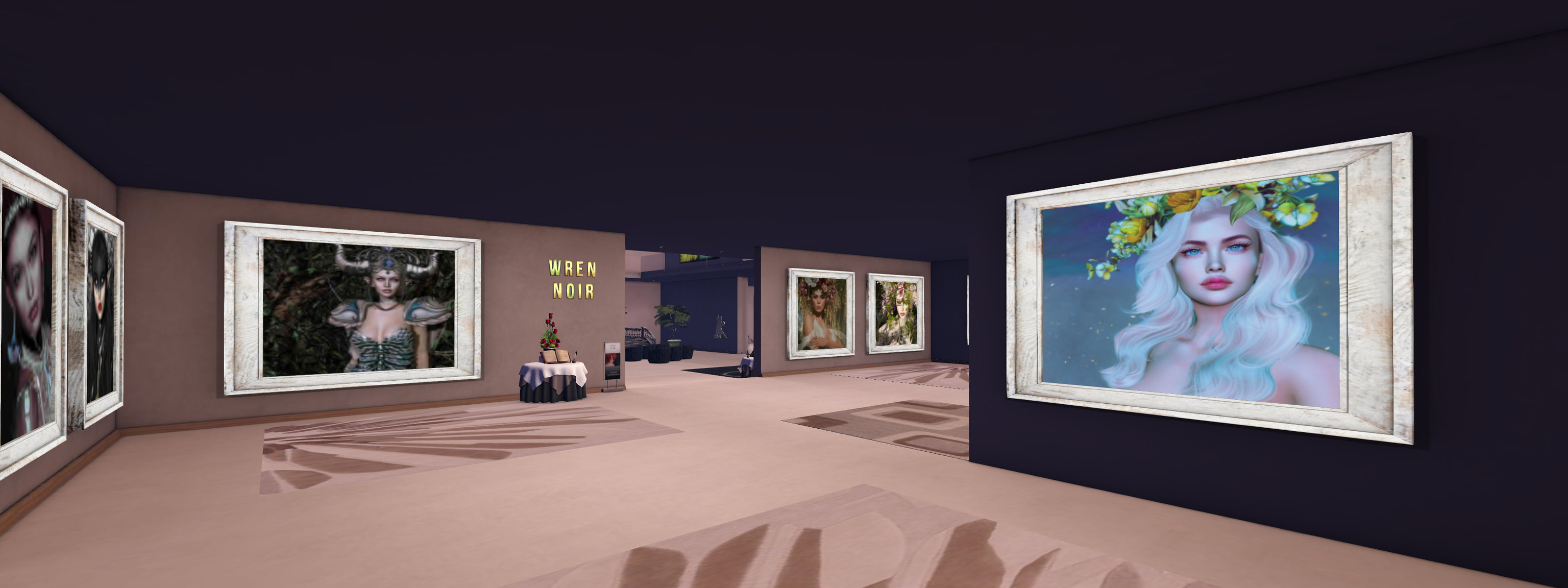
Some 42 units are available, with 29 already occupied  / reserved by the following artists: Dhyezl, Etamae, Jaz, Gidgy Adagio, Shakti Adored, Caly Applewhyte, Whimsical Aristocrat, Ceekay Ballyhoo, Michiel Bechir, Thomaz Blackburn, Giovanna Cerise, Rey Charles, Owl Dragonash, Apple Fall, Johannes Huntsman, Uli Jansma, Suzen Juel, Lena Kiopak,  Anouk Lafavre, Dimivan Ludwig, Radagast Malaprop, Kitty Mills, Nympheas Nogah, Inara Pey, Blues Rocker, Tempest Rosca, David Silence and Skip Staheli.

They are joined by musicians Jed Luckless, Lexus Melodie, Larree Quixote, and writer GoSpeed Racer. All of whom amount to a rich selection of artistic expression.

With music events to be held on occasion, as well as entertainment for art events, the Artists Village offers a lot for the patron of the arts to appreciate. When not enjoying the art on display, there are opportunities to sit and appreciate the setting  – designed by Kitty Mills and Owl Dragonash – and also to go horse riding.

Campbell Coast, January 2021

Those interested in obtaining a space at the Village should contact one of Bjoful, Doc or Owl in-world.

SLurl Details