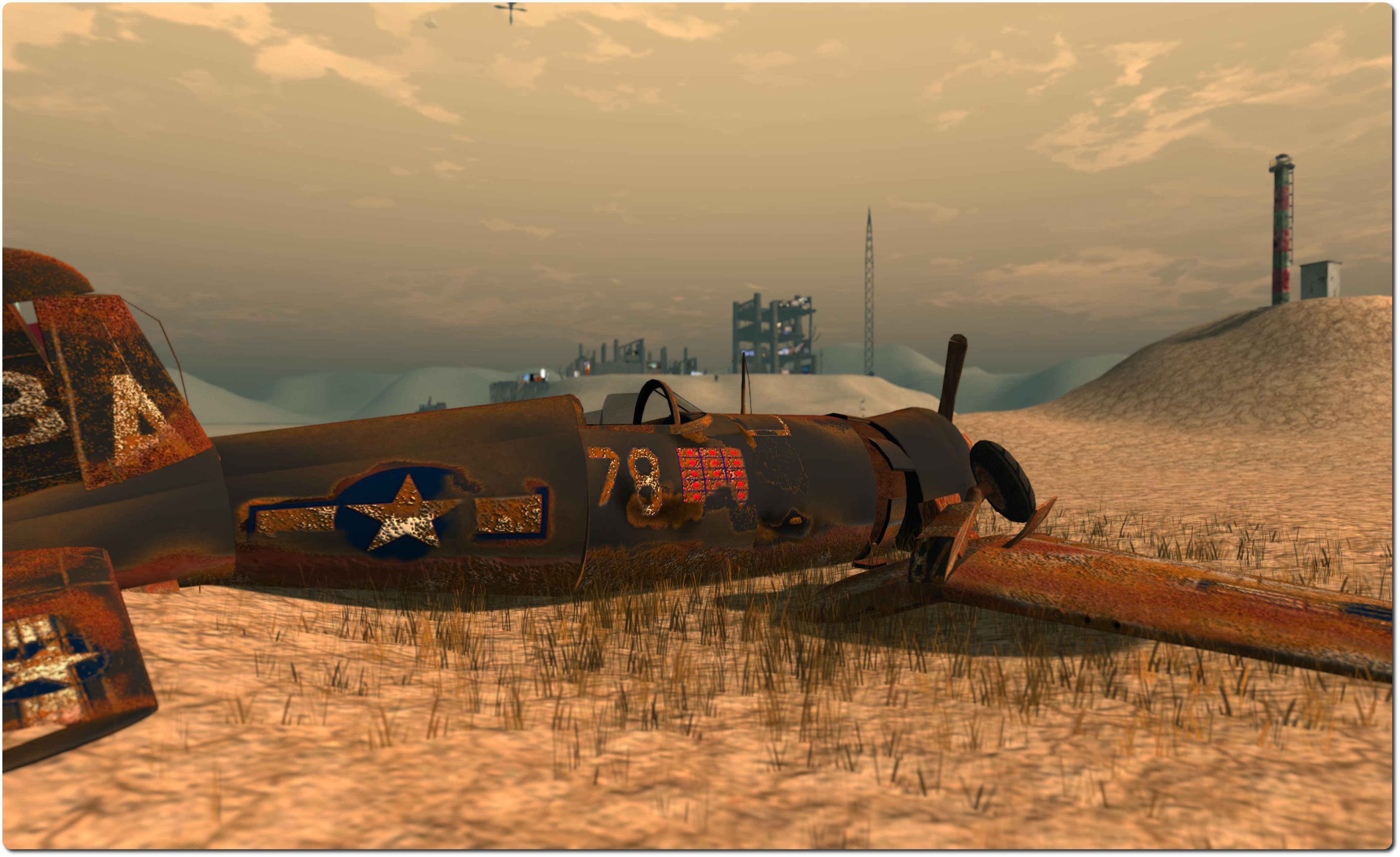
Earlier in March, I previewedThe Creature from the Black Lagoon, Livio Oak Korobase’s AIR-6 installation at LEA-11. This is a wonderful homage to the old 1950s B-movies, primarily focused upon (but by no means limited to) Bill Arnold’s 1954 film of the same name, together with a nod to a number of other great classics of the silver screen.
Since my initial preview, Livio has been hard at work, adding to the piece, and things are now ready for a formal opening. Eupalinos Ugajin gave me a nudge to make sure I remind people of this :).
Things will kick-off on Saturday March 15th at 13:00, with a party (Livio informs me the Creature loves to party!), with music by Dj Violette Oakleaf), which will feature a playlist described as “unknown, but sure to be a nice surprise!”
Those attending are asked to come suitably dressed for the occasion and in keeping with the nature of the installation, and Eupalinos jokingly informs me that any humans showing up may be subject to being eaten by any one of the creatures inhabiting the region – so consider yourself warned!
There have been some ambitious art installations displayed at the LEA; some have been elaborate, some have been fantastical, some have been immersive, some have been mysterious, some have been slightly disturbing, and some have been challenging to the eye and to the mind.
At LEA12, as a part of the Artist in Resident series, theoxyz (Thomm Pye) combines all of the above, from ambitious undertaking through to challenging the eye and the mind, as he seeks to present a 3D interpretation of The Garden of Earthly Delights by Hieronymus Bosch.
The painting, dating from between 1490 and 1510, is regarded as Bosch’s most ambitious complete work, and one which experts and commentators have struggled to interpret over the centuries.
A triptych in form, the original comprises a central square panel with a rectangular “wing” on either side, each of which is hinged to close over the main panel. When closed, these show a grisaille painting of the biblical Creation. When open, the side panels offer two distinct images, the one on the left showing God presenting Eve to Adam, and the one to the right depicting the torments of hell.
It is the central, square panel which forms the main focus for the LEA12 installation, and it is also the panel which has caused the most debate among scholars as to its intended meaning. It is believed that the painting is designed to be read from left to right, and so the central panel has most frequently been interpreted as a warning of the perils of temptation. However, it is also seen as possible representation of paradise lost.
Within LEA12, the major elements from this central panel are represented, but so to are elements form the other two panels (perhaps most noticeably the panel on the right), all of which come together to provide a unique interpretation of the original, which is not in any way intended to be an accurate reproduction, as theoxyz points out in the welcoming notes.
There are two structures within the installation which are not a direct part of any interpretation of the painting. The first, reached via steps leading up from the piece, presents a copy of the Bosch’s triptych together with theoxyz’s own interpretation of its meaning, and which also includes pictures of some of the elements of the original alongside images of their representations within the installation. Follow a glass walkway to the second structure, a dome set above a part of the work, and you’ll find links to additional resources about the painting, including a BBC documentary.
As noted above, theoxyz indicates that the installation is not intended to be a 3D representation of Bosch’s original piece, but rather a reflection of the painting’s surrealist atmosphere. This is something which is, to my mind at least, achieved in spades.
It’s pretty well established that I’m a Tyrehl Byk fan, as a poke at this blog will show (although sadly, RL kept me from his most recent performance of Catharsis, which I still find enthralling). So when I caught a notice via the .:SL Art:. group that he has an exhibit at Angel Manor, I had to go and spend time admiring.
For those not familiar with Tyrehl, he is the Master of the Particle, able to marshal them into unique, also living, forms and create fantastic, immersive shows with them, such as the aforementioned Catharsis or his Particle Phantasmagoria.
The pieces on display at Angel Manor are all of much smaller scale – small enough, in fact to be used on one’s home or store (many are on sale). The majority of them are touch-activated via a control panel, and some feature buttons which allow the visitor to generate different effects and patterns. A notice just inside the entrance to the exhibit offers comfort to those worried about the impact of particle rendering may have on any neighbours within draw distance should they purchase a piece:
If not turned-off manually, all purchased touch-activated sculptures will automatically turn-off one hour after being turned on. This feature is in place to reduce the load on the graphics cards of people in your neighbourhood who are within their draw distance to your sculptures.
Make sure you have local sounds on when exploring, as sound is very much a part of the experience.
The pieces on display range from those suitable for mounting on a wall, through to those displayed in their own shrouds and which would form a centrepiece both indoors or outdoors (especially at night in a garden), to free-standing items which would be at home in any corner of a room.
Earlier in the week, I dropped in to LEA13 and Xineohp Guisse’s The {Lost} Garden of Sundarya Lahari, his mythology-in-the-making, and the first part of which I visited on February 9th.
At the time I dropped in, the second chapter of the tale was being installed – most notably, a huge creature rising from the sea, but the book had not been updated, so I tiptoed away to wait to see what transpired.
I didn’t have long to wait, as a couple of days later, Honour McMillan and I bumped into one another exploring Cica Ghost’s Little Village, and Honour dropped me a note card containing chapter 2 of story. Even so, it wasn’t until this weekend that I managed to hop back over to see what else had been added.
In the first part of the story, we learned how the Ancients discovered a kind of reed capable of resonating a sound frequency when touched. Harvesting the reeds, the Ancients used them in a meditative and spiritual garden. When the Ancients discovered a symbiote, which they called the Pentapuss, and which fed off the sound waves made by the reeds, they created biospheres in which to nurture juvenile Pentapuss, helping them to reach maturity.
And so the story was told; that many moons had passed, and the Ancients had built their garden of tranquility – a place of musical beauty providing solace and much enjoyment.
So opens the second chapter of The {Lost} Garden, which continues:
A wondrous creature rose from the waters one day. With fear in their hearts and in haste, the Ancients captured and killed the “beast”.
The Ancients realised, that in their foolish haste, they had killed the mother to the creatures they had so lovingly nurtured, and that Mother had only arisen from the depth of the blue waters to the call of her younglings.
So the Ancients built the Mechanicum – to keep mother alive so that her species live on …
It is the Mechanicum that forms the great sea-beast rising from the waters near the Garden’s arrival point. Beneath it lies a wondrous underwater garden, which can be reached either by stepping off the side of the walkways leading from the arrival point, or by falling up to the headless maw of the creature and then walking down through it.
This latter route will see you fall through an organ which appears to be laying eggs. More of these eggs are cradled in shell-like cups. Rolling around the seabed beneath these are young Pentapuss, while swimming around them are one-eyes larvae which occasionally penetrate the eggs, causing them to glow. Around all, nutritional spores fall from the mother-beast and rise from the eggs.
The symbolism evident in the eggs and the swimming creatures is clear – and quite visual, given the nature of the texturing on the eggs themselves. It’s also entirely intentional, given that this represents the birthplace of the symbiotic Pentapuss. Photos alone actually don’t do the Mechanicum or the undersea scenes justice; there is far too much movement and changes of colour for a still image to capture; rather, it is best witnessed and experienced.
More chapters of the story are due to be added in the coming months. In the meantime, if you have not already done so, I do urge that you visit The {Lost} Garden; it really is visually stunning.
Little Village, March 2014 – click any image for full size
Cica Ghost officially opened her latest installation at 12:00 noon SLT on Thursday March 6th. This blog post was supposed to be a preview; then that thing call real life occurred…
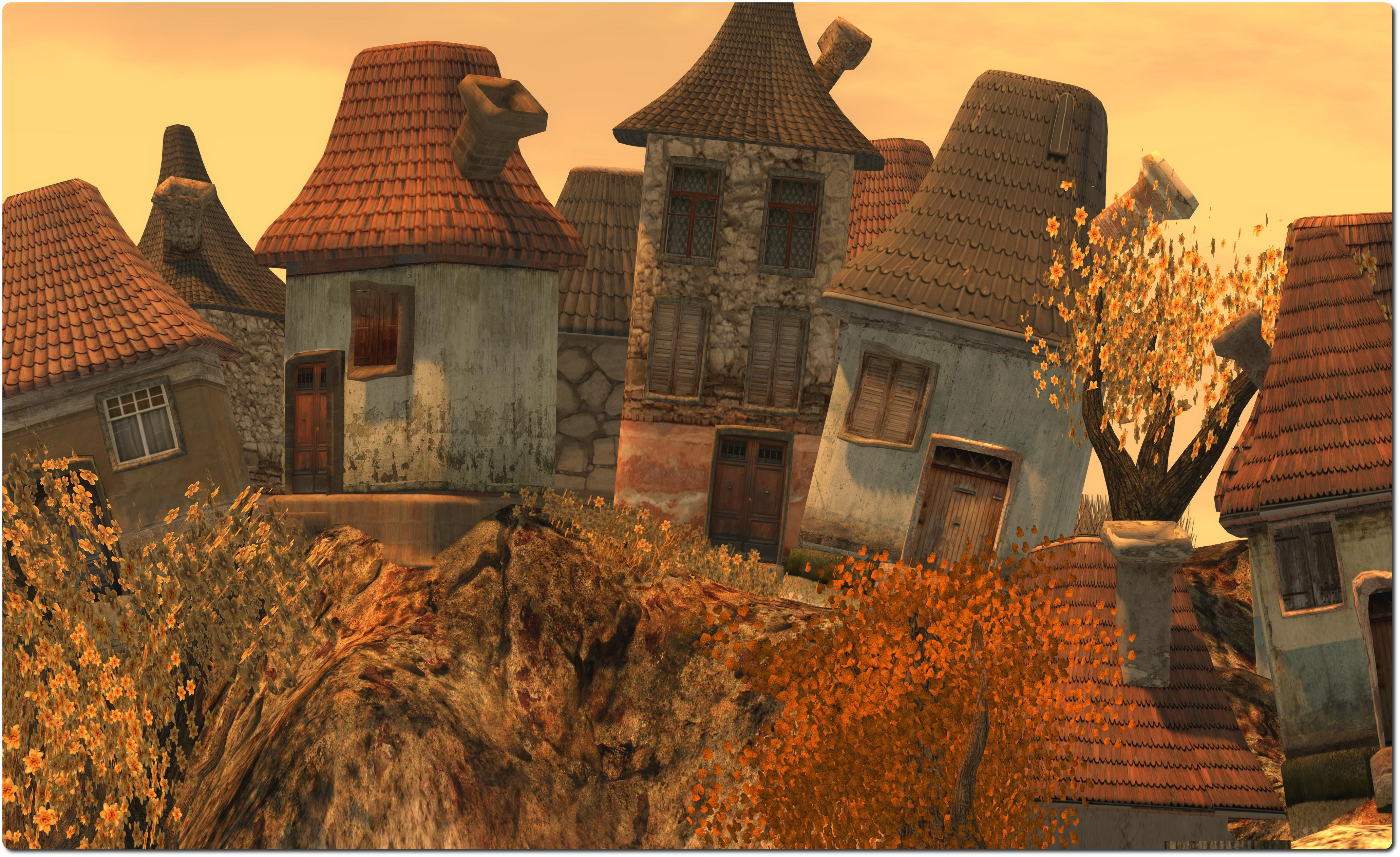
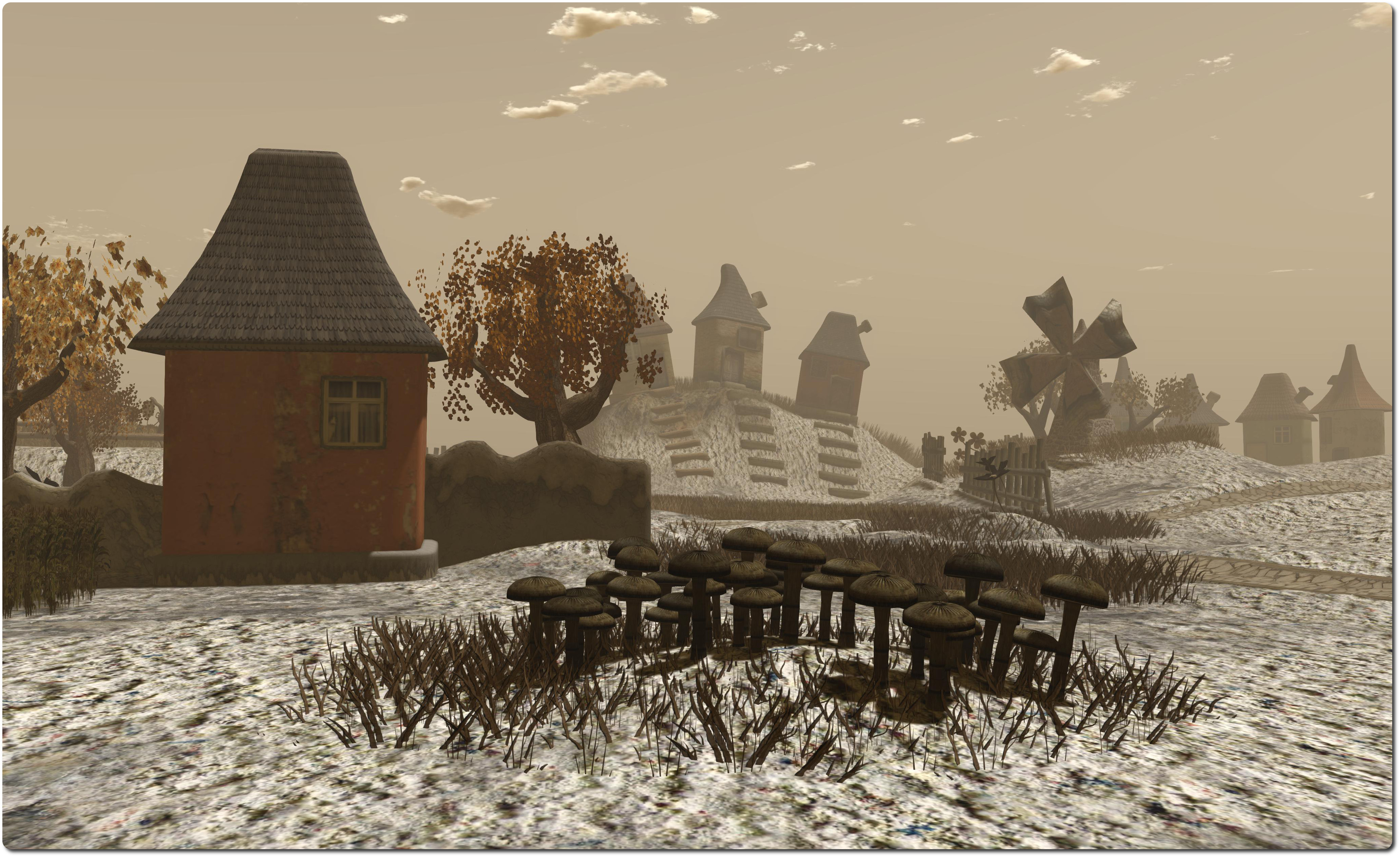
Anyway, anyone who enjoys Cica’s creations is going to love Little Village. “Delight” barely covers one’s reaction on seeing this marvellous collection of whimsical houses with wobbly chimneys, huddled together in little groups or standing alone, some on level ground, others precariously straddling little hills.
These are houses with character, their shapes seemingly lifted from a children’s cartoon and made real, each with its own unique character and colour (some could perhaps do with a lick of paint!), all of them vying for your attention; indeed, when camming over some of the little groups, it isn’t too hard to imagine them jostling one another for position, trying to catch your eye.
Between and around them are trees and plants, little footpaths running here and there – and nowhere in particular – while rickety fences dot the landscape. There’s a simple, glorious charm to the entire setting, one which belies the care and detail put into the work. Can you spot the cats in the windows, or find places to sit and watch the world go by?
I understand from talking to Ziki Questi that Erythro Asimov provided the region so that Cica could build her Little Village, so we him a vote of thanks for doing so, just as Cica deserves a word or two of thanks as well for once more sharing her whimsy with us.
But don’t just take my word for it, go see for yourself; you’re sure to find yourself smiling.
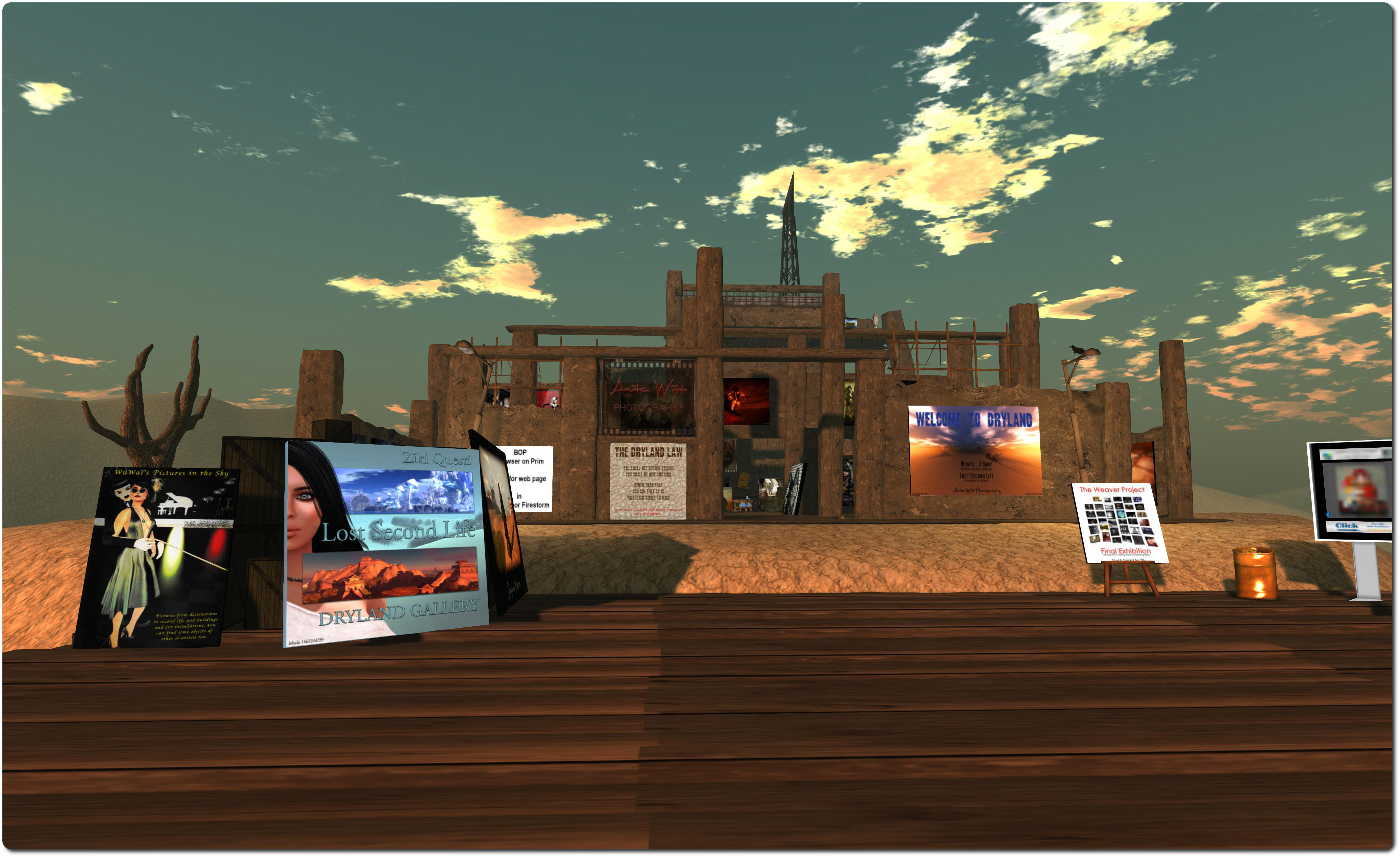
Dryland, Anita Wit’s full region art gallery, is to close.
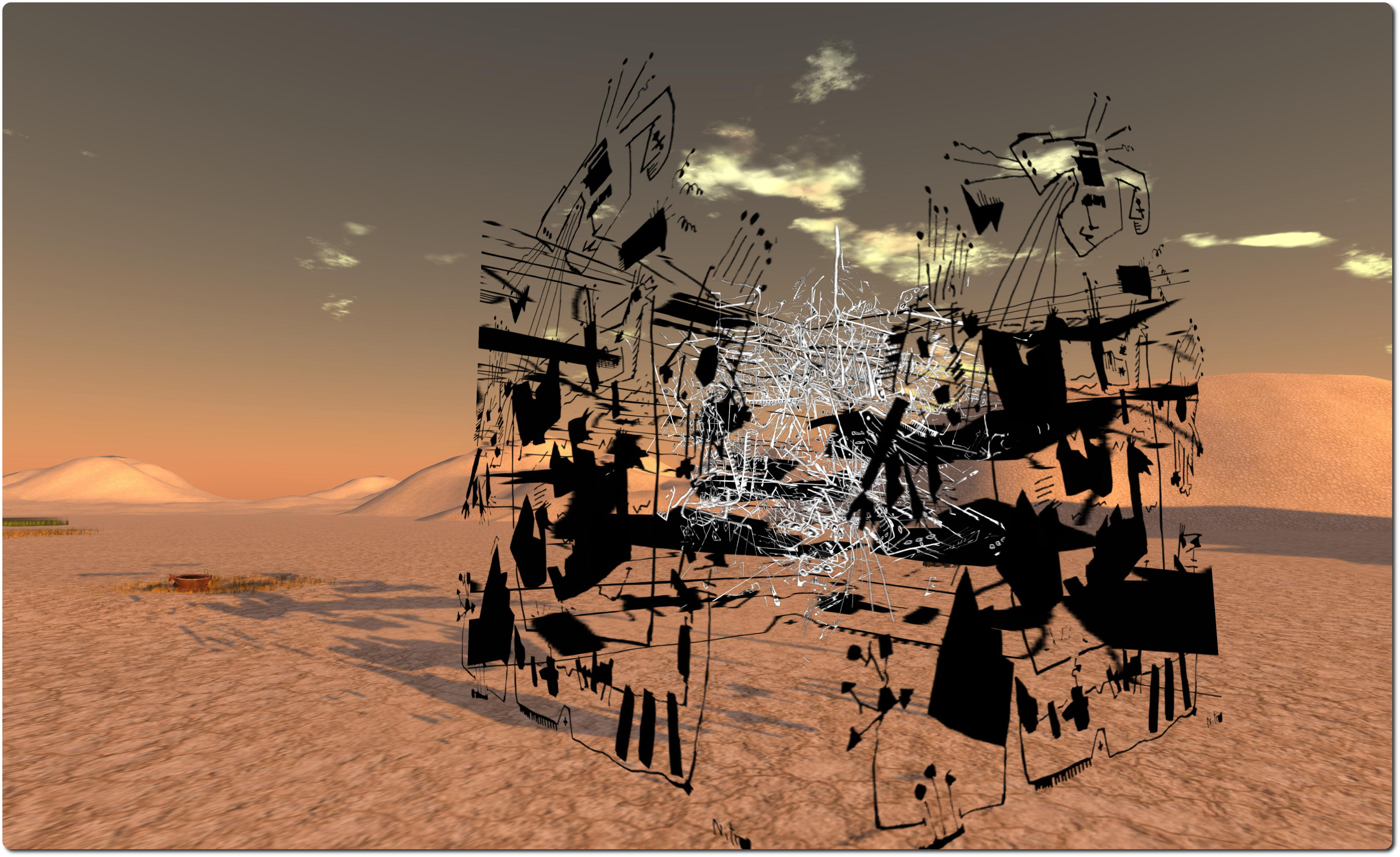
Over the years, Dryland has been the home to a range of remarkable and entertaining exhibitions, and has been a popular destination for photographers and machinima makers.
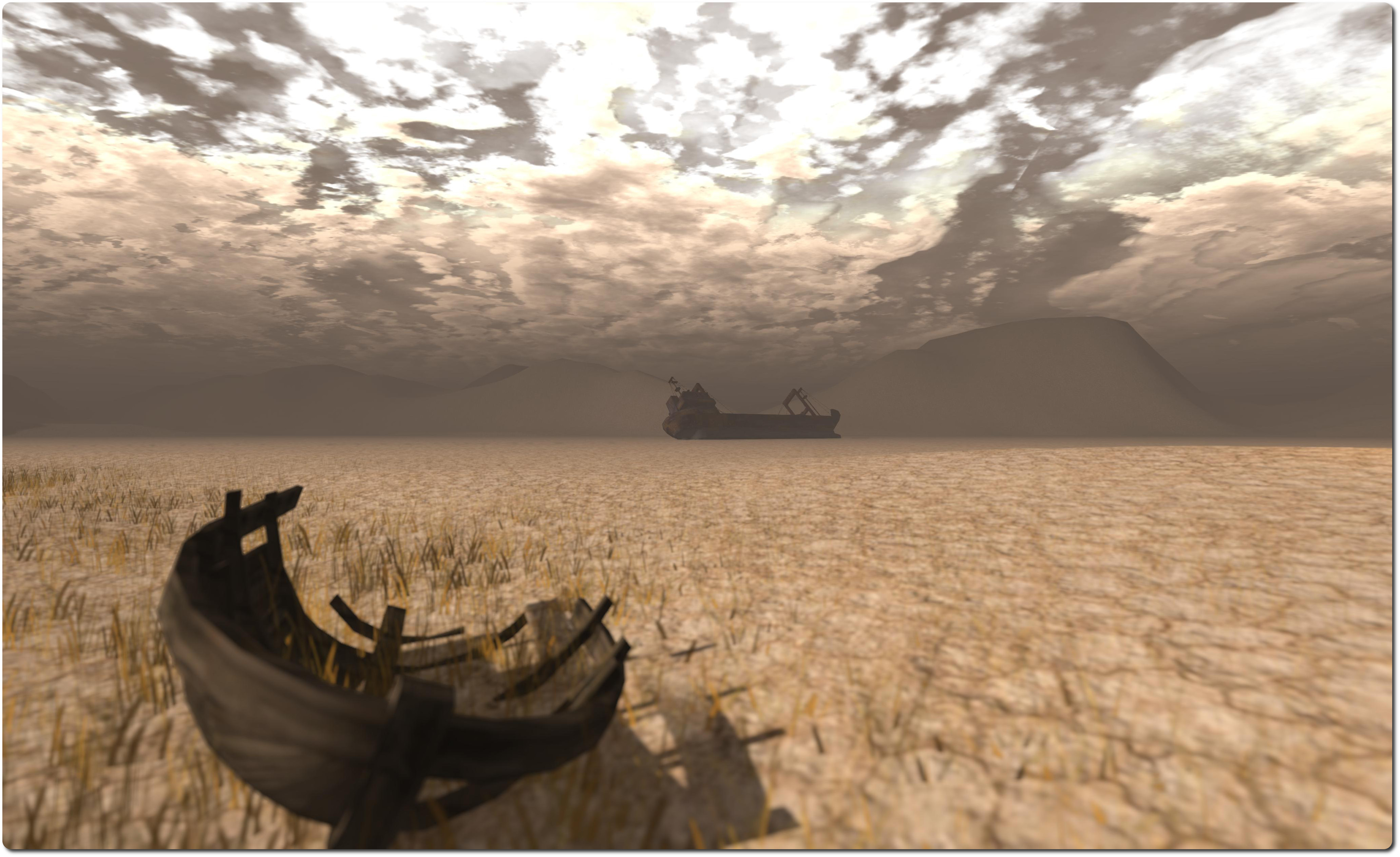
My own first visit to the region was relatively late in the day, December 2012, even so I was immediately struck by the desolate splendour of the place. My last visit was in November 2013, for Ziki Questi’s Lost Second Life, which is still on display in the rear part of the gallery.
Anita has given notice of the closure in a snapshot posted to her Flickr stream. In it, she explains her reasons for letting the region go, and passes on her thanks to all who have been involved in the region as artists exhibiting their work, as photographers and machinima makers, and as patrons and visitors.
There is no set date for the closure, although Anita is looking to the latter half of March, advising those wishing to avail themselves of Dryland:
I thought I’d give you all a fair warning in case you have photos or machinimas to make that requires a Dryland background, or if you’d just like to hang out one last time before it’s all gone.
I’d like to add my voice to all those who are passing on thanks to Anita for all of her work in developing the region and curating so many exhibitions there. Dryland will be missed.