Connecting with Plankton

Plankton
Plankton

In the late 1990s, I caught a series on Discovery (or possibly TLC before it got rebranded by Discovery UK), called Connections 2. It was the follow-up to a series originally made and broadcast by the BBC back in the ’70s or ’80s and called (oddly enough) Connections back in the ’70s or ’80s. In it, commentator, broadcaster and journalist James Burke demonstrated how various discoveries, scientific achievements, and historical world events were built from one another successively in an interconnected way to bring about particular aspects of modern technology.

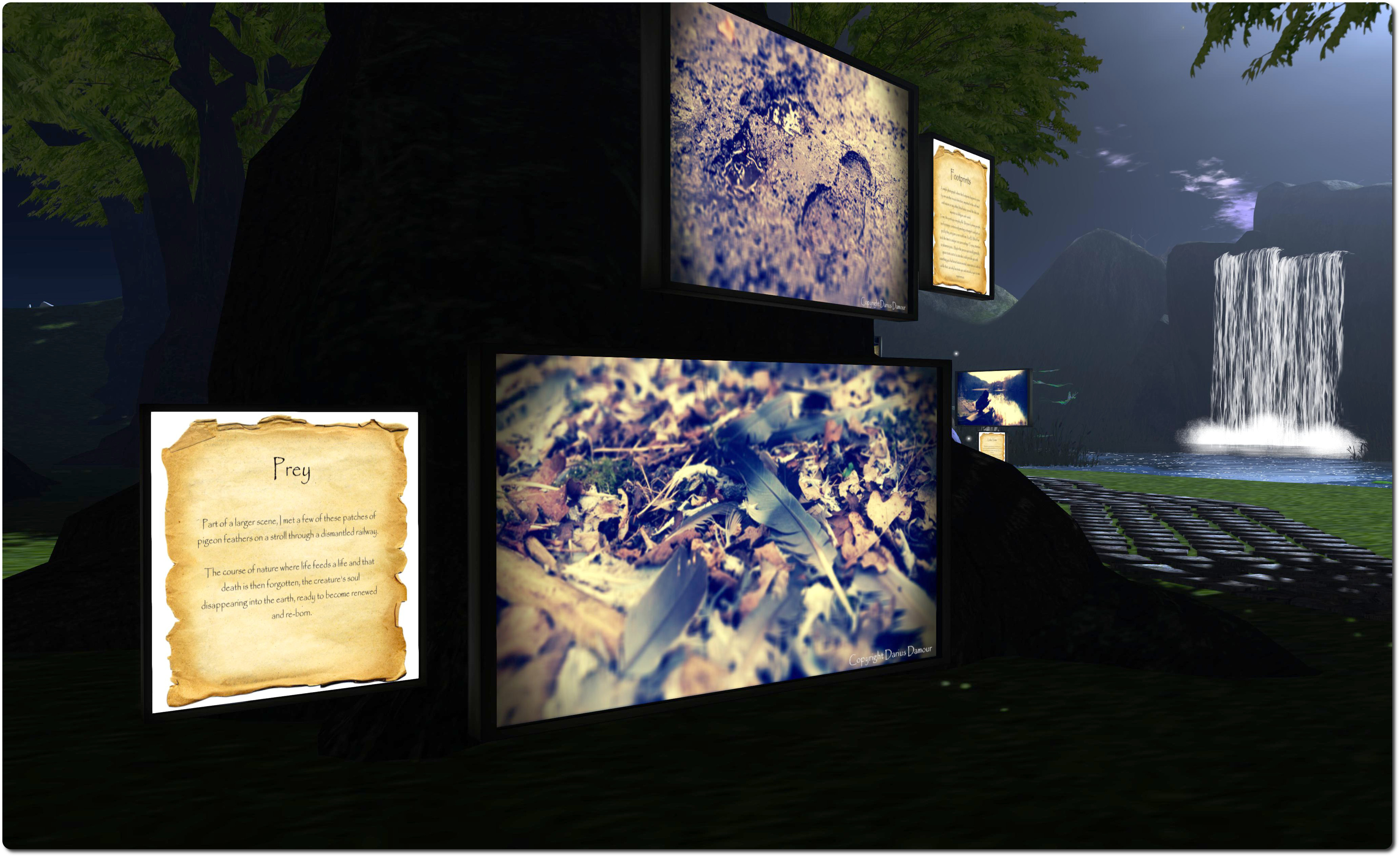
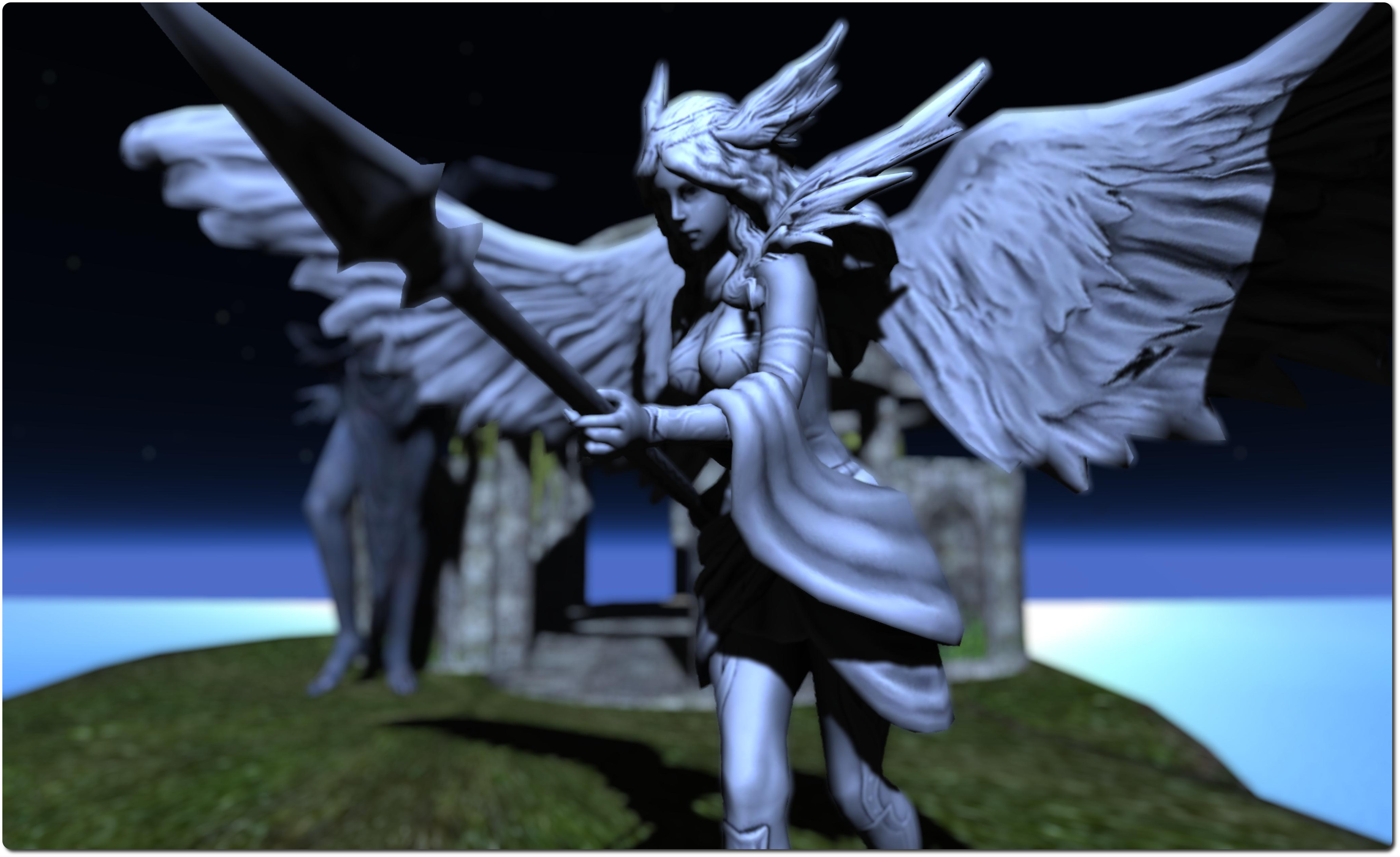
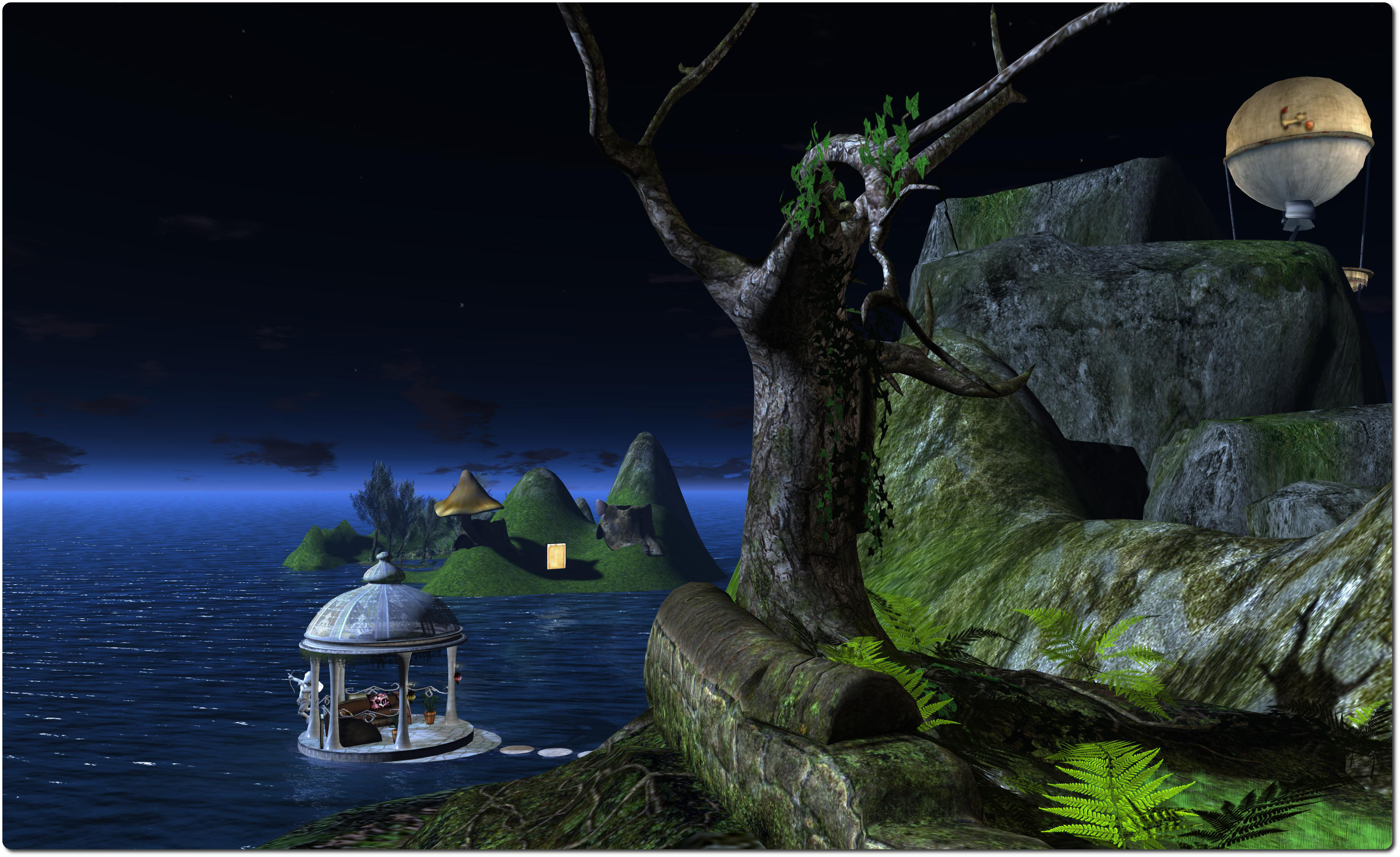
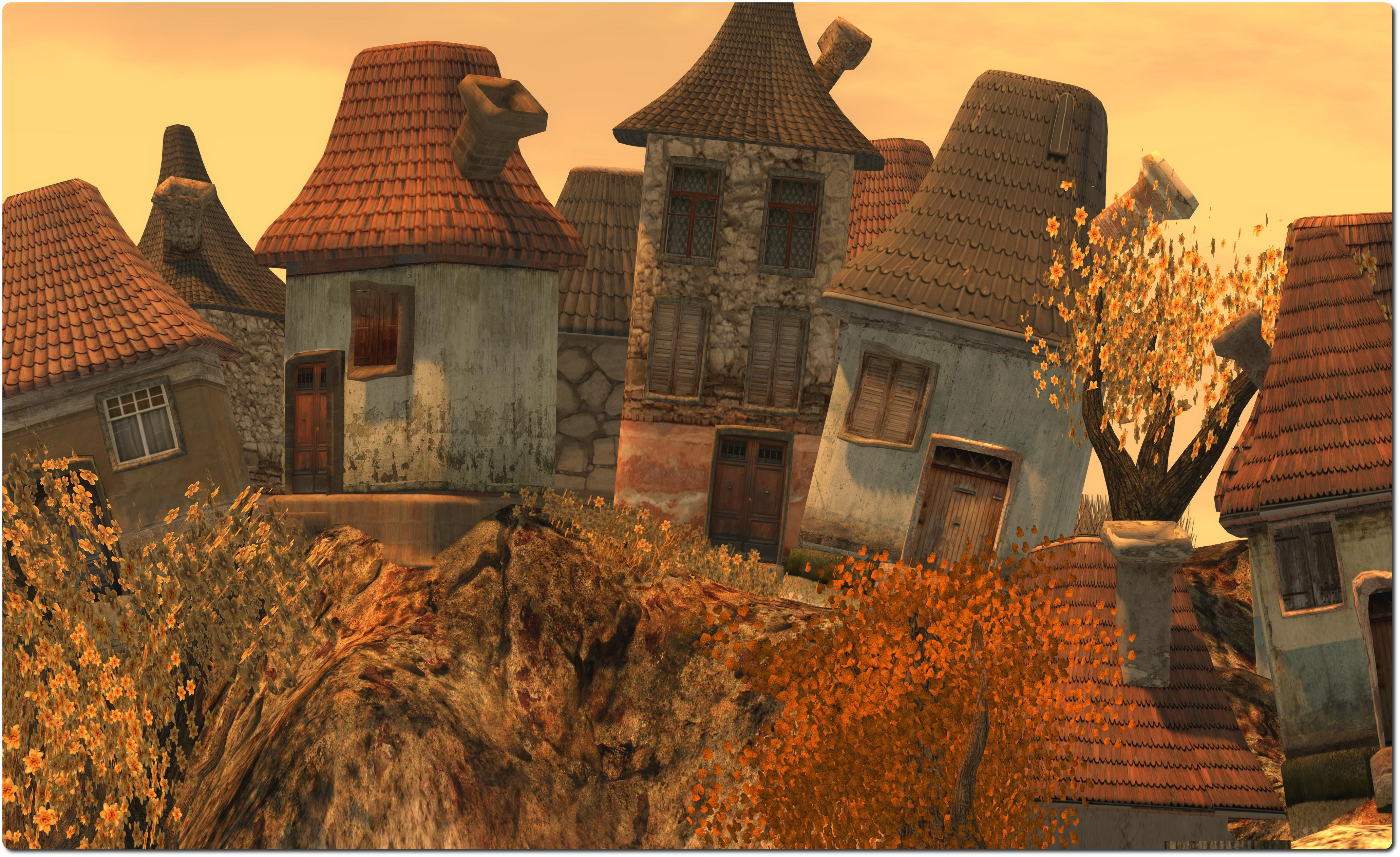
I bring this up because I was put in mind of how that series drew connections between people, events and so on to present a narrative on how we arrived at a modern aspect of technology and / or thinking, while touring Takni Miklos’ Plankton, which is open through until the end of December as a Part of the LEA’s Full Sim Art series.

Like the television series, Plankton is about making connections. There are very strong cultural / historical elements here, rooted in particular in astronomy, leading to something of a theme of continuity running through some elements of the installation which connect the past right through to our lives. But unlike the TV series, there is no actual narrative, per se; one is very much left to draw one’s own through the process of exploration.

Plankton
Plankton

The connections in Plankton take several forms and are as much about how we connect with the installation as they are with themes or ideas. There are a number of ways in which to move around: “taxi” teleporters, point-to-pint teleports, elevators, walkways – you can even use your “inner pig” (presented to you on arrival) to reach other avatars in the region, thus offering the means to connect with them.

All of this means that any two experiences within the installation and the connections made when travelling through it are likely to be same. How you proceed, the choices you make in your explorations, lead to discoveries and connections which are not necessarily linear; making this a complex and involved place to explore.

Plankton
Plankton

Aspects of the installation extend from the ground, up through multiple platforms and spheres reaching high up into the sky. Not all of them are linked to the cultural / astronomy theme, so may even appear frivolous or confusing. But it is worthwhile taking your time in exploring and moving around.

One thing you can be sure of is that this is a lively space, with almost everything within it interacting with the visitor in some way, either responding to direct touch or to the nearby presence of any avatar. Even the landscape at ground level is in places changing, where objects will freely interact with one another as well as to the presence of visitors.

In all, I’m not sure words really suffice in describing it – better you go and see for yourself!

Related Links

Plankton
Plankton

Fisicofollia: a futurist’s landscape reimagined

Giovanna Cerise’s latest installation, Fisicofollia, opened at LEA6 on Monday December 16th as part of the LEA’s Full Sim Art Series.

Fisicofollia takes as its springboard the Futurist movement,  and particularly the works of Filippo Tommaso Marinetti, Fortunato Depero, Giacomo Balla, and Enrico Prampolini.

Marinetti effectively founded the movement following the publication of The Founding and Manifesto of Futurism (1909), in which he declared,  “Art, in fact, can be nothing but violence, cruelty, and injustice.” Violence became one of the themes emphasised and glorified by the movement, alongside others such as speed, technology, and youth, together with objects such as the industrial city, the car and the aeroplane; indeed, almost anything that represented the technological triumph of humanity over nature.

FF-9_001
Fisicofollia – LEA6 until December 31st, 2013

Futurist were slow to develop a distinctive style in the early years, initially basing their works on Divisionism, the breaking light and colour down into a field of stippled dots and stripes, before adopting Cubism as they looked to find a more individual means of expression through their works.

In terms of paintings, many of the works by Futurists exhibited strong lines and often imbued a sense of velocity through a blurring of lines and form. These aspects are somewhat reflected in elements of this installation. One section in particular uses colour and blurring to great effect. Elsewhere, there is a more free-form interpretation of the movement’s works, which embraced not only paintings, but sculpture, architecture, fabrics and fashion.

Throughout the main part of the build is the figure of a man, constructed from blue-shaded pyramids or tetrahedrons. Of varying sizes, it appears to be leaning back, arms raised horizontally, and is found in various sizes and numbers across the installation. Many of these figures are regimented into lines, some even into ordered into ranks. The latter are especially evocative of the movement’s militaristic leanings, their ordered rows, identical poses and colours suggestive of soldiers on parade. Draw in close to these figures, and they seem to mix and merge into a stippling effect, again perhaps again echoing the influence Divisionism had on the Futurists.

FF-4_001
Fisicofollia – LEA6

Geometry is used to great effect throughout the piece. One section of the installation appears to be draped in mist; approach it, however, and one discovers the mist is in fact a series of closely spaced, translucent grids, forming a moiré pattern which breaks-up  the landscape and which shifts and changes as one’s eye (and camera) moves.

Patterns are also formed through the use of multiple parallel lines, spaced and placed to give the impression of stairways. Higher-up, in what is very much as three-dimensional design, these come together, Escher-like, to form eternal stairways leading nowhere, presenting a place where, to use Giovanna’s words, “lines, planes, shapes and colours combine, alluding to an invention related to childhood and madness.”

FF-3_001
Fisicofollia – LEA6

Along with the visual elements of the piece is an accompanying sound scape, and it is recommended that the visitor has sounds enabled when visiting in order to benefit from the auditory elements present in the installation.

As well as describing Fisicofollia as a free-form interpretation of the Futurist movement’s approach to art, Giovanna also refers to the piece as:

A multi-dimensional performance space, in which light and shadow, colour and movement are the protagonists. The scene expands to create a multiplicity of perspectives in a continuous emotional tension … The visitor can interact with the environment simply going through it, resulting in different visual impressions.

FF-10_001
Fisicofollia – LEA6

Fisicofollia is open through until the end of December 2013.

Related Links

2014: Step into the garden of good and evil with the Basilique Performing Arts Company

Paradise LostI recently wrote about of Romeo + Juliet, a unique re-imagining of Shakespeare’s tale of love, loss and tragedy, performed by the Basilique Performing Arts Company, and which features an inspired mix of  renaissance-inspired sets, 1940s costumes, and contemporary music.

While that production is set to continue until around mid-February, and is a must-see for anyone who hasn’t yet taken the opportunity to do so, the Company has now announced its next major – and equally ambitious –  undertaking.

In Spring 2014, the Basilique Performing Arts Company will be premiering Paradise Lost: The story of Adam and Eve’s original sin, choreographed and set to the fourteen movements of Mozart’s Requiem Mass in D minor.

Based on Milton’s epic blank verse poem, the production has been conceived and developed by the creative team of Canary Beck and Harvey Crabsticks. Each performance will run for some 60 minutes and comprise three Acts: The Creation, The Fall and The Expulsion. Through each, we will follow Satan, as he builds Hell, God as he creates the Garden of Eden, the Tree of Knowledge, Adam … and Eve; witness Satan’s beguiling of Eve, watch as she and Adam wilfully lust for one another in the face of God’s anger, only to be banished from the Garden of Eden; then finally, watch all that came after: the battle between  the forces of Good and Evil, and Adam and Eve’s lives after Eden. All have been specially choreographed, and each act will comprise a number movements from Mozart’s Requiem.

This promises to be a most amazing production, as demonstrated in the preview trailer – best watched full screen and in HD, if possible.

Paradise lost: The Story of Adam and Eve’s Original Sin will be staged at the Basilique Playhouse. All performances will be free, and the schedule will be announced in due course, and reported in these pages.

So get set for what is likely to be one of the highlights of the Second Life cultural calendar in 2014!

Asterion Coen at LEA28: at what price art?

Update, December 4th: Asterion took the time to contact me and explain some of this issues which impacted his installation at LEA28. I’ve therefore offered a follow-up to this article which includes his comments, which I encourage you to read.

The fifth round of the LEA’s Artist In Residence (AIR) programme is in its final two months, and will draw to a close on January 31st, 2014. Already applications are open for round 6, and in the meantime, we’re well into the minimum time frame those awarded a region under the programme must open it to public access.

Asterion Coen was one of those awarded the use of a full region under AIR 5, and his build can be found on LEA28. Quite what the intent is with it, and why it was considered an “outstanding” (to quote the LEA Committee’s statement on the quality of the proposals granted the use of a full region) is, frankly, baffling.

Asterion Coen, LEA28

There is no doubt that he is a gifted creator. His military vehicles, ships and submarines,  military and civilian aircraft, trains and so on, are all beautifully executed, very well detailed and often a tour de force of prim design and construction. You can find them on the Marketplace, ranging in price from around L$900 through to over L$5,000 – and until the end of January 2014, you can find a good proportion of variants of those commercial models sitting on LEA28.

Tanks, trucks, buses, trains and a Concorde (partially embedded in a wall), sit on a platform of building false fronts and from which a Star Wars space ship is taking off / landing and above which a B-52 bomber looms. Under the platform sits a dockyard where many of Asterion’s ship and submarine models are docked. Quite why they are here, or what the build is intended to represent is unclear. A brief entry in his profile Picks suggests that it is simply intended to show the power of the prim to create a wide range of vehicles when many have turned to mesh.

Asterion Coen, LEA28

As a concept, this isn’t an invalid idea for an installation; in many respects the prim is still the backbone of content creation in SL – and still the only means to actually build in-world. I’m just sadly unconvinced that this installation actually achieves such a goal. Perhaps more guidance was needed from someone within the LEA to help visualise the strengths and attractiveness which were hopefully present in the original proposal. As it is, what is on display comes across as less of an exhibit and more of a private sandbox. Given that the majority of models do appear to be from Asterion’s commercial range of offerings (although none of them are actually on sale in the build), it also comes over as something of an inadvertent window into his SL Marketplace store. Not that there is anything wrong with an artist selling their works; just that in this case, the cart seems to be well before the horse, so to speak.

Others may see things differently; for my part, and given there were some 30 applications for the 20 regions on offer, successive visits to LEA28 have left me wondering what might have been, had the aforementioned guidance perhaps have been given, or indeed what might have been had the region been awarded to another proposal.

Asterion Coen, LEA28

Related Links

The delight of finding a Sleepy Snail in Second Life

Sleepy Snail
Sleepy Snail

I’ve frequently commented on the fact that I find Rebeca Bashly’s work fascinating to see; the subjects she tackles can often challenge one’s perceptions and / or offer-up a visual interpretation of other mediums, such as with her fantastic realisation of Dante’s Inferno. I’ve covered a number of her pieces in SL, the most recent being Colour Key, and I’ve never failed to be completely drawn-in to her work.

She now has a new full sim installation at Per4mance Metales, which opened on December 10th, and which I’ve been itching to take a look at, but Things have been getting in the way – most through my own fault. So I’m getting to it a little later than hoped – but I’m glad it didn’t actually fall off my “to do” list.

Sleepy Snail is a complete departure from recent pieces by Rebeca, which is not to say it is any the less fascinating. What it may mean is unclear; I rather suspect it is more an expression of the artist’s sense of whimsy and fun than in having any deep-seated message or meaning; and as such, it is a visual delight.

Sleepy Snail
Sleepy Snail

Ten lattice-like platforms, both square and circular, float on the water, each bearing beautifully formed translucent leaves. From the middle of some of these platforms rise ornate pieces which have an almost filigree-like look to them and which support circular platforms overhead. Several of the platforms, both with and without the ornate structures, have the most beautiful snails apparently slowly making their way around the outer edges.

In the centre of all this sits the most gigantic snail you’ve likely ever seen in-world. At over 115 metres in height, it is simply enormous – and wonderfully eye-catching; a huge copy of the the smaller snails sitting on the platforms. Looking to have been constructed of gold – or perhaps bronze (or both) depending on your windlight settings – and glass, it sits in the middle of the region like a gigantic piece of a jeweller’s artistry. In fact, taken as a whole, the installation does feel as if one has fallen into the workshop of some huge master craftsman’s workshop and among his most prized works.

Sleepy Snail
Sleepy Snail

Inside the gigantic snail sits a further series of platforms, these somewhat more businesslike in design and linked by a series of spiral staircases, which lead the visitor all the way up to the topmost platform and a wonderful firefly like creation. More of the latter can be found elsewhere as well, hovering both inside the huge snail and out on the suspended platforms.

Like the jeweller’s handiwork, wonderful detail is evident everywhere – you just need to look. Having a little play with windlight settings helps bring some of the more delicate aspects of the piece gloriously to life. It doesn’t appear as if materials have been used in the designs, which is a little bit of a shame; I can’t help but feel they’d have added even more depth and beauty to the piece.

That is, however a very minor quibble. What Rebeca has created is breathtaking and delightful in its intricate simplicity (if you’ll forgive such a tangled reference) and quite amazing in its elegance. Oh, and when visiting, don’t miss the teleporter near the arrival point, it’ll take you up to a sky theatre where you can enjoy past art presentations and installations at Per4mance Metales.

Highly recommended.

Sleepy Snail
Sleepy Snail

Related Links

Sleep Snails SLurl (rated: Moderate)

Artemis Gallerie: of WAR and violence

Friday, December 6th, 2013 saw the opening of Nino Vichan’s latest work in SL, WAR: We Annihilate Remotely, which opened at Galerie Artemis on Friday December 6th.

Nino’s work is both creative and visually stunning, and he is an artist unafraid of tackling political and social issues, presenting clear-cut messages within evocative pieces that challenge one to think. At the same time, his immersive work can be simply amazing and enjoyed in its own right – as with When the Mind’s I Listens, a brilliant use of space and particle generation which was displayed at LEA6 earlier in 2013.

Nino Vichon's WAR: We Annihilate Remotely
Nino Vichan – WAR: We Annihilate Remotely

On the surface, WAR: We Annihilate Remotely appears to focus on what is a provocative and contentious issue:  the use of unmanned aerial vehicles (UAVs or drones) to undertake acts of aggression half a world away.

This is a topic worthy of debate and discussion; one which has many sides to it. Those who favour the use of UAVs and other unmanned weapons systems will point to both the fact that as they are operated remotely, they present zero risk to those operating them, and that they are so technologically advanced they can be used against a target aggressor with “minimal” risk to a wider (and potentially innocent) civilian population.

Nino Vichon's WAR: We Annihilate Remotely
Nino Vichan – WAR: We Annihilate Remotely

The flip side to this is of course, is the very fact that the use of such weapons platforms are so “risk free” and “surgically precise” perhaps encourages their proactive use. Something which is enhanced be the perception that they can be used to “manage” the loss of innocent lives down to “acceptable levels”. Even the fact that innocent lives can still be lost has itself been sanitised in the public consciousness  – they are no longer victims, they are “collateral damage”. In short, the very act of using such weapons becomes so clinical, so “clean”, that they risk becoming the preferred method of response to any situation, whether warranted or not.

There are wider aspects of the debate as well. Does the use of such systems enhance the security of those “back home” in the nation deploying them, or does it put them at greater risk of becoming retaliatory targets through acts of terror? As the use of use systems becomes more ingrained in the public consciousness, how long before the deployment of similar systems to deal with matters of domestic unrest or civil disobedience is seen as acceptable? There’s even the potential for cross-over discussion with virtual environments, where many excuse their own acts of aggression against others on the grounds that it is “only digital”, and “no real harm” is done.

Nino Vichon's WAR: We Annihilate Remotely
Nino Vichan – WAR: We Annihilate Remotely

Sadly, WAR: We Annihilate Remotely fails to address either its intended target or any potential wider issues. Indeed, I have to say that from my perspective, it fails to deliver much of anything at all. Even the note card on the subject matter of the installation may not be an obvious find for some visiting the piece (click on the image of Nino to receive it).

Yes, there are some impressive models on display, and there is a minimalistic approach to the use of colour (everything is predominantly red, white or black), coupled with a clever use of binary and circuitry as imagery. But at the same time I couldn’t help but feel the piece lacks any real statement, and is perhaps superficial in its presentation. And that’s a shame, because there really is much to explore, real and digital, in the intended subject matter.

Also at Galerie Artemis, and running through until mid-December, is a collaborative exhibition forming a part of the 2013 2Lei project, entitled Regaining Freedom.

Kicca Igaly: Free...Free at Last! a part of Regaining Freedom
Kicca Igaly: Free…Free at Last! a part of Regaining Freedom

Now in its fourth year, 2Lei began as a project involving artists, gallery owners, musicians, etc., with the aim of raise awareness and disseminate events related to the International Day for the Elimination of Violence against Women, November 25th.

In Regaining Freedom, which opened on November 19th and runs through until Sunday December 15th, presents eight pieces of machinima created by SL artists as commentary on the many and varied forms of violence against women, all of which surround a centrepiece sculpture  created by Kicca Igaly entitled Free…Free at last!

As this is a presentation of videos, you’ll need to have media streaming enabled; just click on any of the media-on-a-prim (MoaP) whiteboards to watch a film. Images of the participating artists are located alongside each whiteboard, all of which include a YouTube link to the video in question, allowing you to watch them via a web browser if you’d prefer.

Not all of the pieces are original; some were originally created for other purposes, although their message remains clear. Some many not actually play in your country – I found Gregory Kappler’s Out of Paris blocked as a result of Warner / Chappell music’s PEDL. Some are highly charged and all are visually impressive.

The participating artists are: Kicca Igaly, Noke Yuzita, LeMelonRouge Onyett, Mary Wickentower, Natascha Randt and Karima Hoisan, Yesikita Coppola, Mauro Enyo, Gregory Kappler, Elros Tuominen and Holala Alter.

Related Links