The poet and the Prince of Denmark in Second Life

La Maison d’Aneli – Nino Vichan: Hamlet 5 Scenes

Opening on Thursday, March 15th at La Maison d’Aneli, curated by Aneli Abeyante, are two new exhibitions by three well-known Second Life artists: one by Nino Vichan, and the second by Tutsy Navarathna and JadeYu Fang. They are two very different exhibitions, but they are drawn together through each of them having literary foundations. Both are reached via an initial arrival point, and can be reached via either the teleport disks or by clicking on the artist’s names on the main board (which will also deliver note cards). There’s also a direct drop down to one of the installations.

In Hamlet 5 Scenes, Nino Vichan presents his interpretation of five key scenes from Shakespeare’s Hamlet, Prince of Denmark. As Nino points out in his opening notes, we know of three versions of the play have survived through to modern times: the 1623 First Folio edition, considered to be the “definitive” version of the play; and the “First Quarto” (1603, aka “Hamlet Q1”) and “Second Quarto” (1604, aka “Hamlet Q2”).

La Maison d’Aneli – Nino Vichan: Hamlet 5 Scenes

The former of these two Quartos is now widely regarded as the “bad Quarto”, possibly written by an actor who participated in a production of Hamlet. While the Second Quarto is now regarded as an attempt by Shakespeare to published the “full” version of the play (it is some 1600 lines longer than the First Quarto) to set the record straight. In support of this, historian point to the title page of the Second Quarto stating that it is “Newly imprinted and enlarged to almost as much againe as it was, according to the true and perfect coppie.”

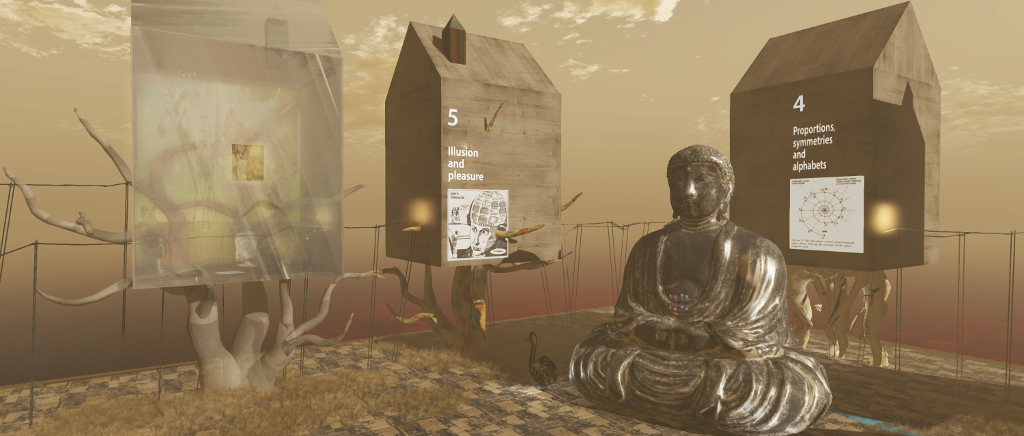
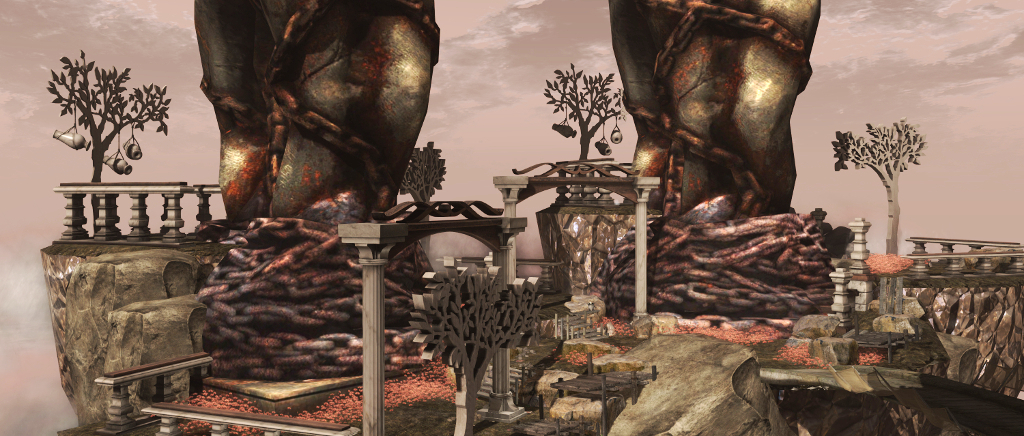
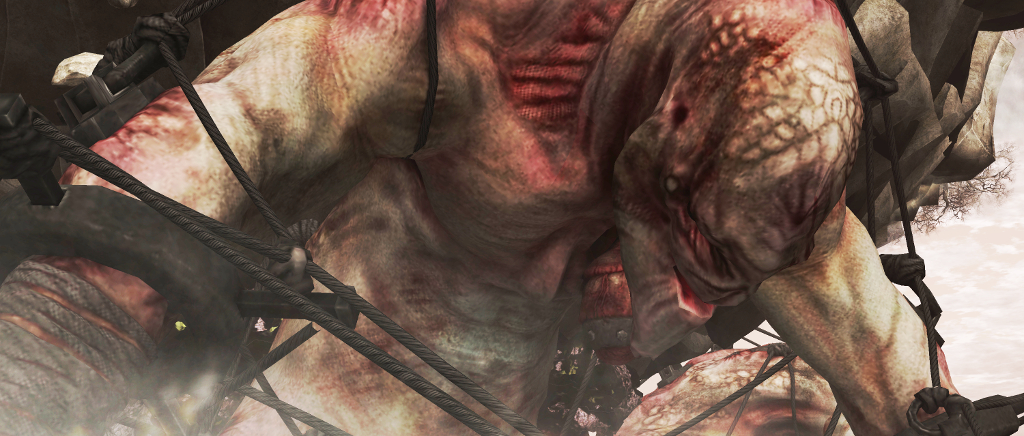
For his part, Nino takes these three versions as the leaping-off point for imaging Shakespeare within his study, struggling over the play, writing and revising it. For the purposes of the piece, we are Shakespeare, invited to take a seat – in turn – in each of the five chairs ranged around a central table. Each chair represents a specific element of the play, which we see through the playwright’s eyes, as it were, as he contemplates each.

La Maison d’Aneli – Nino Vichan: Hamlet 5 Scenes

For this to work. make sure your camera is not free-flying when sitting in a chair (hit ESC before sitting in each one). This will allow the act of sitting to take control of your camera and focus it on each scene. The chairs should be occupied in numerical order (each has a number visible on its upholstery), so that the scenes can be seen chronologically in reference to the play.

These scenes start with the sightings of the ghost of Hamlet’s father which set the events of the tragedy in motion, and conclude with Hamlet’s encounter with the skull of a jester he knew in his childhood (“Alas, poor Yorick. I knew him, Horatio: a fellow of infinite jest, of most excellent fancy; he hath borne me on his back a thousand times.” Between there sit the famous soliloquy, the murder of Polonius and the death of Ophelia. Modelled in 3D , using a mix of mesh and particles to achieve their effect, each offers unique view on the aspects of the play it represents, while the liner notes accompanying the installation offer further context, should it be needed.

La Maison d’Aneli: Tutsy Navarathna and JadeYu Fang – Bring Me Your love

For Bring Me Your Love, Tutsy and JadeYu present a tribute to the German-American poet, novelist, and short story writer Henry Charles Bukowski (born Heinrich Karl Bukowski; August 16th, 1920 – March 9th, 1994). The title of the installation is taken from Bukowski’s 1983 short story of the same name, illustrated by Robert Crumb.

This installation brings together images taken from around Second Life together with quotes from Bukowski and excerpts from his writing – poetry and stories. Blunt, at times aggressive in his use of language, Bukowski was forthright in his writings and views, and this is very much reflected in this installation, which is presented as a single piece – art and quotes making up walls and floors. To one side there is an area set aside for sitting and contemplation, complete with a  television set playing a loop of clips of television shows and films for the later decades of Bukoski’s life.  This area is also home to what might be regarded as the bric-a-brac of Bukowski’s life.

La Maison d’Aneli: Tutsy Navarathna and JadeYu Fang – Bring Me Your love

As noted above, these are two very different exhibitions, drawn together through each of them having a literary foundation. Each is individually fascinating, their core subject matter being very different, thus they make an ideal complimentary visit.

Slurl Details

Second Life through La Baroque’s Eyes

Club LA and Gallery – La Baroque

Currently open on the mezzanine floor of Club LA and Gallery, curated by Fuyuko ‘冬子’ Amano (Wintergeist), is an exhibition of art based on Second Life photographs, by artist La Baroque.

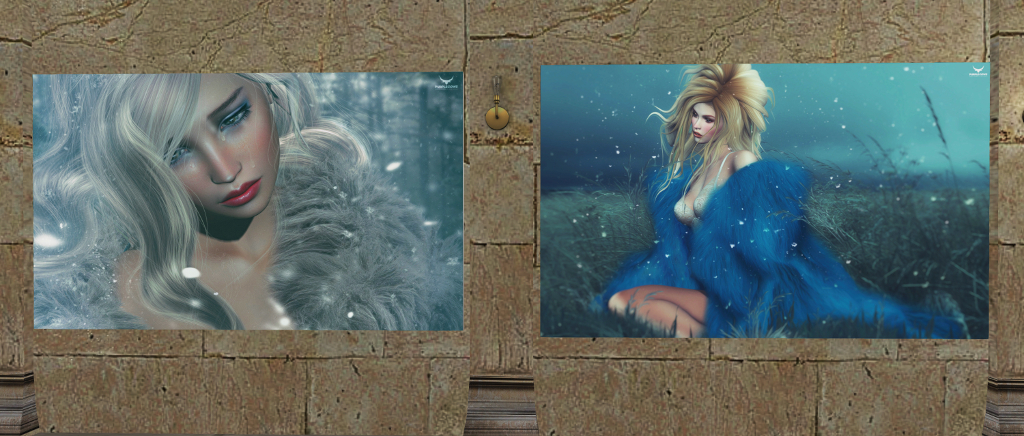
Hailing from Italy, La Baroque entered Second Life in August 2007. Already keenly interested in photography, she quickly found Second Life photography as engaging as that of the physical world. However, what makes her work particularly fascinating is not only the subject matter of her images, but the manner in which she uses post-processing techniques to make her images look – and feel – as much like paintings as possible, often with an other-worldly feel.

Club LA and Gallery – La Baroque

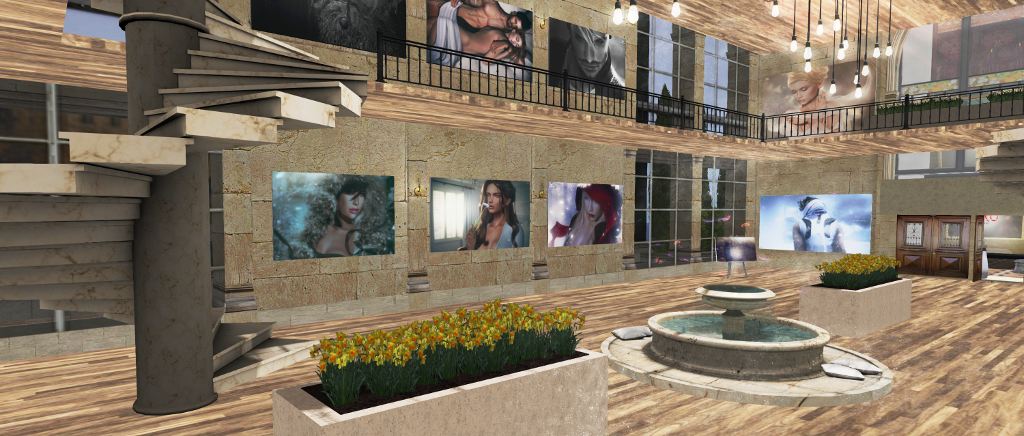
All of this is very much in evidence in the exhibition at Club LA and Gallery. Placed within a beach-like setting, complete with sand and camp fire, are nineteen pieces from La Baroque’s portfolio, all richly diverse in subject, framing, composition and finish. Some are suggestive of watercolour landscapes and settings, others suggest they are oil paintings, rich in colour and texture to the point where it’s easy to imagine reaching out and feeling the uneven surface of the paint on canvas. At least one – Chairs – offers a suggestion of the abstract, while that feeling of other-worldliness is also to be found throughout many of the pieces on display.

In terms of subject matter, the images offer very personal takes on Second Life landscapes, some of which might be familiar to Second Life travellers, such as Orcadi Island (which you can read about here) and Sarawak (which I wrote about here). Others are composed avatar studies offering a narrative flow – such as with Nothing on the Horizon and Breathe the Scent of the Sea, two pieces I found particularly strong in story within this series of narrative images.

Club LA and Gallery – La Baroque

Another piece I found particularly evocative – although singling out pieces within this selection really isn’t fair – is Memories of a Dragon, which is perhaps the most powerfully expressive of La Baroque’s ability to create an expression of a parallel world.

As well as producing 2D art, La Baroque also produces 3D art, but notes she doesn’t do it too often as she claims she is “much too lazy” and lacks the patience to build. Given the depth of creativity and care  shown within the pieces on display at Club LA and Gallery, I beg to differ with La Baroque’s assessment; she is far from “lazy” and her patience with the creative process is abundantly clear.

SL Details

Bryn’s Tilt-a-Whirl in Second Life

Bryn Oh: Tilt-a-Whirl

At the end of February 2018, Bryn Oh opened Tilt-aWhirl, the third in a series of single-scene poems  she has been putting together whilst also working on a new immersive installation to succeed Hand (reviewed here). It joins Lady Carmagnolle and 26 Tines (both of which I wrote about here) on a darkened Immersiva. However, in difference to the first two pieces, Tilt-a-Whirl has something of a personal foundation for Bryn.

“It is pretty much a nostalgic memory of being young at a fairground or carnival,” Bryn says of the piece – albeit it a carnival with fantasy overtones. Two rides form the piece, the titular tilt-a-whirl ride, with flashing lights and regular-looking cars, and a carousel with a quite unusual set of animals on which to ride: a dragon, ball-balancing unicorn, a butterfly, and a mechanical octopus, seahorse and horseshoe crab …

Bryn Oh: Tilt-a-Whirl

These are not a random selection of creatures for the ride, however. In her notes accompanying the piece, Bryn notes how some of the creatures have a personal link to her – notably the dragon and the octopus – a creature she’s clearly fascinated by, and with good reason.

There seems to be a further personal element contained within this piece, a reflection of another childhood memory revealed by the accompanying 3-stanza poem, which opens:

I dreamt of my youth
when I met a girl
and kissed her by the
Tilt-a-Whirl

Bryn Oh: Tilt-a-Whirl

Glance under the front of the Tilt-a-Whirl, and this memory is revealed through two figures – Flutter and Juniper – cautiously leaning towards one another, one shrouded by a blanket, hands reaching for one another, heads tilting. It’s a poignant moment caught in time; an echo of a childhood event made manifest once more through art and expression. Click on them, and you can view the video accompanying the scene, and which I’ve taken the liberty of embedding below (the video, and those for Lady Carmagnolle and 26 Tines can also be video by clicking the images on the floor of the arrival point).

Like Lady Carmagnolle and 26 Tines, Tilt-a-Whirl is haunting in theme, but it is also perhaps warmer in tone and feel. All three make for a striking visit.

SLurl Details

Nativo in Second Life

DaphneArts: Nativo

Nativo, featuring the art, words and voice of Italian physical world artist Stefano Mingione, and which has been open for that last month at DaphneArts, is the latest in a series of installations presenting a broad canvas of artistic expression which can combine multiple approaches into a single installation / expression of ideas which are intended to be viewed as a whole, rather than just as individual elements, be they drawing, sculptures or poems.

An artist working in a range of media – drawings, paintings, sculptures, digital media, written word – Mingione tends to identify himself more thematically, through his focus on the dualities present in life. Birth and death, happiness and despair, hope and fear, youth and age; and this is very much in evident in Nativo.

DaphneArts: Nativo

The exhibition space is split into two parts – although together they form a whole. The main exhibition area, where  visitors first arrive, forms a cylindrical hall in which eleven draws are displayed. Some appear to have religious connotations, offered through titles such as Santissima Trinità (Holy Trinity) or La Caduta dell’Angelo (The Fall of An Angel), or through their subject matter – as with  Padre Perché Io Disegno (Father Because I Draw).

However, religious overtones – entirely in keeping with the idea of duality in life, expressing both the earthly and spiritual – are only part of what these images have to offer.  Collectively, they provide an expression of thinking about left, death and all that lies between in a manner – to my eye at least – not that far removed from the art of Hieronymus Bosch, another artist who pondered (agonised over?) dualities through his work (and even through his patronage).

DaphneArts: Nativo

A single walkway extends back from this cylindrical room. It offers a way to where a grand sculpture of an old man, curled foetal-like, hangs in the air. It is a further embodiment of the theme of duality: the aged man appearing foetus-like in the darkness. Positioned before the sculpture is a chair and “play” symbol. Visitors are encouraged to sit in former and click on the latter – which will allow them to hear three of Mingione’s poems – Amico, Nativo and Vecchio – narrated by the artist himself in Italian, and presented with both text subtitles and a series of sculptures representing each one. These are very much the heart of the exhibit, richly evocative, and deserve special consideration which may require each to be listened to and watch more than once.

Interpretation of Nativo is deeply subjective. I found it by turns fascinating and also a little pretentious – and ultimately captivating.

SLurl Detail

DaphneArts (Isle of Seduction, rated: Adult)

Melusina’s minimalism in Second Life

DiXmiX Gallery: Melusina Parkin

Less is More is the title of an exhibition of Second Life photography by Melusina Parkin, featured at the basement Womb exhibition space at DiXmiX Gallery and which opened on February 20th, 2018.

As an aphorism, the phrase is most readily associated with the German-America architect, Ludwig Mies van der Rohe, regarded as one of the pioneers of 20th Century modernist architecture, although he appears to have lifted the expression from Robert Browning’s 1855 poem Andrea del Sarto  (also called The Faultless Painter). Van der Rohe used the term to define a form of architecture with a minimal structural framework that could suggest free-flowing open spaces, and which could explore the relationship between people, shelter, and nature.  Given Melu’s own unique approach to photography which very much encompasses the refined, minimalist use of structure balanced against the idea of natural,open space, the aphorism is an ideal title under which to exhibit some of her work. 

DiXmiX Gallery: Melusina Parkin

In all, 18 photographs are displayed in the Womb’s three halls – you can find it by entering the main DiXmiX gallery and making your way to the Black Gallery, where the entrance to the Womb resides. Primarily rendered in soft tones, all of the pieces perfectly exemplify the idea of minimal structure, both in terms of framing – most of the pictures carry an intentional off-centre focus – and in terms of content – the physical structures within the images are minimally presented against a broader backdrop suggestive of open space, whether offered by open water, cloudy sky or a blank wall. 

Also evident in these images, and in keeping with van der Rohe, is another of the architect’s adopted aphorisms: God is in the details. Yes, the over-arching aim of this type of photography is to present something that carries within in minimal structure and balances that structure against the use of space; however, this is something that just “happens”. It requires a measured eye and a flair for making what is actually a painstaking study of places and environments look so naturally easy.

DiXmiX Gallery: Melusina Parkin

Thus, while they might all look effortless in execution, considered study of each of them reveals the care and thought that went into bringing each of them to life. Even the way they have been paired within the three sets of images: views, interiors and bodies, should be considered; Melusina’s attention to detail is evident through this exhibition.So much so, in fact, that I couldn’t help but wonder if with some of the selected images, she’s not also offering a tip of the hat directly to van der Rohe. Looking at two of the images in Bodies (centre image of this article), I found myself thinking about his Farnsworth House design, and its original occupant, Dr. Edith Farnsworth.

Another excellent exhibition from one of my favourite artists in Second Life.

SLurl Details

The Art Garden Gallery in Second Life

Art Garden Gallery

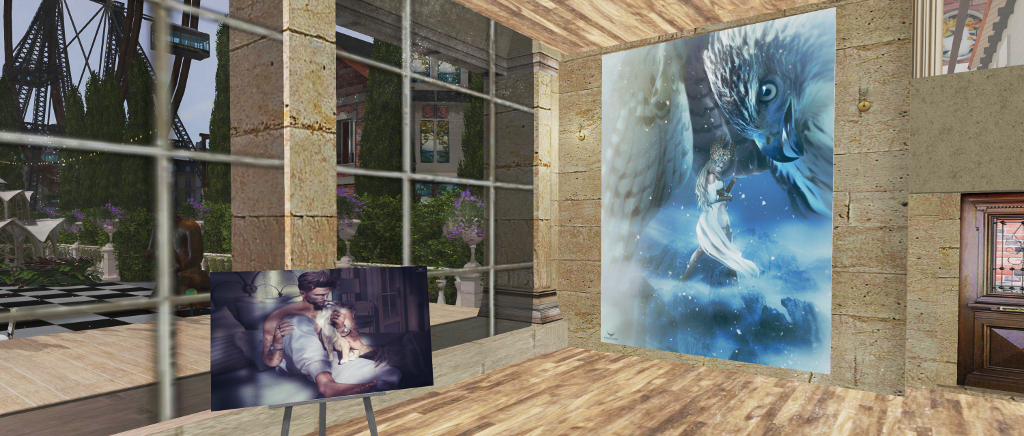
There are many galleries across Second Life. Some specialise in exhibiting photography and art created within Second Life; others focus on exhibiting the physical world work of artists who have come to Second Life for both social activities and as a means to reach a broader audience for their art. Indeed, such is the number of galleries, that reporting on all of them is a difficult task – but I enjoy hopping around SL looking for the smaller art spaces and discovering the work of artists between new to me and familiar.

One such gallery space, offering ensemble and mixed exhibits is the Art Garden Gallery operated by Fanny FooFoo Miklos (Sloane Cerise) and her partner Thorne Miklos. Located in the sky over the mainland, the gallery is – as its name suggests – presented as a garden environment; in this case a walled garden under a night-time sky.  The landing point is towards the centre of the garden space, with the art displayed on the outer stone walls.

Art Garden Gallery

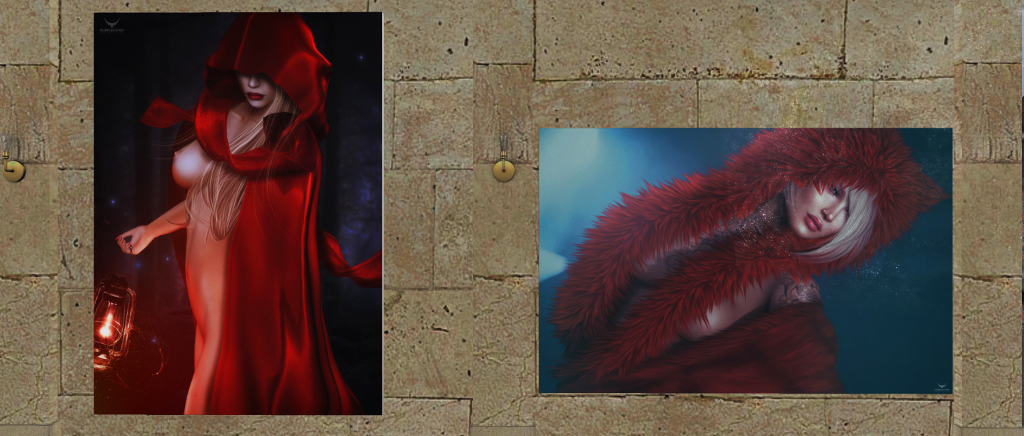
At the time of my visit, most of the art on display represented physical world pieces by a broad range of artists, including Kaly Iali, Persia Silverblade, Toysoldier Thor, SaraMarie Paul, Shmoo Snook, JudiLynn India, Asmita Duranjaya, Dulcis Taurig, to name a handful. Given such a broad cross-section of artists, it should come as no surprise the art itself was broad in terms of content, style and approach. Some offered studies of flowers, others present landscapes or representations of landscapes, and others are far more abstract in nature. Thus, the gallery offers an eclectic and attractive mix of art for the visitor’s enjoyment.

If I have a complaint at all, is the lack of artist information outside of plaques bearing the name of each piece and the artist’s name. Given that there are so many artists in Second Life, and the ease with which information givers can be set-up, it would be nice to see settings like this do a little more to help inform visitors about the artists behind the works on display; doing so can add further depth to an exhibition.

Art Garden Gallery

At the western end of the gallery space is the Miklos Centre, a smaller space for what appears to be more themed art displays. Again, at the time of my visit, this smaller, enclosed area was home to a display of art and poetry entitled Telephone Walkers. On offer are seven pieces of art and seven poems on the subject of telephone poles. Four of the pictures were produced within Second Life, with the remaining three – by photographer Nils Urqhart and artist David E. Weiner – are of physical world locations. All feature telephone pole – or overhead power lines – either as something of a focal point – as with Ziki Questi’s Bonne Chance 3 and Furillen 1, in orders they are part of the overall image framing, as with In Every Life by Wintergeist and Old Stone Wall by Nordica Torok, while for the rest the poles are almost incidental.

The poems offer a broad range of perspectives on telephone poles,  and combined with the seven images – the numbers are more for balance than any attempt at pairing of specific images with poems – poems and pictures back for a very effective exhibition. I admit to finding Telephone Walkers more engaging than the main gallery space exhibition, partly because it is more contained and focused (and includes work by artists I greatly admire), but also because the poetry draws the visitor into each of the pieces, offering each multiple narratives to be enjoyed.

Art Garden Gallery – Telephone Walkers

I’m not certain how frequently exhibitions change at the rt Garden Gallery, but for those who enjoy visits to smaller, more boutique style galleries which can offer ensemble exhibitions, I recommend a visit.

SLurl Details