Respect in Second Life

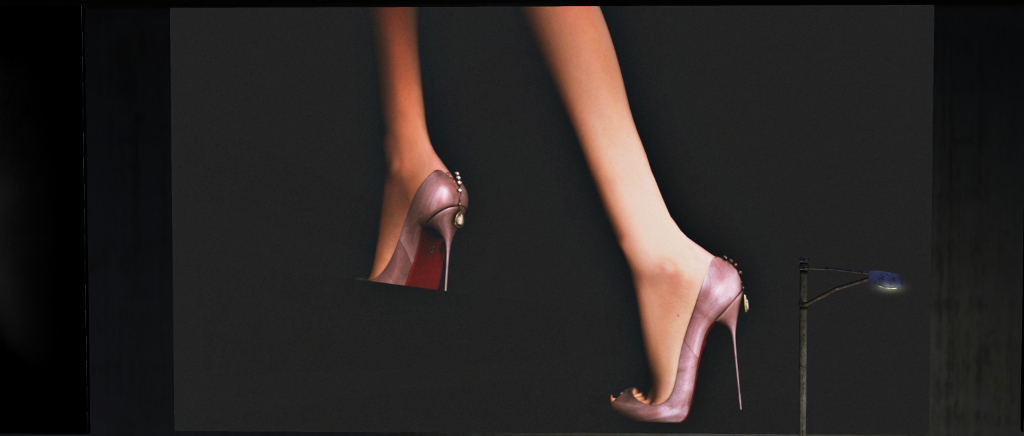
2Lei – Respect: Ciottolina Xue

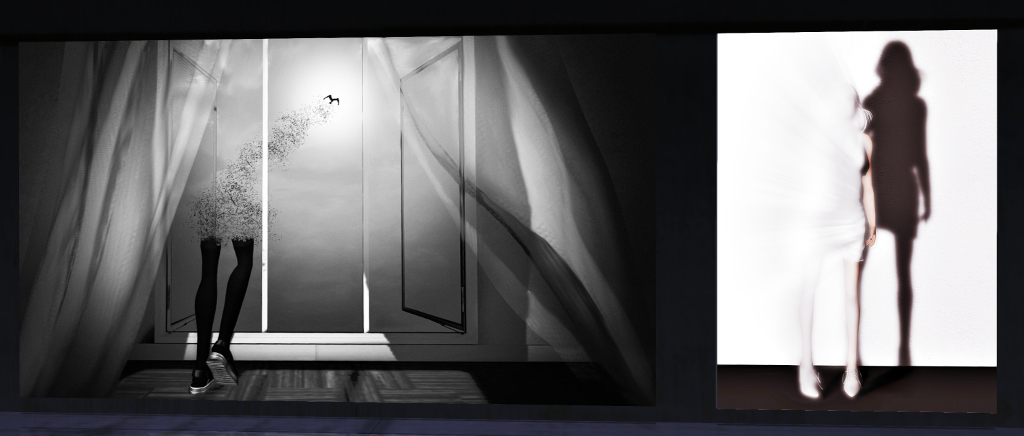
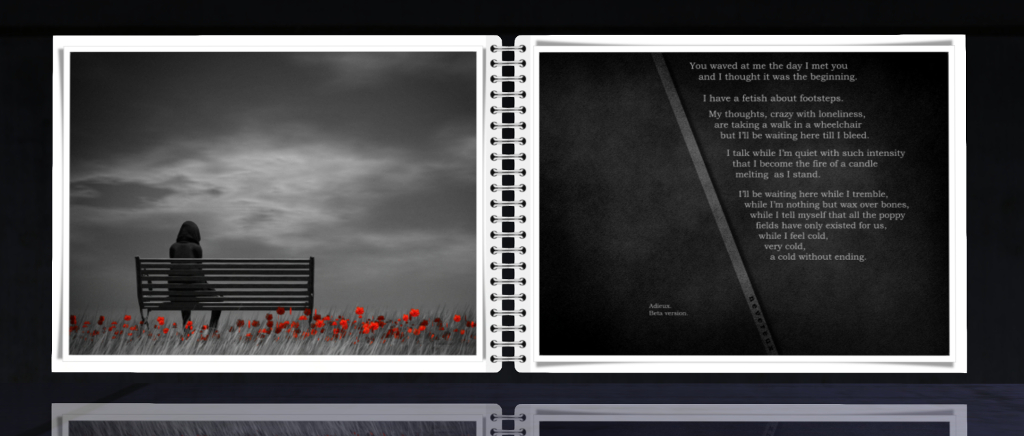
Respect is the title selected for the 2017 2LEI art recognition of the International Day for the Elimination of Violence Against Women, marked on November 25th. Open now through until the end of 2017, this is one of the most involved art installations I’ve visited in Second Life, presenting the work of some 71 visual and music artists either directly or in supporting roles, with no fewer than fifteen primary art display areas.

While marking International Day for the Elimination of Violence Against Women, the subject for the installation casts a wider net for Respect – including as it does respect for women, children, individuals, sexual orientation, race, self, and those around us. This makes for a very involved series of installations which requires time – possibly over more than one visit – to fully take in and appreciate. To help with this there is a range of events scheduled through the rest of the year, details of which can be found at the 2Lei blog.

2Lei – Respect: Nino Vichan

With so many displays and levels, coupled with the quality of art on display, a comprehensive review of the installation would be extremely long-winded; similarly, picking individual elements for consideration is equally difficult. What can be said is that there is a rich mix of individual focus on the broader topics noted above, some of which are deeply thought-provoking, others are visually impressive while other may appear to come at their subject from a slightly unexpected angle and one or two, frankly, might confuse or perhaps seem more a generalisation than a focus.

The ground level features the works of fifteen artists, with 2D and 3D pieces ranged around a watery setting under a bright sun, together with the landing point, presentation theatre and teleport boards for reaching the fourteen sky platforms for the installation. Artists on this level include Rebeca Bashly, Dido Haas, Mistero Hifeng, Desy Magic, Ciottolina Xue, to name just a few.

2Lei – Respect: Lagu Indigo and Stardove Spirit

The teleport kiosks provide access to 14 sky platforms, each one featuring the work of an individual arts or a collaborative team. These are – in order of ascent through the levels: Theda Tammas, JadeYu Fhang, Pale Illusion, Laug Indigo and Stardove Spirit, Aneli Abeyanti, Patrick Moya, Nino Vichan, Daco Monday, Black Label Exhibitions Corner, Nevereux, Pol Jarvinen, TerraMerhyem, Red Bikcin and Mona Byte.

Each level is of a fixed size, which the artists have been able to use as they choose, arranged so that visitors arrive on one platform (with teleport options for returning to the ground), move through the display area and out to a second teleport options for returning to the ground or continuing up to the next level. As with the ground level, there are small 2Lei boxes alongside the artist name boards which will offer a folder with the artist’s biography and – perhaps – an outline / description of the work they are displaying.

2Lei – Respect: Rebeca Bashly

As noted, there is a lot to see here – and I admit that in viewing the sky platforms, I was particularly drawn to Nino Vichan’s installation, and the Black Label Exhibitions Corner piece. The latter, largely focusing on GlitterPrincess Destiny’s images. This is perhaps the most involved, and shows a considerable amount of expression on the subjects in an environment that is semi-interactive, requires exploration and offers a lot to see.

In all, a thought-provoking series of exhibits, rich in interpretation and presentation.

SLurl Details

UWA Art of the Artists: machinima challenge – update

Poster by Eliza Wierwright

In July I was able to break the news that the University of Western Australia would be retaining a presence in Second Life, and that in recognition of this, was launching a special UWA machinima challenge, Art of the Artists, sponsored by LaPiscean Liberty of SLArtist and Singh Albatros and The Writers Centre, Singapore. On offer is a combined prize pool of L$350,000, including two special prizes.

The closing date from entries is December 31st, 2017, and videos for the competition are being hosted at the SLArtist website. Given there is just over a month to go before submissions close, I thought I’d take a look at some of the entries to date – with no personal preference implied – and run through a reminder of the main elements of the contest. However, as the SLArtist website utilises raw tags (which are considered a no-no by Automattic on WordPress.com hosted blogs), I’m embedding the videos as uploaded by the artists to YouTube.


Isabelle Cheren’s Before The World Was Made, featuring the work of artists Noke Yuitza, Otcoc Resident & Phillysmaybe Resident, Peli Dieterle, Igor Ballyhoo, and Rosie Dimanovic

In short, entrants may choose individual pieces of art or a collection around which to weave a story. However, the art must be a relatively significant part of the story, and not merely something glimpsed in passing, and films to be considered for any of the prizes must not be any longer than 8 minutes in duration (longer films can be submitted but will not be eligible for any of the prizes).

Selected art for a film may be filmed in its current location. however, films do not need to be restricted to these locations, as long as the art is the focus of the story being told. Entrants may contact artists about filming their works in other locations and / or collaborating with them on a film.


Joseph Nussbaum’s Alcyon and Ceyx featuring the artwork “A Virtual Wander in Two Dimensions and a Half” by ErikoLeo

The prizes run from L$75,000 for the first prize, through to five prizes of L$7,000 each for the films judged in 6th through 10th positions. In Addition, there are two special prizes:

  • L$50,000 UWA Art of the Artists Special Prize: this will be awarded by Jayjay Zifanwe on behalf of the University of Western Australia
  • L$50,000 The Merlion Special Prize: this will be awarded by Singh Albatros on behalf of The Writer’s Centre, Singapore to the film which – in the view of the judge –  best represents the The Merlion,  the national personification of Singapore.

The 10 main prize winners will be selected by a selected panel of judges. Details of the full panel will be available on the UWA website soon. Each of the special prize winners will be judged independently to the judging panel, and as such, may be eligible for a prize in the general classification as well.


Bryn Oh’s Cerulean featuring the artist’s own work “The Cerulean”

Art which can be used in films submitted to the Challenge can be found in the following locations:

  • The UWA Main Gallery – the primary exhibition space for art at UWA, including entrants to the most recent challenge, Transformations, which is expected to remain up at least through the end of this year.
  • The UWA Main region – this is the home of the iconic Winthrop Hall clock tower, Somerville outdoor cinema, the Moreton Bay Figs, and Sunken Garden. Some of the art from the UWA regions which will be closing will be relocated to platforms above this region. The relocation work is expected to be completed by the end of July 2017.
  • The Merlion – celebrating Singapore’s iconic Merlion sculpture, the full-sized version is hosted by the Monash University in Second Life. The smaller version at te UWA offers information on Merlion Portal Project concerning cultural, literary and artistic significance of the Merlion. It also provides a landmark to the full size installation.

Gerhard Helmut’s 3rd Eye Open. Artworks featured are “The Pineal Gland” by artist Ub Yifu, “He Holds Her Heart” by LunaEnigma – Luna Cobain, “Skeleton” by JointVenture Resident and “The Merlion” by Rebecca Bashly.

Additional Requirements:

  • Completed films should be uploaded, preferably YouTube or Vimeo, and a link to the film sent to  Jayjay Zifanwe and LaPiscean Liberty.
  • Entries should acknowledge all art featured and acknowledge / have the authorisation for any music used.
  • Rights to all films should be held by the creator, but by entering the challenge permission is given for films to be shown on the UWA Blog, the Slartist Website and to be played on UWA lands.
  • The ten winners of the general prizes will be adjudicated by a panel of 5 judges. The special prize winners will be selected by Jayjay Zifanwe (UWA Special Prize) and Singh Albatros (The Writer’s Centre prize).
  • If you have questions, want to discuss anything, or add to the prize pool,  please contact Jayjay Zifanwe.


Suzie Anderton (Inworld Films) Never Say Never, featuring the prize-winning installation by Sharni Azalee.

For full details on the contest, please refer to the original UWA blog post.


Art Project 3 at Blue Orange in Second Life

Blue Orange: Xirana Oximoxi

Currently on display at Blue Orange, the music and arts venue in Second Life curated by Ini (In Inaka), is Art Project 3, featuring work by Aicha-Tubal Amiot, Gitu Aura, Rebeca Bashly, Chibbchichi, Jadeyu Fhang, NicoleX Moonwall, Nevereux, Bryn Oh, Xirana Oximoxi, and Theda Tammas.

As I’ve mentioned in the past, part of the delight in visiting this particular venue is its subterranean look and feel, which offers something of a warren of spaces which take time to explore, and make the discovery of what lies within them more interesting. This exhibit is no exception, although my visit did leave me with a feeling the art spaces have been expanded, with everything turned around a little, making navigation this time around a little harder – the LM I regularly use delivered me within the club space itself, rather than out on the subway platform as used to be the case (there’s no official landing point).

Blue Orange: Gitu Aura and NicoleX Moonwall

The art on exhibition is split between four main areas. The first of these is the Art Corner hall just off of the club, featuring a sculpture by Rebeca Bashly, art by Ini herself, and Mindgames by Gitu Aura and NicoleX Moonwall, a display area above the club, featuring pieces by JadeYu Fhang. A hall leading off of this area leads to Alchemy by Nevereux, defined as, “a series of visual allegories meant to detract you from a physical plane and deliver you into mysticism via transformation and criticism.” Note there is a warning to those who are sensitive to flashing lights with this exhibition, but it only applies to the hallways leading to it.

The second Art Corner hall, accessed via the subway station platform outside of the club, features Waiting Box by Theda Tammas, while a further hallway from this again leads to a section of Alchemy. This shares the same warning for those with a sensitivity to flashing light, which again only applies to the entrance hall.

Blue Orange: Nevereux

Above the club is a further hall, this one featuring elements some may recognise as being from OpeRaAxiEty (see here). The final art display area is devoted to 2D art, and split between the hall connecting the club with the subway station platform, while art and drawings by Xirana Oximoxi can be found in a hall down the stairs running down from the hall featuring Rebeca’s art.

Such a broad mix of art makes highlighting individual elements that much more difficult, particularly given the calibre of the artists brought together here. As such, these are displays best enjoyed individually as you pass through the halls and hallways of Blue Orange. However, were I to pick one with a particular appeal, it would be Alchemy. There is a depth of interpretation to be found within it – which is not to in any way diminish any of the others; for example, it’s always a delight to see Bryn Oh’s 2D art.

Blue Orange: JadeYu Fhang

SLurl Details

Jes Mode at Artful Expressions in Second Life

Artful Expressions: Jes Mode

Now open at Artful Expressions, curated by Sorcha Tyles, is United States of Mind, the second solo exhibition of photography by Jes Mode (J3sus Mode). It features a total of eight studies, each focused on a specific state of mind / feeling / emotion.

Presented in muted tones, and a step away from Jes’ more usual use of black-and-white, these are considered, artful and provocative takes on their subject matter, using both Jes and his in-world partner and fellow artist, Cecilia Mode (Cecilia Nansen) as models.

Artful Expressions: Jes Mode

Each piece takes its title from the state of mind  / feeling being presented: apathy, breakdown, fear, hedonism, insomnia, nihilism, schizophrenia,  and vanity, and is accompanied by notes from the artist to give further expression to the piece.

For some of the art, the subject matter is presented in what may appear to be a relatively  straightforward manner: there is little doubting Schizophrenia, for example, with its figure bound within a straitjacket shaking his had so rapidly we literally see he is in two minds, while Breakdown offers a physical manifestation of collapse. Others are more nuanced in presentation, such as Hedonism, with not only its menage-a-tois, but also its more subtle hints at pleasure. Others appear to run slightly contrary to their title, or at least bind it with other outlooks / philosophical standpoints; Nihilism, for example, when taken with its accompanying text perhaps also suggests vanity and solipsism through the emphasis of self.

Artful Expressions: Jes Mode

Be this as it may, all deserve careful study, because they are perhaps more layered than may first appear to be the case – again, note the bottle of wine in Hedonism, the overall setting of Schizophrenia – the image itself perfectly positioned alongside of Fear, offering a visual as well as metaphysical link between the two subjects. Similarly, Apathy offers an evocative presentation in which not only are the two bodies positioned so as to suggest a lack of (sexual) interest in one another – or at least mutual passivity – the blurring of facial features speaks volumes suggestive of a total lack of interest / concern, each towards the other, adding further depth to the sense of apathy within their pose.

In short, these are all marvellous studies, skilfully executed representations of their subject matter, mirror reflections of their accompanying descriptions (consider Vanity and the quote Jes gives from Lou Reed, or the way Insomnia focuses the eye not on the figure, but on the shadow, echoing the idea of a copy of a copy, as quoted in Jes’ notes. All told, a captivating exhibition, and one which should not be missed.

SLurl Details

A Night to Remember in Second Life

A Night to Remember: first hall

Currently open through until the end of 2017, is A Night to Remember, created and curated by Emery Milneaux. Taking its name from the 1958 British film about the last night of RMS Titanic’s ill-fated 1912 maiden voyage across the Atlantic, it presents an interactive commemoration of that tragedy, one which originally appeared in Second Life as one of three immersive exhibitions presented at the opening of the Vordun Museum and Gallery in July 2016 (see here for more), and which has now been expanded somewhat.

The current exhibition is presented in a purpose-built museum space, complete with front entrance (the landing point) and ticket hall / lobby area sitting before the main exhibition space. This gives one the feeling of visiting an actual museum exhibition and adds depth to the installation. On passing over the threshold of the exhibition proper, on the far side of this foyer area, visitors will receive instructions on how to proceed through the halls via text chat, together with a boarding pass, which should be worn (default location: lower right of your screen). This bears the name of an actual passenger aboard the Titanic, with the promise that the fate of the passenger will be revealed further into the exhibition.

A Night to Remember: the Grand Staircase

The story of Titanic’s maiden – and last – voyage is told through a richly mixed medium of interactive elements (click a photo to focus your camera on it, for example; click the information plaque beside it to receive further information in chat), together with principal figures from the liner’s story: Commodore Edward John Smith, the Titanic’s Captain, socialite Madeleine Talmage Astor, first class passenger and survivor, Frederick Fleet, one of the vessel’s lookouts on the fateful night, and a young newspaper boy in London, Ned Parfett. Bump into any of these characters, and they will give a short “first hand” narrative.

The first hall, featuring the presence of Commodore Smith examines the ship’s design, construction, layout and launch, and offers reproductions of items related to the liner. Beyond this, visitors pass along a recreation of the ship’s first class promenade deck to reach a model of the ship’s famous Grand Staircase which linked the Boat Deck and E Deck, together with reproductions of a first class and a third class cabin – starkly outlining the massive class divide of Edwardian society.

A Night to Remember: the Titanic in miniature

However, it is the display prior to reaching the Grand Staircase and the cabins, together with the last hall within the exhibition which are the most poignant. The first of these is one of the expansions to the original exhibition, and commemorates the music of the Titanic and the eight members of the ship’s band. Wallace Hartley, John Law Hume, John Wesley Woodward, John Frederick Preston Clarke, and Percy Cornelius Taylor spend the voyage playing as a quintet, while Georges Alexandre Krins, Roger Marie Bricoux and William Theodore Ronald Brailey played separately as a trio up until the night of the disaster.

After the call had been given to abandon ship, all eight men – none of them White Star Lines employees, but contracted from the Liverpool firm of C.W. & F.N. Black, and so classified as passengers – famously played together in order to calm passengers after the call to abandon ship had been given, and remained aboard to perish in the freezing waters of the Atlantic. Within A Night to Remember, the pictures of all eight men are displayed, together with information on their musical repertoire – complete with a HUD-based sample of the music they played. Also included is a remarkable commemoration of their passing: a reproduction of Wallace Hartley’s violin – the original of which survives to this day, having been recovered from the Atlantic together with Mr. Hartley’s body, a few days after the sinking.

A Night to Remember: the Titanic’s eight musicians

The final hall of the exhibition, laying beyond Frederick Fleet’s recounting of his time as a look-out and displays concerning the ice conditions prevalent at the time Titanic went down and photos from the site of the wreck, contains three large plaques listing the names of every passenger and crew member who sailed with the ship. These are split between the three passenger classes, and sub-divided between those who perished and those who were saved. Through them, visitors can discover the fate of the passenger named on their boarding pass, adding something of a personal dimension to the exhibition.

When we first saw A Night to Remember in 2016, we found it to be a considered, well-presented commemoration of the tragedy, and on the technical level, an extremely well-presented installation.  Neither of these views has changed, although the section dealing with the eight musicians could perhaps be a little better served with some biographical data about them (or even a link to their pages at Encyclopaedia Titanica. This is still very much a poignant, informative installation, and the opportunity to re-visit it has been most welcome. Anyone interested in the Titanic’s loss or modern maritime history should be sure to pay it a visit before the end of the year.

A Night to Remember: lost and saved

SLurl Details

CioTTolina’s Dum Spiro Spero in Second Life

DaphneArts: Dum Spiro Spero

Now open at DaphneArts, the gallery spaces curated by Angelika Corral and Sheldon B, is an exhibition by Second Life sculptor and personal favourite, CioTTolina Xue, in which she presents a range of her work, some of which has appeared in previous exhibitions or in her store, and all of which share a theme of hope.

Dum Spiro Spero, “While I breathe, I hope”, is widely used as a motto by families, organisations, states, military organisations, and so on.  It is regarded as a paraphrase of ideas that survive in two ancient writers, Theocritus and Cicero through such works as Letters to Atticus. For  CioTTolina, it encapsulates her outlook on life.

DaphneArts: Dum Spiro Spero

“I try to create emotions,” CioTTolina says of her work, “And send a message: hope.
I’m still not good at what I do, but I put my heart into it. I hope that the love I put into things shows as what I might accomplish. This is the message that matters.”

Personally, I have always felt – and continue to feel – CioTTolina undersells herself. Her work has – and remains – full of beauty and meaning; as I said in reference to her exhibition at Solo Arte, Hope, “CioTToLiNa has clearly grown in confidence as an artist, producing ever more complex pieces which are not only beautiful and highly collectible, but also reflect her own interests / concerns for the world, and how we relate as a species one to another and the world around us.”

DaphneArts: Dum Spiro Spero

Indeed, Dum Spiro Spero is in many respects and expansion of Hope, richly demonstrating the breadth and depth of CioTTolina’s work and an ideal reflection of her ideals and outlook, with each of the seven display areas in the gallery space offering at least one of her pieces for viewing. Some may appear to be thematically linked one to another, expressing hope, love, joy, others may stand in contrast to one another. Taken together, the use of the spaces to display CioTTolina’s work is considered, allowing us to better study and appreciate the pieces offered in each.

If you haven’t seen CioTTolina’s sculptures before, I can recommend Dum Spiro Spero as an ideal means by which to gain familiarity with it.

SLurl Details