On Thursday, May 28th, Linden Lab announced that with immediate effect, Premium Members can now join up to 60 groups – raising the limit for them from the previous 42.
This increase is only, for now, a pilot programme, for reasons explained below. However, all things being equal, it will hopefully become a fixture of the Premium account package.
Today we’re thrilled to be rolling out another perk for Premium members: now you can be a member of 60 groups! Groups have been a consistently popular feature among the Residents of Second Life. It may not be obvious, but group membership can have an impact on the performance of a number of systems. That’s why in Second Life’s early days, Residents could only join a maximum of 10 groups. Over the years, we’ve made improvements that enabled us to raise the group limit to a maximum of 42, but we know that for some power users, even that isn’t quite enough, and today we’re happy to raise the bar for Premium subscribers. We must make sure that the recent gains in group performance are not jeopardized, so for now the new limit is a pilot program. If there are no problems, we will look forward to raising the limit further (stay tuned!).
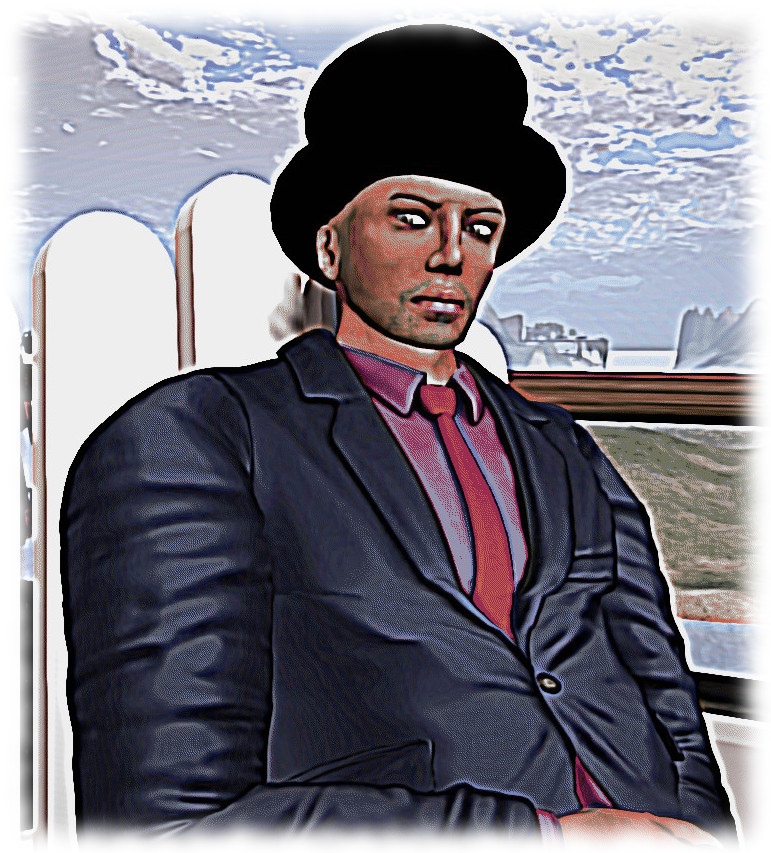
Simon Linden:his work on group chat has contributed directly to the announcement on group limits being raised for Premium members
The “gains in group performance” referred to in the quote above are related to the recent improvements made to the Group Chat service. These have been going on for almost a year now, spearheaded by Simon Linden, who has been working hard to bring about significant improvements to the entire group chat service, front-to-back.
One of the key aspects of these changes relates to how various “update” messages, created every time someone logged-in or out of SL, etc., and which required updates to be sent to every group of which they were a member, could actually interfere with the group chat system sending and displaying actually messages being members.
At the time Simon was working on these changes, it was indicated that the Lab might consider raising the limit on the number of groups people can join if the work proved successful – so kudos to Simon here for all his hard work – and kudos as well, to the Lab for approaching things cautiously, and recognising that should the new limit prove detrimental to the performance gains that have been achieved with group chat, they are prepared to roll them back.
There is also news in the post for those who take advantage of the increase in the group limit, and then subsequently opt to downgrade their membership to Basic:
Premium members can immediately take advantage of the new limit. Downgrading from Premium membership will not remove you from any of your groups, but it will mean that you cannot join any new groups until you remove yourself from enough groups to get below the Basic account limit, which remains at 42.
This is a further change to the Premium account package that sees things continue to pivot away from the idea of quarterly “gifts” and the like, and towards offering options and abilities that users are more likely to find of use and thus appreciate more. Again, as the official blog post states, expect further updates to the Premium account offering that continue to move in this direction.
Experience Keys are being used as a part of the new user experience – click for full size (note viewer UI is intentionally turned off)
update, April 2016: The Lab is apparently A/B testing the use of Experience Keys with task-oriented learning at a set the Social Islands. See my article on this for further details.
As a part of my periodic poking at things in Second Life, I recently logged-in using the avatar I keep “parked” at one of the Learning Islands which are the initial arrival points for new users, and noticed that the Lab has added Experience Keys capabilities to the first-time log-in experience for new users as part of continuing efforts to improve the experience new arrivals have when arriving in-world for the first time.
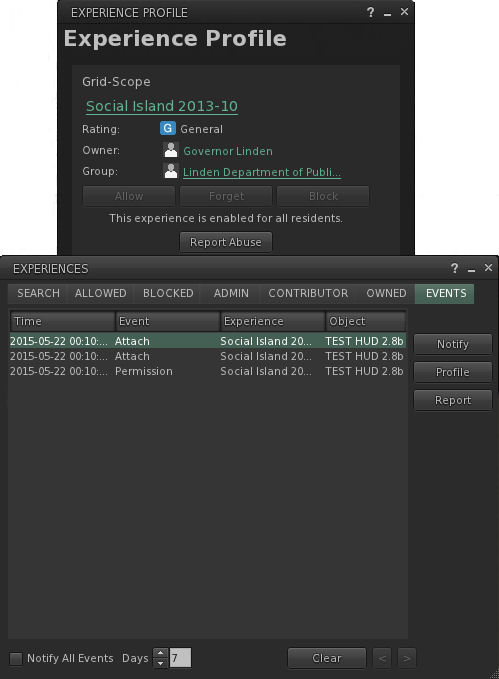
For those not already in the know, and keeping things to their briefest, Experience Key (also referred to as Experience Tools) are a relatively new (and at the time of writing, yet to be fully deployed) feature that allow users to opt-in to an “experience” – which could be a game, a tour, an educational activity, and so on – just once, rather than having to repeatedly grant specific permission each time something wants to act upon their avatar – such as a teleport offer, attaching an object, etc. This means that the experience can be enjoyed much more fluidly and without the distraction of multiple dialogue boxes constantly popping-up. when the user leaves the experience area, their status in the experience is saved (e.g. their progress and items collected), all permissions are revoked, and all attachments removed.
Experience Keys in use as a part of the New User Experience
Within the first-time log-in environment, Experience Keys are being used to help guide new users through the basic steps of using the viewer. The focus (at least at the time when i noticed the use of Experience Keys) is specifically on avatar movement. However, there is no reason why the approach couldn’t be expanded in the future to cover other aspects of viewer use, and other aspects of gaining familiarity with SL.
A key difference between the use of Experience Keys in the new user experience is that the HUD system is attached seamlessly when logging-in for the first time; there’s no initial pop-up dialogue box for the users to accept as they log in.
This is a good idea, as it avoids potential concern which might otherwise occur for a new user in having a potentially confusing / worrying dialogue box displayed as soon as they log-in, stating it wants to take control of this and that. Instead, the HUD attaches, and a couple of seconds later, the first pop-up displayed, providing a brief, basic overview of walking and turning.
In all, there are four pop-up hints given as the user progresses around Social island, each one appearing at an appropriate point in their travels. The hint on flying, for example, comes just ahead of the user reaching a broken bridge which should otherwise span a chasm.
The four pop-up helpers which appear as a part of the experience as the new user progresses around Learning Island – click for full size
The process stops when the user passes through the portal leading to one of the Social Islands, with the experience HUD detaching automatically as they do. Once at the latter, things become more of the familiar mix (to those of us familiar with the new user experience, at least!) of potential confusion, wandering and poking at things in order to work out what to do, even with the help from established users, who have for a while now been able to access the Social Islands (and some of whom can themselves be somewhat unhelpful, and do act as an illustration of the Lab’s misgivings on this area).
However, to stick with the use of Experience Keys, the current deployment is pretty basic, but it does offer a rough foundation on which more might be built. As such, I asked Peter Gray, the Lab’s Director of Global Communications about the use of the Experience Keys capability, and whether it might be extended within the new user experience.
“We’ve been using Experience Keys for some time with the new user experience,” Peter confirmed, before continuing, “We plan to continue to test and improve the new user experience, but at this time, we’re not able to share a pipeline for planned changes.”
The How To guide provide a range of information on movement, communications and other basic aspects of using the viewer – yet seems oddly overlooked; it is not opened by default on a first time log-in, nor are new users directed to it
How this might be done is a matter of speculation; Experience Keys certainly offer a raft of opportunities for easy learning activities along the lines of the old Orientation Islands of yesteryear, but with a potentially greater level of engagement and interaction.
As it is, the viewer does have a reasonably good introduction to the basics of using the viewer in the form of the How To guide (which has never seemed to really form a part of the various attempts to tweak the on-boarding process). It would be interesting to see the information this contains put to far better use, possibly as part and parcel of a more immersive, interactive means of guiding new users through the basics of the viewer utilising Experience Keys.
Getting to grips with the viewer is, of course, only one aspect of bringing new users into SL and getting them to stick – and it is one perhaps we focus on a little too much. The key to getting people to stay is to get them engaged in the platform – and that comes through positive interaction with others, preferably by helping them to find people within environments and activities which interest the incoming users.
This is perhaps a harder aspect of the problem to solve. However, as write Beau Hindman demonstrates in his recent video on the new user experience; there are options which might be considered. One in particular could be to direct incoming users more towards Experience Keys-led activities within SL, as more and more come on-stream, as it is likely these will tend to be something of a focus of established users as well, thus providing a potential mix of activity and interaction with others. It also fits with the Lab’s vision for on-boarding people in their Next Generation Platform.
As noted above, what is currently employed at the Leaning Islands is rudimentary; but it is also a start. Experience Keys will hopefully be fully deployed across the grid in the near future. Once that’s the case, it’ll also be interesting to see how the various mentor groups might leverage them to help new users as well.
Now into its second year, the Silicon Valley Virtual Reality (SVVR) Conference opened on Monday, May 18th. Among the presentations and panel discussions that marked the day’s events was a 20 minute piece by Linden Lab CEO Ebbe Altberg, intriguingly entitled The Future of VR is User Created.
Ebbe Altberg: address the 2015 SVVR audience on May 18th, 2015
The presentation can be found in this official SVVR video, starting at the 39:00 mark. It was also recorded by Ruthalas Menovich, whose video I have taken the liberty of embedding below. Timestamps in the summary that follows in this article refer to Ruthalas’ video.
Those who may have been hoping to gain more of an insight into the Lab’s Next Generation Platform (aka Project SANSAR) will perhaps be disappointed by this presentation. As the title suggests, it isn’t so much focused on the Lab’s NGP, but rather on user generated content (UGC).
Thus, it forms something of an exploration of the potential of UGC within VR environments, as seen through the focusing lens of Second Life, and what Second Life has taught the Lab about some of the potential constraints posed by both supporting UGC and Second Life itself, which the Lab are now seeking to address. In doing so, it also touches upon some of the broader challenges facing platform providers as well, particularly in areas such as the state of VR technology itself, issues of monetisation for users, etc.
I’ll likely have some comments of my own on SANSAR in an upcoming article. For now however, I’m restricting this piece to a summary of Mr. Altberg’s presentation, with timestamps to the relevant points in Ruthalas’ video for those wishing to listen to them in full.
00:31 – 02:28: Democratising Content
The premise here is that the power of VR will be in democratising content – making VR such that those who wish to can create and share content among friends and audiences; not just necessarily in having it fed to consumers by high-end organisations with considerable technical skills.
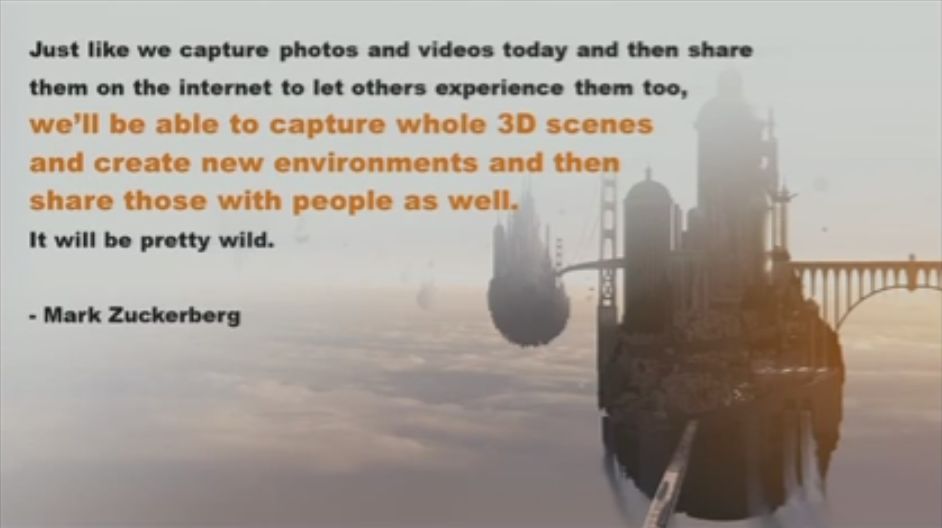
As a demonstration of this, he quotes Mark Zuckerberg, and points to the idea that just as self-expression is a natural part of our physical lives – how we decorate our homes, the clothes we wear, the interests we pursue – so too is it important for VR to allow us similar levels of self expression, such as through the freedom to create the environments we enjoy. In support of this view, he also points to the enormous popularity of sites on the Internet which today enable us to express ourselves through the content we crate, be it video, photography, the written word, or other mediums.
Mark Zuckerberg on VR’s potential, quoted by Ebbe Altberg at SVVR
02:28 – 14:30: UGC in Second Life and the challenges within SL
The focus moves on to Second Life and the challenges faced by anyone looking to enter the immersive VR environment with UGC.
Here he covers the rich diversity of user-generated content, which not only covers a huge range of interests and activities – social, educational, training, healthcare, business, entertainment, etc., and fulfils a massive variety of needs – homes, fashion, hobbies, landscaping, and so on -, but which is extraordinarily successful for both the company operating the platform and those providing the in-world content and services. In this he again cites the fact that in 2014, creators and providers redeemed some US $60 million from Second Life. The varying business models and their limitations – such as land – are mentioned.
The Lab’s work on making SL compatible with the Oculus Rift headset is touched upon, and a fair caveat is given on the aspect of performance. Ebbe notes that the work has to date really been more a useful tool for demonstrating to creators the difference between witnessing their creations on-screen and being immersed within them.
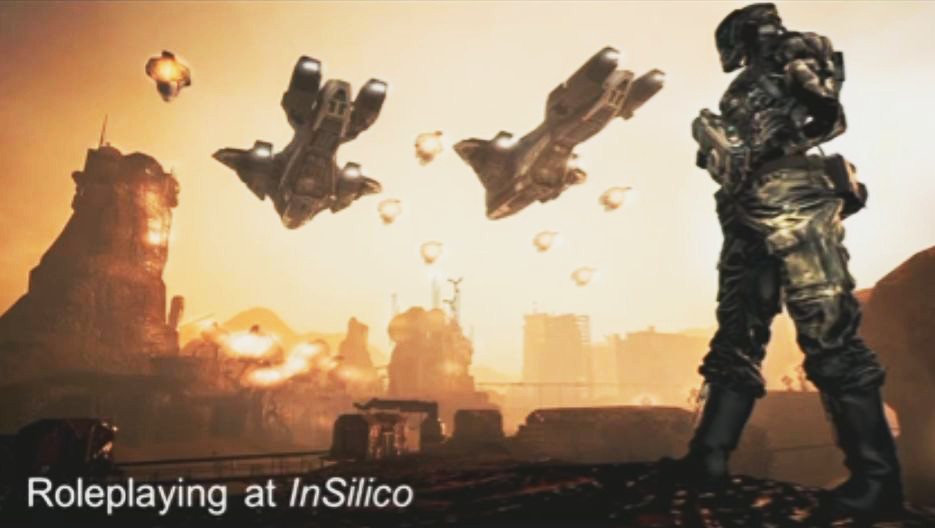
The InSilico RPG was mentioned to help illustrate the wide variety of SL UGC
The limiting factors of Second Life are also discussed. Again, the land revenue model and its limitations (including scalability) are mentioned, as are the limits of region concurrency numbers and the challenges of trying to hold really large-scale gatherings in-world. The fact that user-generated content can itself be a problem is also mentioned; that users don’t necessarily know how to properly optimise their content to be efficient in terms of rendering and running, so the Lab will need to find a way to optimise that content.
Broader challenges in presenting an environment which allows everything that Second Life already does are also touched upon – such as issues of compliance and control given what are collectively vary large amounts of money flowing through the platform (with a GDP of half a billion US $ a year) supported through a floating exchange used to convert real-world currency into game tokens and back again, in order to ensure money laundering, etc., isn’t an issue.
Ease of use is also touch upon; not just in terms of SL’s own notorious learning curve, but also in the fact that VR itself is still very much a fluid environment in terms of technology and the devices which might be used within it – controllers, headsets, peripherals, etc – It simply isn’t clear (outside of head mounted displayed themselves) as to exactly what will come into commonplace use and what, out of all that is being suggested, developed, trialled or hyped, will fall by the wayside.
There are probably very few of us active within the blogsphere, either as writers or readers, who are not aware of the brouhaha which boiled-up over the course of the last week in response to Hamlet Au’s take on a recent article published in Atlas Obscura.
Wagner James “Hamlet” Au: a biased stereotypical view of the SL outsider
The latter offers a broadly positive look at Second Life, and drew praise from many SL users, including myself. However, Mr. Au’s take on the matter was to largely dismiss the Atlas Obscura piece as a “distorted” piece of journalism because it didn’t delve into the more pornographic aspects of Second Life sufficiently enough to be to his liking. Understandably, his view drew a considerable amount of flak by those actively engaged with the platform.
As a consequence of this, Mr. Au was invited to participate in an interview on show #68 of The Drax Files Radio Hour, to discuss his point of view. What’s interesting about his original article and the subsequent Radio Hour podcast is the way in which Mr. Au appears content to perpetuate a number of misconceptions about Second Life.
The first of these misconceptions is that the Adult rating equates to a region having “pornographic” content – a wildly false proposition, as Honour McMillan has oft and correctly noted:
If you do have Adult content, it does not automatically mean it’s pornographic. Sex exists in Second Life. Fact. Having a popular Adult sim does not make it pornographic. That is also a fact.
The second fallacy evident in Mr. Au’s argument comes at the 14:27 mark in the Drax Files Interview, in his suggestion that anyone can be unwittingly re-directed to an Adult environment and encounter avatars engaged in sex – and thus, the world needs to be told this is the case.
Yet by default, the viewer is set to display / allow access only to material that is rated General or Moderate in nature. Therefore, the only way for anyone to access an Adult rated region under any circumstance whatsoever, would be because they took the conscious decision to set their viewer to access Adult material. And let’s be honest here; while all Adult rated regions may not be pornographic in nature, the label on the setting itself makes it fairly obvious as to the type of content one might encounter as a result of enabling it.
Therefore, it’s fair to say that Mr. Au’s presentation that anyone can somehow inadvertently finish-up in an Adult rated area and catch people in flagrante delicto, as a matter of pure happenstance and through no direct action of their own, borders on the nonsensical, and he does himself a disservice in presenting the matter in this way. True, you can happen into a private residence on regions other than Adult and witness adult activities – but again, they requires a pre-determine at of seeking green dots out on the Map and then trying to teleport to them – it is not a random event.
Contrary to belief in some quarters, one can only inadvertently wind-up at an Adult hub (or other Adult location in SL) if one has consciously decided to enable their viewer to access Adult content – the default is General and Moderate only
A further fallacy voiced is the idea that because the “main assumption” among people at large is that Second Life is all about “weird sex”, then articles providing insight into Second Life must include an exploration of that “weird sex”.
However, while many who have heard about SL do perhaps think of it as a place for “weird sex”, the huge volume and diversity of content, pursuits, interests, activities and events available in Second Life would suggest that it is in fact a misconception.
Misconceptions aren’t dealt with through reinforcement – which is essentially what Mr. Au is advocating. Rather, they are dealt with by presenting reasoned counterpoints which encourage those holding them to re-evaluate their position / attitude. This is precisely what the Atlas Obscura article does, intentionally or otherwise; while acknowledging there are sexual activities and content in SL, it seeks to offer a broader view of Second Life that doesn’t play to, or reinforce, the stereotypical view.
This isn’t in any way being “dishonest” or “misleading” as Mr. Au states – and again, he does himself a disservice by suggesting it is.
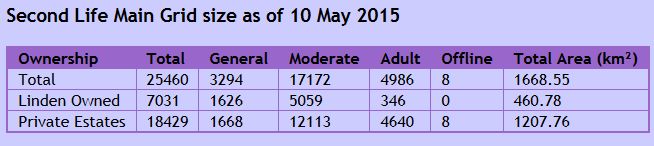
Tyche Shepherd’s Grid survey summary for May 10th, 2015, from which the figures below are taken
And just how prevalent is all this “weird sex” anyway? On May 10th, 2015, there were 7,031 Mainland regions in SL, of which 346 were rated Adult. Given these are all located on the Adult continent of Zindra, it’s not unreasonable to assume that the larger portion of them is devoted to sexual content to one degree or another. Even so, that still amounts to less than 5% of the total Mainland content; hardly a preponderance. When the grid as a whole is considered, the figures are 25,460 region, of which 4986 are rated adult – that’s just 19.6% – or to put it in Mr. Au’s parlance: “less than one-fifth”.
And (again) leave us not forget Honour McMillan’s sage words quoted above. Therefore, the actual number of pornographic regions accessible to those who have chosen to view adult content is liable to be somewhat lower than that “one-fifth”.
So where, really, does all this leave us?
The bottom line is actually pretty straightforward: yes, there is a fair degree of sexual content and activity in Second Life. Just as there is on the Internet as a whole and in the physical world. However, the degree to which anyone coming into Second Life might be exposed to it is really hard to judge; unlike a wander through the streets of San Francisco (a parallel Mr. Au draws), where it is possible to accidentally and unwittingly stumble upon the seedier side of life, the degree to which one chooses to be exposed to the more sexual side of Second Life can be controlled, greatly reducing the risk of any accidental or unwanted exposure to it.
This being the case, the suggestion that an article such as Eric Grundhauser’s piece in Atlas Obscura is either “distorted” in its presentation of Second Life or somehow “misleading” simply because it doesn’t delve into the sexual side of SL or play to the stereotype that SL is “all about the sex”, is itself a skewed perspective on Second Life.
With due respect to Hamlet Au, the approach he advocates is not good journalistic practice – but it could easily be interpreted as encouraging continued salacious titillation.
However, the venue for the next meet-up has now been confirmed. Scheduled to take place from 13:00 on Thursday, May 14th, the gathering will take place at Canary Becks’ outstanding Basilique Town.
For those who have not visited Basilique before, you’re in for a treat. Frequently featured in blogs as a place of outstanding beauty and design. There’s a host of things to see and do here, and the region hosts events of its own and is, of course, the home of the Basilique Performing Arts Company, who has staged the outstanding Romeo + Juliet and ground-breaking Paradise Lost at the threatre occupying the south-east corner of the region.
With its mix of architecture, outlining islands and backdrop of rugged peaks, Basilique presents a wonderful Mediterranean look which blends a cosmopolitan feel with more coastal, rural look which simply invites exploration.
So, even if you don’t make the Linden meet-up, and have not visited Basilique Town before, make sure you add it to your itinerary!
Join Hands: raising money to help the WFP’s aid work in earthquake-struck Nepal with Fashion for Food
Valsnia and Ruby Ornamental, two Second Life residents and bloggers, have recently formed Join Hands, a virtual group they would like to see “make a difference to the real world we live in. Not dedicated to a single mission but the spirit of Humanity.” As the inaugural activity for Join Hands, they are organising a four-day fund-raiser in support of the people of Nepal following the devastating earthquake of April 25th.
Fashion for Food SL is aimed at raising money which can be put towards the UN’s World Food Programme (WFP), which is focusing its efforts on bringing assistance and relief to the outlying regions of Nepal, allowing the government there to co-ordinate efforts along the Kathmandu Valley. The WFP estimating US $116.5 million is required to provide food for 1.4 million people for a period of three months – that’s US $27 per person per month.
Fashion for Food will showcase items from top SL designers in a special fashion show on Wednesday, May 13th
Measuring a peak moment magnitude (Mw) of 7.8Mw , with an epicentre one the the village of Barpak in the Gorkha district of the country, the initial earthquake was followed by a series of aftershocks, some almost as powerful as the original ‘quake, which are still continuing.
The result is a disaster which has left over 8,000 dead and 18,000 serious injured at the time of writing, and around 3.5 million people in need of food, water and assistance, including 1.7 million children in need of medical support. Aid agencies around the world have rallied to the call, but there is mounting concern over providing care and assistance with the fast approaching monsoon season, and the real risk of epidemics among survivors due to the shortage of clean water, the makeshift nature of living conditions and the lack of toilets.
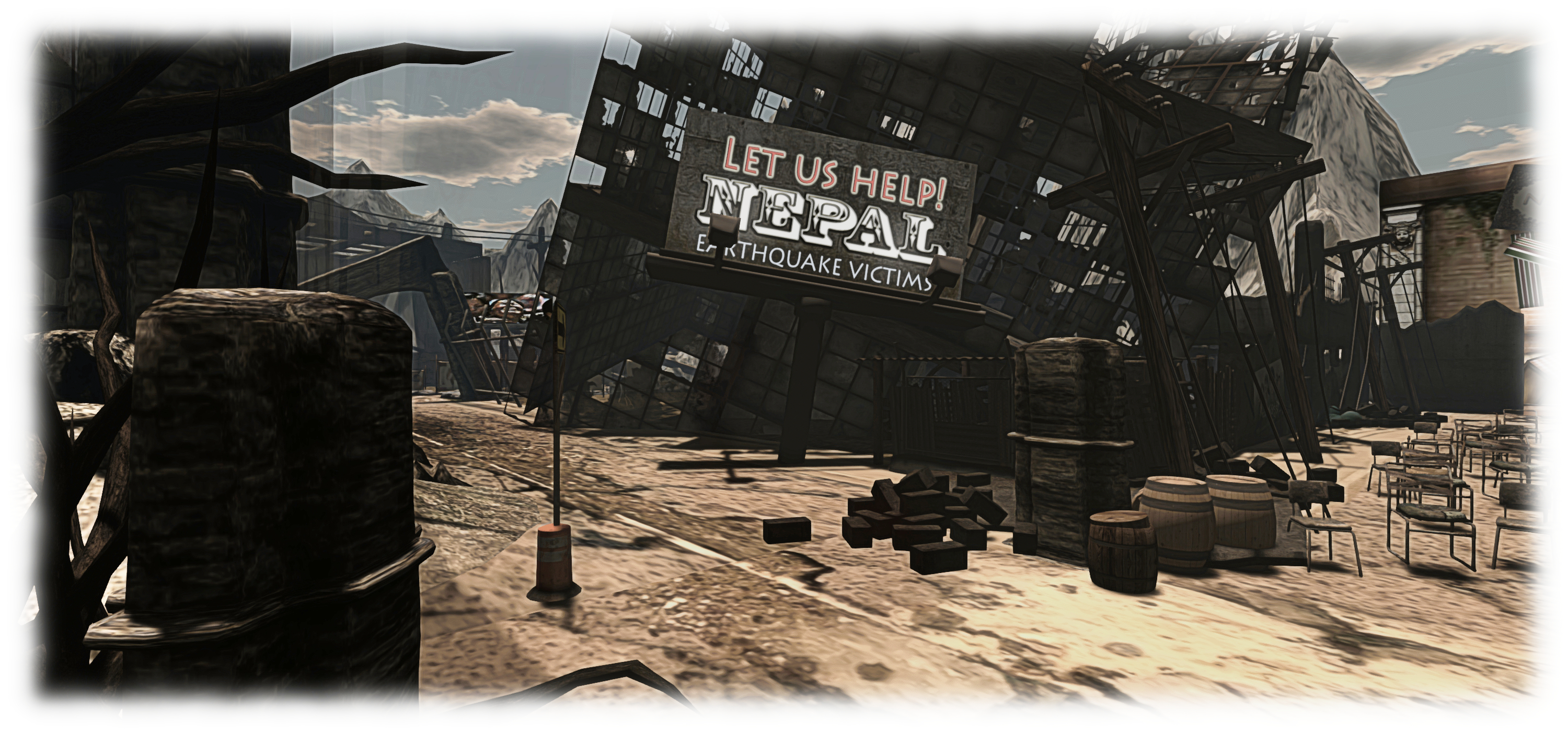
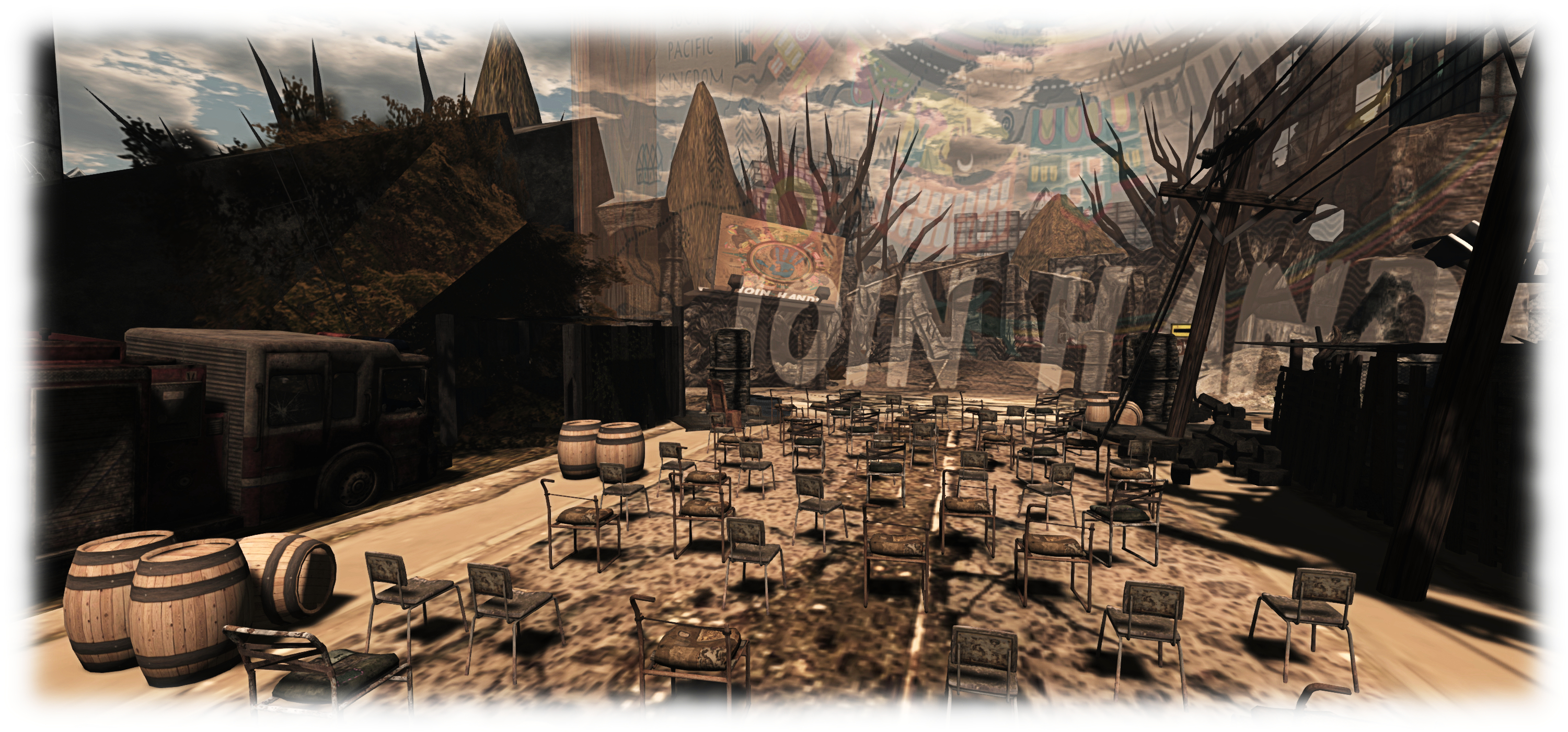
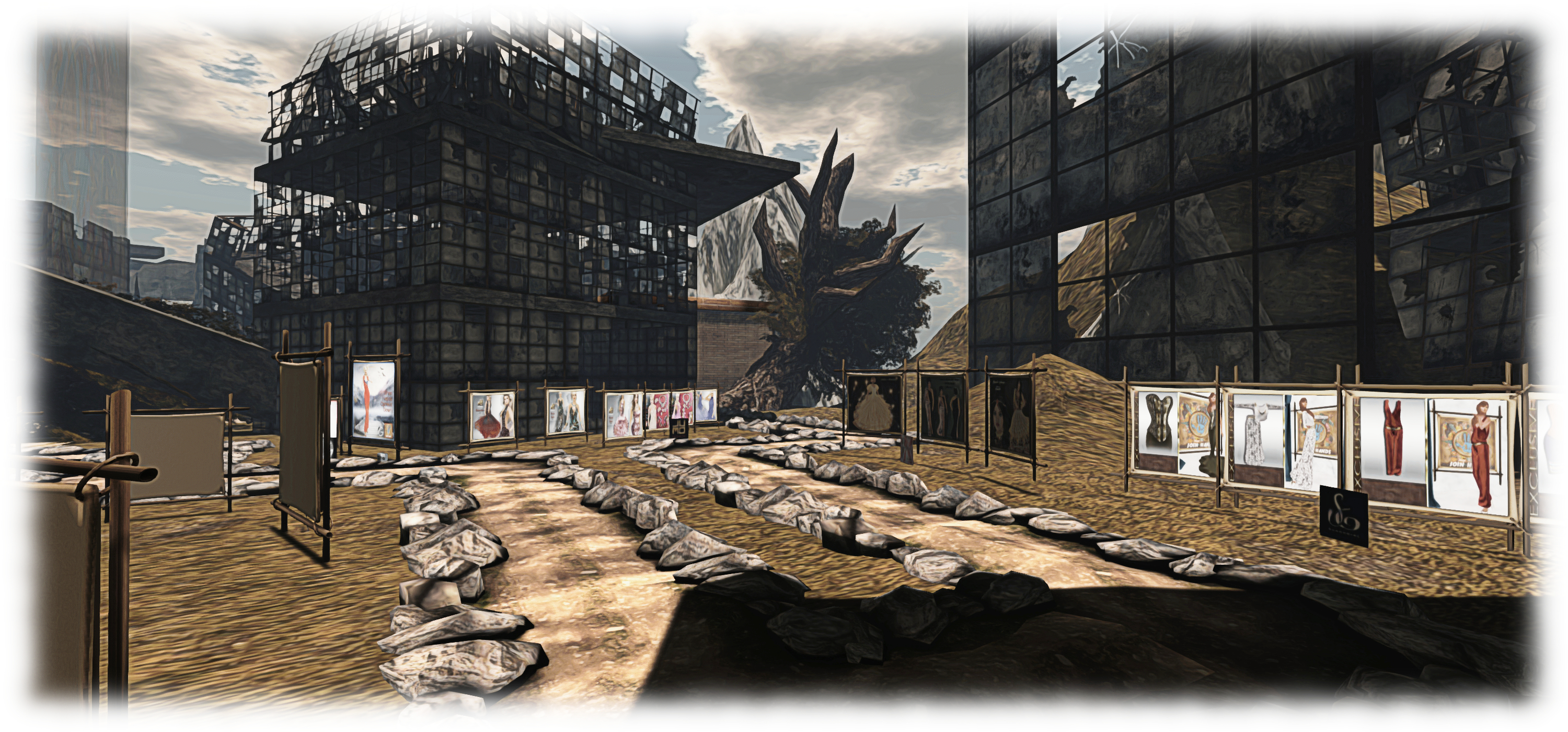
the Fashion for Food event area recreates an Earthquake shattered environment to help people better understand the devastation wrought in Nepal
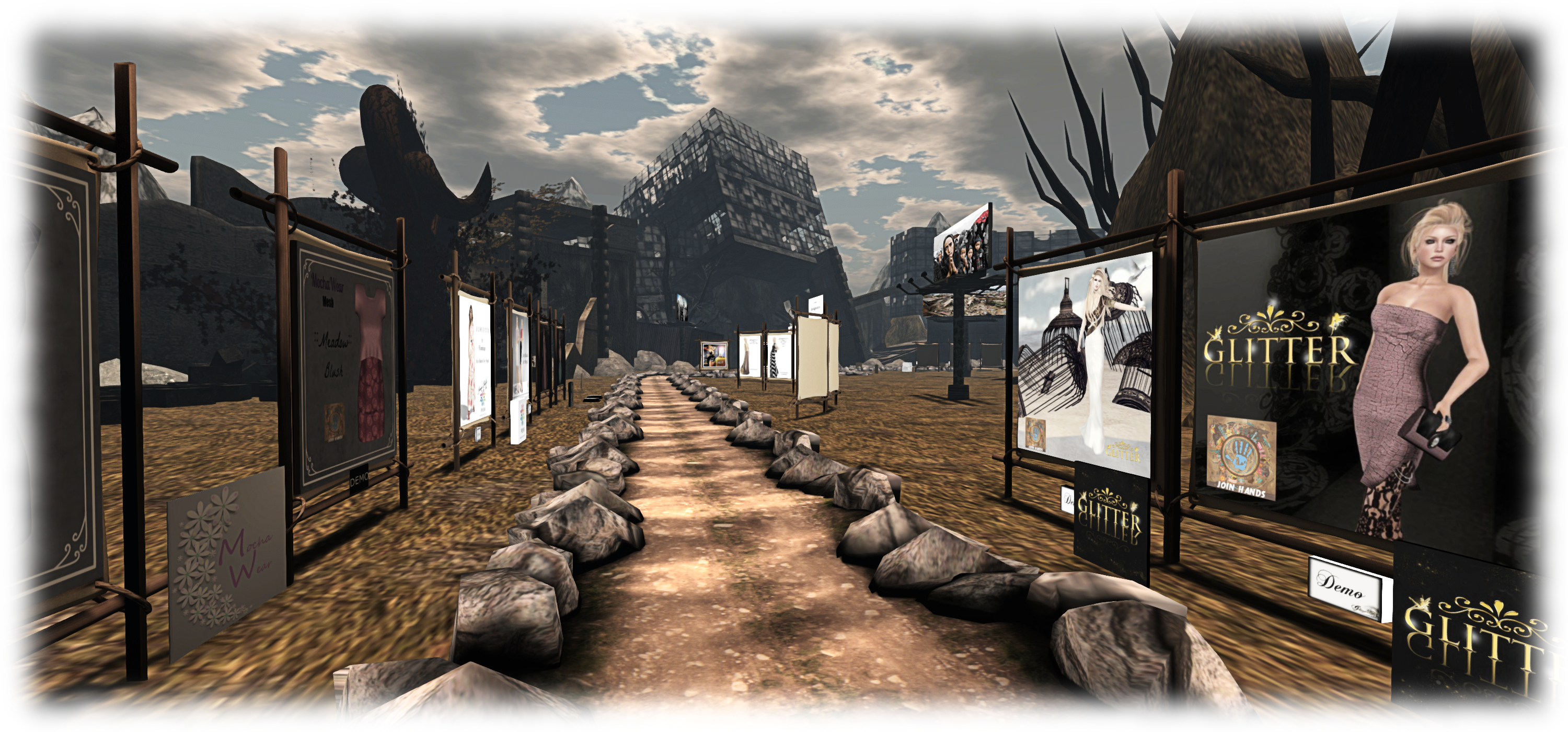
Fashion for Food launches at 14:00 SLT on Wednesday, May 13th, with a special fashion show by SCALA™. It will be followed by an after-show party hosted by DJ Seashell Dench from SCALA™. Clothing and jewellery from participating designers can be purchased from the vendor boards throughout the region, with all proceeds of sales, as well as all donations received going directly to WFP in support of their work in Nepal.
Designers from across Second Life are donating to and participating in the event, the list comprising: 69Park Ave GQ, Amarelo manga, Ana Markova, Astralia Alice Tartaglia, Aura Yeu, Ayiki, – AZUL -, Baboom Couture, CIRCA Living, CORPUS Motion, Dulce Secrets, ~ghee~,
~~ Glitter Girls ~~ and In-Pose, Glitterati by Sapphire, Hawker’s House, ImmateriA, J’adore poses, JCNY Collection, .:JUMO:., K E L I N I Haute Couture, Lazuri. Look @ Me Design,
LUXE, Lyrical Bizarre Templates, Mâchoire, M&M Clothing, Me Sew Sexy, Moondance Boutique, NYA’S Shop, No 7, Petit Chat, Prey, Prism Designs SL, PROMAGIC, RAPTURE, Athena Couture, SF designs, Silken Moon, ::SG SLackgirl ::, Snowpaws, TASHI, Totally Random,
Vestige Poses, Xen’s Hats and Zanze.
All proceeds of the sales through the vendor boards will be going to support the WFP’s programme to deliver food to the people of Nepal
The region hosting the event – Indian Paradise – has been designed to recreate an environment which has been shattered and an earthquake, offering something of a glimpse of the devastation wrought in Nepal. The fashion show and events area is located towards the centre of the region, while paths winding around the region take visitors past the vendor boards which will be available throughout the fours days of the event.
At the time of writing the schedule of events for Fashion for Food is as follows:
Wednesday, May 13th, 2015, 14:00 SLT: Fashion Showcase by SCALA™Models
Wednesday, May 13th through Saturday May 16th 2015: outfits and jewellery from the participating designers on sale throughout the region, will all proceeds going to the WFP
Thursday, May 14th, 2015, 12:00 noon SLT: DJ Bonie Facio
Saturday, May 16th, 2015, 14:00 SLT: closing party with SCALA™ DJ – Seashell Dench
Fashion for Food is being largely organised by the Indian community in Second Life to support their neighbouring Nepal, with the event region being sponsored by Indian Paradise. Note that if you would prefer to donate to the WFP’s work directly, you can do so via their Nepal relief work page.
Related Links
Fashion for Food SLurl (note: this SLurl will not be open until around 13:00 SLT on Wednesday, May 13th)
 On Thursday, May 28th, Linden Lab announced that with immediate effect, Premium Members can now join up to 60 groups – raising the limit for them from the previous 42.