Lab offer 50% off Marvelous Designer training with CG Elves

In something of an unusual promotion, Linden Lab is offering Second Life creators with a 50% discount on a training course for learning how to use a tool suite called Marvelous Designer – and to be honest, I’m scratching my head a little over it.

Marvelous Designer is billed as a software package which:

Allows you to create beautiful 3D virtual clothing … with tools that enhance quality while saving you time. From basic shirts to intricately pleated dresses and rugged uniforms, Marvellous Designer can virtually replicate fabric textures and physical properties to the last button, fold, and accessory.

The product boasts use in a wide range of environments include 3D and the world of film, where the results can apparently be seen effects created by Weta Workshop  for The Hobbit and The Adventures of Tin-Tin.

The Lab’s offer specifically focuses on Mastering Marvelous Designer: Beginners Course & Advanced Workshops, video-based training supplied by CG Elves, with the blog post stating:

Visit the CG Elves site through this link, opt in to the “Mastering Marvelous Designer: Beginners Course & Advanced Workshops,”  select any add-ons you may want, then use secondlife-special in the coupon code section of the checkout cart to receive your discount.

This offer is only good until December 30th, 2015 – so find out more about the training course and if it’s right for you by visiting the CG ELves website today!

I don’t pretend to be a clothing content creator, so I know little about what tools are in use by SL content creators, how useful this offer might be or how widely Marvellous Designer may be used by SL content creators.

However, given that Marvelous Designer has a pricing structure which starts at a monthly subscription of Us $59.00 and runs through an annual subscription of US $360.00 or a one-off payment of US $550.00 (with no option to switch between perpetual and subscription options), part of me suspect the tool might be seeing widespread use by SL designers. However, there is a 15-day free trial for those wishing to give it a poke.

The training course itself totals some 52.5 hours of video training, delivered in 1080p quality. It comes at a full cost of US $399.00 – so the discount offer will reduce this to US $199.50 – something which again may not have even the curious knocking down the door.  However, to find out more, follow the links to the CG Elves website, above and below.

As noted, this is something of a curious offer for the Lab to roll out, and I’m not overly convinced at to how well it might be received or taken up. Is this also some vague pointer that Marvellous Designer is a tool set that will be supported by “Project Sansar”? Your guess is as good as mine. In the meantime here  are the links again.

Related Links

Bright Canopy now a part of Frame

Bright CanopyBright Canopy, the streaming service which allows users on low-end computers to access both Second Life and OpenSim, has announced it is effectively being absorbed by Frame, the cloud service provider which has been a technology partner with Bright Canopy from almost the beginning.

Bright Canopy came into existence after the demise of the SL Go service provided by the former Onlive games streaming company, after that company opted to offer itself for sale, only to have Sony Computer Entertainment buy out its IP and patents, ending the company as a going concern.

However, the going has been a little rough at times for Bright Canopy, particularly as no-one has attempted to provide access to Second Life and OpenSim in quite this way before (OnLive utilised their own dedicated servers and data centres), so it has been a journey into uncharted territory.

The most important things to note is that under the new arrangement, Bright Canopy will continue uninterrupted as a service for both Second Life and OpenSim, and the company’s founder, Bill Glover, will be joining Frame as Product Manager for Virtual Worlds.

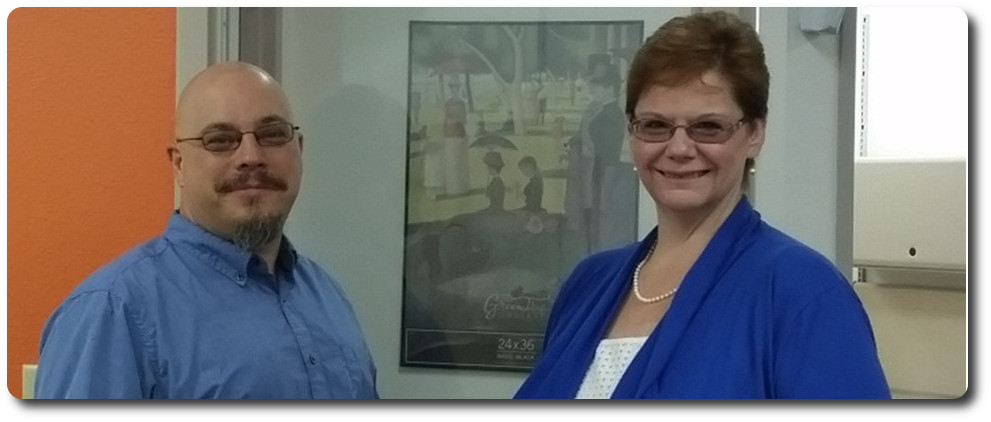
Bill and Jeri Glover: creators of the Bright Canopy service
Bill and Jerri Glover: creators of the Bright Canopy service

Bright Canopy largely came into existence as a result of a partnership between Bill and Frame. At the time of SL Go’s demise, I ruminated on the potential of a streamed service for accessing Second Life being provided through Amazon Appstream. This time was enough to get Bill seriously thinking on the idea and looking into ways of achieving it. A follow-up article  prompted an invitation from Frame’s founder, Nikola Bozinovic, to try his service as a means to deliver a streamed viewer solution, and so the partnership was born.

Already with the technical expertise to manage and deliver high-end applications on a streaming basis through Amazon’s cloud services, and with the potential to leverage Microsoft’s Azure services in the future, Frame were an ideal partner for Bright Canopy. The synergy between the two companies allowed Bill to quickly establish a proof of concept for streaming the Second Life viewer. This rapidly developed into a closed alpha, which in turn rolled into a pre-lunch test beta. Thus, in just four months, Bright Canopy went from nascent idea to a service ready for launch.

Nikola Bozinovic, founder of Frame, has remained convinced of Bright Canopy's viability since extending his initial invitation to use Frame's infrastructure in April 2015.
Nikola Bozinovic, founder of Frame, has remained convinced of Bright Canopy’s viability since extending his initial invitation to use Frame’s infrastructure in April 2015.

Unfortunately, and as I reported at the time, a combination of very positive response to Bright Canopy’s launch and some drastic and unexpected fluctuations in Amazon’s Spot Instance pricing, meant that the original pricing model planned for the service could not be maintained, and Bill and Jerri had to reluctantly had to suspend Bright Canopy operations while alternatives were considered.

Although the service was relaunched in September 2015 with an alternative pricing model, both Bright Canopy and Frame have been seeking ways and means to make the service more appealing to users, particularly in the area of cost.

It is these explorations which have late to this latest situation, as Bill notes in the press release:

After brainstorming about some of the many things we could do together, I have accepted an offer to join Frame as Product Manager for Virtual Worlds.  The Bright Canopy service will continue uninterrupted as it already runs on the Frame platform, and we will be looking to expand and improve it with new options and flexibility.  Jerri will also continue supporting Bright Canopy as a community volunteer.

The news will not see any immediate change in Bright Canopy pricing – those avenues are still being explored.

However, one immediate benefit is that Bright Canopy’s support activities will be folded into those provided by Frame, streamlining issue management. What’s more, the move should also allow the Bright Canopy service to extend its reach into mobile devices: Frame already has a native iOS client, and can provide services to a number of Android devices through Chrome. Finally, the move might also allow further viewer options to be added to Bright Canopy’s stable alongside the Second Life viewer and Firestorm.

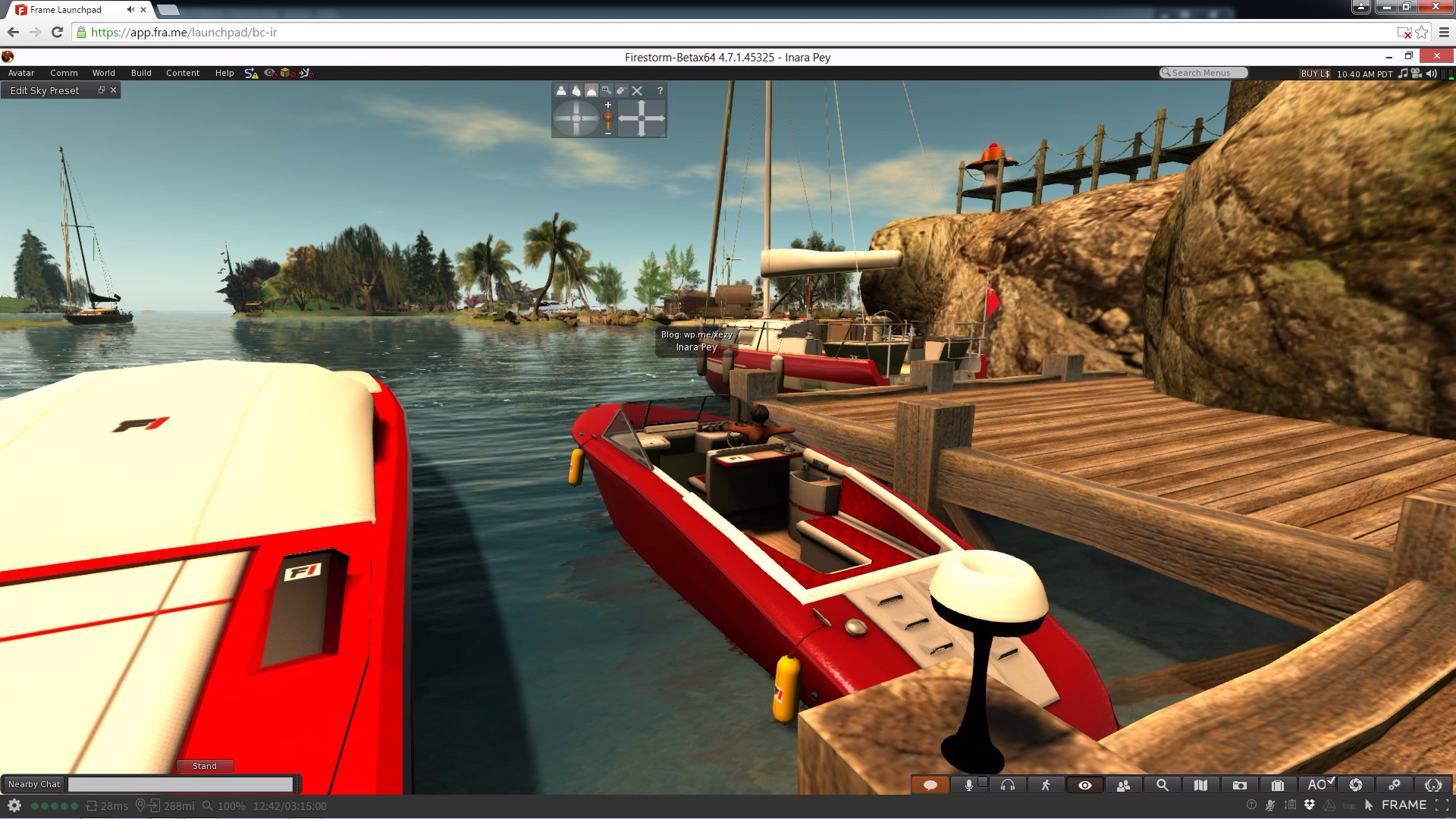
Running Bright Canopy on my Asus PCEE 1201N notebook with the graphics turned up to Ultra and everything enabled. The FPS was admittedly hovering just under 20, but given the Asus normally only manages low single-digit FPs nowadays with everything turned-off in the viewer - this is impressive
Running Bright Canopy on my Asus PCEE 1201N notebook with the graphics turned up to Ultra and everything enabled. The FPS was admittedly hovering just under 20, but given the Asus normally only manages low single-digit FPs nowadays with everything turned-off in the viewer – this is impressive

As well as announcing Frame’s direct involvement in Bright Canopy, which will see Jerri Glover continue her involvement in the project as a community volunteer, the press release also confirmed that there will be a special celebratory party at the company’s in-world location in Second Life to both celebrate the re-launch of the service back in September, and this latest news:

To celebrate, we will finally have that big relaunch party we’ve been promising with awesome gifts created just for the event. Come join us to celebrate.  Where: Bright Canopy Island. Time: December 12 at noon SLT (That’s 12/12 at 12:00).

For my own part, and having been privileged to have played a small role in Bright Canopy’s initial start-up and development, I’d like to offer my congratulations to Jerri and Bill, and also to Nikola.

You can read more about Bright Canopy, as I’ve covered developments in this blog, by following this link.

Lab updates Terms of Service

LL logoUpdate, December 1st: Following my line to the Lab, the ToS was re-issued with Section 10.1 corrected to reference Section 11.5 instead of the incorrect Section 10.2, which had been removed with the original December 1st update. This article has been amended to reflect the update.

On Tuesday, December 1st, 2015, Linden Lab issued an updated Terms of Service (ToS) covering their Second Life and Blocksworld products – and for the first time, at least in recent updates, outline the specific changes which have occurred within the ToS, defining them as:

  • Removal of references to Desura (sold to Bad Juju Games in November 2014) and the Linden Dollar Authorised Reseller programme (discontinued as of August 2015)
  • Explicitly addressing the Lab’s intolerance of harassment of Linden Lab employees
  • Clarifying of the arbitration provision in accordance with applicable Californian law.

In addition, and in light of the formation of Tilia Inc., the Lab’s virtual currency subsidiary, the Terms of Service have been expressly expanded to define “the terms on which Linden Research, Inc. and its wholly owned subsidiaries (“Linden Lab”) offer you access to its interactive entertainment products and services.”

The alterations to reflect the fact the at the Linden Dollar Authorised Reseller programme is no more can seen in the massively foreshortened Section 4.7 of the revised Terms of Service, which once again make it clear that the only point of reference for the exchange of Linden Dollars for physical world currency may not occur anywhere outside of the LindeX, nor may Linden dollars be purchased other than via the LindeX.

The update to reflect the Lab’s intolerance of staff harassment can be found in a revision to Section 6.1. iv, to whit:

(iv) Post, display, or transmit Content (including any communication(s) with employees of Linden Lab) that is harmful, threatening or harassing, defamatory, libelous, false, inaccurate, misleading, or invades another person’s privacy; [my emphasis]

There has been speculation this relates to certain personal attacks directed towards Ebbe Altberg through the likes of Twitter. However, it would seem more likely (I would hope) that this section is intended to address similar attacks which have been made through the Lab’s own forums, etc., over which they have full jurisdiction.

Section 10 contains the changes to the arbitration process, with section 10.1 being greatly streamlined in content and focused directly on the requirements of the Commercial Arbitration Rules of the American Arbitration Association (“AAA”).

While I am not a lawyer – and so the following statement is purely speculative on my part – it would appear that included in these changes is an attempt to prevent class action suits from being bought against Linden Lab as a part of the arbitration process:

Should either you or Linden Lab elect to resolve the Dispute by way of binding arbitration, the arbitration shall proceed in accordance with the then-current Commercial Arbitration Rules of the American Arbitration Association (“AAA”), except that in no event shall the arbitration proceed as a class or representative action. [my emphasis]

One error with these latter updates is that they still reference section 10.2, which has in fact been removed from the ToS as a part of the updates; something that has been raised with the Lab. Section 10.1 now correctly references Section 11.5.

A further change, not mentioned at the head of the ToS can be found in Section 4.1, where the final paragraph has been revised to read:

You may not sell, transfer or assign your Account or its contractual rights, licenses and obligations, to any third-party (including, for the avoidance of doubt, permitting another individual to access your Account) without the prior written consent of Linden Lab.
[my emphasis]

This raises an interesting question around the subject of shared accounts – often used by groups where an account might be used by more than one person for administrative purposes, etc. While the sharing of account passwords has always been frowned upon, the revision to section 4.1 tends to suggest that these accounts could now be deemed as a violation of the ToS unless the Lab’s written consent is granted. I’ve written to the Lab on this point and am awaiting a reply.

Those hoping this update might see a further improvement to the wording in Section 2.3 relating to IP rights will be disappointed. The section is untouched and remains as much a mess of a word salad now as it did following the “clarification” of July 2014.

HealthlinkNY: health education through Second Life

HealthlinkNY: using Second Life for healthcare education and patient welfare since 2008

New York state’s Health Information Exchange (HIE), is an initiative intended to gather patient records from across participating healthcare districts and make them available to doctors, hospitals and healthcare specialists – and the patients themselves – as and when required, in order to greatly improve patient healthcare and treatment in all situations, including emergencies.

However, getting people give their consent to having their personal records and histories to be electronically stored and available isn’t easy. There is often a natural distrust of “big brother” type record systems, even when they are intended for the betterment of those whom they serve.

So how do you persuade people to give their consent to having their records stored and shared at the push of a button? HealthlinkNY has chosen to do so by in part using an infomercial filmed entirely within Second Life.

At under three minutes in length and produced by Pooky Amsterdam’s Pooky Media, with graphics support by Skylar Smythe, Consent and the HIE clearly and concisely spells out the benefits of the HIE programme and how it works. As you can see for yourself here.

Why use Second Life for a project like this? Because it is a proven, cost-effective means of presenting to facilitate qualitative patient education to those who might otherwise be unable or unwilling to access that information due to mobility or other difficulties. This work has been spearheaded under the HealthScape NY programme, initiated by Southern Tier HealthLink New York (now a part of HealthlinkNY) and which has been in operation in Second Life since 2008.

Over the years, this programme, which centres on a 20-region presence in Second Life representing various locations in New York State, has not only allowed HealthlinkNY to produce a range of videos on a number of healthcare issues, but also to reach out directly to patients by staging presentations on chronic illnesses, fitness events, and health assessments, and even interactive, health-based quest.

You can find out more HealthScapeNY and the New York regions in Second Life by reading my articles from June 2011, and January 2015.

Second Life land set-up fees reduced

Land costs in Second Life are one of the most controversial issues to discuss. While it is often claimed that “the tier is too damned high”, the Lab has always been somewhat hoist by its own petard in having virtual land fees as the mainstream of its income. As I explained at length in January 2013, this actually limits how much the Lab can actually do with regards tier without potentially hurting its ability to function.

However, one area that has always seemed unaccountably high is the one-time set-up fees charged for private regions. These have stood at US $1,000 for a standard full region and $375 for a standard Homestead region (both inclusive of the first month’s tier, and ex-VAT where applicable) for many years, which has always come across as an exorbitant  amount to charge. There have been numerous calls over the years for these fee to be reduced; in my 2013 article linked to above, I went so far as to suggest a reduction in set-up fees coupled with a modest reduction in tier might be a way forward for the Lab.

The Lab, though, seemed steadfast in its approach. Tier would always be difficult to adjust, and they appeared reticent to play with the set-up fees. But on Tuesday, November 17th, that latter point changed.

Crossing Sands; Inara Pey, October 2015, on Flickr With immediate effect, set-up fees for all private island products (unthemed and themed) in Second Life have been reduced by 40% (image: Crossing Sands MarinaFlickr)

As announced in a an official blog post, the Lab has confirmed that with immediate effect set-up fees across all private island products (Full, Homestead and OpenSpace, both developed and undeveloped), have been reduced by 40%. This means that the set-up fees for all classes of private island product are now (ex-VAT, where applicable):

  • Full Private Island US $600
  • Themed private island US $629
  • Homestead region US $225
  • Themed Homestead region $250
  • OpenSpace region US $150

What’s more, anyone who has paid a region set-up fee in the past 14 days will receive the difference in fees back as a credit(in US Dollars to their account balance.

This is undoubtedly a step in the right direction – although how much of an impact on land usage it has will be interesting to monitor. In October 2011, the Lab abolished all set-up fees for a period of one month in a “land sale”, which saw  689 added to the grid, a net growth of some 508 regions for the month. Unfortunately, such was the situation then that, as the realities of tier kicked-in, the increase in regions was all but negated in a few months as the heavy decline in region numbers continued through 2012.

As it stands, it is fair to say the global economic situation has improved since 2012, and people have again found themselves with more in the way of disposable income in their pockets they can put towards tier. This has likely to have been a contributing  (but not the only) factor in the slow-down in regions losses seen in 2013 / 2014. But will a cut in set-up fees be sufficient to fuel a further sustained slow-down in grid shrinkage which has accelerated slightly in 2015? That’s something only time will tell, although I’m admittedly sceptical.

Which is not to negate the move by the Lab in any way – rather the reverse, it is most welcome, if perhaps a little overdue.

Venexia; Inara Pey, June 2015, on Flickr Tier has been a significant contributor to the loss of regions in SL, including places such as Venexia (above) and its sister region, Goatswood.  Whether the reduction in set-up fees will help slow this situation down is an open question.

Changes to Transferring Regions

Alongside the set-up fees reduction for private regions, the Lab has also announced changes to transferring regions with grandfathered pricing, with the blog post stating;

Previously, Private Islands with grandfathered pricing would lose that status and revert to the usual schedule of land maintenance fees when the regions were transferred to a new owner. Today, we are changing that policy to make it easier for these regions to remain on the grid if and when they are sold to new owners.

Effective immediately, both Grandfathered Full Private Island regions ($195/month) and Grandfathered Homestead Private Island regions ($95/month) may be transferred to new owners without losing the discounted pricing.

However, this news come with a caveat: the one-time transfer fees for grandfathered regions are increased, with grandfathered full regions costing US $600 to transfer and maintain the grandfathered tier, and homestead regions US $300 (both fees per region, and exclusive of VAT where applicable),

Lab announces Marketplace search beta

On Wednesday, November 11th, the Lab announced the trial of a new Marketplace search. In particular, the Lab states they’ve been working on infrastructure changes to improve the relevance of search results and have made changes for search to scale better as more content and categories are added to the Marketplace.

Search has always been one of the large issues with the Marketplace over the years, as likely most who have used it will be able to attest. There have been attempts to improve / tweak / amend search over the years, but none have really seemed to hit the nail on the head in terms of generating appreciable improvements, which has potentially been the biggest annoyance faced by anyone using the Marketplace.; so it will be interesting to see how the new updates fare.

The updates can be tested using a special beta search Marketplace  – note they are not yet a part of the main Marketplace, so don’t expect to see changes there just yet -, with the Lab noting that further work is still in hand for boolean searches (or at least, excluding keywords from searches).

When testing the updated search capabilities, make sure your using the beta search marketplace, not the "main" marketplace
When testing the updated search capabilities, make sure your using the beta search Marketplace, not the “main” marketplace

Users are invited to use the beta Marketplace “to perform all your regular Marketplace activities”, and to report and specific issues via a JIRA bug report with the SLM Beta Search component.

In addition, there is a forum thread available for general discussion on the new search capabilities, which currently offers some mixed feedback, with ChinRey in particular (at the time of writing) offering considered feedback on some of the pluses and minuses she has observed / can see. There is also an interesting note from Grumpity Linden on why the beta search might appear to be a lot slower than the “main” MP, which is worth keeping in mind when trying it, because it is currently very slow in responding.

Again, if you do give the search beta a good try, and want to leave feedback,  make sure you use the Lab’s forum thread to do so. Comments left here aren’t likely to be read by the relevant staff at the Lab.