Lab adjusts billing and trading limits in Second Life

On Tuesday, December 13th, Linden Lab announced updates to the caps placed on trading volumes across the LindeX which are designed to help prevent fraud.

The announcement reads in full:

Many Residents participate in the LindeX® exchange – trading L$ and contributing to the Second Life economy on a regular basis. As part of our commitment to prevent fraud and comply with applicable regulations, there are limitations in place that cap the trading volume for each Resident’s account at certain tiers.

We have recently reviewed and adjusted these tier limits to better accommodate the needs of Second Life Residents. For most, these changes will be beneficial, and you can review the details of your current trading limits by logging into your account and visiting your order history.

If you find that you need higher limits, you can request a tier limit review through our support system. Simply submit a ticket –> Billing –> LindeX Billing and Trading Limits Review Request (for basic accounts) or  Billing and L$ -> LindeX Tier Review ticket options (for premium accounts).

Happy trading!

A Petrovsky Flux gone from Second Life

A Petrovsky Flux - no longer in Second Life
A Petrovsky Flux – no longer in Second Life

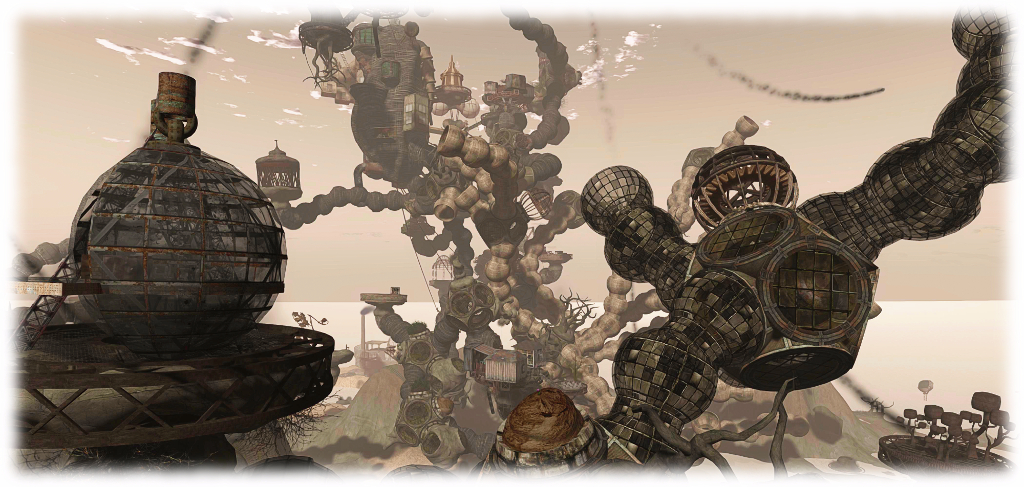
A Petrovsky Flux, the stunning, ever-changing cluster of devices that would assemble themselves and grow almost organically, only to blow apart and rebuild themselves over and over again, taking on a new form each time – has gone from Second Life.

Designed by Cutea Benelli and blotto Epsilon, the installation had, since 2010, been curated by the University of Kansas at their Spencer Art Museum region in SL, where it had over the years been a popular draw. However, at a time when eyes were all on the opening of the Horizons regions (see here) and return of Mont Saint Michel to Second Life in November 2016 (see here), the Spencer Museum of Art region quietly slipped away from Second Life, pretty much unnoticed.

It wasn’t until Chantal Harvey contacted me about the possible status of the Spencer Art Museum region that I found out something may had changed.  “I’ve been trying to get there for weeks now,” she informed me via IM, “I was filming there. but it seems it is gone, do you know?”

A quick check on the map confirmed the region had indeed gone from the grid, and a check through Tyche Shepherd’s excellent Grid Survey summaries showed it had been removed from the grid during the week ending Sunday, November 13th, 2016.

It’s not clear if the removal is permanent or not – as I reported in 2014, the region came close to vanishing from Second Life, due to something of a miscommunication involving the Spencer Art Museum, the University of Kansas and the artists. As a result of that situation, I’ve written to Stephen Goddard, the Spencer’s Associate Director/Senior Curator of Prints & Drawings. He was responsible for the Museum’s presence in Second Life, so hopefully, he can shed some light on what has happened. Should he reply, I’ll offer and update.

In the meantime, here’s Toxic Menges’ 2010 machinima of A Petrovsky Flux to remind us of this fabulous build.

Full Private region LI upgrade now available in Second Life

As per my coverage of the increased LI allowance across Second Life (see here and here), the Lab announced the availability of an additional 10K LI for full private regions on December 7th, 2016.

The recent LI increases represented, on average, a 33% increase across regions. now  – as announced in Upgrade Your Full Private Region to 30,000 Land Impact Today! – owners of FULL private regions can increase their LI allowance by a further 50% – taking them from 20,000 to 30,000.

Upgrades can be requested by submitting a case through the support portal on the Second Life website under the case type Land & Region > Land Impact Change Request. However, when making a request, keep in mind:

  • There is a one-off upgrade fee of US $30 applicable to each Full region being increased to 30,000 Land Capacity.
  • There is an additional monthly maintenance fee applicable to each updated region. This stands at US $30 per month at the time of writing, but please refer to Land Impact Change in the Managing Private Regions Knowledge Base article for current fees.
  • The upgrade must be maintained for a minimum of one calendar month.
  • Downgrading to 20,000 Land Capacity will incur a further one-off charge of US $30.
  • No pro-rating or discounts are permitted with the upgrade.

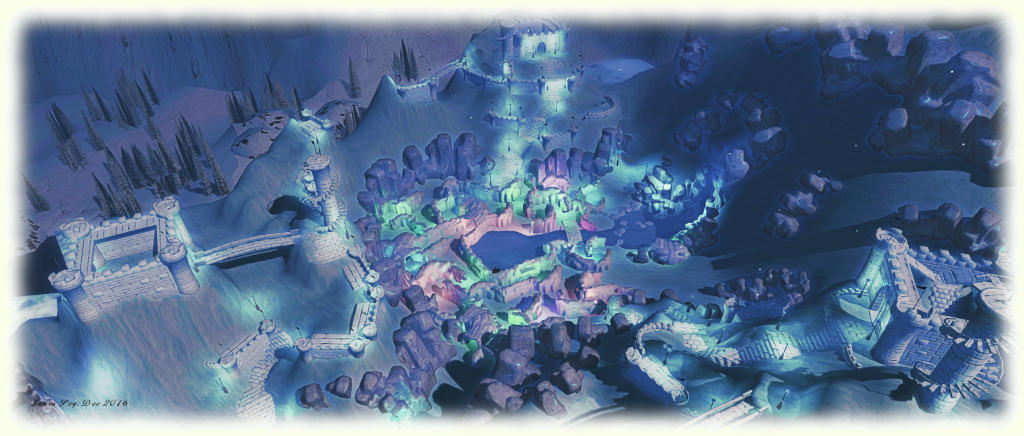
Telrunya Winter; Inara Pey, November 2016, on Flickr Telrunya Winterblog post

Second Life Skill Gaming applications to re-open in 2017

secondlifeOn December 1st, 2016, Linden Lab announced they would be accepting a new round of applications from those interested in becoming Skill Gaming Operators and / or Skill Gaming Creators.

Applications will officially open on Tuesday, January 3rd, 2017, and the blog post announcing the move reads in part:

As we blogged back in the Summer of 2014, gambling is strictly prohibited in Second Life and operating or participating in a game of chance that provides a Linden Dollar payout is a violation of our Terms of Service.

However, games of skill are legally permitted in many jurisdictions, and we’ve seen that many Second Life users are interested in playing such games for Linden Dollars. We updated our gaming policy in Second Life at that time and opened applications for Skill Gaming. Skill Gaming applications will reopen on January 3, 2017, for those who wish to become authorized creators and/or operators of Skill Games in Second Life.

Skill Gaming is covered by the Second Life Skill Gaming Policy, which in turn is supported by a Skill Gaming FAQ.The latter will have a link to the Skill Gaming Application form, once applications have re-opened on January 3rd, 2017.

In short, Skill Games are games which, in the Lab’s words:

1) whose outcome is determined by skill and is not contingent, in whole or in material part, upon chance; 2) requires or permits the payment of Linden Dollars to play; 3) provides a payout in Linden Dollars; and 4) is legally authorized by applicable United States and international law.

All Skill Games in Second Life must be created and / or operated by Lab approved Skill Gaming Creators (SGCs) and / or Skill Gaming Operators (SGOs), and must be located within Skill Gaming Regions.  The latter must be Full regions, which cannot be located on the Mainland, and cannot be located adjacent to non-Skill Gaming Regions. They have an increased maintenance fee (tier), which (at the time of writing) is US $345 / month. Existing Full regions meeting the criteria above can be converted to Skill Gaming Regions for a one-off fee of US $100 per region.

Applications for those wishing to become Skill Gaming Operators and / or Skill Gaming Creators re-open on Tuesday, January 3rd, 2017

The Skill Gaming Policy sets out all requirements in full, and should be read, along with the FAQ, by anyone wishing to become a Skill Gaming Operator and / or Creator, or who wishes to access Skill Gaming regions and participate in the games on offer.

The first round of Skill Gaming applications in 2014, took somewhat longer to come into effect than the Lab had planned, and several applicants experienced some delay between submitting their application and receiving confirmation of acceptance (or refusal). In the end, some 45 SGOs, five of whom are also registered as SGCs, and between them, they provide 44 skill games in Second Life.

In August 2016, and as a way of introducing Second Life users to Skill Gaming, Linden Lab  introduced Gaming Islands. These can be accessed either directly or via the Portal Parks and provide information on what Skill Games are, the kinds of games user might encounter, how and where they can be played – and why, in some instances, users may not be allowed to access the regions where they can be played.

Links

New Grid Status service now operating for Second Life

On Monday, November 28th, Linden Lab launched their new Grid Status update service.

Now delivered by a new service provider, it is designed to provide more detailed information on the overall status of the grid and Second Lifer services, whilst making it easier for the Lab to update the information presented through the pages.

While the new Grid Status pages are hosted by a different provider, existing grid status page and RSS links should redirect automatically.

Steven Linden first announced these changes would be coming during the TPV Developer meeting held on Friday, November 19th. The new page is more informative, with the most recent update  / information displayed at the top, with drop-down sections displayed beneath it, with historical information displayed below these.

The drop-down sections can be used to display expanded information on the three main grid simulator channels; information on the various SL web-based services (secondlife.com, marketplace, wiki, community pages, JIRA, etc.); updates on major in-world services, (group chat, L$ transactions, rezzing, Voice services, teleporting, inventory, etc) as well as further information on various external services such as the log-in service and the chat / phone  / Case support services.

As well as more information being available on the page, there is also an expanded set of subscriptions options to the service. These can be accessed via the orange button in the top right corner of the page, and they include the option to have Grid Status updates SMS’d directly to a mobile ‘phone. In addition, a separate option can be used to subscribe directly to a specific incident in progress via e-mail and / or SMS.

The grid status subscription options, which comprise e-mail, SMS messaging, webhooks and RSS, together with a link to the SL support portal

The new service also means the Lab’s Operations team can now update incident reports directly via a bot system, rather than relying on a manual update process involving different teams, as was the case in the past. This should help ensure the status information reflect updates and situations in a more timely manner.

With a faster means for staff to update information, more means by which users can access updates outside of visiting the Grid Status page itself (so often a bottleneck in the past), this new service should hopefully prove to be a lot more flexible, informative and accessible to SL users.

Note: at the time of writing, the Grid Status section on users’ secondlife.com dashboards was reporting “RSS Feed has no items”, suggest the RSS feed to the dashboard may have just to be updated. This has been reported to the Lab.

Lab deploys increased LI allowance to private regions in Second Life

Update, December 7th: the additional 10K LI option is now available –  see here or here for details.

Update:The Lab has now blogged on this – see: More Prims for Everyone!

On Tuesday, November 29th, the Lab ran a rolling restart across regions on the Main channel which saw the increased LI / prim allowances for private regions on that channel come into effect.

As I’ve previously reported, the prim increase started to appear with Mainland regions on Tuesday, November 1st with the change indicated in a blog post from the Lab. However, full details on the changes weren’t released until Thursday, November 3rd, with an interview with Patch Linden, Senior Director of Product Operations at Linden Lab, in this blog, and a Designing Worlds special held on the same day.

Following the Main channel restart on Tuesday, November 29th. private regions on that channel now have the following standard land capacity allowances:

  • Private full region: 20,000 LI
  • Private Homestead region: 5,000 LI
  • Private OpenSpace: 1,000 LI

In addition, landholders directly responsible for full regions will be able to further increase the capacity on those regions to 30,000 LI for an additional monthly payment of US $30 to Linden Lab (with a one-off $30 upgrade payment, and a single additional $30 downgrade payment should they later opt to remove the additional 10K allocation). Details on this will be announced soon.

Private full regions now have a standard 20,000LI capacity (with an option further 10K available at a fee of US $30 a month)
Private full regions now have a standard 20,000 LI capacity (with an optional further 10K available at a fee of US $30 a month)

There is a server maintenance package deployment scheduled for the three RC channels (Magnum, LeTigre and BlueSteel) on Wednesday, November 30th, and this should see the LI increase deployed to private regions on those channels as well.  Once completed, this will mean region capacities across the grid will be:

  • Full Regions:
    • Mainland: 22,500 (from 15,000)
    • Private estates:
      • 20,000 (from 15,000) at the same tier price OR
      • 30,000 for an additional US $30 a month (+a one-off US $30 conversion fee to add / remove the extra 10K allowance) – this option to be launched soon.
  • Homesteads: 5,000 (Mainland and private) – from 3750.
  • OpenSpace: 1,000 (Mainland and private) – from 750.

So there you have it. Let the building begin!