Meet Linden Lab’s new board of directors

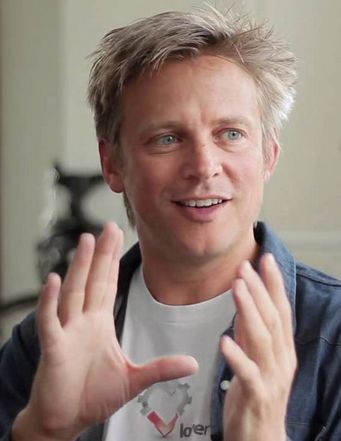
Linden Lab’s new board of directors (l to r): Brad Oberwager, J. Randall Waterfield and Raj Date

Following confirmation early this month that the the acquisition of Linden Research Inc., (to give Linden Lab its formal name) has been completed (see the second half of 2021 Update: Life in the Cloud from the Lab and also my own Linden Lab gives cloud migration update & new ownership announcement (updated)), the Lab has updated the Board of Directors section of the About page on the official Linden Research website.

The acquisition, sees three new board members replacing Jed Smith, Bill Gurley, Dina L. Evan and Bing Gordon. Two of them have been previously mentioned: Brad Oberwager and J. Randall (Randy) Waterfield (you can read my own notes on these two gentleman here: Linden Lab announces it is to be acquired). However, what may come as news is that there is a third member of the Lab’s new board: Raj Date.

The following are the biographies for all three as found on the Lab’s About web page:

Brad Oberwager

Brad Oberwager has spent his entire career in technology and consumer focused companies as an entrepreneur and board member.
Currently, he sits on the board of two public companies, Asure Software (NASDAQ: ASUR) and Better World (NASDAQ: BWACU). He is the chairman of two companies he founded, Jyve and Sundia and is also on the board of TEGSCO (aka AutoReturn). He owned Bare Snacks, acquired by PepsiCo in 2018.
Brad was Vice-chair of YPO International, a global organization of 25,000 CEOs.
Brad received his BS from Georgetown University, his MBA from the Wharton School and lives in San Francisco. 

J. Randall (Randy) Waterfield

Mr. J. Randall (Randy) Waterfield, is the Chairman of Waterfield Holdings, which traces its origins to 1928. After selling the largest private mortgage company in the US and largest Indiana based bank in 2006 and 2007 respectively, he diversified into technology, manufacturing and other industries.
Randy holds the Chartered Financial Analyst designation and is a graduate of Harvard University. He currently serves on the Board of Directors of Red Oak Partners, Waterfield Technologies, Linden Research, Inc. and has previously served on the boards of YPO (and was the 2017-2018 Chairman of YPO), Asure Software ( NASDAQ: ASUR), SMTC Corporation (NASDAQ: SMTX), RF Industries (NASDAQ: RFIL), among others. He is also the Co-Chairman of Missouri Cobalt, LLC, the largest cobalt mine in North America.
Randy supports various education, environmental and community development charitable causes through the nonprofit Waterfield Foundation and J. Randall Waterfield Foundation.

Raj Date

Raj Date was the first-ever Deputy Director of the U.S. Consumer Financial Protection Bureau (CFPB). As the Bureau’s second-ranking official, he helped steward the CFPB’s strategy, its operations, and its policy agenda. He also served on the senior staff committee of the Financial Stability Oversight Council, and as a statutory deputy to the FDIC Board.
Before being appointed Deputy Director, Raj acted as the interim leader of the new agency, serving as the Special Advisor to the Secretary of the Treasury. He led the CFPB for most of the first six months after its launch.
Currently, Raj is the Managing Partner of Fenway Summer, an advisory and investment firm focused on financial services and financial technology. In that capacity, he chairs the investment committee of Fenway Summer Ventures, a fintech venture capital fund, and works with clients of FS Vector, the fintech advisory firm. He also serves as a Director for a number of innovative firms in financial services: Prosper, the marketplace lender; Green Dot, the bank holding company; Circle, the digital asset firm; Grasshopper, a de novo bank; and College Ave, a private student lender.
He is a graduate of the College of Engineering at the University of California at Berkeley (highest honors) and the Harvard Law School (magna cum laude).

Without wishing to take anything away from Mr. Oberwager and Mr. Waterfield, Raj Date’s credentials are especially impressive for a relatively small company like Linden Research; having joined the CFPB in February 2011, on what he thought would be a 2-3 month tenure, he was asked by Elizabeth Warren, who oversaw the establishment of the CFPB as a Special Advisor to the Secretary of the Treasury, to lead “the guts of the policy apparatus” within the Bureau. When Warren sought to (successfully) run for the U.S. Senate later in 2011,  Date was nominated to succeed her as the CFPB’s Special Advisor to Treasury, and (as the Lab notes), its first Deputy Director, under Richard Cordray.

His background with consumer affairs, finances, and his post-CFPB founding of Fenway Summer would appear to help lend significant weight to Linden Lab’s wholly-owned subsidiary, Tilia inc; while he is not currently listed as a member of Tilia’s board, his background and expertise could be used in an advisory capability, and his name certainly brings a further level of gravitas to Tilia.

Thus far, the acquisition and arrival of the new board has been handled in a relatively low-key manner. While some might be tempted to see the negative in this, it’s likely more a case of the Lab wishing to demonstrate that, from their perspective and that of the incoming board, things are very much “business as usual” rather than being indicative of any kind of radical change.

Linden Lab gives cloud migration update & new ownership announcement (updated)

The former co-location cage used to operate Second Life and its services. Credit: Linden Lab

Update: since this post was published, Linden Lab have clarified the fact that the acquisition process is in fact complete, revising their comment on the acquisition process.  I have therefore revised the end of this post to reflect the updated comment on  the acquisition. See also: Meet Linden Lab’s new board of directors.

On Tuesday, January 5th, Linden Lab provided a short update on the cloud migration work and on the current situation regarding the company’s acquisition.

The physical move to AWS services was completed at the end of 2020, and the blog post expands on some tweets made by April and Soft Linden over the Christmas period.

In her December 23rd tweet, April Linden confirmed that the last of the Lab’s services had been migrated to AWS services, and that the remaining systems within the Lab’s (now former) co-location facility in Arizona had been powered off.

April Linden confirming the migration of the last of the SL services to AWS

In discussing the fate of the data held on the old hardware in late 2020, Oz Linden had indicated that Linden Lab had arranged for all of the hard drives from  the co-location facility would be shredded – and on December 31st, 2020, Soft  Linden tweeted that the work had been completed by a professional data destruction company, with a total of 10,588  hard drives and solid state drives that had been contained within the Lab’s old hardware had indeed been shredded.

Soft Linden on the shredding of the Lab’s old disk drives

The January 5th blog post builds on both of these tweets by providing a photograph of the cleared-out cage at the Lab’s former co-location facility, and a short video of drives being shredded, both of which I’ve included here.

Linden Research Acquisition Complete

Turning to the July announcement that an agreement in principle had been reached with an investment group led by Randy Waterfield and Brad Oberwager to acquire Linden Research Inc., (as Linden Lab is formally known), the blog post confirmed the acquisition process has been completed, and Linden Lab is now under new ownership:

Another noteworthy development for the new year is that Linden Lab has new owners! As announced in mid-2020, an investment group led by Randy Waterfield and Brad Oberwager signed an agreement to acquire the company subject to regulatory approval by financial regulators in the U.S. related to Tilia Inc.’s status as a licensed money transmitter as well as other customary closing conditions. We are pleased to share that the regulatory review has been completed and Linden Lab is now under new ownership.

At the time of writing, the official About Linden Lab page had yet to show any changes in the board structure to reflect the acquisition completion – I expect that will come in due course.

Read the official blog post for more.

Related Links

Second Life land and users in 2020, via Tyche Shepherd

Sunset at home in Second Life

The last few months of 2020 saw Tyche Shepherd release some brief summaries related to Second Life that – as always – make for interesting reading for those interested in the general state of the platform.

In the first, a tweet Tyche issued in October, we were offered insight into general use of the platform in terms of sign-up and concurrency. It came as a the last in a brief series of tweets from Tyche on the subject that started after the Lab indicated that with the spread of the SARS-CoV-2 pandemic, they were seeing an increase in general usage of the platform, particularly among returning users.

Following-on from Tweets in June -, Tyche confirmed that overall, median concurrency on the platform saw clear growth in March through mid-May (when the first ’bout of lockdowns hit a fair portion of the world  due to the pandemic, before gradually falling through until mid-August, when a further “bump” occurred that lasted through until October (when Tyche made her Tweet). She also showed that overall, median concurrency remained well above that seen in 2019.

SL concurrency, March-October 2020. Credit: Tyche Shepherd

That concurrency is up can be taken as a good sign; it means that more people are engaging in the platform at any given period, allowing greater opportunities for interactions  – which can be particularly important for incoming new users looking for things to do and people to meet. However, it is with regards to the latter that Tyche’s observations have been more mixed.

On the one hand, the second graphic included in her tweet appears to in part confirm commentary from the Lab itself: that 2020 has seen an upswing in the number of users returning to the platform, whilst also suggesting that – again, understandably, given the pandemic – that existing users were spending longer in-world in 2020 that had been the case in recent years. All of which is also to the good (particularly if returning users find reasons to maintain their engagement in the platform once more).

Second Life new user sign-ups 2020. Credit: Tyche Shepherd

However, on the other, the graphic reveals a niggling concern: whilst sign-up have remained relatively stable for a number of years, with occasional peaks and crevasses, 2020 saw a distinct decline in sign-ups from the end of March through until early October, despite an initial spike in sign-ups in the March-April period, again potentially fuelled by the pandemic. In particular, the drop-off not only saw sign-ups fall below the average set in the first two months of 2020, but also fall and remain below average sign-ups seen throughout 2019.

As such, Tyche’s figures tend to suggest that, while the Lab is determined to grow SL’s user base through the attraction of new users – a programme it has, to varying degrees,  indicated it has been focused on since around mid-2019 – there is still a lot to be done in this area, if the hoped-for growth is to be realised. However, this is somewhat tempered by the fact that given the rise in median concurrency is in part fueled by returning users, it demonstrates that the Lab is correct in focusing a portion of its marketing efforts towards former users who have drifted away for one reason or another.

Land use – or more correctly, grid size – is another metric Tyche tracks, providing as she does regular reports on the overall size of the main grid and the comings and goings of both private and “Linden owned” regions. While the relative size of the grid, if looked at in and of itself only, can be a false or misleading indicator of the overall state of SL, tracking the number of private regions does help in building a picture of LL’s core revenue flow – region tier.

On January 3rd, 2021, Tyche tweeted her year-end analysis on private region numbers, revealing that 2020 saw an overall net growth of some 919 private regions (Full and Homestead) through the year, representing a 5.7% increase.

Second Life private regions in 2020. Credit: Tyche Shepherd

The majority of this growth came in two bursts: mid-April through to the end of May (with one significant period of shrinkage during the week to Sunday, May 10th, 2020), and then November-December 2020, immediately following the period of unavailability of new regions through the mid-months of the year resulting from the work transitioning SL to AWS services.

While the increase in the size of the grid is not exceptional when compared to increases seen prior to 2011/2012, it is still positive, indicating that there is a general willingness among users to invest in land, helping the Lab’s bottom line. The uptick in 2020 has meant that when the general reduction of Linden-held regions through the year is taken into account, the total number of regions in the grid grew by 3.3%.

Given the difficulties of 2020, Tyche’s figures tend to show Second Life held its own through what has been what might be termed a less-than-optimal year. With the Lab looking to further ramp-up advertising in 2021 (and perhaps further tweaking of the on-boarding process), it’ll be interesting to see how the overall level of users / size of the grid fares through the year.

Related Links

Fourteen years, Oh my!

Contemplating fourteen years

I logged into Second life to receive a greeting from Johan Neddings congratulating my on reaching my fourteen rezday – and I have to state that, but for his IM (And tweet, when I looked at Twitter!), the date honestly would not have registered with me at all.

While I try not to bring the personal and the physical world into this blog too much, the fact is that 2020 has been a real stinker of a year for all of us, thanks in large part to the SARS-CoV-2 virus, which has impacted so many people around the world in so many ways, and in relation to work and things, I’m no exception. There have also been some personal matters, particularly in the last month or so and which will continue through the next few months to varying degrees, that mean SL is not currently a primary focus for me, although I am trying to keep abreast of news and articles.

Within Second Life, 2020 has certainly been interesting. On the technical front, things have clearly been dominated by Project Uplift and the Lab getting everything transitioned to run on Amazon AWS services. Much could be said about this,but I think the most important aspect to it is that while some remaining services have yet to be migrated, and we have yet to go through a period of fine-tuning / performance tweaking, overall, the entire process has been really smooth. Yes, there are some visible teething problems that need to be sorted, but when you consider there were a fair few SL services transitioned to AWS without users ever noticing they had been moved, LL have done a really good job with what might have been a really disruptive undertaking.

Of course, one of the visible changes to SL that has come along this year is EEP – the Environment Enhancement Project. While this also has some issues that are still to be sorted (and some UI niggles that may not be, given they tend to be subjective in nature), I’ve found it to be a very flexible and usable capability, if a bit of a beast to get one’s head around at first. I’ve particularly had fun creating a number of personal Fixed Sky environments, as well a 24-hour  day/night cycle for Isla Caitinara (and I will at some point get back to my tutorial on Day Cycles, which has again be pushed to one side due to the aforementioned physical world matters).

A gibbous Moon rising over Isla Caitinara, part of the Day Cycle for our island home

On the personal SL front, things have been pretty quiet. Circumstance / opportunity led to us shifting home to settle within the “new” Second Norway estate, now under the management of Vanity Bonetto and her team (which also includes Ey and his team), and as someone who has followed that entire situation from initial rumours through the takeover to becoming a resident there, I can honestly say Vanity and her team have done a superb job, both in maintaining the core of the estate in its “mainland” regions, and in revamping the estate’s island offerings, and in bringing in new opportunities and features to the estate, as I noted in Second Norway: a closer look. In fact, we’re so settled that we actually recently up and relocated to a slightly larger island within the estate!

2020 also saw me unexpectedly get involved in administrating an in-worlds arts group – the Phoenix Artists Collaboration. Things  haven’t gone quite as well as had been hoped, particularly in the area of exhibitions, largely due to all three of us who have taken on the responsibility for managing the group all being hit with physical world demands. But hopefully, once the page has turned to mark the start of 2021, we’ll be able to start properly pulling things together.

The garden of our new Isla Caitinara home
Fourteen years in Second Life is a long time, so do I have any insights to share? Oddly, no I don’t think I do. Second life is still offering me the three things I enjoy: fun, discovery and freedom, so I’ve little doubt I’ll be marking 15 years in-world in twelve months time. Perhaps the one thing I would say is that while fourteen years have passed since “Inara Pey” first arrived, I actually don’t feel any older than my first days in-world with her. Wiser (I hope!) perhaps, yes.  But not older. In this, I think my avatar has been a positive influence; largely unchanged in terms of looks for 10 of those years, she has – as past studies have pointed out in reference to people and their avatars – she has encouraged the vanity in me to exercise regularly and (generally!) mind my diet in an attempt to (in my own way) also look as good.

And of the future? perhaps the most burning question is that of Linden Lab and Second Life post the current acquisition process.

As I’ve noted before, I’m interested to see the overall shape of the revised board, and whether or not some current members will retain a minority holding. I’m not overly concerned about the risk of LL being stripped or sold on; as I’ve noted in these pages, the two incoming principals between them have good track records for long-term investment and company growth. Certainly, the Lab aren’t slowing down their own plans for SL: beyond / alongside of the “uplift” work, there are major plans for overhauling several aspects of the viewer to hopefully make it more performant and efficient, and projects to further improve things on the back-end as well. Much of this  work is fairly long-term, which speaks to a good level of confidence for the platform’s future, and I currently see no reason not to share in that confidence.

In the meantime, here’s to a happier time of things in general in 2021.

LL confirms Second Life regions now all on AWS

Logos ©, ™ and ®Linden Lab and Amazon Inc

On Thursday, November 19th, and after several months of very hard work in order to manage things in an orderly and as non-disruptive manner as possible, the last remaining regions on the Agni (the Second Life main grid) were successfully transitioned over to running on Amazon Web Services (AWS), thus placing the entire grid “in the cloud”.

The announcement can first via Twitter, and from April Linden, the Lab’s Systems Engineering Manager, Operations, who announced:

April Linden’s announcement

The Lab actually started transitioning regions several weeks ago, and without fanfare, first moving a number of regions only accessible to Linden personnel, and they carefully widening things to include selected public regions on the Mainland, and  – subject to the estate owners initially keeping quiet as well – private regions that experience assorted loads.

These initial transitions were more about testing certain aspects of simulator operations, rather than marking the outright start of any region migration process; the Lab wanted to gather data on simulator / region performance on AWS and investigate how simulators with a wide mix of avatar  / content loads behaved.

However, these initial moves quickly gave April and her team, the QA team under Mazidox Linden  and the simulator development team, the confidence to start broadening the “uplift” process further, extending things first to the simulator release candidate deployment channels (RC channels) and then, in the last couple of weeks, the bulk of the regions as they sit on the SLS “Main” channel.

While there have been hiccups along the way – most notably with teleport problems and group chat / IM failures,together with some performance degradation in other areas – on the whole, the entire transition of the grid has been remarkably smooth and problem-free.

However, this does not mean all of the work is over: as LL would only be quick to point out themselves, there are still a number of back-end systems to transition to AWS, and after that, there will inevitably be a period of “bedding in” everything to get things running, before work can start on the “fine tuning” of all the various services. (there are also some regions still running in the Lab’s co-location facility in Arizona to help  people with workarounds for specific issues, but these are perhaps just a handful, including a couple of  public regions – Debug1 and Debug2.)

Soft Linden on the AWS transition

Nevertheless, this is a huge achievement, and marks a hugely significant milestone in what has thus far been around a 3-year project to get all of Second Life safely transitioned over to AWS, so congratulations to all of those at the Lab who have been working very hard to make this happen, and without causing widespread upset or issues.

Lab introduces Second Life public events calendar

Earlier in November, a little discussion round robin kicked-off on the subject of helping to keep SL users informed of events. It was kicked off by John Westra, after I posted an article  concerning the (then upcoming) Lab Gab session with Oz and Mazidox Linden discussing the Cloud Uplift project, who tweeted:

His voice was amplified by J.M. Hardin, who in turned tweeted a request for some form  of calendar functionality users could turn to to help stay abreast of what’s going on within Second Life:

J.M. Hardin’s response

I thought this was an excellent idea, so thought I’d add my voice to the call – which someone at Linden Lab (/me waves to Strawberry / Tara) – appeared to like:

My own thoughts on the calendar idea, as “liked” by the official Second Life Twitter account

Roll forward a couple of weeks, and it is revealed that not only was the discussion read and liked, it prompted so action as well, as on Thursday, November 19th, Linden Lab announced the launch of the Second Life public calendar  – not that no log-in is required to view the calendar, just click the link and then bookmark the page.

The calendar is already packed within a range of events  – including things like the weekly / monthly user group meetings – with each item neatly annotated with further information: just click on an item to expand it (see below). In addition, the blog post includes an ICAL feed link you can use to add the SL calendar to you personal calendar, and you can of course select individual events and add them individually to your own calendar, marked this as a very flexible response to the requests.

The SL public calendar provides a list of all official SL events that are occurring in-world, complete with details and the ability to add events to your own calendar (arrowed in red), or you can use an ICAL feed link to add the entire calendar to your own.

So, thanks to John and J.M. for the idea – and thank you, Linden Lab (particularly the folks on the Marketing team) for following-up on the idea and implementing it.