To wander an oriental landscape

Kesei, February 2015 Keisei (Flickr) – click any image for full size

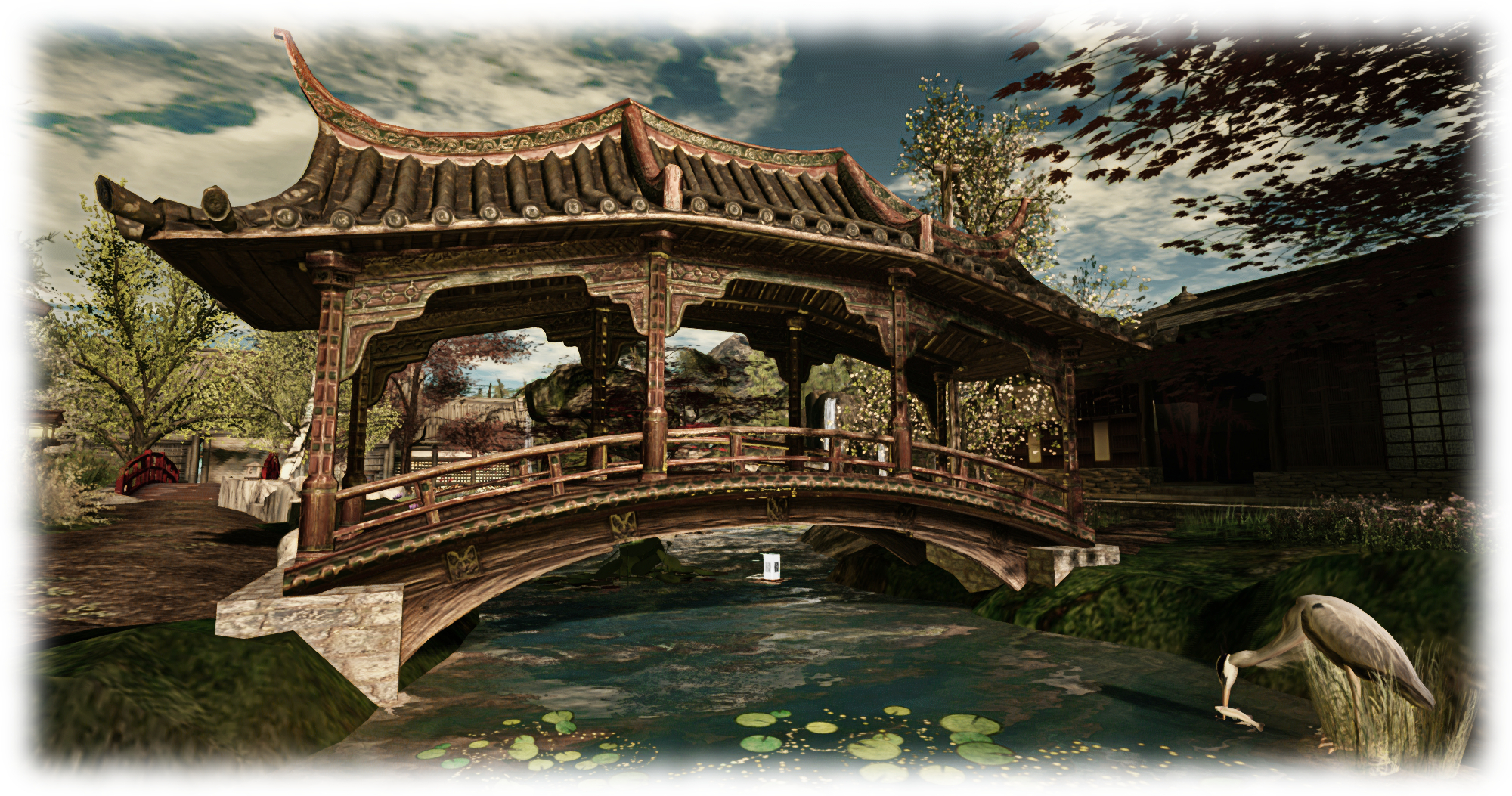
I last wrote about Keisei in May 2013 (see here), and while it is a place I’ve often enjoyed dropping-in to, I’ve actually not set aside time to write about it since. Which is a little lax of me, as Daddio Dow’s region, with its rich mix of oriental themes and activities, is always a visually attractive place to visit.

I was actually put in mind of Keisei while writing about the Chinese New Year. While the region  admittedly leans more towards a Japanese theme than Chinese, there is some cross-over in places, and writing about Chinese themed builds in SL got me thinking about other oriental locations I’ve visited over the years. Coincidentally, Daddio himself dropped me a little line asking after me, and mentioning that there had been some recent changes, so I decided to hop over to Keisei and rectify my lack of recent blogging.

Kesei, February 2015 Keisei (Flickr) – click any image for full size

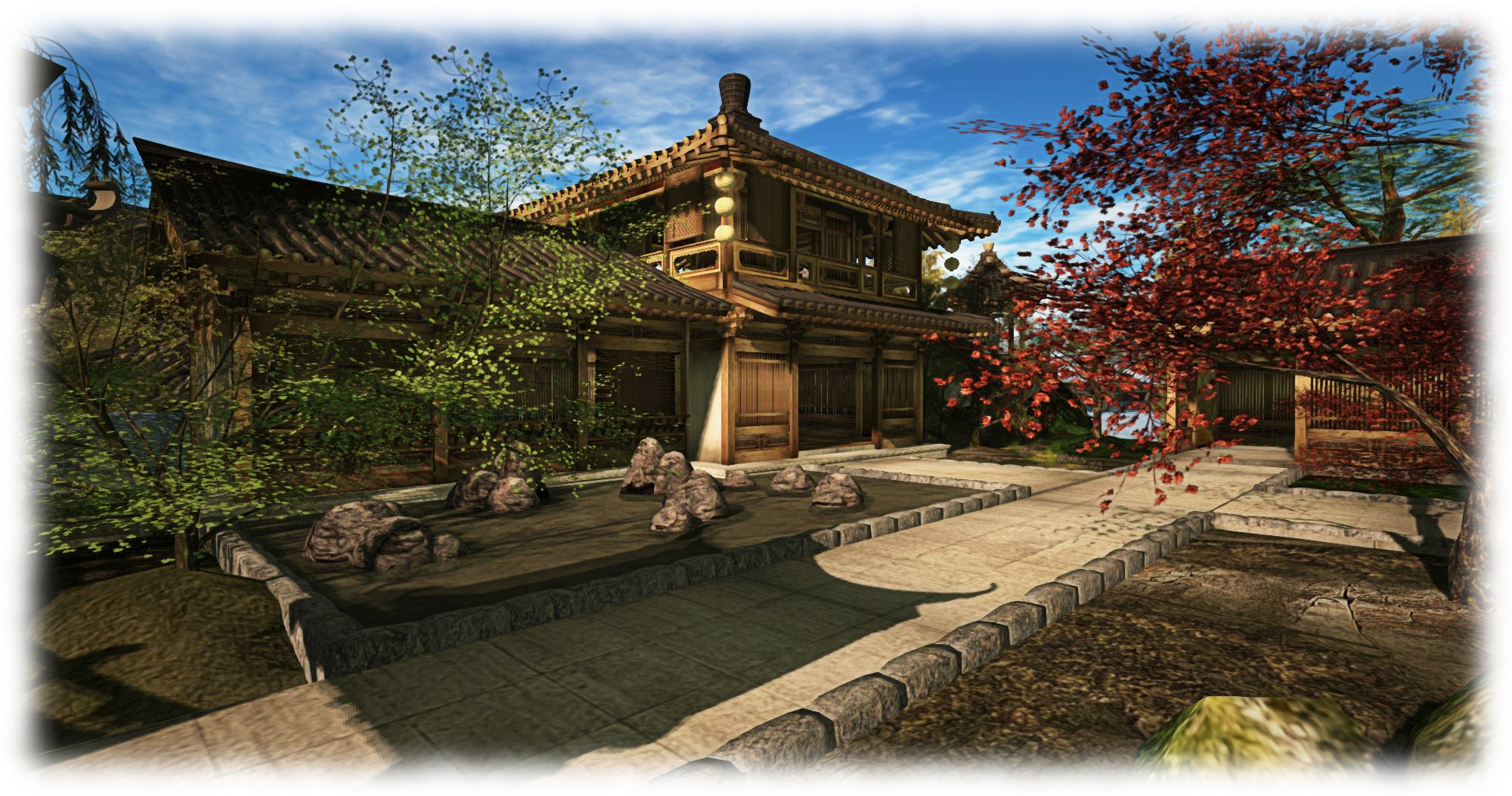
The overall oriental theme to the region, coupled with the use of water – there are waterfall-fed streams running through the landscape – are primarily why I’m attracted to Keisei. With the streams spanned by bridges, the careful use of flora, a mix of grassy paths and cobbled streets, coupled with a rich ambient soundscape, everything combines to present a place ripe for photography, inviting exploration. And while the buildings might be suggestive of a specific period setting, the reality is that the region exists in its own time, easily mixing the use of stone lanterns perhaps of a bygone era with more recent electric lights.

Parcels within the region offer their own windlights, which may vary, depending upon who is occupying them (several of the parcels are open to rent through Daddio), but given the continuous theme through Keisei, the entire region lends itself to almost any windlight you might choose to use.

Kesei, February 2015 Keisei (Flickr) – click any image for full size

From the landing point, with the nearby Shinto shrine, pagoda and grand mansion, you can find follow the paths through the region to the bath houses, shopping area, tea house and onwards out to the palace and other buildings closer to the edge of the region, some of which are operated by those renting land from Daddio. So far as I’m aware, all of the buildings are open to visitors with the exception of the White Lotus Retreat in the north-west corner of the region, which has no bridge linking it to the rest of the region, signifying it is a private residence.

As an adult rated region, there are some activities of an adult nature (you might note the opium den and shibari house on the teleport map at the arrival point), but you shouldn’t let this put you off; everything is quite discrete (the shibari house is up in the sky, for example, and well out of sight) and the region can easily be enjoyed whatever your outlook on life.
Kesei, February 2015 Keisei (Flickr) – click any image for full size

So why not hop over and take a look for yourself; you might even find the onsen calling to you!

Related Links

Kung hei fat choi from Second Life

China Grove
China Grove

February 19th, 2015 sees the start of the new year – the Chinese New Year, that is. With it, we say goodbye for now to the horse, and hello to the goat. It’s a time for celebrations, with lanterns, firecrackers, colour, Lions Dances and more; and doubtless, there will be lots of celebrations taking place across the weekend to mark the Festival.

For those wanting to get a feel for China – ancient China in particular –  there are lots of Chinese-themed locations to be found in Second Life. Some associated with role-play, others offered as places to visit and enjoy, some which offer a gateway to shopping in SL, and some which mix Chinese and Japanese elements into a happy blend of the ancient oriental, reflective of their past histories and interactions. Others offer what might seem more curious mixes.

China Grove
China Grove

China Grove, for example, describes itself as offering a beachfront location with private accommodation, jet skis, swimming, and even topless bathing. But above an behind it sits a beautiful Chinese palace. The work of Selene Nirvana, and featuring creations by designers such as Ryu 竜, the palace sits atop a great rocky outcrop rising about the surrounding lands, protected by broad, strong walls and guarded by its very own terracotta army, complete with chariot-riding warlords.

Reached via a small waterfront village sitting in the protective arms of the palace walls and watched over by dragon canon, the place offers a wealth of colour and opportunities to wander through its cobbled terraces and courtyards, and through its great halls. Tai Chi is offered for those wishing to clear their minds, while a dragon atop a tall tower keeps a vigilant watch towards more open waters, his fire perhaps a beacon for ships trying to find their way to the docks below his high perch.

Jomo
Jomo

For another feel of ancient China, one can also visit Jomo, the home of Xiaoduo Abbot’s store, is set amidst a glorious build I wrote about in November 2013. With walls, gardens, places to relax and stages for entertainment, it encourages the visitor not only to shop, but to tarry awhile and explore.

Or, for a different flavour and feel, you can hop over to Aston Leisen’s artful and slightly surreal design called, simply, China, which has been a delight to visitors for several years now, sometimes moving up or down in the sky, but always offering a visual treat and a place were hanging-out and AFKing is welcomed.

China
China

I’m barely scratching the surface of things in mentioning these three; but hopefully they’ll be enough to whet your appetite and get you searching things oriental in your SL explorations this weekend, and perhaps enjoying the New Year celebrations.

And while we’ve already seen Yuandan for this particular New Year, if you are worried about bumping into Nian while you’re out and about, just make sure you’re wearing red and carrying a firecracker or two before you leave home!

Kung hei fat choi!

Related Links


Of spring hikes through Second Life

The Pines at Jacob's Pond, Jacob The Pines at Jacob’s Pond (Flickr) – click any image for full size

Spring has come once more to The Pines at Jacob’s Pond, and with it another beautiful make-over by region holder Holly  (Dacotah Longfall). It is Holly’s well-planned seasonal changes that keep bringing me back to what she disarmingly calls her “backyard”, which forms part of the End of Time family of regions, because every time she reworks the region, something extraordinary appears.

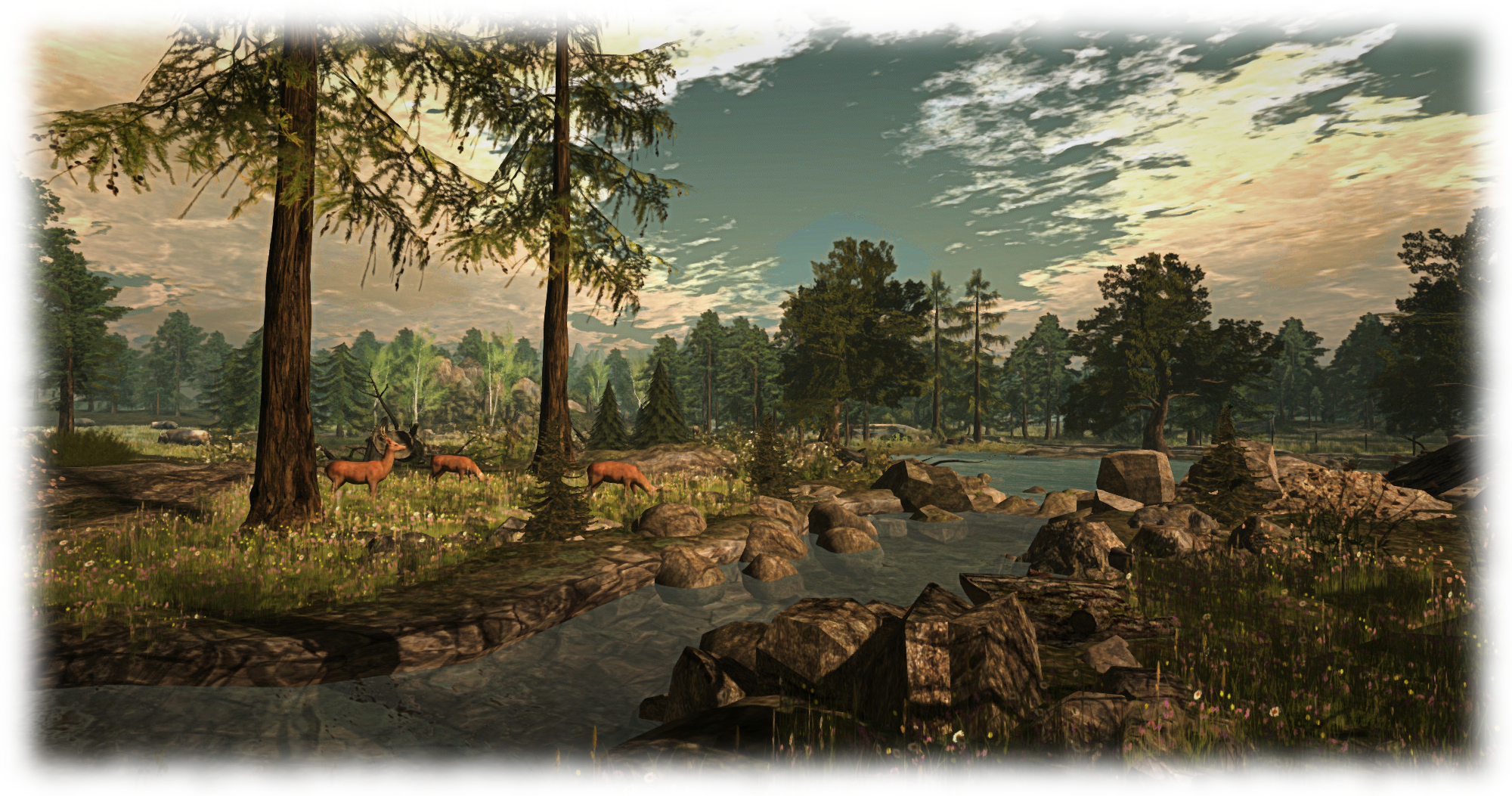
With the snows of winter long gone, Holly presents visitors with her take on a part of the world she loves: the Black Hills of Dakota. Drawing inspiration from Custer State Park in South Dakota, she has created a place of gently undulating countryside through which a trail winds  over grassy plains and under tall trees, looping past a lake and onwards towards her white-painted house (at which visitors are kindly requested to observe her privacy via a polite sign at the gate.

The Pines at Jacob's Pond, Jacob The Pines at Jacob’s Pond (Flickr) – click any image for full size

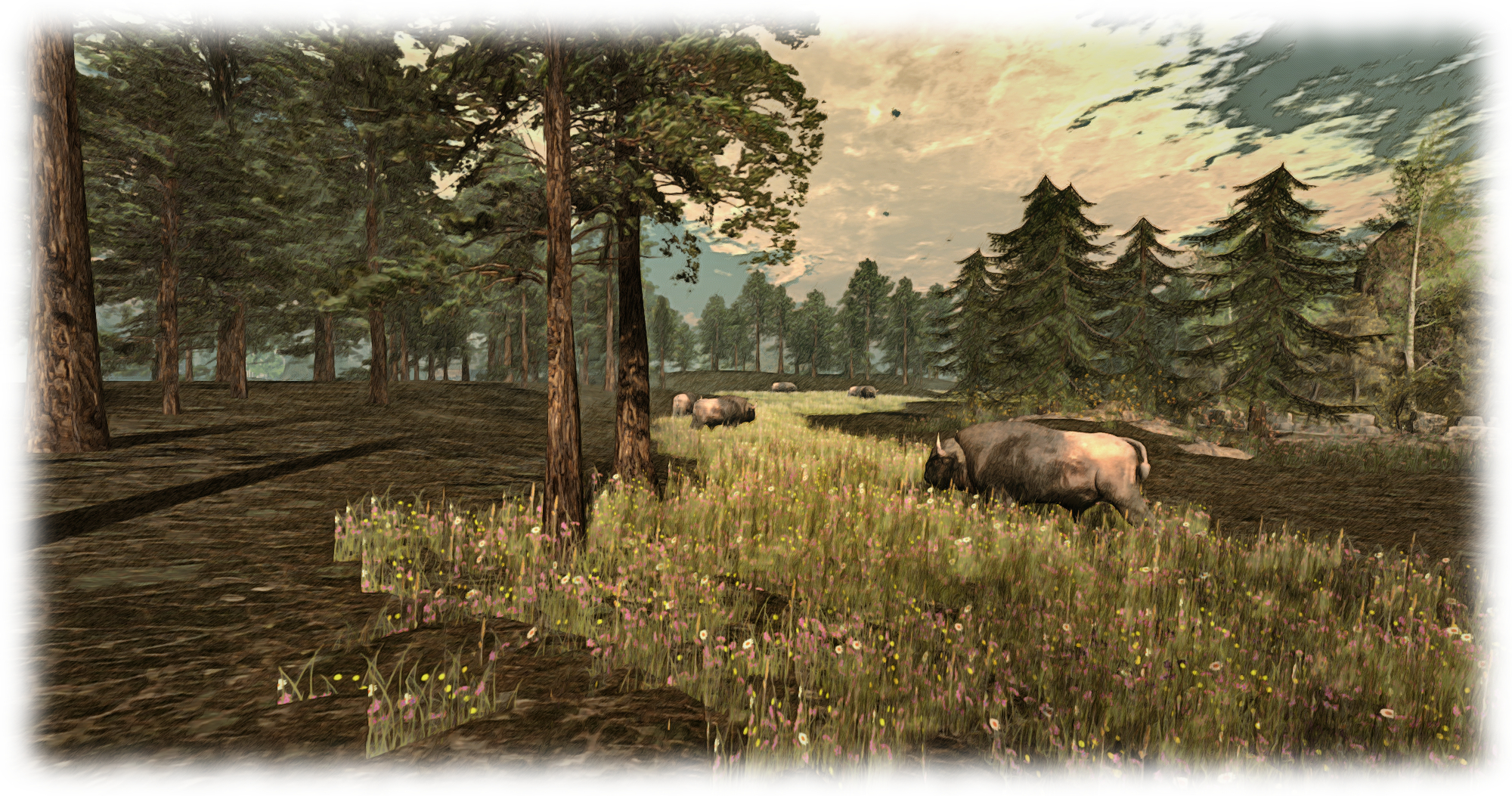
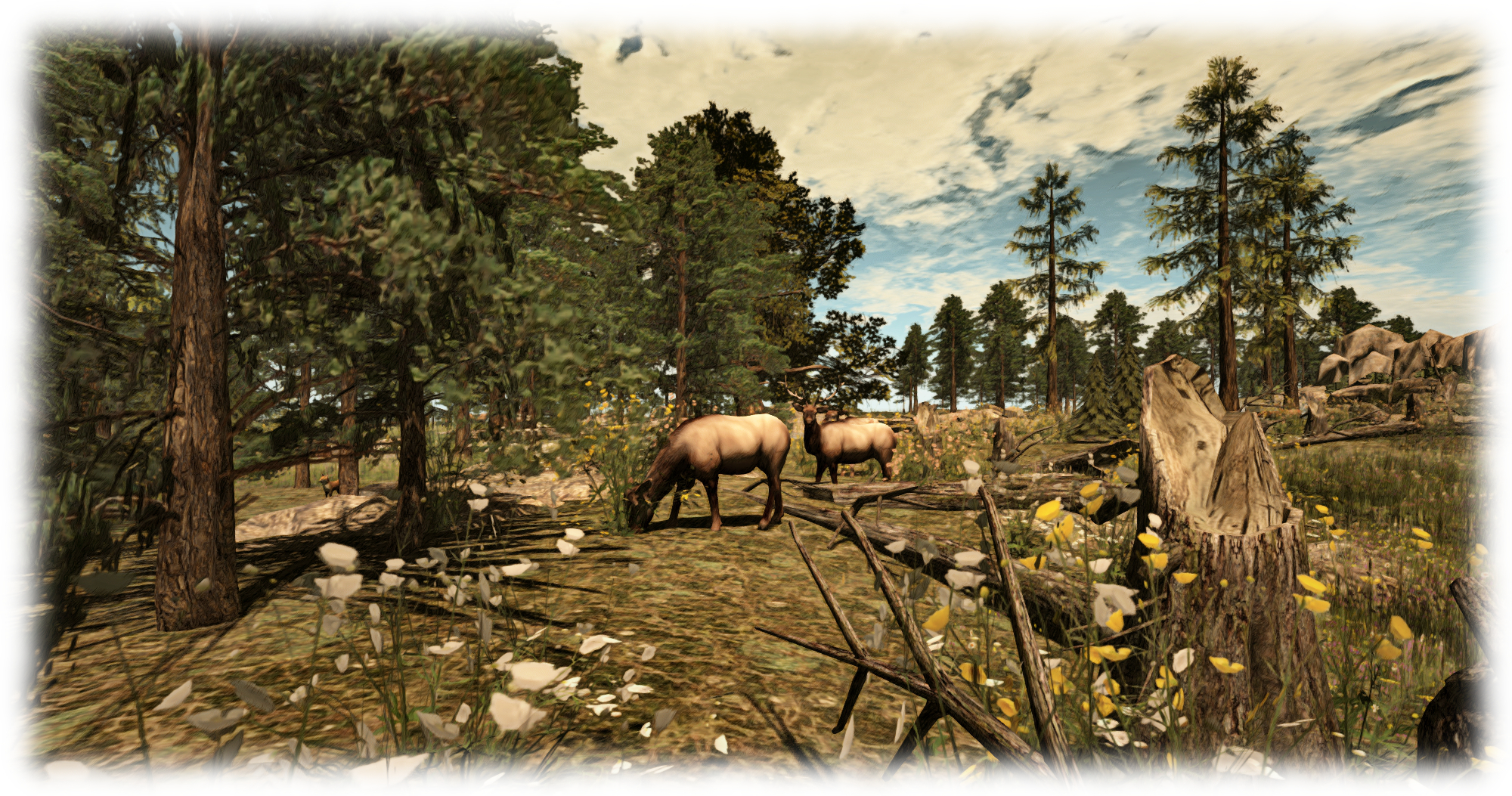
Throughout the region wildlife can be found, offering some wonderful opportunities for photography. Elk graze within the shade of tall conifers while American bison roam the grasslands, carefully avoiding the gopher holes as geese pass overhead. Elsewhere, behind strung wire, domestic cattle also graze peacefully and horses meander towards Holly’s house, perhaps seeking their barn for the night. There’s a lot more in the way of animals to be discovered, but I’m not going to catalogue them all here; that would spoil an actual visit.

This is a place where hiking boots are perhaps best required, together with a jacket and hiking stick to really feel the part, because Holly has done a wonderful job in creating the look and feel of the Great Outdoors. Those seeking a lot of things to “do” might be a tad disappointed. Those who enjoy photography, and still getting away from it all most likely won’t; there’s enough simple beauty here to capture the heart and eye that the visitor is naturally drawn-into the region, gently and enticing encouraged to follow the trail and discover all there is to be seen.

The Pines at Jacob's Pond, Jacob The Pines at Jacob’s Pond (Flickr) – click any image for full size

If you’ve never been to The Pines at Jacob’s Pond before, I really do urge you to do so; It’s always a place of beauty and delight. And when you do, don’t forget to hop over the water to visit the rest of the End of Time regions.

Related Links

Misted waters, dream themes and nightmare scenes

oporuto, “”” oporuto””” (Flickr) – click any image for full size

“”” Oporuto “”” is one of those places in Second life that can defy definition. Designed by ダックスフンド (Dachshunds), this homestead region is a curious blending of intent and motifs. There is a small mall here, to be sure, offering avatars, household items and more from a number of creators; but finding it might take a little time, as there are curios visible on your arrival which offer distraction and demand investigation as you wade through the ankle-deep water, heavy with a blanket of low-lying mist.

Aside from the store area, ringed by trees and quite hidden from view behind ancient walls, four island-like areas present themselves to visitors, scattered between which are individual pieces of sculpture and other items that give the place something of a feel of being an art display.

oporuto, “”” oporuto””” (Flickr) – click any image for full size

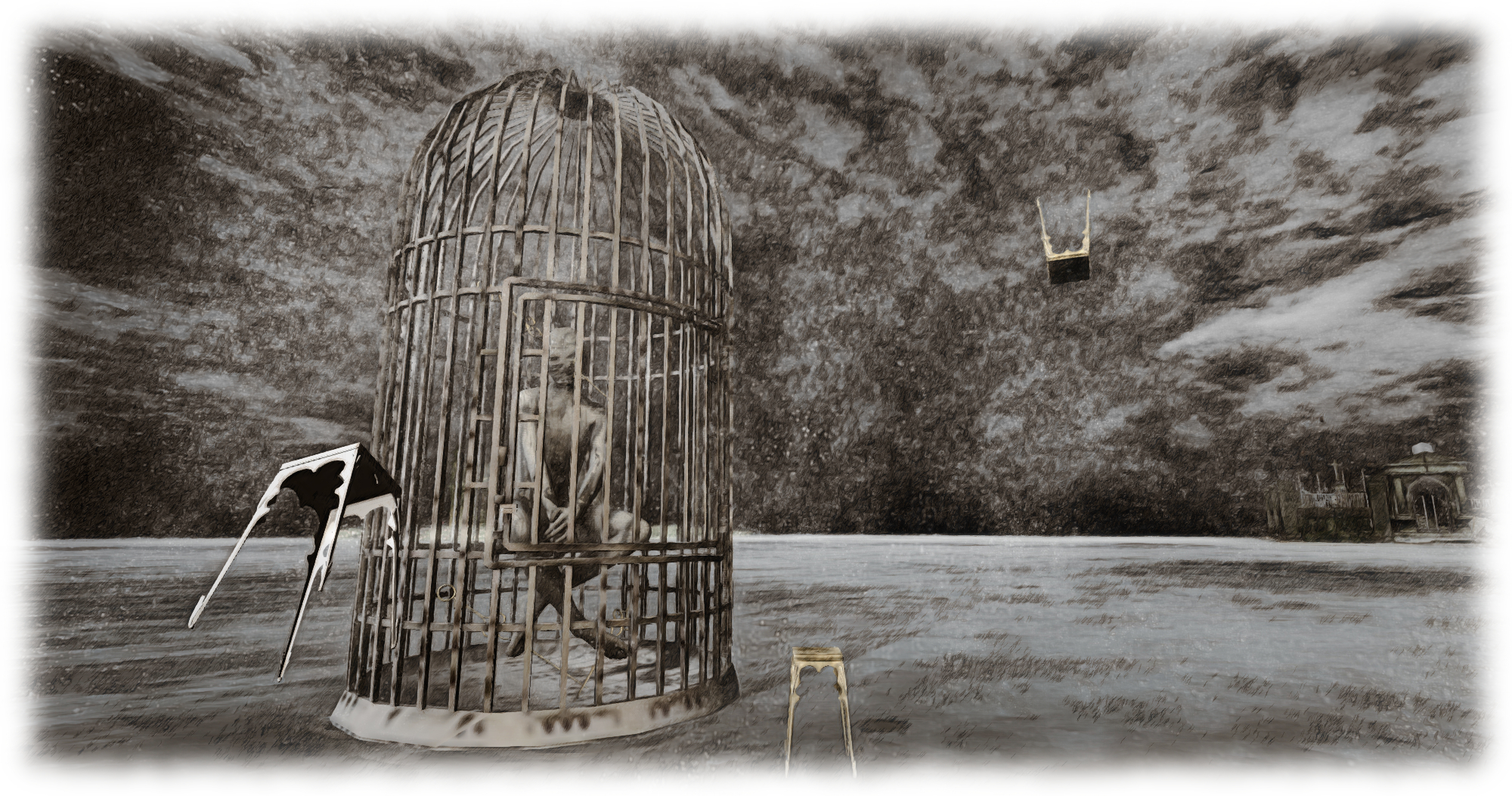
There are dark elements to be found here; graveyards rise from the mist, shadowy forms floating through them, and cages and sharply-pointed instruments can be found. But so to are themes of love, and hints of fairy-tale memories.

Charm and menace can also be found intertwined, perhaps most noticeably through the tiny figure peeking through the window of a shattered house at an empty bed. Depending on one’s mood, the painted smile on the little face can at first give a poignant feel to the tableau before perhaps turning a little more sinister  – or can do exactly the reverse: first appear sinister and threatening before become gentler and more caring.

oporuto, “”” oporuto””” (Flickr) – click any image for full size

There are elements of whimsy to be discovered as well, such as with the oversized cats frolicking around a rowing boat with translucent fish. For those of a contemplative mood, and snowbound window opens out onto a warm summer sky from the pages of a fairytale book, offering a place for one to sit and ponder.

All told, this is a strange place, rich in imagery and not above odd little contradictions in tone, as noted. Rezzing is closed, but the opportunities for photography are many, although I would perhaps warn that there is a lot going on in places in terms of particle effects, etc., that I found my GTX660 labouring at times. Wandering the region is a little like wandering through a landscape shaded by the memories of dreams and nightmares; what can be found here might not appeal to everyone, but that doesn’t make it any the less captivating.

oporuto, “”” oporuto””” (Flickr)

Related Links

Urban scenes in Purple Crayons

Purple Crayons, Private Property; Inara Pey, February 2015, on Flickr“The Lost Town” – Purple Crayons (Flickr) – click any image for full size

Update, February 26th: I’ve received a note saying that Purple Crayons and Square Pegs in Round Holes will be closing on March 5th, 2015.

My recent visit to The Lost Town, Jordy B. Zipdash’s build on Rawh’s homestead region of Square Pegs in Round Holes, reminded me that I had yet to blog about another of Rwah’s builds, that of Purple Crayons, which I visited a little while ago, but had yet to write about; so I decided to correct that oversight.

Rwah charmingly describes Purple Crayons as a place where “colouring outside the lines is the norm,” and “nothing makes much sense, where there is little reason or rhyme as to why, it just happened.” The result is a build with mixes urban, rural and coastal builds into an interesting and photogenic whole, and which offers the curious much to explore.

Purple Crayons, Private Property; Inara Pey, February 2015, on Flickr“The Lost Town” – Purple Crayons (Flickr) – click any image for full size

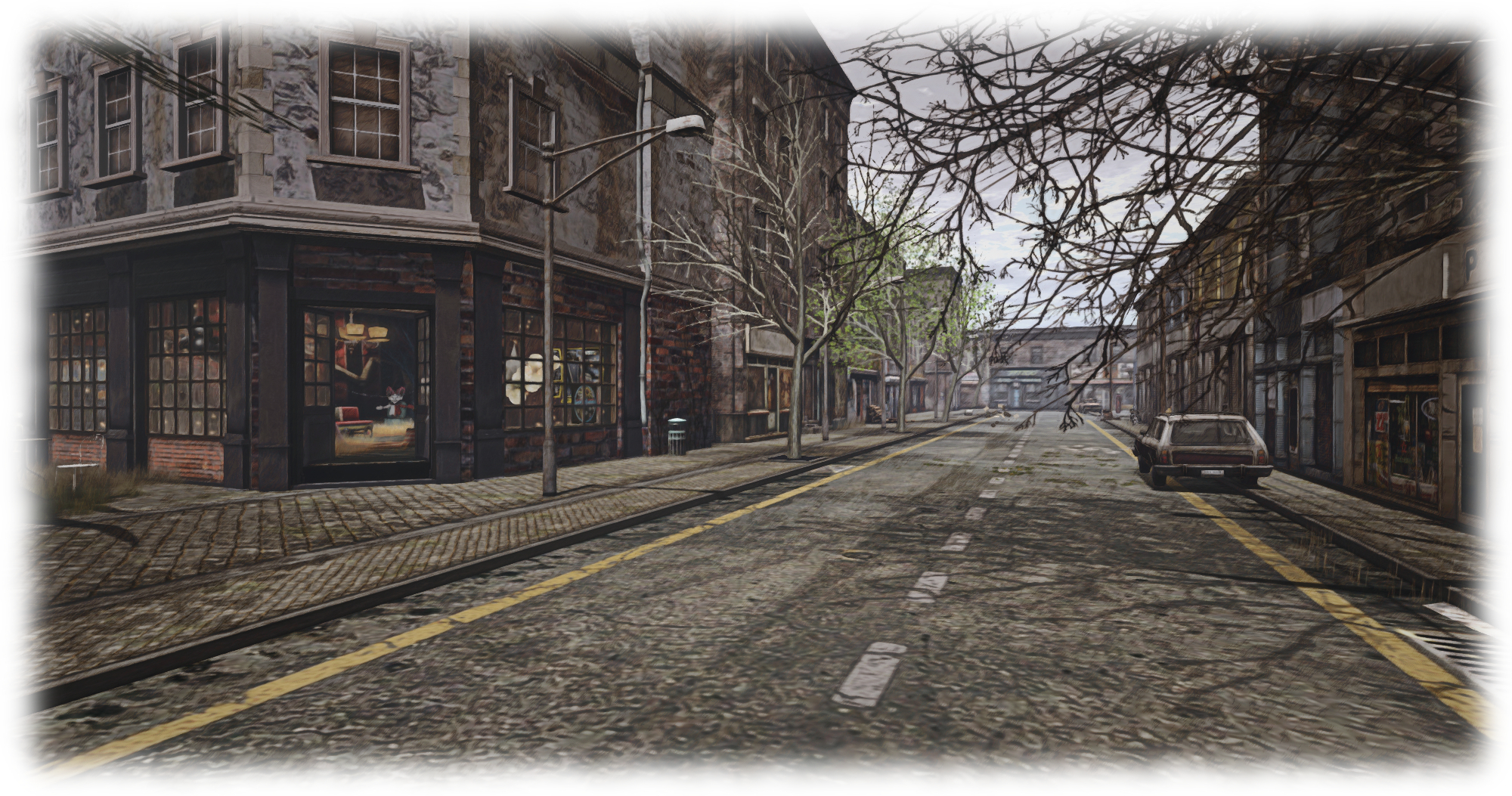
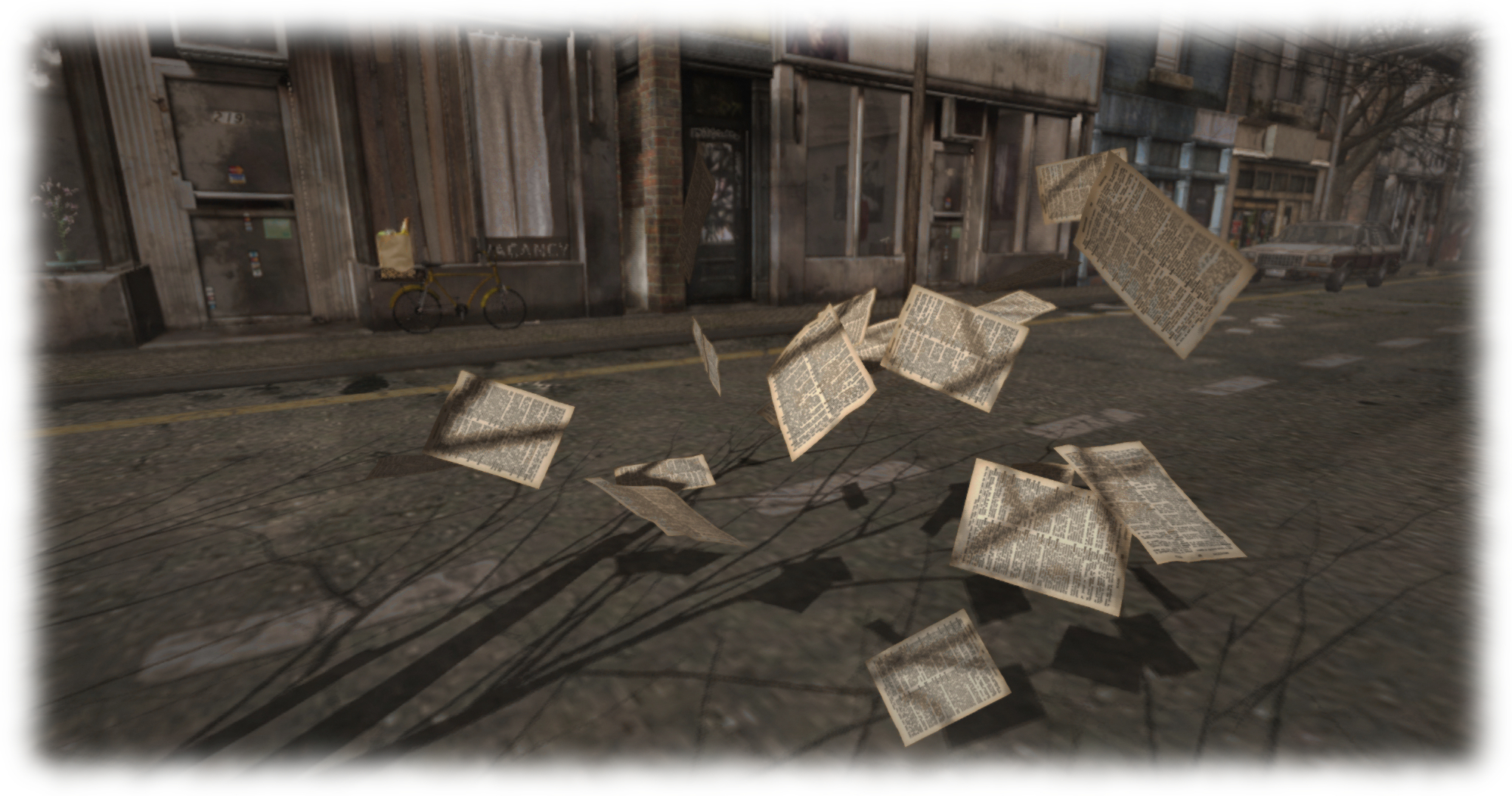
Visitors arrive at the mouth of a tunnel, from which stretches a paved road lined on either side by somewhat run-down shops; clearly a place which has seen better days. Several of the premises lining the street are façades, but equally, several are not, and can be entered. It’s worthwhile taking a little time to discover which these are, as some contain small art gallery spaces, including a studio by Thorn Arisen, who offers evocative portraits of SL avatars and life through his Flickr stream.

One of the things that makes Purple Crayons so natural in appearance is the “stepped” nature of the urban build; above and behind the main street is a raised section of the town, reached via steps. It is something that helps give the place more of that feeling there there is no rhyme or reason to the design of this little urbanised corner of the world – it just happened.

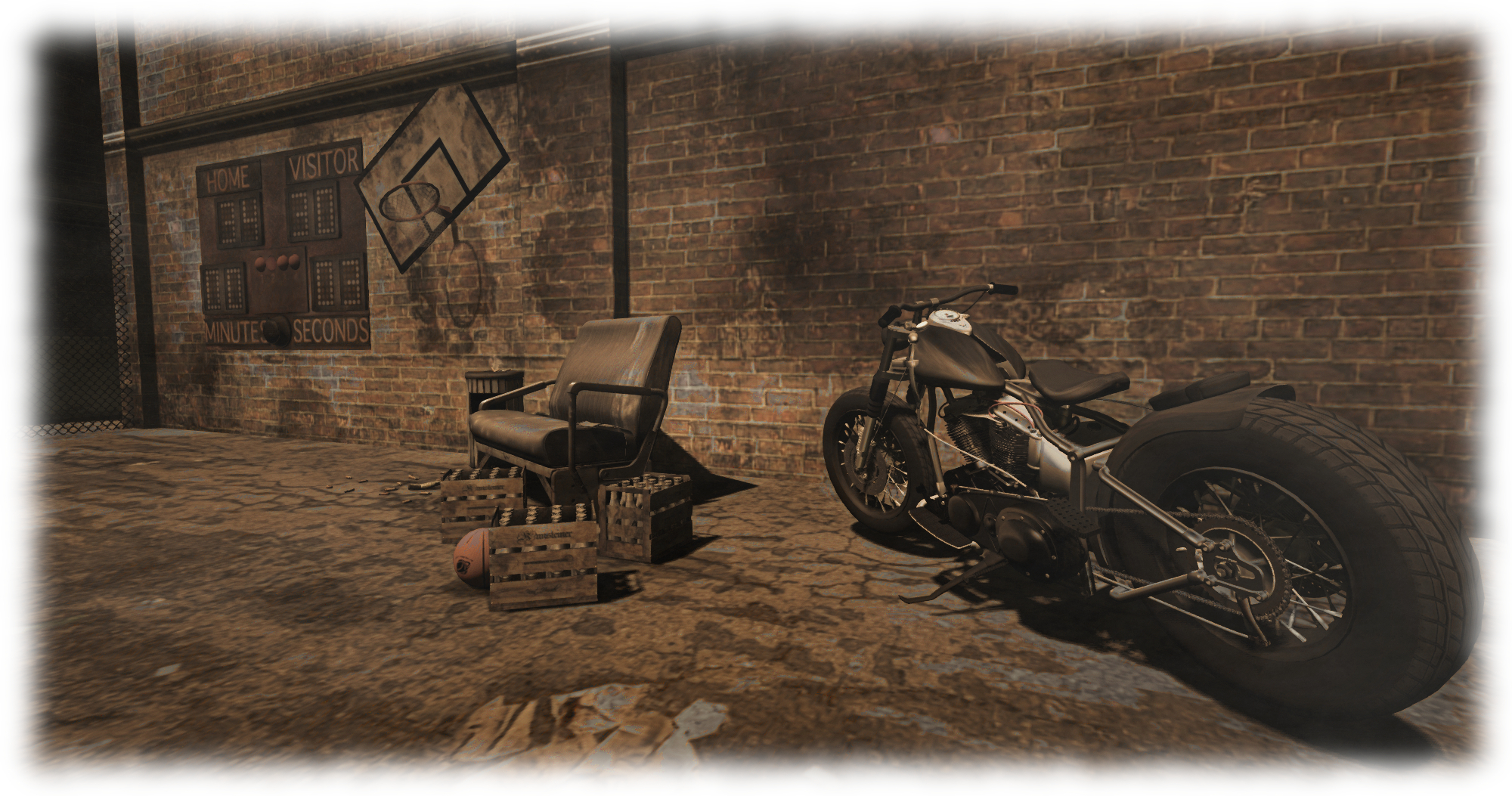
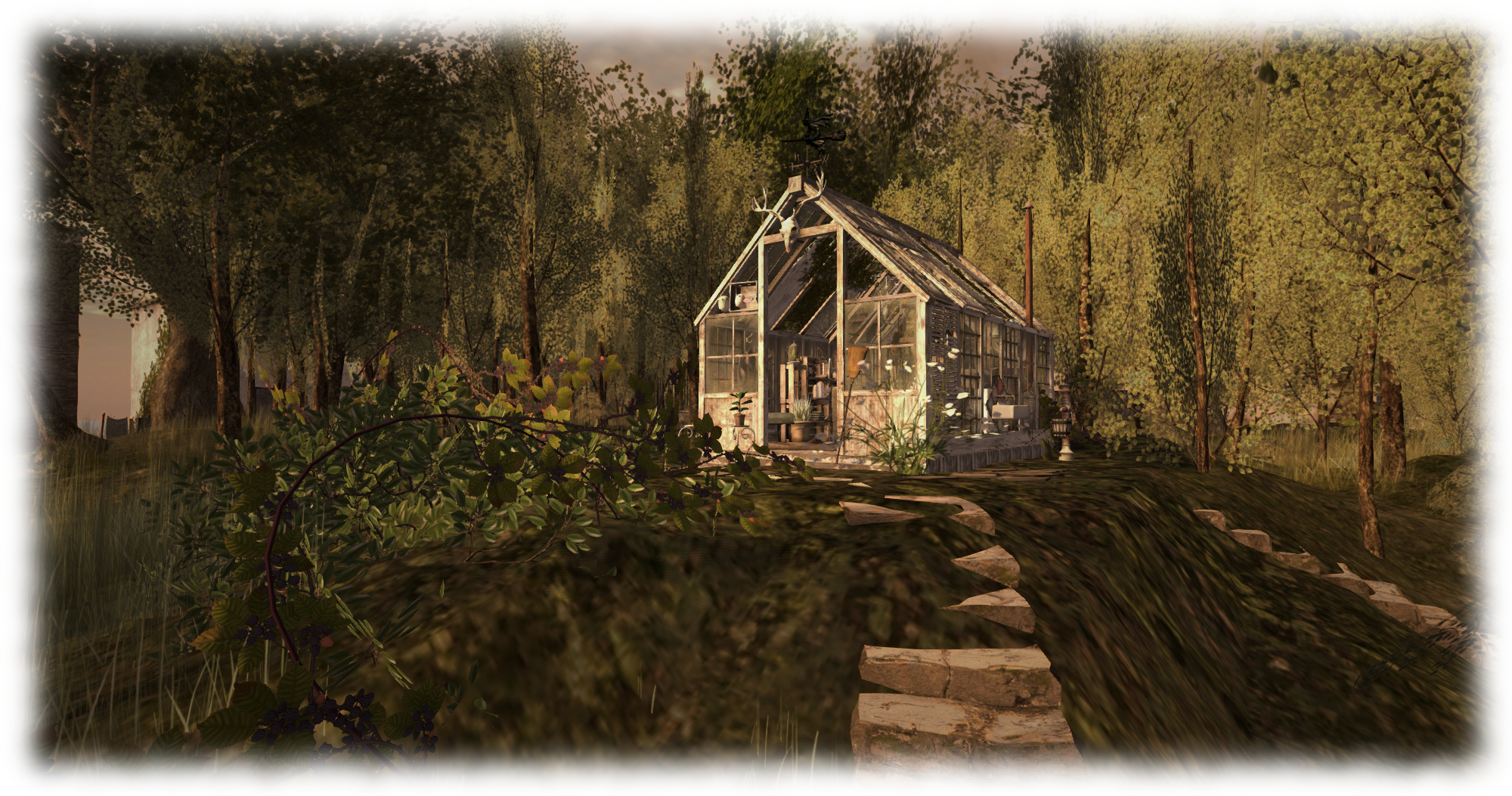
Beyond the buildings sits a small area of woodland which separates the urban grunge from a pristine beach to the north, complete with a prim little pier which appears to be far better maintained than the buildings in town. The beach itself seems to grow a little shabbier the further it travels to the east and west and approaches the edges of the town. To the east, for example, sits another wooden jetty, this time with was appears to be a slightly beaten-up bar promising Girls! Girls! Girls! To the west, shade from the sun is provided by the hulk of an old bus.

Purple Crayons, Private Property; Inara Pey, February 2015, on Flickr“The Lost Town” – Purple Crayons (Flickr) – click any image for full size

Yet there seems to be more here than meets the eye; the questions is, is it intentional, or purely happenstance, as the region’s description might suggest? The aforementioned bar, for example, is anything but, and if you look around carefully enough, a story seems to suggest itself, perhaps involving lost love and regret. The walk through the woodland to the pristine beach to the north also nudges the subconscious into perhaps making connections and drawing conclusions: past times of happy picnics, carefree vacations, all separated from the present just as the beach is separated from the town by the trees.

Or perhaps it really is just a design of contrasts, without intent, existing simply to be enjoyed. Only you can decide.

With rezzing open, and auto-return set to 30 minutes (but, as always, do please clean-up behind you anyway), Rwah invites people to make use of Purple Crayons for the photography, if they wish, and provides a few simple rules she asks people to observe during their visit.  Do abide by them and enjoy your explorations.

Purple Crayons, Private Property; Inara Pey, February 2015, on Flickr“The Lost Town” – Purple Crayons (Flickr) – click any image for full size

Related Links

In the hall of the Centaurs

The Centaurs' Hall
The Centaurs’ Hall – click and image for full size

Ziki Questi posted word that there’s a new build on Verdigris, home of the fabled (and quite lovely) Vintage Village by Oriolus Oliva (a place I last wrote about in July 2013), what’s more, it’s by none other than Haveit Neox, someone whose work in SL I’ve come to really appreciate and enjoy over the last few years.

The Centaurs’ Hall was apparently put together fairly rapidly, the majority of it being put in place in just three days from the start of the month, which is really quite remarkable given the complexity and beauty of the build.

The new build occupies the opposite side of the gorge above which Vintage Village is perched, the great wooden bridge built by Oriolus linking the two. When first viewed, there is something of a similarity between both the Vintage Village and The Centaurs’ Hall. Both occupy hilltop locations bordering the deep gorge which cuts through the region, and both are built out over huge piers rising skyward, their weight cantilevered to a degree: the Vintage Village in a south-north direction, The Centaurs’ Hall along an east-west line.

The Centaurs' Hall
The Centaurs’ Hall

However, that the two are different builds quickly becomes apparent as you cross the amphitheatre that forms the entrance to The Centaurs’ Hall; Haveit’s distinctive style is unmistakable, not only in the architecture, but in the overall harmony of design and use of textures and colour, and the presentation of space.

Inside the arched vaults of the Hall there is much to see, including a reproduction of The Miniature Goal, originally displayed at the Art India Galley exactly a year ago (see my review), and included here on Ziki’s suggestion. Follow the dusty tracks through the upper halls and they well lead you past some of Haveit’s glorious sculptures to the Czardas Greenhouse. While there might not be a lot of floor space available for dancing, this great room with its huge, glass-panelled walls and ceiling, offers plenty of food and drink in keeping with the origins of the name upon which it draws. Beyond the greenhouse, a broad stone terrace, dizzyingly set over the waters at the edge of the region, offers a panoramic view across the gorge to the Vintage Village.

The Centaurs' Hall
The Centaurs’ Hall

This is a quite a magnificent build, one while compliments the vintage village perfectly. Long may both continue together.

Related Links