The history of the telephone in Second Life

The Telephone Museum
The Telephone Museum – click any image for full size

Today, the telephone – in the form of pocket-sized smartphones – is an essential part of most people’s every day life. Looking at one, it is hard to imagine how far the technology behind this means of long-distance communication has come since its birth in the 1870s.

Of course, we all know something of the history of the telephone, with names like Alexander Graham Bell and Elisha Grey (if not poor Antonio Meucci) being familiar to many of us, if only as a result of our school days. But what is it’s real story? How did the early telephones work? what have been the various eras of the ‘phone?

The Telephone Museum

Denzel Coy brilliantly and charmingly answers these questions in Second Life through his Telephone Museum. Within it, visitors can explore the telephone’s entire history, from its beginnings with the unfortunate Meucci, the unlucky Grey and the fortunate Bell, through the first box systems, to candlesticks and on to the rotary era – all the way up to the modern cellphone.

This is a fabulous environment for anyone interested in history or technology as well as the telephone. On displays are around 50 exquisitely crafted telephones from the last 140 years, made by a number of Second Life creators – Raya Jonson, Jin Zhu, Zaida Gearbox, Neotoy Story and Plato Novo, to name but a handful, as well as Denzel himself. Alongside of them are information boards complete with audio playback capabilities, allowing visitors to read or hear the information they contain, together with reproductions of adverts for telephones from the different eras, and more.

The Telephone Museum

The displays are laid out around two levels, with the lower progressing from information on Meucci, Grey and Bell, through to the arrival of rotary dial telephones in the 1920s. These displays are all offered around a model of the very first telephone device from 1876. From here, visitors can progress to the mezzanine level, and the history of the telephone from the 1950s through to the present day, with a brief detour into the world of the military field telephone.

As well as the audio capabilities, the museum includes a number of interactive elements – including the display case of the aforementioned 1876 device being alarmed against theft! There is also a gacha station, where visitors can obtain a number of items, including some rare models of the ‘phones on display and the Telephone Museum Ultimate Guide. There is also a trivia competition on the main floor, where people can test the knowledge they’ve gained during their visit.

The Telephone Museum

This is a superb exhibit to visit, perfectly presented in an environment designed by Denzel. Informative and educational, it is also entertaining and offers another look at just how exquisite mesh models can be in Second Life.

SLurl Details

A Japanese Tea Garden in Second Life

Shareta Osumai Tea Gardens - links in article; click any image for full size
Shareta Osumai Tea Gardens – links in article; click any image for full size

As we all know, the Moles are the resident builders of Second Life who form the Linden Department of Public Works (LDPW). They take care of all the major Mainland infrastructure projects, up to and including activity locations such as PaleoQuest, The Horizons Experience, and other reached via the Portal Parks.

February tends to be Mole Month, with the annual Mole Day taking place in Bay City, celebrating the work of the Moles. 2017 has also been especially poignant for the Moles, as their long-term Mole-In-Chief, Linden Lab’s own Michael Linden, departed the company for pastures new. This being the case, I thought I’d take a little time out occasionally to visit some of the more notable Mole builds in Second Life which may not be as obvious as the “big” places like the Horizons Experience – and a good place to start, thanks to an indirect nudge from Kinnaird Flachra, seemed to be the Shareta Osumai Tea Gardens.

Shareta Osumai Tea Gardens - links in article; click any image for full size
Shareta Osumai Tea Gardens

The Tea Gardens can be found in three locations in Second Life: in the Premium East continent (which also includes Cape Ekim, and the mystery of dragons and Professor Linden, which I first visited far back in 2013), and at Premium South 2 and Premium South 3. All three locations, unsurprisingly, are identical, and form part of the hub for the Japanese themed Linden Homes.

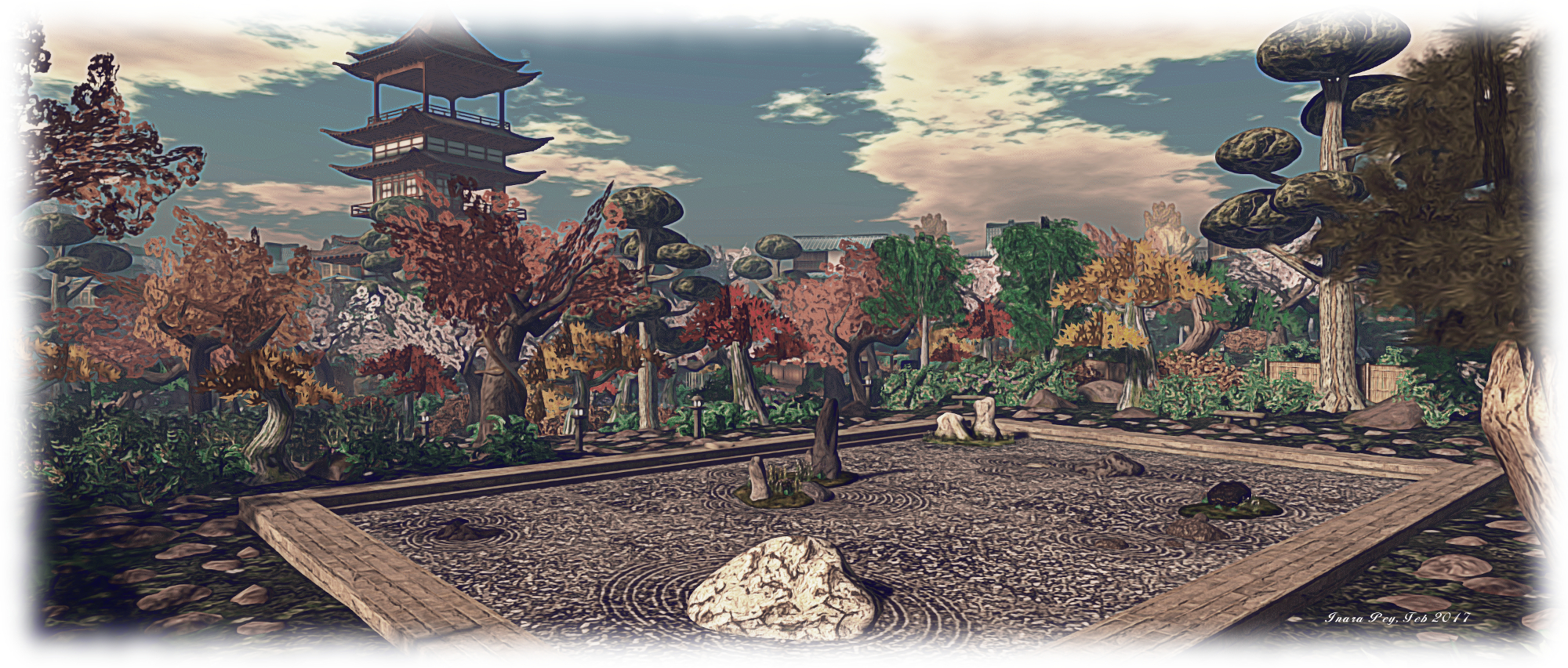
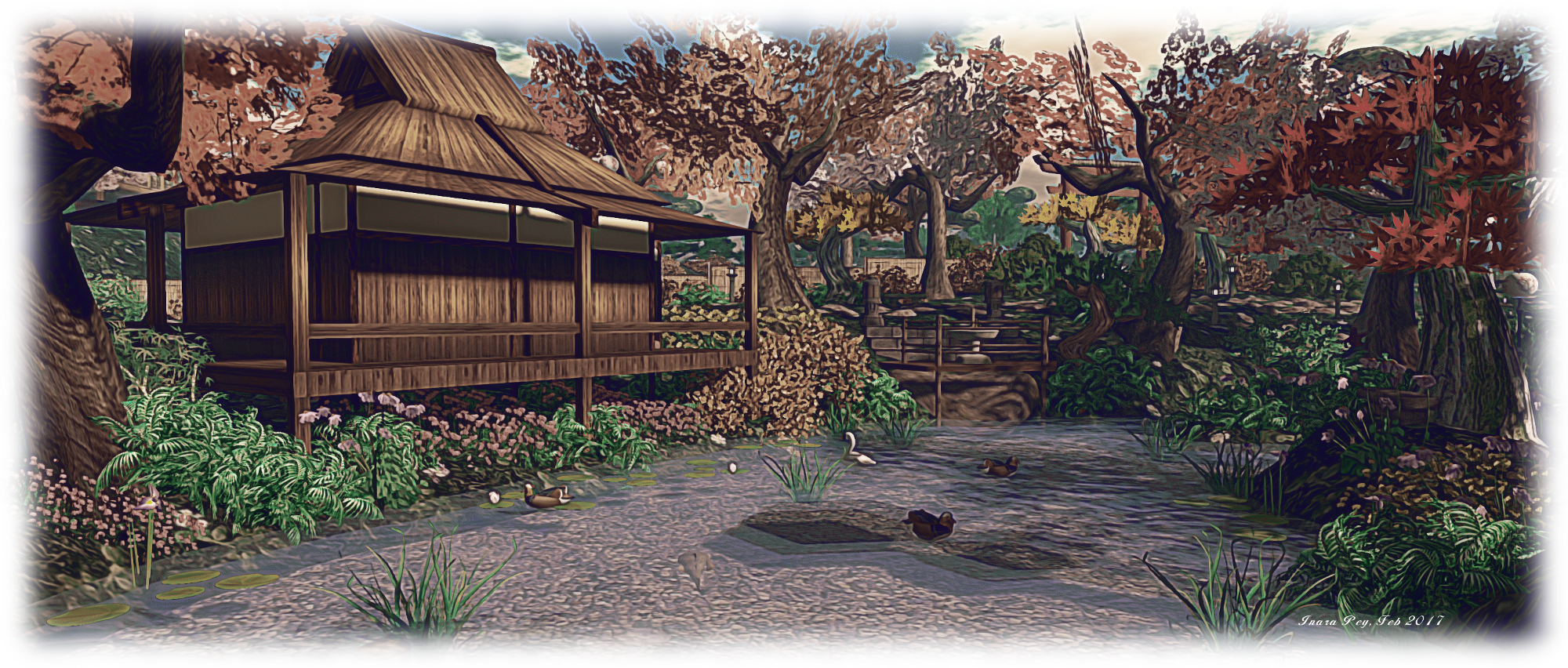
The major feature of the gardens is the pagoda tea house which sits alongside and ornamental pond fed by a stream which tumbles and meanders down from nearby uplands. The tea house is set within a fenced garden, filled with autumnal trees and offering cobbled paths for wandering, the stream cross by delicately arched bridges, and with a small sand garden or meditation.  Those not wishing to walk can catch a ride around the garden on a mole-pulled ricksaw.

Shareta Osumai Tea Gardens - links in article; click any image for full size
Shareta Osumai Tea Gardens

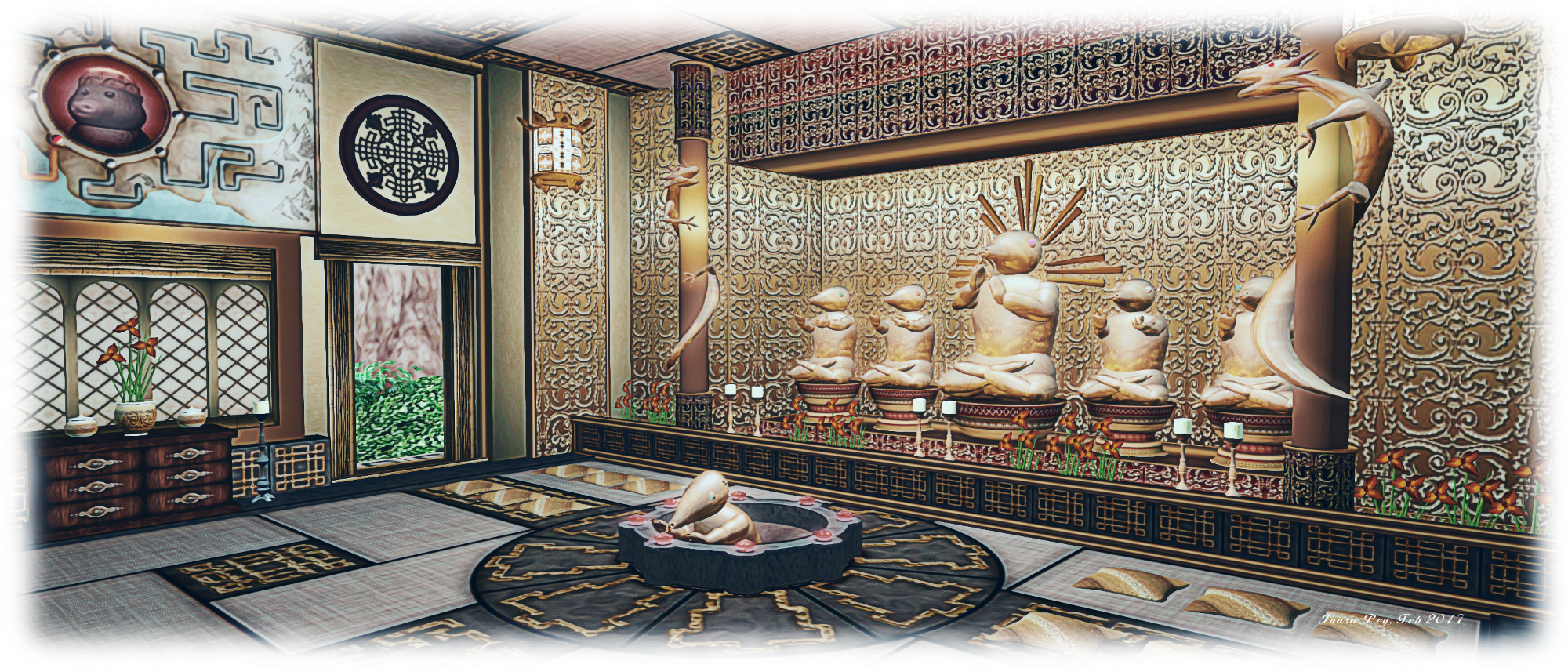
Beyond the garden is a broader area of trees and cobbled walks to be enjoyed and, northwards, lies a path winding up into the hills to the local Info Hub, where various freebies can be obtained and people can learn about Linden Homes. This path, winding via stone steps, also leads the way via  Mole Temple – which (and while it didn’t contain anywhere near as many statues) reminded me a little of the Temple of 10,000 Buddhas, Shatin, Hong Kong.

It’s easy to be dismissive of the Linden Home continents – I’m not a great fan of many of the house styles myself, and do find myself wishing more was done to blend the edges of some more naturally into the sea where they form the edge of the grid – but areas such as the Shareta Osumai Tea Gardens, Cape Ekim and others scattered across these regions offer little gems awaiting discovery.

Mole Temple close to the Tea Gardens

SLurls and Links

All the tea garden areas are rated Moderate

Holly Kai Park: supporting Feed A Smile in Second Life

Brique Zeiner (Brique Topaz in SL), the driving force bethind Feed A Smile and some of the Kenya children from poor families for whom the programme provides daily warm meals
Brique Zeiner (Brique Topaz in SL), the driving force behind Feed A Smile and some of the Kenya children from poor families for whom the programme provides daily warm meals

We’ve made another small but important change at Holly Kai Park. Following discussions with Brique Topaz of Feed A Smile, we’re very pleased to announce that from February 2017 onwards, Holly Kai Park is an official supporter of Feed A Smile.

Feed A Smile is a programme run by Live and Learn Kenya (LLK) to provide nutritious warm lunches for over 400 children every day, paid for entirely from donations to the project – and over a third of the money comes from donations made by Second Life users. It is part of a broader programme managed by LLK, which includes finding sponsors to finance the education of children in Kenya, helping to provide them with everything they need: uniforms, shoes, text books, school supplies, etc., and even building a school in Nakuru, Kenya.

In addition, the organisation also provides medical and dental care for children, including check-ups and vaccinations. 100% of the donations received by LLK are transferred directly to Kenya to care for children, provide education, medicine, food, shelter and foster care. Nothing is lost to salaries, fees or administrative costs at LLK.

The Feed A Smile kiosk just inside the entrance to Caitinara Bar

To mark this modest collaboration, we have located a number of Feed A Smile donation kiosks around the key venues and locations in the park: the landing point, at the stage area on the Art Hill, at the Pavilion live events venue and, of course, in Caitinara Bar. We very much hope that when visiting the park, should you enjoy your time, you will consider making a donation to Feed A Smile in lieu of the more usual venue tips (we prefer not to take venue tips at the park).

Also, as we do not charge for the use of our venue spaces, we also ask that anyone booking and using them to please consider a donation to Feed A Smile / advertising the boards during their event.

A Shot of Tequila and a Love Story in Second Life

Shot of Tequlia
Shot of Tequila – click any image for full size

I received two invitations almost simultaneously recently. The first came from Krys Vita and the second from my region finder extraordinaire, Shakespeare (SkinnyNilla), and both were pointing to Arol Lightfoot’s recently opened Shot of Tequila.

Those who have been around Second Life for a while may remember Arol’s Just Another Tequila Sunrise (which you can read about here). Shot of Tequila occupies the same region, Isle of Love, although Arol now shares the region, with Shot of Tequila occupying the northern half.

Shot of Tequlia
Shot of Tequila

Shot of Tequila sits under an overcast sky (set by default by Firestorm, or use Annan Adored Dusty to get the effect Arol intends with the windlight), and presents a scene which carries some of the essence of Just Another Tequila Sunrise, although the environment is clearly very different.

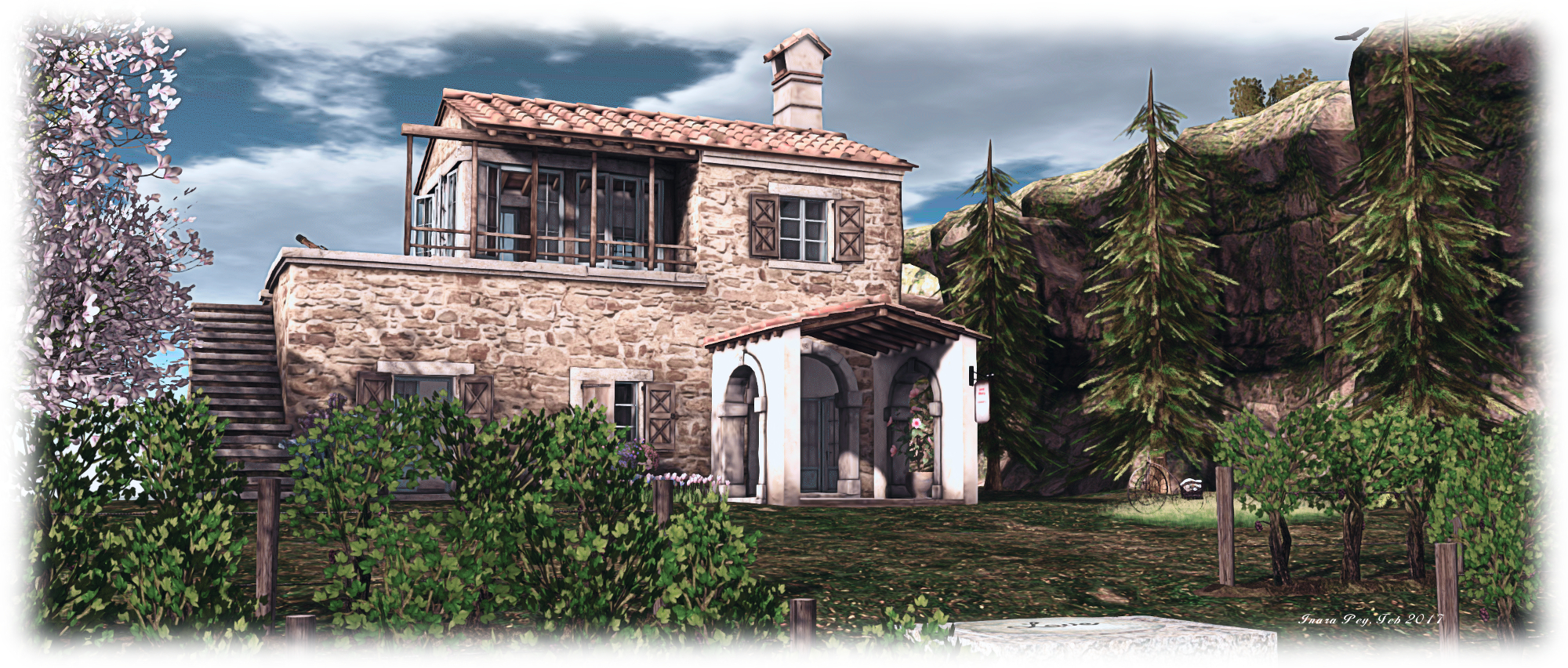
Visitors arrive on a lush, largely open and flat space, where the grass grows long and trees scattered around the periphery. A large house sits to the north, backing on to a steep fall down to the water. To the west, the grass descends more gently down to a beach, overlooked by a stone terrace and wooden deck build to one side of the house.

Facing the front of the house and close to the shade of tall trees, sits a converted greenhouse, with an old caravan and pick-up truck close by. Eastwards, the land also dips slightly, this time to a small body of fresh water, before rising to more rugged scenery, topped by a flat plateau, home to a little summer-house.

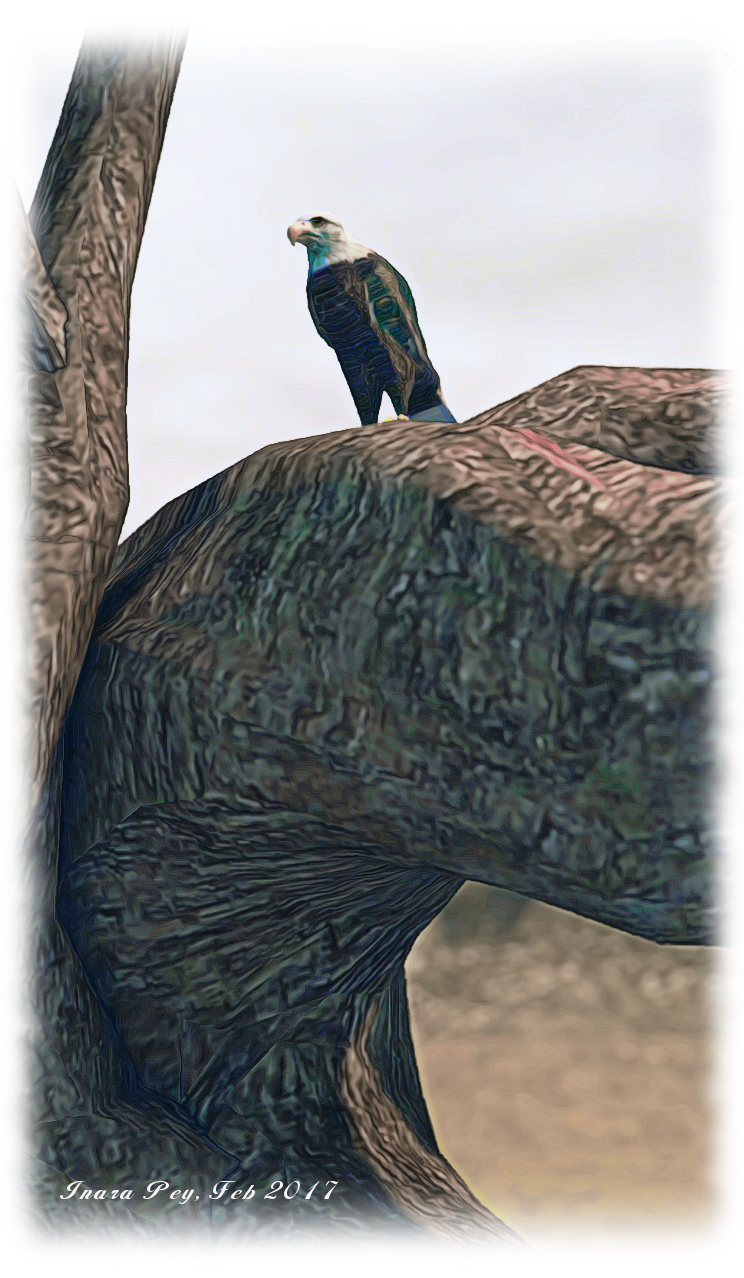
It’s a simple, elegant setting marked by the presence of wildlife: bears wander the edge or the watering hole, possibly vying for fish with the cormorants that are cautiously watching them. Goats and deer graze on the uplands, observed by an eagle perched in a tree and looking quite regal. Closer to the house, stoats and raccoons play, while birds wheel overhead or sit on branches, their song filling the air.

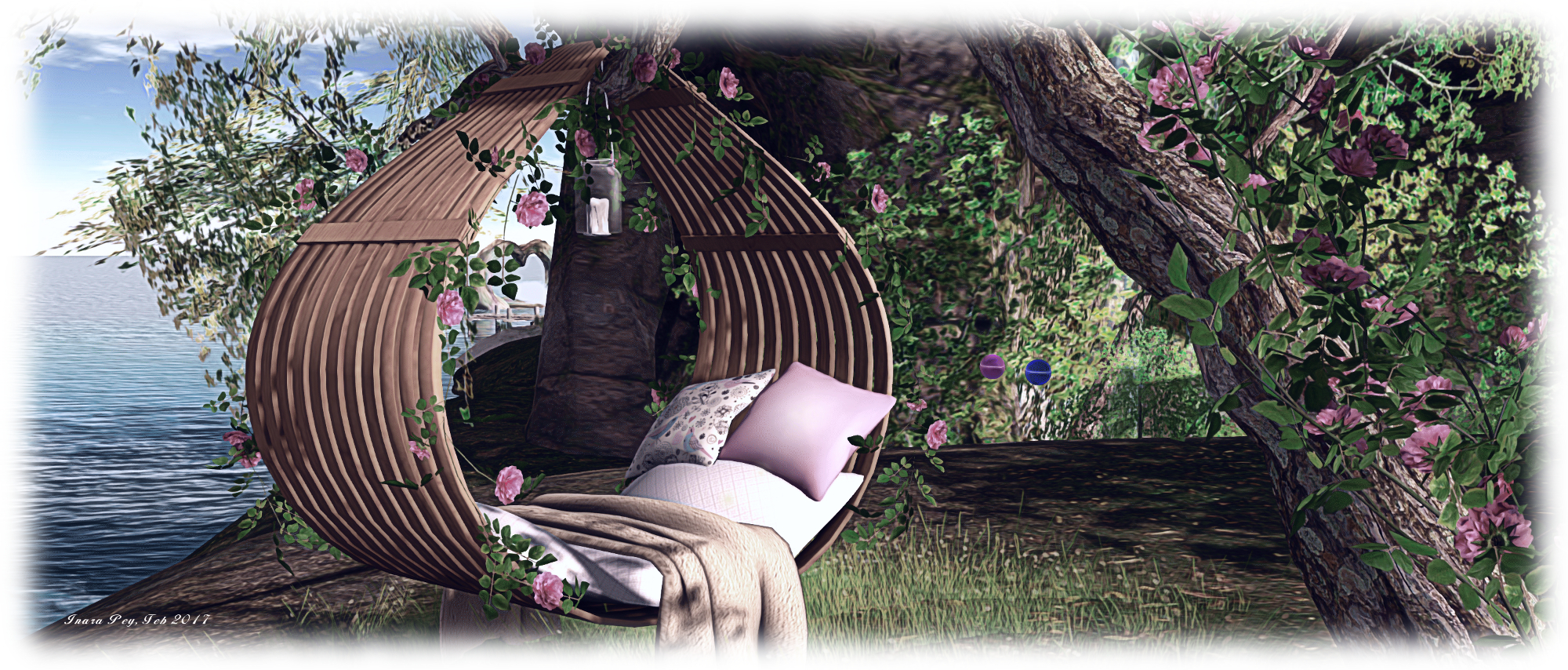
Throughout all of the landscape are little touches which may take time to spot, and visitors have plenty of opportunities to sit and relax or cuddle, be it in the summer houses, in the back of the pick-up truck or at many of the hang chairs and beds or benches scattered across the land.

Love Story
Love Story

Sitting on the southern side of the curtain of cliffs which split the region east-to-west, is Love Story, designed by Lauren (Daisy Kwon) and lit by the springtime skies of the region’s default windlight setting. Also open to the public, it again presents a decidedly rural environment, but this one with a touch of the Mediterranean.

To the west, and overlooking another beach (which is not connected to the one at Shot of Tequila), sits a Tuscan villa, which also overlooks tidy ranks of vines as they descend a gentle slope towards  the stream which cuts diagonally through the landscape. This is feed at one end by a fall tumbling from more cliffs, while at the other it joins a long ribbon of water nestled under the dividing cliffs, also fed by a waterfall.

Love Story
Love Story

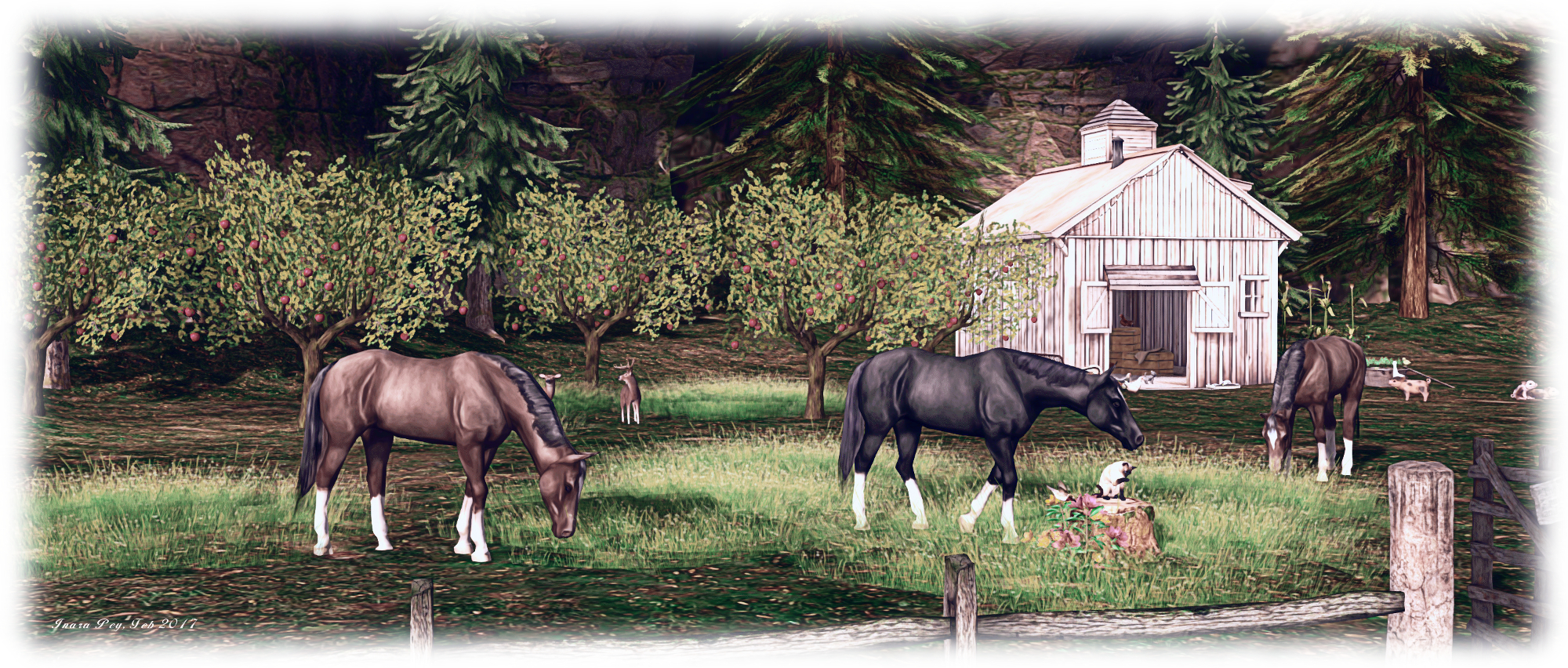
Bright with colour from plants and trees in full bloom, this is another place where animals both domesticated and wild, abound. Horses, sheep and pigs graze in a paddock, watched over by cats and an enthusiastic puppy – as well as a nearby young fox. Ducks waddle along one of the two tracks and swim on the water. And this is just the start.

Follow one of the tracks up into the copse of fir trees, and more wildlife awaits, including several endearing bear cubs, one of whom seems to be playing peek-a-boo while another goes all Baloo Bear as he enjoys a back scratch. Hares, foxes and raccoons can also be found here, as can be one of the romantic cuddle spots. Climb the hill to the west of the copse and another such spot can be found, watched over by a red squirrel, while a blanket is spread nearby on the banks of another pool of water.

Love Story
Love Story

Both Shot of Tequila and Love Story make for an engaging join visit, although you will need to teleport between them, as there is no obvious path connecting them. Both require a keen eye to spot everything that’s going on, indoors and out (keep an eye out for the raccoon playing hide-and-seek), and together they make for an enjoyable visit.

SLurl Details

Isle of Love is rated Moderate.

Sera’s Lost World in Second Life

The Lost World - Oyster Bay
The Lost World – Oyster Bay

Sera Bellic has re-opened her Oyster Bay region with another new look for visitors to enjoy. Sera uses the region to help promote her business of region design, and as such periodically changes its look to offer people a new glimpse of her skills and ideas. For this design, she offers visitors the opportunity to go all Cousteau and take a dive – literally – into The Lost World; so swimsuits are advised!

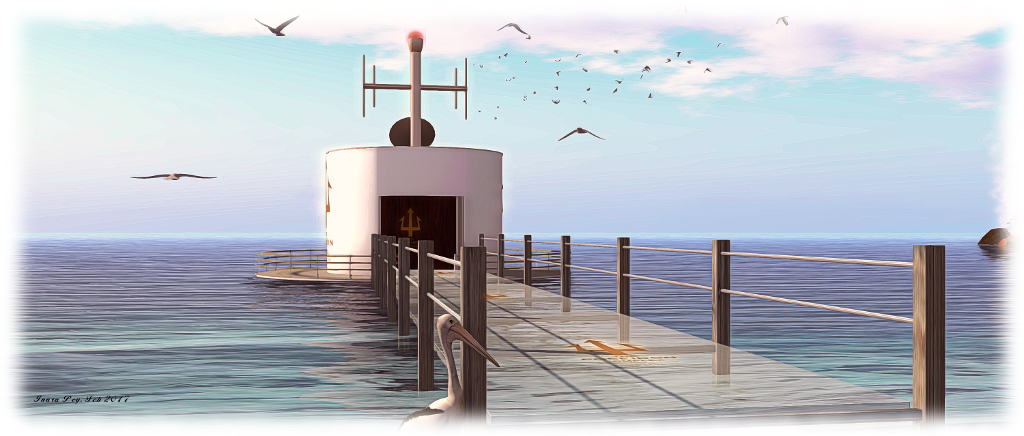
Visitors arrive to find the majority of the island has been flooded; a single sandbar, richly shaded by palm trees lies to the north-west side of the region, while a small volcanic island smoulders in the diagonally opposite corner. Other than a couple of rock formations peeping above the water, these comprise the entire landmass. There is, however, a glass walkway leading out over the waves brushing against the sand, leading the way to a modern, white cylindrical building sitting on a circular platform. It bears the legend The Poseidon Complex  – but the strap line suggests this might be more than the name of a project ;-).

The Lost World - Oyster Bay
The Lost World – Oyster Bay

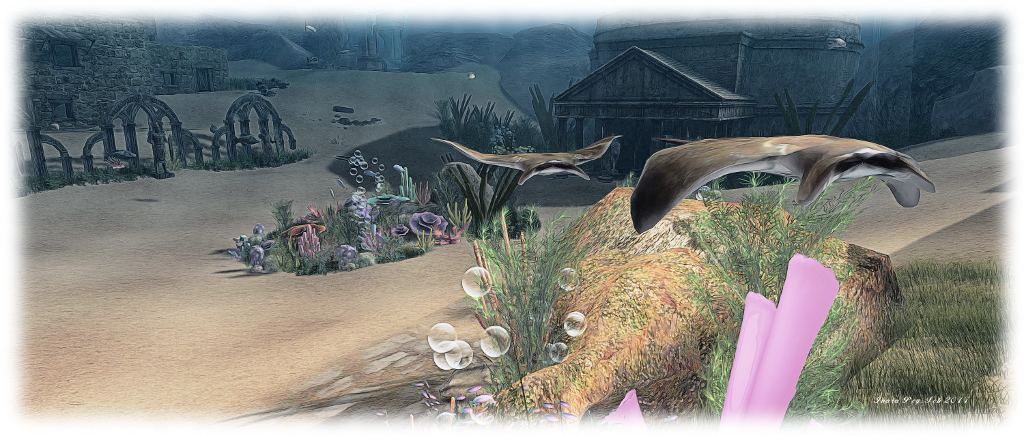
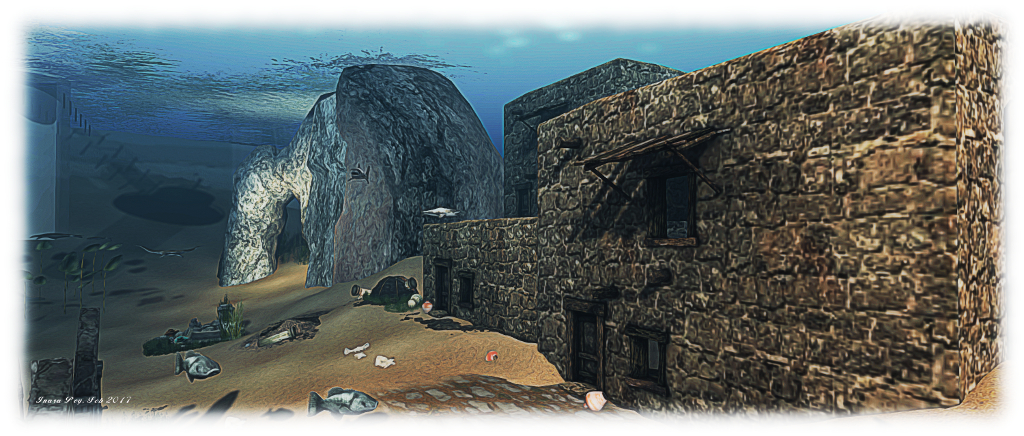
Drop through the diving hole within the cylinder (touch the door if it isn’t already open), and you’ll enter an undersea world of ancient ruins, schools of fish, roaming sharks and undulating stingrays. Across the sandy sea bed stand numerous ruins and statues, with coral beds and the wreckage of ancient chariots scattered between.

Could this be a part of the fabled Atlantis? Possibly. The statues and some of the buildings seem appropriate for the legend; but travel to the great rotunda and pass inside, and the paintings inset into the upper walls of its great circular chamber appear to be from a far later period than history normally ascribes to Atlantis. Thus, a little riddle exists within the ruins.

The Lost World - Oyster Bay
The Lost World – Oyster Bay

But it is outside, beneath the waves, which perhaps holds the attention the most. Fish flicker and gleam in the rays of the sun as they break through the sea above, casting rays of light down towards the sandy floor. The majestic rays swim singly or in pairs, “wings” rising and falling almost hypnotically, while sharks also patrol, also individually or in pairs.  Between they is plenty of room to swim or walk. For those who prefer, there is a mini-sub rezzer (be aware that the sub will appear and then move overhead, so you may have to cam up to find it), which adds a little additional fun to visits.

The Lost World is not an extensive build – which is actually what makes it  pleasant, easy visit. There are places to sit down and rest, both on the sand bar and under the waves, so if you feel like spending time there, it needn’t all be swimming, walking or sub driving.

The Lost World - Oyster Bay
The Lost World – Oyster Bay

SLurl Details

Visiting Hobbiton in Second Life

Hobbiton, Dragon Island; Inara Pey, February 2017, on FlickrHobbiton – click any image for full size

“Mae govannen! So good to have you here with us!” Zephira (Gidgette Adagio) greeted as Caitlyn and I explored her homestead region, Hobbiton. “I must confess, I am still working on texture terrain in Region details. I am a noob to this, but have wanted to do this for a long time and finally got the courage to try!”

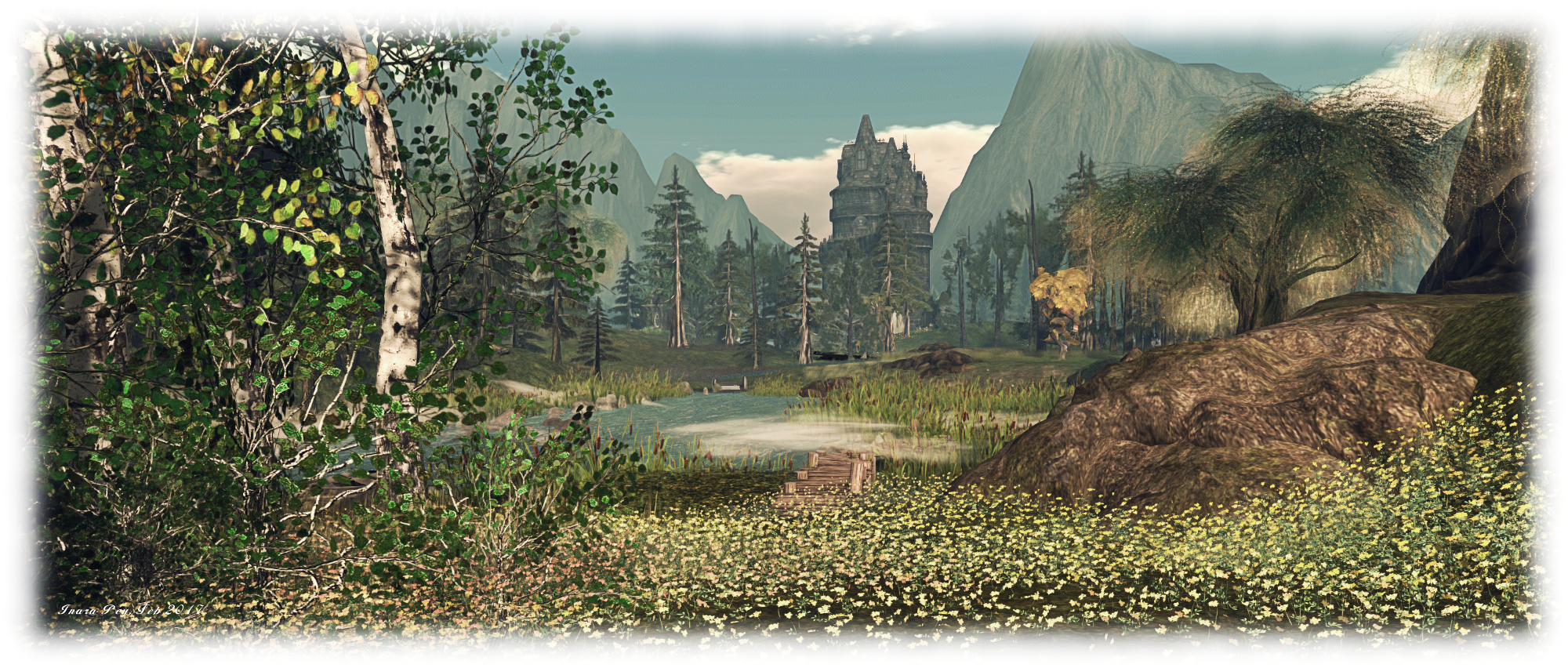
Truth be told, Zephira undersells herself. Hobbiton is a picturesque region beautifully brought together and welcoming to visitors. Inspired by Tolkien’s Middle Earth, it contains many touches and nods towards his tales without actually being specifically placed with a single realm of Middle Earth. So it is that Hobbit holes sit alongside (and beneath!) wizard’s towers while the houses of Big Folk can be found amidst the green, rolling landscape I have little doubt Tolkien would regard as being a slice of Middle Earth were he able to see it.

Hobbiton, Dragon Island; Inara Pey, February 2017, on FlickrHobbiton

This is a place of delight and natural beauty, full of little touches which make careful exploration a must. Light role-play is allowed (but not required) and the region is home to one or two people – so don’t be surprised if you bump into locals who are in character. As well as Zephira, we had the pleasure of bumping into Robin Brandybuck, a second cousin (once removed) to the famous Meriadoc Brandybuck!

Visitors are advised to use the region’s default windlight when exploring, and this casts the landscape into the shadows of evening, giving it an added air of mystery. However, such is Zephira’s design, it is well suited to a range of windlight settings, and for the purposes of the images here, I used one of my preferred pre-sets.

Hobbiton, Dragon Island; Inara Pey, February 2017, on FlickrHobbiton

There is no set path for exploration – simply follow wherever your feet take you. As the region is home to some, there are one or two places that are off-limits to visitors, but the majority of the land is open to wandering, whilst there are also several places where visitors can simple sit and observe the comings and goings of others.

Some of the highlights of the region are easy to find: the wizard’s towers, the Hobbit holes, the follies, and so on. However, when wandering, keep an eye out for all the little touches which both bring the landscape to life and reflect the tales which inspired it.

Hobbiton, Dragon Island; Inara Pey, February 2017, on FlickrHobbiton

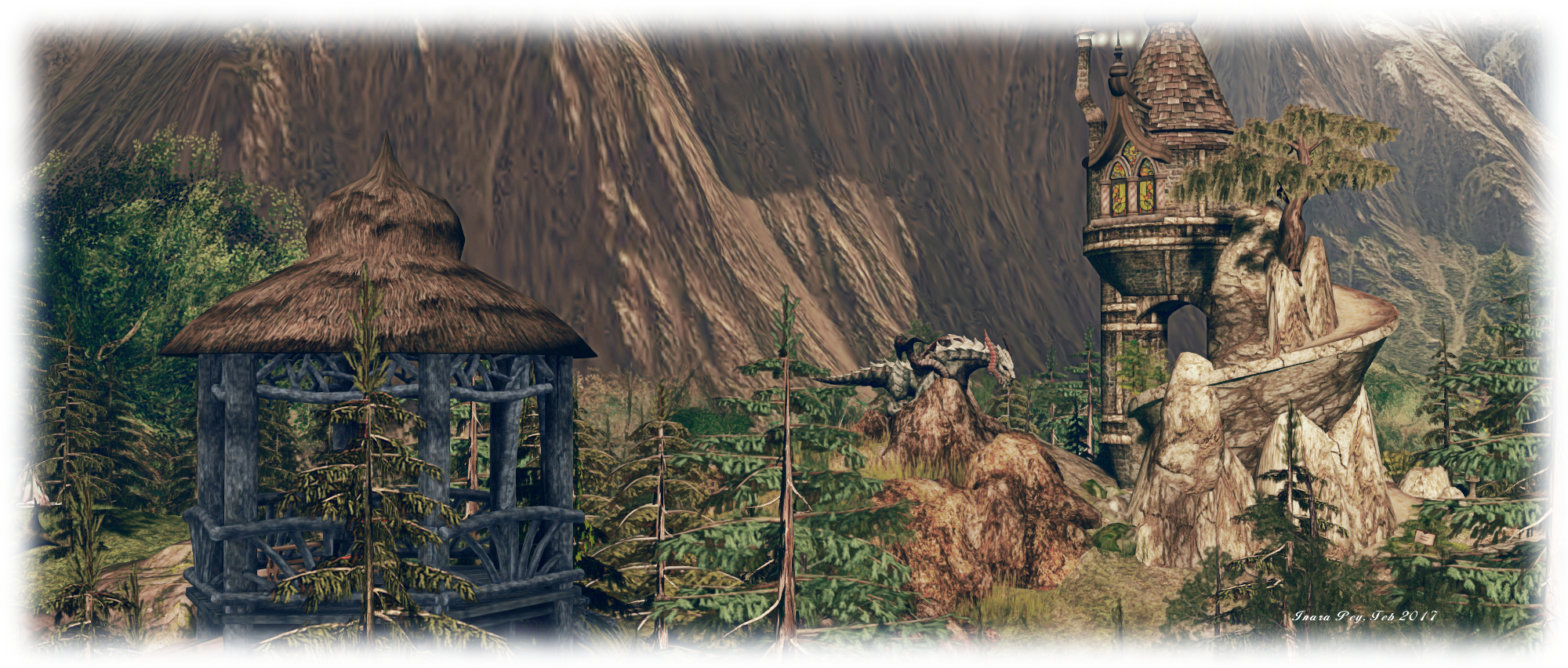
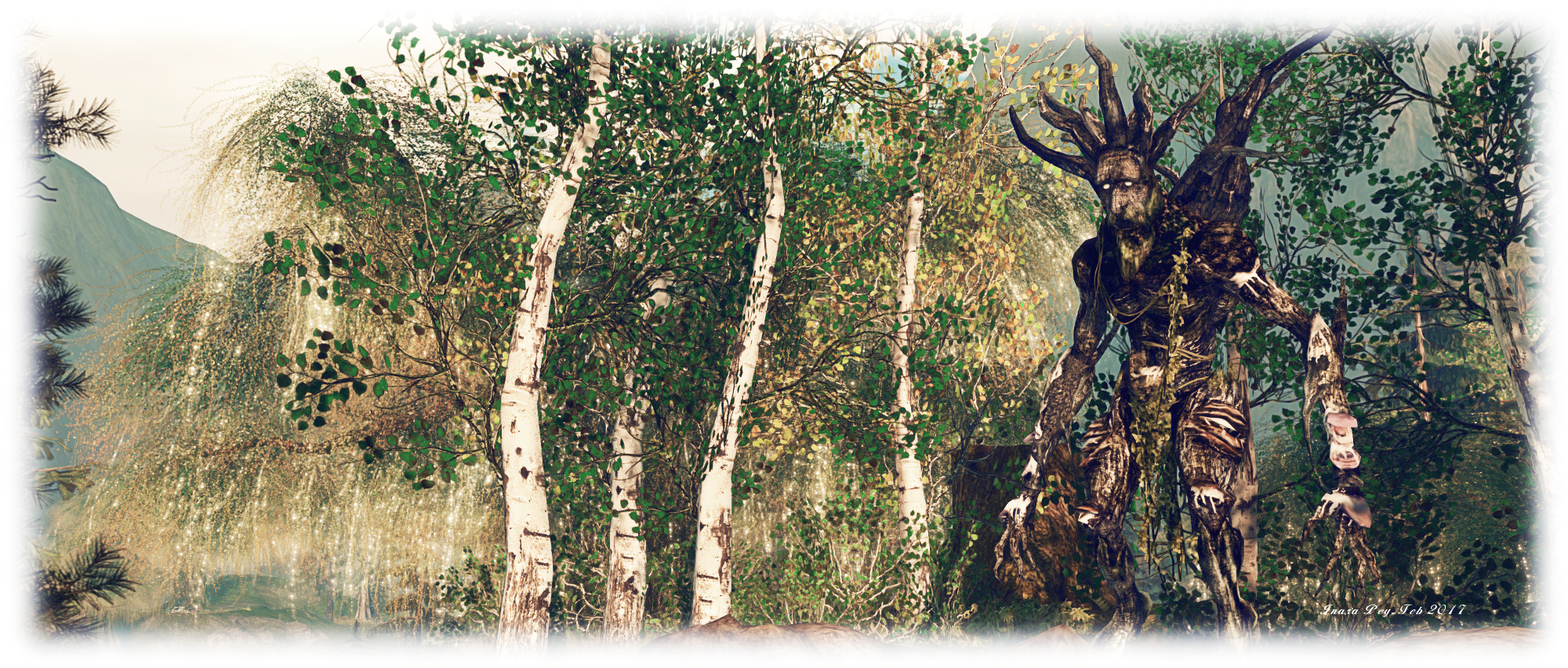
For example, Smeagol can be found in one direction, hunched on a rock and wearing his Gollum face. Elsewhere a walk through the more wooded parts of the region might lead to an encounter with an Ent or two – although at least one (Treebeard himself?)  – can easily be missed if you hurry by too quickly. Elsewhere, a little mine reminds us that Middle Earth is the home to Dwarves as well, while a dragon stands watch on a rocky peak, and – across the waters – a single Eye stares out from the high tower of Barad-dûr.

Hobbiton makes for a delightful visit. My thanks to my region spotter, Shakespeare, for passing on word about it, and thanks from both Caitlyn and I to Zaphira for both sharing her vision with Second Life explorers, and for the warm greeting and time spent with us during our visit.

SLurl Details

Hobbiton (Thunder Dragon Island, rated: Moderate)