2018 Sansar Product Meetings week #2

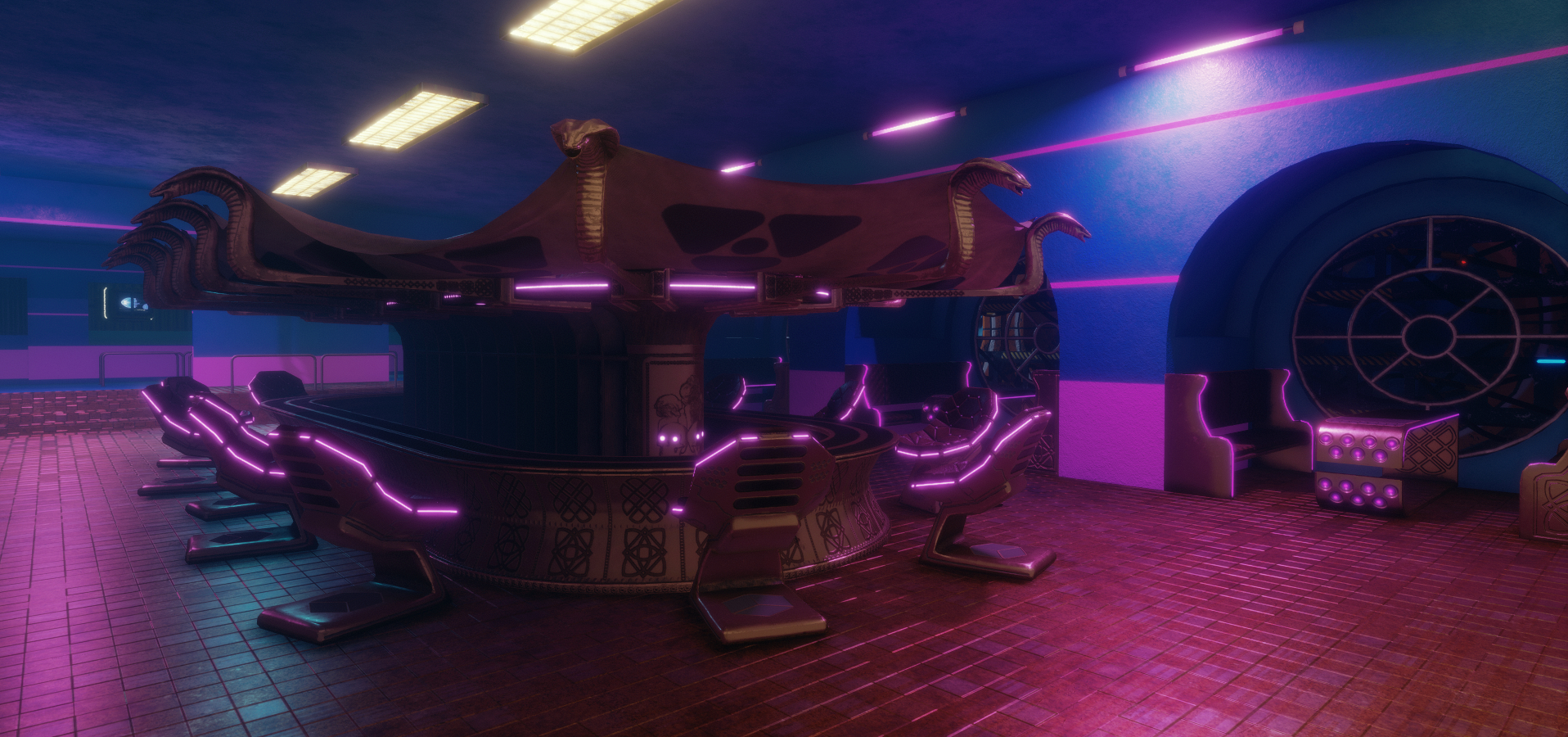
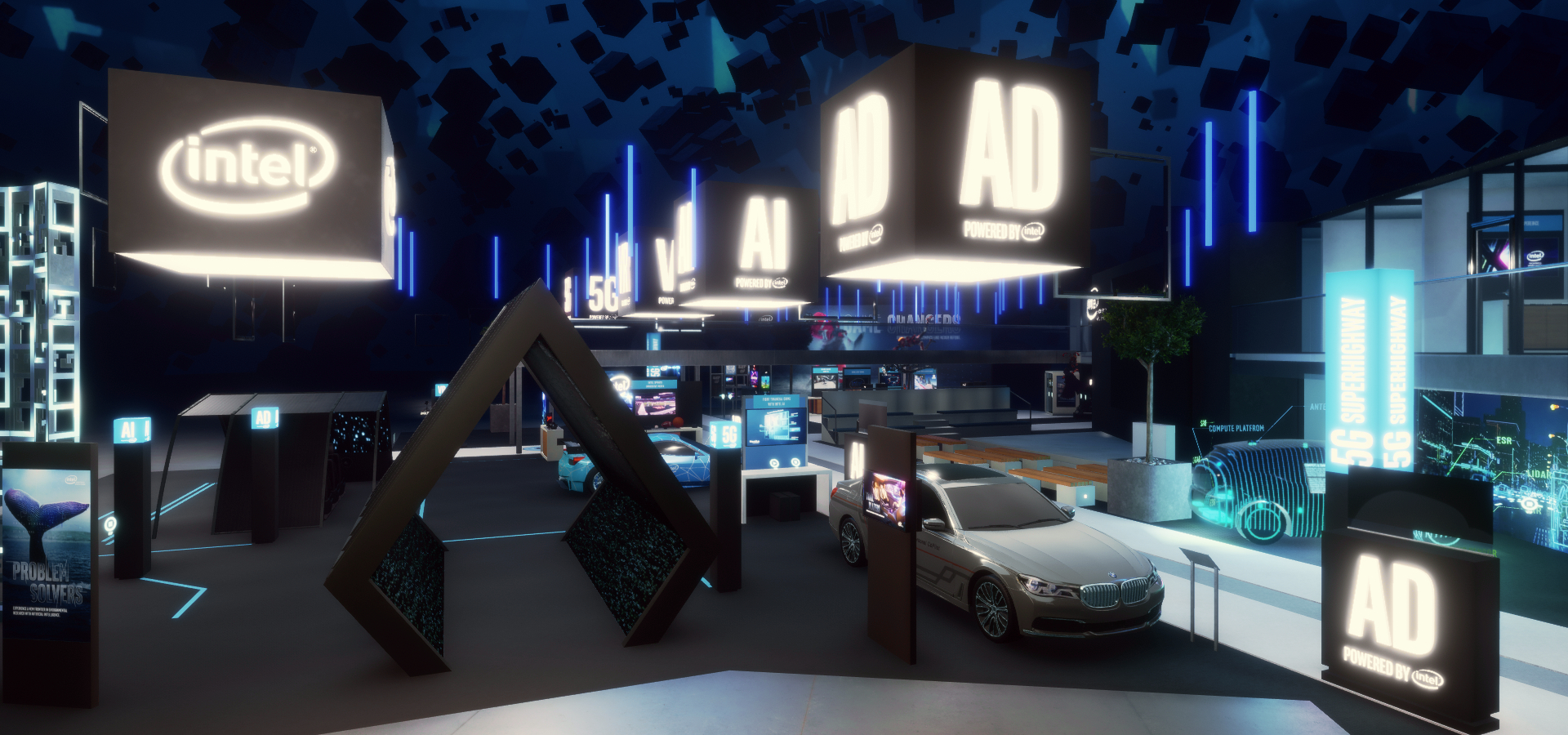
The Intel CES booth at the 2018 Consumer Electronics Show in Las Vegas, recreated in Sansar as a part of the show

The following notes are taken from the Sansar Product Meetings held on Friday, January 12th, 2018. These Product meetings are usually held every Friday at 9:30am PST and 4:00pm PST, and are open to all. There is currently no set agenda, and the meetings are a mix of voice and text. The official meeting notes are published in the week following each pair of meetings, while venues change each week, and are listed in the Meet-up Announcements. and the Sansar Atlas events section.

Joining both sessions alongside Jenn and Cara was Pierre (aka Paul), from the Business Operations team at the Lab, covering Sansar. His work involves the business side of Sansar (something not so in the public eye, but which particularly interests me), including corporate strategies and road maps, and among other things, he spoken about the Sansar presence at CES in partnership with Intel.

General Notes

Avatar Cap

There has been a 15 avatar limit imposed on Sansar experience during the past week. This has been to prevent individual instances of the experiences associated with the Consumer Electronics Show (CES – January 8th through 12th) becoming overloaded. As individual experiences cannot currently be capped for access, the 15 avatar limit was applied across all experiences. It should now have been lifted, or will be lifted soon.

Fashion and MD

The Lab will be starting a new series of meetings on Sansar fashion. It’s not clear what this will involve, but most likely will include information not only on what is upcoming on the fashion side, but also Marvelous Designer (MD). A request has also been put forwards for a new MD-specific channel on Discord. This is being considered, but for now, MD issues will be folded into the fashion channel.

Sansar Store 50 Item Limit for Free Accounts

In October, the Lab announced new Sansar Store policies, which at the time generated some negative feedback so that not all of them – e.g. the credit / debit card requirement – were implemented. At the Friday morning Product meeting, Jenn indicated that another restriction – limiting free Sansar account holders to only listing up to 50 items at a time – is also being lifted for the time being.

The Intel CES booth at the 2018 Consumer Electronics Show in Las Vegas, recreated in Sansar as a part of the show

Intel and CES

As noted above, Linden Lab and Sansar were represented at the 2018 Consumer Electronics Show, Las Vegas in partnership with Intel. Three experiences were made available as a part of this partnership: the Intel CES Booth (actually the entire Intel display floor), Step Inside Intel’s 8th Gen Core (a tour inside Intel’s latest CPU), and Aech’s Garage, an experience reproducing one of the film sets from the Warner Brothers Entertainment / Amblin Entertainment / Village Roadshow Pictures film Ready Player One, also presented in association with HTC – and which you can read more about here.

This partnership was so high-profile, it featured in the CES opening day keynote by Brian Krzanich, Intel’s CEO, and his specific remarks can be heard in this extract from his address.

While it may look a little cheesy to some, this kind of exposure is extremely beneficial for a platform like Sansar:

  • It offers huge exposure to an audience, even allowing for Sansar’s current stage of development.
  • Perhaps more importantly, it offers a practical demonstration of how an environment like Sansar can be used as a tool for business (e.g. running virtual booths where people can see / learn about products, innovations, etc., without necessarily being physically present), and for learning (e.g. take the Step Inside … experience, and learn how a CPU actually works…).

I should have more to say on this in a separate article.

2018 Plans

Pierre re-iterated that 2018 will see a shift in a lot  – but not all – of the Lab’s focus from content creation tool development towards encouraging general user engagement and retention. This was in part couched in terms of wanting to improve / smooth the user on-boarding process so that as and when experience creators start looking to bring their own audiences into their experiences, it will be a lot easier for them to do so. He also expanded on some points touched on by Ebbe Altberg in the January 5th meeting:

  • Concurrency indicators are to be added to the Atlas, providing a measure of people using experiences, and the Atlas can be sorted based on this.
  • Improved options for making friends.
  • A broadening of events support to allow experience creators and users to be able to host more of their own events and activities and promote them more easily through a range of channels – the Atlas, the web, social media, etc.
  • Performance is to be looked at to ensure the experience people have in Sansar is optimal, whether in terms of the number of people concurrently in an experience (e.g. 50-100 having a smooth experience in Sansar towards the end of the year), the load time of experiences, being able to appropriately hear people across and experience, etc.

Experience Numbers

In line with the above, the Lab is looking at  – and seeking feedback on – “ideal” limits for numbers within an experience. For example: is it better to have a band performing to one mass audience of 200-300 avatars (or more) in a single experience, or to have them play before a mass audience that is split between a number of experience instances “looking in” on the band? The later could help counter performance degradation with large numbers in a single space, prevent interruptions, etc., affecting the entire audience but – if the audience is so sharded to groups of 100-ish, each unable to see the other audience groups, it could detract from the overall immersion offered by the event.

There are also other issues to be addressed as well: audio (voice) roll-off seems to be problematic in Sansar experiences. Sometimes it is possible to have 3 or more little groups conversing around an experience without all the audio running together; at other times, even with groups spread around an experience, all the conversations seem to over-run one another, leading to an ugly mess of voices.
Continue reading “2018 Sansar Product Meetings week #2”

Sansar: in the year 2077

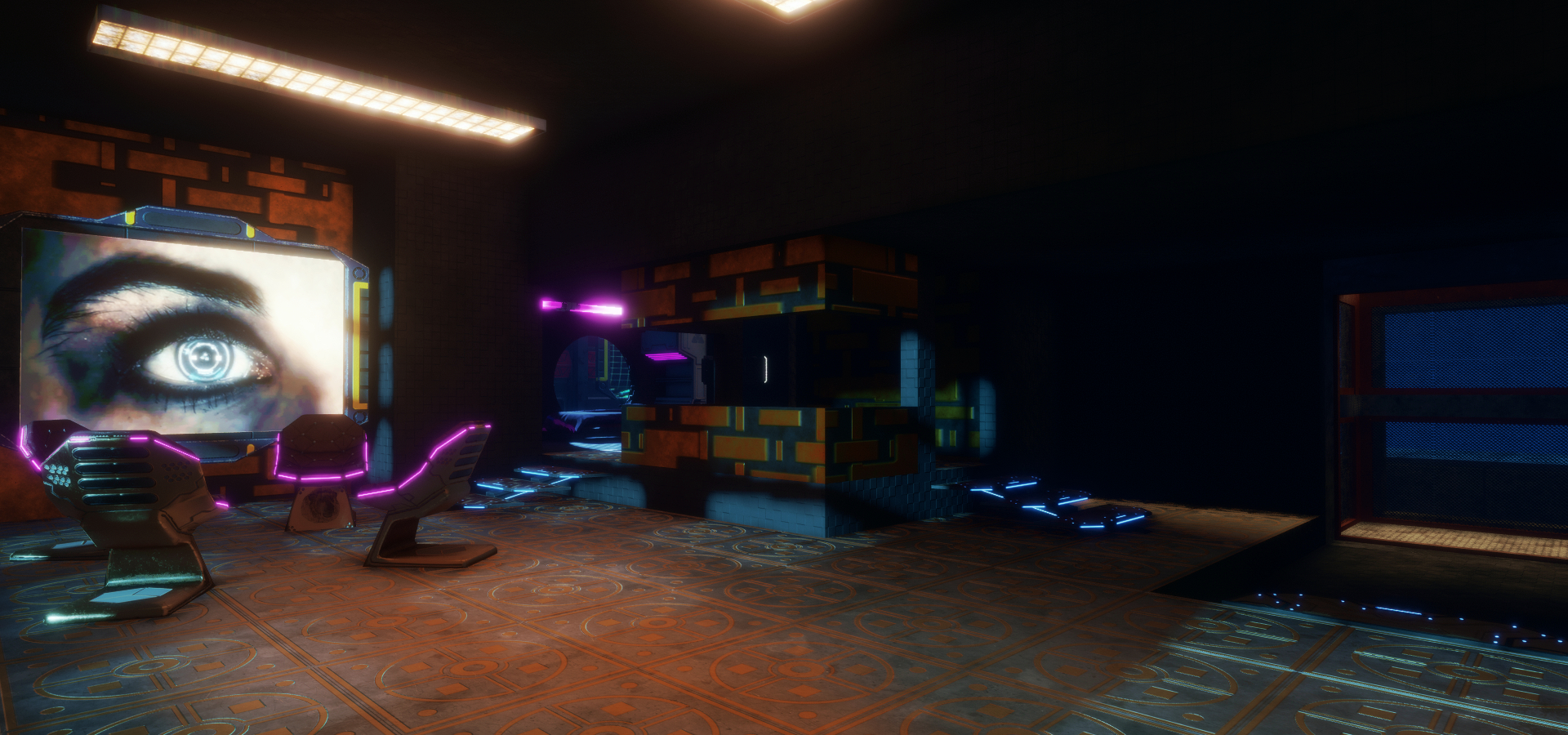
2077, Sansar; Inara Pey, January 2018, on FlickrSansar: 2077 – click on any image for full size

C3rb3rus is fast becoming one of the top designers of atmospheric experiences in Sansar. I’ve already written about two of his designs – Darkwood Forest (see here) and The Diner (see here – although it is deserving of a dedicated write-up). His most recent design – 2077 – has already garnered a lot of coverage, which is why I held off writing about it immediately it opened. However, it’s not hard to understand why it is has been popular -it is visually stunning.

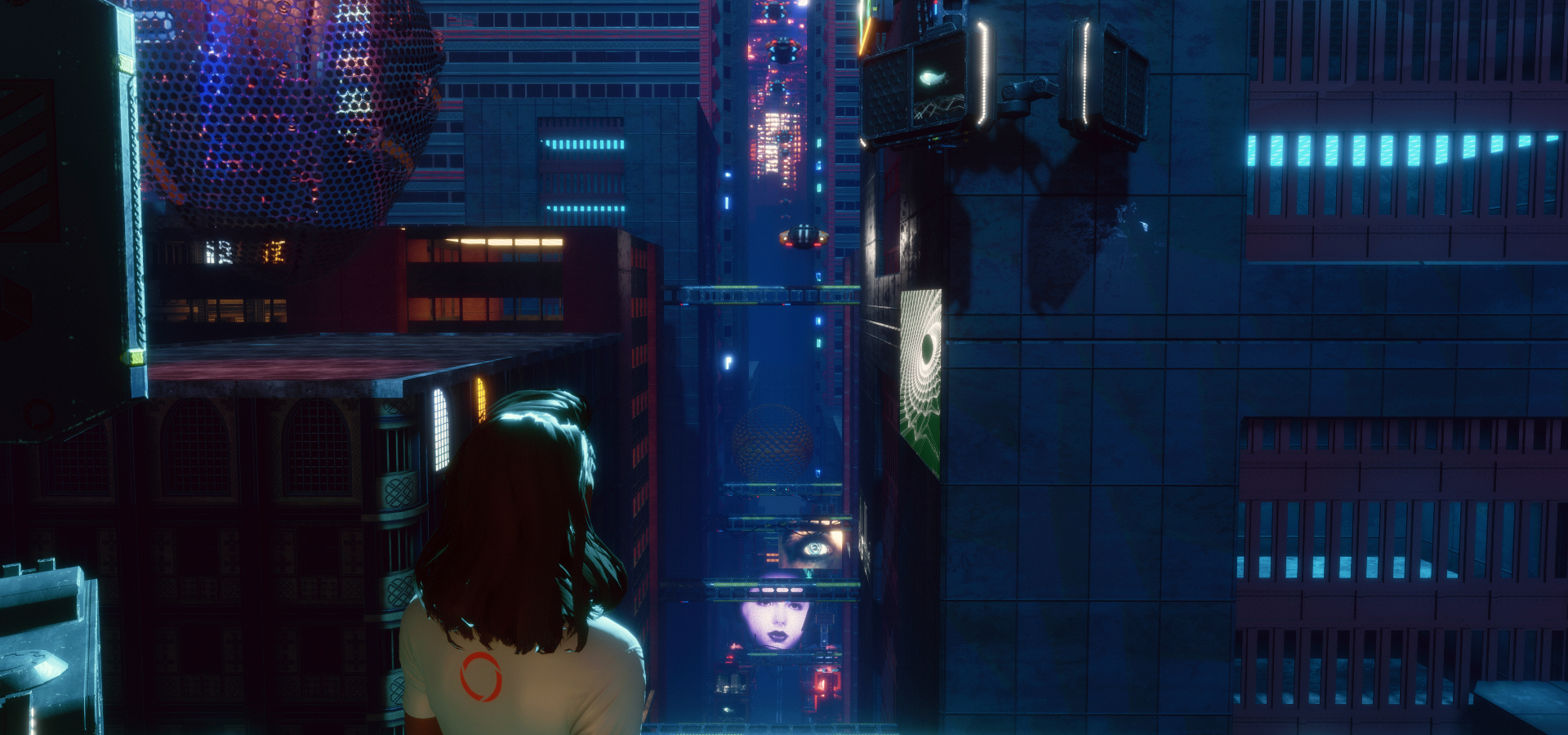
This experience takes its basic theme from the style we perhaps most readily identify with the likes of Blade Runner – although I personally see it as something of a fusion between that and the short-lived TV series, Total Recall 2070 (itself a fusion of Philip K. Dicks We Can Remember for You Wholesale and Do Androids Dream of Electric Sheep, the inspiration for the original Blade Runner film). On arrival, visitors are placed on a long street – a canyon, if you will, formed by the flat faces of high-rise buildings, themselves surrounded by even taller skyscrapers which glitter with light.

2077, Sansar; Inara Pey, January 2018, on FlickrSansar: 2077

By comparison with the latter, the streets on which visitors stand seem dark, cold, and a little threatening. With graffiti on the walls and litter on the streets, this feels is if it is a much poorer part of the city than the horizon forming towers of light and colour. Perhaps those glittering towers are where status and wealth reside; the higher up residents are within them, the more their status has literally elevated them above the darker, poorer world flowing around the feet of their great glass-sided citadels.

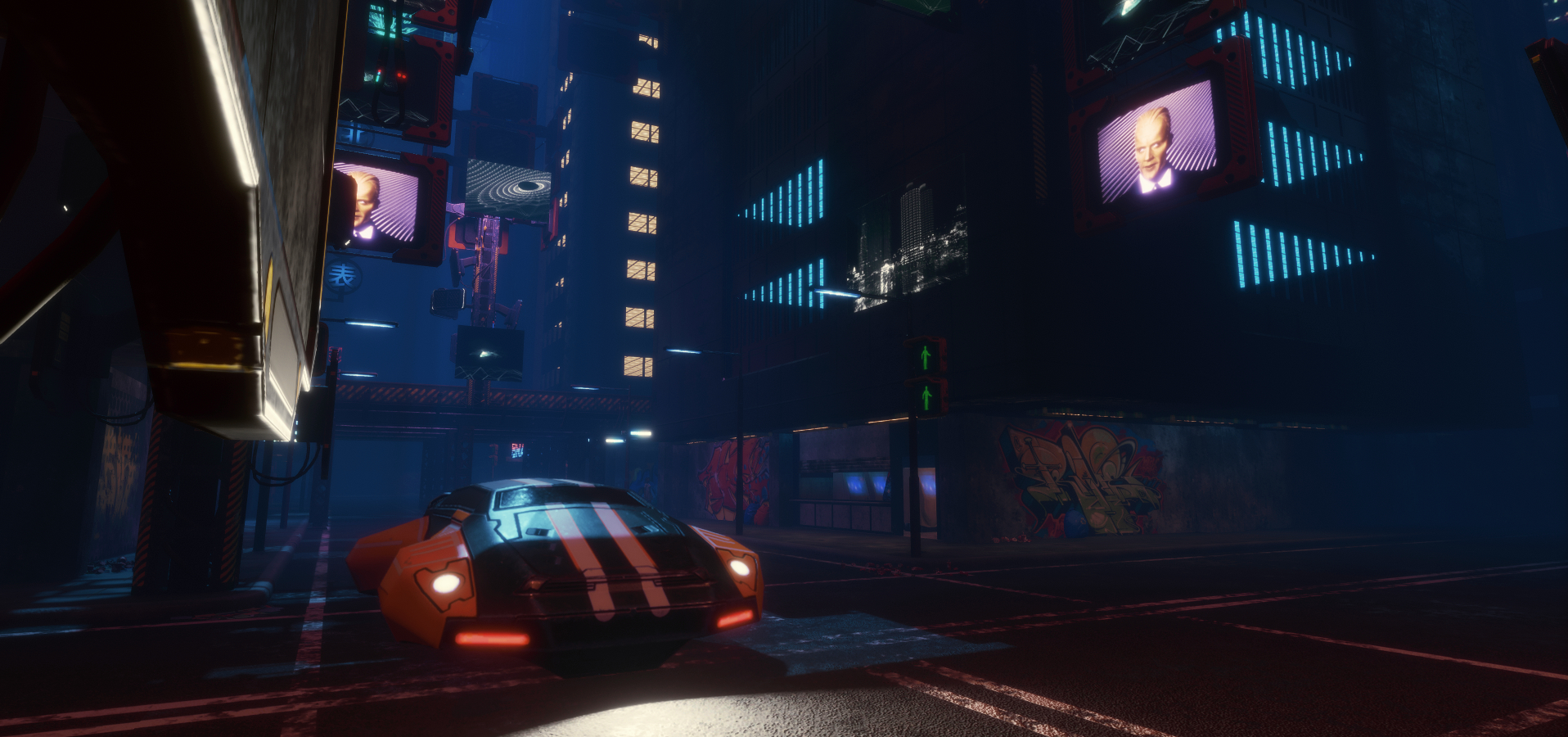
Perhaps this is why, flying cars zip back back and forth high above the streets, their passengers intent only on spanning the gap between lofty perches, and oblivious to what lies below, lost in the night. Nearer to the ground, more of these cars pass through the canyon-like streets, travelling a little more cautiously, while one or two have forsaken the air altogether – or have perhaps been decommissioned, like Deckard’s old Police spinner in Blade Runner, confined to crawling along the dimly lit streets.

2077, Sansar; Inara Pey, January 2018, on FlickrSansar: 2077

Dim though the lighting down here might be – the street lamps little more than thin lines of blue iridescence atop tall metal poles and which case cold pools of light beneath them – the streets are still alive. Digital advertising boards shimmer, turn, dance and project, adding their own illumination which reckons off the otherwise dull surfaces of roads and sidewalks. Walking the latter, it is possible to come across gaming halls and bars, or arrive at the corner of Walk and Don’t Walk as little green and red men flick back and forth on overhead signals, determining when it might be safe to cross a particular junction.

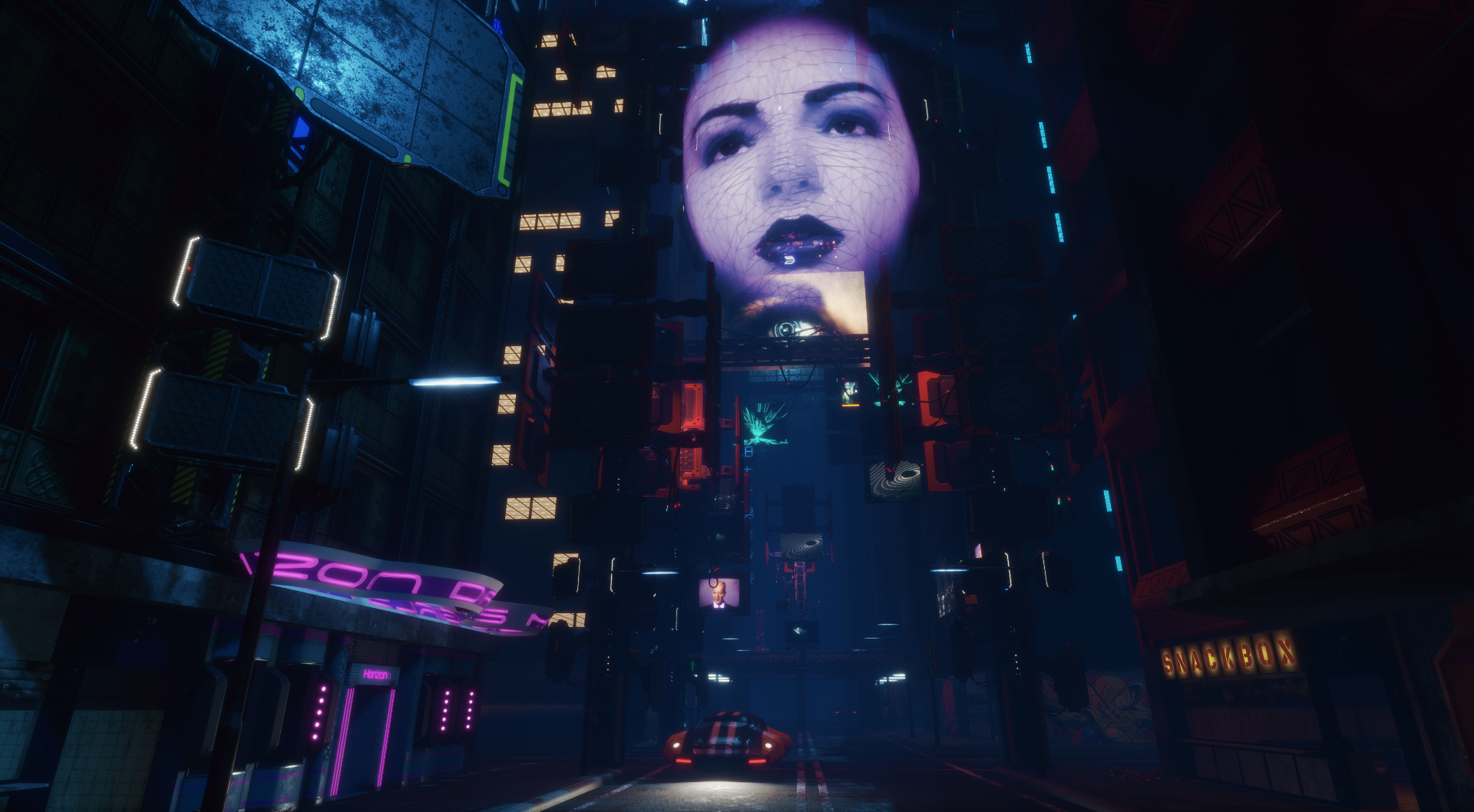
Over all of this, a great hologram of a female face looks down, turning slowly from side to side, as if keeping a watch over the streets in her care. Not far away, a single eye darts side-to-side on a billboard, a pattern of digital lighting over the pupil for some reason putting me in mind of the Rekall chairs from Total Recall 2070. Elsewhere amidst this neon advertising one can find a hospital or clinic signified by both, a red cross and a ghostly skeleton rotating slowly above the entrance, Max Headroom close by, perhaps mocking passers-by.

2077, Sansar; Inara Pey, January 2018, on FlickrSansar: 2077

C3rb2rus likes to include motion in his designs  and 2077 is no exception to this, as demonstrated by the ground and air traffic. But there is more; the spawn point in the experience, for example is under an elevated train track. Behind it (and easily missed), a ramp offers a way down to where a platform awaits. It is periodically visited by a subway train you can step aboard and ride in a loop around the build. I have no idea if this is indicative that more might be added to the build (there’s only the one stop at present), but it does offer a certain promise to the design.

Nor is this all. Find your way to the high rise at one end of the main street, and ceiling lights will direct you to where an elevator regularly descends and rises. Step into it, and it’ll offer a trip up to a modest – bordering on austere – apartment, which in turn offers a grandstand balcony view back through the experience. Watch for a few minutes, and you’ll witness another nice touch,, as an air car rises from the far end of the street, angling gently upwards until it reaches one of the lower skyways and passes overhead.

2077, Sansar; Inara Pey, January 2018, on FlickrSansar: 2077

Given that so many Sansar experiences are, due to the nature of the platform at present – largely static, 2077 feels very much alive, almost vibrant beneath the hues of the backdrop skyscrapers. Atmospheric, rich in detail despite its dark tone, this is an experience offering a certain promise of what Sansar might become as a role-play environment, as capabilities are improved.

Experience URL

Aech’s garage: a Sansar Ready Player One Experience

Aech's Garage, Sansar; Inara Pey, January 2018, on FlickrSansar: Aech’s Garage – click on any image for full size

Update, January 11th: following my enquiry concerning posting images of Aech’s Garage to the Lab, I received a reply from the Sansar community team, who also posted a  statement to the Sansar Discord channel, which I’m reproducing here, with the relevant comment highlighted for future reference by anyone positing images from Sansar:

We truly appreciate the ongoing support from the community, especially with all the excitement going on this week! We want to clarify that users are not discouraged from posting screenshots from any experience that is open to the public as long as there is no claim to exclusivity, early access, or other potentially misleading statements or claims that are untrue or could be construed as an official statement from Linden Lab or Sansar. We hope you all understand!

With this in mind, I’ve reposted the images in this article

Update: from the comments left by Ryan Schultz following this article, you can see there is something of a kerfuffle over whether or not images from the Aech’s Garage experience can be published. I have contacted Linden Lab on the matter, but have yet to receive a definitive reply one way or the other. To prevent further controversy, and while not having heard of any embargo myself, I have decided to remove the images in the post for the time being. 

Linden Lab recently unveiled two new experiences in Sansar, which I plan to look at in a broader piece on the platform later this week. However, one of them offers a particular attraction as a destination, so I’m leaping in with a look at it here as a part of my Exploring Sansar series.

Aech’s Garage is a joint collaboration between Linden Lab (via their Sansar Studios team), HTC, Intel, and Warner Brothers Entertainment to recreate the film set of Aech’s Garage from the upcoming Amblin Entertainment /  Village Roadshow Pictures film Ready Player One, the motion picture of Ernest Cline’s 2011 best seller.

In the novel and film, Aech (pronounced “H”) is best friend to Wade Watts, the novel’s protagonist – at least within OASIS, the two never having met face-to-face – who operates out of a basement location in the book. For the film, Aech’s base has been moved to a vast garage-cum-warehouse unit, and it is this space that has been recreated in Sansar with the formal title [HTC] Ready Player One – Aech’s Garage.

Aech's Garage, Sansar; Inara Pey, January 2018, on FlickrSansar: Aech’s Garage

For purists, the move might be seen as an annoyance and typical of Hollywood’s tinkering with adaptations for no readily apparent reason. From a visual perspective however – particularly if you are a film buff with a lean towards science fiction – the move is a treasure trove of sights. A long, comparatively narrow building, the garage is partially lit by a low Sun streaming in through the grime layered windows along one wall. This casts a good part of the experience into shadows which I suspect aren’t as quite as intrusive in VR mode as they can be when visiting in Desktop Mode. Klieg lights scattered around the building offer additional pools of light.

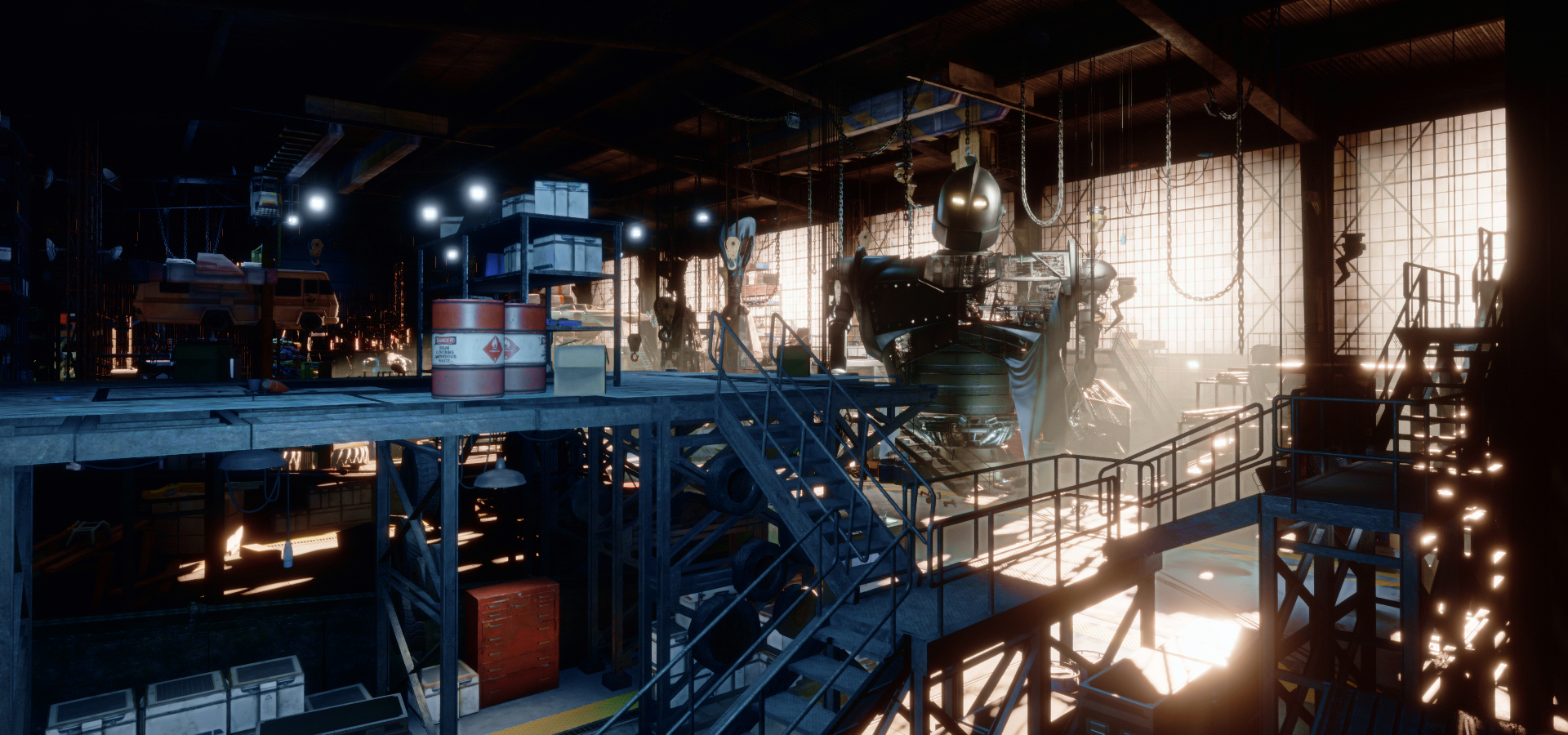
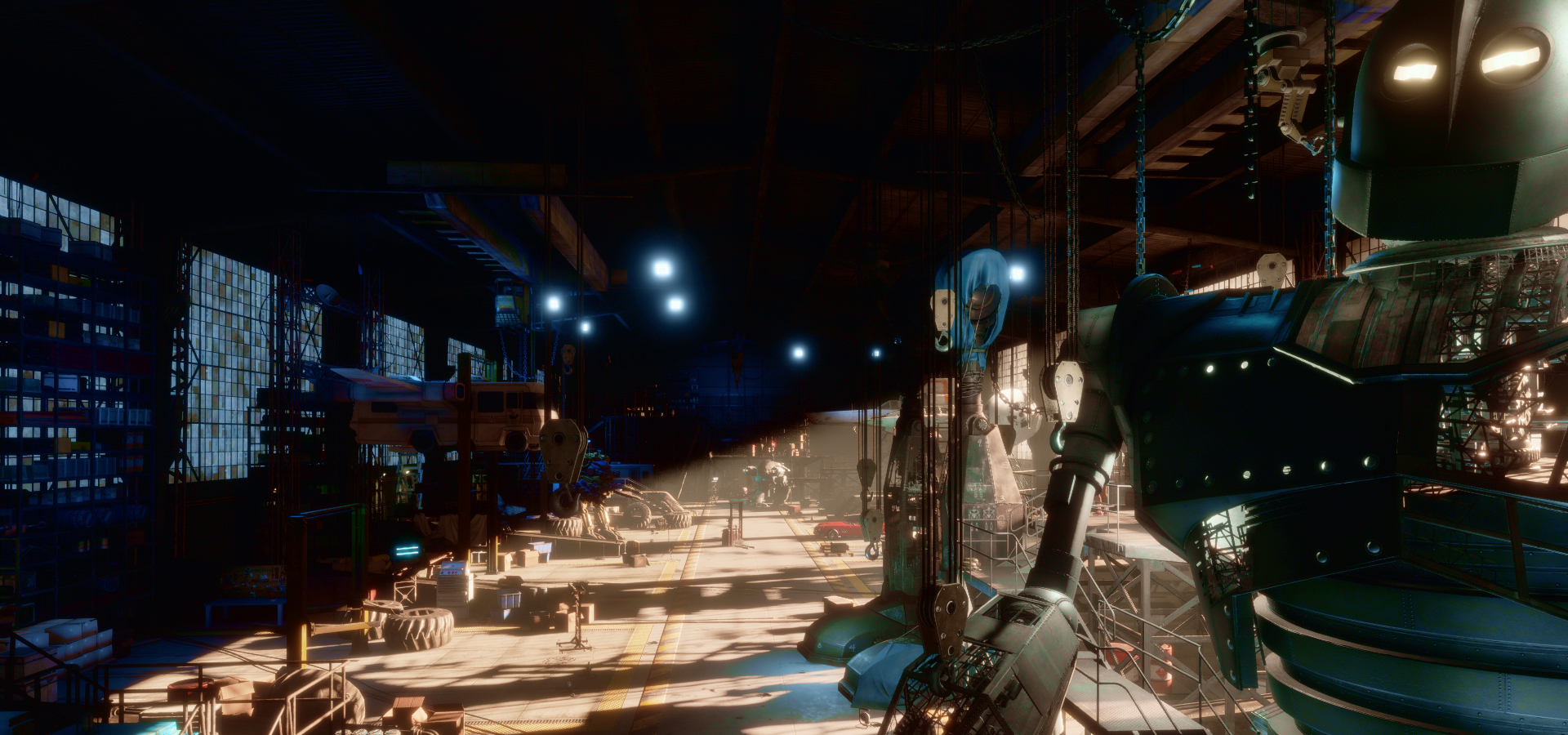
Entering via the Sansar Atlas spawns visitors at one of the building’s two ends, and from the start the level of detail is impressive. The lighting is very realistic, while the texturing and finish is superb. There are work bays, metal steps leading up to platforms and elevated work spaces, tools are scattered on work tops, bins, tyres and other detritus of an old working environment fill spaces and rise on tall racks standing against walls and windows. There even a bicycle is leaning against one wall – perhaps to offer someone a quick means to travel up the central aisle space of the building. Good use is also made of Sansar’s recently added audio materials: shoe heels click solidly on the cement floor, but footsteps ring hollowly as heels strike the metal steps when climbing up to or down from the raised platforms.

Aech's Garage, Sansar; Inara Pey, January 2018, on FlickrSansar: Aech’s Garage

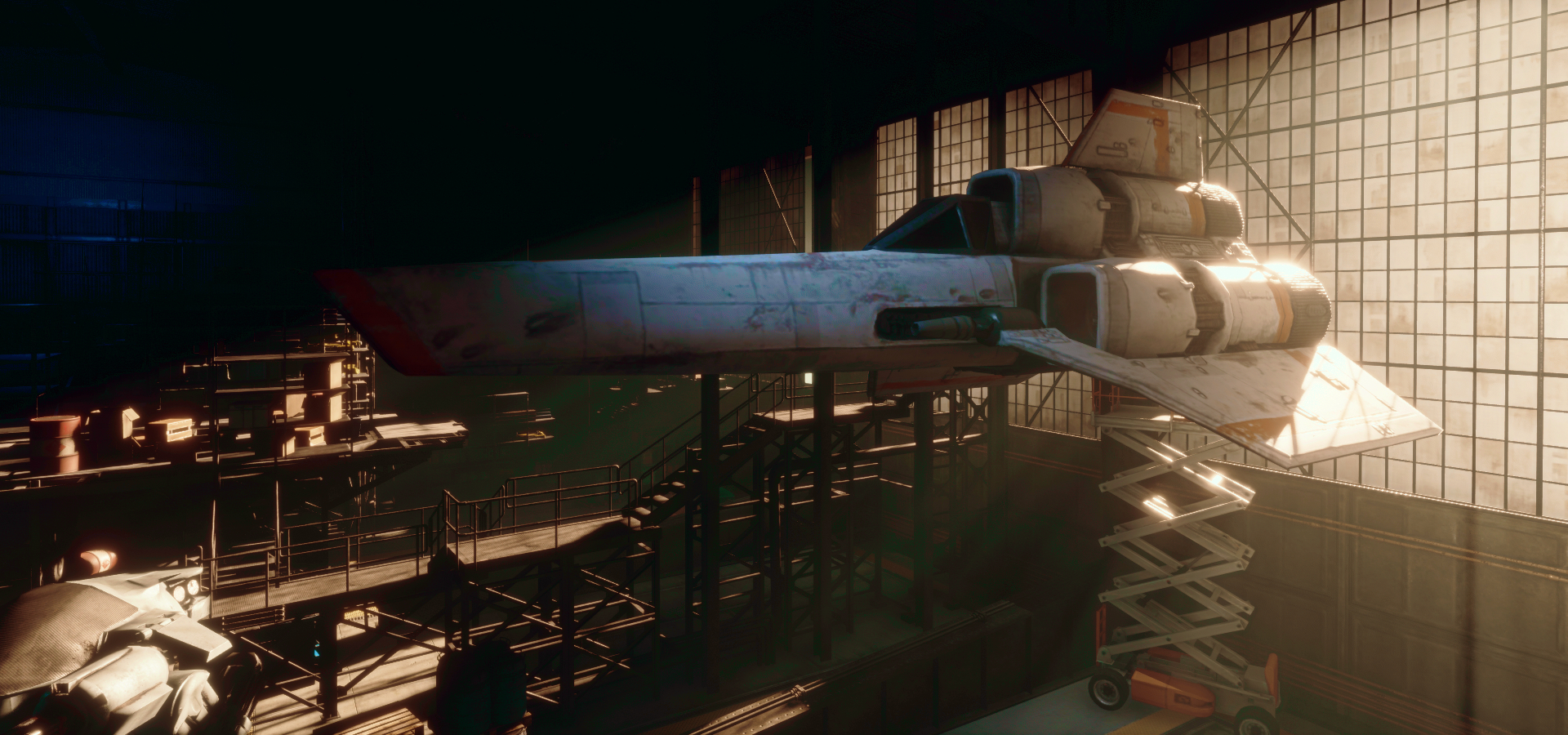
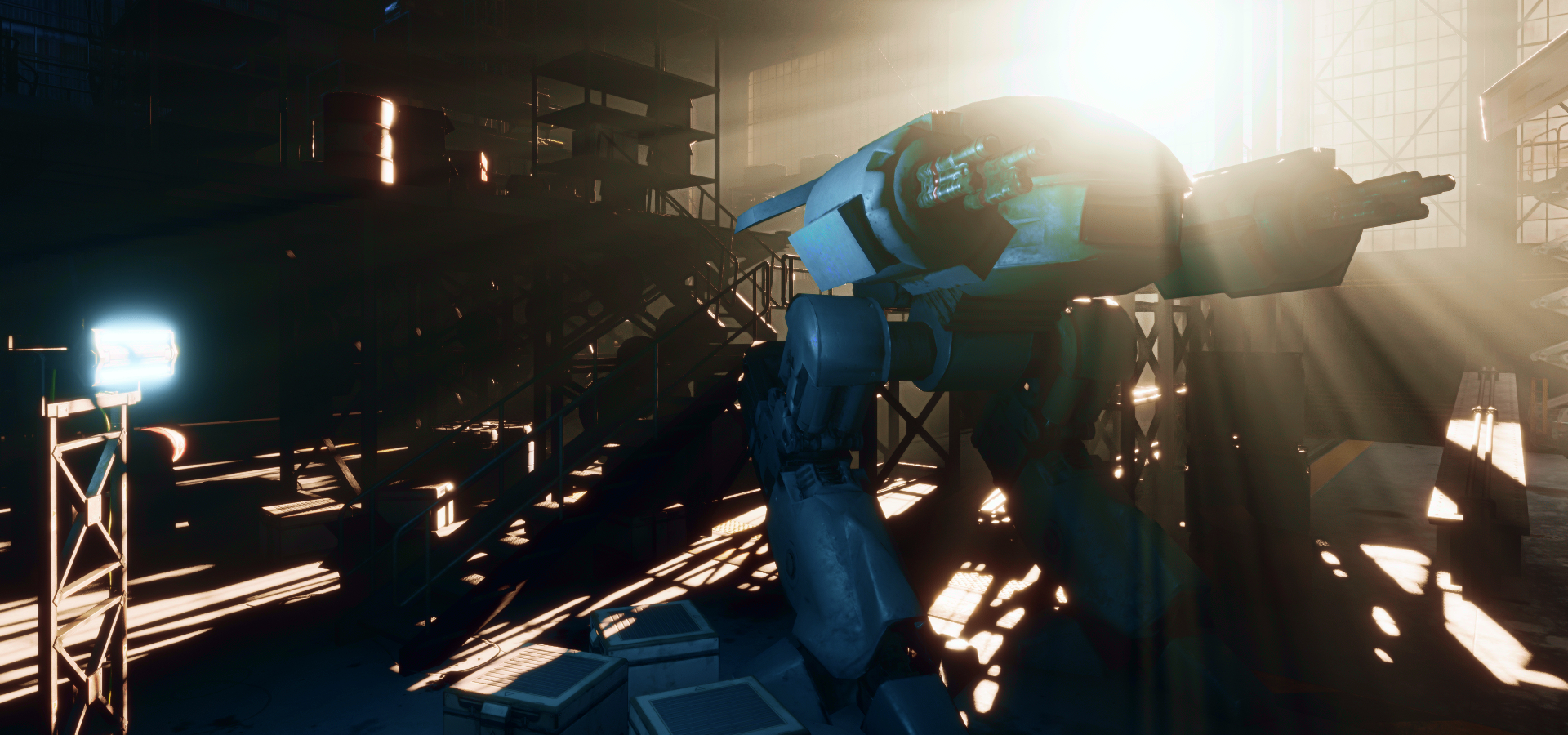
But all this is just the apéritif, so to speak. The real feast lies in what can be found within this garage. Depending on which end of the building you spawn, you’ll find yourself either being watched by the Iron Giant from the 1999 film of the same name, or find yourself confronted by ED-209 from 1987’s Robocop – fortunately without its guns focusing on you with an ominous warning that you have 30 seconds to comply. The detail on both is superb, and the Iron Giant really gives a sense of scale. Split into two parts of upper body and head, with legs alongside, it is simply huge.

Nor are these the only models here. Sitting between them, down the sunlit side of the garage are a Mark 2 Viper from Battlestar Galactica (original and re-imagined), suspended from the roof alongside an Earth Defence Directorate fighter from Buck Rogers in the 25th Century, and a maintenance pod from the United States spacecraft Discovery One, featured in Stanley Kubrick’s seminal movie, 2001: A Space Odyssey.

Aech's Garage, Sansar; Inara Pey, January 2018, on FlickrSansar: Aech’s Garage

Sitting under these, a little incongruously, is the prized 1961 Ferrari GT California Ferris Bueller (Matthew Broderick) persuaded Cameron Frye (Alan Ruck) to snag the keys for from his father in the 1986 teen movie Ferris Bueller’s Day Off. While across the central aisle is a mechanoid loader of a similar kind to those seen in the Alien movies, with a model of Eagle 5 from Spaceballs suspended overhead.

As noted, the visual aspects of this experience are superb, in Desktop mode it leaps out at you, and I’ve little doubt that in VR it will look stunning. What is especially interesting about it is that it is a tie to a forthcoming major motion picture, due to be released on March 30th, 2018, and perhaps marks the first attempt to use Sansar in one of the market spaces where it could have some traction: marketing and PR. It demonstrates a potentially low-cost way of generating public interest in films, etc., by allowing people to not only see trailers and teasers from the comfort of their own home via social media and the likes of YouTube, but to also offer them the opportunity to visit locations from blockbuster films ahead of their release.

Aech's Garage, Sansar; Inara Pey, January 2018, on FlickrSansar: Aech’s Garage

In this particular case, it is entirely fitting that a film which might help promote wider interest in VR is gaining some degree of added promotion from VR. I’m curious to see if Linden Lab / Warner Brothers / HTC plan to do more with the experience between now and the US theatrical release of the film at the end of March 2018, particularly given the way the début – through the 2018 Consumer Electronics Show, Las Vegas, courtesy of Intel – has been presented to the public at large.

Aceh’s Garage is without a doubt a powerful demonstration of Sansar’s potential, and a delight to visit. However, you plan to do so,  I’d perhaps suggest waiting until after CES 2018 closes on Friday, January 12th, 2018, as right now it is the subject Right now Aech’s Garage is tied to ongoing demonstrations of the HTC Vive at the show.While this is good for Sansar, it means that audio-wise there is a lot going on audio-wise within the experience, and it can get distracting with multiple overlapping conversations, even with Voice roll-off over distances. I frequently found myself getting caught between overlapping conversations and manually muting those I didn’t want to hear (including, I’d add, staff talking bugs and users over open microphones!).

Aech's Garage, Sansar; Inara Pey, January 2018, on FlickrSansar: Aech’s Garage

Experience SLurl

Sansar thoughts: don’t ignore the power of a community platform

A Sansar Christmas – but what might 2018 and beyond hold for the platform

It is five months since the Sansar public Creator Beta opened. At the time it did I, along with many others, felt that maybe – from a “consumer” user perspective – the opening was perhaps a little premature: there was (and remains) little for general visitors to the platform to do – particularly those accessing platform via Desktop Mode – who would likely be in the majority. Of course, the aim of the Creator Beta was to … encourage more creators to the platform, rather than growing the platform’s user base.

In the five months since that launch, there have been developments and improvements to the platform – and I have remained interested in seeing how the platform builds out. The Desktop Mode – the means by which, frankly, the vast majority of people are liable to use for access Sansar for the foreseeable future – in particular has seen some important improvements, although there is still a long way to go.

Identifying other avatars in Desktop Mode was added to Sansar in the October / November Friends release. Just one of the updates Sansar has seen to improve usability

However, recently the Lab has indicated that in 2018 they’d like to start addressing issues of generally user attraction and retention – which is fair enough. What has surprised me, however, is the idea – floated at a recent Sansar Community Meet-up –  that some kind of “consumer launch” (consumer = non-creator user) is being considered for the platform in 2018.

This actually surprises me; there is still so much that needs to be put in place on a technical level alone which is needed to help encourage usability. There’s the whole permissions / licensing system – vital in allowing creators offer their goods on more flexible terms (e.g. modifiable); providing the means for avatars to interact – dance, sit, etc; offering a customisable avatar, and so on. The Lab has indicated much of this is complex work, and proving difficult to implement. Should this continue to be the case, then trying to push the platform to a broader consumer user base before the end on 2018 seems to be a tad optimistic at best; at worst, it could be self-defeating should people find that while Sansar looks good, there is really little for them to do.

Nor, I’d also suggest, are there just technical issues to be faced when considering drawing in a broader audience. Two things in particular have been on my mind for some time now.

The first is Sansar’s blog / forum / knowledge base environment. Currently, this is based on ZenDesk – which is singularly unsuited to the task to which it has been put. As I noted in a recently Product Meeting, the Lab has now recognised this in is looking at options, including possibly using the platform and tools used to build the Second Life “community platform”. This is actually good news, although as I noted in those Product Meeting notes:

Frankly, I’m still stunned that this wasn’t the route taken from the start given the Lab have the tools and the experience to use them, which could have been easily leveraged, rather than going for a tool entirely unsuited to the task and which presents information in a very unfriendly – and dare I say amateur – manner.

Simply put, the Lab has an ample investment in the SL community platform tools in terms of time, effort and development experience. That they apparently opted to ignore all of that to try to reinvent the wheel using a tool evidently unsuited to the task seems nothing short of an exercise in disconnected thinking.

Sansar needs and deserves a descent community environment. Yes, there is Discord, and yes, it is more ideal to have user-to-user interactions within Sansar experiences, rather than by people sitting in forums, etc. But the fact is, forums, blogs, a structured knowledge base, all supported by a decent search engine do far more than “just” provide a space for users to interact: the forum a core aspect of news and information dissemination, as such their value simply shouldn’t be under-estimated or dismissed as something to consider somewhere down the road.

There’s something more here as well. Not only can a decent community platform form the backbone for communications (via outwards blog posts, through forums discussions, the provision of documentation, etc), it can do much to help boost ta platform’s web presence and attractiveness to potential users. Again, right now Sansar’s website – beyond the initial splash screen – is both simplistic and confusing – and not a little bland. Surfacing blogs, forums, etc., immediately adds depth to Sansar’s website and presents the opportunity to draw people in to the platform – if done right.

There have been improvements to the Atlas – but frankly, finding experiences of interest / value is still less than easy

The second thing I’d like to see the Lab address when considering encouraging more “consumer” users into Sansar,  is that of the Atlas.

Again, we’ve already seen some improvements here: the ability search listed experiences and to list those offered by friends, and we have the promise of indicators for how many people are in any given experience. Even so, with over 700 experiences already listed, finding those which relate to a specific interest is hard. Of course, the idea with Sansar is for experience creators to be able to direct an audience to their experiences through their own web presence – and this will be more than enough for some of the markets the Lab hope (/ are?) attempting to attract to Sansar.

However, for the broader audience of potential users who may well come to the platform by way of the web, providing the means for creators to categorise their experiences and for users to group / select experiences based on those categories would be of and undeniable benefit – even with the complexities involved in defining / managing suitable categories. Additionally, providing a means for people to directly “bookmark” experiences that interest them within the Atlas would also be of enormous benefit.

I admit to remaining unconvinced that Sansar is really ready for a “consumer” audience. However, if the Lab is determined to move in that direction, I at least hope that things like updating the forums / blog environment and making the Atlas more amenable for users to locate / record the kind of experience they’d like to visit, is given as much attention as issues of presenting improved “in scene / experience” capabilities.

2018 Sansar Product Meetings week #1 with audio

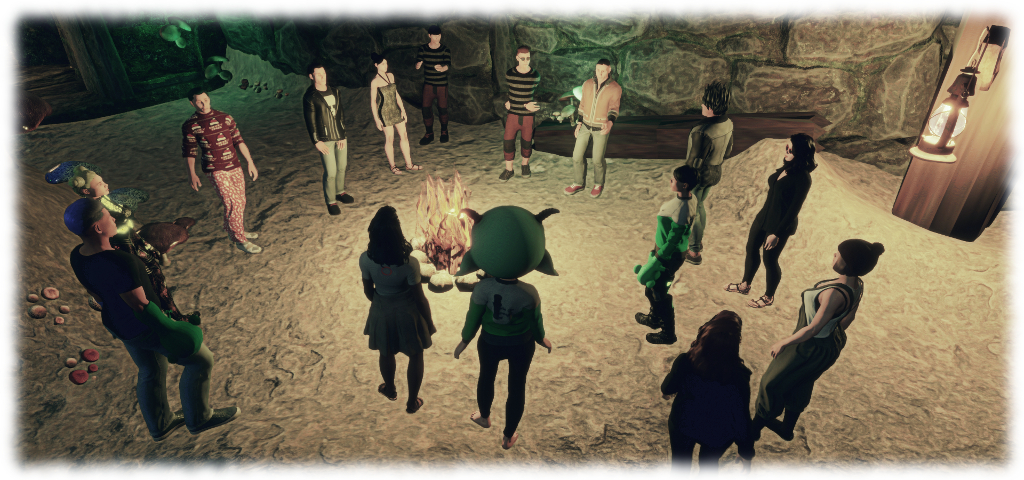
People gather around the camp fire for the first Sansar public Product Meeting of 2018

The following notes are taken from the Sansar Product Meeting held on the afternoon of Friday, January 5th, 2018 (I was unable to attend the morning meeting). These Product meetings are usually held every Friday at 9:30am PST and 4:00pm PST, and are open to all. There is currently no set agenda, and the meetings are a mix of voice and text. The official meeting notes are published in the week following each pair of meetings, while venues change each week, and are listed in the Meet-up Announcements. and the Sansar Atlas events section.

The January 5th afternoon meeting was attended by Ebbe Altberg, plus Carolyn from he Product Team and David and Sean from the Sansar character team. David has been working on the Marvelous Designer (MD) integration, and he and Sean were able to address questions around fashion, etc. Audio extracts feature Ebbe, David and Sean.

Avatar Notes

  • Custom skins: textures are seen as an important aspect of the avatar, allowing age, muscle definition, etc., to be applied. As such, it is something the Lab wants to expand upon. However, the focus at the moment remains on the fashion work, rather than on custom texture uploads and application, and it is down to the product team as to where the latter sits on the roadmap.

  • Texture resolutions: It has been noted that the avatar is a 60K polygon body apparently using 512×512 textures. Sean explained that the textures placed on the website aren’t actually the textures used on-line. Rather, an upload limit was hit within the ZenDesk software, forcing the use of lower resolution textures.
  • Avatar shapes / customisation: greater avatar customisation (changing height, shape, etc.), is “on the roadmap”. Currently, the focus is on increasing the amount of customisation available with the avatar face, with further bone morphs, work that is seen as “foundational” to adding the ability to customise the rest of the avatar shape.
    • How the facial work will be implemented is an open discussion. Sliders have thus far been used (as with SL), but this can be limiting when other forms of deformation are also applied. Recent games have tended to use a form of pick map for customising facial features – the user clicks on a point of the face (e.g. the cheek), and all the bones affecting that area respond to adjustments with the mouse, rather than having to adjust individual bones with individual sliders – and is mirrored where appropriate (e.g. cheeks, ears, etc.). This result in more natural looks, and is something that is being considered as a way of managing customisation in Sansar.

Fashion / Marvelous Designer

Cloth Physics and Layering

The integration of MD has allowed cloth physics to be used in Sansar – although currently these can only be seen / set within the Avatar App Lookbook (formerly My Looks) when editing an avatar. Cloth physics are actually “built-in” to the patterns exported from MD, with the cloth simulation code from MD being used within the client. This means it is unlikely that designers will be able to use other tools  – such as Blender – with the cloth physics capabilities without using MD as well.

The reason for restricting cloth physics to LookBook for the time being is that simulating cloth movement, etc., in Sansar’s Runtime Mode can generate a considerable performance hit; the Lab therefore want to focus on making  various performance improvements and further Runtime optimisations before they start looking at introducing cloth physics into the Runtime environment.

Currently, garments that are layered in MD (e.g a jacket over a shirt)and are exported to Sansar as a single item have their layering respected within Sansar (so the jacket renders over the shirt. However, individual items using the same layer will not be simulated correctly, and the Lab is working to rectify this. In the future, clothing should be layered relative to the order in which it is added to the avatar. So, for example, if you have a “layer 2” shirt and “layer 2” jeans, wearing the shirt first, then the jeans will result in the shirt appearing to be “tucked in” to the jeans, whereas wearing the jeans first, then the shirt, will result in the shirt appearing to be untucked.

In Brief

  • Roughness maps, handled directly by MD are coming into Sansar “too shiny”, requiring creators tweak them manually. This is to be referred back to MD.
  • It is currently anticipated that there will be no changes to the weighting / the way the IK rig is painted, etc.

User Engagement and Retention

2018 will see some attention switch away from developing technical capabilities towards broader issues of user engagement and retention.

  • Locating people: An upcoming change to the Atlas will allow experiences to be sorted in terms of current usage: those experiences with people currently using them will be listed with the most popular at the top, and then descending to those which are not currently being used.
    • This may be accompanied by a generic indicator that people are using an experience. This will not initially be a physical count of avatars, as there are issues around instancing (e.g. there may be 100+ in an experience, but spread across two or three instances, each with a different number of actual avatars in it – so while the count is 100+, you might be directed to an instance with only 15 other avatars in it).
    • An actual numerical indicator of the number of avatars in an experience might follow in the future.

  • Ebbe’s latest Sansar look

    Sansar forums blogs, etc: it has finally been recognised that the current tool used for these – ZenDesk – is not well suited to the task (YAY!), although fixing this is not a high priority. There have been internal discussions at the Lab about using the platform and tools employed in creating the Second Life forums, blogs, etc., to build something for Sansar – potentially more as a cost saving opportunity then for the sake of functionality. Frankly, I’m still stunned that this wasn’t the route taken from the start given the Lab have the tools and the experience to use them, which could have been easily leveraged, rather than going for a tool entirely unsuited to the task and which presents information in a very unfriendly – and dare I say amateur – manner.

  • Better in-world tools: emphasis will likely be given to providing “in-world” tools for better social interactions among users (e.g. things like group chat / group messaging, etc.).
  • Avatar Animations and Interactivity: giving people things to do in Sansar would also help with user retention. This could be as simple as offering basic animations to allow avatar to sit, dance, Animations such as sitting are seen as more complex, for reasons previously noted, unless objects are specifically scripted for handling this;  however, it might be possible for the Lab to implement a simple ground sit.
  • Improving the on-boarding process: the sign-up and getting started process is already seen (by the Lab) as a little complicated, so work may be put in on making this more straightforward.

One thing Ebbe indicated would be useful is collective agreements from creators / users on what they feel is needed to help with user retention. That is, not a myriad of individual ideas / suggestions, but a collection of ideas creator have agreed among themselves as perhaps being the most pertinent. While this should initially be geared towards the Lab’s focus of user engagement and retention, it might also include idea that help improve the creation and turn-around of scenes / experiences.

Feedback, Discussion, Engaging with the Lab and Future Meetings

In terms of engaging with the Lab, offering / receiving feedback (including discussing platform limitations / shortfalls)  can also be carried out through Discord, which can also draw other creators into discussions.  At some point in the future, the current meetings within Sansar may be expanded into a similar kind of structure as the SL User Group meetings: product, scripting, characters, engineering, etc.

Inventory – Scene and Avatar

Scene Inventory

The current inventory system in the Edit Mode doesn’t have any real inventory management tools. The have been discussions at the Lab on how to improve inventory & the inventory tools / options (e.g. use of nested folders, etc.). No single approach has been decided upon, but it is still being looked into – however, due to the emphasis on user engagement, it may slip down the priorities list.

Avatar Inventory

Unlike Second Life, Sansar avatars currently do not have a notion of inventory per se when in an experience; attachments and clothing can only be added / removed via the Avatar App – LookBook. This means that at present, an avatar cannot  simply change outfit or wear a gun or other accessory from within an experience – the use must go to LookBook, change the outfit  / add the attachment, then come back – and land at the experience’s spawn point.

From the point of view of games, this is hardly ideal. Options such as an avatar having a “backpack” (whether this would be physical or virtual is unclear) into which items can be placed and used, are being looked at. However, this kind of a solution also has questions around it: should such a backpack be persistent across experiences, so avatars can cross from one to another and retain items in it? Should it only apply to items collected in the current experience? Also, currently, only items from LookBook can only be associated with an avatar if worn / attached – so any notion of being able to “take” items from LookBook and drop them into a “backpack” to carry around experiences would require a considerable about of work – if possible.

Continue reading “2018 Sansar Product Meetings week #1 with audio”

Whystler’s wonders in Sansar

Sansar: The Whyst Garden

Whystler is a designer with an interest in architecture and history, as demonstrated by two experiences I’ve recently hopped through – The Bridge Room and Whyst Garden, the latter of which, at the time of writing, has been a featured experience in the Atlas.

The Bridge Room is a virtual puzzle – not an overly difficult one to solve, admittedly, but one which is still fun to visit. Whystler describes it thus:

Inspired by Architectural Fantasy drawings of the 17th and 18th centuries, this room of architectural monuments provides a challenge. Can you find your way from one end to the other?

Sansar: The Bridge Room

And so it is that on spawning, visitors find themselves within a great stone hall with high, vaulted ceilings, supported by great square columns, which descend not to a floor, but into water, the base of each column forming an artificial islands, some of which are connected to at least one of their neighbours by one or two bridges. As Whystler states, the aim is to get from the spawn point at the base of one of these columns to the far side of the room via the bridges and avoiding falling into the water (which will cause a re-spawn). Again, it’s not an overly taxing challenge, but the architectural design makes for an interesting and fun visit.

The Whyst Garden offers a beautiful build which might have been lifted from a history book. It presents a melding of renaissance and classic Greco-Roman architecture, all brought together in what might be the façade of a great house or public building or temple with a formal garden terrace set before it.

Sansar: The Whyst Bridge

What is particularly interesting about this build – besides exploring its various levels – is that it is entirely modular, as Whystler has attempted to explain in the limited amount of space in the experience description. Elements of the build can be found on the Sansar Store – the Draco columns (as seen in the image above) and basic blocks. However, this is far more modular in scale, again as per Whystler’s notes in the Altas description.

Visitors arrive on the far side of the garden area, and can then stroll past the large reflecting pool and then take the steps up one of the two wings of the building, then explore the building itself – note there is just the one way the mid-upper level.

Sansar: The Whyst Garden

This are two small, easily loaded experience which offer something to do, with The Whyst Garden in particular well suited to be photographed, if you’re interested trying out the Sansar snapshot capability.

Experience URLs