Space Sunday: Hubble at 25

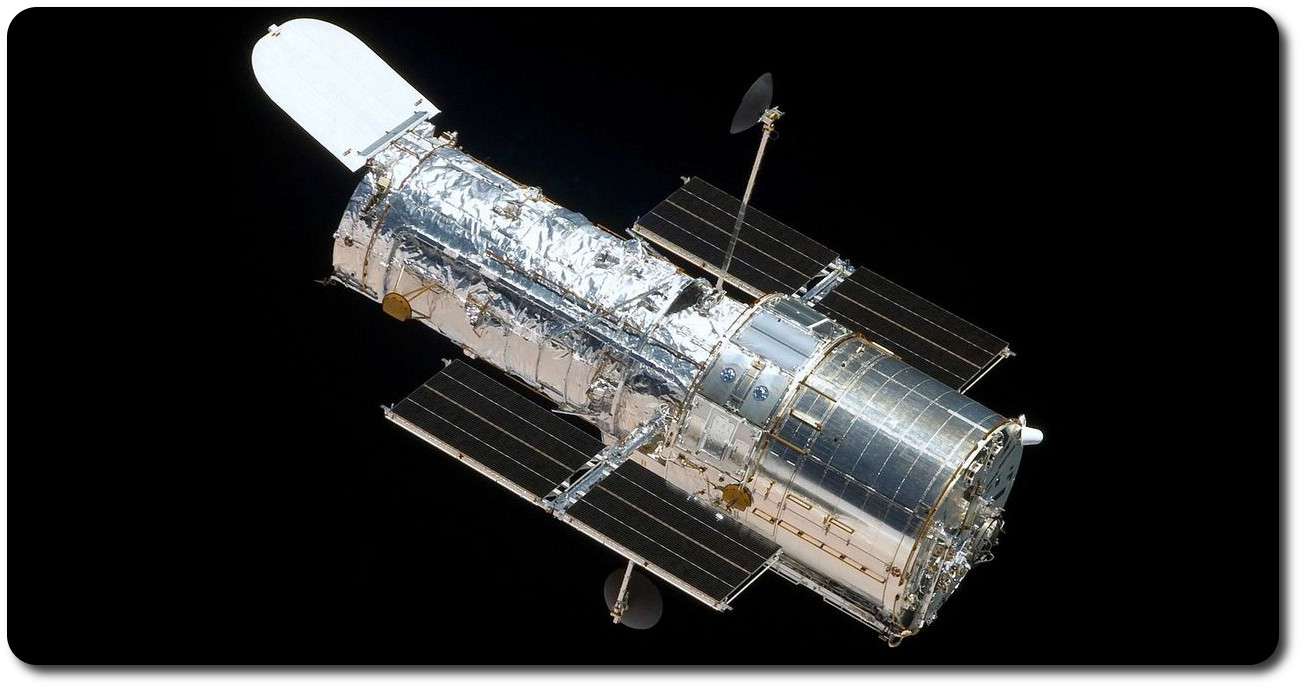
The Hubble Space Telescope (HST) as seen from the departing space shuttle Atlantis, flying STS-125, the final HST Servicing Mission, in 2009. This mission completely overhauled the space station in recognition of the fact that the next time humans might visit it would be to decommission it, and set it on course for controlled destruction in the Earth's atmosphere
The Hubble Space Telescope (HST) as seen from the departing space shuttle Atlantis, flying STS-125, the final HST Servicing Mission, in 2009. This mission completely overhauled the space station in recognition of the fact that it is unlikely to ever be refurbished again

One of the most famous – if not the most famous – space science instruments celebrated 25 years of orbital operations in April 2015.

There can be few people with access to television or media of any description who have not at some point in their lives heard of the NASA / ESA Hubble Space Telescope. Since its launch on April 24th, 1990, and after initial teething problems which required it be fitted with the space equivalent of a pair of spectacles, the Hubble Space Telescope – also referred to as HST, or simply “Hubble”  – has brought us some of the most stunning images of the planets of our solar system and deep space ever seen, giving us unique insights into the rest of the solar system, the galaxy in which we reside and the universe beyond.

The major advantage of the Hubble Space Telescope is that it operates above the distorting effect of the majority of the Earth atmosphere. Such is the benefits of such a location, that space telescopes were first proposed as early as 1923, and Hubble itself has a history stretching back as far as 1946, when astronomer Lyman Spitzer wrote Astronomical Advantages of an Extraterrestrial Observatory. For almost 20 years he continued to push the idea as the space programme came into existence until, in 1962, the US National Academy of Sciences took up the call and with three years, Spitzer had been appointed to chair a committee to define the scientific objectives for such a telescope. It was this work that gave birth to the Large Orbiting / Space Telescope in the 1970s, which became Hubble in the 1980s.

Cautaway of the Hubble Space Telescope
Cutaway of the Hubble Space Telescope showing the major components and sections

Named for the US astronomer Edwin Hubble, regarded as one of the most important observational cosmologists of the 20th century, the HST faced some unique challenges even before it was launched. First and foremost, in order to have as long an operational life as possible, it was designed to be serviced by astronauts, who could replace systems, fix failures, upgrade components, etc. Unfortunately, this also meant that Hubble had to be placed in a relatively low Earth orbit, resulting in further challenges.

Firstly, a low Earth orbit meant the telescope would spend half its time in bright sunlight, making observations in that part of its orbit next to impossible. It also meant an aperture door had to be fitted over the open end of the telescope, which could be closed to avoid the risk of direct sunlight falling onto the telescope’s optics and potentially damaging its science instruments.

April 25th, 1990. With its solar power panels deployed and forward optics door closed, and having been lifted into position by the shuttle's robot arm, Hubble is released in its orbit, ready for the shuttle Discovery to gently back away from it
April 25th, 1990. With its solar power panels deployed and forward aperture door closed, the space shuttle Discovery gently releases the Hubble Space Telescope at the start of its 25+ year mission

More particularly, an orbit around the Earth meant that Hubble would be passing from daylight into night every 48 minutes – and undergoing very wide swings in temperature from extremely hot to very, very cold. These not only would these cause significant heating and cooling issues for the more sensitive instruments on the telescope, they could also lead to expansion and contraction in parts of the telescope’s structure, which in turn could cause small amounts of vibration / movement when it was required to be an ultra-stable platform for space observations.

Nevertheless, despite the technical and engineering challenges the project faced, by the mid-1980s, Hubble was ready, and its launch was scheduled for October 1986. And then fate intervened, in the form of the tragic Challenger disaster of January 1986. This set back the US manned space programme by over two years, and resulted in Hubble’s launch being delayed until the 24th April 1990, when the space shuttle Discovery lifted off from Launch complex 39B at the Kennedy Space Centre on mission STS-31, and the following day successfully deployed the telescope in orbit. All seemed well with the telescope as it underwent on-orbit commissioning over the next couple of weeks; then a series of deep space test images were taken – and indicated a serious flaw in the telescope’s imaging capabilities.

Investigations were begun, and the problem was eventually traced to a error in the telescope’s primary mirror. The HST’s optics are a classic Cassegrain reflector, common to the majority of large professional telescopes, which comprises a very large primary mirror – in the case of Hubble some 2.4 metres (7 ft) across – and a smaller focusing mirror. Both have to be made to exacting tolerances through a process of grinding the reflective surfaces to their required shapes, and in the case of Hubble, the primary mirror had been ground to the wrong shape – by just 2.2 nanometres (a nanometre being one billionth of a metre).
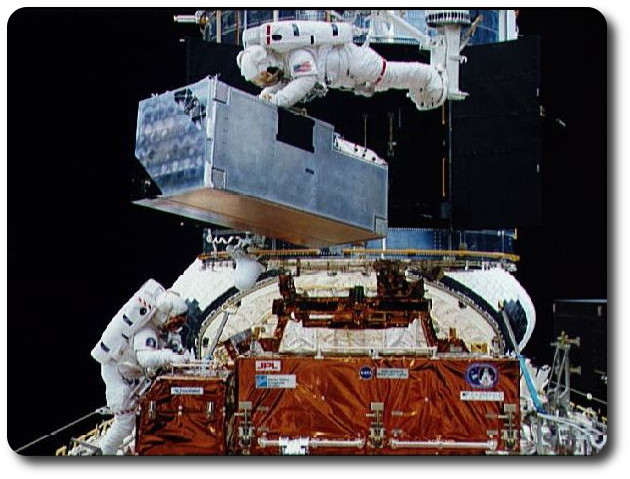
December 8th, 1993, astronaut Kathryn C. Thornton (top of this image) holds on to the COSTAR package as the shuttle Endeavour's robot arm slowly lifts her - and -it - clear of its cradle in the shuttle's payload bay, ready for installation into Hubble
December 8th, 1993, astronaut Kathryn C. Thornton (top of this image) holds on to the COSTAR package as the shuttle Endeavour’s robot arm slowly lifts her – and it – clear of its cradle in the shuttle’s payload bay, ready for installation into Hubble, which can be seen anchored in the shuttle’s bay behind her with the instrument bay doors open

Though tiny, the error was enough to seriously impact Hubble’s ability to carry out cosmological studies, although imaging of very bright objects (such as the planets in the solar system) was still possible. Indeed, and despite being the butt of media jokes and labelled a US $2.5 billion “white elephant”, from 1990 through 1993, Hubble still performed some remarkable work.

However, in 1993, the space shuttle Endeavour lifted-off on mission STS-61, the first of five planned Hubble Servicing Missions. While the huge primary mirror could not be repaired or replaced, the astronauts aboard Endeavour were, among a much broader series of upgrades for the telescope, able to replace one science package on the telescope with a series of corrective optics called COSTAR, and upgrade the telescope’s existing Wide Field Planetary Camera with a more refined version. Intended to counter-act the flaw in the mirror, these upgrades were the equivalent of giving Hubble a pair of glasses – and the results were spectacular.

Before and after: on the left, an image of the spiral galaxy M100 taken on on November 27th, 1993, without the corrective optics and camera system. On the right, M100 imaged by Hubble on December 31st, 1993, after the installation of the corrective optics and camera system
Before and after – to images of the spiral galaxy M100, located approximately 55 million light years from Earth. On the left: an image taken by Hubble on November 27th, 1993, just before the first servicing mission. On the right, and image taken by Hubble on December 31st, 1993, after the installation of the corrective optics and camera system

Since that first operation, Hubble has been serviced four more times between 1997 and 2009, all of which have continued to keep it in good operational order, replacing things like the gyroscope packages that both keep it stable and allow it to be turned to face targets selected for observation, and have significantly updated the science packages it carries, massively increasing its research capabilities.

These missions also served a secondary purpose; while well above the bulk of the Earth’s atmosphere, Hubble still orbits within the second highest layer of the atmosphere, the thermosphere.  Although exceedingly tenuous, the thermosphere nevertheless exerts minute, but cumulative drag on objects such as HST and the International Space Station, slowly reducing their orbits. To counter this, the servicing missions flown to HST allowed the space shuttle to gently “lift” Hubble back “up” to its optimal orbit.

Tur colour images of the star cluster Pismis 24 at the heart of nebula NGC 6357, around 8,000 light years from Earth (image: NASA / ESA and Jesœs Ma­z Apellÿniz, Instituto de astrof­sica de Andaluc­a, Spain)
True colour images of the star cluster Pismis 24 at the heart of nebula NGC 6357, around 8,000 light years from Earth (image: NASA / ESA and Jesœs Ma­z Apellÿniz, Instituto de astrof­sica de Andaluc­a, Spain)

In the 25 years of operations, Hubble has contributed to some major scientific discoveries, assisted in resolving some major astronomical issues, witnessed some remarkable solar events, and has raised new cosmological questions. And, of course, it has brought us some of the most stunning images of our galaxy and the universe beyond it, forever changing our perception of the place in which we live.

In honour of it’s namesake, one of the primary elements of Hubble’s mission was to measure the distances to Cepheid variable stars which, because of its position in space, it could do with far greater accuracy than ever before achieved. These observations helped constrain the value of the Hubble constant, used to define the rate at which the universe is expanding (thus helping to more accurately determine the age of the universe).

Prior to HST’s work, estimates of the Hubble constant typically had errors of up to 50%; HST was able to produce measurements with an accuracy of ±10%, which have since been verified using other techniques.

As well as helping to more accurately pin down the age of the universe, Hubble also helped establish the Lambda Cold Dark Matter (“ΛCDM”) model as the “standard” model of Big Bang cosmology, by providing evidence that, rather than slowing down due to the influence of gravity (which would eventually lead to the universe contracting once more into the Big Crunch), the rate of expansion of the universe is actually accelerating, most likely due to the influence of so-called dark energy.

Continue reading “Space Sunday: Hubble at 25”

Space Sunday: hill climbing, the impact of salt, and landing a rocket (take 2)

CuriosityApril 16th, 2015 saw NASA’s Mars Science Laboratory rover Curiosity clock-up 10 kilometres (6.25 miles) on its odometer since it arrived on Mars 30 months ago, as it continues its trek up the slopes of “Mount Sharp”, the mountain-size mound at the centre of Gale Crater.

The rover is currently making its way through a series of connected shallow “valleys” on the slops of the mound – which is more correct names Aeolis Mons – as it continues upwards and away from the “Pahrump Hills” area it spent 6 months investigating, and towards its next major science target, an area the science team have dubbed “Logan Pass”, which is still some 200 metres away from the rover at the time of writing.

While only a distance of around 550 metres separates “Logan Pass” from the upper limits of “Pahrump Hills”, the rover’s gentle progress has been the result of several stops along the way in order to further characterise the different rock types Curiosity has been encountering, and to make important observations of its surroundings as the science team try to understand the processes by which the region’s ancient environment evolved from lakes and rivers into much drier conditions.

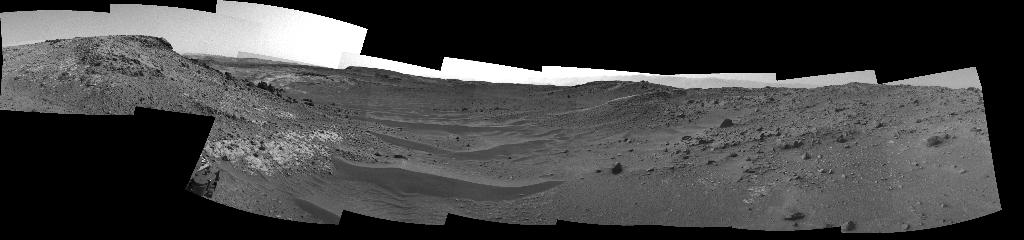
A panoramic mosaic taken by Curiosity’s Navigation Camera (Navcam) on Sol 951 of the rover’s mission (April 10th, 2015, PDT). The view shows the terrain ahead of the rover within “Artist’s Drive”, the first of the shallow “valleys” the rover is traversing en route to the next point of scientific interest, “Logan Pass”

The rover’s progress up “Mount Sharp” has so far been through the lower reaches of the transitional layers which mark the separation points between the materials deposited over the aeons to create the gigantic mound and the material considered to be common to the crater floor. These transitional layers have been dubbed the “Murray Formation”, in honour of the late co-founder of The Planetary Society, Bruce Murray, and comprise a number of different land formations, “Pahrump Hills” being one of the lowermost. Logan Pass marks the start of another, dubbed the “Washboard unit”, and which comprises a series of high-standing buttes.

The lower slopes of “Mount Sharp” and the transitional nature of the “Murray Formation” between the create floor (left) and the “proper” slopes of the mound, marked by the “Hematite Ridge” (right). currently, the rover is now approach the lower extreme of a range of buttes within the “Murray Formation” which include “Murray Buttes” shown in the image. and which have been marked as a future science destination for Curiosity

As several of the MSL reports in these pages have shown, Curiosity has already found considerable evidence that Gale Crater may once have been home to environments sufficiently benign to allow for the existence of microbial life. Whether or not those microbes survived down the millennia such that they are still present in the planet’s soil today, is not something the rover is equipped to determine; however, a recent report from one of Curiosity’s science teams  suggests that subsurface conditions are unfavourable to the support of microbial life.

The evidence for this comes in the form of perchlorate salts, and the effect they can have on their environment. Perchlorate was first detected in soil samples gathered by NASA’s Phoenix Mars Lander mission in 2008, while Curiosity found trace evidence for perchlorate in samples gathered early in its own mission.

What makes perchlorate interesting is that in cold temperatures, it is able to “pull” water vapour from the atmosphere and bind with it, lowering its temperature, potentially allowing it to form sub-surface brines which would be very destructive to microbial life.

It had been thought that the environmental conditions by which this might occur were limited to the near-polar regions of the planet. However, data gathered by Curiosity’s on-board weather station, called REMS (for Rover Environmental Monitoring Station) over the course of its mission suggests the night-time conditions in Gale Crater, are right for the formation of sub-surface brines throughout the year.

Continue reading “Space Sunday: hill climbing, the impact of salt, and landing a rocket (take 2)”

Space Sunday: ice-cream sandwiches, sniffing the air and targets of Opportunity

CuriosityCuriosity is continuing its exploration and ascent of “Mount Sharp”, the huge mountain-like mound of deposited material occupying the centre of Gale Crater, which has been the rover’s home since it arrived on Mars in August 2012. And it is continuing to find curious and enigmatic hints about the past conditions in the crater, and about Mars as a whole.

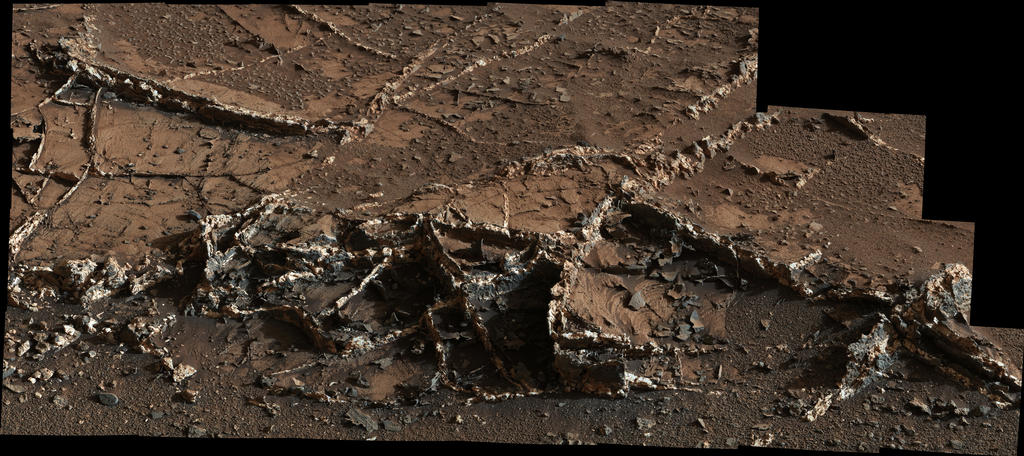
The rover’s most recent discoveries come from an area of rock dubbed “Garden City”, which contains areas of two-tone mineral veins quite unlike anything so far encountered in the rover’s travels.

The veins appear as a network of ridges left standing above the now eroded-away bedrock in which they formed. Individual ridges range up to about  6 centimetres (2.5 inches) high and half that in width, and they bear both bright and dark material. They are strongly suggestive of multiple episodes of fluid movement which occurred much later than the wet environmental conditions that formed lake-bed deposits which gave rise to “Mount Sharp’s” formation.

“Some of [the veins] look like ice-cream sandwiches: dark on both edges and white in the middle,” said Linda Kah, a Curiosity science-team member at the University of Tennessee, Knoxville. “These materials tell us about secondary fluids that were transported through the region after the host rock formed.”

This view from Curiosity’s Mast Camera (Mastcam) is a mosaic of 28 images showing a network of two-tone mineral veins standing up to a height of 6 centimetres (2.5 inches) from the surface of a rock dubbed “Garden City” – click for full size

On Earth, veins of this kind form as a result of fluids moving through move through cracked rock, depositing minerals in the fractures which often affect the chemistry of the surrounding rock. Curiosity has found bright veins composed of calcium sulfate visible on the surface of rocks at several other locations, which appears to be the same with the lighter material found as “Garden City”,   but the dark material suggest something else.

“At least two secondary fluids have left evidence here,” Kah said. “We want to understand the chemistry of the different fluids that were here and the sequence of events. How have later fluids affected the host rock?”

While there are no plans to gather any samples form “Garden City”, analysis of the three sets of samples gathered from within “Pahrump Hills” reveal that mineral deposits within the area vary according to elevation, revealing a complex process may have been responsible for the formation of the area. Samples taken from the lowest elevation of the area revealed themselves to be rich in clays and hematite, both of which commonly form under wet conditions.

However, at just a 5 metre higher elevation, jarosite, an oxidized mineral containing iron and sulfur that forms in acidic conditions, was the dominant mineral, while towards the top of the area, at an elevation of 10 metres, clay minerals and hematite were almost non-existent, and traces of jarosite were greatly reduced, while the samples – from “Telegraph Peak” – were rich in cristobalite and quartz, both of which are mineral forms of silica.

Quite what the process may have been that gave rise to this spread of deposits is unclear – the science team have several options to choose from, and are continuing their investigation.

Continue reading “Space Sunday: ice-cream sandwiches, sniffing the air and targets of Opportunity”

Space Sunday: nitrogen nibbles

CuriosityCuriosity, the Mars Science Laboratory rover, resumed operations on Mars resumed operations on March 11th 2015, after an electrical short circuit in the rover’s robot arm caused a suspension of activities while the matter was investigated, and short itself having triggered the rover to switch to a “safe” mode to prevent any potential damage.

The short, was not enough to damage the rover’s electrical systems in any way, occurred occurred when the was attempting to transfer samples of material gathered from a rock dubbed “Telegraph Peak” from the drill head to the CHIMRA system by subjecting the entire turret to rapid vibrations from the drills percussion action. Extensive tests were carried out over 10 days to try to determine if the short was transient, or indicative of a potential fault. Only one test during this time caused a further short, which lasted around 1/100th of the second, and didn’t interrupt the drill motor.

The results of the tests gave engineers a high degree of confidence that the short wasn’t indicative of the major fault developing, and so operations recommenced on March 11th with the transfer of some of the “Telegraph Peak” material being delivered to the rover’s on-board laboratory while analysis of the results from the tests carried out on the drill mechanism continue to be examined.

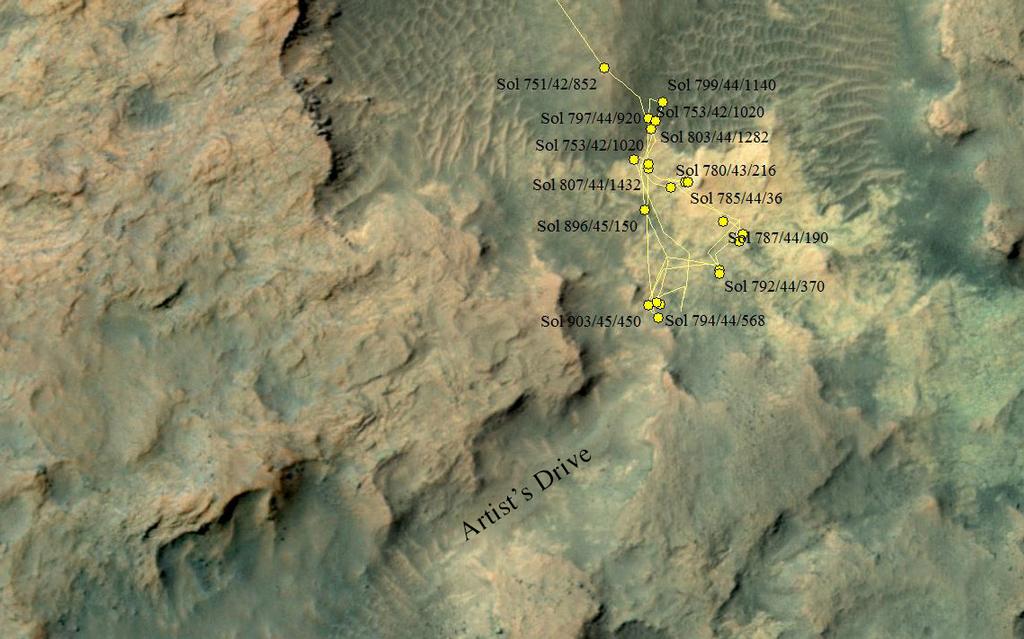
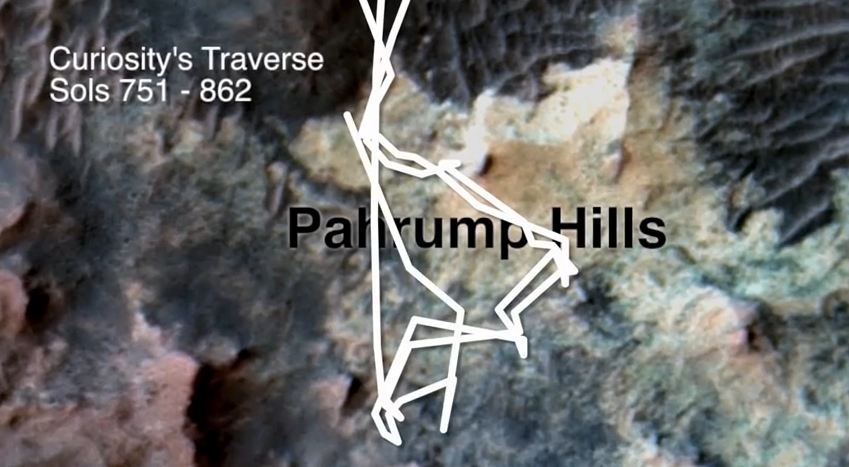
Walkabout and onwards drive: an overlay showing Curiosity’s meanderings through the “Pahrump Hills” area at the base of “Mount Sharp” from September 2014 through March 2015. The rover is now proceeding further upwards along the slopes of “Mount Sharp”, and will use the valley dubbed “Artist’s Drive” to reach its next destination

As Curiosity now heads on up the slopes of “Mount Sharp”, aiming to pass through a shallow valley dubbed “Artist’s Drive”, NASA  has confirmed that the rover has found “biologically useful nitrogen” on Mars.

Nitrogen is essential for all known forms of life, since it is used in the building blocks of larger molecules like DNA and RNA, which encode the genetic instructions for life, and proteins, which are used to build structures like hair and nails, and to speed up or regulate chemical reactions. On Earth and Mars, however, atmospheric nitrogen is locked up as nitrogen gas (N2) – two atoms of nitrogen bound together so strongly that they do not react easily with other molecules; they have to become “fixed” (separated) in order to participate in the chemical reactions needed for life.

On Earth, certain organisms are capable of fixing atmospheric nitrogen and this process is critical for metabolic activity. However, smaller amounts of nitrogen can also be fixed by energetic events like lightning strikes.

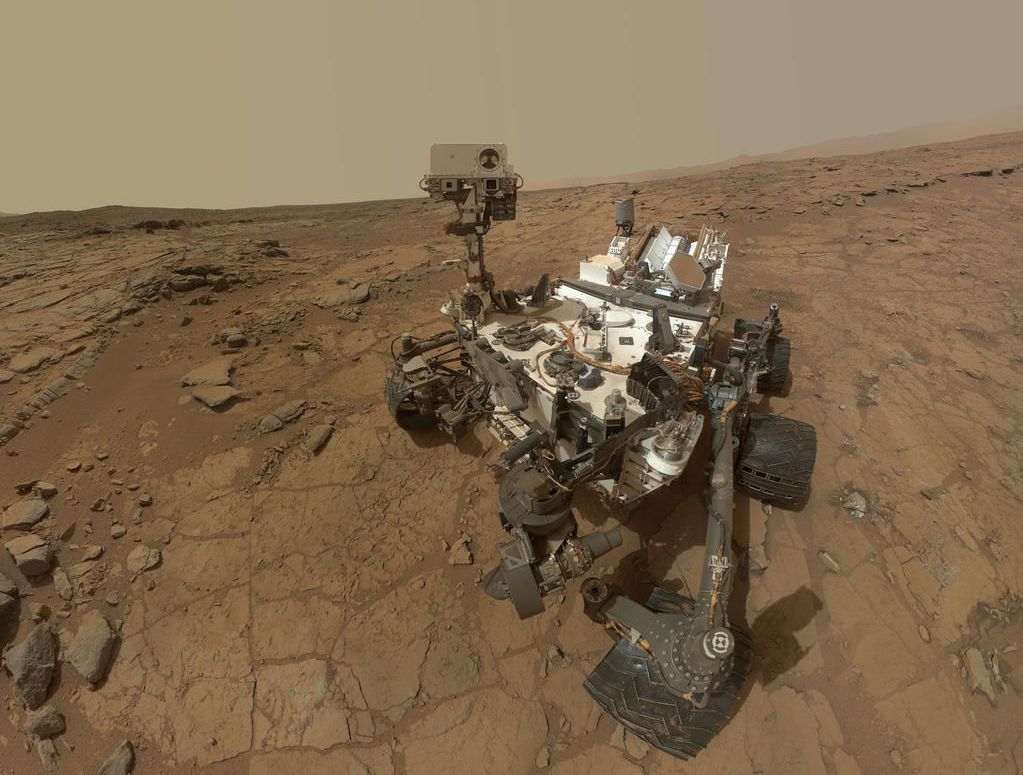
An updated version of Curiosty's "selfie" from February 2013, when the rover was examining the rock dubbed "John Klein".  The original image rendered a "fishbowl" look; in this revised image, the background has been flatened and rendered as seen from a single point in the camera's field of view, while the view of Curiosity is made up of a number of images captured by the rover's Mars Hand Lens Imager (MAHLI)
An updated version of Curiosity’s “selfie” from February 2013, when the rover was examining the rock dubbed “John Klein”. The original image rendered a “fishbowl” look; in this revised image, the background has been flatenned and rendered as seen from a single point in the camera’s field of view, while the view of Curiosity is made up of a number of images captured by the rover’s Mars Hand Lens Imager (MAHLI) – image: NASA / JPL

While Nitrogen has long been known to exist on Mars, a study by the NASA team supporting the Sample Analysis at Mars (SAM) experiment onboard the rover reveals that NO3, a nitrogen atom bound to three oxygen atoms and a source of “fixed” nuitrogen  has been found in numerous samples gathered by the rover during its journey across Gale Crater.

Although the report’s authors make it clear that there is no evidence to suggest that the fixed nitrogen molecules they’ve discovered were created by life. The confirmation that NO3 does exist adds significant weight to the potential for Mars once having the kind of environment and building blocks needed by life. This is particularly relevant, given that one of the areas in which the NO3 was identified is the “Yellowknife Bay” area, which Curiosity examined in early 2013, and which was shown to have once had a very benign environment for life processes, complete with water, many of the right chemicals, and a local source of energy. This prompted Jennifer Stern of NASA’s Goddard Space Flight Centre in Greenbelt, Maryland, and a co-author f the report to note, “Had life been there, it would have been able to use this nitrogen.”

However, it is more likely that the fixed nitrogen that has been discovered may have been generated primarily by the numerous powerful impacts that occurred about 4 billion years ago, during a period known as the Late Heavy Bombardment, when the inner planets of the solar system were “hoovering up” the remaining debris of asteroids and rock scattered across their orbits.  That said, “fixed” nitrogen has also been detected high in the modern day Martian atmosphere by Europe’s Mars Express.  What’s missing at the moment is the capability to get a big enough nitrate signal for any nitrogen isotope data which might exist, as none of the experiments on Mars are broad enough to do so, thus this is likely to be something future missions to Mars will consider.

Continue reading “Space Sunday: nitrogen nibbles”

Short circuits on Mars and mapping asteroids

CuriosityFollowing my last Curiosity update, which noted that other than for one potential drilling / sampling target, work was wrapping-up for the Mars Science Laboratory in the “Pahrump Hills” location on the lower slopes of “Mount Sharp”, the decision was taken to indeed gather one more sample.

The selected target had been dubbed “Telegraph Peak”, and sits towards the top end of “Pahrump Hills”. It was selected because Alpha Particle X-ray Spectrometer (APXS) measurements carried out by the rover during its 5-month “walkabout” in “Pahrump Hills” revealed the rocks in the area to be relatively enriched in silicon when compared to the corresponding amounts of aluminium and magnesium, which is somewhat different to rocks sample prior to the rover arrival at the basal slops of “Mount Sharp”. This enrichment has also shown to increase the further up the slopes of “Pahrump Hills” the rover climbed, which is of interest to the science team.

“When you graph the ratios of silica to magnesium and silica to aluminium, ‘Telegraph Peak’ is toward the end of the range we’ve seen,” Curiosity co-investigator Doug Ming explains. “It’s what you would expect if there has been some acidic leaching. We want to see what minerals are present where we found this chemistry.”

Sampling took place on February 24th, 2015 (PDT) or Sol 908 for the rover on Mars. For the first time in Curiosity’s time on Mars, it was carried out with no preliminary “mini-drill” operation. Instead, the science team judged that analysis of the rock by APXS indicted it was of a very similar nature to the previous two sample drilling sites in “Pahrump Hills”, and the new lower percussion drilling capabilities the rover now has were judged as sufficiently safe enough to go ahead with a direct sample gathering operation.

How the drill works: On the left, a view of the drill mechanism mounted on the rover's turret, with the drill bit centre bottom. On the right a cutaway showing the sample collection mechanism in the drill bit
How the drill works: On the left, a view of the drill mechanism mounted on the rover’s turret, with the drill bit centre bottom. On the right a cutaway showing the sample collection mechanism in the drill bit

As I’ve covered previously in these pages, obtaining a sample for analysis is a multi-part operation. First the rock is drilled, and a core sample forced up through the drill bit into a one of two sample collection chambers at the top of the drill mechanism. From here, the sample is “shaken” through a feed to another device in the rover’s robot arm turret called CHIMRA – the Collection and Handling for In-Situ Martian Rock Analysis system, used to separate the tailings through a series of sieves, ready for different sizes of sample grains to be passed through the the rover’s on-board laboratory systems.

Both of these operations require the use of the drill’s percussive system to vibrate the turret, forcing material both from the drill’s sample collection chamber and through CHIMRA. However, on February 27th, during the initial operation to move the sample tailings from the drill chamber to CHIMRA, Curiosity’s on-board fault protect system identified a transient short circuit within the robot arm’s electronics. The immediately resulted in all arm-related activities being shut down, and the arm and turret locked into position ready for diagnostic operations to commence.

A transient short can occur for a number of reasons, and can pass without significant problems. However, it may also indicate a potential issue which might require some measure of action, such as a change in operating procedures or a restriction on how a mechanism is used, in order to avoid the issue becoming a serious problem in the future. To this end, following the fault report, mission engineers started diagnosing the problem, with almost all rover operations halted while they did so.

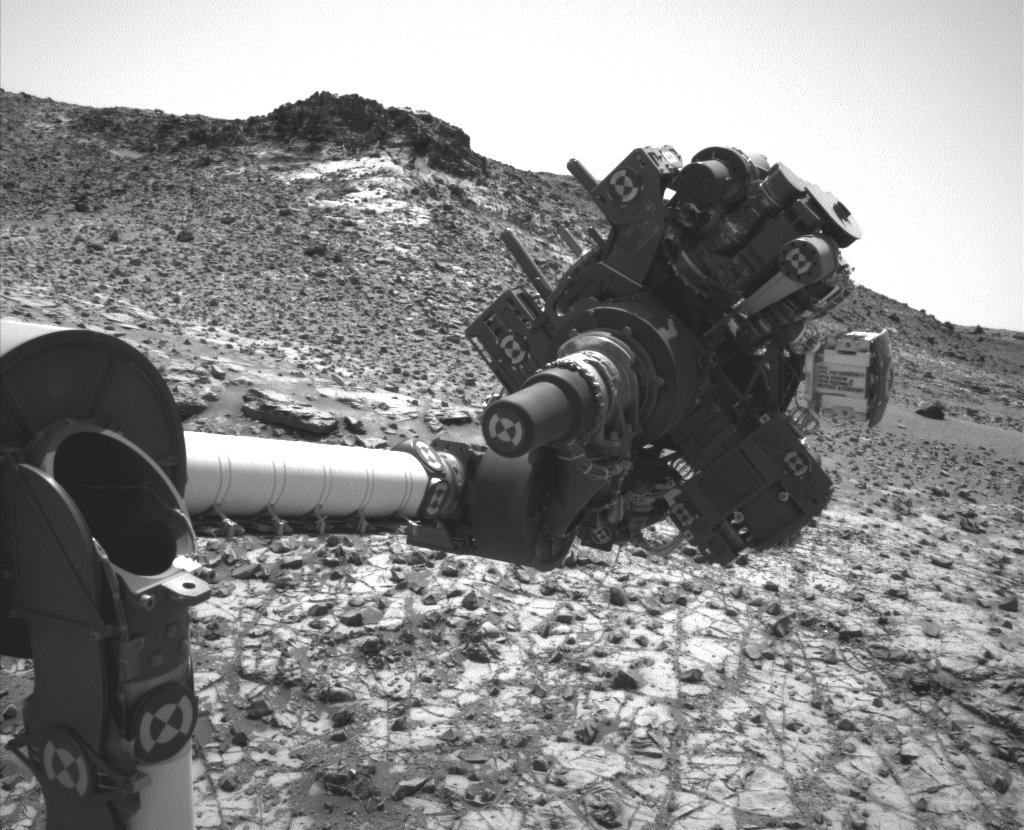
A monochrome image from Curiosity’s Navigation Camera (Navcam) shows the position in which the rover held its arm for several days after a transient short circuit triggered on-board fault-protection programming to halt arm activities on February 27th, 2015 PDT, the 911th Sol of the rover’s work on Mars.

On Thursday, March 5th, as a part of the investigative process, the rover was commanded to carry out a series of vibration tests of the kind performed while forcing the transfer of samples from the drill to CHIMRA. The vibrations were carried out with the robot arm and turret in the same orientation and position which caused the initial triggering of the fault protection system, and in the third of 180 repeat motions, a similar transient short occurred, lasting less than one one-hundredth of a second, enough to trigger the rover’s fault protection systems, and confirming there does appear to be some kind of electrical issue.

Tests are now under-way to determine whether or not the short will occur with the turret in different orientations, and may be followed by additional tests to see if it occurs with the arm in different positions. If no shorting occurs with either a change in the orientation or position of the turret / arm, then the most obvious step in preventing any recurrence of the issue is to avoid placing the turret / arm in the same orientation for sample transfer operations during future drilling activities.

It is hoped that the tests can be completed in the course of the next week. If they show that operations can be resumed safely, it is anticipated that the sample transfer operations will be completed, and Curiosity will then be ready to resume its climb up “Mount Sharp”, leaving “Pahrump Hills” via a narrow valley the science team have dubbed “Artist’s Drive”.

Continue reading “Short circuits on Mars and mapping asteroids”

Avatars on Mars, Falcons in Florida and oceans in space

CuriosityCuriosity, NASA’s Mars Science Laboratory (MSL), has been wrapping things up in the “Pahrump Hills” region at the base of “Mount Sharp”, the mountain-sized mound of deposited material occupying the centre of Gale Crater.

For the last several months, the rover has been engaged on what geologists on Earth call a “walkabout”, zigzagging back and forth across the area, looking for targets of interest for follow-up investigations, and allow the science team to better understand the geology and form of the region.

This method of activity is a change from how Curiosity has largely operated to date, which has seen the rover primarily move from point-to-point along its route, only re-visiting sites as a part of its onward movement towards the goal of reaching and climbing “Mount Sharp” (such as when travelling into, and then back out of the “Glenelg” and “Yellowknife Bay” regions Curiosity first explored in 2012 / 2013).

Curiosity's wandering through
Curiosity’s wandering through “Pahrump Hills”, which started with one of the tree lines into the region at the top of the image

In this respect, and as Aileen Yingst, the Deputy Principal Investigator with the Mars Hand Lens Imager (MAHLI) on the rover, describes, Curiosity has been demonstrating just how much of an avatar it is for the science team, allowing them to careful investigate, examine and catalogue “Pahrump Hills” in a rich, practical way using the very human technique of the “walkabout”, which will serve the mission well as the ascent up “Mount Sharp” continues.

Most recently, and since collecting samples from “Mojave 2″, the area of rock displaying interesting crystalline elements within it, Curiosity has been looking at an area geologists dubbed “pink cliffs”, which shows further signs of the crystalline structures, and might be a candidate for further investigation. If so, it will be the last stopping point in “Pahrump Hills” before Curiosity continues its climb up “Mount Sharp”.

Oppy Reaches 11

January 25th, 2015 saw NASA’s Mars Exploration Rover, Opportunity, reach it’s eleventh anniversary on Mars. The rover, one of two MER vehicles, arrived on Mars at January 25th, 2004 (Universal Time), ready to start a mission initially planned to last just 90 days.

Since then, and up to its anniversary, “Oppy” has travelled a distance of some 41.7 kilometres (25.9 miles). While this doesn’t sound that much (and in truth, a human science team could have travelled that far in just a few days, including time for any science carried out along the way), remember that “Oppy’s” forward speed is measured in centimetres per hour.

As one of two solar-powered MER rovers (the second, Spirit having finally succumbed to the hostile environment on Mars around March 215th, 2011), Opportunity has carried out an incredible amount of work, and greatly contributed to our understanding of the planet, returning compelling evidence about wet environments on ancient Mars.

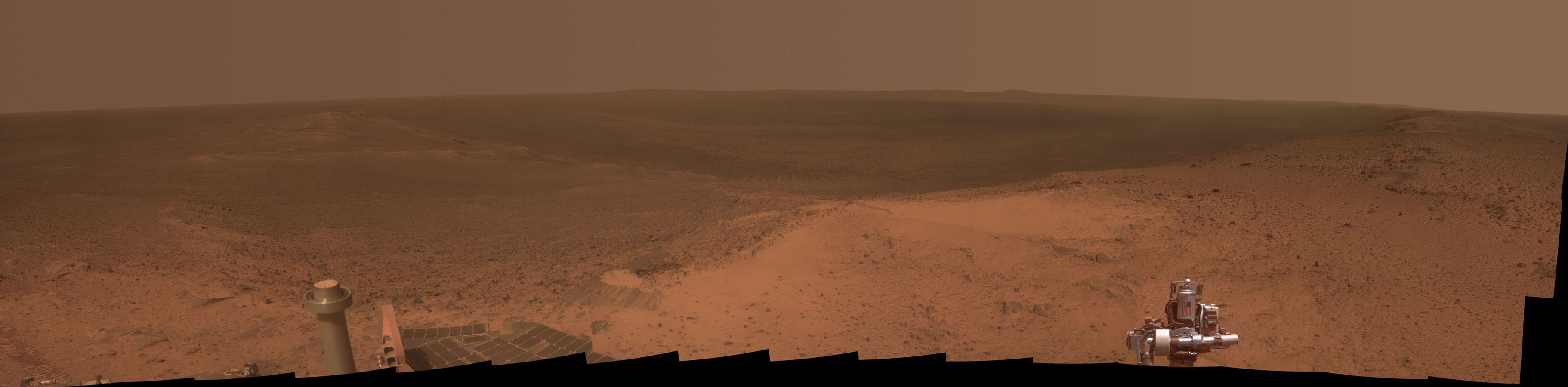
A panoramic view of Endeavour Crater as seen from “Cape Tribulation” an uprising close to the crater’s rim, the summit of which Opportunity reach in January 2015, marking its 11th anniversary on Mars (click for full size)

The rover marked its anniversary by reaching the summit of “Cape Tribulation”, an uprising close to the rim of 20 kilometre (13.7 mile) wide Endeavour Crater, which the rover has been gradually circumnavigating. This involved a change in elevation for “Oppy” of about 135 metres (440 feet), and afforded it a panoramic view of the crater and the land around it, presenting a unique opportunity for geological observations of the crater and its rim.

 A New Mars Mystery

That night, too, there was another jetting out of gas from the distant planet. I saw it … That night another invisible missile started on its way to the earth from Mars, just a second or so under twenty-four hours after the first one.

– The narrator, H.G. Wells’ The War of the Worlds

Okay, so it’s unlikely to be the sign of an impending invasion of Martians possibly ticked-of at the way we’re cluttering-up their planet with our probes and landers and rovers, but recent events high in the atmosphere of Mars have given rise to some excitement.

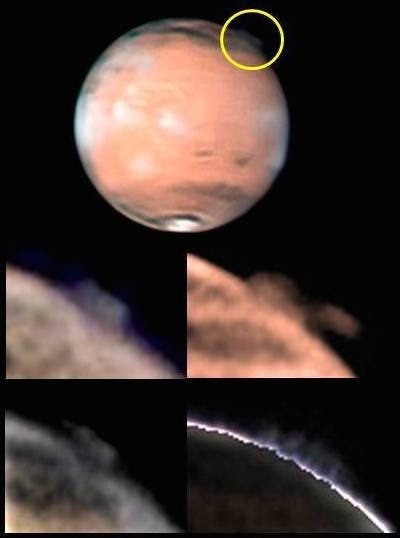
The images, originally capture in 2012, show huge plumes rising some 250 kilometres (156 miles) into the most tenuous reaches of Mars’ thin atmosphere.

Martian high-altitude plumes
Martian high-altitude plumes (image: ESA)

The plumes occurred on two separate occasions in March and April 2012, and were spotted by amateur astronomers. Each time, they developed with relative rapidity, rising upwards and outwards to cover areas of some 1000 x 500 kilometres (625 x 312.5 miles) in a period of around 10 hours before remaining visible for up to 10 days at a time, their structure and form changing on a daily basis.

Unfortunately, neither event was seen from orbit about Mars, occurring so high on the planet’s limb as to be effectively out-of-sight for the NASA and ESA orbital vehicles, and by the time word had spread sufficiently about the observations, the events were largely over.

However, investigations into images of the planet taken by the Hubble Space Telescope in orbit around the Earth have revealed similar plumes being imaged in the past. However, with the exception of an image captured in 1997, none have been anywhere near as high or dramatic as the 2012 events.

So what might have caused this plumes to occur? The answer to that question is uncertain.

Continue reading “Avatars on Mars, Falcons in Florida and oceans in space”