 It has continued to be a little quiet, news-wise where the Mars Science Laboratory (MSL) mission is concerned. As mentioned last time, this is hardly surprising, given the way the news cycle works.
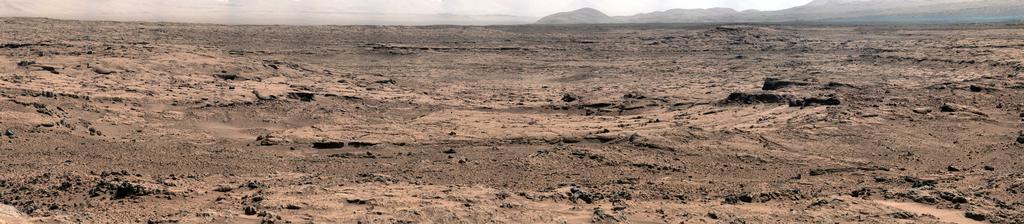
Since my last report, Curiosity has started exploring the depression slight to east of Glenelg which has been given the name “Yellowknife Bay”. This is an area of one of three terrain types which come together within Glenelg itself (one of the other two being the terrain the rover has been traversing since its arrival on Mars at the start of August). It is very different in nature to the terrain found around the landing site at Bradbury Landing, and an initial approach to the area was halted on December 10th (Sol 123) when sensors on the rover reported conflicting angles of tilt to the main computer. While Curiosity was in no danger of toppling over, an on-board safety protocol was initiated which halted the rover’s planned drive while it ‘phoned home for advice.
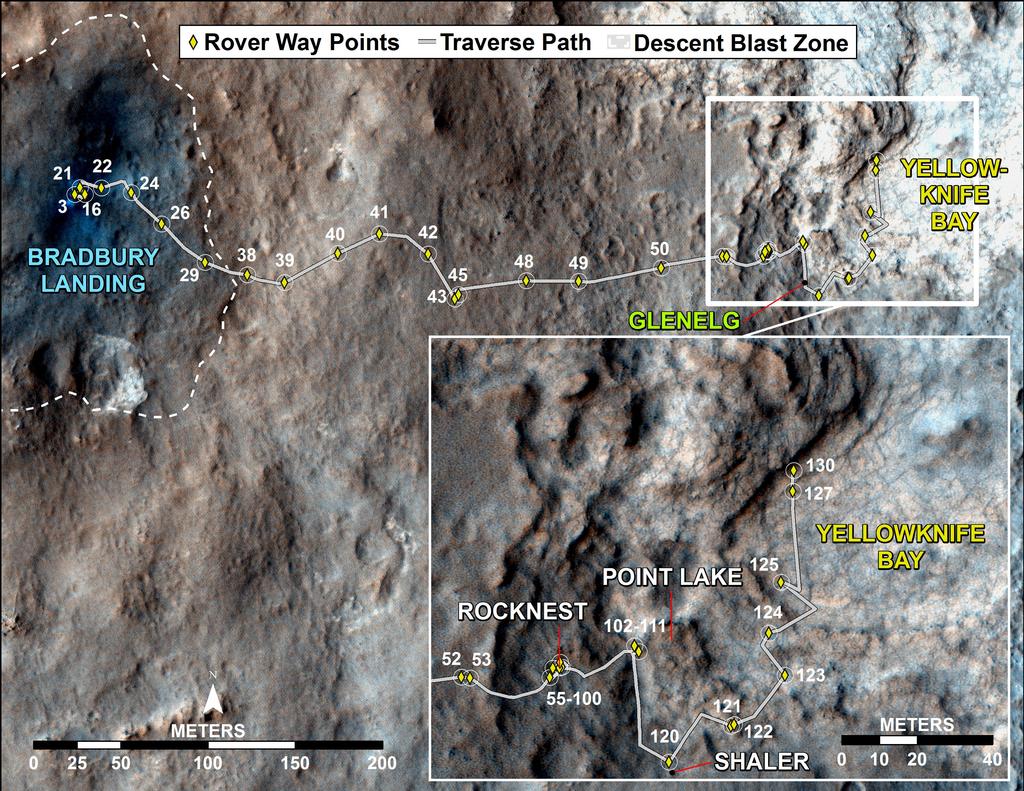
Confident the rover was in no danger, mission managers instructed Curiosity to resume its drive on Sol 124, which saw it complete the planned traverse from the 10th December and pass over a 1/2-metre lip into the depression proper. On Sol 125 (December 12th) Curiosity covered a further 26.1 metres (86 ft), moving well into the depression, surveying a number of rocks along the way with both the Mastcam system and ChemCam in a series of remote sensing exercises.
A prime mission goal for Curiosity’s explorations of Yellowknife Bay is the identification of a suitable candidate for the first use of the percussive drill – the last major item of equipment on the rover’s robot arm turret to be commissioned. As such, the rock surveys were part of this work.
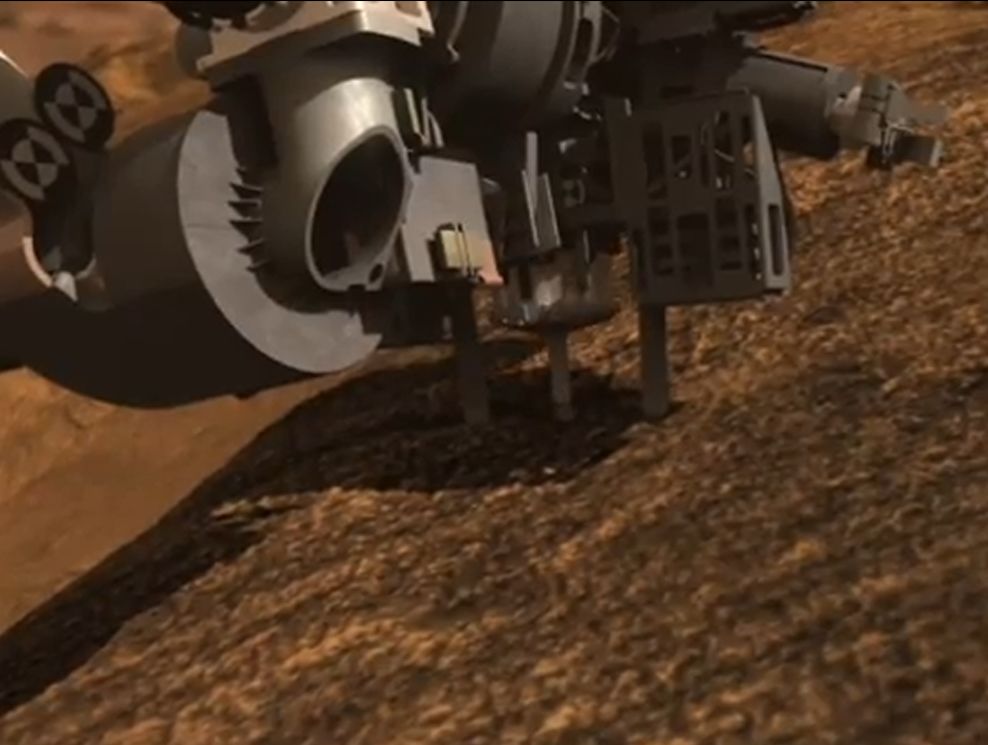
The drill will be used to collect samples from inside Martian rocks, something never before attempted on Mars. The powdered sample, once obtained, will be passed through the CHIMRA system which is also used to sieve and sort samples obtained by the soil scoop, before being passed to CheMin and SAM aboard the rover for detailed analysis.
On December 14th, Curiosity completed a drive of 32.8 metres (108 ft) to reach two “targets of interest” which mission planners dubbed “Costello” and “Flaherty”. Each of these rocks was subjected to study using the Alpha Particle X-Ray Spectrometer (APXS) and MAHLI, the Mars Hand Lens Imager, both mounted on the rover’s robot arm turret. These studies lasted a couple of days, during which Curiosity carried out various REMS monitoring activities as well; then on Sol 130 a further drive of just 5.6 metres (18 ft).
Continue reading “Christmas at grandma’s & preparing for when you can’t phone home”
 As generally happens in long-duration space missions, media attention around Curiosity is waning somewhat as the initial gee-whiz factor wears off and the reality of this potentially being a multi-year mission kicks-in and journos start seeking the next gee-whiz headline. As such, the next time Curiosity really hits the headlines, it’ll likely be for one of three reasons: Something Big has happened science-wise; someone has sensationalised upcoming news a-la Joe Palca; or something on the rover has broken. Indeed, a combination of the second two points is already occurring.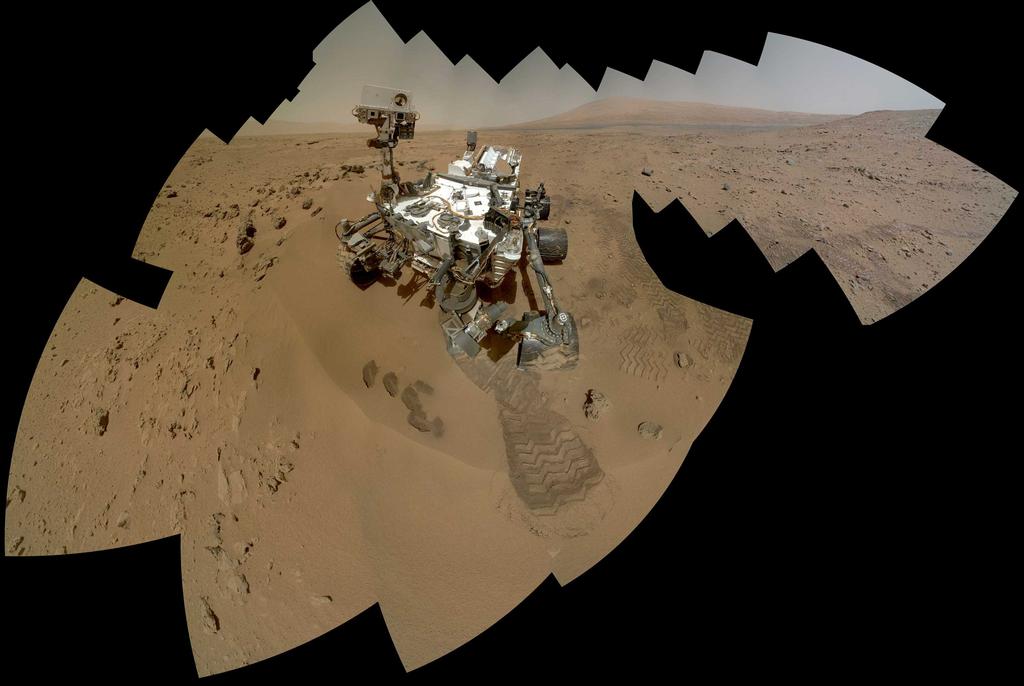






 Inara Pey: Living in a Modemworld