Monday, February 29th 2016 saw HTC / Valve open the doors for pre-ordering of the consumer version of the Vive VR headset, while Microsoft started accepting pre-orders for the Development Edition of the AR / mixed reality HoloLens system.
The first batches of each system are expected to start shipping around the same time as Oculus VR commences the first shipments of the Rift headset, which was made available for pre-order in January: the Rift is expected to start shipping on March 28th, world-wide, with the Vive starting on April 5th, also world-wide (although the latest update on the UK order page now states shipping will be in May 2016, possibly as a result of initial order received). The HoloLens will commence shipping on March 30th – but only to developers in the USA and Canada.
HTC initially announced the US consumer price for the Vive – US $799 excluding sales and shipping – on Sunday February 21st. This is some US $200 more than the Oculus Rift, but the prices does includes two wireless hand controllers; Rift buyers will have to purchase similar controllers separately, either from a third-party or through Oculus VR when their Touch system launches some time in Q2 2016. While no prices have been confirmed for the latter, many are taking Palmer Luckey’s comments that bundling Touch with the Rift would have “significantly” raised the price of the latter to mean that Touch is liable to cost between US $100 and US $200 – markedly closing the gap between the two systems.

On February 28th, 2016, HTC further announced the Vive’s international pre-order pricing. This see the Vive pitched at £689 (around US $960) in the UK and €899 (US $977) in Europe, both inclusive of VAT but exclusive of shipping costs (£57.60 for UK customers). Customers in Canada can expect to pay CAD $1149 + tax and shipping.
The Vive package includes the headset, which has a similar technical specification to the Oculus Rift (but with a 9:5 aspect ratio rather than 16:9, the former being said to result in a more natural and convincing “feel” to images on the headset’s screens), the two wireless controllers, a pair of Vive base station sensors, a Vive Link Box, and a pair of Vive ear buds. For a “limited period” pre-order units will additionally ship with two free VR games: Job Simulator: The 2050 Archives and Fantastic Contraption and will also include Google’s Tilt Brush VR painting system.
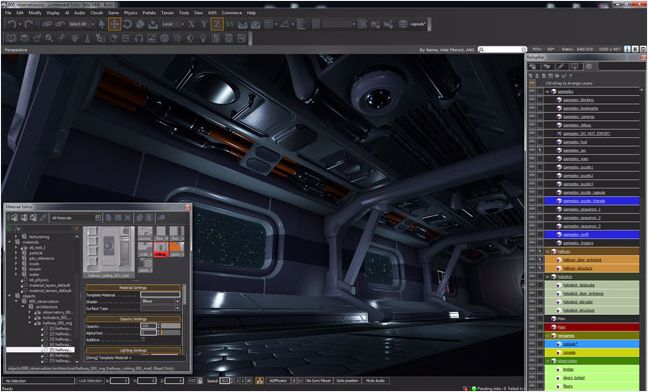
As an added sweetener for developers, and as reported by Tech News World, Unity Technologies has announced their game platform will have native support for the HTC Vive and Steam VR, while Valve have introduced an advanced rendering plug-in developed for Unity. There is also a Vive Developer’s portal, which includes support for Unreal Engine.
The computer hardware specifications for the Vive also pretty much resemble those of for the Oculus Rift, and like Oculus VR, Steam are offering an application that potential purchasers can download to test whether their PC is “VR ready”, while HTC offer a page of recommended PC hardware suppliers who can provide “Vive optimised systems” to US customers.

As I reported in January, the headset includes two interesting additions. The first is the front mounted “pass through” camera, which allows the user to see an overlay of the room around them projected into their virtual view. This fades in if they approach a physical object (e.g. a wall or desk, etc.), or can be manually triggered via the hand controllers, and allows for collision avoidance when using the headset with the room sensors to move around within a VR environment. The second is “Mura correction” (“mura” being a Japanese term meaning “unevenness” or “lack of uniformity”), which removes the inconsistent brightness levels between one pixel and the next on earlier Vive headsets, presenting a far more uniform and cleaner image.
Further information can be obtained from the HTC Vive pre-order website and via Valve’s Steam website.
Continue reading “HTC Vive and Microsoft HoloLens available for pre-order”