Space Sunday: SpaceX Starship update

A Starship / Super Heavy pairing lifts-off from a dedicated launch facility in this still from an animated video produced by SpaceX for the September 28th, 2019 update. Credit: SpaceX

On the occasion of the eleventh anniversary of SpaceX achieving orbit for the first time with their Falcon 1 rocket on September 28th, 2008, CEO Elon Musk presented an update on the company’s progress developing its massive Super Heavy booster and interplanetary class vehicle, Starship.

It has been some 12 months since the last update on the development of the two vehicles – the last update really being overshadowed by the announcement SpaceX planned to fly a Japanese billionaire and his entourage around the Moon and back (see Moon trips, Mr Spock’s “home” and roving an asteroid for more), and the programme has moved on significantly since then, as indicated by the fact that the 2019 update took place at the SpaceX facilities in Boca Chica and against the backdrop of the first of the Starship prototype vehicle.

Starship Mk1 under construction at the SpaceX facilities near Boca Chica, Texas. Credit: unknown

Since its first public unveiling in 2016, the Starship / Super Heavy combination has been through a number of iterations and name changes. However, it is fair to say that things have now settled down on the design front, and what was presented at Boca Chica is liable to remain largely unchanged, assuming everything proceeds as SpaceX hopes.

In this, the flight capable prototype Starship at Boca Chica is the first in a series of such vehicles. A second is  under construction at the SpaceX facilities in Cocoa, Florida, and three more are planned, one of which will be used to make the first orbital flight within the next 6 months, and Musk suggesting another could be used in a crewed orbital flight within the next 12 months – which sounds exceptionally ambitious. Construction of the two initial Starship prototypes has not exactly been secret: both have been literally assembled in the open. So even ahead of the September 28th event, some were already developing renderings of the new Starship design compared to the last known iteration.

A rendering by Kimi Talvitie comparing the 2018 design for Starship (l) with the prototype (r). The rendering of the 2019 prototype was based on direct feedback from Elon Musk

The new design sees some significant changes in Starship – notably with the fins, canards and landing legs. The 2018 variant was marked by three large fins, two of which would be actuated (hinged for up / down motion relative to the hull) for atmospheric flight, with all three fins containing the vehicle’s landing legs. At the time of that design, I commented that this approach appeared risky: a heavy landing on the Moon or Mars might conceivably damage one of the actuated fins, affecting the vehicle’s ability to undertake atmospheric flight on its return to Earth.

With the new design, the fins are reduced to two and reshaped, both of which are actuated to hinge “up” and “down”. In addition, the landing system is now independent of the fins, removing the greater part of the risk of damaging them on landing. The number of landing legs is also increased to six. At the forward end of the vehicle, the canards are enlarged and hinged in a similar manner to the fins.

Starship’s basic specification. Note the “dry” mass of 85 tonnes is incorrectly stated in the slide: it is expected the production version of Starship will mass around 120 tonnes (the prototype masses around 200 tonnes. Credit: SpaceX

The remaining aspects of the design are more-or-less unchanged as far as the body of the ship is concerned: it will be some 50 metres (162.5ft) in length and have a diameter of 9m (29ft). The forward end of the vehicle will be given over to crew and passengers or cargo (or a mix of the two), although Musk now estimates the vehicle will – with the aid of the Super Heavy booster – be lifting up to 150 tonnes to low Earth orbit – an increase of roughly a third – and return up to 50 tonnes to Earth.

To help achieve this, the motor system has been slight revised. While six engines will still be used, three will now be optimised for vacuum thrust, ideal for orbital flight and pushing the vehicle out to the Moon or Mars, and the remaining three optimised for sea level thrust and capable of being gimballed for use during a descent through an atmosphere and landing.

Starship’s motor arrangement: three central Raptor engines optimised for sea level thrust and capable of gimballing and three outer vacuum optimised motors with fixed, large diameter exhaust bells for maximum efficiency. The “boxes” visible in the rendering are potentially additional cargo bins. Credit: SpaceX

During the presentation, Musk explained the rationale behind the use of 301 cold rolled stainless steel in the design, noting a number of reasons. Firstly, the cold rolling process results in a stronger, light finished product, and this becomes even stronger when exposed to the very low temperatures of cryogenic fuels. Thus, Starship and Super Heavy in theory have a structural strength equitable to that of carbon composites – but at a much lower overall mass.

Secondly, the cold rolled steel has very high melt temperatures, reducing the amount of direct heat shielding required, again reducing the vehicle’s overall mass. It is also both highly corrosion-resistant and easy to work with. This means that basic repairs to a vehicle on the surface of the Moon or Mars could be effected, or even that a Starship could even be dismantled and the steel from the hull re-purposed. Finally, there’s the fact that all these advantages are gained in a product costing around 2% that of an equivalent mass of carbon composite.

Starship Mk 1 filmed during the September 28th livestream event. Credit: SpaceX

In terms of heat shielding, the “windward” side of Starship (the side facing the fictional heat of entry into an atmosphere) will be coated with lightweight ceramic tiles. Somewhat similar in nature to those used within the space shuttle, they will be of a hardier material and less prone to damage. The re-entry profile was also discussed, with Musk comparing Starship to a sky diver.

To explain: the vehicle will approach the atmosphere at a relatively high 60-degree incidence, using the heat generated by contact with the upper atmosphere to slow its velocity from Mach 25 to a point where, once within the denser atmosphere, the vehicle is literally falling more-or-less horizontally. The fins and canards can then be used to maintain the vehicles orientation in a similar manner to that of a sky diver using his arms and legs. in addition, the lift generated by fins and canards will further help slow its descent until, roughly 2 km above the ground, the vehicle will rotate to a vertical position and use the three gimballed Raptor motors to make a propulsive, tail-first landing.

SpaceX plan to offer Starship in support of lunar operations – but the company’s goal is to establish a permanent human presence on Mars. Credit: SpaceX

Starship Mk 1 is equipped with the same sea level optimised Raptor motors as intended for the production vehicles.  SpaceX hope to see it make at least one flight before the end of the year – although the company has yet to secure a permit from the US Federal Aviation Authority to commence flights. This first attempt will be to an altitude of around 20 km (12.5 mi) before a descent and landing. If successful, the test programme involving the various prototype vehicles will unfold from there.

Continue reading “Space Sunday: SpaceX Starship update”

Space Sunday: Venus and getting to the Moon

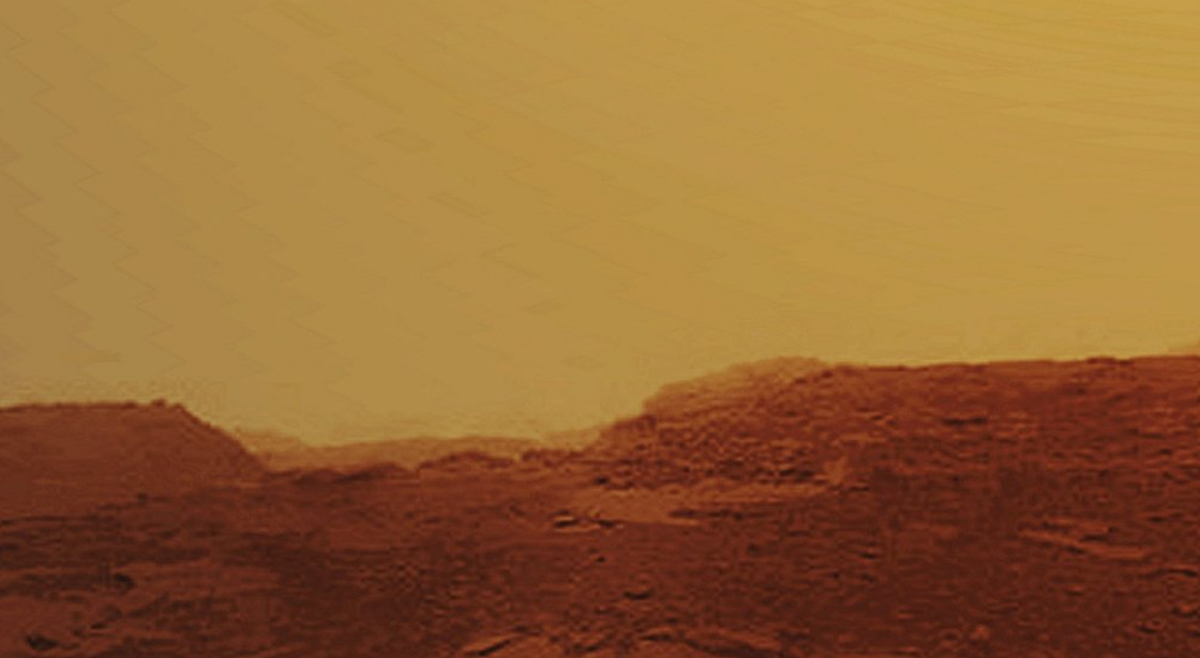
A new study suggests that less that one billion years ago, Venus had liquid water on its surface and atmospheric conditions similar to Earth’s. Credit: NASA

We’re familiar with the idea that Venus is a very hostile place: it has a thick, carbon-dioxide atmosphere mixed with other deadly gases that is so dense, it would instantly crush you were you to step onto the planet’s surface unprotected, and hot enough to boil you in the same moment as well as burn your skin away due to the presence of sulphuric acid. But for a long time, due to its enveloping clouds, it was believed that Venus could be a tropical paradise – a place of warm seas, lakes and rain forests, kept warm by the Sun whilst also protected from the worst of the heat by those thick clouds.

Now, according to a new study presented on September 20th, 2019 at the Joint Meeting of the European Planetary Science Congress (EPSC-DPS),that view of Venus as a warm, wet – and potentially habitable world. What’s more, but for a potentially massive cataclysmic event / chain of events, Venus might have remained that way through to modern times. The study comes from a team at the NASA Goddard Institute for Space Science (GISS), led by Michael Way and Anthony Del Genio.

The studies uses data gathered by two key NASA missions to Venus: the Pioneer Venus orbiter mission (1978-1992), and the Pioneer Venus Multiprobe mission (1978). The latter delivered four probes into the Venusian atmosphere, none of which were expected to survive impact with the planet’s surface, but instead sought to send their findings to Earth as they descended – although as it turned out, one did survive impact and continued to transmit data on surface conditions for more than an hour.

As oceans on Venus might have appeared. Credit: ittiz

That data was coupled with a 3-D general solar circulation model that accounts for the increase in radiation as the Sun has warmed up over its lifetime and models used to define Earth’s early conditions, enabling the GISS time to develop five simulations to try to determine how surface Venus may have developed happened over time – and all five models produced very similar outcomes.

In essence, the models suggest that around 4 billion years ago, and following a period of rapid cooling after its formation, Venus likely had a primordial atmosphere rich in carbon dioxide, and with liquid water present on the surface. Over a period of around 2 billion years, much of the carbon dioxide settled in a similar manner seen on Earth, becoming subsurface carbonate looked in the planet’s crust. In the process, a nitrogen-rich atmosphere would have been left behind, again potentially not that different to Earth’s.

By about 715 million years ago – and allowing for the planet having a sufficient rotation period (16 Earth days or slower) – conditions would have reached a point where a stable temperature regime ranging between 20°C (68 °F) and 50°C (122 °F) could be maintained, with the models indicating that the planet could have oceans and / or seas and / or lakes varying in depth from about  10 m (30 ft) to a maximum of about 310 m (1000 ft), generating sufficient cloud coverage combined with the planet’s rotation to deflect enough sunlight and prevent the atmosphere from overheating. Further, had nothing further happened, these conditions could have more-or-less survived through to current times.

So what happened? That has yet to be fully determined, but the suggestion is that a series of connected global events came together in what might be regarded as a single cataclysmic re-surfacing of the planet. This is somewhat supported by data gathered by the Magellan probe (1988-1994). The GISS team suggest that this caused a massive outflow of the CO2 previously trapped in the subsurface rock that in turn caused a runaway greenhouse effect that resulted in the hothouse we know today,  where the average surface temperature is 462°C (864°F).

The surface of Venus called Phoebe Regio, as imaged by the Soviet era Venera 13, 1981-1983
Something happened on Venus where a huge amount of gas was released into the atmosphere and couldn’t be re-absorbed by the rocks. On Earth we have some examples of large-scale outgassing, for instance the creation of the Siberian Traps 500 million years ago which is linked to a mass extinction, but nothing on this scale. It completely transformed Venus.

– Michael Way – GISS Venus study joint lead

There are questions that still need to be answered before the models can be shown to be correct, which the GISS team acknowledge by stating further orbital study of Venus is needed. However, if the study’s findings can be shown to be reasonably correct, it could have relevance in the study of exoplanets.

Until now, it has been believed that planets with an atmosphere occupying a similar orbit around their host star would, like Venus, be subject to tremendous atmospheric heating, preventing liquid water or habitable conditions to exist on their surfaces. However, the GISS models now suggest that subject to certain boxes  being ticked, such planets occupying the so-called “Venus zone” around their parent stars could have liquid water present – and might actually be amenable to life.

Artemis and the Moon: Political Football

America is trying to return humans to the Moon by 2024 via a programme called Artemis. It’s an effort that requires funding, clear thinking, co-ordination and agreement. Right now, it would appear as if few of these are proving to be the case.

On the one hand, things do appear to be moving forward. According to a presentation on September 11th, the Lunar Orbital Gateway Platform (LOP-G) is on track. Both the Power and Propulsion Element (PPE -due for launch in 2022) and the Habitation and Logistics Outpost (HALO – due for launched in 2023), as the two core elements of the initial Gateway – remain on track. Even so, doubts have been sewn concerning its relevance, as I’ll come back to in a moment.

An artist’s impression of an unpiloted commercial lander leaving a scaled-back LOP-G for a descent to the surface of the Moon ahead of a 2024 human return to the lunar surface. The LOP-G is the unit on the right, comprising a habitation module and docking ports unit, an on the far right, a power and propulsion unit. In the left foreground is an Orion crewed vehicle. Credit: NASA

Elsewhere, the programme is far from smooth in its progress. On September 11th, the US House of Representative issued a draft  continuing resolution (CR) on the 2020 federal budget that provides no additional funding for NASA’s lunar ambitions – a result NASA Administrator Jim Bridenstine stated would be “devastating” to the development of the Artemis lunar lander.

Then at a hearing of the space subcommittee of the U.S. House of Representatives’ Science, Space and Technology Committee on September 18th, NASA’s acting associate administrator for human exploration and operations, Ken Bowersox (himself an ex-astronaut) came under heavy questioning on whether NASA really could achieve a successful human return to the Moon by 2024. His reply wasn’t entirely reassuring, “I wouldn’t bet my oldest child’s upcoming birthday present or anything like that.” He went on:

We’re going to do our best to make it. But, like I said, what’s important is that we launch when we’re ready, that we have a successful mission when it launches.
I’m not going to sit here and tell you that, just arbitrarily, we’re going to make. We have to have a lot of things come together to make it happen. We have to get our funding, we have to balance our resources with our requirements, and then we’ve got to execute it really well. And so, there’s a lot of risk to making the date, but we want to try to do it.

 – NASA acting associate administrator for human exploration, Ken Bowersox, September 18th, 2019

In particular, there are concerns surrounding NASA’s new Space Launch System rocket – vital to the effort. This is been plagued by issues to the point where Bridenstine suggested a critical test for the vehicle’s core stage and rocket engines, called the “green run” could be skipped in favour of “other means” of testing – an idea ultimately dropped after considerable push-back from within NASA and safety bodies. As it is, SLS will not be in a position to undertake all of the missions required to return humans to the surface of the Moon – such as delivering hardware to the halo orbit around the Moon that will be used by LOP-G, and so NASA has indicated it would be willing to use commercial vehicles such as the SpaceX Falcon Heavy for a number of cargo flights.

Continue reading “Space Sunday: Venus and getting to the Moon”

Space Sunday: exoplanets, exocomets and Titan’s craters

K2-18b as it might appear in orbit around its red dwarf parent star and with the other known planet in the system – K2-18c – also visible. Credit: ESA/Hubble, M. Kornmesser

I first wrote about K2-18, a red dwarf star some 11 light-years from Earth, and its two companion planets in December 2017. At that time, the outermost of the two planets, called K2-18b or EPIC 201912552 b and discovered in 2015, was the subject of a study to determine its mass in an attempt to better understand the planet’s possible atmospheric properties and bulk composition. This was of particular interest to scientists as K2-18b lay within its parent star’s habitable zone – where liquid water might exist on the planet’s surface.

That study ultimately revealed K2-18b has a mass of around 8 times that of Earth, putting it in the “super-Earth” category of rocky worlds, with a diameter roughly 2.3 times greater than Earth’s (see: Space Sunday: Exoplanets Update). Since then, K2-18b has continued to be the subject of study – and it has now become the first exoplanet thus far discovered confirmed to have water vapour, mostly likely liquid water clouds, within its atmosphere.

The news came via two independent studies that have been carried out using the data gathered by the Hubble Space Telescope (HST). The first study, written by the team who originally gathered the data, appeared on September 10th, 2019 on arXiv.org, but has not been peer-reviewed. The second study – which has been peer-reviewed – appeared in the September 11th edition of Nature Astronomy.

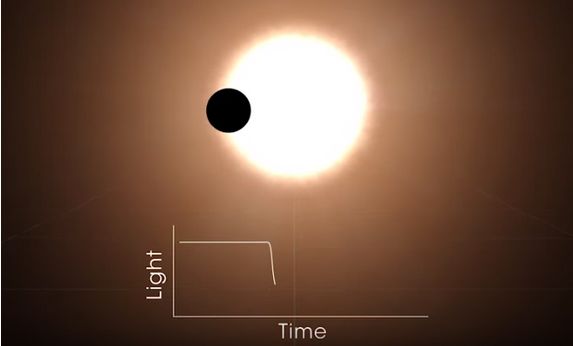
The team responsible for gathering the data – led by Björn Benneke, a professor at the Institute for Research on Exoplanets,  Université de Montréal – did so after applying to use Hubble to observe K2-18b shortly after its discovery. They were ultimately granted telescope time in in 2016 and 2017, using Hubble to gather data in the light from the red dwarf star, and how that light changed under the influence of any atmosphere surrounding K2-18b as it transited in front of the star. Spectrographic analysis of the data confirmed the planet has a fairly dense atmosphere rich in hydrogen and helium – and which also contains the molecular signature of water.

Researchers gathered data on K2-18b’s atmosphere by using the Hubble Space Telescope to observe changes in the light from its parent star as it passed through the planet’s atmosphere during transits. Credit: NASA / ESA simulation

After gathering the data, Benneke’s team wanted time to carry out further observations to both confirm what they had found and make additional discoveries. In the meantime, their findings were available for others to study – which is exactly what a team led by Dr. Angelos Tsiaras based at the University College London (UCL), UK did.

Using independent means of analysing the data, both teams reached the same overall conclusions concerning the major finds within K2-18b’s atmosphere – although they come to different conclusions as to the planet’s likely form. The UCL specify K2-18b as a rocky planet with a dense atmosphere, between 0.01% and 50% of which is water vapour. By comparison, the amount of water vapour in our atmosphere is put at between 0.1% and 4% – so, K2-18b could have anything from a comparable amount of water vapour in its atmosphere to Earth through to being a completely flooded world.

By contrast, Benneke’s team believe the planet is more of a “mini-Neptune”: a planet with a small, solid core surrounded with a thick atmosphere that is predominantly hydrogen / helium in nature, with only trace amounts of water vapour – albeit enough to create liquid water clouds, and possibly even rain. However, the idea that the planet is a mini-Neptune is somewhat at odds with other findings about the planet – such as the December 2017 study.

There is also some tension between the two teams. While Benneke acknowledges his team’s research was open to others to use, he is somewhat aggrieved the UCL team did not bother to contact him or his team concerning their work or their intentions. However, he also sees the results of the UCL’s work as positive in respect to understanding the nature of K2-18b.

The presence of liquid water in the planet’s atmosphere doesn’t automatically mean it is home to life. There are some significant issues around this. For one thing, while the plant is within the habitable zone, the precise surface temperature has yet to be determined, and could range from -73ºC  to +47ºC (-100ºF and +116ºF), meaning it could be colder or hotter than the coldest / hottest places on Earth.

There’s also the fact that the planet is so close to its parent, orbiting once every 33 days, that it is likely tidally-locked with its star. This means one side of the planet will be in perpetual sunlight, and the other in perpetual darkness – something that could well give rise to extreme weather conditions. Finally, there’s the fact that K2-18 is a red dwarf star. These, as I’ve noted before, can be exceptionally violent, and flares and coronal mass ejections from the star are likely to both expose the planet to high levels of radiation and could strip away its atmosphere over time, although it is possible K2-18b’s atmosphere might be dense enough to help it withstand at least some of this stripping away.

Finding water on a potentially habitable world other than Earth is incredibly exciting. K2-18b is not ‘Earth 2.0’ as it is significantly heavier and has a different atmospheric composition. However, it brings us closer to answering the fundamental question: Is the Earth unique?

– Dr. Angelos Tsiaras (UCL Centre for Space Exochemistry Data)
co-author of the UCL study on K2-18b

The next phases in studying K2-18b will likely come in the mid-to-late 2020s. Benneke and his team are already planning to continue their work using NASA’s James Webb telescope, due to be launched in 2021, while Giovanna Tinetti, a member of the UCL team studying K2-18b also happens to be the Principal Investigator for Europe’s Atmospheric Remote-sensing Infra-red Exoplanet Large-survey (ARIEL). She has already indicated the planet will be target for study by that mission when it launches in 2028.

Continue reading “Space Sunday: exoplanets, exocomets and Titan’s craters”

Space Sunday: Lunar landers, and robots in space

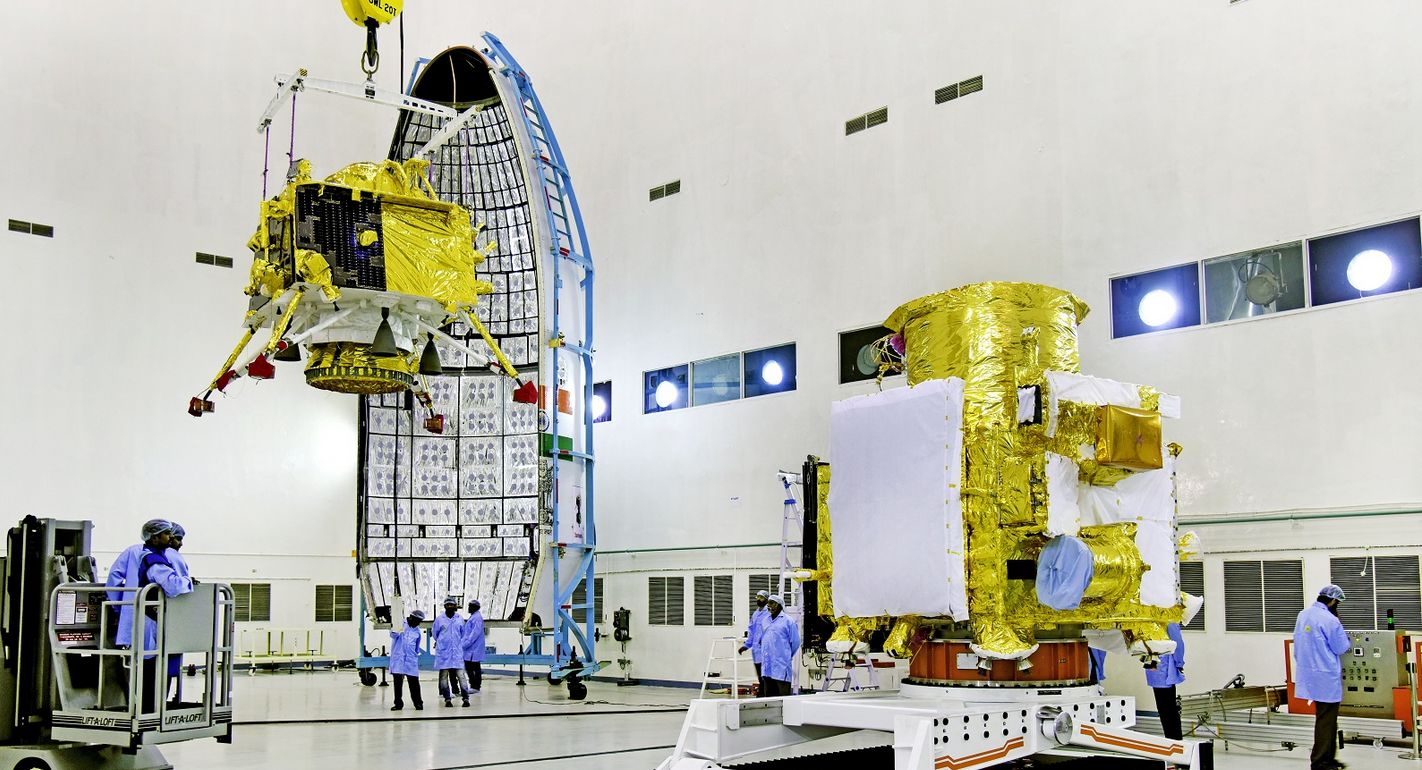
The bulky Vikram lander, with the Pragyan rover”garaged” inside, is hoisted aloft in a clean room, ready to be mated to the “top” of the Chandrayaan-2 orbiter (right). One section of the payload fairing that enclosed the craft during launch is visible in the background. Credit: ISRO

On Friday, September 6th, India was due to become the fourth country to successfully reach the surface of the Moon, with the touch-down of the Vikram lander, part of the Chandrayaan-2 (“moon craft-2” in Hindi) mission.

Launched in late July 2019, Chandrayaan-2 was set to be the latest in a series of high-profile missions undertaken by the Indian Space Research Organisation (ISRO) over the course of the last 11 years, which have included the  Chandrayaan-1 lunar orbiter (2008/2009) and the Mangalayaan (“Mars-craft”), launched in 2013 and still operational today.

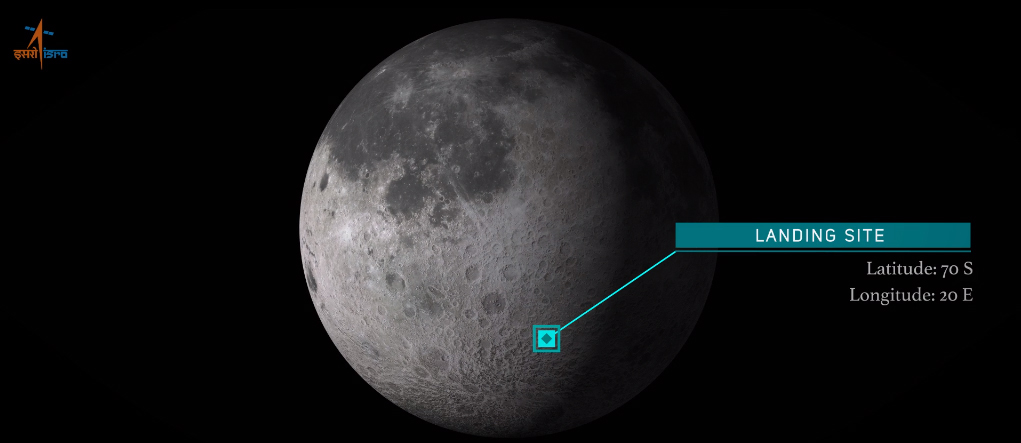
As I’ve noted in recent Space Sunday articles, Chandrayaan-2 comprises three parts: the orbiter vehicle, the Vikram lander and a small rover called Pragyan (“Wisdom” in Hindi) carried by the lander. Vikram departed the orbiter vehicle on Monday, September 2nd, allowing it to begin a series of manoeuvres in readiness for a final decent and landing, scheduled for Friday, September 6th (western time, the early hours of Saturday, September 7th for India) in the Moon’s South polar region.

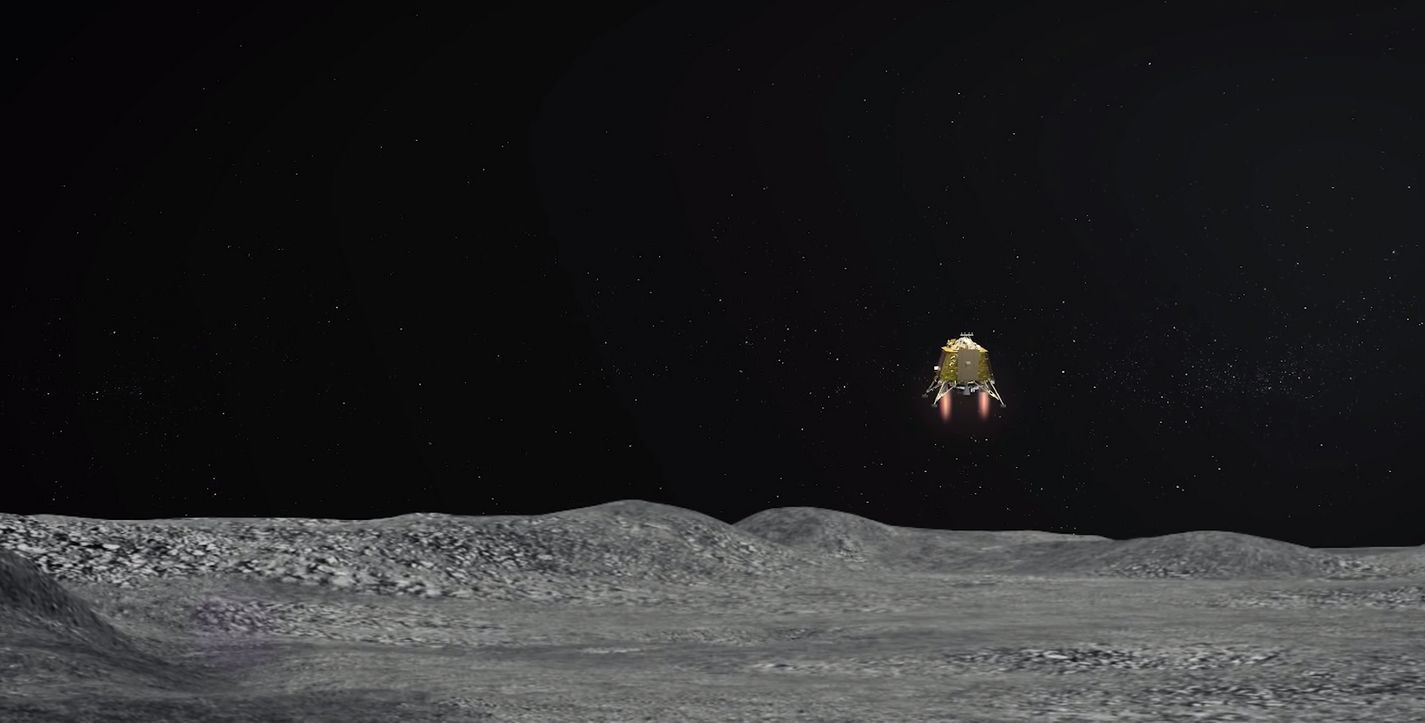
An artist’s impression of the Vikram lander coming in to land in the Moon’s south polar region. Credit: ISRO official video

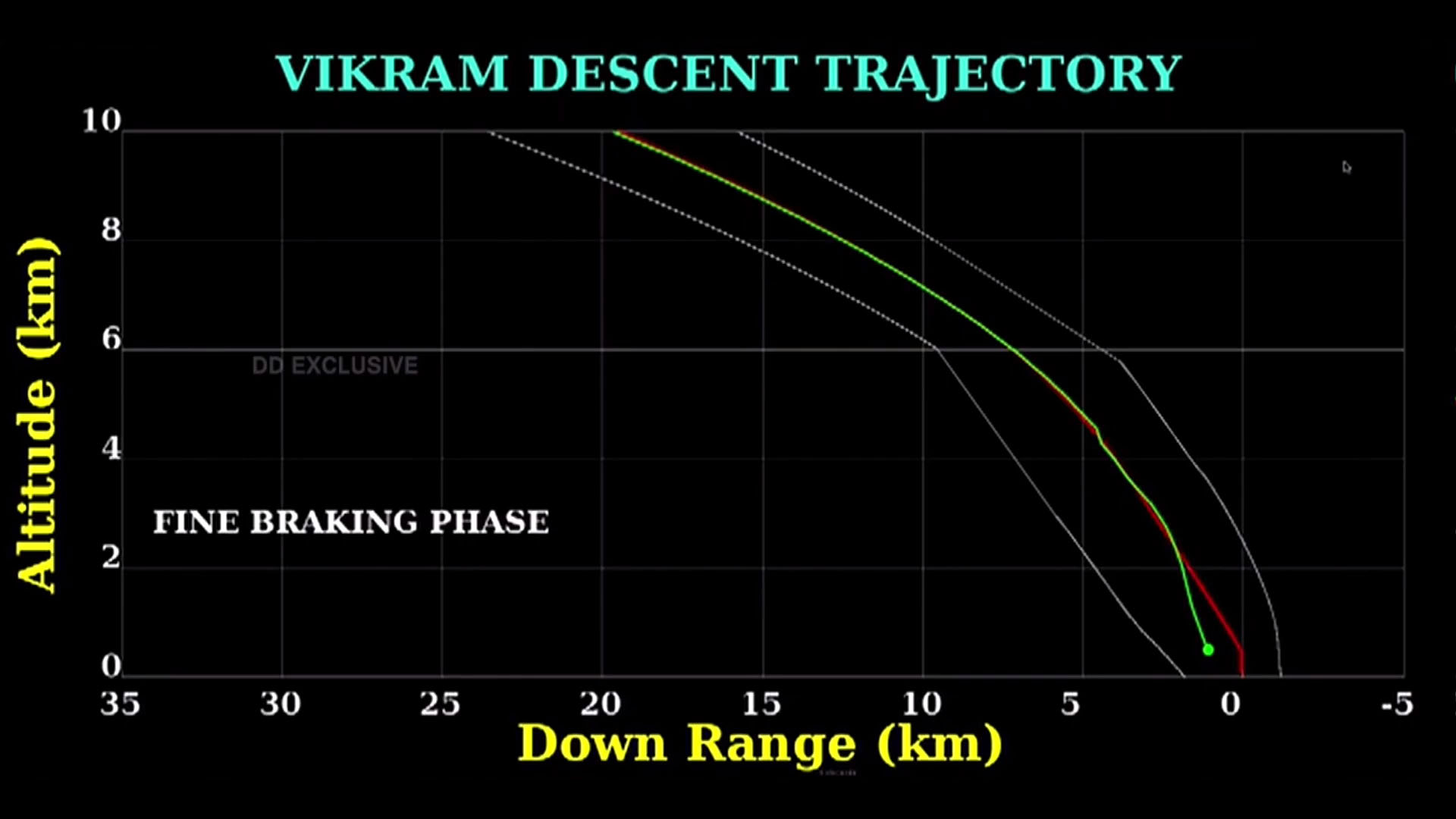
Initially, that final descent started well enough, with the lander about 550 km (344 mi) from the south pole as it fired its descent motor start the start of its final approach. At an altitude of 6 km (3.75 mi), it started a final sequence of engine burns referred to as the “fine braking phase”. Then all communications ceased.

ISRO issued a statement that the vehicle was performing nominally until around 2.1 km above the Moon, when the loss of communications occurred. However, images of the data received from the vehicle and released by ISRO appeared to suggest telemetry was being received when the lander was within 400 m of the lunar surface – and altitude at which it would be fully under its automatic guidance and landing software, and not reliant on commands from Earth. This seemed to suggest Vikram may have made a landing.

ISO stated communications with the Vikram lander were lost some 2.1 km above ground. However, a graphic of the vehicle’s descent towards the Moon (green above), appears to suggest telemetry was lost when the vehicle was between 300-400m above the lunar surface, and that it had drifted perhaps a mile from its planned descent track (red). If accurate, this suggests Vikram was in the fully automated terminal descent phase of its landing. Credit: ISRO

This idea gained ground as this article was being prepared, when an article published by Asia News international suggested Vikram has been spotted on the surface of the Moon, possibly 500m to 1 kilometre from its designated landing point. The article quotes ISRO’s director, Kailasavadivoo Sivan as saying:

We’ve found the location of Vikram Lander on lunar surface & orbiter has clicked a thermal image of Lander. But there is no communication yet. We are trying to have contact. It will be communicated soon.

Since then, the report has been repeated numerous times through various media (including an entirely UNofficial and unverified “ISRO Official Update” Twitter account) without (at the time of publication) official confirmation. This has made it hard to determine the veracity of the ANI report. Hopefully, the situation will become clearer in the coming days. One thing that could help define the lander’s condition would be an image captured by Chandrayaan-2’s main imaging camera. With a resolution of a third of a metre, it is the highest resolution camera in operation around the Moon.

The planned landing site for the Vikram lander. Credit: ISRO

But even though the lander and rover may have been lost, the mission is far from over; the orbiter continues to function perfectly. It also carries the bulk of the mission’s science experiments – eight of the 13 carried by the mission. he data gathered by these systems should enable scientists to compile detailed maps of the lunar surface, revealing key insights about the Moon’s elemental composition, formation and evolution, and potentially help in assessing the moon’s stores of water ice.

In this latter regard, the mission builds on work performed by Chandrayaan-1, which revealed water is present at the lunar poles, with subsequent studies suggesting much of this water is ice on the floors of polar craters, which have been in permanent shadow for billions of years. If this ice is easily accessible, it could be a critical enabling resource for the eventual human settlement of the moon, providing water, oxygen and fuel (hydrogen).

In all, Chandrayaan-2 is expected to operate for some 7 years.

Proxima Centauri: An Angry Star with Bad News for its Planet

In 2016, I wrote about Proixma b, a planet roughly 1.5 times the mass of Earth orbiting our nearest stellar neighbour, Proxima Centauri, 4.25 light years away (see: Exoplanets, dark matter, rovers and recoveries). Since then, and as a result of the planet being within the star’s zone of habitability, there has been a lot of debate about the potential for it to support life.

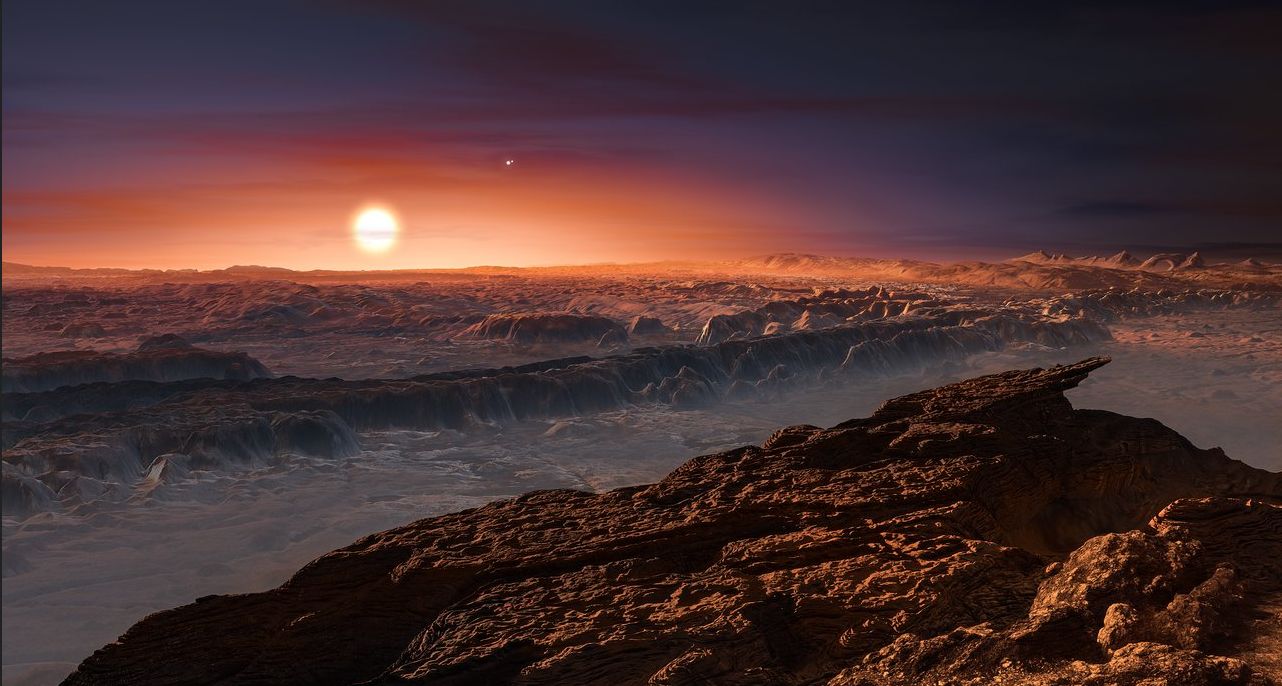
An artist’s impression of Proxima b with Proxima Centauri low on the horizon. The double star above and to the right of it is Alpha Centauri A and B. Credit: ESO

Numerical models have indicated that Proxima b probably lost a large amount of its water in its early life stages, possibly as much as one of Earth’s oceans. however, those models also suggest liquid water could have survived in warmer regions of the planet – such as on the side of the planet facing its star (Proxima b is potentially tidally locked with its parent star, always keeping the same face towards it). This means other factors that might affect habitability must be examined. Chief among these is the overall activity of the parent star – notably flares, coronal mass ejections and strong UV flux -, all of which can erode a planet’s atmosphere, rendering it uninhabitable in the long term.

That Proxima Centauri is very active with flares has been known for some time, as has been the star’s ability to generate “super-flares”, one of which in 2016 briefly raised the star’s brightness to the point of making it briefly visible to the naked eye from Earth. This activity has suggested that Proxima b is unlikely to support life (see: Curiosity’s 5th, Proxima b and WASP-121b). But the debate has remained.

Over the past year, a team of scientists at the Konkoly Observatory in Hungary have been using data from the Transiting Exoplanet Survey Satellite (TESS) to observe Proxima Centauri’s flare activity over a two month period, split between April and June 2019. They found that in the roughly 55-day period, the star pent around 7% of its time violently flaring, with a total of 72 relatively large-scale flares observed. In particular, the energy of the eruptions put them as not far below “super flare” status, suggesting the star could produce a super flare perhaps once every two years.

TESS data on flare activity on Proxima Centauri: yellow triangles indicate flare activity, green triangles show particularly violent flare events. Credit: Krisztián Vida / Konkoly Observatory

Such frequent, high-energy eruptions almost certainly have a severe impact on the atmosphere of Proxima Centauri b, disrupting it to a point where it cannot reach any steady state, leaving it continuously in a state of disruption and alteration, making the potential for the planet to support life even more remote. However, it also raises a curiosity about the star: the underlying magnetic frequency evidenced by Proxima Centaur. Such activity is normally associated with fast-rotating stars with periods of a few days. However, Proxima Centauri has a rotation period of ~80 days; so why it should be so active is now a subject for investigation.

Continue reading “Space Sunday: Lunar landers, and robots in space”

Space Sunday: flying water tanks, telescopes and weird rocks

The “Flying Water Tank”, aka “R2D2’s Dad”, otherwise know as the Starhopper – rises to 120m (500ft) during its second major test flight, August 27th, 2019. Credit: SpaceX

SpaceX successfully flew their Starhopper vehicle – designed to prove the viability of their upcoming Starship space vehicle – on August 27th, in its most complex test flight to date.

The Starhopper craft, dubbed “the flying water tank” on account it both lacks its conical nose (damaged beyond repair during a storm at the start of the year) and the fact it was fabricated for SpaceX by a company that specialises in building water tanks, lifted off from a pad at SpaceX’s test site in Boca Chica, Texas, rising vertically to a height of 150 metres (488 ft) before translating to horizontal flight to crab across to another pad at the test facility and then descended under power to touch down once more.

While the flight lasted less than a minute, it has, according to Musk, paved the way for two dramatic follow-up flights. As well as the Starhopper vehicle, SpaceX is currently building two full-size Starship prototypes – “Mk 1” is being built at Boca Chica, with “MK 2” under construction in Florida. It appears that the “Mk 1” vehicle will be used for the 20km flight.

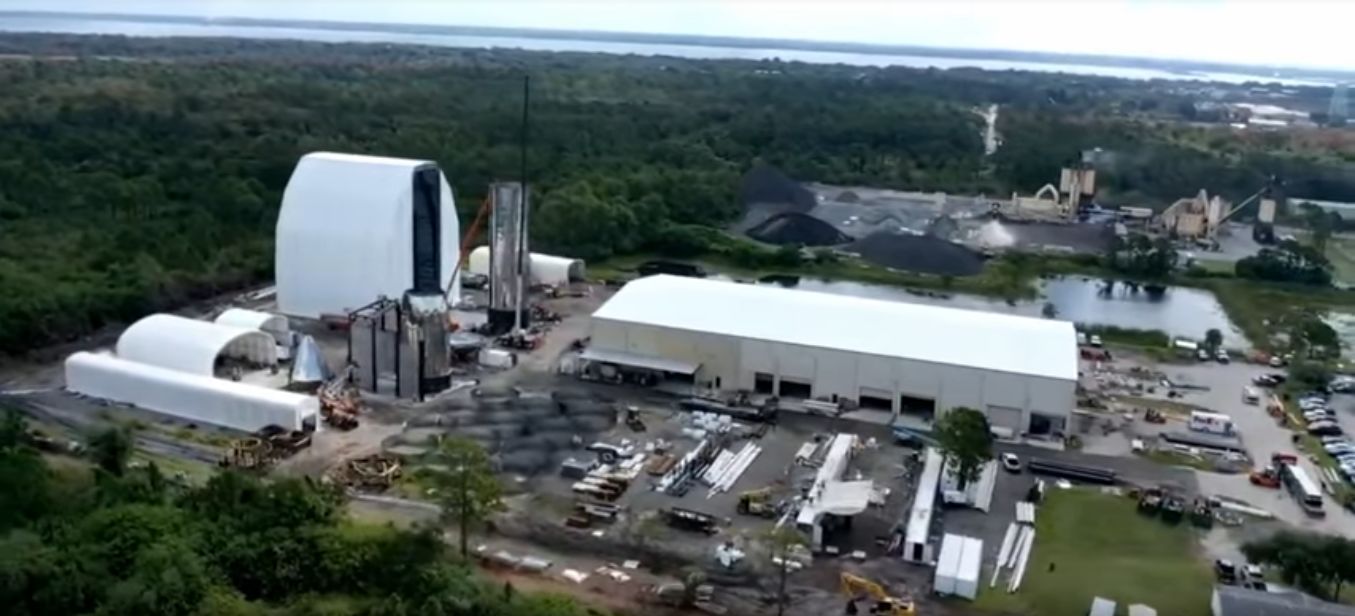
Starship Mk 2 on the left of the image, standing upright and with additional elements nearby, under construction in Cocoa, Florida. Credit: SpaceX

Musk’s announcement of a potential attempt to reach orbital altitude drew questions on whether SpaceX plan to use their Super Heavy  – essentially the “first stage” for Starship launches – with one of the Starship prototypes, or just make the attempt with the Starship on its own. In the past, Musk has indicated that a fuelled but unladen Starship should have the power to achieve orbit, but that would presumably be using all six of an operational Starship’s Raptor engines. By comparison, the Starhopper has a single Raptor motor and the Starship Mk 1 and Mk 2 craft will have 3 Raptors – at least initially.

As it stands, the “first generation” of Starship / Super Heavy is designed to be 9m (29 ft) in diameter and stand around 118m (390 ft) tall on the launch pad. Super Heavy is to be powered by 31 Raptor engines and the 48m tall Starship by 6 Raptors. Together, SpaceX stated that they will be capable of lifting around 100 tonnes of payload to orbit, with Starship capable of reaching the Moon or Mars with that payload or up to 100 crew and passengers.

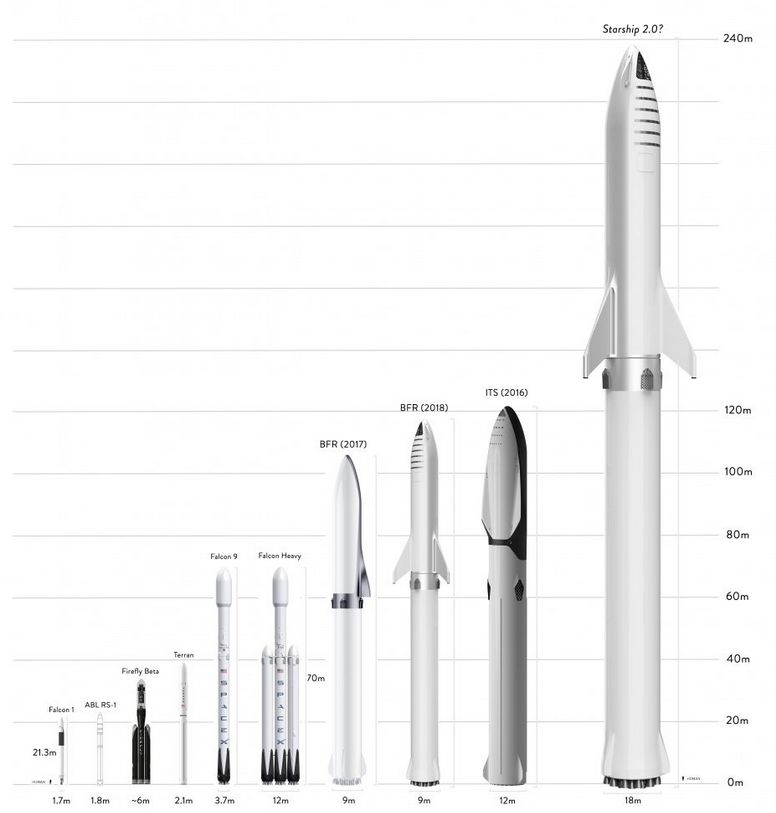
All of that is pretty mind-boggling. If possible, it will make Starship / Super Heavy the most powerful launch system ever built in terms of thrust. But SpaceX is apparently going to go beyond that. Following the Starhopper test, and responding to a question, Musk indicated that a “next generation” craft based on Starship / Super Heavy could follow in “several years”. While planning a follow-up to Starship / Super Heavy is not surprising, the scale of the follow-up version is: in a further tweet, Musk suggested it will be 18m (60 ft) in diameter – twice that of Starship / Super Heavy.

Mathematics tells us that doubling the diameter of a circle quadruples its area. This means that if the current ratio of dimensions for Starship / Super Heavy is retained, the “next generation” version would stand 230 m (780 ft) tall and have eight times both the surface area and propellant tank volume of the current Starship / Super Heavy. All of which leads to a fuelled launch mass of around 40,000 tonnes. All of which is, frankly, entering the realm of idiocy; as I’ve previously (and subjectively) opined, it’s hard to see a launch vehicle with a 100-tonne payload mass being commercially viable unless the launch costs are such that it can turn a profit lifting around 5-10 tonne to orbit for the majority of its flights. As such, a vehicle twice the size (even if possible) has little to no chance, outside of highly specialised (and limited) launch roles.

An artist’s impression of a future “next generation” Starship / Super Heavy launch combination compared to SpaceX’s current family of launch vehicles, the current (2018) and previous (2016 and 2017) BFR designs. This assumes the “next generation” vehicle will have Musk’s stated 18m diameter and retain the same proportions as the current Starship / Super Heavy combination. Credit: Teslerati.

At such a size and mass, the new vehicle would require 100 Raptor motors just to get off the pad – or a system of engines several times more powerful. Take the noise and vibration issues this would introduce to the system, and I’ll say that it just isn’t going to happen. In the meantime, Musk is promising a public update on the status of Starship / Super Heavy on September 28th, 2019.

Continue reading “Space Sunday: flying water tanks, telescopes and weird rocks”

Space Sunday: to explore Europa

An artist’s impression of Europa Clipper (previously the Europa Multiple Flyby Mission), due for launch in 2022 or 2023 (depending on the launch vehicle used) making a flyby of Europa. Credit: NASA

There are a number of places within our solar system where life may have come to pass – and indeed, may still exist – beyond the Earth. There’s Mars, Saturn’s massive moon Titan, and the so-called “icy world” moons, such as Neptune’s Triton, Saturn’s Enceladus, and Jupiter’s Europa, all of which may harbour sub-surface oceans between their icy crusts and solid interiors.

Of these moons, Enceladus has shown clear signs of activity relating to the existence of a sub-surface ocean: the ESA / NASA Cassini mission captured images of great plumes of water erupting from the moon’s south polar region, and the Cassini vehicle passed through this plumes towards the end of its mission to “taste” them, confirm they were predominantly water.

However, the icy world that has garnered the most interest in terms of detailed study remains Jupiter’s Europa. Currently, there are two missions being developed to probe Europa in greater detail than ever before: NASA’s Europa Clipper and ESA’s Jupiter Icy Moons Explorer (JUICE).

Europe’s subsurface ocean as it might exist – a place that might support life. Credit: NASA

Europa Clipper has had something of an up-and-down ride. Originally, scientists wanted to send a vehicle to study all of the icy moons around Jupiter – Europa, Callisto and mighty Ganymede. However, the US $16 billion price tag for the mission (including vehicle development, launch and operation) was too high. It was scaled back to a more modest US $4.3 billion mission, the Europa Orbiter, which would have included a lander. Then it was scaled back again to a US $2 billion mission.

In 2014, the mission eventually morphed into the Europa Multiple Flyby mission: rather than placing a vehicle directly in orbit around Europa, this would put the vehicle in orbit around Jupiter  from where it would be able to make multiple fly-bys of Europa. This then became Europa Clipper – which has still suffered from attempts to axe it, surviving only because it has very strong support within the US Congress.

This support has allowed the mission to both receive continued funding and proceed through various design and review activities. As a part of this, on Monday, August 19th, 2019, NASA announced  that it had formally confirmed the mission can proceed to what is called Phase C, a process that will see the mission through the final spacecraft design and then on to assembly and testing.

We are all excited about the decision that moves the Europa Clipper mission one key step closer to unlocking the mysteries of this ocean world.

– Thomas Zurbuchen, NASA associate administrator for science

While Enceladus was the first moon where we positively witnessed plumes of water ice erupting from the surface (2005), evidence that similar outgassing may be occurring at Europa has been gathered by the Hubble Space Telescope. This information, gathered in the form of images, and data gathered by the magnetometer instrument carried by NASA’s Galileo space vehicle that surveyed Jupiter and his moons in the 1990s, offer the clearest indication that there is an ocean of water, possibly containing more than twice the volume of all the Earth’s oceans and sea combined, sitting beneath the surface ice on Europa.

The solar-powered craft  – solar power being a lot cheaper than nuclear RTGs – will carry a total of nine primary science instruments, with eight confirmed as being:

  • The Europa Thermal Emission Imaging System  (E-Themis) will provide high spatial resolution, multi-spectral imaging of Europa in the mid and far infra-red bands to help detect active sites, such as potential vents erupting plumes of water into space.
  • The Mapping Imaging Spectrometer for Europa (MIS), an imaging near infra-red spectrometer that will probe the surface composition of Europa, identifying and mapping the distributions of organics (including amino acids and tholins), salts, acid hydrates, water ice phases, and other materials. Scientists hope to be able to relate the moon’s surface composition to the habitability of its ocean.
  • The Europa Imaging System (EIS), a visible-spectrum wide and narrow angle camera instrument that will map most of Europa at 50 m (160 ft) resolution, and will provide images of selected surface areas at up to 0.5 m resolution.
  • The Europa Ultraviolet Spectrograph (Europa-UVS) instrument will be able to detect small plumes of material ejected by Europa, and will provide valuable data about the composition and dynamics of the moon’s exosphere.
  • The Radar for Europa Assessment and Sounding: Ocean to Near-surface (REASON), a dual-frequency ice penetrating radar instrument designed to characterise and sound Europa’s ice crust from the near-surface to the ocean, revealing the hidden structure of Europa’s ice shell and potential water pockets within.
  • The Plasma Instrument for Magnetic Sounding (PIMS) working in conjunction with a magnetometer, PIMS is key to determining Europa’s ice shell thickness, ocean depth, and salinity. PIMS will also probe the mechanisms responsible for weathering and releasing material from Europa’s surface into the atmosphere and ionosphere and understanding how Europa influences its local space environment and Jupiter’s magnetosphere.
  • The Mass Spectrometer for Planetary Exploration (MASPEX) will determine the composition of the surface and subsurface ocean by measuring Europa’s extremely tenuous atmosphere and any surface materials ejected into space.
  • The Surface Dust Mass Analyser (SUDA), a second mass spectrometer that will measure the composition of small solid particles ejected from Europa, providing the opportunity to directly sample the surface and potential plumes on low-altitude flybys. The instrument is capable of identifying traces of organic and inorganic compounds in the ice of ejecta.

The ninth instrument will be a magnetometer, although this has yet to be sourced – the dedicated instrument, called Interior Characterisation of Europa using Magnetometry (ICEMAG) was cancelled due to spiralling costs and development complications. It will be replaced by a more “off the shelf” system that will be less sensitive than ICEMAG, but the mission team are confident they can compensate for this be more frequent re-calibration operations during the mission.

A pair of composite images of the side of Europa facing away from Jupiter. The rust / brown colour is likely the result of sulphur ejected from Jupiter’s inner moon Io being deposited on Europa by Jupiter’s radiation belt. The lines appear to be cracks in the surface, created by gravitational flexing of the Moon, which causes newer ice to form, indicative of water being forced upwards. Additionally, the yellow staining appears to be sodium chloride – the same as found in our own oceans – deposited on Europa as a result of material being ejected through the cracks. Credit: NASA/JPL / University of Arizona

Early concepts for a Europa mission – as noted above – included a lander – and possibly even a drilling mechanism and an automated submarine that could potentially be dropped under the ice and explore the ocean under it. These ideas were dropped – perhaps wisely – until more is known about the structure and thickness of the surface ice and exactly what lies beneath it. However, Europa Clipper has some additional payload capacity – around 250 kg – and NASA has been seeking ideas on what might be flown; some of the suggestions have included by a payload of supporting CubeSats or a small-scale lander.

While the Europa Clipper mission won’t actually orbit Europa, the multiple fly-bys will enable it to achieve almost global coverage of the moon, allowing for the widest amount of data to be gathered. This will be transmitted back to Earth in the 7-day periods between each close fly-by.

Currently, the mission launch date has yet to be finalised, and this in part depends on the selected launch vehicle. The preferred launcher is NASA’s upcoming Space Launch System (SLS). If used, this would see the mission launched in 2023, with the booster powerful enough to put Europa Clipper on a 3-year direct flight to Jupiter. However, there is no guarantee that SLS will be available in the proposed time frame, so NASA is also looking to use a commercial vehicle such as the SpaceX Falcon Heavy or the ULA Delta IV Heavy. Either of these would allow the mission to launch in 2022, but as they are less powerful than SLS, they would require Europa Clipper use 3 gravity assist manoeuvres, two at Earth and one at Venus, in order to send it on its way, increasing the transit time to Jupiter to 6 years.

Continue reading “Space Sunday: to explore Europa”