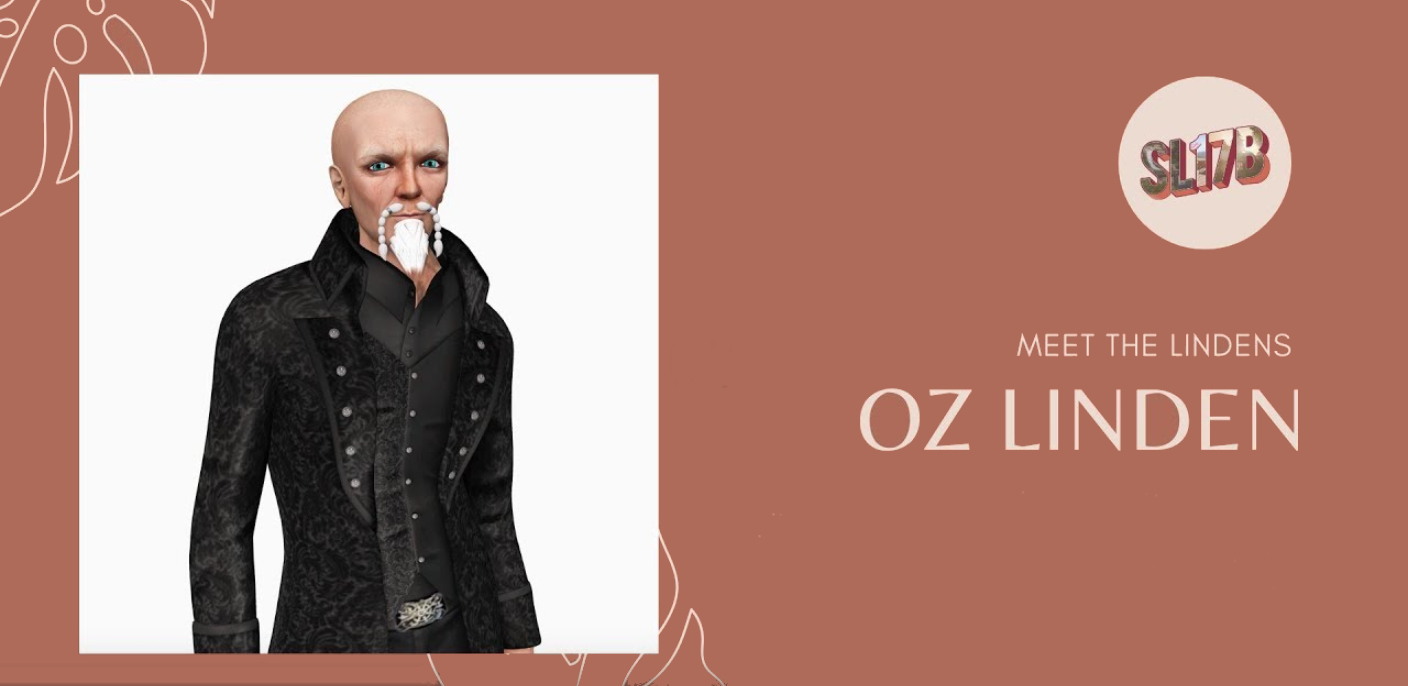
| On Wednesday, June 24th, 2020 at the SL17B celebrations, the third of five Meet the Lindens sessions was held, featuring Oz Linden, the Lab’s Vice President of Engineering.
The following is a summary of the session covering the core topics raised, with selected audio extracts. The notes provided have been taken directly from the official video of the session, which is embedded at the end of this article. Time stamps to the video are also provided for ease of reference. Note that this is a summary, not a full transcript, and items have been grouped by topic, so may not be presented chronologically when compared to the video. |
Table of Contents |
Audio extracts, where included, have been cleaned-up and balanced to remove pauses, repetitions, etc.
In places, information that is supplementary to Oz’s comments is provided in square braces (.i.e. [ and ]) are used in the body text below to indicate where this is the case.
About Oz
-
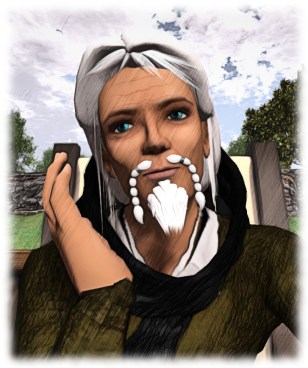
Oz Linden Joined the company in 2010 specifically to take on the role of managing the open-source aspects of the Second Life viewer and managing the relationship with third-party viewers.
- He came to Linden Lab out of a desire to do something “fun” after working in the telecommunication arena, notably with voice over IP systems (VOIP), which he defines as being “really interesting technology with some really fascinating challenge”, but in terms of it being fun, it really didn’t do what I wanted it to do.”
- For the first two years of his time at the Lab, he was primarily focused on the open-source viewer work and in refining the overall viewer maintenance process, before his role started expanding to encompass more and more of the engineering side of Second Life.
- When work on Sansar started in earnest, he pro-actively campaigned within the Lab for the role of Technical Director for Second Life, working to build a team of technical staff around him who all shared a passion for Second Life.
- In 2019 he was promoted to Vice President, Second Life Engineering (Vice President of Engineering following the sale of Sansar in early 2020), and joined the Lab’s management team alongside Grumpity and Patch Linden (see: Linden Lab’s management team expands: congrats to Grumpity, Patch and Oz).
- Together with Grumpity and Patch, he forms what Grumpity calls the “troika” overseeing Second Life’s continued development.
- Classifies his attraction to working with Second Life as perhaps falling into three core areas:
- The open-source nature of the viewer and being directly involved with how SL users are using the viewer and what they do with it – which can often times take the Lab entirely by surprise.
- The challenge of trying to implement new technologies alongside of (rather than simply replacing) older technologies.
- Working with the operations team and others to ensure SL constantly evolves without (as far as is possible) breaking anything – a process he refers to and rebuilding the railway from a moving train.
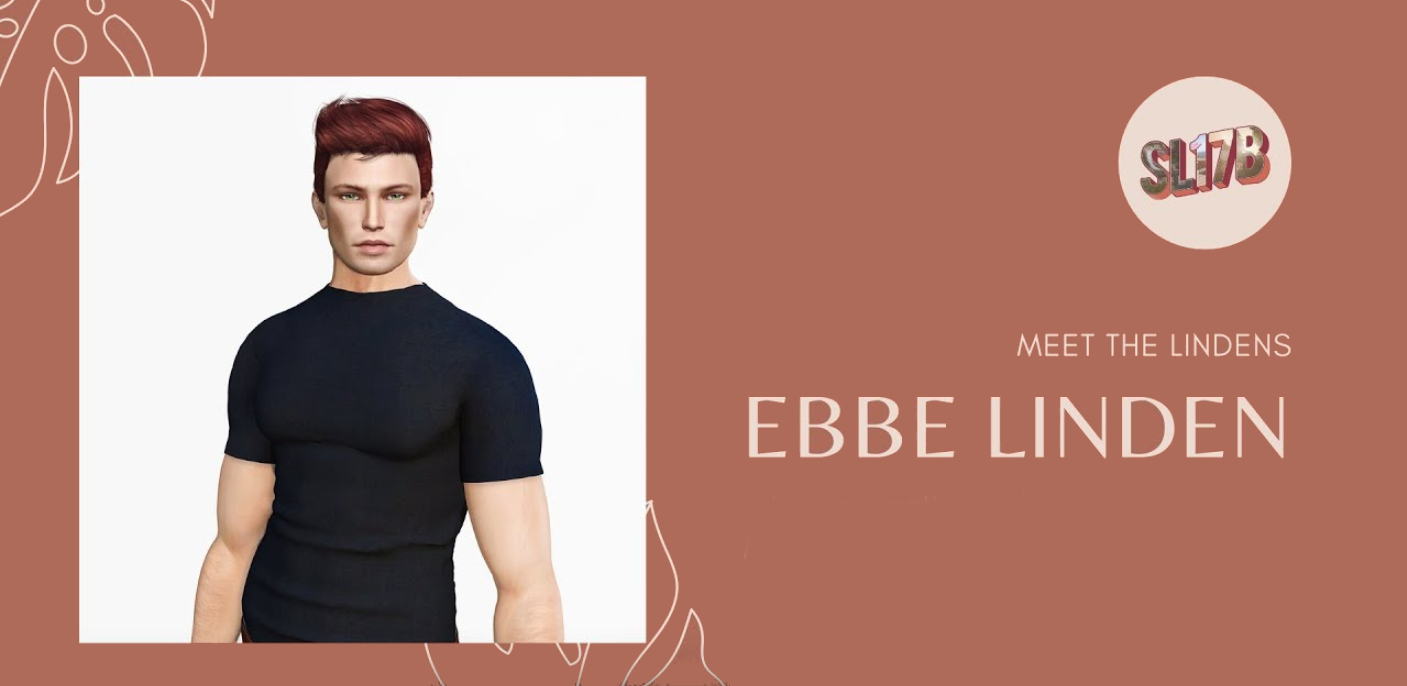
- Note that his avatar appears bald in the Meet the Lindens publicity shot at the top of this article, as he and his team participated in the 2020 Bid a Linden Bald event to raise money for RFL of SL, and has the team raising the least, that had to spend a month in-world sans hair.
His Team
Has it Expanded Since the Sale of Sansar?
[Video: 4:47-5:48]
- He did persuade a number of people to move back from Sansar to Second Life [those known to have moved back at the time were Runitai Linden (graphics) and Maestro Linden and Monty Linden (engineering), although they obviously may not be the only people to move / move back to work on Second Life].
- Hiring of new staff has also continued [notable within this are Ptolemy Linden and Euclid Linden (graphics) and at least one Android development specialist].
- At the time of the event, also looking to hire a further systems engineer working on the back-end Linux systems.
What Impact has the Pandemic Had?
[Video: 6:02-8:07]
- “Pretty minimal”
- The Engineering and Operations teams and his developers were already “pretty distributed”, with some of the teams working out of three of the Lab’s offices – Seattle, San Francisco and Boston – but around one-third to half of the total staff reporting to him (Oz included) have generally worked from home as “Moon Labbers” [the “Moon Lab” being LL’s term for remote working].
- So teams already very familiar with remote working, operating across time zones and holding meetings in SL, as well as tools like video chat, and the transition for the rest has been “pretty much” seamless.
- Probably the biggest impact is that the team isn’t getting together for their summer meet-up where they socialise and lay plans for future work on SL.
Cloud Uplift
Why Is It Being Done?
[Video: 9:00-13:01]
- Historically, Linden Lab has operated its systems and services the “traditional” way: dedicated hardware, and infrastructure running in dedicated facilities [at one time three data centres, but for the last several years a single co-location (co-lo) centre in Arizona].
- Actually had to develop a lot of the methodologies the company now uses to manage all of the SL services simply as a result of the speed at which the platform initially grew, building capabilities for which there were no “standard” solutions.
- Time has moved on, and Amazon and others have developed the means for systems and services to be run / provisioned through the cloud. These services allow Linden Lab to leverage a range of options and capabilities in a number of ways.
- A particular aspect of the move is that LL no longer has to invest time, effort and money into hardware and infrastructure, but can essentially hand these off to AWS, allowing them to concentrate on SL’s operations and development.
- With hardware in particular, it has been a number of years since the Lab upgraded their servers, so transitioning to the cloud avoids an expensive capital expenditure in new hardware, and similar expenditures in the future. For example:
- In the current environment, if the Bake Service [a collection of servers use by the Lab to generate and manage avatar appearances and ensure they are consistent across viewers] needed upgrading to more powerful servers, LL would have to acquire, test and implement that hardware, and then transition the Bake Service to it.
- Running via the cloud means picking the required hardware from a catalogue provided by Amazon, who then take care of the heavy lifting to ensure the Bake Service works as required on the selected hardware.
- Overall, the priority of the work is such that the three goals Oz has set himself : Uplift, Uplift, Uplift.
How is the Uplift Progressing?
[Video: 16:46-19:05]
- It’s stressful but going well.
- All of the inventory databases were successfully moved several months ago – twice, in fact: first to the cloud, then to a different type of cloud server. This work was completed so successfully, users were not even aware of any change.
- The intermediary service sitting between the inventory database and the viewer was also successfully transitioned to AWS. It has also been running for “some time now”, again without users noting any difference.
- A lot of the back-end services that users never directly interact with have also been successful transitioned
- There is still a lot of work to do, but the plan is to have Second Life “out of the co-lo by the end of the year”.
Continue reading “SL17B Meet Oz Linden – a summary with video and audio”



 Inara Pey: Living in a Modemworld